LIFE’S STRUGGLE

Akbar is showing everyone’s life is a struggle. Self-understanding, acceptance of who you are, and not feeling sorry for yourself can make you whole. Death may set you free, but the struggles of life are a better alternative.

Books of Interest
 Website: chetyarbrough.blog

Martyr!

By: Kaveh Akbar

Narrated By: Arian Moayed

Kaveh Akbar (Author, Iranian American poet, novelist, and editor.)

“Martyr!” is a book that is difficult for a prudish American to read but Akbar writes a story that resonates with one who has suffered from addiction, loss of parental guidance, and the exigencies of American life. Akbar’s main character is Cyrus Shams, a poet and writer, who believes he lost his mother in a 1988 plane crash caused by the American Navy when the USS Vincennes fired two surface-to-air missiles at a passenger plane that was mistakenly identified as an F-14 fighter jet.

(The Vincennes’ mistake occurred during the Iran-Iraq War that began in 1980. The USS Vincennes was deployed to the Persian Gulf to protect oil tankers. Prior to the Vincennes commander’s decision to fire the missiles, there were several skirmishes with Iranian vessels. )

Image result for The vincennes mistake

The commander’s catastrophic mistake occurs in an atmosphere of military conflict. The commander is removed from his command but remains in the military until he retires in 1991.

US-Iran conflict: US shot down Iran Air Flight 655 in 1988 | Daily Telegraph

The Vincennes incident resulted in a $61.8 million settlement to the families of the victims in 1996.

Because Akbar’s main character is the son of one of the passengers of the plane, he receives a financial settlement for the death of his mother. As he grows to become a man, he becomes addicted to drugs, cigarettes, and alcohol, has affairs with both men and women, but decides to kick his addictions. In the process of gaining sobriety, he becomes acquainted with a successful woman painter. After her death, he finds the woman was his mother. She had switched identities with the Iranian woman that was on the plane. Her reasons for abandoning her son are unclear but in a chance meeting at one of her art exhibitions, her son strikes an acquaintance with her. She knows he is her son but chooses not to disclose her story. The son is enamored by her art and seeks her out during the following years of her life. She dies and the son is told by the art exhibitor that the artist he admired was his mother.

Everyone searches for meaning in life.

All who have lived through childhood and maturity know living life is a struggle. Whether rich or poor, personal struggle either breaks you or makes you. The end result is mixed. Cyrus Shams is an addict that chooses to become sober, to become a poet and writer, to honor his mother’s life while making his way as a first generation Iranian American. Akbar is showing everyone’s life is a struggle. Self-understanding, acceptance of who you are, and not feeling sorry for yourself can make you whole. Death may set you free, but the struggles of life are a better alternative.

MARRIAGE AND MATURITY

The encompassing meaning of Homer’s “Odyssey” is the maturing of a son and marriage commitment of a husband and wife.

Books of Interest
 Website: chetyarbrough.blog

The Odyssey of Homer

By: The Great Courses

Lectures By: Elizabeth Vandiver

Elizabeth Vandiver (American classical scholar, Professor of Latin and Classics at Whitman College.)

Professor Vandiver offers an insightful review of Homer’s “Odyssey” in her “…Great Courses” lectures. Each chapter of the “Odyssey” reminds listeners of Homer’s literary skill and his masterful story of Ulyssess’s return to Pennelope and their son, Telemachus, after the Trojan war. Homer’s epic is divided into 24 books, each of which tell of the trials of Ulysses (aka Odysseus) when returning to his Greek Island kingdom of Ithaca after the Trojan War.

The Trojan War is believed to have taken place between the 12th and 13th centuries BCE.

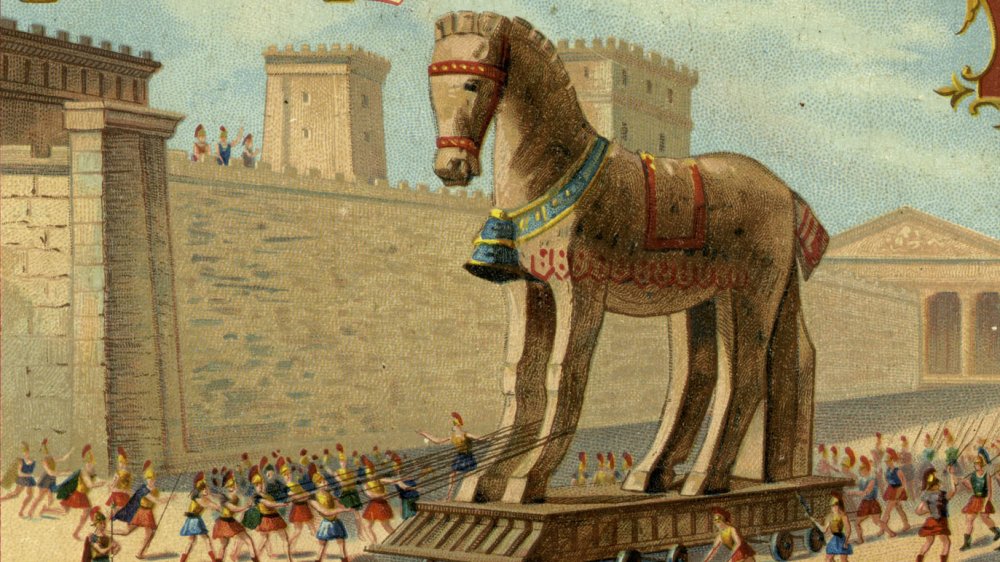
The Trojan War Finally Explained

It is said to have been caused by the Trojans when Paris (the son of the King and Queen of Troy) abducts and marries Helen of Troy, the wife of Menelaus (the Greek king of Sparta). When Paris is killed by Achilles, Helen is returned to Menelaus. Ulysses’ return to his Kingdom in Ithaca is the story of the “Odyssey”. The return takes ten years because of his companions eating of lotus flowers that make them forget their home and stay on an island where the flowers grow, his capture by Polyphemus (a one-eyed monster), an errant wind that blows him off course, giants who attack is fleet of ships and destroy all of them except one, a sorceress (Circe) who turns his crew into pigs, a trip to the Underworld to get guidance from Tiresias on how he may return to his kingdom, an island of Sirens who lure sailors to their death, an attack by Scylla and Charybdis (a six-headed monster), his men’s defiance of the sun god who told them not to eat his cattle, and finally, Calypso (a nymph who keeps Odysseus captive on her island for seven years of conjugal ambition).

Ulysses by Alfred Lord Tennyson | Ulysses poem, Ulysses, Poems

Each of Ulysses’ delays are entertainments to reader/listeners of the “Odyssey”. The encompassing meaning of the story is the maturing of a son and the marriage commitment of a husband and wife. Telemachus is twenty years old but has not grown into a man who takes responsibility for his life. Penelope is a wife who has remained true to a husband who has been lost to her during the period of the Trojan war and Ulysess’s unknown fate after his success in ending the war. Because Ulysses has not returned for ten long years after the end of the war, there are 108 suitors for Penelope’s hand in marriage. The suitors are from noble families of Ithaca and surrounding islands who have taken over Odysseus’ palace, consuming its wealth and resources while courting Penelope.

As the son of a great warrior, Telemachus fails to grow into a man that would take responsibility for ejecting disrespectful suitors in his family’s palace.

As the story progresses, and Ulysses returns to Ithaca, Telemachus becomes an ally to his returning father in a plan to kill the 108 suitors. Telemachus takes responsibility for hiding the palace weapons so the suitors would only have weapons they might have brought with them. Though Telemachus fails in his effort to hide the weapons, he takes responsibility for his error in not having successfully kept them from the suitors. Homer’s message is that Telemachus has become a man by showing valor as an ally to his father and a man who takes responsibility for his decisions.

Penelope’s commitment to marriage is illustrated by her many years of waiting for a husband who may be lost. She denies all her suitors because of the possibility of her husband’s return. In a similar vein, reunion with her husband is evidence of a man who loves his wife in the face of a temptation by a beautiful and alluring nymph who offers him immortality if he would stay with her.

Ulysses shows a commitment to marriage by returning to his wife despite their many years of separation, the offer of immortality, and his defense of a marriage between a fellow Greek King (Menelaus) and his wife, Helen of Troy. The Trojan war was an attack on marriage, for which Ulysses risked his and his army’s lives.

Vandiver ends her lecture by noting the German archaeologist and businessman, Heinrich Schliemann, discovered the ancient city of Troy in Turkey.

Vandiver notes Schliemann had a controversial reputation because of his destructive method of excavation and suspicious handling of artifacts. However, Schliemann significantly contributed to the study of archaeology and the understanding of ancient civilizations.

BELIEF

Extending Harari’s idea of biophysics research and algo-rhythmic programming suggests a potential for immense changes in society. A singularity that melds A.I. with human brain function and algo-rhythmic programming may be tomorrow’s world revolution. Of course, that capability cuts both ways, i.e., for the good and bad of society.

Books of Interest
 Website: chetyarbrough.blog

Homo Deus (A Brief History of Tomorrow)

By: Uval Noah Harari

Narrated By: Derek Perkins

Yuval Noah Harari (Author, Israeli medievalist, military historian, science writer.)

By any measure, Yuval Noah Harari is a well-educated and insightful person who will offend some and enlighten others with his opinion about religion, spirituality, the nature of human beings, and the future. He implies the Bible is a book of fiction that is historically proven to have been written by different authors with contradictions that only interpreters can reconcile as God’s work.

“Homo Deus” is a spiritual book suggesting humanity is on its own and has a chance to survive the future but only through the ability of human understanding and effort.

To Harari, the greatest threats to society are national leaders who believe in God, heaven and eternal life who discount human existence and use of science to improve human life on earth. The irony of Harari’s belief is that humanist leaders are the only hope for human life’ survival.

Harari argues science, free enterprise, and the growth of knowledge offer the best hope for the future of human life.

Neither capitalism nor communism are a guarantee of survival because of the increasing potential for error as human beings become more God-like. Advances in engineering, artificial intelligence, and biotechnology may replace the happenstance of human birth. The value of free enterprise is evident in the agricultural, industrial, and technological revolutions of history. However, as science improves the understanding of the mind and body of human beings, the technology of biogenetics offers hope for the future while running the risk of biological error with unforeseen consequences.

Harari’s book is the brave new world written about by Shakespeare in the 17th century and reimagined by Aldous Huxley in his 1932 dystopian novel “Brave New World”.

On the one hand, Shakespeare offers a positive spin as his character, Miranda, sees people from outside her experience and says “How beauteous mankind is! O Brave! That has such people in’t”. While Huxley notes a future society that becomes conformist and lacks individuality and human emotion. Which way society will turn is unknown.

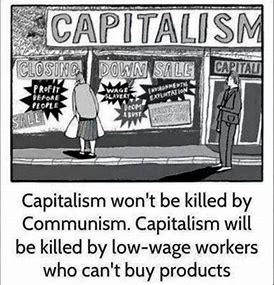
The conformist demands of collective ownership of property and means of production by communism impede creativity. Capitalism is more creative and dynamic. However, capitalist incentive raises the specter of human nature that only sees financial gain without any concern for environmental or human cost. On balance, capitalism appears more likely to accelerate technology because communism more often follows than changes scientific direction.

The growth of knowledge comes from science and exploration of the unknown, but its use can be destructive as well as constructive.

Some think A.I. will lead the world to greater knowledge and prosperity while others believe it will destroy human life. A sceptic might suggest both views are wrong because A.I. is only a tool for recalling knowledge of the past to help humans make better decisions for the future. The real risk, as it has always been, is human leadership.

Harari believes, like Nietzsche, that God is dead because belief in God is losing its power and significance in the modern world.

Though many still believe in God, it seems more people are viewing God as a myth. The Pew Research Center reports a median of 45% of people across 34 countries still believe in God. However, the variation is wide with Brazil saying 70% believe while in Japan the percentage is only 20%. Harari implies belief in God is in decline.

Harari explains biophysics illustrates that human thought is algorithmic. He argues our thoughts, decisions, and behaviors can be understood to be a result of patterns created in human brains that are pre-determined. There is no “free-will” in Harari’s opinion. This is not to suggest aberrant behavior does not exist, but that human thought and action is determined by our experientially defined brain in the same way a computer is programmed. Experience from birth to adulthood is just part of a mind’s programming.

Harari implies understanding of brain function will change the world as massively as the Agricultural, Industrial, and technological revolutions.

Harari goes on to suggest humans have never been singular beings, but a multitude of beings split into two brains that mix and match their biogenetic and biochemical programming to think and act in pre-determined ways. Experiments have shown that the way the left half of a human brain sees and compels action is different than how the right brain sees and compels action. Each half thinks and acts independently while negotiating a concerted action when both halves are functioning normally. That negotiation between the two brain halves results in an algorithm for action based on the biochemical nature of the brain. The way two halves of the brain interact multiply the person we are or will become.

Extending Harari’s idea of biophysics research and algo-rhythmic programming suggests a potential for immense changes in society. A singularity that melds A.I. with human brain function and algo-rhythmic programming may be tomorrow’s world revolution. Of course, that capability cuts both ways, i.e., for the good and bad of society. Interestingly, Harari paints a grim picture of the future based on an A.I. revolution.

CULTURE

Paulette Giles offers a story of America’s unique racial, ethnic, religious and experiential culture.

Books of Interest
 Website: chetyarbrough.blog

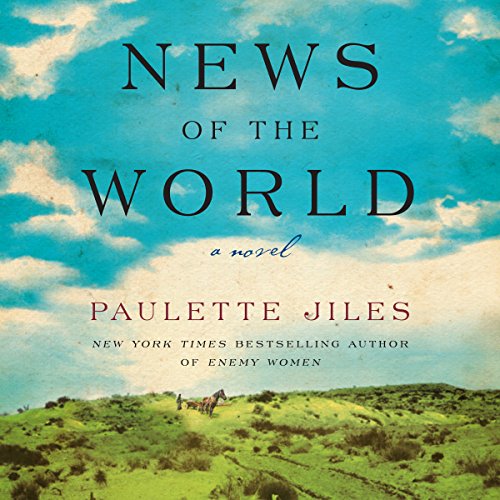
News of the World (A Novel)

By: Paulette Jiles

Narrated By: Grover Gardner

Paulette Jiles (Author, poet, finalist for the National Book Award for “News of the World”)

“News of the World” is a story of a young German American girl abducted by Indians in the 1860s, near San Antonio, Texas. She is recovered by a 71-year-old veteran of the Civil War. The author’s contextual research is impressive. Having personally lived in Texas for several years and knowing there is a small Texas town north of San Antonio with a large German ancestral population,”News of the World” becomes immediately credible.

Jiles fictional story is about a young white girl who is 10 years old when she is recovered from an Indian tribe by a Civil War veteran.

The young girl was abducted when she was six. Her four years of captivity were in the formative years of life. She successfully adapts to her tribal environment but does not completely lose knowledge of her younger past. Jiles hero is a Texas oldster who travels the country making a living as a reader of newspapers to citizens interested in news of the world. Many American citizens did not have the money, or the education, to read news of the world. To have that news read to them became an entertainment for many willing to pay a penny, a dime, or as much as a quarter. The former veteran, as an officer in the Rebel army during the war is well educated with experience of combat during the Civil War. That combat experience becomes important in the return of the captive to her German immigrant family.

A bounty of $50 is offered for return of the abducted girl.

The veteran takes the job. Jiles writing is excellent, but the narration of Grover Gardner gives the story an extra level of interest. Experience of life is a trial by fire for most human beings. Imagine being abducted from your family at the age of six by a culture different than your own and how traumatic it would be but how life expanding it could become. This six-year-old represents the melting pot of America. Jiles creates a fictional representative of three cultures, i.e. German, Indian, and pioneer that influences the melding of American culture.

Though Giles may not have meant to illustrate the melding of cultures by her entertaining story, much of what American culture represents is an amalgam of older cultures.

America’s Civil War, the Indian wars, and living life makes American culture unique. Every nation is made up of different races, ethnicities, religions, and experiences that make them unique. Paulette Giles offers a story of America’s unique racial, ethnic, religious and experiential culture.

NO EASY SOLUTION

“Everyone Who Is Gone Is Here” is an indictment of American foreign policy. There are no easy solutions for immigration, deportation, or human rights in the world.

Books of Interest
 Website: chetyarbrough.blog

Everyone Who Is Gone Is Here (The United States, Central America, and the Making of a Crises)

By: Johnathan Blitzer

Narrated By: Jonathan Blitzer, Andre Santana

Johnathan Blitzer (Author, American journalist, staff writer for The New Yorker.)

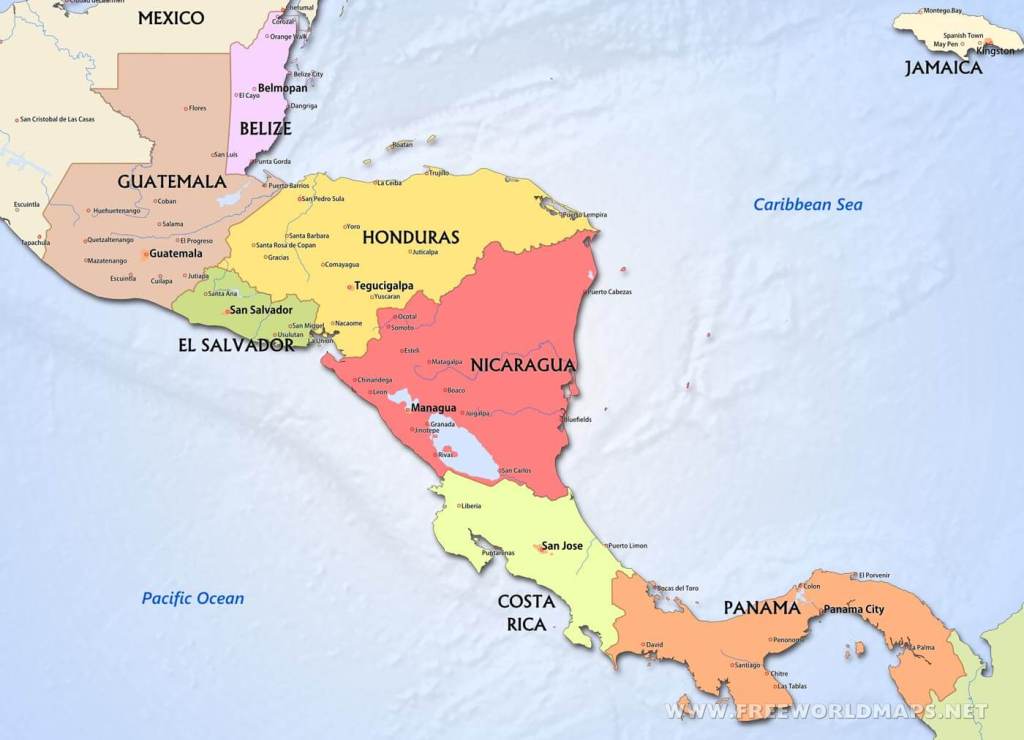
“Everyone Who Is Gone Is Here” is an indictment of American foreign policy. There seems a loss of a moral center in America with its support of other governments based solely on government type, national security, or economic interest. That is not to suggest national security and economic interest are not critically important but Blitzer’s history of America’s support of Central American governments is appalling. El Salvado, Guatemala, Honduras, and Nicaragua are democracies in title but not in reality.

Blitzer tells the story of migrants from El Salvadore and Guatemala who are imprisoned, tortured, and sometimes raped or murdered by their government’s functionaries.

El Salvadoran and Guatemalan governments purport to be representative democratic republics. They are not. They have been dictatorial and punitive victimizers of their citizens. The picture drawn by Blitzer is that both are highly autocratic and riven with exploitation and arbitrary treatment of their Latino populations.

Some immigrants came to roil American communities with the only tools they were familiar with in their native countries.

Many immigrants came to America to escape arbitrary treatment by their governments. America has benefited from its immigrant labor, but some turned to street drugs and violence because of their poverty and the experience their families lived with in their native countries. Driven by self-interest, a survival instinct, and ignorance, America has deported many Latino immigrants who chose the gang life in the California suburbs. Gang life offered identity and income. Gangs like MS-13, the 18th Street Gang and other street name gangs terrorized L.A. and Southern California. The police reacted with violence by rounding up Latinos based on gathered photographs and lists of their families and friends. Some who had proven records of crime were imprisoned or deported to their families’ countries even though they may have been born in America.

America has financially and militarily supported Central America without regard to human rights.

There is a taint of McCarthyism in America’s communist categorization of Central American countries because false categorizations hides the truth. The truth is that democratic countries like El Salvadore and Guatemala have treated citizens as harshly as yesterday’s Stalin, today’s Ayatollah in Iran, and the two Assads in Syria. Reagan’s willingness to sell arms to Iran in the 1980s for money to send to Nicaragua because communism was allegedly opposed by those in power is an example of America’s political blindness. Nicaraguan, Salvadorian, and Guatemalan leadership was as corrupt as many communist countries that practiced violence, imprisonment, torture, and murder of their citizens. Whether one’s government is communist or democratic, the important issue is how its citizens are treated, not its form of government. Bad forms of government will eventually fall from the weight of their citizens’ unequal treatment, just as Syria fell in 2024. The sufferers are always the oppressed citizens and, as interestingly noted by the author, the government perpetrators who live with the guilt they feel when they retire from their military or government jobs.

What Blitzer infers in his history of Central America is that human rights of citizens should be the primary criteria for American financial and/or military support for foreign governments whether democratic, communist, socialist, or other.

National stability comes from citizens’ support of their government. Stability is compromised when human rights are denied. Blitzer implies–America should only financially or militarily support another country only if the nativist nation and culture is working toward equal human rights for its citizens. The immigrant crises in America and the world is caused by nations that do not work toward equal human rights for their citizens.

One is somewhat conflicted by Blitzers’ argument. The conflict is in an outsiders’ understanding of a foreign countries’ culture.

Human rights may be universal, but culture is made of beliefs, values, norms, customs, language, art, literature, food, fashion, social institutions, and unique symbols and artifacts of particular nation-states. This great host of characteristics is not easily quantifiable. No nation can justify rape, torture, or murder but they do exist in all cultures. Ignorance of culture is at the heart of why any country that invades, or militarily and financially supports another country, risks failure.

There are no easy solutions for immigration, deportation, or human rights in the world.

LIFE

The eradication of inequality is in the eyes of beholders. We are mere humans struggling to be better than we are.

Books of Interest
 Website: chetyarbrough.blog

The Female Persuasion (A Novel)

By: Meg Wolitzer

Narrated By: Rebecca Lowman

Meg Wolitzer (Author)

Many “sexual awakening” books of the past are about men and boys. Nabokov’s Lolita, Lawrence’s “Lady Chatterley’s Lover, Baldwins “Giovanni’s Room” to name three. “The Female Persuasion” gives listener/readers a glimpse of what “sexual awakening” is for girls. That is not to say “The Female Persuasion” is only about sexual awakening. Wolitzer’s story illustrates there is little difference between young men’s and women’s interest in sex and their ambition for success in an adult world.

“The Female Persuasion” gives voice to the equality of women despite historical misogyny.

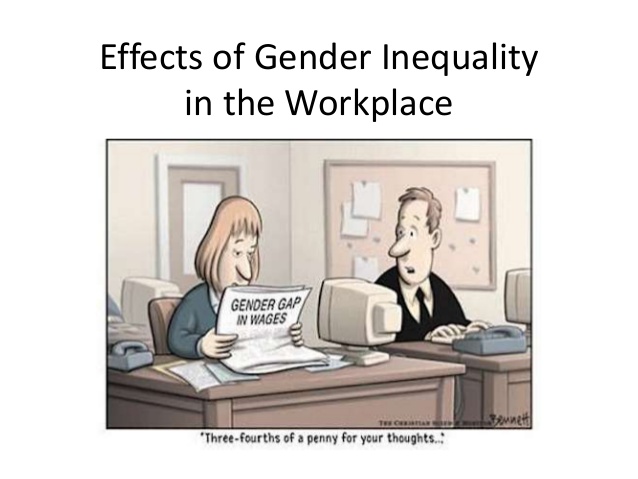
Two women roommates at a fictional college talk about their lives and explain their frustration with unequal treatment in society. One has sexual relations with women, the other with men but each feel their opportunities in life are limited by being women in a Mans’ world. Greer Kadetsky complains to the University about a male student who sexually assaults her and is ignored by the administration. She is characterized as an intelligent woman who is eligible for admission to Yale but is rejected because of her parents’ mistakes on a financial disclosure form about scholarship assistance. Her unhappiness about not getting into Yale is compounded by the student assault she reports that is essentially ignored by the local college she attends.

Men and women are equal and should be afforded all the rights and opportunities available to men.

The heroine of the story has a boyfriend, Cory Pinto, whom she met in high school. They became lovers at some point in their relationship. She notes in a college dorm where her boyfriend undresses her and expresses admiration of her body. She appreciates her lover’s comment. The author’s perception of beauty reinforces the similarity between men and women and their sexuality. Beauty is in the eye of the beholder, whether male or female, but every person appreciates positive comment about their appearance.

Another element of interest in “The Female Persuasion” is a reinforcement of the saying “Birds of a feather flock together”. Cory and Greer come from lower middleclass families while showing higher than average intelligence in high school that leads them to a college education. After graduation, Cory and Greer move-in together with Cory finding a job while Greer volunteers at a non-profit while pursuing a writing career. Is it a surprise that a person with a college degree has a hard time finding a job after graduating? No, but it seems men are luckier, or one might conclude men are beneficiaries of a built-in gender bias.

Not to read too much into Wolitzer’s story, it seems most job opportunities are better for men than women.

Greer has a chance meeting with a feminist who speaks at the university she attends. In that serendipitous contact, Greer makes a positive impression on the speaker. After graduation, Greer is contacted by the famous feminist with a possible job interview. However, the potential employer dies, and the interview never happens. Meanwhile, Cory has found a job and is pursuing his career. Greer is living at home with her parents to cut down on expenses.

Greer is contacted by a New York feminist organization and is offered an interview that results in a job in New York.

Cory is working outside the country for his company, but the couple continues a long-range relationship. Greer is gaining some success and experience in her job. An interesting incident is noted that gives listener/readers insight to women’s competitiveness when Greer exhibits reluctance to show a letter to her employer for her former gay friend looking for a job. Greer chooses not to proffer the letter to her employer and lies to her friend about having given it. This seems a petty incident, but it is present in all human beings, i.e., the feeling that a person who has found their step on the ladder of success should care about others when they might be competing with them if they go to work for the same company. This seems a matter of personal ambition, not a gender or sexual orientation issue.

The end of the book offers an unsatisfying “bow tie”. The ending has a fairy tale quality that will appeal to some, but the real world is different. Life happens, jobs change, people’s relationships fall apart; some mend, others do not. The eradication of inequality is in the eyes of beholders. We are mere humans struggling to be better than we are.

A.I.’ PROGRAMMING

A.I. machines do not think! It is critically important for users of A.I. to continually measure the human results of “A.I. based” decisions. Users must be educated to understand A.I. is a tool of humanity, not an oracle of truth. A.I. must be constantly reviewed and reprogrammed based on its positive contribution to society.

Books of Interest
 Website: chetyarbrough.blog

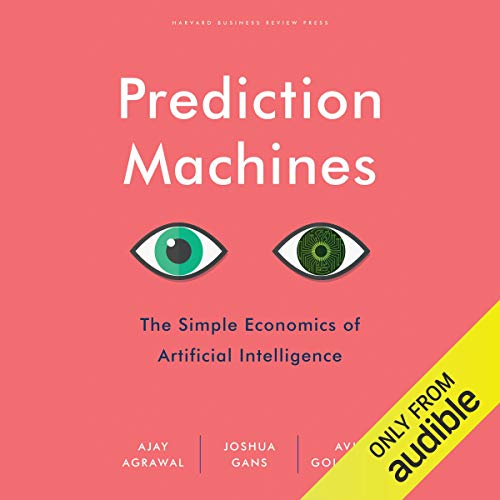
Prediction Machines (The Simple Economics of Artificial Intelligence) 

By: Ajay Agrawal, Joshua Gans, Avi Goldfarb

Narrated By: U Ganser

Authors, from left to right: Ajay Agrawal (Professor at Rotman School of Management @ University of Toronto), Joshua Gans (Chair in Technical Innovation and Entrepreneurship at the Rotman School), Avi Goldfarb (Chair in Artificial Intelligence, Healthcare, and Marketing at the Rotman School).

This is a tedious book about the mechanics of artificial intelligence and how it works, i.e., at least in its early stages of development.

Like in the early days of computer science, the phrase “garbage in, garbage out” comes to mind. “Prediction Machines” makes the point that A.I. is software creation for “…Machines” that are only as predictive as the ability of its programmers. Agrawal, Gans, and Goldfarb give a step-by-step explanation of a programmer’s thought process in creating a predictive machine that does not think but can produce predictions.

The obvious danger of A.I. is that users may believe computers think when in fact they only reproduce what they are programmed to reveal.

They can be horribly wrong based on misrepresentation or misunderstanding of the real world by programmers who are trapped in their own beliefs and prejudices. A. I.’s threat rests in the hands of those who view it as a “god-like” oracle of truth when it is only a tool of human beings.

The horrible and unjust murder of the United Health Care executive reminds one of how critical it is for all business managers to be careful about how A.I. is used and the way it affects its customers.

“Prediction Machines” is a poorly written book that illustrates how a programmer methodically organizes information with decisions and actions triggered by A.I.’ users who believe machines can be programmed to think. A.I. machines do not think!

Managers must be alert and always inspect what they expect.

It is critically important for users of A.I. to continually measure the human results of “A.I. based” decisions. Users must be educated to understand A.I. is a tool of humanity, not an oracle of truth. A.I. must be constantly reviewed and reprogrammed based on its positive contribution to society.

CULTURE WARS

The tragedy of cultural conflict fills the pages of Frazer’s history of the Mayflower adventure. Listeners are numbed by the many mistakes made by both Americanized English and indigenous natives in an interminable cultural war, a war that is still being played and paid for today.

Books of Interest
 Website: chetyarbrough.blog

Hollywood Park: The Mayflower 

By: Rebecca Fraser

Narrated By: Kate Reading

Rebecca Fraser (Author, British writer and broadcaster, former president of the Bronte Society.)

In the early years of the 17th century, Puritans fled to America to escape persecution by King James I of England and his mother, Mary Queen of Scots. Though King James was not as much of a doctrinarian as his mother, it was dangerous for non-Catholics to live in England or Scotland. Fraser explains many English Puritans sought refuge in Holland. “The Mayflower” is a history of the first years of the Kingdom of England’s and Scottland’s Puritan settlements in America. Three of the most famous Mayflower’ passengers were William Bradford, Myles Standish, and William Brewster. Both Bradford and Brewster sailed from the Netherlands to England to board the Mayflower. Bradford became the first governor of the Plymouth Colony in America. Myles Standish became the military leader of the settlers. William Brewster was the spiritual leader of Puritan followers.

Fraser explains how Standish became important in the Mayflower’s cramped quarters, rough seas, and limited food. Standish maintained a level of discipline while Brewster provided spiritual support to the Pilgrims and non-religious separatists. The author reveals how shoddy the accommodations were on the Mayflower and how poorly prepared the ship was for such a perilous voyage. Provisioning was inadequate and the ship became overloaded when their sister ship had to return to England because of its unseaworthiness. More passengers were added to the Mayflower when the sister ship headed back to England. There were no doctors on board. A baby was born with the help of a mid-wife. Fraser gives one a picture of a two-month voyage that was hellish. Five of 102 passengers died at sea.

Upon arrival, survivors were faced with November winter conditions.

Forty-five of the 102 passengers died from a lack of shelter, poor rationing, and cold temperatures. The Mayflower was used as a shelter for much of the winter. No Native Americans greeted the travelers when they landed. It was March before an English-speaking Native named Samoset from the Wampanoag tribe met and talked to the settlers. Samoset introduced another English-speaking Native named Tisquantum, aka Squanto. Squanto taught the newcomers how to grow corn, catch fish, and find edible plants. Without that help, one doubts even these 57 settlers would have survived.

Fraser reveals the complicated relationship between settlers and indigenous natives.

In some ways it reminds one of the difficulties America has had with interventions in modern foreign countries. Not living the life of other cultures, the threat of losing a native’s way of life, and innate suspicion of those who are not like you, creates misunderstandings and conflict. These are conflicts within America today; let alone relations with other nations in modern times.

As Fraser continues her history of America’s newcomers, differences in cultural beliefs, whether religious or secular, show why all nations in the world are challenged by difference.

Two indigenous natives, Samoset and Squanto, opened the door of communication between cultures. Squanto learned English because of his capture by John Smith’s men in 1614-15 with the intent of enslavement. Squanto escapes and returns to his native land. Because he could speak English, despite his kidnapping, he used what he learned to help settlers know how to plant corn, fish, and hunt beaver for survival.

Indigenous native cultures evolve with the influence of the Puritan settlers. They adopt a conception of Kings that rule over others.

Two Indian brothers rose to the level of kings in the Wampanoag tribe of New England. They were the sons of chief Massasoit who saved the pilgrims from starvation by helping them understand how to cultivate the land and fish for survival. As the pilgrims multiplied, human nature led to conflicts between indigenous natives and themselves. Though the initial source of value exchange began as wampum (shell bead), it evolved to printed currency which changed the nature of life, labor, and trade.

Human nature is freighted with the desire for money, power, and prestige.

Those desires lead to conflicts between native cultures and the Pilgrims. The desire for land began to infringe on the culture of native tribes. Soon, these conflicts escalated to war between English settlers and leaders of native tribes. Fraser details the rise of King Alexander and King Phillip of the Wampanoag tribe that began to organize against the settler’s encroachment on native lands. Alexander is killed but his brother becomes a great leader among many indigenous natives and begins what seems an interminable and savage war against the settlers. The savagery on both sides escalates with scalping, dismemberment, and pilloried heads on spikes.

The tragedy of cultural conflict fills the pages of Frazer’s history of the Mayflower adventure. Listeners are numbed by the many mistakes made by both Americanized English and indigenous natives in an interminable cultural war, a war that is still being played and paid for today.

PATTERN ME

One may conclude from Hawkin’s research that human beings remain the smartest if not the wisest creatures on earth. The concern is whether our intelligence will be used for social and environmental improvement or self-destruction.

Books of Interest
 Website: chetyarbrough.blog

On Intelligence

By: Jeff Hawkins, Sandra Blakeslee

Narrated By: Jeff Hawkins, Stefan Rudnicki

Jeff Hawkins co-founder of Palm Computing and co-creator of PalmPilot, Treo, and Handspring.

Hawkins and Blakeslee have produced a fascinating book that flatly disagrees with the belief that computers can or will ever think.

Hawkins develops a compelling argument that A.I.’ computers will never be thinking organisms. Artificial Intelligence may mislead humanity but only as a tool of thinking human beings. This is not to say A.I. is not a threat to society but it is “human use” of A.I. that is the threat.

Hawkins explains A. I. in computers is a laborious process of one and zero switches that must be flipped for information to be revealed or action to happen.

In contrast to the mechanics of computers and A.I., human minds use pattern memory for action. Hawkins explains human memory comes from six layers of neuronal activity. Pattern memory provides responses that come from living and experiencing life while A.I. has a multitude of switches to flip for recall of information or a single physical action. In contrast, the human brain instantaneously records images of experience in six layers of neuronal brain tissue. A.I. has to meticulously and precisely flip individual switches to record information for which it must be programmed. A.I. does not think. It only processes information that it is programmed to recall and act upon. If it is not programmed for a specific action, it does not think, let alone act. A.I. acts only in the way it is programmed by the minds of human beings.

So, what keeps A.I. from being programmed to think in patterns like human beings? Hawkins explains human patterning is a natural process that cannot be duplicated in A.I. because of the multi-layered nature of a brain’s neuronal process. When a human action is taken based on patterning, it requires no programming, only the experience of living. For A.I., patterning responses are not possible because programming is too rigid based on ones and zeros, not imprecise pictures of reality.

What makes Jeff Hawkins so interesting is his broad experience as a computer scientist and neuroscientist. That experience gives credibility to the belief that A.I. is only a tool of humanity. Like any tool, whether it is an atom bomb or a programmed killing machine, human patterning is the determinate of world peace or destruction.

A brilliant example given by Hawkins of the difference between computers and the human brain is like having six business cards in one’s hand. Each card represents a complex amount of information about the person who is part of a business. With six cards, like six layers of neuronal receptors, a singular card represents a multitude of information about six entirely different things. No “one and zero” switches are needed in a brain because each neuronal layer automatically forms a model that represents what each card represents. Adding to that complexity, are an average of 100billion neurons in the human body conducting basic motor functions, complex thoughts, and emotions.

There are an estimated 100 trillion synaptic connections in the human body.

The largest computer in the world may have a quintillion yes and no answers programmed into its memory but that pales in relation to a brains ability to model existence and then think and act in response to the unknown.

This reminds one of the brilliant explanation of Sherlock Holmes’ mind palace by Sir Arther Conan Doyle. Holmes prodigious memory is based on recall of images recorded in rooms of his mind palace.

Hawkins explains computers do not “think” because human thought is based on modeling their experience of life in the world. A six layered system of image modeling is beyond foreseeable capabilities of computers. This is not to suggest A.I. is not a danger to the world but that it remains in the hands and minds of human beings.

What remains troubling about Hawkin’s view of how the brain works is the human brains tendency to add what is not there in their models of the world.

The many examples of eye-witness accounts of crime that have convicted innocent people is a weakness because people use models of experience to remember events. Human minds’ patterning of reality can manufacture inaccurate models of truth because we want our personal understanding to make sense which is not necessarily truth.

The complexity of the six layers of neuronal receptors is explained by Hawkins to send signals to different parts of the human body when experience’ models are formed.

That is why in some cases we have a fight or flight response to what we see, hear, or feel. It also explains why there are differences in recall for some whose neuronal layers operate better than others. It is like the difference between a Sherlock Holmes and a Dr. Watson in Doyle’s fiction. It is also the difference between the limited knowledge of this reviewer and Hawkins’ scientific insight. What one hopes science comes up with is a way to equalize the function of our neuronal layers to make us smarter, and hopefully, wiser.

One may conclude from Hawkin’s research that human beings remain the smartest if not the wisest creatures on earth. The concern is whether our intelligence will be used for social and environmental improvement or self-destruction.

LIBERAL DELUSION

Eubanks is wrong to think digitization ensures a future that will create a permanent underclass. The next four years may not show much progress in welfare, but American history has shown resilience in the face of adversity.

Books of Interest
 Website: chetyarbrough.blog

Automating Inequality (How Hich-tech Tools Profile, Police, and Punish the Poor

By: Virginia Eubanks

Narrated By: Teri Schnaubelt

Virginia Eubanks (Author, American political scientist, professor at the University at Albany, New York.)

At the risk of sounding like a “bleeding heart” liberal, Virginia Eubanks assesses the inefficient and harmful effects of technology on welfare, childcare services, and homelessness in America. Eubanks illustrates how technology largely reduced the cost of Indiana’s welfare. However, cost reduction came from removing rather than aiding Americans in need of help. She shows southern California is better organized in the 2000s than Indiana in their welfare reform movement in the 1990s. However, the fundamental needs of the poor and homeless are shown to be poorly served in both jurisdictions.

In the last chapters of the book, Eubanks looks at Pennsylvania’s childcare services (CCW). She argues her research shows digitization of personal information, societal prejudice, and inadequate financial investment as fundamental causes of America’s failure to help abused children. Eubanks implies the cause of that failure is the high-tech tools of the information age.

Eubanks offers a distressing evaluation of Indiana’s, California’s, and Pennsylvania’s effort to improve state welfare programs.

The diagnosis and cure for welfare are hard pills to swallow but Eubank’s research shows welfare’s faults without clarifying a cure. She clearly identifies symptoms of inequality and how it persists in America. Eubank infers America’s politicians cannot continue to ignore homelessness and inequality. America needs to reinforce its reputation as the land of opportunity and freedom. Eubank implies technology is the enemy of a more equal society by using collected information to influence Americans to be more than self-interested seekers of money, power, and prestige.

Eubank explains how Indiana welfare recipients were systematically enrolled in an information technology program meant to identify who receives welfare, why they are unemployed, and how they spend their money.

She argues this detailed information is not just used to categorize welfare recipients’ qualifications for being on welfare. The purported reason for gathering the information is to help those on welfare to get off welfare and become contributors to the American economy. What Eubank finds is the gathered information is used to justify taking citizens off of welfare, not improve its delivery. Poorly documented information became grounds for denying welfare payments. If someone failed to complete a form correctly, their welfare payments were stopped. The view from government policy makers was that welfare costs went down because of the State’s information gathering improvements. In reality welfare costs went down because recipients were rejected based on poorly understood rules of registration. Indiana did not have enough trained management personnel to educate or help applicants. Welfare applicants needed help to understand how forms were to be completed and what criteria qualified them for aid.

From Indiana State’s perspective, information technology reduced their cost of welfare. From the perspective of Americans who genuinely needed welfare, technology only made help harder to receive.

Eubank notes there are three points that had to be understood to correct Indiana’s welfare mistakes:

  1. information algorithms qualifying one for welfare must be truthful, fair, and accurate,
  2. the information must reflect reality, and
  3. training is required for welfare managers and receivers on the change in welfare policies.

Another point made by Eubank is the danger of computer algorithms that are consciously or subconsciously biased. A biased programmer can create an algorithm that unfairly discriminates against welfare applicants that clearly need help. This seems a legitimate concern, but Eubank misses the point of more clearly understanding the need of welfare for some because of the nature of American capitalism and the consequence of human self-interest. Contrary to Eubank’s argument, digitalization of information about the poor offers a road to its cure not a wreck to be avoided.

WELFARE CATEGORY ELIGIBILITY PERCENTAGES IN INDIANA

Eubank tells the story of a number of Indiana residents that had obvious medical problems making them unemployable but clearly eligible for welfare payments. They are taken off welfare because of mistakes made by government employees’ or welfare recipient’ misunderstandings of forms that had to be completed. From the government’s standpoint Indiana’ welfare costs went down, but many who needed and deserved help were denied welfare benefits. The rare but widely publicized welfare cheats became a cause celeb during the Reagan years that aggravated the truth of the need for welfare in America. The truth, contrary to Eubanks opinion, becomes evident with the digitization of information as a basis for legislative correction.

Eubank notes Skid Row in Los Angeles lost many of its welfare clients with gentrification of the neighborhood. The poor were moved out by rich Californians who rebuilt parts of Skid Row into expensive residences.

Eubank explains a different set of problems in the Los Angeles, California welfare system. The technological organization of the LA welfare system is better but still fails to fairly meet the needs of many citizens. The reasons are similar to Indiana’s in that algorithms that categorize information were often misleading. However, the data-gathering, management, and use of information is better. The more fundamental problem is in resources (money and housing) available to provide for the needs of those who qualify for welfare. It is not the digitization of the public that is causing the problem. Contrary to the author’s opinion, digitization of reality crystalizes welfare problems and offers an opportunity for correction.

Homelessness is complex because of its many causes. However, having affordable housing is a resource that is inadequately funded and often blocked by middle class neighborhoods in America. Even if the technological information is well organized and understood, the resources needed are not available. Here is where the social psychology of human beings comes into play. Those in the middle class make a living in some way. They ask why can’t everyone make a living like they have? Why is it different for any other healthy human being in America? Here is where the rubber meets the road and why homelessness remains an unsolved problem in America.
People are naturally self-interested. One person’s self-interest may be to get high on drugs, another to steal what they want, others to not care about how they smell, where they sleep, look, live, or die. Others have chosen to clean themselves up and get on with their life. Why should their taxes be used to help someone who chooses not to help themselves? Understanding the poor through digitization is the foundation from which a solution may be found.

Traveling around the world, one sees many things. In India, the extraordinary number of people contributes to homelessness. In France, it is reported that 300 of every 100,000 people are homeless. Even in Finland, though there are fewer homeless, they still exist.

It is a complex problem, but it seems solvable with the example of what Los Angles is trying to do. It begins with technology that works by offering a clear understanding of the circumstances of homelessness. A detailed profile is made of every person that is living on the street. They are graded on a scale of 1 to 17 based on the things they have done in their lives. That grade determines what help they may receive. Some may be disqualified because of a low number but the potential of others, higher on the scale, have an opportunity to break the cycle of poverty with help from welfare. It is the resources that are unavailable and social prejudice, not gathered personal digital information, that constrain solutions.

With informational understanding of a welfare applicant, it principally requires political will and economic commitment by welfare providers. There is no perfect solution but there are satisficing solutions that can significantly reduce the population of those who need a helping hand. American is among the richest countries in the world. Some of that wealth needs to be directed toward administrative management, housing, mental health, and gainful employment.

Like all countries of the world, as technological digitization improves, human services will grow to become a major employment industry in the world.

America, as an advanced technology leader, has the tools to create a service economy that is capable of melding industrial might with improved social services.

Eubanks travels to Pennsylvania to look at their child services program.

What Eubanks finds in Pennsylvania is similar to what she found in LA and, to a degree, Indiana. Children who are at risk of being abandoned, abused, or neglected are categorized in a data bank that informs “Child Services” of children who need help. The problem is bigger than what public services can handle but the structure of reporting offers hope to many children that are at risk. Like LA, it is a resource problem. But also, it is a problem that only cataloging information begins to address.

Parents abuse their children in ways that are often too complicated for a standardized report to reveal. Details are important and digitization of personal information helps define what is wrong and offers a basis for pragmatic response.

Computerized reports, even with A.I., are only a tip of the reality in which a child lives. This is not to argue child-services should be abandoned or that reports should not be made but society has an obligation to do the best it can to ensure equality of opportunity for all. Every society’s responsibility begins with childhood, extends through adulthood and old age–only ending with death. Understanding the problems of the poor is made clearer by digitization. Without digital visibility, nothing will be done.

Eubanks gives America a better understanding of where welfare is in America. She is wrong to think digitization ensures a future that will create a permanent underclass. The next four years may not show much progress in welfare, but American history has shown resilience in the face of adversity.