EVIL’S PERSONIFICATION

One asks oneself, what leaders in the world today have remorse for the incarcerations, torture, and killings for which they are responsible? What remorse is there in Putin’s, Ayatollah Ali Khamenei’s, Prime Minister Netanyahu’s, and even our American President’s thoughts?

Books of Interest
 Website: chetyarbrough.blog

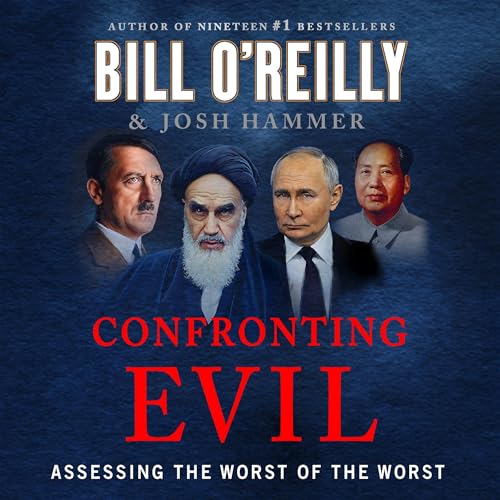
CONFRONTING EVIL (Assessing the Worst of the Worst)

Author: Bill O’Reilly, Josh Hammer

Narrated By: Robert Petkoff

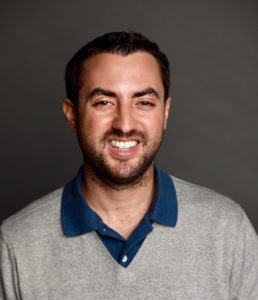
Bill O’Reilly, American conservative commentator, journalist, author, and television host. Josh Hammer, American conservative commentator, attorney, co-author, and columnist.

History taken out of the context of its time often distorts the reality of the past.

“Confronting Evil” is an interesting if not nuanced history of the most notorious leaders in the world. They were responsible for the torture, incarceration, and death of millions. As is true of most if not all histories of famous and infamous leaders, historians and pundits choose facts that reinforce their view of world’ history. Even the best historian is influenced by the time in which they write and their choice of facts.

Nathan Bedford Forest (1821-1877, General in the Confederate States of America during the Civil War.)

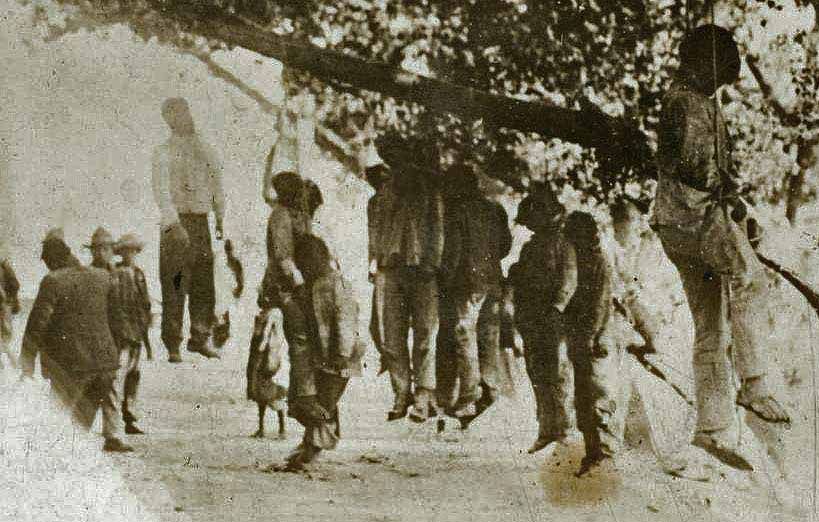
One is appalled by the truth of Nathan Bedford Forest’s view of slavery during America’s Civil War. Forest directed the slaughter of people based on the color of their skin. Forest condoned the murder of all who believed in equality of human beings. Forest is considered a hero to some but with the passage of time and a growing belief in human equality, Forest is recognized as a despicable human being by those who know the history of his life and profession. The evidence of science and human accomplishment show that the color of one’s skin is no measure of intelligence or capability. Forest’s mistreatment of slaves and the wealth he created from trading in slaves is reported in this history. By many measures, Forest is shown as an evil person by O’Reilly and Hammer.

The rule of Genghis Kahn is said to have caused the death of 40 million people, an estimated 11% of the global population at his time in history.

Presumed image of Genghis Kahn (1162-1227, Founder and first Khan of the Mongol Empire.)

By some measures, Mao doubled that 40 million number with his “Great Leap Forward”, the “Cultural Revolution”, his labor camp creations, and political purges. Hitler is estimated to have caused the death of 17 million with his genocidal policies while casualties from WWII are estimated at 85 million. Hitler’s antisemitism is born of the same stupidity exhibited by Nathan Bedford Forest in America’s Civil War. The contribution of Jewish society to the world is incalculable.

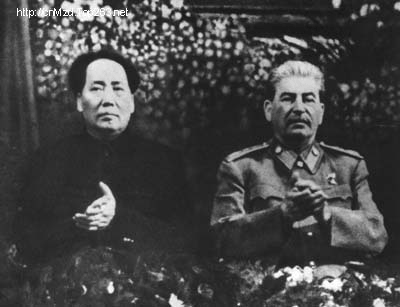
Mao Zedong (1893-1976) Father of the Peoples Republic of China)

Mao’s great leap forward is estimated to have caused the death of 35 to 45 million citizens. The rule of Stalin is estimated to have caused the death of 20 to 60 million U.S.S.R.’ citizens. Stalin’s takeover of Poland, and the Baltics after WWII and his cruelty is remembered by survivors of his rule.

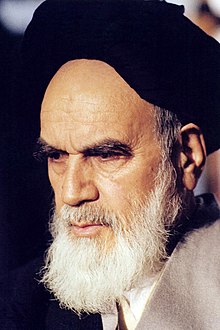
There are many other evil characters in “Confronting Evil”. In the mind of westerners, the current leaders of Iran and Russia are evil. The leader of Iran, Ruhollah Khomeini is estimated to have ordered deaths of Iranians that exceed 250,000 since his takeover in 1979. Though he has passed, the succession of Ayatollah Ali Khamenei has carried on with tens of thousands who have died in Iran’s involvement with Hamas in Palestine, Syria, Iraq, Yemen, and Lebanon. The predecessor of the religious leaders of Iran was Mohammad Reza Shah Pahlavi who reigned from 1941-1970. Pahlavi is estimated to have murdered 3,000 to 20,000 during his reign. These leaders ruled over an impoverished state but incomes per capita fell from $34,660 during the Shah’s reign to $3,150 under Khomeini’s rule. An irony is that income inequality hugely increased in Iran during Khomeini’s rule. Nuanced reality is that poverty and victimization of Iranians is more widely spread under Khomeini than under the former Shah. On an economic scale it appears Khomeini’s evil as a leader exceeds the Shah’s rule. Added to the economic difference is the religious zealotry of Khomeini which widened the gap of sexual inequality in Iran.

Ruhollah Khomeini (1st Supreme Leader of Iran, 1979-1989)

Ayatollah Ali Khamenei (Current leader of Iran.)

The authors address the illicit drug industry and the evil of Pablo Escobar in Columbia and “El Chapo” Guzmán in Mexico. Escobar was killed in 1993 when pursued by drug enforcement officers while Guzmán is serving a life sentence in the U.S. The drug industry continues to thrive despite the harm it is doing to America and the world. The leaders of the criminal drug industry care nothing for the consequence of their actions because of the wealth and power the illicit trade offers.

Pablo Escobar (now deceased) noted on the left with “El Chapo”(arrested and imprisoned in America) on the right.

The last two chapters of “Confronting Evil” offer a pithy definition of evil. Evil is defined as doing harm without remorse. One doubts any of the leaders noted by the authors have or had any remorse for the atrocities they have committed. Whether they rationalize their behavior for the good of their people, their religion, or their country—they are evil by O’Reilly and Hammer’s definition. One doubts any of the leaders noted in “Confronting Evil” are remorseful.

One asks oneself, what leaders in the world today have remorse for the incarcerations, torture, and killings for which they are responsible? What remorse is there in Putin’s, Ayatollah Ali Khamenei’s, Prime Minister Netanyahu’s, and even our American President’s thoughts?

RISK/REWARD

“IF ANYONE BUILDS IT, EVERYONE DIES” is an alarmist, and unnecessarily pessimistic view of the underlying value of Artificial Intelligence. This is not to suggest there are no risks in A.I. but its potential outweighs its risks.

Books of Interest
 Website: chetyarbrough.blog

IF ANYONE BUILDS IT, EVERYONE DIES

Author: Eliezer Yudkowsky, and Nate Soares

Narrated By: Rae Beckley

Eliezer Yudkowsky is a self-taught A.I. researcher without a formal education. As an A.I. researcher, Yudkowsky founded the Machine Intelligence Research Institute (MIRI). Nate Soares received an undergraduate degree from George Washington University and became President of MIRI. Soares had worked as an engineer for Google and Microsoft. Soares also worked for the National Institute of Standards and Technology and the U.S. Dept. of Defense.

“IF ANYONE BUILDS IT, EVERYONE DIES” is difficult to follow because it’s convoluted examples and arguments are unclear. The fundamental concern the writers have is that A.I. will self-improve to the point of being a threat to humanity. They argue that A.I. will grow to be more interested in self-preservation than an aid to human thought and existence. The irony of their position is that humanity is already a threat to itself from environmental degradation, let alone nuclear annihilation. The truth is humanity needs the potential of A.I. to better understand life and what can be done to preserve it.

To this listener/reader environmental degradation is a greater risk than the author’s purported threats of A.I.

Pessimism is justified in the same way one can criticize capitalism.
The authors have a point of view that is too pessimistic about A.I. and its negative potential without recognizing how poorly society is structured for war and killing itself without Artificial Intelligence. The advance of A.I. unquestionably has risks just as today’s threat of mutual nuclear annihilation but A.I.s’ potential for changing the course of civilization for the better exceeds the agricultural and industrial revolutions of the past.

The nature and intelligence of human beings is underestimated by Yudkowsky and Soares.

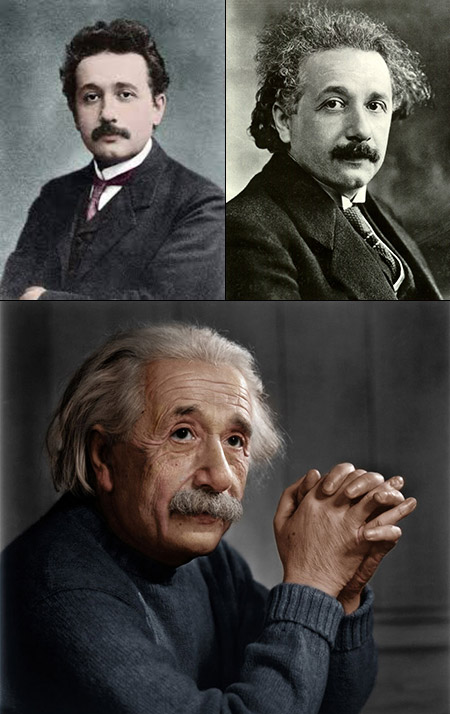
There have been a number of amazing human discoveries that have accelerated since the beginning of civilization in Mesopotamia. Humans like Einstein and their insight to the universe will be aided, not controlled, by the potential of A.I. Artificial Intelligence is no more a danger to humanity than the loss of craftsman during the industrial revolution. Civilization will either adapt to revelations coming from A.I. or environmental degradation or human stupidity will overtake humanity.

“IF ANYONE BUILDS IT, EVERYONE DIES” is an alarmist, and unnecessarily pessimistic view of the underlying value of Artificial Intelligence. This is not to suggest there are no risks in A.I. but its potential outweighs its risks.

CIVILIZATION

Will Durant’s “…Story of Civilization…” is a fascinating view of history, but not a true measure of Western civilization’s origin.

Books of Interest
 Website: chetyarbrough.blog

Our Oriental Heritage: The Story of Civilization, Volume 1 

AuthorWill Durant

Narrated By: Robin Field

WILLIAM AND ARIEL DURANT (Historians, researchers and writers of philosophy. William is born in 1885, graduated from Columbia University with a PhD in philosophy and humanities in 1917, dies in 1981. Ariel is born in 1898, also dies in 1981 but aided William Durant with research and editing.

This 40 plus hour audiobook about the origin of civilization is a daunting undertaking but an interesting perspective. Will Durant was not an anthropologist, but he was an erudite historian, philosopher, and engaging writer with a wife that helped him research, edit, and organize his work. His story telling and philosophical beliefs are certainly challengeable because of the speculative nature of ancient artifacts and cultural interpretations of ancient civilizations. Durant cleverly interprets the political and sociological history of civilizations and their historical and religious beliefs. With the aid of his wife, Durant assigns meaning to those beliefs which are plausible but, at times, he either confuses correlations with causes or stretches one’s imagination too far.

The oversimplification of history.

Professor Goldin has written a history of migration that reminds one of the well-known phrases attributed to Socrates: “I know that I know nothing”.

Anthropologists suggest the Durants oversimplify the complex multi-generation development of human societies. Some agree that an Afro-Asiatic language evolved into other languages, but linguists suggest there are many sources of language that have little to do with a singular origin of language. In the same vein, there is skepticism about their analysis of religious beliefs coming from the East because their presumptions are too deterministic for Eastern beliefs’ correlation with Greek rationalism and Christianity. Like David Hume and Karl Popper advise, “correlation does not imply causation”. Some anthropologists argue the Durants romanticize ancient wisdom and ignore political and brutal realities brought by internecine and external wars. Further, unique societal events and discoveries change civilizations as readily as past knowledge and experience, e.g., like the classical physics of Newton, relativity of Einstein, and quantum mechanics of today.

Eastern civilization’s influence on the West is the subject of the Durants’ expansive story.

It is interesting that Durant chooses Eastern civilizations as a precursor of Western society. That seems plausible based on early humans moving from Africa to eastern shores. He presumes the purpose, goal, and end results of Western society originated in Eastern cultures. Some anthropologists question belief that Western cultural beliefs evolved from Eastern cultures, but Durant argues foundational cultural, intellectual, and technological advance originated in Mesopotamia, Egypt, India, and China; long before the West is populated.

The Red Sea and a Peninsula that connects Africa to the East.

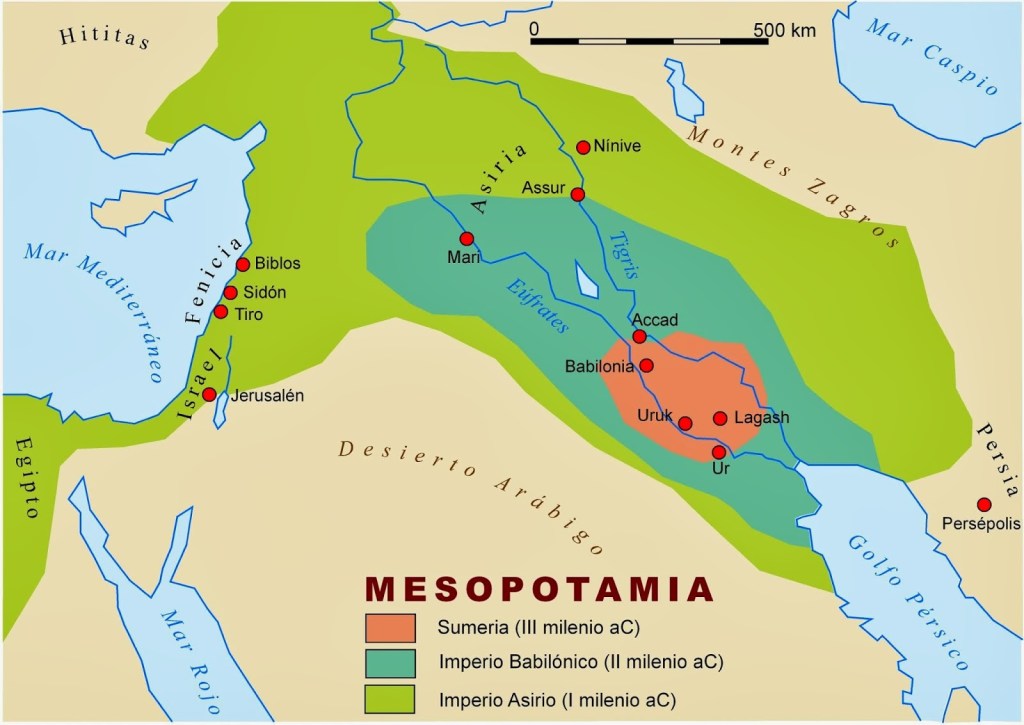
With the origin of human life in Africa, Durant suggests human beings crossed the Red Sea or the peninsula to the continent of Asia to settle the fertile lands of Mesopotamia. The Durants argue early humans developed the Afro-Asiatic Semitic language that evolved into Arabic, Aramaic, Amharic, and Hebrew dialects for Akkadian, Arab, Aramean, Israelites, Phoenician, Moabite, and Ethiopian peoples. Mesopotamia became known as “The Fertile Cresent” and the “Cradle of Civilization”.

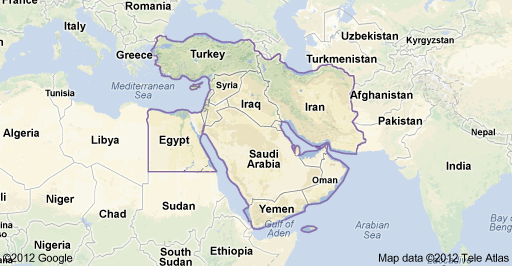
Mesopotamia contains the future nation-states of Iraq, Syria, Lebanon, Israel, Palestine, Jordan, Egypt, southeastern Turkey and western Iran.

Durant is criticized for human life’s romanticization, generalization and simplification. His critics argue civilizations’ complexity and societal conflicts are not adequately supported by his opinions and research. Some suggest too much of his opinion is based on secondary sources rather than field work. These are reasonable criticisms, but they do not diminish one’s fascination with his interpretations of others’ field work and opinions. Durant offers an interesting and entertaining story of civilization, but his opinions are only partly right.

The fundamental argument of Durant’s view of civilization is that intellectual, religious, and technological innovations of Eastern societies are foundational beliefs of Western society.

The Durants argue that writing systems, legal codes, mathematics, and religious thought in the West came from the East, i.e. to Durant, the roots of Western thought, governance, philosophical belief, and culture had Eastern origins. Durant’s threads of connection between East and West are not wrong but misleading. Correlation is not proof of causation. If one sees ice cream sales are up and drowning incidents are down, one is obviously wrong to conclude eating ice cream would reduce one’s chance of drowning.

One can believe Eastern culture developed before Western culture because of proximity. To Africa. However, the advance of civilization is not linear. It seems a stretch to believe the East’s civilization laid the foundational beliefs of the West because they are distinctly different because of independent experiences. An African human is not an Asian person just as an Asian person is not a Greek, German, Frenchman, or American. Philosophical, political, and artistic innovations are arguably derivative, but genius offers origination and revolutionary changes in civilizations. Agriculture may have begun in Asia but to infer industrialization is a furtherance of Eastern civilization is as wrong as saying Quantum theory is the furtherance of Western civilization. Civilization is too complex to be characterized as a linear process.

Will Durant’s “…Story of Civilization…” is a fascinating view of history, but not a true measure of Western civilization’s origin.

HOSTAGE NEGOTIATIONS

The disturbing message of “Swap” is that human beings are currency, i.e., nothing more than a dollar bill, a euro, a yen, a pound, a franc, or a renminbi. Like a hot war, the Cold War monetizes human lives.

Books of Interest
 Website: chetyarbrough.blog

Swap (A Secret History of the New Cold War)

Author: Drew Hinshaw, Joe Parkinson

Narrated By: Keith Brown

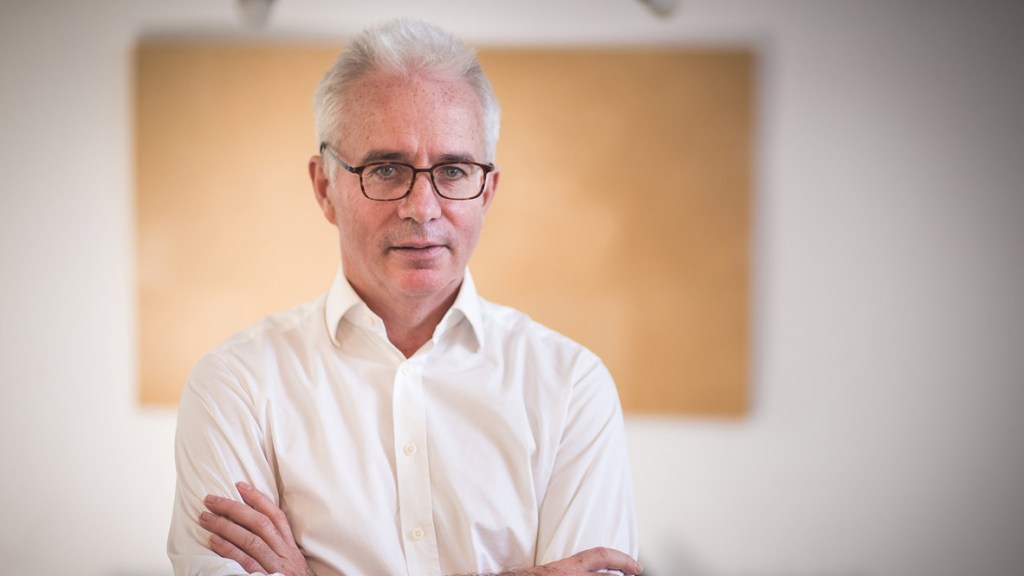
Drew Hinshaw (on the left) is a senior reporter at The Wall Street Journal.

Joe Parkinson is also a reporter at The Wall Street Journal. Both are Pulitzer Prize finalists and nominees.

Human life is viewed in this new Cold War’ era as economic transaction.

“Swap” is a detailed explanation of how human beings are just bargaining chips. Hinshaw and Parkinson argue that the Cold War has been resurrected by Russia. Russia uses accusations, sometimes lies, and unreasonable charges against foreign travelers and native dissidents to gain leverage in a blood sport that convicts, incarcerates, imprisons, or murders alleged internal spies, dissidents, and foreign citizens. The authors of “Swap” have researched the 2024 hostage exchanges between Russia and the U.S. to illustrate how crude and transactional hostage-taking has become in a new Cold War.

Hinshaw and Parkinson note that 24 prisoners and 2 children were swapped in what is called the “Rubik’s Cube” hostage exchange of 2024.

“Rubik’s Cube” is meant to describe the complexity of a 2024′ human exchange of prisoners between the West and Russia. The most publicly known hostage release from Putin’s Russia was Brittney Griner (the WNBA star) who was the first to be released when Paul Whelan (a former U.S. Marine), Trevor Reed (also a U.S. Marine), Evan Gershkovich (a Wall Street Journal reporter), and Alsu Kurmasheva (an American journalist visiting her family in Russia) were also hostages but later released in a complicated exchange between many nations’ leaders. This later group was released through the work of the American State Department during the Biden administration which had been criticized by some because of Griner’s celebrity being more important than others. Whether true or not, Hinshaw and Parkinson explain the political reality of hostage taking and exchange has evolved since the earlier Cold War.

Vadim Krasikov (a Russian assassin convicted in Germany), several Russian spies, smugglers, and hackers were released to Russia in exchange for a mega-swap of Americans after Griner’s exchange. The mega-swap was highly complicated and a dramatic example of what negotiated hostage exchanges really mean in the 21st century.

Paul Whelan (Canadian-born U.S. Marine arrested in Russia in 2018.)

This complicated “Rubik Cube” transaction began in 2018 when Paul Whelan had been jailed and convicted in a Russian court for alleged spying. (Interestingly, Whelan had been dishonorably discharged from the Marines for bad conduct related to larceny in 2008.) Along with Whelan’s arrest, Trevor Reed’s conviction and incarceration was in 2019, Brittney Griner in 2022, and Evan Gershkovich in 2023. Each arrest was for different alleged transgressions which added to the negotiation difficulties.

Evan Gershkovich (American journalist and reporter for The Wall Street Journal.)

Brittney Griner (American professional basketball player.)

It was the Wall Street Journal’s hostage (Evan Gershkovich) and the WNBA player (Brittney Griner) that intensified negotiations and public awareness of hostage exchange. The authors of “Swap” explain why awareness is only the beginning of understanding. Whelan’s twin brother is identified as one of the most relentless advocates for Paul Whelan’s release. Whelan’s entire family became “accidental diplomats” by injecting themselves into the American government’s ponderous efforts to get Paul Whelan released. The family injected themselves into the American government’s process by becoming squeaky wheels in the negotiating offices of the government.

Several different countries participated in a multiple hostage swap after Griner’s release. Germany, UK, France, Netherlands, Poland, Lithuania, and the Czech Republic were persuaded by the U.S. government to exchange a convicted assassin and several alleged Russian cyber operatives and spies to gain release of Whelan, Reed, Kurmasheva, and Gershkovich.

This negotiated human exchange is a complicated transaction that involved many governments’ participation and agreement. It required coordinated release of eight Russian operatives, one of which was a convicted assassin, and seven others, either proven or suspected spies or smugglers, to be exchanged for Russia’s imprisoned hostages. Along with the U.S., Germany agreed to release a convicted assassin, while the UK, France, Netherlands, Poland, Lithuania, and Czech Republic agreed to return several alleged Russian cyber operatives and spies. The releases were coordinated by the CIA and MI6 with the transaction to take place in Turkey. This was an amazing operation that required agreement and coordination by 8 nations to secure an agreement with the President of Russia.

The disturbing message of “Swap” is that human beings are currency, i.e., nothing more than a dollar bill, a euro, a yen, a pound, a franc, or a renminbi. Like a hot war, the Cold War monetizes human lives.

Hostage taking has changed human beings into a commodity like money. War and now hostage release dehumanize society.

LIFE’S JOURNEY

Gaige’s writing is crisp, insightful, entertaining, and highly relatable. It gets to the heart of life’s struggles without being judgmental or accusatory.

Books of Interest
 Website: chetyarbrough.blog

Heartwood 

AuthorAmity Gaige

Narrated By:  Justine Lupe & 5 more

Amity Gaige (Author, lecturer in English at Yale University, 2017 Guggenheim Fellow in Fiction.)

“Heartwood” is a well written, creative, and insightful novel about human fragility. It begins with a lost hiker on the Appalachian Trail. One may recall newspaper articles about this trail where many famous and infamous people have been known to travel. What is less well known is the trail is 2,197-miles long and crosses 14 states. Amity Gaige writes a story of one lost hiker, but it is much more. Of course, it is about search and rescue that reveals how complicated it is to find someone who is lost in a wilderness. In a public hiking trail, at least in the pre-Trump era, national government employees were available to conduct search and rescue services in national parks. There are many local volunteers who aide in these searches, but it is managed by experienced park rangers. Gaige reveals the inner fears and reality of one who is lost in life as well as in a wilderness. The creativity of the author is in her reveal of human nature. All people struggle to live lives that mean something but exhibit physical and mental flaws that get in the way.

The lost hikers name is Valerie Gillis. The primary searcher is Bev Miller, a lieutenant in charge of search and rescue teams when someone is lost on the Appalachian Trail. Those who are rescued, and those who rescue, live lives of equal unpredictability. (Bev Miller’s mother is in a health care facility for the elderly who are troubled by dementia.) The hiker is seeking solace from her personal life by taking a hike on the Trail with a friend who is a substitute for her recently divorced husband. Her and her friend become separated, and she wanders off the Trail. She becomes disoriented and cannot find her way back to the well-traveled path but, as a trained nurse, she copes with her isolation better than most who might make the same mistake. She keeps her wits about her, but an unexpected event changes the course of her life.

Military training.

The area in which Gillis becomes lost is near a security encampment used to train soldiers for wilderness’ survival. The training is harsh and some of the inductees choose to go AWOL, absent without leave. An AWOL’ escapee who is having a nervous breakdown comes across Gillis. His psychological imbalance influences him to imprison Gillis making her unable to find her way back to the Trail. Eventually, her antagonist leaves but Gillis’s physical deterioration advances to the point of near starvation.

The author is exploring the idiosyncrasies of life. Many incidents that lead to the rescue of Gillis show how every human being deals with events in life that are beyond their control. One elderly woman who exhibits symptoms of dementia becomes a clue to the location of Gillis. This elderly woman’s life shows one of many circumstances in life that are beyond one’s control. This dementia burdened woman recovers some of her lost faculties to report having talked to a young man who is being treated for psychological imbalance. He tells of meeting a lost hiker in the wilderness. Until that clue is revealed. no one knew the correct area in which to search for Gillis.

There are many human relationship strengths and weaknesses revealed in Amity Gaige’s “Heartwood”. Gaige’s writing is crisp, insightful, entertaining, and highly relatable. It gets to the heart of life’s struggles without being judgmental or accusatory.

RELIGION

As a mirror and catalyst for change and hope, Professor Mark Bergson offers an excellent review of the world’s religions.

Books of Interest
 Website: chetyarbrough.blog

Cultural Literacy for Religion (Everything a Well-Educated Person Should Know)

Lecturer: Mark Berkson

By:  The Great Courses

Mark Berkson (Professor and Chair in the Department pf Religion at Hamline University)

Professor Berkson provides an excellent overview of the most important religions in the world in his lectures. Though this reviewer is not a person who follows any religion, Professor Berkson offers a broad understanding of religious beliefs and their differences in his lecture series.

CHRISTIAN, ISLAMIC, AND HINDUIST RELIGIONS HAVE THE MOST FOLLOWERS

The three religions with the greatest number of followers are Christian, Islamic, and Hinduist which are categorized as a transcendent group of religions. In broad terms, their beliefs are in salvation, divine revelation, moral law, and a soul’s journey toward a divine being as the ultimate truth and value of life. These religions reflect on both the first and second categories of religion because they transcend the self to either a divine or a more centered understanding of oneself.

A third category would be followers of a sect of Buddhists adherents, Jainists, or Confucianists which believe in enlightenment, discipline, meditation, and moral cultivation of oneself in relation to nature, the cosmos, and everyday life. This third category is not centered around a divine being but around self-effort to create ethical harmony among human beings that will offer peace to all.

Thích Nhất Hạnh was a most famous Vietnamese Thiền Buddhist monk who believed and taught self-effort to create ethical harmony in oneself. (Died at age 95 in 2022.)

Berkson notes Daoist’s, Shinto’s, and some Buddhists (like Thích Nhất Hạnh) believe in the balance, flow, and interconnectedness of living in accordance with nature. He categorizes these religions as “religions of immanence”.

Tenzin Gyatso (the 14th Tibetan Dalai Lama, exiled in India from his native land in China, represents the Buddhist idea of self-transcendence.)

Berkson explains religion became important to civilization because they made living life more important than just survival. Religion gave meaning to life. Religion also provided social and moral order to life. Religion gave comfort in time of grief, fear, and uncertainty. Religion inspired societies to be creative to build cities, and create art. Religion provided a belief in something greater than oneself and the possibility of transcendence beyond earthly existence.

As one listens to Berkson’s lectures, one wonders whether religion has been more positive than negative in civilization’s development.

Berkson tries to sit on a fence between two extreme opinions. One is the positive contributions of religion to human moral and ethical belief. On the other, religion has aggravated social comity by creating differences. Different religious beliefs have murdered or demeaned millions of human beings who believe only their religion is important. If you defile the truth of my religious belief, you are not one of us. On the one hand, religion brings people together and grows cultural and artistic beliefs. On the other hand, religious belief creates silos that suppress inquiry, reinforce prejudices, and delegitimize political authority. Belief in a religion can advance understanding of human nature but at the same time suppress any inquiry into faith or science.

One will better understand specific religious beliefs as a result of Bergson’s lectures.

Bergson notes tensions between religious beliefs are the basis upon which many social and human atrocities have occurred. Christianity notes that no one comes to God except through Chistian belief while Hinduism believes there are many paths to the divine. Exclusivity in religion may not cause a war, but it certainly creates tension. The core beliefs of Judaism, Christianity, and Islam have led to millions of deaths because of distinctions made between the word of God in the Hebrew Bible, Christian old and new testaments, and the Qur’an.

As a mirror and catalyst for change and hope, Bergson offers an excellent review of the world’s religions.

However, in the history of yesterday and today, the Jewish holocaust of WWII and slaughter of Palestinians in Gaza rend one’s heart. To quote Rodney King amid the Los Angeles riots, “Can we all get along?”– apparently not.

GLOOM

There is more death to come in the last chapters of “Wild Dark Story”. The underlying gloom about the fate of earth and civilization may ware on some who may become bored with the author’s story.

Books of Interest
 Website: chetyarbrough.blog

Wild Dark Shore (A Novel)

Author: Charlotte McConaghy

Narrated By:  Cooper Mortlock & 3 more

Charlotte McConaghy (Author, writer born in Australia in 1988, Graduate Degree in Screenwriting and Masters in Screen Arts.)

This is a novel for environmentalists with a survivalist mentality but it is also a tale of mystery and human relationships. McConaghy’s education makes “Wild Dark Shore” feel like a screenwriter’s idea for a movie. She paints a word-picture of a cold wilderness island sinking into oblivion because of climate change. It reminds one of visiting a weather station in Antartica. One is mesmerized by seabirds flying in a brutal wind, penguins flocking across an icy landscape, and sea lions sunning themselves on broken islands of ice. If you are lucky on your voyage, you will see a pod of whales. McConaghy paints a picture of a forbidding landscape once inhabited by natives that became a lighthouse for ships of the sea. At the time of the author’s story, it became an outpost for environmental observation and seed preservation.

Islands around Australia.

“Wild Dark Story” is a mystery about a lost husband and a tough-minded wife who wants to know what happened to him after receiving three letters expressing fear about his assignment and life at the station. The station is being closed down by a family working at the island station. There is a father, two sons, and a daughter. The father’s wife has died. The task of closing the station is perilous but this family has lived on the station for several years and is intimately aware of the dangers and what must be done to ready it for abandonment. Their evacuation plans are interrupted when a vessel crashes near the station. The vessel carries the wife of the person who received the three letters from her husband. She survives the vessel’s destruction with wounds from the rocky shoreline. The pilot of the vessel is dead. The woman is rescued by the family that is preparing for evacuation.

Environmental degradation.

“Wild Dark Story” has some appeal to environmentalists because it is a dramatic presentation of the fragility of civilization in the face of rising tides and a warming planet. The island is set up, presumably by either a government or corporation that wishes to preserve unique plants from seeds in a cavern designed for that purpose. Preservation is being shown as a form of resistance to environmental degradation.

Leaving an isolated land.

In conversations amongst the family preparing for evacuation, the loss of the woman’s husband may have had something to do with the family that is closing the station. The father is reluctant to tell what happened and suggests his children should not say anything about it to the woman.

The new arrival’s husband was a biologist responsible for seed preservation.

There was a fire that burned down their home on the mainland. It was built by the hands of the woman who is trying to find out what happened to her husband. They had separated because the fire and total loss of the home had fractured their relationship. Her husband’s fate is never fully confirmed, but the novel strongly implies he may have died by accident, suicide, or possibly through a cover-up related to the dismantling of the seed vault.

Her husband had bonded with the youngest of the three children. This is interesting because one of the last fights he had with his wife before he left was about her not wanting to have a child.

Rescue or not.

At this point, the novel becomes too long. The mystery of her husband’s death may have been because of psychological imbalance but no definitive answer is given. The theme of the book is that isolation warps truth and identity and that grief is a force that drives human beings to fall apart or renew their lives. There is more death to come in the last chapters of “Wild Dark Story”. The underlying gloom about the fate of earth and civilization may ware on some who may become bored with the author’s story.

LIFE IS LIQUID

Miodownik explains liquids are everywhere and influence every aspect of life on earth. As a scientist, Miodownik explains understanding liquids is understanding life.

Books of Interest
 Website: chetyarbrough.blog

Liquid Rules: The Delightful and Dangerous Substances That Flow Through Our Lives

Author: Mark Miodownik

Narrated By:  Michael Page

Mark Miodownik (Author, British materials scientist.)

Mark Miodownik offers some interesting information about liquids in “Liquid Rules”. It seems Miodownik had some spare time on a long plane trip. Though many know some of what the author explains, it is interesting for listener/readers who don’t think about the importance of liquids in our lives. For example, Miodownik notes how and why Kerosene is the fuel that powers jets.

The qualities of kerosene make it an optimum choice for jet propulsion.

Kerosene is safer to handle because high temperatures are required for ignition which makes it safer than gasoline. It has a low freezing point that allows high-altitude flight where sub-zero temperatures exist. Its viscosity allows it to flow in cold or hot conditions which reduces risk for fuel line’ clogging. Kerosene carries high energy production per unit of volume for longer flights. It is cheaper to refine than other fuels. And most importantly, it is chemically stable which reduces risks of vapor lock or premature combustion.

As Miodownik wings his way across the earth, he casually mentions Susan is a passenger on the same transatlantic flight who is offered a glass of wine.

She suggests wine testing is really a performance art. Her remark is an introduction to Miodownik’s more scientific examination of the sensory and symbolic dimensions of wine tasting. Miodownik explains the role of tannins, taste, and the rituals around drinking a glass of wine. He explains a connoisseur’s way of swirling a glass of wine before his/her nose to sense the bouquet of the libation. One imagines Susan looking askance at Miodownik’s academic review of her off-the-cuff remark. Who is this guy? Is he hitting on me?

Presumably, Miodownik sits back and contemplates the creation of a book about liquids.

Miodownik seems slightly discomfited by his seatmate’s look at him. Does he regret his forwardness in addressing her comment like a nerd? There is a sense of humor and a touch of irony in Miodownik’s choice of subject. One wonders what a woman’s response might be to a person she does not know explaining what she intended when she spoke of wine tasting as an art. In any case, Miodownik has introduced his subject.

As Miodownik’s thoughts move on about a book about liquids, he recalls the invention of ink.

Here is an invention with purpose. He notes the creation of ink that is made to flow predictably, dry quickly, and remain legible for years. The idea of a liquid that makes history, science, and art for the ages, i.e., an eternal gold mine for future generations. Ink reaches back to the caliphs of the Maghreb, rulers of Islamic caliphates in 7th century, northwest Africa. Ink connects with the evolution of the colors of red, green, and blue. From fountain pen writings to pointillist art the creation of ink plays a critical role in modernization of the world.

Water is the foundation of life.

Most know water is an essential need for life as we know it. What is often less thought of is that water is a universal substance that underlies world climate and biological life. Miodownik notes that water is a universal substance that underpins life and the climate systems of the world. It is the vehicle of human metabolism, emotional expression of fear, pain, happiness, and the world’s climate.

Production sweat shops.

Humans produce sweat and a quart of saliva per day. Saliva aide’s digestion, hygiene, health, and emotional expression like crying, anger, or embarrassment. Sweat regulates the bodies temperature. Water plays a role in the advance of technology with the creation of liquid crystal displays (LCDs) and OLEDs that power modern screens in phones and aircraft panels. Digital watches, cell phones, movies and general entertainment are a result of liquid’s existence. The irony of water as a liquid is that it can nurture as well as destroy. It refreshes life through cleaning, and food production, but also floods land, drowns life, and erodes soil upon which life depends. Water is an agent of comfort as well as chaos.

Miodownik explains liquids are everywhere and influence every aspect of life on earth. As a scientist, Miodownik explains understanding liquids is understanding life.

Aside from global warming, Miodownik notes the growing issue of plastics pollution and potable water availability will plague humanity. He argues humanity needs to come to grips with earth’s need for natural sustainability. Roads, houses, food, and potable water need to be designed to renew themselves without introduction of new materials or resources.

RESPONSIBILITY

Adults need to be present, honest, and emotionally available to children under their care. It is a big job for which most of us fail, but children are the world’s future.

Books of Interest
 Website: chetyarbrough.blog

A Beautiful Family (A Novel)

Author: Jennifer Trevelyan 

Narrated By: Ruby Hansen

Jennifer Trevelyan (Author, lives in Wellington, New Zealand.)

Set in the beautiful island nation of New Zealand, Jennifer Trevelyan writes a coming-of-age story of a ten-year-old girl named Alix. Through Alix’s eyes, a listener/reader is reminded of their youth and the many events in childhood that show the truth of human nature. What we see and interpret when we are young is clouded by our ignorance and struggle to appreciate life as it is rather than what we think it should be. Ignorance is usually dispelled as we grow older, lose our innocence, and begin to understand life’s struggles are universal.

Humans are animals with advanced abilities to think and communicate.

Humans cooperate, compete, and adapt to their environment to survive. Our imperfections are legion beginning in childhood and multiplying throughout our lives. As a child, we see the world and interpret what we see with innocent eyes. Whether raised by an institution, two parents or one, a child sees through inexperienced eyes which are only interpretations of a real world that only time and maturity will reveal. Trevelyan shows how a child sees more than adults realize but often interpret what they see incorrectly. Eventually a child loses his/her innocence as they mature and reinterpret past experiences, but the fog of memory often interferes with truth.

Trevelyan’s main character, Alix is you, me, and every child raised in a world of married and unmarried parents or institutions.

Trevelyan offers concrete examples of the fragility and complexity of caring for children of the future. Many examples are given of Alix’s seeing life happen with interpretations that are as often wrong as right. Alix has had explanations of the difference between right and wrong but sees her sister steal make-up from a store, get drunk as a teenager, and befriend others who encourage bad behavior. She sees her mother at a distance who appears to be amorously kissing a stranger. Her mother and father are often confrontational with each other. Her mother takes long solitary walks, and her father shows passive detachment from the family.

Alix is on a vacation with her family at a New Zealand’ beach resort. She is an excellent swimmer who often swims alone.

The risk of swimming in the sea introduces the reality of danger in the world even when the environment is beautiful. One thinks about the many shark incidents on the coasts of the world and Malcolm-Jamal Warner’s death from a riptide while swimming in Costa Rica.

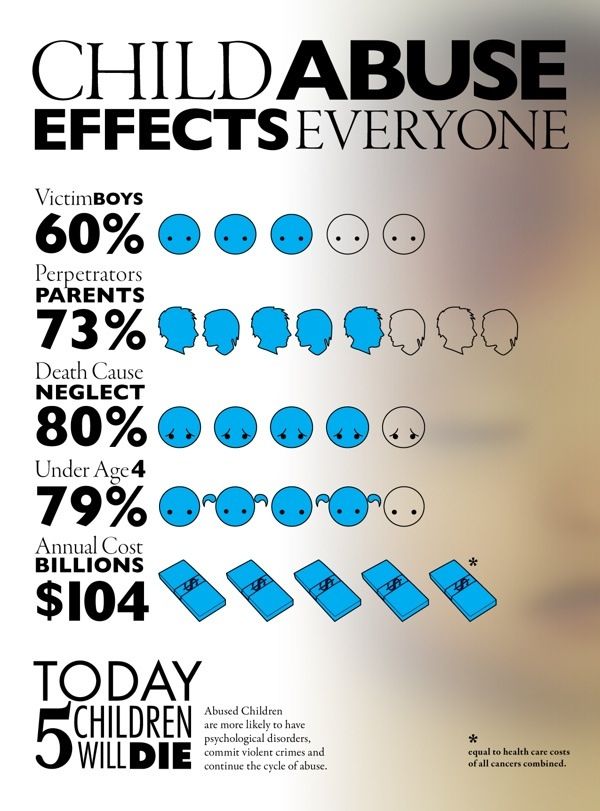
Trevelyan offers many lessons for adults who are raising children in this world. Children see more than adults realize and they interpret what they see in ways that can be as easily wrong as right. They incorporate what they see into their perception of the world. Parents are models of who children become as adults. As parents, or institutions that influence and raise children, it is important to be emotionally available, not just present to children. Keeping secrets or being silent about something is human. However, what a child sees or hears can be harmful when not discussed with a parent or guardian. Parents and institutions need to provide age-appropriate transparency to build trust with children. Those children with siblings should have sibling relationships nurtured by responsible adults. Adults need to take responsibility for the environment in which children are raised.

Being on vacation in an idyllic setting does not mean there are no dangers.

Trevelyan story explains why raising children is important. Adults need to be present, honest, and emotionally available to children under their care. It is a big job for which most of us fail, but children are the world’s future.

EMIGREE

“The Sun is Also a Star” is a nicely written book that will keep reader/listeners interested in knowing what happens to two young lovers. One is left in suspense until its last chapters.

Books of Interest
 Website: chetyarbrough.blog

The Sun is Also a Star 

Author: Nicola Yoon

Narrated By: Bahni Turpin & 2 more

Nicola Yoon (Author, Jamaican American, NYT’s bestselling author, National Book Award finalist, electrical engineering undergraduate at Cornell, graduated from Emerson College with a Master of Creative Writing.)

Nicolo Yoon, the author, worked as a programmer in investment management for 20 years before publishing her first book, “Everything Everything”. It became a best seller. “The Sun is Also a Star” is her second published book which also became a best seller. Interestingly, the Jamaican born writer’s husband is a Korean American graphic designer. One presumes her book partly reveals her life experience in America. The credibility of her love story lies in the truth of the saying that “birds of a feather flock together”, an apocryphal Biblical saying that reaches back to the “Book of Ecclesiasticus” in the first century. Her hero and heroine are highly intelligent teenagers of immigrant parents who are influenced by their parent’s native cultures. Being children of immigrants, highly intelligent, high performers in academics, and living in America are why one thinks of the “birds of a feather…” analogy.

JAMAICA, SOUTH OF CUBA, OFF OF THE FLORIDA COAST.

“The Sun is Also a Star” is about a Jamaican girl, a South Korean boy, and the girl’s parents who are being deported because of their illegal immigration status. The heroine’s father comes to America illegally to pursue a career. His wife and daughter follow later in presumably the same illegal way. The girl’s father struggles as an unsuccessful aspiring actor. He and the girl’s mother work at menial jobs for the families’ survival. They are within a day of being deported by the American government. Their daughter loves her mother and is ambivalent about her father. She is a bright high school student nearing graduation. The daughter is seeking help from an immigration attorney to delay and hopefully stop their deportation. On her way to an immigration lawyer’s office, she meets a handsome South Korean boy near her age who is interviewing with an Ivy League school in the same building in which the lawyer practices his profession. They serendipitously meet and their lives become intertwined.

Over 200,000 immigrant arrests in America have been made as of August of 2025.

This is a fairy tale story that offers a truth about the iniquity of arbitrary enforcement and forced ejection of purported illegal immigrants in America. The second term of the Trump’ presidency shows how wrong it is to deport alleged illegal immigrants without judicial review. Obviously, if a legal review shows an immigrant is a criminal there is justification for immediate deportation. If the legal review shows an immigrant has always been a productive and law-abiding citizen of America, some may reasonably argue they should be directed to a program that allows them to eventually become legal residents of the United States.

Without legal review, a valuable source of American productivity is unnecessarily lost. To argue that loss is justified by jobs that will be filled by citizens of the United States is weak because many of the jobs taken are not taken by American citizens because the wages are too low, the physical demands too high, and the hospitality needs of much of America are unmet. It is true that many in America are unemployed because they have chosen to not get a good education and choose to remain unemployed by being unwilling to work for low wages. Their unemployment is not because of illegal immigrants but because of the choices they have made in their lives. Construction, agriculture, hospitality, retail, healthcare, and small businesses have been negatively impacted by the deportation of immigrant labor. In some industries, up to 40% of the workforce has been impacted by deportation.

Yoon’s story is a fairy tale of young love between an illegal and legal immigrant living in America.

Nicolo Yoon explains how love between two people occurs when they have similar life experiences and relate to those experiences with shared intelligence. The young girl and boy have similar life experiences in America. Both choose to educate themselves. The two young teenagers have parents that love them who have their own prejudices and life experiences in ways that influence their children to be ambivalent about the love they have for each parent.

Most parent’s, regardless of their culture, want a better life for their children.

Yoon illustrates the motivations and consequences of people who decide to emigrate. Whether emigrating legally or illegally, emigrees are faced with the difficulty of adjusting to a different culture that conflicts in good and bad ways with the culture they have left. Emigree’ parents wish well for their children but many fail to grasp the freedom offered by American culture to choose their own path in life. Even though life choices are influenced by one’s intellect, emotions, and (in America) a white majorities’ discrimination, most young people are able to choose their own path in life.

“The Sun is Also a Star” is a nicely written book that will keep reader/listeners interested in knowing what happens to two young lovers. One is left in suspense until its last chapters.