DAMNED & FORGOTTEN

Allen Esken’s story is too tedious and drawn out to be a great work of fiction. However, it reminds one of the injustices of life for those who get away with murder.

Books of Interest
 Website: chetyarbrough.blog

The Quiet Librarian (A Novel)

Author: Allen Eskens

Narrated By: Livana Muratovic

Allen Eskens (Author, former defense attorney who lives in Minnesota.)

Allen Eskens has written a story of revenge and war without giving it context which diminishes its value. Having visited the former Yugoslavia which is split into 6 ethnic territories, the war that occurred between Bosnian and Serbian people can still be seen in pock marked buildings that were evidence of the war. Our guide for the trip reflects on America and NATO’s failure to aid a peaceful resolution while the conflict killed many people that may have been saved by international intervention. Eskens makes a passing comment about that feeling in his book, but the truth of that conflict is as real today as the people who lived through it.

Josip Broz Tito (Yugoslavian ruler 1953-1980, died in May of 1980.)

When Tito died in 1980, Slobodan Milošević, a nationalist Serbian leader promoted the idea of a “Greater Serbia” without accommodation to ethnic differences of the former Yugoslavian people. Milošević capitalized on the historic conflict between Serb’ and Bosnian’ ethnic and religious beliefs to acquire and hold power. Serbian Christian beliefs were used as a tool to incite support of Milošević’s rule of Bosnians who are generally Muslim believers. Many Bosnians and Serbians die as a result of Milošević. Slobodan Milošević retained power for 13 years but is removed in October of 2000 when Vojislav Koštunica won the presidency. Though Milošević supporters try to protest the election results, they fail.

Slobodan Milošević (President of Serbia 1989-1997, died in 2006 of a heart attack.)

Milošević is arrested in 2001, extradited to The Hague, and tried for war crimes, genocide, and crimes against humanity. He is the first former head of state to be tried by the Hague court. The trial lasted for four years. Milošević is found dead in his prison cell. He was 64. Autopsy shows it to be a heart attack. No verdict is reached, leaving no closure to the victims of his perfidy.

The division of Yugoslavia after Tito’s death.

This history does not change Eskens’ story, but it offers context that helps one understand why a Bosnian emigree to America pursued a former Serbian nationalist who brutally raped her mother and murdered her family in front of her during the Bosnian/Serbian war. It is credible fiction of the consequence of war whether in Bosnia or anywhere in the world where the guilty go unpunished. The question becomes, is intent to murder a criminal by one who has firsthand knowledge of another’s heinous act equally guilty of murder? The question is not asked or answered by Esken’s story; probably because it is unanswerable.

The heroine of Eskens story is Hana Babić who emigrates to Minnesota to earn a living as a librarian.

She has adopted the grandson of a close friend who is murdered in the Bosnian/Serbian war. That adoption and her personal experience drives her to find and murder the man who destroyed her life in Bosnia. She has to choose between committing murder in America or letting a murderer go free when she finds her nemesis. However, protecting her adopted boy by letting a guilty person escape vigilante justice is what drives the author’s story. If one sticks with the story, they find her answer.

One wonders about lives of Ukrainians if a tentative settlement proposed by Putin in August 2025 is accepted by Ukraine. Territories under siege in Ukraine would be given to Russia in return for ending the war.

How many Ukrainians will leave their homeland to seek a new life? How many will stay, and secretly fight on? How many will reluctantly accept their homeland’s loss? These were decisions made by Bosnians in former Yugoslavia.

Allen Esken’s story is too tedious and drawn out to be a great work of fiction. However, it reminds one of the injustices of life for those who get away with murder.

DICTATORSHIP

The importance of freedom in book publication and for those who read them is the message Charlie English gives the public in “The CIA Book Club”. It is too bad America’s current President chooses not to read because this book reminds one of how important books are in the world.

Books of Interest
 Website: chetyarbrough.blog

The CIA Book Club (The Secret Mission to Win the Cold War with Forbidden Literature)

Author: Charlie English

Narrated By: Michael David Axtell

Charlie English (Author, British non-fiction author, former head of international news at the Guardian.)

“The CIA Book Club” is a reminder of the former USSR and today’s Russian invasion of Ukraine and what is at stake for Ukraine’s citizens that may, once again, come under the repressive return of a dictatorial leader. Putin has adopted many of the same characteristics of Joseph Stalin, a leader who believed in dictatorial control over the media, and isolating or murdering anyone who challenges his leadership. The scale of Putin’s use of gulags, and mass executions is much smaller than Stalin’s but his cultivation of a cadre of followers, rewarded by the power of association and lure of wealth, create a similar dictatorship.

Poland-Europe’s crossroad.

What Charlie English reminds listener/readers of is how Poland suffered under Stalin and what it will mean to Ukrainians when much of their land is taken to settle the Ukrainian war.

Without solid opposition of all Western powers, concession of Ukrainian land seems inevitable. Trump’s waffling opposition to Putin and the fear of nuclear confrontation reduce the likelihood of Russia’s peaceful withdrawal from Ukraine.

Like the repressive actions of the USSR in the Baltics, English explains how brutal Hitler, Stalin, and Stalin’s successors were to Poland even after Stalin’s death.

Strick control over publishing continued after Stalin’s death. Orwell, Koestler, and Solzhenitsyn were banned, and western books were blocked at the border. Polish citizens like Miroslaw Chojecki risked imprisonment for smuggling and/or re-printing forbidden works. The KGB monitored dissidents, writers, and students. English notes that phones were tapped and homes raided. However, a CIA program continued to provide copies of banned books to Polish dissidents. Polish citizens became partners in covert activities to smuggle and re-print books for their countrymen and women. A Solidarity movement against censorship and discrimination is formed by Polish patriots. This reminds one of the resistances one hears when visiting today’s Baltic countries and stories of citizens whose families were jailed, tortured, and sometimes killed during Stalin’s occupation.

Poland, a spectacularly beautiful country.

Poland is an important trade and agricultural producer at the crossroad of Europe. It has no natural land barriers between itself and the great powers on their borders. Its strategic value to European aggressors has made it a victim of a history of foreign occupation. In the 13th, 17th, 18th, and 20th centuries Poland was occupied by Mongols, Prussians, Germans, and Russians. Poland’s diverse population seems to have been unable to create a strong centralized authority that could successfully resist their powerful neighbors who confiscated their riches and occupied their land. Charlie English’s book reminds reader/listeners of what makes Poland a great nation. It is its diversity and its pursuit of intellectual development. Sadly, its geographic location has threatened its existence for millenniums. America is blessed by its geographic location and shows how it could survive as a free democratic nation. Through clandestine operations and support by the CIA, Polish patriots were able to reproduce banned books during the cold war that aided the intellectual growth of Poland despite Stalin’s repression.

America’s current President impedes the influence of freedom in Europe by dismantling surveillance oversight, undermining the EU-U.S. Data privacy framework, and by shutting down the GEC (Global Engagement Center) which is designed to counter foreign disinformation.

Trump’s intent is to save money. The author notes the same thing nearly happened with the CIA book publishing support of Poland when some of America’s leaders tried to cut its funding. The CIA prevailed and the financial support continued.

The importance of freedom in book publication and for those who read them is the message Charlie English gives the public in “The CIA Book Club”. It is too bad America’s current President chooses not to read because this book reminds one of how important books are in the world.

NO WINNERS

Black America is not liberated by the Civil War. Neither will the Russians or Ukrainians be liberated by whichever side wins. There are no winners. There is only death and destruction as evidenced by the tragedy unfolding in Gaza.

Books of Interest
 Website: chetyarbrough.blog

How to Dodge a Cannon Ball (A Novel)

Author: Denard Dayle

Narrated By: William DeMeritt

Denard Dayle (Author, Jamaican-American writer, graduate of Princeton with an MFA from Columbia University.)

The central character in Denard Dayle’s novel is Anders. Anders is a light skinned Black soldier in the American Civil War. He begins as a Confederate and escapes to become a Union soldier as a Flag carrier. The author’s story is tedious and a mess, but it reflects the many conflicts among Americans fighting in the Civil War. The bizarre happenings in Dayle’s story are meant to be satirical with a bite but with so many twists in ideas about race, nationalism, gender, and the history of the war that one is inclined to put the book down. One may soldier on with a hope to understand Dayle’s point.

America’s Civil War.

After listening to “How to Dodge a Cannonball” for several hours, one gathers Dayle’s point is to show the complexity of America’s Civil War and what it means to be an American. The absurdity of all wars is revealed in America’s Civil War contradictions and hypocrisies. There are many, some of which are uniquely about civil wars, but also about every war.

In fighting a civil war for freedom in America, governments deny freedom to both sides of the conflict.

In fighting a war of conquest like that in Ukraine, both the aggressor and defender nations equally deny freedom to their citizens. Dayle shows race, gender, and nationality make little difference in who loses their freedom when war is declared. Black America is not liberated by the Civil War. Neither will the Russians or Ukrainians be liberated by whichever side wins. There are no winners. There is only death and destruction as evidenced by the tragedy unfolding in Gaza.

Dayle makes his point, but the story becomes too repetitive and tiresome for this listener/reader who quits the book before its ending.

MARK TWAIN

Chernow’s biography is a mirror of Twain’s time and life. Chernow implies Twain could see imperfections of society without seeing his own. Twain’s genius to entertain America and readers around the world is not diminished by Chernow’s well written book.

Books of Interest
 Website: chetyarbrough.blog

Mark Twain 

Author: Ron Chernow

Narrated By: Jason Culp

Ron Chernow (Author, journalist, biographer, winner of the 2011 Pulitzer Prize for Biography and the American History Prize for his 2010 book “Washington: A Life”.

No stranger to historical biographies, Ron Chernow has written an interesting biography of the peripatetic humorist Samuel Clemens, aka Mark Twain. Samuel Clemens was born in Florida, Missouri, two weeks after Hailley’s Comet passed Earth in 1835, he died in 1910 when Hailey’s Comet made its closest approach to Earth in 1910. Chernow’s biography explains how Clemens became a steamboat pilot, frontier journalist, author, and American gadfly in his journey through 74 plus years of life.

Chernow’s biography of Mark Twain reminds one of Donald Trump without the power of the Presidency.

Clemens is noted as a stretcher of truth who told stories of his time that illustrated the contradictions of race, slavery, and morality that live through today. Twain is shown to express himself in humorist ways that challenged racial norms and societal conflicts which made some laugh, and others cringe with disgust or anger. Chernow argues Twain’s use of language shaped American literature. He gave American literature a unique voice that blended humor with criticism. Twain humanized the Black community and the iniquity of slavery, but Twain’s upbringing suggests he did not escape the false belief of innate Black’ inequality. Chernow painted a picture of Twain that showed how society was filled with the promise and pitfalls of Americans’ character.

Chernow shows how Clemens reinvents himself, not from formal education but from life experience.

At 21, Clemens begins training himself as a steamboat pilot on the Mississippi river, a highly praised, prized, and well-compensated position. Chernow suggests Clemens found his nom deplume, Mark Twain, based on the language of riverboat pilots. (“Mark Twain” is the 12 feet of depth needed for safe navigation of a riverboat.) As material transport changed after the steamboat era, Twain had to find a new career. He traveled to Nevada with the hope to become rich as a silver baron during the gold and silver rushes of the late 1850s. However, he never struck it rich, lost other people’s money, and turned to earlier work experience in newspapers when he lived in Missouri. He had learned the typesetting business and had written a few articles for the paper in his hometown. He settled in Carson City, Nevada, eventually becoming a journalist. On the one hand his stretching of the truth got him in trouble as a journalist but, on the other, it opened him to another career. His wit and way with words led to a role as lecturer and performer.

Chernow shows Twain changes jobs based on his innate abilities and external events.

The development of mass media, America’s Civil War, the industrialization of America, and the growth of a celebrity’ culture influence Twain’s life and made him a cultural symbol of America in the same way Dickens, Dostoevsky, and Chinua Achebe became symbols of their countries. Twain exemplified American life, its contradictions, its greed, and its biases that were blended into the personal tragedies and experiences of his own life. He turned his life experience into an art that reflected America’s growth as a nation. He became a writer and lecturer.

Chernow explains how Twain did not just read his lectures, i.e., he performs and acts their meaning to an audience.

Twain blends storytelling with satire and theater to entertain his audience. His reputation as a public speaker is made in California, but he becomes a global star. He performs in London, Berlin, and Bombay with what became cultural events about American humor and American foibles. His lectures are folksy with tinges of intellectualism that make him revered, respected, and laughed about by his audiences. Chernow believes he created an image of one who speaks truth to power about imperialism, religion, and human folly.

Chernow does not sugar coat truth about Twain.

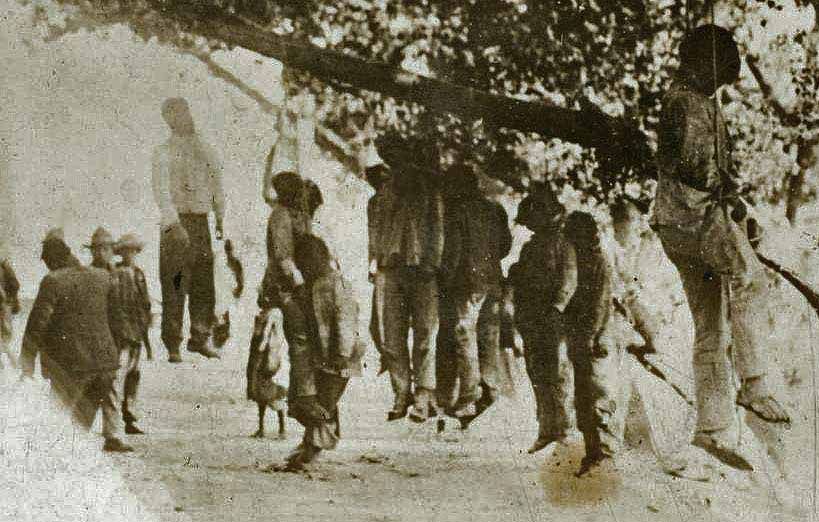
Like all human beings, Twain had his blind spots. He was silent about lynching and its immorality, and he was trapped in his vision of racism by treating it as a troubling fact of American life despite his championing of civil rights. At best, he appears to be an agnostic when it comes to religion. There is criticism of Twain’s close relationship with teenage girls that he dismisses as a public concern by saying “It isn’t the public’s affair”. Twain is reckless with other people’s and his own money and investment. He exhibits behavior that suggests a gambler’s view about getting rich quickly. Twain could be vindictive, and melancholic because of his gloomy view of humanity. His family life suffers from his impulsivity and emotional distancing toward his wife and daughters. In one sense, Chernow makes Twain more human by noting he is like most of us except for his insightful sense of humor and talent for extemporaneous public speaking.

The archive of Twain’s letters is in the thousands which spans his entire adult life.

Chernow gathers much of his understanding of Twain from his personal letters rather than his books. He does note a number of Twain’s family members and friends are models for characters in his novels. However, Chernow’s focus is on Twain the man who appears morally inconsistent, a poor manager of other people’s money, and prone to anger when aggravated by other’s opinions. Whether this is fair or not, it describes many people today.

Chernow’s biography is a mirror of Twain’s time and life. Chernow implies Twain could see imperfections of society without seeing his own. Twain’s genius to entertain America and readers around the world is not diminished by Chernow’s well written book.

UNINTENDED CONSEQUENCE

Technology is a key to social need which has not been well served in the past or present and could become worse without pragmatic accommodation.

Books of Interest
 Website: chetyarbrough.blog

Daughters of the Baboo Grove (From Chian to America, a True Story of Abduction, Adoption, and Separated Twins)

Author: Barbara Demick

Narrated By: Joy Osmanski

Barbara Demick (Author, American journalist, former Beijing bureau chief for the Los Angeles Times.)

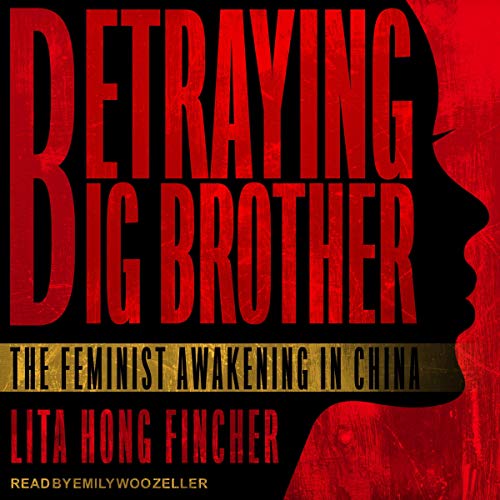
This is a brief and fascinating historical glimpse of a government policy gone awry. Like America’s mistaken policies on immigration, Barbara Demick’s story of China’s one-child policy traces the effects of government overreach. Demick tells the story of a rural Chinese family who births twin sisters during the time of China’s unjust enforcement of their one-child policy. One sister is abducted by Chinese government officials, and is adopted by a family in Texas. The ethics of an inhumane Chinese government policy and the perfidy of free enterprise are exposed in Demick’s true story of two children’s lives.

The territorial size of China in respect to continental America.

China’s one-child policy leads to a Chinese criminal enterprise to capitalize on kidnapping and selling children born to families that could not afford the fines for having more children than the law allows. Undoubtedly, most children born were cherished by their parents, but the hardship of life and human greed leads to unconscionable human trafficking. Kidnapping became a part of a legal and criminal enterprise in China. Government policy allowed bureaucrats and scofflaws to confiscate children from their parents and effectively deliver or sell children to orphanages or people wanting to adopt a child. Demick recounts stories of grieving parents and grandparents that cannot get their children back once they have been taken.

Child trafficking, broken families, loss of personal identity, human shame, and the immoral implication of other countries interest in adopting children are unintended consequences of a poorly thought out and implemented government policy.

Demick becomes interested in this story because of a message she receives from a stepbrother of an adopted Chinese sister that has a twin that lives in China. Because of Demick’s long experience in visiting and reporting on China, she had a network of people she could call. Using adoption records, Demick is able to find the Texas stepsister who had been kidnapped when she was 22 months old. She was trafficked to an orphanage in the Hunan Province of China. Years later, through messaging apps, the twins communicated with each other and shared their photographs. They eventually meet in China in 2019.

One is hesitant to argue a government policy is a unique act of China when every government makes policy decisions that have unintended consequences.

America’s policy decisions on immigration are a present-day fiasco that is as wrong as the one-child policy in China’s history. The one-child policy is eventually rejected by the Chinese’ government but Demick’s book shows how bad government policy has consequences that live on even when they are changed by future governments. America’s policy on immigration will be eventually reversed but its damage will live on.

Getting back to the story, Demick is instrumental in having the mother of Esther (aka E) and the twins meet in China.

One is hesitant to argue a government policy is a unique act of China when every government makes policy decisions that have unintended consequences. The twins are initially reticent but warm to each other in a way that bridges the cultural and language divide between the sisters. The two mothers see their respective roles in their daughter’s lives. E and her identical twin, Shuangjie, are reserved when they meet because of the cultural distance that was created by E’s adoption.

E. appears more confident than Shuangjie who is more reserved and less assured.

However, Demick suggests they seem to mirror each other in subsequent meetings. One feels a mix of emotions listening to this audiobook version of “Daughter’s of the Bamboo Grove”. They have grown up in different environments but seem to have been raised in similar economic circumstances, though the two economies are vastly different in income per household, the two appear to be raised in similar economic classes.

Every person who reads/listens to “Daughter’s of the Bamboo Grove” can view the story from different perspectives.

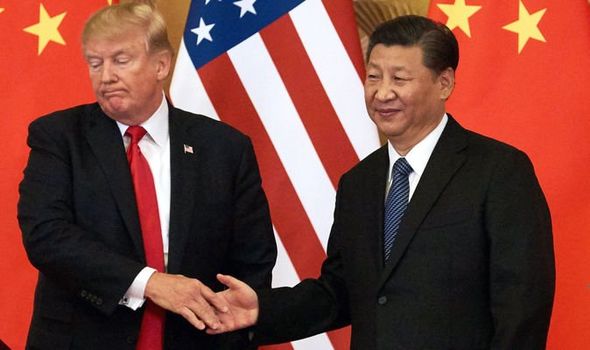
There is the perspective of identical twins raised in different families, cultures, and histories. How are identical twins different when they are raised by different parents and in different cultures? Another perspective is that Xi and Trump have had dramatic effects on the societies their policies have created. The Twin’s meeting in 2019 is one year after my wife and I had visited China. Xi had become President after his predecessor began opening China’s economic opportunities. Two incidents on the trip when Xi had become President come to mind. The first is the feeling one has of being monitored everywhere and the internet restrictions when used to ask questions. The second was an incident in a crowded Chinese market when I was approached by a beefy citizen who raised his arms and seemed to be angrily talking to me in Chinese which I sadly did not understand. The distinct impression is that I was not welcome. This was a singular incident that did not repeat in our 21-day tour, but it seemed like an expression of hostility toward America.

This listener/reader thinks of the unintended consequences of Trump’s treatment of alleged illegal immigrants.

Trump’s immigration policy is similar to China’s earlier mistake with the one-child policy. America’s, China’s, and Japan’s economies are highly dependent on youth which is diminished in two fundamental ways. One is by public policy that restricts birth, and the other is immigration. Freedom of choice is a foundational belief in democracy while considered a threat in autocracy. In America today, it seems there is little difference between America, Japan, or China in regard to government policy that threatens the future. All have an aging population that can only be aided by younger generations. Even though manufacturing may become less labor intensive, public need in the service industry will grow. Technology is a key to social need which has not been well served in the past or present and could become worse without pragmatic accommodation.

ISRAEL

Many soldiers and victims of war are teenagers, coping with life and death on a daily basis. They wonder, what is the point? We who sit on the sidelines because of age, agnosticism, or an unfettered life read or write about war as though it is just a story.

Books of Interest
 Website: chetyarbrough.blog

Beaufort (A Novel)

Author: Ron Leshem

Narrated By: Dick Hill

Ron Leshem (Author, born in 1976, recieved Sapir Prize, a top literary award in Israel, his book, Beaufort, is turned into a movie and is nominated for an Academy Award.)

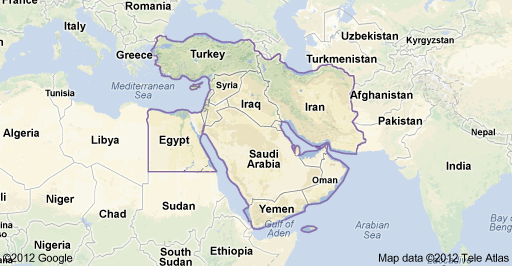
Ron Leshem’s book “Beaufort” helps one understand why the idea of Gaza becoming a Palestinian state is anathema to a majority of Israeli citizens. Beaufort is located in southern Lebanon, on the border of Israel. In the 1970s Beaufort was used by the PLO as a base for operations against Israel. In 1982 Israeli forces capture Beaufort and it became an operating base for defense of Israel until their withdrawal in 2000. Lesham served in the intelligence corps during the time of the fight for control of Beaufort. He was not directly involved in the fighting but had an intimate understanding of the conflict. What “Beaufort” makes clear to Americans who are ignorant of what it is like to live in a country surrounded by militant minorities who wish to obliterate Israel.

Israel has a right to its existence on Israeli lands based on its ancient occupation of the land in 1200 BCE.

The proof of early occupation of Israel by Jews is in an inscription on a 1209 BCE Egyptian’ Merneptah Stele, a black granite slab. Though they were a tribal community, they had a form of governance that pre-dates nation-state development. Though one may argue Palestinians had lived in the lands of Israel since the 7th century, they were late comers to the land. The Palestinians were a nomadic Arab population that came nearly 600 years after settlement by the Israelites. The point made by the story of “Beaufort” shows why no rational human being would want another hostile haven for antisemitic opposition to Israel as a legally recognized nation-state.

“Beaufort” shows the human and psychological toll of an unjustified “forever war” conducted by two militant factions in Arab nations surrounding Israel.

Hamas and Hezbollah are two militant Islamist organizations deeply committed to destroying Israel and creating an Islamic state in the territory known as Isreal and Gaza. In 1947, a UN partition plan between Palestine and Israel was proposed but Arab leaders rejected it, while Israel accepted it. One can consider the history of the lands’ longer occupation by Jews of the holy land and Palestinians and wonder why partition was rejected by the Arabs.

The conflict revealed by “Beaufort” is a message to the world about life in Israel. Warfare is a fact of life for those who choose to live in Israel. Soldiers become disillusioned about why they are at the frontlines of an irreconcilable conflict. Kill or be killed becomes the mantra of their lives at the front. Unquestionably, it does have something to do with ideology or religion. How many soldiers and victims of war are teenagers, coping with life and death on a daily basis? Some must wonder, what is the point? We who sit on the sidelines because of age, agnosticism, or an unfettered life read or write about war as though it is just a story. It is not a story to Israelites or Palestinians. It is living life when surrounded by others who want to kill you.

GENERIC DRUGS

Katherine Eban believes generic drugs are important for global health because of affordability and accessibility. One wonders if anyone who reads or listens to “Bottle of Lies” will take generic drugs if they can afford the original FDA approved product.

Books of Interest
 Website: chetyarbrough.blog

Bottle of Lies (The Inside Story of the Generic Drug Boom)

Author: Katherine Eban

Narrated By: Katherine Eban

Katherine Eban (Author, American Rhodes scholar with a MPhil from University of Oxford.)

“Bottle of Lies” is a history of duplicity and dishonesty in the generic drug industry. It is a damning dissection of the lure of money at the expense of human life. On the one hand, affordability, healthcare savings, global health, and the value of regulation are made clear in “Bottle of Lies”. On the other, Katherine Eban shows how the lure of capitalism and greed creates an incentive to evade regulation and kill innocent people seeking drug treatment for their illnesses.

Katherine Eban reveals the history of an India drug company named Ranbaxy that was founded by two brothers, Ranbir Singh and Gurbax Singh.

In 1937, these two entrepreneurs recognized the economic opportunity of creating a drug manufacturing operation with lower labor costs in India to capture the market in drugs nearing their patent expiration dates. They were focused more on organizational cost cutting and the money that could be made than the efficacy of the drugs they could produce. The company was sold in 1952 to their cousin Bhai Mohan Singh. This cousin transformed Ranbaxy to a pharmaceutical giant, but his experience was in construction and finance, not pharmaceuticals. However, his son Parvinder Singh joined the company in 1967 and was a graduate from Washington State University and the University of Michigan with a master’s degree and PhD in pharmacy.

Parvinder Singh (1944-1999, became the leader of Ranbaxy in 1967.)

Eban argues Parvinder Singh looked at his father’s business as a scientist with a pharmaceutical understanding and a desire to produce lower cost drugs for the world for more than a source of wealth. Parvinder appeared to value quality, transparency, drug efficacy, and long-term credibility for Ranbaxy. Parvinder recruited talent who believed in lowering costs and maintaining the efficacy of drugs the company manufactured. However, Parvinder dies in 1999 and the executives who took over the company focused on maximizing profit rather than the efficacy of the drugs being produced. Parvinder’s leadership is succeeded by Brian Tempest who expands the company by navigating the regulatory restrictions on generic drug manufacture. Tempest tries to balance profitability with global health efficacy of generic drugs. Parvinder’s son, Malvinder Singh eventually becomes the CEO of the company. He returned control to the Singh family. The corporate culture changed to what its original founders created, i.e., a drug producer driven by profit. Malvinder was not a scientist.

Malvinder Singh (Born in 1973, Grandson of Bhai Mohan Singh and son of Dr. Parvinder Singh.)

Under Malvinder, Eban shows the company turns from science to economic strategy to increase revenues of Ranbaxy. Internal checks on the efficacy and testing of their drugs is eroded. Criticism from regulators and whistleblowers are either ignored or sidelined by company management. Peter Baker Tucker’s role in exposing Ranbaxy is detailed in Eban’s history. With the help of Dinesh Thakur, an employee of Ranbaxy, Tucker bravely exposed the company’s fraud. (Thakur received $48 million compensation as a whistleblower award.) Tucker is an FDA investigator who reviewed Ranbaxy’s internal documents that revealed their fabricated data about their drug manufacturing process.

Peter Baker Tucker (aka Peter Baker, former FDA investigator.)

Ranbaxy is sold to a Japanese company called Daiichi Sankyo in 2008. Eban explains that Malvinder concealed critical information about FDA investigations and data fraud in the company’s sale. Malvinder and his brother, Shivinder Singh, are arrested in 2019 and remain in custody in 2021, facing multiple fraud accusations.

Sun Pharma acquires the remnants of the Ranbaxy-Sankyo’ sale.

Though Eban does not focus on what happens after the sale to the Japanese company, it is sold at a loss to Sun Pharmaceutical Industries and Singh family’s ownership is sued by Sankyo for hiding regulatory issues of the company. Daiichi received a $500 million settlement but effectively lost money on their investment. Eban, in “Bottle of Lies” offers a nuanced indictment of generic drug manufacturer and sale.

Eban believes generic drugs are important for global health because of affordability and accessibility.

Quality and drug efficacy must be insured through international regulation. Eban endorses unannounced inspections, routine testing of the drugs, and strict legal enforcement against poor manufacturing systems. Without transparency and oversight of all drug manufacturing, human lives are put at risk.

This is quite an expose, but it ends with criticism of inspections of China’s drug manufacturing capabilities.

The inspections of foreign companies that manufacture generic drugs, like those she refers to in her book, are conducted by similar inspectors who do not know the culture or language of the countries in which generic drugs are being produced. The FDA was paying their inspector in India $40,000 per year at the time of Ranbaxy’s investigation. It is by instinct, not interrogation, that malfeasance is detected. Too much is missed when one cannot talk to and clearly understand employees of manufacturing companies.

It seems America has two choices: one is to increase the salaries of FDA inspectors and require that they know the language of the countries in which they are working and two, set up a system of random reverse engineering of generic drugs allowed in the United States. This not to suggest all other FDA regulations would not be enforced when a generic drug is proposed but that site reviews would be more professionally conducted. One wonders if anyone who reads or listens to “Bottle of Lies” will take generic drugs if they can afford the original FDA approved product.

UNJUST CAPITULATION

Both Trump and Putin are wrong in trying to return America and Russia to their past. What one presumes from Nye’s lectures is that a threat of millions of lives being lost from nuclear war will actually result in a gorilla war in territory unjustly ceded to Russia by Ukraine.

Books of Interest
 Website: chetyarbrough.blog

Must History Repeat the Great Conflicts of This Century? 

Lecturer: Joseph S. Nye Jr.

By:  The Great Courses

Joseph Nye Jr. (1937-2025, Distinguished Service Professor Political Scientist at Harvard Kennedy University.)

In listening to Joseph Nye Jr.’s history of “…Great Conflicts…”, one thinks about similarities between leadership of Russia and America today. Both Trump and Putin believe in strong executive leadership and appear to have a political base that allows Putin to exercise dictatorial power and Trump to bypass traditional bureaucratic limitations on government power. Both Putin and Trump believe in their countries moral and economic superiority and are trying to return their nations to the twentieth century. As leaders of their countries, they have influenced media support of their ambitions through influence and the creation of conspiracy-driven narratives.

Joseph Nye’s lectures suggest history is only a guide to the future, not a prediction.

Nye explains circumstances of the present are never exactly the same as the past. Every war of the past is based on complex causes that are never precisely the same. The world wars and the cold war developed as a result of specific government’ diplomatic, operational, and international circumstances. Nye explains why two world wars were about balance of power that changed with WWI and were refined by WWII. The German, Austro-Hungarian, and Ottoman empires collapsed after WWI. With the defeat of Hitler, Nye infers WWII is a failed effort to reestablish the German empire.

Listening to Nye’s view of history, makes one think of Putin’s and Trump’s maneuvering in the 21st century. Both leaders are trying to recreate a balance of power with America strengthening its position and Russia reestablishing its role among the top three powers. What gives weight to that view is Russia’s invasion of Ukraine, China’s wait and see attitude, and Trump’s foolish antagonism toward its traditional western allies in the belief that it strengthens America. Trump seems ignorant of history by failing to recognize America’s power is hugely benefited by its close relationship with Great Britain and North America. To antagonize England, Canada, and Mexico with tariffs and the NATO alliance with complaints about unequal financial support reduces America’s power and influence.

Today, nuclear war is a different circumstance upon which every government leader recognizes as a fundamental change in the principle of “might makes right”.

One sees that Trump’s hostile confrontation with Zelenskyy on television is an expression of America’s leadership fear of nuclear war. Putin threatens nuclear retaliation, but threats are not actions. Putin continues his conventional war against Ukraine and Trump pressures Putin to end the conflict with limited support of weapons for Ukraine and implied willingness to agree to Putin’s demands for annexation of some part of Ukranian territory.

Nye’s lectures do not say history repeats, but he warns it can have similar results without careful analysis and strategic foresight by government leaders.

However, Trump and his advisors appear ignorant of the lessons of history noted by Professor Nye. America and Russia think they have a choice in how the war in Ukraine can be brought to an end that will bring peace. The truth is that peace is only a Hobson’s choice where there is only one option. Trump sees the possibility of millions being killed from a nuclear war. Putin sees the possibility of gaining territory from Ukraine with potential loss of rule as President of Russia. Zelenskyy and Putin have the illusion of choice while the international community and America will likely make the decision.

Both Trump and Putin are wrong in trying to return America and Russia to their past. What one presumes from Nye’s lectures is that a threat of millions of lives being lost from nuclear war will actually result in a gorilla war in territory unjustly ceded to Russia by Ukraine. Russia will lose more than it gains just as it did in Afghanistan.

HUMAN FLAW

A not surprising irony in “They Made America” is that great innovators like the rest of us are flawed. Ford is widely considered an antisemite, Edison is too opinionated to countenance differences of opinion, Rockefeller is an elitist, Singer is a misogynist and so and so on

Books of Interest
 Website: chetyarbrough.blog

They Made America (From the Steam Engine to the Search Engine: Two Centuries of Innovators)

Author: Harold Evans, Gail Buckland & 1 more

Narrated By: Harold Evans

Harold Evans (Author, 1928-2020, British journalist died at age 92.)

“They Made America” is partly about inventions but mostly about innovations that transform society. He writes of America but his explanation of making any successful economy requires innovation. Invention may be a beginning while innovation has no end. He writes of mostly American men whose imagination leads to innovations that transform America’s economy. The generation of power, and advances in communication, transportation, finance, and culture are the consequence of innovation that may or may not be based on original invention. Some of a nation’s economic and social advancement is from unique invention but all of a nation’s success is a result of innovation.

During the Obama administration, America’s economic growth began to decline and accelerated with the Covid 19 pandemic.

Evans and his co-authors identify many who have contributed to the success of America’s economic growth. Most of those he identifies are Americans but a few like Leo Baekeland, Reginald Fessenden, and Herbert Boyer show that innovation is not just an American phenomenon. Baekeland is a Belgian who invented Bakelite and became a U.S. citizen. Bakelite is the first fully synthetic plastic that revolutionized design and manufacture of consumer goods. Fessenden was a Canadian who pioneered radio transmission technology and Herbert Boyer and Robert Swanson were Americans who collaborated with many international scientists to create Genetech, the first biotech firm in the world that commercialized recombinant DNA for life-saving medicines like insulin.

Though British innovator, James Watt, did not invent the steam engine he radically improved it by adding a separate steam condenser.

The invention and innovational changes of the steam engine led innovators like Robert Fulton to see how a steam engine could power a steamboat. The invention of the automobile led to Henry Ford’s innovations in assembly line work that reduced the cost of production to make cars available to almost every working American. Ford also increased wages of his workers so they could buy Ford products. The founder of Bank of America, A.P. Giannini, innovated lending with idea of consumer banking giving workers a way to secure their paychecks in a bank that could provide a means to pay for services and possible credit based on accumulated wealth in their checking account. Innovations in communication by Ted Turner, Page and Brin, and Jobs and Wozniak changed the media communications industry.

Thomas Edison (1847-1931).

The recounting of the many American innovators in “They Made America” is not a picture of idealized human beings. Thomas Edison, who is among the greatest innovators in America, created a team of experimenters at Menlo Park in New Jersey. Edison created an “Invention Factory” that led to the electrification of the world. Though he did not believe in alternating current (AC) as an improvement over direct current (DC) in the use of electricity, he envisioned an electrical system that would light the dark streets of the world. Edison is a perfect representation of inventor and innovator in Evans’ American story. Edison’s belief in himself, his drive for accomplishment, and risks he was willing to take, exemplify the best an American entrepreneur can be.

Isaac Merritt Singer (1811-1875).

Isaac Singer innovated sewing machine manufacturing and sale but led a profligate life as a seducer of women with a volatile reputation that often erupted in anger toward others. Singer is alleged to have fathered 24 children from wives and girlfriends. Like his name, Singer was a showman who demonstrated his machines and built a brand that remains popular today. He was flamboyant and accused of bigamy and adultery but is noted to have created a global sales and service company with an installment purchasing plan for his machines. He carries the same force of nature as Edison but with the development of a singular product.

John D. Rockefeller (1839-1937).

In contrast to either Edison or Singer, Rockefeller is primarily focused on increasing his wealth and power. He revolutionizes the oil industry through monopolization while raising prices of oil to increase his wealth. He brands his product, reduces his costs of operation by building oil pipelines to reduce delivery costs and develops a corporate strategy to eliminate competition. His focus is on creating an industrial empire.

Evans notes other innovators like Ted Turner and Malcolm McLean and their innovations in media and global shipping. The lesser-known McLean introduced and launched the first container ship in 1956 that dramatically reduced loading times, labor costs, and cargo theft in the shipping industry. Ted Turner created CNN and TBS to revolutionize the news and entertainment industries. Page and Brin, and Jobs and Wozniak unleashed the internet to offer wider knowledge to the world but also provided a network that spread lies and misrepresentations of truth.

Dr. He Jiankui is an example of human blind spots. (Jiankui claims to have conducted the first human genome-editing of a human embryo with no oversight and a botched process that embarrassed the scientific community.)

The common denominator of these and many more innovators described in Evans’ book (though Jiankui is not mentioned) is their ambition, ego, and human blind spots. Edison is domineering and ruthlessly competitive. Ford’s antisemitism is reflected in his support for Adolph Hitler and being the only American cited in “Mein Kampf” as a model of antisemitism. Rockefeller shows the same traits as Edison as a corporate hegemon while using his innovative skill to dominate competitors and corner the market price for oil. Singer improves the utility of sewing machines through innovation and salesmanship while living life as though his personal ego is all that matters.

A not surprising irony in “They Made America” is that great innovators (like all of us) are flawed. Ford is widely considered an antisemite, Edison is too opinionated to countenance differences of opinion, Rockefeller is an elitist, Singer is a misogynist, Jiankui is a scofflaw, and so and so on. On balance however, innovators make a contribution to the success of America while most of us go along to get along.
THE PATRIOT

Benjamin Franklin was no saint. He was a pragmatic, diplomatic, and intelligent politician who believed in improving himself, being honest in his relations with others, and determinately set on leaving a legacy of diplomatic accomplishments that (unlike our current government leaders) was intent on truly making America great.

Books of Interest
 Website: chetyarbrough.blog

The Completed Biography of Benjamin Franklin

Author: Mark Skousen

Narrated By: Richard Ferrone

Mark Amdrew Skousen (Author, economic analyst for the CIA from 1972-1977, is considered a political conservative, a distant descendant of Benjamin Franklin.)

Though the history of Benjamin Franklin is “well plowed” ground, Mark Skousen assembles Franklin’s original papers on his intended biography to give a fascinating portrait of perhaps the greatest American patriot in our history. Franklin’s role in America’s independence from Great Britain is perfectly explained in Skousen’s review of Franklin’s intended autobiography. The many offices that Franklin assumed in pre- and post-revolutionary times are evidence of his patriotism and importance.

Benjamin Franklin (1706-1790, died at the age of 84.)

Franklin served as a member of the Continental Congress from 1775 to 1776. He was the President of Pennsylvania from 1785 to 1788. His diplomatic roles were as Commissioner to France from 1776-1778, Minister Plenipotentiary to France from 1779 to 1785, and Peace Commissioner who negotiated the Treaty of Paris ending the Revolutionary War and establishing American independence. These formal posts fail to mention his great role in representing America to the British throne while sailing to England before the revolution.

Thomas Penn (1702-1775)

It is ironic that Franklin became the President of Pennsylvania in 1785 when he had challenged the Penn family’s proprietary control over Pennsylvania territory given to the Penn family by the King of England.

The Penns refused to allow taxation of their estates in the colonies. Franklin met with Thomas Penn and wrote a paper saying the Penns prevented governors from using discretion in the management of the Pennsylvania colony, refused colonists right to raise funds, and would not accept taxation on their properties. Though Franklin did not legally represent the colonies, he galvanized opposition and created groundwork for colonial autonomy. He became known as the “defender of colonial rights”.

Franklin’s biography explains how he became widely known in England, France, and the colonies.

In 1773, two Massachusetts’s colonial government letters were published at the direction of Franklin that exposed British officials’ promotion of restrictions on the colonies’ liberties. Franklin had been appointed Postmaster General in America, authorized by England, but was discharged for having published those inflammatory letters. Franklin wrote several satires mocking British colonial policies. He opposed the Stamp Act while becoming a representative of Pennsylvania, Massachusetts, Georgia, and New Jersey in London.

Benjamin Franklin’s experiment.

Despite Franklin’s opposition to England’s infringement on colonial rights, he was celebrated in England’s scientific community. He received the Copley Medal for his experiments with electricity and a fellowship in the Royal Society. William Strahan, one of England’s printers who was an MP, and the famous William Pitt sympathized with Franklin’s explanation of the colony’s grievances. On the other hand, growing anger from England’s parliamentarians required Franklin to escape arrest in England in 1775.

Benjamin and William Franklin

To show how torn colonist’ families are about the colony’s declaration of independence, Franklin’s son, “Billy”, actually William Franklin, is noted in his father’s diary and writings to have chosen to take the British side of the conflict. William had served as the Royalist’s Governor of New Jersey. He was appointed with the help of his father’s influence in London. William refused to join the Patriot cause and was imprisoned from 1776 to 1778, and later, exiled to Britain where he lived until the end of his life. It appears Benjamin and William never reconciled and never saw each other again. Benjamin Franklin dies at the age of 84 in 1790 while his son Willaim passes at the age of 83 in 1813.

Symbol of the Colonys’ fight for independence.

Some interesting notes are in Franklin’s diary about symbols of the war of independence. In 1754, Franklin published the cartoon of a snake emblazoned with 13 skin segments with a message “Join or Die” It was originally designed for the French and Indian War but became a symbol of the colonies fight for independence from Britain. In contrast, Franklin opposed the eagle as a national emblem and preferred the turkey. To Franklin, the eagle was a bird of bad moral character while the turkey, in his opinion, represented “a more respectable bird”. This is a surprise to many who revere the eagle as America’s symbol of independence, strength, and elegance today.

Franklin is considered wealthy at the time of his death.

In today’s dollars, Franklin’s wealth may be estimated at 10 to 90 million dollars. He had created a printing empire with “The Pennsylvania Gazette” and “Poor Richard’s Almanack” and used his presses to print books, pamphlets, and even currency. He licensed lighting rods to minimize building destruction from lightning strikes and provided heat to colonist’s homes with the Franklin stoves. He had rental properties in Philadelphia and speculated on western land purchases. He received compensation for his diplomatic and government service as Postmaster General. Franklin showed himself to be frugal putting money aside to receive compounding interest on its principle. He preached and practiced the adage, “A penny saved is a penny earned”.

Deborah (Read) Franklin, Benjamin Franklin’s wife.

Benjamin Franklin notes his wife’s name is Deborah Read. She dies in 1774 at the age of 66 from a series of strokes. Her health declined as Franklin’s diplomatic service in England and France took him away from home. When she suffered from a series of strokes, his voyages to Europe kept him from returning immediately. He returned in 1775, and Franklin was buried beside her in 1790.

Franklin’s self-written biography shows him to be charming and flirtatious with an appreciation of women.

Franklin’s flirtations with Brillon and Helvétius connected Franklin to influential French society, helping him secure support for the American cause. Ms. Brillon is in her 30s while Franklin is in his 70s. Another French lady is Madam Helvétius is in her mid-60s. Franklin proposes marriage to which she declines. It seems there is more smoke than fire in regard to Franklin’s illicit liaisons in France. However, he does admit to some youthful indiscretions with women of challenged reputations when he is younger.

Benjamin Franklin was no saint. He was a pragmatic, diplomatic, and intelligent politician who believed in improving himself, being honest in his relations with others, and determinately set on leaving a legacy of diplomatic accomplishments that (unlike our current government leaders) was intent on truly making America great.