SUICIDE

“We Are the Nerds” is a story about “Nerdom” and the tragic loss of Aaron Swartz to his loving family and the world of coding.

Books of Interest
 Website: chetyarbrough.blog

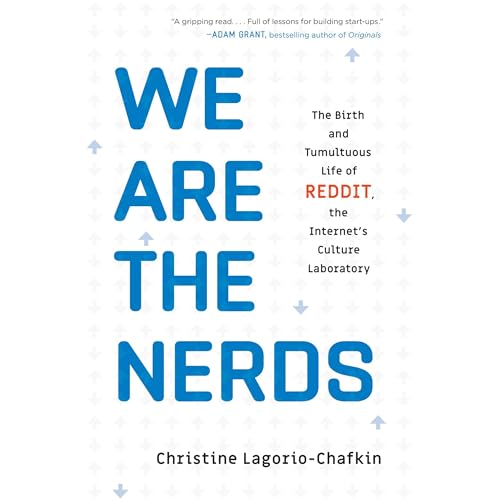
WE ARE THE NERDS (The Birth and Tumultuous Life of Reddit, the Internet’s Culture Laboratory)

Author: Christine Lagorio-Chafkin

Narration by: Chloe Cannon

Christine Lagorio-Chafkin (Author, reporter, podcaster based in New York.)

Relistening to “We are the Nerds” may be reviewed from a perspective of the future of newspapers but that diminishes the tragedy of Aaron Schwarz’s suicide.

The original founders of what became known as Reddit were Steve Huffman and Alexis Ohanian, graduates from the University of Virginia. A third partner, Aaron Swartz, is invited into the company because of his tech experience in creating a company called Infogami which merged with Reddit. With the addition of Infogami, the original founders of Reddit created a parent organization called “Not a Bug, Inc”. Schwartz insists on being called a co-founder because of his contribution to Reddit as a programmer. That insistence rankled Huffman and Ohanian which grew into a resentment that fills the pages of the author’s story.

Steve Huffman on the left with Alexis Ohanian and his wife, Serena Williams, and their daughter on the right.

The author seems to minimize Schwartz’s contribution to Reddit despite the framework he created that made Reddit scale more quickly because of its open access and community-driven cultural impact. Swartz’s contributed code appears to have been an important step in the useability of Reddit by the public. However, in fairness to the original founders, the author infers that contribution pales in respect to the extensive coding and work done by Huffman. The point is that this conflict becomes an irritant that leads to the departure of Swartz from Reddit in 2007, after it was acquired by Condé Nast in 2006. That acquisition made all three original coders millionaires.

Swartz’s life and premature death is a tragic encomium to the story of Reddit’s success as a public forum.

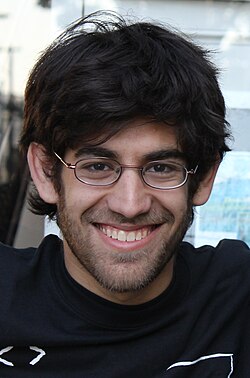
By some measure, Swartz is a brilliant human being, but his intelligence is accompanied by what might be characterized as a self-destructive personality. His ability as a computer nerd is evident in his High School days in Highland Park, Illinois. He goes on to Stanford, but its educational regimen leads him to leave after his first year. He preferred independent learning. Schwartz’s remarkable ability led him to become a research fellow at Harvard University in 2010. He became a self-taught intellectual with an activist belief in academic freedom that eventually led him to rebel against authority. He was arrested in 2011 for allegedly breaking into MIT’s computer network without authorization. He was charged for computer fraud and faced 34 years in prison and a million-dollar fine. At the age of 26, Swartz hung himself and died on January 11th, 2013.

An American mass media company founded in 1909.

Huffman and Ohanian believed Swartz’s contributions to Reddit were less than theirs in creating the company they sold to Condé Nast that made them millionaires. Swartz’s idealism and independence conflicted with the original founders of Reddit who seemed more interested in building a public platform that could make them rich. Though Ohanian believed they sold too soon, all three agreed to Condé Nast’s final offer that made them millionaires.
In retrospect, Ohanian may have been right about the future value of Reddit. Condé Nast spun Reddit out to an independent subsidiary under Advance Publications where it became a 42-billion-dollar success by 2025. Today, Huffman’s net worth is estimated at $1.2 billion as a result of his Reddit shares. Though Ohanian may not have held on to his shares, his net worth is estimated at $150-$170 million. Not bad for two University of Virginia graduates. However, as Plato observed, “The greatest wealth is to live content with little”. Swartz’s life seems to have had little to do with desire for wealth.

“We Are the Nerds” is a story about “Nerdom” and the tragic loss of Aaron Swartz to his loving family and the world of coding.

NIH DISMANTLING

In listening to “Replaceable You, one’s thoughts go to Robert Kennedy’s belief that vaccines are a threat rather than aid to societal health.

Books of Interest
 Website: chetyarbrough.blog

REPLACEABLE YOU (Adventures in Human Anatomy)

Author: Mary Roach

Narration by: Mary Roach

Mary Roach (Author, writer who specializes in humor about popular science, has several NYT’s bestsellers.)

Mary Roach writes an irreverent history about human body parts that have been found to be replaceable with varying degrees of success. The range of her observations run from the humorous to macabre to the sadly tragic.

Humor is subject to the mind of the beholder, but Roach offers a history of nose replacements, dentures, penial replacements, ostomy bag mishaps, hair transplants, and experiments with different materials used to replace body parts. She experiences what it is like to live in a tube designed to aid breathing for one living with paralytic polio. She recounts the famous astronomer, Tycho Brahe who lost his nose in a duel, and had it replaced with a glued metal protuberance that periodically fell off. He became known as the man with the golden nose, though it may have been made of brass.

Dentures became known as “wigs of the mouth” as they came into the 19th century.

Roach alludes to George Washington’s dentures and how uncomfortable and prone they were to be falling out at times of passion (like kissing), chewing sticky or hard foods, or vociferously arguing with subordinates. Made of ivory, animal or human teeth, they were secured with gold wire, bone bases, and/or rubber fittings. Based on excavation in Egyptian times, human and animal teeth and bone were found to be teeth held together with gold wire. Either suction or straps held the dentures in place. Contrary to the myth of wooden teeth for George Washington, historians believe ivory was used in his dentures. They were fastened together by metal springs and bolts and secured to his remaining natural teeth which dwindled to one tooth as he aged.

Roach explains the history of penial transplants that is funny to some while interesting and important to others.

Fingers are sometimes amputated as the structure for penile replacement. She comically suggests an articulated finger allows the transplant to be knuckled under to mitigate appearance of a perpetual erection. Roach goes to great lengths (ahem) to explain how important an implant is to men. A man’s thoughts may wander in a different direction than the author’s view of a successful operation. In any case, Roach’s history shows how accessible and thought-provoking penial implants have become.

An ostomy is a surgically created opening to allow waste to be expelled from the body.

An ostomy can be more precisely identified as a colostomy, an ileostomy, or a urostomy. The first is an opening to the large intestine while the second is an opening to the small intestine. The third, a urostomy is a urinary opening that allows healing of the other two when surgically completed. The urostomy may also be required because of bladder cancer or infection and other maladies related to the urinary track. To keep Roaches story a little less gruesome she tells stories of inadvertent noises and sloshing that occurs with ostomy bags. Like dentures falling out of one’s mouth, ostomy bag use can make unexpected noise or inopportune leaks. They are like “portable embarrassment machines” that can either lead to mutual laughter or embarrassing incidents. Roach contrasts the seriousness of medical necessity with the absurdity of life.

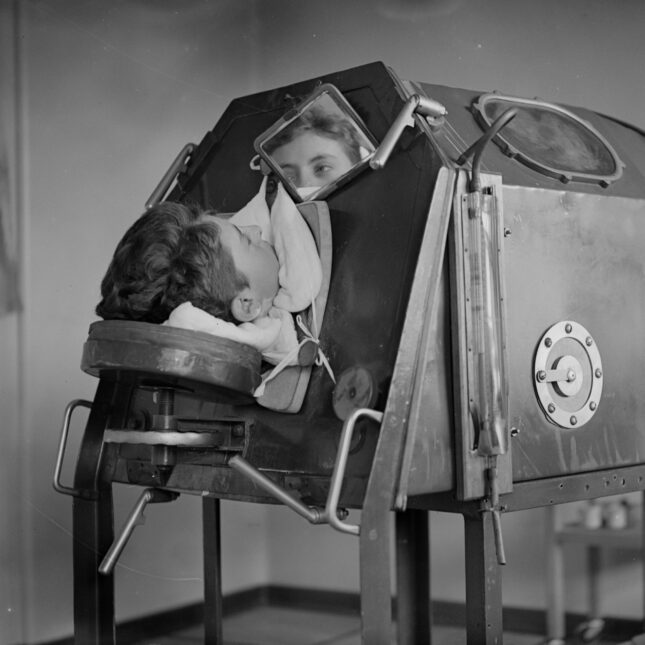
Early ventilator’s first use.

The most heartbreaking issue of Roach’s stories is of polio survivors who are unable to breath without help. Severe loss of muscle function in polio victims required placement in long negative atmosphere tubes in which a patient is confined to stimulate muscle movements for one to breath. Today, a portable positive-pressure ventilator largely replaces the human iron lung. Roach briefly uses one of the iron lungs shown above, but the discomfort made her ask to be removed from the confining contraption within minutes of enclosure.

In listening to “Replaceable You, one’s thoughts go to Robert Kennedy’s belief that vaccines are a threat rather than aid to societal health.

Mary Roach implies Kennedy and America’s current President are fools. To me and presumably to Roach, downsizing the National Institute of Health that researches and tests medical treatments for presently incurable diseases and physical disabilities is a national disgrace.

CHILD ABUSE

The complexity of Freida McFadden’s character relationships diminishes its appeal, but the point of the story is that child abuse takes many forms which often repeat themselves in future generations.

Books of Interest
 Website: chetyarbrough.blog

THE INTRUDER 

Author: Freida McFadden

Narration by: Joe Hempel, Patricia Santomasso, Tina Wolstencroft

Freida McFadden (Author, practicing physician, specializing in brain injury.)

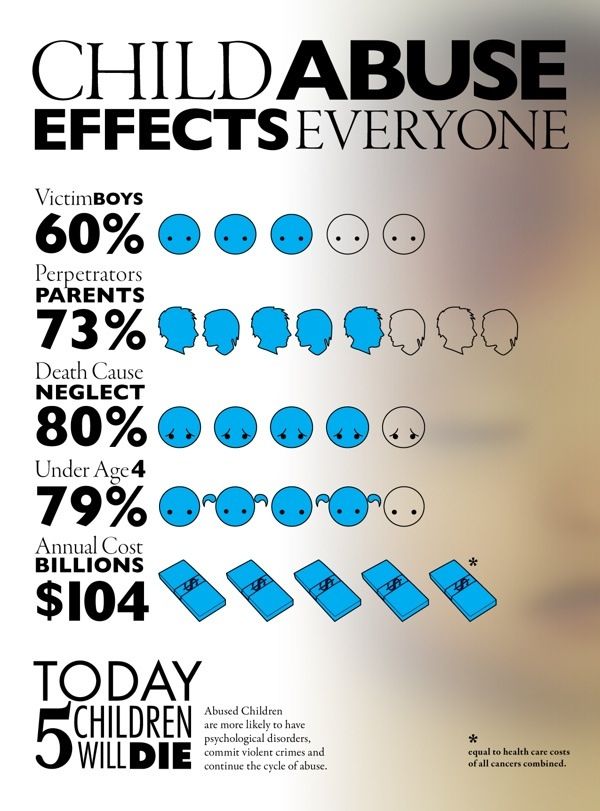
Freida McFadden’s book is a mess. The story is burdened by too many relationship complications. On the other hand, it reveals the hardship children face when raised by parents who lose control of their minds. The base story is about a 12- or 13-year-old girl named Ella. She is being raised by her mother who is a hoarder struggling to cope with life. As a single mother with a young girl, her hoarding complicates her daughter’s life. The house in which they live is a pigsty because of the hoarding. The odor of spoiled fruits and food permeates the clothing that Ella wears to school. Her mother often locks her daughter in a closet when she leaves the house. The closet is dark, cramped, and smelly from the mother’s hoarding mania. She punishes her child with the lit end of a cigarette when her daughter complains about anything.

Child abuse statistics.

Ella dreams of escaping to a better life while coping with school and hiding the trauma she endures with her mother’s mental instability. Ella fantasizes the idea of finding her father who she does not know. She makes friends with a young boy of her age who has anger issues because his father drinks too much and is abusive toward his son and wife. As Ella and the boy become closer, a serious assault incident at school results in the boy being permanently expelled. Ella has lost the support of her best friend and is faced with the instability of her mother’s behavior. Ella wishes for a better life and searches for evidence of her father as a way of escaping and improving her life. That search appears to be a dead end.

Ella’s mother hooks up with a man who becomes a boyfriend with a violent temper.

A fight between the two leads to Ella’s mother being stabbed. Blood from her wounds splatters her daughter from head to foot. Ella sets the house on fire and runs to the woods near her neighborhood where she cowers in a shed. The shed is next to a house rented by a teacher who has been fired by the school that had hired her. There is a storm brewing as Ella cowers in the shed next to the former teacher’s house. The former teacher named Casey, sees a light in the shed and cautiously approaches it to find Ella, a bloody mess lying on the shed floor. Ella is the intruder of McFadden’s story.

The value of this story lies in the reality of children being raised in families that abuse their children through neglect, psychological, or physical abuse.

McFadden’s story is of a neglectful and deranged mother who is incapable of caring for herself, let alone a child. Every child that survives their childhood is impacted by parents whether sane or mentally unbalanced. Most children are raised by single or married parents. Others are taken away by State sponsored childcare facilities or escape abusive parents to live on the street.

How a child responds to their parents or the way they deal with life is like the predictive quality of quantum physics.

How a child responds to how they are raised is unpredictable. That is the substantive meaning of “The Intruder”, a story that keeps one in suspense but does not appear likely to end well. It is a story that many children live in America and presumably in other countries of the world. The complexity of McFadden’s character relationships diminishes its appeal, but the point of the story is that child abuse takes many forms which often repeat themselves in future generations.

TWO OLD MEN

Age is an existential risk that can only be managed by the checks and balances of others which is why America’s government has survived and prospered despite good and ethically or morally corrupt Presidents.

Books of Interest
 Website: chetyarbrough.blog

Original Sin (President Biden’s Decline, Its Cover-Up, and His Disastrous Choice to Run Again)

AuthorJake Tapper, Alex Thompson

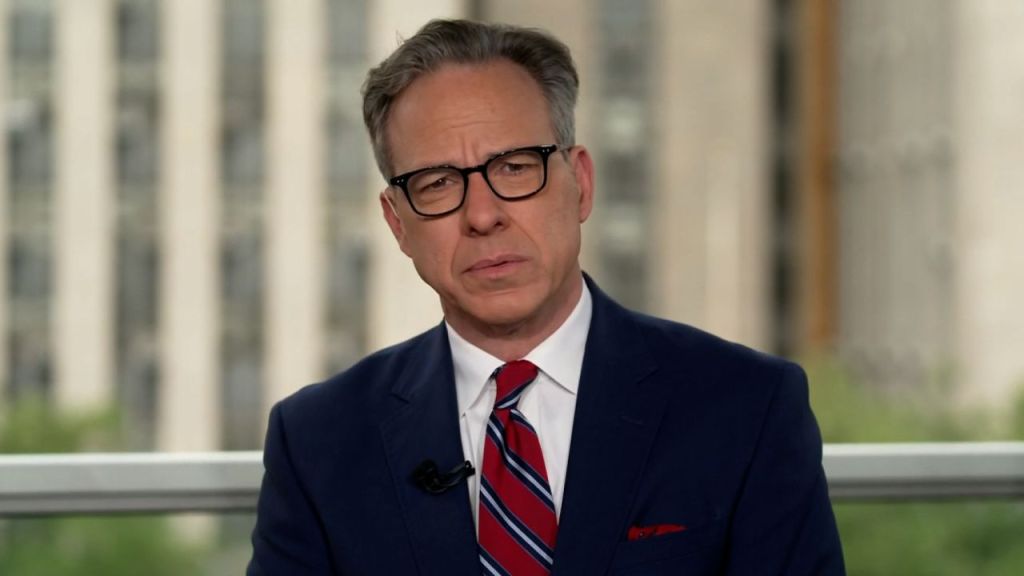
Narrated By:  Jake Tapper

“Original Sin” is a hard-hitting expose by two tough minded reporters that convincingly explain President Biden did not have the cognitive ability to be America’s President in the last two years of his Presidency. This is a particularly hard pill to swallow because the current President of the United States is old while being at the opposite end of the political spectrum. At 74, this book reviewer is old. Age undoubtedly has an impact on this reviewer’s cognitive abilities and the cogency of what he thinks and writes. President Trump is 79 years old. The difference is that what a critic writes means nothing in respect to governance of the United States and the impact it has on American citizens and world events.

Trump’s decisions and actions have had great impact on U.S. relationship with other countries, American public policy, and the economic future of Americans.

Trump has directed the firing of thousands of government employees. Because of Trump’s authoritarian characteristics, he surrounds himself with sycophants who are more interested in pleasing him than managing the government’s responsibility for America’s welfare and role in the world. Authoritarianism is untrue of Biden who throughout his public career has been a consensus builder, not an autocrat. This is not to suggest Biden is not fundamentally wrong in not immediately supporting an alternative candidate for the Presidency. The authors of “Original Sin” clearly explain Biden fails America by waffling on his candidacy for a second term.

Old age is a risk for every manager of other people’s lives and opportunities.

Biden is not at fault for getting old but people who worked with him are guilty of negligence in their service to the American people. Tapper and Thompson offer numerous examples of Biden’s intellectual decline. The importance of their assessment of Biden’s failing capabilities is a warning to all managers of other people’s lives, employment, and family responsibilities. Age is a life circumstance that affects every human being. One who is losing their cognitive ability cannot see it in themselves. It is the responsibility of others to help older people relinquish responsibility for those things they can no longer handle.

Relinquishment by a man or woman who has great responsibility is a hard thing to accept. Age effects people in different ways. The catch 22 is that loss of cognitive ability is unseen by the person who loses it. It is the responsibility of those who rely on one who is losing their reasoning ability to manage the circumstance of that decline.

Putting politics of government aside, President Trump is old. The concern one has is the risk of relying on those who work for Trump, like many who worked for Biden, may see loyalty as more important than the public interest of America. Age is an existential risk that can only be managed by the checks and balances of others which is why America’s government has survived and prospered despite good and ethically or morally corrupt Presidents.

America will survive Trump but it will take time to reset America’s relationship with the world. America has had good and bad Presidents in both political parties but its foundation of checks and balances have kept it on course for the betterment of society. It is nations with leaders that have no checks and balances that threaten social and economic equality.

GENERIC DRUGS

Katherine Eban believes generic drugs are important for global health because of affordability and accessibility. One wonders if anyone who reads or listens to “Bottle of Lies” will take generic drugs if they can afford the original FDA approved product.

Books of Interest
 Website: chetyarbrough.blog

Bottle of Lies (The Inside Story of the Generic Drug Boom)

Author: Katherine Eban

Narrated By: Katherine Eban

Katherine Eban (Author, American Rhodes scholar with a MPhil from University of Oxford.)

“Bottle of Lies” is a history of duplicity and dishonesty in the generic drug industry. It is a damning dissection of the lure of money at the expense of human life. On the one hand, affordability, healthcare savings, global health, and the value of regulation are made clear in “Bottle of Lies”. On the other, Katherine Eban shows how the lure of capitalism and greed creates an incentive to evade regulation and kill innocent people seeking drug treatment for their illnesses.

Katherine Eban reveals the history of an India drug company named Ranbaxy that was founded by two brothers, Ranbir Singh and Gurbax Singh.

In 1937, these two entrepreneurs recognized the economic opportunity of creating a drug manufacturing operation with lower labor costs in India to capture the market in drugs nearing their patent expiration dates. They were focused more on organizational cost cutting and the money that could be made than the efficacy of the drugs they could produce. The company was sold in 1952 to their cousin Bhai Mohan Singh. This cousin transformed Ranbaxy to a pharmaceutical giant, but his experience was in construction and finance, not pharmaceuticals. However, his son Parvinder Singh joined the company in 1967 and was a graduate from Washington State University and the University of Michigan with a master’s degree and PhD in pharmacy.

Parvinder Singh (1944-1999, became the leader of Ranbaxy in 1967.)

Eban argues Parvinder Singh looked at his father’s business as a scientist with a pharmaceutical understanding and a desire to produce lower cost drugs for the world for more than a source of wealth. Parvinder appeared to value quality, transparency, drug efficacy, and long-term credibility for Ranbaxy. Parvinder recruited talent who believed in lowering costs and maintaining the efficacy of drugs the company manufactured. However, Parvinder dies in 1999 and the executives who took over the company focused on maximizing profit rather than the efficacy of the drugs being produced. Parvinder’s leadership is succeeded by Brian Tempest who expands the company by navigating the regulatory restrictions on generic drug manufacture. Tempest tries to balance profitability with global health efficacy of generic drugs. Parvinder’s son, Malvinder Singh eventually becomes the CEO of the company. He returned control to the Singh family. The corporate culture changed to what its original founders created, i.e., a drug producer driven by profit. Malvinder was not a scientist.

Malvinder Singh (Born in 1973, Grandson of Bhai Mohan Singh and son of Dr. Parvinder Singh.)

Under Malvinder, Eban shows the company turns from science to economic strategy to increase revenues of Ranbaxy. Internal checks on the efficacy and testing of their drugs is eroded. Criticism from regulators and whistleblowers are either ignored or sidelined by company management. Peter Baker Tucker’s role in exposing Ranbaxy is detailed in Eban’s history. With the help of Dinesh Thakur, an employee of Ranbaxy, Tucker bravely exposed the company’s fraud. (Thakur received $48 million compensation as a whistleblower award.) Tucker is an FDA investigator who reviewed Ranbaxy’s internal documents that revealed their fabricated data about their drug manufacturing process.

Peter Baker Tucker (aka Peter Baker, former FDA investigator.)

Ranbaxy is sold to a Japanese company called Daiichi Sankyo in 2008. Eban explains that Malvinder concealed critical information about FDA investigations and data fraud in the company’s sale. Malvinder and his brother, Shivinder Singh, are arrested in 2019 and remain in custody in 2021, facing multiple fraud accusations.

Sun Pharma acquires the remnants of the Ranbaxy-Sankyo’ sale.

Though Eban does not focus on what happens after the sale to the Japanese company, it is sold at a loss to Sun Pharmaceutical Industries and Singh family’s ownership is sued by Sankyo for hiding regulatory issues of the company. Daiichi received a $500 million settlement but effectively lost money on their investment. Eban, in “Bottle of Lies” offers a nuanced indictment of generic drug manufacturer and sale.

Eban believes generic drugs are important for global health because of affordability and accessibility.

Quality and drug efficacy must be insured through international regulation. Eban endorses unannounced inspections, routine testing of the drugs, and strict legal enforcement against poor manufacturing systems. Without transparency and oversight of all drug manufacturing, human lives are put at risk.

This is quite an expose, but it ends with criticism of inspections of China’s drug manufacturing capabilities.

The inspections of foreign companies that manufacture generic drugs, like those she refers to in her book, are conducted by similar inspectors who do not know the culture or language of the countries in which generic drugs are being produced. The FDA was paying their inspector in India $40,000 per year at the time of Ranbaxy’s investigation. It is by instinct, not interrogation, that malfeasance is detected. Too much is missed when one cannot talk to and clearly understand employees of manufacturing companies.

It seems America has two choices: one is to increase the salaries of FDA inspectors and require that they know the language of the countries in which they are working and two, set up a system of random reverse engineering of generic drugs allowed in the United States. This not to suggest all other FDA regulations would not be enforced when a generic drug is proposed but that site reviews would be more professionally conducted. One wonders if anyone who reads or listens to “Bottle of Lies” will take generic drugs if they can afford the original FDA approved product.

GENDER MATTERS

All gender differences beyond women’s birth of children seem more culturally than naturally determined. Gender does matter but not because of inherent qualities but because of cultural influences.

Books of Interest
 Website: chetyarbrough.blog

Why Gender Matters (What Parents and Teachers Need to Know About the Emerging Science of Sex Differences) 

Author: Leonard Sax MD PhD

Narrated By: Keith Sellon-Wright

Leonard Sax (Author, psychologist and family physician, graduate of MIT and the University of Pennsylvania.)

After listening to Sayaka Murata’s satire about gender differences and a future that minimizes the differences between males and females, one may wish to read/hear what a physician writes about gender and why difference matters. In listening/reading Doctor Sax’s book, this review is somewhat skeptical of his judgement about gender differences. Having been raised by a single parent, some of what he claims seems formulaic and based on weak evidence.

Gender differences.

Though Dr. Sax cites studies that support stereotypes of girls who are less inclined to pursue math and science, it seems impossible to separate acculturation from gender bias. One wonders if his opinion is not influenced by his own gender. As is true of all human judgements, we have a tendency to conflate correlation with causation.

Whether there is a direct relationship between two variables like gender and one’s potential in science or math may be culturally reinforced rather than intellectually adduced.

There may be some truth in gender difference based on women giving birth that naturally induces a more nurturing requirement for women than men. The fact that women bare children and traditionally take on the role of caregiving suggests a cultural as well as gender driven characteristic. Inequality of the sexes is well documented by numerous studies that show women are paid less for the same work done by men. Unequal pay has nothing to do with biology.

Gender difference.

It is economic and social circumstance that limits women’s potential. The question becomes whether a woman would run a business any differently than a man based on gender. One might believe women who have given birth may manage differently because of their experience as nurturers of early life. Why else, if education and intelligence are similar, would there be any difference between a woman or man who manages others?

Though most humans wish to be part of something greater than themselves, the shaming in this cell-phone age seems significantly more impactful on women than on men.

On the other hand, there are some observations about gender differences that seem true when one thinks about their own life experience. Though social acceptance is important to both sexes, it seems boys are less likely to be as stressed about not being part of the “in group” than girls. Though even that is challengeable in that males also have a desire to be a part of something greater than themselves.

On balance, this listener/readers’ opinion is that Doctor Sax’s explanation of innate gender difference is suspect with the caveat that women are different from men in that they give birth.

All gender differences beyond women’s birth of children seem more culturally than naturally determined. Gender does matter but not because of inherent qualities but because of cultural influences.

VANISHING WORLD

Murata’s satire infers obsession with sex for pleasure, child rearing collectivization, gender dysphoria, and pregnancy equalization are pathways to societal destruction.

Books of Interest
 Website: chetyarbrough.blog

Vanishing World (A Novel) 

Author: Sayaka Murata

Narrated By: Nancy Wu

Sayaka Murata (Author, Japanese novelist.)

Sayaka Murata’s subject is clearly revealed in its title, “Vanishing World”. “Vanishing World” is a provocative assessment of how sexual relationship and sex education has changed. Murata satirically reveals how human reproduction, objectification of life, motherhood, and technology may dehumanize society.

Murata’s fictional story is highly informative in regard to sexual difference and similarity between men and women.

In one sense, Murata’s fictional story is highly informative in regard to sexual difference and similarity between men and women. As a reader/listener, Murata offers a detailed description of the physical difference between the sexes. Many who think they know something about sexual difference will find the author’s candor enlightening. However, her depiction of social relationship is off-putting with a satirical exaggeration of socio/sexual objectification.

Murata writes about a single parent family with a young daughter who lives with her mother and is nearing the age of puberty.

(Though not mentioned in Murata’s story, single family homes in America have grown by nearly 30% in the 21st century.) The main character’s name is Amane and Murata’s story is about Amane’s sexual awakening and how she views social relationship. Amane is infatuated with an animated male character on television. She imagines being married to this character before puberty but holds this character in her mind throughout childhood and later life.

Murata suggests reproduction may evolve into a preferential desire for artificial insemination rather than sexual intercourse between a man and woman.

This idea feeds into a listener/reader’s mind as a diminishment of the need for emotional attachment to the opposite sex for procreation. Sex becomes detached from procreation, evolving into only “hooking up” for sexual stimulation and/or personal gratification. Murata infers desire is no longer needed for procreation but only to experience intercourse as an emotional and physical pleasure. Consequently, it seems perfectly natural to transfer sexual desire to a fictional character because it becomes unnecessary to have emotional attachment to humans when a figment of one’s imagination is available.

Murata creates a bizarre world.

The bizarro world that Murata creates is an extension of a belief that society is becoming less attached to their humanity. Marriage, human relationship, and motherhood are replaced by mindful personal’ inwardness and endless pursuit of physical stimulation without emotional entanglement. By extension, Murata suggests science will create wombs for men so that the difference in sexes equalizes childbirth and care of children. Caregiving becomes bureaucratic and collective because caregiving is no longer personalized.

Murata suggests that a new system of childcare will evolve into collective training camps for working parents who are too self-absorbed to raise their own children.

Collective childcare disconnects parents from the management and development of their children. The sterility of conception by artificial insemination, collective childcare, and social acceptance of multiple sex partners diminishes both familial relations and child development. Birthing and raising children becomes a clinical process, i.e., less personal with both men and women capable of experiencing pregnancy and delivery; all without responsibility or obligation for childcare.

In some sense, this satire illustrates the negative potential of socio/sexual equality.

Murata’s story ends with the birth of their first child from a man who is Amane’s husband. She is torn over not being able to take the baby home because the child is already being “cared for” in a ward meant to raise and nurture all newly born children. A final point is made in the story by a visit from Alane’s mother after the birth. She asks Amane where the child is, and Alane explains the child will not be raised by her and her husband. Alane’s mother is aghast. Her mother falls to the floor and dies without any apparent familial concern for her sudden collapse and presumably, death. The next thing to happen is a visit from one of the children born in this new world. Alane chooses to have sex with him and the story ends.

“Vanishing World” implies 21st century science, organizational bureaucracy, and social change threatens survival of humanity. Murata’s satire infers obsession with sex for pleasure, child rearing collectivization, gender dysphoria, and pregnancy equalization are pathways to society’s collapse.

GOTHIC TALE

The climax of “Modern Gothic” is where myth enters Moreno-Carcia’s story. The fundamental truths of colonization are revealed in her creative story while its denouement is an entertaining explosion of imagination.

Books of Interest
 Website: chetyarbrough.blog

Mexican Gothic

Author: Silvia Moreno-Garcia

Narrated By: Frankie Corzo

Silvia Moreno-Garcia (Author, Mexican/Canadian novelist, editor and publisher.)

Moreno-Garcia’s “Mexican Gothic” is a chilling story of colonization, eugenics, ecological contamination, mystical beliefs, and control of society by men. The author chooses the name of Doyle as an English family that exploits the Mexico’ silver mining industry in earlier centuries. A dynasty is created by generations of Doyle’s. They created a colonial manor called “High Place” from which to rule a crumbling empire. As colonizers they capitalize on Mexico’s silver deposits by exploiting native Mexicans’ land and labor to grow their mining operation. The wealth of local citizens is lost to the English foreigners who keep wages low to increase the wealth of the Doyle family.

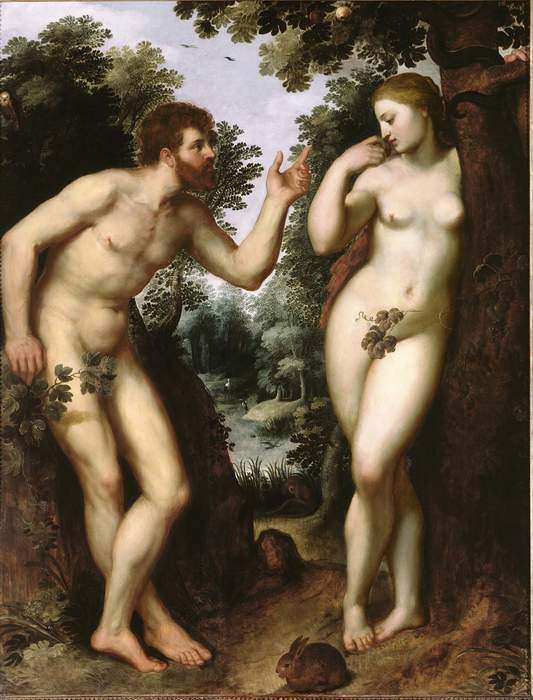
Over generations, the Doyle men married local women that were related to each other. A common practice of royalty before the twentieth century.

They wished to maintain the genetic purity of the Doyle bloodline by having future Doyles marry genetic descendants of Mexican women that had been their wives. This is not greatly different than the experience of royal marriages in European cultures. The consequence of that marriage tradition is that recessive genetic mutations become more prominent in offspring. Children were more susceptible to diseases like cystic fibrosis and had higher incidents of developmental and cognitive disorders. This is one of many threads of meaning in “Mexican Gothic” because one of these descendants becomes a murderer of Doyle family members and the current Doyle generation seems socially dysfunctional. Added to that dysfunction is the Doyle family’s diminishing wealth.

An arranged marriage is a lynch pin to the story.

The heroine, Noemi, is the daughter of a wealthy Mexican family. She is sent to investigate a letter that was received by her father from a young woman that marries a Doyle. She is a cousin of Noemi’s. The marriage is arranged in part because of her father, and he feels something is wrong and wants Noemi to visit the Doyle family to find what the mysterious letter means. Soon after Noemi arrives, she begins to have hallucinatory dreams. Listener/readers find the hallucinations are because of spores that are in the bedroom of the deteriorating Doyle house. A clever thread of meaning in Moreno-Garcia’s story is ecological contamination that comes from colonization. As one nation colonizes another, it inevitably brings different plants and animals that are not indigenous to the country they are colonizing. The author notes a fungus is growing in the Doyle household that may have come from the original colonizers.

The penultimate theme in “Modern Gothic” is the creation of myths that compound the horrific events that occur in the Doyle house.

From the history of murders in the Doyle household, to hallucinatory dreams, to incestuous relationships, to the gloom and doom of the story, to a myth about the age of the Doyle patriarch, Moreno-Garcia offers a climax to her story that vivifies reader/listener’s imagination. The climax of “Modern Gothic” is where myth enters Moreno-Carcia’s story. The fundamental truths of colonization are revealed in her creative story while its denouement is an entertaining explosion of imagination.

MADNESS

Whether one is of a particular gender, good looking, unattractive, fat, thin, so on and so on, is superfluous. What is not different is we are all human. Murray infers that if leaders can keep humanness in mind, equality is the only thing that matters.

Books of Interest
 Website: chetyarbrough.blog

The Madness of Crowds (Gender, Race and Identity)

Author: Douglas Murray

Narrated By:  Douglas Murray

Douglas Murray (Author, Bristish political commentator, cultural critic, and journalist.)

All humans deserve equal treatment, rights, and opportunities. No known form of government achieves that ideal. Douglas Murray shows liberal and social democracies show concern about equality, while other forms of government don’t seem to care. What Murray argues is that western nations and educational institutions are not doing enough and what they are doing is maddeningly ineffectual.

Initially, Murray writes about gay rights which are not top of mind for many listener/readers.

However, the point is that sexual preference is a human right that harkens back to the age of ancient Mesopotamia (2000 BCE) and Greece (300 BCE). Mesopotamian law treated marriage as a legal contract. Men were allowed to have secondary wives or concubines with legal codes regulating inheritance rights. Women then, as now, were treated unequally. In Mesopotamia, marriage was tied to economic, social, and legal agreements to ensure social stability through male control. Interestingly, women had some legal rights in Mesopotamia while Greece was more patriarchal with limited legal independence for women. Mesopotamia artwork shows same-sex relationships existed, but contractual agreements in marriage were only for heterosexual relations.

In Plato’s time, legal codes in marriage were less important but social stability and male domination remained in both jurisdictions.

Ancient Greek history shows same-sex relationships were widely accepted but without any legal recognition like that required in heterosexual marriages. Same sex relationships go back to the beginnings of pictographic and written history. So, why is there so much Sturm and Drang about same sex relationships?

American democracy began a civil war in 1865 over the issue of slavery.

American democracy began a civil war in 1865 over the issue of slavery, passed the 14th Amendment in 1868 to provide equal protection for all, passed a Civil Rights Act in 1964 prohibiting discrimination based on race, color, religion, sex, or national origin, passed the Voting Rights Act in 1965, passed the Americans with Disabilities Act in 1990, and the Marriage Equality Act in 2015. Despite all of this history, in 2025, America continues to discriminate against same sex relationships and often violates the aforementioned laws. If a male or female wishes to have sex with a consenting person of the same sex, why should any American care? America has fought and died over equal rights for all Americans. It is maddening to keep reading about Democracies continuing violation of equal rights.

Murray offers numerous examples of protest in western society that reinforce his argument about the madness of crowds.

He reflects on Ivy League colleges like Yale and a small liberal arts college in Olympia, Washington where a crowd of students caused resignations of their professors. In 2015, a Yale faculty member questioned the university’s stance on culturally sensitive Halloween costumes. A crowd of students accused the faculty of failing to create a “safe space” because their professor raised the issue of identity as culturally insensitive. He and his wife who were professors at Yale chose to resign. In 2017, a professor objected to a campus event at Evergreen College in Olympia, Washington. White students and faculty were asked to leave for a day to highlight racial issues. The student protest against the professor for a “day off” event became a threat to his safety. He resigned. Murray’s point is that public discourse is increasingly driven by emotional reactions rather than reasoned debate.

Murray touches on the negative consequence of technology on the growing “…Madness of Crowds”. More than ever, the reach and size of crowds who object to human equality can spread social chaos. America experienced the power of technology with the attack on the Capitol on January 6, 2021.

The re-election of Donald Trump is a harbinger of a future where the emotion of crowds who have the right to vote is magnified by media paid for by the richest people in America.

Murray touches on the negative consequence of technology on the growing "...Madness of Crowds". More than ever, the reach and size of crowds who object to human equality can spread social chaos. America experienced the power of technology with the attack on the Capitol on January 6, 2021.

Emotions of crowd-think distort the difficult and personal trials of people with gender dysphoria.

The myth of Tiresias embodies the truth that humans are different but equal.

Tiresias is a figure in Greek mythology that was punished by Hera, the wife of Zeus, to be turned into a woman after he struck two mating snakes. He remained a woman for seven years when he was changed back into a man by Zeus. Zeus and Hera debated on whether experience of sex as a man or woman was more pleasurable. Tiresias agreed with Zeus who believed women experienced greater pleasure and Hera struck him blind for siding with Zeus. The debate goes on with Murray noting it occurs in crowd emotion that refuses to deal with the facts of gender dysphoria. One thinks of the many people that struggle with gender identity and how difficult it must be to live life with one’s own confusion, let alone the stupidity of people’s emotional reactions.

And then there is the issue of race.

Nearly 50% of the world is classified as Caucasoid with the remainder of three racial categories being no more than 33.5%. Unique physical characteristics of race are hair color and texture, facial features, average height, eye color, blood type, and skin color. Of course, there are differences beyond these features within each racial group. Whether one is of a particular gender, good looking, unattractive, fat, thin, so on and so on, is superfluous. What is not different is we are all human. Murray infers that if leaders can keep humanness in mind, equality is the only thing that matters.

AI & HEALTH

Like Climate Change, AI seems an inevitable change that will collate, spindle, and mutilate life whether we want it to or not. The best humans can do is adopt and adapt to the change AI will make in human life. It is not a choice but an inevitability.

Books of Interest
 Website: chetyarbrough.blog

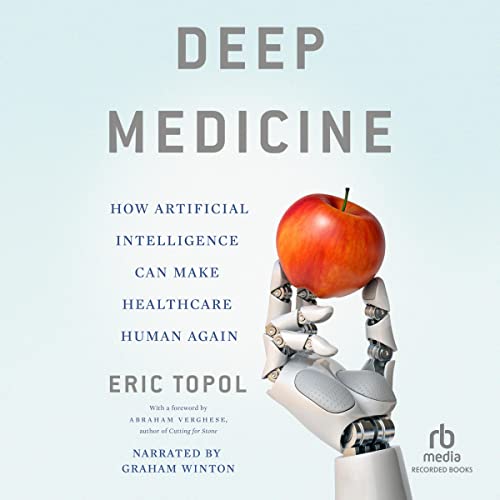
Deep Medicine (How Artificial Intelligence Can Make Healthcare Human Again)

Author: Eric Topol

Narrated By:  Graham Winton

Eric Topol (Author, American cardiologist, scientist, founder of Scripps Research Translational Institute.)

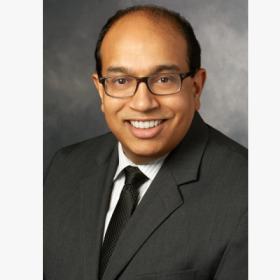
Eric Topol is what most patients want to see in a Doctor of Medicine. “Deep Medicine” should be required reading for students wishing to become physicians. One suspects Topol’s view of medicine is as empathetic as it is because of his personal chronic illness. His personal experience as a patient and physician give him an insightful understanding of medical diagnosis, patient care, and treatment.

Topol explains how increasingly valuable and important Artificial Intelligence is in the diagnosis and treatment of illness and health for human beings.

AI opens the door for improved diagnosis and treatment of patients. A monumental caveat to A.I.s potential is its exposure of personal history not only to physicians but to governments and businesses. Governments and businesses preternaturally have agendas that may be in conflict with one’s personal health and welfare.

Topol notes China is ahead of America in cataloging citizens’ health because of their data collection and AI’s capabilities.

Theoretically, every visit to a doctor can be precisely documented with an AI system. The good of that system would improve continuity of medical diagnosis and treatment of patients. The risk of that system is that it can be exploited by governments and businesses wishing to control or influence a person’s life. One is left with a concern about being able to protect oneself from a government or business that may have access to citizen information. In the case of government, it is the power exercised over freedom. Both government and businesses can use AI information to influence human choice. With detailed information about what one wants, needs, or is undecided upon can be manipulated with personal knowledge accumulated by AI.

Putting loss of privacy and “Brave New World” negatives aside, Topol explains the potential of AI to immensely improve human health and wellness.

Cradle to grave information on human health would aid in research and treatment of illnesses and cures for present and future patients. Topol gives the example of collection of information on biometric health of human beings that can reveal secrets of perfect diets that would aid better health during one’s life. Topol explains how every person has a unique biometric system that processes food in different ways. Some foods may be harmful to some and not others because of the way their body metabolizes what they choose to eat. Topol explains, every person has their own biometric system that processes foods in different ways. It is possible to design diets to meet the specifications of one’s unique digestive system to improve health and avoid foods that are not healthily metabolized by one’s body. An AI could be devised to analyze individual biometrics and recommend more healthful diets and more effective medicines for users of an AI system.

In addition to improvements in medical imaging and diagnosis with AI, Topal explains how medicine and treatments can be personalized to patients based on biometric analysis that shows how medications can be optimized to treat specific patients in a customized way. Every patient is unique in the way they metabolize food and drugs. AI offers the potential for customization to maximize recovery from illness, infection, or disease.

Another growing AI metric is measurement of an individual’s physical well-being. Monitoring one’s vital signs is becoming common with Apple watches and information accumulation that can be monitored and controlled for healthful living. One can begin to improve one’s health and life with more information about a user’s pulse and blood pressure measurements. Instantaneous reports may warn people of risks with an accumulated record of healthful levels of exercise and an exerciser’s recovery times.

Marie Curie (Scientist, chemist, and physicist who played a crucial role in developing x-ray technology, received 2 Nobel Prizes, died at the age of 66.)

Topol offers a number of circumstances where AI has improved medical diagnosis and treatment. He notes how AI analysis of radiological imaging improves diagnosis of body’ abnormality because of its relentless process of reviewing past imaging that is beyond the knowledge or memory of experienced radiologists. Topol notes a number of studies that show AI reads radiological images better than experienced radiologists.

One wonders if AI is a Hobson’s choice or a societal revolution.

One wonders if AI is a Hobson’s choice or a societal revolution greater than the discovery of agriculture (10000 BCE), the rise of civilization (3000 BCE), the Scientific Revolution (16th to 17th century), the Industrial Revolution (18th to 19th century), the Digital Revolution (20th to 21st century), or Climate Change in the 21st century. Like Climate Change, AI seems an inevitable change that will collate, spindle, and mutilate life whether we want it to or not. The best humans can do is adopt and adapt to the change AI will make in human life. It is not a choice but an inevitability.