ABSOLUTION

History of the world has shown all forms of government are “equal opportunity” inhibitors, if not destroyers.

Books of Interest
 Website: chetyarbrough.blog

Secondhand Time (The Last of the Soviets)

By: Svetlana Alexievich

Narrated By: Amanda Carlin, Mark Bramhall, Cassandra Campbell & 8 more.

Svetlana Alexievich (Author, Belarusian investigative journalist, winner of the Nobel Prize in Literature in 2015.)

Svetlana Alexievich’s “Secondhand Time” is a remarkable and informative explanation of why Putin believes he is right and why many citizens of Russia seem to continue in their support of his administration.

Map of the former U.S.S.R.

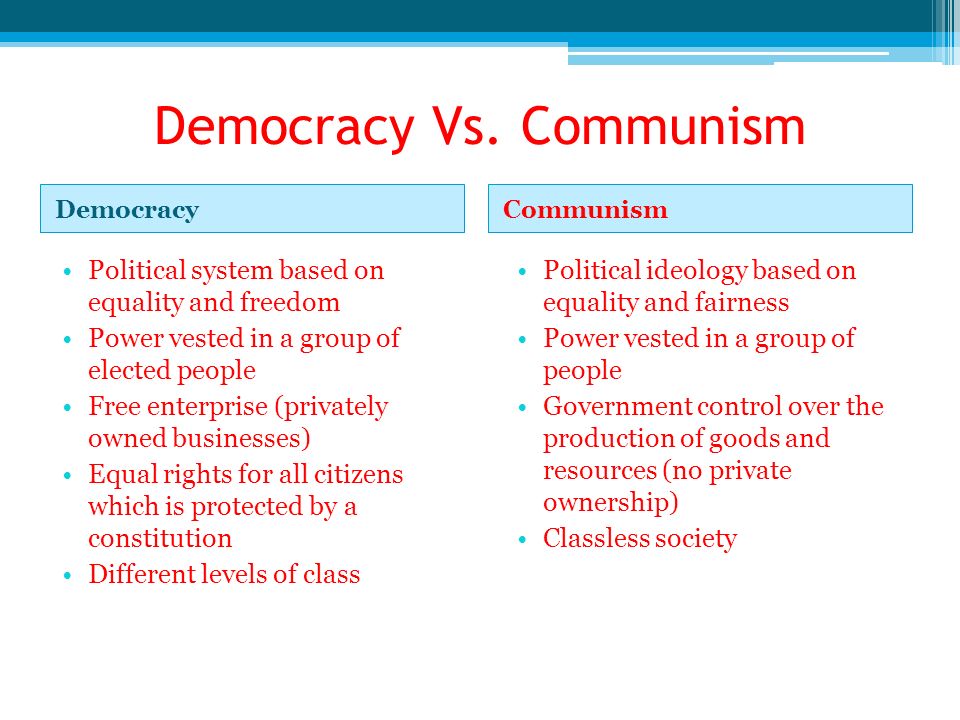
Alexievich conducts a series of interviews with Russian citizens of different generations about the U.S.S.R. and its return to the world stage as a Russian nation. The narrators of her book recite those interviews to give listener/readers a complex and enlightening picture of Russian culture. The clash of communist and capitalist ideals is at the foundation of the interviews and the narrators dramatically told stories.

The Russian Soviet Army is the first to arrive in the Battle of Berlin on April 16, 1945. Their flag was hoisted on May 1, 1945.

The citizens of Russia are justifiably proud of their role in WWII that turned the tide of Germany’s war of aggression. (Of course, that is putting aside Stalin’s Machiavellian decision to join Hitler at the beginning of the war.) Some Russian soldiers who fought in that war were disgusted with what they feel was a betrayal by Mikhail Gorbachev of communist ideals for which they lived and died for in the 20th century.

The rejection of communist ideals for capitalism is viewed by some Russians as a tyranny of greed that lays waste to the poor and creates a class of haves and have-nots.

Some Russian veterans of WWII see the seduction of capitalism destroying the ideal of a classless society. Some citizens see the ideal of a government is to demand the wealth of life be spread equally according to individual need. To these believers, enforcement of communist ideals would eliminate private property and greed that would create a classless society. Some believed Stalin exemplified leadership that would achieve that ideal. The hardship of life during Stalin’s rule is considered by some as justified means for the achievement of the Marxist ideal of communism.

Statue of the “Circle of Life” in Norway.

Cultures may be different, but all human life is the same.

The underlying point of these interviews is to show Russian culture is not monolithic, just as culture is not in any nation. All cultures are filled with diversity. There is no singular cultural mind but a range of interests among many factions that establish a nation’s culture. The evidence of that is the contrast of Gorbachev and Putin in Russia and FDR and Trump in America. All four leaders led their countries but represent completely different cultural beliefs.

Conservatives, New York Governor Al Smith, Southern Democrats, and isolationists like Charles Beard opposed FDR in America. Putin and Trump have their cultural supporters in today’s national governments, but they also have their critics. The difference is that in Putin’s world, being killed or put in prison for opposition is culturally acceptable. In America, one is reminded of Trump’s deportation and imprisonment of migrants without due process.

The author’s interviews are not suggesting that either Russia or the West have good or bad governments but that every culture tests their leaders.

Many Russians, undoubtedly blame American Democracy for the dismantling of the U.S.S.R. Alexievich interviews Russians who believe the hardship that countries within the U.S.S.R. experienced were not the fault of Stalinist policies but the failure of citizens to live up to the ideals of communism. To anyone who has traveled to the Baltics, that opinion is founded on ignorance of the hostility expressed by citizens of the Baltics who were starved, displaced, jailed, and murdered during their occupation by Russia.

The other part of the story is the rise of the oligarchs in Russia as a result of the greed associated with capitalism.

The gap between rich and poor is accelerated in Russia just as it has been in America. Democracy does not have clean hands when it comes to equality of opportunity. Like the Jewish pogroms in Russia, America’s enslavement, murder, and discrimination of Blacks is proven history.

Siberian Exile during Stalin’s reign in Russia.
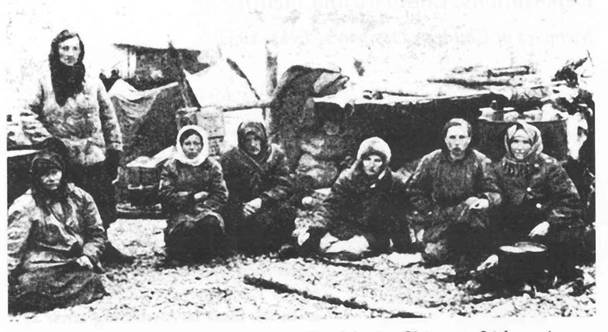
Alexievich draws from all sides of Russian beliefs. Those interviewed note the terrible conditions of those exiled to Siberia. Many Russians became disillusioned by the redistribution of wealth and privilege after Gorbachev and Yeltsin showed themselves to not be up to the task of leadership change. In fairness, one wonders who could have been up to the task when Russia had a long history of monarchal and tyrannical leadership?

A few Russians became immensely wealthy while the majority were somewhat better off but some struggled with the loss of State benefits and fewer jobs. The rising gap between rich and poor soured communist idealists. Even those who had been sent to Siberia by Stalin who toiled and suffered the experience of isolation, slave labor, and frigid weather felt they were no better off because of the loss of a socialist future.

The frightening truth of Alexievich’s book about the culture of Russia is that Putin may be absolved for his atrocities just as leaders of America have been absolved for their mistakes. History of the world has shown all forms of government are “equal opportunity” inhibitors, if not destroyers.
MODERATION

Unless homelessness is addressed with affordable housing, America’s future looks bleak. A land of have and have-nots will grow to crush American prosperity.

Books of Interest
 Website: chetyarbrough.blog

Abundance 

By: Ezra Klein, Derek Thompson

Narrated by: The Authors

These two young Americans offer an insightful view of politics and American government in the 21st century.

Klein or Thompson could have voted for either Trump or Harris in America’s last election. Their book argues American government is both a boon and bane for citizen “Abundance” in the 21st century. They note America has contradictory economic policies that have created great abundance among Americans while exacerbating inequality. Evidence for their opinion is growing homelessness, an immigration crisis, loss of manufacturing jobs, and government’s failure to creatively adjust public policies to provide solutions.

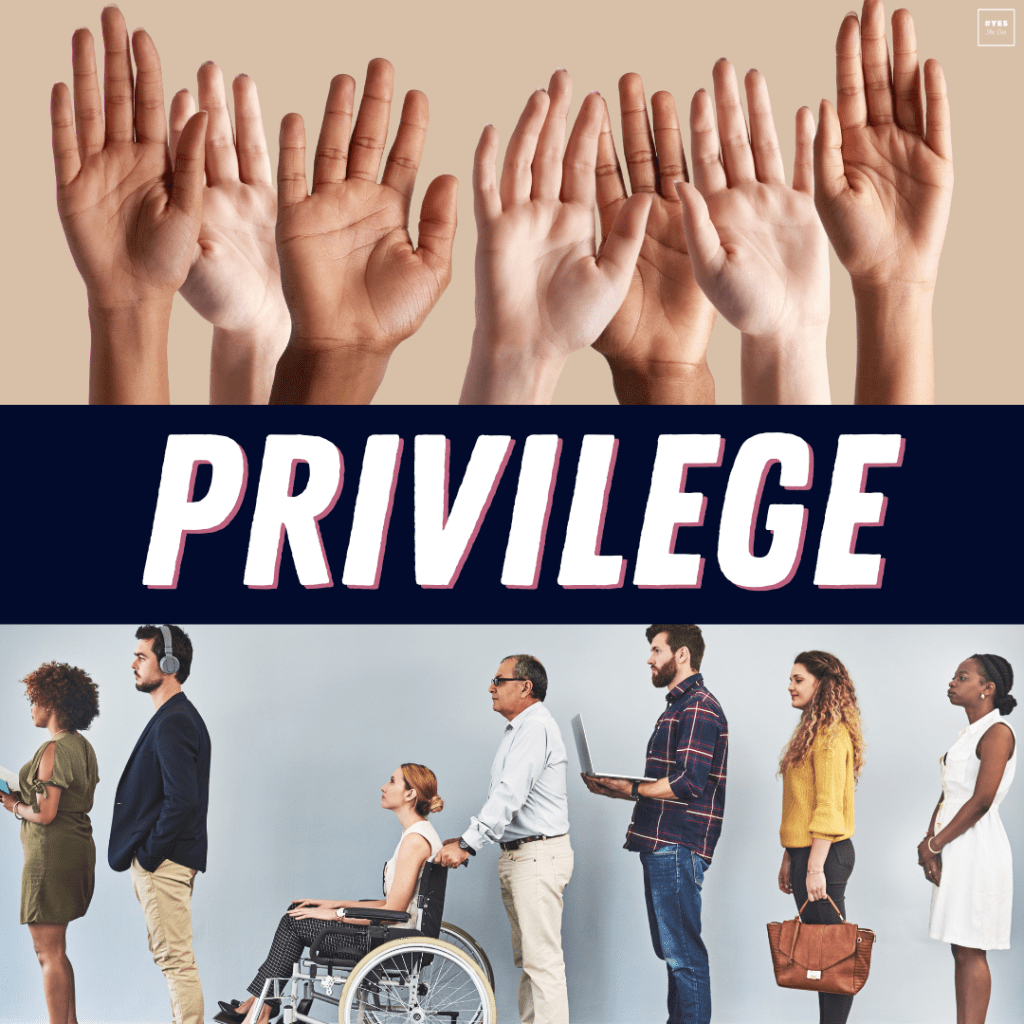
Those who have shared in the abundance of America have voted for candidates to preserve their privileges.

The authors note homelessness is a function of affordable housing that is denied by government policies that regulate zoning and construction requirements. Government policies make affordable housing too costly to build and impossible to locate because of zoning restrictions. The number of people living on the street is a self-inflicted American tragedy. Some of the homeless are young, some are old, some have mental or physical problems, and others are victims of drugs or their own weaknesses. What they have in common is unaffordable housing.

Historically, immigration has been a great boon to American economic growth.

Klien and Thompson note restrictive immigration policies have created obstacles for workers needed for manufacturing in key industries like agriculture, auto industry assembly, housing construction, and clean energy infrastructure. Rather than wasting money on building walls and deporting workers, the authors advocate immigration reform that meets the needs of American business. One can imply the authors meaning is that to “Make America Great Again” requires immigrants willing to work in agricultural and manufacturing jobs. The end of the baby boom requires help from immigrants to meet the needs of increased manufacturing and construction in the United States.

Some believe what Trump is doing is good for the American economy in the long run.

The criticism is that in the short run, the economy may collapse. Tariffs being used as a ham-fisted way of negotiating fair international trade is a fool’s errand. America needs labor and material in the short run to achieve equal and greater prosperity than it had in the 1970s. Added manufacturing will aid American prosperity, but it will be surpassed in the long run by automation. It is the automation race America needs to win or compete with to remain a world leader. Competing in that race depends on education, and scientific research. The irony is that Trump is firing government employees who have responsibility for public education, research, and funding that have been the engines of America’s prosperity.

The government employees discharged by the Trump administration to solely reduce costs is short sighted.

In the 1980s, 60% of basic research in the U.S. was funded by the government. In 2022 that funding dropped to 40%. Advances in semiconductors, global positions systems, biotechnology, and aeronautics were government-funded discoveries in the 1980s. American government-funded scientific research gave America the internet, GPS technology, mass production of penicillin, Space exploration, human genome project discoveries, and renewable energy innovations. The Department of Health and Human Services has lost 20,000 employees, the Department of Education 1,300, the National Oceanic and Atmospheric Administration 800, and the National Institutes of Health 1,200. One wonders how many of these employees may have been on the edge of scientific discoveries that could change the world.

The truth of “Abundance” is that America has caused many negative ecological impacts and aggravated the gap between rich and poor.

Klein and Thompson have written a provocative book. However, the truth of “Abundance” in America has caused many negative ecological impacts and aggravated the gap between rich and poor. Looking only to abundance does not address either social inequality or the environment. The NIMBY (not in my back yard) resistance to affordable housing aggravates inequality and increases homelessness. Unquestionably, higher density housing impacts the environment.

Klein and Thompson fail to address the increased power of corporations in America.

The 2010 Citizens United v. Federal Election Commission gave corporations the power to spend unlimited amounts of money on political campaigns. The influence of corporations on elections has disproportionate power in the election of government policy makers. That decision by the Court is a distortion of one person, one voter’s influence on public policy.

Aristotle emphasized the importance of “All things in moderation”. NIMBY communities must open their minds and hearts to homelessness and moderate their resistance to neighborhood accommodation. Government agencies must supervise and service higher density housing impacts wherever they are built and after they are completed.

Unless homelessness is addressed with affordable housing, America’s future looks bleak. A land of have and have-nots will grow to crush American prosperity.

SERVICE & PROFIT

Government is not a business for profit and should not be solely measured by its cost. America will survive the catastrophic mistakes being made by President Trump but American citizens, and the welfare of the world will suffer for years to come.

Books of Interest
 Website: chetyarbrough.blog

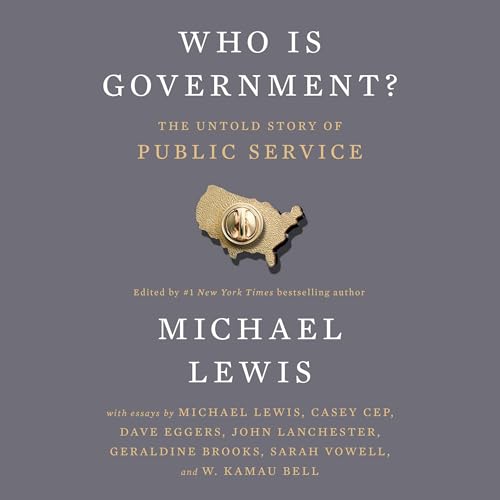
Who is Government (The Untold Story of Public Service)

By: Michael Lewis, Casey Cep, Dave Eggers, John Lanchester, Geraldine Brooks, Sarah Vowell, and Kamau Bell

Edited By: Michael Lewis

The stories of these writers are a tribute to those who have chosen careers in American government. Having personally earned a master’s degree in public administration, worked as a local government manager, then as a manager of a private business division, and finally, as a personal business owner, I have an opinion about President Trump. My experience is based on three different types of employment. All were rewarding experiences but in fundamentally different ways.

The writers of “Who is Government” show how ignorant business creators and managers like Donald Trump and Elon Musk are in discounting the contribution of employees of government organizations. Private corporations do not survive without profit to its owners. Public organizations do not survive without service to the public.

Profit is simple to measure. Public service is measurable but more abstract and difficult to quantify.

One can choose, like Musk did with Twitter, to reduce costs by firing employees. That may improve profitability but at a cost that may hurt or destroy the future of a business. In the case of Twitter, the company lost much of their advertising revenue because an unsupervised public forum could spread false and defamatory information that embarrasses advertisers who were protected by Twitter’ employees that were fired. No analysis was done by Musk about Twitter information’ controls provided by employees. The new entity, “X”, seems to have assuaged some advertisers’ concerns because they have started to use Musk’s new company. The point is that if Musk had taken more time to evaluate what fired employees were doing, he may have retained many of the advertisers who left the forum.

Trump’s employment of Musk to decimate the government employee workforce is following the same foolish path that was taken with Twitter.

No analysis of employee contributions is made. The goal is only to reduce government’ cost regardless of employee’ contribution to public need or service. The consequences have likely reduced health and welfare of American citizens; not to mention harm done to incomes of thousands of government employees’ families.

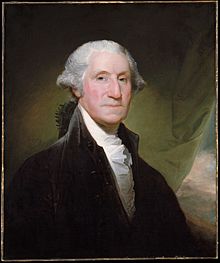
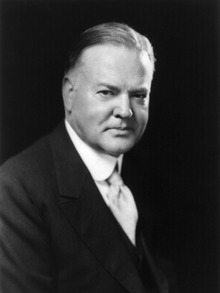
With exceptions of George Washington, Harry Truman, Carter, and the two Bush presidents, the worst former businessman that became President was Herbert Hoover who served as President before the greatest depression in America’s history. With Trump as President, one has to wonder whether he is leading America and the world toward its second great depression.

HERBERT HOOVER (31ST PRESIDENT OF THE U.S.)

“Who is Government” illustrates how government employees have contributed to the health and welfare of America. They are unknown and viewed by people like Trump and Musk as just a cost, without benefit to the public. How many science, medical, veteran, and welfare services are being decimated by their narrow vision of government management?

Government is not a business for profit and should not be solely measured by its cost. America will survive the catastrophic mistakes being made by President Trump but American citizens, and the welfare of the world will suffer for years to come.

CHINA

Harmony and pragmatism undoubtedly remain important characteristics of Chinese society. Time will tell whether societal harmony can be maintained by an increasingly authoritarian leader.

Books of Interest
 Website: chetyarbrough.blog

The Chinese Looking Glass (The most illuminating book yet written on China and her enigmatic people.)

By: Dennis Bloodworth

Dennis Bloodworth (1919-2005) Author, journalist, British writer at The Observer, first British journalist allowed to visit China in 1955.

“The Chinese Looking Glass” is a whirlwind journey across the vast history of China by the first British writer allowed to visit China in 1955. It is a primer for a general understanding of China that was originally published in 1966 and updated in 1980. The author’s marriage to Liang Ching Ping adds credibility to his view of Chinese culture.

One reads Bloodworth’s book and is somewhat overwhelmed by its breadth. So many generations of Chinese culture are too much to cover in a 400+page book.

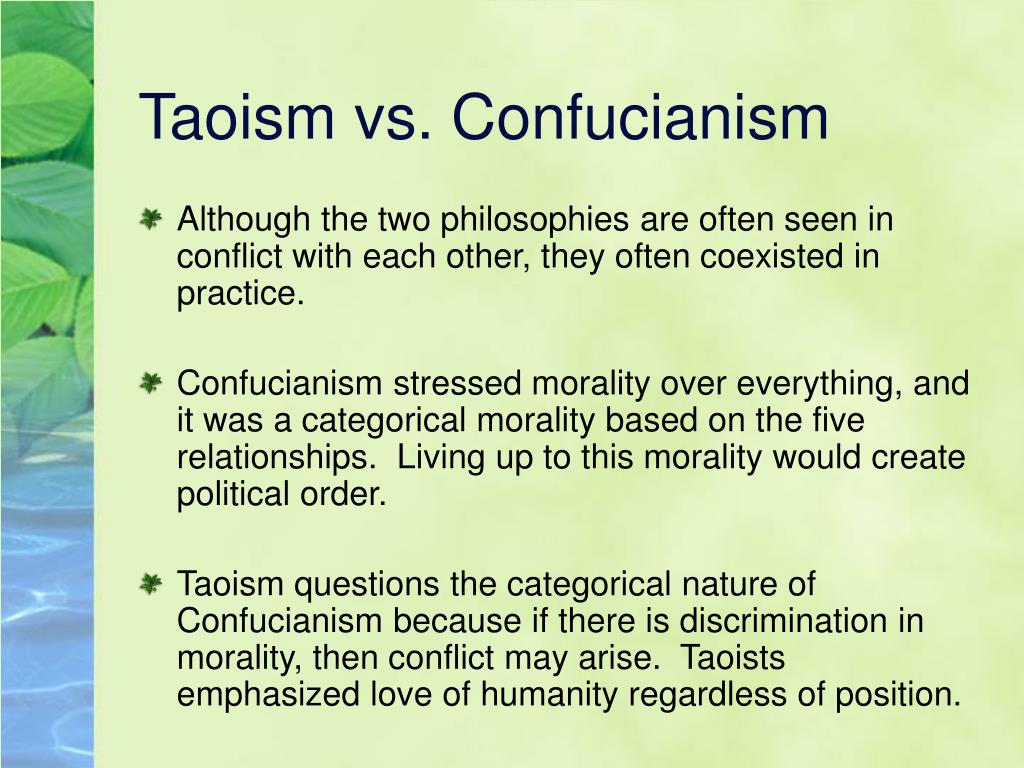
The author manages to give a broad understanding of a Chinese worldview that is shaped by Confucian and Taoist history, a collective identity that often conflicts with the Western culture of individualism. He notes Chinese traditions are based on filial piety (meaning duties, respect and devotion of children to their parents). Bloodworth notes, through many generations of Chinese culture, behavior and decision-making there is a focus on social harmony. Both Confucianism and Taoism play significant roles in shaping Chinese society.

Bloodworth notes Confucianism and Taoism shape Chinese society.

Piety, respect for hierarchy, education, and a focus on societal harmony were philosophical foundations of Chinese governance. Piety led governance toward strict rules and centralized authority. Historical figures like Confucius, Laozi, and Sun Tzu influenced Chinese culture and thought. The spiritual tradition of Buddhism reinforced the teaching of these cultural influencers. Buddhism emphasizes the suffering of life is caused by desire, and attachment. Buddhist teaching is that desire and attachment must be replaced by understanding and rejection of both through meditation and mindfulness.

Because democracy focuses on individual rights and freedoms, the ideals of collective harmony, hierarchical structure, and centralize authority make communism a better fit for Chinese culture.

Mao Zedong (1893-1976)

Mao unified China after decades of war and instability. Bloodworth suggests Mao Zedong had a nuanced impact on China.

However, Mao’s centralized power resulted in big economic mistakes like the famine of the Great Leap Forward that caused misleading food production reports meant to please the government when production was much less than what was needed to sustain life for Chinese citizens. With famine, the Cultural Revolution is unleashed, and China’s growth and stability were set back. Bloodworth had observed China’s governing always included pragmatism and adaptability to their drive for cultural harmony.

Though Bloodworth mentions Deng Xiaoping in the last chapters of his expanded edition of “The Chinese Looking Glass”, he does not foresee the opening of the Chinese economy and its rapid economic expansion.

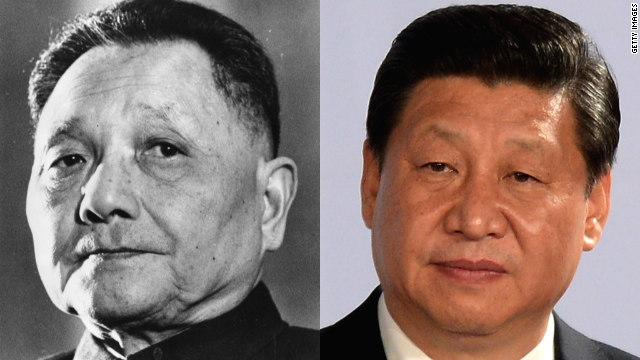
The pragmatic realization that collectivization of farming led to misleading information about production compelled Deng to open agricultural production to a more market-driven incentive to preserve social stability. Deng was an authoritarian as is evidenced by his decision on the Tienanmen Square crises.

Though Bloodworth did not live to see the next iteration of China’s leadership, an element of recidivism enters with Xi’s control of the government.

Harmony and pragmatism undoubtedly remain important characteristics of Chinese society. Time will tell whether societal harmony can be maintained by an increasingly authoritarian leader.

BLACK & WHITE

One wonders if Abdulrazak Gurnah is proffering an opinion about race relations in the world or just leaving a lifeline for those disappointed by relationship failures.

Books of Interest
 Website: chetyarbrough.blog

Admiring Silence 

By: Abdulerazak Gurnah

Narrated By: Unnamed person from Zanzibar

Abdulerazak Gurnah (Author, Tanzanian-born British novelist and academic, moved to the UK in 1960.)

A little context for “Admiring Silence” will help understand Abdulerazak Gurnah’s interesting and troubling story. Gurnah received the Nobel Prize in Literature in 2021. “Admiring Silence” is the latest book published by Gurnah in 2020. He had written four earlier books: Memory of Departure (1987), Paradise (1994), By the Sea (2001), and Desertion (2005).

“Admiring Silence” is not a biography but an interesting story about a long-term relationship of a Black emigrant and a white woman who meet in Zanzibar (an island archipelago off the coast of Tanzania) and move to London. The two had met in a Zanzibar’ restaurant where they both worked. The Black emigrant leaves his native country with his restaurant mate.

Gurnah describes the two as lovers who are struggling restaurant workers who wish to improve their lives through higher education. An opportunity to attend a university leads the two to decide to emigrate to London because of their similar academic ambition. The two are enrolled at a university and both become teachers in England. Gurnah sets a table for understanding what life is like for an unwed mixed-race couple in mid-twentieth century England.

Their life together is complicated by the birth of a daughter and the father’s decision to visit his homeland when he is in his forties.

No one in Zanzibar knows he has a teenage daughter with an unmarried white woman he lives with in England. His mother wishes to fix him up with a future Black Muslim wife. The interest one has grows with the circumstances of Gurnah’s imaginative story.

  • What is it like to be in a racially mixed marriage in 1960s England?
  • How does a mixed-race child feel about her life in a predominantly white country?
  • What does a Black family think about their son having a mixed-race family?
  • Having lived together for 20 years and had a child, why haven’t they married?
  • How does the relationship between different races affect the feelings of a couple that chooses not to marry but have a child born to them?
  • Is Gurnah’s story representative enough to give one the answers?

The first question is largely unanswered. The last question is impossible to answer but the other four imply Gurnah’s opinion. Marriage is always a work in progress whether it is of a mixed-race couple or not. However, there is a distinction based on race when it comes to a man’s and woman’s personal relationship because of the dimension of racism. Every couple chooses to work through differences and become more or less committed to staying together but two people of different races face discrimination associated with racism, unequal treatment, and economic inequality existing in a country’s dominant racial profile.

Gurnah does not address how a mixed-race child deals with life in a predominantly white country, but one can imagine it depends in part on how distinctive a difference is in the color of their skin in relation to the dominate racial profile.

In terms of the daughter’s relationship with her parents, one presumes it is likely the same parent/child conflicts of all families. Some fathers are more distant than others just as some mothers range from helicopter to equally distant parents.

That these two lovers who have been together for so long without getting married, after their daughter is born, seems like a flashing yellow light, a cautionary notice of something is about to change.

When the father’s mother writes from Zanzibar to have him visit after being away for so long, flashes a yellow light that eventually turns red. He returns for a visit to Zanzibar at the encouragement of his partner. The partner’s encouragement seems disingenuous, i.e. more like a desire for a relationship break than a supportive gesture. The last chapters confirm that suspicion. A break-up occurs soon after the father returns. There is a brief father/daughter reconciliation, but the daughter also decides to separate from her father.

An interesting point is made by Gurnah about a Muslim Black person leaving a poverty-stricken country of his birth to a country of wealth and a different culture.

It is the wish of his Zanzibar’ family for the father to return to help with the disarray and economic disparity of his home country; as well as marry a local Black Muslim girl who wishes to become a doctor. The presumption is that if one leaves their poor country to become prosperous in a wealthy country, they have some magical power to help their poverty-stricken home-countries. It is of little concern to the family about his committed relationship to another but more about what his life is like in his newly adopted country and what he can offer to his homeland from what he has learned. The Muslim girl the mother wishes him to marry is twenty years old. Her son is in his 40s. Tt appears the primary reason for such a marriage is to help the young woman become a doctor. In the end, the son recognizes this is not practical but clearly understandable considering the poverty in Zanzibar.

Gurnah cleverly injects a conversation with a Nigerian Muslim woman on his plane ride back to London before his white lover’s rejection of their relationship.

The Nigerian woman has been divorced from her English husband for several years. It was an emotionally difficult divorce for her. A mix-up on a missing passport allows the father to find contact information for the divorcee. One wonders if Gurnah is proffering an opinion about race relations in the world or just leaving a lifeline for those disappointed by relationship failures.

.

GOVERNMENT LIFE CYCLE

Robert Kaplan’s inference is that all nation-state governments are being challenged by an increasingly polarized society. The question is whether Trump is a symptom or cure for the decline of America.

Books of Interest
 Website: chetyarbrough.blog

Waste Land (A World of Permanent Crises)

By: Robert Kaplan

Narrated By: Robert Petkoff

Robert D. Kaplan (Author, writer for The Atlantic, Washinton Post, New York Times, The New Republic, Foreign Affairs, and the Wall Street Journal)

Robert Kaplan’s book makes one pessimistic about the future of democratic government. The wars in Gaza and Ukraine, along with the re-election of Donald Trump, and the economic retrenchment of Xi in China reinforce some of the themes of Kaplan’s “Waste Land”. One who reads or hears national news understands why Kaplan argues there is a growing decline in Russia’s, China’s and America’s governments. He argues the cause of that decline is increased world interconnectedness, and rising government instability. His biggest concern is what he believes is a nascent parallel to the rise of Naziism.

The advent of the internet has been a mixed blessing because it is used to spread false information as well as the truth.

The consequence has been to make societies more polarized. An example is a widespread opinion by Trump appointees that the rise in the number of government employees is wasting taxpayer dollars for public education, science research, foreign aid, veterans’ affairs, the national park service and the IRS. (For example, an estimated 76,000 employees–16% of the work force has been discharged from Veterans Affairs. The VA provides healthcare services for eligible veterans, handles disability compensation, pensions, education assistance, like the GI bill, and home loans to citizens who have honorably served America.) These reductions in workforce are not based on any analysis of work performance but solely to reduce the cost of government. Trump, like Xi and Putin, believe Thucydides’ observation that “The strong do what they can and the weak suffer what they must”.

Trump’s firings are being done by an appointed agent of the President who decimated the work force of Twitter in the same way he is arbitrarily discharging American government employees.

Kaplan argues today’s political atmosphere in America, Russia, and China are similar to the societal condition of Germany before the rise of Hitler. He points to the fragility of authoritarians and the rise of societal polarization in today’s world. He compares economic instability, social discontent, and political extremism of the Weimar Republic to what he implies is a growing condition in both Western democracies and Eastern autocracies. The last chapters of Kaplan’s book focus on urbanization of the world and its consequent polarization of society that is deconstructed governance in a way that reminds him of the Weimar Republic’s deterioration. He infers Trump’s re-election, the dismantling of the American government, and America’s social disruption is similar to what happened in Germany in the early 1930s.

An example of the disruption of which Kaplan writes is the Venezuela immigrants who were flown to El Salvador and frog-walked to an El Salvador prison without adjudication by America’s judicial system.

Kaplan’s argument is that President Trump is destabilizing the American government by violating the Constitution of the United States.

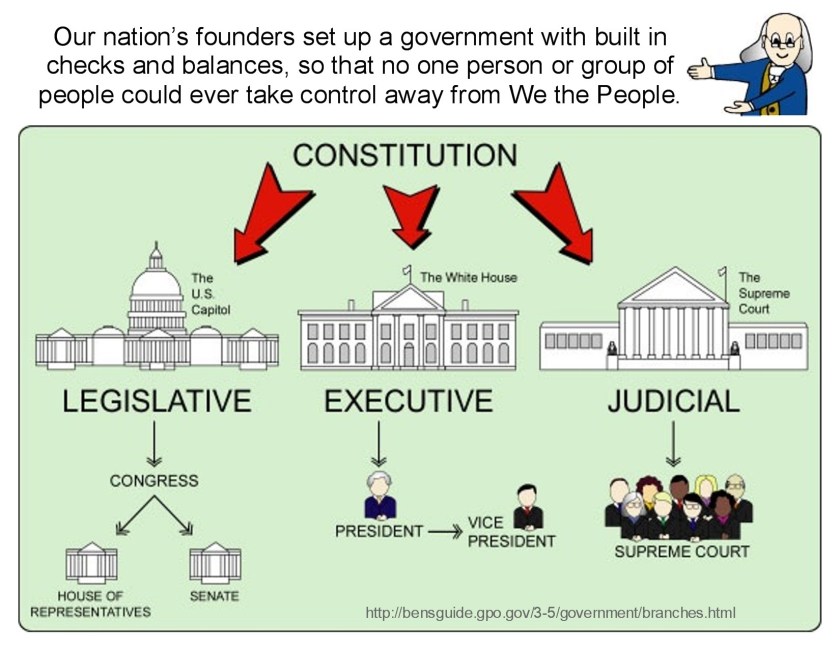
A federal judge ordered a plane full of alleged immigrants (identified as gang members) to be returned to the United States. The plane was in the air when the President in apparent defiance of a direct court order chose to not have the plane turned around. The deported were filmed as they were frog-walked into a foreign jail while being denied any hearing or adjudication of their alleged criminality. The President of the United States appears to have ignored a Federal Court, the Third Branch of American government, designed to balance arbitrary actions of either a President or Congress for denying due process of law.

America re-elected Trump despite his conviction on 34 counts of falsifying business records for paying “hush money” to Stormy Daniels when first elected in 2016.

Though Trump’s conviction does not rise to the level of Hitler’s high treason in the failed Beer Hall Putsch, willingness to lie under oath is a troubling characteristic for a President, let alone, any citizen of the United States. According to news reports, Trump says he did not know he had been asked to turn the plane around by a Federal Judge. One might ask why should America believe what he says?

Trump is challenging the authority of Congress and the Judiciary by taking actions without consideration of the Constitution of the United States.

This reminds one of human rights violations in the early days of Hitler’s rise in Germany. Hitler gathered sympathizers from disillusioned veterans, business leaders, the middle class, the German youth, and Far-Right Nationalists. Trump appears to have had similar support in his re-election. Trump decides to pardon all January 6, 2021, U.S. Capitol attackers. Those pardons are a diminishment of American democracy akin to Hitler’s support of Nazi sympathizers.

Attack on the Capitol on January 6, 2021–Trump pardons all attackers on 1/20/25, after being re-elected as President of the United States.

Deng led a transformative change in China’s economy after Mao’s death. With a pragmatic judgement that “It doesn’t matter whether a cat is black or white as long as it catches mice”

In the last third of Kaplan’s book, the incredible success of China under Deng Xiaoping is addressed. Kaplan explains Deng became the leader of China between 1978 and 1989. Though Deng was a contemporary leader during the Mao administration, Deng led a transformative change in China’s economy after Mao’s death. With a pragmatic judgement that “It doesn’t matter whether a cat is black or white as long as it catches mice” he opened China to the pursuit of personal, and individual citizen’ prosperity. The result of Deng’s pragmatism was the unprecedented economic growth and wealth of China. Much of what Deng started has been reversed by the Xi administration. In Kaplan’s opinion, the resurgence of the communist party has led to a reversal of economic growth in China. Kaplan infers a return to collectivism is a reflection of societal interconnectedness with a government-controlled internet that denies freedom of thought and action by China’s citizens.

Kaplan refers to Jane Jacobs (1916-2006) and the urbanization of America. He notes Oswald Spengler (1929-1936) recognized the implication of urbanization is government deterioration as a part of the natural lifecycle of every civilization. The point Kaplan makes is that nation-states have become like the early cities Jacobs refers to but with an interconnectedness that accelerates and shortens government lifecycles. Robert Kaplan’s inference is that all nation-state governments are being challenged by an increasingly polarized society caused by internet connectedness. The question is whether Trump is a symptom or cure for the decline of America.

AMERICAN HOPE

From Fukuyama’s intellectual musing to our eyes and ears, one hopes he is correct about America’s future in the technological age.

Books of Interest
 Website: chetyarbrough.blog

The Great Disruption (Human Nature and the Reconstitution of Social Order)

By: Francis Fukuyama

Francis Fukuyama (Author, political scientist, political economist, international relations scholar.)

Francis Fukuyama argues America is at the threshold of a social reconstitution. Fukuyama believes we are at Gladwell’s “Tipping Point” that is changing social norms and rebuilding America’s social order. He argues the innovation of technology, like the industrial revolution, is deconstructing social relationships and economics while reconstructing capitalist democracy.

The immense power of big technology companies like Amazon, Google, and Facebook have outsized influence on American society. They change the tone of social interaction through their ability to disseminate both accurate and misleading information. They erode privacy and create algorithms tailored to disparate interest groups that polarize society. The media giant’s objective is to increase clicks on their platforms to attract more advertisers who pay for public exposure of their service, merchandise, and brand.

To reduce outsize influence of big tech companies, Fukuyama suggests more technology has an answer.

There should be more antitrust measures instituted by the government to break monopolistic practices and encourage competition with large technology companies. Algorithms created by oversight government organizations can ensure transparency and reduce harmful content to reduce big tech companies influence on society. (One doubts expansion of government agencies is a likely scenario in today’s government.)

On the one hand, technology has improved convenience, communication, and a wider distribution of information.

On the other, technology has flooded society with misinformation, invaded privacy, and polarized society. Technology has created new jobs while increasing loss of traditional industry jobs with automation. Trying to return to past labor-intensive manufacturing companies is a fool’s errand in the age of technology.

Luddites during the Industrial Revolution.

Like the industrial revolution, the tech revolution’s social impact is mixed with a potential for greater social isolation, and job displacement with the addition of wide distribution of misinformation. The positives of new technology are improvements in healthcare product and services, renewable energy, and climate understanding with potential for improved control.

Face-to-face interactions become less and less necessary. Children’s access to technology impacts parental supervision and relationship. Fukuyama suggests setting boundaries for technology use needs to be a priority in American families. Technology can open the door to better education, but it also becomes a source of misinformation that can come from the internet of things. Employers have the opportunity to help with work-life balance by encouraging flexible hours and remote work. (Oddly, that suggestion is being undermined by the current government administration and many American companies.)

Economic growth, access to information, and global connectivity have been positively impacted by technology. However, the concentration of power, misinformation, and surveillance of social media has diminished privacy and eroded individual freedom. There are concerns about technology and how it is good and bad for democratic capitalism.

The good lies in increased efficiency, innovation and creation of new markets, through globalization. However, today’s American government shows how tariffs are a destroyer of globalization. Fukuyama implies A.I. and automation is displacing workers and aggravating economic inequality because it is being misunderstood for its true potential and also being misused. Personal data is used to manipulate consumers in ways that challenge the balance between corporations and consumers.

Fukuyama argues private parties will grow in America to create software that will filter and customize online services.

With that effort control of the influence of big tech companies will be diminished. With decentralization of big tech power and influence, society will theoretically become less polarized and more consensus oriented. The capitalist opportunity for tech savvy startups that diminish influence of big tech companies will re-create diversification like that which the matured industrial revolution gave to new manufacturers. Like Standard Oil and other conglomerates of the industrial revolution, businesses like Amazon, Google, and Facebook will have competition that diminishes their power and influence.

American Government will grow to regulate the internet of things just as it has grown to regulate banks, industries, and social services.

Service to citizens will become a bigger part of the economy as a replacement for manufacturing. Family life will re-invent itself as a force of society because of the time saved from manufacturing product to improve human relationships.

From Fukuyama’s intellectual musing to our eyes and ears, one hopes he is correct about America’s future in the technological age.

TIPPING POINT

Today, some look at the American government with concern. Are we at a tipping point in America?

Books of Interest
 Website: chetyarbrough.

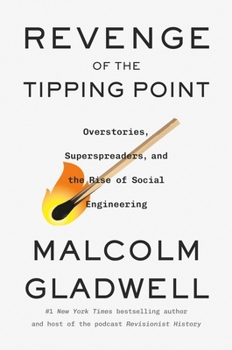
Revenge of the Tipping Point (Overstories, Superspreaders, and the Rise of Social Engineering)

By: Malcolm Gladwell

Narrated By: Malcolm Gladwell

Malcolm Gladwell (Canadian Author, journalist, public speaker, staff writer for The New Yorker.)

Malcolm Gladwell returns to the subject of “…Tipping Point” that originally explored how small actions or events can trigger significant changes in society. “Revenge of the Tipping Point” provides several stories of tipping points that have had vengeful consequences for society.

One of the most consequential tipping point stories is about America’s attempt to engineer social equality.

America is struggling with social diversity. Gladwell infers social diversity is a great strength in American society. However, our government and domestic leaders have legislated discrimination, fought wars, murdered innocents, and promoted ethnic separation throughout its history as a nation. Despite our most famous statement of American value, i.e. “E pluribus unum” (Out of many, one), America has failed.

The value of social diversity is it allows Americans to achieve great things despite inequality that exists in America.

Gladwell tells the story of a community in Florida that prides itself on being an exemplar of American society because of its strong educational values, cultural pride, community support, and economic mobility. The people who live in this community focus on preserving and celebrating their ethnic heritage, traditions, and identity. They assemble an island of cultural sameness that overtly and covertly resists change. Those who are not of the right ethnic heritage or race who may have the same drive for high educational achievement, community participation, and relative wealth are not welcome. The tipping point revenge Gladwell notes is in the stress this community places on its children to excel academically and conform to expectation. Gladwell notes student suicides are disproportionately high because of the social pressure children feel to conform. The social pressure for conformity and educational expectation overwhelms some who live in the community. Some parents choose to send their children outside the community school system to allay the social pressure they feel.

Gladwell notes the 2023 Supreme Court rejection of college acceptance based on diversity. The Court denies the right of colleges to recruit students based on ethnicity or race.

On the face of it, that seems an unfair decision but Gladwell notes that the schools being challenged on their diversity policies refuse to explain how they determine who should be admitted based on a percentage figure of fair representation. Gladwell notes the primary criteria for college selection has little to do with a drive for diversity but are based on revenue producing university sports programs and donor money. Minority preference admissions are based on income potential for the university, not social diversity.

The Supreme Court ruling does not preclude consideration of an applicant’s personal life experience, but Gladwell notes it nevertheless has nothing to do with a drive for equality or diversity.

Unfortunately, the Supreme Court decision may cause a reevaluation of outreach to minorities who have been denied equal opportunity for personal success. Gladwell’s ironic point is that American diversity in the pre-Supreme Court decision was never based on creating diversity but on raising money for university foundations.

Gladwell explains the drug crises is more of an American problem than for most other nations of the world.

One asks oneself, what makes America the center of opioid addiction and death.

From the greed of drug dealers, medicine manufacturers and doctors who prescribe opioids, America has the highest opioid deaths in the world. Though Estonia has the highest opioid death’s per capita because of its smaller population, the manufacturers and doctor-prescribed synthetic opioids have greatly increased American’s deaths. Purdue Pharma aggressively marketed OxyContin with the owners, the Sackler family, reaching a multibillion-dollar settlement. Many doctors like Dr. Hsiu-Ying Tseng and Dr. Nelson Onaro have been prosecuted for overprescribing opioids or running “pill mills” that provided opioids to the public.

Gladwell suggests it is the superspreaders, worldwide legal and illegal manufacturers and sellers of opioids, and incompetent/greedy medical prescribers as tipping point causes of America’s addiction crises. However, he argues there are environmental and systemic societal factors that create a receptive user base in America. Economic stability is unattainable for many Americans because of economic, racial, and ethnic differences. He argues small actions and decisions lead to widespread consequences. Every human being has a tipping point based on their experience in the world. The ideals of America conflict with its reality. The pain of that realization leads some to relief through drugs, a step-by-step addiction that can lead to death.

Berlin Memorial to the Holocaust.

There are other tipping points Gladwell explains. One that resonates with my life experience is the ignorance many have of the history of the world. Some would argue, Americans became aware of the Holocaust after the end of the war in 1945. However, Gladwell argues most Americans remained ignorant of its reality until 1978 following the release of the NBC miniseries “Holocaust”. Until then, Gladwell argues there was little broad cultural understanding of its atrocity. Having graduated from high school in 1965, much of what Gladwell notes about ignorance of the Holocaust rings loudly and clearly.

I doubt that many were completely ignorant of the Holocaust, but its brutal reality was not taught in the high school I attended in the 60s. Having visited Auschwitz and viewed its gas chamber, piles of discarded shoes and clothes, and pictures of murdered human beings, the truth and guilt that one feels for being a part of humanity is overwhelming.

We have an FBI director that wants to have men and women of the agency coordinate training with the UFC (Ultimate Fighting Championship), headquartered in Las Vegas. We have a President who publicly chastises Ukraine’s President and suggests they caused Russia’s invasion of their country. We have a President that insists America is being taken advantage of by lower cost production of product of other countries and that tariffs are a way to balance the American budget. We have a Palestinian protester at Columbia University who is arrested for social disruption. The head of the Department of Health Services orders lie detector tests for employees to find any leaks about the current Administration’s actions.

Tariffs have historically been found to damage America’s economy. Is the FBI a military force that needs to be schooled in hand-to-hand combat? One need only read Adam Smith about free trade to understand the fallacy of Tariffs. Have we forgotten the invasions of Austria and Poland by Germany at the beginnings of WWII? Is free speech a crime because of tents that disrupt college life? Should we use lie detector tests to determine the loyalty of employees?

Are these incidents a tipping point for American Democracy to turn into something different and demonstrably less than the founding principles of American government?

TOO LATE

Ideally, public good and ethics will be taught in advance of the melding of technology and government, i.e., not after mistakes are made. However, history suggests humans will blunder down the road of experience with A.I., making mistakes, and trying to correct them after they occur.

Books of Interest
 Website: chetyarbrough.

The Technological Republic (Hard Power, Soft Belief, and the Future of the West)

By: Alexander C. Karp and Nicholas W. Zamiska

Narrated By: Nicholas W. Zamiska

The authors are the founder and operations manager of the American software company, Palantir Technolgies. Palantir has been hired by the U. S. Department of Defense, the Intelligence Community, agencies of NATO countries, and Western corporations to provide analytic platforms for defense analysis, healthcare, finance, and manufacturing.

They believe artificial intelligence research and development has lost its way.

They argue Silicon Valley has lost focus on what is important for survival of society and Western values. They suggest A.I. should be focusing on serving humanity in ways that responsibly regulate nuclear weapons and protect society from existential risks like climate change, pandemics, asteroid collisions, etc., that threaten human extinction. The authors provide a powerful criticism of technology and its national purpose.

Karp and Zamiska argue that technology is focusing on consumerism rather nuclear annihilation or existential risk.

By focusing on convenience and entertainment for financial success, fundamental problems like the threat of nuclear war, homelessness, inequality, and climate change are ignored or relegated to the trash heap of history. (“Trash heap of history” is the belief that what happens, happens and society can do nothing about it.) The west has become complacent with short-term focus on profit and consumer demand. The authors argue that the greater good is no longer thought of as an important societal goal. The primary goal is making money that enriches creators and company owners by making purchases more convenient to and for consumers.

Aldous Huxley (English writer and philosopher, 1894-1963, author of “Brave New World”.)

Their argument is there should be more collaboration between tech and government. Historically, government is only as good as the information it has to make societal decisions. A computer program can be programmed with false information like the error of weapons of mass destruction that led to an invasion of Iraq that was a bad decision. The domino theory input that led to the Vietnam war; so, on and so on. There is also the threat of an elected President that uses the power of technology to do the wrong thing because of his/her incompetence. There is the risk of government gathering personal information and using it to cross the line into a “Brave New World” where innovation, free thought, and independent action are discouraged or legislated against so people can be sent to jail for breaking the law?

Possibly, melding technology with government is an answer, but it is a chicken and egg concern. Education about public good and ethical practices should begin as soon as the egg cracks, not after hatchlings are already old enough to work. Phrases that come to mind are “What’s done is done” or “The die is cast”.

The authors argue the West needs to up-its-game if it wishes to create a peaceful and prosperous future for a society that is founded on the ideal of human freedom.

Without future generations creating policies based on ethical purpose for the public good, one infers western culture will spiral into individual isolation and self-interest that diminishes western culture and ideals.

Ideally, public good and ethics will be taught in advance of the melding of technology and government, i.e., not after mistakes are made. However, history suggests humans will blunder down the road of experience with A.I., making mistakes, and trying to correct them after they occur.

HOMELESSNESS

The United States is the 7th richest nation in the world on a per capita basis. Why is homelessness a growing problem in outwardly prosperous American cities?

Books of Interest
 Website: chetyarbrough.blog

Seeking Shelter (A Working Mother, Her Children and a Story of Homelessness in America)

By: Jeff Hobbes

Narrated By: Julia Whelan

Jeff Hobbes (Author, graduate of Yale with a BA in English language and literature.)

Homelessness can be seen in most large cities of the world. In personal travels to what look like prosperous cities like Vilnius, Lithuania, Hong Kong, China, and even Scandanavian countries, homelessness exists. However, the scope of homelessness does not compare to what is seen on the streets of Las Vegas, NV. and Seattle, WA, two larger American cities considered prosperous and growing. In 2024, there were an estimated 7,928 homeless in Clark County (the Las Vegas area) and 16,385 in King County (the Seattle area). Walking around these two cities, let alone reading or listening to the news, suggests those numbers are grossly undercounting the homeless. The United States is the 7th richest nation in the world on a per capita basis. Why is homelessness a growing problem in outwardly prosperous American cities?

Trump followers would argue homelessness is because of illegal immigration and laziness.

The real reasons are decades of underbuilding in major American cities, high cost of existing inventory, regulatory barriers for affordable housing, economic inequality, an attitude of “not in my back yard”, investment conglomerates that capture housing for rent, and the decline of federally funded affordable housing.

Jeff Hobbes brings all of these reasons for homelessness to light with the plight of working mothers and their children who are moving from one area of California to another because they cannot afford a place to live, school their children, and feed their family.

Hobbes’ example is of a family on the road with savings of $4,000 in a search for a job, a school for her children, and a place to live that they can afford. What is abundantly clear in Hobbes’ book is women hold broken families together more often than men. Misogyny is a reinforced truth in the world. Men spread their seed, begat children, and leave. Women take on the burden of the world’s future.

Homeless single parents with children to care for must often leave their children alone while seeking work to pay for the basic needs of life.

A woman faces greater obstacles than a homeless man because of unequal opportunities ranging from income for work to their presumed and assumed responsibility for children’s care. The general public often presumes they have their own lives to live and have no responsibility for others who have made foolish decisions in their lives. However, a rational person knows children are the future of the world. A child left on his/her own have diminishing opportunities for success without parental support. A child of a homeless single parent’s support is compromised when that single parent has to work to earn enough for the family to have a home and food to eat.

Having the personal experience of being raised by a single parent with an older brother, Hobbes’ history of a mother, on her own, fairly explains how difficult it is to avoid homelessness while looking for work and caring for her children.

The price paid for homelessness on the emotional and intellectual ability of a mother and her children is immeasurable. The cost to society is partly explained by Jeff Hobbes’ in “Seeking Shelter”. California’s system of caring for the homeless is encouraging but undoubtedly inadequate based on what one reads in the press.

Listening to the stories of homeless families is a harsh lesson for those who have escaped poverty and think if they can do it, why can’t every American do it?

Failure to address homelessness is a societal flaw. Whatever its cause, homelessness makes every citizen of prosperous nations guilty of neglect.