The essence of Rickard’s book is that the use of GPT is a threat to the financial world and to world peace. If the war on Iran continues, there is increased risk of wider conflict, further financial stress, reduced human judgement, and greater potential for world conflagration in a nuclear war.
Books of Interest Website: chetyarbrough.blog
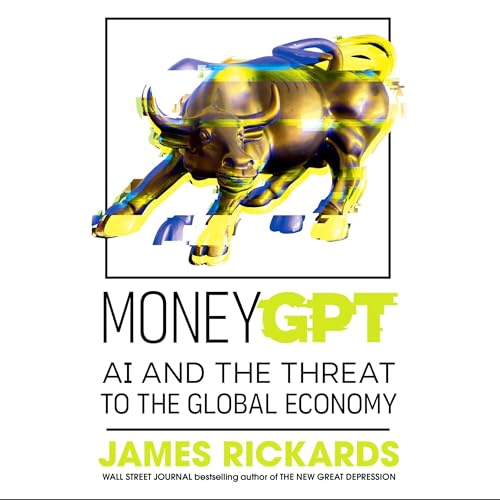
MONEY GPT (AI and the Threat to the Global Economy)
Author: James Rickards
Narration by: James Rickards
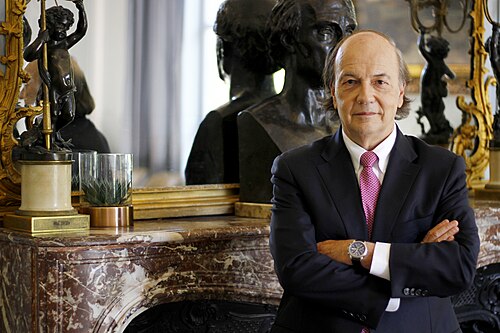
James G. Rickards (Author, American lawyer, investment banker, media commentator.)
Though Mr. Rickards has something valuable to tell his audience, his writing leaves room for improvement. The initials “GPT” stand for “Generative Pre-trained Transformer”. They are an abbreviation for massive datasets gathered by artificial intelligence to aid one’s understanding of complex predictions about finance and military conflict based on collected language used to explain the world.
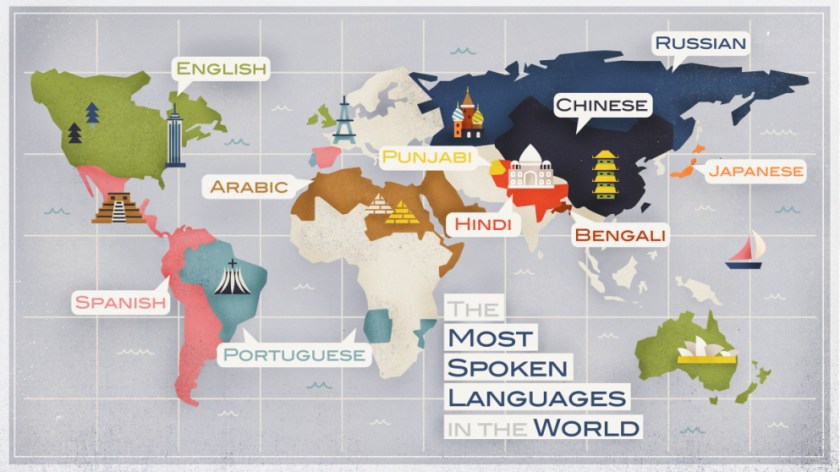
Languages of the world.
What Rickards intellectually recognizes is that collected language about the real world lacks human judgement which can accelerate human actions, weaponize misinformation, and increase conflict because AI lacks human reasoning. Without judgement, facts imparted by language collection may as quickly make wrong as right decisions. Optimum answers to complex problems require human judgement. Optimum answers may be aided by AI collated language, but human judgement is key to appropriate action. Rickards notes how stock market investors who rely on AI for decisions about what to do with their investments can as easily be misled when the market is in crisis because collected language is as likely to lead one further into crisis as toward a reasoned investment response.
Rickard explains a financial decision based on GPT carries the same threat in regard to war. One wonders whether President Trump’s escalation of the war on Iran is not based on GPT that compresses decisions and amplifies the volatility of America’s actions. Is the war escalating because of GPT and inadequate human judgement? America is faced with incomplete information on a purpose for bombing Iran and what goals are intended for ending the conflict. What GPT predicts is more U.S. strikes, further Iranian retaliation, and prolonged conflict that will continue to roil the economies and citizens of the world. Regional war, let alone a World War, is increasingly likely to cause a global shock to financial markets.
Uses of GTP aka GPT.
The essence of Rickard’s book is that the use of GPT is a threat to the financial world and to world peace. If the war on Iran continues, there is increased risk of wider conflict, further financial stress, reduced human judgement, and greater potential for world conflagration in a nuclear war.
Capitalism, communism, and socialism are flawed in different ways. Most Americans believe Capitalism is the best of the three. “Bonfire of the Murdochs” reveals the flaws of capitalism.
Books of Interest Website: chetyarbrough.blog
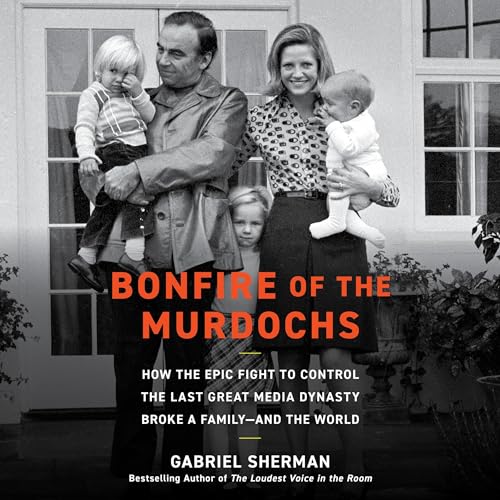
Bonfire of the Murdochs (How the Epic Fight to Control the Last Great Media Dynasty Broke a Family)
Author: Gabriel Sherman
Narration by: Cassandra Medcalf
Gabriel Sherman (Author, American journalist, screenwriter for The Apprentice, and biographer of Roger Ailes.)
The positive face of capitalism offers economic and political freedom to pursue economic well-being through personal effort. There is also a negative face. “Bonfire of the Murdochs” seems to show that face.
Gabriel Sherman explains how Rupert Murdoch and his family are scarred by capitalism which makes them immensely rich but morally bankrupt.
Keith Rupert Murdoch (Australian American business mogul.)
The patriarch of the Murdoch family is Rupert whose family founded two media conglomerates, i.e., News Corp and Fox Corporation. News Corp combines The Wall Street Journal, The Times, and The Australian newspapers. Fox Corporation is made of Fox News, Fox Sports, and Fox TV network. Rupert is the principal creator of these conglomerates, but his children were integral parts of the management and administration of their success.
Patricia BookerAnna de PeysterWendi DengJerry HallElena Zhukova
Rupert Murdoch married five times and had 6 children. He was married for 11 years to Patricia Booker. Their only child was Prudence, born in 1958. Murdoch married his second wife Anna de Peyster in 1967 (the same year of his divorce from Patricia). His second marriage results in the birth of Elisabeth, Lachlan, and James. Anna de Peyster and Rupert Murdoch were married for over 30 years. His third wife, Wendi Deng added two more children for a total of six from his first three wives. His last two marriages were to Jerry Hall and his present wife, Elena Zhukova. The story of Rupert Murdoch’s treatment of his six children is the core of the harm that may come from capitalism’s singular focus on wealth.
PrudenceElizabethLachlanJamesGraceChloe
Rupert remains alive at 94 years of age. Lachlan Murdoch, took over Fox and News Corp in 2023 with Prudence, Elisabeth, and James taking over one billion dollars each to withdraw from Murdoch holdings without voting rights in its operations. Lachlan becomes the sole manager of the remaining media conglomerate. The author explains how Lachlan is the chosen heir apparent. Lachlan’s conservative views and willingness to distort news’ objectivity are purported reasons for Rupert’s choice of Lachlan as his heir. James and his siblings are characterized as critics of the political leanings and news distortions of Rupert’s empire. All but Lachlan leave the news combine with a billion-plus dollar buyout with no voting shares in the future of Rupert Murdoch’s holdings.
Sherman’s inference is that Lachian is the best choice to continue Rupert Murdoch’ version of capitalism.
Whether one believes Rupert Murdoch’s children are politically different from their father or not is a question one may have in listening to Sherman’s book. It appears the first four Rupert children have a desire for wealth more than capitalist probity. Murdoch and his oldest children seem primarily motivated by individual power, and the socio/political benefit of wealth. The four children, at least those before Grace and Chloe, appear to sacrifice capitalism’s ideals for wealth. Wealth is a lure offered by capitalism for good or ill as members of a capitalist society.
One may come away from “Bonfire of the Murdochs” with a bad opinion of Rupert Murdoch and his children but to the non-judgmental, the book only shows a side of capitalism that has made America Great for Americans like Trump and societally flawed for the poor. Capitalism, communism, and socialism are flawed in different ways. Most Americans believe Capitalism is the best of the three. “Bonfire of the Murdochs” reveals the flaws of capitalism.
As a reviewer of “The Great Deformation”, I am personally repelled by Stockman’s analysis but choose to rely on professional economists’ opinion, more than a politician/businessman who had a role in tanking the American economy.
Books of Interest Website: chetyarbrough.blog
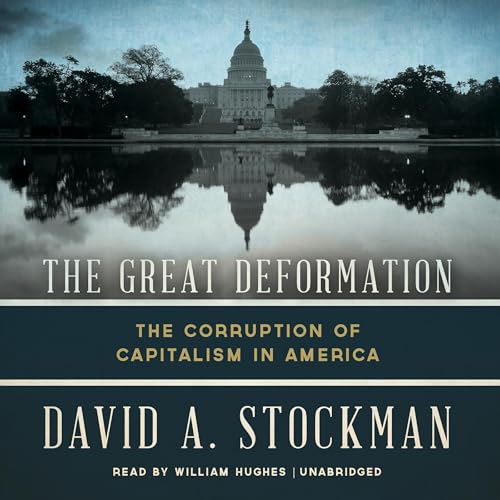
The Great Deformation (The Corruption of Capitalism in America)
Author: David Stockman
Narration by: Willaim Hughes
David Stockman (Author, American politician, businessman, and former Director of the Office of Management and Budget for the Reagan Administration.)
David Stockman has written a troubling book about the American economy. Despite his having been an elected representative of Congress and a former Director of the Office of Management and Budget (OMB) in the Reagan administration, he argues the fiscal responsibility of America’s government has corrupted “…Capitalism in America”. This is a surprising comment from a former Republican congressman with Republican ties who is a graduate of theological studies, not economics, from Harvard.
Stockton is not educated as an economist. He derides Reagan for profligate spending while having been Reagan’s OMB Director. He feels qualified to argue the crises of 2008 was badly managed because it did not allow the market to allow bankruptcy of major corporations in America. Stockton suggests AIG (American International Group) and the major banking conglomerates of America that have bad debt on their books should file for bankruptcy if they cannot meet their financial obligations without a government bailout. Of course, this is the road not taken so no one can know whether Stockton is right or wrong.
GEORGE W. BUSH (43RD PRESIDENT OF THE U.S.)BARACK OBAMA (44TH PRESIDENT OF THE U.S.)
Though the harm done to many Americans by the solution of the Bush’ and Obama’ administrations is fresh in most American’s minds, one cannot help but be skeptical of Stockton’s opinion. If bankruptcy had been allowed by those companies that could not meet their debt obligations, would American capitalism and its economy have been any better? How many Americans would have been harmed by those bankruptcies? The loss of jobs from bankruptcy would have been immense. Consider the number of people with no income who would be unable to pay their bills. What would happen to their ways of life? Would America’s government stand by and allow them to become homeless and hungry? Today’s homelessness suggests America’s government might stand by and do nothing.
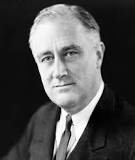
Franklin Roosevelt shows America’s government can finance a solution for crisis through public works that would bring America back to prosperity. Is that different than bailing out employers of the American public to sustain family incomes from a potential financial melt-down. Are the ideals of capitalist greed worth continued impoverishment of the poor?
Stockton’s solution is to cut the defense budget, reduce Social Security, Medicare, and Medicaid and let the public fend for itself. Stockton argues to have corporate subsidies and tax expenditures reduced with deep cuts in domestic discretionary spending. He goes on to support binding spending caps, no new tax cuts without an equal offset in expenditures, no bail outs with a belief that nothing is too big to fail, a reversal of Trumps 2017 tax cuts, a balanced budget, no long-term deficit financing, no permanent emergency spending, and a smaller federal footprint on the economy. These seem easy solutions for one who is financially secure but draconian for those who have been unable to grasp the economic opportunities of American capitalism.
More people will die from inability to receive medical care, more will go hungry and suffer from malnutrition, and homelessness. Stockman believes the current system is unsustainable. Let’s accept that point but victimizing and creating more homeless and poorer Americans only cheapens democratic capitalism.
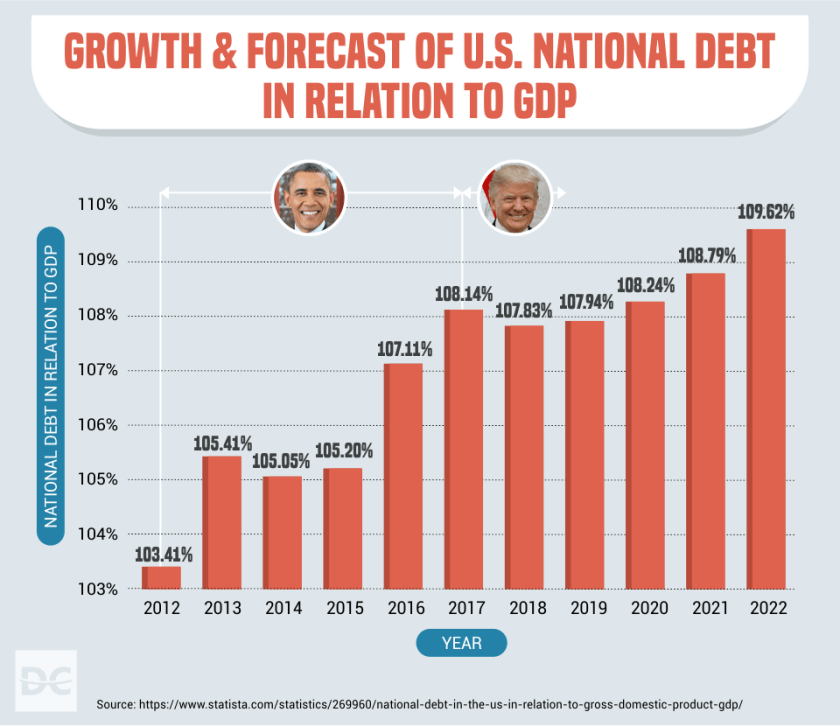
Stockman is right in explaining the U.S. debt increase is unsustainable.
Interest costs are creating extraordinary pressure as a line-item cost for America’s budget. Reform is immensely difficult because of political differences of opinion. According to most economists with education as economists, Stockman’s observations are true, but most economists do not believe that truth will lead to a sudden market collapse. The majority of economist suggest Stockman’s explanation of long-term fiscal challenges can be ameliorated to avoid a wide market collapse. Though Kenneth Rogoff, Carmen Reinhart, and Olivier Blanchard agree with Stockman’s diagnosis, they do not think his doom scenario is likely. Jason Furman, Douglas Elmendorf, and Ben Bernanke do not believe a bond-market revolt will crater government financing. Though all agree government debt is unsustainable, interest costs are rising too fast, and political discord is a problem. These “educated economists” believe entitlements can be gradually reformed, and a sudden collapse of the economy will be abated.
Carmen ReinhartBen BernankeDoug ElmendorfKenneth Rogoff
In general, most economists recognize America cannot continue to increase its debt but most economist believe the U.S. will adjust its economic policy to avoid collapse. As a reviewer of “The Great Deformation”, I am personally repelled by Stockman’s analysis but choose to rely on professional economists’ opinion, more than a politician/businessman who had a role in tanking the American economy.
A surveillance society is a choice that can be made with careful deliberation or by helter-skelter judgement to return manufacturing to America without clearly understanding its impact on American society. That is the underlying importance of Beckert’s history of capitalism.
Books of Interest Website: chetyarbrough.blog
Capitalism (A Global History)
Author: Sven Beckert
Narration by: Soneela Nankani & 3 more
Sven Beckert (Author, Professor of History at Harvard, graduated from Columbia with a PhD in History.)
Professor Beckert defines capitalism as an economic form of privately owned capital reinvested in an effort to produce more capital. In defining capitalism in that way, Beckert suggests capitalism reaches back to 1000 CE, long before some who argue it came into being in 18th century England. Beckert argues the Italian city-states, like Venice, Genoa, and Florence, are the origin of capitalism. That is when accumulated wealth is invested in long-distance trade networks, early banks, and trade by wealthy Italian families. Beckert’s point is that England simply expanded what had begun hundreds of years earlier with trade investment by wealthy Italian families.
Economic theories.
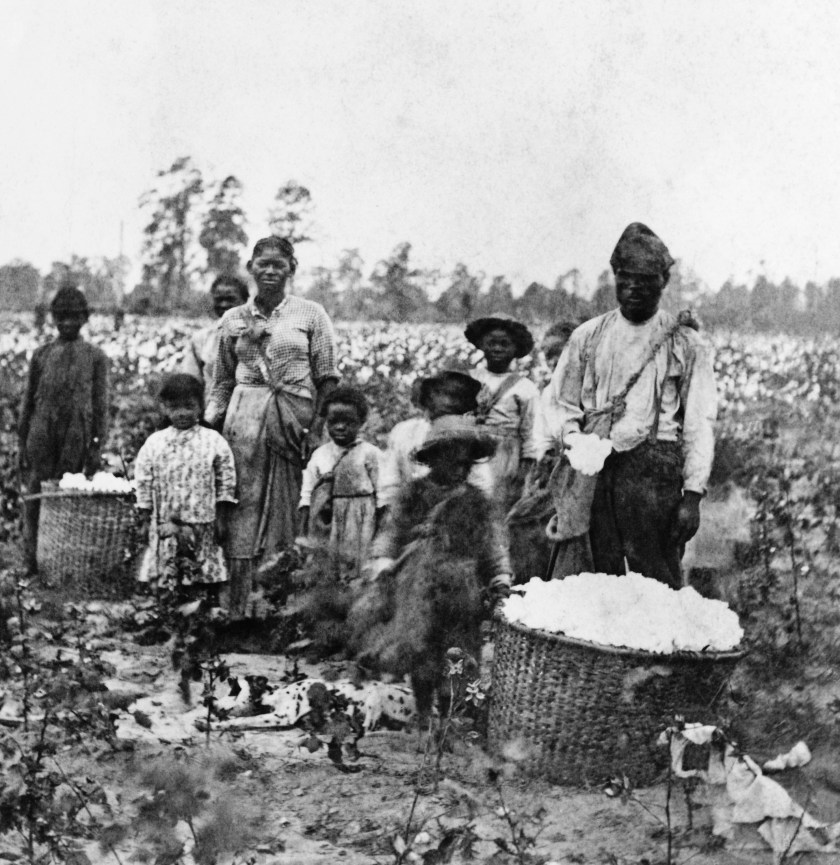
Becker briefly compares many economic theories like capitalism, Marxism, Keynesianism, and Polanyian theories which he calls institutional economics. All bare the flaws of human nature. His economic history is about the addition of slavery to capitalism in the late 15th through 18th centuries. Beckert notes Portugal, Spain, Britain, France, and the Netherlands strengthened their capitalist economies. They were able to secure cheap, controllable labor, expand production, and increase profits with slavery.
Beckert explains the monumental changes and expansion that occurs with England’s adoption of early capitalism. As early as the 17th century, Beckert notes England revolutionizes capitalism in good and morally corrupt ways. Nation-state power combines with private capital to create a massive capitalist influencer around the world. With the dominance of British naval power, colonialism expands, slavery becomes part of international trade, and capitalist monopolies grow to dominate economies. England’s industrial revolution with mechanized production, factory labor, and capital accumulation is able to expand market influence and hugely improve their countries infrastructure and legal protections. Creating patent laws raises potential for monopolization of some market goods.
For several reasons, slavery declines during the later years of industrialization. However, Beckert notes its immorality is not the primary reason.
Free labor became more efficient for capital accumulation. The enslaved became discontented with their role as cheap labor. By the 19th century, slavery became politically and legally incompatible with capitalism. Capitalists began to understand how they could gain more wealth by indenturing rather than enslaving workers, offering sharecropping, or leasing convicts. Capitalists found they could get cheaper labor through contracts with prisons, or sharing of income than slave ownership by being more flexible with the political and physical environment in which labor worked. Slavery faded because capitalists found new ways to reduce costs of labor. At the same time, slave revolts were escalating, the U.S. Civil War is being fought, policing of slavery became too expensive, and investors felt their investments would be at risk in company’s dependent on slave labor. Morality had little to do with abolishing slavery in Beckert’s opinion.
Beckert shows how capitalism systematically expands investment of private capital. Capital is put to work rather than hoarded and consumed by a singular family, political entity, or economic system. Capitalism provides a potential for moving beyond slave-based economies, though racial discrimination remains a work in progress. Beckert notes capitalism is different from other economic systems because it invests private capital that theoretically moderates the need for nation-state’ capital investment in the health, and welfare of a nation’s citizens.
The interesting judgement made by Beckert is that capitalism’s foundation was initially based on slavery, colonialism, and state violence.
The violence of which he writes is based on several factors, i.e., historical slavery, territorial seizure, nation-backed monopolies, worker mistreatment or suppression, and global coercion with military backing. Beckert seems to admit no major historical economic system is free of violence. It seems every economic system is imperfect. Violence appears a fundamental part of human nature in all presently known economic systems.
In the mid to late twentieth century, Beckert notes how manufacturing becomes a global rather than local capitalist activity.
This reorganization creates global inequalities that America is late to understand and adjust to in their capitalist economy. The financial and investment industry of America benefited by becoming world investors, but the local economy fails to remain competitive with the production capabilities of other countries. To become competitive seems an unreasonable expectation for America because of the cost of labor. Trump’s belief appears to be that the solution is to force a return of manufacturing to America. To do that, the rich seem to ignore the fact that to be competitive manufacturing has to have its costs reduced. Where will that reduction come from? Reducing labor costs creates a downward spiral in the families dependent on income from labor. Can America capture a larger part of raw materials for manufacturing to offset higher costs of labor? That is conceivable but it will require a more focused American investment in raw materials that other nations are equally interested in capturing.
AI is a tool of human beings and will be misused by some leaders in the same way atom bombs, starvation, disease, climate, and other maladies have harmed the sentient world.
A capitalist’ economy’s violence has multiple drivers but A.I. has the potential of early detection of conflict hotspots, better predictive policing, more efficient allocation of material resources, and improved mental-health triage and intervention. A.I. is not a perfect answer to human nature’s flaws or the reestablishment of manufacturing in America. There is the downside of the surveillance society pictured by George Orwell.
A surveillance society is a choice that can be made with careful deliberation or by helter-skelter judgement to return manufacturing to America without clearly understanding its impact on American society. That is the underlying importance of Beckert’s history of capitalism.
One can appreciate Vuong’s picture of two immigrant Americans lives but his story is too maudlin for this listener.
Books of Interest Website: chetyarbrough.blog
The Emperor of Gladness
Author: Ocean Vuong
Narration by: James Aaron Oh
Vương Quốc Vinh (Author, poet, professor at NYU and the University of Massachusetts, born and raised in rural Vietnam who is now an American citizen.)
“The Emperor of Gladness” is like “Alice in Wonderland”. The author’s story draws one down into a rabbit hole of personal experience and imagination. It tells what life is like for people who become lost to themselves because of advanced age or youthful experiment with drugs and addiction. It begins with a young addict who is teetering on suicide and is rescued by an old woman nearing senile dementia. It is largely the backstory of two immigrants and their lives in America.
American immigrants.
The old woman is from Lithuania. The young boy is a Vietnam immigrant brought to the United States by his family near the end of America’s misbegotten war. Both live in poverty in America. Their stories tell how they survive the grief and trauma of their lives. The elderly woman has lost her husband, lives alone, and had a social services person visit her for a time but is never replaced. Some of the trauma that occurs in the boys and aged mother of a daughter is brought on by themselves, particularly with the young boy. For the elderly woman, it seems brought on by living in poverty in a country that has great wealth but is unable to offer adequate care for the elderly poor.
One who has traveled to Lithuania has some understanding of the tragedy of Stalin’s dictatorial control and displacement of the Lithuanian people. That is partly what draws one to stay in the story. However, it is not enough to maintain this listener’s interest in the story. The young boy is raised in poverty and succumbs to addiction which is hard for some to understand because they have not fallen into that addictive trap. The author does a fine job of showing how these two characters meet each other and become a family that cares for each other. The growing dementia of the old woman is managed by the young boy in a way that is endearing and insightful for those who do not have the patience to deal with infirmity and elderly dementia.
There are lessons about being poor in America in Vuong’s story.
Vuong notes immigrants who have reached a certain age in their native countries are faced with learning a new language and culture when they arrive in a foreign country. All human beings gain understanding from the experience of living, but post-infancy immigrants are faced with translating language and experience understood in their home countries that are different in American culture. That by itself is a struggle.
Immigrants often grow up in silence because they are unsure of unaccustomed experiences that native-born children take for granted. Translation seems a matter of survival for an immigrant whereas a native feels experience is just part of living life that one runs from or towards.
The details of being a poor immigrant in America seem the same as a natives’ views of life but Vuong explains why they are not. To those who have been born and raised in a white privileged but economically challenged society, discrimination associated with being an immigrant minority or drug user is too unrelatable. The underlying message by the author is that in the age of “Make America Great Again”, being an immigrant makes one feel even more of an outsider.
Without a competent Chief of Staff, democracies are subject to authoritarian tyranny.
Books of Interest Website: chetyarbrough.blog
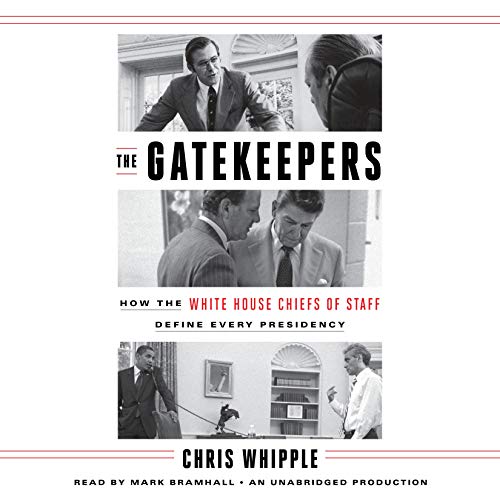
The Gatekeepers (How the White House Chiefs of Staff Define Every Presidency)
Author: Chris Whipple
Narration by: Mark Bramhall
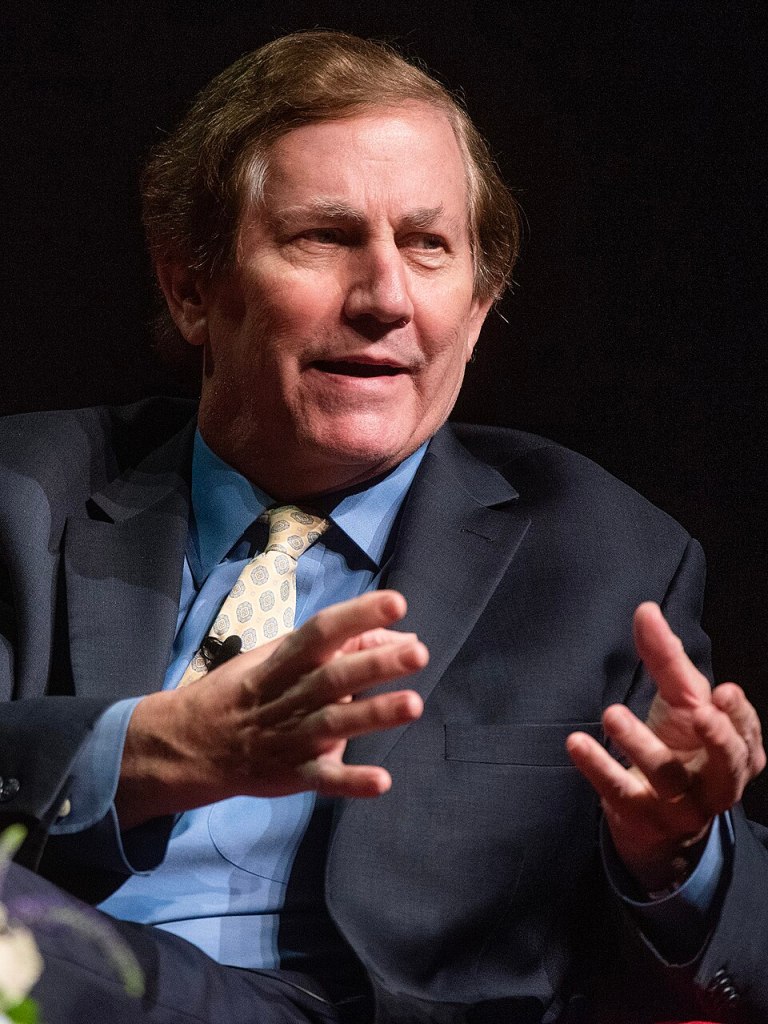
Chris Whipple (Author, political analyst, documentary film maker, journalist.)
Democratic government is complicated and messy, but decisions are made based on an understanding of the interests of many as opposed to the dictate and judgement of one.
“The Gatekeepers” may be viewed by most as an historical account of White House Chiefs of Staff based on many interviews of former government officials. However, one is inclined to see this history as a chronical of American government effectiveness. The facts and incidents reported give reader/listeners a view of America’s government function. Whipple details a series of relatively prudent and sometimes bad decisions made by late twentieth and twenty-first century presidents. Whipple’s history suggests the decision-maker for pursuit of government policy is America’s elected President. However, the road to policy approval or rejection is paved by White House’ Chiefs of Staff.
Whipple covers Nixon’s, Ford’s, Carter’s, Reagan’s, both Bush’s, Clinton’s, Obama’s, and Trump’s first administration. It does not address Biden’s Presidency or the Chief of Staff for Trump’s second term. The many interviews Whipple bases his history on offer a credible and enlightening history of American government. It is H. R. Haldeman, Cheney, Rumsfeld, Baker, Panetta, Card, and Rahm Emanuel that are the most prominent examples of effective and consequential Chiefs of Staff in Nixon’s, Ford’s, Reagan’s, Clinton’s, first and second Bush’s, and Obama’s administrations. The definition of effective is their ability to achieve a desired result whether good or bad for America. This is where one’s personal political beliefs come into question. It is always easy to see the errors of the past retrospectively. Whipple is careful to report facts and results without much judgement about their consequences.
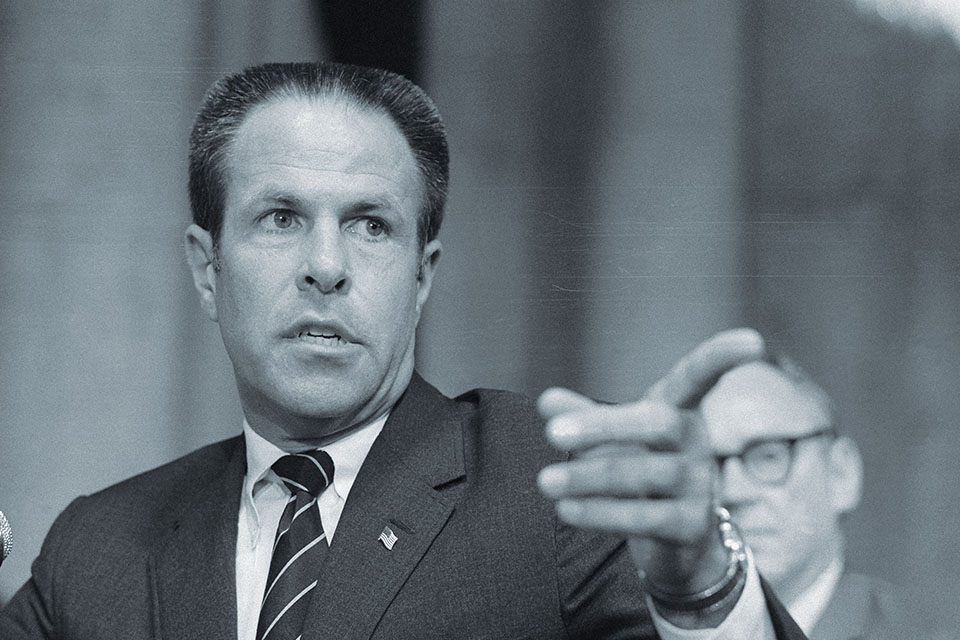
H.R. Halderman (1926-1993, former Chief of Staff for President Nixon.)
Haldeman was Nixon’s Chief of Staff. There is no evidence that he had anything to do with the planned or ordered Watergate break-in, but Whipple shows he participated in a Watergate cover-up. Though Haldeman’s actions after the Watergate scandal are reprehensible, the point made by Whipple is that Haldeman set the table for what an effective Chief of Staff should be for a President. Haldeman acts as a consummate gatekeeper. One can criticize Haldeman’s bad decision to try and coverup Watergate, but he defined the role of a President’s Chief of Staff. Whipple shows Haldeman manages access to the President, understands where the power of government lies, has a good understanding of staff members surrounding the President, protects the President’s time, and balances a President’s policies with the politics of his party.
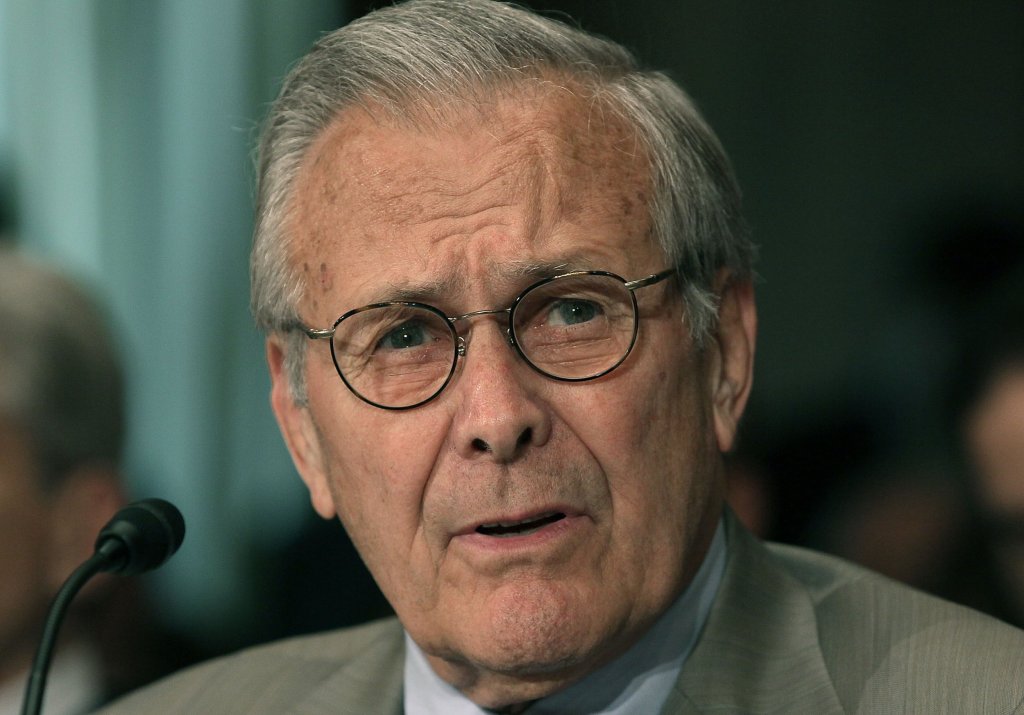
Donald Rumsfeld (1932-2021, Secretary of Defense and former Chief of Staff for President Ford.)
President Ford’s Chief of Staff is Donald Rumsfeld with Dick Cheney as Deputy Chief of Staff. Rumsfeld is characterized as a mentor to Cheney. They had a close relationship according to Whipple. Ford’s political decision to give a full pardon to Nixon and clemency for Vietnam draft dodgers were hot potato issues that were abetted (if not endorsed) by Rumsfeld and Cheney. Most significantly Ford ended America’s war in Vietnam. Ford endorses tax increases to reduce inflation while supporting tax cuts to stimulate the economy. Ford increases congress’s role in foreign policy.
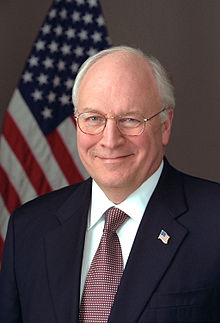
Dick Cheney (1921-2025, second Chief of Staff for President Ford.)
In a cabinet reorganization Cheney becomes the Chief of Staff and Rumsfeld switches to Secretary of Defense. Rumsfeld and Cheney, in their roles as Chiefs of Staff, control access to President Ford, coordinate policy actions, shape internal decision-making, and advise Ford on strategy to influence people who accomplish these acts. The two Chiefs influenced Ford to replace Kissinger as National Security Advisor, promote George Bush as CIA Director, and prepare Ford for the next election which is ultimately lost to Jimmy Carter.
Hamilton Jordan (1944-2008, Chief of Staff of President Carter.)
When elected, President Carter felt he did not need a Chief of Staff. However, he relented in 1979, when he found the job was needed. Carter hired Hamilton Jordan who had been his campaign strategist when he ran for President. Whipple notes that appointment became a mistake because of Jordan’s lack of discipline. Though the Ford administration fought the idea of promoting Reagan for President, the public felt otherwise.
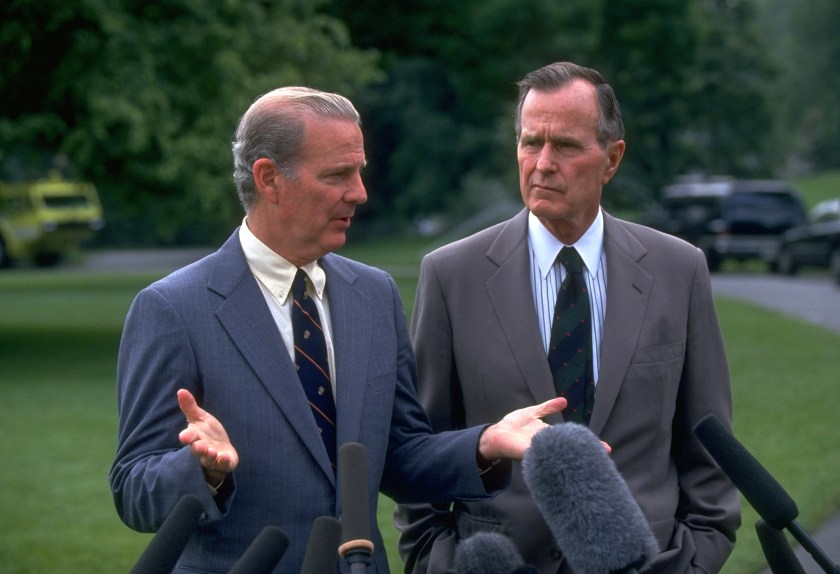
James Baker (1930-, Chief of Staff for President George H.W. Bush.)
After Carter, when Reagan is elected, he chooses James Baker as his Chief of Staff. Whipple suggests Baker is the quintessential model of a great Chief of Staff which all could be measured against. Baker is characterized by Whipple as an expert at managing the White House, the press, and Capitol Hill. Baker understood the process, the politics, communication, and presidential management requirements of the job. He never confused himself with the power of the President. He became manager of what is called the Reagan Revolution. The political and social movement revolves around ideas of smaller government, deregulation, cutting taxes, and endorsement of free enterprise. Whipple infers the success of the Reagan Revolution is largely due to the skill of James Baker.
Leon Panetta (1938-, Chief of Staff for President Clinton.)
One may argue Reagan caused America’s 1990-91 recession. Unemployment had risen to 7.8%. This set the table for a Democratic President named Bill Clinton. The initial Chief of Staff for Clinton is John Podesta who served from 1998-2001 and is replaced by Leon Panetta who, in the author’s opinion, rivals James Baker as a great Chief of Staff. Whipple infers that, without Panetta, Clinton would not have been reelected after the Monica Lewinsky affair. Panetta brought discipline and structure to the Clinton White House. Panetta could say “no” to the President, at least, in private. Panetta gained a reputation for being an honest broker as a negotiator for the President.
Andrew Card on the left. Joshua Bolten on the right.
George W. Bush, the next President, is noted to have two Chief’s of Staff during his two terms as President. It appears both Andrew Card and Joshua Bolten were more soldiers than Chiefs of Staff for George W. Bush. The policy decider is certainly George W. Bush but the influence of Dick Cheney as Bush’s V.P. seem a major influence on George W.’s decisions. Bush’s two Chief’s of Staff may have been effective as screeners but not as Chiefs of Staff that could say no to a President influenced by his cabinet and personal opinions. The entry to the wars in Afghanistan and Iraq suggests Card and Bolten were unduly influenced by others in the administration.
No one seems inclined to say no to President Bush in private. In retrospect, President Bush seems let down by his Chief’s of Staff and the research and judgement of his Department Heads. Both Afghanistan’s and Iraq’s invasions by the American military are retrospectively shown by most (if not all) histories as American mistakes, if not tragedies.
Rahm Emanuel (1959-, Chief of Staff for President Obama.)
The final chapters address Chief’s of Staff for Obama and Trump. Obama became President when the American economy is in an economic crisis that threatens the financial industry, the general economy, and the mortgage market for many American homeowners. He asks Rahm Emanuel to become his Chief of Staff. Emanuel is a tough Chicago politician who recognizes the pressure of the office and has some level of fear about the future of the American economy. He understood the gravity of the job he is being asked to take. However, his reputation as a tart tongued fighter for what he believed as right made him the best Chief of Staff that could be found. His role as gatekeeper gave Obama the support needed to pass the Obama Health Care plan and work through the economic crisis that nearly bankrupted America.
Reince Priebus (1972-, Chief of Staff for President Trump.)
Trump’s choice of Reince Priebus as his first Chief of Staff is short lived and lasts for less than 8 months. His short tenure is not evaluated, and history shows he is replaced three times in the remaining years of Trump’s first term. A pro-Trump person will have one opinion about those facts while an anti-Trump person will have another.
Whipple convinces reader/listeners that a competent Chief of Staff is critically important for any organization that approaches the complexity of a nation-state government. Without a competent Chief of Staff, democracies are subject to authoritarian tyranny.
Sorkin’s “1929” makes one think about 20th and 21st century American Presidents who may have set a table for a second economic crisis. As the Turkish proverb says “…fish stinks first at the head.”
Books of Interest Website: chetyarbrough.blog
1929 (Inside the Greatest Crash in Wall Street History–and How It Shattered a Nation)
Author: Andrew Ross Sorkin
Narration by: Andrew Ross Sorkin
Andrew Sorkin (American author, journalist, and columnist for The New York Times.)
“1929” is a history of the build-up to the stock market crash and the advent of the depression with opinions about how today’s economy compares and what should be done to keep it from happening again. Though Sorkin is not an economist, he has written an interesting history of the build-up to the 1929 depression.
Faltering economies.
There is a sense of danger being felt by some today when reading/listening to Sorkin’s history of the 1920s. Few seem to have a clear understanding of world market forces and whether we are heading for an economic catastrophe or a mere hiccup in the growth of the economy. Neither bankers, regulators, nor politicians in the 1920s (or for that matter now) seem to have a clue about the economy’s trouble and what can be done to ameliorate risks. Like 1929, today’s insiders, power brokers, and rich have more options to protect themselves than most of the world’s population.
Increasing homelessness in America.
In America, it seems those in power have no concern about the rising gap between rich and poor or the immense increase in homelessness. Without a plan by those in power, there seems little concern about reducing inequality, the common denominator for the wealth gap and homelessness. Sorkin’s book outlines the reality of 1929 that gives reader/listeners a feel of history that may repeat itself.
Sorkin’s history seems credible as he notes human nature does not change.
Today’s leaders are like yesterday’s leaders. Not because they are venal but, like most if not all human beings, leaders in power are concerned about themselves and what there is in life that serves their personal needs and wants. Of course, the difference is that leaders that are power brokers affect others that do not have the same influence or options to protect themselves. We all have blinders that keep us from seeing the world as it is because human nature is to ask what is in it for me, i.e., whatever “it” is. The 1920s had a merger bubble in manufacturing and communication that is fed by the industrial revolution. Today, we have a merger bubble with mega-corporations like Tesla, Apple, Amazon and others that are mega-corporations capitalizing on a new revolution coming with A.I., the equivalent of the Industrial Revolution. Some critics argue mega-corporations, like what happened with the oil industry could be broken up to increase competition which is the hallmark of improved production, cost reduction, and lower consumer prices.
Charles E. Mitchell (American banker, led the First Nation City Bank which became Citibank.)
What makes this history interesting is Sorkin’s identification of the most responsible power brokers who bore responsibility for the stock market crash. Charles Mitchell of Nation City Bank is identified as the central driver of the stock market bubble. Mitchell denied the reality of the financial systems fragility. His ambition and unfounded optimism magnified the systemic risk of the financial crises. He openly defied the Federal Reserve’s warning to curb margin lending that risked other people’s money and their financial stability. He continued to promote purchase of stocks on credit that were fueling the stock market bubble. Mitchell appears to have misled the public in order to increase his power and protect his personal wealth by creating the illusion of market stability and his bank’s profitability. Though Mitchell is not the sole villain, he became the most powerful banker in the nation while breaking the financial backs of many Americans. In general, it is the self-interest of those who listened to him that have responsibility for their financial collapse, but it is always hard to know who is lying to you. Part of the blame is the hesitation of the Federal Reserve Board to act because the people in charge could not agree but that was more a matter of omission than commission which Mitchell was charged with but not convicted. Of course, the political leaders of that time also failed but hindsight is a lot easier than foresight.
Artificial Intelligence is today’s equivalent of the Industrial Revolution of the twentieth century.
Similar to the corporate mergers and investment from growing industrialization of the 1920s, today’s mania is mega corporation’ investment in Artificial Intelligence. Sorkin notes the ease of trading stocks, expectations of crypto investments, and A.I. hype may well move the market beyond its value. He argues for stronger guardrails on speculative investments, more limits on margin lending, and transparency on high-risk investments. He cautions easier credit as seen this Christmas season with buying based on delayed payment incentives and increasing credit card availability, card balance increases, and more liberal repayment terms. In general, Sorkin wants to see more, and better government oversight and regulation of credit offers. He believes too many lenders are overly optimistic about the future with the gap between rich and poor widening and trending to get worse. That inequality threatens the success of capitalism as a driver for shared prosperity, and economic growth.
Herbert Hoover (President 1929-1933, though characterized as the primary villain for the depression, Sorkin identifies his role as one of omission rather than commission.)
The Presidents shown below carry some responsibility for where the American economy is today but that would be another book.
Sorkin’s “1929” makes one think about 20th and 21st century American Presidents who may have set a table for a second economic crisis. As the Turkish proverb says “…fish stinks first at the head.”
The most judgmental part of Szalay’s story is that a boy raised in wealth can be spoiled by drug addiction while a poor “go along to get along” boy may end up just as dissolute from sexual addiction.
Books of Interest Website: chetyarbrough.blog
FLESH (A Novel)
Author: David Szalay
Narration by: Daniel Weyman
David Szalay (Canadian Author, winner of the Booker Prize in 2025 for “Flesh”.)
Every child is raised in different circumstances. The variables are legion ranging from genetics to economic environment to parenting and the experiences of life. David Szalay tells of a young boy growing to manhood. Every male will have some experience that relates to his primary character’s life. That explains the popularity and literary acclaim that “Flesh” achieves.
Szalay captures different pathways for “every boy’s” journey through the physical and mental anxieties of life.
The specific circumstances of the life for boys (and undoubtedly girls) show how complicated growth to adulthood can become. The father of one boy is a very wealthy businessman who has married a woman many years younger than him. They have a son named Thomas who has been raised in wealth and privilege. The second boy is, István, a poor Hungarian who lives a “go along to get along” life. This poor Hungarian grows to be a handsome man who is attractive to women because of his life experience and attitude about life and relationships.
Effects of inherited wealth.
István and a wealthy husband meet as a result of an attack by street thugs who beat the wealthy husband and nearly kill him. István happens to be passing by when the thugs are scared away by his sudden appearance. István calls 911 or its equivalent to get an ambulance. The wealthy husband is taken to a hospital and is grateful to István which he feels has saved his life. He offers István a job in his security firm as a protector of wealthy clients. István shows himself to be a very competent bodyguard. The wealthy husband decides to have him become his personal family guard and driver.
The wealthy husband’s much younger wife falls in love with the bodyguard and they become lovers.
The wealthy husband dies, and István marries the wife of her former wealthy husband. The son of the wealthy husband is destined for college when István marries the deceased husband’s wife. This college bound son will inherit all of the family wealth when he reaches the age of 25 based on a Trust that allows his mother and her new husband to use the Trust to make investments for the future until the son reaches 25. István becomes a land investor and developer with the wealth of the trust.
Human differences.
The table is set for comparison of two sons who are different with one raised in great wealth and another in the lower middleclass. A crisis occurs when an 80-million-dollar investment by István is needed from the trust that requires disclosure to the son who is to inherit the trust. This son raises enough public objection to the investment that it is not made, and the investment deal falls apart. To this reviewer, the dynamics of the genetic influence of two boys from different economic classes is the most insightful value of the novel.
The influence of genetics, wealth, and poverty.
One can judge from the life of István what influence genetics, wealth, and poverty may have had on the life of a boy growing to become a man. The author seems to have an opinion about boys raised by a family of wealth versus those raised by a family with a “go along to get along” belief in life. At the books end, one wonders if being born in wealth is as likely to make an adult male better or worse. István seems sympathetically written into life by the author. He is true to his character throughout the story, but his sexual life is a mess. Though he appears to be a resourceful, hardworking, and decent human being, he is led through life by his libido.
The most judgmental part of Szalay’s story is that a boy raised in wealth can be spoiled by drug addiction while a poor “go along to get along” boy may end up just as dissolute from sexual addiction.
“We Are the Nerds” is a story about “Nerdom” and the tragic loss of Aaron Swartz to his loving family and the world of coding.
Books of Interest Website: chetyarbrough.blog
WE ARE THE NERDS (The Birth and Tumultuous Life of Reddit, the Internet’s Culture Laboratory)
Author: Christine Lagorio-Chafkin
Narration by: Chloe Cannon
Christine Lagorio-Chafkin (Author, reporter, podcaster based in New York.)
Relistening to “We are the Nerds” may be reviewed from a perspective of the future of newspapers but that diminishes the tragedy of Aaron Schwarz’s suicide.
The original founders of what became known as Reddit were Steve Huffman and Alexis Ohanian, graduates from the University of Virginia. A third partner, Aaron Swartz, is invited into the company because of his tech experience in creating a company called Infogami which merged with Reddit. With the addition of Infogami, the original founders of Reddit created a parent organization called “Not a Bug, Inc”. Schwartz insists on being called a co-founder because of his contribution to Reddit as a programmer. That insistence rankled Huffman and Ohanian which grew into a resentment that fills the pages of the author’s story.
Steve Huffman on the left with Alexis Ohanian and his wife, Serena Williams, and their daughter on the right.
The author seems to minimize Schwartz’s contribution to Reddit despite the framework he created that made Reddit scale more quickly because of its open access and community-driven cultural impact. Swartz’s contributed code appears to have been an important step in the useability of Reddit by the public. However, in fairness to the original founders, the author infers that contribution pales in respect to the extensive coding and work done by Huffman. The point is that this conflict becomes an irritant that leads to the departure of Swartz from Reddit in 2007, after it was acquired by Condé Nast in 2006. That acquisition made all three original coders millionaires.
Swartz’s life and premature death is a tragic encomium to the story of Reddit’s success as a public forum.
By some measure, Swartz is a brilliant human being, but his intelligence is accompanied by what might be characterized as a self-destructive personality. His ability as a computer nerd is evident in his High School days in Highland Park, Illinois. He goes on to Stanford, but its educational regimen leads him to leave after his first year. He preferred independent learning. Schwartz’s remarkable ability led him to become a research fellow at Harvard University in 2010. He became a self-taught intellectual with an activist belief in academic freedom that eventually led him to rebel against authority. He was arrested in 2011 for allegedly breaking into MIT’s computer network without authorization. He was charged for computer fraud and faced 34 years in prison and a million-dollar fine. At the age of 26, Swartz hung himself and died on January 11th, 2013.
An American mass media company founded in 1909.
Huffman and Ohanian believed Swartz’s contributions to Reddit were less than theirs in creating the company they sold to Condé Nast that made them millionaires. Swartz’s idealism and independence conflicted with the original founders of Reddit who seemed more interested in building a public platform that could make them rich. Though Ohanian believed they sold too soon, all three agreed to Condé Nast’s final offer that made them millionaires.
In retrospect, Ohanian may have been right about the future value of Reddit. Condé Nast spun Reddit out to an independent subsidiary under Advance Publications where it became a 42-billion-dollar success by 2025. Today, Huffman’s net worth is estimated at $1.2 billion as a result of his Reddit shares. Though Ohanian may not have held on to his shares, his net worth is estimated at $150-$170 million. Not bad for two University of Virginia graduates. However, as Plato observed, “The greatest wealth is to live content with little”. Swartz’s life seems to have had little to do with desire for wealth.
“We Are the Nerds” is a story about “Nerdom” and the tragic loss of Aaron Swartz to his loving family and the world of coding.
Like abolition, women’s suffrage, labor, civil rights, LGBTQ, and MeToo movements of the distant and near past, capitalism’s reform is due.
Books of Interest Website: chetyarbrough.blog
SAVING CAPITALISM (For the Many, Not the Few)
Author: Robert B. Reich
Narration by: Robert B. Reich
Robert Reich (Author, American professor, lawyer and political commentator that worked in the Geral Ford and Jimmy Carter administrations, and served as th secretary of labor in Bill Clinton’s administration.)
Robert Reich, as an advisor to Presidents of the United States is recognized by Time Magazine as one of the Ten Best Cabinet Members of the 21st Century and by the Wall Street Journal as one of the most influential business thinkers in 2008. In “Saving Capitalism” Reich criticizes corporate America for unethical and unfair capitalist practices that make a mockery of capitalist equality.
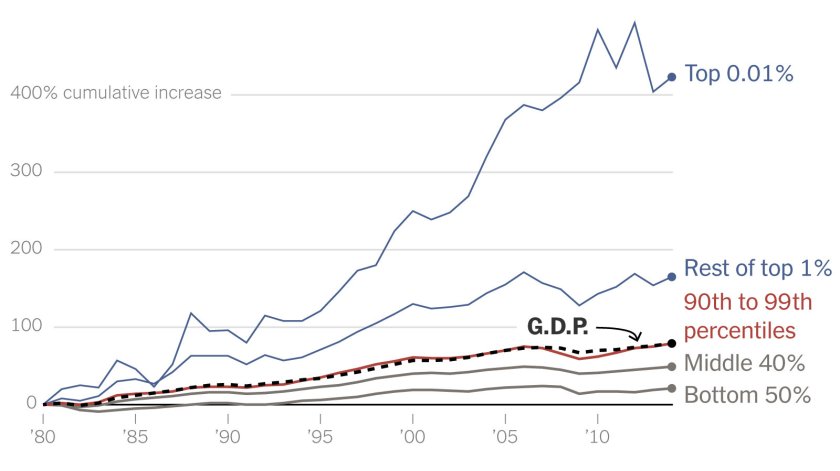
U.S. Rising Income Disparity.
Economic class warfare in America is a time worn argument by many economists in the 20th and 21st century. Reich’s topical analysis has some truth, but his analysis of wealth and markets oversimplifies the complexity of American capitalism. One cannot deny the harm that capitalist greed has done to increase wealth of the rich and decrease wealth of the poor in America. The political system is rigged by the influence of wealth over political policy and economic equality.
American capitalism’s rigging begins at birth, carries through public education, and ends in low-income opportunities for the poor.
The power of wealth feeds American capitalist Democracy’s circle of life. Money of the wealthy is spent to birth and educate their children with the best medical care and schools in America. The corporations and super rich of America hire and fund lobbyists who promote corporate agendas to support government representatives’ campaigns for office. The aspiring representatives are people who owe their allegiance to corporations and the rich who helped get them elected. That circle is biased toward making the rich richer.
Equality of opportunity is rigged in ever-larger corporations that reap super profits and pay CEO’s millions of dollars per year while low wage earners are left to fend for themselves. Mega corporations should be broken up like the oil industry dismantling in 1911. Like Standard Oil, today’s conglomerates have too much power over consumer purchasing, advertising, social media, medical industries, and (most importantly) the election process of America. The rigging begins with healthy birthing of children of the rich, extending to less qualified schooling for the poor, and ending with low-wage family’s children having unequal economic opportunity.
One cannot deny that Reich’s book and this biased review are an ideological belief that distorts and oversimplifies reality, but it carries an element of truth that cannot be denied. How can one person be worth a potential trillion-dollar net worth for service as CEO of one company that makes electric cars. Corporations like Amazon, Google, Facebook, UnitedHealth Group, and Cencora control markets through their size to capture disproportionate shares of advertising, social media, retail sales, and medication industries without competition to moderate their power, and influence. Add billionaires like Elon Musk, Larry Ellison, Mark Zukerberg, Larry Page, Steve Ballmer, Warren Buffett, and Michael Dell and others of great wealth–one is inclined to believe American capitalism is rigged.
As brilliant as Musk shows himself to be, his fragile ego diminishes his genius.
There is an unfairness in criticizing the wealthy for their success in America. They are not wealthy because of luck but because of their innate abilities, risk taking, and hard work but influence should not come from the power of their wealth to change government policies that focus on enriching themselves. Just as the robber barons had their influence curbed by antitrust legislation, the same should be done today. The influence of lobbyists and their support should be more publicly disclosed. The federal government should play more of a financial role in improving public education. Cries of inequality should be exposed, critiqued, and adjudicated fairly.
Capitalism remains the best economic system in the world, but it has its weaknesses. The best prescription for that weakness is equality of opportunity in the arena of employment competition. It begins with fair and equal access to medical care and access to a good education.
Like abolition, women’s suffrage, labor, civil rights, LGBTQ, and MeToo movements of the distant and near past, capitalism’s reform is due.
























































 REVIEWS AND VIEWS OF LIFE