MEDIA PLATFORMS

Cory Doctorow shows how the American public is being taken advantage of by today’s major private media owners and manipulators.

Books of Interest
 Website: chetyarbrough.blog

Enshittification

AuthorCory Doctorow

Narrated By: Martin Sheen
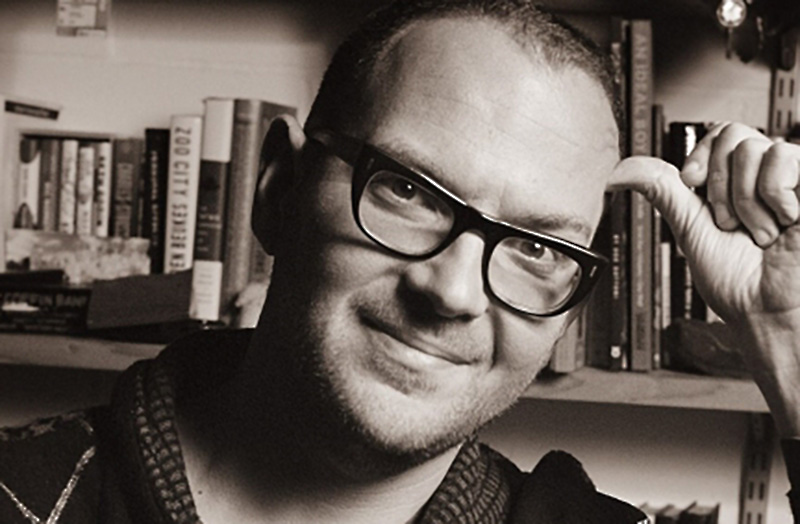
Cory Doctorow (Author, Canadian-British blogger, journalist)

Despite the poor choice of titles for Cory Doctorow’s book, his theme of internet corruption is inevitable because of the nature of human beings. The corruption of which Doctorow writes is evident in most mega-corporations and governments. The only difference is in their motivation, i.e. whether it is money, power, or both in world organizations.

Elon Musk (Businessman, billionaire, entrepreneur, leader of Tesla, SpaceX, Twitter, and xAI.)

The first part of Doctorow’s book is an evisceration of the famous Elon Musk. Not surprisingly, Doctorow is not a fan of Elon Musk. Musk is an example of the theme of Doctorow’s book. Musk’s acquisition and decimation of a widely used communication platform known as Twitter exemplifies “Enshittification”. Doctorow infers Musk’s desire to have a free speech forum is actually a betrayal of the principle of free speech. The reality is that Musk has only created a Megaphone for his personal biased beliefs. Musk’s first action in the Twitter acquisition is to fire essential employees to reduce costs of operation. One presumes from Doctorow’s theme that Musk’s first step results in “Enshittification” of Twitter. Twitter’s new name is “X”. “X”s value has plummeted just as the American government’s service to the poor has fallen. With Musk’s singular focus on reducing cost, without consideration of effectiveness, enshittification is virtually guaranteed by Musk’s actions.

(Though not mentioned by Doctorow, it seems to this critic, that Musk’s firing of government employees under Trump, is similar to the dismantling of Twitter. The firing of government employees results in citizen-service’ losses equivalent to Twitter’s loss of advertisers.)

Traditional media is a one-way broadcast of information whereas the Internet is two-way interactive communication. Anyone can publish on the internet while singular corporations or institutions that own traditional media have only a one-way form of communication. The internet is global, instant, and decentralized while traditional media is scheduled for delivery and centralized. Access with on-demand, 24/7 internet are not time-bound like traditional media. The cost of using the internet is low and often free while traditional media entails infrastructure costs.

Trouble arises with the internet because of its ubiquitous availability while traditional media is singularly targeted.

The internet is immediate while publications are period based. It is possible to precisely and instantaneously measure internet responses based on clicks, views, and engagement while traditional media relies on third party analysis by publishers or by hired companies like Nielsen. Doctorow shows how differences between internet and traditional media exacerbate loss of privacy and increase potential for massive societal disruption. The internet can immediately influence and potentially control social beliefs. In less capitalist and more authoritarian governments the danger of the internet is direct influence and control of its citizens.

In American capitalism, the danger lies more in the drive for profitability than the control of social and political belief.

Doctorow argues America’s social norms are being corrupted by disparate industries that are creating tech platforms to monopolize product consumption only for economic gain, not service to its users. The consequence erodes trust of the public, distorts accountability, and thwarts free choice. The ruling classes of American society can evade traditional checks and balances. The utility of the internet can be used to distort the truth. Corporate objective is to make more money, not to benefit public discourse, improve product, reduce product cost, or improve service, but to monopolize consumption.

On the one hand, Doctorow acknowledges social media platforms optimize engagement. However, these platforms become forums for outrage, and misinformation that tribalizes society.

Rather than improving connections between people, algorithms are created by users of a media platform to exacerbate outrage, foster conspiracy theories, stir up and ultimately exhaust the public. The objective is increase clicks to make buyers of advertising to purchase time on their platform. As a free society, Doctorow suggests Democracy can mitigate the “Enshittification” by regulating the internet. He argues that one’s use of a platform should not monopolize personal information by restricting one’s right to take their information with them if they become unhappy. Platforms should not be prisons that restrict users legal right to their personal information if they choose to change platform providers. He argues for a breakup of major providers like Amazon, Facebook, Google, X, and Adobe.
Doctorow argues for more transparency in the algorithms being used by media platforms.

The public should be informed about how a platform’s algorithms are being used to steer the public. Individuals should be given the opportunity to opt out of algorithmic categories if they wish. Regulatory agencies should be created with the right to enforce consumer protections. He notes the EU’s move to require platform accountability. In general, Doctorow argues that the internet should return to its roots as a space for mutual aid, free expression, and innovation.

Internet Moguls: CEO Google Pichai, CEO Meta Zuckerberg, CEO Apple Cook, Executive Chairman of Amazon Bezos

Doctorow is not the first to propose reform of the internet.

Some time back, Tim Wu, a Columbia law professor, notes that Amazon, Apple, Facebook, and Google had shifted from serving users to extracting value from them. He argued for antitrust enforcement, regulation, and restrictions on content and infrastructure. American Democracy is a safer environment for public media than what is being experienced in countries like China and Russia where all media is tightly controlled by the government. However, Doctorow shows how the American public is being taken advantage of by today’s major private media owners and manipulators.

Doctorow argues for the breakup of internet companies that have become too big. He believes returning the internet to the service of society requires a more level playing field to equitably serve the public.

EGOMANIA

“Ghosts of Hiroshima” reminds listener/readers of Putin’s nuclear bomb threat and President Trump’s announcement of renewed American nuclear weapons testing. Both Presidents are egomaniacally playing with the future of humanity. Their macho stupidity is appalling.

Books of Interest
 Website: chetyarbrough.blog

Ghosts of Hiroshima

AuthorCharles Pellegrino

Narrated By: Martin Sheen

Charles Pellegrino (Author of many non-fiction books including “The Last Train from Hiroshima” published in 2010.

“Ghosts of Hiroshima” does not have the impact of “The Last Train from Hiroshima” which the author wrote in the early 2000s.. However, “Ghosts of Hiroshima” reminds listener/readers of Putin’s nuclear bomb threat and President Trump’s announcement of renewed American nuclear weapons testing. Both Presidents are egomaniacally playing with the future of humanity. Their macho stupidity is appalling.

“Ghosts of Hiroshima” breaks little ground on the tragedy of Hiroshima. It outlines the mechanical complications of delivering the first atom bombs which has interest but rocket science makes that history moot. Having an 81-year-old survivor tell of her survival from the bomb is more than enough for this critic.

PARENTS

William Wilde, Jane Wilde, and John Stanislaus Joyce fit the description of “Mad, Bad, Dangerous to Know”. However, John Butler Yeats seems somewhat less dangerous while contributing to the life and intellectual development of W.B. Yeats.

Books of Interest
 Website: chetyarbrough.blog

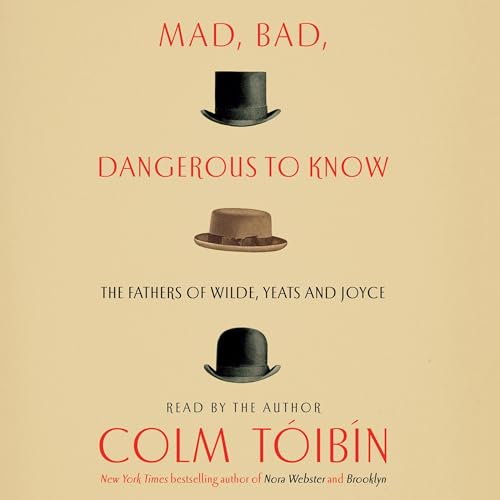
Mad, Bad, Dangerous to Know

AuthorColm Tóibín’s

Narrated By: Colm Tóibín

Colm Tóibín (Author, Booker Prize winner in 2006, journalist, essayist and short story writer.)

Mad, Bad, Dangerous to Know” as an audiobook is a bit difficult to understand because of Colm Tóibín’s Irish accent but as one adjusts to its cadence and inflexion, it offers interesting information about the families of Oscar Wilde, W.B. Yeats, and James Joyce.

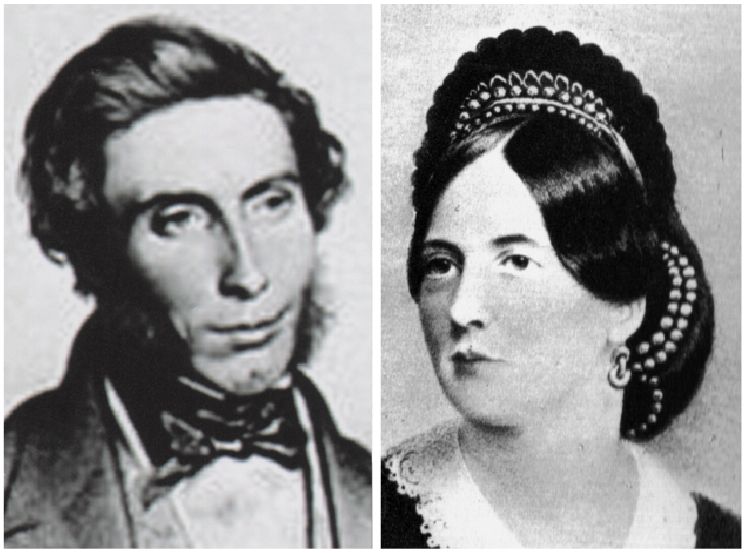
William and Jane Wilde (Parents of Oscar Wilde.)

William Wilde, the father of Oscar, is an important figure in Victorian Ireland. He was a renowned eye-and-ear surgeon who aided the medical profession by compiling statistical information about diseases and mortality of medical treatments as a gauge for human health. His wife, Jane Wilde (pen name-Speranza) was a nationalist poet and political writer. Some characterized her as a radical in comparison to her establishment husband.

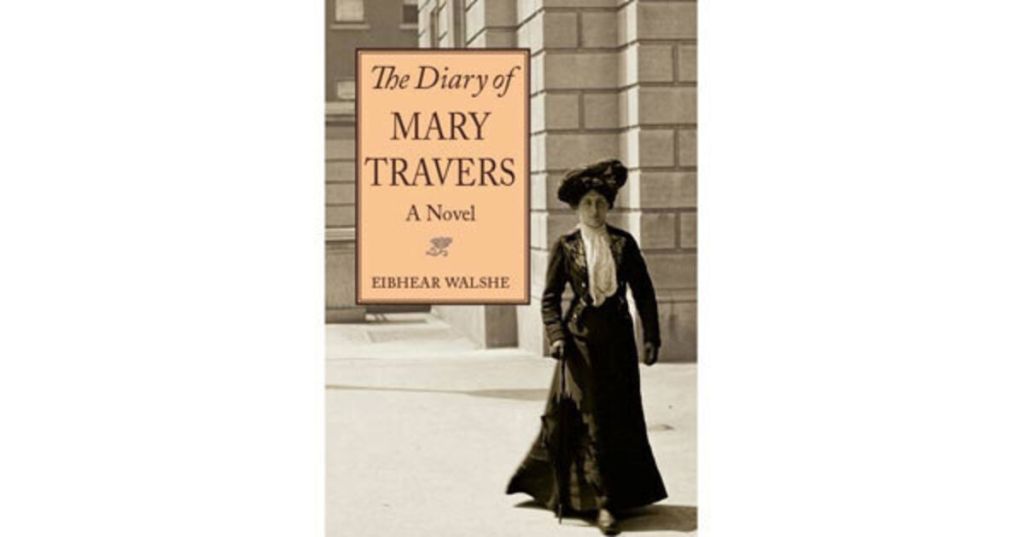
Jane Wilde’s husband is accused of sexual misconduct in the treatment of a young female patient in his practice. Mary Travers had accused Dr. Wilde of drugging and seducing her when seeking help for a medical problem. Dr. Wilde is indirectly drawn into court to settle a lawsuit filed by the female patient’s father because of a publicly exposed letter by Jane Wilde about Ms. Travers. The court finds that Dr. Wilde’s wife libeled Ms. Travers in a publicly exposed letter that criticizes her sexual assault claim. The court found Jane Wilde guilty of libel and awarded Travers a symbolic sum of 2 pounds for public humiliation.

In the 19th century, Eibhear Walshe writes a book about the trial brought against Jane Wilde for libelous comments about the sexual abuse of Ms. Travers.

Though Oscar’s father never faced criminal prosecution, his reputation and standing in the community declined. Despite the blow to Dr. Wilde’s reputation, Tóibín argues Ireland’s medical profession benefited from William Wilde’s statistical analysis of medical practice in 19th century Ireland. Nevertheless, the Travers’ trial infers gender discrimination was then and remains a serious problem in modern times.

The Travers’ trial reminds one of gender discrimination in modern times.

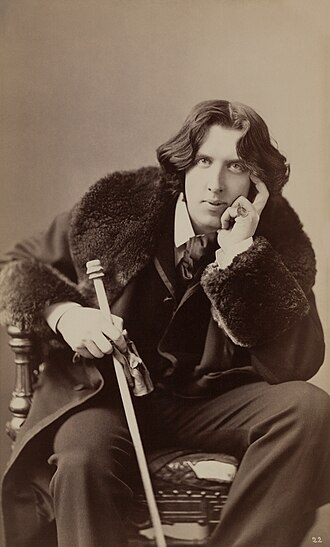
Oscar Wilde (1854-190o, the son of Dr. Wilde and Jane Wilde died at the age of 46, Oscar Wilde was an Irish author, poet, playwright who wrote “The Picture of Dorian Gray”. He became famous in London and around the world, convicted in 1895 for gross indecency for homosexual acts.)

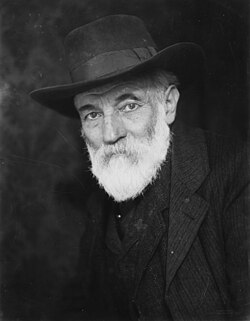
John Butler Yeats (1839-1922, W.B. Yeat’s father.)

The next family examined by the author is John Butler Yeats. Little is said about J.B.’s mother but his father was an aspiring portrait artist. This is an equally interesting story. J.B. is characterized as an artist but with a gift of gab and an interesting philosophy of life. John Butler Yeats is identified as a procrastinator that often started painting a portrait but as often failed to finish it. He and his wife had four children, i.e. two girls and two boys. Each contributed to Irish cultural life. Jack, their first son, became one of Ireland’s most celebrated painters. He also illustrated books and wrote plays and novels. He painted in the expressionist style. Susan Mary Yeats was a leader in the Arts & Crafts movement in Ireland. She co-founded the Cuala Press that published works by W.B. and other writers. She helped revive Irish decorative arts but was overshadowed by the brothers. Elizabeth Yeats was a co-founder of the Cuala Press. A little research shows the children had some formal education but as Tóibín suggests, with the exception of W.B.’s formal training at the Metropolitan School of Art in Dublin, the other 3 children were largely self-trained in art, writing, and Irish crafts.

Tóibín shows W.B. had a somewhat rocky relationship with his father when he was younger, but it evolved into a respect for his father’s philosophical view of the world.

When his father lost his wife, he chose to move to New York. Tóibín explains John Butler Yeats was more than a portrait artist. Though he was undisciplined in completing his artistic works, he scraped by with the help of his children’s support. John Yeats had attended Trinty College in Dublin studying the Classics and Law. He used that education to write letters to his children and friends after he moved to New York. The author infers some of W.B.’s poetry is based on ideas gleaned from his father’s philosophical musings. Tóibín notes several books have been published that compiled many of W.B.’s letters.

Rosa Butt portrait painted by J. B. Yeats.

Tóibín characterizes John Butler Yeats as emotionally and financially unreliable but a deeply influential father in W.B.’s life. J.B. exposes W.B. Yeats to the aesthetic and intellectual currents of the time. Tóibín infers J.B. had an extramarital affair with Rosa Butt. Ms. Butt was an acquaintance J.B. made when he painted a portrait of her in his studio. J.B. wrote many letters to Ms. Butt that reflect on his emotional attachment. However, he never returns to Ireland despite many intimations that he would. John Butler Yeats dies on February 34, 1922, in New York City. He was 82 years old, living in a boarding house at 317 West 29th Street. As true to his habits in life, he is said to have died with an unfinished self-portrait beside his bed. He is buried in Chestertown Rural Cemetery in Chestertown, New York.

James Joyce, leaning on his mother, with his father at the right (John Stanislaus Joyce).

John Stanislaus Joyce (1849-1931, died at the age of 82

The final chapters of Tóibín’s book are about James Joyce’s family. His father is John Stanislaus Joyce. Tóibín suggests James had an ambivalent opinion of fathers and particularly his own father. John Joyce is characterized as an abusive, alcoholic husband, and incompetent manager of his inheritance. With ten children and a wife, John Joyce loses his inheritance and effectively drives his son away from Ireland. James is the oldest, born in 1882. Tóibín explains that his voice and personality are ever present in James Joyce’s famous characters in both “Ulysses” and “A Portrait of the Artist as a Young Man“. Both books take a dim view of fatherhood while exemplifying an erudite father who projects a “man about town” image. However, Tóibín shows John Joyce to be an incompetent money manager and abusive family man.

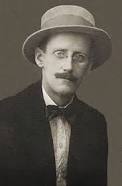
James Joyce (1882-1941)

In “A Portrait…” Stephen’s biological father is depicted as charming but irresponsible. Like James Joyce’s father, his main character’s father is financially unstable and an emotionally distant, abusive parent. In “A Portrait…” Stephen Daedalus is alienated and chooses a life independent of the Catholic Church because he views it like a surrogate father that imposes moral and spiritual authority without justification.

In “Ulysses”, James Joyces’s main character argues paternity is a fiction while maternity is merely a biological function. At best, one sees James Joyce is ambivalent about his dad. James experiences episodes of camaraderie when socializing with his father as a drinker and as a tenor singing partner. Both are supporters of Parnell, the Irish nationalist leader who supported Home Rule and independence from England.

Tóibín suggests James Joyce’s feelings about his mother are marked by guilt, presumably for not protecting her from her abusive husband but also because of her belief in God and patriarchal authority. In reading Joyce’s works, particularly “A Portrait of the Artist as a Young Man” and “Ulysses”, one can see James Joyce’s as a son of a loving, religious mother and abusive father who drank too much. James knew his mother loved him, but his father could not manage his or his family’s welfare.

May Murray Joyce (James Joyce’s mother, 1859-1903, died at the age of 44.)

William Wilde, Jane Wilde, and John Stanislaus Joyce fit the description of “Mad, Bad, Dangerous to Know”. However, John Butler Yeats seems somewhat less dangerous while contributing to the life and intellectual development of W.B. Yeats.

LIFE’S JOURNEY

The ending of Emily Henry’s story is a surprise to most who are absorbed and entertained by her tale. Life is complicated because it is filled with luck, achievement, purpose, and loss whether one is rich or poor.

Books of Interest
 Website: chetyarbrough.blog

Great Big Beautiful Life

AuthorEmily Henry

Narrated By: Julia Whelan

Emily Henry (Author, American writer of NYT’s bestselling romance novels.)

Emily Henry is an entertaining writer who seems to live her own “Great Big Beautiful Life”. Her book is about writers like herself being interviewed by a wealthy American who is searching for a biographer to memorialize an extraordinarily famous family’s life. Henry’s twist is that she has competition with a fellow writer who is a more experienced and successful writer.

The two writers in Henry’s story are in the prime of their lives.

One has been married before, and the other appears to have been intimately acquainted with another writer. Neither potential biographer knows they are being interviewed for the same job. The surprise is that their famous subject hires both writers to compete for the job with a presumption that one will be chosen. The story is partly to tell of a famous and extraordinarily rich families’ complicated lives. “Great Big Beautiful Life” is an imaginative story about family relationship, love, and life’s complexity.

The cleverness of Henry’s story is that one becomes interested in the person being biographed while being drawn into what becomes an intimate relationship of the writers.

Listener/readers become interested in both story lines. The incredibly rich heiress’s family history is a contrast to the middleclass lives of the writers. What Henry shows in “Great Big Beautiful Life” is every human being, whether rich or middleclass face the joys and tragedies of life. The author is not addressing poverty or the poor, but one presumes the difference is qualitative because love, loss, and sorrow is part of every human life.

The passion of the two authors is artfully expressed and reminds one of every human’s experience of love and loss.

Joy and tragedy play a part in every sentient human being’s life. Familial, emotional, social, and ethical relationships are vivified in Henry’s story. Alice is the main character who is the woman writer telling her story of the competition and relationship between her and Hayden in seeking the right to tell the story of Margaret Grace’s “Tabloid Princess” life. Margaret sets the table for the story with a competition for the right to tell her family’s life story. Alice and Hayden begin as competitors, evolve into lovers. and become intertwined with Margaret’s storied life.

Alice and Hayden are ambitious professionals, but both have emotional vulnerabilities that are intensified by the competition for Margaret’s biography. Scandal, family secrets and how they are dealt with in Margaret’s life are part of the story. Alice’s insecurity contrasts with Hayden’s Pulitzer Prize-winning reputation as a biographer.

The approaches of the two hopeful writers of Margaret’s biography are contrasted by the author.

Alice has a human-centered approach to the biography whereas Haden drives for detached objectivity. Alice is concerned with Margaret’s exposure while Hayden seems more driven by belief in accuracy, structure, and verifiability.

The ending of Emily Henry’s story is a surprise to most who are absorbed and entertained by her tale. Life is complicated because it is filled with luck, achievement, purpose, and loss whether one is rich or poor. “Great Big Beautiful Life” is entertainment at its best.

HISTORY

Details are certainly important as McCullough observes in “History Matters”, but truth in history seems dependent on the passage of time and details selected by histories’ scribes. Therein lies revisionist history which may or may not be the truth of history.

Books of Interest
 Website: chetyarbrough.blog

History Matters

AuthorDavid McCullough & 3 more

Narrated By: John Bedford Lloyd & 1 more

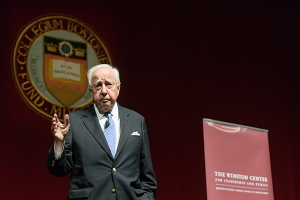
David McCullough (Two-time Pulitzer Prize winner for literature.)

As a tribute to David McCullough, his daughter compiled a list of several McCullough essays and public presentations. Though the readings are not narrated by McCullough, they illustrate his great range and understanding of history as a professional writer.

McCullough was 34 years old when “The Johnstown Flood” was released. Until then, he had worked as a writer for publications like the American Heritage magazine.

McCullough’s “History Matters” is a series of essays about famous people, books he has admired, and his success with historical biographies like “Truman”. McCullough’s first success was the story of the “Johnstown Flood”, published in 1968.  After McCullough’s success with the “…Flood”, he became a full-time writer. He notes—without support of his wife, the idea of becoming an independent writer would have been impossible. The risk of unemployment and no regular check would have undoubtedly been on McCullough’s mind when he discussed it with his wife.

McCullough’s public presentations in “History Matters” are of speaking engagements at universities and various organizations that asked McCullough to address their professional interests.

With the success of his books, in the 1980s, he became a popular and sought-after public speaker. He frequently gave commencement addresses to Universities and Colleges, wrote and presented what he wrote to historical societies and museums. He occasionally addressed government bodies and civic groups arguing for historical literacy to preserve the institutions of American government. One of his most well-known narrations was of Ken Burn’s “The Civil War” on PBS’s American Experience in 1990. McCullough passed away on August 7, 2022, at the age of 89.

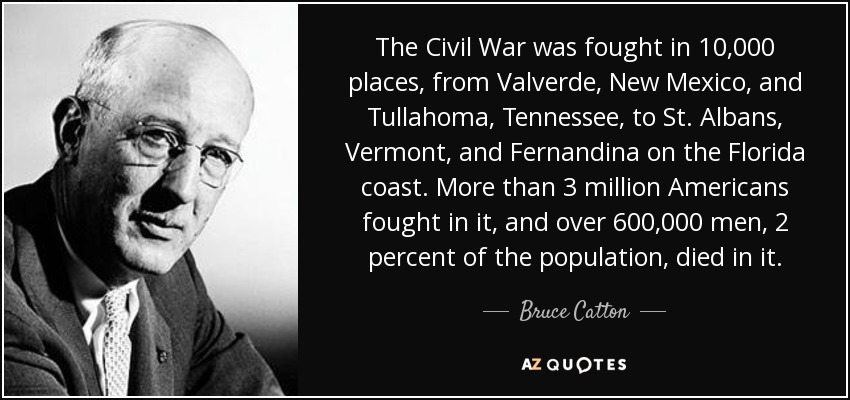
“History Matters” is a short book about a gifted writer who thoroughly researched his subject and wrote about the intimate details of history to give listener/readers the feeling they were “in the room”. He insisted on accuracy and clarity of what he wrote and advised writers to do the same if they wished to be historians. He cites the narrative power of Barbara Tuchman, Bruce Catton, and Paul Horgan as writers who vivified the dry analysis of history. The mix of history and fiction is blended by writers like these to give context to their audiences.

Like Caravaggio’s depiction of Saint Thomas’s doubt and faith in the resurrected Christ, McCullough argues historians must be relentlessly curious.

McCullough felt good historians had to see the world through the eyes and experience of their subjects to tell the truth of history. He argued good historians have to be relentlessly curious about the time of which they are writing. Without careful research and detail, the truth of history is lost.

To McCullough “History Matters” because it vivifies the past in ways that are forgotten and often taken out of the context of their time. He believed Tuchman, Catton, and Horgan practiced what he preached even though some (like me) would suggest even good historians change history of the past because of influences of the present. To minimize those influences, McCullough argues the details of history matter. Without details of the time when history is made, the truth can become distorted. McCullough infers admiring Washington, Lincoln, Grant, Roosevelt, Truman, and Presidents of this century without details of their time distorts the truth of history. From a book lovers’ perspective, this observation is two edged. Historians are human which suggests they have the same social blindness as everyone.

History is revised in every generation.

Abraham Lincoln, Ulysses Grant, Harry Truman and all Presidents have been vilified in their times and revised by future historians. Details are certainly important as McCullough observes in “History Matters”, but truth in history seems dependent on the passage of time and details selected by histories’ scribes. Therein lies revisionist history which may or may not be the truth of history.

RISK/REWARD

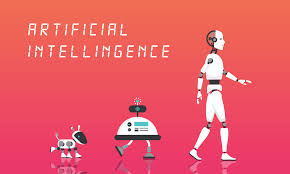
“IF ANYONE BUILDS IT, EVERYONE DIES” is an alarmist, and unnecessarily pessimistic view of the underlying value of Artificial Intelligence. This is not to suggest there are no risks in A.I. but its potential outweighs its risks.

Books of Interest
 Website: chetyarbrough.blog

IF ANYONE BUILDS IT, EVERYONE DIES

Author: Eliezer Yudkowsky, and Nate Soares

Narrated By: Rae Beckley

Eliezer Yudkowsky is a self-taught A.I. researcher without a formal education. As an A.I. researcher, Yudkowsky founded the Machine Intelligence Research Institute (MIRI). Nate Soares received an undergraduate degree from George Washington University and became President of MIRI. Soares had worked as an engineer for Google and Microsoft. Soares also worked for the National Institute of Standards and Technology and the U.S. Dept. of Defense.

“IF ANYONE BUILDS IT, EVERYONE DIES” is difficult to follow because it’s convoluted examples and arguments are unclear. The fundamental concern the writers have is that A.I. will self-improve to the point of being a threat to humanity. They argue that A.I. will grow to be more interested in self-preservation than an aid to human thought and existence. The irony of their position is that humanity is already a threat to itself from environmental degradation, let alone nuclear annihilation. The truth is humanity needs the potential of A.I. to better understand life and what can be done to preserve it.

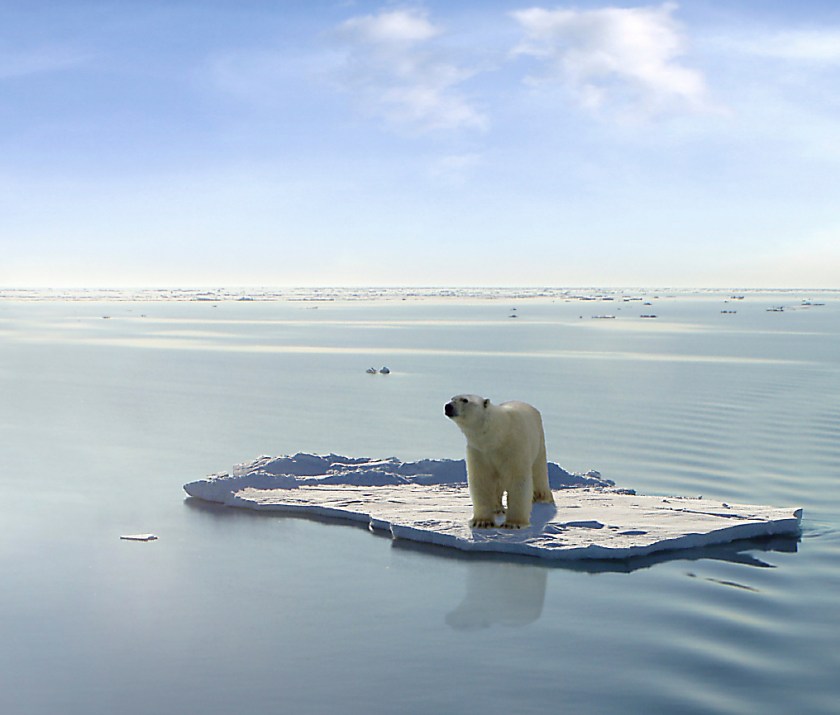
To this listener/reader environmental degradation is a greater risk than the author’s purported threats of A.I.

Pessimism is justified in the same way one can criticize capitalism.

The authors have a point of view that is too pessimistic about A.I. and its negative potential without recognizing how poorly society is structured for war and killing itself without Artificial Intelligence. The advance of A.I. unquestionably has risks just as today’s threat of mutual nuclear annihilation but A.I.s’ potential for changing the course of civilization for the better exceeds the agricultural and industrial revolutions of the past.

The nature and intelligence of human beings is underestimated by Yudkowsky and Soares.

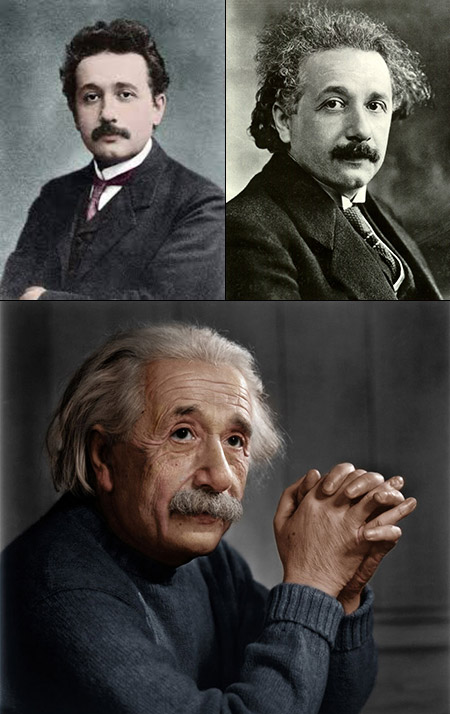
There have been a number of amazing human discoveries that have accelerated since the beginning of civilization in Mesopotamia. Humans like Einstein and their insight to the universe will be aided, not controlled, by the potential of A.I. Artificial Intelligence is no more a danger to humanity than the loss of craftsman during the industrial revolution. Civilization will either adapt to revelations coming from A.I. or environmental degradation or human stupidity will overtake humanity.

“IF ANYONE BUILDS IT, EVERYONE DIES” is an alarmist, and unnecessarily pessimistic view of the underlying value of Artificial Intelligence. This is not to suggest there are no risks in A.I. but its potential outweighs its risks.

THE WIZARD

Good luck and safe travels, if you have the time and inclination to visit, go see Dorothy and her companions in Dolan’s immersive theatre.

Travel

Written by Chet Yarbrough

The Sphere in Las Vegas is a must see when visiting Las Vegas.

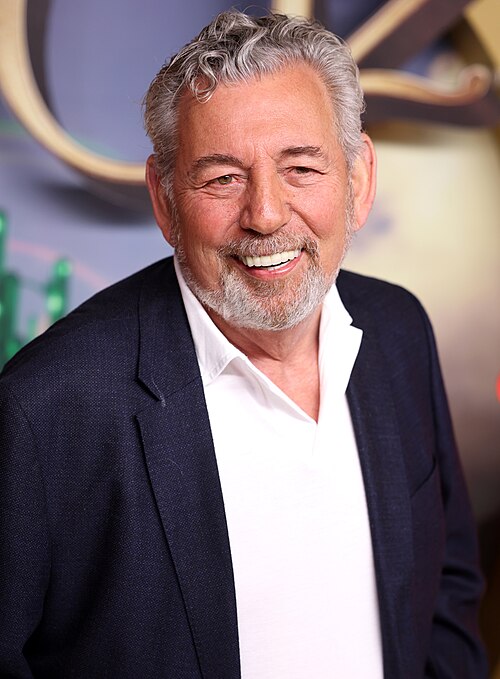
James Dolan, the executive chairman of Madison Square Garden Company, is credited with the idea of the Las Vegas Sphere.

James Lawrence Dolan (American businessman, supervisor of the New York Knicks, and New York Rangers, former CEO of cable vision, owns 70% of the voting power of the Sphere Entertainment Co., a publicly traded company.)

At the time of the Sphere’s construction in Las Vegas, there was concern about it ever being profitable. The cost of the Sphere exceeded expectations but Dolan’s vision and anyone who has visited the Sphere will be overwhelmed by its sensory impact and entertainment potential. In its first quarter of operation, a 98.4 million operating loss was reported. However, the reported revenue of the Sphere was $314.2 million in 2024 and its showed net inc9ome of $151.8 million in Q2 of 2025 after a previous year’s loss of an estimated $46.6 million.

The Wizard of Oz at the Sphere had mixed reviews when it first came out. We had visited the Sphere when it first opened with a World of life’ presentation. The Wizard was equally astonishing and entertaining.

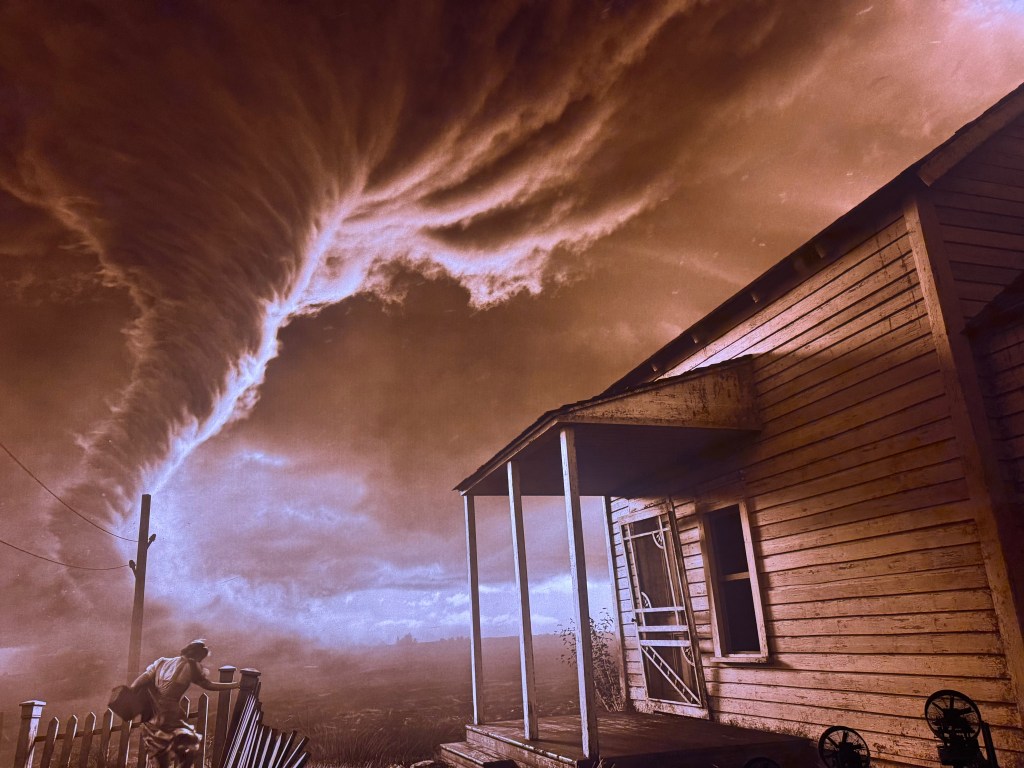
As the Sphere production introduces unforgettable characters like The Scarecrow, The Tin Man, and the Cowardly Lion, some fans will tear up with the joy of seeing them in the immersive qualities of the Sphere. Viewers will feel the wind of the storm as it sweeps across the Sphere’s dome.

The special effects are amazing. You feel the wind of the hurricane, catch a fake apple from a forest of talking trees that complain about travelers picking their apples, and feel the heat from a fire in the witch’s castle. This is a tour de force of the Sphere’s potential.

Good luck and safe travels, if you have the time and inclination to visit, go see Dorothy and her companions in Dolan’s immersive theatre.

TYRANNY

Arresting people based on their appearance without judicial review puts America on the slippery slope of authoritarian tyranny.

Opinion Page
 Website: chetyarbrough.blog

Chet Yarbrough

Today, the idea of Aryan endorses the absurd belief in white, Anglo-Saxon supremacy. Research shows a French aristocrat (de Gobineau), and a British-German philosopher named Chamberlain, defined Aryans as a superior white race.

However, there are many ideas and speculations revealed by the Durants’ history of civilization.

In the Durrants’ research, the word Aryan was originally used as a descriptive word for the Brahmin class in ancient India. The Durants noted the word Aryan in their history of civilization meant “noble” or “distinguished”. The criteria of India’s Brahmin class are reprehensible to one who believes in “equality of opportunity” professed by America but not practiced by Americans.

Class identity in ancient India does deny the truth of equal opportunity but not based on the color of one’s skin, but on ritual status, occupation, and social custom.

ICE’s accosting citizens because of the difference in the color of their skin is reprehensible. Of course, that has been the criteria for American Blacks before and after the Civil War.

Emigrant injustice is compounded by the failure to adjudicate immigration status before deportation.

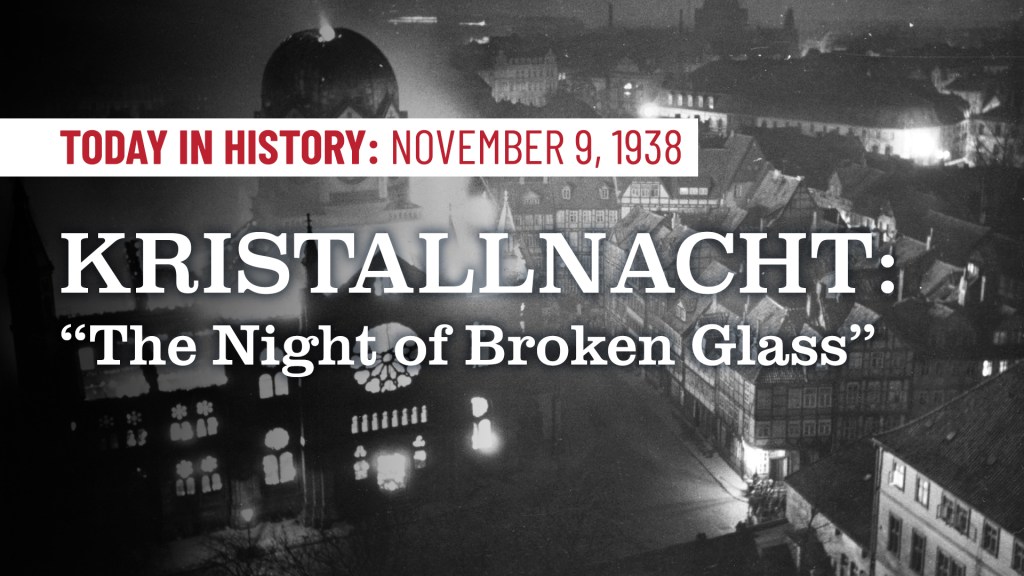
The Administration’s use of force is a reminder of Nazi Germany when Jewish German citizens were being rounded up for believed difference and/or opposition to the government.

This is a picture of the beginning of Jewish discrimination in Nazi Germany with broken windows of businesses owned by Jews.

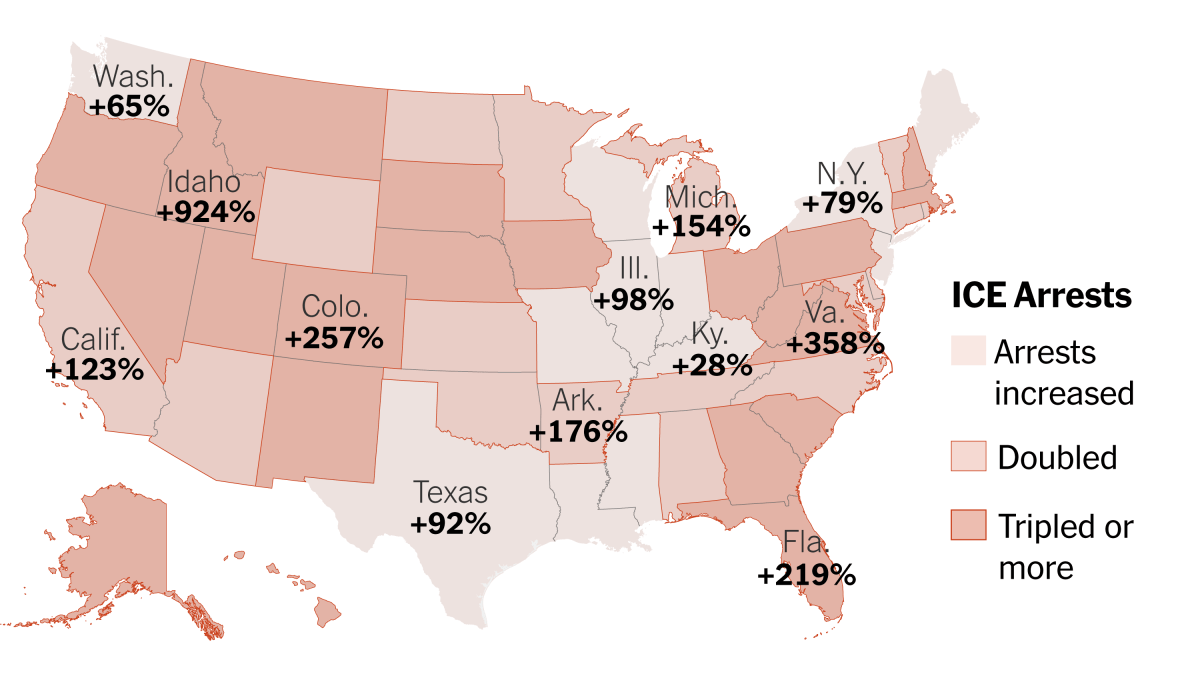
ICE arrests in America based on his non-white appearance.

Being able to easily identify difference based on physical appearance amplifies the probability of discrimination.

THREE ASIAN AMERICANS BRUTALLIZED IN 2025 BY AMERICAN RACISTS.

What has happened to the principle of “separation of powers” meant to provide a system of checks and balances on the Legislative and Executive branches of the American government? Have we abandoned Separation of Powers, Checks and Balances, power sharing between federal and state governments, the Bill of Rights, Judicial Review, and Electoral Safeguards? The idea of our Constitution is to stop a single branch of the government from dominating our system of government. Have we become a third world country? Today’s “NO KINGS” turn-out offers hope that others agree with the sentiment of this disappointed supporter of American Democracy.

Where is the Supreme Court in this injustice?

Arresting people based on their appearance without judicial review puts America on the slippery slope of authoritarian tyranny.

CIVILIZATION

Will Durant’s “…Story of Civilization…” is a fascinating view of history, but not a true measure of Western civilization’s origin.

Books of Interest
 Website: chetyarbrough.blog

Our Oriental Heritage: The Story of Civilization, Volume 1 

AuthorWill Durant

Narrated By: Robin Field

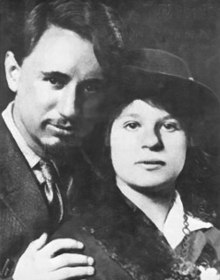
WILLIAM AND ARIEL DURANT (Historians, researchers and writers of philosophy. William is born in 1885, graduated from Columbia University with a PhD in philosophy and humanities in 1917, dies in 1981. Ariel is born in 1898, also dies in 1981 but aided William Durant with research and editing.

This 40 plus hour audiobook about the origin of civilization is a daunting undertaking but an interesting perspective. Will Durant was not an anthropologist, but he was an erudite historian, philosopher, and engaging writer with a wife that helped him research, edit, and organize his work. His story telling and philosophical beliefs are certainly challengeable because of the speculative nature of ancient artifacts and cultural interpretations of ancient civilizations. Durant cleverly interprets the political and sociological history of civilizations and their historical and religious beliefs. With the aid of his wife, Durant assigns meaning to those beliefs which are plausible but, at times, he either confuses correlations with causes or stretches one’s imagination too far.

The oversimplification of history.

Professor Goldin has written a history of migration that reminds one of the well-known phrases attributed to Socrates: “I know that I know nothing”.

Anthropologists suggest the Durants oversimplify the complex multi-generation development of human societies. Some agree that an Afro-Asiatic language evolved into other languages, but linguists suggest there are many sources of language that have little to do with a singular origin of language. In the same vein, there is skepticism about their analysis of religious beliefs coming from the East because their presumptions are too deterministic for Eastern beliefs’ correlation with Greek rationalism and Christianity. Like David Hume and Karl Popper advise, “correlation does not imply causation”. Some anthropologists argue the Durants romanticize ancient wisdom and ignore political and brutal realities brought by internecine and external wars. Further, unique societal events and discoveries change civilizations as readily as past knowledge and experience, e.g., like the classical physics of Newton, relativity of Einstein, and quantum mechanics of today.

Eastern civilization’s influence on the West is the subject of the Durants’ expansive story.

It is interesting that Durant chooses Eastern civilizations as a precursor of Western society. That seems plausible based on early humans moving from Africa to eastern shores. He presumes the purpose, goal, and end results of Western society originated in Eastern cultures. Some anthropologists question belief that Western cultural beliefs evolved from Eastern cultures, but Durant argues foundational cultural, intellectual, and technological advance originated in Mesopotamia, Egypt, India, and China; long before the West is populated.

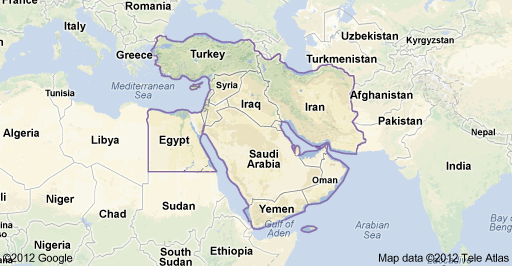
The Red Sea and a Peninsula that connects Africa to the East.

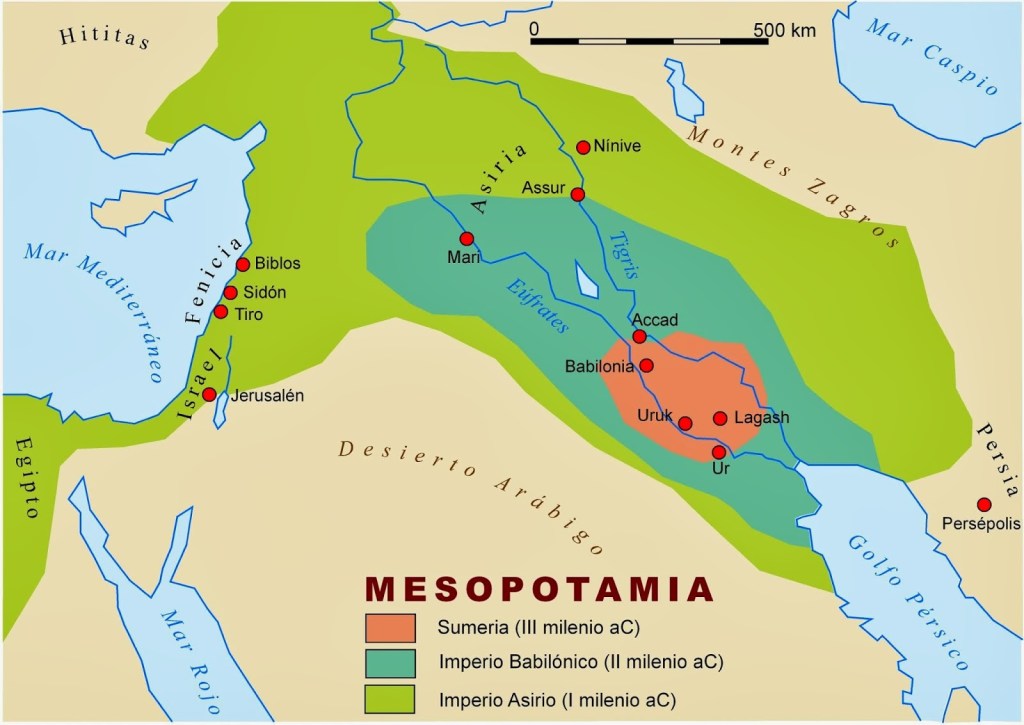
With the origin of human life in Africa, Durant suggests human beings crossed the Red Sea or the peninsula to the continent of Asia to settle the fertile lands of Mesopotamia. The Durants argue early humans developed the Afro-Asiatic Semitic language that evolved into Arabic, Aramaic, Amharic, and Hebrew dialects for Akkadian, Arab, Aramean, Israelites, Phoenician, Moabite, and Ethiopian peoples. Mesopotamia became known as “The Fertile Cresent” and the “Cradle of Civilization”.

Mesopotamia contains the future nation-states of Iraq, Syria, Lebanon, Israel, Palestine, Jordan, Egypt, southeastern Turkey and western Iran.

Durant is criticized for human life’s romanticization, generalization and simplification. His critics argue civilizations’ complexity and societal conflicts are not adequately supported by his opinions and research. Some suggest too much of his opinion is based on secondary sources rather than field work. These are reasonable criticisms, but they do not diminish one’s fascination with his interpretations of others’ field work and opinions. Durant offers an interesting and entertaining story of civilization, but his opinions are only partly right.

The fundamental argument of Durant’s view of civilization is that intellectual, religious, and technological innovations of Eastern societies are foundational beliefs of Western society.

The Durants argue that writing systems, legal codes, mathematics, and religious thought in the West came from the East, i.e. to Durant, the roots of Western thought, governance, philosophical belief, and culture had Eastern origins. Durant’s threads of connection between East and West are not wrong but misleading. Correlation is not proof of causation. If one sees ice cream sales are up and drowning incidents are down, one is obviously wrong to conclude eating ice cream would reduce one’s chance of drowning.

One can believe Eastern culture developed before Western culture because of proximity. To Africa. However, the advance of civilization is not linear. It seems a stretch to believe the East’s civilization laid the foundational beliefs of the West because they are distinctly different because of independent experiences. An African human is not an Asian person just as an Asian person is not a Greek, German, Frenchman, or American. Philosophical, political, and artistic innovations are arguably derivative, but genius offers origination and revolutionary changes in civilizations. Agriculture may have begun in Asia but to infer industrialization is a furtherance of Eastern civilization is as wrong as saying Quantum theory is the furtherance of Western civilization. Civilization is too complex to be characterized as a linear process.

Will Durant’s “…Story of Civilization…” is a fascinating view of history, but not a true measure of Western civilization’s origin.

GENDER INEQUALITY

“Betraying Big Brother” is not wrong about gender inequality but the author’s anger and personal choices cloud the author’s message. Gender inequality is real everywhere in the world. Education is a beginning, but practice is the end.

Books of Interest
 Website: chetyarbrough.blog

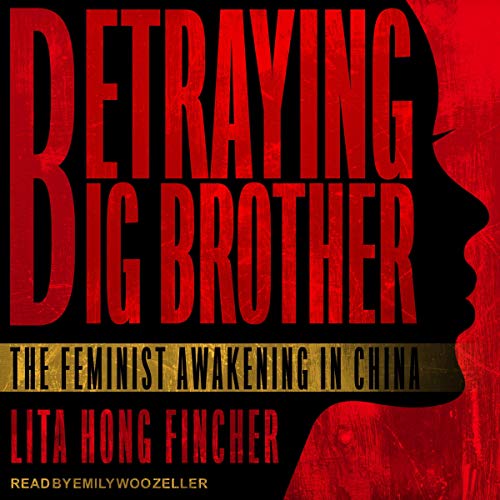
Betraying Big Brother (The Feminist Awakening in China)

AuthorLeta Hong Fincher

Narrated By: Emily Woo Zeller

Leta Hong Fincher (Author, American journalist, feminist and writer, first American to receive a Ph.D from Tsinghua University’s Department of Sociology in Bejing., graduated from Harvard with a BA and a master’s degree in East Asian Studies from Stanford.)

The education and experience of Leta Hong Fincher is somewhat betrayed by her anger in “Betraying Big Brother”. Misogyny is an international reality that defies the truth of human equality. This reviewer’s prejudice, like the author’s biases are suspect because of their respective life experiences. This book reviewer was raised by a single parent mother who worked to keep two sons with a roof over their head and food on the table. How women survive inequality is made of the same stuff as that which plagues minorities around the world. The difference is that women are not a minority.

She writes of being a 15-year-old girl who is physically and emotionally abused by two boys who are friends of an older male friend that takes her to a get together of young acquaintances. That event burns a memory into Fincher’s mind that sets her on a journey thru life. One reading/listening to “Betraying Big Brother” recognizes the truth of what the author writes is reinforced by her life experiences. Of course, that is true of all human beings, but anger diminishes the impact of what Fincher says and writes.

Leadership?

Whether living in a democracy or autocracy, sexual inequality is present. Gender discrimination is universal. America and China talk the talk but fail to walk the walk. Fincher writes of Mao’s saying that “women hold up half the sky” implying he believed in gender equality. Mao spoke of marriage reform and labor participation but patriarchal norms were adhered to with women workers not being paid the same as men nor offered similar positions of power.

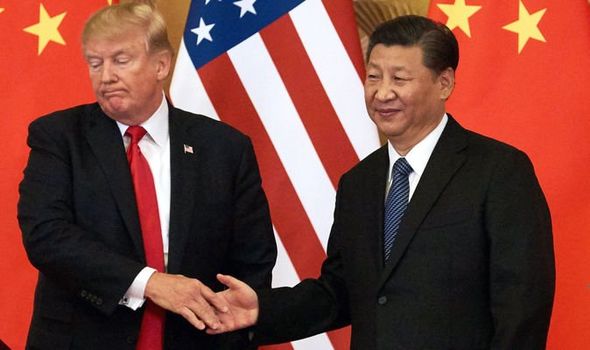
Xi speaks of gender equality, but no women are on the 24-member Politburo.

Xi also speaks of gender equality, but no women are on the 24-member Politburo while pay and promotions lag behind men. Fincher writes of Big Brother censorship, surveillance, and detention of women in China. (One presumes that is also true of everyone in China.) Like Trump, Xi promotes women’s roles in domestic stability, and their childbearing responsibilities. America has yet to elect a woman as President. Equal pay for equal work is improving in America, but a gap still exists with lower starting salaries, performance evaluation biases, and fewer high-profile assignments or promotions.

“Betraying Big Brother” is not wrong about gender inequality but the author’s anger and personal choices cloud the author’s message. Gender inequality is real everywhere in the world. Education is a beginning, but practice is the end.