Black America is not liberated by the Civil War. Neither will the Russians or Ukrainians be liberated by whichever side wins. There are no winners. There is only death and destruction as evidenced by the tragedy unfolding in Gaza.
Books of Interest Website: chetyarbrough.blog
How to Dodge a Cannon Ball (A Novel)
Author: Denard Dayle
NarratedBy: William DeMeritt
Denard Dayle (Author, Jamaican-American writer, graduate of Princeton with an MFA from Columbia University.)
The central character in Denard Dayle’s novel is Anders. Anders is a light skinned Black soldier in the American Civil War. He begins as a Confederate and escapes to become a Union soldier as a Flag carrier. The author’s story is tedious and a mess, but it reflects the many conflicts among Americans fighting in the Civil War. The bizarre happenings in Dayle’s story are meant to be satirical with a bite but with so many twists in ideas about race, nationalism, gender, and the history of the war that one is inclined to put the book down. One may soldier on with a hope to understand Dayle’s point.
America’s Civil War.
After listening to “How to Dodge a Cannonball” for several hours, one gathers Dayle’s point is to show the complexity of America’s Civil War and what it means to be an American. The absurdity of all wars is revealed in America’s Civil War contradictions and hypocrisies. There are many, some of which are uniquely about civil wars, but also about every war.
In fighting a civil war for freedom in America, governments deny freedom to both sides of the conflict.
In fighting a war of conquest like that in Ukraine, both the aggressor and defender nations equally deny freedom to their citizens. Dayle shows race, gender, and nationality make little difference in who loses their freedom when war is declared. Black America is not liberated by the Civil War. Neither will the Russians or Ukrainians be liberated by whichever side wins. There are no winners. There is only death and destruction as evidenced by the tragedy unfolding in Gaza.
Dayle makes his point, but the story becomes too repetitive and tiresome for this listener/reader who quits the book before its ending.
Technology is a key to social need which has not been well served in the past or present and could become worse without pragmatic accommodation.
Books of Interest Website: chetyarbrough.blog
Daughters of the Baboo Grove (From Chian to America, a True Story of Abduction, Adoption, and Separated Twins)
Author: Barbara Demick
NarratedBy: Joy Osmanski
Barbara Demick (Author, American journalist, former Beijing bureau chief for the Los Angeles Times.)
This is a brief and fascinating historical glimpse of a government policy gone awry. Like America’s mistaken policies on immigration, Barbara Demick’s story of China’s one-child policy traces the effects of government overreach. Demick tells the story of a rural Chinese family who births twin sisters during the time of China’s unjust enforcement of their one-child policy. One sister is abducted by Chinese government officials, and is adopted by a family in Texas. The ethics of an inhumane Chinese government policy and the perfidy of free enterprise are exposed in Demick’s true story of two children’s lives.
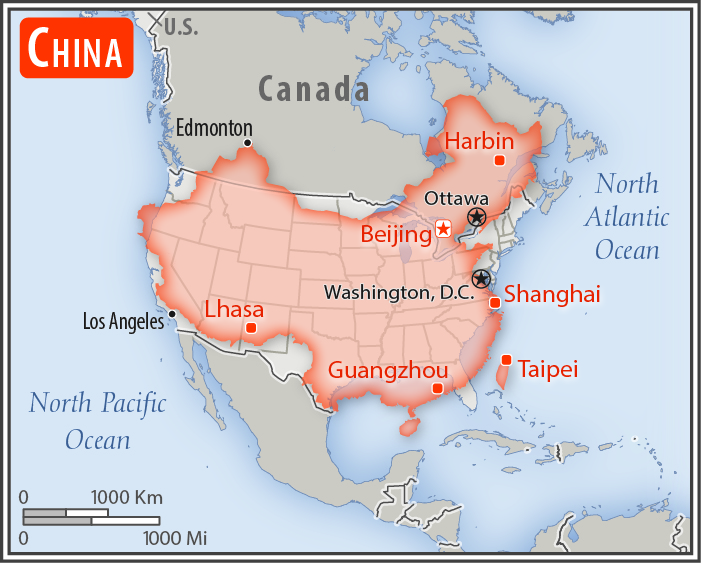
The territorial size of China in respect to continental America.
China’s one-child policy leads to a Chinese criminal enterprise to capitalize on kidnapping and selling children born to families that could not afford the fines for having more children than the law allows. Undoubtedly, most children born were cherished by their parents, but the hardship of life and human greed leads to unconscionable human trafficking. Kidnapping became a part of a legal and criminal enterprise in China. Government policy allowed bureaucrats and scofflaws to confiscate children from their parents and effectively deliver or sell children to orphanages or people wanting to adopt a child. Demick recounts stories of grieving parents and grandparents that cannot get their children back once they have been taken.
Child trafficking, broken families, loss of personal identity, human shame, and the immoral implication of other countries interest in adopting children are unintended consequences of a poorly thought out and implemented government policy.
Demick becomes interested in this story because of a message she receives from a stepbrother of an adopted Chinese sister that has a twin that lives in China. Because of Demick’s long experience in visiting and reporting on China, she had a network of people she could call. Using adoption records, Demick is able to find the Texas stepsister who had been kidnapped when she was 22 months old. She was trafficked to an orphanage in the Hunan Province of China. Years later, through messaging apps, the twins communicated with each other and shared their photographs. They eventually meet in China in 2019.
One is hesitant to argue a government policy is a unique act of China when every government makes policy decisions that have unintended consequences.
America’s policy decisions on immigration are a present-day fiasco that is as wrong as the one-child policy in China’s history. The one-child policy is eventually rejected by the Chinese’ government but Demick’s book shows how bad government policy has consequences that live on even when they are changed by future governments. America’s policy on immigration will be eventually reversed but its damage will live on.
Getting back to the story, Demick is instrumental in having the mother of Esther (aka E) and the twins meet in China.
One is hesitant to argue a government policy is a unique act of China when every government makes policy decisions that have unintended consequences. The twins are initially reticent but warm to each other in a way that bridges the cultural and language divide between the sisters. The two mothers see their respective roles in their daughter’s lives. E and her identical twin, Shuangjie, are reserved when they meet because of the cultural distance that was created by E’s adoption.
E. appears more confident than Shuangjie who is more reserved and less assured.
However, Demick suggests they seem to mirror each other in subsequent meetings. One feels a mix of emotions listening to this audiobook version of “Daughter’s of the Bamboo Grove”. They have grown up in different environments but seem to have been raised in similar economic circumstances, though the two economies are vastly different in income per household, the two appear to be raised in similar economic classes.
Every person who reads/listens to “Daughter’s of the Bamboo Grove” can view the story from different perspectives.
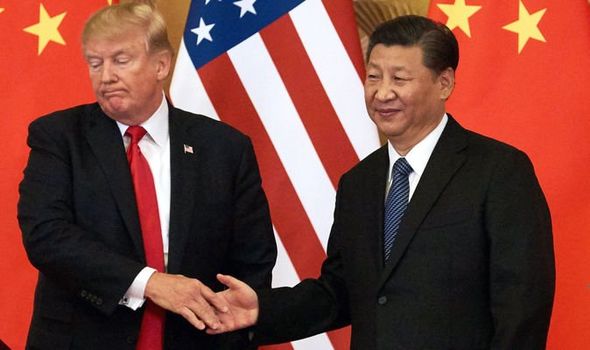
There is the perspective of identical twins raised in different families, cultures, and histories. How are identical twins different when they are raised by different parents and in different cultures? Another perspective is that Xi and Trump have had dramatic effects on the societies their policies have created. The Twin’s meeting in 2019 is one year after my wife and I had visited China. Xi had become President after his predecessor began opening China’s economic opportunities. Two incidents on the trip when Xi had become President come to mind. The first is the feeling one has of being monitored everywhere and the internet restrictions when used to ask questions. The second was an incident in a crowded Chinese market when I was approached by a beefy citizen who raised his arms and seemed to be angrily talking to me in Chinese which I sadly did not understand. The distinct impression is that I was not welcome. This was a singular incident that did not repeat in our 21-day tour, but it seemed like an expression of hostility toward America.
This listener/reader thinks of the unintended consequences of Trump’s treatment of alleged illegal immigrants.
Trump’s immigration policy is similar to China’s earlier mistake with the one-child policy. America’s, China’s, and Japan’s economies are highly dependent on youth which is diminished in two fundamental ways. One is by public policy that restricts birth, and the other is immigration. Freedom of choice is a foundational belief in democracy while considered a threat in autocracy. In America today, it seems there is little difference between America, Japan, or China in regard to government policy that threatens the future. All have an aging population that can only be aided by younger generations. Even though manufacturing may become less labor intensive, public need in the service industry will grow. Technology is a key to social need which has not been well served in the past or present and could become worse without pragmatic accommodation.
Many soldiers and victims of war are teenagers, coping with life and death on a daily basis. They wonder, what is the point? We who sit on the sidelines because of age, agnosticism, or an unfettered life read or write about war as though it is just a story.
Books of Interest Website: chetyarbrough.blog
Beaufort (A Novel)
Author: Ron Leshem
NarratedBy: Dick Hill
Ron Leshem (Author, born in 1976, recieved Sapir Prize, a top literary award in Israel, his book, Beaufort, is turned into a movie and is nominated for an Academy Award.)
Ron Leshem’s book “Beaufort” helps one understand why the idea of Gaza becoming a Palestinian state is anathema to a majority of Israeli citizens. Beaufort is located in southern Lebanon, on the border of Israel. In the 1970s Beaufort was used by the PLO as a base for operations against Israel. In 1982 Israeli forces capture Beaufort and it became an operating base for defense of Israel until their withdrawal in 2000. Lesham served in the intelligence corps during the time of the fight for control of Beaufort. He was not directly involved in the fighting but had an intimate understanding of the conflict. What “Beaufort” makes clear to Americans who are ignorant of what it is like to live in a country surrounded by militant minorities who wish to obliterate Israel.
Israel has a right to its existence on Israeli lands based on its ancient occupation of the land in 1200 BCE.
The proof of early occupation of Israel by Jews is in an inscription on a 1209 BCE Egyptian’ Merneptah Stele, a black granite slab. Though they were a tribal community, they had a form of governance that pre-dates nation-state development. Though one may argue Palestinians had lived in the lands of Israel since the 7th century, they were late comers to the land. The Palestinians were a nomadic Arab population that came nearly 600 years after settlement by the Israelites. The point made by the story of “Beaufort” shows why no rational human being would want another hostile haven for antisemitic opposition to Israel as a legally recognized nation-state.
“Beaufort” shows the human and psychological toll of an unjustified “forever war” conducted by two militant factions in Arab nations surrounding Israel.
Hamas and Hezbollah are two militant Islamist organizations deeply committed to destroying Israel and creating an Islamic state in the territory known as Isreal and Gaza. In 1947, a UN partition plan between Palestine and Israel was proposed but Arab leaders rejected it, while Israel accepted it. One can consider the history of the lands’ longer occupation by Jews of the holy land and Palestinians and wonder why partition was rejected by the Arabs.
The conflict revealed by “Beaufort” is a message to the world about life in Israel. Warfare is a fact of life for those who choose to live in Israel. Soldiers become disillusioned about why they are at the frontlines of an irreconcilable conflict. Kill or be killed becomes the mantra of their lives at the front. Unquestionably, it does have something to do with ideology or religion. How many soldiers and victims of war are teenagers, coping with life and death on a daily basis? Some must wonder, what is the point? We who sit on the sidelines because of age, agnosticism, or an unfettered life read or write about war as though it is just a story. It is not a story to Israelites or Palestinians. It is living life when surrounded by others who want to kill you.
Both Trump and Putin are wrong in trying to return America and Russia to their past. What one presumes from Nye’s lectures is that a threat of millions of lives being lost from nuclear war will actually result in a gorilla war in territory unjustly ceded to Russia by Ukraine.
Books of Interest Website: chetyarbrough.blog
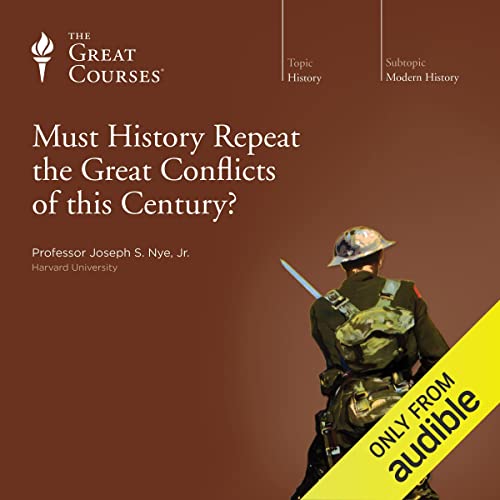
Must History Repeat the Great Conflicts of This Century?
Lecturer: Joseph S. Nye Jr.
By: The Great Courses
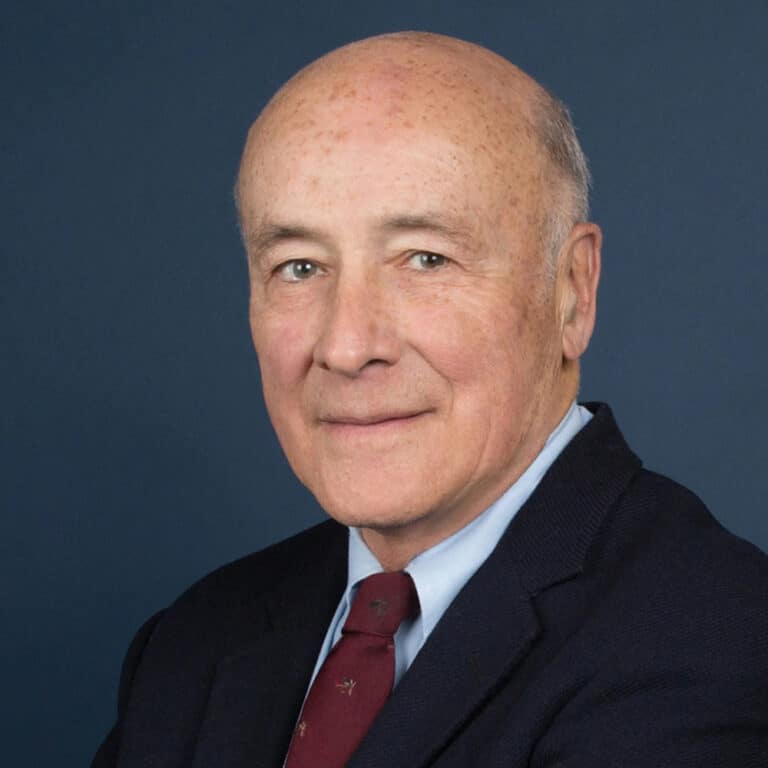
Joseph Nye Jr. (1937-2025, Distinguished Service Professor Political Scientist at Harvard Kennedy University.)
In listening to Joseph Nye Jr.’s history of “…Great Conflicts…”, one thinks about similarities between leadership of Russia and America today. Both Trump and Putin believe in strong executive leadership and appear to have a political base that allows Putin to exercise dictatorial power and Trump to bypass traditional bureaucratic limitations on government power. Both Putin and Trump believe in their countries moral and economic superiority and are trying to return their nations to the twentieth century. As leaders of their countries, they have influenced media support of their ambitions through influence and the creation of conspiracy-driven narratives.
Joseph Nye’s lectures suggest history is only a guide to the future, not a prediction.
Nye explains circumstances of the present are never exactly the same as the past. Every war of the past is based on complex causes that are never precisely the same. The world wars and the cold war developed as a result of specific government’ diplomatic, operational, and international circumstances. Nye explains why two world wars were about balance of power that changed with WWI and were refined by WWII. The German, Austro-Hungarian, and Ottoman empires collapsed after WWI. With the defeat of Hitler, Nye infers WWII is a failed effort to reestablish the German empire.
Listening to Nye’s view of history, makes one think of Putin’s and Trump’s maneuvering in the 21st century. Both leaders are trying to recreate a balance of power with America strengthening its position and Russia reestablishing its role among the top three powers. What gives weight to that view is Russia’s invasion of Ukraine, China’s wait and see attitude, and Trump’s foolish antagonism toward its traditional western allies in the belief that it strengthens America. Trump seems ignorant of history by failing to recognize America’s power is hugely benefited by its close relationship with Great Britain and North America. To antagonize England, Canada, and Mexico with tariffs and the NATO alliance with complaints about unequal financial support reduces America’s power and influence.
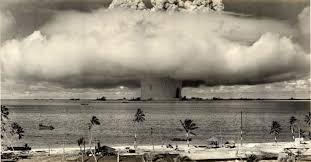
Today, nuclear war is a different circumstance upon which every government leader recognizes as a fundamental change in the principle of “might makes right”.
One sees that Trump’s hostile confrontation with Zelenskyy on television is an expression of America’s leadership fear of nuclear war. Putin threatens nuclear retaliation, but threats are not actions. Putin continues his conventional war against Ukraine and Trump pressures Putin to end the conflict with limited support of weapons for Ukraine and implied willingness to agree to Putin’s demands for annexation of some part of Ukranian territory.
Nye’s lectures do not say history repeats, but he warns it can have similar results without careful analysis and strategic foresight by government leaders.
However, Trump and his advisors appear ignorant of the lessons of history noted by Professor Nye. America and Russia think they have a choice in how the war in Ukraine can be brought to an end that will bring peace. The truth is that peace is only a Hobson’s choice where there is only one option. Trump sees the possibility of millions being killed from a nuclear war. Putin sees the possibility of gaining territory from Ukraine with potential loss of rule as President of Russia. Zelenskyy and Putin have the illusion of choice while the international community and America will likely make the decision.
WWIWWII
Both Trump and Putin are wrong in trying to return America and Russia to their past. What one presumes from Nye’s lectures is that a threat of millions of lives being lost from nuclear war will actually result in a gorilla war in territory unjustly ceded to Russia by Ukraine. Russia will lose more than it gains just as it did in Afghanistan.
Benjamin Franklin was no saint. He was a pragmatic, diplomatic, and intelligent politician who believed in improving himself, being honest in his relations with others, and determinately set on leaving a legacy of diplomatic accomplishments that (unlike our current government leaders) was intent on truly making America great.
Books of Interest Website: chetyarbrough.blog
The Completed Biography of Benjamin Franklin
Author: Mark Skousen
NarratedBy: Richard Ferrone
Mark Amdrew Skousen (Author, economic analyst for the CIA from 1972-1977, is considered a political conservative, a distant descendant of Benjamin Franklin.)
Though the history of Benjamin Franklin is “well plowed” ground, Mark Skousen assembles Franklin’s original papers on his intended biography to give a fascinating portrait of perhaps the greatest American patriot in our history. Franklin’s role in America’s independence from Great Britain is perfectly explained in Skousen’s review of Franklin’s intended autobiography. The many offices that Franklin assumed in pre- and post-revolutionary times are evidence of his patriotism and importance.
Benjamin Franklin (1706-1790, died at the age of 84.)
Franklin served as a member of the Continental Congress from 1775 to 1776. He was the President of Pennsylvania from 1785 to 1788. His diplomatic roles were as Commissioner to France from 1776-1778, Minister Plenipotentiary to France from 1779 to 1785, and Peace Commissioner who negotiated the Treaty of Paris ending the Revolutionary War and establishing American independence. These formal posts fail to mention his great role in representing America to the British throne while sailing to England before the revolution.
Thomas Penn (1702-1775)
It is ironic that Franklin became the President of Pennsylvania in 1785 when he had challenged the Penn family’s proprietary control over Pennsylvania territory given to the Penn family by the King of England.
The Penns refused to allow taxation of their estates in the colonies. Franklin met with Thomas Penn and wrote a paper saying the Penns prevented governors from using discretion in the management of the Pennsylvania colony, refused colonists right to raise funds, and would not accept taxation on their properties. Though Franklin did not legally represent the colonies, he galvanized opposition and created groundwork for colonial autonomy. He became known as the “defender of colonial rights”.
Franklin’s biography explains how he became widely known in England, France, and the colonies.
In 1773, two Massachusetts’s colonial government letters were published at the direction of Franklin that exposed British officials’ promotion of restrictions on the colonies’ liberties. Franklin had been appointed Postmaster General in America, authorized by England, but was discharged for having published those inflammatory letters. Franklin wrote several satires mocking British colonial policies. He opposed the Stamp Act while becoming a representative of Pennsylvania, Massachusetts, Georgia, and New Jersey in London.
Benjamin Franklin’s experiment.
Despite Franklin’s opposition to England’s infringement on colonial rights, he was celebrated in England’s scientific community. He received the Copley Medal for his experiments with electricity and a fellowship in the Royal Society. William Strahan, one of England’s printers who was an MP, and the famous William Pitt sympathized with Franklin’s explanation of the colony’s grievances. On the other hand, growing anger from England’s parliamentarians required Franklin to escape arrest in England in 1775.
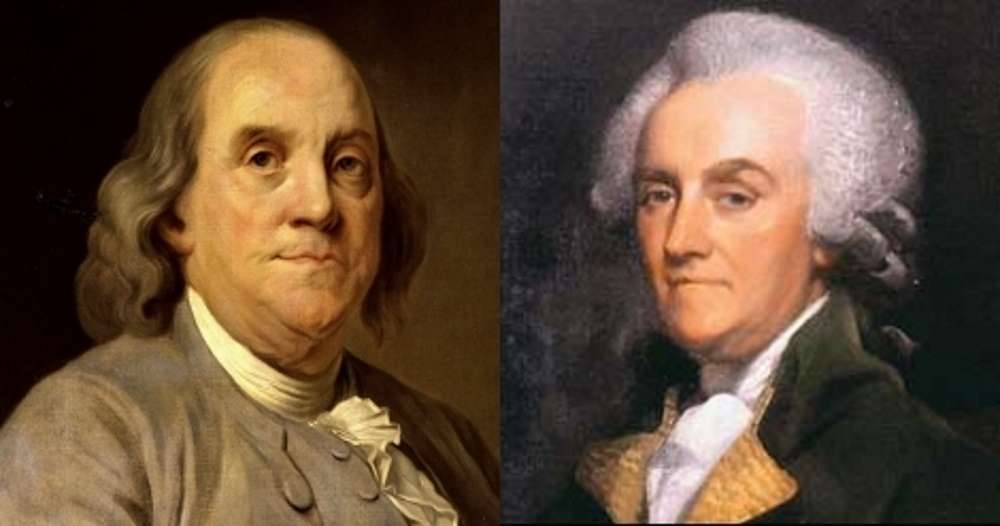
Benjamin and William Franklin
To show how torn colonist’ families are about the colony’s declaration of independence, Franklin’s son, “Billy”, actually William Franklin, is noted in his father’s diary and writings to have chosen to take the British side of the conflict. William had served as the Royalist’s Governor of New Jersey. He was appointed with the help of his father’s influence in London. William refused to join the Patriot cause and was imprisoned from 1776 to 1778, and later, exiled to Britain where he lived until the end of his life. It appears Benjamin and William never reconciled and never saw each other again. Benjamin Franklin dies at the age of 84 in 1790 while his son Willaim passes at the age of 83 in 1813.
Symbol of the Colonys’ fight for independence.
Some interesting notes are in Franklin’s diary about symbols of the war of independence. In 1754, Franklin published the cartoon of a snake emblazoned with 13 skin segments with a message “Join or Die” It was originally designed for the French and Indian War but became a symbol of the colonies fight for independence from Britain. In contrast, Franklin opposed the eagle as a national emblem and preferred the turkey. To Franklin, the eagle was a bird of bad moral character while the turkey, in his opinion, represented “a more respectable bird”. This is a surprise to many who revere the eagle as America’s symbol of independence, strength, and elegance today.
Franklin is considered wealthy at the time of his death.
In today’s dollars, Franklin’s wealth may be estimated at 10 to 90 million dollars. He had created a printing empire with “The Pennsylvania Gazette” and “Poor Richard’s Almanack” and used his presses to print books, pamphlets, and even currency. He licensed lighting rods to minimize building destruction from lightning strikes and provided heat to colonist’s homes with the Franklin stoves. He had rental properties in Philadelphia and speculated on western land purchases. He received compensation for his diplomatic and government service as Postmaster General. Franklin showed himself to be frugal putting money aside to receive compounding interest on its principle. He preached and practiced the adage, “A penny saved is a penny earned”.
Deborah (Read) Franklin, Benjamin Franklin’s wife.
Benjamin Franklin notes his wife’s name is Deborah Read. She dies in 1774 at the age of 66 from a series of strokes. Her health declined as Franklin’s diplomatic service in England and France took him away from home. When she suffered from a series of strokes, his voyages to Europe kept him from returning immediately. He returned in 1775, and Franklin was buried beside her in 1790.
Franklin’s self-written biography shows him to be charming and flirtatious with an appreciation of women.
Franklin’s flirtations with Brillon and Helvétius connected Franklin to influential French society, helping him secure support for the American cause. Ms. Brillon is in her 30s while Franklin is in his 70s. Another French lady is Madam Helvétius is in her mid-60s. Franklin proposes marriage to which she declines. It seems there is more smoke than fire in regard to Franklin’s illicit liaisons in France. However, he does admit to some youthful indiscretions with women of challenged reputations when he is younger.
Benjamin Franklin was no saint. He was a pragmatic, diplomatic, and intelligent politician who believed in improving himself, being honest in his relations with others, and determinately set on leaving a legacy of diplomatic accomplishments that (unlike our current government leaders) was intent on truly making America great.
How could America expect to occupy Iraq for a mere 8 years and 8 months and resolve cultural differences? It could not and did not.
Books of Interest Website: chetyarbrough.blog
The Iraq War
Author: John Keegan
NarratedBy: Simon Vance
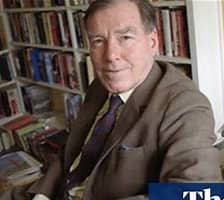
John Keegan (Author, 1934-2012, English historian, lecturer, and journalist died at age 78. A recognized authority on warfare.)
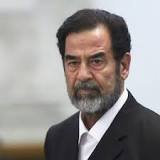
John Keegan reflects on the history of Iraq with an analysis of the rise and fall of Saddam Hussein. With the collapse of the Ottoman Empire in 1922, British control of Baghdad, Basra, and Mosul led to the formation of Iraq by the League of Nations under the supervision of the British. Great Britain offered nation-state independence to Iraq in 1932. Keegan explains early Iraqi leaders failed to centralize control of the newly formed country of Iraq. He argues that failure allowed an authoritarian, unscrupulous, and brutal leader named Saddam Hussein to take control of the country from Ahmed Hassan al-Baker in 1979. Saddam used fear, violence, and murder to eliminate rivals to create a cult of personality that made him look strong and defiant in the eyes of his countrymen and the world.
Saddam Hussein (1937-2006)
Keegan argues Saddam instinctively combined his brutality with the pragmatism of “might makes right” to take control of Iraq’s fragmented leadership. Not since Hitler, Keegan suggests, has a leader managed to combine tyranny with fear to take command of a nation. Saddam magnified regional instability and created international disorder with ruthless brutality, reinforced by a military that chose to follow him out of fear and reward that is gathered from rapine.
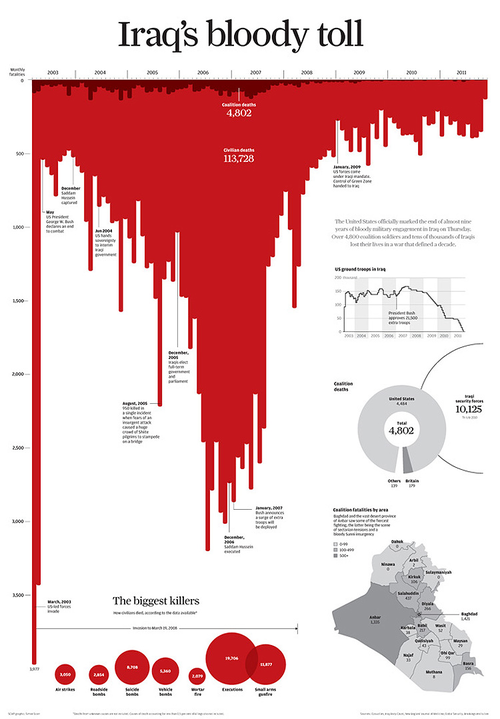
Iraq death statistics.
Keegan explains Saddam maintains his position through force but ultimately loses it because of his brutal rule, lies, and poor judgement. Saddam dramatically murders or tortures political rivals to create fear among Iraqi citizens and military henchmen who fear his rath. He initiates a war with Iran in 1980 with the intent of toppling the Shah because he viewed him as a threat to his regime. His plan was to install the Ayatollah Khomeini which seems counter intuitive in view of Khomeini’s religious zealotry; particular considering Saddam’s earlier offer to assassinate him while he lived as an exile in Iraq. Keegan implies Saddam’s decision to support Khomeini as Iran’s leader is similar to the lie Saddam creates about Kuwait slant-drilling into Iraqi oil fields to steal billions in oil. One doubts he ever intended to promote Khomeini to rule Iran. As history shows, the majority of the international community did not believe Saddam’s lie about oil theft and were opposed to Iraq’s invasion of Kuwait. A disastrous and unresolved eight-year war was fought with Iran and eventually Saddam lost any significant support for occupation of Kuwait.
Saddam rules Iraq for nearly 24 years. One wonders how he ruled as long as he did, just as many Americans wonder how Trump could be re-elected by a majority of American voters.
Considering Saddam’s poor judgement in regard to Khomeini’s power and his belief that Iraq could take over another country without international opposition shows how deluded a dictator can be. Keegan suggests Saddam made too many miscalculations. First among them is the weaknesses he created by presuming that fear of him among his own military force would maintain support of Iraq’s 400,000 soldiers. Saddam is essentially abandoned by his military leaders when Iraq is confronted by an international force to oppose Iraq’s invasion of Kuwait (73% were American soldiers but 34 other countries participated). Not surprisingly, bridges were not destroyed by Saddam’s military as they retreated, and Saddam’s military leaders abandoned their posts.
Keegan explains Saddam’s fall came from a collapse of the illusions, fears, and myths that surrounding his rise to power.
One wonders if the same may happen in Iran in the 21st century. It seems dependent on Iranian people deciding on whether the governance Khomeini insists upon is illusory and the fear Khomeini’s ordered murders, incarcerations, and beliefs have alienated enough Iranian citizens. Because Iran’s governance may be more about religious belief and integrity rather than arbitrary rule, one becomes skeptical. Iran may remain as it is but with a new religious ruler.
Keegan tries to explain America’s mistakes in Iraq without being too partisan.
Keegan offers a clear understanding of Saddam’s rule of Iraq. America made many mistakes because of not understanding the culture of Iraq and presumed their culture would accept Americanization. Tribalism scented with religion exists in Iraq. Without engaging that reality, America could not constructively influence change. The dismantling of Iraq’s military negatively impacted a critical infrastructure that understood the indigenous culture and may have aided American influence in Iraq. By ignoring the dignity of the Iraqi people and the importance of tribe loyalties and religious beliefs, America stubbled through years of destructive occupation. Other authors have noted how tribalism influenced how Iraqi informers had their own agendas for accusing Iraqi tribes of fomenting conflict. Iraq unraveled into insurgency and chaos from which it is still trying to recover.
It has taken nearly a quarter of a century for American government to begin healing the relationship between Indians and 1776 settlers of this country. The possibility of changing Iraqi society in a less than 10 years seems unlikely and, for that matter, inappropriate. Cultural difference is not a disease.
Change is difficult and nearly impossible when cultural differences are not clearly understood and taken into account when a foreign country occupies a native country’s territory. How could America expect to occupy Iraq for a mere 8 years and 8 months and resolve cultural differences? It could not and did not.
All gender differences beyond women’s birth of children seem more culturally than naturally determined. Gender does matter but not because of inherent qualities but because of cultural influences.
Books of Interest Website: chetyarbrough.blog
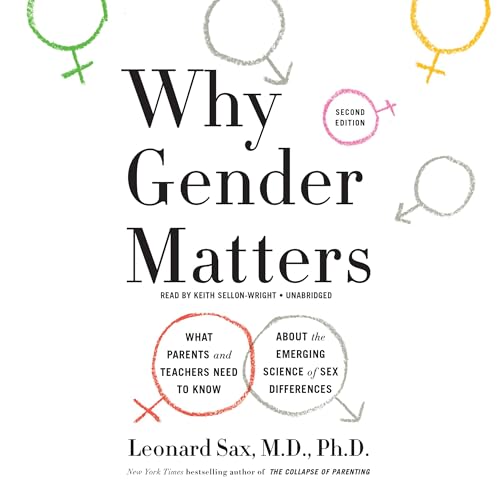
Why Gender Matters (What Parents and Teachers Need to Know About the Emerging Science of Sex Differences)
Author: Leonard Sax MD PhD
NarratedBy: Keith Sellon-Wright
Leonard Sax (Author, psychologist and family physician, graduate of MIT and the University of Pennsylvania.)
After listening to Sayaka Murata’s satire about gender differences and a future that minimizes the differences between males and females, one may wish to read/hear what a physician writes about gender and why difference matters. In listening/reading Doctor Sax’s book, this review is somewhat skeptical of his judgement about gender differences. Having been raised by a single parent, some of what he claims seems formulaic and based on weak evidence.
Gender differences.
Though Dr. Sax cites studies that support stereotypes of girls who are less inclined to pursue math and science, it seems impossible to separate acculturation from gender bias. One wonders if his opinion is not influenced by his own gender. As is true of all human judgements, we have a tendency to conflate correlation with causation.
Whether there is a direct relationship between two variables like gender and one’s potential in science or math may be culturally reinforced rather than intellectually adduced.
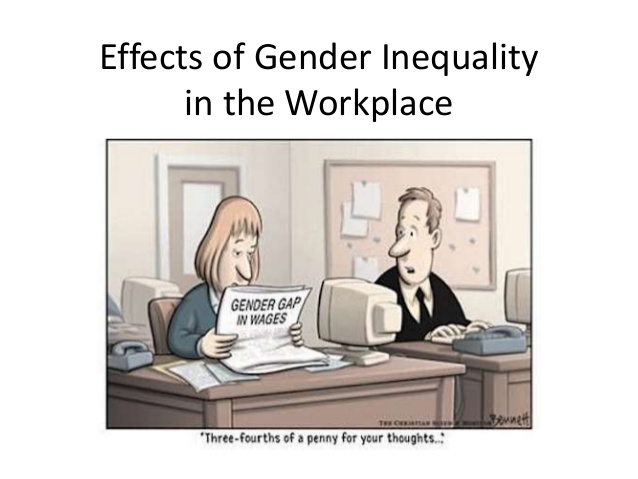
There may be some truth in gender difference based on women giving birth that naturally induces a more nurturing requirement for women than men. The fact that women bare children and traditionally take on the role of caregiving suggests a cultural as well as gender driven characteristic. Inequality of the sexes is well documented by numerous studies that show women are paid less for the same work done by men. Unequal pay has nothing to do with biology.
Gender difference.
It is economic and social circumstance that limits women’s potential. The question becomes whether a woman would run a business any differently than a man based on gender. One might believe women who have given birth may manage differently because of their experience as nurturers of early life. Why else, if education and intelligence are similar, would there be any difference between a woman or man who manages others?
Though most humans wish to be part of something greater than themselves, the shaming in this cell-phone age seems significantly more impactful on women than on men.
On the other hand, there are some observations about gender differences that seem true when one thinks about their own life experience. Though social acceptance is important to both sexes, it seems boys are less likely to be as stressed about not being part of the “in group” than girls. Though even that is challengeable in that males also have a desire to be a part of something greater than themselves.
On balance, this listener/readers’ opinion is that Doctor Sax’s explanation of innate gender difference is suspect with the caveat that women are different from men in that they give birth.
All gender differences beyond women’s birth of children seem more culturally than naturally determined. Gender does matter but not because of inherent qualities but because of cultural influences.
America’s current government may not be the criminal enterprise of Drew Hayes’ “Forging Hephaestus”, but it reflects on the worst characteristics of capitalist democracies.
Books of Interest Website: chetyarbrough.blog
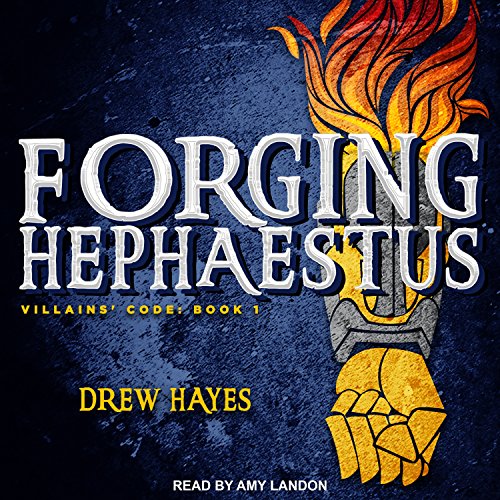
Forging Hephaestus: Villains’ Code Series, Book 1
Author: Drew Hayes
NarratedBy: Amy Landon
Drew Hayes (Author, humorist writer who earned a BA in English from Texas Tech University.)
“Forging Hephaestus” is the beginning of a series of books that this critic is unlikely to complete. The first book, “Forging Hephaestus” sets the table for some interesting points about systems of power, identity, and morality that reminds one of government control and influence. However, Hayes is creating a secret guild of criminals’ intent on ruling the world of crime.
Drew’s story begins with the creation of a young woman that embodies the force of fire.
She is like the mythological god of fire though not appearing as someone who is male or has, as the Greek myth goes, any physical imperfection. One presumes the author is challenging the patriarchal truth of history that shows power, aggression, and ambition are not only masculine. Additionally, the choice of Hephestus as a woman makes one think about a person who exemplifies both creation and destruction, i.e., the birth and death of humanity.
If one thinks of Hayes’ story as a cynical allegory of government, rather than a criminal enterprise, it becomes more interesting to this reviewer.
What Drew describes as a Villains’ Guild is like a government elected by people who believe they are voting for someone who represents their interests. In reality, voters are voting for self-interested people who may or may not govern in voter’s best interest. At best, governments try to serve the public but are not gods of infallible understanding that can legislate what is always in the best interest of its citizens. Generally, governments control through compliance, not morality. Order is prized over justice and equity. That desire for order changes elected officials’ loyalty to those who are elected as much as to people who voted for them.
The guild that Hayes creates audits and enforces their criminal objectives with state surveillance and internal security.
State surveillance and internal security are the same tools used by government which are even more effective today than in the past because of technology. (A past trip to China after Xi had taken power shows how internet searches are restricted when one is in a Bejing’ hotel.) The paradox of surveillance and internal security is that no one is truly free whether they are a part of those who govern or are the governed. Human nature exploits the weak, the ethnic, and ill-informed. Government representatives are no more virtuous or venal than the citizens who elected them. That is why citizens become skeptical about the legitimacy of their government’s concern about common good.
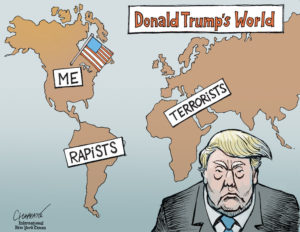
Trump’s world view.
Listening/reading “Forging Hephaestus” is an apocryphal story to some who feel President Trump is the quintessential example of one who is more interested in himself and his family’s wealth than the people who voted for him. America’s current government may not be the criminal enterprise of Drew Hayes’ “Forging Hephaestus”, but it reflects on the worst characteristics of capitalist democracies.
Trump’s push to hugely increase government debt at the expense of the poor and middle class, along with a tariff war, look to some like paths toward an economic Armageddon.
Books of Interest Website: chetyarbrough.blog
On Tyranny (Twenty Lessons from the Twentieth Century)
Author: Timothy Snyder
NarratedBy: Timothy Snyder
Timothy Snyder (Author, graduated from Brown University with a degree in history and political science, received a Doctor of Philosophy in modern history from the University of Oxford.)
“On Tyranny” makes one research Timothy Snyder’s education because of his allusion to the rise of Hitler and America’s rising authoritarianism in the 21st century. His short book “On Tyranny” is disconcerting. He infers Trump’s presidency is an early sign of American democracy’s deterioration. He recounts the rise of German complacency when Hitler came to power and Nazi’ support for victimization of Jews and invasion of Poland are the beginning of a plan to reorganize spheres of influence in Europe.
Snyder’s observation is undoubtedly to create a sense of moral urgency on the part of American listener/readers to do more than just observe what is happening in America. Not that it is about Jewish discrimination but about American government rounding up and deporting alleged illegal immigrants without due process and sending them to prisons in other countries. Snyder is a scholar who specialized in Eastern European totalitarianism which suggests he knows something about the precursors of authoritarianism.
Trump (Born in 1946).HITLER (1889-1945)
It seems the comparison of Trump to Hitler is hyperbolic when one considers the dire financial condition of Germany in the late 1920s. However, Trump’s push to hugely increase government debt at the expense of the poor and middle class, along with a tariff war, look to some like paths toward an economic Armageddon. If the economy falters, would America fall into Germany’s past? One doubts that will happen, but with a President who believes his own lies and Americans who accept them gives listener/readers of “On Tyranny” a chill. The power of Snyder’s argument gains some credibility.
It seems with the history of the United States, federal government checks and balances, and the limited tenure of elected Presidents, a Nazification of America seems unlikely. However, the danger is there because Trump has strong support from his party and many Americans who voted for him who choose to ignore his lies.
In reading/listening to Chomsky some will conclude he is wrong about there ever being a nation-state that will be successfully governed as an Anarchy because of the nature of human beings.
Books of Interest Website: chetyarbrough.blog
On Anarchisn
Author: Noam Chomsky, Nathan Schneider
NarratedBy: Eric Jason Martin
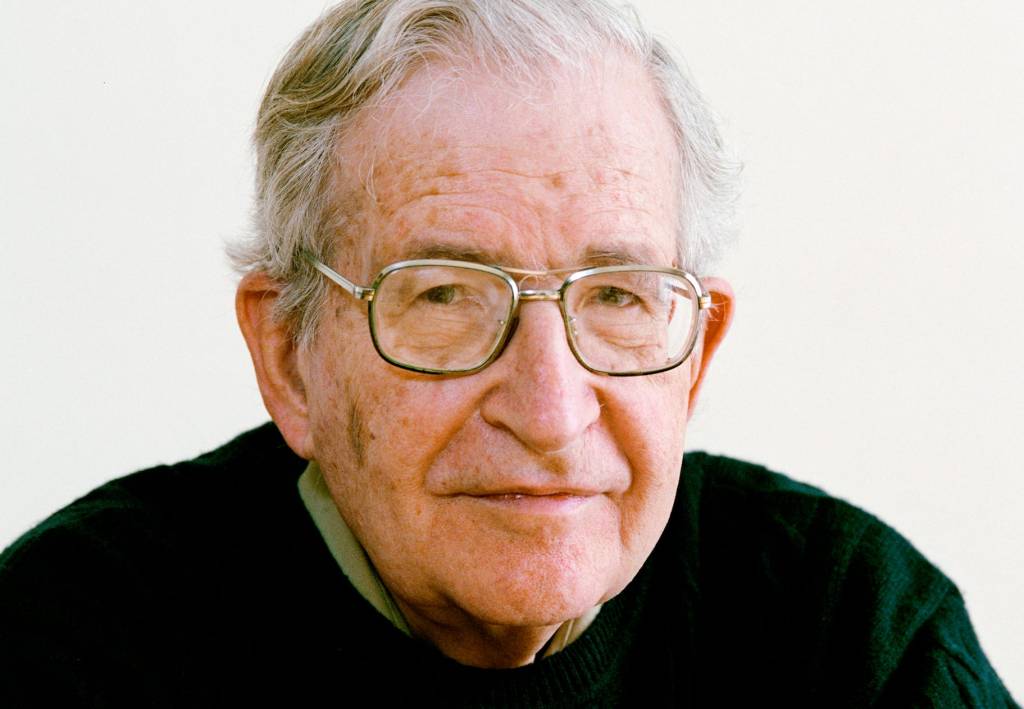
Norm ChomskyNathan Schneider
When one thinks of a political system called Anarchism, the first thing that comes to mind is a vision of rampant disorganization where there is no sense of direction or social cohesion.
Noam Chomsky is a polarizing figure who is admired as an anti-capitalist and anti-imperialist who fiercely criticizes U.S. and Israeli foreign policy. He views Israel as a client state of the U.S. that relies on authoritarianism to manage their countries roles in the world. He notes America’s interventions in Vietnam, Central America, Iraq, and Afghanistan as evidence of America’s failure as a democracy. He views Israeli foreign policy in regard to Gaza as infected with hypocrisy and violence with a narrow view of territorial expansion. He feels both America and Israel are driven by strategic and economic interests, not by the idealism of democracy.
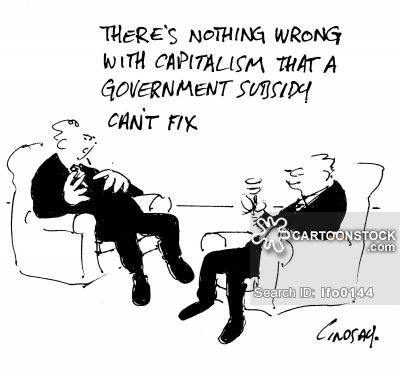
Chomsky is a fierce critic of capitalism and imperialism because both marginalize citizens’ freedom of thought and action.
Chomsky’s view is that anarcho-syndicalism is a better form of government where power is decentralized and citizens can and should collectively manage their own affairs through direct democracy and cooperative organizations. He argues for participatory democracy by voluntary associations that are freely formed into cooperative communities. There should be no centralized authority with all workplaces and production controlled by the workers themselves. He believes in libertarian socialism because he sees it as the most humane and rational extension of Enlightenment ideals in society. Any authority exercised by a government entity in a libertarian socialist country, in Chomsky’s opinion, is the most humane and rational extension of the ideals of the Enlightenment.
The Age of Enlightenment or sometimes called the Age of Reason was a movement in the late 17th century that extended into the 19th century.
It emphasized the power of reason, science, and individual liberty as the tools for the reform of society. The tools of reason, science, and liberty were believed to be the natural rights of humanity, and the possibility of improving society through education and reform based on science.
Francisco Franco (Spain’s dictator 1939-1975.)
Chomsky argues those tools were engaged by Spanish revolutionaries during Franco’s dictatorship in Spain. Chomsky notes workers took control of factories and farms in Catalonia and Aragon that were run collectively and democratically by workers. He believes voluntary cooperation thrived. He believes the anarchist movement grew through three generations based on education and considered organization of Spanish interest groups. However, Franco’s forces with the help of England, Germany, and Italy defeated the movement.
Republican factions fought against Franco’s government in the 1930s.
Chomsky believes revolutionaries against Franco were practical visionaries that showed how anarchy could be a legitimate and superior way of governing a nation.
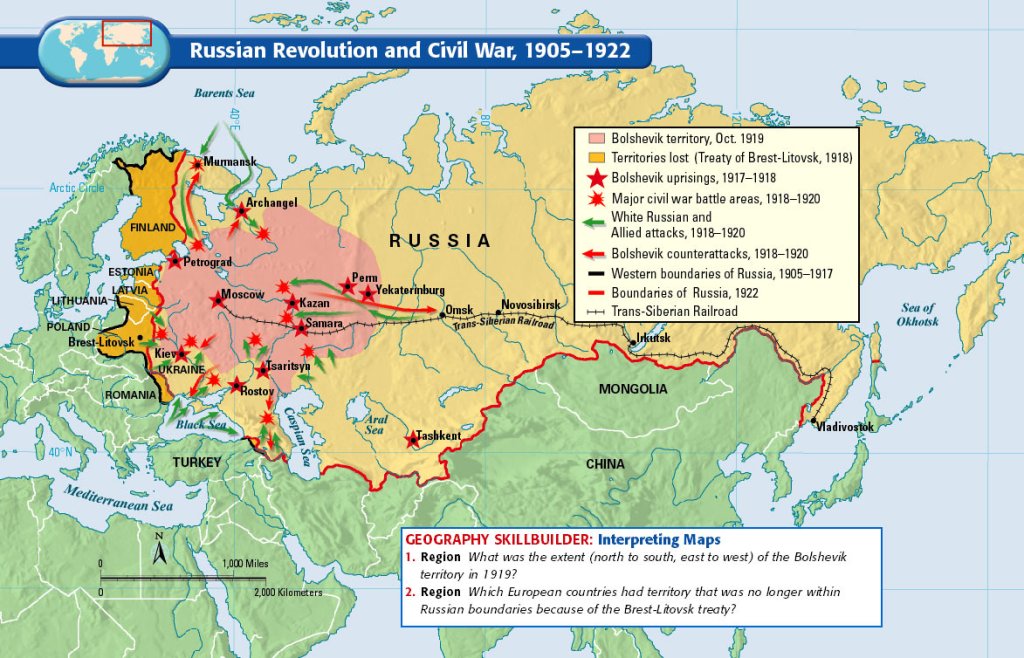
Surprisingly, there are several examples besides Spain’s revolution that were collectivist organizations that could be classified as anarchies. From 1918-1921, the free territory of Ukraine was led by Nestor Makhno during Russia’s Civil War. It was ended by Russian communism after its ascension in 1917. Modern communes were set up in Mexico’s Zapatista territories with autonomous zones that had collective farming and indigenous self-rule. Of course, in ancient times there were hunter-gatherer societies that shared norms, and governance through consensus decision-making and resource sharing. However, there is a history of atrocity, failure, and disruption by governing bodies that have tried Anarchy. Spain’s effort fell apart in 1939. Freetown Christiania in Denmark, in a neighborhood in Copenhagen has struggled with Anarchy since 1971. A number of legal battles have been fought over commercial ownership and control. By some measures, the kibbutz movement in Israel has been successful. However, even Chomsky notes friction comes within kibbutz communities over disagreement with elected leaders. Research shows that some kibbutzim are privatizing and paying differential wages for communal services. Collectivism is becoming harder to maintain.
Chomsky is considered by some to be the most important intellectual alive today. He is highly respected for theories on the understanding of language based on modern cognitive science.
Chomsky has shaped how we think of human capabilities. He is famous for his dissents which are naturally about government control and media manipulation. He was against the Vietnam war and opposed Israeli occupation because of his libertarian socialism, a form of anarchy or a collective that is purely democratically determined. He is reported to be an excellent lecturer and capable of going toe to toe with experts in linguistics, philosophy, political science, and education. His opinions have global reach with translations in many languages.
In reading/listening to Chomsky some will conclude he is wrong about there ever being a nation-state that will be successfully governed as an Anarchy because of the nature of human beings. Whether one believes in Hobbes’ view of selfish humans, Rousseau’s belief in people being corrupted by society, Kant’s belief in rationality, or Sartre’s belief in human choices and actions, there will always be dominant personalities who will victimize those whom they commune. Human nature as defined by Hobbes, Rousseau, Kant, Sartre, and other brilliant philosophers infer there will always be miscreate leaders that will destroy egalitarianism, the foundational principle of anarchy. Human nature, as it exists today, is unlikely to change.














































 REVIEWS AND VIEWS OF LIFE