PUTIN & UKRAINE

Without checks and balances, autocratic beliefs inevitably lead to conflict and mutually assured destruction, Donald Trump notwithstanding.

Books of Interest
 Website: chetyarbrough.blog

From Cold War to Hot Peace (An American Ambassador in Putin’s Russia)

By: Michael McFaul

Narrated By: L. J. Ganser

Michael McFaul (Author, American academic and diplomat, ambassador to Russia 2012-2014, former Professor of International Studies at Stanford.)

Not since George Kennan’s brief time as Ambassador to Russia in 1952 has an American ambassador been denied access to Russia. Michael McFaul became the second in 2016. McFaul joins the pre- and post-Obama election to become Obama’s ambassador to Russia from 2012 to 2o14. McFaul writes this book to explain his experience in the Obama administration, his understanding of Russia, and his tenure as Ambassador to Russia.

Interestingly, Condoleezza Rice recommends McFaul should join Obama because she was sure he, rather than McCain, would become the next President of the United States.

McFaul follows Rice’s recommendation and joins Obama’s campaign. Mcfaul’s grasp of Russian foreign affairs is insightful and relevant based on his personal experience. McFaul lived in Russia for a period of time when Gorbachev and Yeltsin attempted to liberalize Russia’s autocratic government. McFaul’s time living in Russia, his understanding of Russian language, and his study of Russian history at Stanford make his opinion in “From Cold War to Hot Peace” important.

Gorbachev’ biography shows he experienced the autocratic rule of Stalin’s U.S.S.R. as a young boy and found the courage to open the door to citizen’ freedom.

Mikhail Gorbachev was 22 when Stalin died. His ideal was to maintain the U.S.S.R. but with a system of government that rejected totalitarianism while freeing its citizens to improve their way of life. However, the shock of newfound freedom appeared an economic change too difficult and unfairly remunerative for the U.S.S.R. to survive as one hegemon.

A fundamental ingredient of independence is freedom.

When countries controlled by the U.S.S.R. were offered freedom, they looked to forms of democracy rather than autocracy. Gorbachev’s inability to accelerate economic growth to improve the lives of his country’s citizens doomed his goal to create a freer society within the U.S.S.R. Compounding his failure, Boris Yeltsin usurps Gorbachev’s power by arguing he has a better way of accelerating Russia’s economy to keep the U.S.S.R. together.

Boris Yeltsin talked the talk of democratic government but because of his inability to coopt the underlying authoritarian habits of former KGB operatives, he lost control of the government.

Yeltsin’s rise undermined the influence of Gorbachev, encouraged the departure of U.S.S.R.’ member countries, and gave an opening to Vladimir Putin, a former KGB officer. The KGB changed to the FSB in 1991 (along with Russia’s Foreign Intelligence Service) to become the right and left hand of Putin’s power and influence in the new Russia.

Fifteen countries leave the U.S.S.R. in 1991.

  1. Estonia: August 20, 1991
  2. Latvia: August 21, 1991
  3. Lithuania: March 11, 1990
  4. Armenia: September 21, 1991
  5. Azerbaijan: October 18, 1991
  6. Belarus: August 25, 1991
  7. Georgia: April 9, 1991
  8. Kazakhstan: December 16, 1991
  9. Kyrgyzstan: August 31, 1991
  10. Moldova: August 27, 1991
  11. Russia: December 12, 1991
  12. Tajikistan: September 9, 1991
  13. Turkmenistan: October 27, 1991
  14. Ukraine: August 24, 1991
  15. Uzbekistan: September 1, 1991

Gorbachev effectively ended the cold war, but McFaul argues the cold war turned into a “…Hot Peace”. Gorbachev was the last leader of the Union of Soviet Socialist Republics. His effort to democratize Russia fails even though he fully champions Valdimir Putin to become president of Russia in 2000.

Putin took control of Russia as Prime Minister under Yeltsin in 1999. He later effectively became President of Russia for life.

McFall explains Obama became President of the United States in 2o09. Obama revised America’s relationship with Russia with what became known as the U.S./Russia “Reset” policy.

Obama’s “Reset” policy had some early positive effects. The relationship between America and Russia arguably improved despite their significant political differences. When they disagreed, they agreed to disagree. There were halting steps toward nuclear bomb limitation and greater cooperation on America’s actions in Afghanistan when the Taliban had shown support for Osama bin Laden after 9/11.

Putin rose to the presidency in 2011 and has remained effectively in control of Russia since 1999. Though not argued by McFaul, Putin’s intimate understanding of Russia’s secret service has given him the power to exercise dictatorial control over Russia. The history of U.S.S.R. since the 1917 revolution has been maintained by a secret service used to jail, torture, and murder any opposition to leadership of Russia. Today, that autocratic leader is Putin. There seems little reason to believe kleptocratic control of a massive secret service apparatus will be overcome without revolution. Every Russian knows of the threat the secret service has to any opposition to Putin who controls and has an intimate relationship and understanding of the organizational capabilities of the former KGB.

Gorbachev’s legacy is hope for a better form of government in Russia. Change is possible just as Gorbachev’s history as the secretary of the Communist Party from 1985 to 1991 proved.

One is inclined to believe change will come to Russia from a disaffected communist party leader who rises in the party and taps discontented Russians looking for change. If all one’s life is lived and raised in Russia, a Russian born change-agent like Gorbachev may, once again, be born

As one completes McFaul’s book, the threat of masculine blindness in world leaders is made clear. Leadership entails a power that corrupts leaders who think they know what is best for their citizens. Autocracies concentrate that power in singular human beings. Without checks and balances, autocratic beliefs inevitably lead to conflict and mutually assured destruction, Donald Trump notwithstanding.

SPINNERS

“All the Worst Humans” is a macabre but revealing look into the darkest corners of public relations.

Books of Interest
 Website: chetyarbrough.blog

All the Worst Humans (How I Made News for Dictators, Tycoons, and Politicians)

By: Phil Elwood

Narrated By: Holter Graham

Phil Elwood (Author, public relations operative, graduate of Georgetown University with graduate studies at the London School of Economics.)

“All the Worst Humans” is a macabre but revealing look into the darkest corners of public relations. It is an anecdotal story, with a ring of self-effacing truth by Phil Elwood who specializes in spinning news about morally corrupt people and bad events. A listener is skeptical of Elwood’s integrity because of the nature of what he does for a living. Elwood manipulates societies understanding by spinning the facts of current events to hide what truth there is in history.

The truth of history is purposeful or a choice and spin of facts to recreate a past that always has more facts than can be or are reported.

Reputable historians certainly try to accurately report the facts of history, but truth is malleable based on the facts that are chosen. Though Elwood profiles himself harshly as a troubled human being, he is like a disreputable historian who spins facts that have little to do with truth. Elwood’s job is to make facts tell a kind of “truth” that makes bad people and/or events look good or at least better than bad.

Elwood’s self-effacing story admits his weakness for alcohol and addictive drugs.

Elwood manages to become an intern for Congressional representatives like Senator Daniel Moynihan after failing to graduate from college. He corrects his college failure with the help of his congressional contacts to enter Georgetown University where he earns a college degree.

Elwood leaves his Congressional internships and the contacts they entailed to become a success as a public relations operative.

He becomes an operative who spins facts to change the public’s perception of people and events. Elwood is an “operative” because he contacts legitimate media writers/broadcasters and political influencers to change their minds about people and events that are or will become news of the day.

Elwood’s story begins with an FBI phone call that asks for the correct number of his and his wife’s apartment address.

He arranges for a meeting with the FBI in an hour after the call, purportedly to allow his wife time to leave with some of the files in their apartment. This is a puzzling beginning to a wild explanation of Elwood’s life. One is unsure of how much of what is written is spinning the truth of who Elwood is and what he believes. One wonders if Elwood’s story is just an entertaining vignette of a complex and intelligent writer, a public relations expert, or writer of fiction. (A brief review of the internet shows Elwood is not only a graduate of Georgetown University, but did graduate work at the London School of Economics.)

Peter Brown (American-based English businessman who became part of the Beatles’ management team.)

After Elwood’s stint as a congressional intern, he is hired by a public relations firm headed by a former Liverpool Beatles’ assistant, a man named Peter Brown. Brown became an officer of Apple Corps, the Beatles management company. Brown was instrumental in arranging the wedding of John Lennon to Yoko Ono in Gibraltar which is made famous in Lennon’s song “The Ballad of John and Yoko”.

Elwood offers examples of work that he does as an operative for Brown’s company. Brown, or someone from his office, calls Elwood to “baby sit” Libyan executives who work for Muammar Gaddafi in a trip to Las Vegas.

Elwood explains they carried millions of dollars in suitcases they kept in their hotel room. They lost thousands of dollars at the gaming tables and used Elwood to arrange private plane trips and ferry suitcases of money to pay their gambling bills and travel expenses. Elwood feared for his life and was relieved to see them off in their private jets after steering them away from what could have been a public scandal in Las Vegas.

Elwood explains how he is ordered by Brown to use his contacts in Congress and news publications to make Gaddafi look more like a statesman than thug in his 2009 United Nations Speech.

Elwood was tasked to make Gaddafi look humanitarian rather than venal by arranging interviews and media engagements that would emphasize his role as a revolutionary, not authoritarian leader. There seem to have been some successes but the speech at the UN and the debacle over a tent on Trump’s property made Elwood’s public relations effort a failure. Elwood is eventually fired by Brown and leaves with a sense of enmity toward Brown.

Elwood eventually slips into another morass when asked by his new public relations employer to make Nigeria look better than the Boko Haram kidnappers who took 276 schoolgirls from a Government Girls Secondary School.

Elwood is unsure of what he can do despite travelling to Nigeria to convince the government they needed to act in a way that looked like they were concerned. Elwood admits he fails and that the appearance of Malala Yousafzai, the Pakistani activist who was nearly assassinated by Pakistani thugs, entered to insist Nigeria must do something. Elwood is fired again.

In another incident where Elwood is working as a public relations operative, he consults with Antigua after the United States threatened to prosecute Antigua for online gambling services.

The Antiqua leader worries that it would destroy tourism in his country if they fought America’s threat. Elwood explained the loss of revenue from online gambling far exceeded tourism income and that he would plant a story in the media about restraint of trade as being un-American. Elwood suggests to the Antiqua government that they take America on with a complaint to the World Trade Organization. Antiqua follows the advice, and successfully remains an online gambling mecca. But Elwood, despite his successful spin of the facts loses the account and is fired again.

Elwood then slips into a very gray world where money is being laundered by the Israeli government.

Elwood becomes a conduit for the laundered money and is contacted by the FBI. The story comes full circle, and its ending adds to the value of Elwood’s story. Public relations are a sophisticated way of muddling the truth. Being smart is two edged when it comes to the truth. Ignorance is not bliss but spinning the truth can kill you or put you in jail.

Elwood considers suicide because of his dodgy reputation and fear of losing his marriage. Through treatment with ketamine, Elwood recovers some level of mental health. Treatment with ketamine is an ironic fact in view of the recent death of the comedic actor Matthew Perry. In a twist of fate, Elwood is spinning the benefit of ketamine while its use is being abused by the public today.

DISABILITY AND DEATH

One chooses how they live life, but death is nature’s or God’s choice, a thing beyond human’ control.

Books of Interest
 Website: chetyarbrough.blog

“The Theater of War” What Ancient Greek Tragedies Can Teach Us Today

By: Bryan Doerries

Narrated By: Adam Driver

Bryan Doerries (Author, Artistic Director of Theater of War Productions, an evangelist for classical literature and its relevance to today’s lives.)

The title and book cover of “The Theater of War” is as puzzling as Bryan Doerries’ beginning vignette of his personal life. Doerries graduates from Kenyon College where he majors in the classics. He goes on to earn a Master of Fine Arts in Directing from the University of California. “The Theater of War” recounts Doerries’ journey to become cofounder, artistic director, and historian for creation of a theatrical teaching tool about life and death. The trigger for his understanding comes from the last days of his personal relationship with Laura Rothenberg who dies at 22 from cystic fibrosis. Her death is the introduction to why “The Theater of War” is created.

Doerries and Phyllis Kaufman are co-founders of “The Theater of War” Productions. Ms. Kaufman was the producing director from 2009 to 2016. She died at the age of 92 in 2023 but was instrumental in organizing production events, coordinating actors, and ensuring practical aspects of theatrical presentations.

“The Theater of War” is about the living and how to deal with permanent disability or death. Death comes in many forms from different causes but as the Latin expression says “Memento mori”, “Remember you must die” because death is a part of every life. Doerries explains how famous Greek tragedies were, and still are, teaching tools for those who have life and death influence over others. What “The Theater of War” creates are acted reproductions of classic Greek tragedies for living life when you or someone you know is permanently disabled or killed.

With the help of actors like Adam Driver (who narrates the book), the great tragedies of Sophocles and Aeschylus are presented to military, penal, and nursing audiences across America.

Combat veterans, prisoners, and terminally ill patients face extreme conditions of life. Combat may end in death or future disability. Prison life is about loss of control of oneself and being under the control of others. Terminal illness is also about loss of control of oneself when one is diagnosed as destined for death.

The suicide of Ajax as depicted on an ancient vase in the British museum in London.

Sophocle’s tragedy, “AJax”, offers the truth of psychological trauma and moral injury from battle. In despair, Ajax kills himself because he feels deeply humiliated by the gods for not being given the armor of Achilles who is killed in the Trojan war. Achilles’ armor was given to Odysseus rather than him.

Sophocle’s “Philoctetes” explains the pain and personal isolation that comes from the physical and emotional damage from war. Today, it is diagnosed as PTSD.

Sophocles “Antigone” deals with civil disobedience, justice, and conflict between personal and state ethics. These conflicts are reflected in mobs of unruly citizens demonstrating against what they perceive is wrong.

Aeschylus’s “Prometheus Bound” reflects on the unfairness of a penal system that infringes on human rights.

The recited dramas offer cathartic release and potential change to those who are personally affected by their situational experience. That is the purpose of the presentations. Doerries creates theatrical readings of these classics before military, penal, and nursing personnel.

The presentations lead to questions and answers about the truth of societal disagreement, death’s inevitability, and how to live with their consequences.

Some military generals and prison guards are offended by the implications of their mistakes, but the plays recitals provide a forum for discussion that offer potential for improved human understanding and societal decisions and action.

The Greeks understood dying is part of life. One chooses how they live life, but death is nature’s or God’s choice, a thing beyond human’ control.

SOCIAL CHANGE

Social change for human equality is a long and arduous process. The election of 2025 will either be a step forward or backward.

Books of Interest
 Website: chetyarbrough.blog

Unexampled Courage” The blinding of Sgt Isaac Woodard and the Awakening of President Harry S. Truman and Judge J. Waties Waring

By: Richard Gergel

Narrated By: Tom Zingarelli

Richard Gergel (Author, American lawyer, assumed office 2010 as US District Court Judge for the District of South Carolina, graduate of Duke University School of Law in 1979.)

The Emancipation Proclamation was issued on January 1, 1863, as an executive order by Abraham Lincoln. It purportedly ended slavery, but it was only the beginning of a generational fight that is still being waged. “Unexampled Courage” is a history of a twentieth century turning point in the fight for equal treatment of Black Americans. The blinding of a Black veteran of WWII, Sergeant Isaac Woodard, in 1946 signified another major turning point for equal treatment of former American slaves. On July 26, 1948, President Harry Truman signed Executive Order 9981 which banned racial discrimination in the military. The blinding of Woodard by a white Sheriff in South Carolina and Harry Truman’s executive action are connected by Gergel’s history of Woodard’s horrid and brutal experience.

In 1946, a South Carolina police chief beat Sergeant Isaac Woodard’s head and used the butt of a Blackjack handle to gouge Woodard’s eye sockets.

Sergeant Woodard was beaten and blinded by a Batesburg, South Carolina police chief for drinking (and alleged disorderly conduct) on a Greyhound bus. Several white and Black soldiers were drinking and talking among themselves while returning from the service after the end of World War II. Woodard asked for a bathroom break from the bus driver and was refused. At a Batesburg, South Carolina bus stop, the driver left the bus to report Woodard to the police chief. The police chief attacked Woodard and beat him around his head and eyes with a leather Blackjack similar to the one shown above. Gergel reports Woodard’s eyes were directly poked and grinded by the butt of the police chief’s Blackjack before being thrown unconscious in a jail cell. The next morning, a local physician examined Woodard and he was taken to a veteran’s hospital, but any care provided was ineffectual. The assault on Woodard’s eyes is later determined to have caused an incurable blindness.

Orson Wells becomes aware of the horrid treatment of Woodard and chooses to broadcast the incident to American listeners. Orson had become famous for his 1938 “…War of the Worlds” radio broadcast.

When Wells broadcast the Woodard’ incident on public radio, he mistakenly identified the wrong South Carolina’ town in which the incident occurred. However, he continued investigating the incident and committed to correcting his error and identifying the police chief who battered Woodard to the point of blindness. The police chief and the town of Batesburg were correctly identified, and the wheels of justice slowly turned toward injustice, rather than justice.

Julius Waties Waring (1880-1968, U.S. District Court judge for the Eastern District of South Carolina.)

Though the police chief was tried for beating Woodard, he was acquitted by a South Carolina’ court. The story of Woodard’s blinding was prosecuted in the U.S. District court of Judge, J. Waites Waring. Waring was outraged by the inept prosecution by the federal prosecutors. After the acquittal, Waring began a movement in South Carolina for Black Americans’ equal rights. Waring’s outrage was supplemented by President Harry Truman who convened a commission on civil rights. After the report from the commission, Truman arranged a speech before the NAACP to reveal the findings of the commission and actions the Federal Government would take to address unequal treatment of Black Americans.

Harry S. Truman (1884-1972, 33rd President of the U.S.)

Truman is in the midst of a campaign to be re-elected as President of the United States in 1948. Gergel argues Truman decides to use his speech before the NAACP to announce his plan to fight for Negro equal rights, in part because of the blinded Woodard, but also because of many unjust southern murders and discriminatory actions against Black Americans.

Thomas E. Dewey (1902-1971, American lawyer and politician, 47th governor of New York 1943 to 1954.)

As most Americans know, President Truman was expected to lose to Thomas Dewey in his re-election campaign. A major reason for that belief was because of executive action to integrate the military and the opposition from southern voters who insisted on the inequality of Black Americans. From a coalition of labor, Blacks, Jews, mid-western farmers, and some number of southern states, Truman won re-election by a slim margin.

Gergel makes it clear that a fight for equal rights is not won and in fact was resisted by military leaders who tried to stop integration of the military after Truman’s executive action.

The military leaders fail to change Truman’s mind and military leaders finally took the required steps to integrate and assure a level of equality among white and Black Americans. Of course, equal treatment remains an issue in the military, as well as throughout America. Social change seems to conflict with genetic inheritance, compounded and multiplied by human ignorance.

Gergel shows social change for human equality is a long and arduous process.

The Civil War only dated the beginning of the American fight for equality. It has become a broader effort, including racial, gender, LGBTQ, marriage, civil, economic, natural, and political equality. One wonders if humans, let alone Americans, will ever get there. The election of 2025 will either be a step forward or backward.

INDIGENOUS

Orange’s book shows how culture can kill. What citizens of the world need to do is understand how a broader culture can be built.

Books of Interest
 Website: chetyarbrough.blog

There There: A Novel

By: Tommy Orange

Narrated By: Darrell Dennis, Shaun Taylor-Corbett, Alma Ceurvo, Kyla Garcia

Tommy Orange (Author, received a Master of Fine Arts from the Institute of American Indian Arts, winner of the 2019 American Book Award for “There There…”)

Tommy Orange illustrates how culture is the god of creation and destruction. “There There…” offers a glimpse of what it is like to be poor and indigenous in Oakland, California. The name “Indians” for the indigenous of America is said to have been created by Christopher Columbus in the 1400s. Orange has the idea at a gathering of native Americans to have each write their stories, i.e., their memories of what life has been for them in Oakland, California in the 20th and 21st centuries. Their stories are the substance of Orange’s book. They reveal the crushing reality of being descendants of the indigenous in Oakland, and believably all of America. A grant from Oakland becomes the funding source for Orange’s idea. Fighting to making a living as an author is at the core of “There There…” Orange undoubtedly calls “There There…” a novel to protect the story tellers.

Orange shows recycling-poverty, addiction, and misogynistic abuse are big problems for “Indians” in Oakland. The stories reveal an underlying frustration, if not anger, of indigenous Americans who are being molded by government programs that ignore native traditions and emphasize integration into whatever American society has become. There is justification for anger among American minorities. However, there is a fundamental misunderstanding when suggesting government programs are meant to mold Americans. The goal of government is not to mold its citizens but to create cultural norms for a diverse culture. Government fails because ethnic norms of minorities protect American citizens who are treated unequally.

Names like “Two Shoes”, “Red Feather” and the “Indian symbol” that once tested color on televisions are interesting examples of the significance of native influence in American culture.

Though America has and continues to try to Americanize natives, cultural influence is a two-way street. The stories in “There There…” illustrate how everything from influence of addiction to spousal abuse to abortion to overeating to violence are revealed as problems in native American’ lives. This is a hard novel to listen to because it denigrates Indian heritage and justifiably blames American culture.

One is drawn to wonder what can be done to correct the truth of American culture’s blame. The answer is in the Constitution of the United States.

All men are created equal, and the job of government is to provide for the health, education, and welfare of its citizens. American government is struggling to find a way of doing what it is meant to do because of the nature of human beings. Neither capitalism, utopianism, socialism, or communism change human nature. Ironically, only culture has the potential for achieving the goal of equality and fraternity.

Orange’s stories illustrate how Indian poverty is destructive and ethnic cultural inheritance is destroying native Americans.

One presumes Orange would object to the category of American when referring to indigenous peoples. However, it is only with change in culture that all citizens become more socially cohesive than one ethnic identity. If America can institute policies that genuinely provide equality for health, education, and welfare of all, culture will heal itself. When that is achieved, one can be Black, white, Latino, indigenous, or whatever ethnic group one wishes–but within broader American culture.

Orange’s book shows how culture can kill. What citizens of the world need to do is understand how a broader culture can be built.

GOVERNANCE

Machiavelli describes effective governance as brutal, manipulative, and amoral. St. Augustine infers good governance comes from belief in God and adhering to scripture.

Books of Interest
 Website: chetyarbrough.blog

On Grand Strategy

By: John Lewis Gaddis

Narrated By: Mike Chamberlain

John Lewis Gaddis (Author, historian, political scientist, professor of Military and Naval History at Yale University.)

In a September 21, 2021 article in “The New York Times” Beverly Gage resigned as the course leader for “…Grand Strategy” (where Gaddis is a professor), “…saying the university failed to stand up for academic freedom…” She is noted to have said ‘I am not teaching “…Grand Strategy” the way Henry Kissinger would.’

Beverly Gage, in her resignation from Yale is noted to have said ‘I am not teaching “…Grand Strategy” the way Henry Kissinger would.’

The book author, John Lewis Gaddis, implies every accomplished political leader has a Grand Strategy. Historians can always criticize another’s study of political leaders or their place in history but having a strategy is a paramount requirement whether one is an American President or course leader at Yale. So here is a puzzle about the Gage’s resignation and her critical comment about Yale’s Grand Strategy for a teacher’s academic freedom.

One wonders what Ms. Gage meant in referring to Kissinger.

In any case, this is a review of John Lewis Gaddis’s book, “The Grand Strategy”. He begins with an animal analogy by suggesting good governance relies on being like a fox or a hedgehog when acting as a political leader. A fox characteristic is surreptitious and sly while the hedgehog is straightforward and aggressive. He argues governance that uses only one of these characteristics achieve singular objectives but balance between the two achieves the best results. The entire book is about the history of governments that have prospered or declined based on the presence or absence of balance.

In the beginning of “On Grand Strategy”, one becomes somewhat bored with Gaddis’s history of Athens’ and Sparta’s conflicts with Greece and its defeat of the Persian army (492 BCE and 449 BCE). However, mid-way through the book, one becomes engrossed in Gaddis’s evolutionary theory of nation-state’ governance.

In the Persian Army and its defeat by the Greeks and Spartans, Gaddis explains Xerxes neglected the common sense of moving his vast army across the Mediterranean, let alone feeding and supplying its needs. Xerxes was thinking like a hedgehog. Later, Gaddis explains Napoleon makes the same mistake as Xerxes by attacking Russia without considering the vast size of the country and logistic difficulties in feeding and supplying his army. Gaddis notes Tolstoy’s “War and Peace” chapters that explain how the battle of Borodino is a turning point in Napoleon’s hedgehog action.

Gaddis notes the need for political leaders to keep their eye on the prize. He gives the example of Civil War policies by Lincoln who sought end games for union of the States and emancipation.

When endorsing government policy or ordering military action, Gaddis suggests Lincoln was a leader who understood the need for common sense, i.e., always balancing what can be done with what could be done. Gaddis notes there are times when it appears Lincoln is contradicting himself when, in fact, he is being the fox rather than the hedgehog. For example, some argue Lincoln went back and forth on emancipation, but Gaddis infers he was being a fox because of the political heat surrounding the question and the government’s action.

At this mid-point, Gaddis’s history becomes more interesting. He recalls the history of two important characters in modern theory of society, i.e. St. Augustine and Machiavelli. Of course, they lived centuries apart, but each represent critical beliefs that impact nation-state governance. In the 4th century, St. Augustine wrote two influential works, “Confessions” and “City of God” that outline why God was important to him and why everyone should become followers of Christianity to save themselves for the reward of eternity in heaven. Christianity begins to replace leadership beliefs based on the Great Caesars of civilization. Rome does lead the world for another 70 years, but Christianity and other religions redefine the relationship between citizens and their rulers. The centralization of Catholicism by Emperor Constantine in the 4th century diminished the power of secular governments. Life on earth became secondary to the possibility of eternal life in St. Augustine’s “City of God”.

Jumping to the 15th century, Machiavelli’s concept of “The Prince” exemplifies power of governance by secular leaders.

Machiavelli returns political leadership to life on earth in “The Prince”. It is not an abandonment of the “City of God” but a recognition of leadership as it is in this world. Machiavelli experiences the power of political leaders in this world by being imprisoned and tortured for alleged conspiracy to overthrow the Medici family in Italy. Machiavelli’s “The Prince” explains a political theory and leadership of rulers in the “city of man”. “The Prince” returns the idea of governance to the beneficence and cruelty of life here, i.e. not in heaven.

Queen Elizabeth I is Gaddis’ s next example of the changing nature of governance.

Contrary to her half-sister, Mary Queen of Scots who supported Catholicism, Elizabeth reestablished the Protestant Church of England. Elizabeth recognizes the fundamental importance of England’s citizens to her reign as Queen of England. Elizabeth practices the less punitive aspects of “The Prince” to build a foundation for love and respect from England’s protestant, if not Catholic, citizens. The city of God is replaced by the city of man in Elizabeth’s rule.

One can think of many examples that reinforce Gaddis’s theme in “The Grand Strategy” as practiced in America. The senior Bush carefully planned the ejection of Sadam Hussein from Kuwait by building international support for America’s action in the first Iraq war. America’s generals carefully planned the movement of a massive military force, including supply lines, to remove Iraqi forces from Kuwait. The senior Bush did not make Xerxes mistakes. In contrast John F. Kennedy, Lyndon Johnson, and H. W. Bush’s son, failed to use common sense in America’s mistakes in Vietnam and Iraq. It took a sly fox in the Nixon administration to get America out of Vietnam. This is not to suggest any of these actions were wholly good or bad, but a reflection on the balance between using fox or hedgehog thought and actions to achieve common sense results.

Isaiah Berlin (1909-1997, Russian-British social and political theorist, philosopher, and historian of ideas.)

Gaddis takes reader/listeners through WWI and WWII from America’s perspective. On several occasions, Gaddis refers to Isaiah Berlin and his intellectual contributions to political theory and history. Berlin was born in Russia and educated in Great Britain. He spoke several languages and was particularly fluent in Russian, French, German, and Italian. He believed in individual freedom but explained conflicting values coexist and that there is no single universal truth in life. This reminds one of Machiavelli and makes one wonder if Berlin, who is alleged to have a strong sense of Jewish identify, was an atheist.

Gaddis suggests America has had a series of foxes and hedgehogs that have become American Presidents. Some have been intellectuals, others not. Considering President Wilson was a racist hedgehog while Lincoln and Franklin Roosevelt were at times foxes and hedgehogs, America survived and prospered through three disastrous wars. Gaddis’s point is that America’s best Presidents have been both foxes and hedgehogs, while most have been one or the other. It may be that America survives because, with the brief exception of Franklin Roosevelt, none have served more than two terms. One President may be a hedgehog while the next President is a fox.

Machiavelli describes effective governance as brutal, manipulative, and amoral. St. Augustine infers good governance comes from belief in God. Gaddis’s history of governance explains why and how both qualities are evident and have served America well.

EUGENICS

On the one hand, genetic science may cure the incurable. On the other, genetic science may destroy civilization.

Books of Interest
 Website: chetyarbrough.blog

Why Fish Don’t Exist” A Story of Loss, Love, and the Hidden Order of Life

By: Lulu Miller

Narrated By: Lulu Miller

Louisa Elizabeth Miller (Author, Peabody Award-winning science reporter for NPR.)

Lulu Miller’s “Why Fish Don’t Exist” reveals the flaw in believing intelligence or position are measures of admirability. David Star Jordan is a founding president of Stanford University. He served from 1891 to 1913 after being the Indiana University president from 1884 to 1891. Jordan gained his academic qualification as a recognized ichthyologist (a zoologist who specializes in studying fish species).

David Starr Jordan (1851-1931, Scientist, founding president of Stanford University.)

Miller begins her memoir in admiration of Jordan but ends in vilification. Jane Stanford appointed Jordan as the first President of Stanford. Their collaboration laid the foundation for what became a research powerhouse for engineering, business, humanities, and sciences. Ms. Stanford’s relationship with Jordan is reported as less than harmonious because in the University’s beginnings there were financial difficulties and differences of opinion about faculty.

Jane Elizabeth Lathrop Stanford (1828-1905, American philanthropist and co-founder of Stanford University.)

Jane Stanford rejects an economics professor’s contract renewal because of his politics and his criticism of immigration. (Ms. Stanford’s and her husband’s wealth came from the railroad industry which was hugely benefited by immigration.) It is alleged that she pressured Jordan to refuse the professor’s contract renewal. Five faculty members resigned after the professor’s termination. Ms. Stanford had a reputation for requiring total devotion to her beliefs which, at times, conflicted with Jordan’s management of the University. More significantly, Ms. Stanford’s drive alienates and makes enemies of many people associated with the University.

Ms. Stanford dies in Hawaii in her 70s. The cause of death is attributed by authorities to be poisoning from strychnine.

What makes her death an ongoing mystery is that Jordan hires a medical investigator who argues Ms. Stanford died from natural causes, a heart attack, brought on by overeating. In much of America, Jordan’s hired investigators’ cause of death is accepted. That is, until a book is written by Richard White in the 21st century, that reaffirms the authority’s earlier opinion. Miller does not suggest Jordan had anything to do with Stanford’s murder, but Miller’s inference is that he initiated a cover-up.

In one sense, Miller is Jordan’s character assassin. In another, Miller reveals the dark side of science.

Jordan is shown to believe in eugenics that advocates selective breeding of the human race. Eugenics is a science meant to selectively breed human beings. Miller explains Jordan believes in forced sterilization (which surprisingly exists in the United States until 1981). Eugenics is the same belief held by Adolf Hitler when he tried to exterminate Jews and create an exclusive Nordic or Aryan race. Hitler established laws for forced sterilization, euthanasia, and selective human breeding.

STANFORD UNIVERSITY

Miller’s memoir of David Starr Jordan shows how science is a mixed blessing. Jordan’s remarkable work in zoology and his role as the first President of Stanford is tainted by his expressed belief in eugenics. The threat of eugenics is greater today than in the past. On the one hand, genetic science may cure the incurable. On the other, genetic science may destroy civilization.

DEMOCRACY OR ELSE

“…saving America” will not come from “…ten easy steps” but from one vote at a time.

Books of Interest
 Website: chetyarbrough.blog

Democracy or Else” How to Save America in 10 Easy Steps

By: Jon Favreau, Jon Lovett, Tommy Vietor

Narrated By: Jon Favreau, Jon Lovett, Tommy Vietor

(Left to Right) Jon Favreau, Jon Lovett, Tommy Vietor

The suggestion that “Democracy or Else” comes from “…10 Easy Steps” on “How to Save America…” is an oversimplification of life and politics. Saving America takes hardened objective opinion, personal commitment, appreciation of the difficulty of being a political leader, and most importantly, the wisdom of Jesus Christ. Few, if any humans fit the bill. Voting is the only thing that everyone who believes in American Democratic leadership will agree upon in the author’s “…10 Easy Steps”. The steps are not easy. The authors appear to have committed some time and effort to fulfill some part of the 10 steps.

Many (not most) Americans may be willing to vote but working on a campaign for a candidate who wishes to be elected to public office will always be low on their list of commitments.

Human beings, let alone Americans, are an unruly lot. Making a living, waiting for a hand-out, hating or loving others, and experience of life come first in the minds of most, if not all, human beings. The nuts and bolts of what it takes to become an elected representative in Democracy are way down on the list of humans’ self-interest. American Democracy, like all known forms of government, have winners and losers. Democracy has the best odds for serving the self-interest of its citizens but remains far from the idealistic goals of the U.S. Constitution.

American Presidents have been good and bad throughout history. Only a few have earned the history of “good or great” for America. The checks and balances of American government, the ideals of the Constitution, capitalism, and expanded voting rights have saved American Democracy from tyranny. Anyone who has read this blog, knows there is an opinion about the next President’s election but “…saving America” will not come from “…ten easy steps” but from one vote at a time.

RUSSIAN SOCIETY

Alcohol consumption in Russia and a penchant for autocratic government are long-standing societal truths.

Books of Interest
 Website: chetyarbrough.blog

Dead Souls

By: Nikolai Gogol

Translated By: Richad Pevear and Larissa Volokhonsky

Nikolai Gogol (1809-1852, Ukranian novelist born in the Russian Empire, short story writer, and playwright.)

“Dead Souls” is not an enjoyable listening experience. Partly, because it is not a completed book. However, it is an insightful examination of a Russian culture in decline. It is an incomplete novel with its main character, Pavel Ivanovich Chichikov, who uses his looks, intelligence, and guile to appear prosperous in a society of rich and poor.

Agriculture is the economic foundation of society in mid-19th century Russia. The industrial revolution is at its beginning.

As a clerk in the government, Chichikov is familiar with government policy of charging a tax for deceased peasants that are owned but have died on Russian’ landowners’ farms. Social position is associated with land and peasant worker’ ownership, i.e., the more land and peasants one owned, the higher a Russian aristocrat is esteemed. Chichikov has no land but has earned and saved enough money through his work with the government to come up with a scheme to improve his status in society. His idea is to travel the country, buy dead souls, and purchase a farm to show society he is an aristocrat of substance. By buying peasant souls and land he creates an image of wealth and aristocracy. His plan is to buy land with the money he has saved over years of work as a clerk. He assumes his position in society will be secured by land ownership and owned peasant’ souls.

Chichikov’s false image is assumed to be true in a high society soiree.

Chichikov clownishly approaches the daughter of a regional governor because of her beauty. His attention is noticed by some of the wags at the social event. Similar to today’s social media, word spread about Chichikov’s bizarre purchase of dead souls. Rumors about Chichikov proliferate like Alex Jones spread of lies in the 2022 Uvalde school children murders.

Various stories about Chichikov’s history spread from people who were at the governor’s soiree.

Many reasons were given for Chichikov’s purchase of “Dead Souls”. One who was at the dance alleges the purchases were to show Chichikov’s intent to kidnap the daughter of the governor. Chichikov hears of these ludicrous accusations and flees the small town in which the ball had been held. In fleeing, Gogol’s story provides more examples of Chichikov’s nature and reasoning with the objective of showing the dysfunction of Russian society and its aristocratic governance.

Chichikov meets with a successful Russian farmer who capitalizes on what is known of agricultural science of that time and uses that knowledge as an aristocratic owner of many peasants who worked his land.

Chichikov persuades this prosperous farmer to lend him 10,000 rubles to finance the purchase of a failing nearby farm. However, Chichikov’s deceptions catch up with him. He is arrested and judged by a Prince of Russia who plans to make an example of him. The story obscurely ends with the prince inferring a way out of the mess Chichikov’s lies engendered. The story is never finished. Reader/listeners never learn the fate of Chichikov. The high praise of the book rests with its exposure of the societal faults of mid-ninetieth century Russia.

Every national society has strengths and weaknesses. America is as vulnerable to lies and misrepresentation as Gogol shows of Russia. The best one gets from “Dead Souls” is a vague understanding of Russian society. Alcohol consumption in Russia and a penchant for autocratic government are long-standing societal truths.

TRAGEDY’S LESSON

The sharpened point of Slade’s story is that, like the sinking of the Edmund Fitzgerald and El Faro, it takes great tragedy before change takes place.

Books of Interest
 Website: chetyarbrough.blog

“Into the Raging Sea” Thirty-Three Mariners, One Megastorm, and the Sinking of the El Faro

By: Rachel Slade

Narrated By: Erin Bennett

Rachel Slade (Author, winner of the Maine Literary Award for non-fiction.)

Rachel Slade begins her book with the last words of a mariner calling for help from a sinking ship in the grip of a Hurricane. The ship is the El Faro. The author writes her story based on the El Faro’s written log during a severe storm somewhere between Florida and Puerto Rico. The storm was Hurricane Joaquin, a category 4 Hurricane that had recorded wave heights of 10 meters (over 32 feet). Winds ranged from 130 to 156 mph with rough seas, roiled by rogue waves. Rogue waves are twice the size of surrounding waves and appear unexpectedly.

Slade methodically sets a table for the El Faro on a “…Raging Sea”.

Slade writes about a mariner’s desperate call for help. In its beginning, the story lags but the author offers cultural insight to the life of merchant marines, the equipment they operate, and the business of international trade. Her story explains how important and dangerous the life of a merchant marine can be, why it is important, and how mariners are dependent on equipment they use, their shipmates’ qualifications, and business owners’ drive for success.
Every person makes decisions about what they are going to do to make their way in life.

Becoming a merchant marine, like every decision in life, is based on personal circumstances, ambitions, and choices. Slade describes the El Faro mariners as adventurous and interested in seeing the world and being paid for what they do. Some are educated, others not, but all learn what they need to do to be part of a mariners’ crew.

There are schools for mariners at all levels of education but like any job, one can start at the bottom as a laborer that learns by doing. What the story of the El Faro shows is that like in any chosen job in life, some become expert at what they do, others try and fail, try again or move on. What Slade infers is that the El Faro sinks because of its crew but also because of others, both on and off the sea. As John Donne wrote in 1624, “no man (or woman) is an island”–emphasizing the interconnectedness of society.

The crew of the El Faro wanted to be paid but to some it was adventure and/or escape from a humdrum of life. Undoubtedly, mariners were motivated for different reasons. Some wished to see the world, be recognized for good work, wished to crew on bigger and better vessels, or be promoted to higher position. Motivation and ambition are different for everyone. What is lost to history are details. Slade tries to reveal some of the details about the El Faro’ crew, its owners, the ship, and the business of international trade. Why did the El Faro sink? Who and what was lost? What is it like to be in a hurricane at sea? Is somewhat at fault?
Slade’s story gains momentum as sinking of the El Faro seems imminent.

The aftermath is a careful and detailed explanation of rescues at sea, why the El Faro sank, what rescue efforts were made, how families of the lost were affected, and what changes were demanded in the industry. The loss of 33 mariners, the entire crew of the El Faro, is a horrible tragedy for the families who lost their loved ones. The causes of the tragedy range from crew mistakes to ship design to corporate malfeasance. The common thread is human nature.
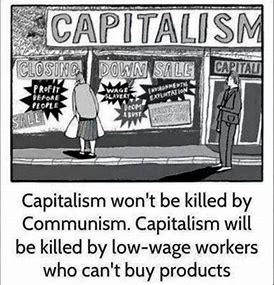

What this review suggests is that the fundamental issue in every form of government and society is balance between public and private good.

One will draw their own conclusions from Slade’s history of the loss of the El Faro. In a capitalist society, balance is dependent on prudent regulation. Prudence is meant to mean the use of human reason to balance the needs of the public with private interests. That balance is complicated by human nature that drives private interests to focus on money, power, and prestige rather than public need.

Slade shows regulation of international trade often conflicts with private interests that object to regulation and improvements in ship design.

Conflict between public good and private interest is not a new discovery. Neither is the sinking of the El Faro. The sinking of the Edmund Fitzgerald in 1975 led to changes in international shipping. Business owners were required to provide survival suits for mariners in their employ, depth finders, positioning systems, improved ship design, and inspections by the Coast Guard became mandatory. These were regulations that increased costs of shipping that rippled through the economy and initially penalized private interests. The public benefits because mariners are safer, and families are less threatened by loss. The public also suffers because transported goods become more expensive. Balance eventually occurs as private interests are compelled to pay more for labor which is part of the public.

Capitalism works because it is a process that balances public need with private interests. Capitalism’s weakness is that the process takes time to balance public needs with private interests.

The sharpened point of Slade’s story is that, like the sinking of the Edmund Fitzgerald and El Faro, it takes great tragedy before change takes place.