WELL BEING

Dr. Gawande’s fundamental point in “Being Mortal” is to provide the elderly or medically challenged the help to live based on a person’s dignity, purpose for living, and as much autonomy as their conditions allow.

Books of Interest
 Website: chetyarbrough.blog

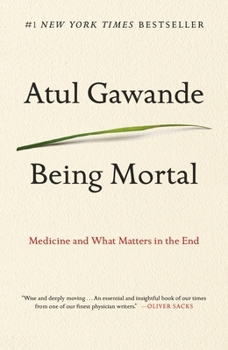
Being Mortal: Medicine and What Matters in the End

By: Atul Gawande 

Narrated By: Robert Petkoff

Atul Gawande (Author, physician-administrator-of-the-u.s.-agency-for-international-development-for-global-health.)

One who has been fortunate enough to have lived long will appreciate Doctor Atul Gawande’s explanation and experience with people of a certain age and the terminally ill of any age. He explains “…What Matters in the End” when one is nearing death is quality of life, not survival that matters.

Quality of life is defined by Gawande as dignity, purpose, and autonomy in one’s last days.

When one is nearing the end of their life, Dr. Gawande has found in his many surgical procedures and interviews that those who have time left to them can be helped by others who assist them as best they can to achieve dignity, purpose, and autonomy. As a physician, Gawande asks what a dying person’s fears are to know what might be done to help them work through those fears. Gawande explains the trade-offs from what care an older person or terminal patient may be given to achieve what is most important to them in their remaining life.

Whether healthy or unhealthy, rational people realize death is part of life.

What “Being Mortal” explains is that the aged or medically challenged wish for as much independence as can be provided by their care. Desired independence is the gold standard for the remaining days or years of one’s life. Whether old or young, healthy or ill, the thought of incontinence, mental confusion, medical or physical limitation makes one fear loss of independence. Each of these maladies can be remedied by family members or properly organized assisted living facilities. Of course, the rub is in the cost of that assistance.

When a family member can no longer be cared for by family members, the medically or age challenged are left with two choices. One is to be institutionalized. The other is to die.

What Gawande explains is that the first alternative can be better and the second is dependent upon family research, financial commitment, religious beliefs, and States’ laws. Gawande notes his choice in the case of his physician-father is a family commitment to offer care as needed with the goal of giving as much autonomy as his aged father can handle. That is a laudable commitment but not what many struggling American families have time or willingness to do.

America has institutionalized elder and medically challenged people’s care to reduce the burden on families.

Gawande recounts the history of institutionalized care in the United States. From family aid to hospitalization to assisted living to hospice to State sanctioned euthanasia, care has evolved for the elderly and medically challenged. What Dr. Gawande explains is that any of these ways of caring must offer dignity, purpose, and as much autonomy as possible to the dying and terminally ill.

Every family has its care limitations, either temporal or financial (sometimes both).

Gawande shows research and preparation is needed to help families adjust to the physical and mental care of a significant other who is too old or too sick to take care of themselves. If a family cannot provide the dignity, purpose, and an appropriate level of autonomy to an aged or ill loved one than the job becomes the work of finding an institutional facility that can. This is where the tire hits the road because there is a cost for that service. Gawande notes there are institutions that can offer the services that are needed but family research and investigation is required.

Once an acceptable care facility is found, the next task is finding how it can be financed.

Gawande does not address cost but infers there are care facilities that are affordable. Dr. Gawande’s fundamental point in “Being Mortal” is to provide the elderly or medically challenged the help to live based on a person’s dignity, purpose for living, and as much autonomy as their conditions allow.

COLOMBIA

Márquez offers a vivid picture of Colombia’s twentieth century culture in “One Hundred Years of Solitude” but to this reviewer his failure to address Colombia’s lucrative cultural and world’ damaging drug industry is disappointing.

Books of Interest
 Website: chetyarbrough.blog

One Hundred Years of Solitude

By: Gabriel García Márquez 

Narrated By: John Lee

Gabriel García Márquez, (Author, Colombian writer and journalist.)

“One Hundred Years of Solitude” is a fictional representation of the early history and 20th century modernization of Colombia. Those who are not particularly interested in Colombia’s history will listen/read Gabriel García Márquez’s story because of the author’s skillful storytelling and the intimacies of Colombian culture, its political turmoil, violence during a civil war, and its consequent growth as a modern nation. In some ways it is like the story of America.

Márquez begins his book with the founding of Macondo, a fictional name for a village during the colonial period when the Spanish settled Colombia. Beginning as a small town, Macondo grows to become a city. Macondo represents the journey from isolation as a small town to a city that becomes a part of a vibrant South American country.

Macondo, a fictional village in Colombia.

The modernization of Colombia is addressed with the arrival of the railroad in Macondo that illustrates industrialization and the advance of Colombia’s economy. Macondo becomes a banana producing community that wrestles with the consequences of a civil war, unionization, and a growing economy. The brutality of industrialization is exemplified by the Colombian army’s killing of striking banana plantation workers in 1928. Of course, this is not unlike America’s 1932 Detroit’ Ford manufacturing plant killing of four workers by security guards and the Michigan police.

Colombia’s 50-year long civil war.

Colombia’s growth as a nation evolves with a mid-twentieth century civil war between liberals and conservatives. Márquez creates characters representing both sides of the civil war and their personal, as well as military lives. As is true of all wars, many innocents, as well as participant citizens, are indiscriminately and violently killed. Undoubtedly, a part of what makes the author’s story appealing to listener/readers is the sexuality of his characters. Sex in the novel ranges from close relatives’ intimacy to older women seductions of young men and young men’s seductions of both older and younger women, some of which are incestuous.

Colombian drug cartels are not addressed in Márquez’s story.

Márquez offers a vivid picture of Colombia’s twentieth century culture in “One Hundred Years of Solitude” but to this reviewer his failure to address Colombia’s lucrative cultural and world’ damaging drug industry is disappointing.

On the other hand, what author would want to take the risk of reporting on an industry noted for murdering those who expose its workings?

BELIEF

Extending Harari’s idea of biophysics research and algo-rhythmic programming suggests a potential for immense changes in society. A singularity that melds A.I. with human brain function and algo-rhythmic programming may be tomorrow’s world revolution. Of course, that capability cuts both ways, i.e., for the good and bad of society.

Books of Interest
 Website: chetyarbrough.blog

Homo Deus (A Brief History of Tomorrow)

By: Uval Noah Harari

Narrated By: Derek Perkins

Yuval Noah Harari (Author, Israeli medievalist, military historian, science writer.)

By any measure, Yuval Noah Harari is a well-educated and insightful person who will offend some and enlighten others with his opinion about religion, spirituality, the nature of human beings, and the future. He implies the Bible is a book of fiction that is historically proven to have been written by different authors with contradictions that only interpreters can reconcile as God’s work.

“Homo Deus” is a spiritual book suggesting humanity is on its own and has a chance to survive the future but only through the ability of human understanding and effort.

To Harari, the greatest threats to society are national leaders who believe in God, heaven and eternal life who discount human existence and use of science to improve human life on earth. The irony of Harari’s belief is that humanist leaders are the only hope for human life’ survival.

Harari argues science, free enterprise, and the growth of knowledge offer the best hope for the future of human life.

Neither capitalism nor communism are a guarantee of survival because of the increasing potential for error as human beings become more God-like. Advances in engineering, artificial intelligence, and biotechnology may replace the happenstance of human birth. The value of free enterprise is evident in the agricultural, industrial, and technological revolutions of history. However, as science improves the understanding of the mind and body of human beings, the technology of biogenetics offers hope for the future while running the risk of biological error with unforeseen consequences.

Harari’s book is the brave new world written about by Shakespeare in the 17th century and reimagined by Aldous Huxley in his 1932 dystopian novel “Brave New World”.

On the one hand, Shakespeare offers a positive spin as his character, Miranda, sees people from outside her experience and says “How beauteous mankind is! O Brave! That has such people in’t”. While Huxley notes a future society that becomes conformist and lacks individuality and human emotion. Which way society will turn is unknown.

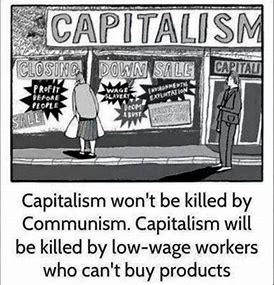
The conformist demands of collective ownership of property and means of production by communism impede creativity. Capitalism is more creative and dynamic. However, capitalist incentive raises the specter of human nature that only sees financial gain without any concern for environmental or human cost. On balance, capitalism appears more likely to accelerate technology because communism more often follows than changes scientific direction.

The growth of knowledge comes from science and exploration of the unknown, but its use can be destructive as well as constructive.

Some think A.I. will lead the world to greater knowledge and prosperity while others believe it will destroy human life. A sceptic might suggest both views are wrong because A.I. is only a tool for recalling knowledge of the past to help humans make better decisions for the future. The real risk, as it has always been, is human leadership.

Harari believes, like Nietzsche, that God is dead because belief in God is losing its power and significance in the modern world.

Though many still believe in God, it seems more people are viewing God as a myth. The Pew Research Center reports a median of 45% of people across 34 countries still believe in God. However, the variation is wide with Brazil saying 70% believe while in Japan the percentage is only 20%. Harari implies belief in God is in decline.

Harari explains biophysics illustrates that human thought is algorithmic. He argues our thoughts, decisions, and behaviors can be understood to be a result of patterns created in human brains that are pre-determined. There is no “free-will” in Harari’s opinion. This is not to suggest aberrant behavior does not exist, but that human thought and action is determined by our experientially defined brain in the same way a computer is programmed. Experience from birth to adulthood is just part of a mind’s programming.

Harari implies understanding of brain function will change the world as massively as the Agricultural, Industrial, and technological revolutions.

Harari goes on to suggest humans have never been singular beings, but a multitude of beings split into two brains that mix and match their biogenetic and biochemical programming to think and act in pre-determined ways. Experiments have shown that the way the left half of a human brain sees and compels action is different than how the right brain sees and compels action. Each half thinks and acts independently while negotiating a concerted action when both halves are functioning normally. That negotiation between the two brain halves results in an algorithm for action based on the biochemical nature of the brain. The way two halves of the brain interact multiply the person we are or will become.

Extending Harari’s idea of biophysics research and algo-rhythmic programming suggests a potential for immense changes in society. A singularity that melds A.I. with human brain function and algo-rhythmic programming may be tomorrow’s world revolution. Of course, that capability cuts both ways, i.e., for the good and bad of society. Interestingly, Harari paints a grim picture of the future based on an A.I. revolution.

CULTURE

Paulette Giles offers a story of America’s unique racial, ethnic, religious and experiential culture.

Books of Interest
 Website: chetyarbrough.blog

News of the World (A Novel)

By: Paulette Jiles

Narrated By: Grover Gardner

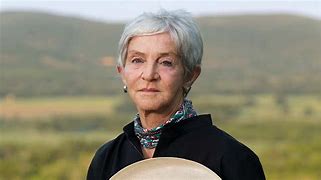
Paulette Jiles (Author, poet, finalist for the National Book Award for “News of the World”)

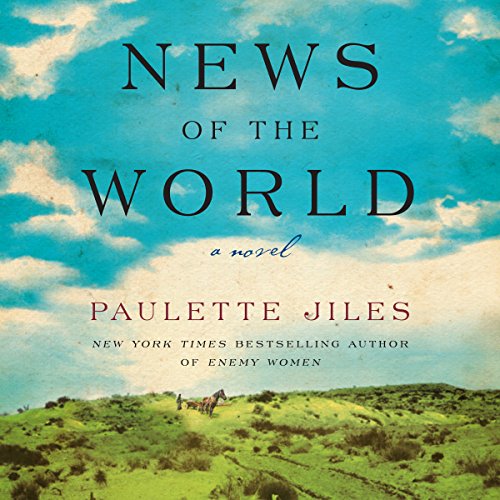
“News of the World” is a story of a young German American girl abducted by Indians in the 1860s, near San Antonio, Texas. She is recovered by a 71-year-old veteran of the Civil War. The author’s contextual research is impressive. Having personally lived in Texas for several years and knowing there is a small Texas town north of San Antonio with a large German ancestral population,”News of the World” becomes immediately credible.

Jiles fictional story is about a young white girl who is 10 years old when she is recovered from an Indian tribe by a Civil War veteran.

The young girl was abducted when she was six. Her four years of captivity were in the formative years of life. She successfully adapts to her tribal environment but does not completely lose knowledge of her younger past. Jiles hero is a Texas oldster who travels the country making a living as a reader of newspapers to citizens interested in news of the world. Many American citizens did not have the money, or the education, to read news of the world. To have that news read to them became an entertainment for many willing to pay a penny, a dime, or as much as a quarter. The former veteran, as an officer in the Rebel army during the war is well educated with experience of combat during the Civil War. That combat experience becomes important in the return of the captive to her German immigrant family.

A bounty of $50 is offered for return of the abducted girl.

The veteran takes the job. Jiles writing is excellent, but the narration of Grover Gardner gives the story an extra level of interest. Experience of life is a trial by fire for most human beings. Imagine being abducted from your family at the age of six by a culture different than your own and how traumatic it would be but how life expanding it could become. This six-year-old represents the melting pot of America. Jiles creates a fictional representative of three cultures, i.e. German, Indian, and pioneer that influences the melding of American culture.

Though Giles may not have meant to illustrate the melding of cultures by her entertaining story, much of what American culture represents is an amalgam of older cultures.

America’s Civil War, the Indian wars, and living life makes American culture unique. Every nation is made up of different races, ethnicities, religions, and experiences that make them unique. Paulette Giles offers a story of America’s unique racial, ethnic, religious and experiential culture.

LIFE

The eradication of inequality is in the eyes of beholders. We are mere humans struggling to be better than we are.

Books of Interest
 Website: chetyarbrough.blog

The Female Persuasion (A Novel)

By: Meg Wolitzer

Narrated By: Rebecca Lowman

Meg Wolitzer (Author)

Many “sexual awakening” books of the past are about men and boys. Nabokov’s Lolita, Lawrence’s “Lady Chatterley’s Lover, Baldwins “Giovanni’s Room” to name three. “The Female Persuasion” gives listener/readers a glimpse of what “sexual awakening” is for girls. That is not to say “The Female Persuasion” is only about sexual awakening. Wolitzer’s story illustrates there is little difference between young men’s and women’s interest in sex and their ambition for success in an adult world.

“The Female Persuasion” gives voice to the equality of women despite historical misogyny.

Two women roommates at a fictional college talk about their lives and explain their frustration with unequal treatment in society. One has sexual relations with women, the other with men but each feel their opportunities in life are limited by being women in a Mans’ world. Greer Kadetsky complains to the University about a male student who sexually assaults her and is ignored by the administration. She is characterized as an intelligent woman who is eligible for admission to Yale but is rejected because of her parents’ mistakes on a financial disclosure form about scholarship assistance. Her unhappiness about not getting into Yale is compounded by the student assault she reports that is essentially ignored by the local college she attends.

Men and women are equal and should be afforded all the rights and opportunities available to men.

The heroine of the story has a boyfriend, Cory Pinto, whom she met in high school. They became lovers at some point in their relationship. She notes in a college dorm where her boyfriend undresses her and expresses admiration of her body. She appreciates her lover’s comment. The author’s perception of beauty reinforces the similarity between men and women and their sexuality. Beauty is in the eye of the beholder, whether male or female, but every person appreciates positive comment about their appearance.

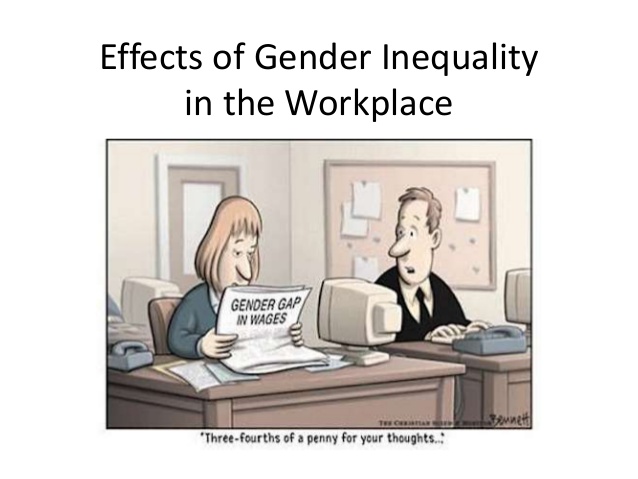
Another element of interest in “The Female Persuasion” is a reinforcement of the saying “Birds of a feather flock together”. Cory and Greer come from lower middleclass families while showing higher than average intelligence in high school that leads them to a college education. After graduation, Cory and Greer move-in together with Cory finding a job while Greer volunteers at a non-profit while pursuing a writing career. Is it a surprise that a person with a college degree has a hard time finding a job after graduating? No, but it seems men are luckier, or one might conclude men are beneficiaries of a built-in gender bias.

Not to read too much into Wolitzer’s story, it seems most job opportunities are better for men than women.

Greer has a chance meeting with a feminist who speaks at the university she attends. In that serendipitous contact, Greer makes a positive impression on the speaker. After graduation, Greer is contacted by the famous feminist with a possible job interview. However, the potential employer dies, and the interview never happens. Meanwhile, Cory has found a job and is pursuing his career. Greer is living at home with her parents to cut down on expenses.

Greer is contacted by a New York feminist organization and is offered an interview that results in a job in New York.

Cory is working outside the country for his company, but the couple continues a long-range relationship. Greer is gaining some success and experience in her job. An interesting incident is noted that gives listener/readers insight to women’s competitiveness when Greer exhibits reluctance to show a letter to her employer for her former gay friend looking for a job. Greer chooses not to proffer the letter to her employer and lies to her friend about having given it. This seems a petty incident, but it is present in all human beings, i.e., the feeling that a person who has found their step on the ladder of success should care about others when they might be competing with them if they go to work for the same company. This seems a matter of personal ambition, not a gender or sexual orientation issue.

The end of the book offers an unsatisfying “bow tie”. The ending has a fairy tale quality that will appeal to some, but the real world is different. Life happens, jobs change, people’s relationships fall apart; some mend, others do not. The eradication of inequality is in the eyes of beholders. We are mere humans struggling to be better than we are.

BOOK LOVERS

In the end, “…History of the Book…”is brought together by Smyth’s review of book circulation. From early written manuscripts, small accumulations by the few grew into massive libraries for the general public.

Books of Interest
 Website: chetyarbrough.blog

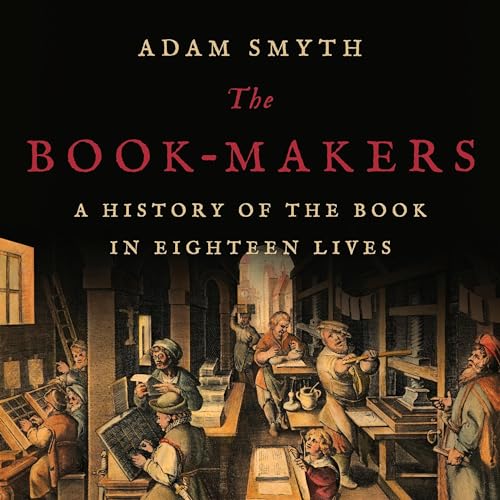
The Book-Makers (A History of the Book in Eighteen Lives) 

By: Adam Smith

Narrated By: Adam Smith

Adam Smyth (Author, Professor of English Literature and the History of the Book at Oxford University.)

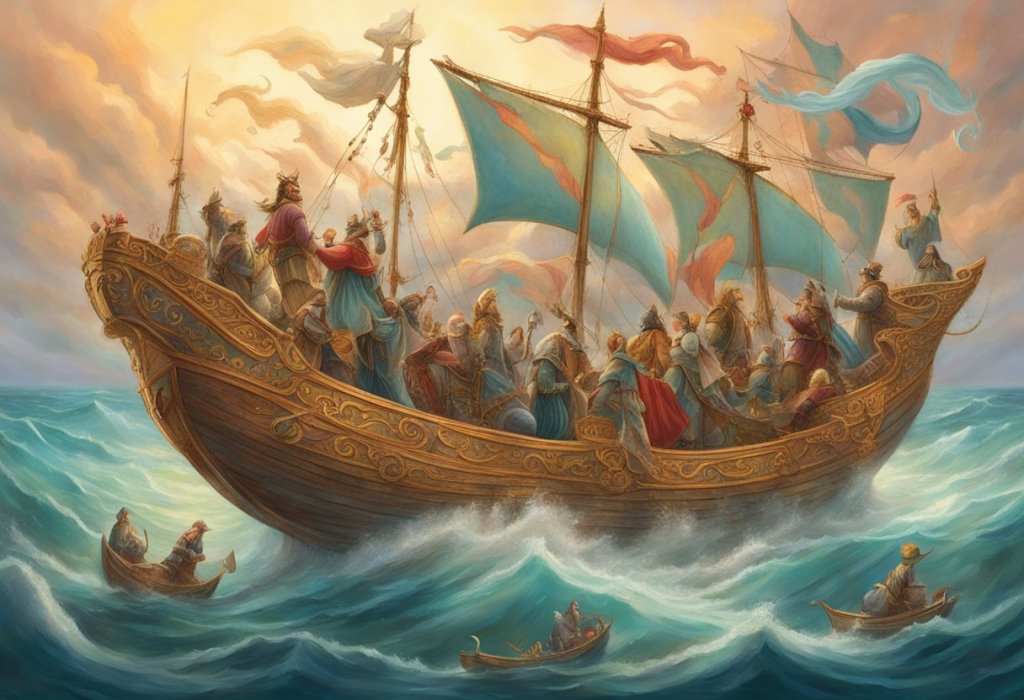
The Gutenberg press is invented in the mid-15th century in Germany. Not surprisingly, the most widely printed book is the Christian Bible that began with the Guttenberg Bible, a 42-line Bible also called the Mazarin Bible, printed in 1455. Adam Smyth notes the first non-religious, widely popular book is printed in 1494, titled “Das Narrenschiff” or “Ship of Fools”.

“The Ship of Fools” is written by Sebastian Brant in 1494. It is a collection of satirical poems and illustrations depicting the foolish behavior of humans and the corruption of the church.

Printed originally in German in Basel, Switzerland, “The Ship of Fools” was lavishly illustrated and became a best seller in Europe. Its popularity came from its satirical content, wide translation, and visual appeal. Smyth explains the book critiques human folly and vice with 112 chapters, each of which is accompanied by a woodcut illustration.

Smyth explains how bookbinding and printing grew as an art.

Contributions to the art were made by both men and women. Elizabeth Collett and Sarah Benlowes were instrumental in improving the quality and continuity of noted books in the 17th century. They pioneered a “cut and paste” technique that made famous books more consistent, unique, and artistic without changing their author’s meaning.

John Baskerville (1706-1775) created and, with the management of his wife, distributed the Baskerville typeface. Not surprisingly, no picture is available on the internet of his wife Sarah Eaves.

John Baskerville and his future wife, Sarah Eaves, made significant contributions to the quality of the printed page. Baskerville created Baskerville typeface in 1757. The new typeface set a new standard for typography with sharp serifs, high contrast thick and thin strokes, and overall clarity. His future wife managed their print business and helped implement Baskerville’s innovations. Together, they improved ink color and sharpness to provide higher quality printing for books.

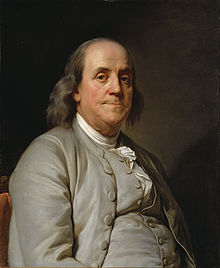
No story of the “History of the Book…” could be complete without addressing Benjamin Franklin (1706-1790).

Smyth reveals the contributions Franklin makes while using Caslon typeface created by Baskerville for the publication of newspapers, advertising, and the most successful non-religious book of the 18th century, “Poor Richard’s Almanac”. Franklin is the quintessential American by exemplifying the strengths and weakness of capitalism.

Money is important to Franklin in different ways.

Franklin used his newspaper to support and print paper money for the U.S. government. Franklin’s industriousness is well documented by historians, but Smyth notes a glaring flaw in Franklin’s character. Of course, this flaw is taken out of historical context and Franklin eventually changes his view, but he supported and brokered the slave trade between the 1750s and 60s. He is seduced by amorality, presumably because of the human desire for money, power, and/or prestige. Of course, this is being human; like all citizens of any economy or government.

Franklin’s views on slavery changed in the 1780s when he became a vocal abolitionist, but he certainly enriched himself in slavery’s earlier years.

Smyth flashes back to the invention of paper. The early beginning of paper is traced back to China in the 2nd century CE. Ts’al Lun (Cai Lun), a court official, is credited for developing papermaking techniques. Paper production spreads to the Islamic world in the 7th century with the printing of the Koran. It extends to Europe in the 12th century. The truly big jump in paper production came in the early 19th century with Louis-Nicolas Robert in France. The Fourdrinier machine could produce huge rolls of paper, but Louis-Nicolas Robert is unable to capitalize on the process because patenting was not available in France. Paper production process improves with John Gamble and Bryan Donkin in England. Paper production became faster, more efficient, and cost-effective.

The truly big jump in paper production came in the early 19th century with Louis-Nicolas Robert in France.

In the end, “…History of the Book…”is brought together by Smyth’s review of book circulation. From early written manuscripts, small accumulations by the few grew into massive libraries for the general public. Access to great and inane writings of genius and pulp producers reached wider and wider audiences. The final chapters address some of the great writers of modern times, particularly poets of which this reviewer is minimally interested and sadly ignorant.

One of the largest libraries in the world is in France, The Bibliothèque Nationale de France.

CHILDREN

Klune’s fantasy offers no clear answer to “the best way” to raise children, but he crystalizes how important they are to the future of the world.

Books of Interest
 Website: chetyarbrough.blog

Somewhere Beyond the Sea (Cerulean Chronicles, Book 2) 

By: T.J. Klune

Narrated By: Daniel Henning

T.J. Klune (Author, winner of the 2021 Mythopoeic Awards)

“Somewhere Beyond the Sea” is a wild ride by an author with an extraordinary imagination. Some listener/readers will be inclined to reject Klune’s book because its flights of imagination obscure the author’s social criticism. This is a fantasy novel offering a message about mistakes parents and society make when raising children.

One might view “Somewhere Beyond the Sea” as a simple fantasy novel about extraordinary children cared for in orphanages.

However, every parent of a child will see themselves and the mistakes they may have made in raising their children. Though science explains much of who humans become is genetically determined, the influence of parents and acquaintances affect genetic predisposition. A child may mature to become a Jesus or Hitler without human understanding of why they became the best or worst of society.

Klune’s fantasy is about an orphanage populated with magical children that have powers beyond rational belief.

They are morphological creatures with powers capable of destroying or creating reality. Being free of parental guidance and raised in an orphanage, the maturity of these children is institutionally influenced. As is true in any orphanage, or any parental home, there are good and bad management practices. As either an orphanage manager or parent, one wonders if they are making the right decisions in the way they are influencing their children.

Klune obviously believes letting children become who they are, as long as they do no harm to themselves or others, is a life goal.

That seems a fine ideal, but parents and institutions are made of humans who are trapped by personal experiences of their own that influence how they raise their children. Some are disciplinaries, others are not. Some are physical punishers of bad behavior; others believe physical punishment only releases a parent’s anger and actually reinforces bad behavior. Despite bad parenting, some children grow to become great contributors to society, regardless of how they were raised, others become criminals of every type.

Does the way we raise our children make a difference in who they become?

There seems no disciplinary practice that guarantees the best outcome of a child raised by either institutions or parents. This is particularly concerning to parents of children who become unhappy and choose to pursue unhealthy relationships, become drug addicts, criminals, or suicide statistics. Parents become victims of guilt. They wonder how they might have been better managers of their children’s lives, thinking that could have made the difference.

Klune’s fantasy offers no clear answer to “the best way” to raise children, but he crystalizes how important they are to the future of the world.

FAME

With the death of Riley’s brother from suicide, a spiraling downward seems inevitable for Lisa Marie Pressley. Surprisingly, Lisa Marie rallies after the suicide of her son, but the negative consequence of fame remain. The pressure of fame, like poverty, are equal opportunity killers.

Books of Interest
 Website: chetyarbrough.blog

From Here to the Great Unknown (A Memoir) 

By: Lisa Marie Presley, Riley Keough

Narrated By: Riley Keough, Julia Roberts

“From Here to the Great Unknown” begins rather shakily because it is unclear about who is narrating and being represented in the story. Listeners who stick with the story begin to see that Keough’s voice is of herself while the non-tape-recorded voice by Julia Roberts is Lisa Marie, telling and filling gaps in Danielle Riley’s story. The two photographs above are meant to show Lisa Marie in her prime and Riley in the present.

This memoir explains Danny Keough (Danielle’s father and Lisa Maries first husband) is an ever-present person in Riley Keough’s life.

The book reveals the thrills, fears, and tragedy of inheriting fame. Danielle Riley Keough assembles a memoir from tape recordings by her mother and recollections of Elvis Pressley’s only daughter, Lisa Marie Pressley. “From Here to the Great Uknown” infers genetics may have something to do with descendants’ lives but the consequence of fame magnifies life’s proclivities.

Lisa Marie is shown to idolize her father who loved her dearly.

As most know, Elvis descended into addiction. This is not a story about Elvis but about Lisa Marie who loved her father, struggled with her mother, and created a career for herself in the music industry. She never achieves the fame of her father but had some success with “Lights Out”, “You Ain’t Seen Nothin’ Yet”, “Dirty Laundry”, “S.O.B”, and “Over Me”. Keough briefly talks about traveling with her mother on tour. Keogh explains her mother dabbled with drugs in earlier years but seemed to kick the habit as she began establishing her own career. Lisa Marie meets and marries Danny Keough, and has two children with her, Riley and a son named Benjamin. Despite a divorce in 1994, Riley Keough and even her mother remained close with Danny.

Lisa Marie’s divorce seems precipitated by a growing intimate relationship between Lisa Marie and the famous King of Pop, Michael Jackson. After divorce, Lisa Marie marries Jackson in 1994.

Keough mentions Jackson’s pedophilia accusations in 1993 that makes one wonder if the marriage had anything to do with the accusations of five boys. Lisa Marie and Jackson divorced in 1996. Riley suggests Jackson’s desire to be in control created friction between the couple that led to the divorce. Jackson was acquitted of any pedophilia charges in 2005.

Lisa Marie marries again in 2002 to the actor, Nicolas Cage, but they are divorced two years later.

Despite three failed marriages, Riley explains her mother wishes to have more children and decides to marry Michael Lockwood in 2006. Through invitro fertilization, Lisa Marie becomes pregnant with twins. She has a cesarian delivery that births Harper and Finley who become Riley’s sisters. Riley explains her mother had quit drugs which she had gone through in her younger years but recovering from the cesarian operation led her back to drugs. She separates from Lockwood in 2016, and they divorce in 2021.

One begins to think about the famous film “Alfie” that came out in 1966.

Michael Caine, who is Alfie, looks back on his life and his famous line in the film is “What’s it all about Alfie?” Riley suggests Lisa Marie was a great mother because she had an instinct for caring about her children. Riley believes her mother slipped back into drugs because of the pain killers she took from the cesarean delivery of her twins.

Living a life of fame has consequences. One can argue that no singer in modern times has exceeded the fame of Elvis Pressley. Maybe Taylor Swift is nearing Elvis’s fame. Time will tell.

The price of fame is loss of privacy, mental strain to maintain an image, isolation, hangers-on self-interests, constant public exposure, and personal security concerns. Riley’s memoir of her mother’s life suggests fame influences Elvis’s, Lisa Marie Pressley’s, and Ben’s lives and deaths. All three had problems with drug use, but Elvis had a heart attack and Lisa Marie had a bowel obstruction thought to have caused excessive weight-loss and death.

With the death of Riley’s brother from suicide, a spiraling downward seems inevitable for Lisa Marie Pressley.

Surprisingly, Lisa Marie rallies after the suicide of her son, but the negative consequence of fame remain. The pressure of fame, like poverty, are equal opportunity killers.

LIBRARIES’ EVOLUTION

The well-made point of Orlean’s history of the Los Angeles Central Library is that a listener/reader can learn a great deal about the world and other people’s life experience from books. The loss of a book is not like human death, disease, or disability. A book is a liberation and broadening of life’s narrowness.

Books of Interest
 Website: chetyarbrough.blog

The Library Book 

By: Susan Orlean

Narrated By: Susan Orlean

Susan Orlean (Author, American journalist, tv writer, staff writer for The New Yorker.)

“The Library Book” is not a thriller, but it is an appreciation of a public service available in nearly every community of the United States. Libraries can be found in communities of less than 8,000 people or megalopolises of millions. Susan Orlean focuses her book on the great fire in 1986 at the Los Angeles Central Library where over 400,000 books were destroyed, and an estimated 700,000 were damaged. Though this was not the largest library in America, it was the largest library fire in U.S.’ history. Orlean’s research suggests the arsonist was a Wanna-Be actor named Harry Peak. However, there is no concrete evidence to confirm his guilt. No one is convicted for the library’s alleged arson. The cause remains undetermined.

It is interesting to note that Orlean admits there were electrical problems in the old building that had been recorded by building inspectors, but fire inspectors concluded it was arson.

It seems somewhat disingenuous for the City or Orlean to accuse Peak as an arsonist but that is not the primary message of her book. Her message is that many, including this reviewer, love the knowledge and experience of others who write books. Arguably, public libraries are one of the greatest public services in America, and at a cost much less than most public services in America.

The last chapters of her book address the history of the creation and renovation of the Los Angles Central Library. It reaches back to the 19th century. She recalls the liberal leaning of librarians and their early adoption of women in the workplace. Two women became Library’ managers in the 1800s. Orlean notes in a joking conversation with a manager of the library about the unlikely promotion of a political conservative as a head librarian.

An interesting note from the author is that the Los Angeles library has historically been a haven for the homeless, a problem that has dramatically risen in the 21st century. Some librarians have expanded their services to help the homeless. It seems noteworthy that the libraries in Las Vegas and those visited in other cities do not lock their bathroom doors the way private businesses like Starbucks choose to do.

The Los Angeles Library took six years to rebuild while workers carried on during the course of reconstruction. She notes that a new book generally requires a week before it hits the shelf because of time needed for proper cataloging. A somewhat distracting habit Orlean uses is recitation of a book’s Dewey Decimal’ number that begins most of the chapters. An interesting note from the author is that the library has historically been a haven for the homeless, a problem that has dramatically risen in the 21st century. Some librarians have expanded their services to help the homeless. It seems noteworthy that the Los Angeles Central library and libraries in Las Vegas do not lock their doors the way private businesses like Starbucks have chosen to do.

The Los Angeles Library is rebuilt to be better than it was before the fire.

Orlean explains library managers in LA are pushing to expand services their libraries provide. Having personal experience of traveling the world, countries like Finland show they have modernized libraries with a concept highly recommended in Orlean’s history of the Los Angeles’ library. Helsinki, Finland’s state-of-the-art library is a dramatic example of the services a library can provide. Everything from music instrument rentals, to recording studios, to sewing machine tables, and cooking kitchens are added to the library’s book inventory. All of these features have been created in Helsinki’s modernly designed library. It is a multi-purpose building that serves both children and adults.

The well-made point of Orlean’s history of the Los Angeles Central Library is that a listener/reader can learn a great deal about the world and other people’s life experience from books.

The loss of a book is not like human death, disease, or disability. A book is a liberation and broadening of life’s narrowness.

Many of the Los Angeles Library books were recovered but the process of recovery required the help of many of LA’s businesses. The books that got wet needed to be frozen to keep them from molding. City businesses made room for soaked books in their commercial freezers. The Los Angeles Central Library is rebuilt to be better than it was before the fire. Many of the books survived with the feint smell of smoke. The library continues to expand and enlighten Angeleno’s lives.

POWER IN INTIMACY

Purnell’s biography implies the drive to succeed for women is based on intimacy rather than inherent human equality. Though that is not the intent of Purnell, intimacy has historically been the avenue women have had to take in society to open opportunity’s door.

Books of Interest
 Website: chetyarbrough.blog

Kingmaker (Pamela Harriman’s Astonishing Life of Power, Seduction, and Intrigue)

By: Sonia Purnell

Narrated By: Louise Brealey

Sonia Purnell (Author, British journalist, worked at the news magazine “The Economist”)

Every writer is influenced by the country in which they were born. Sonia Purnell writes an interesting biography of Pamela (Digby-Churchill) Harriman in “Kingmaker” but from the perspective of a British journalist. This is not to argue Purnell’s interesting perspective is wrong but that there is a spin that is nationalist, more than objective, about Pamela Harriman’s life.

During the beginning years of WWII, America avoided the war until Pearl Harbor when it became clear that a policy of isolationism would not work.

The reluctance of many American businessmen and industrialists like Joseph Kennedy and Henry Ford would not see Hitler for what he was, a fascist racist planning to dominate as much of Europe as Germany’s war machine would allow. Some in the American government, like Franklin Roosevelt, understood Hitler was a threat to all of Europe if not America. Roosevelt maneuvered the government to support England with a Lend/Lease program to defend themselves against German aggression, despite a political majority’s desire for isolationism.

Getting back to Purnell’s history of Pamela Harriman, Purnell explains the important role Pamela played, before Pearl Harbor, that mobilized America’s entry into the war. Pamela Harriman is unquestionably an English patriot. Her close relationship with Winston made her an ideal conduit and influencer in smoothing the relationship between America and the British government. The intimate relationship she developed with Harriman is a tribute to her contribution to the formation of an allied force to defeat Germany.

The massive Lend-Lease program is created in the late 1930s because of the Neutrality Acts that kept America out of direct engagement in the early days of WWII.

The program began in 1939 as a cash and carry program that evolved into a Lend-Lease program in 1941. American could lend or lease military equipment and supplies to any country that allies themselves with the U.S. if it were to enter into the war. The United Kingdom, Russia, and China were considered crucial to any alliance that might be created to defeat Germany. The complexity and logistics of Lend-Lease required astute management by American managers. Harry Hopkins was its first administrator, but Averill Harriman was needed to become a diplomatic political expediter for the process.

Purnell argues the political process in the American/United Kingdom relationship was smoothed and improved by Pamela Digby Harriman who was married to the son of Winston Churchill, Randolph Churchill.

Randolph has at best, a mixed reputation. He was a heavy drinker, reckless, and rude. He was married and divorced twice and had gambling problems that were a constant debt problem that disrupted Pamela’s life. She became closer to Winston Churchill than to her husband and became much more politically involved and astute than her husband in government affairs. That experience made her a perfect match for building a closer relationship with Avrill Harriman that became an affair between two married adults. Harriman was twenty-eight years older than Pamela but had a reputation as a suave ladies’ man.

Purnell reflects on the many affairs of Pamela Churchill Harriman beginning with Averell Harriman, then Edward R. Murrow, and proceeding to John Hay Whitney, Prince Aly Khan, Gianni Agnelli, Alfonso de Portago, Baron Elie de Rothschild, Frederick L. Anderson, Sir Charles Portal, and William S. Paley. The story becomes stale.

There is a cloying sense of unfairness in “Kingmaker ” because Pamela’s skill seems trivialized by her sexuality.

Pamela simply wanted an equal opportunity to succeed in the pursuit of money, power, and prestige, i.e. all the secular objectives men take for granted. Purnell’s biography implies the drive to succeed for women is based on intimacy rather than inherent human equality. Though that is not the intent of Purnell, intimacy has historically been the avenue women have had to take in society to open opportunity’s door.