“Republic of Lies” is a deeply troubling book that explains much about why lies of a President of the United States are ignored.
Books of Interest Website: chetyarbrough.blog
Republic of Lies (American Conspiracy Theorists and Their Surprising Rise to Power)
Author: Anna Merlan
NarratedBy: Suehyla El-Attar & 1 more
Anna Merlan (Author, journalist, BA degree in Modern Literary Studies from University of California, Santa Cruz, master’s degree in journalism from Columbia University.)
Anna Merlan’s “Republic of Lies” explains conspiracy theories are created by people who have real concerns, fears, and grievances about the world in which they live. Some people capitalize on people’s concerns only to satisfy their desire for money, power, or prestige without care or thought about others. Conspiracy theorists seem to believe everything that happens in society is about plots by others to control or create havoc in their lives.
The digital age.
The advent of the digital age has increased the threat of interest groups that see others as alien to their learned beliefs. The fault is not always in the conspiring groups but in listeners who fail to recognize theories are only theories based on different life experiences and beliefs of like-minded people. The root of the problem with conspiracy is that life experience, and differences in one’s appearance provide a basis for prejudicial bias, identification and belief that is as easily wrong as right. Discrimination based on the color of one’s skin or ethnicity become “de rigueur”, i.e. something required by etiquette or current fashion, rather than the substance of who you are as a person.
Investigative journalism is an important part of the American way of life and its search for truth.
Merlan is an intelligent and brave investigative journalist who interviews extremists to find what they believe and why they believe it. Merlan explains how conspiracy theories are by definition beliefs based on perceptions of events in the world. There is a disconnect between what is real and unreal when what human beings see is based on personal life experience and perception. That is why conspiracy is always a theory which can either be right or wrong and still have great impact on and consequence for society.
Alex Jones (Conspiracy radio host, convicted of civil liability for defamation and required to pay over $1 billion in damages to families of Sandy Hook victims.)
Merlan reveals conspiracy theories in the 20th and 21st centuries that have caused an erosion in trust, strained interpersonal relationships, and promoted extremism. Those who share conspiracy theories often deny the proofs of science and what is evident from repeated human atrocities. People become stuck in misbegotten beliefs that polarize groups of humanity who believe you are either one of us or one of them. In that separation, only those who have the same beliefs are worthy of acceptance. Others are disposable and not worthy of life or liberty.
CIA mind-control program.
Merlan reminds listeners of the CIA mind-control program using LSD in the 195os-1970s, and the Tuskegee Syphilis Study of 1932-1972 as acts of American government that erode public trust. Programs like these have created fertile ground for conspiracy theories to argue there is a deep state government that controls the creation and administration of public policy. The formation of QAnon in 2017 is an internet-born conspiracy factory that trades on the mistrust of government. The internet is no longer mere propaganda tool but a decentralized grassroots generator of government-distrusting American citizens’ groups.
“Republic of Lies” is a deeply troubling book that explains much about why lies of a President of the United States are ignored.
The fear of government is legitimized by American government’s mistakes of the past. Turning to an authoritarian President is American citizens answer to distrust of government. The concern one has is in the character of the authoritarian that has been chosen.
Adults need to be present, honest, and emotionally available to children under their care. It is a big job for which most of us fail, but children are the world’s future.
Books of Interest Website: chetyarbrough.blog
A Beautiful Family (A Novel)
Author: Jennifer Trevelyan
NarratedBy: Ruby Hansen
Jennifer Trevelyan (Author, lives in Wellington, New Zealand.)
Set in the beautiful island nation of New Zealand, Jennifer Trevelyan writes a coming-of-age story of a ten-year-old girl named Alix. Through Alix’s eyes, a listener/reader is reminded of their youth and the many events in childhood that show the truth of human nature. What we see and interpret when we are young is clouded by our ignorance and struggle to appreciate life as it is rather than what we think it should be. Ignorance is usually dispelled as we grow older, lose our innocence, and begin to understand life’s struggles are universal.
Humans are animals with advanced abilities to think and communicate.
Humans cooperate, compete, and adapt to their environment to survive. Our imperfections are legion beginning in childhood and multiplying throughout our lives. As a child, we see the world and interpret what we see with innocent eyes. Whether raised by an institution, two parents or one, a child sees through inexperienced eyes which are only interpretations of a real world that only time and maturity will reveal. Trevelyan shows how a child sees more than adults realize but often interpret what they see incorrectly. Eventually a child loses his/her innocence as they mature and reinterpret past experiences, but the fog of memory often interferes with truth.
Trevelyan’s main character, Alix is you, me, and every child raised in a world of married and unmarried parents or institutions.
Trevelyan offers concrete examples of the fragility and complexity of caring for children of the future. Many examples are given of Alix’s seeing life happen with interpretations that are as often wrong as right. Alix has had explanations of the difference between right and wrong but sees her sister steal make-up from a store, get drunk as a teenager, and befriend others who encourage bad behavior. She sees her mother at a distance who appears to be amorously kissing a stranger. Her mother and father are often confrontational with each other. Her mother takes long solitary walks, and her father shows passive detachment from the family.
Alix is on a vacation with her family at a New Zealand’ beach resort. She is an excellent swimmer who often swims alone.
The risk of swimming in the sea introduces the reality of danger in the world even when the environment is beautiful. One thinks about the many shark incidents on the coasts of the world and Malcolm-Jamal Warner’s death from a riptide while swimming in Costa Rica.
Trevelyan offers many lessons for adults who are raising children in this world. Children see more than adults realize and they interpret what they see in ways that can be as easily wrong as right. They incorporate what they see into their perception of the world. Parents are models of who children become as adults. As parents, or institutions that influence and raise children, it is important to be emotionally available, not just present to children. Keeping secrets or being silent about something is human. However, what a child sees or hears can be harmful when not discussed with a parent or guardian. Parents and institutions need to provide age-appropriate transparency to build trust with children. Those children with siblings should have sibling relationships nurtured by responsible adults. Adults need to take responsibility for the environment in which children are raised.
Being on vacation in an idyllic setting does not mean there are no dangers.
Trevelyan story explains why raising children is important. Adults need to be present, honest, and emotionally available to children under their care. It is a big job for which most of us fail, but children are the world’s future.
Science is unquestionably dependent on precise measurement while art or literature may have little to do with it.
Books of Interest Website: chetyarbrough.blog
The Perfectionists
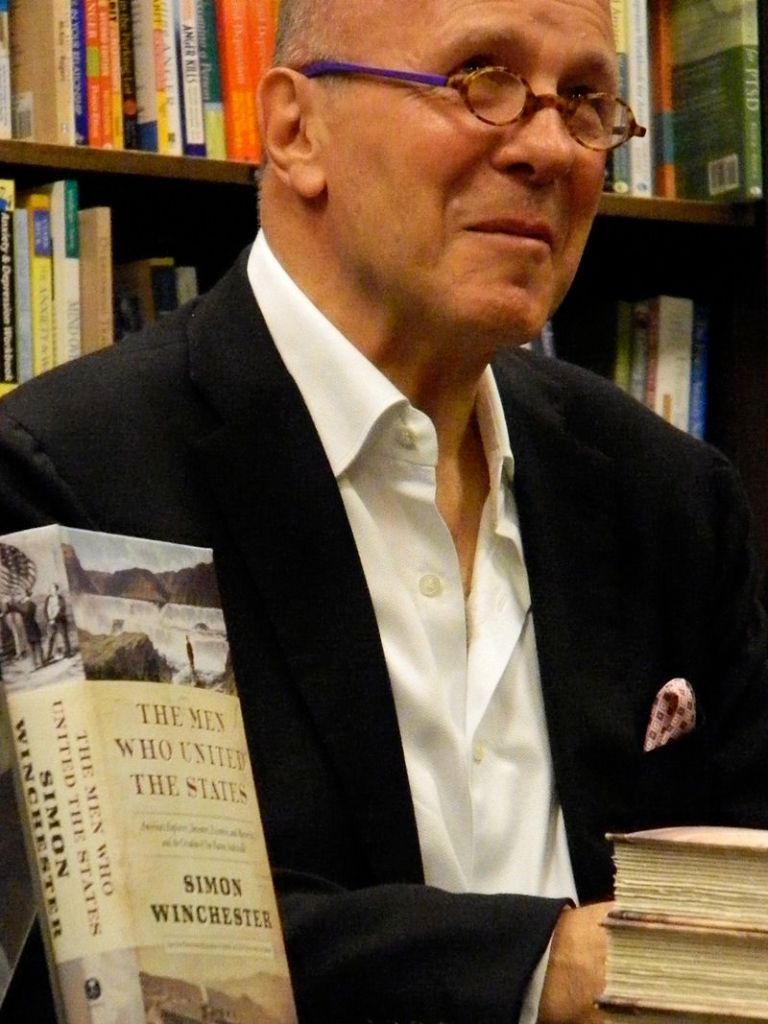
Author: Simon Winchester (How Precision Engineers Created the Modern World)
NarratedBy: Simon Winchester
Simon Winchester (British-American author and journalist)
The beginning of “The Perfectionist” has an interesting vignette about Simon Winchester’s father that sets the table for his book. Simon’s father is characterized as an engineer that was asked to investigate why ammunition being used during WWII was misfiring. Bernard Winchester went to the production’ plant and precisely measured the ammunition that was being manufactured. Its quality was found to be well within specifications required to fire properly when used. Simon’s father followed a shipload of the ammunition to its destination to re-measure the specifications after delivery. The on-board jostling of cargo boxes caused miniscule damage to ammunition resulting in misfires in the field. Simon’s father’s discovery led to better packaging of the ammunition. Simon notes his father is highly praised by the military for his diligent investigation which made corrections in the way ammunition was packaged for transport to the front.
Simon’s father followed a shipload of ammunition to its destination to re-measure the specifications after delivery.
Simon Winchester’s story of his father is the subject of “The Perfectionist”. There are many ways of categorizing the advance of civilization. Manufacturing precision is Simon Winchester’s category of choice. Simon explains how improvements in precision, reaching as far back as the 18th century, led to technological advancement in the modern world. To Winchester, much of that advancement came from the needs of the military.
Winchester notes that John Wilkinson standardized and precisely measured cannon barrel rifling in the 1770s to improve accuracy.
The inaccuracy of weapons like cannons, mass production of reliable weaponry, and strategic advantage for military commands were founded on improvements in precision. Winchester notes that John Wilkinson standardized and precisely measured cannon borings in the 1770s to improve accuracy and reliability in battle. In the 1800s, the French began standardizing gun parts to allow interchangeability when field weapons were damaged or just quit working. In visiting France, Thomas Jefferson recognized the value of that interchangeability during America’s civil war when weapons often broke down and could only be repaired by craftsman who understood how a uniquely designed gun could be repaired.
Eli Whitney chose to hoodwink the American government during the War of Independence when he falsely claims to have a manufacturing plant that could produce standard gun parts.
Around 1801, Whitney contracts with the government and is paid but never produces any standardized parts. Whitney puts on a false show of interchangeability with parts that were manufactured by craftsman rather than a standardized process of production. (Whitney is neither penalized or required to repay the government.) The consequence of mass production of precise gun parts and ammunition is to kill more people in war which started an arms race that continues through to today. Progress in weapon design and manufacture is a harbinger of good and ill. Moving away from weapon production to the rise of industrialization, precise measurement remains a critical component of societies’ modernization.
Though there are precursors to the steam engine that reach back before the 18th century, James Watt (pictured here) revolutionizes its design with the help of Matthew Boulton.
Winchester explains how refinement of the steam engine enables the Industrial Revolution. Watt is obsessed with refining the containment of steam from an operating engine. Watt knows leakage of steam is correlated with loss of steam engine power and potential. The key to achieving better efficiency comes from John Wilkinson who develops a machine that could bore a precise hole through solid iron. With that level of precision, Watt recognized he could produce an engine with perfectly cylindrical, leak-proof chambers that could more efficiently power pistons to produce energy. Watt, Boulton, and Wilkinson open the world to the industrial revolution. Winchester suggests precision is the pursuit of perfection, i.e., a preeminent turning point in history. One may take issue with that conclusion because invention and innovation seem more important than precision, which is a tool rather than a cause for modernity.
The remarkable story of the jet engine is told by Winchester.
It is surprising that the jet engine became a reality as early as the beginning of WWII. Like nuclear bomb invention, Germany’s Hitler initially fails to grasp the importance of jet engine propulsion. However, Germany becoming the first to create a jet plane, the Heinkel He 178, to fly with jet propulsion. Hitler is more focused on refinement of the V-2 rocket as a revenge weapon against England than on jet propulsion for airplanes.
Frank Whittle (1907-1996, English aviation engineer and pilot who invented the jet engine.)
The original idea for the jet engine came from Frank Whittle, a British engineer in the early 1930s. Whittle realized Newton’s laws of energy could propel an airplane without propellers. Newton’s third law says for every action in one direction there is an equal but opposite energy reaction. Whittle acquired a patent on the idea of a jet engine but because of the five-pound cost of patent renewal and lack of any financial support for his brilliant idea, his patent expired. As a result, no single entity holds a patent on jet propulsion. It is not until May of 1941, that Frank Whittle’s turbojet engine first flies a plane.
1945 Gloster Meteor British jet.
There are many issues to be resolved for the idea of a jet engine to propel an airplane. There is the extreme pressure and heat generated by fuel being ignited within a turbine that must be designed with precise measurements, i.e., measurements within millionths of an inch. Winchester notes that the slightest deviation in blade shape, alignment, or material composition could cause vibration, inefficiency, or worse–engine failure and pilot death. The jet engine components had to endure extreme temperature changes and withstand metal fatigue while operating with high-speed rotating parts. Thousands of parts had to be precisely designed and integrated to provide the propulsion necessary for flight.
Whittle’s ultimate success leads him to be Knighted in 1948.
Whittle is recruited in 1937 by British Thomson-Houston, an engineering firm, to build a prototype of a jet engine. With money to create a prototype, Whittle turned his design idea into reality. With the help of two retired RAF officers, Whittle formed a company called Power Jets Ltd. In 1944, Britan nationalized Power Jets Ltd and Whittle was compelled to resign from the board in 1946. However, Whittle was ultimately recognized and knighted in 1948 for his contribution to Jet engine development.
The next big area of change addressed by Winchester is computer chip manufacture.
Transistors like these in the early years of computers are used in computer chip manufacture.
Winchester’s primary subject is Moore’s law postulated in 1965 by Gordon Moore, the co-founder of Intel. Moore predicts microchip computing power and efficiency would double every year and then every two years with continued miniaturization of chip transistors. His prediction, as of today, holds true. The size of computer chip transistors is measured in millimeters in the early 1960s. Today, measurement is at an atomic level, trending toward the use of quantum theory to continue Moore’s law prediction.
The last chapter of “The Perfectionist” is about measurement as a tool. Ironically, understanding measurement evolves through history. It may be a standard of change, but it is also a subject of change. The idea of distance measurement has evolved from an organic explanation that only imperfectly describes the visual world. That imperfectness leads to an obsession with exactness that boggles the mind.
As a caution, Winchester suggests the pursuit of precision may blind us to other values. The aesthetic beauty of a musical composition, architecture, a great novel, or mere thoughts of human beings may have little to do with precise measurement but can change the world. What one sees or feels is what we discount or respond to with emotion and/or appreciation, regardless of measurement analytics. Science is unquestionably dependent on precise measurement while art or literature may have little to do with it.
The conclusion one may draw from “Eleanor Oliphant is Completely Fine” is that government liberality is better than authoritarianism
Books of Interest Website: chetyarbrough.blog
Eleanor Oliphant is Completely Fine
Author: Gail Honeyman
NarratedBy: Cathleen McCarron
Gail Honeyman (Author, Scottish writer and novelist, won the 2017 Costa First Novel Award for “Eleanor Oliphant”.)
“Eleanor Oliphant Is Completely Fine” is a commentary on life’s loneliness which seems a self-imposed choice. There is a comic and mysterious quality to Honeyman’s story. Genetics and life experience inherent in every life is what the story of Oliphant is about. As an observer of life, one may believe experiences of life only reinforce genetic predisposition. If one accepts that belief, little of who we become is under our control. Honeyman’s story infers that is only partly true.
Waxing hair removal.
Life is a struggle for Eleanor. It is not that Eleanor does not make choices about life but that her choices appear other directed rather than inner directed. Life may be just a matter of chances and circumstances rather than inner directed motivation. Her story begins with a visit to a salon for an intimate waxing of her labia majora. (Hot or cold wax is applied to her intimate parts that pulls the roots of pubic hair off.) Eleanor is shocked by the experience. One presumes she is shocked because of the pain but surprisingly Eleanor explains it is because of the appearance it leaves of her naked woo-hoo. She thinks she now looks like an infant rather than a fully mature woman. This is a somewhat comic beginning to the author’s story. On the other hand, it shows Eleanor’s life seems more determined by society than inner direction.
Eleanor is a bookkeeper in a small business.
There is a mystery in this story that is slowly revealed by the details of Eleanor’s life. She lives alone in what is a subsidized apartment paid by social services. She is visited by a case worker and there appears some mysterious reason for her receiving help from the State. The mysterious reason is implied by the interview of Eleanor by a social case worker who pauses as she looks at the last part of a file as she interviews Eleanor. The case worker’s pause is about something written about Eleanor’s past. That past is made more mysterious as one finds Eleanor’s mother is institutionalized for some reason not disclosed.
Cultural differences.
The striking point made by this case worker’s visit to an American reader is the difference between Great Britain’s philosophical and cultural differences in regard to social policy. America rejects socialism while Great Britain endorses it. Great Britain practices democratic welfare capitalism while American democratic welfare is more limited. Healthcare is publicly funded in Great Britain while it is mostly private in America. These differences do not change the truth of Eleanor’s life story but it contextualizes Honeyman’s view of a life in a democratic socialist system rather than a democratic capitalist country.
The waxing incident is a comic beginning to Honeyman’s story, but it reflects on urban life as emotionally isolating despite being surrounded by other people.
Eleanor drinks half or more of a bottle of vodka alone in her apartment at the end of a work day. Her life is depressingly humdrum with hints of a trauma earlier in life. Whatever that trauma may have been urges one to keep listening or reading the author’s story. One’s interest is heightened by a young man that seems interested in Eleanor as a future companion. The young man is Raymond, a co-worker. Raymond is a loved son which is quite different from the family in which Eleanor appears to have been raised
Nearly half way through the book, one finds Eleanor has a scar on her face.
Like stepping into a darkened room, Honeyman shines a light on humanity. We become who we are from genetics and life experience. Honeyman gives many hints in her story that suggest there is a connection between Eleanor’s appearance, her reclusive and withdrawn behavior, her alcohol consumption, her mother’s confinement, and the aid she receives from Great Britain’s welfare system.
The perspective one gains from this story ranges from the horror of human selfishness to the value of caring for others.
One may compare American Capitalism with British Socialism thinking of their strengths and weaknesses or view the story of Oliphant as something that can occur in any social system of government.
Oliphant is rescued from a horrible family environment by Great Britain’s social welfare system to become an independent and productive British/Scottish citizen.One wonders if the same could happen in America with a less liberal system of welfare that relies on self-interest to change people’s lives. Of course, that is an unanswerable question because Oliphant could have been rescued in either country. On the other hand, would more citizens be saved by a more socialist system of democratic capitalism?
The details of Oliphant’s life are horrific. The cruelty of family life is real in every culture, whether authoritarian or democratic. The conclusion one may draw from “Eleanor Oliphant is Completely Fine” is that government liberality is better than authoritarianism.
It is interesting to be reminded of the danger of a strong executive branch and the consequence of rule by an authoritarian President. Trump shows loyalty to his beliefs, rather than competence, as the primary qualification for appointment to America’s federal government bureaucracy.
Books of Interest Website: chetyarbrough.blog
Alexander Hamilton
Author: Ron Chernow
NarratedBy: Scott Brick
Ron Chernow (Author, biographer of Alexander Hamilton, George Washington, Ulysses Grant, and Mark Twain.)
Though this critic did not care for Chernow’s biography of Washington, his examination of Alexander Hamilton is of some value. Chernow’s attention to detail is impressive. Considering the detail of Chernow’s biographies, it is quite an achievement for Chernow to have had the time to fully research and write histories of one, let alone four, important American’ leaders and influencers.
Traditionally, Alexander Hamilton’s father has been identified as James A. Hamilton, a largely unsuccessful Scottish trader in the British West Indies (approximately 1,000 miles from the American’ continent–made up of the islands of Cuba, Jamaica, and the Lesser Antilles.)
However, Chernow suggests James Hamilton may not have been the father of Alexander because his mother, Rachel Faucette, may have had sexual relations with other men. Ms. Faucette had become James’ lover while being married to Johann Lavien. Faucette had become unhappy and left Lavien in 1750 to take up with James Hamilton. Lavien had Faucette imprisoned for adultery. Lavien eventually divorces Faucette in 1759.
Chernow suggests Faucette, at some point, may have had an affair with Thomas Stevens, a successful merchant and landlord, while living with James Hamilton.
Chernow’s evidence is primarily from reports of Alexander’s close physical appearance to a son of Thomas Stevens. These two young men, Alexander and Thomas Steven’s son, Edward, were about a year apart in age with Edward being the older. Alexander and Edward became close friends, and Thomas Stevens played an important role in Alexander’s life when his mother died. Stevens took Hamilton into his household on St. Croix. Alexander became part of the Stevens’ family.
In Hamilton’s time with the Stevens family, he became educated by reading books and being employed in the mercantile trades of the West Indies.
By any measure, whether Alexander is the son of Stevens or Hamilton makes little difference. By definition, Alexander’s paternity is illegitimate. One asks oneself–so what? Alexander’s genetic inheritance from Faucette and either father leads him to become one of the most important historical influences in the creation of the American Constitution.
Hamilton arrives in New York City in 1772. Hamilton is only 17. The American Constitution is adopted, signed and ratified on September 17, 1787, and implemented on March 4, 1789.
Hamilton’s influence as a representative of New York is to create a centralized government with taxation authority.
This national government is to have the right to enforce national laws that apply to all citizens according to enumerated powers of a federal government under the direction of a President and Congress elected by American citizens. Chernow notes that George Clinton, the governor of New York, is opposed to the strengthening of the federal government because of his interest in maintaining his power as Governor of New York. Hamilton is one of the three representatives of New York at the convention, two of which were opposed to strengthening the federal government.
Chernow explains how the convention succeeded in strengthening the federal government.
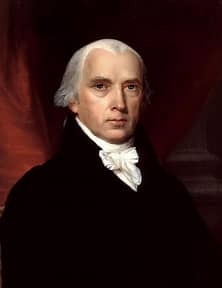
Alexander Hamilton (1755-1804)James Madison (1751-1836)
The two framers that are shown to have the greatest impact on the draft of the Constitution are Alexander Hamilton and James Madison. Chernow explains Hamilton pushed for a strong centralized government with broad powers to tax, regulate commerce, and enforce laws. Madison supports a strong federal government but argues for states’ rights and strict limits on federal authority. Hamilton wishes for broad flexibility for the federal government in the interpretation of implied powers while Madison insists on an explicit statement of the powers of the federal government to limit its implied powers. Hamilton looks to America as an industrializing nation that should be supported by a national bank with federal support for infrastructure improvements while Madison sees America as the agrarian breadbasket for the world with limited banking and industrial’ support by the federal government. Hamilton believes in rule by an educated elite while Madison is concerned about concentration of power in an elitist aristocracy. In the end, Madison takes on the role as the principal author of the Constitution which is intended to limit Hamilton’s expansive interpretation of federal government control of State governance.
It is interesting to be reminded of the danger of a strong executive branch and the consequence of rule by an authoritarian President.
Trump shows loyalty to his beliefs, rather than competence, as the primary qualification for appointment to America’s federal government bureaucracy. Chernow successfully reminds listener/readers of the history of early American government creation, but “Hamilton” is not a page turner like his biography of Mark Twain.
As a son of a strong mother, one is impressed by Tina Knowles’ character in her enlightening memoir. She shows how women are the backbone of society despite their treatment in a patriarchal world.
Books of Interest Website: chetyarbrough.blog
Matriarch (A Memoir)
Author: Tina Knowles
NarratedBy: Tina Knowles & 4 more
Celestine Ann Knowles aka Tina Knowles. (Author, American businesswoman, fashion designer, and mother of the famous performer, Beyoncé.)
This is an intelligent well-written memoir of the mother of two famous performers, Beyoncé and Solange Knowles. Celestine Ann Knowles is born in Galveston, Texas on January 4, 1954. Her two famous daughters are the singer Beyoncé and the composer, Solange Knowles.
BeyoncéMandatory Credit: Photo by Andrew H. Walker/Shutterstock (10569848bu) Solange Knowles Black composer & performance artist.
The mother of these two famous women tells a story of what it is to live in the 1950s as a young, poor Black American. Tina (a diminutive of Celestine) Knowles becomes a successful businesswoman, fashion designer, philanthropist and mother of two highly successful women in the 21st century.
Galveston’s in the 1950s.
Living in Galveston, Texas in the 1950s as a person of color is starkly and clearly explained in Tina Knowles’ memoir. Tina’s father works as a longshoreman. His work is sporadic because of a mining accident that ruined one eye and made him hard of hearing which limited the work he could do as a longshoreman. With the aid of his wife, Tina’s mother as a seamstress, their meager income is enough for them to get bye. Tina’s mother is the foundation of the family. Tina grows up as a force of nature before reaching adulthood. She grows up in a family ruled by a “Matriarch” as the power in her family and neighborhood. Even in her pre-school years, as the youngest of seven children, Tina understands her mother is the person who holds the family together and eventually makes Tina the matriarch of her future family.
White American’ opposition to equality in the 50s.
Tina adventured where many young Black children timorously dealt with life in an unfair world. Despite its unfairness, Tina ventured forth.
Tina tells the story of her childhood companions who would not go into an ice cream store in Galveston when white children were being served. Tina ignores their timorousness, goes into the store and is told to get out by the store manager. She finds what her friends were saying is true, but she had to experience it herself. Tina goes to a Catholic school where she is treated harshly by the teachers but continues on to graduate despite their strict rules. Nearing graduation, she becomes ill and is treated by a white physician who presumes she is lying about never having premarital sex. The white physician and an aide strap her down and conduct a physical exam that leaves blood on the table because of her hymen being broken by the exam. Her mother calls the physicians to complain about the treatment of her daughter and takes her to another hospital to find her illness is unrelated to the doctor’s presumptive and unnecessary pelvic exam.
Tina is raised in the time when Black discrimination is finally beginning to change. Brown v. Board of Education is decided in 1954.
Tina graduates from high school, presumably in the early 1970s, and goes on to college. While in high school, she joins a local singing group that is inspired by The Supremes. They call themselves the Veltones. That experience leads her to work in fashion and entertainment. She becomes a designer, and entrepreneur, and eventually the “Matriarch” of her own family. In 1980, Tina marries Mathew Knowles. They were married for over 30 years but divorced in 2011.
In the Knowles’ marriage (1980-2011) they have two daughters, i.e., Beyoncé and Solange Knowles.
Tina Knowles explains how the birth of Beyoncé ignited her ascendence as the “Matriarch” of her generation. From taking care of Beyoncé to remodeling her house to creating her first business, Tina created her own world. Tina built the foundation for her life and raised one of the most famous singers in the world.
“Headliners”–Tina Knowles first business.
At 32 years of age, Tina decides to start a business. With financing from what is to become her former husband, she decides to open a salon. Tina is pregnant with her second child, Solange. Matthew involves himself in Tina’s business in financial ways that challenge its success. Tina starts “Headliners” in the early 1990s to offer make-up and beauty services in Houston, Texas. Beyoncé is now around nine years old while Solange is nearing four or five years of age.
Matthew and Tina Knowles file for bankruptcy.
Her husband, Matthew decides to quit his six-figure job to join Tina in her business. For unclear reasons, the family files for bankruptcy, sells their home, and rebuilds their lives while Tina focuses on her salon business. Tina explains she decides to divorce her husband because of his infidelity and mishandling of their dwindling wealth. She holds her life together by focusing on the burgeoning career of her girls and her salon business. Tina shows herself as the guiding force of her talented daughters. She has become the “Matriarch” that her mother had developed her to be.
Beyoncé’s 2025 concert in London.
Though most interest in Tina’s story may be because of her daughter, Beyoncé, her memoir suggests the “Matriarch” of the next generation of Knowles will be her daughter, Solange. She does not diminish the great success of Beyoncé as an incredible talent who runs her musical productions, but it seems Solange is the worker bee that is driven to become her generation’s “Matriarch”.
Agnéz Deréon (Tina Knowles’ mother, the “Matriarch” of the Knowles’ descendants.)
At the end of Tina’s book, she has reached the age of 70. She maintains a clear picture of the story of her life. Married and divorced twice, she is in charge of her life and appears to influence all who surround her. As a survivor of breast cancer and a firm grasp on life, she uses her strong belief in God and the love of her family to believe the best is yet to come. As a son of a strong mother, one is impressed by Tina Knowles’ character in her enlightening memoir. She shows how women are the backbone of society despite their treatment in a patriarchal world.
Allen Esken’s story is too tedious and drawn out to be a great work of fiction. However, it reminds one of the injustices of life for those who get away with murder.
Books of Interest Website: chetyarbrough.blog
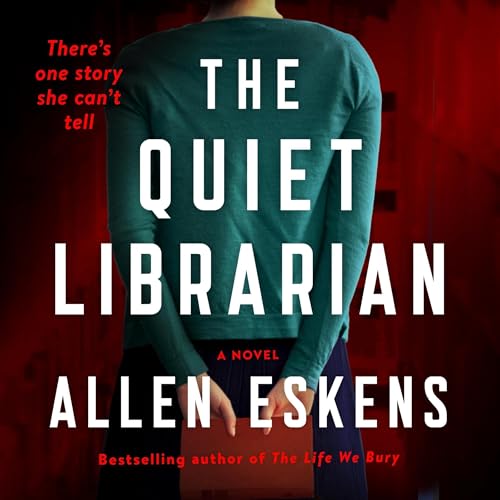
The Quiet Librarian (A Novel)
Author: Allen Eskens
NarratedBy: Livana Muratovic
Allen Eskens (Author, former defense attorney who lives in Minnesota.)
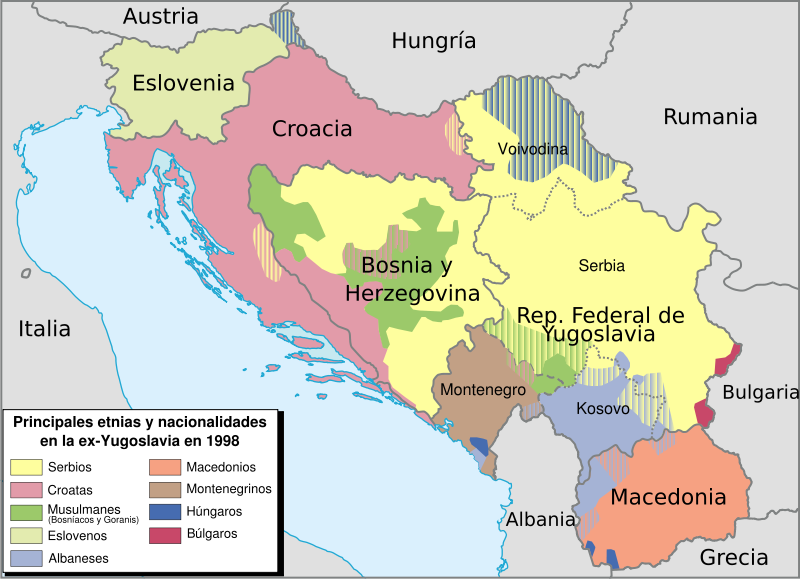
Allen Eskens has written a story of revenge and war without giving it context which diminishes its value. Having visited the former Yugoslavia which is split into 6 ethnic territories, the war that occurred between Bosnian and Serbian people can still be seen in pock marked buildings that were evidence of the war. Our guide for the trip reflects on America and NATO’s failure to aid a peaceful resolution while the conflict killed many people that may have been saved by international intervention. Eskens makes a passing comment about that feeling in his book, but the truth of that conflict is as real today as the people who lived through it.
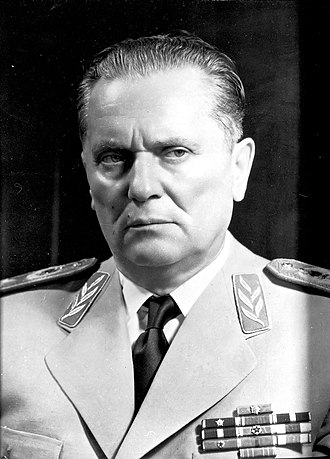
Josip Broz Tito (Yugoslavian ruler 1953-1980, died in May of 1980.)
When Tito died in 1980, Slobodan Milošević, a nationalist Serbian leader promoted the idea of a “Greater Serbia” without accommodation to ethnic differences of the former Yugoslavian people. Milošević capitalized on the historic conflict between Serb’ and Bosnian’ ethnic and religious beliefs to acquire and hold power. Serbian Christian beliefs were used as a tool to incite support of Milošević’s rule of Bosnians who are generally Muslim believers. Many Bosnians and Serbians die as a result of Milošević. Slobodan Milošević retained power for 13 years but is removed in October of 2000 when Vojislav Koštunica won the presidency. Though Milošević supporters try to protest the election results, they fail.
Slobodan Milošević (President of Serbia 1989-1997, died in 2006 of a heart attack.)
Milošević is arrested in 2001, extradited to The Hague, and tried for war crimes, genocide, and crimes against humanity. He is the first former head of state to be tried by the Hague court. The trial lasted for four years. Milošević is found dead in his prison cell. He was 64. Autopsy shows it to be a heart attack. No verdict is reached, leaving no closure to the victims of his perfidy.
The division of Yugoslavia after Tito’s death.
This history does not change Eskens’ story, but it offers context that helps one understand why a Bosnian emigree to America pursued a former Serbian nationalist who brutally raped her mother and murdered her family in front of her during the Bosnian/Serbian war. It is credible fiction of the consequence of war whether in Bosnia or anywhere in the world where the guilty go unpunished. The question becomes, is intent to murder a criminal by one who has firsthand knowledge of another’s heinous act equally guilty of murder? The question is not asked or answered by Esken’s story; probably because it is unanswerable.
The heroine of Eskens story is Hana Babić who emigrates to Minnesota to earn a living as a librarian.
She has adopted the grandson of a close friend who is murdered in the Bosnian/Serbian war. That adoption and her personal experience drives her to find and murder the man who destroyed her life in Bosnia. She has to choose between committing murder in America or letting a murderer go free when she finds her nemesis. However, protecting her adopted boy by letting a guilty person escape vigilante justice is what drives the author’s story. If one sticks with the story, they find her answer.
One wonders about lives of Ukrainians if a tentative settlement proposed by Putin in August 2025 is accepted by Ukraine. Territories under siege in Ukraine would be given to Russia in return for ending the war.
How many Ukrainians will leave their homeland to seek a new life? How many will stay, and secretly fight on? How many will reluctantly accept their homeland’s loss? These were decisions made by Bosnians in former Yugoslavia.
Allen Esken’s story is too tedious and drawn out to be a great work of fiction. However, it reminds one of the injustices of life for those who get away with murder.
“The Sun is Also a Star” is a nicely written book that will keep reader/listeners interested in knowing what happens to two young lovers. One is left in suspense until its last chapters.
Books of Interest Website: chetyarbrough.blog
The Sun is Also a Star
Author: Nicola Yoon
NarratedBy: Bahni Turpin & 2 more
Nicola Yoon (Author, Jamaican American, NYT’s bestselling author, National Book Award finalist, electrical engineering undergraduate at Cornell, graduated from Emerson College with a Master of Creative Writing.)
Nicolo Yoon, the author, worked as a programmer in investment management for 20 years before publishing her first book, “Everything Everything”. It became a best seller. “The Sun is Also a Star” is her second published book which also became a best seller. Interestingly, the Jamaican born writer’s husband is a Korean American graphic designer. One presumes her book partly reveals her life experience in America. The credibility of her love story lies in the truth of the saying that “birds of a feather flock together”, an apocryphal Biblical saying that reaches back to the “Book of Ecclesiasticus” in the first century. Her hero and heroine are highly intelligent teenagers of immigrant parents who are influenced by their parent’s native cultures. Being children of immigrants, highly intelligent, high performers in academics, and living in America are why one thinks of the “birds of a feather…” analogy.
JAMAICA, SOUTH OF CUBA, OFF OF THE FLORIDA COAST.
“The Sun is Also a Star” is about a Jamaican girl, a South Korean boy, and the girl’s parents who are being deported because of their illegal immigration status. The heroine’s father comes to America illegally to pursue a career. His wife and daughter follow later in presumably the same illegal way. The girl’s father struggles as an unsuccessful aspiring actor. He and the girl’s mother work at menial jobs for the families’ survival. They are within a day of being deported by the American government. Their daughter loves her mother and is ambivalent about her father. She is a bright high school student nearing graduation. The daughter is seeking help from an immigration attorney to delay and hopefully stop their deportation. On her way to an immigration lawyer’s office, she meets a handsome South Korean boy near her age who is interviewing with an Ivy League school in the same building in which the lawyer practices his profession. They serendipitously meet and their lives become intertwined.
Over 200,000 immigrant arrests in America have been made as of August of 2025.
This is a fairy tale story that offers a truth about the iniquity of arbitrary enforcement and forced ejection of purported illegal immigrants in America. The second term of the Trump’ presidency shows how wrong it is to deport alleged illegal immigrants without judicial review. Obviously, if a legal review shows an immigrant is a criminal there is justification for immediate deportation. If the legal review shows an immigrant has always been a productive and law-abiding citizen of America, some may reasonably argue they should be directed to a program that allows them to eventually become legal residents of the United States.
Without legal review, a valuable source of American productivity is unnecessarily lost. To argue that loss is justified by jobs that will be filled by citizens of the United States is weak because many of the jobs taken are not taken by American citizens because the wages are too low, the physical demands too high, and the hospitality needs of much of America are unmet. It is true that many in America are unemployed because they have chosen to not get a good education and choose to remain unemployed by being unwilling to work for low wages. Their unemployment is not because of illegal immigrants but because of the choices they have made in their lives. Construction, agriculture, hospitality, retail, healthcare, and small businesses have been negatively impacted by the deportation of immigrant labor. In some industries, up to 40% of the workforce has been impacted by deportation.
Yoon’s story is a fairy tale of young love between an illegal and legal immigrant living in America.
Nicolo Yoon explains how love between two people occurs when they have similar life experiences and relate to those experiences with shared intelligence. The young girl and boy have similar life experiences in America. Both choose to educate themselves. The two young teenagers have parents that love them who have their own prejudices and life experiences in ways that influence their children to be ambivalent about the love they have for each parent.
Most parent’s, regardless of their culture, want a better life for their children.
Yoon illustrates the motivations and consequences of people who decide to emigrate. Whether emigrating legally or illegally, emigrees are faced with the difficulty of adjusting to a different culture that conflicts in good and bad ways with the culture they have left. Emigree’ parents wish well for their children but many fail to grasp the freedom offered by American culture to choose their own path in life. Even though life choices are influenced by one’s intellect, emotions, and (in America) a white majorities’ discrimination, most young people are able to choose their own path in life.
“The Sun is Also a Star” is a nicely written book that will keep reader/listeners interested in knowing what happens to two young lovers. One is left in suspense until its last chapters.
The importance of freedom in book publication and for those who read them is the message Charlie English gives the public in “The CIA Book Club”. It is too bad America’s current President chooses not to read because this book reminds one of how important books are in the world.
Books of Interest Website: chetyarbrough.blog
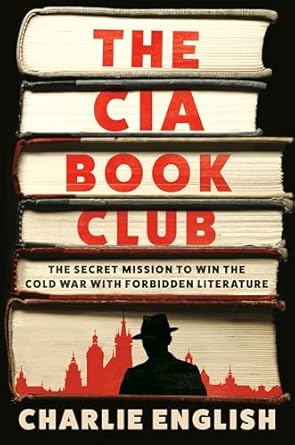
The CIA Book Club (The Secret Mission to Win the Cold War with Forbidden Literature)
Author: Charlie English
NarratedBy: Michael David Axtell
Charlie English (Author, British non-fiction author, former head of international news at the Guardian.)
“The CIA Book Club” is a reminder of the former USSR and today’s Russian invasion of Ukraine and what is at stake for Ukraine’s citizens that may, once again, come under the repressive return of a dictatorial leader. Putin has adopted many of the same characteristics of Joseph Stalin, a leader who believed in dictatorial control over the media, and isolating or murdering anyone who challenges his leadership. The scale of Putin’s use of gulags, and mass executions is much smaller than Stalin’s but his cultivation of a cadre of followers, rewarded by the power of association and lure of wealth, create a similar dictatorship.
Poland-Europe’s crossroad.
What Charlie English reminds listener/readers of is how Poland suffered under Stalin and what it will mean to Ukrainians when much of their land is taken to settle the Ukrainian war.
Without solid opposition of all Western powers, concession of Ukrainian land seems inevitable. Trump’s waffling opposition to Putin and the fear of nuclear confrontation reduce the likelihood of Russia’s peaceful withdrawal from Ukraine.
Like the repressive actions of the USSR in the Baltics, English explains how brutal Hitler, Stalin, and Stalin’s successors were to Poland even after Stalin’s death.
Strick control over publishing continued after Stalin’s death. Orwell, Koestler, and Solzhenitsyn were banned, and western books were blocked at the border. Polish citizens like Miroslaw Chojecki risked imprisonment for smuggling and/or re-printing forbidden works. The KGB monitored dissidents, writers, and students. English notes that phones were tapped and homes raided. However, a CIA program continued to provide copies of banned books to Polish dissidents. Polish citizens became partners in covert activities to smuggle and re-print books for their countrymen and women. A Solidarity movement against censorship and discrimination is formed by Polish patriots. This reminds one of the resistances one hears when visiting today’s Baltic countries and stories of citizens whose families were jailed, tortured, and sometimes killed during Stalin’s occupation.
Poland, a spectacularly beautiful country.
Poland is an important trade and agricultural producer at the crossroad of Europe. It has no natural land barriers between itself and the great powers on their borders. Its strategic value to European aggressors has made it a victim of a history of foreign occupation. In the 13th, 17th, 18th, and 20th centuries Poland was occupied by Mongols, Prussians, Germans, and Russians. Poland’s diverse population seems to have been unable to create a strong centralized authority that could successfully resist their powerful neighbors who confiscated their riches and occupied their land. Charlie English’s book reminds reader/listeners of what makes Poland a great nation. It is its diversity and its pursuit of intellectual development. Sadly, its geographic location has threatened its existence for millenniums. America is blessed by its geographic location and shows how it could survive as a free democratic nation. Through clandestine operations and support by the CIA, Polish patriots were able to reproduce banned books during the cold war that aided the intellectual growth of Poland despite Stalin’s repression.
America’s current President impedes the influence of freedom in Europe by dismantling surveillance oversight, undermining the EU-U.S. Data privacy framework, and by shutting down the GEC (Global Engagement Center) which is designed to counter foreign disinformation.
Trump’s intent is to save money. The author notes the same thing nearly happened with the CIA book publishing support of Poland when some of America’s leaders tried to cut its funding. The CIA prevailed and the financial support continued.
The importance of freedom in book publication and for those who read them is the message Charlie English gives the public in “The CIA Book Club”. It is too bad America’s current President chooses not to read because this book reminds one of how important books are in the world.
Black America is not liberated by the Civil War. Neither will the Russians or Ukrainians be liberated by whichever side wins. There are no winners. There is only death and destruction as evidenced by the tragedy unfolding in Gaza.
Books of Interest Website: chetyarbrough.blog
How to Dodge a Cannon Ball (A Novel)
Author: Denard Dayle
NarratedBy: William DeMeritt
Denard Dayle (Author, Jamaican-American writer, graduate of Princeton with an MFA from Columbia University.)
The central character in Denard Dayle’s novel is Anders. Anders is a light skinned Black soldier in the American Civil War. He begins as a Confederate and escapes to become a Union soldier as a Flag carrier. The author’s story is tedious and a mess, but it reflects the many conflicts among Americans fighting in the Civil War. The bizarre happenings in Dayle’s story are meant to be satirical with a bite but with so many twists in ideas about race, nationalism, gender, and the history of the war that one is inclined to put the book down. One may soldier on with a hope to understand Dayle’s point.
America’s Civil War.
After listening to “How to Dodge a Cannonball” for several hours, one gathers Dayle’s point is to show the complexity of America’s Civil War and what it means to be an American. The absurdity of all wars is revealed in America’s Civil War contradictions and hypocrisies. There are many, some of which are uniquely about civil wars, but also about every war.
In fighting a civil war for freedom in America, governments deny freedom to both sides of the conflict.
In fighting a war of conquest like that in Ukraine, both the aggressor and defender nations equally deny freedom to their citizens. Dayle shows race, gender, and nationality make little difference in who loses their freedom when war is declared. Black America is not liberated by the Civil War. Neither will the Russians or Ukrainians be liberated by whichever side wins. There are no winners. There is only death and destruction as evidenced by the tragedy unfolding in Gaza.
Dayle makes his point, but the story becomes too repetitive and tiresome for this listener/reader who quits the book before its ending.





























































 REVIEWS AND VIEWS OF LIFE