What is so troubling about Grandin’s history is what appears to be the nature of human beings whether royalist, capitalist, socialist, or communist.
Books of Interest Website: chetyarbrough.blog
America, América (A New History of the New World)
Author: Greg Grandin
Narrated By: Holter Graham
Greg Grandin (Author, American historian, professor of history at Yale University.)
Before Professor Grandin, most Americans presumed the United States came from the traditions of the British empire. After reading/listening to America, América, one recognizes the powerful influence of the Spanish empire on the settlement of North America, the attitude of colonists toward minorities, the growth of slavery, and the deep entanglement of Spain in the broader Americas. America, América is a book that widens one’s understanding of the history of the United States.
When being reminded of the many atrocities of colonization and the decimated indigenous natives of the Americas, one is appalled by man’s inhumanity to man. Grandin begins his history of colonization with the Spanish empires’ expansion into the Americas long before the Mayflower expedition to America. Conquistadors set the table for the way what became Americans way to colonize the New England territory. Hernán Cortés and Francisco Pizarro led expeditions that decimated the Aztecs in Mexico and the Incas in Peru. Looking for wealth Spanish conquistadors murdered, raped, and pillaged Latin American native populations. The conquistadors exemplified what became the modus vivendi of British colonists in America. Indigenous peoples were forced to work for Spanish landlords, later supplemented by imported African slaves. The atrocities of Spain in the 16th century are repeated by English settlers in the 17th and later centuries. An estimated 80% of the indigenous people of the Americas perished from disease, forced labor, and ethnic cleansing by Spanish settlers–a grim reminder of American settlers did to indigenous natives in America.
What is so troubling about Grandin’s history is what appears to be the nature of human beings whether royalist, capitalist, socialist, or communist. America, América shows the founding of the United States is a repeat of Spain’s early colonization of the southern part of North America. The human race appears driven by the desire for money, power, and prestige in a system that begins with attack on indigenous peoples and repeats as a perceived advance of civilization. There is some truth in that perception but one realizes indigenous peoples are equally driven and commit human atrocities among themselves in pursuit of value, power, and, or prestige.
This book is returned before completion because of its length. Its history is enlightening but its length is too much for this dilettante.
“Old School Indian” is returned without being completed. It would have been interesting to know more about what it is like to be raised in America as a descendant of a Mohawk Indian Tribe but experimenting with gender identity are steps too far for this reader/listener.
Books of Interest Website: chetyarbrough.blog
Old School Indian (Novel)
Author: Aaron John Curtis
Narrated By: Jason Grasi
Aaron John Curtis (Author, essayist, member of the Akwesasne Kanienkehaka, a Mohawk tribe.)
Curtis begins a rye, mordant, and witty novel that gives one an idea of how an Indian descendant might view themselves as a part of American society. Curtis’s main character is Abe Jacobs; raised in an Indian family deeply rooted in their Mohawk culture. He grows to attend college at Syracuse University in New York with an ambition to become a writer. He becomes concerned about skin sores that develop on his skin that itch, suppurate, appear, and disappear.
Abe is a handsome young man in Curtis’s story. He is troubled by skin sores and anxious to find out what causes them and how they can be treated and cured. He meets his future wife while going to college. She is a free spirited, attractive woman who is drawn to Abe because of his good looks which become more attractive when she finds he is a descendant of a Mohawk tribe. They become lovers on the day they meet. As their relationship grows, life goes on. They have times when they are apart, living life on their own terms but staying in touch by phone and recurrent rendezvouses.
The seriousness of Abe’s disease is finally diagnosed. The symptoms can cause artery inflammation leading to organ failure and dementia at an early age. This fictional disease (though there is a true similar disease) prepares readers for a story about what it is like to be in the prime of one’s life to face a disease that can disfigure your appearance and shorten your life. Aside from the point of having a potentially deadly disease, a listener/reader wonders what it is like to be a descendent of an Indian tribe in America.
As the book progresses, the story of Abe and his girlfriend are shown to have been raised in families struggling with poverty. Abe and his soon to be wife begin revealing the hardship of their lives. Poverty diminishes life in so many ways that the author’s clever beginning is not enough for this critic to complete his story. His hero tries to commit suicide at 12 years of age. Abe’s poverty is something many generations have experienced but being drawn to suicide and willingness to experiment with gender identity are steps too far for this critic.
“Old School Indian” is returned without being completed. It would have been interesting to know more about what it is like to be raised in America as a descendant of a Mohawk Indian Tribe but experimenting with gender identity are steps too far for this reader/listener.
Some academics considered Timothy Leary a visionary thinker who pioneered consciousness expansion, psychedelic therapy, and transhumanism. Others argue he lacked scientific rigor.
Books of Interest Website: chetyarbrough.blog
The Acid Queen (The Psychedelic Life and Counterculture Rebellion of Rosemary Woodruff Leary)
Author: Susannah Cahalan
Narrated By: Susannah Cahalan
Susannah Cahalan (Author, journalist for the New York Post)
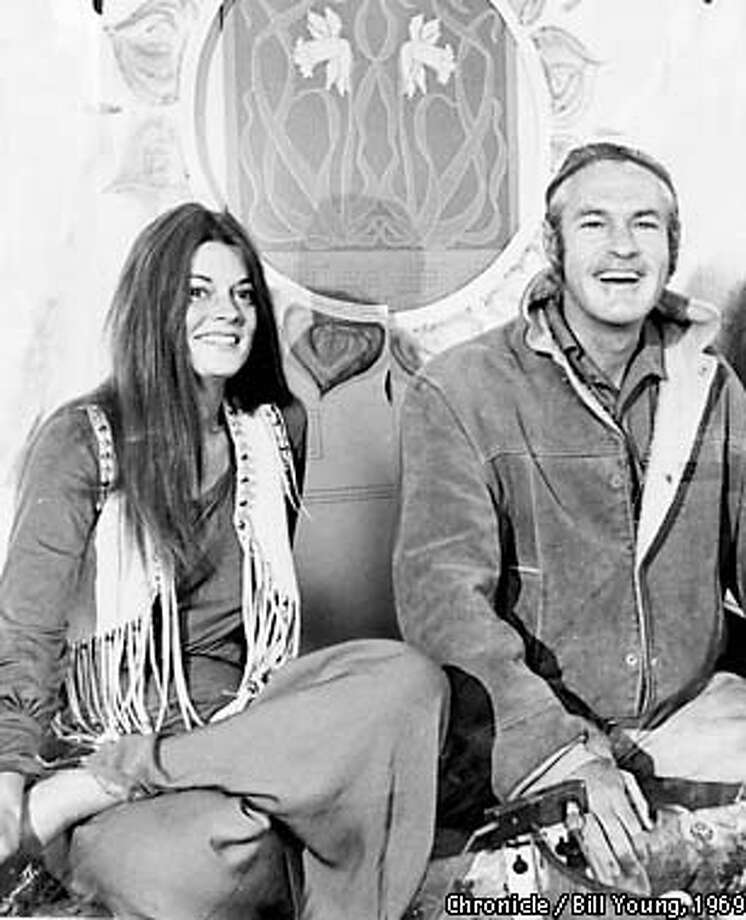
Susannah Cahalan has written a titillating story of the 60s and 70s and Americans burgeoning experimentation with illicit drugs. It focuses on Rosemary Woodruff Leary, the fourth wife of the LSD guru, Timothy Leary. Leary’s first wife committed suicide, his second seemed a rebound companion, his third is to Nena von Schlebrugge, and then Rosemary who eventually becomes his lover, fourth wife, and supporter during their 9 years of marriage. His last marriage was to Barbara Chase in 1978 which lasted for 14 years until 1992. Leary died in 1996 at the age of 75.
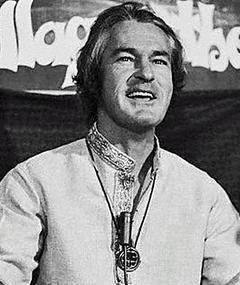
Timothy Leary’s time with Rosemary is filled with mutual infidelity but with freely given support by Rosemary of a diminishing intellectual who promoted hallucinogens and their mind-altering effects. The handsome Leary became a significant influence on the use of hallucinogens like LSD and psilocybin as tools for expanding human consciousness. He believed psychedelics could unlock deeper levels of self-awareness, creativity, and spiritual enlightenment. An interesting point about LSD and other hallucinogens is how they have become useful drugs for modern treatment of psychological dysfunctions like schizophrenia and PTSD. On the other hand, Cahalan shows indiscriminate use of LSD can diminish social propriety and become an escape from or harmful distortion of consciousness.
Putting aside the value of hallucinogens, “The Acid Queen” is about the life of Rosemary Woodruff Leary.
Rosemary was born in 1935. Growing into a beautiful woman, she was drawn into the counterculture movement of the 60s and 70s in her travels to San Francisco, Southern California, and New York. Her beauty opened doors of opportunity for Rosemary. She became an airline stewardess until retirement in her early 30s that were required by age limits of airlines in those years. Cahalan infers Rosemary’s attractiveness and free-spirited beliefs led her to use sex as a useful way of getting what she wanted through relationships with men. She joined the beatnik generation because it fit her style of living. This is a generation that rejected mainstream American culture with an interest in artistic self-expression, non-conformity, and spirituality. This was in the 1950s and early 60s.
Rosemary meets Timothy Leary in 1965.
Leary’s use of LSD as a transformative experience fit into Rosemary’s lifestyle. She became one of Leary’s devoted followers. They married in 1967. Art Linkletter’s daughter died in 1969 by suicide and blamed it on LSD. Not surprisingly, the conservative President, Richard Nixon, called Leary “the most dangerous man in America”. In 1968 Timothy Leary was arrested in Laguna Beach, California and charged with marijuana possession. He was tried in 1970 and sentenced to 1o years in prison. He escaped prison with the help of the Weather Underground but was recaptured in 1973. His sentence, in conjunction with his former conviction, was extended to 20 years. He was released in 1976, after 3 years, when he cooperated with authorities by offering information on the counterculture movement.
Cahalan shows how Rosemary followed and supporter Leary in his escape from prison and how their relationship fell apart.
It is somewhat unclear from Cahalan’s story about why Rosemary gave up on Leary. One may have been because of his and her self-absorption or their penchant for attachment to others for the support they believe they deserved. Cahalan’s story of Rosemary is interesting because of her association with Leary. Though Rosemary is self-educated, she appears to have limited formal education with her claim to fame largely based on the men with whom she became intimately involved.
In contrast, Timothy Leary earned a B.A. in psychology from the University of Alabama in 1943, a master’s degree in psychology from Washington State University in 1946, and a Ph.D. in psychology from the University of California, Berkeley in 1950.
Leary had many intimate women friends and five wives. He had two children, a girl born in 1947 and a boy born in 1949, with his first wife, Marianne Bush. Leary’s daughter died at age 42. She hung herself with her shoelaces tied to a jail bar while waiting to be charged for shooting her boyfriend. His son Jack, at 25 years of age, is noted in a NYT’s article in 1974. The article clearly implies Jack had become estranged from his father.
“The Acid Queen” is a sad story of two self-absorbed people who had exciting and tragic lives.
Timothy Leary had fame and fortune. Rosemary Woodruff Leary had beauty and tenacity. Neither seem paragons of virtue and both seem much less than they could have been. The underlying message of “The Acid Queen” is we need to be more connected to the world, less self-absorbed, and more other-directed. (Easy to say or write, but unlikely to be.)
Some academics considered Leary a visionary thinker who pioneered consciousness expansion, psychedelic therapy, and transhumanism.
Timothy Leary showed himself to be a charismatic and persuasive speaker. However, critics argue he lacked scientific rigor and had little foresight or objectivity about the effects of drugs on consciousness. Rosemary may have been “The Acid Queen” but never achieved the sobriquet of “Queen of Hearts”.
Being bad is a human characteristic, i.e., the desire for money, power, prestige, and sex are elemental parts of the human condition. They are the “Snares” of human life.
Books of Interest Website: chetyarbrough.blog
The Snares (A Novel)
By: Rav Grewal-Kök
Narrated By: Neil Shah
Rav Grewal-Kök (Author, “The Snares” is his first novel. Rav Grewal-Kök has written for The Atlantic, New England Review and won a National Endowment for the Arts fellowship.)
“The Snares” is about a well-educated lawyer who feels like an American outsider struggling to become a success. His mother and father are Punjabi. He seems burdened by being a person of a different race and ethnicity in white America. That feeling is reinforced by the circumstances of his life. He is married to a woman who comes from a wealthy white American family. He is a lawyer at forty years of age that is offered a job by the CIA. His hope is that working for the CIA will be a career making move that will make him a success in his own eyes and in the opinion of his in-laws. The irony of Grewal-Kök’s story is that the CIA is not an avenue for success but a road to perdition. The author paints a picture of the CIA and FBI that makes a mockery of American ideals.
What Grewal-Kök shows is that American government employees are just like the general population.
All the prejudices and dishonesty of America (or any country) are as present in governments as in any organization of human beings. The difference is that government has wider societal influence than a singular business, or eleemosynary organization. Government is filled with all the social goodness and prejudice of the society in which it is designed to serve.
“The Snares” the author is writing about are the best and worst of what the American CIA represent. The author’s main character, Neel Chima, is interviewed for a job with the CIA. Chima is hired by the CIA during the George W. Bush administration. George W., considered a Republican conservative, is the first President to authorize drone strikes for targeted killing. President Bush approved the killing of 6 Yemeni’ men in Yemen for their attack on the USS Cole. What is often forgotten is that Barack Obama, a Democratic liberal, authorized between 400 and 600 drone strikes that killed an estimated 3,797 people, of which 300 to 400 were civilians.
Obama’s drone strikes were in Afghanistan, Pakistan, Yemen, and Somalia.
One takes for granted that every drone strike is based on a careful examination of the human targets that are chosen. What Grewal-Kök implies is the CIA is something more than an intelligence service charged with collecting, analyzing and acting on foreign threats to America. As CIA operatives, these very human and well-educated government employees are pursuing a good life by stopping considered threats to America. Neel Chima is hired because the CIA officer in charge believes he can be an asset in the pursuit of foreign intelligence because of his ambition and life as a Punjabi American. However, Chima’s career ends in a state of turmoil, in part because of his own human vices but largely because of inept management by unscrupulous supervisors.
The snares that Grewal-Kök is referring to are “bad people” who are in powerful government positions. These bad government actors use their position to subvert newbies to their organization for actions that are contrary to ideals of the government agency for which they work. This is particularly dangerous in organizations like the CIA and FBI that are designed to interpret behaviors of potential criminals, i.e. not criminals in the act of crime but those who may or may not commit a crime.
J. Edgar Hoover led the FBI from 1924 to 1972.
The FBI arrested Americans suspected of being radicals during the Red Scare without due process. President Trump is doing the same thing with the arbitrary exportation of immigrants today. The FBI targeted Martin Luther King Jr. and tried to discredit him by closely surveilling, recording, and interpreting his activity. Hoover arguably collected secret files on politicians and famous Americans to aid his power and influence in government more than to reduce public corruption. The author infers the same is true in the CIA.
Grewal-Kök’s primary focus is on the CIA but the “Snares” of which he writes are the same that troubled the FBI. The CIA is creating files on other countries’ citizens with recommendations on actions to kill real and perceived enemies of America. Both conservative and liberal Presidents of the United States have used the CIA to kill foreign nationals. In 2o05 Abu Hamza Rabia was killed by a drone strike under George W. Bush’s administration. In 2006, the assassination of Abu Musab al-Zarqawi was done in an airstrike under Bush. In 2011, Anwar al-Awlaki, a U.S. born cleric and Al-Qaeda figure was killed in Yemen by a drone strike under Obama’s administration. In the same year, Osama bin Laden is assassinated in a U.S. Navy Seal’ raid ordered by Obama. In 2020, Qasem Soleimani, a major general in Iran’s Islamic Guard was killed in a drone strike at the orders of the Trump administration. In 2022, a CIA drone strike in Kabul, Afghanistan killed Ayman al-Zawahiri under President Biden.
WHAT IS THE TRUTH?
Even if all of these sanctioned murders by American Presidents have been justified, the story of “Snares” makes real–the potential for a bad or ambitious CIA agent to lie or inadvertently misconstrue the truth. Grewal-Kök explains how all human beings are subject to the “Snares” of life.
The character of Neel Chima is an everyman in America. His fall from grace is partly self-inflicted but accelerated by bad actors in the CIA. Being bad is a human characteristic, i.e., the desire for money, power, prestige, and sex are elemental parts of the human condition. They are the “Snares” of human life.
There is no religious, nationalist, or political justification for killing of innocents but the history of the world shows we are all killers.
Books of Interest Website: chetyarbrough.blog
Conquering Crises (Ten Lessons to Learn Before You Need Them)
By: Admiral William H. McRaven
Narrated By: Willaim H. McRaven
William H. McRaven (Author, retired four-star admiral in the U.S. Navy, ninth commander of the U.S. Special Operations Command from 2011 to 2014, commanded special operations in Iraq and Afghanistan.)
Wisdom does not always come with experience or age. Though born in 1955, William McRaven spent 40 years as a special operations officer in the U.S. Navy. He retired from military service and became chancellor of the University of Texas System from 2015-2018. Now, as a writer, McRaven offers some insightful advice to those who manage others in response to crises. He offers his personal, corporate, and institutional experience as a crises’ manager.
Though McRaven’s experience comes from a military system of command, he offers a listen, learn, and plan approach to getting things done through others.
When faced with a reported crisis, he notes the first information one receives is usually inaccurate and misleading. He offers numerous examples like Pearl Harbor in 1941, Hurricane Katrina in 2005, and Covid-19 in the 21st century. The first reports of those crises were misleading and were found to be much more consequential and damaging than originally reported. The first step when faced with a crisis is to be sure of the facts. McRaven generally discounts first reports. He suggests one should confirm details from personal observation (if possible or practicable). If one cannot investigate facts of a crises personally, one must confirm details from other sources that are at, subject to, or near the crisis. The point is not to act on first reports but to seek more information.
McRaven receives a phone call in the middle of the night about a mistaken Taliban sympathizer carrying a weapon who is shot and killed by an American soldier during America’s intervention in Afghanistan.
It was found he was not a sympathizer but a cousin of the President of Afghanistan. McRaven calls General Petraeus in the middle of the night to report the incident. Petraeus thanks McRaven for contacting him immediately rather than waiting until the morning. Both recognize the urgency of the crises. They discuss details of what happened and plan a response. McRaven is ordered to contact the President of Afghanistan immediately to explain what happened and offer American support for the family of the murdered cousin. McRaven’s point is know the facts of a crises, create a plan to address what is known, react as quickly as the correct facts are known, plan a response agreed upon by those in authority, and act (as soon as possible) according to plan.
Taliban resurgence in Afghanistan.
A more complicated crisis noted by McRaven is also in Afghanistan. America’s ambassador to Afghanistan meets with McRaven to tell him the special forces reporting to him in Afghanistan are alienating local Afghan citizens with their military actions against the Taliban. The ambassador tells McRaven his operations are alienating Afghani citizens to the point of losing America’s war against the Taliban. The meeting becomes heated because McRaven believes his command is doing a great job of pacifying Taliban attacks on local citizens. Rather than acting like an ostrich with its head in the sand, McRaven calls for a meeting of colonels in the Afghanistan theater to investigate the Ambassador’s accusation. The team McRaven assembles finds the Ambassador’s concerns are justified. Though peaceful coexistence appeared to be improved with McRaven’s special forces’ actions, the alienation of Afghani’s was growing. As has been written by other authors, America’s special forces often acted based on one Afghani family’s personal anger at another family rather than for any concern about Taliban activity.
The group of colonels assembled by McRaven developed a plan to more judiciously act on alleged Taliban activity from Afghan informants.
Of course, America’s ignominious departure from Afghanistan, implies McRaven’s response was too little and too late. This is not to argue that McRaven’s response was wrong but only that the plan did not stop Taliban resurgence. The valid point McRaven is making is that one should systematically address a crisis, create a plan once the facts are known, and execute the plan. Obviously, not all crises are successfully resolved. In the case of America’s intervention in Afghanistan, McRaven’s plan may not have been right for the facts that were gathered, or the crises was just too culturally complex for a successfully executed response.
McRaven comes across as a highly competent leader and manager in a crises.
Where one may have reservations about any leader’s role in a crisis is whether they agree on the facts. McRaven believes it is right to assassinate a proven terrorist who has killed innocent people. That kind of decision goes beyond the principles of McRaven’s book about response to crises. “Judge not, lest ye be judged” is alleged to have been said by Jesus in his Sermon on the Mount.
McRaven believes assassination is justified.
In Ukraine and Gaza, innocents are being killed every day. There is no religious, nationalist, or political justification for killing of innocents but the history of the world shows we are all killers. In a crisis, you would want someone like McRaven to be the “beauty on duty”, but one must ask oneself if assassination is ever justified.
Humans will learn to use and adapt to Artificial General Intelligence in the same way it has adapted to belief in a Supreme Being, the Age of Reason, the industrial revolution, and other cultural upheavals.
Books of Interest Website: chetyarbrough.blog
How to Think About AI (A Guide for the Perplexed)
By: Richard Susskind
Narrated By: Richard Susskind
Richard Susskind (Author, British IT adviser to law firms and governments, earned an LL.B degree in Law from the University of Glasgow in 1983, and has a PhD. in philosophy from Columbia University.)
Richard Susskind is another historian of Artificial Intelligence. He extends the history of AI to what is called AGI. He has an opinion about the next generation of AI called Artificial General Intelligence. AGI (Artificial General Intelligence) is a future discipline suggesting AI will continue to evolve to perform any intellectual task that a human can.
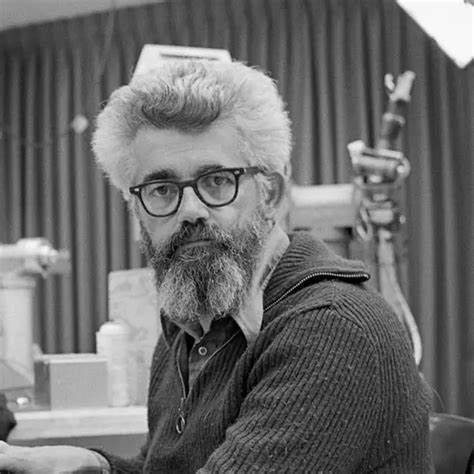
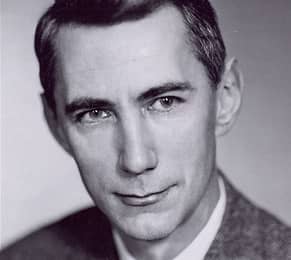
These men were the foundation of what became Artificial Intelligence. AI was officially founded in 1956 at a Dartmouth Conference attended by John McCarthy, Marvin Minsky, Nathaniel Rochester, and Claude Shannon. Conceptually, AI came from Alan Turing’s work before and during WWII when he created the Turing machine that cracked the German secret code.
McCarthy and Minsky were computer and cognitive scientists, Rochester was an engineer and became an architect for IBM’s first computer, Shannon (an engineer) and Turing were both mathematicians with an interest in cryptography and its application to code breaking.
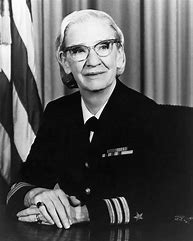
Though not mentioned by Susskind, two women, Ada Lovelace and Grace Hopper played roles in early computer creation (Lovelace as an algorithm creator for Charles Babbage in the 19th century, and Hopper as a computer scientist that translated human-readable code into machine language for the Navy).
Susskind’s history takes listener/readers to the next generation of AI with Artificial General Intelligence (AGI).
Susskind recounts the history of AI’s ups and downs. As noted in earlier book reviews, AI’s potential became known during WWII but went into hibernation after the war. Early computers lacked processing capability to support complex AI models. The American federal government cut back on computer research for a time because of unrealistic expectations that seemed unachievable because of processing limitations. AI research failed to deliver practical applications.
The invention of transistors in the late 1940’s and 50s and microprocessors in the 1970s reinvigorated AI.
Transistor and microprocessor inventions addressed the processing limitations of earlier computers. John Bardeen, Walter Brattain, and William Shockley working for Bell Laboratories were instrumental in the invention of transistors and microprocessors. Their inventions replaced bulky vacuum tubes and miniaturized more efficient electronic devices. In the 1970s Marcian “Ted” Hoff, Federico Faggin, and Stanley Mazor, who worked for Intel, integrated computing functions onto single chips that revolutionized computing. The world rediscovered the potential of AI with these improvements in power. McCarthy and Minsky refine AI concepts and methodologies.
Geoffrey Hinton (British Canadian computer scientist.)Yann LeCun (French American computer scientist.)
With the help of others like Geoffrey Hinton and Yann LeCun, the foundation for modern AI is reinvigorated with deep learning, image recognition, and processing that improves probabilistic reasoning. Human decision-making is accelerated in AI. Susskind suggests a blurred line is created between human and machine control of the future with the creation of Artificial General Intelligence (AGI).
With AGI, there is the potential for loss of human control of the future.
Societal goals may be unduly influenced by machine learning that creates unsafe objectives for humanity. The pace of change in society would accelerate with AGI which may not allow time for human regulation or adaptation. AGI may accumulate biases drawn from observations of life and history that conflict with fundamental human values. If AGI grows to become a conscious entity, whatever “conscious” is, it presumably could become primarily interested in its own existence which may conflict with human survival.
Like history’s growth of agricultural development, religion, humanist enlightenment, the industrial revolution, and technology, AGI has become an unstoppable cultural force.
Susskind argues for regulation of AGI. Is Artificial General Intelligence any different than other world changing cultural forces? Yes and no. It is different because AGI has wider implications. AGI reshapes or may replace human intelligence. One possible solution noted by Ray Kurzweil is the melding of AI and human intelligence to make survival a common goal. Kurzweil suggests humans should go with the flow of AGI, just like it did with agriculture, religion, humanism, and industrialization.
Susskind suggests restricting AGI’s ability to act autonomously with shut-off mechanisms or accessibility restrictions on human cultural customs. He also suggests programming AGI to have ethical constraints that align with human values and a rule of “do no harm”, like the Hippocratic oath of doctors for their patients.
In the last chapters of Susskind’s book, several theories of human existence are identified. Maybe the world and the human experience of it are only creations of the mind, not nature’s reality. What we see, feel, touch, and do are in a “Matrix” of ones and zeros and that AGI is just what humans think they see, not what it is. Susskind speculates on the growth of virtual reality developed by technology companies becoming human’s only reality.
AI and AGI are threats to humanity, but the threat is in the hands of human beings. As the difference between virtual reality and what is real becomes more unclear, it will be used by human beings who could accidentally, or with prejudice or craziness, destroy humanity. The same might be said of nuclear war which is also in the hands of human beings. A.I. and A.G.I. are not the threat. Conscious human beings are the threat.
Humans will learn to use and adapt to Artificial General Intelligence in the same way it has adapted to belief in a Supreme Being, the Age of Reason, the industrial revolution, and other cultural upheavals. However, if science gives consciousness (whatever that is) to A.I., all bets are off. The end of humanity may be in that beginning.
After two or three chapters of Huston’s book, reader/listeners will likely complete it. The difficulty, as with all good advice, is following it.
Books of Interest Website: chetyarbrough.blog
SHARP (Simple Ways to Improve Your Life with Brain Science)
By: Therese Huston PhD
Narrated By: Theresa Bakken
Therese Huston (Author, earned an MS and PhD in Cognitive Psychology from Carnegie Mellon University.)
Therese Huston is a well-known public speaker who has written a book that has appeal for those who wish to know what they can do to improve their memory and cognitive abilities. This is not a book some will be interested in either listening to or reading. Many presume they have a proscribed intelligence and memory largely determined by genetic inheritance. Huston infers there is some science-based truth in that opinion but that one’s memory, cognitive ability, and psychological health can be treated, if not improved, at any age.
Huston’s prescription for improved memory and cognitive ability requires effort.
Undoubtedly, we inherit much of our innate cognitive ability but whatever one’s genetic inheritance and age may be Huston argues cognition and memory can be improved. Huston discusses areas of the brain that are the base from which cognition and memory originate, are stored, and then called upon.
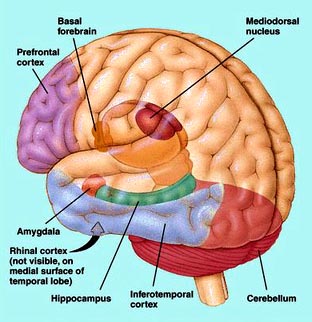
Huston notes the hippocampus, amygdala, prefrontal cortex, neocortex, cerebellum, and basal ganglia are key brain areas involved in cognition and memory.
The hippocampus is the primary location of memories, but the other five areas interact with one’s personal experiences in ways ranging from emotion, individual understanding, decision-making, reasoning, skill development, and formed habits. As we age, the way we process, store, and retrieve information deteriorates. We lose some memories, process information more slowly, and find it more difficult to process new information in the context of past experience.
What Huston explains is that exercise, visual, and tactical experience can improve memory and cognition at every age.
Staying active, experiencing the world in ways that stimulate the production of dopamine, and exercising effort to learn and do new things improves cognitive ability and memory. Dopamine is a neurotransmitter in the human body that regulates mood, focus and behavior. It is released by the body when it is stimulated by exercise, engaging experience, and learning new things. Huston offers advice on how one at any age can improve their mental health and care for themselves and others when they are troubled by various common and extraordinary events in life. Life’s events stimulate the release of dopamine which can illicit rage and bad behavior but also provide focus and beneficial behavior.
Huston suggests 14 generally simple ways of helping oneself and others cope with the stresses of life.
Many of her solutions are commonly understood, others less so. Not surprisingly, she notes exercise, proper nutrition, quality sleep, and deep breathing are important for maintenance and improvement of brain function and memory. Some more difficult and less understood aids to brain health and memory are 1) importance of social engagement, 2) learning new things from personal and other’s recorded experience, and 3) practicing ways of reducing the stresses of life in yourself and others you care about.
One who reads or listens to “Sharp” will recognize the value of Huston’s advice for improving memory and cognitive ability.
After two or three chapters, reader/listeners will likely complete her book. The difficulty, as with all good advice, is following it.
A President who only sees government as a cost and the wealthy as the nation’s only benefactors, compounds America’s inability to solve the problems of poverty with eviction being a preeminent symptom.
Books of Interest Website: chetyarbrough.blog
Evicted (Poverty and Profit in the American City)
By: Matthew Desmond
Narrated By: Dion Graham
Matthew Desmond (Author, sociologist and a Pulitzer Prize winner, Professor of Sociology at Princeton.)
Matthew Desmond has written about American poverty in “Evicted”. There are two types of poverty. One is a worker who is not making enough money to be anything more than poor. The second kind of poor is grinding poverty where one must choose between having food to eat or a roof over one’s head. One who is poor can live in America, may get an education, find a job, and get along in life. However, those with too little money to eat and have shelter–live lives of desperation. Desmond’s book is about the latter to show how American society is failing desperate citizens. Desmond interviews several poor Americans that offer a clear understanding of the difference between being poor in America and being desperately poor in America.
“Land of opportunity” believers argue there are jobs in America and those who choose to beg for food rather than work deserve their fate. The truth is that many jobs in America do not pay enough for those who have jobs to pay rent and feed their families. Housing is expensive and affordable housing is not being produced in large enough quantities to reduce the costs of housing. Affordable housing is hard to build because many homeowners resist having it built in their neighborhoods. When land is found, it is often too expensive for the builder to make a profit with low rents. The cost of construction is often higher than it needs to be because of high land prices, building code requirements, or rezoning needed to allow multifamily housing.
Education in America is not meeting the needs of its citizens.
School availability is not well enough managed to ensure education for all who live in America. Sex education and contraception are being discouraged in school, which is a foolish, self-destructive societal mistake. Healthcare is too expensive for many Americans with low incomes which compounds the health problems of the poor who cannot afford either medical service or treatment. Grinding poverty causes some to seek relief through drugs which increases medical problems and further aggravates inequality being fed by an illicit industry that is growing in America. Drug abuse kills Americans in many ways; not the least of which is addiction and poverty.
The history of American income inequality is burdened by forms of racism and sexual discrimination that do not treat people equally.
Jobs are changing with automation and outsourcing of goods produced by an international economy. American government has failed to create policies that help those who need more help. As one of the wealthiest nations in the world, America has been incapable of solving the spread of poverty among its citizens.
In reading/listening to Desmond’s research, it seems like there is an American conspiracy making one of the wealthiest countries in the world incapable of solving the housing, education, and employment problems of its citizens.
A President who only sees government as a cost and the wealthy as the nation’s only benefactors, compounds America’s inability to solve the problems of poverty with eviction being a preeminent symptom.
Human nature will not change but A.I. will not destroy humanity but insure its survival and improvement.
Books of Interest Website: chetyarbrough.blog
Human Compatible (Artificial Intelligence and the Problem of Control)
By: Stuart Russell
Narrated By: Raphael Corkhill
Stuart Johnathan Russell (British computer scientist, studied physics at Wadham College, Oxford, received first-class honors with a BA in 1982, moved to U.S. and received a PhD in computer science from Stanford.)
Stuart Russell has written an insightful book about A.I. as it currently exists with speculation about its future. Russell in one sense agrees with Marcus’s and Davis’s assessment of today’s A.I. He explains A.I. is presently not intelligent but argues it could be in the future. The only difference between the assessments in Marcus’s and Davis’s “Rebooting AI” and “Human Compatible” is that Russell believes there is a reasonable avenue for A.I. to have real and beneficial intelligence. Marcus and Davis are considerably more skeptical than Russell about A.I. ever having the equivalent of human intelligence.
Russell infers A.I. is at a point where gathered information changes human culture.
Russell argues A.I. information gathering is still too inefficient to give the world safe driverless cars but believes it will happen. There will be a point where fewer deaths on the highway will come from driverless cars than those that are under the control of their drivers. The point is that A.I. will reach a point of information accumulation that will reduce traffic deaths.
A.I. will reach a point of information accumulation that will reduce traffic deaths.
After listening to Russell’s observation, one conceives of something like a pair of glasses on the face of a person being used to gather information. That information could be automatically transferred by improvements in Wi-Fi to a computing device that would collate what a person sees to become a database for individual human thought and action. The glasses will become a window of recallable knowledge to its wearer. A.I. becomes a tool of the human mind which uses real world data to choose what a human brain comprehends from his/her experience in the world. This is not exactly what Russell envisions but the idea is born from a combination of what he argues is the potential of A.I. information accumulation. The human mind remains the seat of thought and action with the help of A.I., not the direction or control by A.I.
Russell’s ideas about A.I. address the concerns that Marcus and Davis have about intelligence remaining in the hands of human’s, not a machine that becomes sentient.
Russell agrees with Marcus, and Davis–that growth of A.I. does have risk. However, Russell goes beyond Marcus and Davis by suggesting the risk is manageable. Risk management is based on understanding human action is based on knowledge organized to achieve objectives. If one’s knowledge is more comprehensive, thought and action is better informed. Objectives can be more precisely and clearly formed. Of course, there remains the danger of bad actors with the advance of A.I., but that has always been the risk of one who has knowledge and power. The minds of a Mao, Hitler, Beria, Stalin, and other dictators and murderers of humankind will still be among us.
The competition and atrocities of humanity will not disappear with A.I. Sadly, A.I. will sharpen the dangers to humanity but with an equal resistance by others that are equally well informed. Humanity has managed to survive with less recallable knowledge so why would humanity be lost with more recallable knowledge? As has been noted many times in former book reviews, A.I. is, and always will be, a tool of human beings, not a controller.
The world will have driverless cars, robotically produced merchandise, and cultures based on A.I.’ service to others in the future.
Knowledge will increase the power and influence of world leaders to do both good and bad in the world. Human nature will not change but A.I. will not destroy humanity. Artificial Intelligence will insure human survival and improvement. History shows humanity has survived famine, pestilence, and war with most cultures better off than when human societies came into existence.
History of the world has shown all forms of government are “equal opportunity” inhibitors, if not destroyers.
Books of Interest Website: chetyarbrough.blog
Secondhand Time (The Last of the Soviets)
By: Svetlana Alexievich
Narrated By: Amanda Carlin, Mark Bramhall, Cassandra Campbell & 8 more.
Svetlana Alexievich (Author, Belarusian investigative journalist, winner of the Nobel Prize in Literature in 2015.)
Svetlana Alexievich’s “Secondhand Time” is a remarkable and informative explanation of why Putin believes he is right and why many citizens of Russia seem to continue in their support of his administration.
Map of the former U.S.S.R.
Alexievich conducts a series of interviews with Russian citizens of different generations about the U.S.S.R. and its return to the world stage as a Russian nation. The narrators of her book recite those interviews to give listener/readers a complex and enlightening picture of Russian culture. The clash of communist and capitalist ideals is at the foundation of the interviews and the narrators dramatically told stories.
The Russian Soviet Army is the first to arrive in the Battle of Berlin on April 16, 1945. Their flag was hoisted on May 1, 1945.
The citizens of Russia are justifiably proud of their role in WWII that turned the tide of Germany’s war of aggression. (Of course, that is putting aside Stalin’s Machiavellian decision to join Hitler at the beginning of the war.) Some Russian soldiers who fought in that war were disgusted with what they feel was a betrayal by Mikhail Gorbachev of communist ideals for which they lived and died for in the 20th century.
The rejection of communist ideals for capitalism is viewed by some Russians as a tyranny of greed that lays waste to the poor and creates a class of haves and have-nots.
Some Russian veterans of WWII see the seduction of capitalism destroying the ideal of a classless society. Some citizens see the ideal of a government is to demand the wealth of life be spread equally according to individual need. To these believers, enforcement of communist ideals would eliminate private property and greed that would create a classless society. Some believed Stalin exemplified leadership that would achieve that ideal. The hardship of life during Stalin’s rule is considered by some as justified means for the achievement of the Marxist ideal of communism.
Statue of the “Circle of Life” in Norway.
Cultures may be different, but all human life is the same.
The underlying point of these interviews is to show Russian culture is not monolithic, just as culture is not in any nation. All cultures are filled with diversity. There is no singular cultural mind but a range of interests among many factions that establish a nation’s culture. The evidence of that is the contrast of Gorbachev and Putin in Russia and FDR and Trump in America. All four leaders led their countries but represent completely different cultural beliefs.
Conservatives, New York Governor Al Smith, Southern Democrats, and isolationists like Charles Beard opposed FDR in America. Putin and Trump have their cultural supporters in today’s national governments, but they also have their critics. The difference is that in Putin’s world, being killed or put in prison for opposition is culturally acceptable. In America, one is reminded of Trump’s deportation and imprisonment of migrants without due process.
The author’s interviews are not suggesting that either Russia or the West have good or bad governments but that every culture tests their leaders.
Many Russians, undoubtedly blame American Democracy for the dismantling of the U.S.S.R. Alexievich interviews Russians who believe the hardship that countries within the U.S.S.R. experienced were not the fault of Stalinist policies but the failure of citizens to live up to the ideals of communism. To anyone who has traveled to the Baltics, that opinion is founded on ignorance of the hostility expressed by citizens of the Baltics who were starved, displaced, jailed, and murdered during their occupation by Russia.
The other part of the story is the rise of the oligarchs in Russia as a result of the greed associated with capitalism.
The gap between rich and poor is accelerated in Russia just as it has been in America. Democracy does not have clean hands when it comes to equality of opportunity. Like the Jewish pogroms in Russia, America’s enslavement, murder, and discrimination of Blacks is proven history.
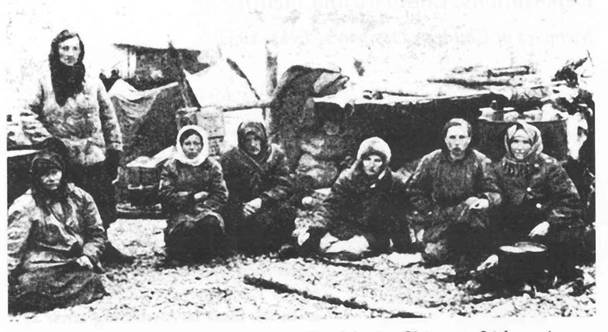
Siberian Exile during Stalin’s reign in Russia.
Alexievich draws from all sides of Russian beliefs. Those interviewed note the terrible conditions of those exiled to Siberia. Many Russians became disillusioned by the redistribution of wealth and privilege after Gorbachev and Yeltsin showed themselves to not be up to the task of leadership change. In fairness, one wonders who could have been up to the task when Russia had a long history of monarchal and tyrannical leadership?
A few Russians became immensely wealthy while the majority were somewhat better off but some struggled with the loss of State benefits and fewer jobs. The rising gap between rich and poor soured communist idealists. Even those who had been sent to Siberia by Stalin who toiled and suffered the experience of isolation, slave labor, and frigid weather felt they were no better off because of the loss of a socialist future.



























































 REVIEWS AND VIEWS OF LIFE