SERVICE & PROFIT

Government is not a business for profit and should not be solely measured by its cost. America will survive the catastrophic mistakes being made by President Trump but American citizens, and the welfare of the world will suffer for years to come.

Books of Interest
 Website: chetyarbrough.blog

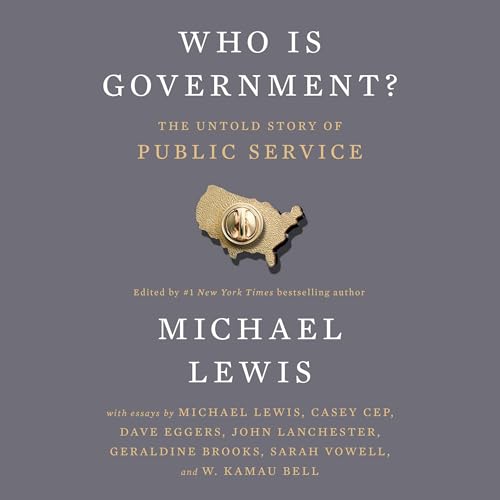
Who is Government (The Untold Story of Public Service)

By: Michael Lewis, Casey Cep, Dave Eggers, John Lanchester, Geraldine Brooks, Sarah Vowell, and Kamau Bell

Edited By: Michael Lewis

The stories of these writers are a tribute to those who have chosen careers in American government. Having personally earned a master’s degree in public administration, worked as a local government manager, then as a manager of a private business division, and finally, as a personal business owner, I have an opinion about President Trump. My experience is based on three different types of employment. All were rewarding experiences but in fundamentally different ways.

The writers of “Who is Government” show how ignorant business creators and managers like Donald Trump and Elon Musk are in discounting the contribution of employees of government organizations. Private corporations do not survive without profit to its owners. Public organizations do not survive without service to the public.

Profit is simple to measure. Public service is measurable but more abstract and difficult to quantify.

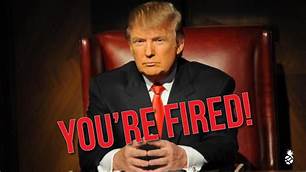
One can choose, like Musk did with Twitter, to reduce costs by firing employees. That may improve profitability but at a cost that may hurt or destroy the future of a business. In the case of Twitter, the company lost much of their advertising revenue because an unsupervised public forum could spread false and defamatory information that embarrasses advertisers who were protected by Twitter’ employees that were fired. No analysis was done by Musk about Twitter information’ controls provided by employees. The new entity, “X”, seems to have assuaged some advertisers’ concerns because they have started to use Musk’s new company. The point is that if Musk had taken more time to evaluate what fired employees were doing, he may have retained many of the advertisers who left the forum.

Trump’s employment of Musk to decimate the government employee workforce is following the same foolish path that was taken with Twitter.

No analysis of employee contributions is made. The goal is only to reduce government’ cost regardless of employee’ contribution to public need or service. The consequences have likely reduced health and welfare of American citizens; not to mention harm done to incomes of thousands of government employees’ families.

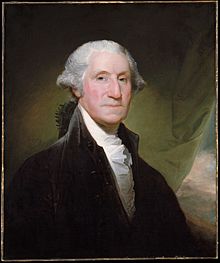
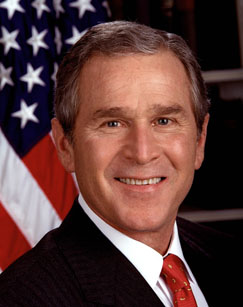
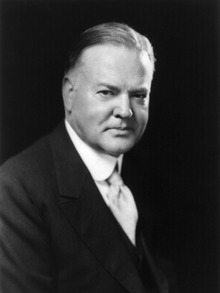
With exceptions of George Washington, Harry Truman, Carter, and the two Bush presidents, the worst former businessman that became President was Herbert Hoover who served as President before the greatest depression in America’s history. With Trump as President, one has to wonder whether he is leading America and the world toward its second great depression.

HERBERT HOOVER (31ST PRESIDENT OF THE U.S.)

“Who is Government” illustrates how government employees have contributed to the health and welfare of America. They are unknown and viewed by people like Trump and Musk as just a cost, without benefit to the public. How many science, medical, veteran, and welfare services are being decimated by their narrow vision of government management?

Government is not a business for profit and should not be solely measured by its cost. America will survive the catastrophic mistakes being made by President Trump but American citizens, and the welfare of the world will suffer for years to come.

CHINA

Harmony and pragmatism undoubtedly remain important characteristics of Chinese society. Time will tell whether societal harmony can be maintained by an increasingly authoritarian leader.

Books of Interest
 Website: chetyarbrough.blog

The Chinese Looking Glass (The most illuminating book yet written on China and her enigmatic people.)

By: Dennis Bloodworth

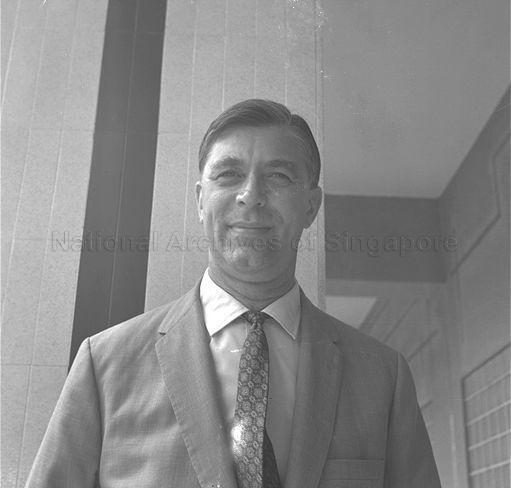
Dennis Bloodworth (1919-2005) Author, journalist, British writer at The Observer, first British journalist allowed to visit China in 1955.

“The Chinese Looking Glass” is a whirlwind journey across the vast history of China by the first British writer allowed to visit China in 1955. It is a primer for a general understanding of China that was originally published in 1966 and updated in 1980. The author’s marriage to Liang Ching Ping adds credibility to his view of Chinese culture.

One reads Bloodworth’s book and is somewhat overwhelmed by its breadth. So many generations of Chinese culture are too much to cover in a 400+page book.

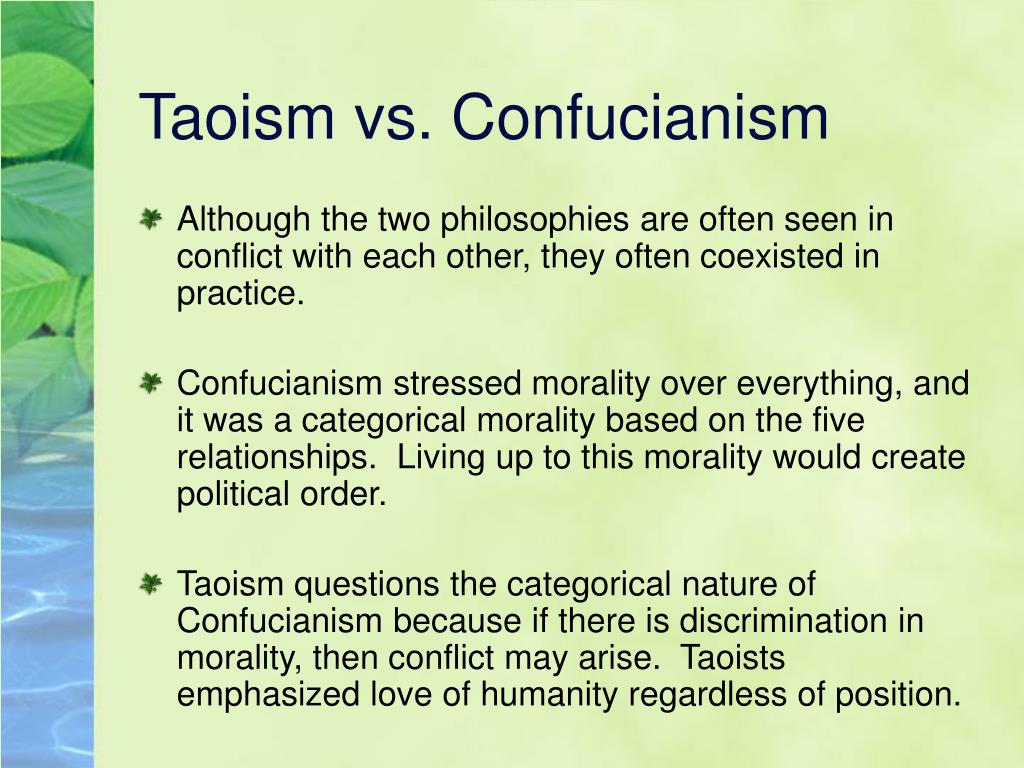
The author manages to give a broad understanding of a Chinese worldview that is shaped by Confucian and Taoist history, a collective identity that often conflicts with the Western culture of individualism. He notes Chinese traditions are based on filial piety (meaning duties, respect and devotion of children to their parents). Bloodworth notes, through many generations of Chinese culture, behavior and decision-making there is a focus on social harmony. Both Confucianism and Taoism play significant roles in shaping Chinese society.

Bloodworth notes Confucianism and Taoism shape Chinese society.

Piety, respect for hierarchy, education, and a focus on societal harmony were philosophical foundations of Chinese governance. Piety led governance toward strict rules and centralized authority. Historical figures like Confucius, Laozi, and Sun Tzu influenced Chinese culture and thought. The spiritual tradition of Buddhism reinforced the teaching of these cultural influencers. Buddhism emphasizes the suffering of life is caused by desire, and attachment. Buddhist teaching is that desire and attachment must be replaced by understanding and rejection of both through meditation and mindfulness.

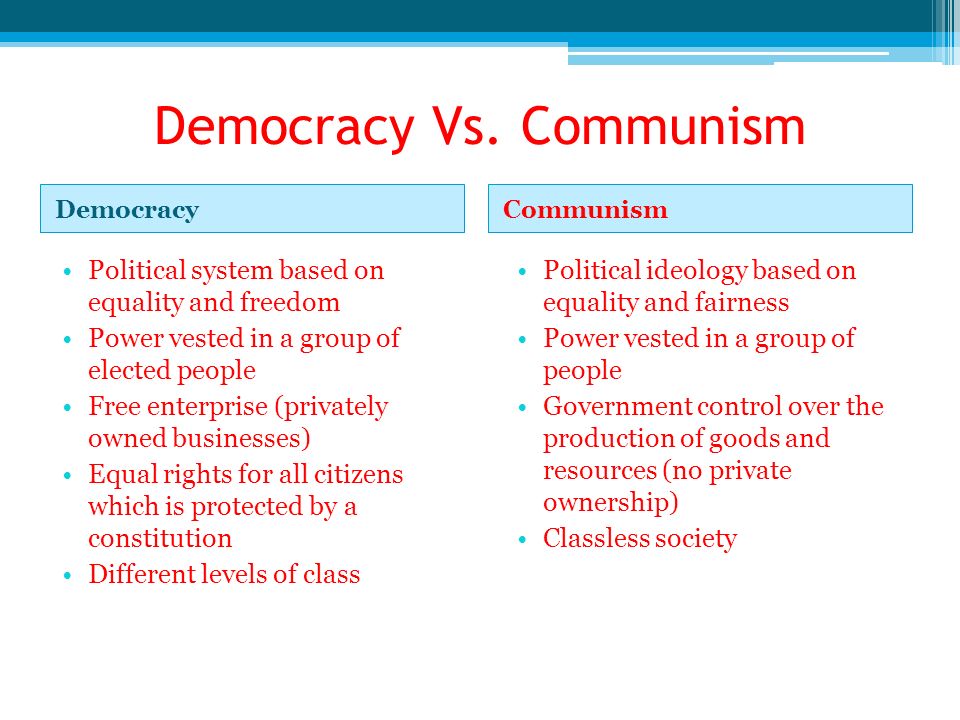
Because democracy focuses on individual rights and freedoms, the ideals of collective harmony, hierarchical structure, and centralize authority make communism a better fit for Chinese culture.

Mao Zedong (1893-1976)

Mao unified China after decades of war and instability. Bloodworth suggests Mao Zedong had a nuanced impact on China.

However, Mao’s centralized power resulted in big economic mistakes like the famine of the Great Leap Forward that caused misleading food production reports meant to please the government when production was much less than what was needed to sustain life for Chinese citizens. With famine, the Cultural Revolution is unleashed, and China’s growth and stability were set back. Bloodworth had observed China’s governing always included pragmatism and adaptability to their drive for cultural harmony.

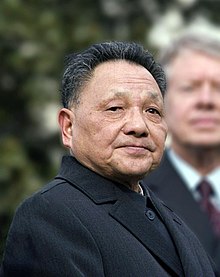
Though Bloodworth mentions Deng Xiaoping in the last chapters of his expanded edition of “The Chinese Looking Glass”, he does not foresee the opening of the Chinese economy and its rapid economic expansion.

The pragmatic realization that collectivization of farming led to misleading information about production compelled Deng to open agricultural production to a more market-driven incentive to preserve social stability. Deng was an authoritarian as is evidenced by his decision on the Tienanmen Square crises.

Though Bloodworth did not live to see the next iteration of China’s leadership, an element of recidivism enters with Xi’s control of the government.

Harmony and pragmatism undoubtedly remain important characteristics of Chinese society. Time will tell whether societal harmony can be maintained by an increasingly authoritarian leader.

AMERICAN HOPE

From Fukuyama’s intellectual musing to our eyes and ears, one hopes he is correct about America’s future in the technological age.

Books of Interest
 Website: chetyarbrough.blog

The Great Disruption (Human Nature and the Reconstitution of Social Order)

By: Francis Fukuyama

Francis Fukuyama (Author, political scientist, political economist, international relations scholar.)

Francis Fukuyama argues America is at the threshold of a social reconstitution. Fukuyama believes we are at Gladwell’s “Tipping Point” that is changing social norms and rebuilding America’s social order. He argues the innovation of technology, like the industrial revolution, is deconstructing social relationships and economics while reconstructing capitalist democracy.

The immense power of big technology companies like Amazon, Google, and Facebook have outsized influence on American society. They change the tone of social interaction through their ability to disseminate both accurate and misleading information. They erode privacy and create algorithms tailored to disparate interest groups that polarize society. The media giant’s objective is to increase clicks on their platforms to attract more advertisers who pay for public exposure of their service, merchandise, and brand.

To reduce outsize influence of big tech companies, Fukuyama suggests more technology has an answer.

There should be more antitrust measures instituted by the government to break monopolistic practices and encourage competition with large technology companies. Algorithms created by oversight government organizations can ensure transparency and reduce harmful content to reduce big tech companies influence on society. (One doubts expansion of government agencies is a likely scenario in today’s government.)

On the one hand, technology has improved convenience, communication, and a wider distribution of information.

On the other, technology has flooded society with misinformation, invaded privacy, and polarized society. Technology has created new jobs while increasing loss of traditional industry jobs with automation. Trying to return to past labor-intensive manufacturing companies is a fool’s errand in the age of technology.

Luddites during the Industrial Revolution.
Like the industrial revolution, the tech revolution’s social impact is mixed with a potential for greater social isolation, and job displacement with the addition of wide distribution of misinformation. The positives of new technology are improvements in healthcare product and services, renewable energy, and climate understanding with potential for improved control.
Face-to-face interactions become less and less necessary. Children’s access to technology impacts parental supervision and relationship. Fukuyama suggests setting boundaries for technology use needs to be a priority in American families. Technology can open the door to better education, but it also becomes a source of misinformation that can come from the internet of things. Employers have the opportunity to help with work-life balance by encouraging flexible hours and remote work. (Oddly, that suggestion is being undermined by the current government administration and many American companies.)

Economic growth, access to information, and global connectivity have been positively impacted by technology. However, the concentration of power, misinformation, and surveillance of social media has diminished privacy and eroded individual freedom. There are concerns about technology and how it is good and bad for democratic capitalism.

The good lies in increased efficiency, innovation and creation of new markets, through globalization. However, today’s American government shows how tariffs are a destroyer of globalization. Fukuyama implies A.I. and automation is displacing workers and aggravating economic inequality because it is being misunderstood for its true potential and also being misused. Personal data is used to manipulate consumers in ways that challenge the balance between corporations and consumers.

Fukuyama argues private parties will grow in America to create software that will filter and customize online services.

With that effort control of the influence of big tech companies will be diminished. With decentralization of big tech power and influence, society will theoretically become less polarized and more consensus oriented. The capitalist opportunity for tech savvy startups that diminish influence of big tech companies will re-create diversification like that which the matured industrial revolution gave to new manufacturers. Like Standard Oil and other conglomerates of the industrial revolution, businesses like Amazon, Google, and Facebook will have competition that diminishes their power and influence.

American Government will grow to regulate the internet of things just as it has grown to regulate banks, industries, and social services.

Service to citizens will become a bigger part of the economy as a replacement for manufacturing. Family life will re-invent itself as a force of society because of the time saved from manufacturing product to improve human relationships.

From Fukuyama’s intellectual musing to our eyes and ears, one hopes he is correct about America’s future in the technological age.

A UKRAINE BOMB SHELL

Though Yovanovitch had nothing to do with Poroshenko’s defeat by Zelensky, it seems clear that her tenure as Ambassador to Ukraine set the table for a change in direction for Ukraine.

Books of Interest
 Website: chetyarbrough.blog

Lessons from the Edge (A Memoir)

By: Marie Yovanovitch

Narrated By: Marie Yovanovitch

Marie Yovanovitch (Canadian-American Author, retired senior member of the US Foreign Service.)

Marie Yovanovitch is retired from the US Foreign Service but as is widely known she was fired in the first Trump administration as US Ambassador to Ukraine in 2019. A reported reason for her firing is she is said to have resisted Trump’s effort to pressure Ukraine to investigate former Vice President Joe Biden. One suspects that is partially true, but Yovanovitch shows she was a believer in equal rights for women and a supporter of Hilliary Clinton which may be additional reasons for Trump’s action to fire her. “Lessons from the Edge” is a memoir of Yovanovitch’s career as an American diplomat.

“Lessons from the Edge” is interesting because it reveals the history of how one becomes an American diplomat and what his/her role is as a representative of America. One may wonder what qualifies one to be a diplomat when some are appointed because of political connection rather than educational accomplishment or training.

Yovanovitch became a diplomat because of her education and personal ambition. Because of her background as the daughter of a Russian born father, she chooses to take classes in Russian which leads to her eventual assignment in Ukraine. Her memoir explains how her journey began and how it ended. It is a highly personal memoir that is enlightening. However, this mild journey explodes at its end. Yovanovitch comes across as a decent person caught up in the events of history, not as a giant of diplomacy but an honest and hard-working diplomat.

Marie Yovanovitch earned a BA in History and Russian Studies at Princeton. During her career she studied at the Pushkin Institute of Moscow and acquired a Master of Science in National Security Strategy from the National War College. Her background certainly qualified her for diplomatic posts. Her early assignments were in Africa which eventually led to Russian speaking countries like Russia, Kyrgyzstan, Armenia, and Ukraine.

Russian speaking countries.

An example of the difficulty of her job is when America wishes to maintain the American Kyrgyzstan’ Air Force base because of America’s role in Afghanistan in 2009. Kyrgyzstan offers closer logistic support for the American military.

The Kyger’ President demands an increase from a $17.4 million-dollar annual rent payment (Yovanovich indicated the rent payment was $2,000,000/yr) to $200,000,000 per year for the continuation of Kyrgyzstan’s American military base. Yovanovich implies Kyrgyzstan’s President, Mr. Bakiyev, demand for higher rent would be to line his pockets with stolen revenue, not help the citizens of Kyrgyzstan.

A final settlement increased annual rent to $60 million per year with additional payments of $37 million and $30 million for new aircraft slots and additional land for location of a new American navigation system.

Kyrgyzstan’s American Air Force Base.

Many questions come to mind in listening/reading Yovanovitch’s book. How important are the presence of American military bases around the world? What is the difference between isolationism and internationalism? Should America remain isolated from other nations or engage and collaborate with other countries of the world? Where is the line to be drawn between American influence and the cost of that influence? This last question is answered in the last chapters of “Lessons from the Edge”.

Yovanovich takes on the complicated role of American Ambassador to Armenia from 2008 to 2011.

Armenia and Azerbaijan are a source of political and territorial tension. There is a dispute over a region called Nagorno-Karabakh that is under the control of Armenia with a majority Armenian population. Turkey supports Azerbaijan while Armenia has a close relationship with Russia. Armenia and Turkey’s relationship is strained because of a WWI Armenian Genocide perpetrated by Turkey. An estimated 600,000 to 1.5 million Armenians were killed between 1915 and 1917. Turkey refuses to identify it as genocide which aggravates Turkey’s relationship with Armenia. Russia has a military base in Armenia and has tried to mediate the Nagorno-Karabakh conflict without much success. Because of energy projects and trade relations, Russia has managed a balanced relationship with Azerbaijan.

Yovanovitch decides to return to the U.S. because of her aging mother and an offer to take the role of Principal Deputy Assistant Secretary for the Bureau of European and Eurasian Affairs. However, as Ukraine becomes embroiled in a conflict with Russia and her previous assignment and knowledge of Ukraine, she returns as America’s Ambassador. Her mother’s decision to accompany her made the opportunity worth taking.

When Ukraine became independent of the U.S.S.R. in 1991, its transition to a market economy was marked by widespread corruption in the same way as alleged in Russia.

The assets of the country fell into the hands of Ukraine’s leaders who became wealthy oligarchs at the expense of the general population. Election to the leadership of Ukraine gave Presidents like Viktor Yanukovych, who served from 2010 to 2014, license to embezzle state funds. Compounding that corruption were Ukrainian bank owners who were equally corrupt. The fifth president of Ukraine, Petro Poroshenko faces allegations of corruption with his ownership of the International Investment Bank (IIB).

Rudy Giuliani (American politician, former NY mayor, former U.S. Associate Attorney General–now a disbarred lawyer.)

As if Rudy Giuliani needs no further damage to his reputation than his lies about election fraud, Yovanovitch reveals his role in discrediting her reputation with false accusations about badmouthing Trump as the new President of the United States. Judging from Yovanovitch’s book, Trump is unlikely to have been someone she admired. However, as an experienced diplomat, it is inconceivable that she would have undermined Trump or any U.S. President’s reputation. Trump ordered Yovanovitch’s removal. She is recalled in May 2019.

Volodymyr Zelensky became the President of Ukraine in May of 2019.

Zelensky soundly defeated the corrupt Vasily Poroshenko with 73% of the vote.

Though Yovanovitch had nothing to do with Poroshenko’s defeat by Zelensky, it seems clear that her tenure as Ambassador to Ukraine set the table for a change in direction for Ukraine. This is a very personal memoir of Yovanovitch’s career that is somewhat marred by a plaintive melancholy about life and an aging mother but “Lessons from the Edge” is highly informative about what it takes to be an American diplomat.

America makes a mistake if it chooses to isolate itself from allied countries that have similar economic and political aspirations. It may be time to reset America’s international relations, but isolation is not a rational alternative for an interdependent ecological and economic world.

AI REGULATION

As Suleyman and Bhaskar infer, ignoring the threat of AI because of the difficulty of regulation is no reason to abandon the effort.

Books of Interest
 Website: chetyarbrough.blog

The Coming Wave

By: Mustafa Suleyman with Michael Bhaskar

Narrated By: Mustafa Suleyman

This is a startling book about AI because it is written by an AI entrepreneur who is the founder and former head of applied AI at DeepMind. He is also the CEO of Microsoft AI. What the authors argue is not understood by many who discount the threat of AI. They explain AI can collate information that creates societal solutions, as well as threats, that are beyond the thought and reasoning ability of human beings.

“The Coming Wave” is startling because it is written by two authors who have an intimate understanding of the science of AI.

They argue it is critically important for AI research and development to be internationally regulated with the same seriousness that accompanied the research and use of the atom bomb.

Those who have read this blog know the perspective of this writer is that AI, whether it has greater risk than the atom bomb or not is a tool, not a controller, of humanity. The AI’ threat example given by Suleyman and Bhaskar is that AI has the potential for invention of a genetic modification that could as easily destroy as improve humanity. Recognizing AI’s danger is commendable but like the atom bomb, there will always be a threat of miscreant nations or radicals that have the use of a nuclear device or AI to initiate Armagedón. Obviously, if AI is the threat they suggest, there needs to be an antidote. The last chapters of “The Coming Wave” offer their solution. The authors suggest a 10-step program to regulate or ameliorate the threat of AI’s misuse.

Like alcoholism and nuclear bomb deterrence, Suleyman’s program will be as effective as those who choose to follow the rules.

There are no simple solutions for regulation of AI and as history shows neither Alcoholics Anonymous (AA) nor the Treaty on the Prohibition of Nuclear Weapons (TPNW) has been completely successful.

Suleyman suggests the first step in regulating AI begins with creating safeguards for the vast LLM capabilities of Artificial Intelligence.

This will require the hiring of technicians to monitor and adjust incorrect or misleading information accumulated and distributed by AI users. The concern of many will be the restriction on “freedom of speech”. Additionally, two concerns are the cost of such a bureaucracy and who monitors the monitors. Who draws the line between fact and fiction? When does information deletion become a distortion of fact? This bureaucracy will be responsible for auditing AI models to understand what their capabilities are and what limitations they have.

A second step is to slow the process of AI development by controlling the sale and distribution of the hardware components of AI to provide more time for reviewing new development impacts.

With lucrative incentives for new AI capabilities in a capitalist system there is likely to be a lot of resistance by aggressive entrepreneurs, free-trade and free-speech believers. Leaders in authoritarian countries will be equally incensed by interference in their right to rule.

Transparency is a critical part of the vetting process for AI development.

Suleyman suggests critics need to be involved in new developments to balance greed and power against utilitarian value. There has to be an ethical examination of AI that goes beyond profitability for individuals or control by governments. The bureaucracies for development, review, and regulation should be designed to adapt, reform, and implement regulations to manage AI technologies responsibly. These regulations should be established through global treaties and alliances among all nations of the world.

Suleyman acknowledges this is a big ask and notes there will be many failures in getting cooperation or adherence to AI regulation.

That is and was true of nuclear armament and so far, there has been no use of nuclear weapons to attack other countries. The authors note there will be failures in trying to institute these guidelines but with the help of public awareness and grassroots support, there is hope for the greater good that can come from AI.

As Suleyman and Bhaskar infer, ignoring the threat of AI because of the difficulty of regulation is no reason to abandon the effort.

WORKER ABANDONMENT

Trump is unlikely to help the middleclass and poor any more than some of America’s past Presidents, but he disrupts the status quo. That is Thomas Frank’s answer to why Trump was re-elected.

Books of Interest
 Website: chetyarbrough.blog

Listen Liberal (Or, What Ever Happened to the Party of the People?)

By: Thomas Frank

Narrated By: Thomas Frank

Thomas Carr Frank (Author, political analyst, historian, and journalist)

How could the American people elect a billionaire felon as President of the United States? Thomas Frank offers a compelling answer to that troubling question.

Since WWII, the American people have been misled by the words, policies, and deeds of both Democratic and Republican leaders. No post WWII leader escapes Frank’s frank explanation. Not since Franklin Roosevelt, and Harry Truman have any Presidents effectively reduced income inequality.

Frank embarrasses American voters for complicity in reducing the size of the middle class, ignoring the poor, and making the rich richer. He explains how Presidents of the last 70 years have made the middleclass smaller and the poor poorer. Frank particularly points to Bill Clinton and Barack Obama as examples of Ivy League’ wordsmiths that misled the public and instituted policies that moved America away from the working class and poor.

Clinton and Obama represented education as the primary measure of success in the 21st century. They largely ignored the working class that grew the American economy to be the most successful in the world. With that neglect the Democratic party became adjunct to the Republican party by diminishing the contribution and value of working Americans. Whichever party leads America no longer makes a difference to the middleclass’ and poor. Frank argues there is little difference between a Democratic or Republican President. The middleclass and poor realize those who are elected to lead make little difference in American worker’s lives.

Frank methodically dismantles Clinton and Obama administration’s policies to show how they diminished opportunity for the middleclass and poor. Clinton manages to balance the national governments debt on the backs of working America. Clinton’s welfare reform took many off of welfare by demanding employment as a requirement for any help by the welfare administration. That seems laudable but its impact on single parent households left children home alone and at the mercy of their neighborhoods. A child alone is left to the influence of neighborhoods festooned with gangs, drugs, guns and their societal consequences. In reducing the number of people on welfare, poverty increased.

Clinton’s programs for crime control massively increased prison building and prison populations that disproportionately affected African and Latino American communities.

Clinton repeals the Glass-Stegall Act and allows commercial banks to enter the derivative mortgage business that led to the near future financial collapse of America between 2007 and 2010.

Entry into the North American Free Trade Agreement (NAFTA) led to manufacturing job losses in America.

Frank admits Obama helped the middleclass and poor with Obama Care but argues he made the same mistakes as Clinton by supporting the rich at the expense of the middleclass and poor. Obama chose to follow the lead of George Bush’s plan to get America out of the economic ditch of the century by bailing out the financial industry while allowing the working class to fend for themselves. Many lost their homes as a result of banker’s lending greed and mortgage derivatives that came from Clinton’s decision to repeal Glass-Stegall. None of the banks were punished by bankruptcy because the federal government made a deal to keep them in business or subject to acquisition by bigger banks that became even larger. Poverty remained at the same level. Surprisingly homelessness was reduced by Obama’s “Opening Doors” initiative in 2010. However, the trend of aiding the rich at the expense of the working class is re-invigorated by emphasis on higher education and creativity rather than the nuts and bolts of economic prosperity that comes from job creation and a working public.

The trend of aiding the rich at the expense of the working class is re-invigorated by emphasis on higher education and creativity rather than the nuts and bolts of economic prosperity that comes from job creation.

The glaring irony of Frank’s observation led to the election of a billionaire who lauds wealth and power and cares little about the middleclass and poor. Donald Trump, Barack Obama, and Bill Clinton distorted the truth, partly by lying to themselves but also by purposely lying to the public with political policies and actions that did not make the lives of the middleclass and poor any better.

Trump directly distorts the truth but Obama and Clinton lie to themselves about the value of education as the singular path to improvement for the middleclass and poor. People are not only educated by school.

People are also educated by work and their experiences in life. Not every person in America or the world is interested in having a college degree. Shared economic productivity is the key to reducing income disparity. The brilliant oratorical skills of Obama and Clinton were refined by their intelligence and education but not everyone is blessed with the same skill. Trump is no Obama or Clinton, but he appeals to many who feel they have been left behind or can be benefited by his transactional view of the world.

One may agree that economic productivity comes from creativity, education, and work. However, it does not come from emphasis on one thing but on equality of opportunity for all to be employed.

Franks’ cynicism is overwhelming. By the end of his book, which is published before Hilliary Clinton’s political defeat by Trump, one is depressed by the truth of what he writes. The second election of Trump is proof of the failure of the Democratic party, and the Republican party, to live up to a belief in social equality and equal opportunity.

Creativity is an innate human quality. Education comes in many forms which are both formal and informal.

Being employed is a government, private enterprise, and personal responsibility. It is the job of governance to create public policies that support equality of opportunity for people to be creative, educated, and employed. Equality of opportunity ensures national economic growth and prosperity.

Trump is unlikely to help the middleclass and poor any more than some of America’s past Presidents, but he disrupts the status quo. That is Thomas Frank’s answer to why Trump was re-elected.

FOR BETTER OR WORSE?

Trump’s purposefully uninformed knowledge of history will become a greater source of conflict in the world because he has a second term’ understanding of how the American government works and how it can be subverted with loyal followers.

Books of Interest
 Website: chetyarbrough.blog

Underground Empire (How America Weaponized the World Economy)

By: Henry Farrell, Abraham Newman

Narrated By: L. J. Ganser

“Underground Empire” is not a surprising revelation in today’s media-savvy era. Every person in the world is being surveilled by someone because of the power and influence of government. Whether a democracy that believes in freedom or an autocracy that believes in absolute control, Farrell and Newman explain how “Big Brother” is watching and acting in ways that affect your life.

The potential for ubiquitous surveillance was known and wished for by some government bureaucrats. Wide social surveillance was resisted by many in the American government until 9/11. After 9/11 that resistance weakened and surveillance of the world, more fully including American citizens, became indispensable. The creation of an “Underground Empire” has weaponized privacy and the fuel of money that can heat, cool, burn or freeze national economies.

The empire’s objective is to be in charge of the future. One may take issue with the word “…Empire”. The scale of an “Underground Empire” varies from nations like America, China, the UK, the EU, Russia, and others to a group of Al Qaeda’ terrorists, or a disparate group of Syrian freedom fighters. The common denominator is technological connection, i.e. the basis of “Underground…” organization for coordinated action that changes the world.

Ferrell and Newman’s primary focus becomes the use of surveillance to influence world policy.

Particularly, the surveillance of money, the source of power and prestige, is shown by the authors to be key to understanding what other countries and interests are planning and doing that affects society. They speculate that 9/11 could have been exposed before it happened with more surveillance of the money that was being accumulated by Al Qaeda and used by the terrorists who attacked the world trade center in New York. That might be true but there is a wider consequence of that level of surveillance. Surveillance has become a weapon in the hands of political leaders. Surveillance of the flow of money, the source of power and prestige, may make “America Great” as inferred by the pending second term President. The EU, NATO, and other international organizations are looked at differently by Trump than by former post-world war’ Presidents. Trump views the EU and NATO as users of American wealth without equivalent contribution to world defense.

On the one hand, Trump objects to NATO because of its disproportionate financial burden to the United States which pleases Putin and changes the perspective of America’s role in the world. On the other hand, the authors note Trump opposed Putin when it came to the Nord Stream 2 oil pipeline to the E.U. The difference has to do with the Trump’s transactional view of the world. Because of America’s vast gas supplies from fracking, Trump sided with Texas politicians who vociferously objected to the second Nord stream pipeline to Europe.

The “Underground Empire” is not exclusively focused on money, but the use of money is based on knowledge of what people are thinking, doing, and wanting. Accumulating information becomes actionable with money. The inference by the authors is that the government’s decision to track money, as well as private information, informs one of what will happen in the future. The problem with this narrow reasoning is that national interests of countries do not always line up with each other. The formation of the EU with its own currency becomes a competitor for America, not just a useful tool for exchange of goods between nations.

Today’s playing field is not limited to major powers. As the spread of technology is mastered by the public, anyone as small as an interest group or as large as an international alliance can influence and potentially change the world. Farrell and Newman offer important understanding of that invisible war. Obvious examples are 9/11, Ukraine’s invasion, and most recently, the overthrow and exile of Bashar al-Assad in Syria. But they also reveal another front for conflict between the U.S. and countries that have traditionally been allied with America.

Histories carriers of belief in information transparency are people like Edward Snowden, Daniel Ellsberg, Chelsea Manning, Mark Felt, and Reality Winner. Snowden, a former NSA contractor, leaked classified information about global surveillance, Ellsberg exposed the lies of Vietnam, Manning exposed the WikiLeaks, Felt exposed the Watergate scandal, and Winner exposed presidential election interference in 2016. Secrets frequently kill the truth.

Ferrell’s and Newman’s book will make many even more concerned about the Trump presidency. Trump’s purposefully uninformed knowledge of history will become a greater source of conflict in the world because he has a second term’ understanding of how the American government works and how it can be subverted with loyal followers.

To make the point clearer, Trump views the world transactionally. The measure of value is most easily understood as wealth and the influence of money. Appointing wealthy sycophants to the government ensure victimization of the poor.

BEST & WORST OF US

Trump’s mass deportation idea is draconian and inhumane. A system of deportation should be organized to repatriate some undocumented immigrants but not to expel them without fair consideration of their circumstances and the needs of the American economy.

Books of Interest
 Website: chetyarbrough.blog

Real Americans

By: Rachel Khong

Narrated By: Louisa Zhu, Eric Yang, Eunice Wong

Rachel Khong (Author, American editor in San Francisco. Born in Malaysia to a Malaysian Chinese family.)

In a 1931 book, “Epic of America”, James Adams described America as a land where life should be better and richer for everyone, with opportunities for each according to their ability or achievement. This was written in the depths of the depression that began with the stock market crash of 1929. Of course, illegal immigration was nearly impossible in the 1930s, but still–there were 500,000 American immigrant arrivals in the U.S. during that decade. That amounted to 11.6 percent of the U.S. population at that time. Rachel Khong’s vision in “Real Americans” tests the next four years of Trump’s administration.

Khong writes a fictional story of a romantic relationship between an undocumented young Puerto Rican woman who is about to be deported and an equally young South Korean American who is falling in love with her.

Both are well educated by the American education system. The boy is interviewing for entrance to Yale while the girl is meeting an immigration lawyer to see what can be done to avoid deportation. The girl lives with a feckless “Wanna-Be actor” father and driven mother who is struggling to make a living in America. The daughter is shown to be quite intelligent with the ambition to become a data analyst.

Mass deportation without fair consideration of immigrant circumstance and their societal contribution is inhumane and foolish.

The developing affection between these two characters is beautifully created by the author. They are an example of why resident status needs to be treated fairly when immigrants are found to violate the immigration laws of the United States.

The idea that immigrants take jobs away from native American workers is a false flag.

The agricultural industry will be seriously impacted by mass deportation of undocumented labor.

The need for workers in America will continue to grow in the foreseeable future of the largest economy in the world. The demographics of an aging American population (that is not replacing itself) requires immigrants to grow and maintain the economy. The two characters of Khong’s story may not be every immigrant but they show how some are the future of American prosperity. Mass deportation of illegal immigrants will harm the American economy.

Immigrants have played a critical role in what America has become.

Khong is just telling a fictional story about American immigration, but it clearly illustrates how political rhetoric devolved into political lies and misinformation about the value of all human beings. America does have a history of Indian and Black murder and enslavement, but it also has a history that ameliorates discrimination and past misdeeds. One hopes the blunt force of immigrant deportation is not a policy that repeats America’s societal mistakes. American needs a carefully adjudicated immigration policy for the betterment of society.

Today, the total percentage, including 11,000,000 undocumented immigrants, is estimated at 14.3%. In the 1930s, 11.6% of the American population was immigrant. The question is whether the undocumented should be deported, regardless of the contribution they make to American productivity.

An aging population in America is not being replaced by native born Americans. Worker loss of undocumented immigrants may be harmful to American productivity.

Trump and his deportation Czar, Tom Homan.

Trump’s mass deportation idea is draconian and inhumane. A system of deportation should be organized to repatriate some undocumented immigrants but not to expel them without fair consideration of their circumstances and the needs of the American economy.

Khong’s story is entertaining fiction, but Trump’s deportation plan is a threatening work in progress.

POLITICAL CHAOS

Tariffs to restrict foreign production is shooting citizens in the foot by artificially increasing the cost of living.

Books of Interest
 Website: chetyarbrough.blog

Edge of Chaos: Why Democracy Is Failing to Deliver Economic Growth – and How to Fix It

By: Dambisa Moyo

Narrated By: Pamala Tyson

Dambisa Moyo (Zambian-born economist and author with a BS and MBA from Harvard, former World Bank consultant to Europe, Central Asia and Africa.)

“Edge of Chaos” is a revelatory and intelligent analysis of economic rewards and risks of democracies and dictatorships. Fundamentally, Moyo argues failures of government economies are related to societal instability and short-term government economic policies that are disproportionately influenced by monied interests and kleptocratic political leaders. Rich corporations and kleptocratic leaders distort economic opportunity, create chaos while producing and exacerbating economic inequality. She argues America is at the edge of chaos because of a flawed democratic election system that is biased toward short-term rather than long term economic policy.

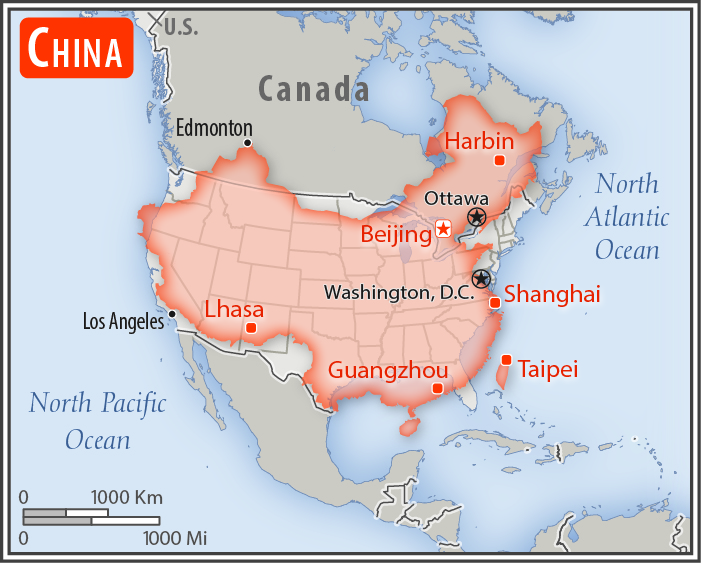
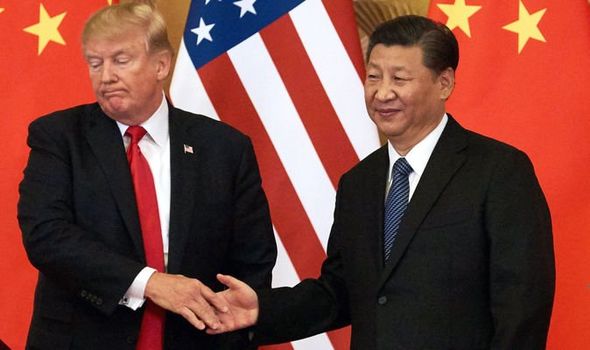
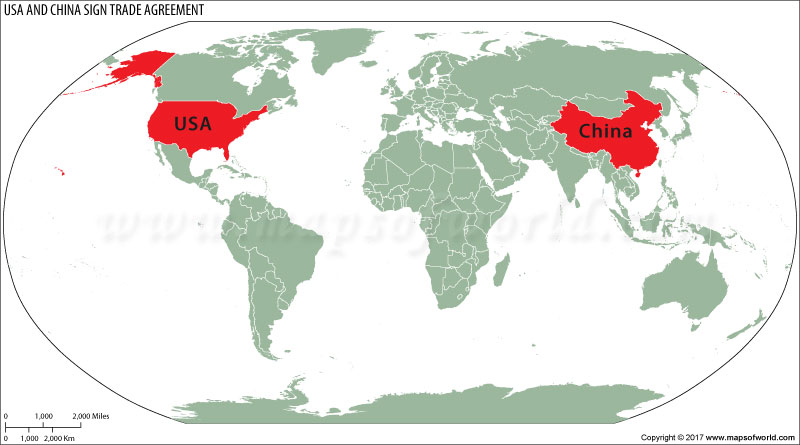
Moyo identifies the Gini index of income inequality to show that there is little difference between the rich and poor in China and the United States despite their government leaders’ differences.

China is a dictatorship while America is a form of democracy. They are nearly the same on the Gini index scale of citizen inequality while South Africa, Zambia and Brazil are at the bottom. Slovenia, the Czech Republic, Slovakia, Belarus and most of the Scandinavian countries show the lowest differences in citizen’ economic inequality. Mayo argues the difference has little to do with their forms of government except in relation to their government policies. In her opinion, China and the United States could improve their citizen’s Gini index position if their government policies would focus on income equality.

Both China and America have relative stability but with different forms of government.

Unquestionably, freedom is the sine non quo (indispensable ingredient) of America, but it is income inequality that causes the chaos Moyo alludes to in her book. That chaos is not overtly apparent in China because of dictatorship but one who has traveled to China feels there is a similar level of discontent, if not chaos, among its citizens over economic inequality.

Moyo’s solution for reducing America’s growing chaos seems difficult but not impossible to implement.

Dambisa Moyo’s solution revolves around the following 8 recommendations.

  1. Make voting compulsory to increase voter participation more representative of the people.
  2. Make election to the House of Representatives a six-year term like the Senate to encourage longer term economic goals but limit the number of terms one can be in office. (Eliminate career politicians.)
  3. Increase the pay of politicians to what successful private sector leaders receive.
  4. Establish policy making agencies that can focus on long-term policies without being threatened by near term election cycles.
  5. Invest in the education of future leaders of the political system.
  6. Encourage public officials to focus on economic diversification with an educated understanding of technological change in the world.
  7. The wealth of the nation should be focused on reduction of economic inequality.
  8. Strategies to manage natural resources should be developed to focus on sustainability.

Fair trade is where America is on the wrong side of history according to the author.

Adam Smith believed in fair trade.

Adam Smith argued for removing trade barriers like tariffs and quotas because of limited natural resources. He explains resources are more efficiently allocated, product production is increased, and economic growth is improved with free trade. As inferred by Moyo, American chaos is partly a result of ignoring Adam Smith’s prescient understanding of economics.

America democracy has journeyed a long way since 1776.

America’s fundamental success came from its emphasis on freedom within rules-of-law organized around the “checks and balances” of three distinct branches of government, i.e., the executive, congressional, and judicial branches. This is the strength of American Democracy that has offered stability. The inference made in “Edge of Chaos” is that America’s stability is at risk if it does not adapt to technological change wrought by A.I. and global interconnectivity.

Technology is changing the nature of American productivity from material products to service. With the help of A.I., America can begin to address many of the service needs of its citizens. From aid to the homeless, to education for service to others, to drug treatment of the addicted, to improved health care for all, the prosperity and income of Americans can be more equitably shared.

Global interconnectivity requires greater acceptance of fair trade as originally described by Adam Smith.

Today’s alleged protection of worker employment by using tariffs to restrict foreign production is shooting citizens in the foot by artificially increasing the cost of living. Re-education for service to the public by using A.I. to make citizens more human-centered offers an alternative to 21st century American chaos.

These are intelligent observations by a very young and well-educated author.

HOSTAGE

Over 230 human beings remain political hostages in this unpredictable world.

Books of Interest
 Website: chetyarbrough.blog

In the Shadows (True Stories of High-Stakes Negotiations to Free Americans Captured Abroad)

By: Mickey Bergman, Ellis Henican

Narrated By: Assaf Cohen, Mickey Bergman

Mickey Bergman tells a fascinating personal story about his life as a political hostage negotiator. He and a mysterious Lebanese friend he names “George” met at Georgetown University and became interested in political hostage negotiations. A precipitating event that led to their early friendship is the kidnapping of an Israeli soldier by a Palestinian Hamas faction in Lebanon. As a former Jewish military soldier, Bergman became friends with “George”, a Lebanese Muslim student at George Washington University. With similar beliefs about the unfairness and human tragedy of hostage taking for political purpose, they become partners in the release of the Israeli soldier from Hamas.

As a reminder of the of the October 7, 2023, kidnaping of over 100 Jewish hostages by Hamas, Israel has occupied Gaza and murdered an estimated 4o,000 Palestinians.

In the kidnaping of one Israeli soldier, Bergman explains that murder or kidnapping of 1 Israeli is viewed by some in the government and Israeli citizens as not 1–but six million and 1 atrocities.

A singular kidnaping, let alone the October 7th Hamas attack, gave warrant to some in Israel’s government to wage occupation and war on Gaza.

(This reasoning gives a sense of the current state of the Gaza war but also explains why hostage negotiation is such a complicated and lengthy process that can as easily end in failure as success.)

From Bergman’s friendship with “George”, he gathers interest in the pursuit of peace, regardless of social, religious, economic, or political difference. As a twenty something graduate, Bergman receives a call from the Clinton Global Initiative to join their organization after graduation. CGI was formed by former President Clinton and his family in 2005. Its stated purpose was to devise and implement solutions to world challenges like climate change, health equity, world economic growth, and peace among nations. It gave Bergman his first thoughts about what would become his mission in life, i.e., the liberation of hostages unjustly held by factions of countries or governments for political rather than criminal infraction. “In the Shadows” explains how suited Bergman is for the life he chooses. Raised in Israel, highly educated, experienced as a soldier, from a stable and loving family, Bergman understands the grief and joy of families dealing with and hoping for their mothers, fathers, sons or daughters release from a foreign prison.

Formed in 2005 to address world problems.

Bergman’s early experience as a go-between for the release of the Israeli soldier, with the help of his Lebanese friend from college, show how important non-governmental citizens can be in freeing political prisoners. Bergman and his friend’s families have important indirect contacts at high levels in the Israeli and Lebanese governments. The two young graduates create back-channel contacts to Jewish and Lebanese governments that eventually get Hamas to release the Israeli soldier. They found it a slow, tedious process of give and take allowing political points to be made by factions and governments while providing an opportunity to free a hostage who was only doing his government ordered job.

Bergman is everyman who wishes to be the best he can be within their natural gifts of birth, education, and experience.

Bergman is drawn into the circle of Governor Bill Richardson of New Mexico who formed the Richard Center in 2011. Bergman learns how to become a more effective hostage negotiator. Richardson’s methodology in negotiation is a post-graduate course in effective international negotiation.

The Richard Center was formed in 2011 to focus on promoting international peace and dialogue; particularly to negotiate hostage and prisoner releases. The Richard Center continues its work today.

Bill Richardson (1947-2023, died at age 75, a former Governor of New Mexico, 9th US Secretary of Energy, US Ambassador to the UN, who was elected to the U.S. House of Representatives for New Mexico.)

Richardson’s rules of negotiation:

  1. Never close the door to your contacts.
  2. Deflect attention from yourself with the people you take with you when you negotiate.
  3. As leader of a mission, observe reactions of your opposing audience to associates’ arguments, i.e. the same arguments you discussed with your associates before the meeting.
  4. Present a final pitch for hostage release based on what you have learned from the audiences’ reactions to your support staff’s arguments.

Richardson is shown by Bergman to be a master of negotiation and a great teacher of the art. You will not always win the argument, but you will have used the most persuasive details based on seeing and hearing the oppositions’ reactions to associates’ arguments.

“In the Shadows” tells the hostage stories of Brittney Griner, Danny Fenster, Otto Warmbier, Trevor Reed, Paul Whelan, and Kenneth Bae.

Bergman does a great job of explaining how difficult, dangerous, and often unsuccessful hostage negotiations can be. The release of Griner is heartwarming. The death of Warmbier is heart breaking. The delay of Paul Whelan’s release is frustrating and indicative of the complexity of hostage negotiation.

The many stories Bergman tells are interspersed with hardship in his own life that show how human and vulnerable we are despite our intelligence, experience, and education. Over 230 human beings remain political hostages in this unpredictable world. Though Governor Richardson recently died, Bergman carries on with the Richardson Center for Global Engagement.