AI REGULATION

As Suleyman and Bhaskar infer, ignoring the threat of AI because of the difficulty of regulation is no reason to abandon the effort.

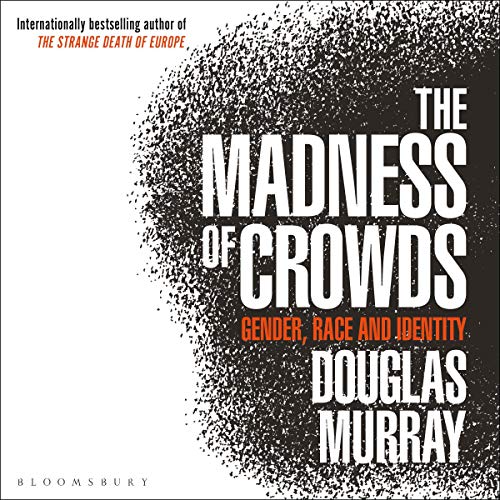
Books of Interest
 Website: chetyarbrough.blog

The Coming Wave

By: Mustafa Suleyman with Michael Bhaskar

Narrated By: Mustafa Suleyman

This is a startling book about AI because it is written by an AI entrepreneur who is the founder and former head of applied AI at DeepMind. He is also the CEO of Microsoft AI. What the authors argue is not understood by many who discount the threat of AI. They explain AI can collate information that creates societal solutions, as well as threats, that are beyond the thought and reasoning ability of human beings.

“The Coming Wave” is startling because it is written by two authors who have an intimate understanding of the science of AI.

They argue it is critically important for AI research and development to be internationally regulated with the same seriousness that accompanied the research and use of the atom bomb.

Those who have read this blog know the perspective of this writer is that AI, whether it has greater risk than the atom bomb or not is a tool, not a controller, of humanity. The AI’ threat example given by Suleyman and Bhaskar is that AI has the potential for invention of a genetic modification that could as easily destroy as improve humanity. Recognizing AI’s danger is commendable but like the atom bomb, there will always be a threat of miscreant nations or radicals that have the use of a nuclear device or AI to initiate Armagedón. Obviously, if AI is the threat they suggest, there needs to be an antidote. The last chapters of “The Coming Wave” offer their solution. The authors suggest a 10-step program to regulate or ameliorate the threat of AI’s misuse.

Like alcoholism and nuclear bomb deterrence, Suleyman’s program will be as effective as those who choose to follow the rules.

There are no simple solutions for regulation of AI and as history shows neither Alcoholics Anonymous (AA) nor the Treaty on the Prohibition of Nuclear Weapons (TPNW) has been completely successful.

Suleyman suggests the first step in regulating AI begins with creating safeguards for the vast LLM capabilities of Artificial Intelligence.

This will require the hiring of technicians to monitor and adjust incorrect or misleading information accumulated and distributed by AI users. The concern of many will be the restriction on “freedom of speech”. Additionally, two concerns are the cost of such a bureaucracy and who monitors the monitors. Who draws the line between fact and fiction? When does information deletion become a distortion of fact? This bureaucracy will be responsible for auditing AI models to understand what their capabilities are and what limitations they have.

A second step is to slow the process of AI development by controlling the sale and distribution of the hardware components of AI to provide more time for reviewing new development impacts.

With lucrative incentives for new AI capabilities in a capitalist system there is likely to be a lot of resistance by aggressive entrepreneurs, free-trade and free-speech believers. Leaders in authoritarian countries will be equally incensed by interference in their right to rule.

Transparency is a critical part of the vetting process for AI development.

Suleyman suggests critics need to be involved in new developments to balance greed and power against utilitarian value. There has to be an ethical examination of AI that goes beyond profitability for individuals or control by governments. The bureaucracies for development, review, and regulation should be designed to adapt, reform, and implement regulations to manage AI technologies responsibly. These regulations should be established through global treaties and alliances among all nations of the world.

Suleyman acknowledges this is a big ask and notes there will be many failures in getting cooperation or adherence to AI regulation.

That is and was true of nuclear armament and so far, there has been no use of nuclear weapons to attack other countries. The authors note there will be failures in trying to institute these guidelines but with the help of public awareness and grassroots support, there is hope for the greater good that can come from AI.

As Suleyman and Bhaskar infer, ignoring the threat of AI because of the difficulty of regulation is no reason to abandon the effort.

THE DISMAL SCIENCE

It appears to this listener/reader, the rise of authoritarianism in the world today lays at the feet of Marx and, to a lesser extent, von Mises’ economic theories.

Books of Interest
 Website: chetyarbrough.blog

Human Action: A Treatise on Economics

By: Ludwig von Mises 

Narrated By: Jeff Riggenbach

Ludwig von Mises (Austrian-American economist, logician, sociologist, and philosopher. 1881-1973, died at age 92.)

Economics is defined as a social science that studies how individuals, businesses, governments, and societies allocate resources to satisfy the needs and desires of a community of people. Historically, one of the greatest explainers of this social science is Ludwig von Mises. Maturing at a time of the communist revolution, the advance of capitalism and both world wars, von-Mises offers one of the greatest books about economics since Adam Smith. The only economist of greater significance is Adam Smith (1723-1790) because of his origination of the principles of economics. Close behind are Karl Marx (1818-1883), and John Maynard Keynes (1883-1946).

Of course, all economists are beholding to Adam Smith with his original conception of the dismal science. Smith conceived of the “invisible hand” of economics that postulated self-interest as the primary contributor to the overall good of society. Von Mises seems to guardedly agree but suggests self-interest’ market pricing can artificially distort distribution of economic resources. Von Mises infers the “invisible hand” is inefficient at the least and may artificially distort prices in the hands of authoritarian governments and business monopolies. Karl Marx suggests the invisible hand would evolve into a production system that would be owned by the public to ensure equality of distribution in an evolutionary economy that passes from capitalism to socialism, and finally communism. Marx argues self-interest will evolve into a common interest for all. Marx’s idea of change in the nature of human beings beggars the imagination.

Smith supported limited government intervention to maintain justice, defense, and public works.

Both Smith and Marx believed in a “labor theory of value” which argues the value of a commodity is determined by the labor required to produce it. Where Smith and Marx depart is in government enforcement of a balance between labor and the cost of goods. Von Mises opposed most forms of governmental intervention in the economy. However, Keynes argues government intervention is necessary during economic downturns. After WWII, Keynes theory became an important part of the American government’s support of European reconstruction.

Von Mises believed in human individualism which carries the risk of authoritarian domination.

Von Mises believed in human individualism while Smith and Keynes support limited government intervention. Marx argues human nature could be shaped by a melding of government dictatorship with societal pressures to support communal goals.

At extremes, von Mises endorses individualism and Marx endorses dictatorship. The middle ground seems held by Adam Smith and John Maynard Keynes that endorse limited government intervention. It appears to this listener/reader, the rise of authoritarianism in the world today lays at the feet of Marx and, to a lesser extent, von Mises’ economic theories.

The length and value of von Mises’ book overwhelms a non-economist listener with his esoteric statistical and lengthy explanations of economic theory. However, comparison with a dilatant’s understanding of other renown economists is enlightening.

AUTHORITARIANISM

Whether an idealist or humanist, the historical truth is that rising authoritarians believe power is all that matters. Today, the world seems at the threshold of authoritarianism.
Books of Interest
 Website: chetyarbrough.blog

Bronshtein in the Bronx 

By: Robert Littell

Narrated By: Adam Grupper

Image result for robert littell

Robert Littell (American author, former journalist in France.)

Robert Littell researches and imagines the 10 days of Leon Trotsky’s visit to New York City in 1917, just before the Russian revolution. His story offers humanizing and demeaning aspects of Trotsky’s personal and political life as a revolutionary.

Lev Davidovich Bronstein aka Leon Trotsky (1879-1940, Russian revolutionary, politician, political theorist, revolutionary military leader.)

Image result for leon trotsky

Littell explains Trotsky travels with his two young sons and a female companion (the mother of their two boys) to New York. His first wife is exiled in Siberia for helping him spread leaflets about terrible factory conditions in Czarist Russia. Trotsky escaped to England while leaving his first wife and their two young girls in Siberia. (Trotsky divorces his first wife and marries the woman that Littel calls his airplane companion, either before or after the trip to New York. This is not made clear in Littell’s story.)

Trotsky in New York, 1917 | Kenneth Ackerman

Littell explains Trotsky is a kind of celebrity in New York because of his association with socialist beliefs and his involvement in the failed 1905 Russian Revolution.

Trotsky is in his early twenties when he arrives in New York. Littell characterizes Trotsky as a libertine by introducing a female reporter in New York who becomes his lover. Littell reinforces that libertinism at the end of his story by suggesting Trotsky and Frida Kahlo had an affair while his second wife and he were exiled in Mexico.

Aside from Trotsky’s picadilloes, Littell shows how committed Trotsky was to his belief in Marxism and the plight of the working poor.

Trotsky gave several speeches that appealed to New York laborers and their families. An interesting sidelight is appended to Littell’s story when a Jewish industrialist meets with Trotsky after the 1917 revolution in Russia. Naturally, Trotsky is anxious to return to support Lenin and the Bolsheviks in the revolution. However, Trotsky is broke and doesn’t have the money to return to Russia. The industrialist offers an envelope with the money needed for the trip. Neither the industrialist nor Trotsky are believers in the Jewish faith but believe in the power of socialism and its benefit to society.

The political point being made by Littell is that the ideal of communism supersedes religious beliefs.

Trotsky is Jewish but not a believer in God. He is a political idealist. Littell notes Trotsky becomes a military leader in the communist movement. Littell infers Trotsky’s idealism gets in the way of humanism when he orders one in ten prisoners be shot for their opposition to the communist revolution. This is undoubtedly an apocryphal story but a way of explaining how a committed idealist can become a murderous tyrant.

Littell ends his story with a brief and somewhat inaccurate history of the Trotsky’ children. The two girls with his first wife died before they were 30. Zinada had mental health issues and died by suicide in 1933. Nina died at age 26 without any detailed information about her cause of death.

Rather than two boys noted in Littell’s story of the trip to New York, one was a girl named Zinaida. Zinaida, like her half-sister, died by suicide at age 32. Lev, born in 1906, is believed to have been poisoned by Stalinist agents in 1938. As some know, Trotsky was murdered by Stalin’s agents in Mexico City. In contrast to his children, Trotsky, the political idealist, is murdered as an exile at the age of 60. All-in-all, a tragic family history.

Whether an idealist or humanist, the historical truth is that rising authoritarians believe power is all that matters. Today, the world seems at the threshold of authoritarianism.

AGGRESSION LOSES

The war in Ukraine will be settled through negotiation. The same can be true in Gaza with the creation of a Palestinian state. It certainly will not eliminate conflict, but it offers a path for peace.

Books of Interest
 Website: chetyarbrough.blog

All Quiet on the Western Front

By: Erich Maria Remarque

Narrated By: Frank Muller

Image result for erich maria remarque

Erich Maria Remarque (1898-1970, Author, German born novelist and survivor of WWI.)

Revisiting Erich Remarque’s “All Quiet on the Western Front” is a reminder of today’s wars in Ukraine and Gaza. As a former soldier in the German army of WWI, Remarque explains how brutal war is for soldiers and their families. He shows there are no winners in war. The victims of war are the same whether they are aggressors or defenders. Putin’s ambition to restore the empire of Russia appears as foolish as Hamas’s determination to destroy Israel. The result is injury and death for all. Neither Germany nor defending Allied Powers escaped the loss of soldiers and civilians in the two 20th century wars against Germany.

The estimated injury of 109,000 and killing of 46,000 Palestinian citizens is not justified by the atrocity of October 7, 2023, when 1,200 people were killed and 253 were taken hostage by Hamas in Isreal.

Israeli leadership disagrees because of factions in Palestine, Syria, and Lebanon that intend to eliminate Israel from the middle eastern world. Rather than killing and injuring indigenous peoples of the Gaza strip, a diplomatic solution should be pursued to establish a Palestinian State. Every nation-state in the world has militant factions within their borders. Palestine, as a nation-state, would have the responsibility for controlling their militant factions just like every nation-state in the world.
Twentieth century Isreal is formed out of Egypt, Jordan, and Syria after the 1948 Arab Israeli War.

Egypt lost the Gaza Strip, Jordan the West Bank, and Syria the Golan Heights with the formation of Israel. Palestinians, like Israelis, lived in those areas for centuries. With creation of a Palestinian State, International Law and UN Resolutions can aid and diplomatically pressure governments to address nation-state claims.

History of the 20th and now 21st century show war has defeated aggressor governments but at an unconscionable cost to humanity. War’s cost is illustrated by Remarque as injury and death of aggressors, defenders, parents, and children. No one wins and everyone loses. Neither peace nor war have ended human inhumanity. Remarque clearly illustrates the folly of war, but human nature infects peace with a war mentality and ferocity. Diplomacy and negotiation for the creation of a Palestinian state is the only pragmatic solution for peace in the Middle East.

Aggressor nations, as shown by 20th century history, are eventually defeated.

Israel’s military reaction is as dishonorable as the Hamas attack on October 7th. Both are unjustifiable. Creation of a Palestinian state offers a pragmatic solution to the control of Hamas. The need for nation-state control is equally true in Syria’s and Lebanon’s Hezbollah factions. International pressure can only be exerted with nation-state recognition. Only with the creation of ethnically viable nation-states is their hope for peace among peoples of different cultures.

The war in Ukraine will be settled through negotiation. The same can be true in Gaza with the creation of a Palestinian state. It certainly will not eliminate conflict, but it offers a path for peace.

BELIEF

Extending Harari’s idea of biophysics research and algo-rhythmic programming suggests a potential for immense changes in society. A singularity that melds A.I. with human brain function and algo-rhythmic programming may be tomorrow’s world revolution. Of course, that capability cuts both ways, i.e., for the good and bad of society.

Books of Interest
 Website: chetyarbrough.blog

Homo Deus (A Brief History of Tomorrow)

By: Uval Noah Harari

Narrated By: Derek Perkins

Yuval Noah Harari (Author, Israeli medievalist, military historian, science writer.)

By any measure, Yuval Noah Harari is a well-educated and insightful person who will offend some and enlighten others with his opinion about religion, spirituality, the nature of human beings, and the future. He implies the Bible is a book of fiction that is historically proven to have been written by different authors with contradictions that only interpreters can reconcile as God’s work.

“Homo Deus” is a spiritual book suggesting humanity is on its own and has a chance to survive the future but only through the ability of human understanding and effort.

To Harari, the greatest threats to society are national leaders who believe in God, heaven and eternal life who discount human existence and use of science to improve human life on earth. The irony of Harari’s belief is that humanist leaders are the only hope for human life’ survival.

Harari argues science, free enterprise, and the growth of knowledge offer the best hope for the future of human life.

Neither capitalism nor communism are a guarantee of survival because of the increasing potential for error as human beings become more God-like. Advances in engineering, artificial intelligence, and biotechnology may replace the happenstance of human birth. The value of free enterprise is evident in the agricultural, industrial, and technological revolutions of history. However, as science improves the understanding of the mind and body of human beings, the technology of biogenetics offers hope for the future while running the risk of biological error with unforeseen consequences.

Harari’s book is the brave new world written about by Shakespeare in the 17th century and reimagined by Aldous Huxley in his 1932 dystopian novel “Brave New World”.

On the one hand, Shakespeare offers a positive spin as his character, Miranda, sees people from outside her experience and says “How beauteous mankind is! O Brave! That has such people in’t”. While Huxley notes a future society that becomes conformist and lacks individuality and human emotion. Which way society will turn is unknown.

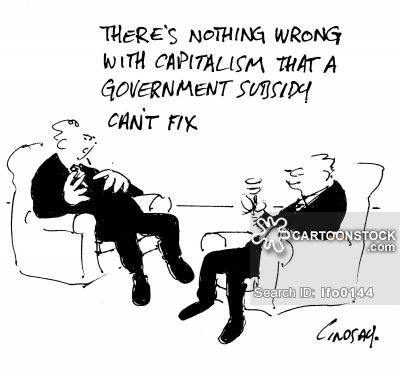
The conformist demands of collective ownership of property and means of production by communism impede creativity. Capitalism is more creative and dynamic. However, capitalist incentive raises the specter of human nature that only sees financial gain without any concern for environmental or human cost. On balance, capitalism appears more likely to accelerate technology because communism more often follows than changes scientific direction.

The growth of knowledge comes from science and exploration of the unknown, but its use can be destructive as well as constructive.

Some think A.I. will lead the world to greater knowledge and prosperity while others believe it will destroy human life. A sceptic might suggest both views are wrong because A.I. is only a tool for recalling knowledge of the past to help humans make better decisions for the future. The real risk, as it has always been, is human leadership.

Harari believes, like Nietzsche, that God is dead because belief in God is losing its power and significance in the modern world.

Though many still believe in God, it seems more people are viewing God as a myth. The Pew Research Center reports a median of 45% of people across 34 countries still believe in God. However, the variation is wide with Brazil saying 70% believe while in Japan the percentage is only 20%. Harari implies belief in God is in decline.

Harari explains biophysics illustrates that human thought is algorithmic. He argues our thoughts, decisions, and behaviors can be understood to be a result of patterns created in human brains that are pre-determined. There is no “free-will” in Harari’s opinion. This is not to suggest aberrant behavior does not exist, but that human thought and action is determined by our experientially defined brain in the same way a computer is programmed. Experience from birth to adulthood is just part of a mind’s programming.

Harari implies understanding of brain function will change the world as massively as the Agricultural, Industrial, and technological revolutions.

Harari goes on to suggest humans have never been singular beings, but a multitude of beings split into two brains that mix and match their biogenetic and biochemical programming to think and act in pre-determined ways. Experiments have shown that the way the left half of a human brain sees and compels action is different than how the right brain sees and compels action. Each half thinks and acts independently while negotiating a concerted action when both halves are functioning normally. That negotiation between the two brain halves results in an algorithm for action based on the biochemical nature of the brain. The way two halves of the brain interact multiply the person we are or will become.

Extending Harari’s idea of biophysics research and algo-rhythmic programming suggests a potential for immense changes in society. A singularity that melds A.I. with human brain function and algo-rhythmic programming may be tomorrow’s world revolution. Of course, that capability cuts both ways, i.e., for the good and bad of society. Interestingly, Harari paints a grim picture of the future based on an A.I. revolution.

NO EASY SOLUTION

“Everyone Who Is Gone Is Here” is an indictment of American foreign policy. There are no easy solutions for immigration, deportation, or human rights in the world.

Books of Interest
 Website: chetyarbrough.blog

Everyone Who Is Gone Is Here (The United States, Central America, and the Making of a Crises)

By: Johnathan Blitzer

Narrated By: Jonathan Blitzer, Andre Santana

Johnathan Blitzer (Author, American journalist, staff writer for The New Yorker.)

“Everyone Who Is Gone Is Here” is an indictment of American foreign policy. There seems a loss of a moral center in America with its support of other governments based solely on government type, national security, or economic interest. That is not to suggest national security and economic interest are not critically important but Blitzer’s history of America’s support of Central American governments is appalling. El Salvado, Guatemala, Honduras, and Nicaragua are democracies in title but not in reality.

Blitzer tells the story of migrants from El Salvadore and Guatemala who are imprisoned, tortured, and sometimes raped or murdered by their government’s functionaries.

El Salvadoran and Guatemalan governments purport to be representative democratic republics. They are not. They have been dictatorial and punitive victimizers of their citizens. The picture drawn by Blitzer is that both are highly autocratic and riven with exploitation and arbitrary treatment of their Latino populations.

Some immigrants came to roil American communities with the only tools they were familiar with in their native countries.

Many immigrants came to America to escape arbitrary treatment by their governments. America has benefited from its immigrant labor, but some turned to street drugs and violence because of their poverty and the experience their families lived with in their native countries. Driven by self-interest, a survival instinct, and ignorance, America has deported many Latino immigrants who chose the gang life in the California suburbs. Gang life offered identity and income. Gangs like MS-13, the 18th Street Gang and other street name gangs terrorized L.A. and Southern California. The police reacted with violence by rounding up Latinos based on gathered photographs and lists of their families and friends. Some who had proven records of crime were imprisoned or deported to their families’ countries even though they may have been born in America.

America has financially and militarily supported Central America without regard to human rights.

There is a taint of McCarthyism in America’s communist categorization of Central American countries because false categorizations hides the truth. The truth is that democratic countries like El Salvadore and Guatemala have treated citizens as harshly as yesterday’s Stalin, today’s Ayatollah in Iran, and the two Assads in Syria. Reagan’s willingness to sell arms to Iran in the 1980s for money to send to Nicaragua because communism was allegedly opposed by those in power is an example of America’s political blindness. Nicaraguan, Salvadorian, and Guatemalan leadership was as corrupt as many communist countries that practiced violence, imprisonment, torture, and murder of their citizens. Whether one’s government is communist or democratic, the important issue is how its citizens are treated, not its form of government. Bad forms of government will eventually fall from the weight of their citizens’ unequal treatment, just as Syria fell in 2024. The sufferers are always the oppressed citizens and, as interestingly noted by the author, the government perpetrators who live with the guilt they feel when they retire from their military or government jobs.

What Blitzer infers in his history of Central America is that human rights of citizens should be the primary criteria for American financial and/or military support for foreign governments whether democratic, communist, socialist, or other.

National stability comes from citizens’ support of their government. Stability is compromised when human rights are denied. Blitzer implies–America should only financially or militarily support another country only if the nativist nation and culture is working toward equal human rights for its citizens. The immigrant crises in America and the world is caused by nations that do not work toward equal human rights for their citizens.

One is somewhat conflicted by Blitzers’ argument. The conflict is in an outsiders’ understanding of a foreign countries’ culture.

Human rights may be universal, but culture is made of beliefs, values, norms, customs, language, art, literature, food, fashion, social institutions, and unique symbols and artifacts of particular nation-states. This great host of characteristics is not easily quantifiable. No nation can justify rape, torture, or murder but they do exist in all cultures. Ignorance of culture is at the heart of why any country that invades, or militarily and financially supports another country, risks failure.

There are no easy solutions for immigration, deportation, or human rights in the world.

Truman

Truman’s presidential accomplishments were not done alone but he managed highly educated and experienced people who got things done. He had the respect of people who reported to him, and he was tough, pragmatic, and willing to make hard decisions when circumstances required leadership.

Books of Interest
 Website: chetyarbrough.blog

Truman

By: David McCullough

David McCullough (1933-2022, Author, historian, winner of a Pulitzer Prize, the National Book Award, and later given the Presidential Medal of Freedom in 2006.)

One of the great historians of the modern age, David McCullough received the National Book Award for “Truman” in 1982. As a biography of an American President, it is among the best ever written about a President whom few regard as being in the category of Washington, Lincoln, or FDR. Every chapter is a pleasure to read because it reminds one of why many consider America the best country in the world in which to live. This portrait of the 33rd President of the United States shows a man of modest means, without a college degree, who grows to become a great manager of others and leader of a post WWII world.

President Harry S. Truman (1884-1972, President from 1945-1953.)

Thrown into the Presidency after 82 days as Vice President of the United States, Truman became President. FDR died April 12, 1945. Germany was near defeat by the Allies. Within a month, on May 8th, the Allies celebrated what is known as V-E Day, Victory in Europe Day. Truman is faced with a decision on how best to end WWII by defeating Japan. Though when he rose to the Presidency, he had not been informed about the Manhattan Project. He was fully briefed on April 25, 1945, by Henry Stimson and General Leslie Groves, leaders of the Manhattan Project. In mid-July of 1945 the first atomic bomb was successfully tested and Truman described it as “the most terrible bomb in the history of the world”.

Captain Harry Truman November 1918.

As a former veteran and captain in WWI, Truman knew what continuing the war meant to the lives of American soldiers.

As a former veteran and captain in WWI, Truman knew what continuing the war meant to the lives of American soldiers if Japan were conventionally attacked by Allied forces. He ordered the use of two atom bombs, one on August 6, 1945, on Hiroshima and a second on Nagasaki on August 9, 1945. There was no official warning. Leaflets were dropped over some Japanese cities on August 6, but one suspects that was just a precedent to instill fear about further destruction if Japan refused to surrender.

TRUMAN’ CABINET IN 1945

President Harry S. Truman meets with Cabinet members in the White House. From left to right: Postmaster General Robert Hannegan; Secretary of War Henry Stimson; Secretary of State James Byrnes; the President; Secretary of the Treasury Fred Vinson; Attorney General Tom Clark; and Secretary of the Navy James Forrestal.

Truman took complete responsibility for the decision to drop the bombs.

As shown in the movie about Truman’s meeting with Oppenheimer after Hiroshima and Nagasaki, Truman was put-off by Oppenheimer’s concern over postwar use of nuclear weapons. Presumably, Truman’s feelings were that many lives were saved despite the loss of Japanese citizens from the use of atomic weapons. McCullough’s depiction of Truman is that he was tough, pragmatic, and willing to make hard decisions. He took personal responsibility for the use of atomic bombs to end the war.

Truman’s whistle-stop campaign in 1948.

McCullough goes on to explain Truman’s second term election effort that began when Dewey, his Republican opponent, looked like a sure winner. Truman campaigned across the country by train. Truman’s victory and what seemed an interminable train ride was a testament to the grit and determination of this 5-foot, 9-inch dynamo.

Truman’s character description is reinforced with McCullough’s history of Truman’s relationship with General McArthur. In the early days of the Korean war, McArthur took charge of American forces and made decisions that seemed to bode well for the end of the conflict. McArthur reversed the course of the war by insisting on a risky reinforcement of American forces. It was the right move and Truman admired McArthur’s grit in insisting on the reinforcement. However, McArthur overstepped his position when he insisted on bombing Chinese cities when China escalated the Korea war. McArthur publicly criticized Truman’s administrative opposition to escalation.

Truman relieved McArthur of his command in Korea and pursued a negotiated peace at the 38th parallel. This was another tough, pragmatic, and unpopular decision by Truman. In retrospect, one recognizes it was the right decision, but Truman was markedly criticized by the press and public for his decision.

In the early days of the Korean war, McArthur took charge of American forces and made decisions that seemed to bode well for the end of the conflict. McArthur reversed the course of the war by insisting on a risky reinforcement of American forces.

One can argue McCullough’s history places Truman in the pantheon of the greatest Presidents of the United States since Washington, Lincoln, and FDR. Truman ended WWII, agreed with and supported the Marshall plan that rebuilt Europe, created the Truman Doctrine to contain Soviet Expansion, desegregated the military, established the CIA, NSA, and NSC by signing the National Security Act of 1947, approved the Berlin airlift when the Soviets isolated West Berlin, and banned discrimination in the federal workforce. Truman managed some of the greatest minds of his 20th century administration to make America the preeminent leader of the western world.

Truman’s presidential accomplishments were not done alone but he managed highly educated and experienced people who got things done. He had the respect of people who reported to him, and he was tough, pragmatic, and willing to make hard decisions when circumstances required leadership in the face of public opposition.

WORRY OR NOT

Artificial intelligence is an amazing tool for understanding the past but its utility for the future is totally dependent on its use by human beings. A.I. may be a tool for planting the seeds of agriculture or operating the tools of industry but it does not think like a human being.

Books of Interest
 Website: chetyarbrough.blog

Genesis (Artificial Intelligence, Hope, and the Human Spirit) 

By: Henry A. Kissinger, Eric Schmidt, Craig Mundie

Narrated By: Niall Ferguson, Byron Wagner

NOTED BELOW: Henry Kissinger (former Secretary of State who died in 2023), Eric Schmidt (former CEO of Google), and Craig Mundie (a Senior Advisor to the CEO of Microsoft).

“Genesis” is these three authors view of the threat and benefits of artificial intelligence. Though Kissinger is near the end of his life when his contribution is made to the book, his co-authors acknowledge his prescient understanding of the A.I. revolution and what it means to world peace and prosperity.

On the one hand, A.I. threatens civilization; on the other it offers a lifeline that may rescue civilization from global warming, nuclear annihilation, and an uncertain future. To this book reviewer, A.I. is a tool in the hands of human beings that can turn human decisions for the good of humanity or to its opposite.

A.I. gathers all the information in the known world, answers questions, and offers predictions based on human information recorded in the world’s past. It is not thinking but simply recalling the past with clarity beyond human capability. A.I. compiles everything originally noted by human beings and collates that information to offer a basis for future decision. Information comprehensiveness is not an infallible guide to the future. The future is and always will be determined by humans, limited only by human judgement, decision, and action.

The danger of A.I. remains in the thinking and decisions of humans that have often been right, but sometimes horribly wrong. One does not have to look far to see our mistakes with war, discrimination, and inequality. In theory, A.I. will improve human decision making but good and bad decisions will always be made by humans, not by machines driven by Artificial Intelligence. A.I.’s threat lies in its use by humans, not by A.I.’s infallible recall and probabilistic analysis of the past. Our worry about A.I. is justified but only because it is a tool of fallible human beings.

Artificial intelligence is an amazing tool for understanding the past but its utility for the future is totally dependent on its use by human beings. A.I. may be a tool for planting the seeds of agriculture or operating the tools of industry but it does not think like a human being. The limits of A.I. are the limits of human thought and action.

The authors conclude the Genie cannot be put back in the bottle. A.I. is a danger but it is a humanly manageable danger that is a part of human life.

The risk is in who the decision maker is when A.I. correlates historical information with proposed action. The authors infer the risk is in human fallibility, not artificial intelligence.

IRELAND’S TROUBLES

“Say Nothing” is an attempt to give listener/readers an understanding of Ireland’s “Troubles”. Patrick Radden Keefe helps one understand but it remains a complicated and confusing history because of its mix of religion and national sovereignty.

Books of Interest
 Website: chetyarbrough.blog

Say Nothing (A True Story of Murder and Memory in Northern Ireland) 

By: Patrick Radden Keefe

Narrated By: Mathew Blaney

Patrick Radden Keefe (Author, American writer and investigative journalist.)

“Say Nothing” is an attempt to give listener/readers an understanding of Ireland’s “Troubles”. Patrick Radden Keefe helps one understand but it remains a complicated and confusing history because of its mix of religion and national sovereignty. From the 1960s to the late 1980s, there were violent clashes between unionist/loyalists, who were largely protestant and wanted to be part of Great Britain; while Unionist/loyalists, who were largely Catholic wanted independence as the Republic of Ireland.

Bombings, sniper attacks, and violent confrontations caused an estimated 3600 deaths and tens-of-thousands injuries during the “Troubles”.

Not until 1998, with the “Good Friday Agreement” did the deadly conflicts cease. However, Great Britain’s Brexit, periods of political deadlock with the Northern Ireland Assembly, and debates over details of the “…Agreement” have occurred. Keefe tells a story of the build-up to the “…Agreement” in “Say Nothing”.

The Irish Republican Army that wished for Irish independence murdered Jean McConville, a mother of ten, in 1972.

The murder is puzzling because McConville is Catholic which suggests her death was either a mistake or that some Catholics were union/loyalists. Some in the IRA suggested she acted as a spy for the UK. That is a mystery Keefe fails to unravel while giving listener/readers some historical perspective on Ireland’s Troubles. Some say Marian Price was the murderer, but Keefe demurs and argues there is no concrete evidence.

Northern Ireland is over 40% Catholic while the Republic of Ireland is over 60% Catholic.

Ireland’s troubles date back to the 16th and 17th centuries when English and Scottish Protestant settlers chose Ireland as their new home. The native population of Ireland was Catholic and religious differences and land acquisition by Protestants set the table for conflict. In 1921, Ireland was split in two with Northern Ireland remaining a part of the UK but with a 40% minority who remained Catholic. A Catholic movement for civil rights in Northern Ireland began in the 1960s. Violence and political conflict ensued with the formation of paramilitary groups like the IRA (Irish Republican Army) that began bombing and shooting Protestant followers. The IRA wished to end British rule, unify Ireland, accommodate religious difference, and create an independent nation.

Over the years, there were several leaders of the IRA. Michael Collins, Cathal Brugha, Liam Lynch, Sean Stiofain, Gerry Adams, and Martin McGuinness. Gerry Adams is the leader most often referred to in Keefe’s book.

The IRA never admitted to ordering the abduction and murder of Jean McConville. The author directly asks Adams if he ordered the murder, and his response is that he has no blood on his hands. Some suggest, her murder was a collective decision by leaders of the IRA.

Both Northern Ireland and the Republic of Ireland were ambivalent about Brexit and chose to neither entirely agree with separation from the EU nor entirely agree with the UK in its rejection of membership.

There remains a great deal of ambivalence about unification of Ireland as an independent nation but “The Good Friday Agreement” allows for a referendum on unification because of what appears to be a majority wishing to create one nation. However, Northern Ireland’s majority wishes to remain part of the UK while the Republic of Ireland wishes to remain independent. Unification seems unlikely because of their differences about being part of the UK.

It is interesting to note that the Catholic religion is the largest religious group in both Northern Ireland and the Republic of Ireland, but that Northern Ireland Catholics constitute 42.3% while the Republic of Ireland is 69.1% Catholic. Keefe’s story triggers an interest in understanding the history of Ireland, but it is too long in its telling to offer clarity.

REAGANOMICS

Homelessness, illegal immigration, and America’s budget deficit will not be cured by reducing taxes on the rich or by tariffs that artificially increase the cost of living, or by cutting the labor force of farmers through mass deportations, or by making it easier to do business in the U.S.

Books of Interest
 Website: chetyarbrough.blog

Reagan (His Life and Legend) 

By: Max Boot

Narrated By: Graham Winton

Max Boot (Russian-born naturalized American author, editorialist, lecturer, and military historian, writer and editor for The Christian Science Monitor.)

Not being a fan of Ronald Reagan’s presidency, there is some reluctance in reviewing Max Boot’s biography of the man. However, Boot’s writing and research offer an understanding that makes one separate Reagan’s political life from his experienced life. Boot explains Reagan’s life during the years before and after the depression.

Reagan’s father was an alcoholic which reminds one of how one’s childhood is rarely idyllic. Boot’s biography of Reagan shows one becomes who they are–despite the human faults of their parents. The way a child matures is only partly defined by parents’ influence. Reagan’s father’s alcoholism did not carry through to his son.

Boot’s biography shows Reagan to be an affable, well-adjusted, teenager and young adult who has a strong sense of what he believes is right and wrong.

Reagan is a football athlete in high school that grows to become a 6′ 1″ handsome young man from a relatively poor middle-class family. He aspires to college and works to have enough money to attend Eureka College in Illinois. He graduates in 1932 with a BA in Economics and Sociology. Reagan is remembered by classmates and teachers as a smart student and determined football player that gave him the grit and experience to become a movie star in the 1940s.

The first chapters of Boot’s biography of Reagan are about his break into the entertainment industry as a sports caster.

Reagan had a nearly photographic memory. He used that skill to recall a football game he played in college to impress a radio station manager with broadcast details of a game. He recalls a game he played in college and purposefully embellishes his role in the game. Reagan’s skill as a radio announcer led to a screen test with Warner Brothers in 1937 that launched his film career.

As WWII approaches, Reagan enlists as a lieutenant in the U.S. Army Air Force. (The Air Force in these early days were not a separate branch of the service.)

Reagan’s experience in the entertainment industry led to producing training and propaganda films for the Army Air Force. Boot explains Reagan had significant vision problems with nearsightedness in his youth and presbyopia (difficulty of focusing on close objects) as he got older. Reagan never served in a combat role. He eventually adopted contact lenses to correct his vision; partly to please film producers who disliked the “coke bottle” lenses he needed to see properly.

Four issues that are interesting and informative in the first chapters of Boot’s biography of Reagan are 1) how affable, and well liked Reagan was to people who met him, 2) that he was well-read, 3) very handsome with a respect for women that carried through to several relationships, and 4) that though he had a sense of right and wrong, his moral center seemed to waiver between concern and indifference.

During the depression, Reagan was a strong supporter of Franklin Roosevelt’s efforts to resurrect the American economy.

Reagan seemed more like a liberal Democrat than the conservative Republican he came to be as Governor of California and President of the United States. The remainder of the book shows how that change came about. Boot notes several factors that influenced Reagan to change from a Roosevelt to Goldwater supporter. The movie industry and the growing anti-communist era of the fifties influenced many former liberals. Reagan’s experience in Hollywood reinforced conservativism.

Reagan became rich from his relationship with Gerneral Electric. The corporate culture of GE in the 1950s and 60s was decidedly conservative. When Reagan became the host of “General Electric Theater” that culture seeped into his consciousness.

In 1962, Reagan switched from the Democratic party to the Republican party. He supported the election of Goldwater who ran against President Lyndon Johnson who was mired in the Vietnam war while promoting big government social welfare programs. The influence of Goldwater and the liberalism of the Johnson polices drove Reagan to believe big government was ruining the wealth and opportunity of Americans. He adopted conservative beliefs for economic deregulation, tax cuts that largely benefited the rich, and promoted anti-communist foreign policies. Reagan’s support for conservative policies is exemplified by his “A Time for Choosing” speech supporting Barry Goldwater’s campaign for President in 1964.

In the political climate of the 1960s, Reagan, with the support of GE, runs for Govenor of California. His position as president of the Screen Actors Guild, support of Goldwater, and the public’s perception of inefficiency of state government provided a platform for Reagan to run. The civil rights movement, Vietnam protests, the free speech movement, the Watts riots in LA, and the hippie movement in San Francisco created an environment ripe for conservative reaction. Reagan is elected Governor of California twice, to serve from 1967 to 1975.

Reagan as the Governor of California.

Reagan described his time with GE as a “postgraduate course in political science”.

Reagan’s experience as Governor of California, his Hollywood image, the support of big companies like GE, and the economic issues confronting Carter, give him a platform to run for President of the United States. Todays’ Republicans hold Reagan in high regard. Some view Reagan as one of the best recent presidents of the United States. Those who hold him in high regard cite his economic policies, strong national defense and leadership during the cold war. He believed in small government, lower taxes, and conservative values. Some suggest Trump is Reaganomics second coming.

Reagan runs for President of the United States in 1976. He wins and is re-elected in 1980.

What is not fully understood by some Americans, is the accomplishments of Reagan held some very negative consequences. Some argue he was the prime mover in nuclear weapons reduction. The biography of Gorbachev suggests the prime mover was Gorbachev and his support of glasnost with an opening of Russia to western ideals.

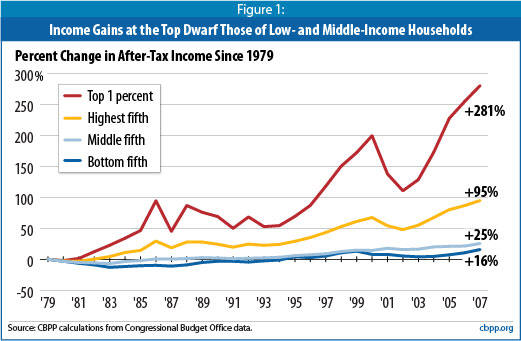
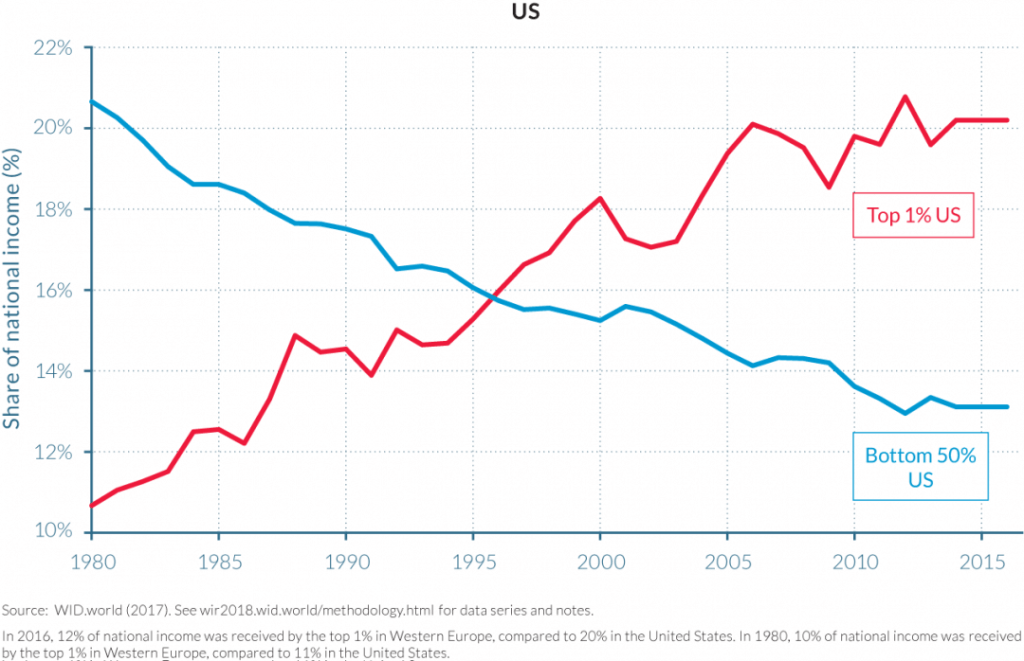
Some, like me, would argue Reagan accelerated economic inequality by giving tax cuts to the wealthy and deregulating the economy.

The federal deficit increased from $70 billion dollars to 152.6 billion dollars during the Reagan presidential years. In comparison to Carter’s administration, the deficit was less than half of Reagan’s at $74 billion dollars. Today’s deficit has grown to 1.83 trillion dollars. Four out of seven presidents (including Trump’s second term) since Reagan have been Republican. The deficit lays at the feet of both parties.

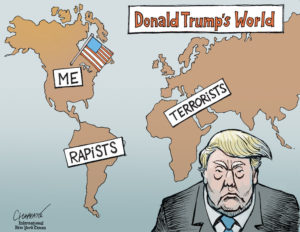
With the election of Trump, who emulates Reagan’s policies, one wonders–how much greater the deficit will be with reduced taxes for the rich and a renewal of economic deregulation.

Homelessness, illegal immigration, and America’s budget deficit will not be cured by reducing taxes on the rich or by tariffs that artificially increase the cost of living, or by cutting the labor force of farmers through mass deportations, or by making it easier to do business in the U.S.