FOR BETTER OR WORSE?

Trump’s purposefully uninformed knowledge of history will become a greater source of conflict in the world because he has a second term’ understanding of how the American government works and how it can be subverted with loyal followers.

Books of Interest
 Website: chetyarbrough.blog

Underground Empire (How America Weaponized the World Economy)

By: Henry Farrell, Abraham Newman

Narrated By: L. J. Ganser

“Underground Empire” is not a surprising revelation in today’s media-savvy era. Every person in the world is being surveilled by someone because of the power and influence of government. Whether a democracy that believes in freedom or an autocracy that believes in absolute control, Farrell and Newman explain how “Big Brother” is watching and acting in ways that affect your life.

The potential for ubiquitous surveillance was known and wished for by some government bureaucrats. Wide social surveillance was resisted by many in the American government until 9/11. After 9/11 that resistance weakened and surveillance of the world, more fully including American citizens, became indispensable. The creation of an “Underground Empire” has weaponized privacy and the fuel of money that can heat, cool, burn or freeze national economies.

The empire’s objective is to be in charge of the future. One may take issue with the word “…Empire”. The scale of an “Underground Empire” varies from nations like America, China, the UK, the EU, Russia, and others to a group of Al Qaeda’ terrorists, or a disparate group of Syrian freedom fighters. The common denominator is technological connection, i.e. the basis of “Underground…” organization for coordinated action that changes the world.

Ferrell and Newman’s primary focus becomes the use of surveillance to influence world policy.

Particularly, the surveillance of money, the source of power and prestige, is shown by the authors to be key to understanding what other countries and interests are planning and doing that affects society. They speculate that 9/11 could have been exposed before it happened with more surveillance of the money that was being accumulated by Al Qaeda and used by the terrorists who attacked the world trade center in New York. That might be true but there is a wider consequence of that level of surveillance. Surveillance has become a weapon in the hands of political leaders. Surveillance of the flow of money, the source of power and prestige, may make “America Great” as inferred by the pending second term President. The EU, NATO, and other international organizations are looked at differently by Trump than by former post-world war’ Presidents. Trump views the EU and NATO as users of American wealth without equivalent contribution to world defense.

On the one hand, Trump objects to NATO because of its disproportionate financial burden to the United States which pleases Putin and changes the perspective of America’s role in the world. On the other hand, the authors note Trump opposed Putin when it came to the Nord Stream 2 oil pipeline to the E.U. The difference has to do with the Trump’s transactional view of the world. Because of America’s vast gas supplies from fracking, Trump sided with Texas politicians who vociferously objected to the second Nord stream pipeline to Europe.

The “Underground Empire” is not exclusively focused on money, but the use of money is based on knowledge of what people are thinking, doing, and wanting. Accumulating information becomes actionable with money. The inference by the authors is that the government’s decision to track money, as well as private information, informs one of what will happen in the future. The problem with this narrow reasoning is that national interests of countries do not always line up with each other. The formation of the EU with its own currency becomes a competitor for America, not just a useful tool for exchange of goods between nations.

Today’s playing field is not limited to major powers. As the spread of technology is mastered by the public, anyone as small as an interest group or as large as an international alliance can influence and potentially change the world. Farrell and Newman offer important understanding of that invisible war. Obvious examples are 9/11, Ukraine’s invasion, and most recently, the overthrow and exile of Bashar al-Assad in Syria. But they also reveal another front for conflict between the U.S. and countries that have traditionally been allied with America.

Histories carriers of belief in information transparency are people like Edward Snowden, Daniel Ellsberg, Chelsea Manning, Mark Felt, and Reality Winner. Snowden, a former NSA contractor, leaked classified information about global surveillance, Ellsberg exposed the lies of Vietnam, Manning exposed the WikiLeaks, Felt exposed the Watergate scandal, and Winner exposed presidential election interference in 2016. Secrets frequently kill the truth.

Ferrell’s and Newman’s book will make many even more concerned about the Trump presidency. Trump’s purposefully uninformed knowledge of history will become a greater source of conflict in the world because he has a second term’ understanding of how the American government works and how it can be subverted with loyal followers.

To make the point clearer, Trump views the world transactionally. The measure of value is most easily understood as wealth and the influence of money. Appointing wealthy sycophants to the government ensure victimization of the poor.

GENERIC DRUGS

Katherine Eban infers the lure of money, power, and prestige, continues to incentivize fudging, if not outright lies, about the effectiveness and safety of generic drugs.

Books of Interest
 Website: chetyarbrough.blog

Bottle of Lies (The Story of the Generic Drug Boom

By: Katherine Eban

Narrated By: Katherine Eban

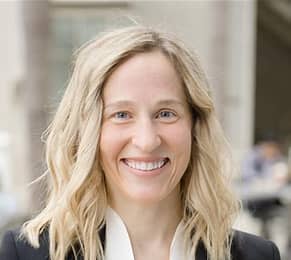
Katherine Eban (Author, American investigative journalist focused on public health issues.)

Katherine Eban’s book is tedious, but it tells a story that challenges the generic drug industry and exposes the strength and weakness of capitalism. Eban makes one suspicious of the efficacy of generic drug treatments. Society depends on drug discoveries that can return one to health when struck by known and unknown malefactors. At the same time, Eban indirectly attacks capitalism as a primary force for discovery of life saving drug treatments. Capitalism is motivation for drug manufacturers to discover new drugs, but profit motive and human nature incentivize deception that can harm the public.

America’s police department for the drug industry is the Food and Drug Administration.

The difficulty of a policing function is in human nature and an investigators’ effort to find incriminating evidence that proves guilt. The consequences of poor policing in the generic drug industry are loss of health, and sometimes, life. The FDA is responsible for protecting public health by ensuring the safety, efficacy, and security of human and veterinary drugs manufactured or imported to the U.S.

Just as every police force is not perfect, the FDA has made mistakes and failed to uncover evidence for crime. There have been instances of drug manufacturers around the world, including America, that have adulterated approved generic drugs. (A U.S. generic drug manufacturer, KVK Research Inc in Pennsylvania, pled guilty in 2024.) Generic manufacturers and distributors around the world have misled the public on the efficacy and/or addictive qualities of drugs. A primary source of generic drug manufacturing crimes is the lure of increased profitability.

Eban focuses on a pandora’s box opened when the world’s generic drug industry began producing substitutes for previously patented drugs.

Patents for new drugs have a determinate shelf life but expire after a stipulated period of time. One can complain and challenge the price of patented drugs, but patented drugs require a level of scientific experiment and reporting to prove efficacy. When patents expire, there is a rush by generic manufacturers to produce the same drug at a lower cost. The trouble arises when a generic drug’s lower cost is achieved with substituted or reduced ingredients; also, it may be adulterated by poor manufacturing practices.

Eban offers the history of the AIDS’ epidemic to illustrate how generic drugs became supercharged in the 1980s.

Three companies in India and one in South Africa began working with the Clinton Foundation to offer an AIDS’ generic drug that fell to a cost of $.40 per day when patented AIDS’ drugs cost as much as $8,000 per year. Millions of people were at risk, none more than those who live in Africa. However, the effectiveness of the generic drug came under suspicion. It was found that data was being falsely created by India and Africa. It was manufactured data that falsely reported generic drugs effectiveness in treating AIDS. The generic African and India manufacturers were cutting corners in production to increase profits. No one checked the effectiveness of the produced drugs and posted false patient reports. Because the data was not based on patient experience but on falsely created data, it became unclear whether the drug was working. Without any reports showing the generic drug’s effectiveness, incentive grew to continue reducing costs. Manufacturers pushed production, compromised AIDS ingredients, and falsely reported treatment results of patients.

Dinesh S. Thakur (Received the Joe A. Callaway award for Civic Courage in 2014.)

Eban explains how Dinesh Thakur. a former executive at Ranbaxy Laboratories, became a whistle blower who “spilled the beans” on falsely created data sent to the FDA.

Thakur was the Director and Global Head of Research information & Portfolio Management at the Ranbaxy company. He began asking questions of the people reporting the generic AIDS Drug efficacy data. Thakur found that 50% to 100% of information on generic AIDS drug’ efficacy was manufactured and not related to actual use by AIDS sufferers. Ranbaxy Laboratories pleaded guilty of falsifying information in 2003. Ranbaxy agreed to pay $500 million to settle their guilty plea.

Despite the Ranbaxy settlement, the author shows generic drug misinformation is still being produced. Further reviews by FDA inspectors found continuing violations of protocol and testing of generic drug manufacturing and reporting.

Ranbaxy is no longer an independent company. It was purchased by Sun Pharmaceutical Industries Ltd in 2014. Eban explains how FDA inspectors fell victim to India manufacturers malfeasance by accepting luxury hotel accommodations and gifts that clouded their judgement about the companies they were investigating. A bad report from an FDA inspector could and did cost millions of dollars to companies that produced tainted generic drugs.

Eban explains the FDA has changed their policy of giving advance notice of inspections while inferring inspectors are advised to avoid conflicts of interest in their inspections. One takes this inference with reservation because human nature is an immutable force.

The incentive for increased profitability by reducing the cost of manufacturing generic drugs continues to threaten the public. Eban infers the lure of money, power, and prestige, continues to incentivize fudging, if not outright lies, about the effectiveness and safety of generic drugs.

BEST & WORST OF US

Trump’s mass deportation idea is draconian and inhumane. A system of deportation should be organized to repatriate some undocumented immigrants but not to expel them without fair consideration of their circumstances and the needs of the American economy.

Books of Interest
 Website: chetyarbrough.blog

Real Americans

By: Rachel Khong

Narrated By: Louisa Zhu, Eric Yang, Eunice Wong

Rachel Khong (Author, American editor in San Francisco. Born in Malaysia to a Malaysian Chinese family.)

In a 1931 book, “Epic of America”, James Adams described America as a land where life should be better and richer for everyone, with opportunities for each according to their ability or achievement. This was written in the depths of the depression that began with the stock market crash of 1929. Of course, illegal immigration was nearly impossible in the 1930s, but still–there were 500,000 American immigrant arrivals in the U.S. during that decade. That amounted to 11.6 percent of the U.S. population at that time. Rachel Khong’s vision in “Real Americans” tests the next four years of Trump’s administration.

Khong writes a fictional story of a romantic relationship between an undocumented young Puerto Rican woman who is about to be deported and an equally young South Korean American who is falling in love with her.

Both are well educated by the American education system. The boy is interviewing for entrance to Yale while the girl is meeting an immigration lawyer to see what can be done to avoid deportation. The girl lives with a feckless “Wanna-Be actor” father and driven mother who is struggling to make a living in America. The daughter is shown to be quite intelligent with the ambition to become a data analyst.

Mass deportation without fair consideration of immigrant circumstance and their societal contribution is inhumane and foolish.

The developing affection between these two characters is beautifully created by the author. They are an example of why resident status needs to be treated fairly when immigrants are found to violate the immigration laws of the United States.

The idea that immigrants take jobs away from native American workers is a false flag.

The agricultural industry will be seriously impacted by mass deportation of undocumented labor.

The need for workers in America will continue to grow in the foreseeable future of the largest economy in the world. The demographics of an aging American population (that is not replacing itself) requires immigrants to grow and maintain the economy. The two characters of Khong’s story may not be every immigrant but they show how some are the future of American prosperity. Mass deportation of illegal immigrants will harm the American economy.

Immigrants have played a critical role in what America has become.

Khong is just telling a fictional story about American immigration, but it clearly illustrates how political rhetoric devolved into political lies and misinformation about the value of all human beings. America does have a history of Indian and Black murder and enslavement, but it also has a history that ameliorates discrimination and past misdeeds. One hopes the blunt force of immigrant deportation is not a policy that repeats America’s societal mistakes. American needs a carefully adjudicated immigration policy for the betterment of society.

Today, the total percentage, including 11,000,000 undocumented immigrants, is estimated at 14.3%. In the 1930s, 11.6% of the American population was immigrant. The question is whether the undocumented should be deported, regardless of the contribution they make to American productivity.

An aging population in America is not being replaced by native born Americans. Worker loss of undocumented immigrants may be harmful to American productivity.

Trump and his deportation Czar, Tom Homan.

Trump’s mass deportation idea is draconian and inhumane. A system of deportation should be organized to repatriate some undocumented immigrants but not to expel them without fair consideration of their circumstances and the needs of the American economy.

Khong’s story is entertaining fiction, but Trump’s deportation plan is a threatening work in progress.

CULTURE WARS

The tragedy of cultural conflict fills the pages of Frazer’s history of the Mayflower adventure. Listeners are numbed by the many mistakes made by both Americanized English and indigenous natives in an interminable cultural war, a war that is still being played and paid for today.

Books of Interest
 Website: chetyarbrough.blog

Hollywood Park: The Mayflower 

By: Rebecca Fraser

Narrated By: Kate Reading

Rebecca Fraser (Author, British writer and broadcaster, former president of the Bronte Society.)

In the early years of the 17th century, Puritans fled to America to escape persecution by King James I of England and his mother, Mary Queen of Scots. Though King James was not as much of a doctrinarian as his mother, it was dangerous for non-Catholics to live in England or Scotland. Fraser explains many English Puritans sought refuge in Holland. “The Mayflower” is a history of the first years of the Kingdom of England’s and Scottland’s Puritan settlements in America. Three of the most famous Mayflower’ passengers were William Bradford, Myles Standish, and William Brewster. Both Bradford and Brewster sailed from the Netherlands to England to board the Mayflower. Bradford became the first governor of the Plymouth Colony in America. Myles Standish became the military leader of the settlers. William Brewster was the spiritual leader of Puritan followers.

Fraser explains how Standish became important in the Mayflower’s cramped quarters, rough seas, and limited food. Standish maintained a level of discipline while Brewster provided spiritual support to the Pilgrims and non-religious separatists. The author reveals how shoddy the accommodations were on the Mayflower and how poorly prepared the ship was for such a perilous voyage. Provisioning was inadequate and the ship became overloaded when their sister ship had to return to England because of its unseaworthiness. More passengers were added to the Mayflower when the sister ship headed back to England. There were no doctors on board. A baby was born with the help of a mid-wife. Fraser gives one a picture of a two-month voyage that was hellish. Five of 102 passengers died at sea.

Upon arrival, survivors were faced with November winter conditions.

Forty-five of the 102 passengers died from a lack of shelter, poor rationing, and cold temperatures. The Mayflower was used as a shelter for much of the winter. No Native Americans greeted the travelers when they landed. It was March before an English-speaking Native named Samoset from the Wampanoag tribe met and talked to the settlers. Samoset introduced another English-speaking Native named Tisquantum, aka Squanto. Squanto taught the newcomers how to grow corn, catch fish, and find edible plants. Without that help, one doubts even these 57 settlers would have survived.

Fraser reveals the complicated relationship between settlers and indigenous natives.

In some ways it reminds one of the difficulties America has had with interventions in modern foreign countries. Not living the life of other cultures, the threat of losing a native’s way of life, and innate suspicion of those who are not like you, creates misunderstandings and conflict. These are conflicts within America today; let alone relations with other nations in modern times.

As Fraser continues her history of America’s newcomers, differences in cultural beliefs, whether religious or secular, show why all nations in the world are challenged by difference.

Two indigenous natives, Samoset and Squanto, opened the door of communication between cultures. Squanto learned English because of his capture by John Smith’s men in 1614-15 with the intent of enslavement. Squanto escapes and returns to his native land. Because he could speak English, despite his kidnapping, he used what he learned to help settlers know how to plant corn, fish, and hunt beaver for survival.

Indigenous native cultures evolve with the influence of the Puritan settlers. They adopt a conception of Kings that rule over others.

Two Indian brothers rose to the level of kings in the Wampanoag tribe of New England. They were the sons of chief Massasoit who saved the pilgrims from starvation by helping them understand how to cultivate the land and fish for survival. As the pilgrims multiplied, human nature led to conflicts between indigenous natives and themselves. Though the initial source of value exchange began as wampum (shell bead), it evolved to printed currency which changed the nature of life, labor, and trade.

Human nature is freighted with the desire for money, power, and prestige.

Those desires lead to conflicts between native cultures and the Pilgrims. The desire for land began to infringe on the culture of native tribes. Soon, these conflicts escalated to war between English settlers and leaders of native tribes. Fraser details the rise of King Alexander and King Phillip of the Wampanoag tribe that began to organize against the settler’s encroachment on native lands. Alexander is killed but his brother becomes a great leader among many indigenous natives and begins what seems an interminable and savage war against the settlers. The savagery on both sides escalates with scalping, dismemberment, and pilloried heads on spikes.

The tragedy of cultural conflict fills the pages of Frazer’s history of the Mayflower adventure. Listeners are numbed by the many mistakes made by both Americanized English and indigenous natives in an interminable cultural war, a war that is still being played and paid for today.

FOUR MORE YEARS

Andrew Leigh’s brief history of economics reminds listeners of a threat America faces in the next four years.

Books of Interest
 Website: chetyarbrough.blog

How Economics Explains the World (A Short History of Humanity)

By: Andrew Leigh

Narrated By: Stephen Graybill

Andrew Leigh (Author, Australian politician, lawyer, former professor of economics at the Australian National University, currently serving as Assistant Minister for Competition, Charities and Treasury and Assistant Minister for Employment in Australia.)

Andrew Leigh offers a bird’s eye view of the history of economics. He provocatively explains why the European continent, rather than Africa (the birthplace of the human race) came to dominate the world. He suggests it is because of economics and the dynamics of the agricultural revolution.

Because Africa offered a more conducive environment for natural food production, Leigh infers natives could live off the fruits and nuts of nature. He infers farming and agricultural innovations (like the plow) were of little interest to Africans.

One may be skeptical of that reasoning and suggest the primary cause is sparse arable land for early African inhabitants. Without arable land, there was little advantage from the agricultural revolution.

Nevertheless, Leigh’s history is a wonderful reminder of great economic theories that improved the lives of an estimated 8.2 billion people on this planet. He touches on the lives of Adam Smith, David Ricardo, John Maynard Keynes, and Milton Friedman. Each made great contributions to the history of western economics.

Adam Smith is considered the father of modern economics. (1723-1790)

Leigh notes Smith was a deep thinker who sometimes neglected the world he lived in by forgetting to properly dress himself or falling into a hole while thinking about economic theories. Some of his key theories were “Division of Labor”, the “Invisible Hand”, “Labour Theory of Value”, “Free Markets and Competition”, and “Capital Accumulation”; all of which remain relevant today. One that seems so important today is “Free Markets and Competition” and the disastrous idea of tariffs that are being promoted by the pending Trump administration.

Smith notes natural resources are not equally distributed in the world. Some countries have more raw material than others, more available labor at a lower cost, and can produce product at lower prices. With free trade, all citizens of the world are benefited by lower costs of goods. With tariffs, product costs are artificially increased when they could reflect actual costs of production. Of course, the producer can increase costs, but the market will find an alternative if the costs become too high.

David Ricardo (1772-1823)

Ricardo’s theory of competitive advantage suggests some countries can produce product at less cost than others. This reinforces the critical importance of free trade. Free trade flies in the face of both the Biden’s passing administration and Trump’s future administration; both of which believe tariffs protect jobs in America. They don’t; because tariffs artificially increase product costs while protecting labor inefficiency that increases consumer prices. Tariffs are a lose-lose proposition. It may affect jobs in the short term but there are many jobs that can be created by government and private companies in human and public service industries. Those investments would offset inefficient product production and ensure future jobs.

John Maynard Keynes (1883-1946)

Leigh notes that Keynes was bisexual and a pivotal figure in modern economics. He believed in the theory of Aggregate Demand meaning that “…spending in an economy is the primary driver of economic growth.” He advocated government intervention when demand was low, and that government should increase spending and cut taxes to increase demand when a recession or depression threatens the health and welfare of the public. Interestingly, Trump believes in reducing taxes but objects to government spending that improves employment. The effect of reducing taxes only increases income inequality and does little for employment because the rich are wary of investing in a weakening economy.

Milton Friedman (1912-2006)

Both Keynes and Friedman believe in government intervention, but Friedman exclusively believes in using only monetarism as a tool. Keynes agrees but had the added dimension of government spending that creates jobs. In contrast, Friedman argues there is a natural rate of unemployment and when government intervenes it creates inflation. He strongly agreed with free markets which suggests he would be against tariffs but at the expense of higher unemployment. The cloying part of that argument is it increases income inequality by making the rich richer, the unemployed and middle-class worker poorer.

Leigh’s book is a brief review of western economics. It glosses over much of the science, but it is highly entertaining and worth listening to more than once. Additionally, Andrew Leigh’s brief history of economics reminds listeners of a threat America faces in the next four years.

LIBERAL DELUSION

Eubanks is wrong to think digitization ensures a future that will create a permanent underclass. The next four years may not show much progress in welfare, but American history has shown resilience in the face of adversity.

Books of Interest
 Website: chetyarbrough.blog

Automating Inequality (How Hich-tech Tools Profile, Police, and Punish the Poor

By: Virginia Eubanks

Narrated By: Teri Schnaubelt

Virginia Eubanks (Author, American political scientist, professor at the University at Albany, New York.)

At the risk of sounding like a “bleeding heart” liberal, Virginia Eubanks assesses the inefficient and harmful effects of technology on welfare, childcare services, and homelessness in America. Eubanks illustrates how technology largely reduced the cost of Indiana’s welfare. However, cost reduction came from removing rather than aiding Americans in need of help. She shows southern California is better organized in the 2000s than Indiana in their welfare reform movement in the 1990s. However, the fundamental needs of the poor and homeless are shown to be poorly served in both jurisdictions.

In the last chapters of the book, Eubanks looks at Pennsylvania’s childcare services (CCW). She argues her research shows digitization of personal information, societal prejudice, and inadequate financial investment as fundamental causes of America’s failure to help abused children. Eubanks implies the cause of that failure is the high-tech tools of the information age.

Eubanks offers a distressing evaluation of Indiana’s, California’s, and Pennsylvania’s effort to improve state welfare programs.

The diagnosis and cure for welfare are hard pills to swallow but Eubank’s research shows welfare’s faults without clarifying a cure. She clearly identifies symptoms of inequality and how it persists in America. Eubank infers America’s politicians cannot continue to ignore homelessness and inequality. America needs to reinforce its reputation as the land of opportunity and freedom. Eubank implies technology is the enemy of a more equal society by using collected information to influence Americans to be more than self-interested seekers of money, power, and prestige.

Eubank explains how Indiana welfare recipients were systematically enrolled in an information technology program meant to identify who receives welfare, why they are unemployed, and how they spend their money.

She argues this detailed information is not just used to categorize welfare recipients’ qualifications for being on welfare. The purported reason for gathering the information is to help those on welfare to get off welfare and become contributors to the American economy. What Eubank finds is the gathered information is used to justify taking citizens off of welfare, not improve its delivery. Poorly documented information became grounds for denying welfare payments. If someone failed to complete a form correctly, their welfare payments were stopped. The view from government policy makers was that welfare costs went down because of the State’s information gathering improvements. In reality welfare costs went down because recipients were rejected based on poorly understood rules of registration. Indiana did not have enough trained management personnel to educate or help applicants. Welfare applicants needed help to understand how forms were to be completed and what criteria qualified them for aid.

From Indiana State’s perspective, information technology reduced their cost of welfare. From the perspective of Americans who genuinely needed welfare, technology only made help harder to receive.

Eubank notes there are three points that had to be understood to correct Indiana’s welfare mistakes:

  1. information algorithms qualifying one for welfare must be truthful, fair, and accurate,
  2. the information must reflect reality, and
  3. training is required for welfare managers and receivers on the change in welfare policies.

Another point made by Eubank is the danger of computer algorithms that are consciously or subconsciously biased. A biased programmer can create an algorithm that unfairly discriminates against welfare applicants that clearly need help. This seems a legitimate concern, but Eubank misses the point of more clearly understanding the need of welfare for some because of the nature of American capitalism and the consequence of human self-interest. Contrary to Eubank’s argument, digitalization of information about the poor offers a road to its cure not a wreck to be avoided.

WELFARE CATEGORY ELIGIBILITY PERCENTAGES IN INDIANA

Eubank tells the story of a number of Indiana residents that had obvious medical problems making them unemployable but clearly eligible for welfare payments. They are taken off welfare because of mistakes made by government employees’ or welfare recipient’ misunderstandings of forms that had to be completed. From the government’s standpoint Indiana’ welfare costs went down, but many who needed and deserved help were denied welfare benefits. The rare but widely publicized welfare cheats became a cause celeb during the Reagan years that aggravated the truth of the need for welfare in America. The truth, contrary to Eubanks opinion, becomes evident with the digitization of information as a basis for legislative correction.

Eubank notes Skid Row in Los Angeles lost many of its welfare clients with gentrification of the neighborhood. The poor were moved out by rich Californians who rebuilt parts of Skid Row into expensive residences.

Eubank explains a different set of problems in the Los Angeles, California welfare system. The technological organization of the LA welfare system is better but still fails to fairly meet the needs of many citizens. The reasons are similar to Indiana’s in that algorithms that categorize information were often misleading. However, the data-gathering, management, and use of information is better. The more fundamental problem is in resources (money and housing) available to provide for the needs of those who qualify for welfare. It is not the digitization of the public that is causing the problem. Contrary to the author’s opinion, digitization of reality crystalizes welfare problems and offers an opportunity for correction.

Homelessness is complex because of its many causes. However, having affordable housing is a resource that is inadequately funded and often blocked by middle class neighborhoods in America. Even if the technological information is well organized and understood, the resources needed are not available. Here is where the social psychology of human beings comes into play. Those in the middle class make a living in some way. They ask why can’t everyone make a living like they have? Why is it different for any other healthy human being in America? Here is where the rubber meets the road and why homelessness remains an unsolved problem in America.

People are naturally self-interested. One person’s self-interest may be to get high on drugs, another to steal what they want, others to not care about how they smell, where they sleep, look, live, or die. Others have chosen to clean themselves up and get on with their life. Why should their taxes be used to help someone who chooses not to help themselves? Understanding the poor through digitization is the foundation from which a solution may be found.

Traveling around the world, one sees many things. In India, the extraordinary number of people contributes to homelessness. In France, it is reported that 300 of every 100,000 people are homeless. Even in Finland, though there are fewer homeless, they still exist.

It is a complex problem, but it seems solvable with the example of what Los Angles is trying to do. It begins with technology that works by offering a clear understanding of the circumstances of homelessness. A detailed profile is made of every person that is living on the street. They are graded on a scale of 1 to 17 based on the things they have done in their lives. That grade determines what help they may receive. Some may be disqualified because of a low number but the potential of others, higher on the scale, have an opportunity to break the cycle of poverty with help from welfare. It is the resources that are unavailable and social prejudice, not gathered personal digital information, that constrain solutions.

With informational understanding of a welfare applicant, it principally requires political will and economic commitment by welfare providers. There is no perfect solution but there are satisficing solutions that can significantly reduce the population of those who need a helping hand. American is among the richest countries in the world. Some of that wealth needs to be directed toward administrative management, housing, mental health, and gainful employment.

Like all countries of the world, as technological digitization improves, human services will grow to become a major employment industry in the world.

America, as an advanced technology leader, has the tools to create a service economy that is capable of melding industrial might with improved social services.

Eubanks travels to Pennsylvania to look at their child services program.

What Eubanks finds in Pennsylvania is similar to what she found in LA and, to a degree, Indiana. Children who are at risk of being abandoned, abused, or neglected are categorized in a data bank that informs “Child Services” of children who need help. The problem is bigger than what public services can handle but the structure of reporting offers hope to many children that are at risk. Like LA, it is a resource problem. But also, it is a problem that only cataloging information begins to address.

Parents abuse their children in ways that are often too complicated for a standardized report to reveal. Details are important and digitization of personal information helps define what is wrong and offers a basis for pragmatic response.

Computerized reports, even with A.I., are only a tip of the reality in which a child lives. This is not to argue child-services should be abandoned or that reports should not be made but society has an obligation to do the best it can to ensure equality of opportunity for all. Every society’s responsibility begins with childhood, extends through adulthood and old age–only ending with death. Understanding the problems of the poor is made clearer by digitization. Without digital visibility, nothing will be done.

Eubanks gives America a better understanding of where welfare is in America. She is wrong to think digitization ensures a future that will create a permanent underclass. The next four years may not show much progress in welfare, but American history has shown resilience in the face of adversity.

RE-ELECTION

We may be surprised by what Trump will do in four more years. The million or more voters who put him over the top deserve what good or bad comes from their choice.

Books of Interest
 Website: chetyarbrough.blog

A Higher Loyalty: Truth, Lies, and Leadership

By: James Comey

Narrated By: James Comey

James Comey (Author, director of the FBI from 2013 to 2017, fired by then President, Donald Trump.)

With the re-election of Donald Trump, it seems time for a review of James Comey’s book to better understand his perspective on the soon-to-be new/old leader of America. This review is admittedly biased. On the other hand, Comey’s and this book-reviewer’s mutual bias are reinforced by comments of other Americans who personally served in Trump’s first administration.

Mike Pence, Rex Tillerson, Jim Mattis, Mark Esper, William Barr, and John Kelly, were all former officials of President Trump’s first administration. As is widely known, all of these officials have guarded, if not negative, opinions about Trump’s position as the leader of the “free world”. What “freedom” is there when his former chief of staff categorizes Trump as a fascist?

John Kelly (Trump’s chief of staff from 2017-2019.)

Mike Pence refused to endorse Trump in his 2020 run for re-election. Rex Tillerson called Trump “pretty undisciplined” in 2018 and counseled Trump to not violate the laws of the land. The former Defense Secretary, Jim Mattis, warned Trump about “militarizing our response” to protests against the government. He is quoted to have said “Never did I dream that troops …would be ordered under any circumstance to violate the Constitutional rights…of fellow citizens.” Mark Esper, who succeeded Mattis, said January 6th’s run on the capitol “…threatens our democracy”. William Barr, Trump’s former Attorney General, said Donald Trump shouldn’t be near the Oval Office. John Kelly, Trump’s former chief of staff, notes Trump fits the definition of a fascist. We should remind ourselves–a fascist is a dictator who believes in centralized autocracy, militarism, suppression of opposition, nationalism, and economic control. “What freedom is there in an America led by a fascist”? America has chosen to re-elect Trump despite the aforementioned concerns by people who worked in his administration.

James Comey is fired by Trump for several reasons.

Comey is fired by Trump for several reasons. One, he mishandled the investigation of Hillary Clinton’s use of private email. He refused to admit the president was a part of the FBI’s investigation into Russia’s involvement in the 2016 presidential campaign. Additionally, Comey refuses, at the request of Trump, to drop the investigation into former National Security Advisor Michael Flynn. Trump dismisses Comey in 2017. (Ironically, Michael Flynn pled guilty in 2017 for making false statements to the FBI. President Trump pardoned him in 2020.) As a result, Trump’s Attorney General Jeff Sessions and Deputy Attorney General Rod Rosenstein recommended the firing of Comey.

The Attorney General Jeff Sessions and Deputy Attorney General Rod Rosenstein recommended the firing of Comey.

Comey’s biography is about his life from childhood to adulthood. The first chapters are about his parents and siblings. He recounts a burglary incident in his home when only he and a younger brother are in the house. The burglar enters the house with a gun and threatens both boys while looking for money and valuables. Though James grows to be six feet eight inches tall, he is not big when this incident occurs. He and his brother are naturally frightened. James tells the burglar where to look for money that he might find in the house. The boys are locked in a basement bathroom and the burglar leaves but sees the boys trying to escape through the bathroom window. The burglar returns. James runs to the neighbor’s house for help but the burglar escapes before the police arrive.

Comey notes he was bullied when in grade school.

The bullying eventually stops, and one wonders if it was because of his growth spurts or because of his ability to adjust to the social environment in which he lived. He had teachers and employers during his school years that became character models for him in life. He writes of incidents that he feels became examples that led him to become the person he became. From the perspective of this listener/reader, they were experiences that made Comey an ideal bureaucrat. This is not to demean bureaucratic positions but to suggest Comey matured to be a believer in systematic analysis of human behavior.

James Comey became an ideal bureaucrat for the Federal Government because he was a believer in systematic analysis before developing institutional policy or taking consequential action.

Comey starts his professional life as an attorney. His big break comes from the George W. Bush administration when he is offered the position of the U.S. Attorney for the Southern District of New York. Ironically, he went to work for Rudy Giuliani, an unprincipled but popular mayor of New York. Giuliani became President Trump’s personal lawyer and was later convicted for defamation. (Birds of a feather?) Bush asked Comey to serve as Deputy Attorney General for the U.S. government. He was confirmed by the Senate in 2003. In 2013, Barack Obama appointed James Comey as the Director of the Federal Bureau of Investigation.

A disturbing chapter in Comey’s book is his prosecution of Martha Stewart for insider trading.

Comey tries to negotiate a deal with Stewart to keep her out of jail if she would plead guilty. She refuses and Comey orders continuation of the prosecution. Stewart was convicted and sentenced to five months in a minimum-security prison. There is a “holier than thou” sense of Comey’s action but his side of the story is that fame and wealth are no excuse for illegal behavior. This is a feeling one may or may not agree with because fame and wealth should not be a license to violate the law. (The obvious irony is that President Trump will escape punishment for his law breaking because of re-election.) In Comey’s opinion, when Stewart would not plead guilty, she became the author of her own punishment.

Scooter Libby (American lawyer and former chief of staff to V.P. Dick Cheney.)

Scooter Libby’s prosecution brings up another incident that tests Comey’s character more than the effect of a person’s wealth and fame. Comey’s advance in the Federal Government came from the Republican Party led by Bush. Libby is indicted for lying to the FBI about divulging the name of a CIA officer (Valerie Plame). Libby is convicted because of Comey’s investigation despite his political appointment by the Bush administration. One might argue that Comey refuses to bias FBI’ investigations based on fame, wealth, or political affiliation with these investigations. That seems apparent, considering the title of his biography, i.e. “A Higher Loyalty”.

Comey’s biography offers insight to what Trump may or may not succeed in doing when he assumes office. Like the administration of George W. Bush, the bureaucracies of America’s government will have some influence on Trump’s agenda.

THE FOLLOWING IS TAKEN FROM THE AP INFO ABOUT TRUMP’S PLANS:

  • to empower the National Guard and domestic police forces to deport an estimated 11 million unauthorized immigrants,
  • leave abortion laws to the discretion of the American States with no federal mandate,
  • restructure the Food and Drug administration,
  • eliminate taxes on earned tips, eliminate taxes on social security income, and reduce taxes on corporations from 21% to 15%,
  • create tariffs of 10 to 20 percent on foreign goods,
  • reinstitute the 2020 executive order requiring the federal government buy “essential” medications only from U.S. companies,
  • block purchases of “any vital infrastructure” in the U.S. by Chinese buyers,
  • roll back societal emphasis on diversity and legal protection for LGBTQ citizens and Title IX civil rights protections for transgender students,
  • reduce the role of federal bureaucrats and regulations across the country,
  • target elimination of the federal Dept. of Education to promote privatization of schools, while increasing regulations on what can be taught in schools,
  • repeal and replace the Affordable Care Act,
  • deny the existence of global warming while discouraging fuel efficiency standards and incentives for fuel conservation,
  • make it harder for companies to unionize and discourage unionization dues payments,
  • withdraw from world affairs with a non-interventionist military policy while increasing defense spending for a missile defense shield.

Comey explains how overreaction to 9/11’s attack led to growing suspension of human rights in America.

Abu Ghraib prisoner abuse.

Legislation drawn by the Bush administration condoned CIA’ torture of foreign nationals and anti-American demonstrators. That proposed legislation was opposed by the Attorney General’s office and did not get passed. However, the CIA and some military personnel got ahead of government policy decision in their actions at Abu Ghraib and Guantanamo Bay. The Bush administration did not give up on their desire to allow torture.

Undoubtedly, some actions will be taken before Congressional or bureaucratic approvals but there is hope for restraint based on what the Attorney General’s office (John Ashcroft) objected to when it became aware of the CIA’s actions. The threat of mass resignation by the Attorney General’s office made Bush reconsider what his staff proposed to Congress. One presumes, there will be similar bureaucratic resistance to Trump’s extreme policy recommendations.

Alberto Gonzales (80th U.S. Attorney General from 2005-2007.)

However, despite objections to the torture system practiced by the CIA, Bush’s administration chose a new Attorney General, Alberto Gonzales. In that Presidential choice, bureaucratic policy changed, and torture became an acceptable form of interrogation. Changing bureaucracy leadership is the modus vivendi for Donald Trump’s threat to American Democracy and what can happen in the next four years.

Comey seems a decent person. He is no hero. He is obviously intelligent with a conscience that one would expect from a moral, if not always effective, attorney. Trump is a threat to American democracy but there have been many threats to democracy in our history. We may be surprised by what Trump will do in four more years. The million or more voters who put him over the top deserve what good or bad comes from their choice.

THE GUILTY

Is there a line that can be drawn that separates those who should be executed, incarcerated, or rehabilitated by the State?

Books of Interest
 Website: chetyarbrough.blog

Dark Tide (Growing Up with Ted Bundy)

By: Edna Cowell Martin, Megan Atkinson

Narrated By: Morgan Hallett

“Dark Tide” is a journey into the “Heart of Darkness”. Like Joseph Conrad’s story, Edna Cowell Martin, with the help of Megan Atkinson, tries to make sense of human madness, societal hollowness, alienation, and lies. Edna Cowell Martin is the cousin of the notorious Ted Bundy who admits to and is convicted of the murder, rape, and mutilation of 30 or more women in the 1970s. Ms. Martin is in her 70s when she finally chooses to tell the story of her cousin, Ted Bundy, who was like a brother in her family.

Ted Bundy (1946-1989, American serial killer.)

Bundy was an illegitimate child raised by a mother and stepfather. His mother refuses to reveal who his father was which is of little consequence except to Ted Bundy and the impact it might have had on who he became. Bundy is shown to be a bright student who graduated from the University of Washington, went to Yale to study Chinese, and became close to the Cowell family. The Cowells were an artistic family with a father who was a classical pianist who traveled the world and became a music teacher at “The College of Puget Sound” and professor emeritus and Chairman of Music at the University of Arkansas.

The author, Edna Cowell Martin, interviewed by Piers Morgan.

Despite Ms. Martin’s wide travel experience because of her father’s profession, she appears to have lived a middle-class life in the state of Washington. Many years after Ted Bundy’s execution, Martin finally writes and publishes “Dark Tide” about this American serial killer, kidnapper, and rapist. She explains the close relationship that the Cowell family had with Ted Bundy. Whether it offers any insight to the mind of such a terrible person remains a mystery.

Ted Bundy at trial for murder.

Bundy appears as a relatively handsome, intelligent young man with a girlfriend and potential for becoming a successful American lawyer, businessperson, or professional. He becomes close friends with the Cowell family. When he is arrested as a murder suspect, none of the Cowells believe he is guilty. They support his release and send letters to explain why he could not be guilty of the crimes for which he is accused. Bundy is released on bail and returns as a friend to the Cowell family.

Bundy as a youth and adult.

Edna Cowell and her friends meet with Bundy after his release and gather at a local restaurant.

Bundy appears to be happy and is glad to see everyone. However, his face is recognized by strangers in the restaurant, and they ask him if he is the “Ted Bundy” in the news. Bundy’s response is unexpected. He appears delighted by the recognition and creates a scene in which he extols his notoriety. This is the first time Edna becomes suspicious of Bundy’s innocence. She does not believe he is guilty but that his glorification of association with a murderer makes her uncomfortable. Why would anyone want to be associated with such a horrible crime? Is any kind of fame okay to Bundy? This is not the person she thought she knew.

Edna keeps turning this incident over in her mind. She begins to wonder if Bundy might actually be guilty, rather than just wanting to be the center of attention.

The terrifying aspect of Edna Cowell Martin’s memoir is what does one person really know about another person? Think of all the people you know and what has happened since you first met them that changed your mind about who they are, what they believe, or what they have become, i.e. at least in your mind.

What is somewhat off-putting is that Edna Cowell Martin argues the State should not have the right to take one’s life even if they are guilty of murdering an innocent person.

Bundy killed and raped an unknown number of women. Is there justification for the State to execute someone for a heinous act that is confessed to by a perpetrator? Is it less humane to incarcerate someone for life who has confessed to a heinous crime? Are human beings, regardless of their crime, capable of being rehabilitated? Every human being is guilty of some transgression in life. Is there a line that can be drawn that separates those who should be executed, incarcerated, or rehabilitated by the State? “Dark Tide” raises all these questions in one’s mind.

VENGEFUL IDEALIST

The election results are in, and Trump is our President once again. This is a sad commentary on the will of the American people and the threat America is to world economic comity.

Books of Interest
 Website: chetyarbrough.blog

People, Power, and Profits (Progressive Capitalism for an Age of Discontent)

By: Joseph E. Stiglitz

Narrated By: Sean Runnette

Joseph Stiglitz (Author, American economist, public policy analyst, received a Nobel Memorial Prize in Economic Sciences in 2001.)

With reservation, Joseph Stiglitz’s book “People, Power, and Profits” is reviewed here. The reservation is because of the risk of succumbing to echo-chamber’ belief. That belief is that corporations and wealthy individuals should not be able to pour as much money as they want into the American election process, that bankers unjustly escaped punishment for the 2008 financial crises, and that Donald Trump should never again be elected President of the United States.

Stiglitz is considered a “New Keynesian” economist which puts him at odds with famous economists like Milton Friedman and Friedrich Hayek. Friedman believes the most effective fiscal policies comes from monetary policy control by the government. Hayek believed in a market economy with as little government intervention as possible. Stiglitz flatly disagrees with Hayek and only agrees with Friedman in that government has a responsibility to intervene in government economic policy. Stiglitz identity as a “New” Keynesian is because, unlike Keynes’ economic theory, there is no waiting for an economic crisis for government to intervene but to intervene now to make future economic crises less likely.

John Maynard Keynes (English, Eton and King’s College graduate, mathematician, economist, 1883-1946, died at age 62.)

Why I am concerned about listening to Stiglitz’s book about the economy is that I am listening to some things I already believe. I believe the gap between rich, and poor is the greatest threat to, not only American democracy, but all forms of government. Stiglitz may be my echo chamber.

Stiglitz believes in democratic government intervention to ameliorate the wide gap between rich and poor.

Stiglitz has an idealist platform to cure what he views as the solution to narrowing the gap between rich and poor in America. Stiglitz makes five policy recommendations to reduce the gap between rich and poor in America.

  1. Increase taxes on income from capital gains and inheritance.
  2. Use tax revenues to improve public education in ways that equalize costs between the rich and poor.
  3. Refine anti-trust laws to prevent monopolies and promote competition.
  4. Intervene in corporate governance to ensure fairer compensation between management and labor.
  5. Regulate banks to prevent exploitation of the public.

These are defensible polices but they have to survive the give and take political process of American democratic government.

However, that process is unfairly biased by allowing corporations and the wealthy to pour disproportionate amounts of money into the American election process. Contribution by corporations and the wealthy should be limited because candidates are beholding to big financial donors with little concern for the poor.

Small donors driving 2020 presidential race

In the 2020 and 2024 election cycle, big donors contributed from 75 to 78 percent of campaign donations.

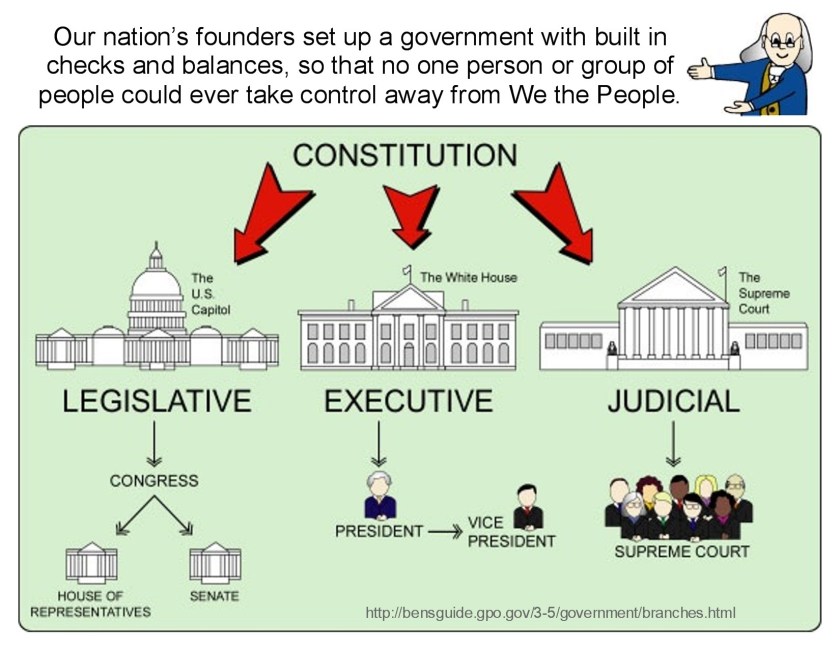
The problem with Stiglitz’s book is not in his recommendations but in his vengeful angel’ rhetoric. America is founded on freedom, not revenge. It is the give and take of differences of opinion and “checks and balances” of the Constitution that have made America great. Many mistakes have been made and are still being made by our government but even a horrible President like Trump cannot change the fundamental direction of our democracy.

John F. Kennedy’s belief that a rising tide lifts all boats has not provided life vests to the poor in America.

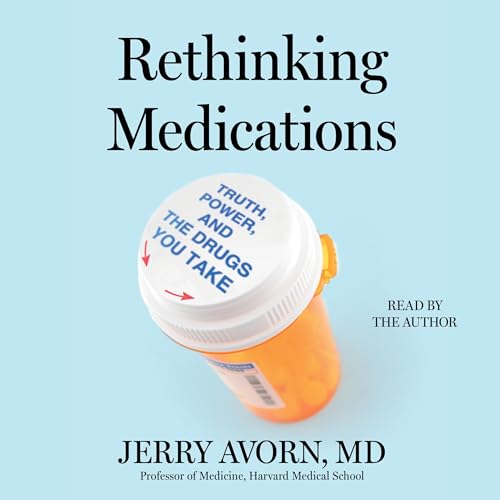
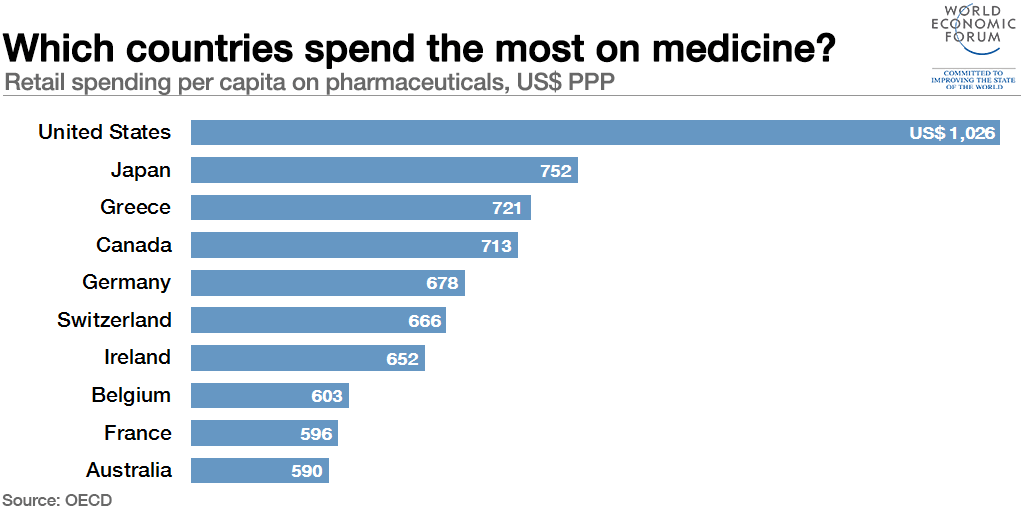
The gap between rich and poor in America must be resolved. Neither Harris nor Stiglitz may be the answer, but Trump is only going to try to resurrect a past that has led our government in the wrong direction. The unconscionable cost of medical services and drugs, extraordinary compensation for executives, regressive taxes, election financing bias, and financial industry greed must be addressed through the American political process.

American democracy’s failures will not be cured, but they must be addressed and ameliorated to remain a beacon for freedom in the world. The election results are in, and Trump is our President once again. This is a sad commentary on the will of the American people and the threat America is to world economic comity.

SERVICE TO HUMANITY

Harari explains why bureaucracy and A.I. can mislead as easily as inform. A.I. should never be considered a decision maker but a tool for human understanding of a complex world.

Books of Interest
 Website: chetyarbrough.blog

Nexus (A Brief History of Information Networks from the Stone Age to AI)

By: Yuval Noah Harari

Narrated By: Vidish Athavale

Yuval Noah Harari (Author, Israeli medievalist, historian, and public intellectual serving as a professor in the Department of History at Hebrew University of Jerusalem)

Yuval Noah Harari’s “Nexus” is a perspective on information networks and how they evolve from neanderthal grunts to the fundamental link of society. Harari dissects human history and information networks with an eye toward the existence and future of Artificial Intelligence. Harari’s point is that information networks create, control, and compel change. Civilization began with verbal, then written, then video, and finally digital information that brings human beings together into larger and larger groups.

Networked information creates interest groups. Harari explains these interest groups rise from the evolution of information networks.

With written documents and invention of the printing press, the influence of information spreads across the world. Reproduced documents like government Constitutions, the Bible, Quran, The Torah, The Vedas, The Tripitaka, The Guru Granth Shib, The Tao Te Ching, and The Bhagavad Gita create followers whose understanding of society is reenforced by bureaucratic organizations. Villages, towns, cities, and nations grow from religious organizations and government bureaucracies.

Harari notes how information network’s compel obeisance to group think.

Human conflicts may be based on the desire for money, power, and prestige, but Harari’s point is that the agency of change is the information network. Without cohesiveness of an information network, governments, rebellions, and invasions fail. Successful governments, whether formed from rebellions, or invasions succeed or fail based on bureaucracies that use information networks to influence and indoctrinate citizens of established or acquired territories. The power of information networks is exponentially increased by A.I.

The crux of Harari’s concern is the difference between autocracy and democracy and the harmful potential of a digital age that uses information networks to weaponize and control society with the addition of A.I.

The next great economic revolution, after the Agricultural and Industrial Revolutions is today’s Information Age. I would argue America nearly lost control of the great wealth it created by making the rich richer and the poor unchanged. American democracy’s inequality of opportunity remains a work in process.

America’s failure to provide income equality.

Providing equal economic opportunity is a complicated achievement because it begins with the birth of newborns, acceptance of legal immigration and an education system that fairly serves the needs of society. America is among the wealthiest nations in the world but unlike the Nordic countries and its northern neighbor, Canada, it ranks below the middle for income equality. America’s economic tide is not raising all boats. The Information Age provides an opportunity for America to get its economy right by using A.I. to create a more equal income opportunity for its citizens.

We are moving out of the industrial age.

We are entering the human services age. A.I. presents a second opportunity for America to address income inequality by educating young Americans, immigrants, and citizens to serve the needs of themselves and the people of society. America needs to smooth the transition from being just a product producer to both a producer of goods and services. As A.I. reduces employment for product production, workers should be reeducated to become workers in service to society.

Harari’s book is erudite, enlightening, and worth one’s time to read and understand. He advises of many things beyond what is mentioned in this brief review. Harari explains why bureaucracy is both a good and bad thing and that A.I. can mislead as easily as inform. A.I. should never be considered a decision maker but a tool for human understanding of a complex world.