SERVICE TO HUMANITY

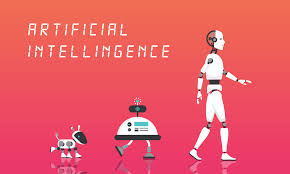
Harari explains why bureaucracy and A.I. can mislead as easily as inform. A.I. should never be considered a decision maker but a tool for human understanding of a complex world.

Books of Interest
 Website: chetyarbrough.blog

Nexus (A Brief History of Information Networks from the Stone Age to AI)

By: Yuval Noah Harari

Narrated By: Vidish Athavale

Yuval Noah Harari (Author, Israeli medievalist, historian, and public intellectual serving as a professor in the Department of History at Hebrew University of Jerusalem)

Yuval Noah Harari’s “Nexus” is a perspective on information networks and how they evolve from neanderthal grunts to the fundamental link of society. Harari dissects human history and information networks with an eye toward the existence and future of Artificial Intelligence. Harari’s point is that information networks create, control, and compel change. Civilization began with verbal, then written, then video, and finally digital information that brings human beings together into larger and larger groups.

Networked information creates interest groups. Harari explains these interest groups rise from the evolution of information networks.

With written documents and invention of the printing press, the influence of information spreads across the world. Reproduced documents like government Constitutions, the Bible, Quran, The Torah, The Vedas, The Tripitaka, The Guru Granth Shib, The Tao Te Ching, and The Bhagavad Gita create followers whose understanding of society is reenforced by bureaucratic organizations. Villages, towns, cities, and nations grow from religious organizations and government bureaucracies.

Harari notes how information network’s compel obeisance to group think.

Human conflicts may be based on the desire for money, power, and prestige, but Harari’s point is that the agency of change is the information network. Without cohesiveness of an information network, governments, rebellions, and invasions fail. Successful governments, whether formed from rebellions, or invasions succeed or fail based on bureaucracies that use information networks to influence and indoctrinate citizens of established or acquired territories. The power of information networks is exponentially increased by A.I.

The crux of Harari’s concern is the difference between autocracy and democracy and the harmful potential of a digital age that uses information networks to weaponize and control society with the addition of A.I.

The next great economic revolution, after the Agricultural and Industrial Revolutions is today’s Information Age. I would argue America nearly lost control of the great wealth it created by making the rich richer and the poor unchanged. American democracy’s inequality of opportunity remains a work in process.

America’s failure to provide income equality.

Providing equal economic opportunity is a complicated achievement because it begins with the birth of newborns, acceptance of legal immigration and an education system that fairly serves the needs of society. America is among the wealthiest nations in the world but unlike the Nordic countries and its northern neighbor, Canada, it ranks below the middle for income equality. America’s economic tide is not raising all boats. The Information Age provides an opportunity for America to get its economy right by using A.I. to create a more equal income opportunity for its citizens.

We are moving out of the industrial age.

We are entering the human services age. A.I. presents a second opportunity for America to address income inequality by educating young Americans, immigrants, and citizens to serve the needs of themselves and the people of society. America needs to smooth the transition from being just a product producer to both a producer of goods and services. As A.I. reduces employment for product production, workers should be reeducated to become workers in service to society.
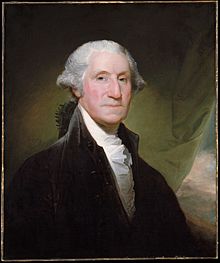
Harari’s book is erudite, enlightening, and worth one’s time to read and understand. He advises of many things beyond what is mentioned in this brief review. Harari explains why bureaucracy is both a good and bad thing and that A.I. can mislead as easily as inform. A.I. should never be considered a decision maker but a tool for human understanding of a complex world.

POLITICAL CHAOS

Tariffs to restrict foreign production is shooting citizens in the foot by artificially increasing the cost of living.

Books of Interest
 Website: chetyarbrough.blog

Edge of Chaos: Why Democracy Is Failing to Deliver Economic Growth – and How to Fix It

By: Dambisa Moyo

Narrated By: Pamala Tyson

Dambisa Moyo (Zambian-born economist and author with a BS and MBA from Harvard, former World Bank consultant to Europe, Central Asia and Africa.)

“Edge of Chaos” is a revelatory and intelligent analysis of economic rewards and risks of democracies and dictatorships. Fundamentally, Moyo argues failures of government economies are related to societal instability and short-term government economic policies that are disproportionately influenced by monied interests and kleptocratic political leaders. Rich corporations and kleptocratic leaders distort economic opportunity, create chaos while producing and exacerbating economic inequality. She argues America is at the edge of chaos because of a flawed democratic election system that is biased toward short-term rather than long term economic policy.

Moyo identifies the Gini index of income inequality to show that there is little difference between the rich and poor in China and the United States despite their government leaders’ differences.

China is a dictatorship while America is a form of democracy. They are nearly the same on the Gini index scale of citizen inequality while South Africa, Zambia and Brazil are at the bottom. Slovenia, the Czech Republic, Slovakia, Belarus and most of the Scandinavian countries show the lowest differences in citizen’ economic inequality. Mayo argues the difference has little to do with their forms of government except in relation to their government policies. In her opinion, China and the United States could improve their citizen’s Gini index position if their government policies would focus on income equality.

Both China and America have relative stability but with different forms of government.

Unquestionably, freedom is the sine non quo (indispensable ingredient) of America, but it is income inequality that causes the chaos Moyo alludes to in her book. That chaos is not overtly apparent in China because of dictatorship but one who has traveled to China feels there is a similar level of discontent, if not chaos, among its citizens over economic inequality.

Moyo’s solution for reducing America’s growing chaos seems difficult but not impossible to implement.

Dambisa Moyo’s solution revolves around the following 8 recommendations.

  1. Make voting compulsory to increase voter participation more representative of the people.
  2. Make election to the House of Representatives a six-year term like the Senate to encourage longer term economic goals but limit the number of terms one can be in office. (Eliminate career politicians.)
  3. Increase the pay of politicians to what successful private sector leaders receive.
  4. Establish policy making agencies that can focus on long-term policies without being threatened by near term election cycles.
  5. Invest in the education of future leaders of the political system.
  6. Encourage public officials to focus on economic diversification with an educated understanding of technological change in the world.
  7. The wealth of the nation should be focused on reduction of economic inequality.
  8. Strategies to manage natural resources should be developed to focus on sustainability.

Fair trade is where America is on the wrong side of history according to the author.

Adam Smith believed in fair trade.

Adam Smith argued for removing trade barriers like tariffs and quotas because of limited natural resources. He explains resources are more efficiently allocated, product production is increased, and economic growth is improved with free trade. As inferred by Moyo, American chaos is partly a result of ignoring Adam Smith’s prescient understanding of economics.

America democracy has journeyed a long way since 1776.

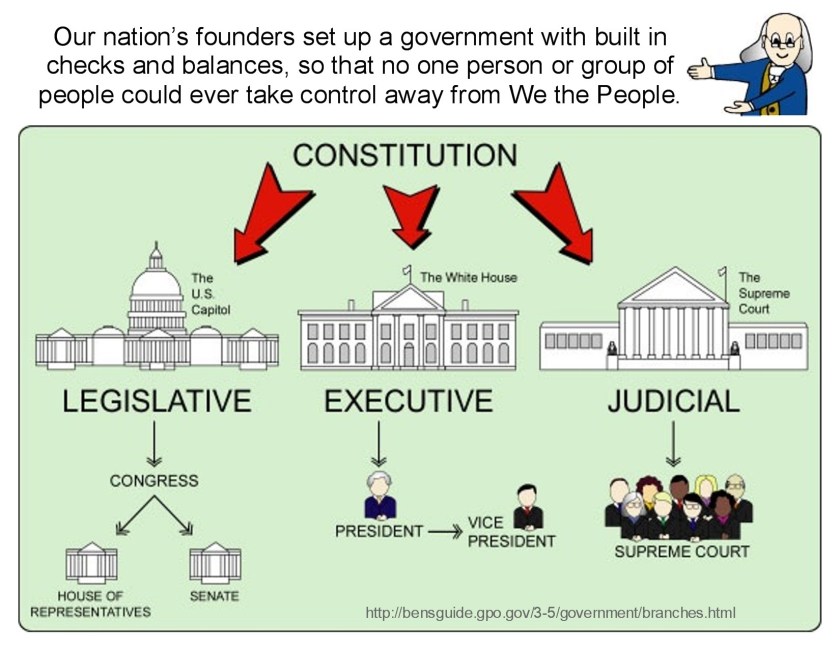
America’s fundamental success came from its emphasis on freedom within rules-of-law organized around the “checks and balances” of three distinct branches of government, i.e., the executive, congressional, and judicial branches. This is the strength of American Democracy that has offered stability. The inference made in “Edge of Chaos” is that America’s stability is at risk if it does not adapt to technological change wrought by A.I. and global interconnectivity.

Technology is changing the nature of American productivity from material products to service. With the help of A.I., America can begin to address many of the service needs of its citizens. From aid to the homeless, to education for service to others, to drug treatment of the addicted, to improved health care for all, the prosperity and income of Americans can be more equitably shared.

Global interconnectivity requires greater acceptance of fair trade as originally described by Adam Smith.

Today’s alleged protection of worker employment by using tariffs to restrict foreign production is shooting citizens in the foot by artificially increasing the cost of living. Re-education for service to the public by using A.I. to make citizens more human-centered offers an alternative to 21st century American chaos.

These are intelligent observations by a very young and well-educated author.

TO BE FREE

The neglect and brutal treatment of Lithuanian citizens by Russia during WWII is graphically depicted in “Between Shades of Gray”.

Books of Interest
 Website: chetyarbrough.blog

Between Shades of Gray 

By: Ruta Sepetys

Narrated By: Emily Klein

Ruta Sepetys (Author, Lithuanian American writer of fiction, daughter of a Lithuanian refugee.)

This is a novel that many Americans will choose not to read. It is so relentlessly brutal that one is inclined to stop listening to, or reading, the novel. Many Americans take freedom for granted. Sepetys’ story reveals how ignorant the generational free are about what it is like to exist in a nation ruled by an unrestricted authoritarian leader. Sepetys recreates a story from a young girl’s notes and drawings of a Lithuania family’s loss of freedom during Stalin’s authoritarian rule.

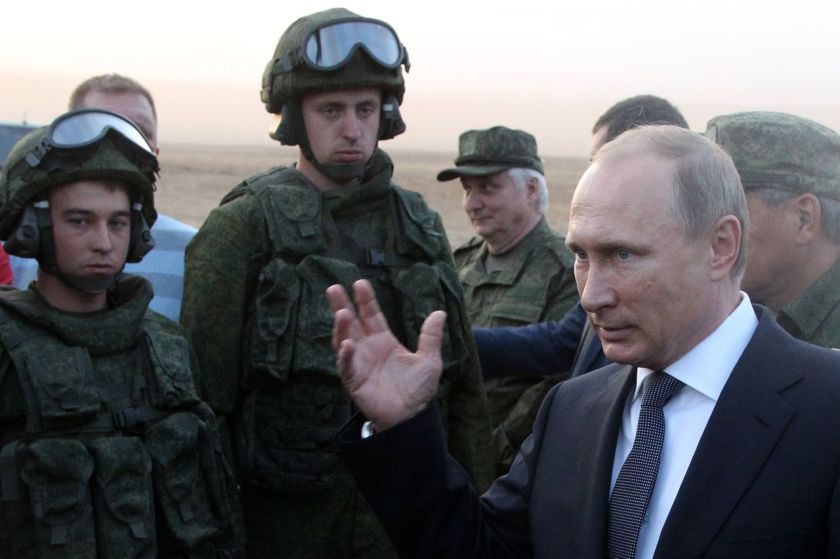
The weight of “…Shades of Gray” makes one’s heart go out to the many Ukrainians losing their freedom and lives at Vladimir Putin’s monomaniacal direction.

Sepetys makes one see and understand how fortunate Americans are to live in a democratic country. The broad outline of the story is about the rounding up of Lithuania citizens during WWII to be sent to work camps in Siberia under the control of the Russian NKVD, the precursor of today’s Russian SVR (Foreign Intelligence Service) and GRU (General Staff of the Armed Forces). At the beginning of WWII, Stalin orders the taking of the Baltic States into the U.S.S.R. by dismantling the in-place governments of the acquired countries. Any political opposition is to be arrested and deported to labor camps designed to serve the Russian economy.

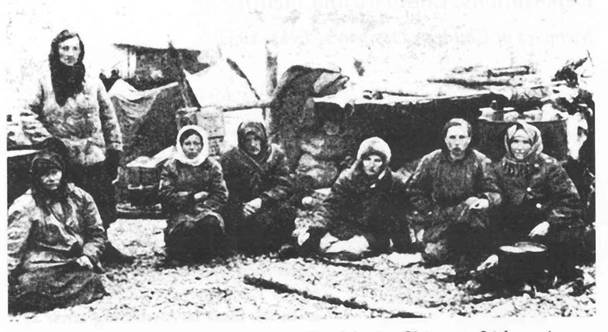
Sepety’s novel is the story of one group of Lithuanians that are rounded up, sent to Siberia, and later moved to an even more hostile camp inside the Arctic Circle.

The essence of the story is based on a young girl’s notes and drawings about her experience. The neglect and brutal treatment of Lithuanian citizens by Russia during WWII is graphically depicted in “Between Shades of Gray”. The title alludes to the few Russian guards that surreptitiously aid the work camp prisoners. It is only gray because the help is often in return for cooperation or favor from the un-free.

IN THE ROOM

How close is the world to its next world war? The character of today’s leaders seems as threatening as Stalin and as unpredictable as Churchill.

Books of Interest
 Website: chetyarbrough.blog

The Stalin Affair (The Impossible Alliance That Won the War)

By: Giles Milton

Narrated By: Giles Milton

Giles Milton (Author, British writer and historian.)

Giles Milton offers a fascinating and well written account of the dynamics of the relationship between Churchill and Stalin with a brief analysis of Franklin Roosevelt that shows a difference of opinion about Stalin. There are some surprises in Milton’s history of the beginning and ending of WWII and the role of Joseph Stalin.

As is well known, Stalin and Hitler made a pact at the beginning of the war that made them allies with a plan to divide Europe between their two countries.

The pact falls apart when Hitler chooses to invade Russia on June 22, 1941. Germany made rapid progress and was nearing Moscow when winter struck, and Germany’s wheels of war were stuck in the mud. Stalin was psychologically paralyzed by Germany’s decision to turn against Russia. He hid in his dacha, his second home in the Russian countryside. A delegation of Russians went to the Stalin’s dacha and pleaded with him to direct the defense of Russia against Germany’s onslaught. Stalin is surprised that the delegation wanted him to return to the leadership of Russia in Milton’s telling of the story. One presumes that reluctance is because of Stalin’s mistake in believing Hitler could be a reliable ally in their mutual desire to expand their territories.

Milton’s history has a particular interest to me because of a planned personal visit to the Baltics next month.

In reading a book about the Baltics during WWII, there seems some confusion among the Baltic countries because their sovereignty is being usurped by Russia while the instigator of WWII is Germany. The guide on the trip suggests we read “between shades of gray”, a book written by Rusa Sepetys, a Lithuanian born American writer. Sepetys story is of Lithuania intellectuals being arrested by Stalin’s troops and carted off to Siberia. Brief mention of the Germans is mentioned but implies the Germans were not the enemy but an opposing force of the Russian attack on the Baltics. Having visited Finland last year, it is interesting to find the Finns allied themselves to Germany during WWII because of their fear of Russia’s aggression. Now, having read Sepetys novel of Russian aggression in early 1941, one begins to understand the complexity of which side of the war the Baltics chose to be on.

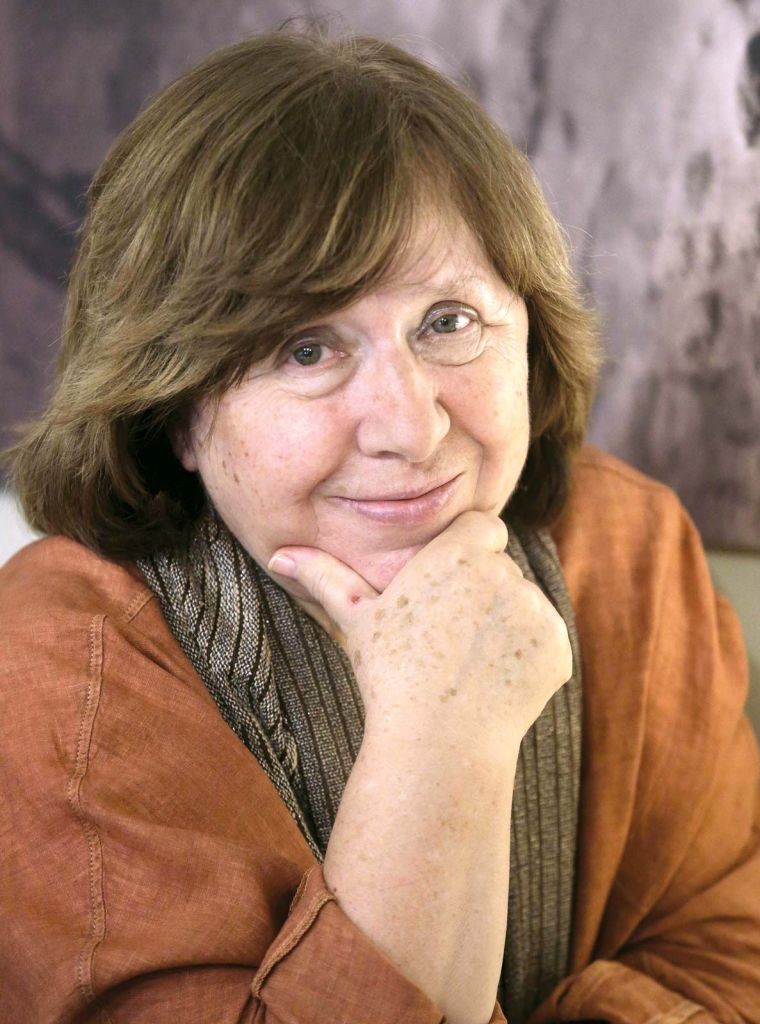
Ruta Sepetys (Lithuanian born American writer.)

It tells the story of Russia’s invasion of the Baltics soon after Hitler’s decision to attack Russia.

WWII in the Baltics is not Milton’s history, but Sepetys offers a footnote on its consequence in the Baltics.

Milton makes one feel they are in the room when decisions are made about the progress and ending of WWII. It is a fascinating story. Stalin is a villain in sheep’s clothing. His lust for power is unquenchable. Winston Chruchill is shown to be more aware of Stalin’s intent than Franklin Roosevelt. At Yalta, where the peace plan is agreed to and signed, Milton explains Roosevelt is feeble. The Yalta conference took place in February 1945. Roosevelt dies in April, two months later. Stalin’s ambition is the expansion of the U.S.S.R. and anything that gets in the way of that ambition is an obstacle to be overcome or removed.

Milton’s access to historical documents, reveals the many important roles of government leaders during WWII and after.

Of course, the most obviously impactful leaders are Churchill and Stalin, but the author notes the roles of lesser-known participants like Averell Harriman, Kathy Harriman, and Vyacheslav Molotov. There is also the role of Lavrentiy Beria, Stalin’s head of the NKVD (the Soviet secret police).

W. Averell Harriman (1891-1986, American politician, businessman, and diplomat.)

Averell Harriman, as the son of a wealthy railroad baron, becomes the founder of Brown Brothers Harriman & Co., an investment company. He became one of the richest men in America.

Harriman is asked by Roosevelt to become the America’s diplomatic contact with Great Britain to manage the Lend-Lease Program before America enters the war. As a personal envoy, he strengthens the alliance between Britain and America. Later he becomes Ambassador to the Soviet Union after Hitler’s betrayal of Stalin. Milton touches on the married Harriman’s attraction to women and his extramarital affairs. However, Harriman was revered by Churchill, and later Stalin, for the aid he coordinated for both countries during the war.

Kathleen Harriman (1917-2011, died at age 93.)

A lesser-known role is of Harriman’s daughter, Kathy Harriman. In the first years of contact between her father and Stalin, Ms. Harriman smooths America’s relationship with the Russian administration.

Ms. Harriman leaned to speak Russian and aided her father in his diplomatic contact with Soviet officials. She became a correspondent for the International News Service and Newsweek during her time in Russia. In 1944, Ms. Harriman exposes the mass murder of 22,000 Polish officers by the NKVD, at the order of Stalin. She plays a role in the Yalta Conference in assisting the American delegation with logistics and management.

Milton makes a listener feel like they are in the room at a dinner table with Stalin and Churchill when they exchange harsh words about the creation of a western front to aid the Russian army in the fight with German soldiers.

Stalin demeans the British army for their early failures in the war when they were outnumbered and outgunned by the Germans. Churchill is deeply offended by the disparagement and is on the verge of canceling a dinner with Stalin before leaving Russia. His anger is quelled by Harriman. Churchill changes his tone with the Russian leader and mends their relationship over cigars and alcohol. However, there is little doubt about their continued acrimony and Churchill’s unshaken belief in Stalin’s intent to expand his empire.

Milton offers the same “in the room” understanding of what happens at the Yalta Conference.

Germany is divided into four occupation zones which ended up being East and West Germany. The groundwork for the United Nations is formed with the aid of promoting international cooperation and prevention of future conflicts. A zone of influence is created between Eastern European Countries which were added to the U.S.S.R., to expand a buffer zone between Russia and the Western Powers. This iron curtain results in the cold war. The table is set at Yalta for the Nuremberg Trials of Nazi and Japanese leaders and for future reparations to rebuild Europe.

“The Stalin Affair” is an excellent reminder of WWII that makes one think about what is happening today with Russia in Ukraine and Israel in Gaza. How close is the world to its next world war? The character of today’s leaders seems as threatening as Stalin and as unpredictable as Churchill.

HARSH ASSESSMENT

No one can kill an idea. Ideas come from human beings who believe, rightly or wrongly, they are being victimized.

Books of Interest
 Website: chetyarbrough.blog

Homeland (The War on Terror in American Life)

By: Richard Beck

Narrated By: Patrick Harrison

Richard Beck (Born in 1987, received a BA from Harvard in 2009, Masters Degree in music from the University of North Texas, and Doctorate in performance and pedagogy from University of Iowa.)

On September 11, 2001, Richard Beck was 14 years old, living in a suburb of Philadelphia. In remembering life before 9/11, Beck looks at that tragedy as a reminder of life and America’s struggle to become a free and independent nation. “Homeland” uses the tragedy of 9/11 as an introduction to what might be interpreted as American Cowboyism.

Beck suggests the myth of American cowboys exemplifies who and what American society has been and will always be.

His recollection of 9/11’s news coverage is a distortion of reality. The reaction of the fire department, rather than heroic, is characterized as a matter of clean-up and ducking from falling debris and bodies, not of climbing stairs or entering buildings engulphed in fire and nearing collapse. Beck suggests like the myth of cowboys ridding America of Indian savages, expanding, and conquering the West, that firemen and rescuers did little to save workers in the towers collapse.

Beck’s history smacks of not being there but watching tv, reading echo chamber books, and listening to and watching news of the 9/11 tragedy.

Heroism is being there when the planes hit the towers, when smoke and debris were choking firefighters and police trying to cordon the area from surrounding businesses and people. This is the same fault Beck has of writing of unreasonably lionized frontiersmen and later leaders of America and the mistakes made by America’s leaders in the Civil War, Korea, Vietnam, Cambodia, Iraq, Iran, and Afghanistan. Horrible things have happened in America’s history that have been caused by humans who are not gods but fallible, self-interested strivers for a better life. The meaning of life in America evolves just as it does in every country of the world. No society is proud of their failures, but failures are part of being human. Obviously, it is how we overcome failures that makes society.

Beck’s inference that Martin Luther King’s “…arc of the moral universe is long but bends towards justice” as a false observation breaks a listener’s heart.

Many would disagree because life for native Americans, women, non-white minorities, and the white majority have improved over the years since the founding of American democracy. This is not to say, there are not miles to go for America to realize equality-of-opportunity for all its citizens.

Beck uses the great tragedy of Gaza and Israel’s occupation and murder of innocents as a primary example of American Democracy’s failure.

There is little to argue that Israel is crossing a Rubicon of regret for their slaughter of Palestinians in Gaza. Palestine has as much right to exist as the nation of Israel.

America’s position has been to support Israel because they are a bastion against systems of government that have little to no interest in equality of opportunity for all. The author fails to appreciate America’s guilt for turning away Jewish immigrants fleeing Europe during WWII when six million Jewish people were slaughtered in concentration camps.

Beck’s history disregards and diminishes the history of Jewish ethnicity that has given so much to societies’ advance of science, literature, and political theory.

This is not to argue Israel is right in thinking that ridding Hamas or Hezbollah leaders can be accomplished with ethnic cleansing while murdering innocent bystanders. No one can kill an idea. Ideas come from human beings who believe, rightly or wrongly, they are being victimized. Israel is making the same mistake Nazi’s made when they began exterminating Jews in WWII.

HOSTAGE

Over 230 human beings remain political hostages in this unpredictable world.

Books of Interest
 Website: chetyarbrough.blog

In the Shadows (True Stories of High-Stakes Negotiations to Free Americans Captured Abroad)

By: Mickey Bergman, Ellis Henican

Narrated By: Assaf Cohen, Mickey Bergman

Mickey Bergman tells a fascinating personal story about his life as a political hostage negotiator. He and a mysterious Lebanese friend he names “George” met at Georgetown University and became interested in political hostage negotiations. A precipitating event that led to their early friendship is the kidnapping of an Israeli soldier by a Palestinian Hamas faction in Lebanon. As a former Jewish military soldier, Bergman became friends with “George”, a Lebanese Muslim student at George Washington University. With similar beliefs about the unfairness and human tragedy of hostage taking for political purpose, they become partners in the release of the Israeli soldier from Hamas.
As a reminder of the of the October 7, 2023, kidnaping of over 100 Jewish hostages by Hamas, Israel has occupied Gaza and murdered an estimated 4o,000 Palestinians.

In the kidnaping of one Israeli soldier, Bergman explains that murder or kidnapping of 1 Israeli is viewed by some in the government and Israeli citizens as not 1–but six million and 1 atrocities.

A singular kidnaping, let alone the October 7th Hamas attack, gave warrant to some in Israel’s government to wage occupation and war on Gaza.

(This reasoning gives a sense of the current state of the Gaza war but also explains why hostage negotiation is such a complicated and lengthy process that can as easily end in failure as success.)

From Bergman’s friendship with “George”, he gathers interest in the pursuit of peace, regardless of social, religious, economic, or political difference. As a twenty something graduate, Bergman receives a call from the Clinton Global Initiative to join their organization after graduation. CGI was formed by former President Clinton and his family in 2005. Its stated purpose was to devise and implement solutions to world challenges like climate change, health equity, world economic growth, and peace among nations. It gave Bergman his first thoughts about what would become his mission in life, i.e., the liberation of hostages unjustly held by factions of countries or governments for political rather than criminal infraction. “In the Shadows” explains how suited Bergman is for the life he chooses. Raised in Israel, highly educated, experienced as a soldier, from a stable and loving family, Bergman understands the grief and joy of families dealing with and hoping for their mothers, fathers, sons or daughters release from a foreign prison.

Formed in 2005 to address world problems.

Bergman’s early experience as a go-between for the release of the Israeli soldier, with the help of his Lebanese friend from college, show how important non-governmental citizens can be in freeing political prisoners. Bergman and his friend’s families have important indirect contacts at high levels in the Israeli and Lebanese governments. The two young graduates create back-channel contacts to Jewish and Lebanese governments that eventually get Hamas to release the Israeli soldier. They found it a slow, tedious process of give and take allowing political points to be made by factions and governments while providing an opportunity to free a hostage who was only doing his government ordered job.

Bergman is everyman who wishes to be the best he can be within their natural gifts of birth, education, and experience.

Bergman is drawn into the circle of Governor Bill Richardson of New Mexico who formed the Richard Center in 2011. Bergman learns how to become a more effective hostage negotiator. Richardson’s methodology in negotiation is a post-graduate course in effective international negotiation.

The Richard Center was formed in 2011 to focus on promoting international peace and dialogue; particularly to negotiate hostage and prisoner releases. The Richard Center continues its work today.
Bill Richardson (1947-2023, died at age 75, a former Governor of New Mexico, 9th US Secretary of Energy, US Ambassador to the UN, who was elected to the U.S. House of Representatives for New Mexico.)

Richardson’s rules of negotiation:

  1. Never close the door to your contacts.
  2. Deflect attention from yourself with the people you take with you when you negotiate.
  3. As leader of a mission, observe reactions of your opposing audience to associates’ arguments, i.e. the same arguments you discussed with your associates before the meeting.
  4. Present a final pitch for hostage release based on what you have learned from the audiences’ reactions to your support staff’s arguments.

Richardson is shown by Bergman to be a master of negotiation and a great teacher of the art. You will not always win the argument, but you will have used the most persuasive details based on seeing and hearing the oppositions’ reactions to associates’ arguments.

“In the Shadows” tells the hostage stories of Brittney Griner, Danny Fenster, Otto Warmbier, Trevor Reed, Paul Whelan, and Kenneth Bae.

Bergman does a great job of explaining how difficult, dangerous, and often unsuccessful hostage negotiations can be. The release of Griner is heartwarming. The death of Warmbier is heart breaking. The delay of Paul Whelan’s release is frustrating and indicative of the complexity of hostage negotiation.

The many stories Bergman tells are interspersed with hardship in his own life that show how human and vulnerable we are despite our intelligence, experience, and education. Over 230 human beings remain political hostages in this unpredictable world. Though Governor Richardson recently died, Bergman carries on with the Richardson Center for Global Engagement.

PUTIN & UKRAINE

Without checks and balances, autocratic beliefs inevitably lead to conflict and mutually assured destruction, Donald Trump notwithstanding.

Books of Interest
 Website: chetyarbrough.blog

From Cold War to Hot Peace (An American Ambassador in Putin’s Russia)

By: Michael McFaul

Narrated By: L. J. Ganser

Michael McFaul (Author, American academic and diplomat, ambassador to Russia 2012-2014, former Professor of International Studies at Stanford.)

Not since George Kennan’s brief time as Ambassador to Russia in 1952 has an American ambassador been denied access to Russia. Michael McFaul became the second in 2016. McFaul joins the pre- and post-Obama election to become Obama’s ambassador to Russia from 2012 to 2o14. McFaul writes this book to explain his experience in the Obama administration, his understanding of Russia, and his tenure as Ambassador to Russia.

Interestingly, Condoleezza Rice recommends McFaul should join Obama because she was sure he, rather than McCain, would become the next President of the United States.

McFaul follows Rice’s recommendation and joins Obama’s campaign. Mcfaul’s grasp of Russian foreign affairs is insightful and relevant based on his personal experience. McFaul lived in Russia for a period of time when Gorbachev and Yeltsin attempted to liberalize Russia’s autocratic government. McFaul’s time living in Russia, his understanding of Russian language, and his study of Russian history at Stanford make his opinion in “From Cold War to Hot Peace” important.

Gorbachev’ biography shows he experienced the autocratic rule of Stalin’s U.S.S.R. as a young boy and found the courage to open the door to citizen’ freedom.

Mikhail Gorbachev was 22 when Stalin died. His ideal was to maintain the U.S.S.R. but with a system of government that rejected totalitarianism while freeing its citizens to improve their way of life. However, the shock of newfound freedom appeared an economic change too difficult and unfairly remunerative for the U.S.S.R. to survive as one hegemon.

A fundamental ingredient of independence is freedom.

When countries controlled by the U.S.S.R. were offered freedom, they looked to forms of democracy rather than autocracy. Gorbachev’s inability to accelerate economic growth to improve the lives of his country’s citizens doomed his goal to create a freer society within the U.S.S.R. Compounding his failure, Boris Yeltsin usurps Gorbachev’s power by arguing he has a better way of accelerating Russia’s economy to keep the U.S.S.R. together.

Boris Yeltsin talked the talk of democratic government but because of his inability to coopt the underlying authoritarian habits of former KGB operatives, he lost control of the government.

Yeltsin’s rise undermined the influence of Gorbachev, encouraged the departure of U.S.S.R.’ member countries, and gave an opening to Vladimir Putin, a former KGB officer. The KGB changed to the FSB in 1991 (along with Russia’s Foreign Intelligence Service) to become the right and left hand of Putin’s power and influence in the new Russia.

Fifteen countries leave the U.S.S.R. in 1991.

  1. Estonia: August 20, 1991
  2. Latvia: August 21, 1991
  3. Lithuania: March 11, 1990
  4. Armenia: September 21, 1991
  5. Azerbaijan: October 18, 1991
  6. Belarus: August 25, 1991
  7. Georgia: April 9, 1991
  8. Kazakhstan: December 16, 1991
  9. Kyrgyzstan: August 31, 1991
  10. Moldova: August 27, 1991
  11. Russia: December 12, 1991
  12. Tajikistan: September 9, 1991
  13. Turkmenistan: October 27, 1991
  14. Ukraine: August 24, 1991
  15. Uzbekistan: September 1, 1991

Gorbachev effectively ended the cold war, but McFaul argues the cold war turned into a “…Hot Peace”. Gorbachev was the last leader of the Union of Soviet Socialist Republics. His effort to democratize Russia fails even though he fully champions Valdimir Putin to become president of Russia in 2000.

Putin took control of Russia as Prime Minister under Yeltsin in 1999. He later effectively became President of Russia for life.

McFall explains Obama became President of the United States in 2o09. Obama revised America’s relationship with Russia with what became known as the U.S./Russia “Reset” policy.

Obama’s “Reset” policy had some early positive effects. The relationship between America and Russia arguably improved despite their significant political differences. When they disagreed, they agreed to disagree. There were halting steps toward nuclear bomb limitation and greater cooperation on America’s actions in Afghanistan when the Taliban had shown support for Osama bin Laden after 9/11.

Putin rose to the presidency in 2011 and has remained effectively in control of Russia since 1999. Though not argued by McFaul, Putin’s intimate understanding of Russia’s secret service has given him the power to exercise dictatorial control over Russia. The history of U.S.S.R. since the 1917 revolution has been maintained by a secret service used to jail, torture, and murder any opposition to leadership of Russia. Today, that autocratic leader is Putin. There seems little reason to believe kleptocratic control of a massive secret service apparatus will be overcome without revolution. Every Russian knows of the threat the secret service has to any opposition to Putin who controls and has an intimate relationship and understanding of the organizational capabilities of the former KGB.

Gorbachev’s legacy is hope for a better form of government in Russia. Change is possible just as Gorbachev’s history as the secretary of the Communist Party from 1985 to 1991 proved.

One is inclined to believe change will come to Russia from a disaffected communist party leader who rises in the party and taps discontented Russians looking for change. If all one’s life is lived and raised in Russia, a Russian born change-agent like Gorbachev may, once again, be born

As one completes McFaul’s book, the threat of masculine blindness in world leaders is made clear. Leadership entails a power that corrupts leaders who think they know what is best for their citizens. Autocracies concentrate that power in singular human beings. Without checks and balances, autocratic beliefs inevitably lead to conflict and mutually assured destruction, Donald Trump notwithstanding.

AI TRANSITION

The potential of AI is akin to the Industrial Revolution, yet it could surpass it significantly if managed correctly by humans.

Books of Interest
 Website: chetyarbrough.blog

The AI-Savvy Leader (Nine Ways to Take Back Control and Make AI Work)

By: David De Cremer

Narrated By: David Marantz

David De Cremer (Author, Belgian born professor at Northeastern University in Boston, and behavioral scientist with academic studies in economics and psychology.)

“The AI-Savvy Leader” should be required reading for every organization investing in artificial intelligence for performance improvement. From government to business, to eleemosynary organizations, De Cremer offers a guide for organizational transition from physical labor to labor-saving benefits of AI.

AI offers the working world the opportunity to increase their productivity without the mind-numbing physical labor of assembly lines and administrative scut work.

Like assembly line production implemented by Ford and work report filing and writing during the industrial revolution, AI offers an opportunity to increase productivity without the mind-numbing physical labor of assembly line work and after-work’ analysis reports. With AI, more time is provided to workers to think and do what can be done to be more productive.

Arguably, AI is similar to the industrial revolutions transition to assembly line work. Assembly line work improved over time by changes that made it more productive. Why would one think that AI is any different? It is just another tool for improving productivity. The concern is that AI means less labor will be required and that workers will lose their jobs. De Cremer notes loss of employment is one of the greatest concerns of employees working for an organization transitioning to AI. Too many times organizations are looking at reducing costs with AI rather than increasing productivity.

The solution identified by De Cremer is to make AI transition human centered.

His point is that organizations need to understand the human impact of AI on employees’ work process. AI should not only be viewed as a cost-cutting process but as a process of reducing repetitive work for labor to make added contributions to an organization’s goals. AI does not guarantee continued employment, but reduced manual labor offers time and incentive to improve organization productivity through employee’ cooperation rather than opposition. AI is mistakenly viewed as an enemy of labor when, in fact, it is a liberator of labor that provides time to do more than tighten bolts on an auto body frame.

AI is not a panacea for labor and can be a threat just like industrialization was to many craftsmen.

But, like craftsman that went to work for industries, today’s labor will join organizations that have successfully transitioned to AI with a human-centered rather than cost-reduction mentality. Labor productivity is only a part of what any AI transition provides an organization. What is often discounted is customer service because labor is consumed by repetitive work. If AI improves labor productivity, more time can be provided to an organization’s customers.

When AI is properly human centered, the customer can be offered more personal attention by fellow human beings employed by an AI organization.

Too many organizations are using AI to respond to customer complaints. Human-centered AI becomes a win-win opportunity because labor is not consumed by production and has the time to understand customer unhappiness with service or product. AI does not think like a human. AI only responds based on the memory of what AI has been programmed to recall. With human handling of customer complaints, problems are more clearly understood. Opportunity for customer satisfaction is improved.

De Creamer acknowledges AI has introduced much closer monitoring of worker performance and carries some of the same mind-numbing work introduced in assembly line manufacturing.

De Creamer suggests negative consequences of AI should be dealt with directly with employees when AI becomes a problem. Part of a human-centered AI organization’s responsibility is allowing employees to take breaks during their workday without being penalized for slackening production. Repetitive tasks have always been a drain on productivity, but it has to be recognized and responded to in the light of overall productivity of an organization.

AI, like the industrial revolution, is shown as a great opportunity for human beings.

De Creamer suggests AI is not and will never be human. To De Creamer AI is a recallable knowledge accumulator and is only a programmed tool of human minds, not a replacement for human thought and understanding. The potential of AI is akin to the Industrial Revolution, yet it could surpass it significantly if managed correctly by humans.

BACKYARD COLONIZATION

Adoption of the English language and the presence of military bases from Liverpool, England to the Northern Mariana Islands seem to “…Hide an American Empire”.

Books of Interest
 Website: chetyarbrough.blog

How to Hide an Empire (A History of the Greater United States)

By: Daniel Immerwahr

Narrated By: Luis Moreno

Daniel Immerwahr (Author, American historian, professor and associate department chair of history at Northwestern University.)

Daniel Immerwahr offers an interesting perspective on American History in “How to Hide an Empire”. Today’s Americans do not think of America as an empire because of its anti-colonial criticism of other countries. In the 21st century, Puerto Rico, the Northern Mariana Islands, U.S. Virgin Islands, Guam, and American Samoa are arguably part of America because of their cultural/social relationship. The U.S. actually owned the Philippines when America purchased it from Spain in 1898. The Philippines did not gain independence until July 4, 1946. At that time, America’s population was approximately 141 million. The Philippines and American territories in 1946 were nearly 20 million or approximately 14% of America’s total population. The official language for government, education, and business in the Philippines and America’s territories became English. (Puerto Rico’s domestic language remains Spanish, while Guam and American Samoa still teach their native’ languages.) Immerwahr’s inference is America is an empire in many ways, if not in name.

One might take Immerwahr’s history as a criticism. He implies the ownership of island territories has been a history of occupation, inuring more to the benefit of American needs and wants than local populations.

Immerwahr argues the financial wealth of the Philippines was used to build local roads and cities to benefit American commerce with little consideration for the personal needs of the indigenous. Undoubtedly, there is some truth in that opinion, but one realizes jobs were created for local people that offered some benefit to indigenous families. Americans managed road improvements and city developments that certainly aided Philippines’ economic growth after independence.

Location of the Philippines in relation to the U.S.

Philippine’ city and road development is a tribute to American architect and planner Daniel Burnham. The road improvements managed by William Forbes and Francis Harrison stimulated economic growth and connected remote communities. One is inclined to believe that indigenous peoples are as much benefited as damaged by America’s “empire” categorization in the use of Philippine resources to build new roads and cities. These improvements were a great accomplishment and monument to American architects and road builders, but the end benefit inured to the Philippines as much, if not more, than what is characterized as an American Empire.

Ringworm infection. The infection causes a pallor in facial appearance and fatigue in those who contract it.

Immerwahr goes on to explain how public health initiatives were begun during its empire building in the Philippines. One of the notable American doctors that began treating ringworm among the indigenous was Victor Heiser, the Director of Health from 1905 to 1915 in the Philippines. Ringworm had been identified as a fungal infection in the 1840s. It came from ringworms that penetrated the feet of children not wearing shoes who stepped in contaminated soil from human feces. The infection caused a pallor in facial appearance and fatigue in those who contracted it. American doctors trained Filipino medical professionals on how to identify, prevent, and treat the infection.

Japanese internment camp.

World War II brought out some of the worst and best in Americans.

In Alaska, Aleut village inhabitants were relocated for the alleged purpose of protection. They were housed in unclean, nearly uninhabitable, facilities in the interior of Alaska. Some of the Aleut’s abandoned houses were occupied by the military and many Aleutians were not allowed to return for years after the end of the war. And of course, as most know, the rounding up and incarceration of Japanese in camps in the continental U.S. is well documented. These are actions of a country acting like an omnipresent, omniscient empire. The bombing at Pearl Harbor reinforces a view of America as an empire. Nearly 3o% of the Hawaii’s population was of Japanese heritage. Many Americans, not to mention President Franklin Roosevelt, acted badly in respect to American born Japanese in Hawaii and the continental United States. Like an emperor, Roosevelt ordered the incarceration of American born Japanese citizens.

Just as there were native American heroes, there were Japanese American heroes in WWII. Private First Class Sadao Munemori was shot in the belly, left leg, and lost an arm while attacking and destroying 3 machine gun nests in Italy.

When Japan took control of the Philippines in 1941, some Japanese residents joined the Japanese army. However, the Filipino people began an intense guerrilla war that eventually led to the return of General MacArthur to liberate the islands in 1944. Immerwahr reminds reader/listeners of the valor of American Japanese’ soldiers who risked their lives during the war. He tells the story of Private First Class Sadao Munemori who was shot in the belly, left leg, and lost an arm while attacking and destroying 3 machine gun nests in Italy. He survived and was awarded the Medal of Honor.

Despite Immerwahr’s detailed argument of America as a hidden empire, he does not suggest or imply America supports colonization.

The most convincing evidence of Immerwahr’s belief is in America’s trip to the moon and the government’s statement that the moon belongs to no one, despite the mission’s planted American flag.

In the end, Immerwahr explains how American military bases on islands around the world reinforces effective colonization of foreign cultures by America. Widespread adoption of the English language and the presence of military bases on islands from Liverpool, England to the Northern Mariana Islands and beyond suggests America functions as an empire but not as an intended colonizer.

RULE BY THE ONE

With rule by the one there are no checks and balances which threatens war and discounts peace.

Books of Interest
 Website: chetyarbrough.blog

Autocracy, Inc. (The Dictators Who Want to Run the World)

By: Anne Applebaum

Narrated By: Anne Applebaum

Anne Applebaum (Author, journalist, historian, wrote Pulitzer Prize for Non-Fiction with “Gulag: A History” Also wrote “Red Famine”, both of which have been reviewed in this blog.)

“Autocracy, Inc.” infers there are two forms of government in the world, one is autocratic, the other democratic. Applebaum shows autocracies are often venal and kleptocratic. One might agree, but immorality and greed are a part of human nature in every form of government. This is not something Applebaum denies, but all forms of government have experienced excesses of wealth and power that have led to autocracy. What Applebaum argues is that autocracy is more threatening today than at any time in history.

The prestige of national leaders is by definition power.

As the British Lord Acton noted in 1887–“Power tends to corrupt, and absolute power corrupts absolutely”. Both democratic and autocratic leaders are subject to Acton’s aphorism. This is not to say Applebaum’s argument is not important, but no form of government, including democracy, has been found to fairly regulate the faults of human nature.

What Applebaum makes clear is that autocracy magnifies the faults of human nature because in countries like China, North Korea, Myanmar, Russia, parts of Africa, and similar autocracies, there are no checks and balances.

Imprisonment, torture, and murder for challenges to leadership are condoned, and commonplace. Applebaum’s added dimension is that many autocratic nations have begun aligning themselves to split the world between the lands of the relatively free and the chained.

Applebaum offers many examples of imprisonment, torture, and murder in autocratic countries. Some of the most famous are Navalny in Russia, the Nobel Prize laureate Liu Xiaobo in China, Jang Song-thaek, the second most powerful leader in North Korea, and of course, Aung San Suu Kyi in Myanmar. However, what makes Applebaum’s history terrifying is the calculated and cooperative effort by aligned autocracies to subvert freedoms offered in America and other democratic countries.

The author argues many autocratic leaders have become so powerful that no fellow countryman, regardless of their location, is safe from incarceration or assassination.

Assassination of Kim Jon Un’s brother.

Vladimir Putin is believed to have ordered the assassination of a number of Russian citizens around the world. Autocracies use the tools of State to directly or indirectly threaten or assassinate dissidents anywhere in the world.

Facial recognition in China.

The advance of Artificial Intelligence has magnified the strength of autocratic rule with tools of surveillance, assassination, and indoctrination that reach around the world. Applebaum argues the line between democracies and autocracies is hardening to the point of irreconcilable difference, leading to wars between states and territories like Syria, Ukraine, Sudan, and Gaza.

Democracy has its problems which includes dalliance with autocracy, but rule by the one where there are no checks and balances threatens war and discounts peace.