TURN EVERY PAGE

Caro’s facts do not prove truth, but they do reveal the means and consequence of political power and influence in American Democracy.

Books of Interest
 Website: chetyarbrough.blog

“Working”

By: Robert A. Caro

Narrated By: Robert A. Caro

Robert Allan Caro (Author, journalist, winner of 2 Pulitzer Prizes in Biography and many other coveted literature awards.)

Every non-fiction writer can appreciate this erudite and entertaining audiobook, personally written and read by Robert Caro. Caro explains what “Working” means to a non-fiction writer. Caro artfully explains why and how researching, interviewing, and writing a biography is a revelatory experience.

In “Working”, Caro focuses on his two Pulitzer Prize winning books, “The Power Broker: Robert Moses and the Fall of New York” and “Master of the Senate”, one of his four books about Lyndon Johnson. Both biographies are about political power in America.

Robert Moses (1888-1981) was an American urban planner and public official in the New York metropolitan area during the early to mid-20th century.

Moses (among many titles) was the New York City Parks Commissioner and Chairman of the Triborough Bridge Tunnel Authority. His political power and influence are detailed in Caro’s book, “The Power Broker”. Though Moses was never elected to political office, he arguably shaped the infrastructure of New York City as much, if not more, than any elected person in New York. “Working” explains how a reporter from a small Long Island’ newspaper manages to write “The Power Broker” and become one of America’s most famous biographers.

After graduating from Princeton with a B.S. degree, Caro is hired by the Long Island, New York’ newspaper, “Newsday”.

Caro explains he had been a writer for many years as a young boy and college student before getting a scut-work job at “Newsday”. He tells of a breakthrough report he writes that gets attention from the editor of the paper. He is given advice by the editor who recognizes the quality of his writing. The advice is that when writing a piece for the public, be sure of your facts by “turning every page”. Caro takes that advice and explains how it became a mantra, a repeated aid, in his writing.

Caro explains how he and his wife work to “turn every page” in researching the Moses and Johnson biographies.

Even though one may have read Caro’s two Pulitzer Prize winning’ books, “Working” offers a nearly perfect introduction to his biographies of Moses and Johnson that are, to the extent humanly possible, researched by “turning every page”. Caro is hard on himself for taking years to research and write his biographic books. It is a financial hardship for his family, particularly before his first success with “The Power Broker”. They sell their house in Long Island to support his book research. After that first success, the financial insecurity is offset by grants and the support of literary agents. “Turning every page” is a laborious process but it assures and reinforces the facts revealed in his biographies.

Caro explains how he and his wife meticulously researched public documents to confirm facts that corroborate the victimization of some New Yorkers by monied interests that gave Moses the political power to destroy low-income neighborhoods for new thoroughfares through the New York City area.

With the construction of over 600 miles of road many residents, renters and homeowners, were evicted from their homes. Most were left to fend for themselves.

Caro and his wife were willing to disrupt their lives and neighborhood relationships to pursue his obsession with verification of facts. Caro explains that he needed to move to Texas to understand what it was like for Lyndon Johnson to be raised in the Texas Hill Country. He could not just visit because local Texans would not talk to him with the candor he sought to understand where Lyndon Johnson came from. Many revelations are in his book about Johnson that could not have been corroborated without interviews with people who knew the Johnson family.

Caro and his wife move to Austin, Texas to be near the Texas Hill Country to research and understand the society in which Lyndon Johnson is raised.

Many insights are a result of the move. Experiencing the loneliness of the Texas Hill country because of its sparse population helped Caro understand Johnson’s need to be bigger than life. Interviewing Johnson’s brother reveals the tensions that existed between Lyndon and his father. Johnson’s father was heir to the original Johnson ranch that was lost because of the soils’ unproductivity. It had too much caliche, a clay content that would not support a cash crop. When Johnson’s father repurchased the ranch after its loss by the family, he failed to understand the land could not provide enough income to pay its mortgage. The ranch is lost to the bank again. The relationship between Lyndon and his father deteriorated as Lyndon grew older because of Lyndon’s disappointment with his father’s ineptitude and domineering personality. Ironically, Caro notes it is a personality that Lyndon is heir to and for which he is criticized. On the other hand, Caro explains it is also a personality characteristic that makes Lyndon one of the greatest masters of the Senate. No Senate leader since Johnson has as successfully led the Senate in passing government legislation.

Samuel Ealy Johnson Jr. (Lyndon Johnsons’ father. 1877-1937.)

Lyndon’s brother implies Lyndon’s conflicts with his father became part of his drive to be more successful than his father.

Caro infers Johnson and Moses were forces of nature. Both were political power users that understood how to use it to get their way. Obviously political power can be used for ill or good. One can argue New York City open spaces and parks were a great benefit to the city. On the other hand, many people were displaced to provide those open spaces. The Civil Rights Act passed during the Johnson administration benefited millions of minorities in America. On the other hand, an estimated 2,000,000 Vietnamese were killed, 58,000 American soldiers died, and another 288,000 Americans were wounded and/or disabled. How many Vietnamese, and Cambodians were wounded or disabled and how many are still being hurt by leftover landmines?

Caro offers a great service to the public in his writing about political power in American Democracy. Democracy is not a perfect political system, and Caro reveals where that imperfection lies by “turning every page”. Caro’s facts do not prove truth, but they do reveal the means and consequence of political power and influence in American Democracy.

LIFE’S LOTTERY

Eugenics and the fickle political nature of human beings outweighs the benefits of Harden’s idea of choosing what is best for society.

Books of Interest
 Website: chetyarbrough.blog

“The Genetic Lottery” Why DNA Matters for Social Equality

By: Kathryn Paige Harden

Narrated By: Katherine Fenton

Kathryn Paige Harden (Author, American psychologist and behavioral geneticist, Professor of Psychology at the University of Texas at Austin.)

“The Genetic Lottery” is an important book that may be easily misinterpreted. Hopefully, this review fairly summarizes its meaning. Fundamentally, Kathryn Paige Harden concludes all human beings are subject to a genetic lottery and the culture in which they mature. It is not suggesting all human beings are equal but that all can develop to their potential as long as he/she has an equal opportunity to become what their genetic inheritance, education, and life’s luck allow.

Harden explains racial identity is a false flag signifying little about human capability.

Every human being is born within a culture and from a mother and father who have contributed genetic DNA they inherited from previous generations. DNA carries genetic instructions for development, growth, and reproduction of living organisms. Those instructions are a blueprint for an organism’s growth. However, the genetic information passed on to future generations varies with each birth and is subject to a lottery of DNA instructions.

The lottery of genetics extends a multitude of characteristics ranging from intelligence to height to the color of one’s skin.

One may become an Einstein, or a slow-witted dolt. One may be born healthy or destined to die from an incurable disease. The growing understanding of genetics suggests the potential for human intervention to prevent disease, but also the possibility of creating a master race of human beings. That second possibility is a Hitlerian idea that lurks in the background of science and political power. It revolves around the theory of eugenics.
Harden suggests an ameliorating power of eugenics is its potential for offering equal opportunity for all to be the best version of themselves within whatever culture they live.

Putting aside the potential of human genetic theory’s risk, Harden explains every human is born within a culture that reflects the genetic inheritance of the continent on which they are born. The combination of the human genetic lottery and the culture in which humans live create ethnic identity and difference. Differences are the strengths and weaknesses of society. Strengths are in the diversity of culture that adds interest and dimension to life. The weakness of society is its tendency to look at someone who is different as a threat or obstacle to a native’s ambition or cultural identity.

Harden suggests every human being’s genetic code should be identified to aid human development by creating an environmental support system that capitalizes on genetic strengths and minimizes weaknesses.

This idealistic view of genetics is fraught with a risk to human freedom of thought and action. Science is generations away from understanding genetics and its relationship to the weaknesses and strengths of human thought and action. Understanding what gave Einstein a genetic inheritance that could see and understand E=MC squared is not known and may never be known. The luck of genetic inheritance and the lottery of life experiences are unlikely to ever be predictable. One interesting note in the forensic examination of Einsteins brain (recorded in another book) is that he had a higher-than-normal gilia cell ratio, non-normal folding patterns in his parietal lobe, and a missing furrow in the parietal lobe that may have allowed better connectivity between brain regions.

The threat of eugenic determinism and the fickle political nature of human beings outweighs the benefits of Harden’s idea of choosing what is best for society.

INDIGENOUS

Orange’s book shows how culture can kill. What citizens of the world need to do is understand how a broader culture can be built.

Books of Interest
 Website: chetyarbrough.blog

There There: A Novel

By: Tommy Orange

Narrated By: Darrell Dennis, Shaun Taylor-Corbett, Alma Ceurvo, Kyla Garcia

Tommy Orange (Author, received a Master of Fine Arts from the Institute of American Indian Arts, winner of the 2019 American Book Award for “There There…”)

Tommy Orange illustrates how culture is the god of creation and destruction. “There There…” offers a glimpse of what it is like to be poor and indigenous in Oakland, California. The name “Indians” for the indigenous of America is said to have been created by Christopher Columbus in the 1400s. Orange has the idea at a gathering of native Americans to have each write their stories, i.e., their memories of what life has been for them in Oakland, California in the 20th and 21st centuries. Their stories are the substance of Orange’s book. They reveal the crushing reality of being descendants of the indigenous in Oakland, and believably all of America. A grant from Oakland becomes the funding source for Orange’s idea. Fighting to making a living as an author is at the core of “There There…” Orange undoubtedly calls “There There…” a novel to protect the story tellers.

Orange shows recycling-poverty, addiction, and misogynistic abuse are big problems for “Indians” in Oakland. The stories reveal an underlying frustration, if not anger, of indigenous Americans who are being molded by government programs that ignore native traditions and emphasize integration into whatever American society has become. There is justification for anger among American minorities. However, there is a fundamental misunderstanding when suggesting government programs are meant to mold Americans. The goal of government is not to mold its citizens but to create cultural norms for a diverse culture. Government fails because ethnic norms of minorities protect American citizens who are treated unequally.

Names like “Two Shoes”, “Red Feather” and the “Indian symbol” that once tested color on televisions are interesting examples of the significance of native influence in American culture.

Though America has and continues to try to Americanize natives, cultural influence is a two-way street. The stories in “There There…” illustrate how everything from influence of addiction to spousal abuse to abortion to overeating to violence are revealed as problems in native American’ lives. This is a hard novel to listen to because it denigrates Indian heritage and justifiably blames American culture.

One is drawn to wonder what can be done to correct the truth of American culture’s blame. The answer is in the Constitution of the United States.

All men are created equal, and the job of government is to provide for the health, education, and welfare of its citizens. American government is struggling to find a way of doing what it is meant to do because of the nature of human beings. Neither capitalism, utopianism, socialism, or communism change human nature. Ironically, only culture has the potential for achieving the goal of equality and fraternity.

Orange’s stories illustrate how Indian poverty is destructive and ethnic cultural inheritance is destroying native Americans.

One presumes Orange would object to the category of American when referring to indigenous peoples. However, it is only with change in culture that all citizens become more socially cohesive than one ethnic identity. If America can institute policies that genuinely provide equality for health, education, and welfare of all, culture will heal itself. When that is achieved, one can be Black, white, Latino, indigenous, or whatever ethnic group one wishes–but within broader American culture.

Orange’s book shows how culture can kill. What citizens of the world need to do is understand how a broader culture can be built.

RAISED FIST

American Democracy will either fail or evolve by choosing to ignore or address the stated purposes of the Constitution.

Books of Interest
 Website: chetyarbrough.blog

Solitary: Unbroken by four decades in solitary confinement. My story of transformation and hope

By: Albert Woodfox

Narrated By: JD Jackson

Albert Woodfox, (1947-2022) Author who spent 43 years in solitary confinement in Louisiana’s Angola prison.

Woodfox dies at the age of 75 after being released in 2016.

“Solitary” is about American injustice on many levels. Every societal injustice is magnified by America’s penal system. There is racial discrimination, healthcare disparity, legal system bias, and law enforcement use-of-force to name the most prominent magnifications. Albert Woodfox’s story is a lived life in prison that exposes those levels of societal injustice.

Woodfox’s book is about America’s prison system, but it addresses growing up in the baby-boom generation.

Woodfox, like every human being, is a prisoner of mind but he becomes a physical prisoner in Angola, one of many prisons in America. Woodfox’s tragic life appears emblematic of many poverty-stricken baby-boomer’ lives in the 1960s. His story tells the world what it was, and undoubtedly still is, to live life in America when you are poor, ill-educated, living in a broken home, and/or Black.

Albert is born in Louisiana to a Black father (who retires after 25 years in the Navy) and a loving illiterate Black mother.

When Albert is a young child, his mother is compelled to leave her husband because he becomes a violent abuser after retiring from the Navy. Albert is raised in New Orleans by a single parent. His mother struggles to feed and clothe Albert and his siblings. Albert’s life in New Orleans includes petty theft and the troubles of untethered youth in a home where a single parent is not present because he/she is working to feed and house the family.

After several releases and returns to Angola, in 1971 Albert becomes known as an acolyte of the Black Panthers.

Albert grows up tough and independent but without purpose in his life. He quits school and evolves from petty criminal to armed robber. He first becomes acquainted with the Black Panther movement when he is jailed in New York. Association with the Panther movement changes his life. He is arrested and imprisoned in New York. He becomes a participant in the New York prison riots and adopts much of the Black Panther philosophy, i.e., a belief in Black nationalism, socialism and armed self-defense in the face of white discrimination. Albert began to believe in himself, improving his education by reading, and more importantly, respecting what is right in his life rather than what is expedient.

Woodfox is released from the New York prison system but is remanded to Angola for escaping the Louisiana prison system from an earlier crime.

He finds Angola is the same pit of despair it was when he was first imprisoned in Louisiana. Angola remains poorly maintained and continues to treat inmates, particularly Black inmates, inhumanely. However, Albert’s life is changed by the Panther’ philosophy. He begins to feel there is purpose in his life. His purpose becomes uniting prisoners (the Black Panther’ symbol of a closed fist meaning a “coming together” like the 5 fingers of a hand). Black prisoners come together in an effort to improve their treatment and education in prison. He allies himself with another devotee to begin a chapter of the Panther’ movement in the Angola prison.

The Black Panther movement began in 1966 with Huey Newton and Bobby Seale. Their plan was to unify African Americans to challenge police brutality in Oakland, California.

The movement failed because of internal tension, the FBI’s successful effort to undermine the movement, and determined white American resistance. Despite the demise of the movement, the idea of unifying African Americans against white privilege and unequal treatment survived despite the fall of the Black Panther movement. The movement has had a lasting impact on prison reform, community programs to improve education, and health services in poor black communities.

In 1974, Albert Woodfox is tried and convicted for murdering Brent Miller, a prison guard who is a third-generation guard at the Angola prison farm on which inmates worked. There is no concrete evidence to show Woodfox murdered Miller

He is put in solitary and remains in solitary for 40 years where he spends 23 hours a day with 1 hour for prison-yard exercise per day. That one hour per day is reduced to 3 hours a week in his last year of imprisonment. Amazingly, Woodfox survives and after several appeals, delayed and fought by the State of Louisiana, Woodfox is released to die a free man.

“Solitary” is an amazing tribute to the strength and resilience of human beings.

Woodfox becomes a self-educated American despite his horrendous treatment in the American prison system. He, and other prisoners, expose the failure of the American penal system to be more than an incarceration system to separate criminals from the general public. In that exposure, Woodfox shows changes were made in Angola and other prisons but far from turning prison into the rehabilitative need of society.

The fundamental cause of America’s failure is not achieving the stated purpose of equal opportunity for all in the Constitution of the United States.

The inferences one draws from “Solitary” reinforces America’s need to address the root causes of failure in its prison system. All men are created equal. America must improve government policies that assure the health, education, and welfare of its citizens. Woodfox’s story of Angola suggests socialism will cure the ills of American society. The truth seems more to be whether American Democracy will evolve or fail by choosing to ignore or address the stated purposes of the Constitution.

M.A.D. (Mutually Assured Destruction)

The near assassination of Trump is a harbinger of a world unduly influenced by today’s technology and media influence.

Books of Interest
 Website: chetyarbrough.blog

Playing with Reality

By: Kelly Clancy

Narrated By: Patty Nieman

Kelly Clancy (Author, graduate of MIT in physics with a Ph.D. in biophysics from U.C. Berkley.)

Kelly Clancy has a distinct point of view as a scientist. Her understanding of game theory and the mathematics of probability may steer reader/listeners away from her interesting book. “Playing with Reality” is less like playing and more like hard work, at least in the first chapters. Clancy begins by defining game theory and its permutations. Then she explains how it is a flawed tool for understanding human behavior. As one gets through the first chapters of her book, a reader/listener realizes Clancy is offering more than gaming theory history.

Clancy offers a detailed history of the growth of computer technology through the use of gaming programs designed to educate, entertain, and enrich private companies, public conglomerates, and individuals.

Clancy reveals the growth of chess playing gaming programs like Deep Thought, Big Blue, and Deep Blue to expose the battle line between human and artificial intelligence. Clancy is a skeptic of gaming technology–with a warning.

Clancy’s skepticism lies in mistaking game-theory’ studies as proof of predictive human behavior.

Clancy notes human behavior is not predictable for many reasons; one of which is human irrationality, and another is a human’s sense or understanding that he/she is being manipulated for prescribed responses. For example, in the first instance, a person may be irrationally afraid of all snakes even though there are no poisonous snakes in their State. In the second instance, a person who knows the theory of something like the “Prisoner’s Dilemma” can choose to modify their behavior and respond based on knowledge of previous experimental studies.

John von Neumann (1903-1957, Hungarian American mathematician, physicist, computer scientist, engineer and polymath.)

The troubling part (the warning) revealed by Clancy is that brilliant people like John von Neumann, an intellectual giant of the twentieth century, can have bad ideas. Clancy notes von Neuman considered preemptively nuking the Soviet Union because he reasoned it would (and it did) successfully create a nuclear bomb soon after America’s bombing of Nagasaki and Hiroshima. Neuman presumably considered this a rational option based on game-theory thinking.

Today, one wonders what Russia’s leader is capable of with nuclear weapons if he considers them just another tool of war.

Clancy notes Putin, like the President of the United States, is legislatively authorized to unilaterally choose to use nuclear weapons to protect what they believe is a threat to their countries. The gaming industry and the growth of A.I. are not the problem. Human nature is the problem. There are not enough checks and balances to keep well intentioned Presidents or bad actors from making bad decisions.

Clancy shows how the computer gaming industry has obscured the tragic consequence of violence by returning murdered life in a game back to life so they can play the game again. The game is not real, but the lesson is that gun violence is ok because it is just a game that can be replayed. Computer gaming has become a gateway to violence in the world. Easy access to guns is a problem in America but guns are instruments of violence, not the cause of violence. Among the causes are, poor education, poverty, mental dysfunction, and gaming that distorts reality.

Political position and power are dangerous in the face of human irrationality, a not uncommon characteristic of intelligent, ill-informed, or uncaring political leaders. In this age of computer drones and face recognition, three American citizens, one Iranian citizen, and an Egyptian’ Al Quada leader were killed by drone strikes at the order of American Presidents.

These murders may or may not have been justified but they exemplify the danger of gaming, face recognition, and the future of artificial intelligence. Clancy tempers her assessment of gaming in the last chapters of her book, but some will come away from her positive comments with a sick feeling in their stomach.

The near assassination of former President Trump is a harbinger of a world unduly influenced by today’s technology and media influence.

GOVERNANCE

Machiavelli describes effective governance as brutal, manipulative, and amoral. St. Augustine infers good governance comes from belief in God and adhering to scripture.

Books of Interest
 Website: chetyarbrough.blog

On Grand Strategy

By: John Lewis Gaddis

Narrated By: Mike Chamberlain

John Lewis Gaddis (Author, historian, political scientist, professor of Military and Naval History at Yale University.)

In a September 21, 2021 article in “The New York Times” Beverly Gage resigned as the course leader for “…Grand Strategy” (where Gaddis is a professor), “…saying the university failed to stand up for academic freedom…” She is noted to have said ‘I am not teaching “…Grand Strategy” the way Henry Kissinger would.’

Beverly Gage, in her resignation from Yale is noted to have said ‘I am not teaching “…Grand Strategy” the way Henry Kissinger would.’

The book author, John Lewis Gaddis, implies every accomplished political leader has a Grand Strategy. Historians can always criticize another’s study of political leaders or their place in history but having a strategy is a paramount requirement whether one is an American President or course leader at Yale. So here is a puzzle about the Gage’s resignation and her critical comment about Yale’s Grand Strategy for a teacher’s academic freedom.

One wonders what Ms. Gage meant in referring to Kissinger.

In any case, this is a review of John Lewis Gaddis’s book, “The Grand Strategy”. He begins with an animal analogy by suggesting good governance relies on being like a fox or a hedgehog when acting as a political leader. A fox characteristic is surreptitious and sly while the hedgehog is straightforward and aggressive. He argues governance that uses only one of these characteristics achieve singular objectives but balance between the two achieves the best results. The entire book is about the history of governments that have prospered or declined based on the presence or absence of balance.

In the beginning of “On Grand Strategy”, one becomes somewhat bored with Gaddis’s history of Athens’ and Sparta’s conflicts with Greece and its defeat of the Persian army (492 BCE and 449 BCE). However, mid-way through the book, one becomes engrossed in Gaddis’s evolutionary theory of nation-state’ governance.

In the Persian Army and its defeat by the Greeks and Spartans, Gaddis explains Xerxes neglected the common sense of moving his vast army across the Mediterranean, let alone feeding and supplying its needs. Xerxes was thinking like a hedgehog. Later, Gaddis explains Napoleon makes the same mistake as Xerxes by attacking Russia without considering the vast size of the country and logistic difficulties in feeding and supplying his army. Gaddis notes Tolstoy’s “War and Peace” chapters that explain how the battle of Borodino is a turning point in Napoleon’s hedgehog action.

Gaddis notes the need for political leaders to keep their eye on the prize. He gives the example of Civil War policies by Lincoln who sought end games for union of the States and emancipation.

When endorsing government policy or ordering military action, Gaddis suggests Lincoln was a leader who understood the need for common sense, i.e., always balancing what can be done with what could be done. Gaddis notes there are times when it appears Lincoln is contradicting himself when, in fact, he is being the fox rather than the hedgehog. For example, some argue Lincoln went back and forth on emancipation, but Gaddis infers he was being a fox because of the political heat surrounding the question and the government’s action.

At this mid-point, Gaddis’s history becomes more interesting. He recalls the history of two important characters in modern theory of society, i.e. St. Augustine and Machiavelli. Of course, they lived centuries apart, but each represent critical beliefs that impact nation-state governance. In the 4th century, St. Augustine wrote two influential works, “Confessions” and “City of God” that outline why God was important to him and why everyone should become followers of Christianity to save themselves for the reward of eternity in heaven. Christianity begins to replace leadership beliefs based on the Great Caesars of civilization. Rome does lead the world for another 70 years, but Christianity and other religions redefine the relationship between citizens and their rulers. The centralization of Catholicism by Emperor Constantine in the 4th century diminished the power of secular governments. Life on earth became secondary to the possibility of eternal life in St. Augustine’s “City of God”.

Jumping to the 15th century, Machiavelli’s concept of “The Prince” exemplifies power of governance by secular leaders.

Machiavelli returns political leadership to life on earth in “The Prince”. It is not an abandonment of the “City of God” but a recognition of leadership as it is in this world. Machiavelli experiences the power of political leaders in this world by being imprisoned and tortured for alleged conspiracy to overthrow the Medici family in Italy. Machiavelli’s “The Prince” explains a political theory and leadership of rulers in the “city of man”. “The Prince” returns the idea of governance to the beneficence and cruelty of life here, i.e. not in heaven.

Queen Elizabeth I is Gaddis’ s next example of the changing nature of governance.

Contrary to her half-sister, Mary Queen of Scots who supported Catholicism, Elizabeth reestablished the Protestant Church of England. Elizabeth recognizes the fundamental importance of England’s citizens to her reign as Queen of England. Elizabeth practices the less punitive aspects of “The Prince” to build a foundation for love and respect from England’s protestant, if not Catholic, citizens. The city of God is replaced by the city of man in Elizabeth’s rule.

One can think of many examples that reinforce Gaddis’s theme in “The Grand Strategy” as practiced in America. The senior Bush carefully planned the ejection of Sadam Hussein from Kuwait by building international support for America’s action in the first Iraq war. America’s generals carefully planned the movement of a massive military force, including supply lines, to remove Iraqi forces from Kuwait. The senior Bush did not make Xerxes mistakes. In contrast John F. Kennedy, Lyndon Johnson, and H. W. Bush’s son, failed to use common sense in America’s mistakes in Vietnam and Iraq. It took a sly fox in the Nixon administration to get America out of Vietnam. This is not to suggest any of these actions were wholly good or bad, but a reflection on the balance between using fox or hedgehog thought and actions to achieve common sense results.

Isaiah Berlin (1909-1997, Russian-British social and political theorist, philosopher, and historian of ideas.)

Gaddis takes reader/listeners through WWI and WWII from America’s perspective. On several occasions, Gaddis refers to Isaiah Berlin and his intellectual contributions to political theory and history. Berlin was born in Russia and educated in Great Britain. He spoke several languages and was particularly fluent in Russian, French, German, and Italian. He believed in individual freedom but explained conflicting values coexist and that there is no single universal truth in life. This reminds one of Machiavelli and makes one wonder if Berlin, who is alleged to have a strong sense of Jewish identify, was an atheist.

Gaddis suggests America has had a series of foxes and hedgehogs that have become American Presidents. Some have been intellectuals, others not. Considering President Wilson was a racist hedgehog while Lincoln and Franklin Roosevelt were at times foxes and hedgehogs, America survived and prospered through three disastrous wars. Gaddis’s point is that America’s best Presidents have been both foxes and hedgehogs, while most have been one or the other. It may be that America survives because, with the brief exception of Franklin Roosevelt, none have served more than two terms. One President may be a hedgehog while the next President is a fox.

Machiavelli describes effective governance as brutal, manipulative, and amoral. St. Augustine infers good governance comes from belief in God. Gaddis’s history of governance explains why and how both qualities are evident and have served America well.

DEMOCRACY OR ELSE

“…saving America” will not come from “…ten easy steps” but from one vote at a time.

Books of Interest
 Website: chetyarbrough.blog

Democracy or Else” How to Save America in 10 Easy Steps

By: Jon Favreau, Jon Lovett, Tommy Vietor

Narrated By: Jon Favreau, Jon Lovett, Tommy Vietor

(Left to Right) Jon Favreau, Jon Lovett, Tommy Vietor

The suggestion that “Democracy or Else” comes from “…10 Easy Steps” on “How to Save America…” is an oversimplification of life and politics. Saving America takes hardened objective opinion, personal commitment, appreciation of the difficulty of being a political leader, and most importantly, the wisdom of Jesus Christ. Few, if any humans fit the bill. Voting is the only thing that everyone who believes in American Democratic leadership will agree upon in the author’s “…10 Easy Steps”. The steps are not easy. The authors appear to have committed some time and effort to fulfill some part of the 10 steps.

Many (not most) Americans may be willing to vote but working on a campaign for a candidate who wishes to be elected to public office will always be low on their list of commitments.

Human beings, let alone Americans, are an unruly lot. Making a living, waiting for a hand-out, hating or loving others, and experience of life come first in the minds of most, if not all, human beings. The nuts and bolts of what it takes to become an elected representative in Democracy are way down on the list of humans’ self-interest. American Democracy, like all known forms of government, have winners and losers. Democracy has the best odds for serving the self-interest of its citizens but remains far from the idealistic goals of the U.S. Constitution.

American Presidents have been good and bad throughout history. Only a few have earned the history of “good or great” for America. The checks and balances of American government, the ideals of the Constitution, capitalism, and expanded voting rights have saved American Democracy from tyranny. Anyone who has read this blog, knows there is an opinion about the next President’s election but “…saving America” will not come from “…ten easy steps” but from one vote at a time.

AMERICA’S DECISION

It is up to Americans to vote or not vote. The choice today is between two old men. American Democracy will not fail because of either man’s election.

America’s Presidential debate on June 27th, 2024, was a painful reminder of advancing age. Whether to choose Donald Trump or Joseph Biden to be the next President of the United States is a “Hobson’s Choice”. Americans are compelled to vote for one of these two men or stay home and do nothing. Doing nothing means other Americans will decide who will represent Democracy to the world for the next four years.

Getting old is a mixed blessing. On the one hand, living long may offer wisdom, experience, and relationship connections. On the other, living long engenders health issues, physical frailty, and diminished mental acuity. Underlying these mixed blessings are the way a person has lived their life, the decisions they have made, the way they have treated others, and the inner moral compass they have followed.

It is up to Americans to vote or not vote for a President of the United States. The choice today is between two old men. Either will have the help of the three branches of the American government to do their job. American Democracy will not fail because of either man’s election to the office of President of the United States.

TRAGEDY’S LESSON

The sharpened point of Slade’s story is that, like the sinking of the Edmund Fitzgerald and El Faro, it takes great tragedy before change takes place.

Books of Interest
 Website: chetyarbrough.blog

“Into the Raging Sea” Thirty-Three Mariners, One Megastorm, and the Sinking of the El Faro

By: Rachel Slade

Narrated By: Erin Bennett

Rachel Slade (Author, winner of the Maine Literary Award for non-fiction.)

Rachel Slade begins her book with the last words of a mariner calling for help from a sinking ship in the grip of a Hurricane. The ship is the El Faro. The author writes her story based on the El Faro’s written log during a severe storm somewhere between Florida and Puerto Rico. The storm was Hurricane Joaquin, a category 4 Hurricane that had recorded wave heights of 10 meters (over 32 feet). Winds ranged from 130 to 156 mph with rough seas, roiled by rogue waves. Rogue waves are twice the size of surrounding waves and appear unexpectedly.

Slade methodically sets a table for the El Faro on a “…Raging Sea”.

Slade writes about a mariner’s desperate call for help. In its beginning, the story lags but the author offers cultural insight to the life of merchant marines, the equipment they operate, and the business of international trade. Her story explains how important and dangerous the life of a merchant marine can be, why it is important, and how mariners are dependent on equipment they use, their shipmates’ qualifications, and business owners’ drive for success.

Every person makes decisions about what they are going to do to make their way in life.

Becoming a merchant marine, like every decision in life, is based on personal circumstances, ambitions, and choices. Slade describes the El Faro mariners as adventurous and interested in seeing the world and being paid for what they do. Some are educated, others not, but all learn what they need to do to be part of a mariners’ crew.

There are schools for mariners at all levels of education but like any job, one can start at the bottom as a laborer that learns by doing. What the story of the El Faro shows is that like in any chosen job in life, some become expert at what they do, others try and fail, try again or move on. What Slade infers is that the El Faro sinks because of its crew but also because of others, both on and off the sea. As John Donne wrote in 1624, “no man (or woman) is an island”–emphasizing the interconnectedness of society.

The crew of the El Faro wanted to be paid but to some it was adventure and/or escape from a humdrum of life. Undoubtedly, mariners were motivated for different reasons. Some wished to see the world, be recognized for good work, wished to crew on bigger and better vessels, or be promoted to higher position. Motivation and ambition are different for everyone. What is lost to history are details. Slade tries to reveal some of the details about the El Faro’ crew, its owners, the ship, and the business of international trade. Why did the El Faro sink? Who and what was lost? What is it like to be in a hurricane at sea? Is somewhat at fault?

Slade’s story gains momentum as sinking of the El Faro seems imminent.

The aftermath is a careful and detailed explanation of rescues at sea, why the El Faro sank, what rescue efforts were made, how families of the lost were affected, and what changes were demanded in the industry. The loss of 33 mariners, the entire crew of the El Faro, is a horrible tragedy for the families who lost their loved ones. The causes of the tragedy range from crew mistakes to ship design to corporate malfeasance. The common thread is human nature.

What this review suggests is that the fundamental issue in every form of government and society is balance between public and private good.

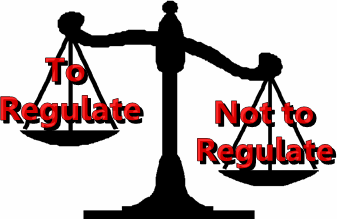
One will draw their own conclusions from Slade’s history of the loss of the El Faro. In a capitalist society, balance is dependent on prudent regulation. Prudence is meant to mean the use of human reason to balance the needs of the public with private interests. That balance is complicated by human nature that drives private interests to focus on money, power, and prestige rather than public need.

Slade shows regulation of international trade often conflicts with private interests that object to regulation and improvements in ship design.

Conflict between public good and private interest is not a new discovery. Neither is the sinking of the El Faro. The sinking of the Edmund Fitzgerald in 1975 led to changes in international shipping. Business owners were required to provide survival suits for mariners in their employ, depth finders, positioning systems, improved ship design, and inspections by the Coast Guard became mandatory. These were regulations that increased costs of shipping that rippled through the economy and initially penalized private interests. The public benefits because mariners are safer, and families are less threatened by loss. The public also suffers because transported goods become more expensive. Balance eventually occurs as private interests are compelled to pay more for labor which is part of the public.

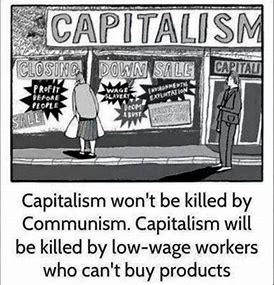
Capitalism works because it is a process that balances public need with private interests. Capitalism’s weakness is that the process takes time to balance public needs with private interests.

The sharpened point of Slade’s story is that, like the sinking of the Edmund Fitzgerald and El Faro, it takes great tragedy before change takes place.

KKK

American Democracy is a work in progress and remains at risk of failure.

Books of Interest
 Website: chetyarbrough.blog

“A Fever in the Heartland” 

By: Timothy Egan

Narrated By: Timothy Egan

Timothy Egan (American Author, journalist, former columnist for the New York Times, won the National Book Award, the Carnegie Medal, and a Pulitzer Prize for National Reporting.)

Timothy Egan’s “A Fever in the Heartland” is about the Ku Klux Klan and its growth in Indiana, the American Midwest, and Oregon in the early 1920s. Soon after the Civil War and death of Abraham Lincoln, a group of former Confederate veterans formed a social club in Pulaski, Tennessee.

The Ku Klux Klan grew into an underground movement that peaked in the 1920s with white American membership estimated at over 4 million.

Egan’s history is about the rise and fall of David Curtis “Steve” Stephenson who became the Grand Dragon of the Indiana Klan in 1923. Stephenson endorsed and promoted public hate toward immigrants and minorities. He became a proven liar who lied about his past and his actions as a leader. Egan’s history of Stephenson is an American political’ warning. Egan shows how character and honesty are as important in today’s politics as they were in the 1920s.

Egan’s choice of David Curtis Stephenson as a KKK’ leader illustrates how “A Fever in the Heartland” can grow to threaten American Democracy.

Stephenson is a man who smoothly lies his way to the top of a weak KKK’ chapter in Indiana by pandering to anti-immigration and anti-minority sentiments in the country. (The same sentiment seen in today’s America.) Stephenson became a rich man by recruiting the public into the KKK with a $10 fee for a white hooded garment ($4 for the garment, with $6 in his pocket) for membership to an exclusive group of American white men who would terrorize and murder non-whites, non-protestants, and immigrants. The KKK used secrecy to hide membership in this exclusive white American group.

The KKK hid their private reputations while (as an organization) publicly funding American celebrations and charities to feed its membership.

With membership dues and a persuasive personality, Stephenson (within 3 years) became a powerful and influential KKK’ leader. Stephenson convinced members of the KKK to become elected officials to gain control of government and public offices in Indiana. KKK’ members subsidized and promoted the election of like-minded white Americans. With control of government agencies, public services like the police and judiciary, the KKK controlled much of what happened in the State of Indiana. The wealth and influence of Indiana’s KKK planned a Presidential run in the late 1920s. The Indiana leader of the Republican Party was a member of the KKK and kowtowed to Stephenson as Grand Dragon of Indiana’s KKK.

Egan explains Stephenson was a persuasive carpetbagger who moved to Indiana from Texas while inferring he was an Indianan to become the Grand Dragon of Indiana’s KKK’ chapter.

Stephenson lied about his education and past but with success in increasing membership, he gained support of the National KKK’ organization. The truth of his background is that he abandoned his first wife and child when he left the lone star state. He was remarried to a second wife who leaves him. Stephenson beat his second wife who returned only to be beaten a second time when she attempted reconciliation. Egan noted Stephenson was a heavy drinker and abusive molester of women who worked for him. Stephenson was ultimately convicted of second-degree murder of Madge Oberholtzer, who was the creator and manager of a lending library.

Madge Oberholtzer (Stephenson is ultimately convicted of second-degree murder of Madge Oberholtzer for brutalization and rape.)

In the middle of the night, with the help of fellow Klansman, Madge Oberholtzer was kidnapped by Klansman working for Stephenson to take a train to Chicago. On the train, Stephenson rips Oberholtzer’ clothes off and rapes her. He used his teeth to bite her breast and parts of her body.

After being returned to Indianapolis, Overholtzer went to a drug store to buy bichloride of mercury, a slow acting poison. She chose to take the poison to end her life.

The taller man in this picture is Ephraim Inman, the defense attorney for Stephenson. He is standing next to Will Remy the prosecuting attorney, dubbed the “boy prosecutor” who successfully convicted Stephenson for 2nd degree murder.

Will Remy told the crowded courtroom that Stephenson “destroyed Madge’s body, tried to destroy her soul” and over the course of the trial tried to “befoul her character.” Overholtzer’s left breast and a bleeding right cheek were bitten by Stephenson when she was raped. Remy argues Stepheson’s teeth were a murder weapon. Attorney Asa Smith, a Overholtzer-family’ friend prepared a dying declaration for Madge Oberholzer that was placed into evidence.  Judge Sparks admitted the declaration and allowed Remy to read it to the jurors. (Sparks was not a Klansman.)

Stephenson considered himself, not only above the law, but as the law in Indiana. (That is a familiar refrain in the 21st century.) Stephenson was convicted for second degree murder. It was second degree murder because the cause of death was Madge Oberholzer’s decision to take her own life.

The Klan still exists in America.

James Alex Fields Jr. plowed into a crowd of demonstrators in Charlottsville, Va in 2017. He killed one of the protestors.

Fields admitted to being a member of the KKK. Though the Klan remained a political power in Indiana for some years after Stephenson’s trial and conviction, its Indiana’ power and influence was diminished. The national position of the Klan has declined in America as is believed in modern times, but it still exists.

Speaking about the white nationalist groups rallying against the removal of a Confederate statue, former President Trump said, “You had some very bad people in that group, but you also had people that were very fine people, on both sides.”

As Egan’s history of Grand Dragon Stephenson illustrates, American Democracy is a work in progress and remains at risk of failure. Honesty of elected officials and “there being no person or elected official above the law” remain important for America to remain a Democracy.