GUILT

In the end of “The Life We Bury”, the mystery of a murderer is solved. However, the real reveal of the story is how every human being is guilty of self-absorption.

Books of Interest
 Website: chetyarbrough.blog

THE LIFE WE BURY (A Novel)

AuthorAllen Eskens

Narration by: Zach Villa

Allen Eskens (Author, former defense attorney who lives in Minnesota.)

Reading/listening to a book is motivated by one’s ignorance, public popularity, author reputation, or subject of interest. “The Life We Bury” is similar to an earlier murder mystery by Allen Eskens. “The Life We Bury” deals with a crime but has no famous historical allusions like the mystery in “The Quiet Librarian”. However, it does have a similar theme. “The Life We Bury” is about injustice and a human desire to right what is wrong. As a popular author and an attorney by profession, both novels show Eskens intimate knowledge of the legal system and its faults.

The characters of life.

The main characters of “The Life We Bury” are Joe Talbert, a 21-year-old college student working his way through college, Carl Iverson, a Vietnam War Veteran convicted of raping and murdering a young girl, and Lila Nash, a next-door neighbor to the college student. Hardship of life is illustrated by Joe who lives 2 hours away from a younger autistic brother that lives with their mother. She is an alcoholic. Their mother’s addiction makes care of the younger brother perilous. The mother’s alcoholism and her social life often leave the autistic boy at home to fend for himself. Joe deals with his mother’s neglect as well as he can with a job as a bouncer and college student who lives two hours away from the family home.

Assisted living facility.

An assignment from college for Joe is to interview a senior citizen who is living in an assisted living facility. Joe visits a retirement community near his apartment and asks the manager if he could interview one of their elderly occupants for his college assignment. They agree and Joe meets a terminally ill resident who is staying at the care facility from a prison which could not care for “end of life” needs of an imprisoned inmate who is convicted of rape and murder of a teenage girl.

Autism.

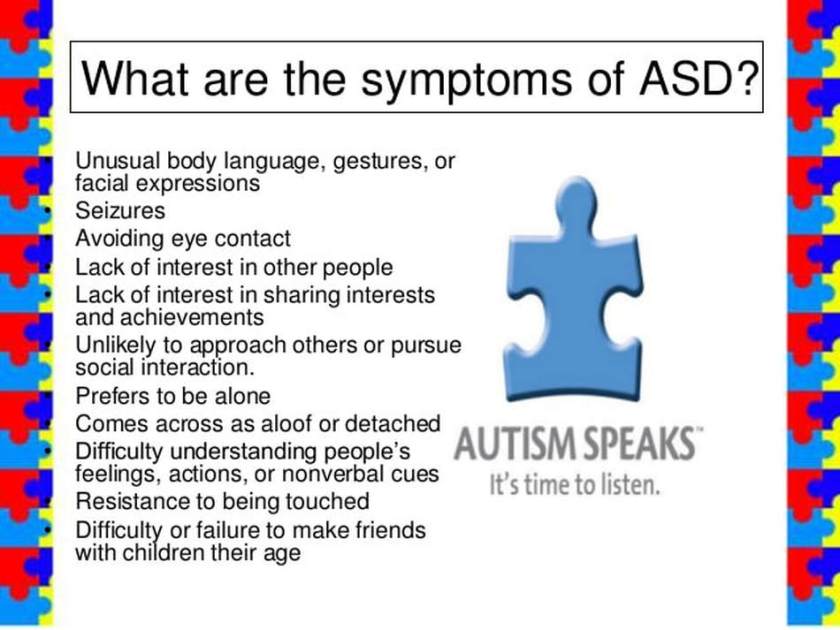
Lila, Joe’s next-door neighbor, becomes aware of Joe’s younger brother’s autism and is drawn into their awkward lives. She goes to the same college and by happenstance has some knowledge of the American justice system which leads her to help Joe with his interview and writing assignment. With her knowledge of the justice system, Joe is able to get the police file of the convicted rapist/murderer. The file is damning but a friend of the convicted and terminally ill patient tells Joe that his interview subject would not and could not have murdered the young girl.

Influence of others on our lives.

“The Life We Bury” is a person we know from our past that we no longer know but who have had a profound influence on our lives. “The Life We Bury” are people we know but often never reconnect with for either thanks or explanation of their effect on our lives. Eskens creates a story that on the one hand reveals how ignorant we are of other people’s lives and on the other how little we realize the impact others have had on our lives.

We all have some kind of guilt.

Carl Iverson is not guilty of killing and raping a young girl for which he is convicted and imprisoned. The search for the real killer is what moves Esken’s story along, but its theme is about guilt, and our ignorance about others and ourselves. Human beings live in their own worlds and often are unable to see others with the same clarity we think we see in ourselves. Eskens shows we neither understand ourselves, the people we think we know, or what impact they have on our lives.

In the end of “The Life We Bury”, the mystery of a murderer is solved. However, the real reveal of the story is how every human being is guilty of self-absorption. The race is on to arrest and convict the guilty rapist and murderer before the death of Carl Iverson. The last chapters of Eskens’ book are a nicely written denouement of his interesting story.

BOYS TO MEN

The most judgmental part of Szalay’s story is that a boy raised in wealth can be spoiled by drug addiction while a poor “go along to get along” boy may end up just as dissolute from sexual addiction.

Books of Interest
 Website: chetyarbrough.blog

FLESH (A Novel)

AuthorDavid Szalay

Narration by: Daniel Weyman

David Szalay (Canadian Author, winner of the Booker Prize in 2025 for “Flesh”.)

Every child is raised in different circumstances. The variables are legion ranging from genetics to economic environment to parenting and the experiences of life. David Szalay tells of a young boy growing to manhood. Every male will have some experience that relates to his primary character’s life. That explains the popularity and literary acclaim that “Flesh” achieves.

Szalay captures different pathways for “every boy’s” journey through the physical and mental anxieties of life.

The specific circumstances of the life for boys (and undoubtedly girls) show how complicated growth to adulthood can become. The father of one boy is a very wealthy businessman who has married a woman many years younger than him. They have a son named Thomas who has been raised in wealth and privilege. The second boy is, István, a poor Hungarian who lives a “go along to get along” life. This poor Hungarian grows to be a handsome man who is attractive to women because of his life experience and attitude about life and relationships.

Effects of inherited wealth.

István and a wealthy husband meet as a result of an attack by street thugs who beat the wealthy husband and nearly kill him. István happens to be passing by when the thugs are scared away by his sudden appearance. István calls 911 or its equivalent to get an ambulance. The wealthy husband is taken to a hospital and is grateful to István which he feels has saved his life. He offers István a job in his security firm as a protector of wealthy clients. István shows himself to be a very competent bodyguard. The wealthy husband decides to have him become his personal family guard and driver.

The wealthy husband’s much younger wife falls in love with the bodyguard and they become lovers.

The wealthy husband dies, and István marries the wife of her former wealthy husband. The son of the wealthy husband is destined for college when István marries the deceased husband’s wife. This college bound son will inherit all of the family wealth when he reaches the age of 25 based on a Trust that allows his mother and her new husband to use the Trust to make investments for the future until the son reaches 25. István becomes a land investor and developer with the wealth of the trust.

Human differences.

The table is set for comparison of two sons who are different with one raised in great wealth and another in the lower middleclass. A crisis occurs when an 80-million-dollar investment by István is needed from the trust that requires disclosure to the son who is to inherit the trust. This son raises enough public objection to the investment that it is not made, and the investment deal falls apart. To this reviewer, the dynamics of the genetic influence of two boys from different economic classes is the most insightful value of the novel.

The influence of genetics, wealth, and poverty.

One can judge from the life of István what influence genetics, wealth, and poverty may have had on the life of a boy growing to become a man. The author seems to have an opinion about boys raised by a family of wealth versus those raised by a family with a “go along to get along” belief in life. At the books end, one wonders if being born in wealth is as likely to make an adult male better or worse. István seems sympathetically written into life by the author. He is true to his character throughout the story, but his sexual life is a mess. Though he appears to be a resourceful, hardworking, and decent human being, he is led through life by his libido.

The most judgmental part of Szalay’s story is that a boy raised in wealth can be spoiled by drug addiction while a poor “go along to get along” boy may end up just as dissolute from sexual addiction.

INFIDELITY

“The Silent Patient” deserves its popularity. The ending is a surprise and offers a credible picture of how extreme human behavior comes from both nature and nurture.

Books of Interest
 Website: chetyarbrough.blog

THE SILENT PATIENT 

Author: Alex Michaelides

Narration by: Jack Hawkins & 1 more

Alex Michaelides (Author, British-Cypriot writer, won the Goodreads Choice Award for “The Silent Patient”, studied psychotherapy, and worked at a mental health clinic.)

Michaelides wrote a clever mystery about a 33-year-old wife named Alicia Berenson who is accused, convicted, and committed to an asylum for shooting her husband in the face with his own rifle. Alicia becomes “The Silent Patient”. She is arrested by the police with blood on her clothes in a non-speaking catatonic state. A psychotherapist, Theo Faber, is hired by the asylum and becomes interested in Alicia’s silence. On the one hand, it reminds him of his troubled childhood and a reaction to his wife’s infidelity in his own life. On the other, there is an undisclosed reason for his interest in Berenson’s silence and her judicial’ commitment to an asylum. “The Silent Patient” implies infidelity is in the nature of all human beings but that it can lead to violence and, in extraordinary circumstances, murder.

Michaelides infers infidelity is an inherent quality of all human beings.

Maybe infidelity is because of human nature’s intent to preserve itself but the consequences of, when experienced personally, can lead to mayhem. The primary characters of “The Silent Patient” are Alicia Berenson, a 33-year-old painter accused of murdering her husband–Theo Faber, a psychotherapist who tells the story of Alicia’s life–and Alicia’s husband who appears to love his wife but chooses to have a passionate extramarital affair. In the course of Theo’s story, he writes about infidelity of his own wife and his response to her betrayal.

Who shot Alicia’s husband?

The principle mysteries are revealed at the end of Michaelides’ book. Who murdered Alicia’s husband and how infidelity affects humanity are primary subjects of “The Silent Patient”. The cleverness of the story is in its twists and turns and the truth it reveals about human nature. We grow up to be adults from parents who create us while instilling all the contradictions of life that no child, who becomes an adult, escapes. Every human being and all societies are flawed. Societies and individuals pass on both the good and bad qualities of life to their children.

Coming to grips with infidelity is different for every child grown to adulthood.

A younger person who falls in love with another sometimes searches for someone to live with through the experiences of their future lives. Those who choose to be together bring their own life experiences to the relationship that may or may not be the same. It seems those life experiences that are similar are likely to preserve a relationship while those that are different cause conflicts. Michaelides shows how those conflicts, as well as the nature of human beings, can lead to destructive human behavior.

“The Silent Patient” deserves its popularity. The ending is a surprise and offers a credible picture of how extreme human behavior comes from both nature and nurture.

SOCIETY

The broad theme of Flournoy’s story implies being an identifiable minority means navigating social discrimination, gender difference, and physical violence in America.

Books of Interest
 Website: chetyarbrough.blog

THE WILDERNESS (A Novel)

Author: Angela Flournoy

Narration by: Angela Flournoy & 2 more

Angela Flournoy (Author, American writer won the First Novelist Award for “The Turner House” in 2015 and was shortlisted for the National Book Award for fiction.)

As a white person, “The Wilderness” offers a glimpse of what it is like to be a Black American woman in the prime of her life in today’s America. Flournoy creates a story of five adult Black women in their twenties in the years from 2000 though 2022. She reflects on their irreverent and tumultuous lives that show how friendships grow and fall apart between young Black Americans who are underestimated and face societal inequality. The friendships of these five women are a kind of bulwark against the experience of living in America as a racial minority.

American life.

Everyone faces challenges living in America, but friendship seems less important to white Americans because they are a majority of the population with assumed privilege that depends less on friendship than on economic opportunity. White American economic opportunity is taken for granted. A white listener/reader’s interest may make Flournoy’s story less interesting because it is singularly based on a minority. One might make the mistake of returning Flournoy’s story, rather than sticking with it, because it is different from its reader/listener’s life. Flournoy offers a view of life seen through the eyes of a person who lives as a minority in a white majority.

Friendship of women.

Desiree’s, Danielle’s, Monique’s, Nakia’s, and January’s stories are of 5 twenty something, well educated, Black American women and their lives through 20 years of friendship. Their friendship is a bulwark against the harshness of American life. Friendship is characterized as it is, i.e. not as smooth and unchanging but on again, off again, and renewable based on common experiences of being Black in America. Flournoy shows how these five friends balance their ambitions and relationships in a society that often gets in the way of their drive for economic success and/or happiness. When faced with discrimination, their friendships becomes an island of consolation. This island is not necessarily peaceful because of their different lives and personal circumstances, but it is a refuge from American discrimination.

Added to American police discrimination toward minorities is gender violence which is a problem for both white and Black American women.

Violence is endemic in America, but racism and inequality underlie greater vulnerability for Black Americans. Too many assumptions are made by police who racially profile Black Americans without justification. That profiling leads to unjustified police brutality based on the color of one’s skin. Sexual relationships may seem “ok” to an outside observer, but Flournoy shows it sometimes hides the reality of physical or psychological abuse between mated partners. January’s story is an example of coercion, instability, and harm that can occur in an intimate relationship.

The depth and horror of discrimination in American history.

The broad theme of Flournoy’s story implies being an identifiable minority means navigating social discrimination, gender difference, and physical violence in America. Flournoy’s opinion is that friendship is the bulwark upon which Black women protect themselves. The reality of Flournoy’s story is that social discrimination, gender difference, and violence exist in every country of the world. The way people deal with discrimination, gender difference, and violence ranges from adaptation, reluctant acceptance, or revolt. Her point is important, but her story is too long.

A.I. TOMOROW

A.I.s’ contribution to society is similar to the history of nuclear power, it will be constructively or destructively used by human beings. On balance, “Burn-In” concludes A.I. will mirror societies values. As has been noted in earlier book reviews, A.I. is a tool, not a controller of humanity.
Books of Interest
 Website: chetyarbrough.blog

BURN-IN (A Novel of the Real Robotic Revolution)

Author: P. W. Singer, August Cole

Narration by: Mia Barron

Peter Warren Singer (on the left) is an American political scientist who is described by the WSJ as “the premier futurist in the national security environment”. August Cole is a co-author who is also a futurist and regular speaker before US and allied government audiences.

As an interested person in Artificial Intelligence, I started, stopped, and started again to listen to “Burn-In”.

The subject of the book is about human adaptation to robotics and A.I. It shows how humans, institutions, and societies may be able to better serve society on the one hand and destroy it on the other. Some chapters were discouraging and boring to this listener because of tedious explanations of robot use in the future. The initial test is in the FBI, an interesting choice in view of the FBI’s history which has been rightfully criticized but also acclaimed by American society.

Starting, stopping, and restarting is a result of the author’s unnecessary diversion to a virtual reality game being played by inconsequential characters.

In an early chapter several gamers are engaged in VR that distracts listeners from the theme of the book. It is an unnecessary distraction from the subject of Artificial Intelligence. Later chapters suffer the same defect. However, there are some surprising revelations about A.I.’s future.

The danger in societies future remains in the power of knowledge. The authors note the truth is that A.I.’s lack of knowledge is what has really become power. Presumably, that means technology needs to be controlled by algorithms created by humans that limit knowledge of A.I.’ systems that may harm society.

That integration has massive implications for military, industrial, economic, and societal roles of human beings. The principles of human work, social relations, capitalist/socialist economies and their governance are changed by the advance of machine learning based on Artificial Intelligence. Machine learning may cross thresholds between safety and freedom to become systems of control with potential for human societies destruction. At one extreme is China’s surveillance state; on the other is western societies belief in relative privacy.

Robot evolution.

Questions of accountability become blurred when self-learning machines gain understanding beyond human capabilities. Do humans choose to trust their instincts or a machines’ more comprehensive understanding of facts? Who adapts to whom in the age of Artificial Intelligence? These are the questions raised by the authors’ story.

The main character of Singer’s and Cole’s story is Lara Keegan, a female FBI agent. She is a seasoned investigator with an assigned “state of the art” police robot. The relationship between human beings and A.I. robots is explored. What trust can a human have of a robotic partner? What control is exercised by a human partner of an A.I.’ robot? What autonomy does the robot have that is assigned to a human partner? Human and robot partnership in policing society are explored in “Burn-In”. The judgement of the author’s story is nuanced.

In “Burn-In” a flood threatens Washington D.C., the city in which Keegan and the robot work.

The Robot’s aid to Keegan saves the life of a woman threatened by the flood as water fills an underground subway. Keegan hears the woman calling for help and asks the robot to rescue the frightened woman. The robot submerges itself in the subway’ flood waters, saves the woman and returns to receive direction from Keegan to begin building a barrier to protect other citizens near the capitol. The Robot moves heavy sacks filled with sand and dirt, with surrounding citizens help in loading more sacks. The robot tirelessly builds the barrier with strength and efficiency that could not have been accomplished by the people alone. The obvious point being the cooperation of robot and human benefits society.

The other side of that positive assessment is that a robot cannot be held responsible for work that may inadvertently harm humans.

Whatever human is assigned an A.I robot loses their privacy because of robot’ programing that knows the controller’s background, analyzes his/her behavior, and understands its assigned controller from that behavior and background knowledge. Once an assignment is made, the robot is directed by a human that may or may not perfectly respond in the best interest of society. Action is exclusively directed by the robot’s human companion. A robot is unlikely to have intuition, empathy, or moral judgement in carrying out the direction of its assigned human partner. There is also the economic effect of lost human employment as a result of automation and the creation of robot’ partners and laborers.

A.I.s’ contribution to society is similar to the history of nuclear power, it will be constructively or destructively used by human beings. On balance, “Burn-In” concludes A.I. will mirror societies values. As has been noted in earlier book reviews, A.I. is a tool, not a controller of humanity.

SHERLOCK HOLMES REDUX

“The Secret of Secrets” is an entertaining adventure that makes one wish they had the genius of its main character, Robert Langdon.

Books of Interest
 Website: chetyarbrough.blog

The Secret of Secrets 

Author: Dan Brown

Narration by: Paul Michael

Dan Brown (Author, famous American writer of thrillers who wrote “The Da Vinci Code” and “Angels and Demons” among others.)

Dan Brown’s fictional Robert Langdon is made famous by Tom Hanks in the “Da Vinci Code” and “Angels & Demons” movies. The author’s “…Secret of Secrets” will add to Brown’s fame. Brown is a polished writer who has created another imaginative story that blends myth with belief that is as entertaining as Sir Arthur Conan Doyles’ adventures of Sherlock Holmes.

Like Sherlock Holmes, Robert Langdon is a polymath who has knowledge of science and life that beggars one’s imagination.

To remind listeners of Brown’s earlier works, his hero is Robert Langdon, a Harvard professor of religious iconology and symbology. Langdon’s extraordinary ability is like Sherlock Holmes’ in that he can integrate knowledge with abstruse details of Brown’s created characters and circumstances. Langdon is a friend of Katherine Solomon, a scientist who has written a book that allegedly explains how human consciousness exists after physical death. Solomon argues consciousness is a fundamental force in the universe that challenges belief in materialism and religious doctrine. Consciousness beyond death challenges belief in ethics, free will, and the fundamental nature of reality. Consciences of every deceased person lives in a cosmic space containing the many minds of all humans that have died. There is no God. This cosmic consciousness influences the direction of all human life by being accessible to living human beings.

If Solomon’s idea gained purchase in society, Brown’s story infers it would challenge the foundations of society. It would challenge religious beliefs and create political and social instability. The idea of consciousness as an eternal force of nature is viewed as a threat to the ways of the world. An organization run by an obscure and secretive group led by Everett Finch views Solomon’s thesis as a threat to society and the world in which his power and influence would be diminished. The book Solomon has written is to be erased from the world of knowledge. Finch’s plan is for Ms. Solomon to be murdered, and her research and book destroyed.

The setting of the story is in Prague, Czechoslovakia because of its reputation as a mystical area of the world with its history, and ancient architecture. Ms Solomon is there to participate in a lecture in Prague, a beautiful city that is associated with mythical beliefs like the Jewish belief in Golems that were originally identified as protectors and then evolved into murderers without conscience or purpose.

Brigita Gessner is a neuroscientist in Prague who is experimenting with the principle of consciousness as the underlying biological theory of eternal consciousness that is similar to Solomon’s belief. Gessner is being targeted for elimination by a Golem as an agent manipulated by Finch’s organization.

Golems were once identified as protectors that became murderers who lost their way without understanding their original purpose.

“The Secret of Secrets” is an entertaining adventure that makes one wish they had the genius of its main character, Robert Langdon.

CHILD ABUSE

The complexity of Freida McFadden’s character relationships diminishes its appeal, but the point of the story is that child abuse takes many forms which often repeat themselves in future generations.

Books of Interest
 Website: chetyarbrough.blog

THE INTRUDER 

Author: Freida McFadden

Narration by: Joe Hempel, Patricia Santomasso, Tina Wolstencroft

Freida McFadden (Author, practicing physician, specializing in brain injury.)

Freida McFadden’s book is a mess. The story is burdened by too many relationship complications. On the other hand, it reveals the hardship children face when raised by parents who lose control of their minds. The base story is about a 12- or 13-year-old girl named Ella. She is being raised by her mother who is a hoarder struggling to cope with life. As a single mother with a young girl, her hoarding complicates her daughter’s life. The house in which they live is a pigsty because of the hoarding. The odor of spoiled fruits and food permeates the clothing that Ella wears to school. Her mother often locks her daughter in a closet when she leaves the house. The closet is dark, cramped, and smelly from the mother’s hoarding mania. She punishes her child with the lit end of a cigarette when her daughter complains about anything.

Child abuse statistics.

Ella dreams of escaping to a better life while coping with school and hiding the trauma she endures with her mother’s mental instability. Ella fantasizes the idea of finding her father who she does not know. She makes friends with a young boy of her age who has anger issues because his father drinks too much and is abusive toward his son and wife. As Ella and the boy become closer, a serious assault incident at school results in the boy being permanently expelled. Ella has lost the support of her best friend and is faced with the instability of her mother’s behavior. Ella wishes for a better life and searches for evidence of her father as a way of escaping and improving her life. That search appears to be a dead end.

Ella’s mother hooks up with a man who becomes a boyfriend with a violent temper.

A fight between the two leads to Ella’s mother being stabbed. Blood from her wounds splatters her daughter from head to foot. Ella sets the house on fire and runs to the woods near her neighborhood where she cowers in a shed. The shed is next to a house rented by a teacher who has been fired by the school that had hired her. There is a storm brewing as Ella cowers in the shed next to the former teacher’s house. The former teacher named Casey, sees a light in the shed and cautiously approaches it to find Ella, a bloody mess lying on the shed floor. Ella is the intruder of McFadden’s story.

The value of this story lies in the reality of children being raised in families that abuse their children through neglect, psychological, or physical abuse.

McFadden’s story is of a neglectful and deranged mother who is incapable of caring for herself, let alone a child. Every child that survives their childhood is impacted by parents whether sane or mentally unbalanced. Most children are raised by single or married parents. Others are taken away by State sponsored childcare facilities or escape abusive parents to live on the street.

How a child responds to their parents or the way they deal with life is like the predictive quality of quantum physics.

How a child responds to how they are raised is unpredictable. That is the substantive meaning of “The Intruder”, a story that keeps one in suspense but does not appear likely to end well. It is a story that many children live in America and presumably in other countries of the world. The complexity of McFadden’s character relationships diminishes its appeal, but the point of the story is that child abuse takes many forms which often repeat themselves in future generations.

LIFE’S JOURNEY

The ending of Emily Henry’s story is a surprise to most who are absorbed and entertained by her tale. Life is complicated because it is filled with luck, achievement, purpose, and loss whether one is rich or poor.

Books of Interest
 Website: chetyarbrough.blog

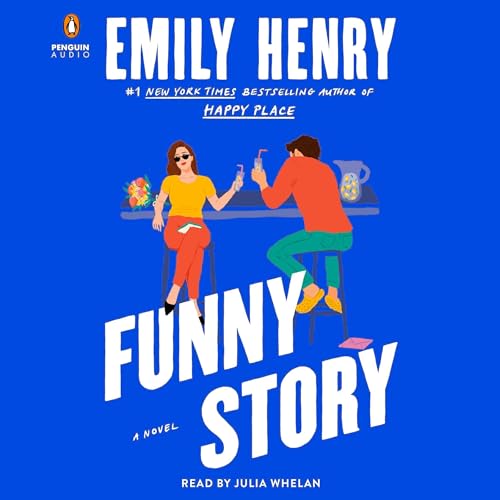
Great Big Beautiful Life

AuthorEmily Henry

Narrated By: Julia Whelan

Emily Henry (Author, American writer of NYT’s bestselling romance novels.)

Emily Henry is an entertaining writer who seems to live her own “Great Big Beautiful Life”. Her book is about writers like herself being interviewed by a wealthy American who is searching for a biographer to memorialize an extraordinarily famous family’s life. Henry’s twist is that she has competition with a fellow writer who is a more experienced and successful writer.

The two writers in Henry’s story are in the prime of their lives.

One has been married before, and the other appears to have been intimately acquainted with another writer. Neither potential biographer knows they are being interviewed for the same job. The surprise is that their famous subject hires both writers to compete for the job with a presumption that one will be chosen. The story is partly to tell of a famous and extraordinarily rich families’ complicated lives. “Great Big Beautiful Life” is an imaginative story about family relationship, love, and life’s complexity.

The cleverness of Henry’s story is that one becomes interested in the person being biographed while being drawn into what becomes an intimate relationship of the writers.

Listener/readers become interested in both story lines. The incredibly rich heiress’s family history is a contrast to the middleclass lives of the writers. What Henry shows in “Great Big Beautiful Life” is every human being, whether rich or middleclass face the joys and tragedies of life. The author is not addressing poverty or the poor, but one presumes the difference is qualitative because love, loss, and sorrow is part of every human life.

The passion of the two authors is artfully expressed and reminds one of every human’s experience of love and loss.

Joy and tragedy play a part in every sentient human being’s life. Familial, emotional, social, and ethical relationships are vivified in Henry’s story. Alice is the main character who is the woman writer telling her story of the competition and relationship between her and Hayden in seeking the right to tell the story of Margaret Grace’s “Tabloid Princess” life. Margaret sets the table for the story with a competition for the right to tell her family’s life story. Alice and Hayden begin as competitors, evolve into lovers. and become intertwined with Margaret’s storied life.

Alice and Hayden are ambitious professionals, but both have emotional vulnerabilities that are intensified by the competition for Margaret’s biography. Scandal, family secrets and how they are dealt with in Margaret’s life are part of the story. Alice’s insecurity contrasts with Hayden’s Pulitzer Prize-winning reputation as a biographer.

The approaches of the two hopeful writers of Margaret’s biography are contrasted by the author.

Alice has a human-centered approach to the biography whereas Haden drives for detached objectivity. Alice is concerned with Margaret’s exposure while Hayden seems more driven by belief in accuracy, structure, and verifiability.

The ending of Emily Henry’s story is a surprise to most who are absorbed and entertained by her tale. Life is complicated because it is filled with luck, achievement, purpose, and loss whether one is rich or poor. “Great Big Beautiful Life” is entertainment at its best.

THE ARTIST

Fredrick Backman’s story shows how the best and worst adults come from the admixture of life. “My Friends” is a funny and barely believable story, written by a highly entertaining and accomplished writer.

Books of Interest
 Website: chetyarbrough.blog

My Friends (A Novel)

AuthorFredrik Backman

Narrated By: Marin Ireland

Fredrik Backman (Author, Swedish blogger and columnist, also wrote “A Man Called Ove”.

Fredrik Backman’s “My Friends” is an immensely entertaining story that fulfills the meaning of the word “wry”. A definition of wry is “ironically or grimly humorous”. What “My Friends” shows is that the life of a child is as much luck as innate ability and choice.

The main character of “My Friends” is Louisa, a 17-year-old foster child living on the street. She has a preternatural ability to draw and appreciate a work of art.

Backman’s story infers human beings are born with a genetic inheritance reinforced or discouraged by life experiences. Louisa never knows her father and is raised by a mother who drinks herself to death. Louisa is shunted to a neighbor’s care who abandons her to child services. She escapes into the streets of a city where reader/listeners find her meeting a disheveled and apparently ill person outside an art auction house. Louisa is drawing small red fish on a building wall when she is joined by this stranger who begins drawing skulls on the same wall. This chance meeting changes the course of Louisa’s life.

As luck and circumstance would have it, the artist (Kimkim aka C. Jat) is a painter whose work Louisa has admired over her short years of life. She has carried a post card (which she cherishes) that shows the artist’s famous work that is being auctioned. She does not realize the person she is talking to is the artist.

Monet’s “Water Lillies” as an example of a famous work that has been auctioned several times with the last auction amounting to $65.5 million.

Some days later the artist dies in a hospital with his lifelong friend, Ted, at his side. Ted has purchased the world-renowned painting done by the artist. Ted had bid the highest amount for the work because Kimkim wished to give the work to the young girl he had met painting red fish on the wall on which he was painting skulls. Because of his fame, the painting takes all Kimkim had saved over the years of his life.

A skull painter named Jean-Michel Basquiat is referred to as an artist emulated by Kimkim.

The author has set the table for his story. Kimkim dies and asks his life partner, Ted, to give the painting to the homeless girl. There is a fairy tale quality to the story, but it opens one’s mind to the serendipitous nature of life. Children live lives in a world of other’s making. Formative years of every child range from horrendous to beatific. Louisa is just one example of the happenstance of life for a young girl. It makes one think of the horrendous circumstances of children who are raised in war torn countries or on the streets of the homeless in America or other countries that fail to care for the indigent. Louisa’s story is “every child’s” story that is far from ideal but as real as life in the anywhere world.

There is a fairy tale quality to the story, but it opens one’s mind to the serendipitous nature of life.

The twists and turns of Backman’s story have Ted reluctantly taking Louisa under his wing while she maneuvers to escape and leave the valuable painting to Ted. She returns to the street as an 18-year-old young woman on her own. Louisa leaves Ted asleep on a train car with the boxed painting by his side because she does not believe the valuable painting should be hers. A reader/listener is only half-way through this imaginative story. It is not a book one will put down before learning how it ends.

Backman’s story shows how the best and worst adults come from the admixture of life. “My Friends” is a funny and barely believable story, written by a highly entertaining and accomplished writer.

LIFE’S JOURNEY

Gaige’s writing is crisp, insightful, entertaining, and highly relatable. It gets to the heart of life’s struggles without being judgmental or accusatory.

Books of Interest
 Website: chetyarbrough.blog

Heartwood 

AuthorAmity Gaige

Narrated By:  Justine Lupe & 5 more

Amity Gaige (Author, lecturer in English at Yale University, 2017 Guggenheim Fellow in Fiction.)

“Heartwood” is a well written, creative, and insightful novel about human fragility. It begins with a lost hiker on the Appalachian Trail. One may recall newspaper articles about this trail where many famous and infamous people have been known to travel. What is less well known is the trail is 2,197-miles long and crosses 14 states. Amity Gaige writes a story of one lost hiker, but it is much more. Of course, it is about search and rescue that reveals how complicated it is to find someone who is lost in a wilderness. In a public hiking trail, at least in the pre-Trump era, national government employees were available to conduct search and rescue services in national parks. There are many local volunteers who aide in these searches, but it is managed by experienced park rangers. Gaige reveals the inner fears and reality of one who is lost in life as well as in a wilderness. The creativity of the author is in her reveal of human nature. All people struggle to live lives that mean something but exhibit physical and mental flaws that get in the way.

The lost hikers name is Valerie Gillis. The primary searcher is Bev Miller, a lieutenant in charge of search and rescue teams when someone is lost on the Appalachian Trail. Those who are rescued, and those who rescue, live lives of equal unpredictability. (Bev Miller’s mother is in a health care facility for the elderly who are troubled by dementia.) The hiker is seeking solace from her personal life by taking a hike on the Trail with a friend who is a substitute for her recently divorced husband. Her and her friend become separated, and she wanders off the Trail. She becomes disoriented and cannot find her way back to the well-traveled path but, as a trained nurse, she copes with her isolation better than most who might make the same mistake. She keeps her wits about her, but an unexpected event changes the course of her life.

Military training.

The area in which Gillis becomes lost is near a security encampment used to train soldiers for wilderness’ survival. The training is harsh and some of the inductees choose to go AWOL, absent without leave. An AWOL’ escapee who is having a nervous breakdown comes across Gillis. His psychological imbalance influences him to imprison Gillis making her unable to find her way back to the Trail. Eventually, her antagonist leaves but Gillis’s physical deterioration advances to the point of near starvation.

The author is exploring the idiosyncrasies of life. Many incidents that lead to the rescue of Gillis show how every human being deals with events in life that are beyond their control. One elderly woman who exhibits symptoms of dementia becomes a clue to the location of Gillis. This elderly woman’s life shows one of many circumstances in life that are beyond one’s control. This dementia burdened woman recovers some of her lost faculties to report having talked to a young man who is being treated for psychological imbalance. He tells of meeting a lost hiker in the wilderness. Until that clue is revealed. no one knew the correct area in which to search for Gillis.

There are many human relationship strengths and weaknesses revealed in Amity Gaige’s “Heartwood”. Gaige’s writing is crisp, insightful, entertaining, and highly relatable. It gets to the heart of life’s struggles without being judgmental or accusatory.