MUSK

Musk, like all human beings, is imperfect. His association with a President who feels money is more important than humanity only feeds Musk’s ineptitude as a manager of people.

Books of Interest
 Website: chetyarbrough.blog

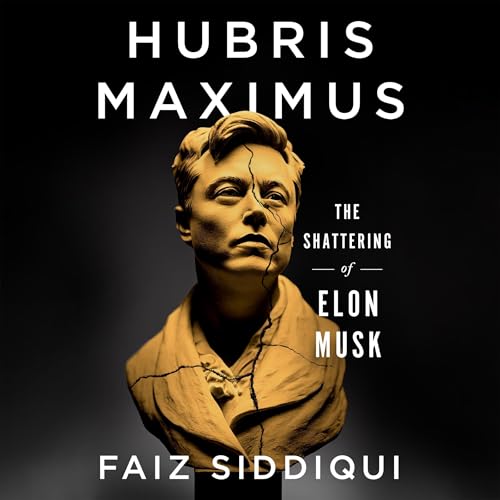
Hubris Maximus  (The Shattering of Elon Musk)

By: Faiz Siddiqui

Narrated By:  André Santana

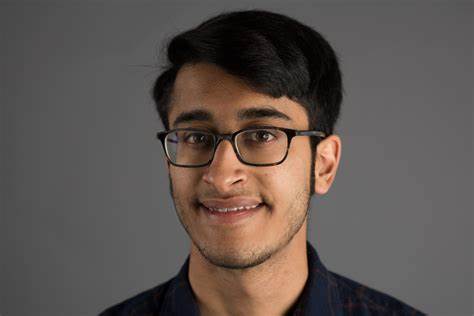
Faiz Siddiqui (Author, technology reporter for The Washington Post)

Faiz Siddiqui exposes the character of Elon Musk as a brilliant entrepreneur with an outsized pride in his ability that reflects an arrogance that diminishes his genius. Musk’s success with Tesla and SpaceX accomplishments are equal, and in some ways exceed, the business successes of John D. Rockefeller and Steve Jobs. In wealth, Musk exceeds Rockefeller and in inventiveness, he competes with Steve Jobs.

As brilliant as Musk shows himself to be, his fragile ego diminishes his genius.

Siddiqui reveals how petty Musk can be while balancing that pettiness with his contribution to creative ideas that will live far beyond his mortal life. Musk’s development of space travel and communication satellites for the world with a non-governmental, free enterprise operation is a tribute to the power of capitalism. His next immense contribution, though controversial and a work in progress, will be self-driving transportation.

Elon Musk’s Successful Return of Rockets Launched into Space.

Siddiqui’s picture of Musk’s flawed personality is somewhat balanced by the image of a person driven to succeed. However, that drive is not something that naturally translates to organizational performance. Musk is not a developer of people and should not be in charge of an organization’s management. Like Apple employees that kept some of their work undisclosed to Steve Jobs when the mobile phone was being considered, Musk needs to leave management of employees to others. People management is a skill set that Musk does not have as was made quite clear with his acquisition of Twitter and his work with DOGE. DOGE feeds Musk’s managerial weaknesses with President Trump’s mistaken belief that cost of government is more important than effectiveness. DOGE is a growing tragedy of American governance.

Musk is right about the value of self-driving vehicles, but he is trying to produce the wrong product to prove his belief.

Self-driving vehicles will reduce traffic accidents, injuries, and death but the product to achieve that goal is what Musk should be working on. The game of Go is estimated to have 10 to the 172nd power of possible positions. Self-driving cars probably have a similar astronomical number of possible causes of accidents.

Musk, or someone with his creative genius, needs to create a product that can be sold to all vehicle manufacturers.

This newly invented product would use AI to learn, reinforce understanding of vehicular movements, accidents, and incidents. That accumulated information would allow creative play in the same way GO became an unbeatable game for human beings playing against a programed computer. Musk is putting the cart before the horse by building cars and then making them safe, self-driving vehicles. The first step is to gather information from as many driven vehicles as possible, collate that information, and use computer power to creatively play with the information. That information, like learning the moves of GO would create self-driving algorithms that would reduce self-driving vehicle’ accidents, injuries, and deaths.

A sad reveal in “Hubris Maximus” is that an American treasure, Elon Musk, is being vilified for the wrong reasons.

Musk’s contribution to the reduction of air pollution has benefited the world. His vision of interstellar travel may be the next step in human expedition, exploration, and habitation of the universe. Earth’s interconnectedness is vitally enhanced by Musk’s satellite system. The universe is humanity’s next frontier.

Musk, like all human beings, is imperfect. His association with a President who feels money is more important than humanity only feeds Musk’s ineptitude as a manager of people.

FUTURE A.I.

Human nature will not change but A.I. will not destroy humanity but insure its survival and improvement.

Books of Interest
 Website: chetyarbrough.blog

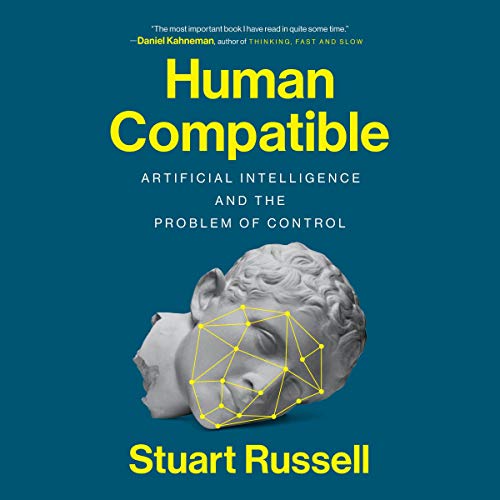
Human Compatible (Artificial Intelligence and the Problem of Control)

By: Stuart Russell

Narrated By: Raphael Corkhill

Stuart Johnathan Russell (British computer scientist, studied physics at Wadham College, Oxford, received first-class honors with a BA in 1982, moved to U.S. and received a PhD in computer science from Stanford.)

Stuart Russell has written an insightful book about A.I. as it currently exists with speculation about its future. Russell in one sense agrees with Marcus’s and Davis’s assessment of today’s A.I. He explains A.I. is presently not intelligent but argues it could be in the future. The only difference between the assessments in Marcus’s and Davis’s “Rebooting AI” and “Human Compatible” is that Russell believes there is a reasonable avenue for A.I. to have real and beneficial intelligence. Marcus and Davis are considerably more skeptical than Russell about A.I. ever having the equivalent of human intelligence.

Russell infers A.I. is at a point where gathered information changes human culture.

Russell argues A.I. information gathering is still too inefficient to give the world safe driverless cars but believes it will happen. There will be a point where fewer deaths on the highway will come from driverless cars than those that are under the control of their drivers. The point is that A.I. will reach a point of information accumulation that will reduce traffic deaths.

A.I. will reach a point of information accumulation that will reduce traffic deaths.

After listening to Russell’s observation, one conceives of something like a pair of glasses on the face of a person being used to gather information. That information could be automatically transferred by improvements in Wi-Fi to a computing device that would collate what a person sees to become a database for individual human thought and action. The glasses will become a window of recallable knowledge to its wearer. A.I. becomes a tool of the human mind which uses real world data to choose what a human brain comprehends from his/her experience in the world. This is not exactly what Russell envisions but the idea is born from a combination of what he argues is the potential of A.I. information accumulation. The human mind remains the seat of thought and action with the help of A.I., not the direction or control by A.I.

Russell’s ideas about A.I. address the concerns that Marcus and Davis have about intelligence remaining in the hands of human’s, not a machine that becomes sentient.

Russell agrees with Marcus, and Davis–that growth of A.I. does have risk. However, Russell goes beyond Marcus and Davis by suggesting the risk is manageable. Risk management is based on understanding human action is based on knowledge organized to achieve objectives. If one’s knowledge is more comprehensive, thought and action is better informed. Objectives can be more precisely and clearly formed. Of course, there remains the danger of bad actors with the advance of A.I., but that has always been the risk of one who has knowledge and power. The minds of a Mao, Hitler, Beria, Stalin, and other dictators and murderers of humankind will still be among us.

The competition and atrocities of humanity will not disappear with A.I. Sadly, A.I. will sharpen the dangers to humanity but with an equal resistance by others that are equally well informed. Humanity has managed to survive with less recallable knowledge so why would humanity be lost with more recallable knowledge? As has been noted many times in former book reviews, A.I. is, and always will be, a tool of human beings, not a controller.

The world will have driverless cars, robotically produced merchandise, and cultures based on A.I.’ service to others in the future.

Knowledge will increase the power and influence of world leaders to do both good and bad in the world. Human nature will not change but A.I. will not destroy humanity. Artificial Intelligence will insure human survival and improvement. History shows humanity has survived famine, pestilence, and war with most cultures better off than when human societies came into existence.

HUMAN

What is the value of high IQ? If everyone was smarter, would they be happier? It seems the only real value of genetics is in the prevention of known diseases, not in improvement of IQs or creation of a perfect human being (whatever that is).

Books of Interest
 Website: chetyarbrough.blog

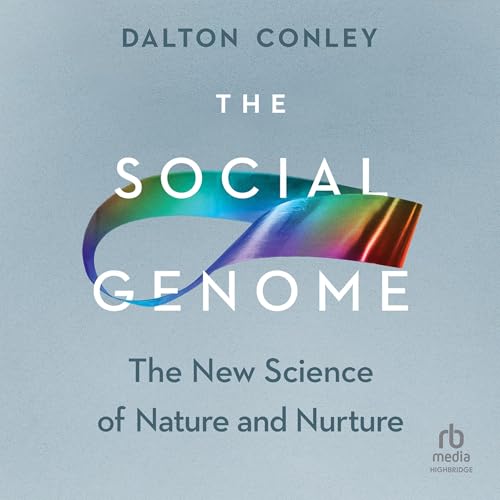
The Social Genome: The New Science of Nature and Nurture

By: Dalton Conley

Narrated By: Christopher Douyard

Dalton Clark Conley (Author, Princeton University professor, American sociologist.)

Dalton Conley offers a complex explanation of why one child intellectually and financially excels while others are left behind. The “Social Genome” is an attempt to explain the complexity and inadequacy of genetic research. Not too surprisingly, there seems a correlation between wealth and intellectual development, but its relationship includes familial and environmental nurturing in ways that are too complex for today’s science to measure.

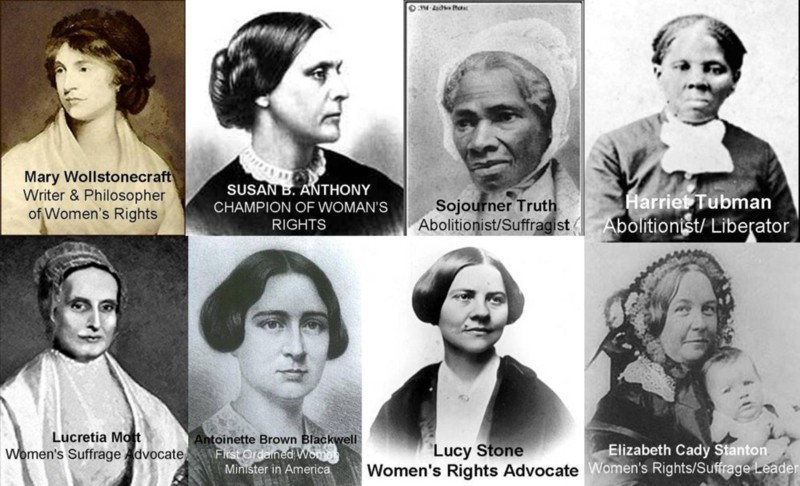
FAMOUS WOMEN IN HISTORY (Many women are as intellectually strong and mentally tough as men, e.g.  Cleopatra, Sojourner Truth, Indira Gandhi, Golda Meir, Benazir Bhutto, Malala Yousafzai, and others.)

Dalton argues both genetics and environment shape human intellect and economic success. However, science’s current knowledge of genetic and environmental impact is not clearly understood in a way to aid human development. The current limitations of science make it impossible to determine the precise genetic and environmental factors that shape human development. Dalton offers many examples of how genetics and environment are relevant to human development, but neither are precisely measurable nor manageable.

The idea of clearly understanding the genetic and environmental causes of who humans become is a bit frightening.

Even if it were possible to achieve precise measurement of genetic and environmental influences, should that knowledge be used to create designer human beings?

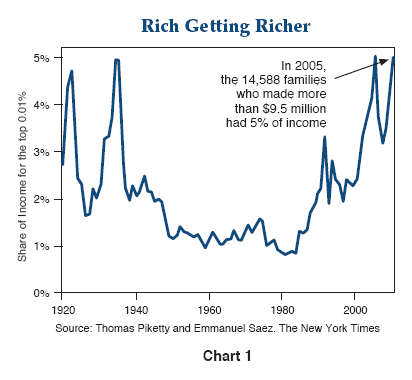
Piketty argues that the income gap widens after World War II.  He estimates 60% of 2010’s wealth is held by less than 1% of the population. 

Dalton does believe there is a correlation between economic well-being and IQ, but the correlation is affected by genetic inheritance. Dalton concludes economic well-being is a positive factor in IQ improvement. That raises questions about how one can improve the economic well-being of a society to improve IQ. Dalton infers there is no one size fits all solution for IQ improvement. Nurture and nature are too intimately intertwined to know how IQ of a society can be improved. A conclusion one may draw is that environmental and societal factors like human nutrition, general education and improved equal opportunity can mitigate IQ diminishment. Whether one should modify human genomes is a step too far.

In many ways, this is a frustrating book to listen to or read.

If all people looked more alike than different would there be less conflict in the world? No, but being of one race or another makes a difference in one’s opportunities in the world. What is the value of high IQ? If everyone was smarter, would they be happier? It seems the only real value of genetics is in the prevention of known diseases, not in improvement of IQs or creation of a perfect human being (whatever that is).

LIFE’S LOTTERY

The randomness of life and what we make of it is the most important theme of Weston’s insightful memoir about being “Alive”.

Books of Interest
 Website: chetyarbrough.blog

Alive (The Richness and Brevity of Existence)

By: Gabriel Weston

Narrated By: Gabriel Weston

Gabriel Weston (Author, English surgeon, television presenter.)

Gabriel Weston’s “Alive” is an intimate, blunt, and enlightening explanation of her experience as a woman, surgeon, mother, and member of the human race. For some, Weston’s story contains more information than one is prepared to take.

It begins with a self-effacing assessment of her early education in liberal arts where she achieved an MA in English. However, she decides to go to medical school in London where she qualifies as a physician in 2000. Her very personal memoir explains a great deal about being educated as a physician but more about being a woman.

Some reader/listeners will be put off by Weston’s blunt explanation of the human body. However, some will find much of what she writes as revelatory.

Weston explains what it means to be human and a woman who becomes a mother of twins at the age of forty, with two younger children.

It is hard to imagine a younger person who is uninterested in science, technology, engineering, or math, who receives an MA in English, would be interested in becoming a surgeon.

However, Weston chooses to become a doctor and graduates from a London medical school in 2000. She briefly explains her journey in “Alive” by reflecting on her classes in body dissection to explain the details of the human body and differences in sexual anatomy. Some will choose to leave her story, but others (if they stick with it) will be enlightened and surprised by her observations and opinions.

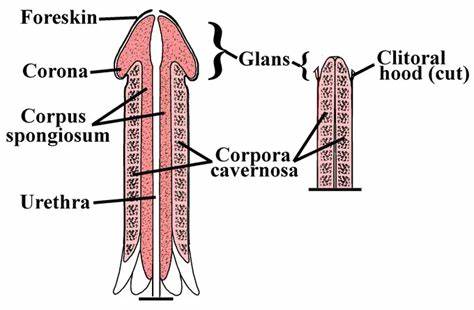
Weston notes the equivalent of the male penis is a woman’s clitoris. This is an interesting observation that most would be unlikely to publicly discuss or write about.

Presumably, Weston is making this point to show there is a great deal of similarity between men and women. However, she notes a significant difference. Menstruation is a sluffing process where the uterus sheds a layer of bedding material that exits the body through the vagina, i.e., something unique to women. The purpose of menstruation is to prepare the body for possible pregnancy by providing a thickening to the uterus that supports fertilization. That thickening is removed (sluffed off) approximately once per month. As is often noted, only women give birth, a singular difference between the sexes.

Weston goes on to explain her experience of birthing twins.

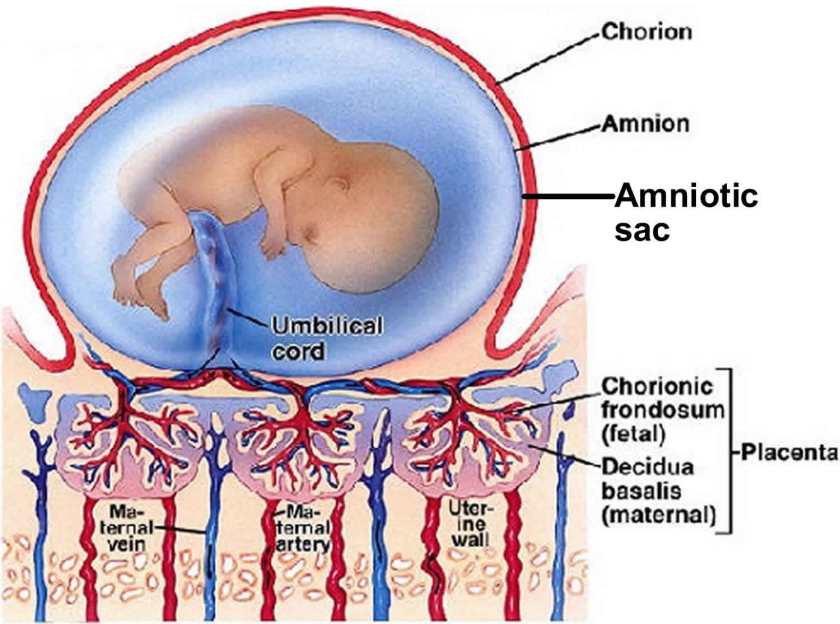
The two girls come late in her adult life. They are delivered in a caesarian operation. Children are born in amniotic sacs. This is likely a surprise to most men because birth of a baby is thought of as a delivery with a squirming body through the birth canal rather than a body within an amniotic sac. However, Weston notes the second twin is delivered within its amniotic sac which suggests she is a fraternal, rather than identical twin.

Syria’s use of nerve gas to murder their own citizens.

Weston’s story moderates in future chapters with notes about nerve gases used by governments to suffocate their own people as well as perceived foreign enemies. The point she makes is that oxygen deprivation in the 21st century and beyond is increasing with rising pollution on earth. She notes oxygen deprivation is the same suffocation caused when governments used lethal gases to kill their own citizens as perceived enemies. The obvious inference is today’s denial of earth’s environmental degradation risks the lives of all oxygen dependent lives.

Weston is an example of a working mother who succeeds in England despite the world’s history of misogyny.

Some women become a success despite the many obstacles they face. Weston symbolizes human grit and determination in the face of sexual inequality of opportunity but, as a human being, she is subject to the physical limitations of every life. She mentions during the course of her story a heart murmur that is caused by a defective heart valve. The last chapters of her book explain Weston is on a transplant list.

The randomness of life and what we make of it is the most important theme of Weston’s insightful memoir about being “Alive”.

HUMAN NATURE

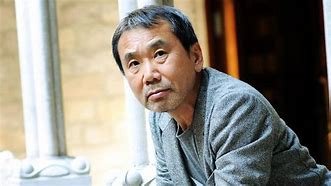
Murakami is one of the great writers of modern times. In “after the quake”, Murakami reduces the great and horrid loss of the many to the feelings of the “one”

Books of Interest
 Website: chetyarbrough.blog

“after the quake”

By: Haruki Murakami

Narrated By: Rupert Degas, Teresa Gallagher, Adam Sims

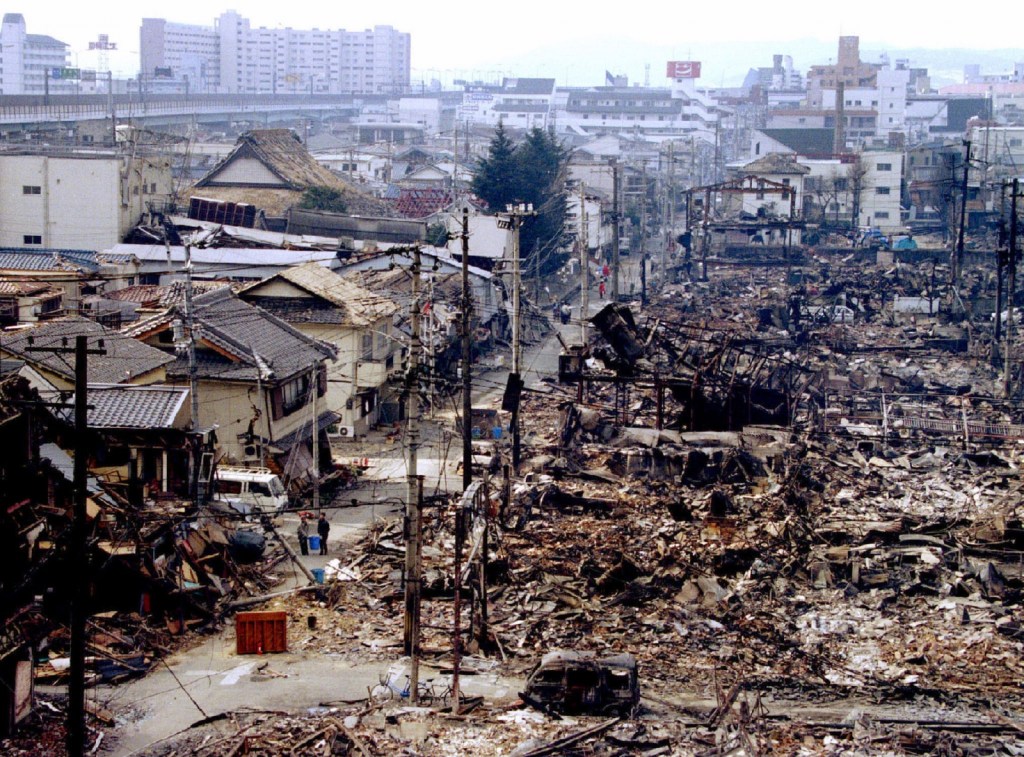
The Kobe, Japan earthquake struck on January 17, 1995, at 5:46 AM. It killed 6,400 people and injured more than 40,000. Approximately 300,000 residents were displaced with over 240,000 homes, buildings, highways, and rail lines damaged with estimated repair cost of $200 billion in 1995. (The Kobe earthquake was actually less damaging than Japan’s 2011 Tōhoku earthquake and subsequent tsunami that killed over 18,000 people. Over 123,000 homes were destroyed. The estimated cost of that disaster was $220 billion dollars.)

Haruki Murakami offers a series of short stories in “after the quake” that remind one of the frailties of human beings. Humans lie, steal, cheat and war against each in ways that exceed natural disasters. Murakami’s short stories are funny, sad, and insightful views of humanity that show we often foment our own disasters.

Each short story revolves around the social implications of the Kobe’ earthquake. Murakami cleverly weaves his stories to reflect on events that change one’s direction in life. The events can be as great as an earthquake, a war, or a singular lost love. The first is nature’s way; the second and third are humans’ way.

Human relationships are as unpredictable and destructive as natural disasters. The human’ Lushan rebellion in 8th century China is estimated to have killed 13 million people, the Mongol invasion in the 13th and 14th century 20 to 60 million, the Taiping rebellion in mid-19th century China 20-30 million, and two world wars in the 20th century at 83-107 million. This is without noting China’s famine that killed millions because of Mao’s mistakes in the Great Leap Forward, Stalin’s repression in Russia, and today’s wars in Ukraine and Gaza. Natural disasters are horrendous events, but human nature has murdered more than earthquakes, floods, volcanoes, and other natural disasters.

The cataclysmic events of nature affect the many, but Murakami shows scale means nothing in respect to the effect it has on the “one”. He cleverly shows how singular events can overwhelm one relationship as portentously as natural or man-made disasters can overwhelm all relationships.

Murakami is one of the great writers of modern times. In “after the quake”, Murakami reduces the great and horrid loss of the many to the feelings of the “one”. His stories show that a personal loss of an imaginary friend or a real love is as catastrophic to the one as a natural disaster or war is to the many.

AMERICAN HOPE

From Fukuyama’s intellectual musing to our eyes and ears, one hopes he is correct about America’s future in the technological age.

Books of Interest
 Website: chetyarbrough.blog

The Great Disruption (Human Nature and the Reconstitution of Social Order)

By: Francis Fukuyama

Francis Fukuyama (Author, political scientist, political economist, international relations scholar.)

Francis Fukuyama argues America is at the threshold of a social reconstitution. Fukuyama believes we are at Gladwell’s “Tipping Point” that is changing social norms and rebuilding America’s social order. He argues the innovation of technology, like the industrial revolution, is deconstructing social relationships and economics while reconstructing capitalist democracy.

The immense power of big technology companies like Amazon, Google, and Facebook have outsized influence on American society. They change the tone of social interaction through their ability to disseminate both accurate and misleading information. They erode privacy and create algorithms tailored to disparate interest groups that polarize society. The media giant’s objective is to increase clicks on their platforms to attract more advertisers who pay for public exposure of their service, merchandise, and brand.

To reduce outsize influence of big tech companies, Fukuyama suggests more technology has an answer.

There should be more antitrust measures instituted by the government to break monopolistic practices and encourage competition with large technology companies. Algorithms created by oversight government organizations can ensure transparency and reduce harmful content to reduce big tech companies influence on society. (One doubts expansion of government agencies is a likely scenario in today’s government.)

On the one hand, technology has improved convenience, communication, and a wider distribution of information.

On the other, technology has flooded society with misinformation, invaded privacy, and polarized society. Technology has created new jobs while increasing loss of traditional industry jobs with automation. Trying to return to past labor-intensive manufacturing companies is a fool’s errand in the age of technology.

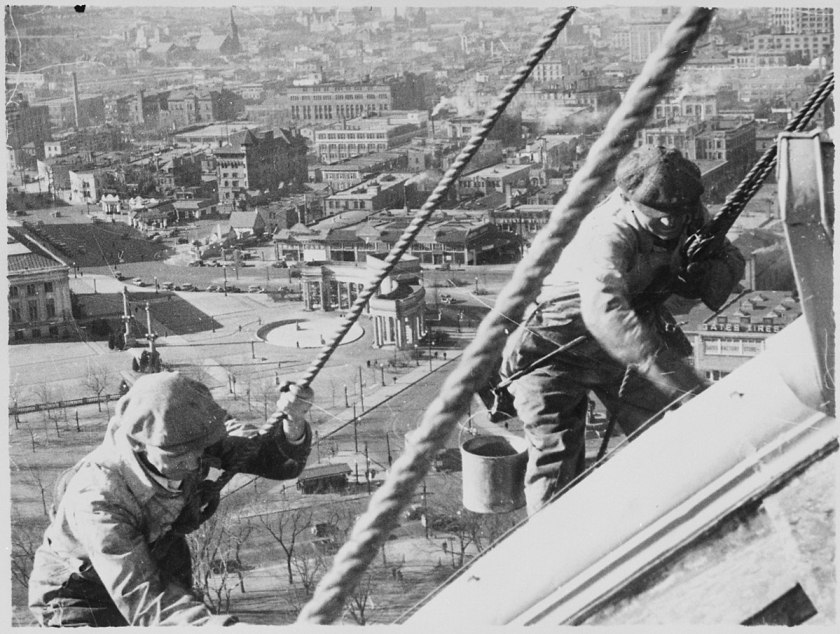
Luddites during the Industrial Revolution.

Like the industrial revolution, the tech revolution’s social impact is mixed with a potential for greater social isolation, and job displacement with the addition of wide distribution of misinformation. The positives of new technology are improvements in healthcare product and services, renewable energy, and climate understanding with potential for improved control.

Face-to-face interactions become less and less necessary. Children’s access to technology impacts parental supervision and relationship. Fukuyama suggests setting boundaries for technology use needs to be a priority in American families. Technology can open the door to better education, but it also becomes a source of misinformation that can come from the internet of things. Employers have the opportunity to help with work-life balance by encouraging flexible hours and remote work. (Oddly, that suggestion is being undermined by the current government administration and many American companies.)

Economic growth, access to information, and global connectivity have been positively impacted by technology. However, the concentration of power, misinformation, and surveillance of social media has diminished privacy and eroded individual freedom. There are concerns about technology and how it is good and bad for democratic capitalism.

The good lies in increased efficiency, innovation and creation of new markets, through globalization. However, today’s American government shows how tariffs are a destroyer of globalization. Fukuyama implies A.I. and automation is displacing workers and aggravating economic inequality because it is being misunderstood for its true potential and also being misused. Personal data is used to manipulate consumers in ways that challenge the balance between corporations and consumers.

Fukuyama argues private parties will grow in America to create software that will filter and customize online services.

With that effort control of the influence of big tech companies will be diminished. With decentralization of big tech power and influence, society will theoretically become less polarized and more consensus oriented. The capitalist opportunity for tech savvy startups that diminish influence of big tech companies will re-create diversification like that which the matured industrial revolution gave to new manufacturers. Like Standard Oil and other conglomerates of the industrial revolution, businesses like Amazon, Google, and Facebook will have competition that diminishes their power and influence.

American Government will grow to regulate the internet of things just as it has grown to regulate banks, industries, and social services.

Service to citizens will become a bigger part of the economy as a replacement for manufacturing. Family life will re-invent itself as a force of society because of the time saved from manufacturing product to improve human relationships.

From Fukuyama’s intellectual musing to our eyes and ears, one hopes he is correct about America’s future in the technological age.

MICROCOSM

Islands are a microcosm of the world environment and a perfect example of what is wrong with the ecology and economics of the world.

Books of Interest
 Website: chetyarbrough.blog

Dark Laboratory

By: Tao Leigh Goffe 

Narrated By: Tao Leigh Goffe

Tao Leigh Goffe (Author, PhD from Yale, award-winning writer, theorist, and interdisciplinary artist, raised between the UK and New York City with a UK citizenship.)

Goffe has written a book about the complexity of discrimination and global warming with the risks they entail for humanity. She offers a sociological and environmental perspective.

Goffe’s book is an introduction to what she envisions as “The Dark Laboratory” to address inequality and global warming.

Puerto Rico

Stories of mongooses and marijuana confuse the clarity of Goffe’s subject. She addresses immersive technologies like virtual reality (VR) and augmented reality (AR) to help people understand the impacts of climate change and inequality. The hope is that books like hers and education of the public will change human behavior. She writes of a mongoose introduction to Puerto Rico which becomes an invasive species. She also writes of colonial exploitation of island natives who plant, harvest, sell, and distribute legalized marijuana.

The analogies she chooses are marginally relevant, but they are a distraction. The fundamental points of unintended consequences of an invasive species on the environment and colonial enslavement can be more impactfully explained with concrete evidence of ecological damage and employment inequality in native lives.

The introduction of the author’s book is disappointingly vague, but Goffe’s life experience, her advanced education and perspective are shaming and anxiety producing. The shaming and anxiety come from knowing that being white gives one advantage in life. That advantage has admittedly been squandered by human inequality and pursuit of wealth and power at the expense of the environment.

Listener/readers are introduced to slang for minorities by Goffe that are not widely known.

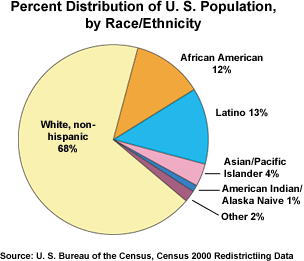
Commonly known and despicable derogatory names are wetback, chink, gook, redskin, and the “N-word” for people who do not appear white. However, Goffe notes names like maroon and eleven-o’clock minorities are less known. A maroon is a member of a community of runaway enslaved Africans in Jamaica. An Eleven-O’clock minority is someone who is considered an incomplete person because he/she is 1 hour short of 12.

The earth’s environment is in crises while many foolishly diminish human equality while ignorantly pursuing self-interests. The irony and incongruity of environmental destruction and inequality is that we are all in the same boat, living on spaceship earth. Goffe’s point is that society chooses to despoil earth for ephemeral profit while causing global warming and discriminating against minorities only because people are different. The “Dark Laboratory” is about the world climate crises and race relations.

Puerto Rico is a petri dish of Goffe’s “Dark Laboratory”. It shows how earth’s environment is being destroyed and how neglect of human equality has impoverished native island cultures.

Goffe argues (and hopes) with the help of storytelling (education) about human equality, technological innovation, and ecological care, the world can become a sustainable haven for humanity. However, Goffe takes two digressions that confuse, if not diminish, the importance of environmental degradation and human inequality.

Goff shows how islands are a microcosm of the world environment and a perfect example of what is wrong with the ecology and economics of the world.

CATACLYSMIC EVENTS

The elephant in this room is damage to the Fukushima Daiichi nuclear plant that is considered among the worst nuclear disasters in history, i.e. right alongside Chernobyl.

Books of Interest
 Website: chetyarbrough.blog

Ghosts of the Tsunami: Death and Life in Japan’s Disaster Zone

By: Richard Lloyd Parry

Narrated By: Simon Vance

Richard Lloyd Parry (Author, British foreign correspondent, Asia Editor of “The Times of London”.)

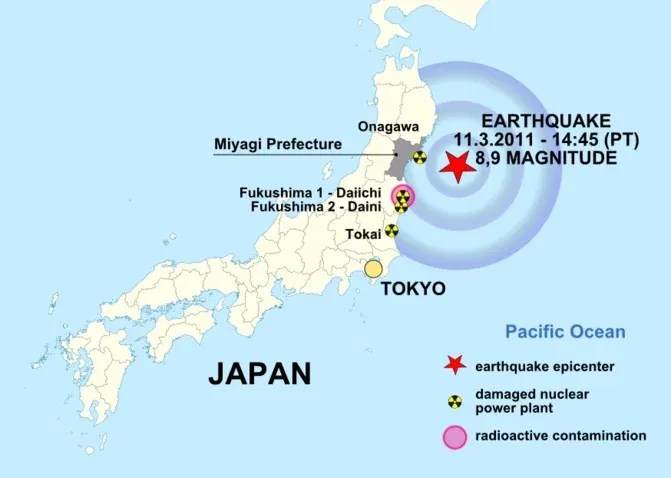
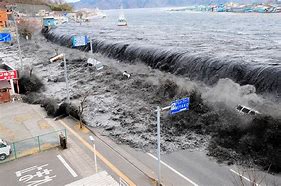
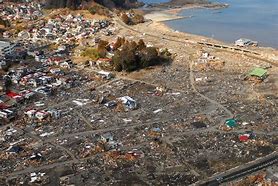
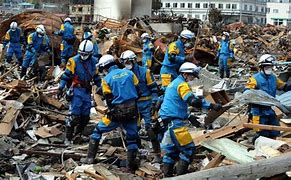
In 2011 the 9.0 Tōhoku earthquake and its subsequent tsunami killed over 18,000 people with injuries to an estimated 6,000 more. Over 123,000 homes were destroyed. The estimated cost of the disaster is the equivalent of $220 billion American dollars. Richard Parry explains Japan’s Prime Minister lost his job because of the disaster and influenced the loss of a second Prime Minister’s position. The highest disaster cost in America was Hurricane Katrina at an estimated $125 billion in 2005. No natural disaster in America has caused as many deaths as Japan’s earthquake and tsunami.

Richard Parry offers a primer on what a person should expect when a natural disaster disrupts their lives. Every continent is subject to either natural or manmade cataclysmic events. In terms of the cost of human life and reconstruction, only war exceeds the loss of life that occurred in Japan’s 2011 earthquake and tsunami. Like recent wars in Ukraine and Gaza, the most heartbreaking consequence is the death and crippling of children. Parry explains what happened in a Miyagi Prefecture grade school that exemplifies the social and personal consequence of a natural event that rivals the bombing of Hiroshima and Nagasaki.

Though there are no wandering ant or alligator people from a nuclear bomb blast, there are thousands of Japanese who undoubtedly still suffer from the loss of their children, family, and friends from the 2011 tsunami. It is most clearly evident in Parry’s detailed story of the Okawa elementary school. Many survivors are shown to blame school administrators, and the government for their failure to protect their children. The truth is that every disaster is responded to by imperfect human beings. Blaming someone for the death of innocents is a natural human response to things beyond one’s control. It is simple to look back on a disastrous event and find the mistakes made by those who are the adults in charge. There is a human catharsis in being able to blame someone for the death of a loved one.

Humans will always make mistakes in dealing with disasters because they are human.
The decision by school administrators to not abandon the school for higher ground seems taken out of context. There is snow on the ground, it is cold outside, and the school’s location is approximately 2.5 miles from the sea. To the administrators, it appears protection of the building seemed more important than moving to higher ground, in the cold and snow, a mistake that caused the death of 74 children.

Perry interviews many who survive the disaster. Their stories are heartbreaking. Some parents have never found their children.

An estimated 132 bodies remain unidentified with at least 2 children’s remains are unfound.

The vision of survivors sifting through mud and debris to find layers of children’s bodies stays in one’s mind as they listen to Perry’s book.

The families of 23 children who died at the school were awarded compensation of $12.8 million equivalent U.S. dollars with a judgement saying the school failed to evacuate students to higher ground when the tsunami became knowingly imminent. The decision was based on a loud-speaker government warning for the school to be evacuated. Perry notes there were evacuation plans at the school, but they were inappropriate for a tsunami that requires high ground. The adult teachers were given enough time after the loud speaker noticeto evacuate the children to a nearby hill. They could have survived.

The court’s decision is based on the truck-delivered speaker’ warning that is ignored by the school’s adult supervisors.

Some argue the significance of that ruling in Japan is the mandated creation of disaster-preparedness’ plans for school evacuations in a crisis. This school had a written plan, but it did not properly prepare for the consequence of a tsunami. The final warning is the basis for the three-judge panel’s decision, but the truth is any plan still depends on the judgement of adult school’ supervisors.

The elephant in this room is damage to the Fukushima Daiichi nuclear plant that is considered among the worst nuclear disasters in history, i.e. right alongside Chernobyl.

BIODIVERSITY

Human population growth is slowing, and awareness of biodiversity is improving but is the trajectory of global warming outpacing human action?

Books of Interest
 Website: chetyarbrough.blog

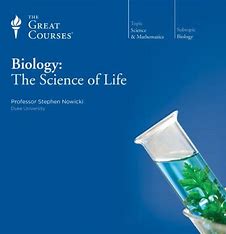
Biology: The Science of Life

Author: Great Book Series

Narrated By: Professor Stephen Nowicki

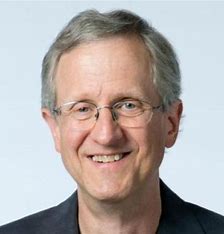
Stephen Nowicki, Ph.D. (Bass Fellow and Professor of Biology @ Duke University, Associate Chair of the Dept. of Biology and Neuroscience.)

This is a dauting series of lectures with a theory of the beginning of life. It addresses living things in general but more specifically what is known about human life. Not surprisingly, it is immensely complicated.

There may have been an Adam and Eve in history, but Science infers any garden of Eden had to have been long after the beginning of life on earth.

Nowicki explains how Stanley Miller conducted an experiment in 1952 that simulated conditions of the early days of earth’s formation. Methane, ammonia, hydrogen, and water were present in those early days. These ingredients were used in a controlled environment, with the help of energy (primordial lightening), to combine into amino acid compounds that are essential to life. These basic chemicals were present in the early days of earth. These amino acid compounds are the building blocks of life.

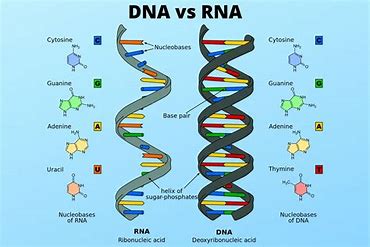
With amino acids, it became possible for DNA and RNA formation. DNA and RNA are shown to synthesize proteins leading to cellular process and organic development.

From these early beginnings, a natural selection process is initialized, i.e. evolution began which led to complex organisms like viruses, bacteria, animals, and eventually humans. Nowicki goes on to explain the complex biology of science. This is a point at which understanding by a lay reader/listener becomes difficult and only partially comprehensible. He begins with a detailed discussion of genetics, the study of genes, their discovery and function.

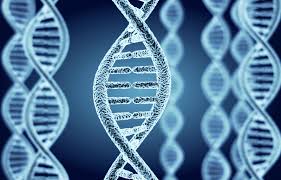
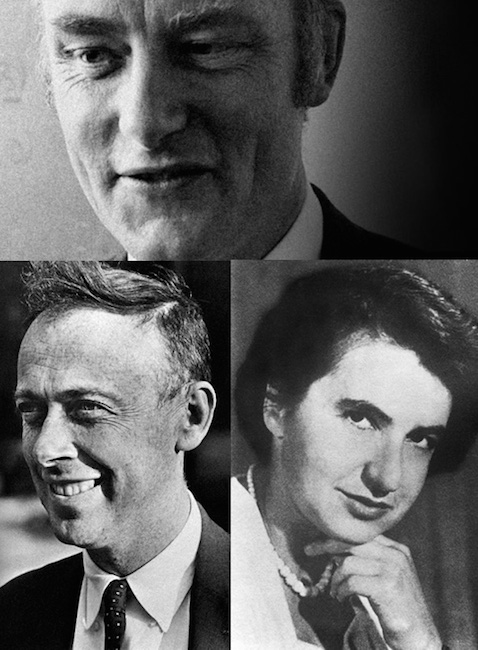
With the help of Rosalind Franklin (lower right), Watson (lower left) and Crick came up with the double helix model made of deoxyribose sugar that alternates with phosphate group strands.

The most famous pioneers of genetics are James Watson and Francis Crick. The genetic model they created reveals the backbone (organizational structure) of genes. With addition of nucleotides (adenine, thymine, guanine, and cytosine) to the gene backbone, genetic instructions are encoded by single strands of RNA into double strands of DNA. RNA’s single strands direct ribosomes that prevent mutation and maintain genetic integrity.

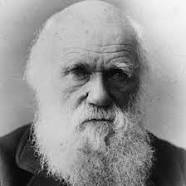
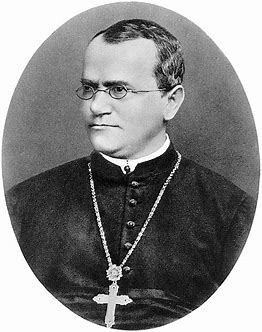
Nowicki jumps back in history to explain Darwin’s theory and proof of evolution. In addition, he recounts Gregory Mendel’s discovery of genetic inheritance. (Though Darwin and Mendel were contemporaries, it is not believed they ever met.) Mendel found, in breeding pea plants, that pea plants inherited certain traits of their parent plants with first generation plants having one color flower while second generation had 1/3rd to 2/3rd color differences that experimentally suggest inheritability of appearance. Mendel had no knowledge of genetics but was aware of Darwin’s writing. Ironically, Mendel discovered that inheritance had distinct genetic units of dominant and recessive characteristics explained how second-generation pea plants had mixed colors. This inheritable element of a gene became known as an “allele”, a word coined by British geneticist William Bateson in the early 1900s.

A listener/reader is only 1/4 of the way through Nowicki’s lectures at this point. Many of the remaining lectures delve into the details of gene function that will be interesting to biology students but only confuse and tire a dilettante.

To this reviewer, the two most enlightening features of Nowicki’s lectures are his views on the origin of human life and the ecological loss of biodiversity that threatens human existence. Nowicki challenges religious belief in the origin of life with a convincing argument for nature’s creation of human existence. His last lecture addresses global warming, reduced biodiversity, and the consequences of a loss of earth’s laboratory of medicinal cures for human ailments.

Nowicki leaves listener/readers with belief in humanity’s and earth’s environmental correction but with reservation. Human population growth is slowing, and awareness of biodiversity is improving but is the trajectory of global warming outpacing human action?

ENERGY MATTERS

The boon for composite material is their utility for work and play. Their bane is disposal and their effect on the environment.

Books of Interest
 Website: chetyarbrough.blog

“The Nature of Matter: Understanding the Physical World” (The Great Book Lectures)

By: David Ball

Narrated by: Professor David W. Ball

Professor David W. Ball (Professor of Chemistry and Chair of Chemistry Dept. at Cleveland State University, received Masters and Doctoral Degrees from Rice University,

Professor Bell offers a definition and description of matter in the universe. He carries on much of what is explained by Pollock in “Particle Physics”. Bell explains how physics particles form matter with the addition of energy, Bell reifies and expands Pollock’s history of physics. Though there is significant overlap in their presentations, Bell offers a more detailed understanding of matter with its component particles and the role of energy in what humans hear, feel, smell, and see.

Two facts about matter expanded by Bell are about energy’ component’s and structure’s interactions among and within atoms. Though Pollock alluded to the structure of matter and fully explains energy’s importance at the atomic level, Bell expands explanation of electrons and the way they provide energy within and between atoms.

The structure of revolving electrons generate energy in different orbits around the nucleus of an atom. Initially, those orbits were thought to be like planets revolving around the sun but were found to be located within shells around the nucleus in three different orbits. These shells come in three categories. One is spherically symmetric (called the S orbital), the second is dumbbell-like with two lobes along specific axis’s (called P orbitals), and the third (which are also called P orbitals) follow a preferred direction that is not spherical. These shells are important because their reactivity and bonding play a critical role in the formation of matter.

Ball explains electron arrangement around the nucleus of an atom determine chemical properties and behavior of molecular interactions. Electrons are the wave feature of Quantum Mechanics that confound an ordered world of cause and effect postulated by Albert Einstein. What is made a little clearer by Ball is that color is an integral part of energy at the atomic level. Electron energy has discrete and precise energy levels that are arranged around the nucleus of an atom.

Without light particles (protons), energy would not exist. Ball notes electron energy is fundamentally affected by light.

Light or photons are the source of discrete energy levels called quanta that do different things–1) generate absorption, 2) cause transition between shell levels, 3) generate fluorescence, and/or 4) penetrate an atom’s dense nucleus to change mass to energy.

Ball explains why carbon is the most important element in the periodic table. Carbon’s importance is signified by its absence or presence in matter. Matter is either organic or inorganic with carbon being the measure of its classification. The astounding realization is that as a percentage of the earth’s elements, carbon is only 0.032% of our environment. (In contrast, the 3 largest fundamental elements on earth are oxygen at 46.6%, silicon is 27.7%, and Aluminum is 8.1%.) It is a reminder that earth’s living things (organic matter) are dependent on carbon, a miniscule percentage of our environment.

Without carbon, there would be no life (as we know it) on earth.

Ball’s chapter on water is an enlightening exploration of its reputation as a universal solvent with various uses and characteristics when boiled or frozen. Water’s dissolving and heat-storing capability are thoughtfully explained. Pollution is touched upon with explanations about what is being done and needs to be improved to preserve the world’s environment.

Ball explores prosthesis and material questions and solutions for the creation of body parts.

From dental fillings to tooth implants, to artificial hips, knees, hearts, arteries and breast implants, Ball explains how biochemistry and materials are critical to their manufacture and utility. He suggests the future will include brain implant enhancements and increases in human longevity.

In “Resistance is Futile”, Ball explains the value of superconductivity.

The current reality of world’ electrification is that 30% of its beneficial power is lost in transmission. Material qualities of our wired world inhibit electrical power conductivity. That 30% loss can be reduced by hugely lowering the temperature of transmission material, with the idea to invent a superconductive material that does not require super-cooled temperatures. Success in finding that material remains a work in progress. No one has found a superconductivity material that does not require super-cooled temperatures. However, Ball notes discovery would be an immense energy saver for the world.

In contrast to “Resistance is Futile” Ball notes “Resistance is Useful”.

Ball explains how resistance creates heat in a semi-conductor that can be translated in a wired circuit to trigger a directed instrumental behavior or action. With the design of circuit boards with semi-conductors (specifically transistors), one could initiate or complete a series of tasks. From automating machines to creating powerful laptop computers, semi-conductor manufacture grew into an immense industry. As the complexity of tasks increased, the size of semi-conductors decreased. Gordon Moore proposed Moore’s law that suggested transistor’ size (a form of semi-conductor) in integrated circuits would become smaller and double every two years. Moore’s Law is not precisely true, but miniaturization, performance, and integration remain semi-conductor manufacturing’ goals.

The last lectures address composites and their component assembly in everything from concrete to fiberglass to tires.

These composites are formed from different materials based on their elemental properties that provide valuable materials to society. They are formed by atomic level interactions between elemental properties. Composite materials are noted as a boon and bane of society. The boon is their utility for new products for work and play. Their bane is disposal and their effect on the environment.