BIODIVERSITY

Human population growth is slowing, and awareness of biodiversity is improving but is the trajectory of global warming outpacing human action?

Books of Interest
 Website: chetyarbrough.blog

Biology: The Science of Life

Author: Great Book Series

Narrated By: Professor Stephen Nowicki
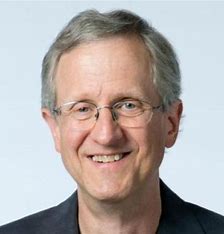
Stephen Nowicki, Ph.D. (Bass Fellow and Professor of Biology @ Duke University, Associate Chair of the Dept. of Biology and Neuroscience.)

This is a dauting series of lectures with a theory of the beginning of life. It addresses living things in general but more specifically what is known about human life. Not surprisingly, it is immensely complicated.

There may have been an Adam and Eve in history, but Science infers any garden of Eden had to have been long after the beginning of life on earth.

Nowicki explains how Stanley Miller conducted an experiment in 1952 that simulated conditions of the early days of earth’s formation. Methane, ammonia, hydrogen, and water were present in those early days. These ingredients were used in a controlled environment, with the help of energy (primordial lightening), to combine into amino acid compounds that are essential to life. These basic chemicals were present in the early days of earth. These amino acid compounds are the building blocks of life.
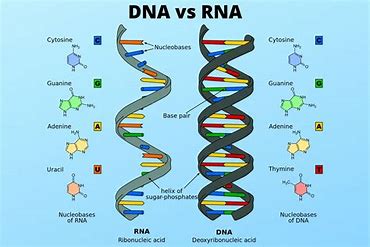
With amino acids, it became possible for DNA and RNA formation. DNA and RNA are shown to synthesize proteins leading to cellular process and organic development.

From these early beginnings, a natural selection process is initialized, i.e. evolution began which led to complex organisms like viruses, bacteria, animals, and eventually humans. Nowicki goes on to explain the complex biology of science. This is a point at which understanding by a lay reader/listener becomes difficult and only partially comprehensible. He begins with a detailed discussion of genetics, the study of genes, their discovery and function.

With the help of Rosalind Franklin (lower right), Watson (lower left) and Crick came up with the double helix model made of deoxyribose sugar that alternates with phosphate group strands.
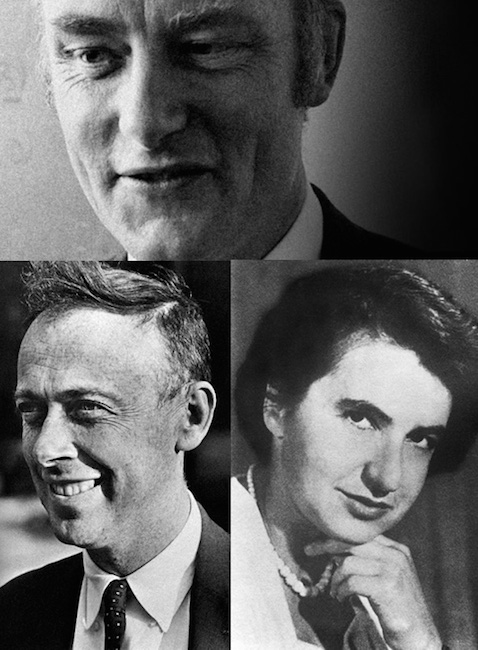
The most famous pioneers of genetics are James Watson and Francis Crick. The genetic model they created reveals the backbone (organizational structure) of genes. With addition of nucleotides (adenine, thymine, guanine, and cytosine) to the gene backbone, genetic instructions are encoded by single strands of RNA into double strands of DNA. RNA’s single strands direct ribosomes that prevent mutation and maintain genetic integrity.
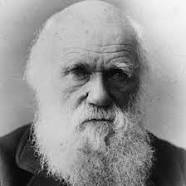
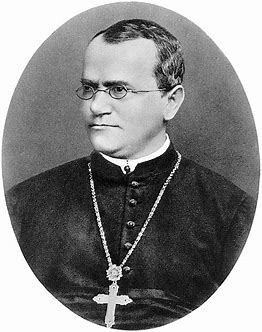
Nowicki jumps back in history to explain Darwin’s theory and proof of evolution. In addition, he recounts Gregory Mendel’s discovery of genetic inheritance. (Though Darwin and Mendel were contemporaries, it is not believed they ever met.) Mendel found, in breeding pea plants, that pea plants inherited certain traits of their parent plants with first generation plants having one color flower while second generation had 1/3rd to 2/3rd color differences that experimentally suggest inheritability of appearance. Mendel had no knowledge of genetics but was aware of Darwin’s writing. Ironically, Mendel discovered that inheritance had distinct genetic units of dominant and recessive characteristics explained how second-generation pea plants had mixed colors. This inheritable element of a gene became known as an “allele”, a word coined by British geneticist William Bateson in the early 1900s.

A listener/reader is only 1/4 of the way through Nowicki’s lectures at this point. Many of the remaining lectures delve into the details of gene function that will be interesting to biology students but only confuse and tire a dilettante.

To this reviewer, the two most enlightening features of Nowicki’s lectures are his views on the origin of human life and the ecological loss of biodiversity that threatens human existence. Nowicki challenges religious belief in the origin of life with a convincing argument for nature’s creation of human existence. His last lecture addresses global warming, reduced biodiversity, and the consequences of a loss of earth’s laboratory of medicinal cures for human ailments.

Nowicki leaves listener/readers with belief in humanity’s and earth’s environmental correction but with reservation. Human population growth is slowing, and awareness of biodiversity is improving but is the trajectory of global warming outpacing human action?
ENERGY MATTERS

The boon for composite material is their utility for work and play. Their bane is disposal and their effect on the environment.

Books of Interest
 Website: chetyarbrough.blog

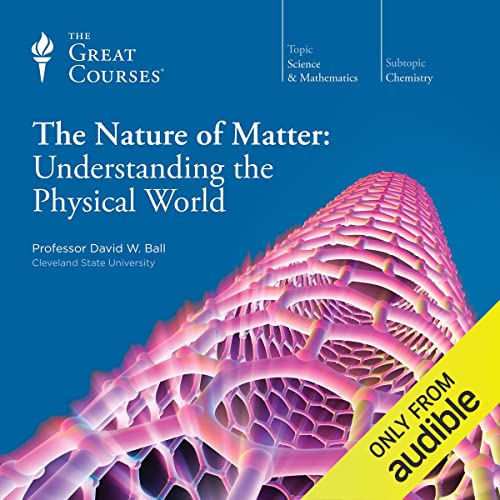
“The Nature of Matter: Understanding the Physical World” (The Great Book Lectures)

By: David Ball

Narrated by: Professor David W. Ball

Professor David W. Ball (Professor of Chemistry and Chair of Chemistry Dept. at Cleveland State University, received Masters and Doctoral Degrees from Rice University,

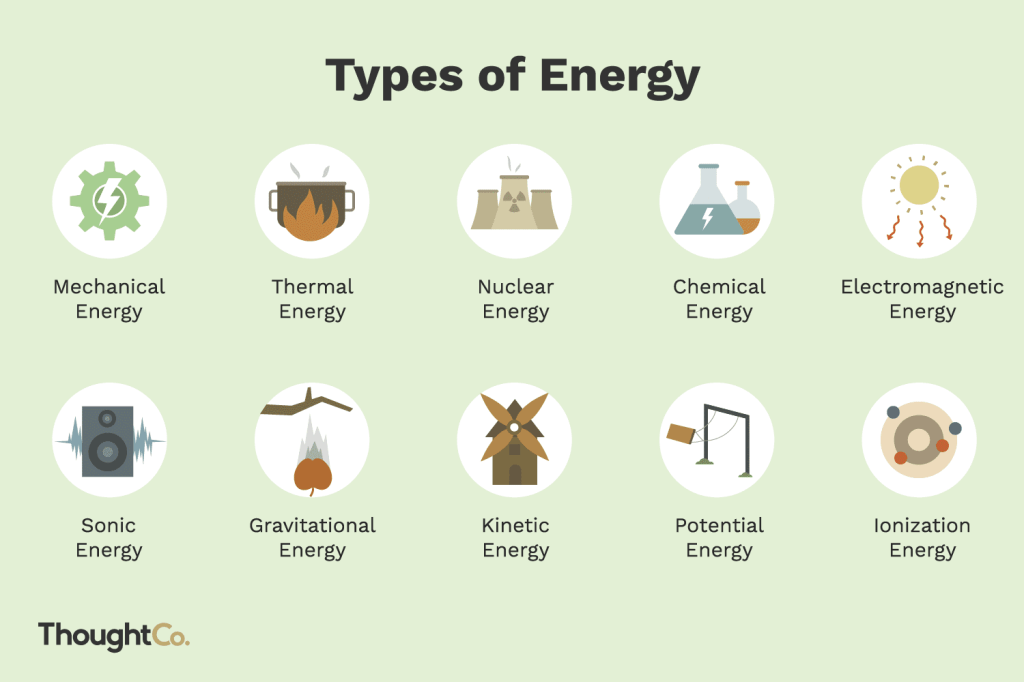
Professor Bell offers a definition and description of matter in the universe. He carries on much of what is explained by Pollock in “Particle Physics”. Bell explains how physics particles form matter with the addition of energy, Bell reifies and expands Pollock’s history of physics. Though there is significant overlap in their presentations, Bell offers a more detailed understanding of matter with its component particles and the role of energy in what humans hear, feel, smell, and see.

Two facts about matter expanded by Bell are about energy’ component’s and structure’s interactions among and within atoms. Though Pollock alluded to the structure of matter and fully explains energy’s importance at the atomic level, Bell expands explanation of electrons and the way they provide energy within and between atoms.

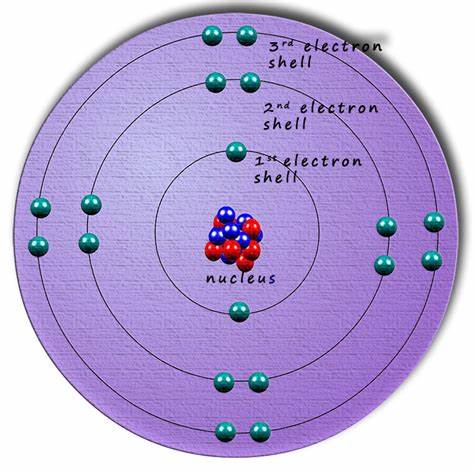
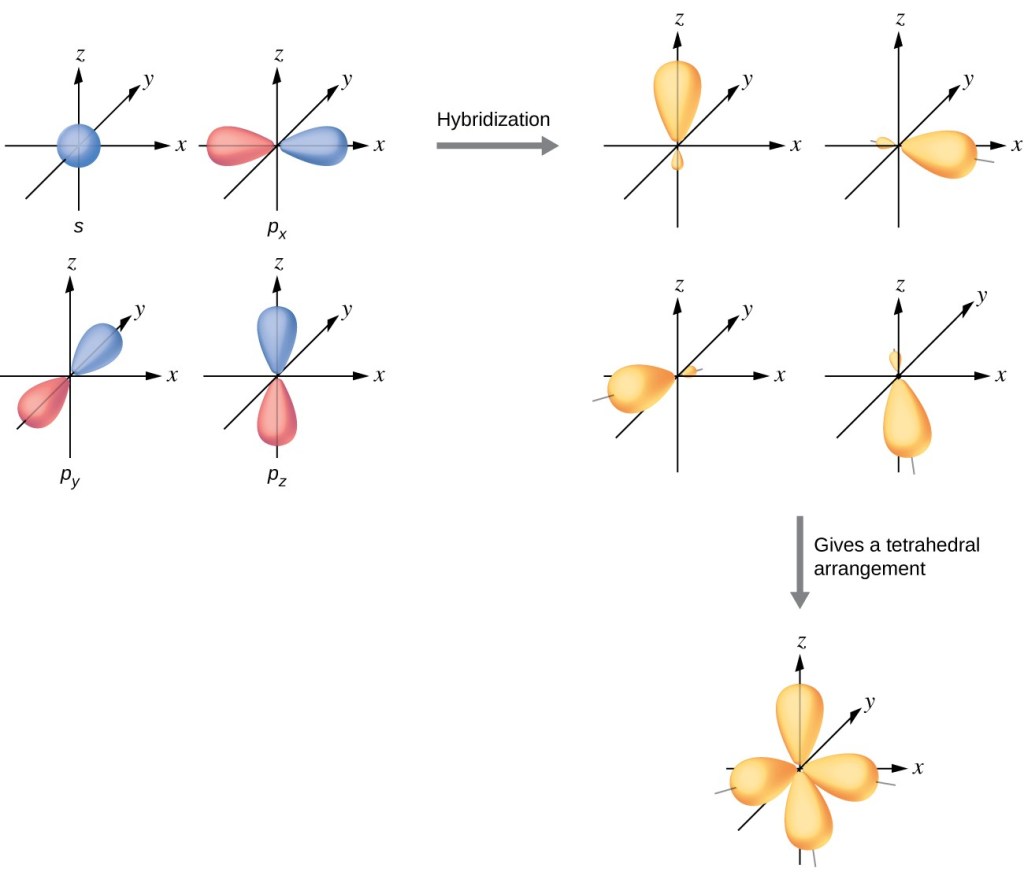
The structure of revolving electrons generate energy in different orbits around the nucleus of an atom. Initially, those orbits were thought to be like planets revolving around the sun but were found to be located within shells around the nucleus in three different orbits. These shells come in three categories. One is spherically symmetric (called the S orbital), the second is dumbbell-like with two lobes along specific axis’s (called P orbitals), and the third (which are also called P orbitals) follow a preferred direction that is not spherical. These shells are important because their reactivity and bonding play a critical role in the formation of matter.

Ball explains electron arrangement around the nucleus of an atom determine chemical properties and behavior of molecular interactions. Electrons are the wave feature of Quantum Mechanics that confound an ordered world of cause and effect postulated by Albert Einstein. What is made a little clearer by Ball is that color is an integral part of energy at the atomic level. Electron energy has discrete and precise energy levels that are arranged around the nucleus of an atom.

Without light particles (protons), energy would not exist. Ball notes electron energy is fundamentally affected by light.

Light or photons are the source of discrete energy levels called quanta that do different things–1) generate absorption, 2) cause transition between shell levels, 3) generate fluorescence, and/or 4) penetrate an atom’s dense nucleus to change mass to energy.

Ball explains why carbon is the most important element in the periodic table. Carbon’s importance is signified by its absence or presence in matter. Matter is either organic or inorganic with carbon being the measure of its classification. The astounding realization is that as a percentage of the earth’s elements, carbon is only 0.032% of our environment. (In contrast, the 3 largest fundamental elements on earth are oxygen at 46.6%, silicon is 27.7%, and Aluminum is 8.1%.) It is a reminder that earth’s living things (organic matter) are dependent on carbon, a miniscule percentage of our environment.

Without carbon, there would be no life (as we know it) on earth.

Ball’s chapter on water is an enlightening exploration of its reputation as a universal solvent with various uses and characteristics when boiled or frozen. Water’s dissolving and heat-storing capability are thoughtfully explained. Pollution is touched upon with explanations about what is being done and needs to be improved to preserve the world’s environment.

Ball explores prosthesis and material questions and solutions for the creation of body parts.

From dental fillings to tooth implants, to artificial hips, knees, hearts, arteries and breast implants, Ball explains how biochemistry and materials are critical to their manufacture and utility. He suggests the future will include brain implant enhancements and increases in human longevity.

In “Resistance is Futile”, Ball explains the value of superconductivity.

The current reality of world’ electrification is that 30% of its beneficial power is lost in transmission. Material qualities of our wired world inhibit electrical power conductivity. That 30% loss can be reduced by hugely lowering the temperature of transmission material, with the idea to invent a superconductive material that does not require super-cooled temperatures. Success in finding that material remains a work in progress. No one has found a superconductivity material that does not require super-cooled temperatures. However, Ball notes discovery would be an immense energy saver for the world.

In contrast to “Resistance is Futile” Ball notes “Resistance is Useful”.

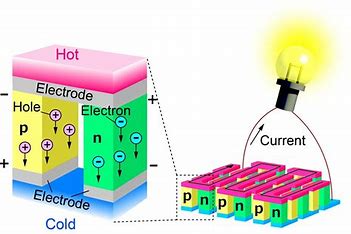
Ball explains how resistance creates heat in a semi-conductor that can be translated in a wired circuit to trigger a directed instrumental behavior or action. With the design of circuit boards with semi-conductors (specifically transistors), one could initiate or complete a series of tasks. From automating machines to creating powerful laptop computers, semi-conductor manufacture grew into an immense industry. As the complexity of tasks increased, the size of semi-conductors decreased. Gordon Moore proposed Moore’s law that suggested transistor’ size (a form of semi-conductor) in integrated circuits would become smaller and double every two years. Moore’s Law is not precisely true, but miniaturization, performance, and integration remain semi-conductor manufacturing’ goals.

The last lectures address composites and their component assembly in everything from concrete to fiberglass to tires.

These composites are formed from different materials based on their elemental properties that provide valuable materials to society. They are formed by atomic level interactions between elemental properties. Composite materials are noted as a boon and bane of society. The boon is their utility for new products for work and play. Their bane is disposal and their effect on the environment.

HOPE VS. ACTION

Hannah Ritchie advises that a Sixth Extinction event, unlike former extinction events, can be stopped because it is manmade.

Books of Interest
 Website: chetyarbrough.blog

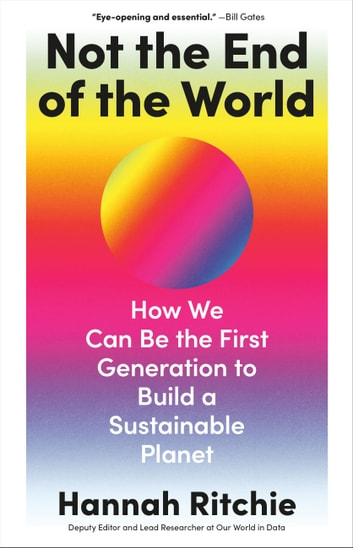
“Not the End of the World” (How We Can Be the First Generation to Build a Sustainable Planet)

By: Hannah Ritchie

Narrated by: Hannah Ritchie

Hannah Ritchie (Author, Scottish data scientist, senior researcher at the University of Oxford, undergraduate degree in environmental geoscience and master’s in carbon management, working on a Ph D.)

Hannah Richie is vilified by some environmentalist who suggest she looks at global warming as a problem on its way to resolution. They argue Richie offers an unreasonably optimistic view of global warming. She obviously believes global warming is real, but argues history shows humanity is dealing with the crises and is working on what must be done to survive the future.

A little history: Since 1850, the National Oceanic and Atmospheric Administration estimated the world temperature would increase by 2 degrees Fahrenheit per decade. However, in 2023 NOAA shows the actual average has been 2.43 degrees Fahrenheit per decade since the 1850s. The 10 warmest years have been in the last decade.

Though the exact temperature increase is disputed by other scientific studies, there is no rational disagreement on evidence of warming. Global warming is having an effect on world’ biodiversity.

Richie notes loss of forest lands from farming and timber production adds to global warming because trees absorb carbon dioxide from the air.

Atmospheric carbon-load increases global warming. Counter intuitively, Richie argues the building of cities and concentration of populations improves the world’s environment by moving people into the city which aids biodiversity in the country. She argues population services in a city reduces inefficient travel, conserves energy, encourages mechanized farming, reduces the environmental load of human’ waste disposal, and promotes community-wide water conservation.

As noted by many historians, sources of energy that are polluting the atmosphere have changed over the centuries. With few exceptions, these energy sources required burning. The world has moved from wood burning to coal to oil to non-burning energy sources like nuclear and alternative energy sources that have reduced carbon in the atmosphere. Richie notes each stage of energy development has incrementally reduced pollution, but global warming continues because of population increase and the continued use of fossil fuels in industrial production.

Richie notes the rate of world population increase has incrementally decreased and continues to decline with fewer babies being born per family.

Richie believes earth’s human population will plateau at around 10 billion people. At the same time the machine age and technology will improve efficiency of fossil fuel use to reduce the rate of environmental pollution. Richie infers the hope of limiting earth’s warming to 1.5 degree centigrade in this century (3 degrees Fahrenheit) is unlikely to be achieved. Still, she remains optimistic based on human history’s technological improvements since the agricultural and industrial revolutions. Richie is a proponent of nuclear energy because of its efficiency and clean energy potential. She discounts nuclear accidents by noting even with the worst nuclear accident at Chernobyl, deaths were minimal. (Less than 40 people were killed in the disaster with some disagreement about the number of deaths from indirect exposure.)

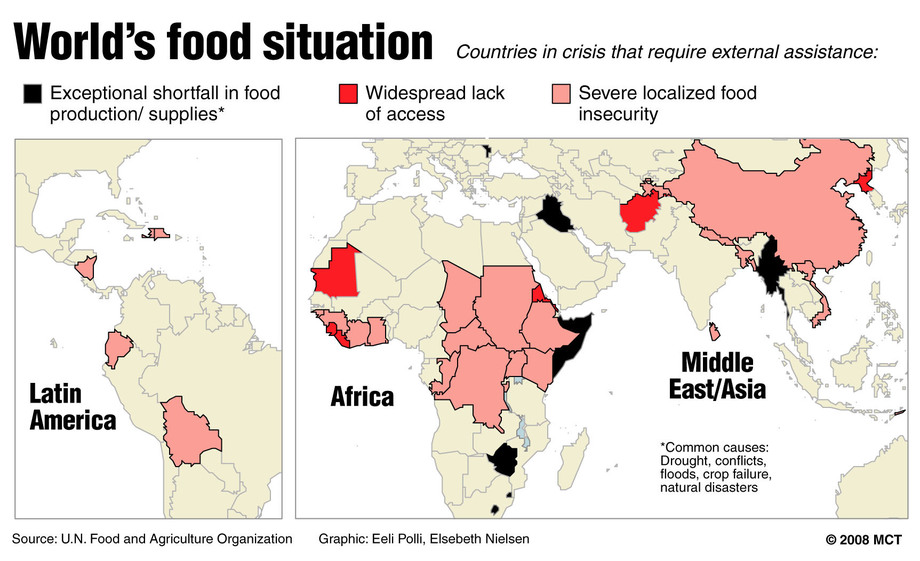
What is off-putting to many people is Richie’s argument for societal change. She argues the world population must become more vegan because of the negative environmental consequence of raising beef and sheep for food. Richie argues food shortages are the greater risk to human survival. To sustain the lives of ten billion people in the world, Richie believes there is not enough arable land to raise livestock and feed the hungry. She implies only with the advance of agricultural research and produce, including the creation of nutritious meat substitutes, can the world’s future population be sustained.

The threat Richie gives at the end of her book is that that speed of today’s individual extinction of species is a clear warning of what may be the sixth mass extinction, the Anthropocene Extinction, the death of humankind. She advises that a Sixth Extinction event, unlike former extinction events, can be stopped because it is manmade. Richie explains how a Sixth Extinction can be un-manmade by human beings’ actions. Richie argues humans are responsible for despoiling earth and it is up to humans to change nature’s degradation and its potential for a Sixth Extinction.

Richie offers solutions for global warming that are in the hands of humanity. She may be overly optimistic but hope changes to reality with action.