ANARCHY

In reading/listening to Chomsky some will conclude he is wrong about there ever being a nation-state that will be successfully governed as an Anarchy because of the nature of human beings.

Books of Interest
 Website: chetyarbrough.blog

On Anarchisn 

Author: Noam Chomsky, Nathan Schneider

Narrated By: Eric Jason Martin

When one thinks of a political system called Anarchism, the first thing that comes to mind is a vision of rampant disorganization where there is no sense of direction or social cohesion.

Noam Chomsky is a polarizing figure who is admired as an anti-capitalist and anti-imperialist who fiercely criticizes U.S. and Israeli foreign policy. He views Israel as a client state of the U.S. that relies on authoritarianism to manage their countries roles in the world. He notes America’s interventions in Vietnam, Central America, Iraq, and Afghanistan as evidence of America’s failure as a democracy. He views Israeli foreign policy in regard to Gaza as infected with hypocrisy and violence with a narrow view of territorial expansion. He feels both America and Israel are driven by strategic and economic interests, not by the idealism of democracy.

Chomsky is a fierce critic of capitalism and imperialism because both marginalize citizens’ freedom of thought and action.

Chomsky’s view is that anarcho-syndicalism is a better form of government where power is decentralized and citizens can and should collectively manage their own affairs through direct democracy and cooperative organizations. He argues for participatory democracy by voluntary associations that are freely formed into cooperative communities. There should be no centralized authority with all workplaces and production controlled by the workers themselves. He believes in libertarian socialism because he sees it as the most humane and rational extension of Enlightenment ideals in society. Any authority exercised by a government entity in a libertarian socialist country, in Chomsky’s opinion, is the most humane and rational extension of the ideals of the Enlightenment.

The Age of Enlightenment or sometimes called the Age of Reason was a movement in the late 17th century that extended into the 19th century.

It emphasized the power of reason, science, and individual liberty as the tools for the reform of society. The tools of reason, science, and liberty were believed to be the natural rights of humanity, and the possibility of improving society through education and reform based on science.

Francisco Franco (Spain’s dictator 1939-1975.)

Chomsky argues those tools were engaged by Spanish revolutionaries during Franco’s dictatorship in Spain. Chomsky notes workers took control of factories and farms in Catalonia and Aragon that were run collectively and democratically by workers. He believes voluntary cooperation thrived. He believes the anarchist movement grew through three generations based on education and considered organization of Spanish interest groups. However, Franco’s forces with the help of England, Germany, and Italy defeated the movement.

Republican factions fought against Franco’s government in the 1930s.

Chomsky believes revolutionaries against Franco were practical visionaries that showed how anarchy could be a legitimate and superior way of governing a nation.

Surprisingly, there are several examples besides Spain’s revolution that were collectivist organizations that could be classified as anarchies. From 1918-1921, the free territory of Ukraine was led by Nestor Makhno during Russia’s Civil War. It was ended by Russian communism after its ascension in 1917. Modern communes were set up in Mexico’s Zapatista territories with autonomous zones that had collective farming and indigenous self-rule. Of course, in ancient times there were hunter-gatherer societies that shared norms, and governance through consensus decision-making and resource sharing. However, there is a history of atrocity, failure, and disruption by governing bodies that have tried Anarchy. Spain’s effort fell apart in 1939. Freetown Christiania in Denmark, in a neighborhood in Copenhagen has struggled with Anarchy since 1971. A number of legal battles have been fought over commercial ownership and control. By some measures, the kibbutz movement in Israel has been successful. However, even Chomsky notes friction comes within kibbutz communities over disagreement with elected leaders. Research shows that some kibbutzim are privatizing and paying differential wages for communal services. Collectivism is becoming harder to maintain.

Chomsky is considered by some to be the most important intellectual alive today. He is highly respected for theories on the understanding of language based on modern cognitive science.

Chomsky has shaped how we think of human capabilities. He is famous for his dissents which are naturally about government control and media manipulation. He was against the Vietnam war and opposed Israeli occupation because of his libertarian socialism, a form of anarchy or a collective that is purely democratically determined. He is reported to be an excellent lecturer and capable of going toe to toe with experts in linguistics, philosophy, political science, and education. His opinions have global reach with translations in many languages.

In reading/listening to Chomsky some will conclude he is wrong about there ever being a nation-state that will be successfully governed as an Anarchy because of the nature of human beings. Whether one believes in Hobbes’ view of selfish humans, Rousseau’s belief in people being corrupted by society, Kant’s belief in rationality, or Sartre’s belief in human choices and actions, there will always be dominant personalities who will victimize those whom they commune. Human nature as defined by Hobbes, Rousseau, Kant, Sartre, and other brilliant philosophers infer there will always be miscreate leaders that will destroy egalitarianism, the foundational principle of anarchy. Human nature, as it exists today, is unlikely to change.

EQUALITY

Discrimination is certainly based on the color of one’s skin but also on gender, ethnicity, and income inequality. Those nations that embrace equality of opportunity for all will be the leaders of the future in the age of technology

Books of Interest
 Website: chetyarbrough.blog

Caste (The Origins of Our Discontent)

Author: Isabel Wilkerson

Narrated By:  Robin Miles

Isabel Wilkerson (Author, American journalist, winner of the Pulitzer Prize in journalism in 1994 while serving as the Chicago Bureau Chief for the NYTimes.)

Isabel Wilkerson has written a provocative book about what she characterizes as a rigid social hierarchy in America that undermines the ideals of democracy. Wilkerson weaves her personal life and the history of black experience with the sociological failings in America’s treatment of race. She notes the past and present truth of white America’s unequal treatment of its citizens based on race. However, her characterization of America’s discrimination as a caste system and its comparison to India’s and Nazi Germany’s governments is hyperbolic. Nevertheless, it creates a sense of urgency for those who believe in the ideal of human equality. It is difficult, if not impossible, to compare other nation’s inequality with America’s effort and present-day failure to fulfill the ideals of democracy.

The timeliness of Wilkerson’s book seems appropriate in relation to the backward steps being taken by Donald Trump.

Some Americans feel threatened by demographic change that will make white citizens less than 50% of America’s population by 2045. In theory, no one should care if all people are treated equally. What history shows is that the ideals of equality have never been achieved in America or in any other country with a dominant race and/or ethnicity.

Trump’s effort to return America to its past is interpreted by some as a return to industrial production.

America’s return to industrialization is a false flag that will not make America Great. Reindustrialization and keeping America white is a fool’s errand based on demography and the age of technology. Trump’s desire for power, adulation, and loyalty have little to do with prejudice but everything to do with appealing to the worst fears of middle-class America. Trump is willing to use whatever dog whistle is required to satisfy his desire for power and prestige. He understands the fears of the middle class and where American power lays. Power and money are the driving forces of capitalism. Middle class American’s buying power has stagnated or fallen since the 1970s despite the increasing wealth of the top 10% of American citizens. The middle class of America is something Trump appealed to in his re-election for a second term because of their disproportionate loss of income and the rising wealth of America’s business leaders. The irony is that Trump is one of the beneficiaries of that income gap between the very rich and the working-class.

Income growth in America.

Income disparity trend in the U.S. through 2015.

Wilkerson is right in the sense that America’s real objective should be to ensure equality of all. She is arguing we should have a greater sense of urgency in achieving equality. Equal treatment for all is a formula that can maintain America’s position as an economic, military, and political hegemon. American industrial hegemony is yesterday’s goal. Technological advancement is today’s goal. To achieve today’s goals, equal treatment of all becomes essential in technology because intelligence, innovation, and persistence does not lie in any one race, sex, or creed.

America is class conscious but not in the same way as either India’s or Nazi Germany’s histories.

Wilkerson notes a caste system can be built around ethnicity, religion, language, or gender but race discrimination is what she has personally experienced and underlays much of her comparisons of American history with India and Nazi Germany. Equality of opportunity is key to continued growth of human beings and national economies in the age of technology. In the short term, one may see an autocratic country like China become an economic and military hegemon, but maintenance of that success is dependent on equality of opportunity for all, not just those in power.

One can sympathize with the author’s view of discrimination but her comparison of America to India and Nazi Germany misses too much of what unequal treatment in America is based upon.

Discrimination is certainly based on the color of one’s skin but also on gender, ethnicity, and income inequality. Those nations that embrace equality of opportunity for all will be the leaders of the future in the age of technology.

MADNESS

Whether one is of a particular gender, good looking, unattractive, fat, thin, so on and so on, is superfluous. What is not different is we are all human. Murray infers that if leaders can keep humanness in mind, equality is the only thing that matters.

Books of Interest
 Website: chetyarbrough.blog

The Madness of Crowds (Gender, Race and Identity)

Author: Douglas Murray

Narrated By:  Douglas Murray

Douglas Murray (Author, Bristish political commentator, cultural critic, and journalist.)

All humans deserve equal treatment, rights, and opportunities. No known form of government achieves that ideal. Douglas Murray shows liberal and social democracies show concern about equality, while other forms of government don’t seem to care. What Murray argues is that western nations and educational institutions are not doing enough and what they are doing is maddeningly ineffectual.

Initially, Murray writes about gay rights which are not top of mind for many listener/readers.

However, the point is that sexual preference is a human right that harkens back to the age of ancient Mesopotamia (2000 BCE) and Greece (300 BCE). Mesopotamian law treated marriage as a legal contract. Men were allowed to have secondary wives or concubines with legal codes regulating inheritance rights. Women then, as now, were treated unequally. In Mesopotamia, marriage was tied to economic, social, and legal agreements to ensure social stability through male control. Interestingly, women had some legal rights in Mesopotamia while Greece was more patriarchal with limited legal independence for women. Mesopotamia artwork shows same-sex relationships existed, but contractual agreements in marriage were only for heterosexual relations.

In Plato’s time, legal codes in marriage were less important but social stability and male domination remained in both jurisdictions.

Ancient Greek history shows same-sex relationships were widely accepted but without any legal recognition like that required in heterosexual marriages. Same sex relationships go back to the beginnings of pictographic and written history. So, why is there so much Sturm and Drang about same sex relationships?

American democracy began a civil war in 1865 over the issue of slavery.

American democracy began a civil war in 1865 over the issue of slavery, passed the 14th Amendment in 1868 to provide equal protection for all, passed a Civil Rights Act in 1964 prohibiting discrimination based on race, color, religion, sex, or national origin, passed the Voting Rights Act in 1965, passed the Americans with Disabilities Act in 1990, and the Marriage Equality Act in 2015. Despite all of this history, in 2025, America continues to discriminate against same sex relationships and often violates the aforementioned laws. If a male or female wishes to have sex with a consenting person of the same sex, why should any American care? America has fought and died over equal rights for all Americans. It is maddening to keep reading about Democracies continuing violation of equal rights.

Murray offers numerous examples of protest in western society that reinforce his argument about the madness of crowds.

He reflects on Ivy League colleges like Yale and a small liberal arts college in Olympia, Washington where a crowd of students caused resignations of their professors. In 2015, a Yale faculty member questioned the university’s stance on culturally sensitive Halloween costumes. A crowd of students accused the faculty of failing to create a “safe space” because their professor raised the issue of identity as culturally insensitive. He and his wife who were professors at Yale chose to resign. In 2017, a professor objected to a campus event at Evergreen College in Olympia, Washington. White students and faculty were asked to leave for a day to highlight racial issues. The student protest against the professor for a “day off” event became a threat to his safety. He resigned. Murray’s point is that public discourse is increasingly driven by emotional reactions rather than reasoned debate.

Murray touches on the negative consequence of technology on the growing “…Madness of Crowds”. More than ever, the reach and size of crowds who object to human equality can spread social chaos. America experienced the power of technology with the attack on the Capitol on January 6, 2021.

The re-election of Donald Trump is a harbinger of a future where the emotion of crowds who have the right to vote is magnified by media paid for by the richest people in America.

Murray touches on the negative consequence of technology on the growing "...Madness of Crowds". More than ever, the reach and size of crowds who object to human equality can spread social chaos. America experienced the power of technology with the attack on the Capitol on January 6, 2021.

Emotions of crowd-think distort the difficult and personal trials of people with gender dysphoria.

The myth of Tiresias embodies the truth that humans are different but equal.

Tiresias is a figure in Greek mythology that was punished by Hera, the wife of Zeus, to be turned into a woman after he struck two mating snakes. He remained a woman for seven years when he was changed back into a man by Zeus. Zeus and Hera debated on whether experience of sex as a man or woman was more pleasurable. Tiresias agreed with Zeus who believed women experienced greater pleasure and Hera struck him blind for siding with Zeus. The debate goes on with Murray noting it occurs in crowd emotion that refuses to deal with the facts of gender dysphoria. One thinks of the many people that struggle with gender identity and how difficult it must be to live life with one’s own confusion, let alone the stupidity of people’s emotional reactions.

And then there is the issue of race.

Nearly 50% of the world is classified as Caucasoid with the remainder of three racial categories being no more than 33.5%. Unique physical characteristics of race are hair color and texture, facial features, average height, eye color, blood type, and skin color. Of course, there are differences beyond these features within each racial group. Whether one is of a particular gender, good looking, unattractive, fat, thin, so on and so on, is superfluous. What is not different is we are all human. Murray infers that if leaders can keep humanness in mind, equality is the only thing that matters.

SUPREME COURT

To Leah Litman, Trump’s election seems a setback but not a reversal of the ideal of balancing equal rights with private interests. As Alexander Pope wrote in his poem, in the 18th century “Hope springs eternal in the human breast”.

Books of Interest
 Website: chetyarbrough.blog

Lawless (How the Supreme Court Runs Conservative Grievance, Fringe Theories, and Bad Vibes)

Author: Leah Litman

Narrated By:  Leah Litman

Leah Litman (Author, BA in Chemistry & Chemical Biology, constitutional law scholar with Doctorate from University of Michigan Law School.)

One doubts Leah Litman would suggest there are no biological differences between men and women considering her education as a science major and legal scholar. As a science major, she knows there are chromosomal, hormonal, physical, and reproductive system differences between the sexes. However, Litman is spot on in arguing women do not have equal rights with men just as all races and ethnicities do not in the ideals of American Democracy. Litman argues that legally, equality is not being enforced in America today and is being diminished by today’s Supreme Court of the United States.

American Supreme Court

Litman persuasively argues today’s Supreme Court has eroded women’s rights by supporting legal theories that are ideologically promoted by political conservatives but not by precedents set by an earlier Supreme Court. Today’s majority at the Supreme Court has succumbed to the influence of conservative theories about the sexes rather than precedents set by an earlier Supreme Court.

It is not that the sexes are not different but that they deserve equal treatment under the law.

The point made by Litman is that the Supreme Court has found that in “all forms of discrimination”, equality of opportunity is mandated by the 14th amendment which provides equal protection under the law to all citizens with assurance that no person should be deprived of life, liberty, or property without due process. Further, the Civil Rights Act of 1964 prohibits discrimination based on race, color, religion, sex, or national origin in employment, education, and public accommodation. Previously settled law by the Supreme Court is being ignored in reversing Roe v. Wade, criminalizing same sex intimacy and marriage, and denying equal rights to the LGBTQ community.

What Litman is pointing to is the politicalization of the Supreme Court.

One might argue the Court has always been a political body. America’s history of discrimination has been reinforced and attacked in different eras of the Court. As the Turkish saying, “A fish rots from the head down”, today’s Justices of the Supreme Court are reversing precedents set in former rulings. America elects a President every four years. Even though Supreme Court justices are appointed for a lifetime, they decide to retire at some point in their careers and are replaced by recommendations of a current President with acceptance or rejection by Congress. If a conservative is in the office of the Presidency, then the recommendation will be based on candidates who reinforce a President’s political leaning. The same, of course, is true for a more liberal President.

Litman infers a politicalization of the Supreme Court lies at the feet of those who choose to vote, promote, and support candidates of their choice.

America is at a conservative revisionist point in the history of the Court with Donald Trump’s election. America has only itself to blame or praise for that revisionism. The obvious leaning of Litman is liberal in that she strongly believes in equal rights for all Americans. Her plea is for Americans to wake up to the importance of voting, promoting, and supporting candidates for public office.

American Democracy remains the best form of government despite wavering on balancing equal rights and private interests.

A perfect society will balance equal rights with private interests. America is not there, but it has a greater possibility of getting there than any other form of governance. To Leah Litman, Trump’s election seems a setback but not a reversal of the ideal of balancing equal rights with private interests. As Alexander Pope wrote in his poem, in the 18th century “Hope springs eternal in the human breast”.

BRUTALITY

What is so troubling about Grandin’s history is what appears to be the nature of human beings whether royalist, capitalist, socialist, or communist.

Books of Interest
 Website: chetyarbrough.blog

America, América (A New History of the New World)

Author: Greg Grandin

Narrated By:  Holter Graham

Greg Grandin (Author, American historian, professor of history at Yale University.)

Before Professor Grandin, most Americans presumed the United States came from the traditions of the British empire. After reading/listening to America, América, one recognizes the powerful influence of the Spanish empire on the settlement of North America, the attitude of colonists toward minorities, the growth of slavery, and the deep entanglement of Spain in the broader Americas. America, América is a book that widens one’s understanding of the history of the United States.

When being reminded of the many atrocities of colonization and the decimated indigenous natives of the Americas, one is appalled by man’s inhumanity to man. Grandin begins his history of colonization with the Spanish empires’ expansion into the Americas long before the Mayflower expedition to America. Conquistadors set the table for the way what became Americans way to colonize the New England territory. Hernán Cortés and Francisco Pizarro led expeditions that decimated the Aztecs in Mexico and the Incas in Peru. Looking for wealth Spanish conquistadors murdered, raped, and pillaged Latin American native populations. The conquistadors exemplified what became the modus vivendi of British colonists in America. Indigenous peoples were forced to work for Spanish landlords, later supplemented by imported African slaves. The atrocities of Spain in the 16th century are repeated by English settlers in the 17th and later centuries. An estimated 80% of the indigenous people of the Americas perished from disease, forced labor, and ethnic cleansing by Spanish settlers–a grim reminder of American settlers did to indigenous natives in America.

What is so troubling about Grandin’s history is what appears to be the nature of human beings whether royalist, capitalist, socialist, or communist. America, América shows the founding of the United States is a repeat of Spain’s early colonization of the southern part of North America. The human race appears driven by the desire for money, power, and prestige in a system that begins with attack on indigenous peoples and repeats as a perceived advance of civilization. There is some truth in that perception but one realizes indigenous peoples are equally driven and commit human atrocities among themselves in pursuit of value, power, and, or prestige.

This book is returned before completion because of its length. Its history is enlightening but its length is too much for this dilettante.

SERVICE & PROFIT

Government is not a business for profit and should not be solely measured by its cost. America will survive the catastrophic mistakes being made by President Trump but American citizens, and the welfare of the world will suffer for years to come.

Books of Interest
 Website: chetyarbrough.blog

Who is Government (The Untold Story of Public Service)

By: Michael Lewis, Casey Cep, Dave Eggers, John Lanchester, Geraldine Brooks, Sarah Vowell, and Kamau Bell

Edited By: Michael Lewis

The stories of these writers are a tribute to those who have chosen careers in American government. Having personally earned a master’s degree in public administration, worked as a local government manager, then as a manager of a private business division, and finally, as a personal business owner, I have an opinion about President Trump. My experience is based on three different types of employment. All were rewarding experiences but in fundamentally different ways.

The writers of “Who is Government” show how ignorant business creators and managers like Donald Trump and Elon Musk are in discounting the contribution of employees of government organizations. Private corporations do not survive without profit to its owners. Public organizations do not survive without service to the public.

Profit is simple to measure. Public service is measurable but more abstract and difficult to quantify.

One can choose, like Musk did with Twitter, to reduce costs by firing employees. That may improve profitability but at a cost that may hurt or destroy the future of a business. In the case of Twitter, the company lost much of their advertising revenue because an unsupervised public forum could spread false and defamatory information that embarrasses advertisers who were protected by Twitter’ employees that were fired. No analysis was done by Musk about Twitter information’ controls provided by employees. The new entity, “X”, seems to have assuaged some advertisers’ concerns because they have started to use Musk’s new company. The point is that if Musk had taken more time to evaluate what fired employees were doing, he may have retained many of the advertisers who left the forum.

Trump’s employment of Musk to decimate the government employee workforce is following the same foolish path that was taken with Twitter.

No analysis of employee contributions is made. The goal is only to reduce government’ cost regardless of employee’ contribution to public need or service. The consequences have likely reduced health and welfare of American citizens; not to mention harm done to incomes of thousands of government employees’ families.

With exceptions of George Washington, Harry Truman, Carter, and the two Bush presidents, the worst former businessman that became President was Herbert Hoover who served as President before the greatest depression in America’s history. With Trump as President, one has to wonder whether he is leading America and the world toward its second great depression.

HERBERT HOOVER (31ST PRESIDENT OF THE U.S.)

“Who is Government” illustrates how government employees have contributed to the health and welfare of America. They are unknown and viewed by people like Trump and Musk as just a cost, without benefit to the public. How many science, medical, veteran, and welfare services are being decimated by their narrow vision of government management?

Government is not a business for profit and should not be solely measured by its cost. America will survive the catastrophic mistakes being made by President Trump but American citizens, and the welfare of the world will suffer for years to come.

JAPAN

In planning a trip to Japan this year, it seems prudent to learn more about the history of Japan.

Books of Interest
 Website: chetyarbrough.

Great Courses-Understanding Japan (A Cultural History)

By: Mark J. Ravina

Narrated By: Mark J. Ravina

Mark Ravina (Scholar of Japanese history at the University of Texas at Austin)

Professor Ravina’s lectures are a little too heavy on Japan’s ancient history but offers some interesting opinion about the rise of the Samurai, the evolution of women’s roles in Japan, Emperor Hirohito and his role in WWII, the democratization of Japan after WWII, and the cause of Japan’s current economic stagnation.

As is well known, the Samurai were a warrior class in Japan. Their role in Japanese history grows between 794 and 1185.

They began as private armies for noble families with estates in Japan. They became a force in Japanese politics and have had an enduring effect on Japanese society. They evolved after 1185 into a ruling military government called shogun that exhibited political influence through 1333, emphasizing Bushido or what is defined as a strict code of loyalty, honor, and discipline. That discipline extended to ritual suicide in defeat or disgrace to preserve one’s honor. Zen Buddhism entered into the Samuria culture, exhibiting a time of peace under the Tokugawa shogunate that lasted until 1868. After 1868, the Samurai era came to an end, but its cultural influence remains in a modernized military that adheres to qualities of discipline, honor, and resilience.

Traditional Japanese Woman.

The role of women in Japan has evolved from great influence and freedom for the well-to-do to a life of restricted domesticity.

During the Samurai era, the influence of women declined and became more restricted. The rise of Confucian ideals emphasized male dominance with women being relegated to domestic duty. Women turned to art, calligraphy, and religion as their societal influence decreased. In the Meiji Era (1868-1912) women’s education somewhat improved and they began to participate in political movements like voting and equal rights. Finally, after WWII, a new constitution granted women equal rights like the right to vote and enter the workforce. However, like America, traditional gender roles persisted. In today’s Japan, like most of the world, equal rights remain a battle for women.

Hirohito is the 124th Emperor of Japan.

He reigned from 1926 to 1989. Professor Ravina notes that a question is raised about whether the emperor was a follower or leader in Japan’s role in WWII. Ravina argues history showed Hirohito’s role was as a leader. In defeat, Hirohito renounced his divine status to become a constitutional monarch under U.S. occupation. Hirohito, as the crown prince of Japan, strengthened Japan’s diplomatic ties on the world stage. He was instrumental in scientific research in marine biology. He emphasized Japan’s drive to become an industrial nation and player in international trade. He militarized Japan in preparation for war and territorial expansion. He authorized invasion of Manchuria in 1931 to establish it as a puppet of Japan. Hirohito aids the American occupation, after WWII, to de-militarize and re-industrialize Japan.

With creation of a new constitution for Japan in 1947, Japan became a constitutional monarchy that made the emperor a symbolic figurehead, and guaranteed freedom of speech, religion, and assembly.

The constitution formally denounced war as a means of settling disputes. Land reform redistributed agricultural production to tenant farmers that reduced the power of wealthy landlords and promoted economic equality in rural Japan. Women’s rights were codified to allow voting and participation in politics. The constitution guaranteed equality but, like the rest of the world, culture trumped reality. Japan’s military was reorganized as a defensive force for national security. War crimes trials convicted Hideki Tojo, Iwane Matsui, Hei taro Kimura, Kenji Doihara, and Koki Hirota and sentenced them to death. In total 17 leaders were executed, and 16 others were imprisoned.

Free-market economy.

The democratization of Japan entailed economic reforms that broke up large industrial conglomerates to promote a free-market economy and reduce economic monopolies. However, the culture of Japan replaced the industrial conglomerates with networks of interlinked companies that operated cooperatively in ways that reduced competition in pursuit of financial stability. The education system was reformed to promote democratic values, and equal access to education for all citizens.

A free press was encouraged to foster transparency and accountability.

The results allowed Japan to rapidly improve their industrial productivity. That productivity was defined and improved by the teachings of W. Edwards Deming, a statistician and quality-control expert in the 1950s. His contributions led to the Deming Prize in 1951, an annual award recognizing excellence in quality management. (This is a reminder of Peter Drucker and his monumental contribution to business practices in the United States.)

In Ravina’s final lectures, he addresses the economic stagnation that has overtaken modern society in Japan.

It began in the 1990s. A sharp decline in asset prices wiped out wealth and triggered a banking crisis. Banks had made too many bad loans that became non-performing. Deflation ensued with falling prices that discouraged spending and slowed economic growth. Company profits declined. The demographics of Japan reduced the size of the work force because of an aging population and declining births. One suspects this demographic change is further burdened by ethnic identity that mitigates against immigration.

Japan’s consumption tax increases in 1997 impeded recovery.

The close ties between government, banks, and corporations resist reforms. And, as is true in America, global competition from other countries with lower cost labor eroded international trade.

NO EASY SOLUTION

“Everyone Who Is Gone Is Here” is an indictment of American foreign policy. There are no easy solutions for immigration, deportation, or human rights in the world.

Books of Interest
 Website: chetyarbrough.blog

Everyone Who Is Gone Is Here (The United States, Central America, and the Making of a Crises)

By: Johnathan Blitzer

Narrated By: Jonathan Blitzer, Andre Santana

Johnathan Blitzer (Author, American journalist, staff writer for The New Yorker.)

“Everyone Who Is Gone Is Here” is an indictment of American foreign policy. There seems a loss of a moral center in America with its support of other governments based solely on government type, national security, or economic interest. That is not to suggest national security and economic interest are not critically important but Blitzer’s history of America’s support of Central American governments is appalling. El Salvado, Guatemala, Honduras, and Nicaragua are democracies in title but not in reality.

Blitzer tells the story of migrants from El Salvadore and Guatemala who are imprisoned, tortured, and sometimes raped or murdered by their government’s functionaries.

El Salvadoran and Guatemalan governments purport to be representative democratic republics. They are not. They have been dictatorial and punitive victimizers of their citizens. The picture drawn by Blitzer is that both are highly autocratic and riven with exploitation and arbitrary treatment of their Latino populations.

Some immigrants came to roil American communities with the only tools they were familiar with in their native countries.

Many immigrants came to America to escape arbitrary treatment by their governments. America has benefited from its immigrant labor, but some turned to street drugs and violence because of their poverty and the experience their families lived with in their native countries. Driven by self-interest, a survival instinct, and ignorance, America has deported many Latino immigrants who chose the gang life in the California suburbs. Gang life offered identity and income. Gangs like MS-13, the 18th Street Gang and other street name gangs terrorized L.A. and Southern California. The police reacted with violence by rounding up Latinos based on gathered photographs and lists of their families and friends. Some who had proven records of crime were imprisoned or deported to their families’ countries even though they may have been born in America.

America has financially and militarily supported Central America without regard to human rights.

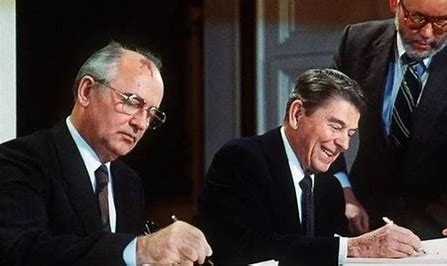
There is a taint of McCarthyism in America’s communist categorization of Central American countries because false categorizations hides the truth. The truth is that democratic countries like El Salvadore and Guatemala have treated citizens as harshly as yesterday’s Stalin, today’s Ayatollah in Iran, and the two Assads in Syria. Reagan’s willingness to sell arms to Iran in the 1980s for money to send to Nicaragua because communism was allegedly opposed by those in power is an example of America’s political blindness. Nicaraguan, Salvadorian, and Guatemalan leadership was as corrupt as many communist countries that practiced violence, imprisonment, torture, and murder of their citizens. Whether one’s government is communist or democratic, the important issue is how its citizens are treated, not its form of government. Bad forms of government will eventually fall from the weight of their citizens’ unequal treatment, just as Syria fell in 2024. The sufferers are always the oppressed citizens and, as interestingly noted by the author, the government perpetrators who live with the guilt they feel when they retire from their military or government jobs.

What Blitzer infers in his history of Central America is that human rights of citizens should be the primary criteria for American financial and/or military support for foreign governments whether democratic, communist, socialist, or other.

National stability comes from citizens’ support of their government. Stability is compromised when human rights are denied. Blitzer implies–America should only financially or militarily support another country only if the nativist nation and culture is working toward equal human rights for its citizens. The immigrant crises in America and the world is caused by nations that do not work toward equal human rights for their citizens.

One is somewhat conflicted by Blitzers’ argument. The conflict is in an outsiders’ understanding of a foreign countries’ culture.

Human rights may be universal, but culture is made of beliefs, values, norms, customs, language, art, literature, food, fashion, social institutions, and unique symbols and artifacts of particular nation-states. This great host of characteristics is not easily quantifiable. No nation can justify rape, torture, or murder but they do exist in all cultures. Ignorance of culture is at the heart of why any country that invades, or militarily and financially supports another country, risks failure.

There are no easy solutions for immigration, deportation, or human rights in the world.

SOCIAL BLINDNESS

Criminal imprisonment, gun control, and drug addiction solutions are elusive, just as America’s eradication of discrimination is, at best, only a work in progress.

Books of Interest
 Website: chetyarbrough.blog

Locking Up Our Own (Crime and Punishment in Black America) 

By: James Forman Jr.

Narrated By: Kevin R. Free

James Forman Jr. (Author, professor of law and education at Yale Law School)

James Forman Jr. argues Washington D.C. is a multi-ethnic democratic example of what is wrong with the American penal system, gun control, and an addiction crisis. Forman offers an eye-opening recognition of America’s social blindness. The 2019 estimated population of Black residents in D.C. is approximately 44%. Forman suggests D.C. constitutes a representative sample of what has happened and is happening to Black Americans in “Locking Up Our Own”.

Forman addresses three social issues with Washington D.C.s’ effort to legislate against the consequences of crime associated with a Black population’s gun possession, and drug addiction. America’s history of Black discrimination is well documented. The issues of gun control and drug addiction are top-of-mind issues in all American communities. What makes Forman’s book interesting is his analysis of what he argues is a nascent conservative movement in Black American society.

Forman’s argument is based on statistics and the history of Black discrimination. The American incarceration rates for Black citizens are six times higher than for white citizens. Today’s statistics show 33% percent of the prison population is Black when it is only 12% of the U.S. adult population. White prisoners account for 30% of America’s prisoners but amount to 64% of the adult population.

The fundamental issue of Forman’s book is that more Black Americans are being imprisoned for crimes of addiction and theft than those committed by white Americans.

Forman uses Washington D.C. as evidence for a Black conservative movement because of its high percentage of Black residents. He notes D.C.’s effort to legislate gun control and regulate drug addiction are arguably more restrictive than other parts of the country. Firearms must be registered with the police department. A permit is required to purchase a firearm. Concealed weapons require a license. Assault weapons are banned. Magazine capacities are limited. Safe storage requirements are mandated. In the case of addiction, the “Office of National Drug Control Policy”, ONDCP is established in D.C. The program is instituted to provide funding to support communities heavily impacted by drug trafficking. A “Drug-Free Communities Program” offers grants to community coalitions to prevent youth substance abuse. The city expands Naloxone access to citizens to reverse opioid overdose.

Forman explains these policies are supported by D.C. residents in the face of national opposition to gun control. Forman notes the proactive drug control programs of D.C.

The obvious irony of D.C.’s policies is that they do not reflect what white America promotes but suggests Black America is likely more victimized by lax gun controls and drug regulation. White America needs to get on board.

Several chapters of Forman’s book explain the difficulties of integrating minorities into local police forces.

Police department managers opened their hiring practices to Blacks based on growing Black neighborhoods and belief that police services would be improved with officers who would be more racially and culturally suited to understand policing in minority neighborhoods. Forman recounts 1940s through the 1960s police force integration. He notes police department integration is fraught with discriminatory treatment of Black recruits.

Of course, the idea of crime in a Black neighborhood being better understood by Black officers is just another form of discrimination.

Crime is crime, whether in a minority neighborhood or not. Relegating Black police to Black neighborhoods only reinforces racial discrimination. Integrating the police only became another example of racial discrimination in America. Paring white and Black policemen on petrol became difficult. Getting white and Black policemen to work together becomes even more problematic when promotions are denied qualified Black officers. As with all organizations, police promotions were based on experience and standardized testing. What police departments would typically do is promote white officers over Black officers whether their experience rating or test scores were better or not.

The irony of white resistance to gun control and ineffective drug addiction policies has had an adverse impact on Black-on-Black crime.

The culture created in formally white police departments adversely condones harsh treatment of minorities. Black officers buy into a police department’s culture and begin discriminating against Black residents in the same way as white policemen.

The 2003 brutal beating and killing of Tyre Nichols by 5 Black Police Officers.

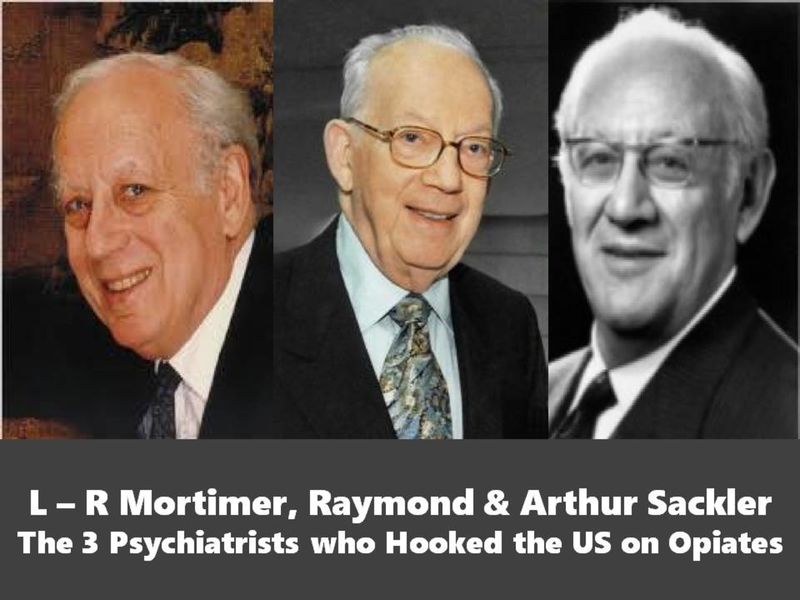
Drug addiction is the scourge of our time. Its causes range from the greed of drug company executives to poor policy decisions by the government to escapist and addictive desires of the public. Addictive drugs are the boon and bane of society. On the one hand, they reduce uncontrollable pain and anxiety; on the other they are often addictive, causing incapacity or death.

Discrimination can only be ameliorated with education, understanding, and governmental regulations that are consistent with the rights written in the American Constitution.

Criminal imprisonment, gun control, and drug addiction solutions are elusive, just as America’s eradication of discrimination is, at best, only a work in progress. Guns in the hands of American citizens are not guaranteed except as noted in the Constitution which infers “A well-regulated Militia…” is the only reason for “…people to keep and bear Arms…” How many more school children have to be killed by guns before the lie of American gun rights is dispelled.

The last chapters of Forman’s book address his experience as a public defender in Washington D.C. This is the weakest part of his story, but it points to the theme of an incarceration system in America that is broken. Prisons are not meant to reform criminals. They are overcrowded, violent, understaffed and, most damagingly, lack rehabilitative programs for re-education and vocational training that could reduce recidivism and return former prisoners to a socially productive society.

SERVICE TO HUMANITY

Harari explains why bureaucracy and A.I. can mislead as easily as inform. A.I. should never be considered a decision maker but a tool for human understanding of a complex world.

Books of Interest
 Website: chetyarbrough.blog

Nexus (A Brief History of Information Networks from the Stone Age to AI)

By: Yuval Noah Harari

Narrated By: Vidish Athavale

Yuval Noah Harari (Author, Israeli medievalist, historian, and public intellectual serving as a professor in the Department of History at Hebrew University of Jerusalem)

Yuval Noah Harari’s “Nexus” is a perspective on information networks and how they evolve from neanderthal grunts to the fundamental link of society. Harari dissects human history and information networks with an eye toward the existence and future of Artificial Intelligence. Harari’s point is that information networks create, control, and compel change. Civilization began with verbal, then written, then video, and finally digital information that brings human beings together into larger and larger groups.

Networked information creates interest groups. Harari explains these interest groups rise from the evolution of information networks.

With written documents and invention of the printing press, the influence of information spreads across the world. Reproduced documents like government Constitutions, the Bible, Quran, The Torah, The Vedas, The Tripitaka, The Guru Granth Shib, The Tao Te Ching, and The Bhagavad Gita create followers whose understanding of society is reenforced by bureaucratic organizations. Villages, towns, cities, and nations grow from religious organizations and government bureaucracies.

Harari notes how information network’s compel obeisance to group think.

Human conflicts may be based on the desire for money, power, and prestige, but Harari’s point is that the agency of change is the information network. Without cohesiveness of an information network, governments, rebellions, and invasions fail. Successful governments, whether formed from rebellions, or invasions succeed or fail based on bureaucracies that use information networks to influence and indoctrinate citizens of established or acquired territories. The power of information networks is exponentially increased by A.I.

The crux of Harari’s concern is the difference between autocracy and democracy and the harmful potential of a digital age that uses information networks to weaponize and control society with the addition of A.I.

The next great economic revolution, after the Agricultural and Industrial Revolutions is today’s Information Age. I would argue America nearly lost control of the great wealth it created by making the rich richer and the poor unchanged. American democracy’s inequality of opportunity remains a work in process.

America’s failure to provide income equality.

Providing equal economic opportunity is a complicated achievement because it begins with the birth of newborns, acceptance of legal immigration and an education system that fairly serves the needs of society. America is among the wealthiest nations in the world but unlike the Nordic countries and its northern neighbor, Canada, it ranks below the middle for income equality. America’s economic tide is not raising all boats. The Information Age provides an opportunity for America to get its economy right by using A.I. to create a more equal income opportunity for its citizens.

We are moving out of the industrial age.

We are entering the human services age. A.I. presents a second opportunity for America to address income inequality by educating young Americans, immigrants, and citizens to serve the needs of themselves and the people of society. America needs to smooth the transition from being just a product producer to both a producer of goods and services. As A.I. reduces employment for product production, workers should be reeducated to become workers in service to society.

Harari’s book is erudite, enlightening, and worth one’s time to read and understand. He advises of many things beyond what is mentioned in this brief review. Harari explains why bureaucracy is both a good and bad thing and that A.I. can mislead as easily as inform. A.I. should never be considered a decision maker but a tool for human understanding of a complex world.