Capitalism, communism, and socialism are flawed in different ways. Most Americans believe Capitalism is the best of the three. “Bonfire of the Murdochs” reveals the flaws of capitalism.
Books of Interest Website: chetyarbrough.blog
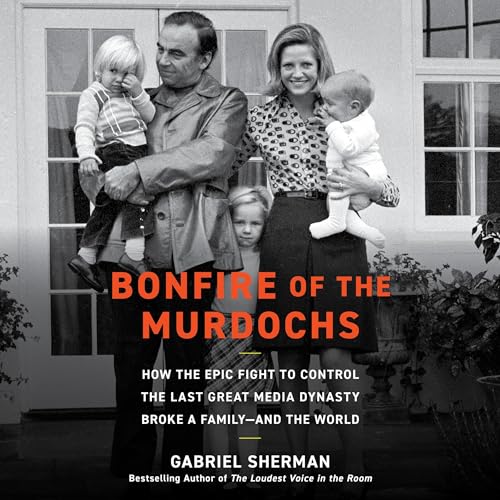
Bonfire of the Murdochs (How the Epic Fight to Control the Last Great Media Dynasty Broke a Family)
Author: Gabriel Sherman
Narration by: Cassandra Medcalf
Gabriel Sherman (Author, American journalist, screenwriter for The Apprentice, and biographer of Roger Ailes.)
The positive face of capitalism offers economic and political freedom to pursue economic well-being through personal effort. There is also a negative face. “Bonfire of the Murdochs” seems to show that face.
Gabriel Sherman explains how Rupert Murdoch and his family are scarred by capitalism which makes them immensely rich but morally bankrupt.
Keith Rupert Murdoch (Australian American business mogul.)
The patriarch of the Murdoch family is Rupert whose family founded two media conglomerates, i.e., News Corp and Fox Corporation. News Corp combines The Wall Street Journal, The Times, and The Australian newspapers. Fox Corporation is made of Fox News, Fox Sports, and Fox TV network. Rupert is the principal creator of these conglomerates, but his children were integral parts of the management and administration of their success.
Patricia BookerAnna de PeysterWendi DengJerry HallElena Zhukova
Rupert Murdoch married five times and had 6 children. He was married for 11 years to Patricia Booker. Their only child was Prudence, born in 1958. Murdoch married his second wife Anna de Peyster in 1967 (the same year of his divorce from Patricia). His second marriage results in the birth of Elisabeth, Lachlan, and James. Anna de Peyster and Rupert Murdoch were married for over 30 years. His third wife, Wendi Deng added two more children for a total of six from his first three wives. His last two marriages were to Jerry Hall and his present wife, Elena Zhukova. The story of Rupert Murdoch’s treatment of his six children is the core of the harm that may come from capitalism’s singular focus on wealth.
PrudenceElizabethLachlanJamesGraceChloe
Rupert remains alive at 94 years of age. Lachlan Murdoch, took over Fox and News Corp in 2023 with Prudence, Elisabeth, and James taking over one billion dollars each to withdraw from Murdoch holdings without voting rights in its operations. Lachlan becomes the sole manager of the remaining media conglomerate. The author explains how Lachlan is the chosen heir apparent. Lachlan’s conservative views and willingness to distort news’ objectivity are purported reasons for Rupert’s choice of Lachlan as his heir. James and his siblings are characterized as critics of the political leanings and news distortions of Rupert’s empire. All but Lachlan leave the news combine with a billion-plus dollar buyout with no voting shares in the future of Rupert Murdoch’s holdings.
Sherman’s inference is that Lachian is the best choice to continue Rupert Murdoch’ version of capitalism.
Whether one believes Rupert Murdoch’s children are politically different from their father or not is a question one may have in listening to Sherman’s book. It appears the first four Rupert children have a desire for wealth more than capitalist probity. Murdoch and his oldest children seem primarily motivated by individual power, and the socio/political benefit of wealth. The four children, at least those before Grace and Chloe, appear to sacrifice capitalism’s ideals for wealth. Wealth is a lure offered by capitalism for good or ill as members of a capitalist society.
One may come away from “Bonfire of the Murdochs” with a bad opinion of Rupert Murdoch and his children but to the non-judgmental, the book only shows a side of capitalism that has made America Great for Americans like Trump and societally flawed for the poor. Capitalism, communism, and socialism are flawed in different ways. Most Americans believe Capitalism is the best of the three. “Bonfire of the Murdochs” reveals the flaws of capitalism.
“Power tends to corrupt, and absolute power corrupts absolutely”. President Trump exemplifies that truth.
Books of Interest Website: chetyarbrough.blog
48 Laws of Power
Author: Robert Greene
Narration by: Richard Poe
Robert Greene (American author, wrote seven international bestsellers, received his degree from University of Wisconsin-Madison in classical studies.)
This is a long book that shows a breadth of understanding about the history of power. How power and influence is acquired and wielded by human beings. Power and influence ranges from idealism to pragmatism to nihilism. In some sense, the “48 Laws of Power” is a study of emperors, courtiers, generals, con artists, and others who acquired power over others in history. What Greene reflects on is the social and human art of gaining and wielding power over other human beings. Whether one is low or high in the hierarchy of humanity, the general key to having power according to Greene is “never outshine superiors” but “always court attention that gains either respect, influence, or control of others”.
STALIN MAO ZEDONG (1893-1976)ING FATHER OF PEOPLE’S REPUBLIC OF CHINA)Kim Jong-un (CURRENT -DEAR LEADER-OF NORTH KOREA)
Greene brilliantly summarizes many characteristics of leaders in history to support his fundamental beliefs about power. He suggests all humans are primarily self-interested. One may disagree with that belief as a universal truth because there are many examples of social cooperation to achieve a common good or a stable system of governance. However, there is always a prime mover, a powerful person behind the scenes who drives the effort to succeed or fail.
Greene argues power is the result of interpersonal relationships. There is a great deal of truth in Greene’s analysis of power but from an institutional or organizational point of view, power is spread among departments’ leaders who report to a single leader. This is not to contradict Greene’s examples of interpersonal power but to temper belief that all power rests with one wielder of power. There is a great deal more to power than individual human manipulation. Organizations of the modern world are built around individual departments with singular powers beyond singular organizational leaders.
American Capital.
To give an example: regardless of who is President of the United States, there are Constitutional and legal systems that constrain his/her power. The bureaucracy of governance operates within rules set by law and precedent. In the case of business enterprise, shareholders, boards, and regulatory frameworks diminish the power of its executives. Further, even in the marketplace of business, capital limitation, supply chains, national platforms like Google, Amazon, and credit card companies have major influences on power exercised by any singular entity. Power in every human organization is also influenced by religions, social myths, and societal norms.
In this increasingly interconnected world, power has become impersonal, sometimes structural and emergent in ways that are non-intentional but significantly more powerful than one individual.
The weakness of the “48 Laws of Power” is that it fails to address institutionalized power that multiplies the power of individuals. A leader of a government or corporation works within a framework of historically developed departments that have their own powers and influences on public and private functions. The dynamics of power Greene explains apply within departments of government and corporations that go beyond the power of one leader.
This often leads to unintended consequences. ICE and Trump’s power are a current example of unintended consequence because of the murder of two Minneapolis American citizens who demonstrated against the President’s immigration policy. One doubts that the President of the United States wishes for the murder of American citizens who disagree with his immigration policies. However, power of the individual still matters as is demonstrated by today’s American President. Greene precisely explains how one person gains power over another despite a modern world that complicates individual power.
ICE murder of American citizens in Minneapolis who are protesting Trump immigration policy.
President Trump demonstrates his power over education, government employment, health and human services, birth control, and immigration policy. However, both good and bad government policy is magnified by Departments of Government that report to the President, i.e., bad policy coming from a President’s power is only made worse through implementation by subordinates who create their own power structures.
It is not that Greene’s analysis of power is wrong but that it applies to individual relationships without addressing distortions of power exercised by departments of business and government that have developed their own hierarchies of power.
One doubts any President of the United States who orders elimination of illegal immigration wishes to have ICE agents murder American citizens. This is not to absolve President Trump but to suggest the ICE employees on the ground bare the weight of two unjustified murders in Minneapolis.
Greene’s explanation of power is spot on, but it is about every person’s rise to power, not the reality of one leader’s power. Organizations are made up of many other managers using the same laws of power as their presumed superior. The end result is a level of unintended consequence. Or as Lord Acton noted: “Power tends to corrupt, and absolute power corrupts absolutely”. President Trump exemplifies that truth.
A surveillance society is a choice that can be made with careful deliberation or by helter-skelter judgement to return manufacturing to America without clearly understanding its impact on American society. That is the underlying importance of Beckert’s history of capitalism.
Books of Interest Website: chetyarbrough.blog
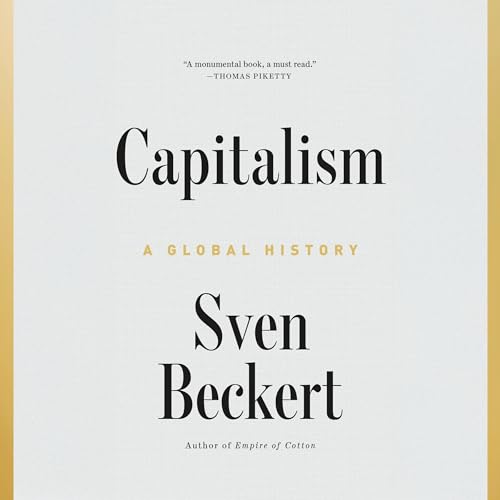
Capitalism (A Global History)
Author: Sven Beckert
Narration by: Soneela Nankani & 3 more
Sven Beckert (Author, Professor of History at Harvard, graduated from Columbia with a PhD in History.)
Professor Beckert defines capitalism as an economic form of privately owned capital reinvested in an effort to produce more capital. In defining capitalism in that way, Beckert suggests capitalism reaches back to 1000 CE, long before some who argue it came into being in 18th century England. Beckert argues the Italian city-states, like Venice, Genoa, and Florence, are the origin of capitalism. That is when accumulated wealth is invested in long-distance trade networks, early banks, and trade by wealthy Italian families. Beckert’s point is that England simply expanded what had begun hundreds of years earlier with trade investment by wealthy Italian families.
Economic theories.
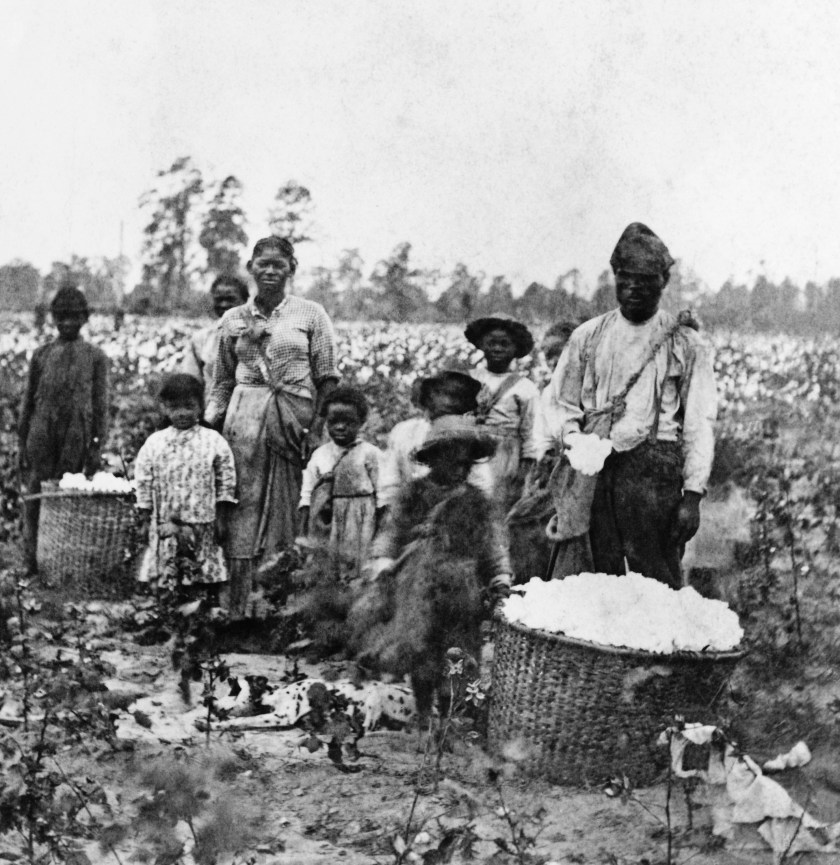
Becker briefly compares many economic theories like capitalism, Marxism, Keynesianism, and Polanyian theories which he calls institutional economics. All bare the flaws of human nature. His economic history is about the addition of slavery to capitalism in the late 15th through 18th centuries. Beckert notes Portugal, Spain, Britain, France, and the Netherlands strengthened their capitalist economies. They were able to secure cheap, controllable labor, expand production, and increase profits with slavery.
Beckert explains the monumental changes and expansion that occurs with England’s adoption of early capitalism. As early as the 17th century, Beckert notes England revolutionizes capitalism in good and morally corrupt ways. Nation-state power combines with private capital to create a massive capitalist influencer around the world. With the dominance of British naval power, colonialism expands, slavery becomes part of international trade, and capitalist monopolies grow to dominate economies. England’s industrial revolution with mechanized production, factory labor, and capital accumulation is able to expand market influence and hugely improve their countries infrastructure and legal protections. Creating patent laws raises potential for monopolization of some market goods.
For several reasons, slavery declines during the later years of industrialization. However, Beckert notes its immorality is not the primary reason.
Free labor became more efficient for capital accumulation. The enslaved became discontented with their role as cheap labor. By the 19th century, slavery became politically and legally incompatible with capitalism. Capitalists began to understand how they could gain more wealth by indenturing rather than enslaving workers, offering sharecropping, or leasing convicts. Capitalists found they could get cheaper labor through contracts with prisons, or sharing of income than slave ownership by being more flexible with the political and physical environment in which labor worked. Slavery faded because capitalists found new ways to reduce costs of labor. At the same time, slave revolts were escalating, the U.S. Civil War is being fought, policing of slavery became too expensive, and investors felt their investments would be at risk in company’s dependent on slave labor. Morality had little to do with abolishing slavery in Beckert’s opinion.
Beckert shows how capitalism systematically expands investment of private capital. Capital is put to work rather than hoarded and consumed by a singular family, political entity, or economic system. Capitalism provides a potential for moving beyond slave-based economies, though racial discrimination remains a work in progress. Beckert notes capitalism is different from other economic systems because it invests private capital that theoretically moderates the need for nation-state’ capital investment in the health, and welfare of a nation’s citizens.
The interesting judgement made by Beckert is that capitalism’s foundation was initially based on slavery, colonialism, and state violence.
The violence of which he writes is based on several factors, i.e., historical slavery, territorial seizure, nation-backed monopolies, worker mistreatment or suppression, and global coercion with military backing. Beckert seems to admit no major historical economic system is free of violence. It seems every economic system is imperfect. Violence appears a fundamental part of human nature in all presently known economic systems.
In the mid to late twentieth century, Beckert notes how manufacturing becomes a global rather than local capitalist activity.
This reorganization creates global inequalities that America is late to understand and adjust to in their capitalist economy. The financial and investment industry of America benefited by becoming world investors, but the local economy fails to remain competitive with the production capabilities of other countries. To become competitive seems an unreasonable expectation for America because of the cost of labor. Trump’s belief appears to be that the solution is to force a return of manufacturing to America. To do that, the rich seem to ignore the fact that to be competitive manufacturing has to have its costs reduced. Where will that reduction come from? Reducing labor costs creates a downward spiral in the families dependent on income from labor. Can America capture a larger part of raw materials for manufacturing to offset higher costs of labor? That is conceivable but it will require a more focused American investment in raw materials that other nations are equally interested in capturing.
AI is a tool of human beings and will be misused by some leaders in the same way atom bombs, starvation, disease, climate, and other maladies have harmed the sentient world.
A capitalist’ economy’s violence has multiple drivers but A.I. has the potential of early detection of conflict hotspots, better predictive policing, more efficient allocation of material resources, and improved mental-health triage and intervention. A.I. is not a perfect answer to human nature’s flaws or the reestablishment of manufacturing in America. There is the downside of the surveillance society pictured by George Orwell.
A surveillance society is a choice that can be made with careful deliberation or by helter-skelter judgement to return manufacturing to America without clearly understanding its impact on American society. That is the underlying importance of Beckert’s history of capitalism.
Without a competent Chief of Staff, democracies are subject to authoritarian tyranny.
Books of Interest Website: chetyarbrough.blog
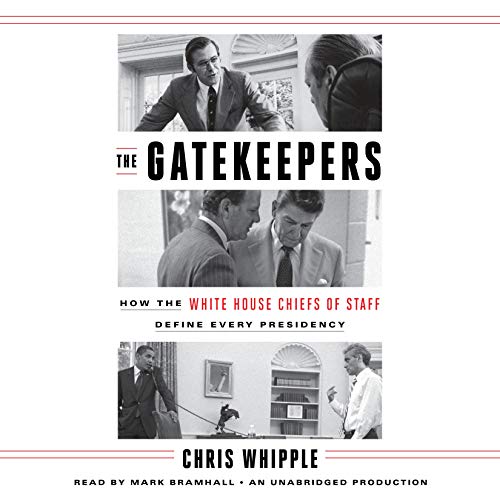
The Gatekeepers (How the White House Chiefs of Staff Define Every Presidency)
Author: Chris Whipple
Narration by: Mark Bramhall
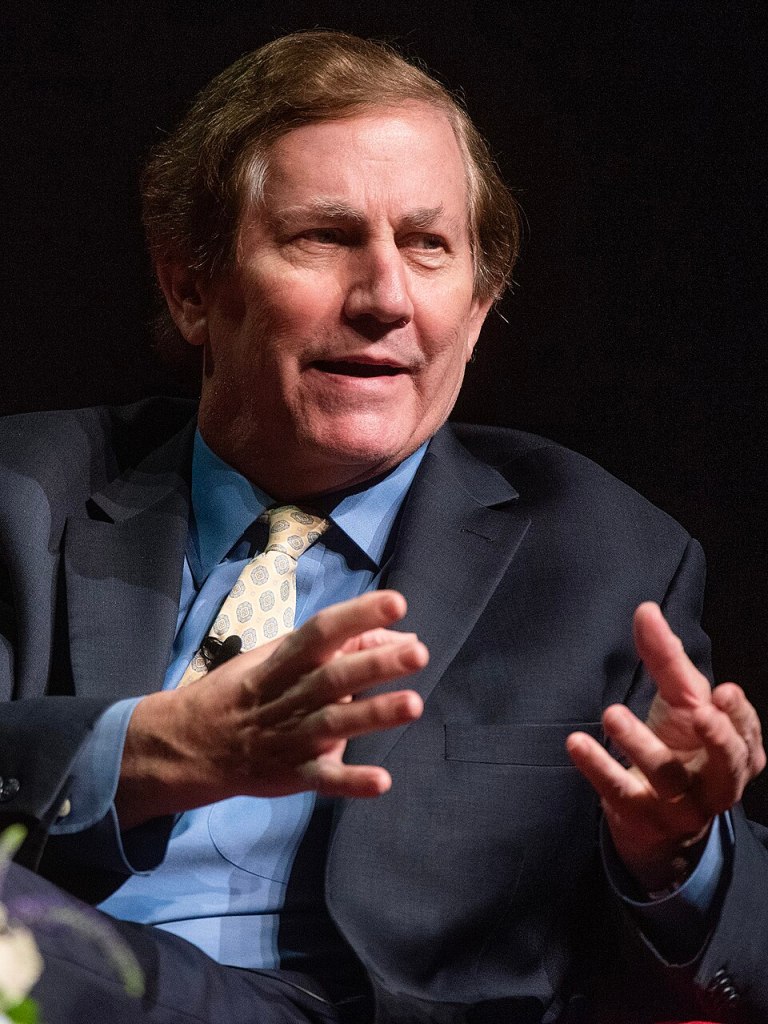
Chris Whipple (Author, political analyst, documentary film maker, journalist.)
Democratic government is complicated and messy, but decisions are made based on an understanding of the interests of many as opposed to the dictate and judgement of one.
“The Gatekeepers” may be viewed by most as an historical account of White House Chiefs of Staff based on many interviews of former government officials. However, one is inclined to see this history as a chronical of American government effectiveness. The facts and incidents reported give reader/listeners a view of America’s government function. Whipple details a series of relatively prudent and sometimes bad decisions made by late twentieth and twenty-first century presidents. Whipple’s history suggests the decision-maker for pursuit of government policy is America’s elected President. However, the road to policy approval or rejection is paved by White House’ Chiefs of Staff.
Whipple covers Nixon’s, Ford’s, Carter’s, Reagan’s, both Bush’s, Clinton’s, Obama’s, and Trump’s first administration. It does not address Biden’s Presidency or the Chief of Staff for Trump’s second term. The many interviews Whipple bases his history on offer a credible and enlightening history of American government. It is H. R. Haldeman, Cheney, Rumsfeld, Baker, Panetta, Card, and Rahm Emanuel that are the most prominent examples of effective and consequential Chiefs of Staff in Nixon’s, Ford’s, Reagan’s, Clinton’s, first and second Bush’s, and Obama’s administrations. The definition of effective is their ability to achieve a desired result whether good or bad for America. This is where one’s personal political beliefs come into question. It is always easy to see the errors of the past retrospectively. Whipple is careful to report facts and results without much judgement about their consequences.
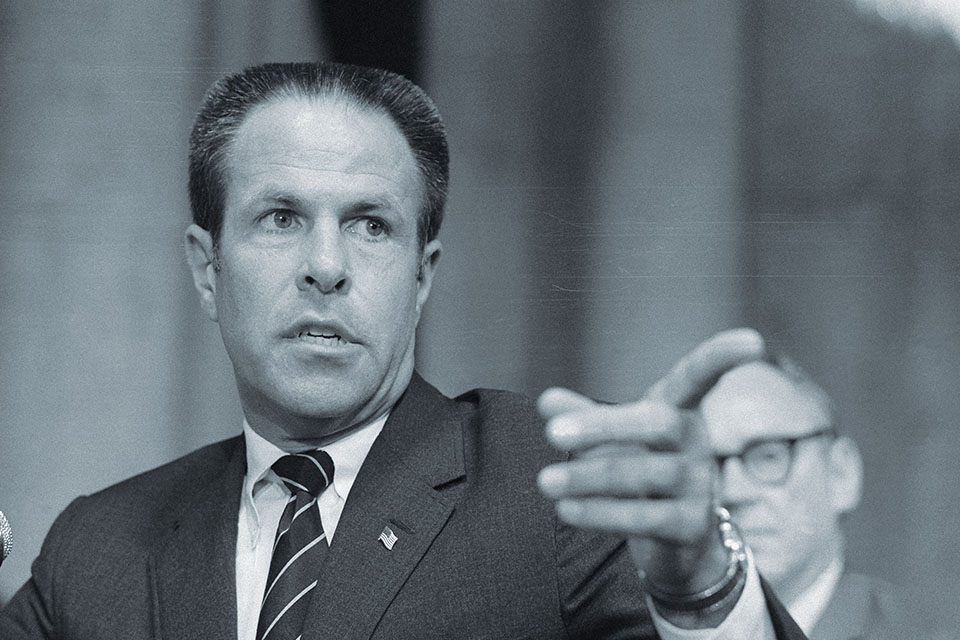
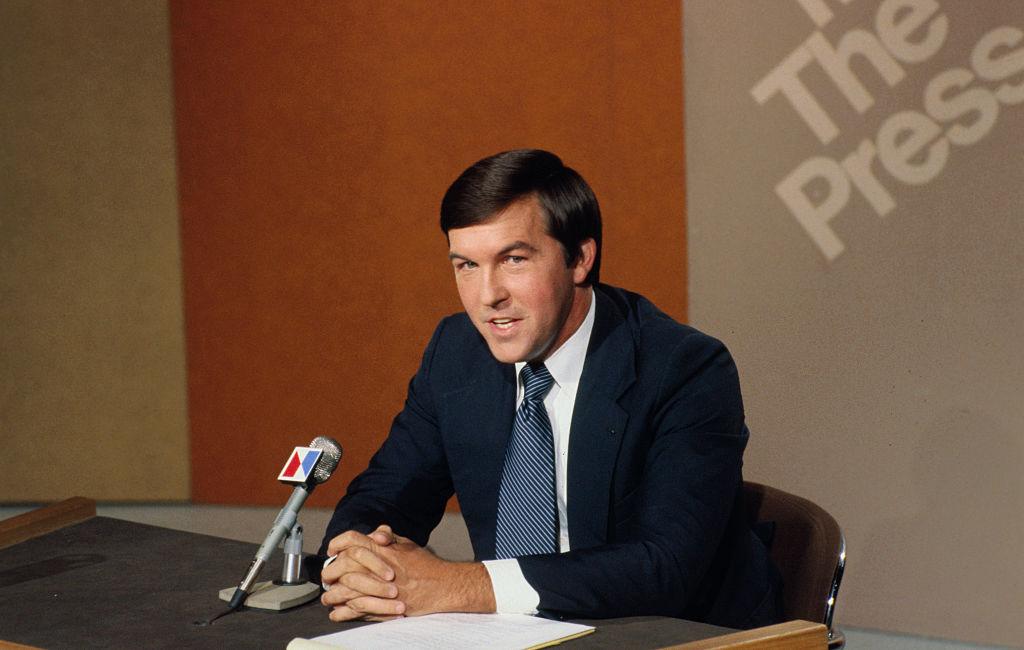
H.R. Halderman (1926-1993, former Chief of Staff for President Nixon.)
Haldeman was Nixon’s Chief of Staff. There is no evidence that he had anything to do with the planned or ordered Watergate break-in, but Whipple shows he participated in a Watergate cover-up. Though Haldeman’s actions after the Watergate scandal are reprehensible, the point made by Whipple is that Haldeman set the table for what an effective Chief of Staff should be for a President. Haldeman acts as a consummate gatekeeper. One can criticize Haldeman’s bad decision to try and coverup Watergate, but he defined the role of a President’s Chief of Staff. Whipple shows Haldeman manages access to the President, understands where the power of government lies, has a good understanding of staff members surrounding the President, protects the President’s time, and balances a President’s policies with the politics of his party.
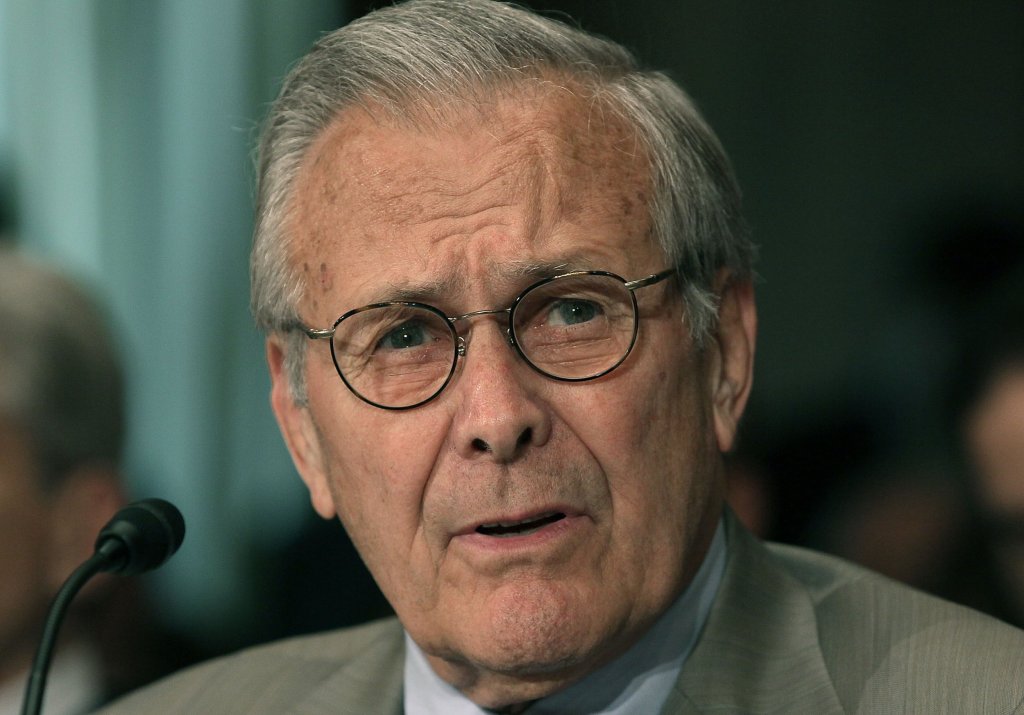
Donald Rumsfeld (1932-2021, Secretary of Defense and former Chief of Staff for President Ford.)
President Ford’s Chief of Staff is Donald Rumsfeld with Dick Cheney as Deputy Chief of Staff. Rumsfeld is characterized as a mentor to Cheney. They had a close relationship according to Whipple. Ford’s political decision to give a full pardon to Nixon and clemency for Vietnam draft dodgers were hot potato issues that were abetted (if not endorsed) by Rumsfeld and Cheney. Most significantly Ford ended America’s war in Vietnam. Ford endorses tax increases to reduce inflation while supporting tax cuts to stimulate the economy. Ford increases congress’s role in foreign policy.
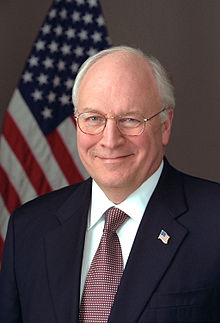
Dick Cheney (1921-2025, second Chief of Staff for President Ford.)
In a cabinet reorganization Cheney becomes the Chief of Staff and Rumsfeld switches to Secretary of Defense. Rumsfeld and Cheney, in their roles as Chiefs of Staff, control access to President Ford, coordinate policy actions, shape internal decision-making, and advise Ford on strategy to influence people who accomplish these acts. The two Chiefs influenced Ford to replace Kissinger as National Security Advisor, promote George Bush as CIA Director, and prepare Ford for the next election which is ultimately lost to Jimmy Carter.
Hamilton Jordan (1944-2008, Chief of Staff of President Carter.)
When elected, President Carter felt he did not need a Chief of Staff. However, he relented in 1979, when he found the job was needed. Carter hired Hamilton Jordan who had been his campaign strategist when he ran for President. Whipple notes that appointment became a mistake because of Jordan’s lack of discipline. Though the Ford administration fought the idea of promoting Reagan for President, the public felt otherwise.
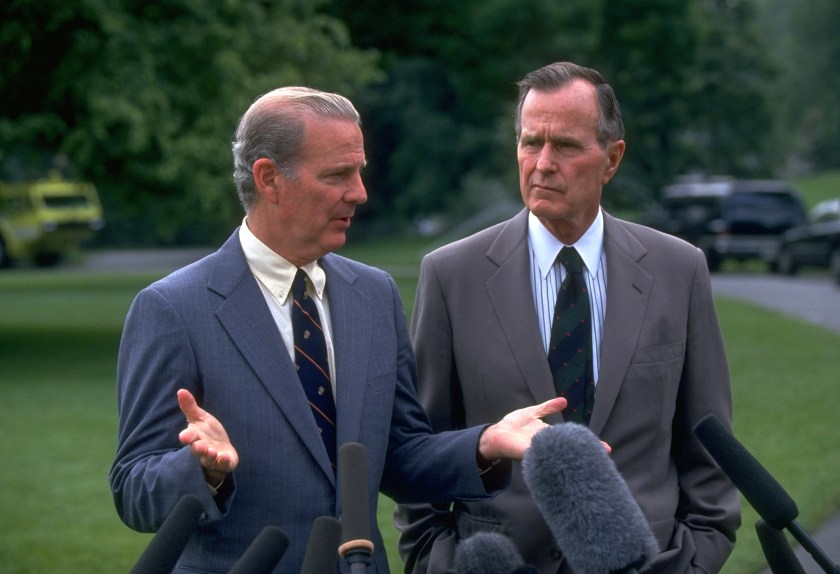
James Baker (1930-, Chief of Staff for President George H.W. Bush.)
After Carter, when Reagan is elected, he chooses James Baker as his Chief of Staff. Whipple suggests Baker is the quintessential model of a great Chief of Staff which all could be measured against. Baker is characterized by Whipple as an expert at managing the White House, the press, and Capitol Hill. Baker understood the process, the politics, communication, and presidential management requirements of the job. He never confused himself with the power of the President. He became manager of what is called the Reagan Revolution. The political and social movement revolves around ideas of smaller government, deregulation, cutting taxes, and endorsement of free enterprise. Whipple infers the success of the Reagan Revolution is largely due to the skill of James Baker.
Leon Panetta (1938-, Chief of Staff for President Clinton.)
One may argue Reagan caused America’s 1990-91 recession. Unemployment had risen to 7.8%. This set the table for a Democratic President named Bill Clinton. The initial Chief of Staff for Clinton is John Podesta who served from 1998-2001 and is replaced by Leon Panetta who, in the author’s opinion, rivals James Baker as a great Chief of Staff. Whipple infers that, without Panetta, Clinton would not have been reelected after the Monica Lewinsky affair. Panetta brought discipline and structure to the Clinton White House. Panetta could say “no” to the President, at least, in private. Panetta gained a reputation for being an honest broker as a negotiator for the President.
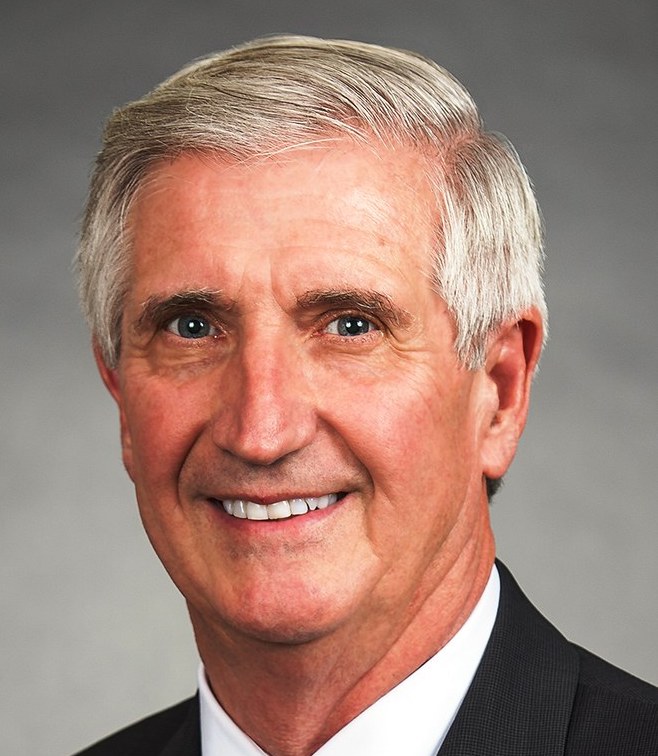
Andrew Card on the left. Joshua Bolten on the right.
George W. Bush, the next President, is noted to have two Chief’s of Staff during his two terms as President. It appears both Andrew Card and Joshua Bolten were more soldiers than Chiefs of Staff for George W. Bush. The policy decider is certainly George W. Bush but the influence of Dick Cheney as Bush’s V.P. seem a major influence on George W.’s decisions. Bush’s two Chief’s of Staff may have been effective as screeners but not as Chiefs of Staff that could say no to a President influenced by his cabinet and personal opinions. The entry to the wars in Afghanistan and Iraq suggests Card and Bolten were unduly influenced by others in the administration.
No one seems inclined to say no to President Bush in private. In retrospect, President Bush seems let down by his Chief’s of Staff and the research and judgement of his Department Heads. Both Afghanistan’s and Iraq’s invasions by the American military are retrospectively shown by most (if not all) histories as American mistakes, if not tragedies.
Rahm Emanuel (1959-, Chief of Staff for President Obama.)
The final chapters address Chief’s of Staff for Obama and Trump. Obama became President when the American economy is in an economic crisis that threatens the financial industry, the general economy, and the mortgage market for many American homeowners. He asks Rahm Emanuel to become his Chief of Staff. Emanuel is a tough Chicago politician who recognizes the pressure of the office and has some level of fear about the future of the American economy. He understood the gravity of the job he is being asked to take. However, his reputation as a tart tongued fighter for what he believed as right made him the best Chief of Staff that could be found. His role as gatekeeper gave Obama the support needed to pass the Obama Health Care plan and work through the economic crisis that nearly bankrupted America.
Reince Priebus (1972-, Chief of Staff for President Trump.)
Trump’s choice of Reince Priebus as his first Chief of Staff is short lived and lasts for less than 8 months. His short tenure is not evaluated, and history shows he is replaced three times in the remaining years of Trump’s first term. A pro-Trump person will have one opinion about those facts while an anti-Trump person will have another.
Whipple convinces reader/listeners that a competent Chief of Staff is critically important for any organization that approaches the complexity of a nation-state government. Without a competent Chief of Staff, democracies are subject to authoritarian tyranny.
Like abolition, women’s suffrage, labor, civil rights, LGBTQ, and MeToo movements of the distant and near past, capitalism’s reform is due.
Books of Interest Website: chetyarbrough.blog
SAVING CAPITALISM (For the Many, Not the Few)
Author: Robert B. Reich
Narration by: Robert B. Reich
Robert Reich (Author, American professor, lawyer and political commentator that worked in the Geral Ford and Jimmy Carter administrations, and served as th secretary of labor in Bill Clinton’s administration.)
Robert Reich, as an advisor to Presidents of the United States is recognized by Time Magazine as one of the Ten Best Cabinet Members of the 21st Century and by the Wall Street Journal as one of the most influential business thinkers in 2008. In “Saving Capitalism” Reich criticizes corporate America for unethical and unfair capitalist practices that make a mockery of capitalist equality.
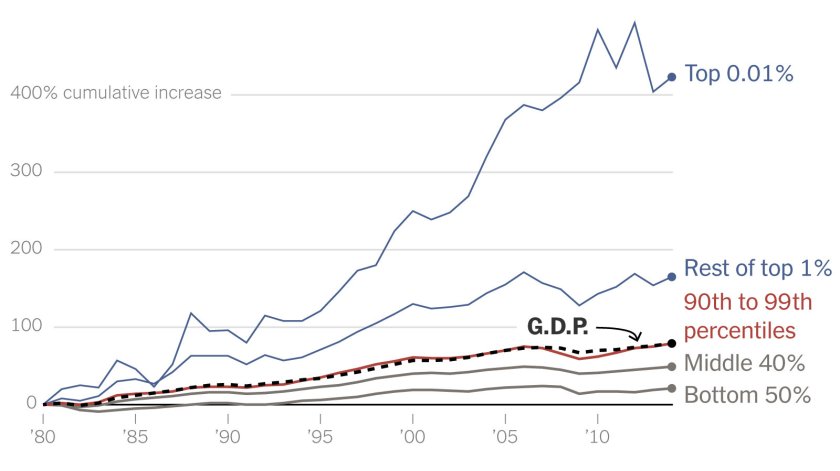
U.S. Rising Income Disparity.
Economic class warfare in America is a time worn argument by many economists in the 20th and 21st century. Reich’s topical analysis has some truth, but his analysis of wealth and markets oversimplifies the complexity of American capitalism. One cannot deny the harm that capitalist greed has done to increase wealth of the rich and decrease wealth of the poor in America. The political system is rigged by the influence of wealth over political policy and economic equality.
American capitalism’s rigging begins at birth, carries through public education, and ends in low-income opportunities for the poor.
The power of wealth feeds American capitalist Democracy’s circle of life. Money of the wealthy is spent to birth and educate their children with the best medical care and schools in America. The corporations and super rich of America hire and fund lobbyists who promote corporate agendas to support government representatives’ campaigns for office. The aspiring representatives are people who owe their allegiance to corporations and the rich who helped get them elected. That circle is biased toward making the rich richer.
Equality of opportunity is rigged in ever-larger corporations that reap super profits and pay CEO’s millions of dollars per year while low wage earners are left to fend for themselves. Mega corporations should be broken up like the oil industry dismantling in 1911. Like Standard Oil, today’s conglomerates have too much power over consumer purchasing, advertising, social media, medical industries, and (most importantly) the election process of America. The rigging begins with healthy birthing of children of the rich, extending to less qualified schooling for the poor, and ending with low-wage family’s children having unequal economic opportunity.
One cannot deny that Reich’s book and this biased review are an ideological belief that distorts and oversimplifies reality, but it carries an element of truth that cannot be denied. How can one person be worth a potential trillion-dollar net worth for service as CEO of one company that makes electric cars. Corporations like Amazon, Google, Facebook, UnitedHealth Group, and Cencora control markets through their size to capture disproportionate shares of advertising, social media, retail sales, and medication industries without competition to moderate their power, and influence. Add billionaires like Elon Musk, Larry Ellison, Mark Zukerberg, Larry Page, Steve Ballmer, Warren Buffett, and Michael Dell and others of great wealth–one is inclined to believe American capitalism is rigged.
As brilliant as Musk shows himself to be, his fragile ego diminishes his genius.
There is an unfairness in criticizing the wealthy for their success in America. They are not wealthy because of luck but because of their innate abilities, risk taking, and hard work but influence should not come from the power of their wealth to change government policies that focus on enriching themselves. Just as the robber barons had their influence curbed by antitrust legislation, the same should be done today. The influence of lobbyists and their support should be more publicly disclosed. The federal government should play more of a financial role in improving public education. Cries of inequality should be exposed, critiqued, and adjudicated fairly.
Capitalism remains the best economic system in the world, but it has its weaknesses. The best prescription for that weakness is equality of opportunity in the arena of employment competition. It begins with fair and equal access to medical care and access to a good education.
Like abolition, women’s suffrage, labor, civil rights, LGBTQ, and MeToo movements of the distant and near past, capitalism’s reform is due.
“Radical Candor” about a creative idea can discourage employee creativity. Scott’s counsel on building trust is her magic potion, but potions can kill as well as heal.
Books of Interest Website: chetyarbrough.blog
Radical Candor (Be a Kick-Ass Boss Without Losing Your Humanity)
Author: Kim Scott
NarratedBy: Kim Scott
Kim Scott (Author, former executive at Apple and Google, coach for tech companies like Dropbox and Twitter)
The agricultural revolution dates back to 10,000 BCE, 1760 marks the beginning of the industrial revolution, the 1950s evolves into an age of expertise and work knowledge with computerization, in the 1990s connectivity and automation begins the information age. Today, Kim Scott addresses the 2020s along with the advent of artificial intelligence. Beginning when the industrial revolution takes hold, organization management evolves into a social science. In the industrial age training changes from demonstrating how to make things to managing people’s work in making things. Jumping to the Information Age managers of people become ringmasters for employee’s creativity.
Despite many changes in purpose for organizations a common thread is managerial skill which entails political and personal skills. Managers pursue understanding, influence, ability, and sincerity of purpose to elicit and manage human creativity.
Scott outlines management skills in “Radical Candor”. Her book is a useful tool for aspiring managers. Even reaching back to the agricultural age, there is relevance in Scott’s belief in “Radical Candor”. She defines radical candor as “Caring personally while challenging (organization employees) directly.” By personally caring, Scott explains good managers must gain the trust of people who report to them. My personal experience as a former manager in different careers shows that no manager knows everything about the company or organization they manage. The one thing a good manager must know is how to develop trust with people who report to her or him. Without trust between managers and workers, organizations are likely to fail.
Trust between managers and employees is even more true today because worker’ creativity drives technological invention and utility.
Being vulnerable by understanding you know nothing about people you manage is the starting point of your role as a manager. Scott explains the first thing a new manager must do is personally meet with each direct report to hear what they do for the organization, what they like and dislike about what they do, and what obstacles get in their way that impede accomplishment. The two-fold purpose of these meetings is first to listen, not judge or criticize what is being reported. The second is to build trust.
(I believe A.I. will always be a technological tool, not a controller, of society, contrary to those who believe human existence will be erased by machines. As a technological tool of humanity, the creativity of human minds is at the frontier of management change.)
Scott explains how important it is to let employees know their manager is interested in an employee’s goals and growth in an organization.
A manager must be both physically and emotionally present when building trust with an employee. There is a need for a manager to explain one’s own vulnerability and responsibility in managing others. Scott’s point is that gaining trust of an employee requires more than knowing their birthday. A good manager will ask for feedback about what an employee is doing and what support a manager can offer to improve their performance. A manager should be curious, not furious when things are not going well. It is important that a sense of respect be given for an employee’s effort to get their job done. With development of respect, it becomes possible to use radical candor to constructively criticize or complement an employees’ performance.
Scott notes there are many reasons for an employee’s failure to perform beyond expectations.
Those reasons include incompetence but also the failure of management to have a clear understanding of an employees’ strengths and weaknesses. Through development of trust between manager and employee, a different job may be in order. With reassignment and a performance plan, a manager may be able to tap a human resource that has been wasted. The performance plan is instituted with “Radical Candor” and offers either opportunity or, if performance improvement fails, dismissal.
Every organization has distinctive operational idiosyncrasies that a manager may not precisely understand.
This has always been true. It is even more true in the tech age because project uniqueness and employee creativity is more difficult to measure and manage. Kim Scott has worked with the most iconic tech companies of modern times, e.g. Apple, Google, Twitter. There are a number of anecdotes about famous tech giants and officers of Facebook, Apple, and Google, like Sandberg, Cook, and Page. Kim has also started her own businesses, some of which failed, and others that prospered. Her experience offers credibility to her arguments.
From personal experience as a manager of others, no manager ever knows all there is to know.
As Scott notes, this is not to say that geniuses like Steve Jobs did not know more than his Apple employees, but the iPhone idea came from a group of employees before approaching Jobs with a clunky mock-up of the idea. Jobs had a reputation for being a tough audience for people with creative ideas. This is the reason Kim Scott explains trust must be created between manager and employee so that candor about needs and expectations can be usefully employed to improve probability of personal and organizational success.
One takes Kim Scott’s counsel on “Radical Candor” with some reservation because misused “Radical Candor” about a creative idea can discourage employee creativity. Scott’s counsel on building trust is her magic potion, but potions can kill as well as heal.
Greene explains self-awareness of introversion or extroversion is key to understanding one’s social limitations and blind spots in being a constructive part of society.
Books of Interest Website: chetyarbrough.blog
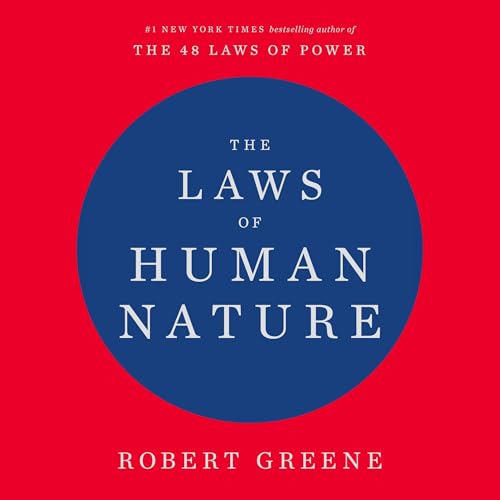
The Laws of Human Nature
Author: Robert Greene
NarratedBy: Paul Michael & 1 more
Robert Greene (Author, with several NYT’s bestsellers addressing human nature, graduated with a degree in classical studies.)
“The Laws of Human Nature” is a tour deforce of what one learns in life about being a good manager. The difference between a technically excellent employee and a manager is that the first has skill in doing things while the second has skill in managing those who do things. Occasionally, one can be both, but as the complexity of life increases, the likelihood becomes rarer. Human nature revolves around behavior and one’s psychological characteristics. Greene argues there are fundamental laws of human nature that can enlighten listener/readers about themselves and others.
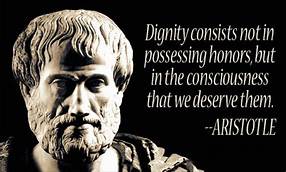
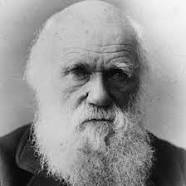
Aristotle (384-322 BC)THOMAS HOBBES (1588-1679)Rousseau (1712-1778)CHARLES DARWIN (1809-1882) FOUNDER OF THE THEORY OF THE ORIGIN OF SPECIES.
Aristotle’s, Hobbes’, Rousseau’s, and Darwin’s views of human nature have different perspectives. Aristotle believes human nature is teleological with a belief that we all have purpose that is revealed by reason and virtue. Hobbes believes humans are innately self-interested and capable of both good and bad behavior. Rousseau believes humans are inherently good but corrupted by society. Darwin believes humans evolve through natural selection and will do whatever is necessary to survive. Of the four perspectives, Aristotle seems the most idealistic while the other three account for human nature’s irrationality.
Greene suggests humans can be irrational, narcissistic, misleading, and sometimes repressive.
What one can draw from his book is how those characteristics exhibit and what one can do about it. The potential of irrationality exists in everyone. It can cause fear, envy, insecurity, and desire. Bias is at the heart of these emotions. He turns to ancient history to give the example of the war between Spartans and Greeks that may have been avoided if heightened emotions had not been aggravated by a plague in Greece and the death of Pericles who had a rational plan to avoid war. Greene suggests Augustus defeats Anthony to become ruler of Rome because of Anthony’s neglect of his duty as leader of Rome for the desire of the Egyptian Queen, Cleopatra. Greene notes irrationality is a universal characteristic of humanity. The anecdote is to calm one’s emotions, clearly understand what it is that you fear, and to mirror back that clear understanding to yourself and change your behavior.
One can see narcissism in themselves or others when one seeks admiration, overreacts to criticism, has no interest in others perspective, or manipulates others by ignoring or emotionally withdrawing attention.
Married people often do this with their significant other. Greene explains self-awareness, seeing others through their eyes, redirecting your energy to something more important, and being more disciplined can abate narcissism. He notes narcissism is not a flaw but a force that can be turned to good. The history of Oppenheimer, considered by some to be narcissistic, is noted as an example of someone who saw the big picture of life and the consequence of war. He came to understand something bigger than himself and successfully manages other scientists to create the first nuclear bomb. The contrary of a narcissist who could not see the big picture is the story of Howard Hughes who could not manage his father’s company or his entry into the film industry because he could not get things done through other people. He believed only he could handle the complexity of a film production and plane manufacturing company. No one could work under him because of his uncontrolled narcissism that interfered with others he hired to help him manage businesses bigger than one mind could control. His managers resigned because he would not allow them to do the job they were hired to do. Hughes failed as a movie producer and plane manufacturer because of his narcissism.
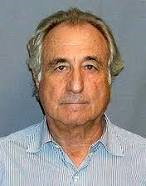
Bernie Madoff (Born 1938, died in Federal Medical Center in 2021)
History is festooned with misleading information by people who distort the truth in order to achieve their personal goals. Greene recalls the history of swindlers like Bernie Madoff that lied to his investors about investments that were Ponzi schemes that fed his investment company’s growth, not from honest investment in publicly traded stocks or business enterprises.
STALIN (1878-1953)
Stalin in Russia, is the penultimate example of a psychological characteristic of repression. One suspects the same is true of Putin. Even America’s President Trump could be characterized as a narcissist. He used federal power to investigate and punish political opponents. Trump politicized the civil service by conducting mass firings to replace employees that were loyal to his agenda. Justice Department’ independence has similarly been restructured. Trump suppresses dissent and free expression by cracking down on student protests, detained and deported not only illegal immigrants but U.S. citizens. He ended asylum protections and militarized crackdowns with the use of the National Guard and U.S. marines to aid ICE in deporting undocumented immigrants and quelling public opposition. All of these actions are examples of an increasingly repressive American President. There were similar arguments about Franklin Roosevelt in his early actions to rescue America from the pre-WWII’ depression.
Greene goes on to explore personality types that are a combination of extroversion and introversion characteristics.
He notes both characteristics have strengths and weaknesses. Extroverts generally have more social fluency, have a more charismatic presence and higher social visibility. They can also become subjects of envy or derision because of their high profile. Greene suggests they are more vulnerable to manipulation because their habits reveal too much about themselves. They become more susceptible to groupthink rather than individual judgement. On the other hand, introversion has equivalent but different strengths and weaknesses. Introverts have more control over themselves because they reveal less of themselves to others. They are naturally less likely to succumb to groupthink. On the other hand, they tend to misread socially valuable influences because of their isolated view of the world. They fail to offer their opinion because of fear of self-exposure and ridicule which diminishes their understanding of beneficial social norms.
Greene explains self-awareness of introversion or extroversion is key to understanding one’s social limitations and blind spots in being a constructive part of society. However, his analysis of “The Laws…” of human nature becomes tedious because it offers too many examples and views of biases and their anecdotes for most listener/readers to be patient enough to complete his book. Nevertheless, Greene’s first chapters are enlightening and worth one’s time.
Like Climate Change, AI seems an inevitable change that will collate, spindle, and mutilate life whether we want it to or not. The best humans can do is adopt and adapt to the change AI will make in human life. It is not a choice but an inevitability.
Books of Interest Website: chetyarbrough.blog
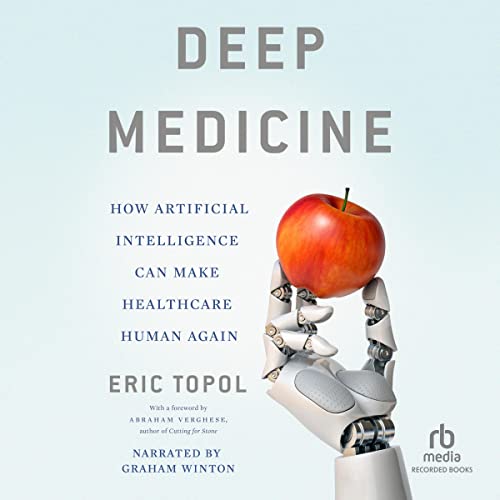
Deep Medicine (How Artificial Intelligence Can Make Healthcare Human Again)
Author: Eric Topol
Narrated By: Graham Winton
Eric Topol (Author, American cardiologist, scientist, founder of Scripps Research Translational Institute.)
Eric Topol is what most patients want to see in a Doctor of Medicine. “Deep Medicine” should be required reading for students wishing to become physicians. One suspects Topol’s view of medicine is as empathetic as it is because of his personal chronic illness. His personal experience as a patient and physician give him an insightful understanding of medical diagnosis, patient care, and treatment.
Topol explains how increasingly valuable and important Artificial Intelligence is in the diagnosis and treatment of illness and health for human beings.
AI opens the door for improved diagnosis and treatment of patients. A monumental caveat to A.I.s potential is its exposure of personal history not only to physicians but to governments and businesses. Governments and businesses preternaturally have agendas that may be in conflict with one’s personal health and welfare.
Topol notes China is ahead of America in cataloging citizens’ health because of their data collection and AI’s capabilities.
Theoretically, every visit to a doctor can be precisely documented with an AI system. The good of that system would improve continuity of medical diagnosis and treatment of patients. The risk of that system is that it can be exploited by governments and businesses wishing to control or influence a person’s life. One is left with a concern about being able to protect oneself from a government or business that may have access to citizen information. In the case of government, it is the power exercised over freedom. Both government and businesses can use AI information to influence human choice. With detailed information about what one wants, needs, or is undecided upon can be manipulated with personal knowledge accumulated by AI.
Putting loss of privacy and “Brave New World” negatives aside, Topol explains the potential of AI to immensely improve human health and wellness.
Cradle to grave information on human health would aid in research and treatment of illnesses and cures for present and future patients. Topol gives the example of collection of information on biometric health of human beings that can reveal secrets of perfect diets that would aid better health during one’s life. Topol explains how every person has a unique biometric system that processes food in different ways. Some foods may be harmful to some and not others because of the way their body metabolizes what they choose to eat. Topol explains, every person has their own biometric system that processes foods in different ways. It is possible to design diets to meet the specifications of one’s unique digestive system to improve health and avoid foods that are not healthily metabolized by one’s body. An AI could be devised to analyze individual biometrics and recommend more healthful diets and more effective medicines for users of an AI system.
In addition to improvements in medical imaging and diagnosis with AI, Topal explains how medicine and treatments can be personalized to patients based on biometric analysis that shows how medications can be optimized to treat specific patients in a customized way. Every patient is unique in the way they metabolize food and drugs. AI offers the potential for customization to maximize recovery from illness, infection, or disease.
Another growing AI metric is measurement of an individual’s physical well-being. Monitoring one’s vital signs is becoming common with Apple watches and information accumulation that can be monitored and controlled for healthful living. One can begin to improve one’s health and life with more information about a user’s pulse and blood pressure measurements. Instantaneous reports may warn people of risks with an accumulated record of healthful levels of exercise and an exerciser’s recovery times.
Marie Curie (Scientist, chemist, and physicist who played a crucial role in developing x-ray technology, received 2 Nobel Prizes, died at the age of 66.)
Topol offers a number of circumstances where AI has improved medical diagnosis and treatment. He notes how AI analysis of radiological imaging improves diagnosis of body’ abnormality because of its relentless process of reviewing past imaging that is beyond the knowledge or memory of experienced radiologists. Topol notes a number of studies that show AI reads radiological images better than experienced radiologists.
One wonders if AI is a Hobson’s choice or a societal revolution.
One wonders if AI is a Hobson’s choice or a societal revolution greater than the discovery of agriculture (10000 BCE), the rise of civilization (3000 BCE), the Scientific Revolution (16th to 17th century), the Industrial Revolution (18th to 19th century), the Digital Revolution (20th to 21st century), or Climate Change in the 21st century. Like Climate Change, AI seems an inevitable change that will collate, spindle, and mutilate life whether we want it to or not. The best humans can do is adopt and adapt to the change AI will make in human life. It is not a choice but an inevitability.
The story of “…Belle Lettres…” inelegantly reminds one of the effects of Trump on America’s reputation.
Books of Interest Website: chetyarbrough.blog
The Belles Lettres Papers (A Novel)
By: Charles Simmons
Narrated By: Alex Hyde-White
Charles Paul Simmons (1924-2017, Author and former American editor for The New York Times Book Review, graduate of Columbia University in 1948.)
“The Belles Lettres Papers” is a fictional account about the destruction of an American book review company. Written by a person who worked as the editor for the NY Times Book Review gives credibility to its author. One wonders how the nationally famous paper felt about his book. Simmons writes a story of a magazine company that exclusively reviews new books that become literary successes, sometimes bestsellers, or dead or dying dust gatherers.
To this book critic, Simmons certainly seems to know what he is writing about but “The Belles Lettres Papers” falls into a dust gatherer category of books.
Book reading or listening is an educational, sometimes entertaining, experience. There are so many books written that it is impossible to know what to read or listen to without someone’s review of what has been newly or recently published. Of course, there are genres that a reader/listener will choose that influences their book choices. Even when one limits themselves to a genre, there are too many choices that require a way of limiting one’s choice.
Experience reveals “best seller” is not a consistently reliable way of choosing a book, but it is one of the most commonly used methods of selection.
What “…Belles Lettres…” reveals is the potential corruption that can inflate a books placement on a best seller list. Book review publications, like all business enterprises, have owners and employees that have various levels of honesty, capability, and ethical standards. What Simmons shows is how every business owner and employee is subject to the influence of money and power.
The potential weaknesses of humanity play out in every organization that provides service or material to the public.
Simmons shows how a fictional book review company has employees who are corrupted by the power of their positions and the money they make. The fictional company has a male business manager who thinks his female secretary wishes to have sex with him because of natural attraction. Ethically, no employee reporting to a manager they work for should have sexual relations with a direct report. This is particularly egregious in Simmon’s story because of sexual inequality that permeates society. As Lord Acton’s observation about power (power corrupts, absolute power corrupts absolutely), a person who has power over another is always at risk of self-delusion.
Simmons goes on to explain how undercompensating employees can corrupt an organization by incentivizing theft and other ways of undermining a company’s integrity.
Simmons addresses the incentive of owners or those in power of an organization to cut personnel employment to save money at the cost of product quality or service. America is experiencing that today with the actions of the Trump Administration in arbitrarily firing federal employees, regardless of what they do for American citizens.
In a last chapter, Simmons addresses the revisions that can occur in a company that decides on a wholesale turnover in employees.
The integrity of a company’s mission can be sorely challenged. In the case of “…Belle Lettres…” a decision for publication of salacious books replaces the company’s former studied reviews of good writers. The organization loses its reputation as a reviewer of high-quality publications.
Trump’s assessment of immigration.
The story of “…Belle Lettres…” inelegantly reminds one of the effects of Trump on America’s reputation as a supporter of western society by reducing foreign aid, undermining university independence, denying global warming, arbitrarily firing government employees, and expelling American immigrants.
Unless homelessness is addressed with affordable housing, America’s future looks bleak. A land of have and have-nots will grow to crush American prosperity.
Books of Interest Website: chetyarbrough.blog
Abundance
By: Ezra Klein, Derek Thompson
Narrated by: The Authors
Ezra Klein (American political commentator and “NYT’ journalist.) Derek Thompson (American podcaster and journalist @ “The Atlantic”.)
These two young Americans offer an insightful view of politics and American government in the 21st century.
Donald TrumpKamela Harris
Klein or Thompson could have voted for either Trump or Harris in America’s last election. Their book argues American government is both a boon and bane for citizen “Abundance” in the 21st century. They note America has contradictory economic policies that have created great abundance among Americans while exacerbating inequality. Evidence for their opinion is growing homelessness, an immigration crisis, loss of manufacturing jobs, and government’s failure to creatively adjust public policies to provide solutions.
Those who have shared in the abundance of America have voted for candidates to preserve their privileges.
The authors note homelessness is a function of affordable housing that is denied by government policies that regulate zoning and construction requirements. Government policies make affordable housing too costly to build and impossible to locate because of zoning restrictions. The number of people living on the street is a self-inflicted American tragedy. Some of the homeless are young, some are old, some have mental or physical problems, and others are victims of drugs or their own weaknesses. What they have in common is unaffordable housing.
Historically, immigration has been a great boon to American economic growth.
Klien and Thompson note restrictive immigration policies have created obstacles for workers needed for manufacturing in key industries like agriculture, auto industry assembly, housing construction, and clean energy infrastructure. Rather than wasting money on building walls and deporting workers, the authors advocate immigration reform that meets the needs of American business. One can imply the authors meaning is that to “Make America Great Again” requires immigrants willing to work in agricultural and manufacturing jobs. The end of the baby boom requires help from immigrants to meet the needs of increased manufacturing and construction in the United States.
Some believe what Trump is doing is good for the American economy in the long run.
The criticism is that in the short run, the economy may collapse. Tariffs being used as a ham-fisted way of negotiating fair international trade is a fool’s errand. America needs labor and material in the short run to achieve equal and greater prosperity than it had in the 1970s. Added manufacturing will aid American prosperity, but it will be surpassed in the long run by automation. It is the automation race America needs to win or compete with to remain a world leader. Competing in that race depends on education, and scientific research. The irony is that Trump is firing government employees who have responsibility for public education, research, and funding that have been the engines of America’s prosperity.
The government employees discharged by the Trump administration to solely reduce costs is short sighted.
In the 1980s, 60% of basic research in the U.S. was funded by the government. In 2022 that funding dropped to 40%. Advances in semiconductors, global positions systems, biotechnology, and aeronautics were government-funded discoveries in the 1980s. American government-funded scientific research gave America the internet, GPS technology, mass production of penicillin, Space exploration, human genome project discoveries, and renewable energy innovations. The Department of Health and Human Services has lost 20,000 employees, the Department of Education 1,300, the National Oceanic and Atmospheric Administration 800, and the National Institutes of Health 1,200. One wonders how many of these employees may have been on the edge of scientific discoveries that could change the world.
The truth of “Abundance” is that America has caused many negative ecological impacts and aggravated the gap between rich and poor.
Klein and Thompson have written a provocative book. However, the truth of “Abundance” in America has caused many negative ecological impacts and aggravated the gap between rich and poor. Looking only to abundance does not address either social inequality or the environment. The NIMBY (not in my back yard) resistance to affordable housing aggravates inequality and increases homelessness. Unquestionably, higher density housing impacts the environment.
Klein and Thompson fail to address the increased power of corporations in America.
The 2010 Citizens United v. Federal Election Commission gave corporations the power to spend unlimited amounts of money on political campaigns. The influence of corporations on elections has disproportionate power in the election of government policy makers. That decision by the Court is a distortion of one person, one voter’s influence on public policy.
Aristotle emphasized the importance of “All things in moderation”. NIMBY communities must open their minds and hearts to homelessness and moderate their resistance to neighborhood accommodation. Government agencies must supervise and service higher density housing impacts wherever they are built and after they are completed.
Unless homelessness is addressed with affordable housing, America’s future looks bleak. A land of have and have-nots will grow to crush American prosperity.








































































 REVIEWS AND VIEWS OF LIFE