MOST INTERESTING ESSAYS 12/4/25: THEORY & TRUTH, MEMORY & INTELLIGENCE, PSYCHIATRY, WRITING, EGYPT IN 2019, LIVE OR DIE, GARDEN OF EDEN, SOCIAL DYSFUNCTION, DEATH ROW, RIGHT & WRONG, FRANTZ FANON, TRUTHINESS, CONSPIRACY, LIBERALITY, LIFE IS LIQUID, BECOMING god-LIKE, TIPPING POINT, VANISHING WORLD
Aristotle’s belief was that the goal of life is living well, Sartre suggests there is no inherent meaning to life, Bentham said the goal of life is happiness. What does Gladwell believe?
Books of Interest Website: chetyarbrough.blog
OUTLIERS
Author: Malcolm Gladwell
Narration by: Malcolm Gladwell
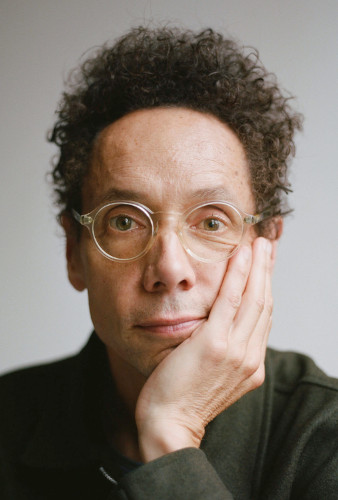
Malcolm Gladwell (Author, Canadian journalist, and public speaker.)
“Outliers” makes several points, some of which are insightful while others are debatable. As with all observations of life and discovery, correlation of what we see, hear, and understand does not prove causation. Gladwell shows the advance of civilization and great successes in life are from luck, timing, and hard work more than I.Q.
Gladwell offers examples of chance and the circumstances of an era that advance society.
Gladwell explains intelligence alone does not make a person successful. He offers a brief biography of a high IQ person who did not achieve success despite his intelligence. He notes intelligence and one’s culture must be accompanied by individual hard work, interest, and commitment as well as the luck of being born at the right time. Gladwell’s examples of success are Bill Gates, the Beatles, sports’ stars, retail clothiers, and lawyers. Each of his examples are a result of being in the right place at the right time with an innate wish to work hard that makes “Outliers” personally and/or financially successful.
The founders of Microsoft, Paul Allen (L) and Bill Gates.
Gladwell argues his case about “Outliers” by offering several examples. The founders of Microsoft were born at a time when computers were first being discovered. The Beatles lived in a culture that idolizes musicianship and entertainment. A quirk in society that artificially determines children born in certain months are presumed by some to make good to great sports stars which results in higher-order support of children born in particular months of the year. That birth-month’ choice garnered extraordinary support of parents and coaches according to Gladwell. Those children became sports stars as a result of that early parental and coaching support of their sports careers. Gladwell goes on to suggest observation and experience of immigrating Jewish clothes-makers arrived in America and became wealthy merchants at a time of America’s economic growth. And finally, Gladwell notes lawyers began creating elite legal firms to support growing litigation between growing mid-twentieth century American corporations. Gladwell’s common denominators were relative intelligence, a burning interest in cultural change, and a commitment to hard work. The circumstances of the time (new invention and social change) and hard work, rather than high I.Q., were the primary causes of individual success.
Cultural backgrounds.
Gladwell suggests cultural backgrounds prepared some to seize opportunities that were overlooked by the general population. He suggests some Jewish immigrants who migrated from discriminative cultures, were liberated by the freedom available in America. Gladwell notes the creation of the garment industry in New York and the rise of successful Jewish legal firms are examples of seized opportunities missed by many in the 20th century. The common denominators were hard work, social change, and culture.
The criticism one may have of Gladwell’s book is in the examples he chooses to make his arguments.
Gladwell’s examples are chosen to support his argument, but they narrow the reality of the complex life lived by most humans. He oversimplifies success because it seems narrowly defined as wealth and/or fame rather than happiness or contentment. He defines success as something that requires a “10,000” hour commitment of research and practice, i.e. an arbitrary criterion that has no basis in fact. People make their own choices in life whether it is as a nerd, a famous musician, a high-powered lawyer, or one who loves to read and spends time listening/reading and reviewing books.
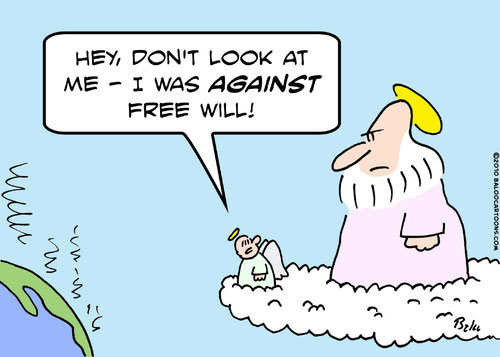
Determinism vs. free will.
Gladwell seems to say life is deterministic, but many choose to adapt rather than be driven by the circumstances of life. This generation’s great change will be in the implementation of A.I. Massive investment is being made in A.I. today with momentous change coming to the world of employment.
Aristotle’s belief was that the goal of life is living well, Sartre suggests there is no inherent meaning to life, Bentham said the goal of life is happiness. What does Gladwell believe?
Putin has been indicted by the International Criminal Court for war crimes, unlawful deportation and transfer of Ukrainian children but has not yet faced trial. One suspects President Putin faces the same “slap of the hand” as Pinochet and will die of natural causes without being convicted for his crimes.
Books of Interest Website: chetyarbrough.blog
38 LONDRES STREET (on Impunity, Pinochet in England, and a Nazi in Patagonia)
Author: Phillip Sands
Narration by: Phillip Sands
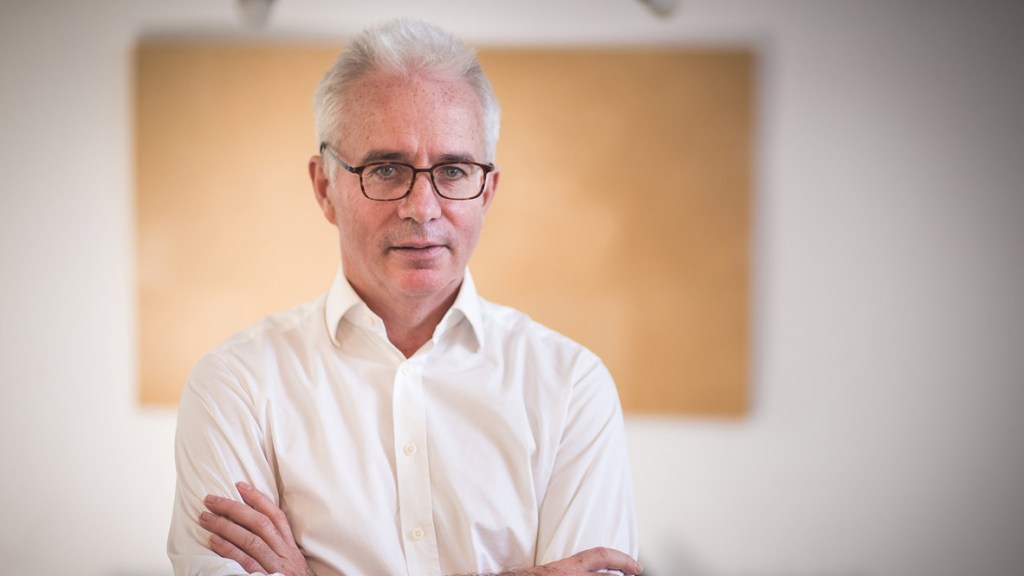
Peter Sands (Author, Executive Director of the Global Fund to Fight Aids, Tuberculosis and Malaria, former CEO of Standard Chartered, known as a British Banker.)
Peter Sands book is interesting and a compelling history that would have been clearer if, at the beginning of his book, he had more precisely identified Augusto José Ramón Pinochet Ugarte’s atrocities in Chile. Those atrocities are detailed after one is nearly halfway through the book.
“38 Londres Street” is the address at which torture, illegal detentions and assassinations took place under the leadership of Pinochet. Sands explains 40,000 people were detained or tortured under Pinochet’s regime. 3,000 people were killed or disappeared during Pinochet’s reign. He ruled Chile for 17 years before being arrested in London when a Spanish judge issued a warrant for his arrest for genocide and terrorism. This was the first time a former head of state was charged for a crime by a universal jurisdiction.
Augusto Pinochet (born in 1915-died in 2006. As a military officer and politician, he instituted a military coup to become dictator of Chile from 1978 to 1990.)
Pinochet became Dictator of Chile when he overthrew President Salvador Allende in 1973.
Because of mining and trade interests in Chile by American and British corporations, along with distrust of Allende’s Socialist Party and Marxist beliefs, Allende was considered an enemy of America’s and Great Britain’s leadership. Allende was often labeled as a Communist because of nationalizing Chile’s copper mines, redistributing land, and increasing wages for less wealthy Chileans.
In truth, Allende rejected the idea of a one-party communist state while believing Chile should gradually become a Democracy. Both America and Great Britain supported Pinochet’s revolution because of their economic interest in trade with Chile and their opposition to his socialist beliefs. Declassified records show the CIA funded opposition parties to destabilize Allende’s government. Because Britain was a close ally of America and had economic interests in Chile, both Nixon and Edward Heath, the Prime Minister of Great Britain, supported Pinochet’s military junta. When Margaret Thatcher became Prime Minister, she also supported Pinochet’s government. In the atmosphere of the cold war, Pinochet’s rebellion seemed in the best interest of America’s and England’s leadership.
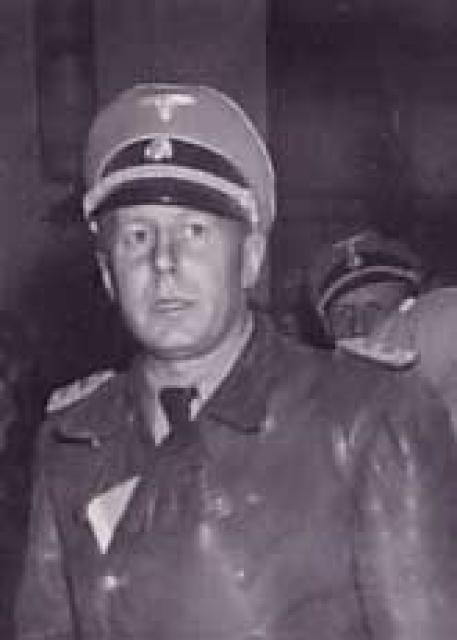
Walter Rauff was a Nazi commander during WWII who escaped justice for exterminating an estimated 100,000 people in gas vans. Rauff designed the vans for Hitler’s occupation of Poland, Russia, and Ukraine. The picture to the right is Rauff as he appeared in Chile as an employee of Pinochet’s government.
The reason for the Chilean coup is not what Phillip Sands is primarily interested in but, as an author and lawyer, he explains the significant change in jurisdictional law with Pinochet’s indictment. It set a precedent for a foreign country’s right to indict another country’s leadership that tortures, disappears, and kills its own citizens.
The most troubling part of his argument for the change in international law is that it seems ineffective when only viewed from the indictment of Pinochet. To find a leader chargeable for genocide is important, but Chile’s protection of death camp SS officers like Walther Rauff reminds one of Putin’s atrocities as President of Russia. Rauff was protected by Pinochet’ government despite his role in Nazi Germany. Sands notes that Rauff assisted Pinochet in Chile’s repressive activities at 38 Londres Street.
Rauff’s disguised ambulances used to gas Jewish citizens and others.
The last half of Sands’ book is about the extensive interviews and research he did on Rauff’s past life. Like Pinochet, Rauff escapes justice and dies of natural causes. However, Jewish Nazi hunters did track down Rauff with the intent of killing him. Sands explains they were unsuccessful despite having knocked on his door before being denied access by a woman who answered the knock.
Magistrate Baltasar Garzón (Former judge of Spain’s central criminal court that set the precedent for universal jurisdiction.)
The world owes Spain gratitude for embracing universal jurisdiction despite its failure to successfully hold Pinochet for his crimes against humanity. That precedent gives weight to the principle of international justice. Magistrate Baltasar Garzón used the Pinochet case to set the precedent that sovereignty does not shield perpetrators of torture and genocide to be free of indictment and its potential for punishment. Adolf Eichmann is brought to justice in 1961 and the survivors of the 2003 massacre in Bolivia were awarded $10 million in damages.
One’s thoughts go to Putin’s incarceration of Navalny, his ordered slaughter of Chechens and his aggressive war against Ukraine. Navalny exposed Putin’s corruption in state-owned companies owned by Kremlin elites, i.e. the same elites that support the war in Ukraine.
Will Putin escape the long arm of the law?
As a professor of international law, Sands gives listener/readers a view of the important precedent of universal jurisdiction with the successful arrest of Pinochet for crimes against humanity. The irony of Sands history of this precedent is that Pinochet is not convicted and returns to Chile in 2000. Pinochet dies in 2006 at age 91. Putin has been indicted by the International Criminal Court for war crimes, unlawful deportation and transfer of Ukrainian children but has not yet faced trial. One suspects President Putin faces the same “slap of the hand” as Pinochet and will die of natural causes without being convicted for his crimes.
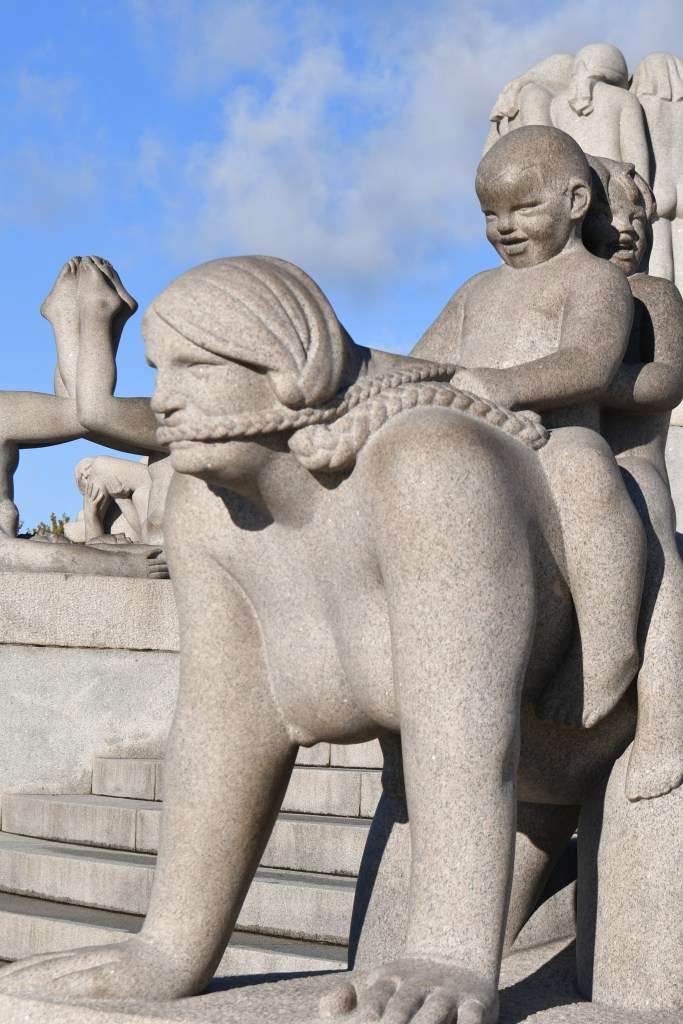
A.I.s’ contribution to society is similar to the history of nuclear power, it will be constructively or destructively used by human beings. On balance, “Burn-In” concludes A.I. will mirror societies values. As has been noted in earlier book reviews, A.I. is a tool, not a controller of humanity.
Books of Interest Website: chetyarbrough.blog
BURN-IN (A Novel of the Real Robotic Revolution)
Author: P. W. Singer, August Cole
Narration by: Mia Barron
Peter Warren Singer (on the left) is an American political scientist who is described by the WSJ as “the premier futurist in the national security environment”. August Cole is a co-author who is also a futurist and regular speaker before US and allied government audiences.
As an interested person in Artificial Intelligence, I started, stopped, and started again to listen to “Burn-In”.
The subject of the book is about human adaptation to robotics and A.I. It shows how humans, institutions, and societies may be able to better serve society on the one hand and destroy it on the other. Some chapters were discouraging and boring to this listener because of tedious explanations of robot use in the future. The initial test is in the FBI, an interesting choice in view of the FBI’s history which has been rightfully criticized but also acclaimed by American society.
Starting, stopping, and restarting is a result of the author’s unnecessary diversion to a virtual reality game being played by inconsequential characters.
In an early chapter several gamers are engaged in VR that distracts listeners from the theme of the book. It is an unnecessary distraction from the subject of Artificial Intelligence. Later chapters suffer the same defect. However, there are some surprising revelations about A.I.’s future.
The danger in societies future remains in the power of knowledge. The authors note the truth is that A.I.’s lack of knowledge is what has really become power. Presumably, that means technology needs to be controlled by algorithms created by humans that limit knowledge of A.I.’ systems that may harm society.
That integration has massive implications for military, industrial, economic, and societal roles of human beings. The principles of human work, social relations, capitalist/socialist economies and their governance are changed by the advance of machine learning based on Artificial Intelligence. Machine learning may cross thresholds between safety and freedom to become systems of control with potential for human societies destruction. At one extreme is China’s surveillance state; on the other is western societies belief in relative privacy.
Robot evolution.
Questions of accountability become blurred when self-learning machines gain understanding beyond human capabilities. Do humans choose to trust their instincts or a machines’ more comprehensive understanding of facts? Who adapts to whom in the age of Artificial Intelligence? These are the questions raised by the authors’ story.
The main character of Singer’s and Cole’s story is Lara Keegan, a female FBI agent. She is a seasoned investigator with an assigned “state of the art” police robot. The relationship between human beings and A.I. robots is explored. What trust can a human have of a robotic partner? What control is exercised by a human partner of an A.I.’ robot? What autonomy does the robot have that is assigned to a human partner? Human and robot partnership in policing society are explored in “Burn-In”. The judgement of the author’s story is nuanced.
In “Burn-In” a flood threatens Washington D.C., the city in which Keegan and the robot work.
The Robot’s aid to Keegan saves the life of a woman threatened by the flood as water fills an underground subway. Keegan hears the woman calling for help and asks the robot to rescue the frightened woman. The robot submerges itself in the subway’ flood waters, saves the woman and returns to receive direction from Keegan to begin building a barrier to protect other citizens near the capitol. The Robot moves heavy sacks filled with sand and dirt, with surrounding citizens help in loading more sacks. The robot tirelessly builds the barrier with strength and efficiency that could not have been accomplished by the people alone. The obvious point being the cooperation of robot and human benefits society.
The other side of that positive assessment is that a robot cannot be held responsible for work that may inadvertently harm humans.
Whatever human is assigned an A.I robot loses their privacy because of robot’ programing that knows the controller’s background, analyzes his/her behavior, and understands its assigned controller from that behavior and background knowledge. Once an assignment is made, the robot is directed by a human that may or may not perfectly respond in the best interest of society. Action is exclusively directed by the robot’s human companion. A robot is unlikely to have intuition, empathy, or moral judgement in carrying out the direction of its assigned human partner. There is also the economic effect of lost human employment as a result of automation and the creation of robot’ partners and laborers.
The complexity of Freida McFadden’s character relationships diminishes its appeal, but the point of the story is that child abuse takes many forms which often repeat themselves in future generations.
Books of Interest Website: chetyarbrough.blog
THE INTRUDER
Author: Freida McFadden
Narration by: Joe Hempel, Patricia Santomasso, Tina Wolstencroft
Freida McFadden (Author, practicing physician, specializing in brain injury.)
Freida McFadden’s book is a mess. The story is burdened by too many relationship complications. On the other hand, it reveals the hardship children face when raised by parents who lose control of their minds. The base story is about a 12- or 13-year-old girl named Ella. She is being raised by her mother who is a hoarder struggling to cope with life. As a single mother with a young girl, her hoarding complicates her daughter’s life. The house in which they live is a pigsty because of the hoarding. The odor of spoiled fruits and food permeates the clothing that Ella wears to school. Her mother often locks her daughter in a closet when she leaves the house. The closet is dark, cramped, and smelly from the mother’s hoarding mania. She punishes her child with the lit end of a cigarette when her daughter complains about anything.
Child abuse statistics.
Ella dreams of escaping to a better life while coping with school and hiding the trauma she endures with her mother’s mental instability. Ella fantasizes the idea of finding her father who she does not know. She makes friends with a young boy of her age who has anger issues because his father drinks too much and is abusive toward his son and wife. As Ella and the boy become closer, a serious assault incident at school results in the boy being permanently expelled. Ella has lost the support of her best friend and is faced with the instability of her mother’s behavior. Ella wishes for a better life and searches for evidence of her father as a way of escaping and improving her life. That search appears to be a dead end.
Ella’s mother hooks up with a man who becomes a boyfriend with a violent temper.
A fight between the two leads to Ella’s mother being stabbed. Blood from her wounds splatters her daughter from head to foot. Ella sets the house on fire and runs to the woods near her neighborhood where she cowers in a shed. The shed is next to a house rented by a teacher who has been fired by the school that had hired her. There is a storm brewing as Ella cowers in the shed next to the former teacher’s house. The former teacher named Casey, sees a light in the shed and cautiously approaches it to find Ella, a bloody mess lying on the shed floor. Ella is the intruder of McFadden’s story.
The value of this story lies in the reality of children being raised in families that abuse their children through neglect, psychological, or physical abuse.
McFadden’s story is of a neglectful and deranged mother who is incapable of caring for herself, let alone a child. Every child that survives their childhood is impacted by parents whether sane or mentally unbalanced. Most children are raised by single or married parents. Others are taken away by State sponsored childcare facilities or escape abusive parents to live on the street.
How a child responds to their parents or the way they deal with life is like the predictive quality of quantum physics.
How a child responds to how they are raised is unpredictable. That is the substantive meaning of “The Intruder”, a story that keeps one in suspense but does not appear likely to end well. It is a story that many children live in America and presumably in other countries of the world. The complexity of McFadden’s character relationships diminishes its appeal, but the point of the story is that child abuse takes many forms which often repeat themselves in future generations.
William Wilde, Jane Wilde, and John Stanislaus Joyce fit the description of “Mad, Bad, Dangerous to Know”. However, John Butler Yeats seems somewhat less dangerous while contributing to the life and intellectual development of W.B. Yeats.
Books of Interest Website: chetyarbrough.blog
Mad, Bad, Dangerous to Know
Author: Colm Tóibín’s
NarratedBy: Colm Tóibín
Colm Tóibín (Author, Booker Prize winner in 2006, journalist, essayist and short story writer.)
“Mad, Bad, Dangerous to Know” as an audiobook is a bit difficult to understand because of Colm Tóibín’s Irish accent but as one adjusts to its cadence and inflexion, it offers interesting information about the families of Oscar Wilde, W.B. Yeats, and James Joyce.
William and Jane Wilde (Parents of Oscar Wilde.)
William Wilde, the father of Oscar, is an important figure in Victorian Ireland. He was a renowned eye-and-ear surgeon who aided the medical profession by compiling statistical information about diseases and mortality of medical treatments as a gauge for human health. His wife, Jane Wilde (pen name-Speranza) was a nationalist poet and political writer. Some characterized her as a radical in comparison to her establishment husband.
Jane Wilde’s husband is accused of sexual misconduct in the treatment of a young female patient in his practice. Mary Travers had accused Dr. Wilde of drugging and seducing her when seeking help for a medical problem. Dr. Wilde is indirectly drawn into court to settle a lawsuit filed by the female patient’s father because of a publicly exposed letter by Jane Wilde about Ms. Travers. The court finds that Dr. Wilde’s wife libeled Ms. Travers in a publicly exposed letter that criticizes her sexual assault claim. The court found Jane Wilde guilty of libel and awarded Travers a symbolic sum of 2 pounds for public humiliation.
In the 19th century, Eibhear Walshe writes a book about the trial brought against Jane Wilde for libelous comments about the sexual abuse of Ms. Travers.
Though Oscar’s father never faced criminal prosecution, his reputation and standing in the community declined. Despite the blow to Dr. Wilde’s reputation, Tóibín argues Ireland’s medical profession benefited from William Wilde’s statistical analysis of medical practice in 19th century Ireland. Nevertheless, the Travers’ trial infers gender discrimination was then and remains a serious problem in modern times.
The Travers’ trial reminds one of gender discrimination in modern times.
Oscar Wilde (1854-190o, the son of Dr. Wilde and Jane Wilde died at the age of 46, Oscar Wilde was an Irish author, poet, playwright who wrote “The Picture of Dorian Gray”. He became famous in London and around the world, convicted in 1895 for gross indecency for homosexual acts.)
John Butler Yeats (1839-1922, W.B. Yeat’s father.)
The next family examined by the author is John Butler Yeats. Little is said about J.B.’s mother but his father was an aspiring portrait artist. This is an equally interesting story. J.B. is characterized as an artist but with a gift of gab and an interesting philosophy of life. John Butler Yeats is identified as a procrastinator that often started painting a portrait but as often failed to finish it. He and his wife had four children, i.e. two girls and two boys. Each contributed to Irish cultural life. Jack, their first son, became one of Ireland’s most celebrated painters. He also illustrated books and wrote plays and novels. He painted in the expressionist style. Susan Mary Yeats was a leader in the Arts & Crafts movement in Ireland. She co-founded the Cuala Press that published works by W.B. and other writers. She helped revive Irish decorative arts but was overshadowed by the brothers. Elizabeth Yeats was a co-founder of the Cuala Press. A little research shows the children had some formal education but as Tóibín suggests, with the exception of W.B.’s formal training at the Metropolitan School of Art in Dublin, the other 3 children were largely self-trained in art, writing, and Irish crafts.
Tóibín shows W.B. had a somewhat rocky relationship with his father when he was younger, but it evolved into a respect for his father’s philosophical view of the world.
When his father lost his wife, he chose to move to New York. Tóibín explains John Butler Yeats was more than a portrait artist. Though he was undisciplined in completing his artistic works, he scraped by with the help of his children’s support. John Yeats had attended Trinty College in Dublin studying the Classics and Law. He used that education to write letters to his children and friends after he moved to New York. The author infers some of W.B.’s poetry is based on ideas gleaned from his father’s philosophical musings. Tóibín notes several books have been published that compiled many of W.B.’s letters.
Rosa Butt portrait painted by J. B. Yeats.
Tóibín characterizes John Butler Yeats as emotionally and financially unreliable but a deeply influential father in W.B.’s life. J.B. exposes W.B. Yeats to the aesthetic and intellectual currents of the time. Tóibín infers J.B. had an extramarital affair with Rosa Butt. Ms. Butt was an acquaintance J.B. made when he painted a portrait of her in his studio. J.B. wrote many letters to Ms. Butt that reflect on his emotional attachment. However, he never returns to Ireland despite many intimations that he would. John Butler Yeats dies on February 34, 1922, in New York City. He was 82 years old, living in a boarding house at 317 West 29th Street. As true to his habits in life, he is said to have died with an unfinished self-portrait beside his bed. He is buried in Chestertown Rural Cemetery in Chestertown, New York.
James Joyce, leaning on his mother, with his father at the right (John Stanislaus Joyce).
John Stanislaus Joyce (1849-1931, died at the age of 82
The final chapters of Tóibín’s book are about James Joyce’s family. His father is John Stanislaus Joyce. Tóibín suggests James had an ambivalent opinion of fathers and particularly his own father. John Joyce is characterized as an abusive, alcoholic husband, and incompetent manager of his inheritance. With ten children and a wife, John Joyce loses his inheritance and effectively drives his son away from Ireland. James is the oldest, born in 1882. Tóibín explains that his voice and personality are ever present in James Joyce’s famous characters in both “Ulysses” and “A Portrait of the Artist as a Young Man“. Both books take a dim view of fatherhood while exemplifying an erudite father who projects a “man about town” image. However, Tóibín shows John Joyce to be an incompetent money manager and abusive family man.
James Joyce (1882-1941)
In “A Portrait…” Stephen’s biological father is depicted as charming but irresponsible. Like James Joyce’s father, his main character’s father is financially unstable and an emotionally distant, abusive parent. In “A Portrait…” Stephen Daedalus is alienated and chooses a life independent of the Catholic Church because he views it like a surrogate father that imposes moral and spiritual authority without justification.
In “Ulysses”, James Joyces’s main character argues paternity is a fiction while maternity is merely a biological function. At best, one sees James Joyce is ambivalent about his dad. James experiences episodes of camaraderie when socializing with his father as a drinker and as a tenor singing partner. Both are supporters of Parnell, the Irish nationalist leader who supported Home Rule and independence from England.
Tóibín suggests James Joyce’s feelings about his mother are marked by guilt, presumably for not protecting her from her abusive husband but also because of her belief in God and patriarchal authority. In reading Joyce’s works, particularly “A Portrait of the Artist as a Young Man” and “Ulysses”, one can see James Joyce’s as a son of a loving, religious mother and abusive father who drank too much. James knew his mother loved him, but his father could not manage his or his family’s welfare.
May Murray Joyce (James Joyce’s mother, 1859-1903, died at the age of 44.)
William Wilde, Jane Wilde, and John Stanislaus Joyce fit the description of “Mad, Bad, Dangerous to Know”. However, John Butler Yeats seems somewhat less dangerous while contributing to the life and intellectual development of W.B. Yeats.
The disturbing message of “Swap” is that human beings are currency, i.e., nothing more than a dollar bill, a euro, a yen, a pound, a franc, or a renminbi. Like a hot war, the Cold War monetizes human lives.
Books of Interest Website: chetyarbrough.blog
Swap (A Secret History of the New Cold War)
Author: Drew Hinshaw, Joe Parkinson
NarratedBy: Keith Brown
Drew Hinshaw (on the left) is a senior reporter at The Wall Street Journal.
Joe Parkinson is also a reporter at The Wall Street Journal. Both are Pulitzer Prize finalists and nominees.
Human life is viewed in this new Cold War’ era as economic transaction.
“Swap” is a detailed explanation of how human beings are just bargaining chips. Hinshaw and Parkinson argue that the Cold War has been resurrected by Russia. Russia uses accusations, sometimes lies, and unreasonable charges against foreign travelers and native dissidents to gain leverage in a blood sport that convicts, incarcerates, imprisons, or murders alleged internal spies, dissidents, and foreign citizens. The authors of “Swap” have researched the 2024 hostage exchanges between Russia and the U.S. to illustrate how crude and transactional hostage-taking has become in a new Cold War.
Hinshaw and Parkinson note that 24 prisoners and 2 children were swapped in what is called the “Rubik’s Cube” hostage exchange of 2024.
“Rubik’s Cube” is meant to describe the complexity of a 2024′ human exchange of prisoners between the West and Russia. The most publicly known hostage release from Putin’s Russia was Brittney Griner (the WNBA star) who was the first to be released when Paul Whelan (a former U.S. Marine), Trevor Reed (also a U.S. Marine), Evan Gershkovich (a Wall Street Journal reporter), and Alsu Kurmasheva (an American journalist visiting her family in Russia) were also hostages but later released in a complicated exchange between many nations’ leaders. This later group was released through the work of the American State Department during the Biden administration which had been criticized by some because of Griner’s celebrity being more important than others. Whether true or not, Hinshaw and Parkinson explain the political reality of hostage taking and exchange has evolved since the earlier Cold War.
Vadim Krasikov (a Russian assassin convicted in Germany), several Russian spies, smugglers, and hackers were released to Russia in exchange for a mega-swap of Americans after Griner’s exchange. The mega-swap was highly complicated and a dramatic example of what negotiated hostage exchanges really mean in the 21st century.
Paul Whelan (Canadian-born U.S. Marine arrested in Russia in 2018.)
This complicated “Rubik Cube” transaction began in 2018 when Paul Whelan had been jailed and convicted in a Russian court for alleged spying. (Interestingly, Whelan had been dishonorably discharged from the Marines for bad conduct related to larceny in 2008.) Along with Whelan’s arrest, Trevor Reed’s conviction and incarceration was in 2019, Brittney Griner in 2022, and Evan Gershkovich in 2023. Each arrest was for different alleged transgressions which added to the negotiation difficulties.
Evan Gershkovich (American journalist and reporter for The Wall Street Journal.)
Brittney Griner (American professional basketball player.)
It was the Wall Street Journal’s hostage (Evan Gershkovich) and the WNBA player (Brittney Griner) that intensified negotiations and public awareness of hostage exchange. The authors of “Swap” explain why awareness is only the beginning of understanding. Whelan’s twin brother is identified as one of the most relentless advocates for Paul Whelan’s release. Whelan’s entire family became “accidental diplomats” by injecting themselves into the American government’s ponderous efforts to get Paul Whelan released. The family injected themselves into the American government’s process by becoming squeaky wheels in the negotiating offices of the government.
Several different countries participated in a multiple hostage swap after Griner’s release. Germany, UK, France, Netherlands, Poland, Lithuania, and the Czech Republic were persuaded by the U.S. government to exchange a convicted assassin and several alleged Russian cyber operatives and spies to gain release of Whelan, Reed, Kurmasheva, and Gershkovich.
This negotiated human exchange is a complicated transaction that involved many governments’ participation and agreement. It required coordinated release of eight Russian operatives, one of which was a convicted assassin, and seven others, either proven or suspected spies or smugglers, to be exchanged for Russia’s imprisoned hostages. Along with the U.S., Germany agreed to release a convicted assassin, while the UK, France, Netherlands, Poland, Lithuania, and Czech Republic agreed to return several alleged Russian cyber operatives and spies. The releases were coordinated by the CIA and MI6 with the transaction to take place in Turkey. This was an amazing operation that required agreement and coordination by 8 nations to secure an agreement with the President of Russia.
The disturbing message of “Swap” is that human beings are currency, i.e., nothing more than a dollar bill, a euro, a yen, a pound, a franc, or a renminbi. Like a hot war, the Cold War monetizes human lives.
Hostage taking has changed human beings into a commodity like money. War and now hostage release dehumanize society.
Miodownik explains liquids are everywhere and influence every aspect of life on earth. As a scientist, Miodownik explains understanding liquids is understanding life.
Books of Interest Website: chetyarbrough.blog
Liquid Rules: The Delightful and Dangerous Substances That Flow Through Our Lives
Author:Mark Miodownik
NarratedBy: Michael Page
Mark Miodownik (Author, British materials scientist.)
Mark Miodownik offers some interesting information about liquids in “Liquid Rules”. It seems Miodownik had some spare time on a long plane trip. Though many know some of what the author explains, it is interesting for listener/readers who don’t think about the importance of liquids in our lives. For example, Miodownik notes how and why Kerosene is the fuel that powers jets.
The qualities of kerosene make it an optimum choice for jet propulsion.
Kerosene is safer to handle because high temperatures are required for ignition which makes it safer than gasoline. It has a low freezing point that allows high-altitude flight where sub-zero temperatures exist. Its viscosity allows it to flow in cold or hot conditions which reduces risk for fuel line’ clogging. Kerosene carries high energy production per unit of volume for longer flights. It is cheaper to refine than other fuels. And most importantly, it is chemically stable which reduces risks of vapor lock or premature combustion.
As Miodownik wings his way across the earth, he casually mentions Susan is a passenger on the same transatlantic flight who is offered a glass of wine.
She suggests wine testing is really a performance art. Her remark is an introduction to Miodownik’s more scientific examination of the sensory and symbolic dimensions of wine tasting. Miodownik explains the role of tannins, taste, and the rituals around drinking a glass of wine. He explains a connoisseur’s way of swirling a glass of wine before his/her nose to sense the bouquet of the libation. One imagines Susan looking askance at Miodownik’s academic review of her off-the-cuff remark. Who is this guy? Is he hitting on me?
Presumably, Miodownik sits back and contemplates the creation of a book about liquids.
Miodownik seems slightly discomfited by his seatmate’s look at him. Does he regret his forwardness in addressing her comment like a nerd? There is a sense of humor and a touch of irony in Miodownik’s choice of subject. One wonders what a woman’s response might be to a person she does not know explaining what she intended when she spoke of wine tasting as an art. In any case, Miodownik has introduced his subject.
As Miodownik’s thoughts move on about a book about liquids, he recalls the invention of ink.
Here is an invention with purpose. He notes the creation of ink that is made to flow predictably, dry quickly, and remain legible for years. The idea of a liquid that makes history, science, and art for the ages, i.e., an eternal gold mine for future generations. Ink reaches back to the caliphs of the Maghreb, rulers of Islamic caliphates in 7th century, northwest Africa. Ink connects with the evolution of the colors of red, green, and blue. From fountain pen writings to pointillist art the creation of ink plays a critical role in modernization of the world.
Water is the foundation of life.
Most know water is an essential need for life as we know it. What is often less thought of is that water is a universal substance that underlies world climate and biological life. Miodownik notes that water is a universal substance that underpins life and the climate systems of the world. It is the vehicle of human metabolism, emotional expression of fear, pain, happiness, and the world’s climate.
Production sweat shops.
Humans produce sweat and a quart of saliva per day. Saliva aide’s digestion, hygiene, health, and emotional expression like crying, anger, or embarrassment. Sweat regulates the bodies temperature. Water plays a role in the advance of technology with the creation of liquid crystal displays (LCDs) and OLEDs that power modern screens in phones and aircraft panels. Digital watches, cell phones, movies and general entertainment are a result of liquid’s existence. The irony of water as a liquid is that it can nurture as well as destroy. It refreshes life through cleaning, and food production, but also floods land, drowns life, and erodes soil upon which life depends. Water is an agent of comfort as well as chaos.
Miodownik explains liquids are everywhere and influence every aspect of life on earth. As a scientist, Miodownik explains understanding liquids is understanding life.
Aside from global warming, Miodownik notes the growing issue of plastics pollution and potable water availability will plague humanity. He argues humanity needs to come to grips with earth’s need for natural sustainability. Roads, houses, food, and potable water need to be designed to renew themselves without introduction of new materials or resources.

Science is unquestionably dependent on precise measurement while art or literature may have little to do with it.
Books of Interest Website: chetyarbrough.blog
The Perfectionists
Author: Simon Winchester (How Precision Engineers Created the Modern World)
NarratedBy: Simon Winchester
Simon Winchester (British-American author and journalist)
The beginning of “The Perfectionist” has an interesting vignette about Simon Winchester’s father that sets the table for his book. Simon’s father is characterized as an engineer that was asked to investigate why ammunition being used during WWII was misfiring. Bernard Winchester went to the production’ plant and precisely measured the ammunition that was being manufactured. Its quality was found to be well within specifications required to fire properly when used. Simon’s father followed a shipload of the ammunition to its destination to re-measure the specifications after delivery. The on-board jostling of cargo boxes caused miniscule damage to ammunition resulting in misfires in the field. Simon’s father’s discovery led to better packaging of the ammunition. Simon notes his father is highly praised by the military for his diligent investigation which made corrections in the way ammunition was packaged for transport to the front.
Simon’s father followed a shipload of ammunition to its destination to re-measure the specifications after delivery.
Simon Winchester’s story of his father is the subject of “The Perfectionist”. There are many ways of categorizing the advance of civilization. Manufacturing precision is Simon Winchester’s category of choice. Simon explains how improvements in precision, reaching as far back as the 18th century, led to technological advancement in the modern world. To Winchester, much of that advancement came from the needs of the military.
Winchester notes that John Wilkinson standardized and precisely measured cannon barrel rifling in the 1770s to improve accuracy.
The inaccuracy of weapons like cannons, mass production of reliable weaponry, and strategic advantage for military commands were founded on improvements in precision. Winchester notes that John Wilkinson standardized and precisely measured cannon borings in the 1770s to improve accuracy and reliability in battle. In the 1800s, the French began standardizing gun parts to allow interchangeability when field weapons were damaged or just quit working. In visiting France, Thomas Jefferson recognized the value of that interchangeability during America’s civil war when weapons often broke down and could only be repaired by craftsman who understood how a uniquely designed gun could be repaired.
Eli Whitney chose to hoodwink the American government during the War of Independence when he falsely claims to have a manufacturing plant that could produce standard gun parts.
Around 1801, Whitney contracts with the government and is paid but never produces any standardized parts. Whitney puts on a false show of interchangeability with parts that were manufactured by craftsman rather than a standardized process of production. (Whitney is neither penalized or required to repay the government.) The consequence of mass production of precise gun parts and ammunition is to kill more people in war which started an arms race that continues through to today. Progress in weapon design and manufacture is a harbinger of good and ill. Moving away from weapon production to the rise of industrialization, precise measurement remains a critical component of societies’ modernization.
Though there are precursors to the steam engine that reach back before the 18th century, James Watt (pictured here) revolutionizes its design with the help of Matthew Boulton.
Winchester explains how refinement of the steam engine enables the Industrial Revolution. Watt is obsessed with refining the containment of steam from an operating engine. Watt knows leakage of steam is correlated with loss of steam engine power and potential. The key to achieving better efficiency comes from John Wilkinson who develops a machine that could bore a precise hole through solid iron. With that level of precision, Watt recognized he could produce an engine with perfectly cylindrical, leak-proof chambers that could more efficiently power pistons to produce energy. Watt, Boulton, and Wilkinson open the world to the industrial revolution. Winchester suggests precision is the pursuit of perfection, i.e., a preeminent turning point in history. One may take issue with that conclusion because invention and innovation seem more important than precision, which is a tool rather than a cause for modernity.
The remarkable story of the jet engine is told by Winchester.
It is surprising that the jet engine became a reality as early as the beginning of WWII. Like nuclear bomb invention, Germany’s Hitler initially fails to grasp the importance of jet engine propulsion. However, Germany becoming the first to create a jet plane, the Heinkel He 178, to fly with jet propulsion. Hitler is more focused on refinement of the V-2 rocket as a revenge weapon against England than on jet propulsion for airplanes.
Frank Whittle (1907-1996, English aviation engineer and pilot who invented the jet engine.)
The original idea for the jet engine came from Frank Whittle, a British engineer in the early 1930s. Whittle realized Newton’s laws of energy could propel an airplane without propellers. Newton’s third law says for every action in one direction there is an equal but opposite energy reaction. Whittle acquired a patent on the idea of a jet engine but because of the five-pound cost of patent renewal and lack of any financial support for his brilliant idea, his patent expired. As a result, no single entity holds a patent on jet propulsion. It is not until May of 1941, that Frank Whittle’s turbojet engine first flies a plane.
1945 Gloster Meteor British jet.
There are many issues to be resolved for the idea of a jet engine to propel an airplane. There is the extreme pressure and heat generated by fuel being ignited within a turbine that must be designed with precise measurements, i.e., measurements within millionths of an inch. Winchester notes that the slightest deviation in blade shape, alignment, or material composition could cause vibration, inefficiency, or worse–engine failure and pilot death. The jet engine components had to endure extreme temperature changes and withstand metal fatigue while operating with high-speed rotating parts. Thousands of parts had to be precisely designed and integrated to provide the propulsion necessary for flight.
Whittle’s ultimate success leads him to be Knighted in 1948.
Whittle is recruited in 1937 by British Thomson-Houston, an engineering firm, to build a prototype of a jet engine. With money to create a prototype, Whittle turned his design idea into reality. With the help of two retired RAF officers, Whittle formed a company called Power Jets Ltd. In 1944, Britan nationalized Power Jets Ltd and Whittle was compelled to resign from the board in 1946. However, Whittle was ultimately recognized and knighted in 1948 for his contribution to Jet engine development.
The next big area of change addressed by Winchester is computer chip manufacture.
Transistors like these in the early years of computers are used in computer chip manufacture.
Winchester’s primary subject is Moore’s law postulated in 1965 by Gordon Moore, the co-founder of Intel. Moore predicts microchip computing power and efficiency would double every year and then every two years with continued miniaturization of chip transistors. His prediction, as of today, holds true. The size of computer chip transistors is measured in millimeters in the early 1960s. Today, measurement is at an atomic level, trending toward the use of quantum theory to continue Moore’s law prediction.
The last chapter of “The Perfectionist” is about measurement as a tool. Ironically, understanding measurement evolves through history. It may be a standard of change, but it is also a subject of change. The idea of distance measurement has evolved from an organic explanation that only imperfectly describes the visual world. That imperfectness leads to an obsession with exactness that boggles the mind.
As a caution, Winchester suggests the pursuit of precision may blind us to other values. The aesthetic beauty of a musical composition, architecture, a great novel, or mere thoughts of human beings may have little to do with precise measurement but can change the world. What one sees or feels is what we discount or respond to with emotion and/or appreciation, regardless of measurement analytics. Science is unquestionably dependent on precise measurement while art or literature may have little to do with it.
The conclusion one may draw from “Eleanor Oliphant is Completely Fine” is that government liberality is better than authoritarianism
Books of Interest Website: chetyarbrough.blog
Eleanor Oliphant is Completely Fine
Author: Gail Honeyman
NarratedBy: Cathleen McCarron
Gail Honeyman (Author, Scottish writer and novelist, won the 2017 Costa First Novel Award for “Eleanor Oliphant”.)
“Eleanor Oliphant Is Completely Fine” is a commentary on life’s loneliness which seems a self-imposed choice. There is a comic and mysterious quality to Honeyman’s story. Genetics and life experience inherent in every life is what the story of Oliphant is about. As an observer of life, one may believe experiences of life only reinforce genetic predisposition. If one accepts that belief, little of who we become is under our control. Honeyman’s story infers that is only partly true.
Waxing hair removal.
Life is a struggle for Eleanor. It is not that Eleanor does not make choices about life but that her choices appear other directed rather than inner directed. Life may be just a matter of chances and circumstances rather than inner directed motivation. Her story begins with a visit to a salon for an intimate waxing of her labia majora. (Hot or cold wax is applied to her intimate parts that pulls the roots of pubic hair off.) Eleanor is shocked by the experience. One presumes she is shocked because of the pain but surprisingly Eleanor explains it is because of the appearance it leaves of her naked woo-hoo. She thinks she now looks like an infant rather than a fully mature woman. This is a somewhat comic beginning to the author’s story. On the other hand, it shows Eleanor’s life seems more determined by society than inner direction.
Eleanor is a bookkeeper in a small business.
There is a mystery in this story that is slowly revealed by the details of Eleanor’s life. She lives alone in what is a subsidized apartment paid by social services. She is visited by a case worker and there appears some mysterious reason for her receiving help from the State. The mysterious reason is implied by the interview of Eleanor by a social case worker who pauses as she looks at the last part of a file as she interviews Eleanor. The case worker’s pause is about something written about Eleanor’s past. That past is made more mysterious as one finds Eleanor’s mother is institutionalized for some reason not disclosed.
Cultural differences.
The striking point made by this case worker’s visit to an American reader is the difference between Great Britain’s philosophical and cultural differences in regard to social policy. America rejects socialism while Great Britain endorses it. Great Britain practices democratic welfare capitalism while American democratic welfare is more limited. Healthcare is publicly funded in Great Britain while it is mostly private in America. These differences do not change the truth of Eleanor’s life story but it contextualizes Honeyman’s view of a life in a democratic socialist system rather than a democratic capitalist country.
The waxing incident is a comic beginning to Honeyman’s story, but it reflects on urban life as emotionally isolating despite being surrounded by other people.
Eleanor drinks half or more of a bottle of vodka alone in her apartment at the end of a work day. Her life is depressingly humdrum with hints of a trauma earlier in life. Whatever that trauma may have been urges one to keep listening or reading the author’s story. One’s interest is heightened by a young man that seems interested in Eleanor as a future companion. The young man is Raymond, a co-worker. Raymond is a loved son which is quite different from the family in which Eleanor appears to have been raised
Nearly half way through the book, one finds Eleanor has a scar on her face.
Like stepping into a darkened room, Honeyman shines a light on humanity. We become who we are from genetics and life experience. Honeyman gives many hints in her story that suggest there is a connection between Eleanor’s appearance, her reclusive and withdrawn behavior, her alcohol consumption, her mother’s confinement, and the aid she receives from Great Britain’s welfare system.
The perspective one gains from this story ranges from the horror of human selfishness to the value of caring for others.
One may compare American Capitalism with British Socialism thinking of their strengths and weaknesses or view the story of Oliphant as something that can occur in any social system of government.
Oliphant is rescued from a horrible family environment by Great Britain’s social welfare system to become an independent and productive British/Scottish citizen.One wonders if the same could happen in America with a less liberal system of welfare that relies on self-interest to change people’s lives. Of course, that is an unanswerable question because Oliphant could have been rescued in either country. On the other hand, would more citizens be saved by a more socialist system of democratic capitalism?

The details of Oliphant’s life are horrific. The cruelty of family life is real in every culture, whether authoritarian or democratic. The conclusion one may draw from “Eleanor Oliphant is Completely Fine” is that government liberality is better than authoritarianism.
As a son of a strong mother, one is impressed by Tina Knowles’ character in her enlightening memoir. She shows how women are the backbone of society despite their treatment in a patriarchal world.
Books of Interest Website: chetyarbrough.blog
Matriarch (A Memoir)
Author: Tina Knowles
NarratedBy: Tina Knowles & 4 more
Celestine Ann Knowles aka Tina Knowles. (Author, American businesswoman, fashion designer, and mother of the famous performer, Beyoncé.)
This is an intelligent well-written memoir of the mother of two famous performers, Beyoncé and Solange Knowles. Celestine Ann Knowles is born in Galveston, Texas on January 4, 1954. Her two famous daughters are the singer Beyoncé and the composer, Solange Knowles.
BeyoncéMandatory Credit: Photo by Andrew H. Walker/Shutterstock (10569848bu) Solange Knowles Black composer & performance artist.
The mother of these two famous women tells a story of what it is to live in the 1950s as a young, poor Black American. Tina (a diminutive of Celestine) Knowles becomes a successful businesswoman, fashion designer, philanthropist and mother of two highly successful women in the 21st century.
Galveston’s in the 1950s.
Living in Galveston, Texas in the 1950s as a person of color is starkly and clearly explained in Tina Knowles’ memoir. Tina’s father works as a longshoreman. His work is sporadic because of a mining accident that ruined one eye and made him hard of hearing which limited the work he could do as a longshoreman. With the aid of his wife, Tina’s mother as a seamstress, their meager income is enough for them to get bye. Tina’s mother is the foundation of the family. Tina grows up as a force of nature before reaching adulthood. She grows up in a family ruled by a “Matriarch” as the power in her family and neighborhood. Even in her pre-school years, as the youngest of seven children, Tina understands her mother is the person who holds the family together and eventually makes Tina the matriarch of her future family.
White American’ opposition to equality in the 50s.
Tina adventured where many young Black children timorously dealt with life in an unfair world. Despite its unfairness, Tina ventured forth.
Tina tells the story of her childhood companions who would not go into an ice cream store in Galveston when white children were being served. Tina ignores their timorousness, goes into the store and is told to get out by the store manager. She finds what her friends were saying is true, but she had to experience it herself. Tina goes to a Catholic school where she is treated harshly by the teachers but continues on to graduate despite their strict rules. Nearing graduation, she becomes ill and is treated by a white physician who presumes she is lying about never having premarital sex. The white physician and an aide strap her down and conduct a physical exam that leaves blood on the table because of her hymen being broken by the exam. Her mother calls the physicians to complain about the treatment of her daughter and takes her to another hospital to find her illness is unrelated to the doctor’s presumptive and unnecessary pelvic exam.
Tina is raised in the time when Black discrimination is finally beginning to change. Brown v. Board of Education is decided in 1954.
Tina graduates from high school, presumably in the early 1970s, and goes on to college. While in high school, she joins a local singing group that is inspired by The Supremes. They call themselves the Veltones. That experience leads her to work in fashion and entertainment. She becomes a designer, and entrepreneur, and eventually the “Matriarch” of her own family. In 1980, Tina marries Mathew Knowles. They were married for over 30 years but divorced in 2011.
In the Knowles’ marriage (1980-2011) they have two daughters, i.e., Beyoncé and Solange Knowles.
Tina Knowles explains how the birth of Beyoncé ignited her ascendence as the “Matriarch” of her generation. From taking care of Beyoncé to remodeling her house to creating her first business, Tina created her own world. Tina built the foundation for her life and raised one of the most famous singers in the world.
“Headliners”–Tina Knowles first business.
At 32 years of age, Tina decides to start a business. With financing from what is to become her former husband, she decides to open a salon. Tina is pregnant with her second child, Solange. Matthew involves himself in Tina’s business in financial ways that challenge its success. Tina starts “Headliners” in the early 1990s to offer make-up and beauty services in Houston, Texas. Beyoncé is now around nine years old while Solange is nearing four or five years of age.
Matthew and Tina Knowles file for bankruptcy.
Her husband, Matthew decides to quit his six-figure job to join Tina in her business. For unclear reasons, the family files for bankruptcy, sells their home, and rebuilds their lives while Tina focuses on her salon business. Tina explains she decides to divorce her husband because of his infidelity and mishandling of their dwindling wealth. She holds her life together by focusing on the burgeoning career of her girls and her salon business. Tina shows herself as the guiding force of her talented daughters. She has become the “Matriarch” that her mother had developed her to be.
Beyoncé’s 2025 concert in London.
Though most interest in Tina’s story may be because of her daughter, Beyoncé, her memoir suggests the “Matriarch” of the next generation of Knowles will be her daughter, Solange. She does not diminish the great success of Beyoncé as an incredible talent who runs her musical productions, but it seems Solange is the worker bee that is driven to become her generation’s “Matriarch”.
Agnéz Deréon (Tina Knowles’ mother, the “Matriarch” of the Knowles’ descendants.)
At the end of Tina’s book, she has reached the age of 70. She maintains a clear picture of the story of her life. Married and divorced twice, she is in charge of her life and appears to influence all who surround her. As a survivor of breast cancer and a firm grasp on life, she uses her strong belief in God and the love of her family to believe the best is yet to come. As a son of a strong mother, one is impressed by Tina Knowles’ character in her enlightening memoir. She shows how women are the backbone of society despite their treatment in a patriarchal world.