What we see today is not reality, but our minds’ interpretation of the material world. It seems that everything in the world is process, e.g., gravity, or time relativity, or quantum unpredictability.
Books of Interest Website: chetyarbrough.blog
Brain Myths Exploded (Lessons from Neuroscience)
Lecturer: Indre Viskontas
By: The Great Courses
Indre Viskontas (Ph.D. in cognitive neuroscience from UCLA, performed at Cafe Royal Opera in San Francisco, studies neural basis of memory and creativity, Lecturer at USF.)
Dr. Indre Viskontas offers interesting facts and theories about the brain in her Great Courses lectures. Her educational and musical accomplishments are remarkable examples of brain’ flexibility, human intelligence, and life-long potential. Her lectures show cognitive improvement may occur throughout one’s life while recalling incidents of brain damage and discoveries of science experiments that reveal how the brain works.
Viskontas suggests the belief that humans use only 10% of their brain is a myth.
The brain is made of eight distinctive structures which are interconnected and work together for our thoughts, feelings, and movements. A network of neurons sends electrical and chemical signals between parts of the brain that generate human thought and action; some of which are automatic and others cognitively reasoned. Viskontas explains how interconnections allow continued mental and physical functioning even when a part of the brain is damaged. Experiment and human accident have proven that the brain can adapt to loss of normal thought and action by retraining healthy parts of the brain. Retraining the brain can improve lost function. This may not return the perfect function of an undamaged brain, but it will improve function.
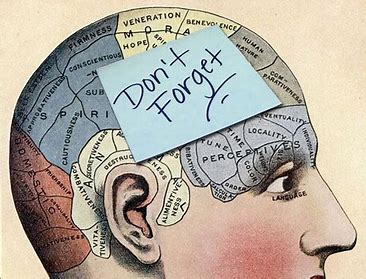
Viskontas explains human memory is a reconstructive process with varying degrees of accuracy.
There are people who have nearly perfect recall of their past. However, experiment has shown that even those few who can recall their personal history in detail are affected by emotion that distorts its accuracy. Furthermore, Viskontas explains personal history’ memory is limited to personal experience rather than any measurement of IQ. Of course, there are a few people who are said to have eidetic memories that can recall images with precision. They have so-called “photographic memories”, but IQ is based on problem-solving abilities that, at best, would be enhanced by a photographic memory. It is the application of recalled information to problem solving abilities that make one a genius like John von Neumann and Nikol Tesla who were alleged to have eidetic memories.
The risk is that “eyewitness” accounts can be influenced and totally wrong.
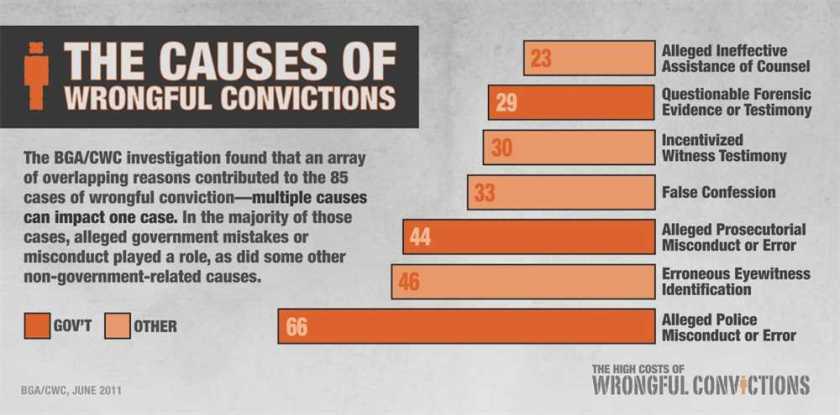
Scientific experiment has proven memory is a reconstructive process. With DNA analysis, a number of convicted murderers have been found innocent despite many eyewitnesses that identified them at scenes of crime. One is reminded of the gorilla experiment where eyewitnesses are distracted when a gorilla is sitting in a chair just as a human action scene is created in the same room. They do not see the gorilla and are surprised when it is pointed out to them later.
In the era of quantum computing, the concept of reality is evolving at a rate that boggles the mind.
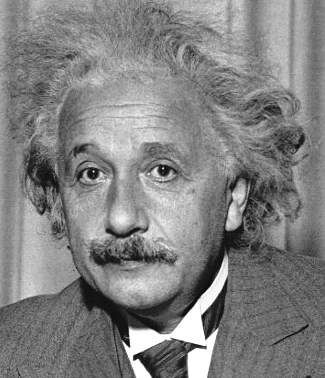
The idea of a probabilistic rather than concrete reality reminds one of the differences between the science of Newton and Einstein. Newton thought of things as concrete reality. Einstein takes steps toward relativity with less emphasis on the concreteness of reality. What we see today is not reality, but our minds’ interpretation of the material world. It seems that everything in the world is process, e.g., gravity, or time relativity, or quantum unpredictability. Life and human beings may only be a pile of atoms in an atomic process of birth, life, death, and whatever comes after death.
As human beings grow older, new things take longer to learn but Viskontas explains it is commitment that makes a difference in learning something new.
Taking piano lessons as an older adult, deciding to become an opera singer after graduating from college as a neuroscientist, or reading/listening to books about science when you are not educated as a scientist takes more time as you get older, slower, and less inquisitive. Dr. Viskcontas’ lectures infer it is never too late to learn something new. It just takes longer for it to become a part of who you are.
The inference of “Plato and the Tyrant” is that all forms of government are like the parable of the cave in “The Republic”, i.e., people only see shadows of life’s truth.
Books of Interest Website: chetyarbrough.blog
Plato and the Tyrant (The Fall of Greece’s Dynasty and the Making of a Philosophic Masterpiece)
Author: James Romm
Narrated By: Paul Woodson
James Romm (Author, Professor of Classics at Bard College, specializes in ancient Greek and Roman culture and civilization.)
James Romm reviews Plato’s personal correspondence that offers an interesting perspective on “The Republic” as a critique of Dionysius the Elder’s tyrannic rule of the island nation of Syracuse, Sicily, and southern Italy. (Syracuse is a Mediterranean island 620 miles off the coast of Greece.) Some believe there are 13 private letters written by Plato with the most famous and debated letter being number 7. Romm’s book is about these private letters and what they reveal about Plato’s character.
Excerpt of the 7th letter to Dionisius the Elder:
Holding these right views, Dion persuaded Dionysius to summon me; and he himself also sent a request that I should by all means come with all speed, before that [327e] any others13 should encounter Dionysius and turn him aside to some way of life other than the best. And these were the terms—long though they are to repeat—in which his request was couched: ” What opportunities (he asked) are we to wait for that could be better than those that have now been presented by a stroke of divine good fortune?” And he dwelt in detail on the extent of the empire [328a] in Italy and Sicily and his own power therein, and the youth of Dionysius, mentioning also how great a desire he had for philosophy and education, and he spoke of his own nephews14 and connections, and how they would be not only easily converted themselves to the doctrines and the life I always taught, but also most useful in helping to influence Dionysius; so that now, if ever (he concluded), all our hopes will be fulfilled of seeing the same persons at once philosophers and rulers of mighty States. [328b]
By these and a vast number of other like arguments Dion kept exhorting me; but as regards my own opinion, I was afraid how matters would turn out so far as the young people were concerned—for the desires of such as they change quickly, and frequently in a contrary direction; although, as regards Dion’s own character, I knew that it was stable by nature and already sufficiently mature. Wherefore as I pondered the matter and was in doubt whether I should make the journey and take his advice, or what, I ultimately inclined to the view that if we were ever to attempt to realize our theories [328c] concerning laws and government, now was the time to undertake it; for should I succeed in convincing one single person sufficiently I should have brought to pass all manner of good. Holding this view and in this spirit of adventure it was that I set out from home,—not in the spirit which some have supposed, but dreading self-reproach most of all, lest haply I should seem to myself to be utterly and absolutely nothing more than a mere voice and never to undertake willingly any action, and now to be in danger of proving false, in the first15 instance, to my friendship [328d] and association with Dion, when he is actually involved in no little danger. Suppose, then, that some evil fate should befall him, or that he should be banished by Dionysius and his other foes and then come to us as an exile and question us in these words—“O Plato, I come to you as an exile not to beg for foot-soldiers, nor because I lack horse-soldiers to ward off mine enemies, but to beg for arguments and persuasion, whereby you above all, as I know, are able to convert young men to what is good and just and thereby to bring them always into a state of mutual friendliness [328e] and comradeship. And it is because you have left me destitute of these that I have now quitted Syracuse and come hither. My condition, however, casts a lesser reproach on you; but as for Philosophy, which you are always belauding, and saying that she is treated with ignominy by the rest of mankind, surely, so far as it depends on you, she too is now betrayed [329a] as well as I. Now if we had happened to be living at Megara,16 you would no doubt have come to assist me in the cause for which I summoned you, on pain of deeming yourself of all men the most base; and now, forsooth, do you imagine that when you plead in excuse the length of the journey and the great strain of the voyage and of the labor involved you can possibly be acquitted of the charge of cowardice? Far from it, indeed.”
Dionysius the Elder ruled for 35 years and is succeeded by his son, Dionysius the Younger. Dionysius is characterized as a combative, brutal, and authoritarian leader. Plato visited Syracuse many times with the desire to ameliorate the Elder’s style of leadership. Plato’s effort results in the Elder’s selling him into slavery, presumably because of political differences and the Elder’s tyrannical power.
Plato (428/423 BC to 348/347 BC, died near 80 years of age.)
Soon after being sold into slavery by Dionysius the Elder, Plato is rescued by Anniceris who bought Plato out of slavery. Anniceris (aka Annikeris), a wealthy Greek philosopher, apparently recognized Plato’s brilliance. Plato goes on to create his famous academy in Athens. Though the Elder successfully controlled Syracuse and much of Italy during his tyrannic rule, his son, Dionysius II, used similar but less effective tyrannical rule and was eventually defeated. Plato tried to convince Dionysius II of his errors in leadership but fails and is compelled to flee house arrest to return to Athens. (Romm suggests Plato loved Dionysius II in more than a platonic way but was unable to change his tyrannical rule.)
Plato’s ideal republic envisioned a just society led by philosopher-kings. These rulers would rule based on collective good rather than personal gain.
This ideal republic would be built on wisdom, justice, and a strict class structure where there would be rulers, soldiers, and workers. Of course, the weakness in this ideal is human nature. Whether ancient or modern culture, as Lord Acton notes in 1887–power corrupts, absolute power corrupts absolutely. People do not naturally fall into specific classes. Human beings are individually and differently self-interested which ensures conflict. That is why both communism, capitalism, and its socialist leanings work inefficiently in ways that unjustly create haves and have-nots.
At the heart of all known forms of government is power.
There are good and bad leaders in history. The good are those who shaped nations, inspired movements, and changed the course of civilization for the better. The bad are the tyrants, the incompetents, and the cruel. Both the good and bad can be found in the histories of every form of government rule. One can argue Alexander the Great, Napoleon Bonaparte, Abraham Lincoln, and Queen Elizabeth I led forms of government that changed the course of civilization for the better. By the same token, one can argue Dionysius the Elder and Hitler changed the course of civilization in the opposite direction. The common denominator for constructive and destructive leadership is power. The type of government makes little difference. Every form of government has human leaders which may lead in ways contrary to the best interest of those they rule.
Plato’s Republic, Adam Smith’s “…Wealth of Nations”, and Adolph Hitlers’ “Mein Kamph” are ideas directed toward the exercise of power.
“Plato and the Tyrant” offers a perspective that makes one think about the history of Plato and government but does not offer anything new.
Romm’s evaluation of Plato’s “Republic” is a retelling of an ideal form of government that cannot exist because of the nature of human beings and the caves in which we live.
The private letters of Plato reveal little new about the consequences of rule by democracies, monarchies, oligarchies, dictatorships, theocracies, or anarchies. The inference of “Plato and the Tyrant” is that all forms of government are like the parable of the cave in “The Republic”, i.e., people only see shadows of life’s truth. Governance will only improve when people crawl out of the cave to see the truth of life.
Humans will learn to use and adapt to Artificial General Intelligence in the same way it has adapted to belief in a Supreme Being, the Age of Reason, the industrial revolution, and other cultural upheavals.
Books of Interest Website: chetyarbrough.blog
How to Think About AI (A Guide for the Perplexed)
By: Richard Susskind
Narrated By: Richard Susskind
Richard Susskind (Author, British IT adviser to law firms and governments, earned an LL.B degree in Law from the University of Glasgow in 1983, and has a PhD. in philosophy from Columbia University.)
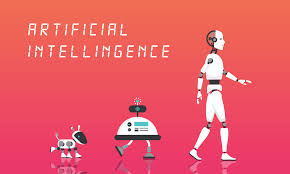
Richard Susskind is another historian of Artificial Intelligence. He extends the history of AI to what is called AGI. He has an opinion about the next generation of AI called Artificial General Intelligence. AGI (Artificial General Intelligence) is a future discipline suggesting AI will continue to evolve to perform any intellectual task that a human can.
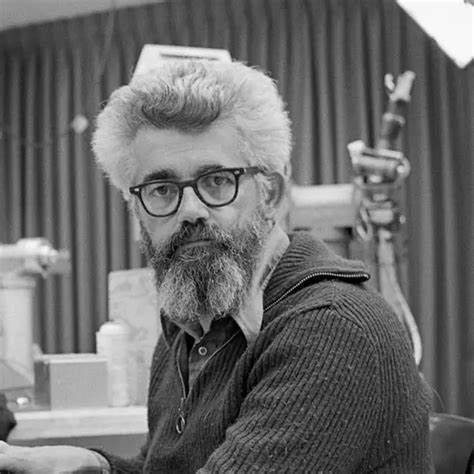
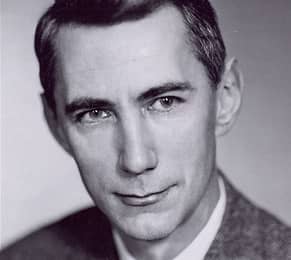
These men were the foundation of what became Artificial Intelligence. AI was officially founded in 1956 at a Dartmouth Conference attended by John McCarthy, Marvin Minsky, Nathaniel Rochester, and Claude Shannon. Conceptually, AI came from Alan Turing’s work before and during WWII when he created the Turing machine that cracked the German secret code.
McCarthy and Minsky were computer and cognitive scientists, Rochester was an engineer and became an architect for IBM’s first computer, Shannon (an engineer) and Turing were both mathematicians with an interest in cryptography and its application to code breaking.
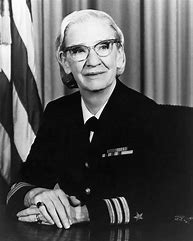
Though not mentioned by Susskind, two women, Ada Lovelace and Grace Hopper played roles in early computer creation (Lovelace as an algorithm creator for Charles Babbage in the 19th century, and Hopper as a computer scientist that translated human-readable code into machine language for the Navy).
Susskind’s history takes listener/readers to the next generation of AI with Artificial General Intelligence (AGI).
Susskind recounts the history of AI’s ups and downs. As noted in earlier book reviews, AI’s potential became known during WWII but went into hibernation after the war. Early computers lacked processing capability to support complex AI models. The American federal government cut back on computer research for a time because of unrealistic expectations that seemed unachievable because of processing limitations. AI research failed to deliver practical applications.
The invention of transistors in the late 1940’s and 50s and microprocessors in the 1970s reinvigorated AI.
Transistor and microprocessor inventions addressed the processing limitations of earlier computers. John Bardeen, Walter Brattain, and William Shockley working for Bell Laboratories were instrumental in the invention of transistors and microprocessors. Their inventions replaced bulky vacuum tubes and miniaturized more efficient electronic devices. In the 1970s Marcian “Ted” Hoff, Federico Faggin, and Stanley Mazor, who worked for Intel, integrated computing functions onto single chips that revolutionized computing. The world rediscovered the potential of AI with these improvements in power. McCarthy and Minsky refine AI concepts and methodologies.
Geoffrey Hinton (British Canadian computer scientist.)Yann LeCun (French American computer scientist.)
With the help of others like Geoffrey Hinton and Yann LeCun, the foundation for modern AI is reinvigorated with deep learning, image recognition, and processing that improves probabilistic reasoning. Human decision-making is accelerated in AI. Susskind suggests a blurred line is created between human and machine control of the future with the creation of Artificial General Intelligence (AGI).
With AGI, there is the potential for loss of human control of the future.
Societal goals may be unduly influenced by machine learning that creates unsafe objectives for humanity. The pace of change in society would accelerate with AGI which may not allow time for human regulation or adaptation. AGI may accumulate biases drawn from observations of life and history that conflict with fundamental human values. If AGI grows to become a conscious entity, whatever “conscious” is, it presumably could become primarily interested in its own existence which may conflict with human survival.
Like history’s growth of agricultural development, religion, humanist enlightenment, the industrial revolution, and technology, AGI has become an unstoppable cultural force.
Susskind argues for regulation of AGI. Is Artificial General Intelligence any different than other world changing cultural forces? Yes and no. It is different because AGI has wider implications. AGI reshapes or may replace human intelligence. One possible solution noted by Ray Kurzweil is the melding of AI and human intelligence to make survival a common goal. Kurzweil suggests humans should go with the flow of AGI, just like it did with agriculture, religion, humanism, and industrialization.
Susskind suggests restricting AGI’s ability to act autonomously with shut-off mechanisms or accessibility restrictions on human cultural customs. He also suggests programming AGI to have ethical constraints that align with human values and a rule of “do no harm”, like the Hippocratic oath of doctors for their patients.
In the last chapters of Susskind’s book, several theories of human existence are identified. Maybe the world and the human experience of it are only creations of the mind, not nature’s reality. What we see, feel, touch, and do are in a “Matrix” of ones and zeros and that AGI is just what humans think they see, not what it is. Susskind speculates on the growth of virtual reality developed by technology companies becoming human’s only reality.
AI and AGI are threats to humanity, but the threat is in the hands of human beings. As the difference between virtual reality and what is real becomes more unclear, it will be used by human beings who could accidentally, or with prejudice or craziness, destroy humanity. The same might be said of nuclear war which is also in the hands of human beings. A.I. and A.G.I. are not the threat. Conscious human beings are the threat.
Humans will learn to use and adapt to Artificial General Intelligence in the same way it has adapted to belief in a Supreme Being, the Age of Reason, the industrial revolution, and other cultural upheavals. However, if science gives consciousness (whatever that is) to A.I., all bets are off. The end of humanity may be in that beginning.
AI is only a tool of human beings and will be misused by some leaders in the same way Atom bombs, starvation, disease, climate, and other maladies have harmed the sentient world. AI is more of an opportunity than threat to society.
Books of Interest Website: chetyarbrough.blog
A Brief History of Artificial Intelligence (What It Is, Where We Are, and Where We Are Going)
By: Michael Wooldridge
Narrated By: Glen McCready
Michael Wooldridge (Author, British professor of Computer Science, Senior Research Fellow at Hertford College University of Oxford.)
Wooldridge served as the President of the International Joint Conference in Artificial Intelligence from 2015-17, and President of the European Association for AI from 2014-16. He received a number of A.I. related service awards in his career.
Alan Turing (1912-1954, Mathematician, computer scientist, cryptanalyst, philosopher, and theoretical biologist.)
Wooldridge’s history of A.I. begins with Alan Turing who has the honorific title of “father of theoretical computer science and artificial intelligence”. Turing is best known for breaking the German Enigma code in WWII with the development of an automatic computing engine. He went on to develop the Turing test that evaluated a machine’s ability to provide answers to questions that exhibited human-like behavior. Sadly, he is equally well known for being a publicly persecuted homosexual who committed suicide in 1954. He was 41 years old at the time of his death.
Wooldridge explains A.I. has had a roller-coaster history of highs and lows with new highs in this century.
Breaking the Enigma code is widely acknowledged as a game changer in WWII. Enigma’s code breaking shortened the war and provided strategic advantage to the Allied powers. However, Wooldridge notes computer utility declined in the 70s and 80s because applications relied on laborious programming rules that introduced biases, ethical concerns, and prediction errors. Expectations of A.I.’s predictability seemed exaggerated.
The idea of a neuronal connection system was thought of in 1943 by Warren McCulloch and Walter L Pitts.
In 1958, Frank Rosenblatt developed “Perception”, a program based on McCulloch and Pitt’s idea that made computers capable of learning. However, this was a cumbersome programming process that failed to give consistent results. After the 80s, machine learning became more usefully predictive with Geoffrey Hinton’s devel0pment of backpropagation, i.e., the use of an algorithm to check on programming errors with corrections that improved A.I. predictions. Hinton went on to develop a neural network in 1986 that worked like the synapse structure of the brain but with much fewer connections. A limited neural network for computers led to a capability for reading text and collating information.
Geoffrey Hinton (the “Godfather of AI” won the 2018 Turing Award.)
Then, in 2006 Hinton developed a Deep Belief Network that led to deep learning with a type of a generative neural network. Neural networks offered more connections that improved computer memory with image recognition, speech processing, and natural language understanding. In the 2000s, Google acquired a deep learning company that could crawl and index the internet. Fact-based decision-making, and the accumulation of data, paved the way for better A.I. utility and predictive capability.
Face recognition capability.
What seems lost in this history is the fact that all of these innovations were created by human cognition and creation.
Many highly educated and inventive people like Elon Musk, Stephen Hawking, Bill Gates, Geoffrey Hinton, and Yuval Harari believe the risks of AI are a threat to humanity. Musk calls AI a big existential threat and compares it to summoning a demon. Hawking felt Ai could evolve beyond human control. Gates expressed concern about job displacement that would have long-term negative consequences with ethical implications that would harm society. Hinton believed AI would outthink humans and pose unforeseen risks. Harari believed AI would manipulate human behavior and reshape global power structures and undermine governments.
All fears about AI have some basis for concern.
However, how good a job has society done throughout history without AI? AI is only a tool of human beings and will be misused by some leaders in the same way atom bombs, starvation, disease, climate, and other maladies have harmed the sentient world. AI is more of an opportunity than threat to society.
What is the value of high IQ? If everyone was smarter, would they be happier? It seems the only real value of genetics is in the prevention of known diseases, not in improvement of IQs or creation of a perfect human being (whatever that is).
Books of Interest Website: chetyarbrough.blog
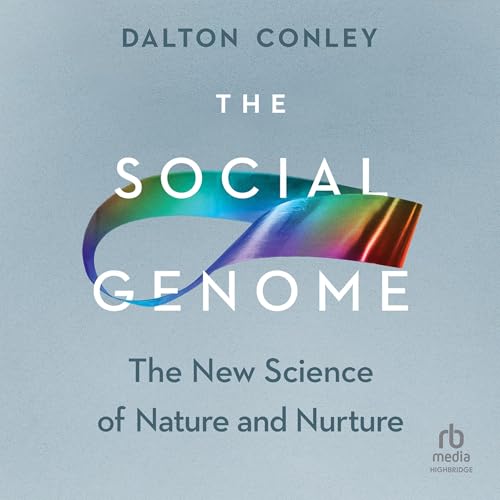
The Social Genome: The New Science of Nature and Nurture
By: Dalton Conley
Narrated By: Christopher Douyard
Dalton Clark Conley (Author, Princeton University professor, American sociologist.)
Dalton Conley offers a complex explanation of why one child intellectually and financially excels while others are left behind. The “Social Genome” is an attempt to explain the complexity and inadequacy of genetic research. Not too surprisingly, there seems a correlation between wealth and intellectual development, but its relationship includes familial and environmental nurturing in ways that are too complex for today’s science to measure.
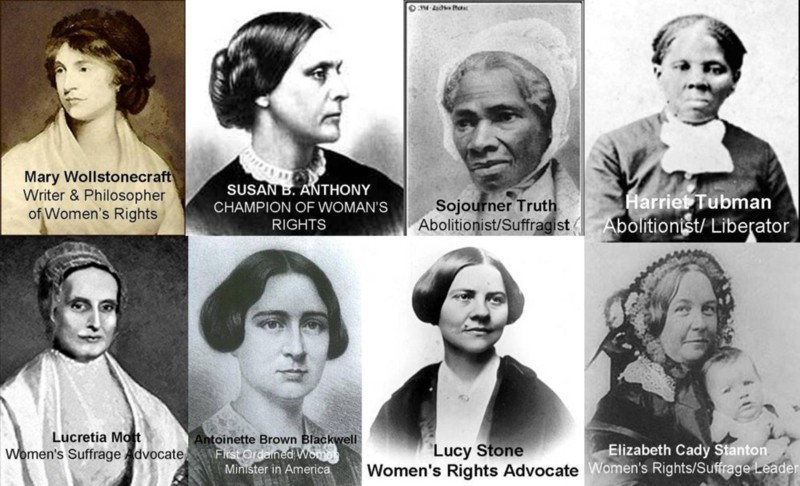
FAMOUS WOMEN IN HISTORY (Many women are as intellectually strong and mentally tough as men, e.g. Cleopatra, Sojourner Truth, Indira Gandhi, Golda Meir, Benazir Bhutto, Malala Yousafzai, and others.)
Dalton argues both genetics and environment shape human intellect and economic success. However, science’s current knowledge of genetic and environmental impact is not clearly understood in a way to aid human development. The current limitations of science make it impossible to determine the precise genetic and environmental factors that shape human development. Dalton offers many examples of how genetics and environment are relevant to human development, but neither are precisely measurable nor manageable.
The idea of clearly understanding the genetic and environmental causes of who humans become is a bit frightening.
Even if it were possible to achieve precise measurement of genetic and environmental influences, should that knowledge be used to create designer human beings?
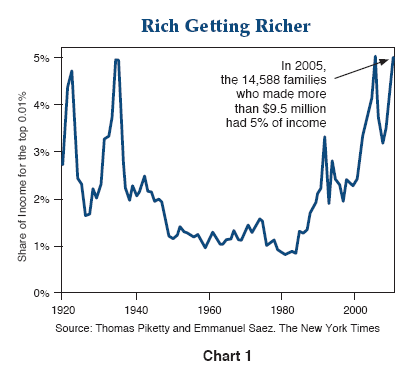
Piketty argues that the income gap widens after World War II. He estimates 60% of 2010’s wealth is held by less than 1% of the population.
Dalton does believe there is a correlation between economic well-being and IQ, but the correlation is affected by genetic inheritance. Dalton concludes economic well-being is a positive factor in IQ improvement. That raises questions about how one can improve the economic well-being of a society to improve IQ. Dalton infers there is no one size fits all solution for IQ improvement. Nurture and nature are too intimately intertwined to know how IQ of a society can be improved. A conclusion one may draw is that environmental and societal factors like human nutrition, general education and improved equal opportunity can mitigate IQ diminishment. Whether one should modify human genomes is a step too far.
In many ways, this is a frustrating book to listen to or read.
If all people looked more alike than different would there be less conflict in the world? No, but being of one race or another makes a difference in one’s opportunities in the world. What is the value of high IQ? If everyone was smarter, would they be happier? It seems the only real value of genetics is in the prevention of known diseases, not in improvement of IQs or creation of a perfect human being (whatever that is).
The immense downside of an unpredictive future is the many setbacks that will occur because of inept political leadership. Science is not an answer. It is only a tool for understanding.
Books of Interest Website: chetyarbrough.blog
Science in the 20th Century (A Social-Intellectual Survey)
By: The Great Courses
Narrated By:Steven L. Goldman
Professor Steven L. Goldman.
Goldman’s review of 2oth century science identifies the fundamental change that has occurred in today’s perception of reality. One wonders if Albert Einstein was wrong about the predictability of science. Even at the end of Einstein’s life, he believed quantum mechanics was just a step in scientific research and not a basis for the truth of reality. Einstein insisted there was an undiscovered law about the nature of reality that would return life to predictability. The details of Goldman’s “Science in the 20th Century” infers otherwise.
Unpredictability of life’s existence is reinforced by Professor Goldman’s summary of scientific discoveries.
What is true of physics in the world, seems true for all the sciences. Whether reviewing the physical, biological, algorithmic, social, or applied sciences, unpredictability exists. Every science seems as unpredictable for the same reason as noted in the science of the quantum world. One cannot identity both position and momentum of an atomic particle at the same time. By the same measure, popularly elected representatives or authoritarian dictatorships cannot be measured by their position and direction of action. One can see a leader’s position but not measure their direction until the direction is past. Who would have thought Hitler would be the instigator of WWII? World leaders today are just as unpredictable. Citizens cannot measure leader’s positions and direction in advance. Citizens can only see one or the other at a specific point in time–never both position and direction at the same time.
What Goldman’s history of science implies is that if we live in a world of quantum mechanics, all life is, always has been, and always will be, unpredictable.
The solace in this possible truth is that, though there is still immense societal conflict and inequality in the world, science has improved society.
Technology has improved communication, transportation and daily life.
Vaccines, antibiotics, and surgical operations have drastically improved helath and life expectancy.
The world population has become more literate and has greater access to education than ever before.
Equality and justice show some progress in human rights, gender equality and social inclusion.
Enviornmental awareness has improved to combat climate change which has led to renewal energy innovations and conservation initiatives.
The world has increased connectivity to improve cultural exchange, economic collaboration and shared global interests.
Science is not an answer. It is only a tool for understanding.
The immense downside of an unpredictive future is the many setbacks that will occur because of inept political leadership. From the perspective of quantum mechanics, one hopes leadership means do not justify humanity’s end.
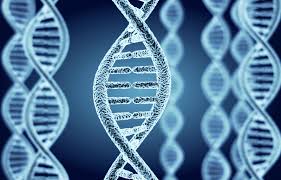
Scientific discovery revealed the theory of evolution, the germ theory of disease, the laws of motion and universal gravitation, the theory of relativity, the discovery of DNA, drugs to cure disease, and quantum mechanics that imply future unpredictability. This is the daunting message of Goldman’s lectures.
Books of Interest Website: chetyarbrough.blog
Science in the 20th Century (A Social-Intellectual Survey)
By: The Great Courses
Narrated By:Steven L. Goldman
Professor Goldman received a B.S. Degree in Physics from Polytechnic University of New York and received a Master of Arts and PhD in Philosophy from Boston University.
Professor Goldman offers lectures on transformative scientific discoveries of the 20th century. He begins with great discoveries in physics by Newton, Einstein, Curie, Bohr, Planck, Heisenberg, Dirac and others who broaden a listener’s understanding of the universe, Earth, life, and humanity. He melds science into philosophy which gives a generalist an appreciation of genius and its limitations. From the limitations of microscopes, thermometers, spectroscopes, barometers, and galvanometers, Goldman draws lines between science’s experimentally reproducible facts and philosophy’s speculation.
Newton and Einstein had different understandings of the universe. Newton understood gravity as a force between two masses, subject to earth’s gravitation. Einstein redefined Newton’s gravity as a power exerted throughout the universe and between planets rather than one planet we call earth. Einstein proves the power of gravity is based on forces beyond earth though Newton’s interpretation is predictive of most physics’ phenomena on earth, it fails to predict the effects of time, space, and energy in the universe. Einstein’s discoveries lead to a theory of General Relativity where mass and energy are equal to each other and interchangeable. Newton viewed space and time as absolute while Einstein viewed them as relative. Newton’s physics were simpler to understand while Einstein’s required advanced mathematics that took into consideration the warping of space and time. To Newton, the speed of gravity was a constant while to Einstein, the only constant was the speed of light. To Newton two occurrences could occur simultaneously but Einstein recognized simultaneity is impossible. Any distance between the two occurrences will always be observed at the speed of light which means they cannot have happened at the same time because they cannot be in the same place. The speed of light controls the observation of action. Two occurrences cannot occupy the same space therefor they cannot happen simultaneously.
Professor Goldman explains the many utilitarian uses of great scientific discoveries from so many scientists that names become too numerous to be recalled.
However, without their discoveries, humanity would not have entered the age of Artificial Intelligence and the reality of information as an energy source in the world; not to mention the many scientific discoveries that have improved the lives of 8.2 billion people. (Another side of that story is the number of people killed by WMD, undiscovered cures for disease, and earth’s pollution by humanities use of known and yet to be known discoveries.)
Without fossil fuels, renewable energy, and nuclear power, humanity would still be living in caves, subject to nature’s choice. The importance of information is why we read books, listen to lectures, rely on remembrance of things past, and choose the course of our lives. As Shakespeare noted in The Tempest, “What’s past is prologue”.
Scientific discovery revealed the theory of evolution, the germ theory of disease, the laws of motion and universal gravitation, the theory of relativity, the discovery of DNA, drugs to cure disease, and quantum mechanics that imply future unpredictability. This is the daunting message of Goldman’s lectures.
There is enough abundance in the world to create opportunity for all, but Ernaux’s history implies people must change their ways.
Books of Interest Website: chetyarbrough.blog
The Years
By: Annie Ernaux
Narrated by: Anna Bentinck
Annie Ernaux (Author, French writer, 2022 Nobel Prize winner, born in 1940.)
Annie Ernaux offers a perspective on history from the experience of her life as a French woman in the mid 20th to 21st century. Though born before the beginning of World War II, Ernaux matures as a young woman in the 1950s. A striking difference between the history of this time is the difference between Algeria’s drive for independence and American’s mistakes in Vietnam. French Algeria is less understood in American memories than its troubled history in Vietnam. Aside from misunderstanding France’s Algerian experience, the social changes Ernaux’s notes are similar to many Americans’ experiences in Vietnam.
Eisenhower’s, Kennedy’s, and Johnson’s leadership in the Vietnam war seem, in some respects, similar to Ernaux’s memory of Charles de Gaulle’s leadership in Algeria.
Eisenhower and Kennedy were veterans of war who became leaders of their countries. Though Eisenhower and Kennedy believed Vietnam was a threat as a communist Domino, de Gaulle believed Algeria was a threat to France’s right to colonize. These famous nationalist leaders were wrong. Southeast Asian countries had a right to choose their own form of government, and Algeria had a right to choose self-government.
Though Annie Ernaux was born just before 1946, she matured during great changes in the world.
Her experience of post-war reconstruction, the rise of consumerism, women’s rights, sexual liberation, social class differentiation, and societal norms changed in America, France, and most nations of the world.
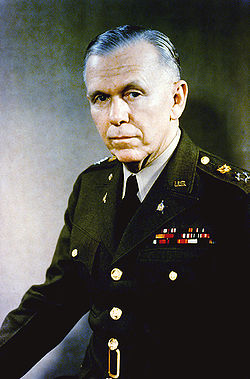
George Marshall was Secretary of State from 1947 to 49 and headed the Marshall Plan to reconstruct Europe after the war.
America played a great part in the financial reconstruction of Europe, Japan, and Germany after the end of WWII. America’s goal was to prevent future conflicts, promote economic recovery, and counter the influence of communism, but in that process, America influenced social norms throughout the world. Some of the influences created clear lines of opposition between communism, socialism, and capitalism. However, all economic systems influenced societal change. Whether communist, socialist, or capitalist there were changes in normative social values. Societies increased consumerism, instituted policies for equal rights to some degree, and made class distinctions based on money, or its equivalent, i.e., power. In capitalist and socialist societies, social position became more about money and the power of its influence. In communist societies, it was more about power and the influence of money. Political differences remained sharply divided in ways that influenced social norms, but the general direction was similar. Communism, socialism, capitalism, and all its derivations focused on consumerism, women’s rights, and class differences that changed the world during Annie Ernaux’s “…Years” of life.
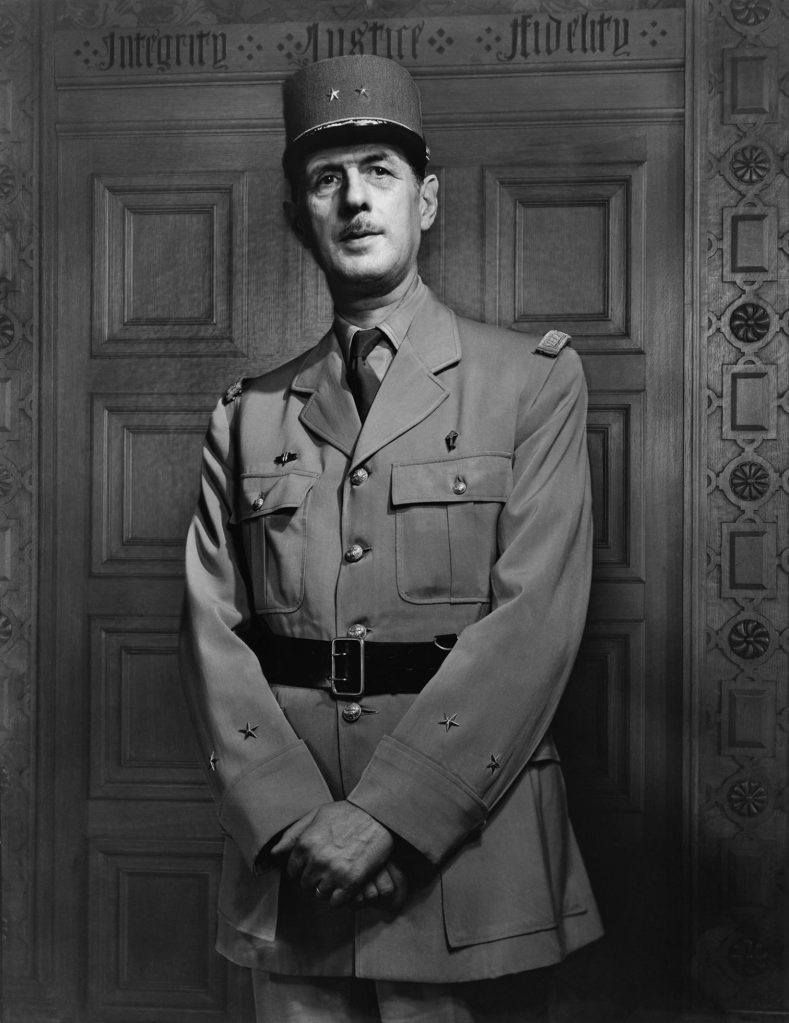
American President Harry Truman led the U.S. from 1945 to 1953.Emperor Hirohito next to MacArthur was emperor of Japan from 1926-1989. Mao was China’s leader from 1924 to 1953. Stalin led Russia from 1943 to 1976.Charles de Gaulle effectively led France from 1944 to 1959 with the last ten years as France’s President.
Feckless leaders, deluded authoritarians, and a few truly service-oriented leaders rose in every system of government, including American, English, Japanese, Chinese, French, Russian, and other nations. The main differences lay in leader’s longevity, and their economic policies. Leaders of China and Russia having fewer leadership changes between 1946 and 2006 than most nations were largely authoritarian. There were 6 leadership changes in China and 9 in the Soviet Union. Only 1 of 6 in China and only 1 of 9 in the Soviet Union leaned toward capitalism.
From 1946 to 2006, there were 11 presidents in America, 13 prime ministers in England, 32 prime ministers in Japan, and 6 presidents in France. All of these democratic nations exclusively leaned toward capitalism.
However, Ernaux’s history infers every nation shows social norms changing in similar ways. Even China and Russia show changes in consumerism, women’s rights, sexual liberation, and class differentiation. Unquestionably, the societal changes did not change to the same degree, but they were similar. Maladies of society are common in all forms of government, only the degree of change in societal norms is different. All nations have more or less consumer opportunities, more or less human equality, all have class distinctions, but normative change is a work in progress, not an end but a beginning process.
Annie Ernaux in earlier years of her life.
Ernaux’s trip down memory lane is interesting but not particularly revelatory. Her remembrance of the past is helpful because she shows how social change evolved in both good and bad ways in her own life. Consumerism seems on the edge of being out of control with money and wealth being the “sine qua non” of the good life. Without money, life seemed not worth living to some. Ernaux suggests America has become an arrogant example of wealth and privilege that diminishes civility. Ernaux is not suggesting she is above the fray of wealth as privilege and reveals her own character flaws by noting affairs with younger men in what seems a wasted attempt to reclaim youth. She implies a prejudice against Arabs and Africans who she believes wrongly consider themselves as French. She infers they are not French because they are not white Christians, even if they are born in France.
One comes away from “The Years” with a feeling that societies of the world are at a crossroad.
Wealth should not be the measure of one’s social value and privilege. Inequality is a sin against humanity. Prejudice is the cause of much of the world’s conflict. Immigration is a misunderstood value of societal comity. Tolerance of all religious beliefs has been an unresolvable puzzle but a desirable societal goal. There is enough abundance in the world to create opportunity for all, but Ernaux’s history implies people must change their ways.
Only with education and understanding of the past can society or the individual change their future.
Books of Interest Website: chetyarbrough.blog
Cowboy Apocalypse (Religion and the Myth of the Vigilante Messiah)
By: Rachel Wagner
Narrated by: Dina Pearlman
Rachel Wagner (Author, professor of religion and philosophy at Ithaca College in Ithaca New York.)
Rachel Wagner has written a highly personal book about American gun culture that will resonate with some and appall others. As an academic philosopher and professor of religion, Wagner analyzes gun violence and sexism and how belief in “might makes right” is deeply ingrained in American character.
There are so many stories of death and injury from gun violence in America that one becomes numbed by Wagner’s apocalyptic story.
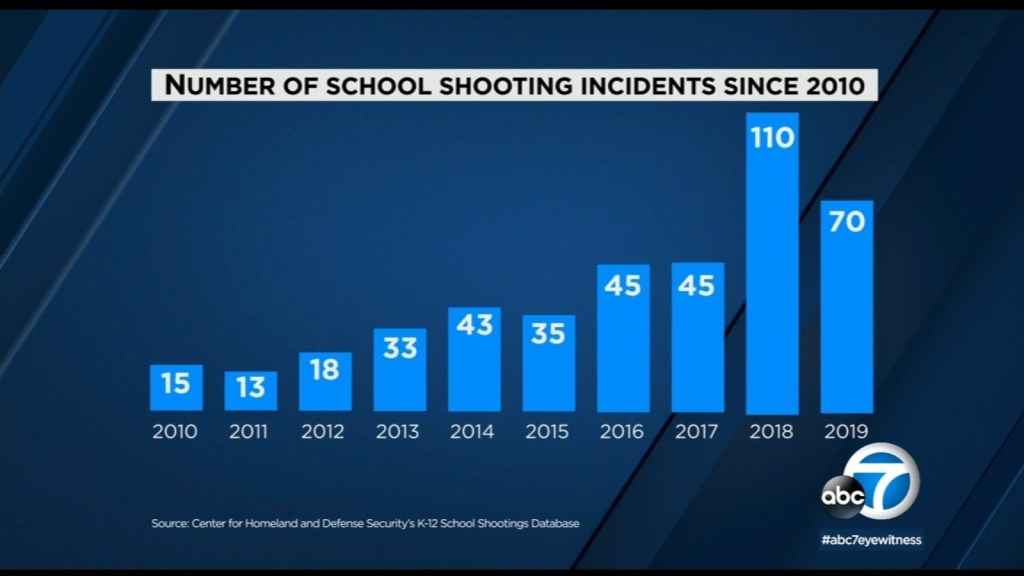
We were living in Las Vegas when 59 people were killed, and 527 were injured by one gunman in a hotel room less than 3 miles from our home. When one looks at statistics of children murdered in school rooms since 2010, a solution for gun violence should be urgent, but it appears not.
Rise in school shootings between 2010 and 2o19.
Wagner argues gun violence in the U.S. is viewed by much of the public as a belief in the myth of the “good guy with a gun” that is embedded in the history of America and reinforced by fictional stories, books, television, and the movies. She argues detective fiction like “The Big Sleep”, TV series like “Have Gun Will Travel”, and movies like “Die Hard” have lone heroes who defeat dastardly villains.
Think Alan Ladd in “Shane” or John Wayne in any of his westerns, and one believes gun-toting man-gods keep the world safe.
Wagner shows how malleable society is and why the gun lobby is rewarded and sustained by the myth of the “good guy with a gun”. Wagner argues gun-toting Americans have become gods in their own mind. What they really are is examples to potential killers of school children and unsuspecting tourists.
HAVE GUN WILL TRAVELDIE HARD
Wagner believes American gun obsession has wheedled its way into a religious narrative based on Christian apocalypticism and romanticization of American history. She notes the myths of armed vigilantes who are seen as saviors who can reset society when it goes astray. This myth seeps into American cultural shibboleths of white supremacy and patriarchal dominance that pervade video games, movies, and novels.
Wagner argues sexual and racial inequality are exacerbated by America’s gun culture. Wagner notes an experience in her personal life and her education in religion show how “might makes right” has been, and still is, a danger to society.
Wagner argues America needs to look in the mirror and quit glorifying firearms and vigilante justice. She suggests the January 6th attack on the capitol shows how widespread belief in vigilante justice is in America.
January 6, 2021, insurrection when a mob of supporters of then-President Trump stormed the U.S. Capitol.
The philosophical and religious beliefs of the author are made clear in her final chapters. Only with education and understanding of the past can society or the individual change their future.
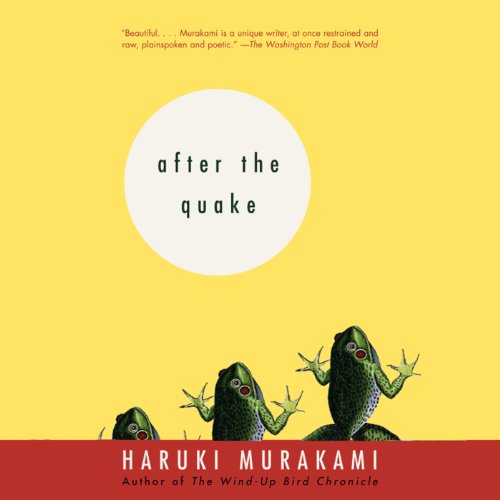
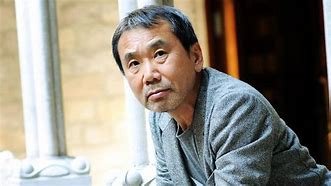
Murakami is one of the great writers of modern times. In “after the quake”, Murakami reduces the great and horrid loss of the many to the feelings of the “one”
Books of Interest Website: chetyarbrough.blog
“after the quake”
By: Haruki Murakami
Narrated By: Rupert Degas, Teresa Gallagher, Adam Sims
Haruki Murakami offers a series of short stories in “after the quake” that remind one of the frailties of human beings. Humans lie, steal, cheat and war against each in ways that exceed natural disasters. Murakami’s short stories are funny, sad, and insightful views of humanity that show we often foment our own disasters.
Each short story revolves around the social implications of the Kobe’ earthquake. Murakami cleverly weaves his stories to reflect on events that change one’s direction in life. The events can be as great as an earthquake, a war, or a singular lost love. The first is nature’s way; the second and third are humans’ way.
Human relationships are as unpredictable and destructive as natural disasters. The human’ Lushan rebellion in 8th century China is estimated to have killed 13 million people, the Mongol invasion in the 13th and 14th century 20 to 60 million, the Taiping rebellion in mid-19th century China 20-30 million, and two world wars in the 20th century at 83-107 million. This is without noting China’s famine that killed millions because of Mao’s mistakes in the Great Leap Forward, Stalin’s repression in Russia, and today’s wars in Ukraine and Gaza. Natural disasters are horrendous events, but human nature has murdered more than earthquakes, floods, volcanoes, and other natural disasters.
The cataclysmic events of nature affect the many, but Murakami shows scale means nothing in respect to the effect it has on the “one”. He cleverly shows how singular events can overwhelm one relationship as portentously as natural or man-made disasters can overwhelm all relationships.
Murakami is one of the great writers of modern times. In “after the quake”, Murakami reduces the great and horrid loss of the many to the feelings of the “one”. His stories show that a personal loss of an imaginary friend or a real love is as catastrophic to the one as a natural disaster or war is to the many.








































 REVIEWS AND VIEWS OF LIFE