Nestor’s book, “Breath” is worth a reader/listener’s time. Breathing exercises are not a cure-all for sleeplessness, snoring, or regulating blood pressure, but Nestor’s experience and Dr. Nayak’s research encourage reader/listeners to change the way they breath.
Books of Interest Website: chetyarbrough.blog
Breath (The New Science of the Lost Art)
Author: James Nestor
Narration by: James Nestor
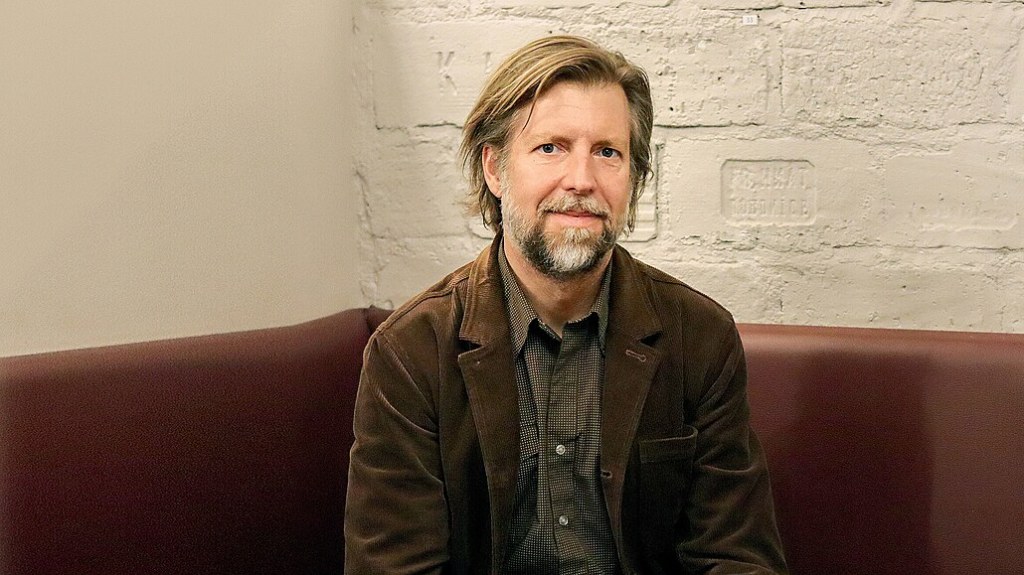
James Nestor (Author, American science journalist.)
“Breath” is a surprising best-selling book about breathing through one’s nose rather than one’s mouth. Nestor’s participation in a 10-day Stanford experiment shows several negative medical symptoms associated with how we breath. Nestor experiences sleep apnea, raised blood pressure, high stress levels, and increased anxiety because of the way he breaths earth’s air. Nextor’s participation in a Stanford University experiment suggests nose breathing is a biological superpower because nasal passages filter and humidify the air we breathe. Exhalation from the way we breath releases nitric oxide and improves oxygen absorption.
Stanford’s experiment reveals CO2 emissions from breathing are essential for all living things.
Experiment shows slow breathing for 5.5 seconds-in, and 5.5 seconds-out improves blood pressure, and heart rate variability that enhances calmness. Surprisingly, slow breathing increases carbon dioxide tolerance while aiding body absorption of oxygen. The consequence of breathing too fast surprisingly impairs oxygen delivery to our system. Oxygen deprivation is one of the causes of anxiety, fatigue, and poor physical performance. Practicing good breathing habits can help reduce anxiety and fatigue to improve physical performance. It is hard to believe changing our breathing habits can have so great an impact on our lives.
Changing how we breathe is not as easy as one might think.
In the past, when one could not breath on their own, they were placed in an iron tube to replace their natural lung function.
Not breathing through one’s mouth seems an easy change to make in one’s life but a 5.5 second inhale and exhale rule takes practice. The recommendation is to train yourself for 5-to-ten-minute periods until it becomes a learned goal, if not habit. Another suggestion is to alternate nostril breathing by covering one nostril and practicing the 5.5 second inhale/exhale cycle. One can alternate nostrils with breathing in with one nostril and out with the other. Nestor suggests a 4-7-8 technique of breathing. Using only your nose, inhale 4 seconds, hold for 7 seconds, exhale for 8 seconds. He believes it will help one fall asleep if they are having difficulty sleeping. In general, Nestor suggests one should become more aware of how they are breathing during the day.
Dr. Jayakar Nayak (MD, PhD, conducted the breathing experiment as a Professor of Otolaryngology at Stanford University.)
Nestor refers to Dr. Jayakar Nayak’s 10-day Stanford experiment in which Nestor participated. He wrote this book as evidence for the harm he was doing to himself and how mouth breathing for oxygen can be corrected by breathing through one’s nose. Patients, like Nestor, were trained in nose breathing exercises that show marked improvements from the symptoms of sleep apnea, sleep fragmentation, heavy snoring, and stress. Results of the experiment showed sleep apnea and snoring ceased, systolic blood pressure dropped, and heart rate variability improved in most patients who participated in the Stanford experiment.
Nestor’s recommendations are based on nasal breathing, slower breathing, and breath exercises supported by Dr. Nayak’s research. Nestor’s book, “Breath” is worth a reader/listener’s time. Breathing exercises are not a cure-all for sleeplessness, snoring, or regulating blood pressure, but Nestor’s experience and Dr. Nayak’s research encourage reader/listeners to change the way they breath.
Brianna Weist philosophical book is worth listening to as a guide but not as an authority of how one should live their life.
Books of Interest Website: chetyarbrough.blog
101 Essays That Will Change the Way You Think
Author: Brianna Wiest
Narration by: Abby Craden
Brianna Wiest (Author, earned a BA in English and received an Honorary Doctorate in Literature from Elizabethtown College.
This is an odd book because it is written by someone who is not a psychologist, psychiatrist or therapist but presumes to know how one can understand themselves, think differently and become a more psychologically heathy human being. “101 Essays…” has become a popularly read and listened to book by the public. Of course, one can take her observations like one would take the meaning of many non-fiction authors who have a point of view about life and living. They are called philosophers.
One finds Wiest’s essays make sense, but her formal education makes one uncomfortable with her expressed beliefs.
On the other hand, what formal education was there for Socrates? (A. I. generated image of Socrates as a young man.)
Weist is straight forward in her opinions, and she taps into a human wish for one to be psychologically and physically as good as they can be. Changing “…the Way You Think” is no easy task but the idea of consciously understanding ourselves is an oxymoron that limits one’s ability to change. We are as likely to lie to ourselves about who we are or what we believe as to have a true understanding of ourselves.
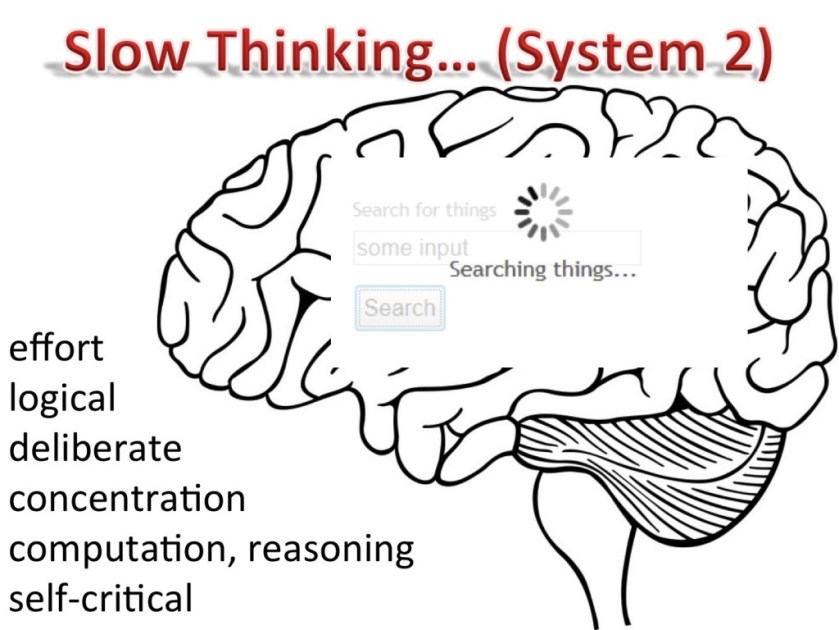
Daniel Kahneman is a renowned psychologist and Nobel laureate. He is an American citizen that served in the Israeli military and used his education, research, and experience to write “Thinking Fast and Slow”. His observations explore many aspects of human decision-making.
Weist logically argues one can become a better human being by changing the way they think. She is not acting as a clinical psychologist but as a philosopher of life and how one may make the most of it. If one understands Weist from that perspective, she is like Marcus Aurelius, Soren Kierkegaard, or Simone de Beauvoir. She has a philosophical point of view but not necessarily a happier or more fulfilling life.
The meaning of experience on one’s life is often too opaque for one’s understanding without the help of others.
Weist writes we should see what hurts others and ourselves and quit doing those hurtful things by changing our mind. This seems a good idea but denies the subjectivity and the unique experiences in one’s life. Many people are unable to understand the impact of experience on their lives. They are unable to change the way they think because they are unable to understand how or why an experience has affected their lives. Only with the help of a qualified psychologist, psychiatrist, or trained therapist can most people objectively understand themselves to constructively change their mind.
Nevertheless, Weist philosophical book is worth listening to as a guide but not an authority on how one should live their life. Most human beings are not introspective enough to find their way through life without the help of a person trained to elicit what we do not know about ourselves. On the other hand, it appears Weist has a genius beyond her years of life.
There is a risk of pathologizing social skills if one comes away from Clayton’s book thinking that fawning is only a negative characteristic of society.
Books of Interest Website: chetyarbrough.blog
Fawning (Why the Need to Please Makes Us Lose Ourselves–and How to Find Our Way Back)
Author: Ingrid Clayton
Narration by: Ingrid Clayton
Ingrid Clayton (Author, clinical psychologist, trauma therapist)
“Fawning” as described by psychologist Ingrid Clayton can cause an unconscious trauma when a person appeases, pleases, or over-accommodates others to feel safe. Clayton explains it is a survival strategy for one who deals with another person who is physically or emotionally abusive. Clayton recalls her life as a child with a stepfather who is grooming her for an intimate relationship when she is 13 years old. Clayton manages to avoid that relationship but explains the long-term psychological impact in her life is similar to PTSD.
Post-traumatic-stress disorder is a mental health condition caused by experiences, witnesses, or traumatic events that make one feel fear, stress, or danger. Clayton notes that her life when leaving home at 17 had those symptoms. She pursues a college education, graduates, continues her education to receive a PhD and finds employment as a therapist.
Pedophilia.
At the age of 13, her male stepfather created a grooming environment that created a long-term psychological impact on her life. She matured to feel fear, stress, and danger in developing relationships with others. She wrote “Fawning” as an educated PhD clinical psychologist to explain how a child growing to an adult can “…lose themselves…” with a form of PTSD. She believes she has found a pathway back to relationship’ normality after years of broken relationships. The irony of her realization is that all human beings are “fawners”.
Some will be inclined to put Clayton’s book down as an exaggeration of relationship reality but as she tells of her personal experience and therapy of others, both men and women, her beliefs become disturbingly credible. As one examines their own life (if they have lived as long as this book reviewer) know every human being is raised in their own familial circumstances. Children raised with 1, 2, or no parent families, develop behavior toward themselves and others that can lead to abuse of others which diminish their and other’s humanity. What Clayton shows is how her stepfather grooms her and how she responds based on her own grooming ability. She rejects his advances, a grooming behavior that a parent-child relationship allows with the risk of physical sexual abuse.
There is truth in Clayton’s explanation of “Fawning” as a universal relationship modifier, but it is not always linked to either grooming or abuse. People-pleasing behavior is a universal characteristic of society.
There can be good reasons as well as bad reasons for fawning. Looking at grooming as the only lens one views fawning diminishes its social value. That is certainly not Clayton’s intent but one may come away from her book seeing pedophilia as the primary consequence of fawning. The reality is that rigid family dynamics, cultural hierarchy, and high-pressure workplaces are common examples of fawning. Social cohesion and disruption are a general consequence of human nature influenced by fawning.
Clayton outlines a pathway back from PTSD. Prevention of trauma is of course the best solution. However, if one is a child, prevention becomes more problematic.
Clayton argues it is important to recognize fawning is not a people-pleasing choice but a survival strategy. Rather than feeling fear from what appears to be happening, clearly remind yourself of who you are and what you believe to be right. Recognize other’s motives. Respond appropriately by speaking up if your personal boundaries are being violated. Reflect on who you are and interrupt any motives of others that conflict with what you believe about yourself. The weakness of this pathway seems problematic for younger children. The pathway back for a child seems likely to be after the fact.
There is a risk of pathologizing social skills if one comes away from Clayton’s book thinking that fawning is only a negative characteristic of society. Pedophilia is a terrible societal malady, but society cannot function or improve without fawning.
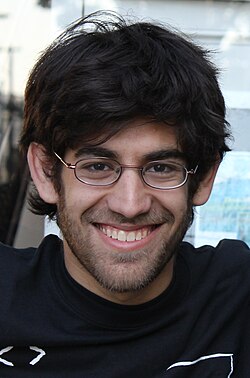
“We Are the Nerds” is a story about “Nerdom” and the tragic loss of Aaron Swartz to his loving family and the world of coding.
Books of Interest Website: chetyarbrough.blog
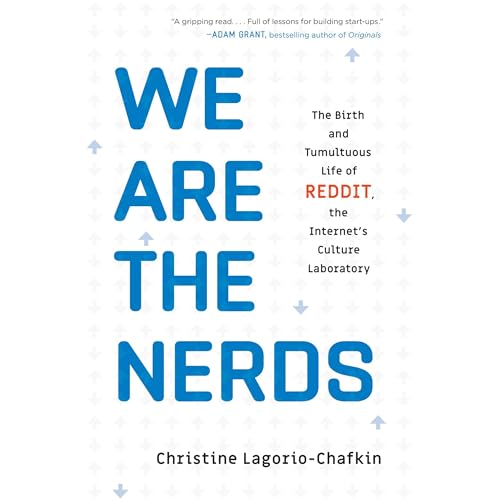
WE ARE THE NERDS (The Birth and Tumultuous Life of Reddit, the Internet’s Culture Laboratory)
Author: Christine Lagorio-Chafkin
Narration by: Chloe Cannon
Christine Lagorio-Chafkin (Author, reporter, podcaster based in New York.)
Relistening to “We are the Nerds” may be reviewed from a perspective of the future of newspapers but that diminishes the tragedy of Aaron Schwarz’s suicide.
The original founders of what became known as Reddit were Steve Huffman and Alexis Ohanian, graduates from the University of Virginia. A third partner, Aaron Swartz, is invited into the company because of his tech experience in creating a company called Infogami which merged with Reddit. With the addition of Infogami, the original founders of Reddit created a parent organization called “Not a Bug, Inc”. Schwartz insists on being called a co-founder because of his contribution to Reddit as a programmer. That insistence rankled Huffman and Ohanian which grew into a resentment that fills the pages of the author’s story.
Steve Huffman on the left with Alexis Ohanian and his wife, Serena Williams, and their daughter on the right.
The author seems to minimize Schwartz’s contribution to Reddit despite the framework he created that made Reddit scale more quickly because of its open access and community-driven cultural impact. Swartz’s contributed code appears to have been an important step in the useability of Reddit by the public. However, in fairness to the original founders, the author infers that contribution pales in respect to the extensive coding and work done by Huffman. The point is that this conflict becomes an irritant that leads to the departure of Swartz from Reddit in 2007, after it was acquired by Condé Nast in 2006. That acquisition made all three original coders millionaires.
Swartz’s life and premature death is a tragic encomium to the story of Reddit’s success as a public forum.
By some measure, Swartz is a brilliant human being, but his intelligence is accompanied by what might be characterized as a self-destructive personality. His ability as a computer nerd is evident in his High School days in Highland Park, Illinois. He goes on to Stanford, but its educational regimen leads him to leave after his first year. He preferred independent learning. Schwartz’s remarkable ability led him to become a research fellow at Harvard University in 2010. He became a self-taught intellectual with an activist belief in academic freedom that eventually led him to rebel against authority. He was arrested in 2011 for allegedly breaking into MIT’s computer network without authorization. He was charged for computer fraud and faced 34 years in prison and a million-dollar fine. At the age of 26, Swartz hung himself and died on January 11th, 2013.
An American mass media company founded in 1909.
Huffman and Ohanian believed Swartz’s contributions to Reddit were less than theirs in creating the company they sold to Condé Nast that made them millionaires. Swartz’s idealism and independence conflicted with the original founders of Reddit who seemed more interested in building a public platform that could make them rich. Though Ohanian believed they sold too soon, all three agreed to Condé Nast’s final offer that made them millionaires.
In retrospect, Ohanian may have been right about the future value of Reddit. Condé Nast spun Reddit out to an independent subsidiary under Advance Publications where it became a 42-billion-dollar success by 2025. Today, Huffman’s net worth is estimated at $1.2 billion as a result of his Reddit shares. Though Ohanian may not have held on to his shares, his net worth is estimated at $150-$170 million. Not bad for two University of Virginia graduates. However, as Plato observed, “The greatest wealth is to live content with little”. Swartz’s life seems to have had little to do with desire for wealth.
“We Are the Nerds” is a story about “Nerdom” and the tragic loss of Aaron Swartz to his loving family and the world of coding.
“Radical Candor” about a creative idea can discourage employee creativity. Scott’s counsel on building trust is her magic potion, but potions can kill as well as heal.
Books of Interest Website: chetyarbrough.blog
Radical Candor (Be a Kick-Ass Boss Without Losing Your Humanity)
Author: Kim Scott
NarratedBy: Kim Scott
Kim Scott (Author, former executive at Apple and Google, coach for tech companies like Dropbox and Twitter)
The agricultural revolution dates back to 10,000 BCE, 1760 marks the beginning of the industrial revolution, the 1950s evolves into an age of expertise and work knowledge with computerization, in the 1990s connectivity and automation begins the information age. Today, Kim Scott addresses the 2020s along with the advent of artificial intelligence. Beginning when the industrial revolution takes hold, organization management evolves into a social science. In the industrial age training changes from demonstrating how to make things to managing people’s work in making things. Jumping to the Information Age managers of people become ringmasters for employee’s creativity.
Despite many changes in purpose for organizations a common thread is managerial skill which entails political and personal skills. Managers pursue understanding, influence, ability, and sincerity of purpose to elicit and manage human creativity.
Scott outlines management skills in “Radical Candor”. Her book is a useful tool for aspiring managers. Even reaching back to the agricultural age, there is relevance in Scott’s belief in “Radical Candor”. She defines radical candor as “Caring personally while challenging (organization employees) directly.” By personally caring, Scott explains good managers must gain the trust of people who report to them. My personal experience as a former manager in different careers shows that no manager knows everything about the company or organization they manage. The one thing a good manager must know is how to develop trust with people who report to her or him. Without trust between managers and workers, organizations are likely to fail.
Trust between managers and employees is even more true today because worker’ creativity drives technological invention and utility.
Being vulnerable by understanding you know nothing about people you manage is the starting point of your role as a manager. Scott explains the first thing a new manager must do is personally meet with each direct report to hear what they do for the organization, what they like and dislike about what they do, and what obstacles get in their way that impede accomplishment. The two-fold purpose of these meetings is first to listen, not judge or criticize what is being reported. The second is to build trust.
(I believe A.I. will always be a technological tool, not a controller, of society, contrary to those who believe human existence will be erased by machines. As a technological tool of humanity, the creativity of human minds is at the frontier of management change.)
Scott explains how important it is to let employees know their manager is interested in an employee’s goals and growth in an organization.
A manager must be both physically and emotionally present when building trust with an employee. There is a need for a manager to explain one’s own vulnerability and responsibility in managing others. Scott’s point is that gaining trust of an employee requires more than knowing their birthday. A good manager will ask for feedback about what an employee is doing and what support a manager can offer to improve their performance. A manager should be curious, not furious when things are not going well. It is important that a sense of respect be given for an employee’s effort to get their job done. With development of respect, it becomes possible to use radical candor to constructively criticize or complement an employees’ performance.
Scott notes there are many reasons for an employee’s failure to perform beyond expectations.
Those reasons include incompetence but also the failure of management to have a clear understanding of an employees’ strengths and weaknesses. Through development of trust between manager and employee, a different job may be in order. With reassignment and a performance plan, a manager may be able to tap a human resource that has been wasted. The performance plan is instituted with “Radical Candor” and offers either opportunity or, if performance improvement fails, dismissal.
Every organization has distinctive operational idiosyncrasies that a manager may not precisely understand.
This has always been true. It is even more true in the tech age because project uniqueness and employee creativity is more difficult to measure and manage. Kim Scott has worked with the most iconic tech companies of modern times, e.g. Apple, Google, Twitter. There are a number of anecdotes about famous tech giants and officers of Facebook, Apple, and Google, like Sandberg, Cook, and Page. Kim has also started her own businesses, some of which failed, and others that prospered. Her experience offers credibility to her arguments.
From personal experience as a manager of others, no manager ever knows all there is to know.
As Scott notes, this is not to say that geniuses like Steve Jobs did not know more than his Apple employees, but the iPhone idea came from a group of employees before approaching Jobs with a clunky mock-up of the idea. Jobs had a reputation for being a tough audience for people with creative ideas. This is the reason Kim Scott explains trust must be created between manager and employee so that candor about needs and expectations can be usefully employed to improve probability of personal and organizational success.
One takes Kim Scott’s counsel on “Radical Candor” with some reservation because misused “Radical Candor” about a creative idea can discourage employee creativity. Scott’s counsel on building trust is her magic potion, but potions can kill as well as heal.
Adults need to be present, honest, and emotionally available to children under their care. It is a big job for which most of us fail, but children are the world’s future.
Books of Interest Website: chetyarbrough.blog
A Beautiful Family (A Novel)
Author: Jennifer Trevelyan
NarratedBy: Ruby Hansen
Jennifer Trevelyan (Author, lives in Wellington, New Zealand.)
Set in the beautiful island nation of New Zealand, Jennifer Trevelyan writes a coming-of-age story of a ten-year-old girl named Alix. Through Alix’s eyes, a listener/reader is reminded of their youth and the many events in childhood that show the truth of human nature. What we see and interpret when we are young is clouded by our ignorance and struggle to appreciate life as it is rather than what we think it should be. Ignorance is usually dispelled as we grow older, lose our innocence, and begin to understand life’s struggles are universal.
Humans are animals with advanced abilities to think and communicate.
Humans cooperate, compete, and adapt to their environment to survive. Our imperfections are legion beginning in childhood and multiplying throughout our lives. As a child, we see the world and interpret what we see with innocent eyes. Whether raised by an institution, two parents or one, a child sees through inexperienced eyes which are only interpretations of a real world that only time and maturity will reveal. Trevelyan shows how a child sees more than adults realize but often interpret what they see incorrectly. Eventually a child loses his/her innocence as they mature and reinterpret past experiences, but the fog of memory often interferes with truth.
Trevelyan’s main character, Alix is you, me, and every child raised in a world of married and unmarried parents or institutions.
Trevelyan offers concrete examples of the fragility and complexity of caring for children of the future. Many examples are given of Alix’s seeing life happen with interpretations that are as often wrong as right. Alix has had explanations of the difference between right and wrong but sees her sister steal make-up from a store, get drunk as a teenager, and befriend others who encourage bad behavior. She sees her mother at a distance who appears to be amorously kissing a stranger. Her mother and father are often confrontational with each other. Her mother takes long solitary walks, and her father shows passive detachment from the family.
Alix is on a vacation with her family at a New Zealand’ beach resort. She is an excellent swimmer who often swims alone.
The risk of swimming in the sea introduces the reality of danger in the world even when the environment is beautiful. One thinks about the many shark incidents on the coasts of the world and Malcolm-Jamal Warner’s death from a riptide while swimming in Costa Rica.
Trevelyan offers many lessons for adults who are raising children in this world. Children see more than adults realize and they interpret what they see in ways that can be as easily wrong as right. They incorporate what they see into their perception of the world. Parents are models of who children become as adults. As parents, or institutions that influence and raise children, it is important to be emotionally available, not just present to children. Keeping secrets or being silent about something is human. However, what a child sees or hears can be harmful when not discussed with a parent or guardian. Parents and institutions need to provide age-appropriate transparency to build trust with children. Those children with siblings should have sibling relationships nurtured by responsible adults. Adults need to take responsibility for the environment in which children are raised.
Being on vacation in an idyllic setting does not mean there are no dangers.
Trevelyan story explains why raising children is important. Adults need to be present, honest, and emotionally available to children under their care. It is a big job for which most of us fail, but children are the world’s future.
Greene explains self-awareness of introversion or extroversion is key to understanding one’s social limitations and blind spots in being a constructive part of society.
Books of Interest Website: chetyarbrough.blog
The Laws of Human Nature
Author: Robert Greene
NarratedBy: Paul Michael & 1 more
Robert Greene (Author, with several NYT’s bestsellers addressing human nature, graduated with a degree in classical studies.)
“The Laws of Human Nature” is a tour deforce of what one learns in life about being a good manager. The difference between a technically excellent employee and a manager is that the first has skill in doing things while the second has skill in managing those who do things. Occasionally, one can be both, but as the complexity of life increases, the likelihood becomes rarer. Human nature revolves around behavior and one’s psychological characteristics. Greene argues there are fundamental laws of human nature that can enlighten listener/readers about themselves and others.
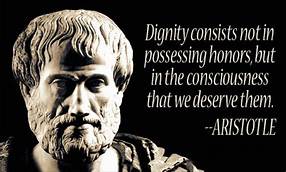
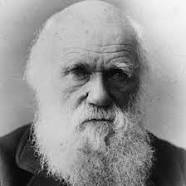
Aristotle (384-322 BC)THOMAS HOBBES (1588-1679)Rousseau (1712-1778)CHARLES DARWIN (1809-1882) FOUNDER OF THE THEORY OF THE ORIGIN OF SPECIES.
Aristotle’s, Hobbes’, Rousseau’s, and Darwin’s views of human nature have different perspectives. Aristotle believes human nature is teleological with a belief that we all have purpose that is revealed by reason and virtue. Hobbes believes humans are innately self-interested and capable of both good and bad behavior. Rousseau believes humans are inherently good but corrupted by society. Darwin believes humans evolve through natural selection and will do whatever is necessary to survive. Of the four perspectives, Aristotle seems the most idealistic while the other three account for human nature’s irrationality.
Greene suggests humans can be irrational, narcissistic, misleading, and sometimes repressive.
What one can draw from his book is how those characteristics exhibit and what one can do about it. The potential of irrationality exists in everyone. It can cause fear, envy, insecurity, and desire. Bias is at the heart of these emotions. He turns to ancient history to give the example of the war between Spartans and Greeks that may have been avoided if heightened emotions had not been aggravated by a plague in Greece and the death of Pericles who had a rational plan to avoid war. Greene suggests Augustus defeats Anthony to become ruler of Rome because of Anthony’s neglect of his duty as leader of Rome for the desire of the Egyptian Queen, Cleopatra. Greene notes irrationality is a universal characteristic of humanity. The anecdote is to calm one’s emotions, clearly understand what it is that you fear, and to mirror back that clear understanding to yourself and change your behavior.
One can see narcissism in themselves or others when one seeks admiration, overreacts to criticism, has no interest in others perspective, or manipulates others by ignoring or emotionally withdrawing attention.
Married people often do this with their significant other. Greene explains self-awareness, seeing others through their eyes, redirecting your energy to something more important, and being more disciplined can abate narcissism. He notes narcissism is not a flaw but a force that can be turned to good. The history of Oppenheimer, considered by some to be narcissistic, is noted as an example of someone who saw the big picture of life and the consequence of war. He came to understand something bigger than himself and successfully manages other scientists to create the first nuclear bomb. The contrary of a narcissist who could not see the big picture is the story of Howard Hughes who could not manage his father’s company or his entry into the film industry because he could not get things done through other people. He believed only he could handle the complexity of a film production and plane manufacturing company. No one could work under him because of his uncontrolled narcissism that interfered with others he hired to help him manage businesses bigger than one mind could control. His managers resigned because he would not allow them to do the job they were hired to do. Hughes failed as a movie producer and plane manufacturer because of his narcissism.
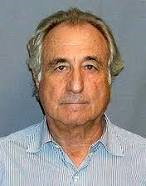
Bernie Madoff (Born 1938, died in Federal Medical Center in 2021)
History is festooned with misleading information by people who distort the truth in order to achieve their personal goals. Greene recalls the history of swindlers like Bernie Madoff that lied to his investors about investments that were Ponzi schemes that fed his investment company’s growth, not from honest investment in publicly traded stocks or business enterprises.
STALIN (1878-1953)
Stalin in Russia, is the penultimate example of a psychological characteristic of repression. One suspects the same is true of Putin. Even America’s President Trump could be characterized as a narcissist. He used federal power to investigate and punish political opponents. Trump politicized the civil service by conducting mass firings to replace employees that were loyal to his agenda. Justice Department’ independence has similarly been restructured. Trump suppresses dissent and free expression by cracking down on student protests, detained and deported not only illegal immigrants but U.S. citizens. He ended asylum protections and militarized crackdowns with the use of the National Guard and U.S. marines to aid ICE in deporting undocumented immigrants and quelling public opposition. All of these actions are examples of an increasingly repressive American President. There were similar arguments about Franklin Roosevelt in his early actions to rescue America from the pre-WWII’ depression.
Greene goes on to explore personality types that are a combination of extroversion and introversion characteristics.
He notes both characteristics have strengths and weaknesses. Extroverts generally have more social fluency, have a more charismatic presence and higher social visibility. They can also become subjects of envy or derision because of their high profile. Greene suggests they are more vulnerable to manipulation because their habits reveal too much about themselves. They become more susceptible to groupthink rather than individual judgement. On the other hand, introversion has equivalent but different strengths and weaknesses. Introverts have more control over themselves because they reveal less of themselves to others. They are naturally less likely to succumb to groupthink. On the other hand, they tend to misread socially valuable influences because of their isolated view of the world. They fail to offer their opinion because of fear of self-exposure and ridicule which diminishes their understanding of beneficial social norms.
Greene explains self-awareness of introversion or extroversion is key to understanding one’s social limitations and blind spots in being a constructive part of society. However, his analysis of “The Laws…” of human nature becomes tedious because it offers too many examples and views of biases and their anecdotes for most listener/readers to be patient enough to complete his book. Nevertheless, Greene’s first chapters are enlightening and worth one’s time.
Governmental and educational institutions are the foundations of Democracy. They must stand and support the right to free speech without committing, allowing, or condoning violence in the exercise of that right. (Of course, this is easy to say but difficult to follow because of the loss of emotional control by protectors of the public and/or protesters.)
Books of Interest Website: chetyarbrough.blog
The Coddling of the American Mind (How Good Intentions and Bad Ideas are Setting Up a Generation for Failure)
Author: Jonathan Haidt, Greg Lukianoff
NarratedBy: Jonathan Haidt
Jonathan Haidt (Social Psychologist)Greg Lukianoff (Lawyer & free speech advocate.)
This is an interesting book written by a social psychologist and a free speech advocate. The authors suggest the focus for parents of Generation Z have, in some ways, become overly protective of their children. They argue– Gen Z’ parents are not addressing the mental health issues caused by this technological age. Jonathan Haidt and Greg Lukianoff argue society has become more attuned to children’s protection than the reality of living in a world of diversity.
With the societal change that has accompanied the birth and maturation of Generation Z, immersive tech like AR and VR, along with AI and smart devices, is having profound effects on society.
Haidt and Lukianoff suggest parents focus too much on keeping their children safe to the point of stifling their intellectual growth. The example they give is of the mother who is publicly ridiculed for allowing her 8-year-old son to find his way back home from a city market by mass transit. She prepares him for the excursion with a transit schedule, pocket money, a cell phone, and general information he needs to find his way home. The boy successfully finds his way home and allegedly expresses happiness about what he views as an adventure and accomplishment.
Undoubtedly, there is some truth to the authors’ suggestion that parents are too protective of their children. Thinking of a single mother who has to work but has children at home. Many single parents cannot afford a babysitter, so leaving their children during the day is not uncommon. Single parent families do the best they can but if children are old enough to fill a cereal bowl for breakfast, they are expected to take care of themselves.
John Walsh (Became a child protection advocate, producer, and actor after the murder of his son.)
On the other hand, the writers note the horrible tragedy of John Walsh who’s six-year-old son is kidnapped in 1981. The six-year-old is found two weeks later with a severed head. Though child kidnappings rarely end in such a horrific way, one can understand why many parents became highly protective of their children after the 1980s. Haidt and Lukianoff acknowledge the horrific murder of Walsh’s son, but history shows unsupervised children that are harmed is much less than 1 percent of the dependent children population. What the authors suggest is that some of the overprotection of children since the Walsh tragedy in 1981 has been counterproductive.
Allergy immunity.
As an example of over protection, the authors suggest peanut butter allergies have risen because of inordinate fear by the public. They suggest that early life exposure to peanuts would have provided immunity and fear of exposure is the proximate cause for today’s rise in allergic reactions. Putting aside the theory of a human body’s creation of developing an allergy immunity, the frustration one has with monitoring a child’s life experience is in knowing where to draw the line between reasonable supervision and overprotectiveness.
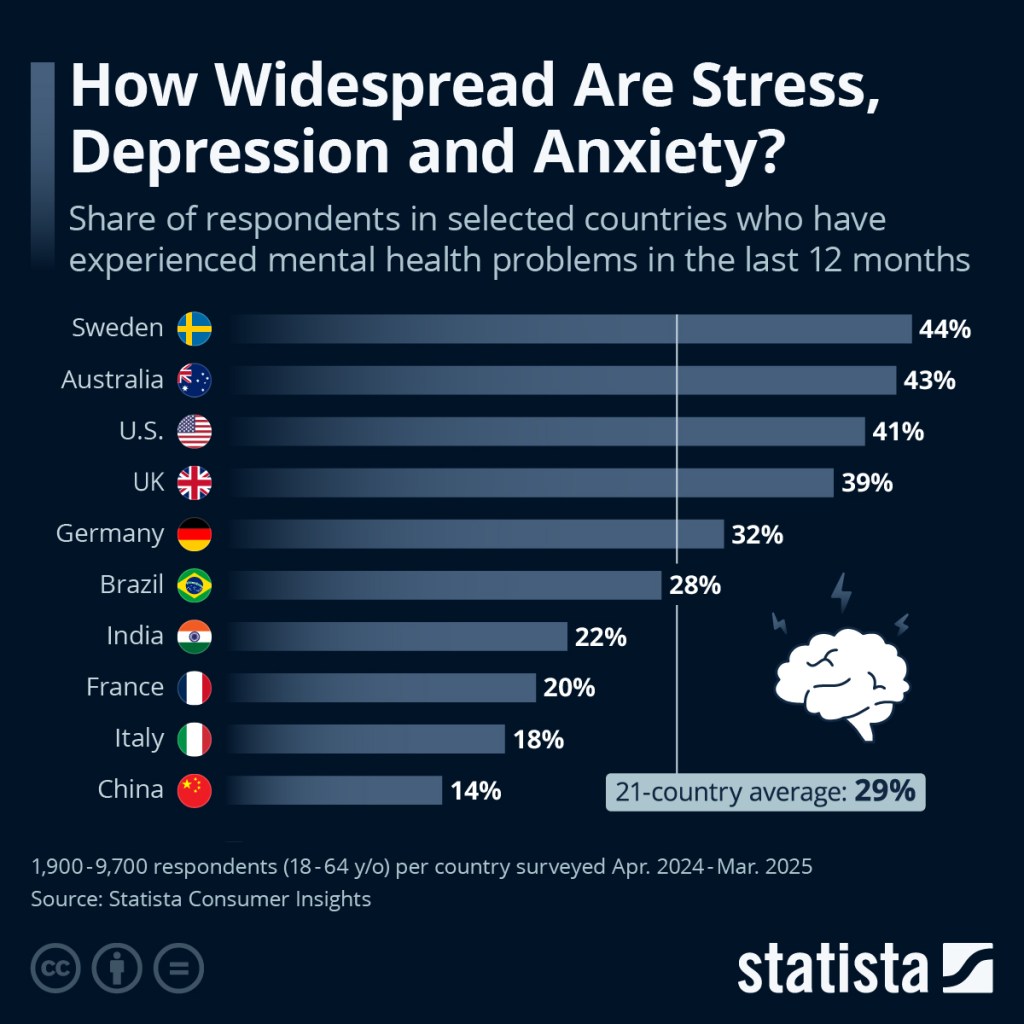
The authors infer the widespread rise in stress, anxiety, and depression in America is partly due to overprotectiveness.
Undoubtedly suppression of free inquiry and play diminishes the potential of a child’s development. Haidt and Lukianoff argue overprotection has contributed to a rising anxiety and depression in Generation Z and society in general. The authors cite national surveys that show increased rates of anxiety, depression, and self-harm. They note hospitalization and suicide rates are increasing based on self-inflicted injuries among teens with sharper rises among females. They note colleges and universities are reporting higher demand for mental health services.
Whether stress, anxiety, and depression are because of over protection remains a question in this listener’s mind. One suspects that children are cared for in too many different ways for research to conclude that stress, anxiety, and depression increases due to overprotection. It is more likely due to parental inattention because of work that takes them away from home and personal fulfillment in their own lives which are only partly satisfied by being parents.
Rather than parental overprotection, it seems intensified social media and smartphone use accelerates stress, anxiety, and depression in children and society in general.
Constant connectivity, online comparison, and cyberbullying are having outsized effects on emotional stability. The authors suggest overprotective parenting compounds the negative consequence of connectivity by depriving children of experience that can build their resistance to anxiety and depression. That may be partly true but not the whole story. Smart phone screen addiction takes one away from day-to-day real-life experience. The idea being that experiencing life’s failures and successes builds resistance to anxiety and depression whereas smart screens are pictures of life not lived by the person who is looking at them. Smart phones open the Pandora’s box of judgement which can either inflate or deflate one’s sense of themselves.
A large part of Haidt’s and Lukianoff’s book addresses the public confrontations occurring on campuses and the streets of America that are becoming violent demonstrations rather than expressions of opinion.
They suggest street demonstrations can be used constructively if participants would commit themselves to open dialogue and diverse viewpoints. Participants need to be taught cognitive behavioral techniques that can mitigate emotional reactions while building on psychological resilience. Rather than reacting emotionally to what one disagrees with, participants should focus on diverse viewpoints that allow for disagreement but do not become physical conflicts. We are all an “us”, i.e. not an “us and them’. Confrontation can be the difference between a white supremacist plowing into a crowd in Charleston, South Carolina and non-violent protest by leaders like Martin Luther King Jr. or Václav Havel. People like President Trump see the world as “us vs them” rather than one “blue marble” hoping to find another that can support human civilization.
Peaceful protests are an opportunity to understand human diversity without losing one’s humanity. Race, creed, and ethnicity are who we are and what we believe. Protesters should not be used as an excuse for violence but for understanding. Of course, this is a big ask which is too often unachievable.
The authors believe humanity can do better by allowing children to learn from their experiences while accepting diversity or difference of opinion without violence. Children and adults can be taught by experience and guidance to manage stress. Free play, risk-taking and real-world problem-solving come at every age and they can make a difference in human life. This listener only partially agrees with the author’s belief that “helicopter parenting” is interfering with free play and reasonable levels of risk taking. Democratic cultures need to reaffirm free speech as a mandate; with violence being unacceptable on every side of the aisle.
Anti-Trump demonstration.
Governmental and educational institutions are the foundations of Democracy. They must stand and support the right to free speech without committing, allowing, or condoning violence in the exercise of that right. (Of course, this is easy to say but difficult to follow because of the loss of emotional control by protectors of the public and/or protesters.)
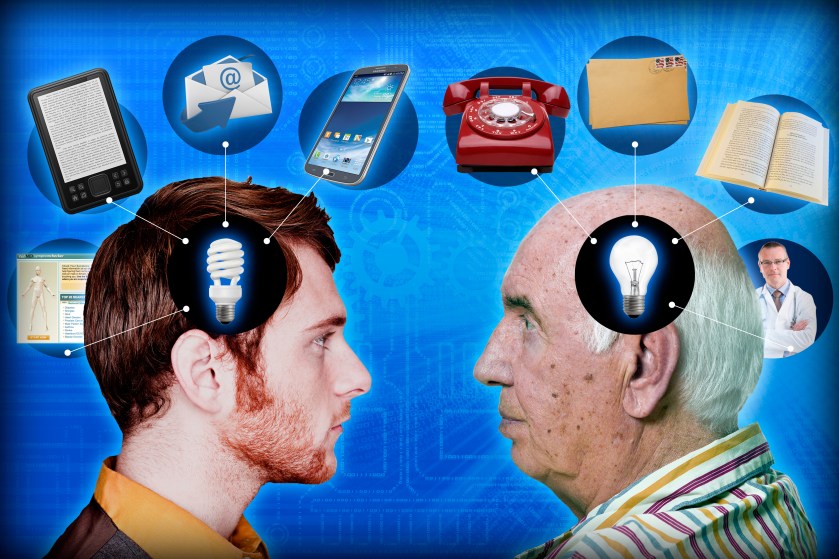
Viskontas believes technology is a boon, not bane, of human intelligence. Information recall is food for brains that advances civilization. She argues information recall, with the use of the internet of things, broadens recall to complement human intelligence and improve creativity.
Books of Interest Website: chetyarbrough.blog
Brain Myths Exploded (Lessons from Neuroscience)
Lecturer: Indre Viskontas
By: The Great Courses
Indre Viskontas (Ph.D. in cognitive neuroscience from UCLA, performed at Cafe Royal Opera in San Francisco, studies neural basis of memory and creativity, Lecturer at USF.)
There is a great deal to unpack in Indre Viskontas lectures about the brain and intelligence. This review is an extension of a previous look at her “…Great Courses” lectures on “Brain Myths…”.
Viskontas argues sociability plays an important role in the development of intelligence. As a less social person one wonders what potential may be lost by introversion. Every human being is a mixture of extroversion and introversion. History suggests Benjamin Franklin, Margaret Thatcher, and John F. Kennedy were outgoing extroverts. In contrast, Abrahma Lincoln, Albert Einstein, and Rosa Parks were characterized as less outgoing and more introverted. All were insightful, intelligent leaders that had great impact on the history of the world. Sociability seems of little consequence for one’s intelligence or predictable role in history.
Viskontas explains how important sleep is for mental health.
The effect of sleep deprivation is a form of torture.
During sleep, Viskontas notes the brain is quite active, characterized by different brain wave patterns. Based on periods of sleep, our dreams are like house cleaners clearing the debris accumulated from days past. Some remember their dreams, others do not. That we all dream can be seen with REM, rapid eye movements, that can be seen as eyelid movements when one is sleeping. Viskontas suggests these dreams have hidden meanings that reflect emotions that the brain is actively processing while we sleep. Memories are reconstructed, often distorted, and can cause one to awaken because of their bizarre content. Our brains reconstruct stories in sleep, just as they do when we are awake in that they complete stories of our life whether the facts are true or false. The REM stories are a clearing house for adherent behaviors that may be good or bad.
Viscontas notes low activity in the temporoparietal junction (TPJ) and medial prefrontal cortex (MPFC) causes one to not remember their dreams.
Viskontas explains some do not remember their dreams because of lower activity in a part of the brain that is normally active when dreams are being recalled. She suggests those who wish to remember their dreams can keep a journal of what they do remember when they wake up. This journal can help one understand a little more about why they are dreaming and what their dream may mean by consulting a psychologist or psychiatrist.
A concern that Viskontas raises is that those who do not get enough sleep impair their memory and learning capabilities.
With a lack of sleep the prefrontal cortex functions poorly with poor judgment and impulsive behavior. Further, Viskontas notes the immune system is weakened by not getting enough sleep–with increased risk of anxiety, depression, and mood instability. When deprived of sleep, people become less social and are more driven by emotions than intellect. Viskontas recommends 7-9 hours sleep per night for optimal brain function. A continuous sleep cycle is important for deep sleep and REM that have distinct roles in information processing and a mind’s creativity for healthy living. Though Viskontas does not say anything about napping during the day, some research shows 20-to-30-minute naps can improve memory, alertness, and mood.
Viskontas explains intelligence is not a fixed characteristic but can be shaped by neuroplasticity, environment, genetic inheritance and social interaction.
Humans can rewire their brain through learning and experience. Intelligence rests within every person’s grasp but its improvement is based on genetic inheritance, experience, and effort. Science, with reproducible experiment, has proven intelligence exists throughout the Animal Kingdom.
“Quants” created collateralized mortgages in 2008.
Viskontas believes, on balance, technology is a boon, not bane, of human intelligence.
Information recall is food for brains that advances civilization. She argues information recall, with the use of the internet of things, broadens recall to complement human intelligence and improve creativity. Of course, that food can be poisoned just as the Quants who created collateralized mortgages that nearly collapsed the world economy.
What we see today is not reality, but our minds’ interpretation of the material world. It seems that everything in the world is process, e.g., gravity, or time relativity, or quantum unpredictability.
Books of Interest Website: chetyarbrough.blog
Brain Myths Exploded (Lessons from Neuroscience)
Lecturer: Indre Viskontas
By: The Great Courses
Indre Viskontas (Ph.D. in cognitive neuroscience from UCLA, performed at Cafe Royal Opera in San Francisco, studies neural basis of memory and creativity, Lecturer at USF.)
Dr. Indre Viskontas offers interesting facts and theories about the brain in her Great Courses lectures. Her educational and musical accomplishments are remarkable examples of brain’ flexibility, human intelligence, and life-long potential. Her lectures show cognitive improvement may occur throughout one’s life while recalling incidents of brain damage and discoveries of science experiments that reveal how the brain works.
Viskontas suggests the belief that humans use only 10% of their brain is a myth.
The brain is made of eight distinctive structures which are interconnected and work together for our thoughts, feelings, and movements. A network of neurons sends electrical and chemical signals between parts of the brain that generate human thought and action; some of which are automatic and others cognitively reasoned. Viskontas explains how interconnections allow continued mental and physical functioning even when a part of the brain is damaged. Experiment and human accident have proven that the brain can adapt to loss of normal thought and action by retraining healthy parts of the brain. Retraining the brain can improve lost function. This may not return the perfect function of an undamaged brain, but it will improve function.
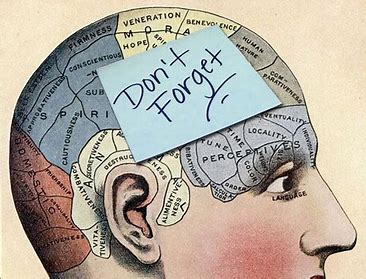
Viskontas explains human memory is a reconstructive process with varying degrees of accuracy.
There are people who have nearly perfect recall of their past. However, experiment has shown that even those few who can recall their personal history in detail are affected by emotion that distorts its accuracy. Furthermore, Viskontas explains personal history’ memory is limited to personal experience rather than any measurement of IQ. Of course, there are a few people who are said to have eidetic memories that can recall images with precision. They have so-called “photographic memories”, but IQ is based on problem-solving abilities that, at best, would be enhanced by a photographic memory. It is the application of recalled information to problem solving abilities that make one a genius like John von Neumann and Nikol Tesla who were alleged to have eidetic memories.
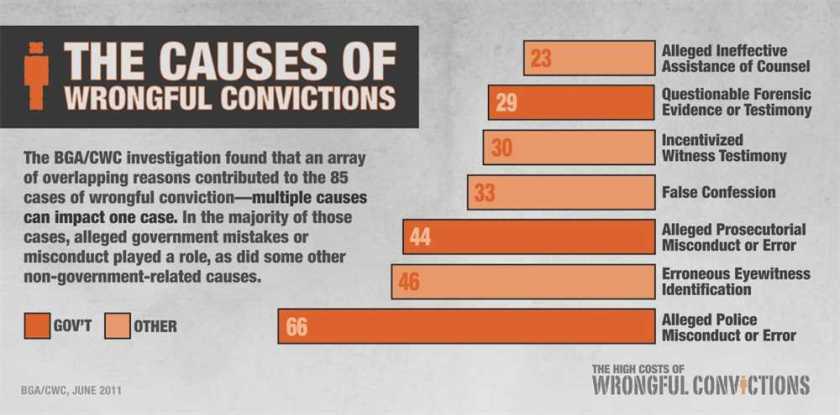
The risk is that “eyewitness” accounts can be influenced and totally wrong.
Scientific experiment has proven memory is a reconstructive process. With DNA analysis, a number of convicted murderers have been found innocent despite many eyewitnesses that identified them at scenes of crime. One is reminded of the gorilla experiment where eyewitnesses are distracted when a gorilla is sitting in a chair just as a human action scene is created in the same room. They do not see the gorilla and are surprised when it is pointed out to them later.
In the era of quantum computing, the concept of reality is evolving at a rate that boggles the mind.
The idea of a probabilistic rather than concrete reality reminds one of the differences between the science of Newton and Einstein. Newton thought of things as concrete reality. Einstein takes steps toward relativity with less emphasis on the concreteness of reality. What we see today is not reality, but our minds’ interpretation of the material world. It seems that everything in the world is process, e.g., gravity, or time relativity, or quantum unpredictability. Life and human beings may only be a pile of atoms in an atomic process of birth, life, death, and whatever comes after death.
As human beings grow older, new things take longer to learn but Viskontas explains it is commitment that makes a difference in learning something new.
Taking piano lessons as an older adult, deciding to become an opera singer after graduating from college as a neuroscientist, or reading/listening to books about science when you are not educated as a scientist takes more time as you get older, slower, and less inquisitive. Dr. Viskcontas’ lectures infer it is never too late to learn something new. It just takes longer for it to become a part of who you are.


















































 REVIEWS AND VIEWS OF LIFE