As a mirror and catalyst for change and hope, Professor Mark Bergson offers an excellent review of the world’s religions.
Books of Interest Website: chetyarbrough.blog
Cultural Literacy for Religion (Everything a Well-Educated Person Should Know)
Lecturer: Mark Berkson
By: The Great Courses
Mark Berkson (Professor and Chair in the Department pf Religion at Hamline University)
Professor Berkson provides an excellent overview of the most important religions in the world in his lectures. Though this reviewer is not a person who follows any religion, Professor Berkson offers a broad understanding of religious beliefs and their differences in his lecture series.
CHRISTIAN, ISLAMIC, AND HINDUIST RELIGIONS HAVE THE MOST FOLLOWERS
The three religions with the greatest number of followers are Christian, Islamic, and Hinduist which are categorized as a transcendent group of religions. In broad terms, their beliefs are in salvation, divine revelation, moral law, and a soul’s journey toward a divine being as the ultimate truth and value of life. These religions reflect on both the first and second categories of religion because they transcend the self to either a divine or a more centered understanding of oneself.
A third category would be followers of a sect of Buddhists adherents, Jainists, or Confucianists which believe in enlightenment, discipline, meditation, and moral cultivation of oneself in relation to nature, the cosmos, and everyday life. This third category is not centered around a divine being but around self-effort to create ethical harmony among human beings that will offer peace to all.
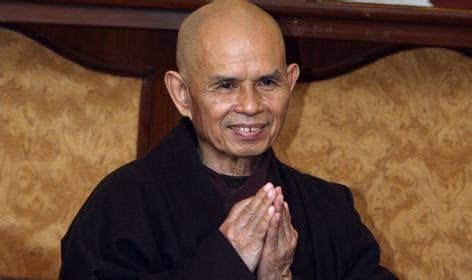
Thích Nhất Hạnh was a most famous Vietnamese Thiền Buddhist monk who believed and taught self-effort to create ethical harmony in oneself. (Died at age 95 in 2022.)
Berkson notes Daoist’s, Shinto’s, and some Buddhists (like Thích Nhất Hạnh) believe in the balance, flow, and interconnectedness of living in accordance with nature. He categorizes these religions as “religions of immanence”.
Tenzin Gyatso (the 14th Tibetan Dalai Lama, exiled in India from his native land in China, represents the Buddhist idea of self-transcendence.)
Berkson explains religion became important to civilization because they made living life more important than just survival. Religion gave meaning to life. Religion also provided social and moral order to life. Religion gave comfort in time of grief, fear, and uncertainty. Religion inspired societies to be creative to build cities, and create art. Religion provided a belief in something greater than oneself and the possibility of transcendence beyond earthly existence.
As one listens to Berkson’s lectures, one wonders whether religion has been more positive than negative in civilization’s development.
Berkson tries to sit on a fence between two extreme opinions. One is the positive contributions of religion to human moral and ethical belief. On the other, religion has aggravated social comity by creating differences. Different religious beliefs have murdered or demeaned millions of human beings who believe only their religion is important. If you defile the truth of my religious belief, you are not one of us. On the one hand, religion brings people together and grows cultural and artistic beliefs. On the other hand, religious belief creates silos that suppress inquiry, reinforce prejudices, and delegitimize political authority. Belief in a religion can advance understanding of human nature but at the same time suppress any inquiry into faith or science.
One will better understand specific religious beliefs as a result of Bergson’s lectures.
Bergson notes tensions between religious beliefs are the basis upon which many social and human atrocities have occurred. Christianity notes that no one comes to God except through Chistian belief while Hinduism believes there are many paths to the divine. Exclusivity in religion may not cause a war, but it certainly creates tension. The core beliefs of Judaism, Christianity, and Islam have led to millions of deaths because of distinctions made between the word of God in the Hebrew Bible, Christian old and new testaments, and the Qur’an.
As a mirror and catalyst for change and hope, Bergson offers an excellent review of the world’s religions.
However, in the history of yesterday and today, the Jewish holocaust of WWII and slaughter of Palestinians in Gaza rend one’s heart. To quote Rodney King amid the Los Angeles riots, “Can we all get along?”– apparently not.
There is more death to come in the last chapters of “Wild Dark Story”. The underlying gloom about the fate of earth and civilization may ware on some who may become bored with the author’s story.
Books of Interest Website: chetyarbrough.blog
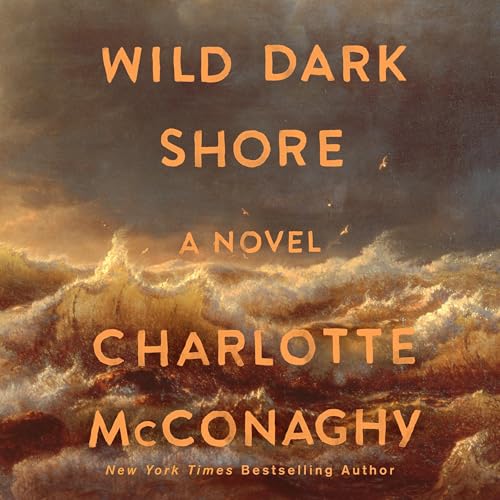
Wild Dark Shore (A Novel)
Author: Charlotte McConaghy
NarratedBy: Cooper Mortlock & 3 more
Charlotte McConaghy (Author, writer born in Australia in 1988, Graduate Degree in Screenwriting and Masters in Screen Arts.)
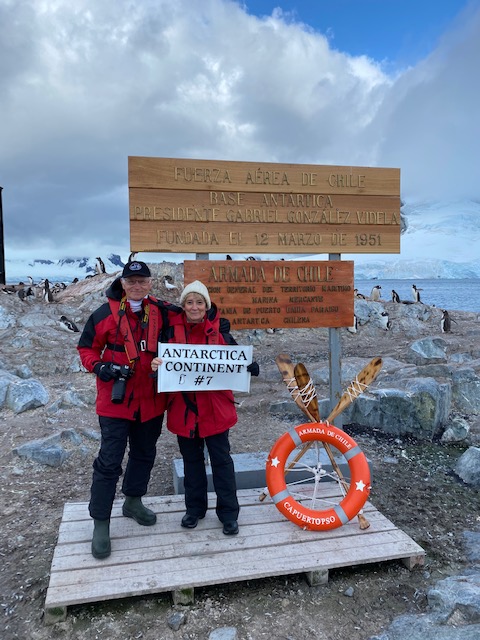
This is a novel for environmentalists with a survivalist mentality but it is also a tale of mystery and human relationships. McConaghy’s education makes “Wild Dark Shore” feel like a screenwriter’s idea for a movie. She paints a word-picture of a cold wilderness island sinking into oblivion because of climate change. It reminds one of visiting a weather station in Antartica. One is mesmerized by seabirds flying in a brutal wind, penguins flocking across an icy landscape, and sea lions sunning themselves on broken islands of ice. If you are lucky on your voyage, you will see a pod of whales. McConaghy paints a picture of a forbidding landscape once inhabited by natives that became a lighthouse for ships of the sea. At the time of the author’s story, it became an outpost for environmental observation and seed preservation.
Islands around Australia.
“Wild Dark Story” is a mystery about a lost husband and a tough-minded wife who wants to know what happened to him after receiving three letters expressing fear about his assignment and life at the station. The station is being closed down by a family working at the island station. There is a father, two sons, and a daughter. The father’s wife has died. The task of closing the station is perilous but this family has lived on the station for several years and is intimately aware of the dangers and what must be done to ready it for abandonment. Their evacuation plans are interrupted when a vessel crashes near the station. The vessel carries the wife of the person who received the three letters from her husband. She survives the vessel’s destruction with wounds from the rocky shoreline. The pilot of the vessel is dead. The woman is rescued by the family that is preparing for evacuation.
Environmental degradation.
“Wild Dark Story” has some appeal to environmentalists because it is a dramatic presentation of the fragility of civilization in the face of rising tides and a warming planet. The island is set up, presumably by either a government or corporation that wishes to preserve unique plants from seeds in a cavern designed for that purpose. Preservation is being shown as a form of resistance to environmental degradation.
Leaving an isolated land.
In conversations amongst the family preparing for evacuation, the loss of the woman’s husband may have had something to do with the family that is closing the station. The father is reluctant to tell what happened and suggests his children should not say anything about it to the woman.
The new arrival’s husband was a biologist responsible for seed preservation.
There was a fire that burned down their home on the mainland. It was built by the hands of the woman who is trying to find out what happened to her husband. They had separated because the fire and total loss of the home had fractured their relationship. Her husband’s fate is never fully confirmed, but the novel strongly implies he may have died by accident, suicide, or possibly through a cover-up related to the dismantling of the seed vault.
Her husband had bonded with the youngest of the three children. This is interesting because one of the last fights he had with his wife before he left was about her not wanting to have a child.
Rescue or not.
At this point, the novel becomes too long. The mystery of her husband’s death may have been because of psychological imbalance but no definitive answer is given. The theme of the book is that isolation warps truth and identity and that grief is a force that drives human beings to fall apart or renew their lives. There is more death to come in the last chapters of “Wild Dark Story”. The underlying gloom about the fate of earth and civilization may ware on some who may become bored with the author’s story.
Miodownik explains liquids are everywhere and influence every aspect of life on earth. As a scientist, Miodownik explains understanding liquids is understanding life.
Books of Interest Website: chetyarbrough.blog
Liquid Rules: The Delightful and Dangerous Substances That Flow Through Our Lives
Author:Mark Miodownik
NarratedBy: Michael Page
Mark Miodownik (Author, British materials scientist.)
Mark Miodownik offers some interesting information about liquids in “Liquid Rules”. It seems Miodownik had some spare time on a long plane trip. Though many know some of what the author explains, it is interesting for listener/readers who don’t think about the importance of liquids in our lives. For example, Miodownik notes how and why Kerosene is the fuel that powers jets.
The qualities of kerosene make it an optimum choice for jet propulsion.
Kerosene is safer to handle because high temperatures are required for ignition which makes it safer than gasoline. It has a low freezing point that allows high-altitude flight where sub-zero temperatures exist. Its viscosity allows it to flow in cold or hot conditions which reduces risk for fuel line’ clogging. Kerosene carries high energy production per unit of volume for longer flights. It is cheaper to refine than other fuels. And most importantly, it is chemically stable which reduces risks of vapor lock or premature combustion.
As Miodownik wings his way across the earth, he casually mentions Susan is a passenger on the same transatlantic flight who is offered a glass of wine.
She suggests wine testing is really a performance art. Her remark is an introduction to Miodownik’s more scientific examination of the sensory and symbolic dimensions of wine tasting. Miodownik explains the role of tannins, taste, and the rituals around drinking a glass of wine. He explains a connoisseur’s way of swirling a glass of wine before his/her nose to sense the bouquet of the libation. One imagines Susan looking askance at Miodownik’s academic review of her off-the-cuff remark. Who is this guy? Is he hitting on me?
Presumably, Miodownik sits back and contemplates the creation of a book about liquids.
Miodownik seems slightly discomfited by his seatmate’s look at him. Does he regret his forwardness in addressing her comment like a nerd? There is a sense of humor and a touch of irony in Miodownik’s choice of subject. One wonders what a woman’s response might be to a person she does not know explaining what she intended when she spoke of wine tasting as an art. In any case, Miodownik has introduced his subject.
As Miodownik’s thoughts move on about a book about liquids, he recalls the invention of ink.
Here is an invention with purpose. He notes the creation of ink that is made to flow predictably, dry quickly, and remain legible for years. The idea of a liquid that makes history, science, and art for the ages, i.e., an eternal gold mine for future generations. Ink reaches back to the caliphs of the Maghreb, rulers of Islamic caliphates in 7th century, northwest Africa. Ink connects with the evolution of the colors of red, green, and blue. From fountain pen writings to pointillist art the creation of ink plays a critical role in modernization of the world.
Water is the foundation of life.
Most know water is an essential need for life as we know it. What is often less thought of is that water is a universal substance that underlies world climate and biological life. Miodownik notes that water is a universal substance that underpins life and the climate systems of the world. It is the vehicle of human metabolism, emotional expression of fear, pain, happiness, and the world’s climate.
Production sweat shops.
Humans produce sweat and a quart of saliva per day. Saliva aide’s digestion, hygiene, health, and emotional expression like crying, anger, or embarrassment. Sweat regulates the bodies temperature. Water plays a role in the advance of technology with the creation of liquid crystal displays (LCDs) and OLEDs that power modern screens in phones and aircraft panels. Digital watches, cell phones, movies and general entertainment are a result of liquid’s existence. The irony of water as a liquid is that it can nurture as well as destroy. It refreshes life through cleaning, and food production, but also floods land, drowns life, and erodes soil upon which life depends. Water is an agent of comfort as well as chaos.
Miodownik explains liquids are everywhere and influence every aspect of life on earth. As a scientist, Miodownik explains understanding liquids is understanding life.
Aside from global warming, Miodownik notes the growing issue of plastics pollution and potable water availability will plague humanity. He argues humanity needs to come to grips with earth’s need for natural sustainability. Roads, houses, food, and potable water need to be designed to renew themselves without introduction of new materials or resources.
Pedophilia is a terrible crime. Unprofessional exposure of its consequence compounds a victim’s trauma. There are no heroes or heroines in Lisa Jewell’s imaginative story.
Books of Interest Website: chetyarbrough.blog
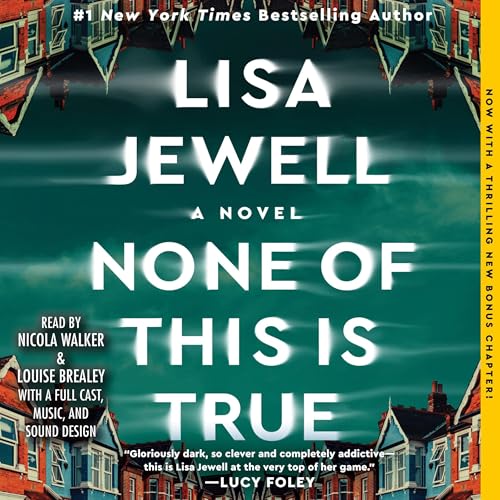
None of This Is True (A Novel)
Author: Lisa Jewell
NarratedBy: Kristin Atherton & 9 more
Lisa Jewell (Author, British writer, born in London, has written several novels.)
“None of This Is True” is a disturbing novel. From a happenstance birthday party at a restaurant, two young women find they were born on the same day in the same hospital. One of the women is a podcaster and the other is a housewife. This chance meeting leads to the podcaster agreeing to create a podcast about the life of the woman who had been born on the same day in the same hospital forty-five years earlier. Both are married with children and husbands but one has a story to tell that only comes clear as the podcast unfolds. The circumstances of her life peak the podcaster’s interest because the woman asking to tell her story had married her husband when he was 43 and she was only 16. The thought of such an age difference makes one instantly dislike her husband which only deepens as the story proceeds.
Definition.
This marriage becomes increasingly shocking as the podcaster’s recordings begin. The story tells of this odd marriage to a husband who often stays out all night either drinking or something worse considering his predilection for young girls. The mother is interviewed by the podcaster who characterizes her as a narcissist who regrets ever having gotten pregnant. She seems to care nothing about the impropriety of her daughter marrying a 43-year-old when she is 16.
Victims.
The story becomes more complicated as the victim of pedophilia appears to steal items from the podcaster’s home. At a half-way point in the novel, the reader/listener realizes the podcaster is out of her depth in thinking her podcast is an appropriate way of dealing with the psychological trauma of a victim of her lived life. One begins to lose their baring on who is guilty for having lived a life of misery and dysfunction. Only the specter of pedophilia seems clearly wrong, but the victim of the pedophilia is raised by an uncaring mother that let it happen. Now there is a podcaster caught in the middle of something way beyond her professional ability who is caught in a growing domestic abuse and psychological nightmare.
The inhumanity of humanity.
This is a terrifying book about humanity. One is drawn into its sordid tale to reveal how inadvertently we can be drawn into the drama of another’s life without qualification for dealing with its complexity. As a reader/listener there are lessons to be learned about one’s limitations and how we can become a part of the problem, rather than a solution. Pedophilia is a terrible crime. Unprofessional exposure of its consequence compounds a victim’s trauma. There are no heroes or heroines in Lisa Jewell’s imaginative story.
Human nature is universal, but it is also particular. In that particularity, “Ikigai” may or may not work for you or me. That is not to say the philosophy of “Ikigai” cannot lead one to a better life but only you can decide.
Books of Interest Website: chetyarbrough.blog
Ikigai (Japan’s Secrets to a Long and Happy Life)
Author: Hector Garcia, Fransec Miralles
NarratedBy: Oscar López Avila
Hector Garcia (Spanish born author and philosopher, lives in Tokyo.)Fransec Miralles (Spanish Editor, world traveler.)
In planning a trip to Japan in September 2025, “Ikigai” is a recommended book by our Japanese guide. Surprisingly, the authors are born in Spain.
“Ikigai” is a Japanese philosophy about life and its value.
As understood by Garcia and Miralles, “Ikigai” is a guide to a meaningful and fulfilling life. As a philosophy, “Ikigai” is not about life’s destination. “Ikigai” is a compass to give one direction for a meaningful and fulfilling life. The principles of “Ikigai” revolve around a healthy diet, high quality health care, community ties that limit one’s isolation, physical routines, mindfulness, and stress reduction. Those who practice the philosophy of “Ikigai” in Garcia’s and Miralles’s opinion will live happier, healthier, and more fulfilling lives.
Life’s value.
Garcia and Miralles suggest the demographics of Japan are proof of the value of “Ikigai”. The highest number of citizens over 100 years of age live in Japan. The average life span of men and women in Japan is 85; for Americans, the average is 79.61. The authors suggest longer lives of Japanese is because of their practice of following the principles of “Ikigai”. Of course, the length of one’s life is not the point, but the quality of one’s life is everything.
Diet, healthcare, sociability, and daily routines reduce stress. These are guidelines for an “Ikigai” way of life.
There are no surprises in these guidelines. Diet is to consume fruits, vegetables, fish, limited red meat, with few sweets containing processed sugars like white, brown, powdered, or high-fructose corn syrups. Healthcare should be provided through universal coverage. Sociability is encouraged to avoid isolation. Daily walking, stretching, moving around, and being mindful of one’s activity should be a part of a person’s lifestyle. Find what reduces your stress and practice those activities. These are familiar guidelines but not often practiced because of the stresses of the culture in which people live. Many try to escape the stress of their cultures with bad eating habits, poor physical routines, and social isolation. Some fail to follow these guidelines because they are too poor to care.
Human frailties like hearing loss, vision loss, or physical deterioration.
There are a number of difficulties with the guidelines noted by Garcia and Miralles. Finding a way of life that fulfills the ideals of “Ikigai” discounts the nature of human beings. It is impossible to ignore the personal instincts, drives, physical maladies, and cognitive abilities of different human beings. One size does not fit all because of these differences. Human nature may be universal, but it is not the same because human history, physical limitation, culture, and individual experiences are different. If the cultures in which you live do not offer universal health care, one is on their own. A capitalist culture operates in a different way than a socialist culture. Poverty, levels of education, and government influence exist in every culture and by nature distort what use can be made of “Ikigai” guidelines.
Human nature is universal, but it is also particular. In that particularity, “Ikigai” may or may not work for you or me. That is not to say the philosophy of “Ikigai” cannot lead one to a better life but only you can decide.
The relentless harshness of Demon’s life wares on a listener/reader. One has to be invested in Demon’s life adventure to fully appreciate the creative talent of the author.
Books of Interest Website: chetyarbrough.blog
Demon Copperhead (A Novel)
Author: Barbara Kingsolver
NarratedBy: Charlie Thurston
Barbara Kingsolver (Author, American Pulitzer Prize-winning novelist, born in 1955.)
Several years ago, I began Barbara Kingsolver’s “The Poisonwood Bible” for which she won a Pulitzer Prize. This revisit to her writing is to see what her view is of a young boy in a broken American family. “The Poisonwood Bible” like “Demon Copperhead” are well written novels but “…Poisonwood…” is about missionary work whereas “…Copperhead…” is about life in America for children who are challenged by poor family circumstances. Both novels are too long though …Poisonwood… is highly acclaimed and rewarded by a Pulitzer Prize. Demon Copperhead is the story of a young boy caught in a welfare system meant to aid mothers who are incapable of caring for themselves, let alone their children.
Kingsolver’s point of view can be understood from different perspectives.
The hardship of raising a child is compounded by circumstances of an unmarried woman with a substance abuse problem. The story of Demon Copperhead explains how incredibly harsh it can be to live in America. Despite America’s reputation in the western world as a land of opportunity, it is viewed by many as a land of excess and inequality. Sweden, Canada, and Germany consider America more critically than other western nations. Kingsolver explores some examples of why America is viewed so differently.
Demon’s parent is a recovering drug addict with poor job prospects whose husband has died and decides to marry a man with anger management problems.
Demon’s mother obviously has personal problems. With a school-age child to raise, and a second marriage created out of her self-inflicted problems, her life is a mess. Addiction returns, and her new husband physically abuses her son. She overdoses, and her son calls 911 to have her rescued. She does not recover, and Demon becomes a ward of the State. Demon is farmed out to a rehabilitation ranch called a foster home when in fact it is more like a slave retreat serving the needs of a hard scrabble farm. Demon’s mother dies from her earlier overdose. Demon is 11 years old with nowhere to go than a neighbor’s family to be watched over while he fulfills his obligations to the rehabilitation ranch. He is essentially a slave to the care of cattle and the harvesting of tobacco when he is not in school.
Harshness of life is generally an uncommon circumstance of life in America, but it shows how harsh life can be whether one lives in America or anywhere in the world.
Demon is characterized as a tough-minded boy who adapts to his circumstances with little choice because of his age and family circumstance. One dim opportunity is the grace of his dead mother’s neighbors that reluctantly allow him to temporarily stay with them after his mother’s death. Demon chooses to search for his birth father’s grave and finds his grandmother in Nashville, Tennessee. It comes as a surprise that Demon’s father comes from a matriarchal family that is a haven for lost human beings.
The relentless harshness of Demon’s life wares on a listener/reader. One has to be invested in Demon’s life adventure to fully appreciate the creative talent of the author. Some will choose to finish Kingsolver’s story to find out how Demon’s life is either resurrected or lost. Others will move on to another book, not out of disappointment with Kingsolver’s creativity but out of fatigue from a story that is too long.
Historically, collectivization of land has failed even when those who are part of the collective are better off than they were when they had no land.
Books of Interest Website: chetyarbrough.blog
Land Power (Who Has It, Who Doesn’t, and How that Determines the Fate of Societies)
Author: Michael Albertus
NarratedBy: Braden Wright
Michael Albertus (Author, professor at the University of Chicago in the Department of Political Science.)
Michael Albertus develops a powerful argument for “Land Power”. Much of history and current events in relatively undeveloped countries are identified as proof of Albertus’s belief that “Land Power” is key not only to economic growth but to social improvement. He reflects on the history of Great Britain, France, and the United States while noting current affairs in developing countries like Peru, Columbia, and Bolivia support his argument.
The unfortunate truth of history is that indigenous populations, particularly in America and Great Britain, were displaced in order for “Land Power” to be the engine for economic prosperity and social change. In the case of America of course, it is the displacement of North American natives by English settlers who became Americans. In contrast Great Britain’s “Land Power” comes from a landed aristocracy and their subjugation of foreign cultures with autocratic control and rule of Asian and European countries. In France, Kings and an aristocratic government’s rejection by commoners in 1789 seem the motive force behind “Land Power” ascension.
For Peru, Columbia, and Bolivia Albertus infers examples of Britain, America, and France set a table for “Land Power” change by their governments. In my opinion, the age of technology has diminished “Land Power” importance in America, Great Britain, and France.
“Land Power” still carries weight in America, Great Britain, and France but in the tech age it seems the power of accumulated wealth has become more powerful than land. However, Albertus’s “Land Power” argument in regard to South American countries like Peru, Colombia, and Bolivia are compelling in regard to their economic and social improvement. Albertus notes private land ownership and recognition of women’s rights to own property, show that “Land Power” is a source of economic and social improvement in South America. He suggests countries like Mexico are being challenged by their failure to reform land ownership policies but today’s leaders in Peru, Columbia, and Bolivia have made significant land reform changes.
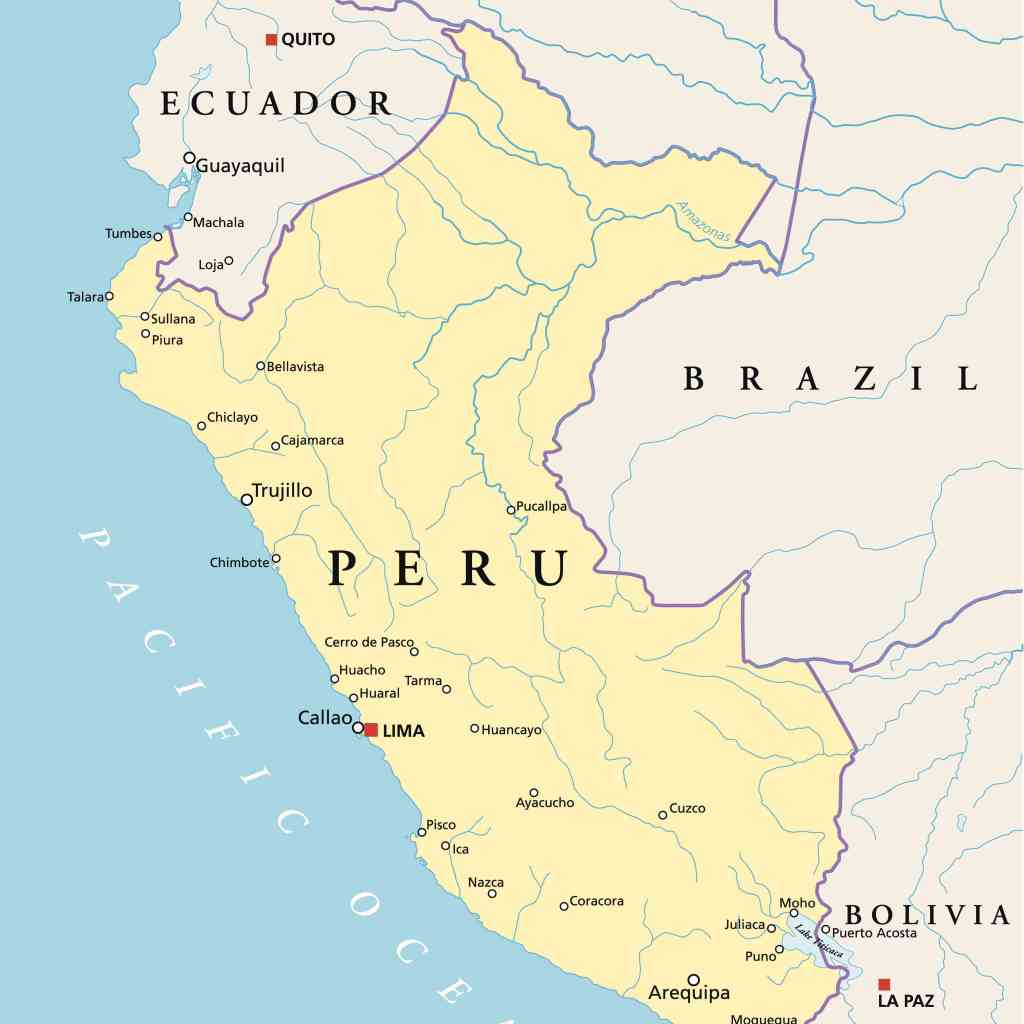
Albertus explains the major reform movement between 1969-1980 made by General Alvarado in Peru.
General Alvarado ordered nearly half of all private agricultural land be redistributed among Peruvian citizens. He dismantled large estates to empower peasant cooperatives. It has not been a perfect solution because it created an insurgent group called the Shining Path that pressed for a Maoist collective land reform for the redistributed Peruvian estates. Just as collective farms failed in China, they failed in Peru because common gains in collectives did not fairly reward performance. Collective farms distort the needs and results when a collective rather than a singular leader is responsible for performance of the collective. Nevertheless, the steps taken to dismantle half of private agricultural land, is considered by Albertus a step in the right direction because it incentivized many Peruvians who were living in poverty.
In Colombia, in 1966 through 1970 President Restrepo redistributed agricultural land to former agricultural laborers.
FARC (Revolutionary Armed Forces of Colombia) is organized in 1964 to offer peasant self-defense for actions soon to be taken by President Restrepo to reduce land ownership inequality. Between 2010 and 2018, President Santos negotiated with FARC to settle disputes between former landowners, and new farmers that benefited from land redistribution. There is still conflict because of FARC’s false belief in collective farming which has been proven a failure in other countries, but President Santos and his successors have created a path, though no solution, for reform through the hope for understanding and compromise. Albertus infers land reform is a work in progress, not a perfect solution.
Land reform in Bolivia spans 1953 and the early 2000s.
Presidents Estenssoro (1952-1956) and Evo Morales (2006-2019) worked on land reform along the same lines as Peru and Colombia. Large estates were broken up in 1953 and redistributed to peasants. Morales clarifies indigenous land rights but formalized communal ownership of redistributed land. This is another example of a work in progress because collectivization may be a step in redistributed land, but it has not proven to be a long-range benefit to a country’s citizens. It becomes too divisive and unrewarding for optimum performance and fair rewards for those who excel.
One who read/listens to Albertus’s insight to land reform believes his story has merit but his history is too optimistic when a little additional research shows land reform is a losing proposition when not fully supported by institutions that had implemented change.
History shows land collectivization when large landowners lose their land is a fool’s errand because it fails to reward those who excel as part owners of redistributed land. Human nature gets in the way. Those who work harder than others expect to have proportionate reward. Collective farming disincentivizes personal high performance. Historically, collectivization of land has failed even when those who are part of the collective are better off than they were when they had no land.
“Republic of Lies” is a deeply troubling book that explains much about why lies of a President of the United States are ignored.
Books of Interest Website: chetyarbrough.blog
Republic of Lies (American Conspiracy Theorists and Their Surprising Rise to Power)
Author: Anna Merlan
NarratedBy: Suehyla El-Attar & 1 more
Anna Merlan (Author, journalist, BA degree in Modern Literary Studies from University of California, Santa Cruz, master’s degree in journalism from Columbia University.)
Anna Merlan’s “Republic of Lies” explains conspiracy theories are created by people who have real concerns, fears, and grievances about the world in which they live. Some people capitalize on people’s concerns only to satisfy their desire for money, power, or prestige without care or thought about others. Conspiracy theorists seem to believe everything that happens in society is about plots by others to control or create havoc in their lives.
The digital age.
The advent of the digital age has increased the threat of interest groups that see others as alien to their learned beliefs. The fault is not always in the conspiring groups but in listeners who fail to recognize theories are only theories based on different life experiences and beliefs of like-minded people. The root of the problem with conspiracy is that life experience, and differences in one’s appearance provide a basis for prejudicial bias, identification and belief that is as easily wrong as right. Discrimination based on the color of one’s skin or ethnicity become “de rigueur”, i.e. something required by etiquette or current fashion, rather than the substance of who you are as a person.
Investigative journalism is an important part of the American way of life and its search for truth.
Merlan is an intelligent and brave investigative journalist who interviews extremists to find what they believe and why they believe it. Merlan explains how conspiracy theories are by definition beliefs based on perceptions of events in the world. There is a disconnect between what is real and unreal when what human beings see is based on personal life experience and perception. That is why conspiracy is always a theory which can either be right or wrong and still have great impact on and consequence for society.
Alex Jones (Conspiracy radio host, convicted of civil liability for defamation and required to pay over $1 billion in damages to families of Sandy Hook victims.)
Merlan reveals conspiracy theories in the 20th and 21st centuries that have caused an erosion in trust, strained interpersonal relationships, and promoted extremism. Those who share conspiracy theories often deny the proofs of science and what is evident from repeated human atrocities. People become stuck in misbegotten beliefs that polarize groups of humanity who believe you are either one of us or one of them. In that separation, only those who have the same beliefs are worthy of acceptance. Others are disposable and not worthy of life or liberty.
CIA mind-control program.
Merlan reminds listeners of the CIA mind-control program using LSD in the 195os-1970s, and the Tuskegee Syphilis Study of 1932-1972 as acts of American government that erode public trust. Programs like these have created fertile ground for conspiracy theories to argue there is a deep state government that controls the creation and administration of public policy. The formation of QAnon in 2017 is an internet-born conspiracy factory that trades on the mistrust of government. The internet is no longer mere propaganda tool but a decentralized grassroots generator of government-distrusting American citizens’ groups.
“Republic of Lies” is a deeply troubling book that explains much about why lies of a President of the United States are ignored.
The fear of government is legitimized by American government’s mistakes of the past. Turning to an authoritarian President is American citizens answer to distrust of government. The concern one has is in the character of the authoritarian that has been chosen.
Adults need to be present, honest, and emotionally available to children under their care. It is a big job for which most of us fail, but children are the world’s future.
Books of Interest Website: chetyarbrough.blog
A Beautiful Family (A Novel)
Author: Jennifer Trevelyan
NarratedBy: Ruby Hansen
Jennifer Trevelyan (Author, lives in Wellington, New Zealand.)
Set in the beautiful island nation of New Zealand, Jennifer Trevelyan writes a coming-of-age story of a ten-year-old girl named Alix. Through Alix’s eyes, a listener/reader is reminded of their youth and the many events in childhood that show the truth of human nature. What we see and interpret when we are young is clouded by our ignorance and struggle to appreciate life as it is rather than what we think it should be. Ignorance is usually dispelled as we grow older, lose our innocence, and begin to understand life’s struggles are universal.
Humans are animals with advanced abilities to think and communicate.
Humans cooperate, compete, and adapt to their environment to survive. Our imperfections are legion beginning in childhood and multiplying throughout our lives. As a child, we see the world and interpret what we see with innocent eyes. Whether raised by an institution, two parents or one, a child sees through inexperienced eyes which are only interpretations of a real world that only time and maturity will reveal. Trevelyan shows how a child sees more than adults realize but often interpret what they see incorrectly. Eventually a child loses his/her innocence as they mature and reinterpret past experiences, but the fog of memory often interferes with truth.
Trevelyan’s main character, Alix is you, me, and every child raised in a world of married and unmarried parents or institutions.
Trevelyan offers concrete examples of the fragility and complexity of caring for children of the future. Many examples are given of Alix’s seeing life happen with interpretations that are as often wrong as right. Alix has had explanations of the difference between right and wrong but sees her sister steal make-up from a store, get drunk as a teenager, and befriend others who encourage bad behavior. She sees her mother at a distance who appears to be amorously kissing a stranger. Her mother and father are often confrontational with each other. Her mother takes long solitary walks, and her father shows passive detachment from the family.
Alix is on a vacation with her family at a New Zealand’ beach resort. She is an excellent swimmer who often swims alone.
The risk of swimming in the sea introduces the reality of danger in the world even when the environment is beautiful. One thinks about the many shark incidents on the coasts of the world and Malcolm-Jamal Warner’s death from a riptide while swimming in Costa Rica.
Trevelyan offers many lessons for adults who are raising children in this world. Children see more than adults realize and they interpret what they see in ways that can be as easily wrong as right. They incorporate what they see into their perception of the world. Parents are models of who children become as adults. As parents, or institutions that influence and raise children, it is important to be emotionally available, not just present to children. Keeping secrets or being silent about something is human. However, what a child sees or hears can be harmful when not discussed with a parent or guardian. Parents and institutions need to provide age-appropriate transparency to build trust with children. Those children with siblings should have sibling relationships nurtured by responsible adults. Adults need to take responsibility for the environment in which children are raised.
Being on vacation in an idyllic setting does not mean there are no dangers.
Trevelyan story explains why raising children is important. Adults need to be present, honest, and emotionally available to children under their care. It is a big job for which most of us fail, but children are the world’s future.
Science is unquestionably dependent on precise measurement while art or literature may have little to do with it.
Books of Interest Website: chetyarbrough.blog
The Perfectionists
Author: Simon Winchester (How Precision Engineers Created the Modern World)
NarratedBy: Simon Winchester
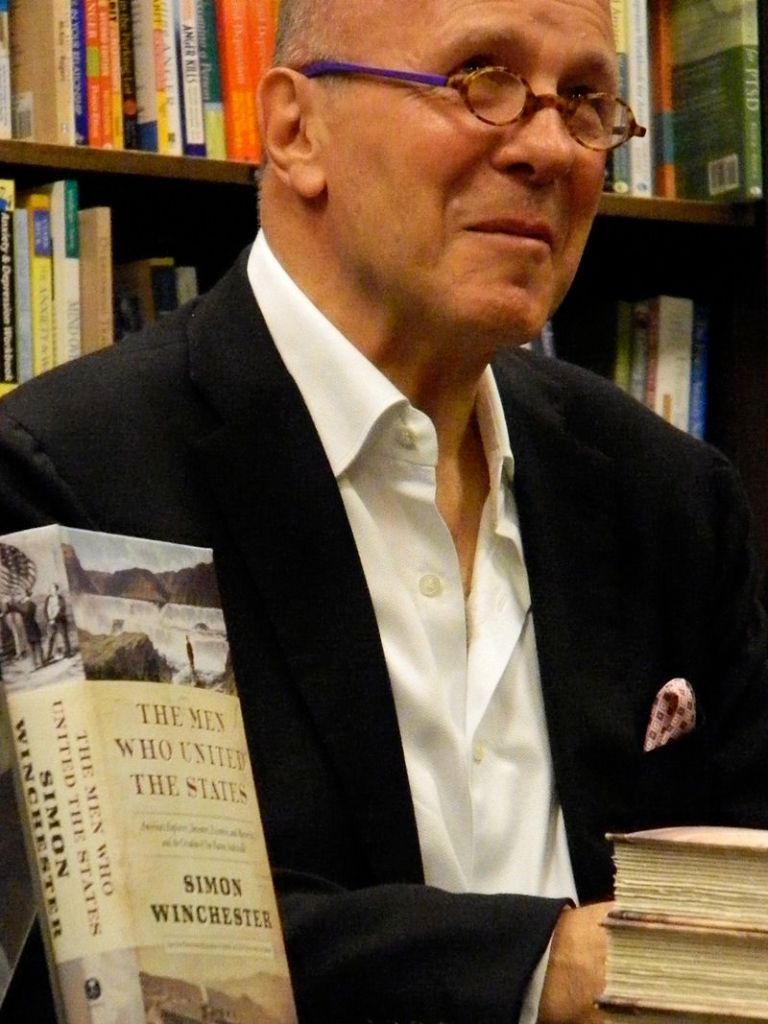
Simon Winchester (British-American author and journalist)
The beginning of “The Perfectionist” has an interesting vignette about Simon Winchester’s father that sets the table for his book. Simon’s father is characterized as an engineer that was asked to investigate why ammunition being used during WWII was misfiring. Bernard Winchester went to the production’ plant and precisely measured the ammunition that was being manufactured. Its quality was found to be well within specifications required to fire properly when used. Simon’s father followed a shipload of the ammunition to its destination to re-measure the specifications after delivery. The on-board jostling of cargo boxes caused miniscule damage to ammunition resulting in misfires in the field. Simon’s father’s discovery led to better packaging of the ammunition. Simon notes his father is highly praised by the military for his diligent investigation which made corrections in the way ammunition was packaged for transport to the front.
Simon’s father followed a shipload of ammunition to its destination to re-measure the specifications after delivery.
Simon Winchester’s story of his father is the subject of “The Perfectionist”. There are many ways of categorizing the advance of civilization. Manufacturing precision is Simon Winchester’s category of choice. Simon explains how improvements in precision, reaching as far back as the 18th century, led to technological advancement in the modern world. To Winchester, much of that advancement came from the needs of the military.
Winchester notes that John Wilkinson standardized and precisely measured cannon barrel rifling in the 1770s to improve accuracy.
The inaccuracy of weapons like cannons, mass production of reliable weaponry, and strategic advantage for military commands were founded on improvements in precision. Winchester notes that John Wilkinson standardized and precisely measured cannon borings in the 1770s to improve accuracy and reliability in battle. In the 1800s, the French began standardizing gun parts to allow interchangeability when field weapons were damaged or just quit working. In visiting France, Thomas Jefferson recognized the value of that interchangeability during America’s civil war when weapons often broke down and could only be repaired by craftsman who understood how a uniquely designed gun could be repaired.
Eli Whitney chose to hoodwink the American government during the War of Independence when he falsely claims to have a manufacturing plant that could produce standard gun parts.
Around 1801, Whitney contracts with the government and is paid but never produces any standardized parts. Whitney puts on a false show of interchangeability with parts that were manufactured by craftsman rather than a standardized process of production. (Whitney is neither penalized or required to repay the government.) The consequence of mass production of precise gun parts and ammunition is to kill more people in war which started an arms race that continues through to today. Progress in weapon design and manufacture is a harbinger of good and ill. Moving away from weapon production to the rise of industrialization, precise measurement remains a critical component of societies’ modernization.
Though there are precursors to the steam engine that reach back before the 18th century, James Watt (pictured here) revolutionizes its design with the help of Matthew Boulton.
Winchester explains how refinement of the steam engine enables the Industrial Revolution. Watt is obsessed with refining the containment of steam from an operating engine. Watt knows leakage of steam is correlated with loss of steam engine power and potential. The key to achieving better efficiency comes from John Wilkinson who develops a machine that could bore a precise hole through solid iron. With that level of precision, Watt recognized he could produce an engine with perfectly cylindrical, leak-proof chambers that could more efficiently power pistons to produce energy. Watt, Boulton, and Wilkinson open the world to the industrial revolution. Winchester suggests precision is the pursuit of perfection, i.e., a preeminent turning point in history. One may take issue with that conclusion because invention and innovation seem more important than precision, which is a tool rather than a cause for modernity.
The remarkable story of the jet engine is told by Winchester.
It is surprising that the jet engine became a reality as early as the beginning of WWII. Like nuclear bomb invention, Germany’s Hitler initially fails to grasp the importance of jet engine propulsion. However, Germany becoming the first to create a jet plane, the Heinkel He 178, to fly with jet propulsion. Hitler is more focused on refinement of the V-2 rocket as a revenge weapon against England than on jet propulsion for airplanes.
Frank Whittle (1907-1996, English aviation engineer and pilot who invented the jet engine.)
The original idea for the jet engine came from Frank Whittle, a British engineer in the early 1930s. Whittle realized Newton’s laws of energy could propel an airplane without propellers. Newton’s third law says for every action in one direction there is an equal but opposite energy reaction. Whittle acquired a patent on the idea of a jet engine but because of the five-pound cost of patent renewal and lack of any financial support for his brilliant idea, his patent expired. As a result, no single entity holds a patent on jet propulsion. It is not until May of 1941, that Frank Whittle’s turbojet engine first flies a plane.
1945 Gloster Meteor British jet.
There are many issues to be resolved for the idea of a jet engine to propel an airplane. There is the extreme pressure and heat generated by fuel being ignited within a turbine that must be designed with precise measurements, i.e., measurements within millionths of an inch. Winchester notes that the slightest deviation in blade shape, alignment, or material composition could cause vibration, inefficiency, or worse–engine failure and pilot death. The jet engine components had to endure extreme temperature changes and withstand metal fatigue while operating with high-speed rotating parts. Thousands of parts had to be precisely designed and integrated to provide the propulsion necessary for flight.
Whittle’s ultimate success leads him to be Knighted in 1948.
Whittle is recruited in 1937 by British Thomson-Houston, an engineering firm, to build a prototype of a jet engine. With money to create a prototype, Whittle turned his design idea into reality. With the help of two retired RAF officers, Whittle formed a company called Power Jets Ltd. In 1944, Britan nationalized Power Jets Ltd and Whittle was compelled to resign from the board in 1946. However, Whittle was ultimately recognized and knighted in 1948 for his contribution to Jet engine development.
The next big area of change addressed by Winchester is computer chip manufacture.
Transistors like these in the early years of computers are used in computer chip manufacture.
Winchester’s primary subject is Moore’s law postulated in 1965 by Gordon Moore, the co-founder of Intel. Moore predicts microchip computing power and efficiency would double every year and then every two years with continued miniaturization of chip transistors. His prediction, as of today, holds true. The size of computer chip transistors is measured in millimeters in the early 1960s. Today, measurement is at an atomic level, trending toward the use of quantum theory to continue Moore’s law prediction.
The last chapter of “The Perfectionist” is about measurement as a tool. Ironically, understanding measurement evolves through history. It may be a standard of change, but it is also a subject of change. The idea of distance measurement has evolved from an organic explanation that only imperfectly describes the visual world. That imperfectness leads to an obsession with exactness that boggles the mind.
As a caution, Winchester suggests the pursuit of precision may blind us to other values. The aesthetic beauty of a musical composition, architecture, a great novel, or mere thoughts of human beings may have little to do with precise measurement but can change the world. What one sees or feels is what we discount or respond to with emotion and/or appreciation, regardless of measurement analytics. Science is unquestionably dependent on precise measurement while art or literature may have little to do with it.