SNARES

Being bad is a human characteristic, i.e., the desire for money, power, prestige, and sex are elemental parts of the human condition. They are the “Snares” of human life.

Books of Interest
 Website: chetyarbrough.blog

The Snares (A Novel)

By: Rav Grewal-Kök

Narrated By:  Neil Shah

Rav Grewal-Kök (Author, “The Snares” is his first novel. Rav Grewal-Kök has written for The Atlantic, New England Review and won a National Endowment for the Arts fellowship.)

“The Snares” is about a well-educated lawyer who feels like an American outsider struggling to become a success. His mother and father are Punjabi. He seems burdened by being a person of a different race and ethnicity in white America. That feeling is reinforced by the circumstances of his life. He is married to a woman who comes from a wealthy white American family. He is a lawyer at forty years of age that is offered a job by the CIA. His hope is that working for the CIA will be a career making move that will make him a success in his own eyes and in the opinion of his in-laws. The irony of Grewal-Kök’s story is that the CIA is not an avenue for success but a road to perdition. The author paints a picture of the CIA and FBI that makes a mockery of American ideals.

What Grewal-Kök shows is that American government employees are just like the general population.

All the prejudices and dishonesty of America (or any country) are as present in governments as in any organization of human beings. The difference is that government has wider societal influence than a singular business, or eleemosynary organization. Government is filled with all the social goodness and prejudice of the society in which it is designed to serve.

“The Snares” the author is writing about are the best and worst of what the American CIA represent. The author’s main character, Neel Chima, is interviewed for a job with the CIA. Chima is hired by the CIA during the George W. Bush administration. George W., considered a Republican conservative, is the first President to authorize drone strikes for targeted killing. President Bush approved the killing of 6 Yemeni’ men in Yemen for their attack on the USS Cole. What is often forgotten is that Barack Obama, a Democratic liberal, authorized between 400 and 600 drone strikes that killed an estimated 3,797 people, of which 300 to 400 were civilians.

Obama’s drone strikes were in Afghanistan, Pakistan, Yemen, and Somalia.

One takes for granted that every drone strike is based on a careful examination of the human targets that are chosen. What Grewal-Kök implies is the CIA is something more than an intelligence service charged with collecting, analyzing and acting on foreign threats to America. As CIA operatives, these very human and well-educated government employees are pursuing a good life by stopping considered threats to America. Neel Chima is hired because the CIA officer in charge believes he can be an asset in the pursuit of foreign intelligence because of his ambition and life as a Punjabi American. However, Chima’s career ends in a state of turmoil, in part because of his own human vices but largely because of inept management by unscrupulous supervisors.

The snares that Grewal-Kök is referring to are “bad people” who are in powerful government positions. These bad government actors use their position to subvert newbies to their organization for actions that are contrary to ideals of the government agency for which they work. This is particularly dangerous in organizations like the CIA and FBI that are designed to interpret behaviors of potential criminals, i.e. not criminals in the act of crime but those who may or may not commit a crime.

J. Edgar Hoover led the FBI from 1924 to 1972.

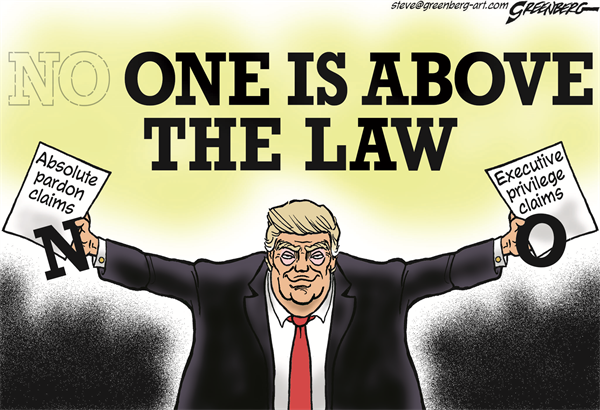
The FBI arrested Americans suspected of being radicals during the Red Scare without due process. President Trump is doing the same thing with the arbitrary exportation of immigrants today. The FBI targeted Martin Luther King Jr. and tried to discredit him by closely surveilling, recording, and interpreting his activity. Hoover arguably collected secret files on politicians and famous Americans to aid his power and influence in government more than to reduce public corruption. The author infers the same is true in the CIA.

Grewal-Kök’s primary focus is on the CIA but the “Snares” of which he writes are the same that troubled the FBI. The CIA is creating files on other countries’ citizens with recommendations on actions to kill real and perceived enemies of America. Both conservative and liberal Presidents of the United States have used the CIA to kill foreign nationals. In 2o05 Abu Hamza Rabia was killed by a drone strike under George W. Bush’s administration. In 2006, the assassination of Abu Musab al-Zarqawi was done in an airstrike under Bush. In 2011, Anwar al-Awlaki, a U.S. born cleric and Al-Qaeda figure was killed in Yemen by a drone strike under Obama’s administration. In the same year, Osama bin Laden is assassinated in a U.S. Navy Seal’ raid ordered by Obama. In 2020, Qasem Soleimani, a major general in Iran’s Islamic Guard was killed in a drone strike at the orders of the Trump administration. In 2022, a CIA drone strike in Kabul, Afghanistan killed Ayman al-Zawahiri under President Biden.

WHAT IS THE TRUTH?

Even if all of these sanctioned murders by American Presidents have been justified, the story of “Snares” makes real–the potential for a bad or ambitious CIA agent to lie or inadvertently misconstrue the truth. Grewal-Kök explains how all human beings are subject to the “Snares” of life.

The character of Neel Chima is an everyman in America. His fall from grace is partly self-inflicted but accelerated by bad actors in the CIA. Being bad is a human characteristic, i.e., the desire for money, power, prestige, and sex are elemental parts of the human condition. They are the “Snares” of human life.

CRISIS

There is no religious, nationalist, or political justification for killing of innocents but the history of the world shows we are all killers.

Books of Interest
 Website: chetyarbrough.blog

Conquering Crises (Ten Lessons to Learn Before You Need Them)

By: Admiral William H. McRaven

Narrated By:  Willaim H. McRaven

William H. McRaven (Author, retired four-star admiral in the U.S. Navy, ninth commander of the U.S. Special Operations Command from 2011 to 2014, commanded special operations in Iraq and Afghanistan.)

Wisdom does not always come with experience or age. Though born in 1955, William McRaven spent 40 years as a special operations officer in the U.S. Navy. He retired from military service and became chancellor of the University of Texas System from 2015-2018. Now, as a writer, McRaven offers some insightful advice to those who manage others in response to crises. He offers his personal, corporate, and institutional experience as a crises’ manager.

Though McRaven’s experience comes from a military system of command, he offers a listen, learn, and plan approach to getting things done through others.

When faced with a reported crisis, he notes the first information one receives is usually inaccurate and misleading. He offers numerous examples like Pearl Harbor in 1941, Hurricane Katrina in 2005, and Covid-19 in the 21st century. The first reports of those crises were misleading and were found to be much more consequential and damaging than originally reported. The first step when faced with a crisis is to be sure of the facts. McRaven generally discounts first reports. He suggests one should confirm details from personal observation (if possible or practicable). If one cannot investigate facts of a crises personally, one must confirm details from other sources that are at, subject to, or near the crisis. The point is not to act on first reports but to seek more information.

McRaven receives a phone call in the middle of the night about a mistaken Taliban sympathizer carrying a weapon who is shot and killed by an American soldier during America’s intervention in Afghanistan.

It was found he was not a sympathizer but a cousin of the President of Afghanistan. McRaven calls General Petraeus in the middle of the night to report the incident. Petraeus thanks McRaven for contacting him immediately rather than waiting until the morning. Both recognize the urgency of the crises. They discuss details of what happened and plan a response. McRaven is ordered to contact the President of Afghanistan immediately to explain what happened and offer American support for the family of the murdered cousin. McRaven’s point is know the facts of a crises, create a plan to address what is known, react as quickly as the correct facts are known, plan a response agreed upon by those in authority, and act (as soon as possible) according to plan.

Taliban resurgence in Afghanistan.

A more complicated crisis noted by McRaven is also in Afghanistan. America’s ambassador to Afghanistan meets with McRaven to tell him the special forces reporting to him in Afghanistan are alienating local Afghan citizens with their military actions against the Taliban. The ambassador tells McRaven his operations are alienating Afghani citizens to the point of losing America’s war against the Taliban. The meeting becomes heated because McRaven believes his command is doing a great job of pacifying Taliban attacks on local citizens. Rather than acting like an ostrich with its head in the sand, McRaven calls for a meeting of colonels in the Afghanistan theater to investigate the Ambassador’s accusation. The team McRaven assembles finds the Ambassador’s concerns are justified. Though peaceful coexistence appeared to be improved with McRaven’s special forces’ actions, the alienation of Afghani’s was growing. As has been written by other authors, America’s special forces often acted based on one Afghani family’s personal anger at another family rather than for any concern about Taliban activity.

The group of colonels assembled by McRaven developed a plan to more judiciously act on alleged Taliban activity from Afghan informants.

Of course, America’s ignominious departure from Afghanistan, implies McRaven’s response was too little and too late. This is not to argue that McRaven’s response was wrong but only that the plan did not stop Taliban resurgence. The valid point McRaven is making is that one should systematically address a crisis, create a plan once the facts are known, and execute the plan. Obviously, not all crises are successfully resolved. In the case of America’s intervention in Afghanistan, McRaven’s plan may not have been right for the facts that were gathered, or the crises was just too culturally complex for a successfully executed response.

McRaven comes across as a highly competent leader and manager in a crises.

Where one may have reservations about any leader’s role in a crisis is whether they agree on the facts. McRaven believes it is right to assassinate a proven terrorist who has killed innocent people. That kind of decision goes beyond the principles of McRaven’s book about response to crises. “Judge not, lest ye be judged” is alleged to have been said by Jesus in his Sermon on the Mount.

McRaven believes assassination is justified.

In Ukraine and Gaza, innocents are being killed every day. There is no religious, nationalist, or political justification for killing of innocents but the history of the world shows we are all killers. In a crisis, you would want someone like McRaven to be the “beauty on duty”, but one must ask oneself if assassination is ever justified.

MUSK

Musk, like all human beings, is imperfect. His association with a President who feels money is more important than humanity only feeds Musk’s ineptitude as a manager of people.

Books of Interest
 Website: chetyarbrough.blog

Hubris Maximus  (The Shattering of Elon Musk)

By: Faiz Siddiqui

Narrated By:  André Santana

Faiz Siddiqui (Author, technology reporter for The Washington Post)

Faiz Siddiqui exposes the character of Elon Musk as a brilliant entrepreneur with an outsized pride in his ability that reflects an arrogance that diminishes his genius. Musk’s success with Tesla and SpaceX accomplishments are equal, and in some ways exceed, the business successes of John D. Rockefeller and Steve Jobs. In wealth, Musk exceeds Rockefeller and in inventiveness, he competes with Steve Jobs.

As brilliant as Musk shows himself to be, his fragile ego diminishes his genius.

Siddiqui reveals how petty Musk can be while balancing that pettiness with his contribution to creative ideas that will live far beyond his mortal life. Musk’s development of space travel and communication satellites for the world with a non-governmental, free enterprise operation is a tribute to the power of capitalism. His next immense contribution, though controversial and a work in progress, will be self-driving transportation.

Elon Musk’s Successful Return of Rockets Launched into Space.

Siddiqui’s picture of Musk’s flawed personality is somewhat balanced by the image of a person driven to succeed. However, that drive is not something that naturally translates to organizational performance. Musk is not a developer of people and should not be in charge of an organization’s management. Like Apple employees that kept some of their work undisclosed to Steve Jobs when the mobile phone was being considered, Musk needs to leave management of employees to others. People management is a skill set that Musk does not have as was made quite clear with his acquisition of Twitter and his work with DOGE. DOGE feeds Musk’s managerial weaknesses with President Trump’s mistaken belief that cost of government is more important than effectiveness. DOGE is a growing tragedy of American governance.

Musk is right about the value of self-driving vehicles, but he is trying to produce the wrong product to prove his belief.

Self-driving vehicles will reduce traffic accidents, injuries, and death but the product to achieve that goal is what Musk should be working on. The game of Go is estimated to have 10 to the 172nd power of possible positions. Self-driving cars probably have a similar astronomical number of possible causes of accidents.

Musk, or someone with his creative genius, needs to create a product that can be sold to all vehicle manufacturers.

This newly invented product would use AI to learn, reinforce understanding of vehicular movements, accidents, and incidents. That accumulated information would allow creative play in the same way GO became an unbeatable game for human beings playing against a programed computer. Musk is putting the cart before the horse by building cars and then making them safe, self-driving vehicles. The first step is to gather information from as many driven vehicles as possible, collate that information, and use computer power to creatively play with the information. That information, like learning the moves of GO would create self-driving algorithms that would reduce self-driving vehicle’ accidents, injuries, and deaths.

A sad reveal in “Hubris Maximus” is that an American treasure, Elon Musk, is being vilified for the wrong reasons.

Musk’s contribution to the reduction of air pollution has benefited the world. His vision of interstellar travel may be the next step in human expedition, exploration, and habitation of the universe. Earth’s interconnectedness is vitally enhanced by Musk’s satellite system. The universe is humanity’s next frontier.

Musk, like all human beings, is imperfect. His association with a President who feels money is more important than humanity only feeds Musk’s ineptitude as a manager of people.

AGI

Humans will learn to use and adapt to Artificial General Intelligence in the same way it has adapted to belief in a Supreme Being, the Age of Reason, the industrial revolution, and other cultural upheavals.

Books of Interest
 Website: chetyarbrough.blog

How to Think About AI (A Guide for the Perplexed)

By: Richard Susskind

Narrated By:  Richard Susskind

Richard Susskind (Author, British IT adviser to law firms and governments, earned an LL.B degree in Law from the University of Glasgow in 1983, and has a PhD. in philosophy from Columbia University.)

Richard Susskind is another historian of Artificial Intelligence. He extends the history of AI to what is called AGI. He has an opinion about the next generation of AI called Artificial General Intelligence. AGI (Artificial General Intelligence) is a future discipline suggesting AI will continue to evolve to perform any intellectual task that a human can.

These men were the foundation of what became Artificial Intelligence. AI was officially founded in 1956 at a Dartmouth Conference attended by John McCarthy, Marvin Minsky, Nathaniel Rochester, and Claude Shannon. Conceptually, AI came from Alan Turing’s work before and during WWII when he created the Turing machine that cracked the German secret code.

McCarthy and Minsky were computer and cognitive scientists, Rochester was an engineer and became an architect for IBM’s first computer, Shannon (an engineer) and Turing were both mathematicians with an interest in cryptography and its application to code breaking.

Though not mentioned by Susskind, two women, Ada Lovelace and Grace Hopper played roles in early computer creation (Lovelace as an algorithm creator for Charles Babbage in the 19th century, and Hopper as a computer scientist that translated human-readable code into machine language for the Navy).

Susskind’s history takes listener/readers to the next generation of AI with Artificial General Intelligence (AGI).

Susskind recounts the history of AI’s ups and downs. As noted in earlier book reviews, AI’s potential became known during WWII but went into hibernation after the war. Early computers lacked processing capability to support complex AI models. The American federal government cut back on computer research for a time because of unrealistic expectations that seemed unachievable because of processing limitations. AI research failed to deliver practical applications.

The invention of transistors in the late 1940’s and 50s and microprocessors in the 1970s reinvigorated AI.

Transistor and microprocessor inventions addressed the processing limitations of earlier computers. John Bardeen, Walter Brattain, and William Shockley working for Bell Laboratories were instrumental in the invention of transistors and microprocessors. Their inventions replaced bulky vacuum tubes and miniaturized more efficient electronic devices. In the 1970s Marcian “Ted” Hoff, Federico Faggin, and Stanley Mazor, who worked for Intel, integrated computing functions onto single chips that revolutionized computing. The world rediscovered the potential of AI with these improvements in power. McCarthy and Minsky refine AI concepts and methodologies.

With the help of others like Geoffrey Hinton and Yann LeCun, the foundation for modern AI is reinvigorated with deep learning, image recognition, and processing that improves probabilistic reasoning. Human decision-making is accelerated in AI. Susskind suggests a blurred line is created between human and machine control of the future with the creation of Artificial General Intelligence (AGI).

With AGI, there is the potential for loss of human control of the future.

Societal goals may be unduly influenced by machine learning that creates unsafe objectives for humanity. The pace of change in society would accelerate with AGI which may not allow time for human regulation or adaptation. AGI may accumulate biases drawn from observations of life and history that conflict with fundamental human values. If AGI grows to become a conscious entity, whatever “conscious” is, it presumably could become primarily interested in its own existence which may conflict with human survival.

Like history’s growth of agricultural development, religion, humanist enlightenment, the industrial revolution, and technology, AGI has become an unstoppable cultural force.

Susskind argues for regulation of AGI. Is Artificial General Intelligence any different than other world changing cultural forces? Yes and no. It is different because AGI has wider implications. AGI reshapes or may replace human intelligence. One possible solution noted by Ray Kurzweil is the melding of AI and human intelligence to make survival a common goal. Kurzweil suggests humans should go with the flow of AGI, just like it did with agriculture, religion, humanism, and industrialization.

Susskind suggests restricting AGI’s ability to act autonomously with shut-off mechanisms or accessibility restrictions on human cultural customs. He also suggests programming AGI to have ethical constraints that align with human values and a rule of “do no harm”, like the Hippocratic oath of doctors for their patients.

In the last chapters of Susskind’s book, several theories of human existence are identified. Maybe the world and the human experience of it are only creations of the mind, not nature’s reality. What we see, feel, touch, and do are in a “Matrix” of ones and zeros and that AGI is just what humans think they see, not what it is. Susskind speculates on the growth of virtual reality developed by technology companies becoming human’s only reality.

AI and AGI are threats to humanity, but the threat is in the hands of human beings. As the difference between virtual reality and what is real becomes more unclear, it will be used by human beings who could accidentally, or with prejudice or craziness, destroy humanity. The same might be said of nuclear war which is also in the hands of human beings. A.I. and A.G.I. are not the threat. Conscious human beings are the threat.

Humans will learn to use and adapt to Artificial General Intelligence in the same way it has adapted to belief in a Supreme Being, the Age of Reason, the industrial revolution, and other cultural upheavals. However, if science gives consciousness (whatever that is) to A.I., all bets are off. The end of humanity may be in that beginning.

INTELLIGENCE

After two or three chapters of Huston’s book, reader/listeners will likely complete it. The difficulty, as with all good advice, is following it.

Books of Interest
 Website: chetyarbrough.blog

SHARP (Simple Ways to Improve Your Life with Brain Science)

By: Therese Huston PhD

Narrated By:  Theresa Bakken

Therese Huston (Author, earned an MS and PhD in Cognitive Psychology from Carnegie Mellon University.)

Therese Huston is a well-known public speaker who has written a book that has appeal for those who wish to know what they can do to improve their memory and cognitive abilities. This is not a book some will be interested in either listening to or reading. Many presume they have a proscribed intelligence and memory largely determined by genetic inheritance. Huston infers there is some science-based truth in that opinion but that one’s memory, cognitive ability, and psychological health can be treated, if not improved, at any age.

Huston’s prescription for improved memory and cognitive ability requires effort.

Undoubtedly, we inherit much of our innate cognitive ability but whatever one’s genetic inheritance and age may be Huston argues cognition and memory can be improved. Huston discusses areas of the brain that are the base from which cognition and memory originate, are stored, and then called upon.

Huston notes the hippocampus, amygdala, prefrontal cortex, neocortex, cerebellum, and basal ganglia are key brain areas involved in cognition and memory.

The hippocampus is the primary location of memories, but the other five areas interact with one’s personal experiences in ways ranging from emotion, individual understanding, decision-making, reasoning, skill development, and formed habits. As we age, the way we process, store, and retrieve information deteriorates. We lose some memories, process information more slowly, and find it more difficult to process new information in the context of past experience.

What Huston explains is that exercise, visual, and tactical experience can improve memory and cognition at every age.

Staying active, experiencing the world in ways that stimulate the production of dopamine, and exercising effort to learn and do new things improves cognitive ability and memory. Dopamine is a neurotransmitter in the human body that regulates mood, focus and behavior. It is released by the body when it is stimulated by exercise, engaging experience, and learning new things. Huston offers advice on how one at any age can improve their mental health and care for themselves and others when they are troubled by various common and extraordinary events in life. Life’s events stimulate the release of dopamine which can illicit rage and bad behavior but also provide focus and beneficial behavior.

Huston suggests 14 generally simple ways of helping oneself and others cope with the stresses of life.

Many of her solutions are commonly understood, others less so. Not surprisingly, she notes exercise, proper nutrition, quality sleep, and deep breathing are important for maintenance and improvement of brain function and memory. Some more difficult and less understood aids to brain health and memory are 1) importance of social engagement, 2) learning new things from personal and other’s recorded experience, and 3) practicing ways of reducing the stresses of life in yourself and others you care about.

One who reads or listens to “Sharp” will recognize the value of Huston’s advice for improving memory and cognitive ability.

After two or three chapters, reader/listeners will likely complete her book. The difficulty, as with all good advice, is following it.

RIGHT & WRONG

The story of “…Belle Lettres…” inelegantly reminds one of the effects of Trump on America’s reputation.

Books of Interest
 Website: chetyarbrough.blog

The Belles Lettres Papers (A Novel)

By: Charles Simmons

Narrated By:  Alex Hyde-White

Charles Paul Simmons (1924-2017, Author and former American editor for The New York Times Book Review, graduate of Columbia University in 1948.)

“The Belles Lettres Papers” is a fictional account about the destruction of an American book review company. Written by a person who worked as the editor for the NY Times Book Review gives credibility to its author. One wonders how the nationally famous paper felt about his book. Simmons writes a story of a magazine company that exclusively reviews new books that become literary successes, sometimes bestsellers, or dead or dying dust gatherers.

To this book critic, Simmons certainly seems to know what he is writing about but “The Belles Lettres Papers” falls into a dust gatherer category of books.

Book reading or listening is an educational, sometimes entertaining, experience. There are so many books written that it is impossible to know what to read or listen to without someone’s review of what has been newly or recently published. Of course, there are genres that a reader/listener will choose that influences their book choices. Even when one limits themselves to a genre, there are too many choices that require a way of limiting one’s choice.

Experience reveals “best seller” is not a consistently reliable way of choosing a book, but it is one of the most commonly used methods of selection.

What “…Belles Lettres…” reveals is the potential corruption that can inflate a books placement on a best seller list. Book review publications, like all business enterprises, have owners and employees that have various levels of honesty, capability, and ethical standards. What Simmons shows is how every business owner and employee is subject to the influence of money and power.

The potential weaknesses of humanity play out in every organization that provides service or material to the public.

Simmons shows how a fictional book review company has employees who are corrupted by the power of their positions and the money they make. The fictional company has a male business manager who thinks his female secretary wishes to have sex with him because of natural attraction. Ethically, no employee reporting to a manager they work for should have sexual relations with a direct report. This is particularly egregious in Simmon’s story because of sexual inequality that permeates society. As Lord Acton’s observation about power (power corrupts, absolute power corrupts absolutely), a person who has power over another is always at risk of self-delusion.

Simmons goes on to explain how undercompensating employees can corrupt an organization by incentivizing theft and other ways of undermining a company’s integrity.

Simmons addresses the incentive of owners or those in power of an organization to cut personnel employment to save money at the cost of product quality or service. America is experiencing that today with the actions of the Trump Administration in arbitrarily firing federal employees, regardless of what they do for American citizens.

In a last chapter, Simmons addresses the revisions that can occur in a company that decides on a wholesale turnover in employees.

The integrity of a company’s mission can be sorely challenged. In the case of “…Belle Lettres…” a decision for publication of salacious books replaces the company’s former studied reviews of good writers. The organization loses its reputation as a reviewer of high-quality publications.

Trump’s assessment of immigration.

The story of “…Belle Lettres…” inelegantly reminds one of the effects of Trump on America’s reputation as a supporter of western society by reducing foreign aid, undermining university independence, denying global warming, arbitrarily firing government employees, and expelling American immigrants.

ARROGANCE

A President who only sees government as a cost and the wealthy as the nation’s only benefactors, compounds America’s inability to solve the problems of poverty with eviction being a preeminent symptom.

Books of Interest
 Website: chetyarbrough.blog

Evicted (Poverty and Profit in the American City)

By: Matthew Desmond

Narrated By:  Dion Graham

Matthew Desmond (Author, sociologist and a Pulitzer Prize winner, Professor of Sociology at Princeton.)

Matthew Desmond has written about American poverty in “Evicted”. There are two types of poverty. One is a worker who is not making enough money to be anything more than poor. The second kind of poor is grinding poverty where one must choose between having food to eat or a roof over one’s head. One who is poor can live in America, may get an education, find a job, and get along in life. However, those with too little money to eat and have shelter–live lives of desperation. Desmond’s book is about the latter to show how American society is failing desperate citizens. Desmond interviews several poor Americans that offer a clear understanding of the difference between being poor in America and being desperately poor in America.

“Land of opportunity” believers argue there are jobs in America and those who choose to beg for food rather than work deserve their fate. The truth is that many jobs in America do not pay enough for those who have jobs to pay rent and feed their families. Housing is expensive and affordable housing is not being produced in large enough quantities to reduce the costs of housing. Affordable housing is hard to build because many homeowners resist having it built in their neighborhoods. When land is found, it is often too expensive for the builder to make a profit with low rents. The cost of construction is often higher than it needs to be because of high land prices, building code requirements, or rezoning needed to allow multifamily housing.

Education in America is not meeting the needs of its citizens.

School availability is not well enough managed to ensure education for all who live in America. Sex education and contraception are being discouraged in school, which is a foolish, self-destructive societal mistake. Healthcare is too expensive for many Americans with low incomes which compounds the health problems of the poor who cannot afford either medical service or treatment. Grinding poverty causes some to seek relief through drugs which increases medical problems and further aggravates inequality being fed by an illicit industry that is growing in America. Drug abuse kills Americans in many ways; not the least of which is addiction and poverty.

The history of American income inequality is burdened by forms of racism and sexual discrimination that do not treat people equally.

Jobs are changing with automation and outsourcing of goods produced by an international economy. American government has failed to create policies that help those who need more help. As one of the wealthiest nations in the world, America has been incapable of solving the spread of poverty among its citizens.

In reading/listening to Desmond’s research, it seems like there is an American conspiracy making one of the wealthiest countries in the world incapable of solving the housing, education, and employment problems of its citizens.

A President who only sees government as a cost and the wealthy as the nation’s only benefactors, compounds America’s inability to solve the problems of poverty with eviction being a preeminent symptom.

SURVEILLANCE SOCIETY

The author makes a point in “The Dream Hotel”, but her book is a tedious repetition of the risk of human digitization that is a growing concern in this 21st century world.

Books of Interest
 Website: chetyarbrough.blog

The Dream Hotel (A Novel)

By: Laila Lalami

Narrated By:  Frankie Corzo, Barton Caplan

Laila Lalami (Moroccan-American novelist, essayist, and professor, earned a PhD in linguistics, finalist for the Pulitzer Prize for “The Moor’s Account”.)

Laila Lalami imagines a “Brave New World” in which algorithms predict probabilities of lethal criminal behavior. She creates a nation-state with a human behavior monitoring and detention system for every human that might commit a lethal crime. The growing collection of data about human thought and action suggests a level of truth and possibility.

Lalami creates a state that monitors, collates, and creates probability algorithms for human behavior.

To a degree, that state already exists. The difference is that the algorithms are to get people to buy things in capitalist countries and jail or murder people in authoritarian countries. One might argue America and most western countries are in the first category while Russia, and North Korea are in the second.

Lalami’s description of the detention system, like many bureaucratic organizations, is inefficient and bound by rules that defeat their ideal purpose.

A young mother named Hussein is coming back from a business trip. She is detained because of data collected on her about where she has been, what she did on her business trip, her foreign sounding name, and the kind of relationship she has with her husband and twin children. An algorithm has been created based on a profile of her life. It flags the young woman so that she has a number slightly over a probability threshold of someone who might kill their husband. Of course, this is ridiculous on its face. Whether she murders her husband or not is based on innate errors of behavioral prediction and bureaucratic confusion.

Every organization or bureaucracy staffed by human beings has a level of confusion and inefficiency that is compounded by information inaccuracy.

That does not make the organization bad or good, but it does mean, like today’s American government’s bad decisions on foreign aid or FDA bureaucracy throws the baby out with the bath water. Lalami’s point is that detention because of one’s name, family relationship, and presumed prediction for murder, based on a digitized life, is absurd. Algorithms cannot predict or explain human behavior. At best, an algorithm has a level of predictability, but life is too complex to be measured by a fictive number created by an algorithm.

The author makes a point in “The Dream Hotel”, but her book is a tedious repetition of the risk of human digitization that is a growing concern in this 21st century world.

US/CHINA

The inference one draws from Rudd’s book is that peaceful co-existence will only come from a recognition and acceptance of the cultural differences between American democratic capitalism and Chinese authoritarian capitalism.

Books of Interest
 Website: chetyarbrough.blog

The Avoidable War? (The Dangers of a Catastrophic Conflict between the US and China)

By: Kevin Rudd

Narrated By: Kevin Rudd, Rafe Beckley

Kevin Rudd (Author, Australian diplomat and former politician who served as the 26th prime minister of Australia. He is fluent in Mandarin and received honors in Chinese studies from the Australian National University.)

Kevin Rudd’s title, “The Avoidable War?” is a provocative book, evidenced by its audiobook title’s question mark. The greatest part of Rudd’s book has a neutral and non-committal view that almost makes one put the book down. However, Rudd’s knowledge of the languages of Chinese and English and his many diplomatic contacts with politicians in both cultures entice one to keep listening for a solution to fundamental differences. The last chapters of Rudd’s book are enlightening and have the ring of truth but imply irreconcilable cultures that make a question mark after the title of the book correct but unsatisfying.

Spheres of Influence.

The first part of Rudd’s book puts one off because it reinforces the aggressive warlike foreign policy beliefs of China and the U.S.

Rudd emphasizes China’s military buildup and its intent to expand its sphere of influence in the Pacific theater. Xi’s intention is to expand China’s power and influence. That intent gives one a sense of impending doom. One has to put that feeling aside to get to the last chapters of the book. Rudd explains the vulnerabilities of both America and China may avoid a nuclear war and its cataclysmic consequence but not offer peace.

XI JINPING (GENERAL SECRETARY OF THE COMMUNIST PARTY OF CHINA AND PRESIDENT OF THE PEOPLE’S REPUBLIC OF CHINA.)

Rudd explains the history of Xi Jinping’s rise to power and his actions assure his continuation as the General Secretary of the Chinese Communist Party and President of the People’s Republic of China. Xi served in the People’s Liberation Army for three years, beginning in 1979. Xi earned a bachelor’s degree in chemical engineering in 1979. He pursued a Doctorate in Marxist Theory and Law while working in the government. Xi rose to power in 2012 with his appointment as General Secretary of the Chinese Communist Party. He was elected by the National People’s Congress to the Presidency in 2013.

Rudd infers Xi is a committed believer in a socialist form of communism.

The picture of Xi that Rudd creates is of a leader who acknowledges the value of economic growth while firmly believing in a classless society that melds the strength of government authoritarianism with the skills of Chinese entrepreneurs. Xi maintains the direction of China’s economic growth by eliminating any political opposition from party members or influential entrepreneurs that get in the way of authoritarian socialist communism. Rudd believes Xi will be in power for many years to come.

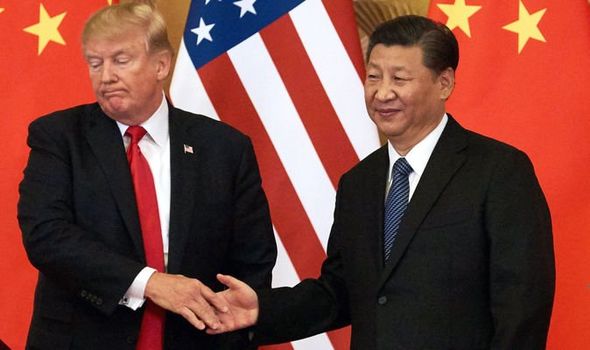
The tariff war started by President Trump undoubtedly troubles Xi, but one doubts it will change Xi’s international frame of mind.

History has changed since Rudd wrote his book. In contrast to Xi who will likely be President for many years, America limits the office to two terms. This is particularly relevant to the authoritarian influence of Donald Trump in the next three plus years of his second term. Xi recognizes Trump will be replaced by a different President at the end of his last term in office. There will be negotiation on the tariffs, but Trump’s position is weakened by the limit of his term in office.

The faltering reduction of income for Chinese workers and families.

As noted by Rudd, the most important issues facing Xi’s administration is the reduction of income for Chinese workers and families. The immense improvements in average incomes of families in China came from its opening to capitalism which created a more socialist form of communism. That capitalist opening increases pressure on Xi to ameliorate Trump’s U.S. tariff policy. Putting aside President Trump’s false reasoning on creating an international tariff war, one hopes Xi’s need to grow the Chinese economy will aid Trump’s negotiation on tariffs.

Much of Rudd’s book is about China’s economic growth and its intent to acquire Taiwanese territory.

As is well known, the U.S. is ambivalent about Taiwan with many Americans who say “who cares” about their fate and others who believe every nation should be free to choose their own form of government. Now that China has experienced the value of introducing capitalism to communism, Taiwan would be a valuable addition to the Chinese economy. In the history of Mao’s defeat of Chiang Kai-shek in the Chinese Civil War, Taiwan became an island nation in 1949. The nation of Taiwan was built by refugees from mainland China who chose to become an independent capitalist country that eschews communism.

CHIANG KAI-SHEK (CHAIRMAN OF THE NATIONAL GOVERNMENT OF CHINA 1943-1948)

Taiwan’s growth as a tech giant has made them a capitalist economic success. Xi undoubtedly sees the potential of Taiwan’s economic benefit to China’s faltering economy. One concludes from Rudd’s book that the history of Chiang Kai-shek’s followers and their departure from China irks Xi, both from an historical as well as economic perspective.

The primary subject of Rudd’s book is the issue of war with China.

What Rudd is driving for is a rational appreciation of what America should do with the growing international power of China. Rudd implies China will become the equal, if not superior, of the American economy. He believes China will return to its former hegemonic influence, like that of its former dynasties. Rudd acknowledges Xi faces the immense task of returning China’s economy to its recent economic success. He implies Xi will succeed by carrying on with his view of how economic success can be returned with prudent authoritarian control of capitalism with the objective of creating a classless society idealized by communism.

The fundamental point Rudd is making is that China has a culture founded on authoritarianism and chooses to use capitalism in a way that is not democratic.

The surveillance technology of today allows Xi and future China rulers to influence Chinese culture in ways beyond the theoretical interest of democratic governments. The inference one draws from Rudd’s book is that peaceful co-existence will only come from a recognition and acceptance of the cultural differences between American democratic capitalism and Chinese authoritarian capitalism.

MEDICINE

A government designed to use public funds to pick winners and losers in the drug industry threatens human health. Only with the truth of science discoveries and honest reporting of drug efficacy can a physician offer hope for human recovery from curable diseases.

Books of Interest
 Website: chetyarbrough.blog

Rethinking Medications (Truth, Power, and the Drugs You Take)

By: Jerry Avorn

Narrated By: Jerry Avorn MD

Jerry Avorn (Author, professor of medicine at Harvard Medical School where he received his MD, Chief Emeritus of the Division of Pharmacoepidemiology and Pharmacoeconomics)

Doctor Avorn enlightens listener/readers about drug industry’ costs, profits, and regulation. Avorn explains how money corrupts the industry and the FDA while encouraging discovery of effective drug treatments. The cost, profits, and benefits of the industry revolve around research, discovery, medical efficacy, human health, ethics, and regulation.

Drug manufacture is big business.

Treatments for human maladies began in the dark ages when little was known about the causes of disease and mental dysfunction. Cures ranged from spirit dances to herbal concoctions that allegedly expelled evil, cured or killed its followers and users. The FDA (Food and Drug Administration) did not come into existence until 1930, but its beginnings harken back to the 1906 Pure Food and Drug Act signed into law by Theodore Roosevelt. The FDA took on the role of reviewing scientific drug studies for drug treatments that could aid health recovery for the public. The importance of review was proven critical by incidents like that in 1937, when 107 people died from a Sulfanilamide drug which was found to be poisonous. From that 1937 event forward, the FDA required drug manufacturers to prove safety of a drug before selling it to the public. The FDA began inspecting drug factories while demanding drug ingredient labeling. However, Avorn illustrates how the FDA was seduced by Big Pharma’ to offer drug approvals based on flawed or undisclosed research reports.

Dr. Martin Makary (Dr. Makary was confirmed as the new head of the FDA on March 25, 2025. He is the 27th head of the Department. He is a British-American surgeon and professor.)

What Dr. Avorn reveals is how the FDA has either failed the public or been seduced by drug manufacturers to approve drugs that have not cured patients but have, in some cases, harmed or killed patients. It will be interesting to see what Dr. Marin Makary can do to improve FDA’s regulation of drugs. Avorn touches on court cases that have resulted in huge financial settlements by drug manufacturing companies and their stockholders. However, he notes the actual compensation received by individually harmed patients or families is miniscule in respect to the size of the fines; not to mention many billions of dollars the drug companies received before unethical practices were exposed. Avorn notes many FDA’ research and regulation incompetencies allowed drug companies to hoodwink the public about drug companies’ discovered but unrevealed drug side-effects.

A few examples can be easily found in an internet search:

1) Vioxx (Rofecoxib), a pain killer, had to be withdrawn from use in 2004 because it was linked to increased risk of heart attacks and strokes. It was removed from the market in 2004.

2) Fen-Phen (Fenfluramine/Phentermine), a weight-loss drug had to be taken off the market in 1997 because of severe heart and lung complications.

3) Accutane was used to cure acne but was found to be linked to birth defects and had to be withdrawn in 2009.

4) Thalidomide was found to cause birth defects to become repurposed for treatment of certain cancers.

5) A more recent failure of the FDA is their failure to regulate opioids like OxyContin that resulted in huge fines to manufacturers and distributors of the drug.

Lobbyists are hired by drug companies to influence politicians to gain support of drug companies. In aggregate, this chart shows the highest-spending lobbyists in the 3rd Qtr. of 2020 were in the medical industry.

Dr. Avorn argues Big Pharma’s lobbying power has unduly influenced FDA to approve drugs that are not effective in treating patients for their diagnosed conditions. Avorn infers Big Pharma is more focused on increasing revenue than effectively reviewing drug manufacturer’ supplied studies. Avorn argues the FDA has become too dependent on industry fees that are paid by drug manufacturers asking for expedited drug approvals. Avorn infers the FDA fails to demand more documentation from drug manufacturers on their drug’ research. The author suggests many approved opioids, cancer treatment drugs, and psychedelics have questionable effectiveness or have safety concerns. Misleading or incomplete information is provided by drug companies that makes applications an approval process, not a fully relevant or studied action on the efficacy of new drugs.

Avorn is disappointed in the Trump administrations’ selection of Robert Kennedy as the U.S. Secretary of Health and Human Services because of his lack of qualification.

The unscientific bias of Kennedy and Trump in regard to vaccine effectiveness reinforces the likelihood of increased drug manufacturers’ fees that are just a revenue source for the FDA. Trump will likely reward Kennedy for decreasing the Departments’ overhead by firing research scientists and increasing the revenues they collect from drug manufacturers seeking drug approvals.

Trump sees and uses money as the only measure of value in the world.

It is interesting to note that Avorn is a Harvard professor, a member of one of the most prestigious universities in the world. Harvard is being denied government grants by the Trump administration, allegedly because of Harvard’s DEI policy. One is inclined to believe diversity, equity, and inclusion are ignored by Trump because he is part of the white ruling class in America. Trump chooses to stop American aid to the world to reduce the cost of government. American government’s decisions to starve the world and discriminate against non-whites is a return to the past that will have future consequences for America.

Next, Avorn writes about the high cost of drugs, particularly in the United States. Discoveries are patented in the United States to incentivize innovation, but drug companies are gaming that Constitutional right by slightly modifying drug manufacture when their patent rights are nearing expiration. They renew their patent and control the price of the slightly modified drug that has the same curative qualities. As publicly held corporations, they are obligated to keep prices as high as the market allows. The consequence leaves many families at the mercy of their treatable diseases because they cannot afford the drugs that can help them.

Martin Shkreli, American investor who rose to fame and infamy for using hedge funds to buy drug patents and artificially raise their prices to only increase revenues.

The free market system in America allows an investor to buy a drug patent and arbitrarily raise its price. Avorn suggests this is a correctable problem with fair regulation and a balance between government sponsored funding for drug research in return for public funding. Of course, there are some scientists like Jonas Salk in 1953 who refused to privately patent the polio vaccine because it had such great benefit to the health of the world.

Avorn notes the 1990’s drug costs in the U.S. are out of control.

Only the rich are able to pay for newer drugs that cost hundreds of thousands of dollars per year. Americans spend over $13,000 per year per person while Europe is around $5,000 and low-income countries under $500 per year. These expenditures are to extend life which one would think make Americans live longest. Interestingly, America is not even in the top 10. Hong Kong’s average life expectancy is 85.77 years, Japan 85. South Korea 84.53. The U.S. average life expectancy is 79.4. To a cynic like me, one might say what’s 5 or 6 more years of life really worth? On the other hand, billionaires and millionaires like Peter Thiel and Bryan Johnson have invested millions into anti-aging research.

Avorn reinforces the substance of Michael Pollan’s book “How to Change Your Mind” which reenvisions the value of hallucinogens in this century.

Avorn notes hallucinogens efficacy is reborn in the 21st century to a level of medical and social acceptance. Avorn is a trained physician as opposed to Pollan who is a graduate with an M.A. in English, not with degrees in science or medicine.

In reviewing Avorn’s informative history, it is apparent that patients should be asking their doctors more questions about the drugs they are taking.

Drugs have side effects that can conflict with other drugs being taken. In this age of modern medicine, there are many drugs that can be effective, but they can also be deadly. Drug manufacturers looking at drug creation as only revenue producers is a bad choice for society.

Avorn’s history of the drug industry shows failure in American medicines is more than the mistake of placing an incompetent in charge of the U.S.

Taking money away from research facilities diminishes American innovation in medicine and other important sciences. However, research is only as good as the accuracy of its proof of efficacy for the treatment of disease and the Hippocratic Oath of “First, do no harm”. A government designed to use public funds to pick winners and losers in the drug industry threatens human health. Only with the truth of science discoveries and honest reporting of drug efficacy can a physician offer hope for human recovery from curable diseases.