CHILD ABUSE

The complexity of Freida McFadden’s character relationships diminishes its appeal, but the point of the story is that child abuse takes many forms which often repeat themselves in future generations.

Books of Interest
 Website: chetyarbrough.blog

THE INTRUDER 

Author: Freida McFadden

Narration by: Joe Hempel, Patricia Santomasso, Tina Wolstencroft

Freida McFadden (Author, practicing physician, specializing in brain injury.)

Freida McFadden’s book is a mess. The story is burdened by too many relationship complications. On the other hand, it reveals the hardship children face when raised by parents who lose control of their minds. The base story is about a 12- or 13-year-old girl named Ella. She is being raised by her mother who is a hoarder struggling to cope with life. As a single mother with a young girl, her hoarding complicates her daughter’s life. The house in which they live is a pigsty because of the hoarding. The odor of spoiled fruits and food permeates the clothing that Ella wears to school. Her mother often locks her daughter in a closet when she leaves the house. The closet is dark, cramped, and smelly from the mother’s hoarding mania. She punishes her child with the lit end of a cigarette when her daughter complains about anything.

Child abuse statistics.

Ella dreams of escaping to a better life while coping with school and hiding the trauma she endures with her mother’s mental instability. Ella fantasizes the idea of finding her father who she does not know. She makes friends with a young boy of her age who has anger issues because his father drinks too much and is abusive toward his son and wife. As Ella and the boy become closer, a serious assault incident at school results in the boy being permanently expelled. Ella has lost the support of her best friend and is faced with the instability of her mother’s behavior. Ella wishes for a better life and searches for evidence of her father as a way of escaping and improving her life. That search appears to be a dead end.

Ella’s mother hooks up with a man who becomes a boyfriend with a violent temper.

A fight between the two leads to Ella’s mother being stabbed. Blood from her wounds splatters her daughter from head to foot. Ella sets the house on fire and runs to the woods near her neighborhood where she cowers in a shed. The shed is next to a house rented by a teacher who has been fired by the school that had hired her. There is a storm brewing as Ella cowers in the shed next to the former teacher’s house. The former teacher named Casey, sees a light in the shed and cautiously approaches it to find Ella, a bloody mess lying on the shed floor. Ella is the intruder of McFadden’s story.

The value of this story lies in the reality of children being raised in families that abuse their children through neglect, psychological, or physical abuse.

McFadden’s story is of a neglectful and deranged mother who is incapable of caring for herself, let alone a child. Every child that survives their childhood is impacted by parents whether sane or mentally unbalanced. Most children are raised by single or married parents. Others are taken away by State sponsored childcare facilities or escape abusive parents to live on the street.

How a child responds to their parents or the way they deal with life is like the predictive quality of quantum physics.

How a child responds to how they are raised is unpredictable. That is the substantive meaning of “The Intruder”, a story that keeps one in suspense but does not appear likely to end well. It is a story that many children live in America and presumably in other countries of the world. The complexity of McFadden’s character relationships diminishes its appeal, but the point of the story is that child abuse takes many forms which often repeat themselves in future generations.

LIFE’S JOURNEY

The ending of Emily Henry’s story is a surprise to most who are absorbed and entertained by her tale. Life is complicated because it is filled with luck, achievement, purpose, and loss whether one is rich or poor.

Books of Interest
 Website: chetyarbrough.blog

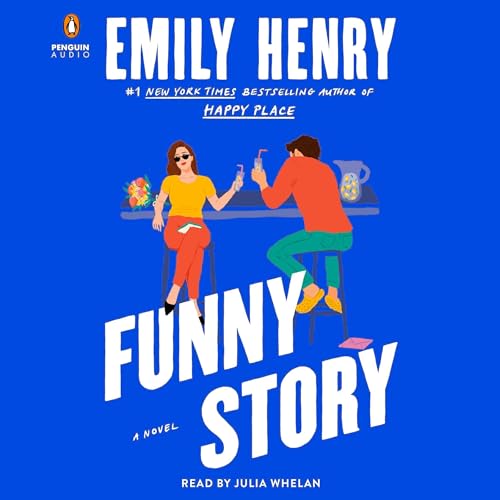
Great Big Beautiful Life

AuthorEmily Henry

Narrated By: Julia Whelan

Emily Henry (Author, American writer of NYT’s bestselling romance novels.)

Emily Henry is an entertaining writer who seems to live her own “Great Big Beautiful Life”. Her book is about writers like herself being interviewed by a wealthy American who is searching for a biographer to memorialize an extraordinarily famous family’s life. Henry’s twist is that she has competition with a fellow writer who is a more experienced and successful writer.

The two writers in Henry’s story are in the prime of their lives.

One has been married before, and the other appears to have been intimately acquainted with another writer. Neither potential biographer knows they are being interviewed for the same job. The surprise is that their famous subject hires both writers to compete for the job with a presumption that one will be chosen. The story is partly to tell of a famous and extraordinarily rich families’ complicated lives. “Great Big Beautiful Life” is an imaginative story about family relationship, love, and life’s complexity.

The cleverness of Henry’s story is that one becomes interested in the person being biographed while being drawn into what becomes an intimate relationship of the writers.

Listener/readers become interested in both story lines. The incredibly rich heiress’s family history is a contrast to the middleclass lives of the writers. What Henry shows in “Great Big Beautiful Life” is every human being, whether rich or middleclass face the joys and tragedies of life. The author is not addressing poverty or the poor, but one presumes the difference is qualitative because love, loss, and sorrow is part of every human life.

The passion of the two authors is artfully expressed and reminds one of every human’s experience of love and loss.

Joy and tragedy play a part in every sentient human being’s life. Familial, emotional, social, and ethical relationships are vivified in Henry’s story. Alice is the main character who is the woman writer telling her story of the competition and relationship between her and Hayden in seeking the right to tell the story of Margaret Grace’s “Tabloid Princess” life. Margaret sets the table for the story with a competition for the right to tell her family’s life story. Alice and Hayden begin as competitors, evolve into lovers. and become intertwined with Margaret’s storied life.

Alice and Hayden are ambitious professionals, but both have emotional vulnerabilities that are intensified by the competition for Margaret’s biography. Scandal, family secrets and how they are dealt with in Margaret’s life are part of the story. Alice’s insecurity contrasts with Hayden’s Pulitzer Prize-winning reputation as a biographer.

The approaches of the two hopeful writers of Margaret’s biography are contrasted by the author.

Alice has a human-centered approach to the biography whereas Haden drives for detached objectivity. Alice is concerned with Margaret’s exposure while Hayden seems more driven by belief in accuracy, structure, and verifiability.

The ending of Emily Henry’s story is a surprise to most who are absorbed and entertained by her tale. Life is complicated because it is filled with luck, achievement, purpose, and loss whether one is rich or poor. “Great Big Beautiful Life” is entertainment at its best.

HISTORY

Details are certainly important as McCullough observes in “History Matters”, but truth in history seems dependent on the passage of time and details selected by histories’ scribes. Therein lies revisionist history which may or may not be the truth of history.

Books of Interest
 Website: chetyarbrough.blog

History Matters

AuthorDavid McCullough & 3 more

Narrated By: John Bedford Lloyd & 1 more

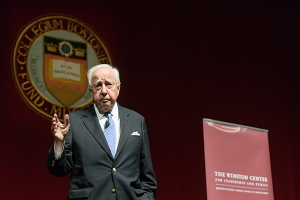
David McCullough (Two-time Pulitzer Prize winner for literature.)

As a tribute to David McCullough, his daughter compiled a list of several McCullough essays and public presentations. Though the readings are not narrated by McCullough, they illustrate his great range and understanding of history as a professional writer.

McCullough was 34 years old when “The Johnstown Flood” was released. Until then, he had worked as a writer for publications like the American Heritage magazine.

McCullough’s “History Matters” is a series of essays about famous people, books he has admired, and his success with historical biographies like “Truman”. McCullough’s first success was the story of the “Johnstown Flood”, published in 1968.  After McCullough’s success with the “…Flood”, he became a full-time writer. He notes—without support of his wife, the idea of becoming an independent writer would have been impossible. The risk of unemployment and no regular check would have undoubtedly been on McCullough’s mind when he discussed it with his wife.

McCullough’s public presentations in “History Matters” are of speaking engagements at universities and various organizations that asked McCullough to address their professional interests.

With the success of his books, in the 1980s, he became a popular and sought-after public speaker. He frequently gave commencement addresses to Universities and Colleges, wrote and presented what he wrote to historical societies and museums. He occasionally addressed government bodies and civic groups arguing for historical literacy to preserve the institutions of American government. One of his most well-known narrations was of Ken Burn’s “The Civil War” on PBS’s American Experience in 1990. McCullough passed away on August 7, 2022, at the age of 89.

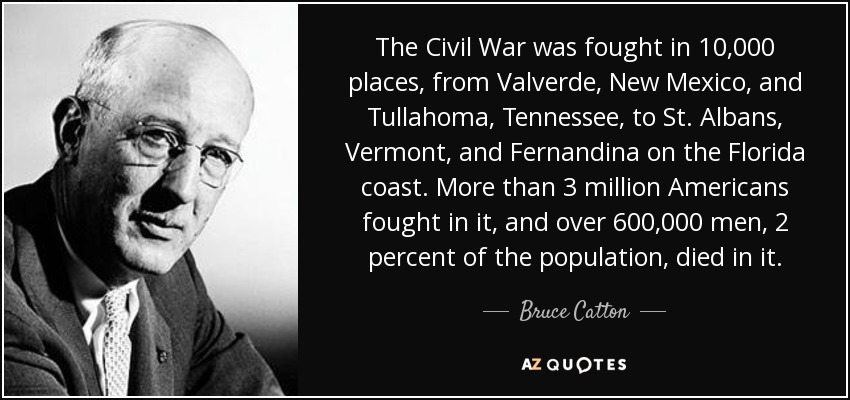
“History Matters” is a short book about a gifted writer who thoroughly researched his subject and wrote about the intimate details of history to give listener/readers the feeling they were “in the room”. He insisted on accuracy and clarity of what he wrote and advised writers to do the same if they wished to be historians. He cites the narrative power of Barbara Tuchman, Bruce Catton, and Paul Horgan as writers who vivified the dry analysis of history. The mix of history and fiction is blended by writers like these to give context to their audiences.

Like Caravaggio’s depiction of Saint Thomas’s doubt and faith in the resurrected Christ, McCullough argues historians must be relentlessly curious.

McCullough felt good historians had to see the world through the eyes and experience of their subjects to tell the truth of history. He argued good historians have to be relentlessly curious about the time of which they are writing. Without careful research and detail, the truth of history is lost.

To McCullough “History Matters” because it vivifies the past in ways that are forgotten and often taken out of the context of their time. He believed Tuchman, Catton, and Horgan practiced what he preached even though some (like me) would suggest even good historians change history of the past because of influences of the present. To minimize those influences, McCullough argues the details of history matter. Without details of the time when history is made, the truth can become distorted. McCullough infers admiring Washington, Lincoln, Grant, Roosevelt, Truman, and Presidents of this century without details of their time distorts the truth of history. From a book lovers’ perspective, this observation is two edged. Historians are human which suggests they have the same social blindness as everyone.

History is revised in every generation.

Abraham Lincoln, Ulysses Grant, Harry Truman and all Presidents have been vilified in their times and revised by future historians. Details are certainly important as McCullough observes in “History Matters”, but truth in history seems dependent on the passage of time and details selected by histories’ scribes. Therein lies revisionist history which may or may not be the truth of history.

RISK/REWARD

“IF ANYONE BUILDS IT, EVERYONE DIES” is an alarmist, and unnecessarily pessimistic view of the underlying value of Artificial Intelligence. This is not to suggest there are no risks in A.I. but its potential outweighs its risks.

Books of Interest
 Website: chetyarbrough.blog

IF ANYONE BUILDS IT, EVERYONE DIES

Author: Eliezer Yudkowsky, and Nate Soares

Narrated By: Rae Beckley

Eliezer Yudkowsky is a self-taught A.I. researcher without a formal education. As an A.I. researcher, Yudkowsky founded the Machine Intelligence Research Institute (MIRI). Nate Soares received an undergraduate degree from George Washington University and became President of MIRI. Soares had worked as an engineer for Google and Microsoft. Soares also worked for the National Institute of Standards and Technology and the U.S. Dept. of Defense.

“IF ANYONE BUILDS IT, EVERYONE DIES” is difficult to follow because it’s convoluted examples and arguments are unclear. The fundamental concern the writers have is that A.I. will self-improve to the point of being a threat to humanity. They argue that A.I. will grow to be more interested in self-preservation than an aid to human thought and existence. The irony of their position is that humanity is already a threat to itself from environmental degradation, let alone nuclear annihilation. The truth is humanity needs the potential of A.I. to better understand life and what can be done to preserve it.

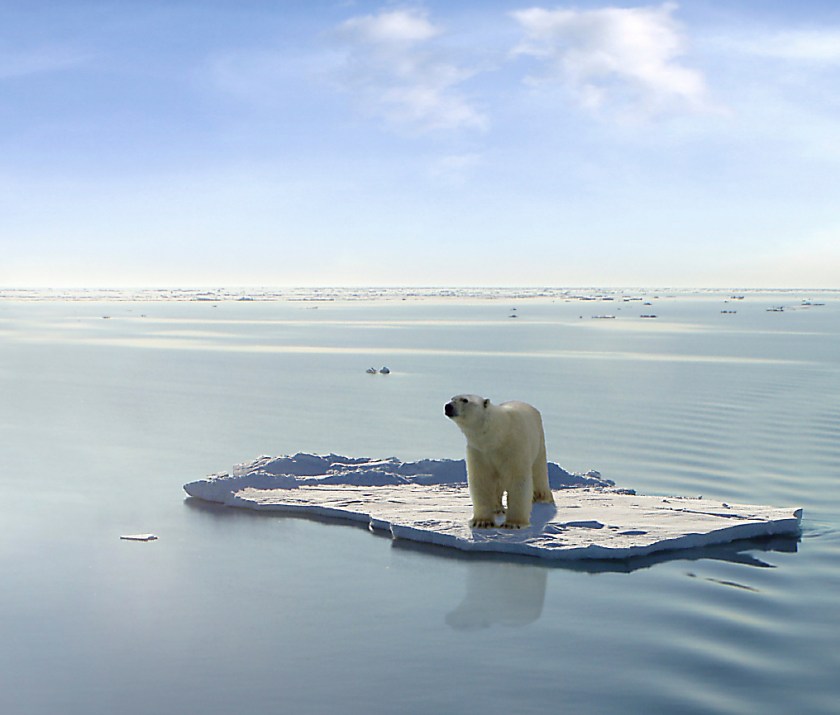
To this listener/reader environmental degradation is a greater risk than the author’s purported threats of A.I.

Pessimism is justified in the same way one can criticize capitalism.

The authors have a point of view that is too pessimistic about A.I. and its negative potential without recognizing how poorly society is structured for war and killing itself without Artificial Intelligence. The advance of A.I. unquestionably has risks just as today’s threat of mutual nuclear annihilation but A.I.s’ potential for changing the course of civilization for the better exceeds the agricultural and industrial revolutions of the past.

The nature and intelligence of human beings is underestimated by Yudkowsky and Soares.

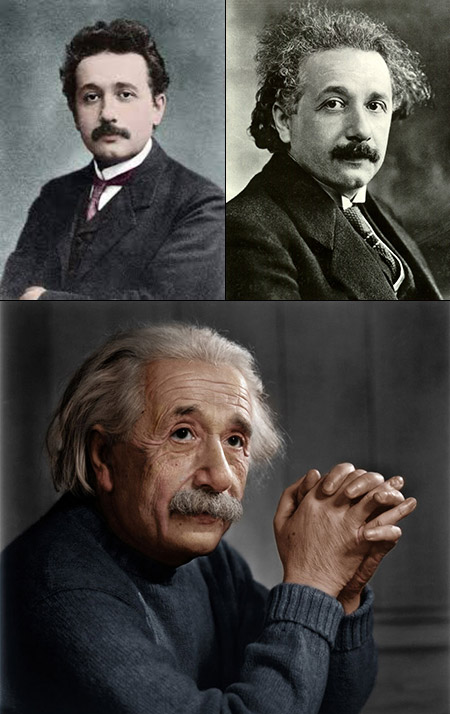
There have been a number of amazing human discoveries that have accelerated since the beginning of civilization in Mesopotamia. Humans like Einstein and their insight to the universe will be aided, not controlled, by the potential of A.I. Artificial Intelligence is no more a danger to humanity than the loss of craftsman during the industrial revolution. Civilization will either adapt to revelations coming from A.I. or environmental degradation or human stupidity will overtake humanity.

“IF ANYONE BUILDS IT, EVERYONE DIES” is an alarmist, and unnecessarily pessimistic view of the underlying value of Artificial Intelligence. This is not to suggest there are no risks in A.I. but its potential outweighs its risks.

GENDER INEQUALITY

“Betraying Big Brother” is not wrong about gender inequality but the author’s anger and personal choices cloud the author’s message. Gender inequality is real everywhere in the world. Education is a beginning, but practice is the end.

Books of Interest
 Website: chetyarbrough.blog

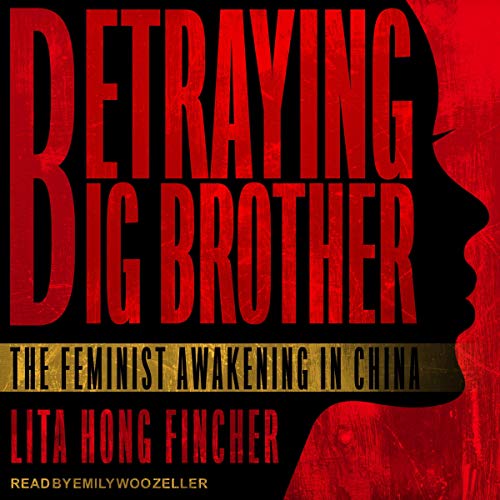
Betraying Big Brother (The Feminist Awakening in China)

AuthorLeta Hong Fincher

Narrated By: Emily Woo Zeller

Leta Hong Fincher (Author, American journalist, feminist and writer, first American to receive a Ph.D from Tsinghua University’s Department of Sociology in Bejing., graduated from Harvard with a BA and a master’s degree in East Asian Studies from Stanford.)

The education and experience of Leta Hong Fincher is somewhat betrayed by her anger in “Betraying Big Brother”. Misogyny is an international reality that defies the truth of human equality. This reviewer’s prejudice, like the author’s biases are suspect because of their respective life experiences. This book reviewer was raised by a single parent mother who worked to keep two sons with a roof over their head and food on the table. How women survive inequality is made of the same stuff as that which plagues minorities around the world. The difference is that women are not a minority.

She writes of being a 15-year-old girl who is physically and emotionally abused by two boys who are friends of an older male friend that takes her to a get together of young acquaintances. That event burns a memory into Fincher’s mind that sets her on a journey thru life. One reading/listening to “Betraying Big Brother” recognizes the truth of what the author writes is reinforced by her life experiences. Of course, that is true of all human beings, but anger diminishes the impact of what Fincher says and writes.

Leadership?

Whether living in a democracy or autocracy, sexual inequality is present. Gender discrimination is universal. America and China talk the talk but fail to walk the walk. Fincher writes of Mao’s saying that “women hold up half the sky” implying he believed in gender equality. Mao spoke of marriage reform and labor participation but patriarchal norms were adhered to with women workers not being paid the same as men nor offered similar positions of power.

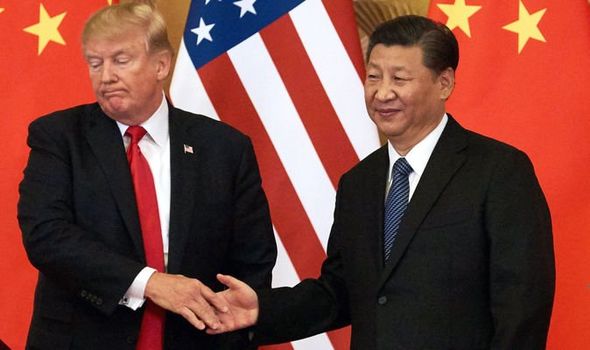
Xi speaks of gender equality, but no women are on the 24-member Politburo.

Xi also speaks of gender equality, but no women are on the 24-member Politburo while pay and promotions lag behind men. Fincher writes of Big Brother censorship, surveillance, and detention of women in China. (One presumes that is also true of everyone in China.) Like Trump, Xi promotes women’s roles in domestic stability, and their childbearing responsibilities. America has yet to elect a woman as President. Equal pay for equal work is improving in America, but a gap still exists with lower starting salaries, performance evaluation biases, and fewer high-profile assignments or promotions.

“Betraying Big Brother” is not wrong about gender inequality but the author’s anger and personal choices cloud the author’s message. Gender inequality is real everywhere in the world. Education is a beginning, but practice is the end.

TRUTHINESS

In the end, one understands Cohn to be saying the best one can do with a book review is to clearly explain what the writer writes and do the same when explaining your opinion.

Books of Interest
 Website: chetyarbrough.blog

Critical Thinking Skills (For Dummies)

AuthorMartin Cohn

Narrated By:  Stephen Thorne

Martin Cohn (Author, British philosopher with PhD in philosophy of education from the University of Exeter.)

It seems prudent to listen to “Critical Thinking Skills” because of the many book reviews done in this blog that are flawed. Cohn offers some insight to what a book reviewer should be thinking about when reviewing an author’s book. One should be interrogating themselves to understand their prejudices when trying to explain what an author is trying to tell its reader/listeners. Easy to say, not easy to do, because one rarely understands their own biases.

Understanding one’s prejudices.

Not surprisingly, Cohn notes one needs to understand their own assumptions and biases. The author of a book has their own biases but if the book is positively accepted by the public there is some reason to believe they have something worth understanding. The difficulty is in reviewing a book without distorting what the author is writing because of the reviewer’s bias.

It is interesting that Cohn notes early on that the most important chapters of his book are Chapter 1 and 9 and that if one wishes to abbreviate their examination of “Critical Thinking Skills” these are the two most important chapters. It is interesting because it is a self-effacing admission of an author who does not project a “holy than thou” attitude about his writing.

On balance, this listener views Cohn as one who is skeptical about everything he reads and that his advice is that everyone should adopt the same attitude when reading any book. He argues one should take notes as they read and suggests skimming is an acceptable way of getting to the heart of what an author is trying to say. Cohn goes on to recommend that one review their own writing about another’s work to be sure what an author is writing is clearly and objectively revealed.

Truth or truthiness.

What is disconcerting about Cohn’s analysis is that the best one can be is a skeptic about everything. Good advice but it raises so many questions about whether everything one writes or believes is based on truthiness. Cohn points to the brilliance of many while noting ancient Greeks like Aristotle and modern geniuses like Newton and Einstein have been wrong. This is a consistent point of view for a skeptic, but it makes one wish for truth about something. In the end, one understands Cohn to be saying the best one can do with a book review is to clearly explain what the writer writes and do the same when explaining your opinion.

LIFE IS LIQUID

Miodownik explains liquids are everywhere and influence every aspect of life on earth. As a scientist, Miodownik explains understanding liquids is understanding life.

Books of Interest
 Website: chetyarbrough.blog

Liquid Rules: The Delightful and Dangerous Substances That Flow Through Our Lives

Author: Mark Miodownik

Narrated By:  Michael Page

Mark Miodownik (Author, British materials scientist.)

Mark Miodownik offers some interesting information about liquids in “Liquid Rules”. It seems Miodownik had some spare time on a long plane trip. Though many know some of what the author explains, it is interesting for listener/readers who don’t think about the importance of liquids in our lives. For example, Miodownik notes how and why Kerosene is the fuel that powers jets.

The qualities of kerosene make it an optimum choice for jet propulsion.

Kerosene is safer to handle because high temperatures are required for ignition which makes it safer than gasoline. It has a low freezing point that allows high-altitude flight where sub-zero temperatures exist. Its viscosity allows it to flow in cold or hot conditions which reduces risk for fuel line’ clogging. Kerosene carries high energy production per unit of volume for longer flights. It is cheaper to refine than other fuels. And most importantly, it is chemically stable which reduces risks of vapor lock or premature combustion.

As Miodownik wings his way across the earth, he casually mentions Susan is a passenger on the same transatlantic flight who is offered a glass of wine.

She suggests wine testing is really a performance art. Her remark is an introduction to Miodownik’s more scientific examination of the sensory and symbolic dimensions of wine tasting. Miodownik explains the role of tannins, taste, and the rituals around drinking a glass of wine. He explains a connoisseur’s way of swirling a glass of wine before his/her nose to sense the bouquet of the libation. One imagines Susan looking askance at Miodownik’s academic review of her off-the-cuff remark. Who is this guy? Is he hitting on me?

Presumably, Miodownik sits back and contemplates the creation of a book about liquids.

Miodownik seems slightly discomfited by his seatmate’s look at him. Does he regret his forwardness in addressing her comment like a nerd? There is a sense of humor and a touch of irony in Miodownik’s choice of subject. One wonders what a woman’s response might be to a person she does not know explaining what she intended when she spoke of wine tasting as an art. In any case, Miodownik has introduced his subject.

As Miodownik’s thoughts move on about a book about liquids, he recalls the invention of ink.

Here is an invention with purpose. He notes the creation of ink that is made to flow predictably, dry quickly, and remain legible for years. The idea of a liquid that makes history, science, and art for the ages, i.e., an eternal gold mine for future generations. Ink reaches back to the caliphs of the Maghreb, rulers of Islamic caliphates in 7th century, northwest Africa. Ink connects with the evolution of the colors of red, green, and blue. From fountain pen writings to pointillist art the creation of ink plays a critical role in modernization of the world.

Water is the foundation of life.

Most know water is an essential need for life as we know it. What is often less thought of is that water is a universal substance that underlies world climate and biological life. Miodownik notes that water is a universal substance that underpins life and the climate systems of the world. It is the vehicle of human metabolism, emotional expression of fear, pain, happiness, and the world’s climate.

Production sweat shops.

Humans produce sweat and a quart of saliva per day. Saliva aide’s digestion, hygiene, health, and emotional expression like crying, anger, or embarrassment. Sweat regulates the bodies temperature. Water plays a role in the advance of technology with the creation of liquid crystal displays (LCDs) and OLEDs that power modern screens in phones and aircraft panels. Digital watches, cell phones, movies and general entertainment are a result of liquid’s existence. The irony of water as a liquid is that it can nurture as well as destroy. It refreshes life through cleaning, and food production, but also floods land, drowns life, and erodes soil upon which life depends. Water is an agent of comfort as well as chaos.

Miodownik explains liquids are everywhere and influence every aspect of life on earth. As a scientist, Miodownik explains understanding liquids is understanding life.

Aside from global warming, Miodownik notes the growing issue of plastics pollution and potable water availability will plague humanity. He argues humanity needs to come to grips with earth’s need for natural sustainability. Roads, houses, food, and potable water need to be designed to renew themselves without introduction of new materials or resources.

HUMAN NATURE

Murakami is one of the great writers of modern times. In “after the quake”, Murakami reduces the great and horrid loss of the many to the feelings of the “one”

Books of Interest
 Website: chetyarbrough.blog

“after the quake”

By: Haruki Murakami

Narrated By: Rupert Degas, Teresa Gallagher, Adam Sims

The Kobe, Japan earthquake struck on January 17, 1995, at 5:46 AM. It killed 6,400 people and injured more than 40,000. Approximately 300,000 residents were displaced with over 240,000 homes, buildings, highways, and rail lines damaged with estimated repair cost of $200 billion in 1995. (The Kobe earthquake was actually less damaging than Japan’s 2011 Tōhoku earthquake and subsequent tsunami that killed over 18,000 people. Over 123,000 homes were destroyed. The estimated cost of that disaster was $220 billion dollars.)

Haruki Murakami offers a series of short stories in “after the quake” that remind one of the frailties of human beings. Humans lie, steal, cheat and war against each in ways that exceed natural disasters. Murakami’s short stories are funny, sad, and insightful views of humanity that show we often foment our own disasters.

Each short story revolves around the social implications of the Kobe’ earthquake. Murakami cleverly weaves his stories to reflect on events that change one’s direction in life. The events can be as great as an earthquake, a war, or a singular lost love. The first is nature’s way; the second and third are humans’ way.

Human relationships are as unpredictable and destructive as natural disasters. The human’ Lushan rebellion in 8th century China is estimated to have killed 13 million people, the Mongol invasion in the 13th and 14th century 20 to 60 million, the Taiping rebellion in mid-19th century China 20-30 million, and two world wars in the 20th century at 83-107 million. This is without noting China’s famine that killed millions because of Mao’s mistakes in the Great Leap Forward, Stalin’s repression in Russia, and today’s wars in Ukraine and Gaza. Natural disasters are horrendous events, but human nature has murdered more than earthquakes, floods, volcanoes, and other natural disasters.

The cataclysmic events of nature affect the many, but Murakami shows scale means nothing in respect to the effect it has on the “one”. He cleverly shows how singular events can overwhelm one relationship as portentously as natural or man-made disasters can overwhelm all relationships.

Murakami is one of the great writers of modern times. In “after the quake”, Murakami reduces the great and horrid loss of the many to the feelings of the “one”. His stories show that a personal loss of an imaginary friend or a real love is as catastrophic to the one as a natural disaster or war is to the many.

THE MEDICI ERA

The Autobiography of Benvenuto Cellini is not a great piece of writing, but it is an interesting perspective on the progeny of Florence, the violence of the 16th century, and the great art that came out of the Medici era.

Books of Interest
 Website: chetyarbrough.blog

The Autobiography of Benvenuto Cellini

By: Benvenuto Cellini

Benvenuto Cellini (Author, Italian goldsmith, sculptor, and contemporary of Michelangelo, died at age 71.)

This autobiography is alleged to have been dictated to a teenager by Cellini in the 16th century. The book is a mess but oddly interesting because of the volatile life of its author. The dictation is believed to have occurred when Cellini was in his fifties. He was born in 1500 and lived until 1571 with his death at the age of 70. Considering his volatile life and the average age of death as 30 or 40, Cellini lived a long life. Of course, the average age at death is skewed by high infant mortality, but Cellini’s autobiography shows him to be a resilient survivor.

Michelangelo, a Florence native. (1475-1564, died at the age of 88.)

Cellini tells of surviving the plague, escaping assassination, being imprisoned, escaping, and, participating in several battles as a soldier where he was wounded but recovered. However, Cellini was also an amazing artist from the same city as Michelangelo. In contrast to Michelangelo, Cellini seems to have been quite boisterous; however, like Michelangelo he was strong willed and resistant to authority. The two men new each other. They shared experience as patrons of the powerful Medici family. Cellini appears to admire and like Michelangelo in his biographic recollection. They both did work for Pope Clement VII and Cosimo I de’ Medici.

Cellini appears to have traveled as much as Michelangelo because of his life as a soldier as well as artist. Two of his greatest artistic accomplishments are the “Salt Cellar” and “Nymph of Fontainebleau” done for King Francis I of France. However, he also completed “Perseus with the Head of Medusa” for Cosimo I de’ Medici in Italy.

As a soldier, Cellini tells of the attack of Rome by troops of Charles V, the Holy Roman Emperor. The leader of the attack forces, the Constable of Bourbon, was shot by Cellini according to Cellini’s autobiography. Though Cellini seems never to have been wounded in battle, he tells of several violent encounters that could have ended his life.

Statue of Cellini in Florence.

The Autobiography of Benvenuto Cellini is not a great piece of writing, but it is an interesting perspective on the progeny of Florence, the violence of the 16th century, and the great art that came out of the Medici era.

COLOMBIA

Márquez offers a vivid picture of Colombia’s twentieth century culture in “One Hundred Years of Solitude” but to this reviewer his failure to address Colombia’s lucrative cultural and world’ damaging drug industry is disappointing.

Books of Interest
 Website: chetyarbrough.blog

One Hundred Years of Solitude

By: Gabriel García Márquez 

Narrated By: John Lee

Gabriel García Márquez, (Author, Colombian writer and journalist.)

“One Hundred Years of Solitude” is a fictional representation of the early history and 20th century modernization of Colombia. Those who are not particularly interested in Colombia’s history will listen/read Gabriel García Márquez’s story because of the author’s skillful storytelling and the intimacies of Colombian culture, its political turmoil, violence during a civil war, and its consequent growth as a modern nation. In some ways it is like the story of America.

Márquez begins his book with the founding of Macondo, a fictional name for a village during the colonial period when the Spanish settled Colombia. Beginning as a small town, Macondo grows to become a city. Macondo represents the journey from isolation as a small town to a city that becomes a part of a vibrant South American country.

Macondo, a fictional village in Colombia.

The modernization of Colombia is addressed with the arrival of the railroad in Macondo that illustrates industrialization and the advance of Colombia’s economy. Macondo becomes a banana producing community that wrestles with the consequences of a civil war, unionization, and a growing economy. The brutality of industrialization is exemplified by the Colombian army’s killing of striking banana plantation workers in 1928. Of course, this is not unlike America’s 1932 Detroit’ Ford manufacturing plant killing of four workers by security guards and the Michigan police.

Colombia’s 50-year long civil war.

Colombia’s growth as a nation evolves with a mid-twentieth century civil war between liberals and conservatives. Márquez creates characters representing both sides of the civil war and their personal, as well as military lives. As is true of all wars, many innocents, as well as participant citizens, are indiscriminately and violently killed. Undoubtedly, a part of what makes the author’s story appealing to listener/readers is the sexuality of his characters. Sex in the novel ranges from close relatives’ intimacy to older women seductions of young men and young men’s seductions of both older and younger women, some of which are incestuous.

Colombian drug cartels are not addressed in Márquez’s story.

Márquez offers a vivid picture of Colombia’s twentieth century culture in “One Hundred Years of Solitude” but to this reviewer his failure to address Colombia’s lucrative cultural and world’ damaging drug industry is disappointing.

On the other hand, what author would want to take the risk of reporting on an industry noted for murdering those who expose its workings?