Unequal opportunity and inequality of race, ethnicity, and the sexes are societies’ problem. This foolish story is a waste of reader/listener’s time because it fails to address the reality of social inequality with a solution that can make a difference.
Books of Interest Website: chetyarbrough.blog
The Power (A Novel)
Author: Naomi Alderman
NarratedBy: Adjoa Andoh
Naomi Alderman (Author, British writer, novelist, producer for TV and movies.)
This is a marginally interesting novel about gender inequality. Naomi Alderman begins her story with two male thugs who murder the heroine’s mother and leave a daughter for dead. The young daughter defends her mother with a deadly electrical power that has laid dormant in her life but becomes energized by a force of will. The daughter attacks the overpowering thugs but is unable to save her mother. Alderman’s idea is to reverse the traditional roles of men and women by giving women a power greater than the physical strength advantages of men. This latent power is alleged to have been repressed and is miraculously discovered and cultivated in this young girl by her mother.
Inequality of opportunity.Gener inequality.
The reason I find Alderman’s story tiresome is because she creates the same problem for women that exists in this largely patriarchal world. Great men like great women that wield inordinate power over others are almost always bad because as Lord Acton noted “power tends to corrupt, and absolute power corrupts absolutely”.
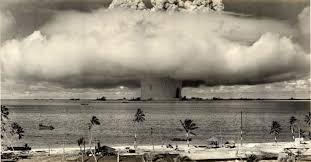
The influence of raw power is diminished by social change, not by leaders’ gender, or the risk of superior weapons of mass destruction.
Raw power is not a gender problem. WMD as a raw power in the hands of a male or female leader are a societal problem. Unequal opportunity and inequality of race, ethnicity, and the sexes are societies’ problems. This foolish story is a waste of reader/listener’s time because it fails to address the reality of social inequality with a solution that can make a difference.
Many soldiers and victims of war are teenagers, coping with life and death on a daily basis. They wonder, what is the point? We who sit on the sidelines because of age, agnosticism, or an unfettered life read or write about war as though it is just a story.
Books of Interest Website: chetyarbrough.blog
Beaufort (A Novel)
Author: Ron Leshem
NarratedBy: Dick Hill
Ron Leshem (Author, born in 1976, recieved Sapir Prize, a top literary award in Israel, his book, Beaufort, is turned into a movie and is nominated for an Academy Award.)
Ron Leshem’s book “Beaufort” helps one understand why the idea of Gaza becoming a Palestinian state is anathema to a majority of Israeli citizens. Beaufort is located in southern Lebanon, on the border of Israel. In the 1970s Beaufort was used by the PLO as a base for operations against Israel. In 1982 Israeli forces capture Beaufort and it became an operating base for defense of Israel until their withdrawal in 2000. Lesham served in the intelligence corps during the time of the fight for control of Beaufort. He was not directly involved in the fighting but had an intimate understanding of the conflict. What “Beaufort” makes clear to Americans who are ignorant of what it is like to live in a country surrounded by militant minorities who wish to obliterate Israel.
Israel has a right to its existence on Israeli lands based on its ancient occupation of the land in 1200 BCE.
The proof of early occupation of Israel by Jews is in an inscription on a 1209 BCE Egyptian’ Merneptah Stele, a black granite slab. Though they were a tribal community, they had a form of governance that pre-dates nation-state development. Though one may argue Palestinians had lived in the lands of Israel since the 7th century, they were late comers to the land. The Palestinians were a nomadic Arab population that came nearly 600 years after settlement by the Israelites. The point made by the story of “Beaufort” shows why no rational human being would want another hostile haven for antisemitic opposition to Israel as a legally recognized nation-state.
“Beaufort” shows the human and psychological toll of an unjustified “forever war” conducted by two militant factions in Arab nations surrounding Israel.
Hamas and Hezbollah are two militant Islamist organizations deeply committed to destroying Israel and creating an Islamic state in the territory known as Isreal and Gaza. In 1947, a UN partition plan between Palestine and Israel was proposed but Arab leaders rejected it, while Israel accepted it. One can consider the history of the lands’ longer occupation by Jews of the holy land and Palestinians and wonder why partition was rejected by the Arabs.
The conflict revealed by “Beaufort” is a message to the world about life in Israel. Warfare is a fact of life for those who choose to live in Israel. Soldiers become disillusioned about why they are at the frontlines of an irreconcilable conflict. Kill or be killed becomes the mantra of their lives at the front. Unquestionably, it does have something to do with ideology or religion. How many soldiers and victims of war are teenagers, coping with life and death on a daily basis? Some must wonder, what is the point? We who sit on the sidelines because of age, agnosticism, or an unfettered life read or write about war as though it is just a story. It is not a story to Israelites or Palestinians. It is living life when surrounded by others who want to kill you.
Katherine Eban believes generic drugs are important for global health because of affordability and accessibility. One wonders if anyone who reads or listens to “Bottle of Lies” will take generic drugs if they can afford the original FDA approved product.
Books of Interest Website: chetyarbrough.blog
Bottle of Lies (The Inside Story of the Generic Drug Boom)
Author: Katherine Eban
NarratedBy: Katherine Eban
Katherine Eban (Author, American Rhodes scholar with a MPhil from University of Oxford.)
“Bottle of Lies” is a history of duplicity and dishonesty in the generic drug industry. It is a damning dissection of the lure of money at the expense of human life. On the one hand, affordability, healthcare savings, global health, and the value of regulation are made clear in “Bottle of Lies”. On the other, Katherine Eban shows how the lure of capitalism and greed creates an incentive to evade regulation and kill innocent people seeking drug treatment for their illnesses.
Katherine Eban reveals the history of an India drug company named Ranbaxy that was founded by two brothers, Ranbir Singh and Gurbax Singh.
In 1937, these two entrepreneurs recognized the economic opportunity of creating a drug manufacturing operation with lower labor costs in India to capture the market in drugs nearing their patent expiration dates. They were focused more on organizational cost cutting and the money that could be made than the efficacy of the drugs they could produce. The company was sold in 1952 to their cousin Bhai Mohan Singh. This cousin transformed Ranbaxy to a pharmaceutical giant, but his experience was in construction and finance, not pharmaceuticals. However, his son Parvinder Singh joined the company in 1967 and was a graduate from Washington State University and the University of Michigan with a master’s degree and PhD in pharmacy.
Parvinder Singh (1944-1999, became the leader of Ranbaxy in 1967.)
Eban argues Parvinder Singh looked at his father’s business as a scientist with a pharmaceutical understanding and a desire to produce lower cost drugs for the world for more than a source of wealth. Parvinder appeared to value quality, transparency, drug efficacy, and long-term credibility for Ranbaxy. Parvinder recruited talent who believed in lowering costs and maintaining the efficacy of drugs the company manufactured. However, Parvinder dies in 1999 and the executives who took over the company focused on maximizing profit rather than the efficacy of the drugs being produced. Parvinder’s leadership is succeeded by Brian Tempest who expands the company by navigating the regulatory restrictions on generic drug manufacture. Tempest tries to balance profitability with global health efficacy of generic drugs. Parvinder’s son, Malvinder Singh eventually becomes the CEO of the company. He returned control to the Singh family. The corporate culture changed to what its original founders created, i.e., a drug producer driven by profit. Malvinder was not a scientist.
Malvinder Singh (Born in 1973, Grandson of Bhai Mohan Singh and son of Dr. Parvinder Singh.)
Under Malvinder, Eban shows the company turns from science to economic strategy to increase revenues of Ranbaxy. Internal checks on the efficacy and testing of their drugs is eroded. Criticism from regulators and whistleblowers are either ignored or sidelined by company management. Peter Baker Tucker’s role in exposing Ranbaxy is detailed in Eban’s history. With the help of Dinesh Thakur, an employee of Ranbaxy, Tucker bravely exposed the company’s fraud. (Thakur received $48 million compensation as a whistleblower award.) Tucker is an FDA investigator who reviewed Ranbaxy’s internal documents that revealed their fabricated data about their drug manufacturing process.
Peter Baker Tucker (aka Peter Baker, former FDA investigator.)
Ranbaxy is sold to a Japanese company called Daiichi Sankyo in 2008. Eban explains that Malvinder concealed critical information about FDA investigations and data fraud in the company’s sale. Malvinder and his brother, Shivinder Singh, are arrested in 2019 and remain in custody in 2021, facing multiple fraud accusations.
Sun Pharma acquires the remnants of the Ranbaxy-Sankyo’ sale.
Though Eban does not focus on what happens after the sale to the Japanese company, it is sold at a loss to Sun Pharmaceutical Industries and Singh family’s ownership is sued by Sankyo for hiding regulatory issues of the company. Daiichi received a $500 million settlement but effectively lost money on their investment. Eban, in “Bottle of Lies” offers a nuanced indictment of generic drug manufacturer and sale.
Eban believes generic drugs are important for global health because of affordability and accessibility.
Quality and drug efficacy must be insured through international regulation. Eban endorses unannounced inspections, routine testing of the drugs, and strict legal enforcement against poor manufacturing systems. Without transparency and oversight of all drug manufacturing, human lives are put at risk.
This is quite an expose, but it ends with criticism of inspections of China’s drug manufacturing capabilities.
The inspections of foreign companies that manufacture generic drugs, like those she refers to in her book, are conducted by similar inspectors who do not know the culture or language of the countries in which generic drugs are being produced. The FDA was paying their inspector in India $40,000 per year at the time of Ranbaxy’s investigation. It is by instinct, not interrogation, that malfeasance is detected. Too much is missed when one cannot talk to and clearly understand employees of manufacturing companies.
It seems America has two choices: one is to increase the salaries of FDA inspectors and require that they know the language of the countries in which they are working and two, set up a system of random reverse engineering of generic drugs allowed in the United States. This not to suggest all other FDA regulations would not be enforced when a generic drug is proposed but that site reviews would be more professionally conducted. One wonders if anyone who reads or listens to “Bottle of Lies” will take generic drugs if they can afford the original FDA approved product.
A not surprising irony in “They Made America” is that great innovators like the rest of us are flawed. Ford is widely considered an antisemite, Edison is too opinionated to countenance differences of opinion, Rockefeller is an elitist, Singer is a misogynist and so and so on
Books of Interest Website: chetyarbrough.blog
They Made America (From the Steam Engine to the Search Engine: Two Centuries of Innovators)
Author: Harold Evans, Gail Buckland & 1 more
NarratedBy: Harold Evans
Harold Evans (Author, 1928-2020, British journalist died at age 92.)
“They Made America” is partly about inventions but mostly about innovations that transform society. He writes of America but his explanation of making any successful economy requires innovation. Invention may be a beginning while innovation has no end. He writes of mostly American men whose imagination leads to innovations that transform America’s economy. The generation of power, and advances in communication, transportation, finance, and culture are the consequence of innovation that may or may not be based on original invention. Some of a nation’s economic and social advancement is from unique invention but all of a nation’s success is a result of innovation.
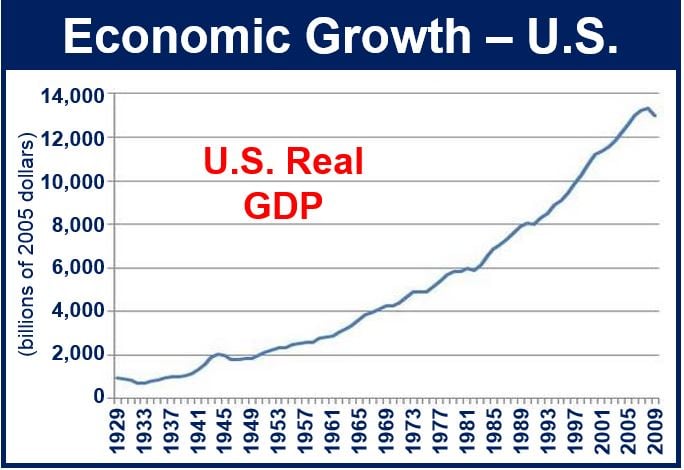
During the Obama administration, America’s economic growth began to decline and accelerated with the Covid 19 pandemic.
Evans and his co-authors identify many who have contributed to the success of America’s economic growth. Most of those he identifies are Americans but a few like Leo Baekeland, Reginald Fessenden, and Herbert Boyer show that innovation is not just an American phenomenon. Baekeland is a Belgian who invented Bakelite and became a U.S. citizen. Bakelite is the first fully synthetic plastic that revolutionized design and manufacture of consumer goods. Fessenden was a Canadian who pioneered radio transmission technology and Herbert Boyer and Robert Swanson were Americans who collaborated with many international scientists to create Genetech, the first biotech firm in the world that commercialized recombinant DNA for life-saving medicines like insulin.
Though British innovator, James Watt, did not invent the steam engine he radically improved it by adding a separate steam condenser.
The invention and innovational changes of the steam engine led innovators like Robert Fulton to see how a steam engine could power a steamboat. The invention of the automobile led to Henry Ford’s innovations in assembly line work that reduced the cost of production to make cars available to almost every working American. Ford also increased wages of his workers so they could buy Ford products. The founder of Bank of America, A.P. Giannini, innovated lending with idea of consumer banking giving workers a way to secure their paychecks in a bank that could provide a means to pay for services and possible credit based on accumulated wealth in their checking account. Innovations in communication by Ted Turner, Page and Brin, and Jobs and Wozniak changed the media communications industry.
Thomas Edison (1847-1931).
The recounting of the many American innovators in “They Made America” is not a picture of idealized human beings. Thomas Edison, who is among the greatest innovators in America, created a team of experimenters at Menlo Park in New Jersey. Edison created an “Invention Factory” that led to the electrification of the world. Though he did not believe in alternating current (AC) as an improvement over direct current (DC) in the use of electricity, he envisioned an electrical system that would light the dark streets of the world. Edison is a perfect representation of inventor and innovator in Evans’ American story. Edison’s belief in himself, his drive for accomplishment, and risks he was willing to take, exemplify the best an American entrepreneur can be.
Isaac Merritt Singer (1811-1875).
Isaac Singer innovated sewing machine manufacturing and sale but led a profligate life as a seducer of women with a volatile reputation that often erupted in anger toward others. Singer is alleged to have fathered 24 children from wives and girlfriends. Like his name, Singer was a showman who demonstrated his machines and built a brand that remains popular today. He was flamboyant and accused of bigamy and adultery but is noted to have created a global sales and service company with an installment purchasing plan for his machines. He carries the same force of nature as Edison but with the development of a singular product.
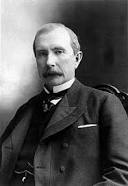
John D. Rockefeller (1839-1937).
In contrast to either Edison or Singer, Rockefeller is primarily focused on increasing his wealth and power. He revolutionizes the oil industry through monopolization while raising prices of oil to increase his wealth. He brands his product, reduces his costs of operation by building oil pipelines to reduce delivery costs and develops a corporate strategy to eliminate competition. His focus is on creating an industrial empire.
Malcolm Purcell McLean (1913-2001)Ted Turner (Born in 1938, now age 86.)
Evans notes other innovators like Ted Turner and Malcolm McLean and their innovations in media and global shipping. The lesser-known McLean introduced and launched the first container ship in 1956 that dramatically reduced loading times, labor costs, and cargo theft in the shipping industry. Ted Turner created CNN and TBS to revolutionize the news and entertainment industries. Page and Brin, and Jobs and Wozniak unleashed the internet to offer wider knowledge to the world but also provided a network that spread lies and misrepresentations of truth.
Dr. He Jiankui is an example of human blind spots. (Jiankui claims to have conducted the first human genome-editing of a human embryo with no oversight and a botched process that embarrassed the scientific community.)
The common denominator of these and many more innovators described in Evans’ book (though Jiankui is not mentioned) is their ambition, ego, and human blind spots. Edison is domineering and ruthlessly competitive. Ford’s antisemitism is reflected in his support for Adolph Hitler and being the only American cited in “Mein Kampf” as a model of antisemitism. Rockefeller shows the same traits as Edison as a corporate hegemon while using his innovative skill to dominate competitors and corner the market price for oil. Singer improves the utility of sewing machines through innovation and salesmanship while living life as though his personal ego is all that matters.
A not surprising irony in “They Made America” is that great innovators (like all of us) are flawed. Ford is widely considered an antisemite, Edison is too opinionated to countenance differences of opinion, Rockefeller is an elitist, Singer is a misogynist, Jiankui is a scofflaw, and so and so on. On balance however, innovators make a contribution to the success of America while most of us go along to get along.
Ravina’s history is helpful in preparing for a trip to Japan because it offers some basis for comparison and understanding.
Books of Interest Website: chetyarbrough.blog
Understanding Japan (A Cultural History)
Lecturer: Mark J. Ravine
By: The Great Courses: Civilization & Culture
Mark J. Ravina (Professor of History at Emory University with an M.A. and Ph.D. from Stanford.)
In preparation for a trip to Japan this fall, it seems prudent to hear from someone who knows something about Japan’s culture and history. Professor Ravina specializes in Japanese history with focus on 18th and 19th century Japanese politics; however, these lectures go farther back and forward than his specialty. There is so much detail in these lectures, one is unable to fairly summarize what Ravina reveals.
Japan is an archipelago made up of 14,125 islands with 260 of which are occupied. The four main islands are Honshu (the home of Tokyo, Kyoto, and Osaka), Hokkaido to the north, Kyushu to the south, and the smallest Shikoku (between Honshu and Kyushu).
Like the history of any nation that has existed since the 4th century CE, Japan’s culture has evolved based on influences that came from within and outside its borders. From indigenous beliefs to exposure to areas outside its territory, Japan has changed its traditions and culture. The rule of Japan has ranged from imperium to a battle-hardened warrior class to a popularly elected intellectual class influenced by internal and external societal and political events. At times, each social class has offered both stability and conflict. In the 20th century, of course, Japan’s attack on Pearl Harbor dramatically changed its economy and influenced its society.
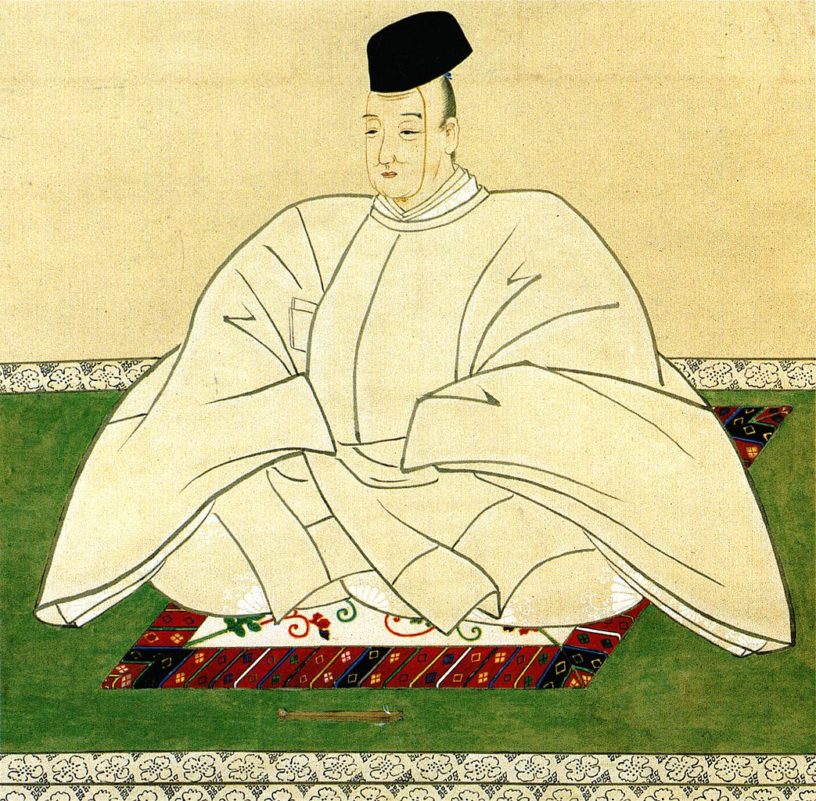
Japanese Emperor.
In Japan’s early centuries, an imperial and aristocratic class rose to rule Japan. The Asuka, Nara, Helan emperors during the Fujiwara era (538-1185) were respected and revered but the rise of the samurai class turned emperors into influencers more than exercisers of power. Power becomes centralized in a society that is highly stratified with nobility, Buddhist clergy, samurai, farmers, and artisans. Before 1185, territorial regents developed their own armies by relying on feudal lords who had their own warrior clans that became the fierce samurai of legend and reality.
As regents of Japan gained power and influence, emperors became symbols of culture more than centers of power. Rule and administration of territories became reliant on the power of a samurai class that at first supported the regents but soon became the true rulers of Japan.
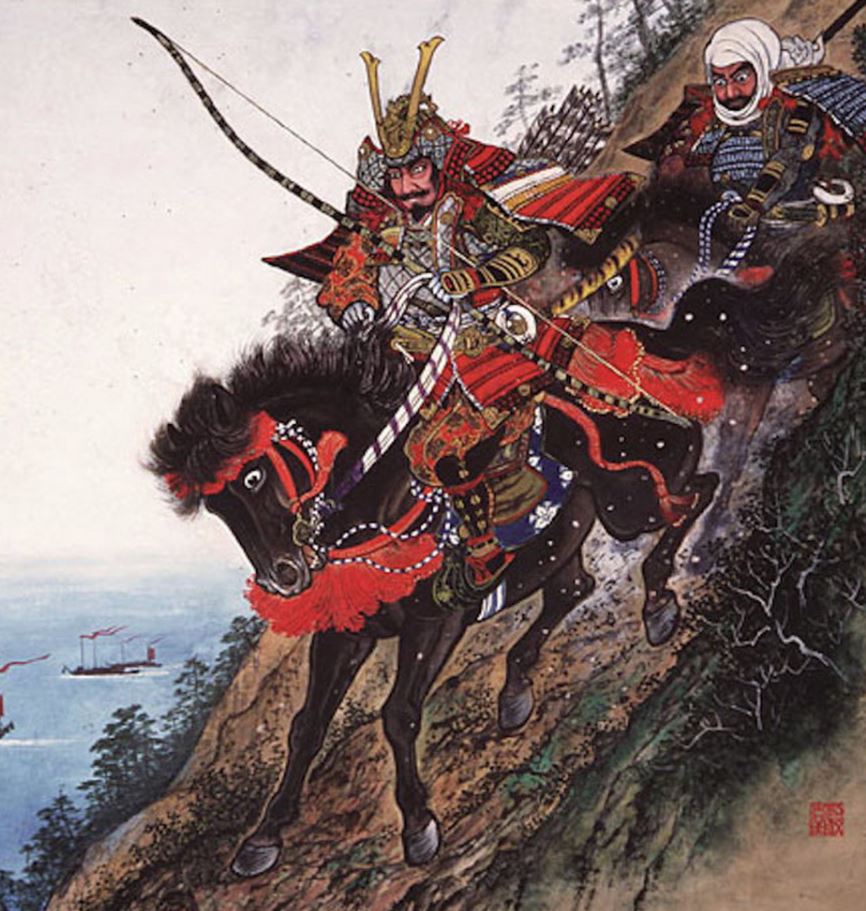
Loyalty, honor, and focus on victory or death changed the management class and encouraged society to revere a Zen aesthetic, a belief in simplicity, naturalness, imperfection, and quiet depth. The samurai became a power behind the thrown in the 12th century and eventually the de facto rulers of Japan with emperors becoming more ceremonial. Leading samurai became Shoguns, hereditary military rulers of Japan. Emperors were revered, but their power diminished with growing influence of Shoguns that held power for nearly 700 years from 1185 to 1868.
Samurai leadership unified Japanese society.
Ravina explains the samurai period of Japan matured in the 12th century which evolved into rule by the strongest. Samurai influence shaped the political, social and philosophical identify of the people. In what is called the Edo period of the samurai from 1603 to 1868, there were long periods of peace and prosperity like that of the Tokugawa shogunate in the modern-day Tokyo area of Japan. The Edo period lasted for 250 years. Literacy grew during this period and was tied to governance, law, and moral instruction. Religious practices became more ritualized with meditation and subtlety different spiritual beliefs. A merchant class is formed during this period and the arts, like calligraphy and theatre performances, became more widely practiced. Kabuki theatre becomes an entertainment with a reputation ranging from the ethereal to debauched.
Ravina explains samurai values are not abandoned but are recast to focus on industrialization of Japan in the 19th century.
By the end of the ninetieth century, 95% of the citizens had been educated in schools, compared with just 3% in 1853. The samurai became leaders in modern institutions and businesses. They followed a samurai code called Bushido with core values of rectitude, courage, benevolence, respect, honesty, honor, loyalty, and self-control. Emphasis is put on living with purpose, discipline, and moral clarity.
A Japanese garden.
Ravina notes Japanese culture is exemplified by garden creations that represent the religious and philosophical ideals of its residents. The Japanese take great pride in their tea gardens, rock gardens, strolling gardens, some of which have become UNESCO heritage sites. The Japanese revere nature because it represents the Zen principles of simplicity, naturalness, imperfection, and the depth of a quiet life. Gardens are considered spiritual and moral spaces for quiet contemplation.
Ravina suggests Japan, like America and most nations of the world, has not abandoned its past but has adapted to the present based on what has happened in its past. Ravina’s history is helpful in preparing for a trip to Japan because it offers some basis for comparison and understanding.
Before the invention and advance of science, Fry’s reminders of mythological beliefs level up to the brilliance of science in the world. One leans on the hope left in Pandora’s jar to arrive at a time when all human beings are treated equally.
Books of Interest Website: chetyarbrough.blog
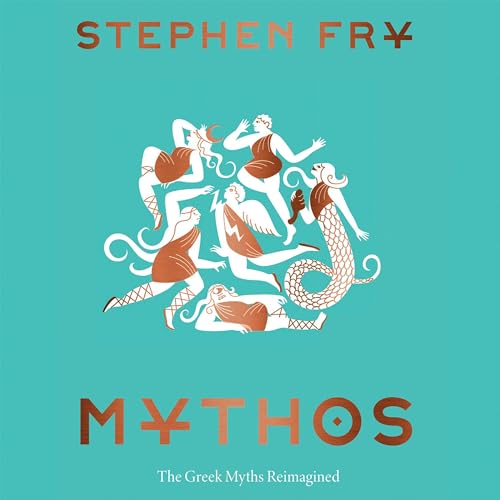
Mythos (The Greek Myths Reimagined.)
Author: Stephen Fry
NarratedBy: Stephen Fry
Stephen Fry (Author, British actor and comedian.)
Most reader/listeners are familiar with the Greek gods associated with Zeus and some with his domicile on the island of Crete. It seems odd that Crete would be his chosen home unless one has been there and seen the beautiful island, walked the hills. and felt the warm breeze from the Mediterranean Sea. Stephen Fry fascinates his audience with cultural tales of Greece that meld the myths of gods before and after the birth of Zeus. His writing and narration are like a dramatic, terrifying, unfolding movie in one’s mind.
The origin of life myth is that earth and sky are married in human forms named Gaia (earth) and a father, born of Gaia, named Uranus (sky). They are the calm and storm of human life that is yet to be created. Gaia, the source of life, prophesizes the loss of power by Uranus at the hands of one of his children. To avoid the prophesy, when two of their offspring are ferocious beasts, Uranus forces them back into Gaia’s body to keep himself safe. Gaia is outraged by his cruelty and forges a sharpened sickle and chooses Cronus, a later son, to use it to kill Uranus. Cronus accepts Gaia’s order and attacks Uranus who defends himself but is castrated rather than killed by the first swing of the weapon. That castration severs Uranus’ rule of the cosmos with the dispersal of his privates and sperm that become today’s universe. He no longer rules the cosmos.
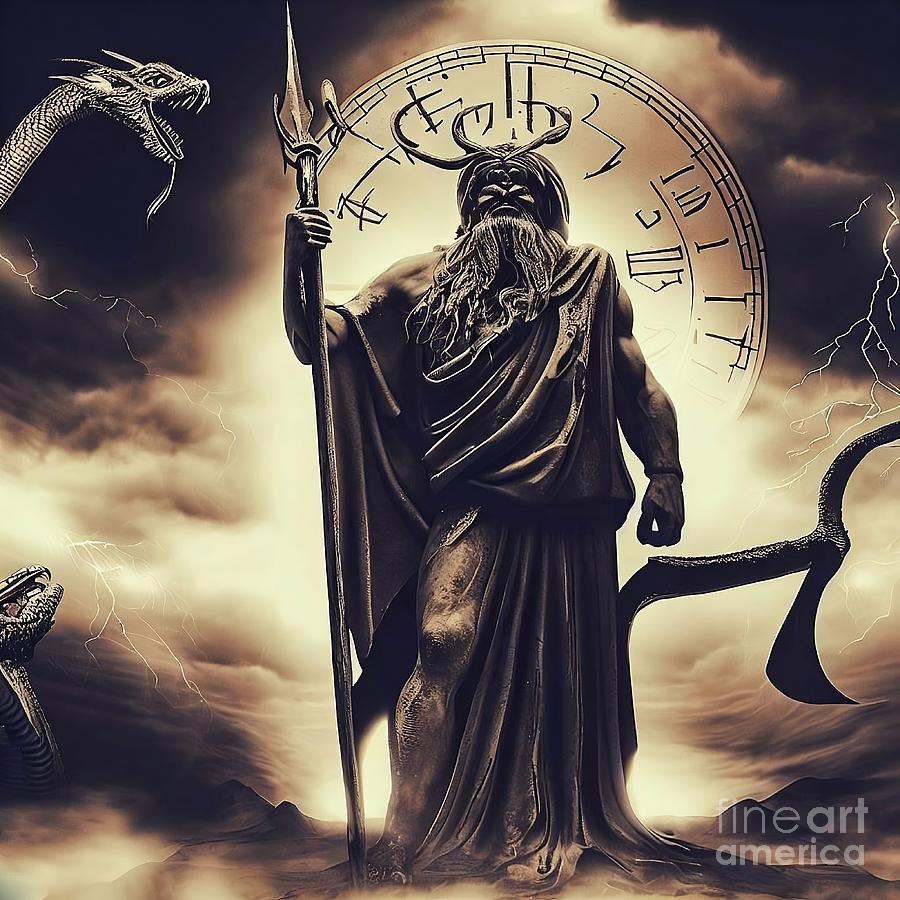
Cronus, the son of Gaia is the God of Time in Greek Mythology.
Cronus now becomes ruler of the universe but is also prophesized to fall at the hands of his offspring. Cronus marries Rhea, the sister of Gaia. Cronus knows of the prophesy and chooses to eat every child born by Rhea to avoid his fate. Rhea secretly wraps a stone in a blanket when she births Zeus and Cronus swallows the stone thinking another who might kill him is gone. Of course, Rhea is angry because of her lost children in Cronus’s stomach. Zeus plans to have Cronus drink a specially prepared potion that will cause Cronus to vomit up the siblings he has swallowed. Zeus imprisons Cronus after the freed siblings are returned to life. This begins the rise of the Olympian’ gods with Zeus as their leader.
Athena (The Goddess of Knowledge and Wisdom.)
One of the many gods of Zeus’s time is Athena, the goddess of wisdom and power. Athena’s father was the Titan of wisdom. Zeus had swallowed Athena’s father because of a fear that a child would be born that would surpass him as the all-powerful leader of the gods. There is a story of Athena’s birth from a blow to Zeus’s head because of a headache that would not go away. Athena bursts full grown out of Zeus’s head.
Fry explains Zeus is now becoming bored with his all-powerful life. He and Prometheus, another child of the gods, discuss creating mortal human life as a way of providing a new source of adventure and entertainment for the gods. These created humans become toys of the gods. Zeus and Prometheus search for the best source of clay to create humanity. Prometheus explains Zeus must provide some spit to create these new forms of life. So, humanity is formed from the spit of Zeus and the clay of earth. Prometheus is an artist who is described as a god of forethought and crafty counsel.
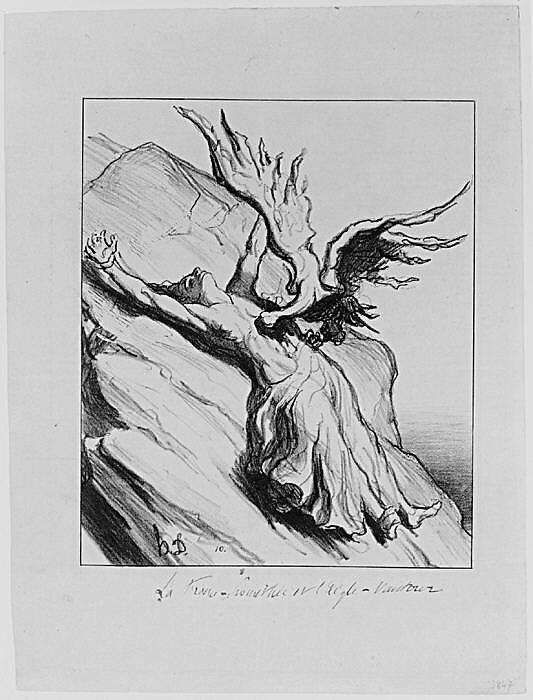
Prometheus and the Vulture.
However, Prometheus exceeds his authority by giving fire from the gods to man. Zeus is incensed and punishes Prometheus by chaining him to a rock. An eagle is initially planned to tear Prometheus apart every day to feast on his liver, but Zeus decides an eagle is too majestic for the task and turns the fowl to a buzzard. This occurs every night because of Prometheus’s immortality. Zeus treats people as toys for his amusement because he is incensed by their arrogance for having a power that only gods were to have. At this point, there are no female humans. With the creation of women, Zeus becomes threatened by humankind from increased procreation and capabilities that might grow to compete with the power of the gods.
Zeus (Leader of the Olympus gods.)
Zeus asks other gods to create woman, in part to complicate human life, which is a myth one could argue sets the table for gender inequality. The first woman is Pandora. This newly created woman is given a jar by Zeus and told not to open it for any reason without telling her what is inside the jar. She marries Prometheus’s brother and buries the jar under a sundial. However, her curiosity which is a “gift” given to her by Hermes, overturns the sundial, digs up the jar, opens it and releases the evils of life on the world. The only thing remaining in the jar is hope.
Before the invention and advance of science, Fry’s reminders of mythological beliefs level up to the brilliance of science in the world. One doubts life will ever be fully explained by science. One leans on the hope left in Pandora’s jar to arrive at a time when all human beings are treated equally.
Benjamin Franklin was no saint. He was a pragmatic, diplomatic, and intelligent politician who believed in improving himself, being honest in his relations with others, and determinately set on leaving a legacy of diplomatic accomplishments that (unlike our current government leaders) was intent on truly making America great.
Books of Interest Website: chetyarbrough.blog
The Completed Biography of Benjamin Franklin
Author: Mark Skousen
NarratedBy: Richard Ferrone
Mark Amdrew Skousen (Author, economic analyst for the CIA from 1972-1977, is considered a political conservative, a distant descendant of Benjamin Franklin.)
Though the history of Benjamin Franklin is “well plowed” ground, Mark Skousen assembles Franklin’s original papers on his intended biography to give a fascinating portrait of perhaps the greatest American patriot in our history. Franklin’s role in America’s independence from Great Britain is perfectly explained in Skousen’s review of Franklin’s intended autobiography. The many offices that Franklin assumed in pre- and post-revolutionary times are evidence of his patriotism and importance.
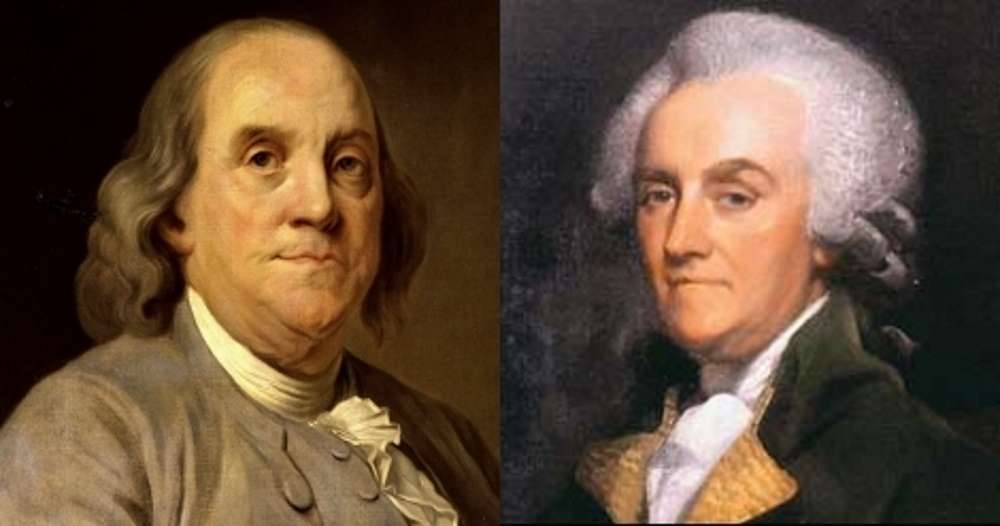
Benjamin Franklin (1706-1790, died at the age of 84.)
Franklin served as a member of the Continental Congress from 1775 to 1776. He was the President of Pennsylvania from 1785 to 1788. His diplomatic roles were as Commissioner to France from 1776-1778, Minister Plenipotentiary to France from 1779 to 1785, and Peace Commissioner who negotiated the Treaty of Paris ending the Revolutionary War and establishing American independence. These formal posts fail to mention his great role in representing America to the British throne while sailing to England before the revolution.
Thomas Penn (1702-1775)
It is ironic that Franklin became the President of Pennsylvania in 1785 when he had challenged the Penn family’s proprietary control over Pennsylvania territory given to the Penn family by the King of England.
The Penns refused to allow taxation of their estates in the colonies. Franklin met with Thomas Penn and wrote a paper saying the Penns prevented governors from using discretion in the management of the Pennsylvania colony, refused colonists right to raise funds, and would not accept taxation on their properties. Though Franklin did not legally represent the colonies, he galvanized opposition and created groundwork for colonial autonomy. He became known as the “defender of colonial rights”.
Franklin’s biography explains how he became widely known in England, France, and the colonies.
In 1773, two Massachusetts’s colonial government letters were published at the direction of Franklin that exposed British officials’ promotion of restrictions on the colonies’ liberties. Franklin had been appointed Postmaster General in America, authorized by England, but was discharged for having published those inflammatory letters. Franklin wrote several satires mocking British colonial policies. He opposed the Stamp Act while becoming a representative of Pennsylvania, Massachusetts, Georgia, and New Jersey in London.
Benjamin Franklin’s experiment.
Despite Franklin’s opposition to England’s infringement on colonial rights, he was celebrated in England’s scientific community. He received the Copley Medal for his experiments with electricity and a fellowship in the Royal Society. William Strahan, one of England’s printers who was an MP, and the famous William Pitt sympathized with Franklin’s explanation of the colony’s grievances. On the other hand, growing anger from England’s parliamentarians required Franklin to escape arrest in England in 1775.
Benjamin and William Franklin
To show how torn colonist’ families are about the colony’s declaration of independence, Franklin’s son, “Billy”, actually William Franklin, is noted in his father’s diary and writings to have chosen to take the British side of the conflict. William had served as the Royalist’s Governor of New Jersey. He was appointed with the help of his father’s influence in London. William refused to join the Patriot cause and was imprisoned from 1776 to 1778, and later, exiled to Britain where he lived until the end of his life. It appears Benjamin and William never reconciled and never saw each other again. Benjamin Franklin dies at the age of 84 in 1790 while his son Willaim passes at the age of 83 in 1813.
Symbol of the Colonys’ fight for independence.
Some interesting notes are in Franklin’s diary about symbols of the war of independence. In 1754, Franklin published the cartoon of a snake emblazoned with 13 skin segments with a message “Join or Die” It was originally designed for the French and Indian War but became a symbol of the colonies fight for independence from Britain. In contrast, Franklin opposed the eagle as a national emblem and preferred the turkey. To Franklin, the eagle was a bird of bad moral character while the turkey, in his opinion, represented “a more respectable bird”. This is a surprise to many who revere the eagle as America’s symbol of independence, strength, and elegance today.
Franklin is considered wealthy at the time of his death.
In today’s dollars, Franklin’s wealth may be estimated at 10 to 90 million dollars. He had created a printing empire with “The Pennsylvania Gazette” and “Poor Richard’s Almanack” and used his presses to print books, pamphlets, and even currency. He licensed lighting rods to minimize building destruction from lightning strikes and provided heat to colonist’s homes with the Franklin stoves. He had rental properties in Philadelphia and speculated on western land purchases. He received compensation for his diplomatic and government service as Postmaster General. Franklin showed himself to be frugal putting money aside to receive compounding interest on its principle. He preached and practiced the adage, “A penny saved is a penny earned”.
Deborah (Read) Franklin, Benjamin Franklin’s wife.
Benjamin Franklin notes his wife’s name is Deborah Read. She dies in 1774 at the age of 66 from a series of strokes. Her health declined as Franklin’s diplomatic service in England and France took him away from home. When she suffered from a series of strokes, his voyages to Europe kept him from returning immediately. He returned in 1775, and Franklin was buried beside her in 1790.
Franklin’s self-written biography shows him to be charming and flirtatious with an appreciation of women.
Franklin’s flirtations with Brillon and Helvétius connected Franklin to influential French society, helping him secure support for the American cause. Ms. Brillon is in her 30s while Franklin is in his 70s. Another French lady is Madam Helvétius is in her mid-60s. Franklin proposes marriage to which she declines. It seems there is more smoke than fire in regard to Franklin’s illicit liaisons in France. However, he does admit to some youthful indiscretions with women of challenged reputations when he is younger.
Benjamin Franklin was no saint. He was a pragmatic, diplomatic, and intelligent politician who believed in improving himself, being honest in his relations with others, and determinately set on leaving a legacy of diplomatic accomplishments that (unlike our current government leaders) was intent on truly making America great.
Millman’s Socratic story is about human patience and knowledge. He addresses knowledge as something of the greatest value that can keep one from resorting to violence. This is a message that resonates with those who are appalled by today’s international and domestic conflicts.
Books of Interest Website: chetyarbrough.blog
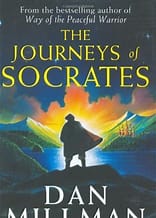
The Journeys of Socrates
Author: Dan Millman
NarratedBy: Sam Tsoutsouvas
Dan Millman (Author, world champion athlete, martial arts instructor, and college professor.)
Dan Millman’s reasons for the title of his book “The Journeys of Socrates” is difficult to understand. The known facts of Socrates life do not seem remotely related to the life of a Jewish immigrant who lived in 19th century Russia. The story is almost too horrific to believe because of the tragic life of its hero Sergei Ivanov, a Jew in Tsarist Russia being raised in a camp of Cossack warriors. The only parallels one may make is that Socrates is characterized in ancient writings as a man who sought virtue and wisdom in his journey through life.
Socrates was known as a warrior in the Peloponnesian War between Athens and Sparta (431-404 BCE). He is better known as a teacher and student of the philosophy of life.
Socrates had gained a reputation for bravery, endurance, and moral fortitude in war, while a mentor of young men like Alcibiades who wanders through life with little self-understanding. (It is the ancient writings of Plato, Xenophon, and Aristophanes that reveal some of what is told of Socrates life.) This seems a slender thread of association with the title of Millman’s book. The story of Sergei Ivanov is of a man who introspectively examines the meaning of life after experiencing horrific violence. This is a Socratic interrogation of a Jew’s life in pre-1917, revolutionary Russia and Ukraine.
Hiding one’s identity as a Jew has been told many times by many authors. Ethnicity and religious belief, like the color of one’s skin, marks one as different.
Ethnicity is a marker of human beings as the “other”, i.e., someone different than themselves. Unlike the color of one’s skin, ethnicity is easier to hide. Sergei Ivanov becomes known as a Jew in a Cossack training camp. He decides to escape that life but is followed by a fellow trainee who catches him. They fight and Sergi’s antagonist is knocked unconscious and appears dead. Sergi escapes and plans to find what he believes is a treasure buried by his grandfather that will give him enough money to get passage to America from his grandfather’s Ukranian homeland.
Buried treasure.
Sergi finds the treasure that had been buried by his grandfather, but it was only a clock and five gold pieces, not enough for passage to America. However, there is an address on the clock that leads him to his grandfather’s house. What he finds is an aunt that he thought was dead. She has a daughter for whom he falls in love and asks for her hand in marriage. They are married and Sergi’s plan is to take his now pregnant wife to America when he has earned enough money for passage. However, fate intervenes.
The man Sergi thought he had killed when he escaped the training camp was alive and had become a leader of a Cossack gang that terrorized the country with a special hatred for Jews.
The gang comes across Sergi and his pregnant wife when they are out for a walk before their planned trip to America. His former enemy and his followers murder Sergi’s wife, rip the baby out of her womb and leave her husband unconscious on the ground after trying to defend his pregnant wife. The gang leader chooses to leave Sergi alive to remember the grief he would have for his wife and baby’s loss of life because he could not save them. Sergi recovers and prepares himself for revenge on his former training camp antagonist.
Deaths inevitability.
At this point, one presumes this is to remind listeners of Socrates reported bravery, endurance, and moral belief despite hardship in life and one’s inevitable death. However, this is only a small part of the author’s intent. What one draws from the story is how ethnic or racial discrimination exists in every nation in the world. Human nature is often brutish and violent despite a rational person’s search for truth and peaceful coexistence. One asks oneself why humans wage war, why we murder innocents, and why does revenge only begat more death.
Sergi recovers from his injuries and is counseled and educated by a believer of a different faith.
As one finishes Millman’s story, listener/readers realize Sergi’s teacher is educating him about human patience, ethnic understanding, and knowledge that can break the repeating cycle of discrimination and violence caused by racial, gender, and ethnic difference. It requires patience, preparation, and knowledge. Sergi spends many years with his teacher and gains great strength to prepare him for what is to happen next in his life. Knowledge of what happened when he was struck down after his wife was murdered is not clear to him. As the story develops, one finds his wife had two children in her womb and only one died in the confrontation. What happens when Sergi meets his wife’s murderer is the denouement and fundamental meaning of Millman’s story.
Millman’s Socratic story is about human patience and knowledge. He addresses knowledge as something of the greatest value that can keep one from resorting to violence. This is a message that resonates with those who are appalled by today’s international and domestic conflicts.
How could America expect to occupy Iraq for a mere 8 years and 8 months and resolve cultural differences? It could not and did not.
Books of Interest Website: chetyarbrough.blog
The Iraq War
Author: John Keegan
NarratedBy: Simon Vance
John Keegan (Author, 1934-2012, English historian, lecturer, and journalist died at age 78. A recognized authority on warfare.)
John Keegan reflects on the history of Iraq with an analysis of the rise and fall of Saddam Hussein. With the collapse of the Ottoman Empire in 1922, British control of Baghdad, Basra, and Mosul led to the formation of Iraq by the League of Nations under the supervision of the British. Great Britain offered nation-state independence to Iraq in 1932. Keegan explains early Iraqi leaders failed to centralize control of the newly formed country of Iraq. He argues that failure allowed an authoritarian, unscrupulous, and brutal leader named Saddam Hussein to take control of the country from Ahmed Hassan al-Baker in 1979. Saddam used fear, violence, and murder to eliminate rivals to create a cult of personality that made him look strong and defiant in the eyes of his countrymen and the world.
Saddam Hussein (1937-2006)
Keegan argues Saddam instinctively combined his brutality with the pragmatism of “might makes right” to take control of Iraq’s fragmented leadership. Not since Hitler, Keegan suggests, has a leader managed to combine tyranny with fear to take command of a nation. Saddam magnified regional instability and created international disorder with ruthless brutality, reinforced by a military that chose to follow him out of fear and reward that is gathered from rapine.
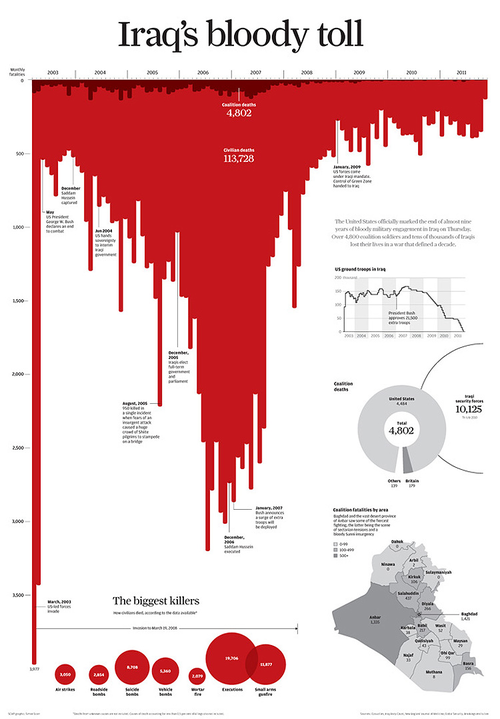
Iraq death statistics.
Keegan explains Saddam maintains his position through force but ultimately loses it because of his brutal rule, lies, and poor judgement. Saddam dramatically murders or tortures political rivals to create fear among Iraqi citizens and military henchmen who fear his rath. He initiates a war with Iran in 1980 with the intent of toppling the Shah because he viewed him as a threat to his regime. His plan was to install the Ayatollah Khomeini which seems counter intuitive in view of Khomeini’s religious zealotry; particular considering Saddam’s earlier offer to assassinate him while he lived as an exile in Iraq. Keegan implies Saddam’s decision to support Khomeini as Iran’s leader is similar to the lie Saddam creates about Kuwait slant-drilling into Iraqi oil fields to steal billions in oil. One doubts he ever intended to promote Khomeini to rule Iran. As history shows, the majority of the international community did not believe Saddam’s lie about oil theft and were opposed to Iraq’s invasion of Kuwait. A disastrous and unresolved eight-year war was fought with Iran and eventually Saddam lost any significant support for occupation of Kuwait.
Saddam rules Iraq for nearly 24 years. One wonders how he ruled as long as he did, just as many Americans wonder how Trump could be re-elected by a majority of American voters.
Considering Saddam’s poor judgement in regard to Khomeini’s power and his belief that Iraq could take over another country without international opposition shows how deluded a dictator can be. Keegan suggests Saddam made too many miscalculations. First among them is the weaknesses he created by presuming that fear of him among his own military force would maintain support of Iraq’s 400,000 soldiers. Saddam is essentially abandoned by his military leaders when Iraq is confronted by an international force to oppose Iraq’s invasion of Kuwait (73% were American soldiers but 34 other countries participated). Not surprisingly, bridges were not destroyed by Saddam’s military as they retreated, and Saddam’s military leaders abandoned their posts.
Keegan explains Saddam’s fall came from a collapse of the illusions, fears, and myths that surrounding his rise to power.
One wonders if the same may happen in Iran in the 21st century. It seems dependent on Iranian people deciding on whether the governance Khomeini insists upon is illusory and the fear Khomeini’s ordered murders, incarcerations, and beliefs have alienated enough Iranian citizens. Because Iran’s governance may be more about religious belief and integrity rather than arbitrary rule, one becomes skeptical. Iran may remain as it is but with a new religious ruler.
Keegan tries to explain America’s mistakes in Iraq without being too partisan.
Keegan offers a clear understanding of Saddam’s rule of Iraq. America made many mistakes because of not understanding the culture of Iraq and presumed their culture would accept Americanization. Tribalism scented with religion exists in Iraq. Without engaging that reality, America could not constructively influence change. The dismantling of Iraq’s military negatively impacted a critical infrastructure that understood the indigenous culture and may have aided American influence in Iraq. By ignoring the dignity of the Iraqi people and the importance of tribe loyalties and religious beliefs, America stubbled through years of destructive occupation. Other authors have noted how tribalism influenced how Iraqi informers had their own agendas for accusing Iraqi tribes of fomenting conflict. Iraq unraveled into insurgency and chaos from which it is still trying to recover.
It has taken nearly a quarter of a century for American government to begin healing the relationship between Indians and 1776 settlers of this country. The possibility of changing Iraqi society in a less than 10 years seems unlikely and, for that matter, inappropriate. Cultural difference is not a disease.
Change is difficult and nearly impossible when cultural differences are not clearly understood and taken into account when a foreign country occupies a native country’s territory. How could America expect to occupy Iraq for a mere 8 years and 8 months and resolve cultural differences? It could not and did not.
Murata’s satire infers obsession with sex for pleasure, child rearing collectivization, gender dysphoria, and pregnancy equalization are pathways to societal destruction.
Books of Interest Website: chetyarbrough.blog
Vanishing World (A Novel)
Author: Sayaka Murata
NarratedBy: Nancy Wu
Sayaka Murata (Author, Japanese novelist.)
Sayaka Murata’s subject is clearly revealed in its title, “Vanishing World”. “Vanishing World” is a provocative assessment of how sexual relationship and sex education has changed. Murata satirically reveals how human reproduction, objectification of life, motherhood, and technology may dehumanize society.
Murata’s fictional story is highly informative in regard to sexual difference and similarity between men and women.
In one sense, Murata’s fictional story is highly informative in regard to sexual difference and similarity between men and women. As a reader/listener, Murata offers a detailed description of the physical difference between the sexes. Many who think they know something about sexual difference will find the author’s candor enlightening. However, her depiction of social relationship is off-putting with a satirical exaggeration of socio/sexual objectification.
Murata writes about a single parent family with a young daughter who lives with her mother and is nearing the age of puberty.
(Though not mentioned in Murata’s story, single family homes in America have grown by nearly 30% in the 21st century.) The main character’s name is Amane and Murata’s story is about Amane’s sexual awakening and how she views social relationship. Amane is infatuated with an animated male character on television. She imagines being married to this character before puberty but holds this character in her mind throughout childhood and later life.
Murata suggests reproduction may evolve into a preferential desire for artificial insemination rather than sexual intercourse between a man and woman.
This idea feeds into a listener/reader’s mind as a diminishment of the need for emotional attachment to the opposite sex for procreation. Sex becomes detached from procreation, evolving into only “hooking up” for sexual stimulation and/or personal gratification. Murata infers desire is no longer needed for procreation but only to experience intercourse as an emotional and physical pleasure. Consequently, it seems perfectly natural to transfer sexual desire to a fictional character because it becomes unnecessary to have emotional attachment to humans when a figment of one’s imagination is available.
Murata creates a bizarre world.
The bizarro world that Murata creates is an extension of a belief that society is becoming less attached to their humanity. Marriage, human relationship, and motherhood are replaced by mindful personal’ inwardness and endless pursuit of physical stimulation without emotional entanglement. By extension, Murata suggests science will create wombs for men so that the difference in sexes equalizes childbirth and care of children. Caregiving becomes bureaucratic and collective because caregiving is no longer personalized.
Murata suggests that a new system of childcare will evolve into collective training camps for working parents who are too self-absorbed to raise their own children.
Collective childcare disconnects parents from the management and development of their children. The sterility of conception by artificial insemination, collective childcare, and social acceptance of multiple sex partners diminishes both familial relations and child development. Birthing and raising children becomes a clinical process, i.e., less personal with both men and women capable of experiencing pregnancy and delivery; all without responsibility or obligation for childcare.
In some sense, this satire illustrates the negative potential of socio/sexual equality.
Murata’s story ends with the birth of their first child from a man who is Amane’s husband. She is torn over not being able to take the baby home because the child is already being “cared for” in a ward meant to raise and nurture all newly born children. A final point is made in the story by a visit from Alane’s mother after the birth. She asks Amane where the child is, and Alane explains the child will not be raised by her and her husband. Alane’s mother is aghast. Her mother falls to the floor and dies without any apparent familial concern for her sudden collapse and presumably, death. The next thing to happen is a visit from one of the children born in this new world. Alane chooses to have sex with him and the story ends.
“Vanishing World” implies 21st century science, organizational bureaucracy, and social change threatens survival of humanity. Murata’s satire infers obsession with sex for pleasure, child rearing collectivization, gender dysphoria, and pregnancy equalization are pathways to society’s collapse.



























































 REVIEWS AND VIEWS OF LIFE