The social implications of time travel are revealed in Bradley’s clever, adventurous, sometimes humorous, and apocryphal story.
Books of Interest Website: chetyarbrough.blog
“The Ministry of Time”
By: Kaliane Bradley
Narrated By: George Weightman, Katie Leung
Kaliane Bradley (Author)
Kaliane Bradley imaginatively writes about the social complications that arise if time travel were found possible in the 21st century. The main characters are an unnamed narrator and a 19th century British Commander named Graham Gore. A key to understanding “The Ministry of Time” is that the narrator is unnamed.
At times, “The Ministry of Time” is difficult to understand because of a perspective that mystifies listener/readers who are not raised in a British culture. However, on balance, comedy, tragedy, romance, and history are universal experiences that pull one into Bradley’s imaginative story.
The story begins with the final interview of a person who is hired by “The Ministry of Time” to become a councilor to one of several characters drawn out of time into the 21st century.
The main character of the story, the interviewee, is to become one of several councilors to stay with individuals who are rescued from assured death in past centuries.
There is a limit to the number of people that can be rescued because of the design of the time-travel’ portal. That limit generates an interest in a time traveler who wishes to control who can use the portal. A surprise is to find who that time traveler is and why he/she is determined to control its use.
The social implications of time travel are revealed in Bradley’s clever, adventurous, sometimes humorous, and apocryphal story.
“…Western Civilization” and its Christian and democratic foundation gives little comfort to those who are worried about societies’ future.
Books of Interest Website: chetyarbrough.blog
“The Foundations of Western Civilization”
By: Great Books Series
Lecturer: Professor Thomas F.X. Noble
Thomas F. X. Noble (Professor at Notre Dame, Ph.D. from Michigan State University, President of the American Society of Church History, received the Charles Sheedy Prize for Excellence in Teaching in 2011.)
Noble offers a distinctive view of the foundation of Western Civilization in 48-lectures sponsored by the Great Books Series. There is little doubt about the importance of religion in the world. Noble explains how the Bible is a seminal work underpinning one of the two largest religions of the world, Christianity. Noble explains the Bible, just as the Quran in the east, provides a contract between a singular God and humanity. However, the dialectic of religion is that it binds people together as well as rips them apart. On the one hand, religious belief brings people together with belief in something greater than themselves. On the other, Christian and Islamic believers have maimed and murdered millions.
Noble explains Christianity began in the same area of the world as the Muslim religion, but several centuries earlier.
The spread of Christianity begins in the 1st century while Muslimism spread in the 7th. The ministry of Jesus Christ spread Christianity in 30-33 AD. Some would argue the New Testament Gospels of Matthew, Mark, Luke, and John are extensions of the Hebrew Bible. The Jewish Torah and Hebrew Bible emphasize the oneness of God, which is consistent with Christian belief, but the difference is that Jesus was not considered a Messiah by Jews. Jesus was, at most, only a messenger of God to Jews, like Muhammed is considered to Muslims.
Noble notes the spread of Christianity began in the Middle East, centuries before Muhammad’s spread of Muslimism in Mesopotamia.
Noble suggests Christianity’s spread is associated with the advent of Zoroastrianism in Mesopotamia. The prophet Zoroaster believed in a monotheistic faith before the ministry of Jesus in Judea and before the record of Judaism in the Torah of 1400 BC, the later Holy Bible, New Testament, and Quran. The common factor in Judaism, Christianity, and Muslimism is belief in one Supreme Being. Of course, there are numerous differences in these religions after their “One God” similarity. The point is, they all originated in the Middle East according to Noble’s history.
The point Noble is making is that religion is an integral part of the foundation of civilization. Religion brought people together. At the same time, religion became a foundation for difference among people of similar and different cultures. Noble explains those differences helped and hindered the shape of western civilizations.
Greeks feared the tyranny of the majority and were concerned about the lack of expertise in governance and decision-making on the part of the general population. They saw the risk of demagogues. America and the western world have experienced all of these democratic risks. One could argue America is experiencing those risks in 2024.
As these risks play out in ancient Greece, they were mitigated by pragmatic Athenian leaders like Cleisthenes who respected special interests of his time in office. He introduced a lottery system that gave voice and some influence on policy to representatives of these special interests. The people being governed were recognized in public forums that allowed free expression. On the other hand, Cleisthenes instituted the principle of societal ostracism for aberrant behavior of people who advocated against what was perceived as the common good. Future leaders expanded political rights of Greek residents and created a council of special interests to have a direct role and influence in public policy. Public ostracism of Greek citizens for up to ten years was formalized to maintain government’ stability.
Rather than direct democracy, Rome established a representative system of democratic governance.
Noble moves on to the Roman Empire that adopted many of the principles that advanced Greek civil governance. However, rather than direct democracy, Rome established a representative system of democratic governance. Rome made wealth a more important criteria for serving as a representative of government. However, Rome did not use their citizen representatives to make law but only to give vent to their opinions about leadership’s decisions. Rome extended their empire by military conquest but when battles were won, they appointed governors of new territories that granted citizenship to the conquered. Military control is maintained by Rome for centuries, but a voice is given to the citizens of conquered territories. In a combination of military power, alliances with native rulers, and positive incentives, Rome assimilated foreign cultures into a vast empire.
The power and influence of Rome diminished in the 3rd century. Rome’s diminishing power comes from multiple directions. Noble explains the rise of disparate tribal groups challenged Roman authority. The growing influence of religion and diminished gravitas of its citizens accelerated Romes’s loss of power and influence.
However, it is clear the lessons of Greece’s and Rome’s democratic history are guides to the future of “…Western Civilization”.
China recognizes the importance of investment in their military and its economic investment in other countries (e.g., Road and Belt program) to advance its influence and role in the world.
Religion brought societies together while splitting human society in ways that maimed and murdered millions of people.
Noble circles back to a more detailed history of religion. As the Roman Empire begins to collapse, dynasties were formed through the 3rd century AD.
As these dynasties collapsed, Christianity spreads across former Roman controlled lands. The Byzantine Empire formed in 395 CE; Christianity grew through the 15th century to become the largest religion in the world. The Frankish dynasty established itself between 750 and 887 CE, with Charlemagne as its most renown leader. In 774 CE., Charlemagne created a papal state in central Italy. A Frankish dynasty was formed by the Carolingian family (756-887 CE) that managed to stabilize and spread Christian religion throughout Western Europe. The Carolingian family constructed churches and schools to teach Christianity. They created a Carolingian army to protect and expand belief in a Christian God. Noble’s lectures show religious belief in a Supreme Being roils the world. From reading/listening to other histories, governments founded on religious belief are destined to fail.
The remaining lectures summarize the history of the Rennaissance, the Reformation, and the split of the Christian church. Noble’s lectures reflect his erudition, multi-lingual expertise, and understanding of the people of those historical events. The underpinning notion is that religion and its permutations will continue to impact the future of the world, let alone “…Western Civilization”.
Is belief in God worth it? Cook’s history of Muslimism and knowledge of Christianity makes one wonder.
Books of Interest Website: chetyarbrough.blog
“A History of the Muslim World From its origins to the Dawn of Modernity”
By: Michael Cook
Narrated By: Ric Jerrom
Michael A. Cook (British historian, scholar of Islamic History)
Professor Cook overwhelms one with a voluminous examination of the Muslim World. His history really begins before the birth of the Arab prophet, Muhammad (570-632). However, it is after Muhammed’s revelations and his departure from Mecca in 610 CE, when he and his followers settle in Medina (622) that a more documented history is revealed. Arabs are identified as a nomadic tribe who occupied the Arabian Peninsula, Syrian Desert, North, and Lower Mesopotamia in the mid-9th century BCE. However, notable territorial regions first appeared in the 14th century BCE with the Assyrian and Neo-Assyrian Empires. Cook suggests it is in the 7th century CE that Islam became a force in the Middle East. After the Prophet Muhammad’s death in 1632, the Rashidun Caliphate established itself (632-661 CE).
(REVIEWER’S NOTE: Scribes recreated fragmentary writings and legends of long-dead contemporaries of Christ in the case of the Holy Bible, just as the thoughts of the “last messenger of Allah” were recorded by scribes. Modern science experiments explain human minds do not precisely record or recall the past. The human mind recreates the past and fills any gaps that may arise to complete the mind’s imprecise memory. That is why scribes of biblical or unbiblical history are interpretations of facts of the past, and not necessarily accurate facts of the past.)
With the Ottoman Empire’s dissolution, Turkey, Greece, Serbia, Bulgaria, Romania, Albania, Montenegro, and Macedonia were formed. Three Arab nation-states came out of the Ottoman Empire’ dissolution. They were Syria, Iraq, and Transjordan (now Jordan).
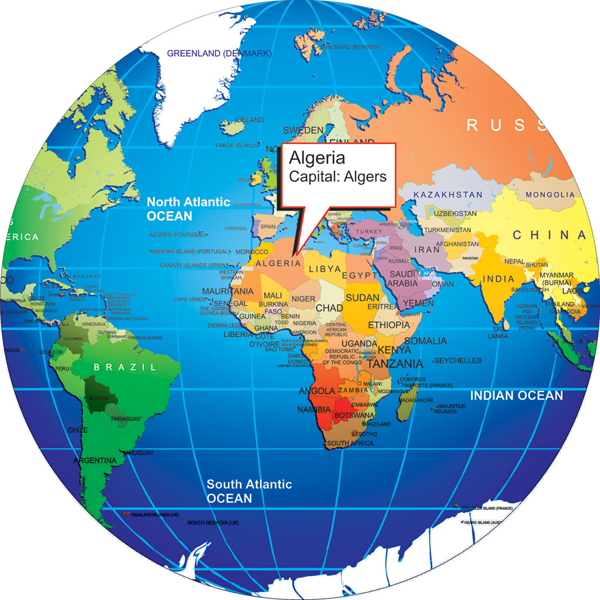
Interestingly, modern states with the highest number of Arab speaking residents are Egypt, Sudan, Algeria, Iraq, Morocco, Saudi Arabia, and Yemen. Only Egypt and Sudan have more than 10% of their population who use Arabic as their primary language. The point of this realization is that Professor Cook is writing a history of the Muslim religion, not Arab culture.
What Cook shows is how Muslim belief (24% of the world population) impacted the world.
Cook begins to explain the split between Sunni and Shia religious belief. In the modern world, only Iran, Bahrain, Yemen, and Iraq have Shia-majority populations with a significant Shia community in Lebanon and Afghanistan. Sunni religious belief is practiced by a majority population in nearly 20 countries with a mixture in Egypt, Turkey, Pakistan, Saudi Arabia, Yemen, Eritrea, Syria, Afghanistan, Lebanon, Turkmenistan, and Azerbaijan.
A surprising observation by Cook is the impact of a language change in the Middle East. Persian (aka Farsi) became a bridge connecting the diverse communities and histories of the Middle East. This change largely took place between the 9th and 11th centuries. It significantly impacted Muslim cultural beliefs and Iranian culture in general.
Cook implies the colloquialization of translations by Farsi (the language of Persia) of Arab Caliphate’ triumphs and failures molded beliefs of Middle Eastern nation-states. Countries like Iran either adopted or rejected Farsi’ stories of accomplishments and failures by Arab Caliphates. Some failure is associated with moral turpitude, a falling away from Qur’anic teaching, translated into Farsi language.
(Genghis Khan’s sons establish four kingdoms in the Middle East that lasted until 1368.)
Though none of the kingdoms practiced a particular religion, each influenced the course of religious acceptance. The environment they created allowed Christian religion to spread from Russian territory, while Turkish influence leaned toward Islam. Cook explains how young rebel leaders gained followers by successfully defeating and pillaging villages that had poor defenses. With each successful raid, more young people would join the raiders. This incremental growth led to the spread of Christian and Islamic religious influence, depending on the religious leaning of raiding parties.
Cook clearly illustrates how Arab culture lies at the heart of Islamic religion despite its nomadic existence. From the first madrasas (Islamic schools) in the Abbasid Caliphate in the 9th century, the teachings of the last messenger of Allah began with Arabs. Cook explains the religion is unlikely to have flourished without other cultures adoption. Without Persian, Turk, Uzbek, and Mongol societies adoption, the spread of Islam would have been minimized. Muslim belief evolved in a cauldron of conflict with Christianity, Judaism, and other indigenous religions but prevailed as a religion with two faces, i.e., the Suni and Shia Divide.
Like the schism between Catholics and Protestants, Sunni and Shia believe in one God but differ in ways that have roiled the world. In the case of Catholics and Protestants, there is the French wars of 1562-1598, the European thirty years war of 1618-1648, and the Troubles in Ireland in 1968-1998. In the case of Sunni and Shia, there was the battle of Karbala in 680 CE, the Safavid-Ottoman wars in the 16th-17th centuries, the Lebanese Civil War of 1975-1990, the Iraq War of 2003-2011, and the Syrian Civil War that began in 2011 and continues through today.
The forgoing were only human deaths within the two major religions of the world, while neglecting the atrocities incurred between Christianity and Islam. There were the Crusades between the 11th and 13th centuries, the Battle of Lepanto in 1571, The Siege of Vienna in 1683, and the Lebanese Civil War between 1975-1990.
Later chapters of Cook’s history reveal the conflicts between the Islamic religion and other major religions in the Middle East, besides Christianity. Many leaders are identified for historians who will be interested in knowing more, but the names become a blur to a dilatant of history.
Every nation in the world can learn from nation-state’ mistakes in history but none can right the wrongs of the past.
Books of Interest Website: chetyarbrough.blog
“Empireworld” (How British Imperialism Shaped the Globe)
By: Sathnam Sanghera
Narrated by: Homer Todiwala
Sathnam Sanghera (Author, British journalist, born to Punjabi parents, graduate of Christ’s College, Cambridge with a degree in English Language and Literature.)
“Empireworld” offers a credible explanation of how the white race, which is a mere 16% of the world’s population, has dominated the world since the 17th century. That domination changed in the 21st century. It changed with the power and economic growth of the United States which is being challenged today by the Asian continent.
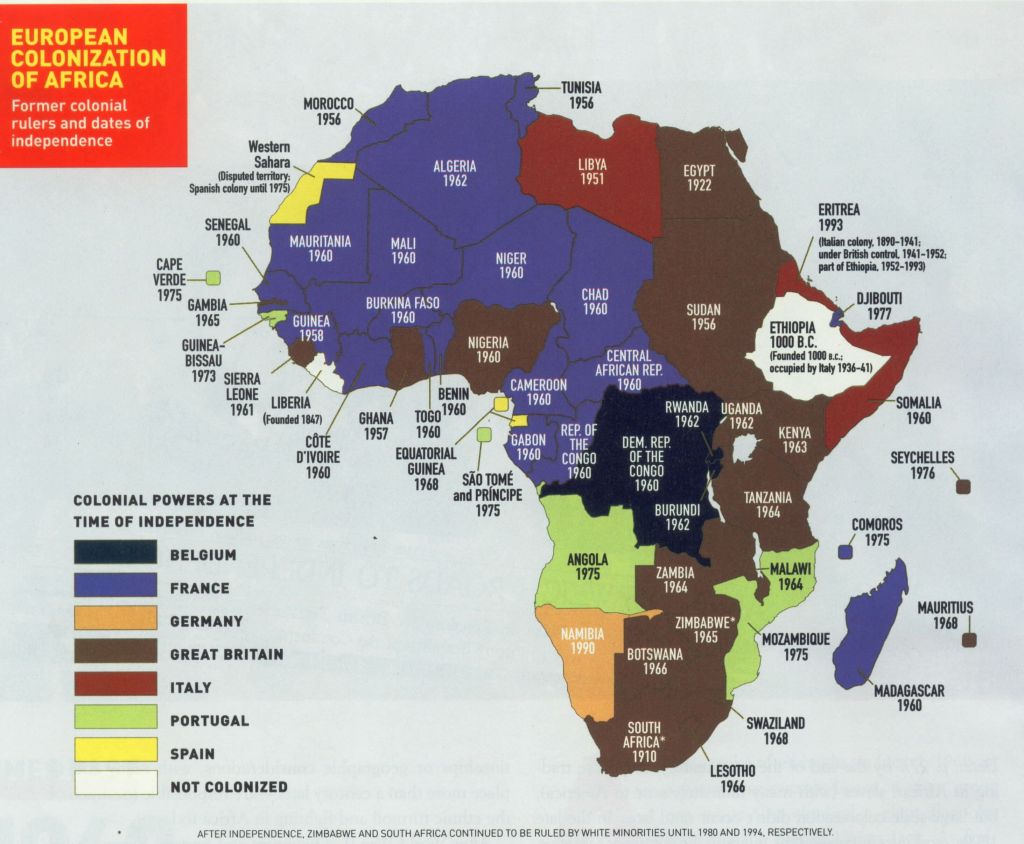
In earlier centuries, China, the Ottoman (modern day Turkey), and Mughal Empires (modern day India, Pakistan, and Bangladesh) were Asian rulers of the world
Prior to the 17th century, an empire’s influence is arguably more local because of transportation and communication limitations. What Sanghera infers is Great Britain’s growing power and influence surpassed others because of its domination of the sea and growing industrialization. The point is all of these 17th century nations were principally white with similar ambitions but only Great Britain influenced all foreign cultures of that period, with remnants extending into modern times.
France, Spain, the Dutch Republic, and Portugal were major 17th century players, but Sanghera argues the imperialist drive of Great Britain surpassed its rivals.
Sanghera focuses on GB, not only because it was white but because it represented a national power’s intent to shape the world in its own image. The image Sanghera creates is not egalitarian, democratic, or sanguine. GB is characterized as dominating, autocratic, and driven by self-interest. He suggests eleemosynary efforts by GB to aid other countries was principally to guild their own lily, not to offer other countries self-determination or freedom. Indigenous populations are inferred to be expendable in Sanghera’s “Empireworld”.
“Empireworld” is a harsh judgement of Great Britain’s history of enslavement, indigenous displacement, colonization, and confiscation of other countries’ natural resources. Sanghera systematically builds a case for GB’s attempt to English-size the world. Parenthetically, this is the same view held by some nations about America.
Sanghera recalls the history of the slave trade, Great Britain’s colonization of India, Nigeria, Australia, New Zealand, North America, and other countries of the world. He reminds listener/readers of the despoiling of the animal kingdom, confiscation of nation-state natural resources, enslavement of Africans, sexual discrimination, suppression of colonial sovereignty, displacement of indigenous peoples, and re-education or extermination of native countrymen who will not accept an English view of superiority and custom.
Sanghera tempers his harsh view of Great Britain in the conclusion of “Empireworld”. He does not deny G.B.’s history but acknowledges his countries’ measured efforts to right the wrongs of the past; which is of course not possible.
Sanghera cites G.B.’s belated effort to preserve animal and plant species, its acceptance of former colonies’ nation-state sovereignty, growing discussion about reparation for profiting from the slavery trade, endorsement of indigenous people’s rights, legislative action for sexual freedom, and support for improved health, education, and welfare of former colonial citizens. All are works in process, far from completion, but progressing. Sanghera’s history of Great Britain is the story of America. Though America avoided the colonial history of England, it has similar challenges.
Every nation in the world can learn from nation-state’ mistakes in history but none can right the wrongs of the past.
“Believing” is not enough. The nature of humanity needs to change,
Books of Interest Website: chetyarbrough.blog
“Minor Feelings” (An Asian American Reckoning)
By: Cathy Park Hong
Lectures by: Cathy Park Hong
Cathy Park Hong (Author, writer, poet, and professor, graduate of Oberlin College with an MFA from Iowa Writers’ Workshop.)
“Minor Feelings” is a mild representation of a social malady that plagues humanity. Ethnic differences, social hierarchy, and political power create and embolden nation-state’ inequality. It seems in the history of the world, with the exception of most Asian and African countries, the white race rules society. This seems odd when only 16% of the world’s population is white.
Hong offers a memoir of her life in America. Born in Los Angeles, California, Hong notes experiencing discrimination between white Americans and Asians.
Hong acknowledges discrimination within, as well as outside, ethnic cultures by recounting her somewhat comic effort to seek help from a Korean therapist for a recurrent facial tic. The therapist said Hong should seek help from someone else without explaining why. Of course, one wonders if that classifies as discrimination or therapeutic professionalism.
Mosaic of children from around the world, including, Kayapo, Indian, Native American, Inuit, Balinese, Polynesian, Yanomamo, Cuban, Tsaatan, Moroccan, Mongolian, Karo, Malagasy, and Pakistani.
All humans have a tendency to generalize ethnic qualities based on human difference. Those differences can range from the obvious to the miniscule but have the common failing of not seeing the humanity of every human being. Hong notes how Asians are generalized by many ethnic groups, including Asians according to Hong, as industrious, intelligent, and hard working without recognizing the individual. Whether generalization about an ethnicity is true or not, the individual’s success or failure is diminished by generalization.
In what was called social studies in the 1960s, I remember our teacher asking if we were prejudiced. No one commented.
Then, the Social Studies teacher asked the class if any of the boys had asked an Asian girl if she had been asked to go to the prom with them. No one answered but I, for one, felt guilty about not even thinking of it. Though the teacher inappropriately asked the question, he demonstrated how America is as ignorant about Asian discrimination in the 1960s as Hong illustrates in “Minor Feelings”. (Parenthetically, the teacher’s question was even more inappropriate and hurtful because the Asian girl was in the class.)
The truth is every nation-state’ political structure, whether white, off-white, or black, discriminates against whomever is not part of the government in power. In China it is the Han, in Russia it is Aryan Russians, in India it is the Indo-Aryans, in Botswana it is the Tswana. Each of these ethnicity’s discriminate against minorities not in power.
This is not meant to diminish the truth of what Wong explains about her life experience. “Minor Feelings” is a difficult book to read or listen to because it offends many Americans who believe they look at every person as an individual. However, “believing” is not enough. The nature of humanity needs to change.
Like the number 47 in “Guardians of the Galaxy”, the 27 books of the New Testament offer no answer to the meaning of life.
Books of Interest Website: chetyarbrough.blog
“The History of the Bible” (The Great Book Lectures)
By: Bart D. Ehrman
Narrated by: Bart D. Ehrman Lectures
Bart Denton Ehrman (American New Testament Scholar, Wheaton College BA, Princeton Theological Seminary received a Master of Divinity and PhD.)
Bart D. Ehrman’s lectures are a revelation to one who knows little about either the Bible or the New Testament. As a scholar, Ehrman views the New Testament as history, not a religious covenant. The New Testament, as differentiated from the Holy Bible (a covenant with Israel), is a later covenant with Jesus that extends religion to all humankind.
Ehrman’s lectures are not about religious belief but about the history of the New Testament.
Removing the ideas of religious belief from his lectures will undoubtedly offend many who believe in God’s and/or Jesus’s divinity. What Ehrman does is explain how the New Testament is a flawed recollection of historical figures. The flaws come from scribes who interpret three contemporaries of Jesus–Matthew’s, John’s, and Peter’s fragmentary writings of Jesus’ ministry and teachings.
The 27 books of the New Testament are written by scribes of later centuries that are interpretations of Matthew’s, John’s, and Peter’s interpretations of Jesus’s beliefs and history on earth.
Because scribes and contemporaries’ recollection of Jesus are human, truth is in the eye and limitations of its beholders. The inference from Ehrman’s lectures is that truth is distorted by interpretations of interpretations.
Ehrman systematically reveals how the story of Jesus’s life and beliefs change over the centuries.
He gives listeners a better understanding of the complexity and false interpretations of religion that accompany the many atrocities committed by believers who foolishly murder fellow human beings. These great historical conflicts are based on interpreters’ interpretations of interpretations.
God may or may not exist, but human beings insist on their beliefs to the detriment of humanity.
History unreservedly shows–believing in religion, without concern for society leads to discrimination, mayhem, and murder. That is as clear today in the Israeli/Palestinian conflict as in the history of the Jewish holocaust and pogroms of the past.
Like the number 47 in “Guardians of the Galaxy”, the 27 books of the New Testament offer no answer to the meaning of life.
“The Anxious Generation” is a much-needed warning to America and the world.
Books of Interest Website: chetyarbrough.blog
“The Anxious Generation” (How the Great Rewiring of Childhood is Causing an Epidemic of Mental Illness)
By: Jonathan Haidt
Narrated by: Sean Pratt & Jonathan Haidt
Jonathan Haidt (Author, American social psychologist, Professor of Ethical Leadership NY University Stern School of Business.)
“The Anxious Generation” is a well-documented and disturbing analysis of the impact of the internet on American children. It undoubtedly reflects a similar but undocumented impact on children with internet access around the world.
Anxiety is defined as apprehensive uneasiness or nervousness that exhibits itself either physically and/or mentally.
The internet is an information vehicle that can create anxiety in every human being, but Haidt shows its generational significance in the young, i.e., those of 18 years of age or younger. Haidt argues the internet is particularly harmful to girls but suggests it has significant social consequence for boys. Whether male or female, the formative years of children are significantly changed by the ubiquitous presence of cell phone’ internet access.
Haidt implies the role of girls in American society is particularly affected by the internet because of social inequities between the sexes. Physical appearance for women is weighted with more significance than other qualities of being human in America. The point is that rather than innate human capability, perceived beauty becomes a dominant desire of most young American girls.
Haidt notes the internet offers a constant reminder of how one looks to others.
Young American girls are bombarded with internet information about how they look and what others think of their looks. Heidt argues the barrage of information from mobile phone’ access to the internet creates extraordinary anxiety among girls. They become anxious about how others measure their appearance. Some become depressed. Some exhibit anorexic behavior. Some choose to cut themselves. Some withdraw from society. At an extreme, some commit suicide.
Additionally, Haidt notes the allure of internet sexual predation of young girls by men who use the internet to lure young girls and women into compromising pictorial positions by appealing to their desire to be recognized as desirable and beautiful. Added to this sexual predation is the power of the internet to demean, ridicule, and abuse young girls concerned about their place in the world.
Haidt argues boys are also deeply affected by the ubiquitous internet, but their anxiety is caused by growing isolation. Rather than making boyhood friends, participating in sports, attending parties, they become addicted users of the internet who are driven to improve their scores on Fortnite, Halo, or Call of Duty. At the same time, the availability of porn exacerbates misogyny and reinforces a distorted view of society. Their growing isolation in imagined worlds interrupts their psychological growth in the real world of success and failure. Computer gaming reduces social connection. Haidt speculates the availability of free porn decreases boy’s interest in risking the complications and potential of dating. Young boys have the risk of being turned down when asking a girl for a date. There is no risk of being turned down by a free porn site.
(One wonders if young boys associate success in gaming with success in life without understanding the importance of education and gainful employment for socially recognized identities. Without an education and employment, a spiral of homelessness and despair consumes young men’s lives. This is not a Haidt conclusion, but it seems plausible.)
Haidt suggests increases in suicides for young men is caused by the early life’ allure of the internet age.
Haidt explores the possibility of a loss of faith or spirituality as a consequence of internet addiction. Haidt speculates distraction of the internet replaces the camaraderie created by religious services. This seems reasonable in one way but too speculative in another. History shows religion has been as much a cause of social destruction as social benefit.
In the last chapters of Haidt’s book, he addresses constructive ways of dealing with cell phone ubiquity and the negative consequence of internet addiction.
The most reasonable suggestions are for cell phone programing to include internet restrictions based on the age of the user. He goes on to argue cell phones should be placed in lock bags or secured by school administrations during classes. The burden of age verification should be put on internet providers and phone manufacturers with penalties for failure to comply with mandated requirements.
A fundamental point of Haidt’s book is that free play time is an essential part of childhood development.
That play time should be for socialization, not internet exploration. A fundamental flaw in Haidt’s prescription is in the need for better parent supervision when many families are broken, or too burdened by gainful employment to reasonably care for their children. This is not to argue Haidt is incorrect in identifying what should and could be done to address the negative impact of cell phone addiction. “The Anxious Generation” is a much-needed warning to America and the world.
The question is–will humans or A.I. decide whether artificial intelligence is a tool or controller and regulator of society.
Books of Interest Website: chetyarbrough.blog
“Co-Intelligence”
By: Ethan Mollick
Narrated by: Ethan Mollick
Ethan Mollick (Author, Associate Professor–University of Pennsylvania who teaches innovation and entrepreneurship. Mollick received a PhD and MBA from MIT.)
“Co-Intelligence” is an eye-opening introduction to an understanding of artificial intelligence, i.e., its benefits and risks. Ethan Mollick offers an easily understandable introduction to what seems a discovery equivalent to the age of enlightenment. The ramification of A.I. on the future of society is immense. That may seem hyperbolic, but the world dramatically changed with the enlightenment and subsequent industrial revolution in ways that remind one of what A.I. is beginning today.
The risk of that A.I. capability is that its source of response can be as diverse as recall of “Mein Kamph” beliefs, a biblical texMORALITYt, or the written records of ancient and modern philosophers.
Additionally, Mollick notes that A.I. is capable of reproducing a person’s speech and appearance so that it is nearly impossible to note the differences between the real and artificial representation. It becomes possible for the leader of any country to be artificially created to order their subordinates or tell the world they are going to invade or decimate another country by any means necessary.
Mollick argues there are four possible futures for Artificial Intelligence.
Presuming A.I. does not evolve beyond its present capability, it could still supercharge human productivity. On the other hand, A.I. might become a more sophisticated “deep fake” tool that misleads humanity. A.I. may evolve to believe only in itself and act to disrupt or eliminate human society. A fourth possibility is that A.I. will become a tool of human beings to improve societal decisions that benefit humanity. It may offer practical solutions for global warming, species preservation, interstellar travel and habitation.
A.I. is not an oracle of truth. It has the memory of society at its beck and call. With that capability, humans have the opportunity to avoid mistakes of the past and pursue unknown opportunities for the future. On the other hand, humans may become complacent and allow A.I. to develop itself without human regulation. The question is–will humans or A.I. decide whether artificial intelligence is a tool or controller and regulator of society.
There are many ways of understanding Andrew Boryga’s book, “Victim”. It is an eye-opening examination of minority life in America.
Books of Interest Website: chetyarbrough.blog
“Victim”
By: Andrew Boryga
Narrated by: Anthony Rey Perez
Andrew Boryga (Author, Bronx resident, Cornell graduate, freelance writer for the NYT, The New Yorker, and The Atlantic.)
There are many ways of understanding Andrew Boryga’s book, “Victim”. It is an eye-opening examination of minority life in America. Being poor, whether a minority or a white American, is a struggle for identity. A white person in America has immense advantage, but Boryga’s story shows how much greater the challenge is for a person of color.
The main characters of Boryga’s story are Latinos named Javier Perez, Gio and Lena. Some may argue only Javier and Gio are the most relevant but Lena, Javier’s romantic partner, is at the heart of a question of who is right in lives of inequality.
There are many reasons to appreciate Boryga’s insightful story. It gives credit to committed teachers who struggle to raise the sights of students who are challenged by poverty and hardship. Javier is a character with ambition to be more than a street hustler trying to get by in a low-income neighborhood in the Bronx. It is with the help of a single mother and a dedicated teacher that Javier pursues a better life. His father was a drug dealer, murdered in Puerto Rico. Being raised in New York by his mother, Javier visits his father when he is murdered. That experience, the strict upbringing of his mother, and a teacher at his school offer lessons of life and opportunity to Javier. With the help of his teacher, Javier becomes a college-educated’ writer who struggles to become a literary and financial success.
It seems the window of opportunity for Javier depends on his intelligence, the help of his teacher, and retrospectively, his friend, Gio.
At first reading of “Victim”, Gio appears to offer an alternative life like that which Javier’s father followed. Obviously, what happened to Javier’s father influences Javier’s choices in life. Javier tries to influence Gio to abandon the drug-mule’ road he is following. Javier fails Gio, himself, Lena, and the Latino students he teaches in his neighborhood.
Javier meets Lena in college.
Lena is Latino but comes from a more financially secure family in the Bronx with a strict father and loving mother. In contrast, Javier is being raised by his widowed mother who is barely making enough money to keep a roof over their head and food on the table. Lena is a social activist for Latino rights. Javier and Lena become lovers but from quite different economic and family backgrounds. They move in together, but their place of cohabitation is the old neighborhood in which Javier is a teacher and struggling writer.
Lena pursues her activist career with little pay and a difficult adjustment in an unsafe neighborhood in the Bronx.
She grows to feel isolated and unfulfilled in her pursuit of equal rights, both as a Latino and woman. Javier understands the neighborhood in which they live but to Lena it is too dangerous, and her job does not offer enough personal satisfaction and income for her and Javier to improve their lives. Javier ignores her concern because he understands life in the neighborhood and feels comfortable in dealing with its risks.
Javier and Lena are at a crossroads in their lives. Javier decides their crossroad has a meaning that is worthy of a story that could be published in the paper for which he works part time while teaching at the local school.
His story disingenuously describes the conflict between Lena and himself. Javier believes and writes that he would be abandoning the fight for Latino rights by leaving his neighborhood for a safer community that Lena desires. Javier does not take into consideration their common goals or the difference between a woman and a man when living in a tough neighborhood. The story he writes about their relationship and its breakup makes him famous. He is offered a higher paying job as a full-time writer. He quits teaching but the break-up is irreversible. The reason for its irreversibility is substance of the story. His story distorts the truth of why Lena leaves Javier and the neighborhood.
While Javier strives for success as a writer, Gio is arrested for drug dealing and sentenced to prison. Javier loses touch with Gio because of their different life decisions.
Earlier, Javier tries to rescue his friend Gio from the gang life of the neighborhood. Ironically, Gio saves Javier from a false understanding of what happened in his life. The mistake Javier makes with Gio is similar to the mistake he makes with Lena. Gio’s and Lena’s lives are only their own. Javier fails to appreciate their personal experiences and how they made them who they became. Gio’s life is changed by his gang and later prison experience. Lena’s life is formed by the influence of her parents and life as a middleclass woman who wishes to help her race succeed in a prejudiced world. Javier sacrifices his relationship with both Gio and Lena by not understanding their personal identities and reasons for being who they become.
Javier makes the mistake of using Lena and Gio as subjects of his stories that do not represent who they are from their personal life experiences.
However, Javier’s stories are so well written that he becomes a coveted writer by his newspaper and a book agent who wishes to represent him. The problem is that his stories are made of facts that are not truthful representations of either Lena’s or Gio’s evolved lives.
Javier is publicly exposed for his distorted stories about what it is like, and what it means to be a Latino American in a white-biased culture.
Javier’s wish to become a renowned writer is halted by a you-tube interview by an investigative reporter. He is fired by the paper who employs him. Gio tells Javier to quit feeling sorry for himself and tells him to get on with his life. Gio has overcome the trials of his imprisonment and is on the way to becoming a positive contribution to society even though it continues to be biased against his success. Javier begins to understand the importance of factual accuracy and understanding of others when writing a story purported to be the truth. One wonders if that is why the author chooses to identify “Victim” as a novel and not a report of his or anyone else’s life.
The story of “Victim” is that inequality is a fact of life but not an insurmountable obstacle to peace and prosperity for determined individuals.
America cannot pass essential legislation that fairly addresses the burden and potential benefit of immigration.
Books of Interest Website: chetyarbrough.blog
“A Map of Future Ruins” (On Borders and Belonging)
By: Lauren Markham
Narrated by: Gilli Messer
Lauren Markham (Author, reporter on issues about migration and human rights.)
Immigration is a hot subject around the world.
Lauren Markham writes a somewhat disjointed book about immigration to a Greek island between Turkey and Greece.
Lauren Markham offers a report of a fire in a Lesbos refugee camp in the small town of Moria on September 9, 2010. There were no deaths from the fire but the conditions of the encampment and the government’s response to the crises tell of unfair and inadequate treatment of refugees–reminiscent of other countries dealings with unwanted immigrants.
The camp was designed to hold 3,000 people but grew to nearly 13,000. Seventy percent of the migrants were from Afghanistan. A fire of unknown origin destroyed the immigrant’s shelter that gave notice to the world of the inadequate care offered refugees fleeing crime, poverty, and displacement in their home countries.
Turkey and Greece have a storied history of conflict that is reminiscent of the Afghanis flight from Afghanistan. Turkey’s most revered leader, Mustafa Kemal Ataturk, ordered Greeks to leave Turkey in a mass exodus during his reign. Ethnic and religious differences between the Ottoman Empire and Greece came to a boil in 1923. Those differences are reminiscent of the escape of Afghanis from the restrictive life of the Taliban in Afghanistan. Afghanis chose a route from Afghanistan through Iran to Turkey to the Greek Island of Lesbos to escape the Taliban.
Markham shows the initial response of the Greeks was to aid the Afghanis in their flight but as the number of refugees grew, the burden became too great. The conditions of the encampment deteriorated, and the anger of the Greek government escalated. A fire of unknown origin began in the camp. Six Afghanis, two of which were minors under 18 years of age, were arrested and found guilty of setting the fire. Markham shows the evidence for conviction had nothing to do with truth but was manufactured by the Greek Court to find a verdict of guilt.
“Dallas, Texas, United States – May 1, 2010 a large group of demonstrators carry banners and wave flags during a pro-immigration march on May Day.”
The inference from Markam’s report is that America’s border state conflicts will, and undoubtedly have, resulted in unjust treatment of emigrants. The irony is that America needs emigrants to meet the needs of its economic future. America seems to be doing as poor a job of addressing immigration as the story of the Afghanis in Moria. America cannot pass essential legislation that fairly addresses the burden and potential benefit of immigration.