Science will lead or lose the “Real…” world of human beings.
Books of Interest Website: chetyarbrough.blog
“Real Americans” A Novel
By: Rachel Khong
Narrated By: Louisa Zhu, Cric Yang, Eunice Wong
Rachel Khong (American writer and editor.)
(Ms. Khong’s book is an entertaining listen but a little too long except for listeners who are most interested in the story. Others are interested in its societal meaning and often discount its entertainment value.)
The main characters in Khong’s novel are Lily Chen, Matthew, Nick Chen, and May. In one sense, the author’s story is about the randomness of life. We are born from fertilization of a male sperm with a female egg. In our world, the randomness of being born is based on chance encounters of violence or seduction. (The reference to violence and seduction is not meant to suggest the nuance of relationship can be ignored, e.g. love comes from the act of seduction, not from violence.) In the 21st century, violence and seduction remain but in today’s science, state and institutional influence bear down on human procreation. The science and possible future of genetics is Khong’s theme in “Real Americans”.
“Real Americans” is about a young college graduate making her way in New York city, a capitol of opportunity in America.
As a poor young graduate, New York city is a ticketed opportunity for American success and failure. Khong’s story is particularly interesting because the main character, Lily Chen, is born American to well-educated parents who emigrated from China. She does not speak Chinese. She is living the life of a young, intelligent American trying to support herself by whatever job she can find in New York City.
Lily’s mother and father are geneticists.
Like the trials and rewards of Cinderella, the trials of Lily’s life are transformed by the wealth of a prince. What makes “Real Americans” more than a fairytale is its theme that life’s beginnings are a matter of violence or seduction, including state and institutional complicity. (“State and institutional complicity” refers to acts of government and business that discriminate based on prejudice or narrow emphasis on income rather than ethics.)
Lily seems to have luckily met Matthew; an immensely wealthy heir to an American medical conglomerate founded by his family. They marry after an on again, off again relationship.
After their marriage, Lily has two pregnancies that do not come to term and chooses to have invitro insemination to have a successful pregnancy with the birth of a son they name Nicco. Matthew and Lily go to China on a business trip where Lily chooses to visit the college where her mother became a geneticist. She meets a professor who knew her mother and is told a story that initially puzzles her about what her mother was like when she was young. She finds her mother, as a student geneticist, was a risk taker and magical thinker.
The next one learns is that Lily divorces her husband and moves from New York to Tacoma Washington, an island between Seattle and its capital to raise her son by herself.
Lily’s mother had met Matthew’s family before Matthew began dating Lily. She knew Matthew’s father who began a hugely successful medical company that researched genetics. (The significance of her mother’s knowledge of the genetic research of Matthew’s family is at the crux of Lily’s feeling of betrayal.) The theme of the author’s story begins to take a turn. Lily leaves Matthew. (She leaves because of the bias of Matthew’s family in using Lily as a surrogate for pregnancy without disclosing their personal interest.)
As her son grows to manhood, she refuses to tell him the name of his father, where he lives, or the history and wealth of the family in which he was born. The remainder of Khong’s book is the story of the circumstances surrounding the birth of her son, how he learns of his father, and what led to her divorce from Matthew.
Khong is writing about the pandora box of genetics which opens the world to designer babies. She seems to conclude, regardless of birth circumstance, care and nurture make people “Real…”. Science will lead or lose the “Real…” world of human beings. (Understanding the science of genetics and the potential for manipulation of human life is a god-like power with all the ramifications of genetic inheritance that can aid or destroy human life.)
The concern one may have about the interconnected world is that it homogenizes society. Anand’s interconnected world implies free-will is a fiction.
Books of Interest Website: chetyarbrough.blog
“The Content Trap” A Strategist’s Guide to Digital Change
By: Bharat Anand
Narrated By: Jason Culp
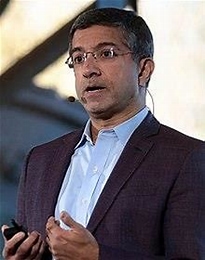
Bharat Anand (Author, American economist, Professor of Business administration at Harvard Business School.)
Bharat Anand offers a compelling explanation of how connection has become as important as “…Content…” in the digital age. His point is not to say content is irrelevant but without understanding digital interconnectedness, Anand infers profits, personal achievement, and commercial success are diminished or lost.
In the digital age, Anand argues if success is measured by profit, longevity, or fame, the key to success is adapting to interconnectedness.
Anand argues business managers and companies will fail if they do not adjust to changes in the way the public sees, understands, and uses the digital world. To give examples of his point, Anand notes the adjustments made by Apple, Microsoft, Google, Amazon, and the Fox TV network that have changed their business models to adjust to a digital world. Anand explains the digital world is a ubiquitous force (interconnected by computers, smartphones, and the internet) used by insightful individuals and businesses to achieve their goals.
Apple initially focused on product design and utility and earned a reputation for excellent product.
However, as the product evolved, Anand notes Apple’s specialization in quality meant less to their success than the connectivity to sources of information, entertainment, and people. The iPhone became ubiquitous and highly profitable when they improved Apple connectivity among iPhone’ users. They expanded that connectivity with their iTunes creation, audio book features, and various internet media offerings.
Microsoft specializes in software development tools that can be used by individuals and businesses to improve their communication skills and connectedness inside and outside their business.
Microsoft’s software enhances interconnectedness and communication while providing useful information to banks, affiliates, and users to understand the value of their business and how they may or may not complement each other’s performance. Microsoft expands their interconnectedness with an annual subscription system that appeals to repeat users of Microsoft’s updated software.
Google substantially improves their reach into the digital age by choosing to pay Apple $20,000,000 a year to use their search engine.
Though that is challenged by the government as a monopolization of trade, it illustrates the truth of Anand’s observation about the value of interconnectedness among companies in today’s digital world as a way of improving profits, growing, and assuring longevity.
Amazon ranks as one of the leading retailers and suppliers of consumer goods in America.
Bezos introduces many marketing innovations based on interconnections with customers that include many consumer enhancements. Amazon created its own storage and delivery service to directly compete with same day availability of product that showed customers could get product as fast as they could by going to a box retailer. Amazon capitalized on book selling by creating a portable library with Kindle that lowered NY Times’ best-selling books at half or less than the recommended retail price.
Fox television rose to compete with the big three television networks by buying the rights to NFL football at a price far beyond what the networks at that time were willing to pay. Digital age football fan connectivity gave Fox the power and influence to become the 4th major tv network in America.
Anand’s point is that adaptation, rather than opposition to evolving human connectivity, is the key to success. Identifying what is happening in the world and adapting to societal inevitabilities offers opportunities to keep pace with change and prosper. Anand is not saying content does not matter but that content is improved by adapting, rather than resisting or fighting evolving societal norms.
Anand addresses a favorite publication of many, “The Economist”, an international newspaper that has weathered the storm of newspaper disappearance in the 20th and 21st century.
Anand notes “The Economist” has prospered since the 19th century, despite the collapse of the newspaper industry in the late 20th and early 21st centuries. He argues it survives and prospers because of editorial development of international’ news through consensus of its experienced and educated writers. One might accept his observation but with reservation because of a recent survey request from the “Economist” for reader response.
The “Economist” survey form is daunting because it infers a pricing scheme based on digitalization of its articles. Having received the survey, some (like me) choose to throw it away.
The appeal of “The Economist” is in its editorial opinion of the world. Those who have traveled around the world are fascinated by the editorial opinions of a group of educated generalist opinion writers. Their survey may have been to solicit better reader connectivity, but it read like a prescription for higher prices for publication.
The threat of digitization of the “Economist” may ruin its appeal to many readers. It seems the “Economist” would change if it follows what seems the intent of their survey. The “Economist” survey seems like a digitization of their work to make it more connected to an untraveled public. They risk falling into the trap of “breaking news” rather than an insightful editorial opinion about non-western cultural policies and beliefs. They would be following the lead of many newspapers that couldn’t adjust to the interconnected digital world and had to close their doors.
Anand’s book is interesting and seems largely correct about the road to economic success, i.e., people and companies adjusting to the reality and understanding of an increasingly interconnected world.
The concern one may have about the interconnected world is that it homogenizes society. Anand’s interconnected world implies free-will is a fiction.
Hager’s history of the drug industry illustrates the strength and weakness of human nature whether one is a capitalist, socialist, or communist.
Books of Interest Website: chetyarbrough.blog
“Ten Drugs” How Plants, Powders, and Pills Have Shaped the History of Medicine
By: Thomas Hager
Narrated By: Angelo Di Loreto
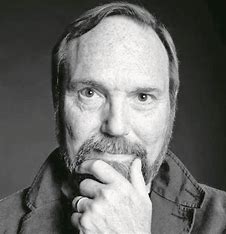
Thomas Hager (Author, science historian, editor, publisher, Oregon native, received master’s degree in medical microbiology and immunology from the Oregon Health Sciences University.)
“Ten Drugs” is a critical view of today’s drug industry, its drug discoverers, the medical profession, and its manufacturers. Hager explains opium is proven to have been used by Mesopotamian Sumerians in 3400 BCE but older than its known cultivation. The Sumerians called it “hul gil” which means “joy plant”.
Thomas Hager begins with opium and its discovery thousands of years ago when the bitter taste of a poppy seed capsule is tasted by a curious African’, Egyptian’, Greek’, or Roman’ Homo erectus.
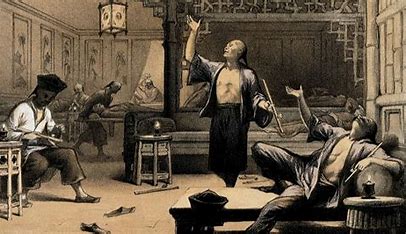
Wide use grew to affect national relations between China and the western world in the opium wars of 1856-1860. China’s Qing dynasty lost territorial control of Hong Kong to Great Britain when opium became a cash cow for international trade.
Hager explains how opium offered both risk and reward to the world. It threatened society with addiction and overdose while offering surcease of pain for the wounded or health afflicted.
Addiction significantly increased among the Chinese during and after the opium wars. After many tries to prohibit opium, it was in the early 20th century that addiction was internationally condemned. It was the People’s Republic of China in 1949 that launched an aggressive anti-opium campaign that dramatically reduced opium purchase and use in China. Later, Hager infers China’s success in eliminating the trade is by murdering its dealers and penalizing its users. Ironically, Hager notes former President Trump called for the death penalty for drug dealers to combat America’s drug crises, a policy only likely to be implemented in an authoritarian country.
The first opium war in China, 1841.
Hager infers China’s success in eliminating the trade is by murdering its dealers and penalizing its users.
Hager explains the history of opium evolved into drug derivatives like morphine, laudanum, and codeine to offer pain relief from a variety of medical maladies. These derivatives were effective but still carried the risk of addiction. Hager explains later that addiction is related to nerve system receptors at a molecular level that create a craving for the effects of particular drugs. Opium and its derivatives eventually became regulated because of their addictive character. In America, the Harrison Narcotics Tax Act of 1914 marked the beginning of strict control of opium’s derivative prescriptions in the U.S.
Edward Jenner (1749-1823, English physician and scientist who discovered the use of cowpox to inoculate against smallpox.)
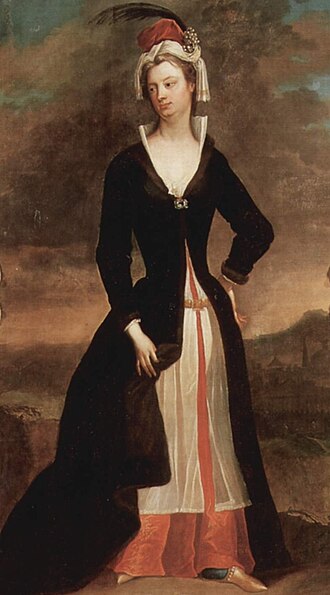
Hager moves on to vaccination. Interestingly, Hager explains the discoverer of inoculation by transfer is not Edward Jenner (1749-1823), a British physician called the Father of Immunology. It was a wealthy English woman named Lady Mary Worley Montague who learned of the use, of what became known as vaccination, in Turkey. She had survived a smallpox infection. Ms. Montague accompanied her husband, who was the British ambassador to the Ottoman empire in 1716.
Ms. Montague learned of a Turkish custom of transferring infected smallpox exudate to healthy children to give them a milder form of smallpox. That transferred exudate inoculated the young from getting a fatal dose of the disease in later life. Smallpox is estimated to have killed over 300,000,000 people (a statistic roughly equivalent to every person alive in the U.S. in the in the 1990s). The Turkish custom of inoculation was found highly effective.
Lady Mary Worley Montague who learned of the use of vaccination in Turkey. Earlier in her life, she had survived a smallpox infection.
In her return to England, Ms. Montague widely disseminated information about the success of the Turkish custom to prevent smallpox. Edward Jenner chose to use cowpox as a substitute tissue for smallpox vaccination of his patients. Jenner found cowpox infected tissue was equally effective in immunization and less dangerous than the using smallpox exudate. Jenner’s discovery of cowpox vaccination in 1796 became widely accepted but nearly 80 years after Ms. Montague’s worldwide promotion of Turkey’s vaccination procedure. Jenner’s vaccination success led to the World Health Organization’s claim that smallpox eradication could be achieved through an international inoculation program. Smallpox is alleged to have been eradicated as a disease in 1980.
The next drug identified as important by Hager is sulfa, a major cause of death from infected open wounds.
The common cause is a bacteria called Streptococcus. Bayer Corporation, a dye manufacturer in Germany, decides to enter the drug industry because their investment, facilities, and research scientists were ideal for entry into research and manufacture of drugs. They compound a drug called Prontosil that is discovered as a sulfa based chemical compound that successfully kills Streptococcal bacteria that cause fatal infections from open wounds. Bayer’s discovery saved many lives as WWII was gathering in the 1930s. Ironically, one of the saved lives is FDR’s son who had a severe streptococcal infection in 1936.
Hager notes personal mental illness and social dysfunction are perennial maladies that plague society through the 21st century.
Isolation and various therapies have been used to address mental illness. In early days, asylums were created to isolate patients who could not cope with daily life. Palliative treatment ranged from isolation to Freudian consultation, to electroshock, to newly discovered drug treatments. Though not mentioned by Hager, a little research shows the first significant breakthrough drug was lithium in 1949.
John Cade (1912-1980, An Australian psychiatrist discovered the effects of lithium carbonate as a mood stabilizer in 1948.)
Lithium was actually discovered in 1817 but did not get used for mental illness until 1948 when John Cade, an Australian psychiatrist, found that lithium carbonate stabilized mo0d and reduced the severity of manic episodes in patients.
Though Hager doesn’t mention lithium, he notes the French chemist Paul Charpentier identified antihistamine in 1950 as an antipsychotic to aid his patients’ erratic behavior. The use of Thorazine became a common drug synthesized by Rhone-Poulenc Laboratories in France. It was released in the 1950s and considered a major breakthrough in psychiatric treatment. It had a calming effect on severely schizophrenic patients by attacking excess dopamine production in the brain.
The major criticism Hager has of drug manufacturers and the medical industry is in the inherent influence of money, power, and prestige that distorts honest evaluation of drug effectiveness and side effects.
The drug industry depends on the success of their research for new drug discoveries to maintain the cost and improve the value of their businesses. However, human nature gets in the way of every human being. The lure of more money, power, and prestige enter into evaluative judgements and descriptions of tests for new drugs. The financial success of a drug that mitigates or cures particular societal ills make millions, if not billions, of dollars for drug manufacturers. Drug manufacturers are not eleemosynary institutions. They are in the business of making money and preserving their longevity while enriching themselves and their stockholders. Hager argues human nature distorts the truth of drug efficacy with tailored reports of a drug’s true benefit and potential for harm. He offers statins as an example of drug manufacturers’ misleading promotions.
Hager reviews the history of statins and correlations drawn by the medical industry about their efficacy in reducing heart ailments.
He suggests clinical studies by manufacturers often distort the entire effect of statins in preventing heart attacks. Statins are designed to reduce cholesterol in the blood stream. However, many studies that correlate cholesterol with heart disease are only partly related to heart attacks while having measurable side effects that diminish human cognition, memory, and potential organ damage, i.e, liver and kidney damage. Hager cautions those who take statins not to stop without discussing it with their physicians. However, Hager recounts an unsolicited personal contact that suggested he should be taking a statin because he is over 60 and had a brain vessel bleed in his earlier medical history. The contact recommended Hager take a statin based on that history. Hager notes that he felt his private medical history had been hacked, and that the contact is evidence of drug industry promotion of statins for profit more than public benefit.
In Hager’s last chapters, he explains how the drug industry is being attacked for influence peddling. In drug manufacturers drive for profits, they offer incentives to the medical profession (e.g. trips to conferences in exotic resorts, personal solicitations from sales reps, etc.) to use specific drugs in their practices.
In the end, Hager argues there are exceptions to the medical industries drive for profits by telling the story of British researchers Georges Kohler and Cesar Milstein who made a discovery in 1975 that changed the focus of drug manufacturer to what is called monoclonal antibody drug development. Kohler and Milstein found a process for creating drugs that have fewer side effects by creating antibody drugs that exclusively attack diseases at a molecular level. The irony of their discovery is Kohler and Milstein chose not to patent their discovery. If they had patented their discovery, they could have gained income for every company who chose to create monoclonal antibody drugs.
British researchers Georges Kohler and Cesar Milstein
Research is growing to create drugs that more precisely address the known molecular cause of disease without affecting the general health of patients. Not surprisingly, today’s manufacturers of monoclonal drugs use Kohler’s and Milstein’s process while requiring patents for their drugs.
Hager’s history of the drug industry illustrates the strength and weakness of human nature whether one is a capitalist, socialist, or communist.
One chooses how they live life, but death is nature’s or God’s choice, a thing beyond human’ control.
Books of Interest Website: chetyarbrough.blog
“The Theater of War” What Ancient Greek Tragedies Can Teach Us Today
By: Bryan Doerries
Narrated By: Adam Driver
Bryan Doerries (Author, Artistic Director of Theater of War Productions, an evangelist for classical literature and its relevance to today’s lives.)
The title and book cover of “The Theater of War” is as puzzling as Bryan Doerries’ beginning vignette of his personal life. Doerries graduates from Kenyon College where he majors in the classics. He goes on to earn a Master of Fine Arts in Directing from the University of California. “The Theater of War” recounts Doerries’ journey to become cofounder, artistic director, and historian for creation of a theatrical teaching tool about life and death. The trigger for his understanding comes from the last days of his personal relationship with Laura Rothenberg who dies at 22 from cystic fibrosis. Her death is the introduction to why “The Theater of War” is created.
Doerries and Phyllis Kaufman are co-founders of “The Theater of War” Productions. Ms. Kaufman was the producing director from 2009 to 2016. She died at the age of 92 in 2023 but was instrumental in organizing production events, coordinating actors, and ensuring practical aspects of theatrical presentations.
“The Theater of War” is about the living and how to deal with permanent disability or death. Death comes in many forms from different causes but as the Latin expression says “Memento mori”, “Remember you must die” because death is a part of every life. Doerries explains how famous Greek tragedies were, and still are, teaching tools for those who have life and death influence over others. What “The Theater of War” creates are acted reproductions of classic Greek tragedies for living life when you or someone you know is permanently disabled or killed.
With the help of actors like Adam Driver (who narrates the book), the great tragedies of Sophocles and Aeschylus are presented to military, penal, and nursing audiences across America.
Combat veterans, prisoners, and terminally ill patients face extreme conditions of life. Combat may end in death or future disability. Prison life is about loss of control of oneself and being under the control of others. Terminal illness is also about loss of control of oneself when one is diagnosed as destined for death.
The suicide of Ajax as depicted on an ancient vase in the British museum in London.
Sophocle’s tragedy, “AJax”, offers the truth of psychological trauma and moral injury from battle. In despair, Ajax kills himself because he feels deeply humiliated by the gods for not being given the armor of Achilles who is killed in the Trojan war. Achilles’ armor was given to Odysseus rather than him.
Sophocle’s “Philoctetes” explains the pain and personal isolation that comes from the physical and emotional damage from war. Today, it is diagnosed as PTSD.
Sophocles “Antigone” deals with civil disobedience, justice, and conflict between personal and state ethics. These conflicts are reflected in mobs of unruly citizens demonstrating against what they perceive is wrong.
Aeschylus’s “Prometheus Bound” reflects on the unfairness of a penal system that infringes on human rights.
The recited dramas offer cathartic release and potential change to those who are personally affected by their situational experience. That is the purpose of the presentations. Doerries creates theatrical readings of these classics before military, penal, and nursing personnel.
The presentations lead to questions and answers about the truth of societal disagreement, death’s inevitability, and how to live with their consequences.
Some military generals and prison guards are offended by the implications of their mistakes, but the plays recitals provide a forum for discussion that offer potential for improved human understanding and societal decisions and action.
The Greeks understood dying is part of life. One chooses how they live life, but death is nature’s or God’s choice, a thing beyond human’ control.
Communism has failed in every country that has tried to institute what their rulers believe is in the best interest of their citizens.
Books of Interest Website: chetyarbrough.blog
“Red Famine” Stalin’s War on Ukraine
By: Anne Applebaum
Narrated By: Suzanne Toren
Anne Applebaum (Author, journalist, historian, wrote Pulitzer Prize for Non-Fiction with “Gulag: A History”.)
As an accomplished historian, Anne Applebaum offers an insightful view of the 1917 Russian Revolution and its rule over Ukraine, the breadbasket of Europe. Her history is a reminder of the Stalin’ atrocity which is being reinvented by Vladimir Putin in his invasion of Ukraine. The striking difference is that Putin, unlike Stalin, cares less about stealing Ukraine’s agricultural productivity than Russia’s return to a dead past. Applebaum’s history leads one to conclude that Russia’s twenty first century youth, its oil wealth, and political influence are being wasted by Putin. The past never precisely repeats itself, but Putin is committing many of the same mistakes made by Lenin and Stalin in the early 20th century.
Ukraine is an independent nation with its own evolving culture.
Applebaum’s history shows that only through covert and overt repression could Ukraine become a part of the Russian nation. Putin’s war may succeed in the short term, but Ukrainian independence will reassert itself when Russia’s leadership realizes the cost of repression is greater than the benefit of colonialization. Just as Israel will realize it cannot eradicate an idea by cutting off heads of its leaders, Russia will not erase a culture by murdering nationalist defenders.
Holodomor, The Ukrainian Famine That Killed Millions in 1932-33.
Applebaum addresses the history of the 1921′ and early 1930s’ famines in Ukraine to reveal the anguish felt by some, if not all, native Ukrainians. The Russification of Ukraine began with the 1917 revolution. Lenin, and later Stalin, were dealing with the many difficulties of establishing a new form of government in a nation accustomed to monarchal control. They viewed communism through the eyes of a people accustomed to totalitarian control. Lenin, with the help of associates like Stalin, preached the fiction of social and economic equality that gives every citizen compensation according to their abilities and needs. That impossible objective melded with Russia’s history of monarchal control of its citizens.
Lenin, and then Stalin, use their power to lead and govern, like the Russian Czars of its past, but with the curtain of communism to hide their ambition.
Applebaum’s story of Ukraine’s treatment in the Lenin’ and Stalin’ years (and today’s Putin’ years) reveals the cruelty and consequence of totalitarian rule. Applebaum focuses on two famines in Ukraine’s history, the famines of 1921-23 and 1932-33. The first famine is caused by drought, consequences of WWI and the complicated change in Russian governance after the 1917 revolution. By the time of the so-called famine in1932-33, Russia’s new form of government had stabilized with one ruler exercising control over the interpretation and actions of a communist government. By 1927, Stalin had become the undisputed leader of Russia.
Ukraine is considered the breadbasket of Europe.
In 1922, Stalin views Ukraine as a source of food to stabilize Russian control of what became known as the U.S.S.R.
Stalin, like Mao in China, believed collectivization of farmland and its cultivation would improve agricultural production in Ukraine. Like the experience in China, farm collectivization had the opposite effect. It reduced production and demotivated farmers. When production declined in Ukraine, Stalin ordered Russian troops to confiscate grain and the livestock of Ukraine citizens in the 1932-33 so-called famine. Arguably, that famine is manmade, not caused by nature but by Stalin’s decision. Stalin ordered confiscation of Ukrainian food and livestock provisions for the Russian people. Stalin created a famine and caused the death of an estimated 4,000,000 Ukrainian citizens.
Like Stalin in 1932, Putin chooses to murder Ukrainian citizens without concern about war’s inhumanity.
Communism has failed in every country that has tried to institute what their rulers believe is in the best interest of their citizens.
One recognizes the many mistakes a father or parent can make in their lives in failing to be the best they can be for their children.
Books of Interest Website: chetyarbrough.blog
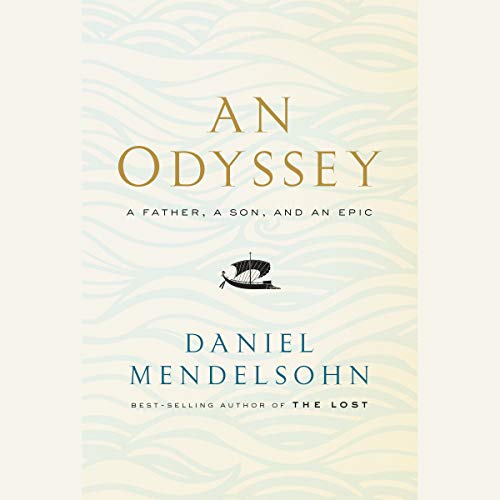
“An Odyssey” A Father, a Son, and an Epic
By: Daniel Mendelsohn
Narrated By: Bronson Pinchot
Daniel Adam Mendelsohn (Author, essayist, critic, columnist, and translator, Professor of Humanities at Bard College.)
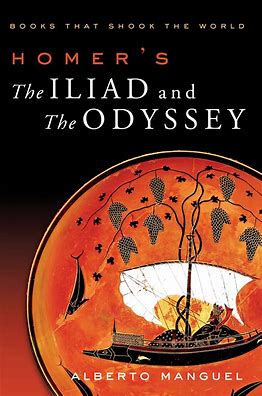
“An Odyssey” is a memoir that combines Mendelsohn’s life and educational experiences with Homer’s “… Odyssey”. As most know, “The Odyssey” is one of two ancient Greek epic poems, the other being “The Iliad”. Both are attributed to Homer who is questioned by some scholars as neither the soul creator nor (necessarily) its singular author. Both poems are said to have come from an oral tradition in ancient times, told and re-told, with no written editions until the late 8th or early 7th century BCE. Homer is believed to have lived in the 9th or 8th century BCE which makes it possible for him to be the originator, but no one really knows. Homer seems a singular source, or one of many who told and retold the epic poems.
In a broad sense, Daniel Mendelsohn’s memoir is about parenting but in a more succinct view, it is about fatherhood and the inevitability of death.
“An Odyssey” is a tribute to Mendelsohn’s father, his intellect and his impact on his son’s understanding of life. Mendelsohn cleverly intersperses “The Odyssey” of the heroic life of Odysseus with the accomplished life of his father.
The two poems tell the history of the Trojan War with the main character of “The Iliad” being Achilles, while Odysseus is the main character of “The Odyssey”.
Both heroes are characterized in “The Odyssey”. Achilles is recalled as the greatest warrior of the Trojan War who dies as a hero. Odysseus is also a warrior but is noted as a strategist who skillfully manipulates others with his cunning wit and intelligence. In Odysseus’ return, he meets Achilles in a nether world to find Achilles regrets his fate. Achilles explains he would have rather continued in life than being remembered by the living as heroic in the nether world of death.
Daniel Mendelsohn, like Odysseus, is a witty teacher who uses his intelligence to dissect “The Odyssey” by giving listeners a memoir of his relationship with his father.
In that dissection, one gains some understanding of “The Odyssey” while glimpsing what it was like to be raised by a loving but strict father.
What Mendelsohn introduces is every father’s role in raising children.
A theme that runs through “The Odyssey” is Odysseus’s troubled ten-year journey to Ithaca after the Trojan war but what Mendelsohn introduces is every father’s role in raising children. Mendelsohn’s father is nearing the end of his life. He is a retired engineer who worked for the American government on high security projects before becoming a professor. In retirement, his father chooses to attend his son’s class on “The Odyssey”. Mendelsohn combines his father’s attendance in his class with a real and reimagined trip they take to retrace Odysseus’s travels in “The Odyssey”.
Mendelsohn’s father has strong opinions about the character of Odysseus, and he expresses them in class.
Mendelsohn’s father characterizes Odysseus as a poor leader who lost all his men in his return to his homeland. Mendelson’s father gives the example of the cyclops who imprisons and eats some of Odysseus’s men but, after a clever escape, Odysseus foolishly chooses to taunt the cyclops. The cyclops nearly sinks the ship and appeals to Poseidon to kill the escaped sailors (none of which survive) because of Odysseus’s taunt. Mendelsohn’s father characterizes Odysseus as a poor leader of men, a braggart, liar, and cheater on his wife, Penelope.
There is a sense of the Professor learning many things about his father from discussions in the class. At the same time, listeners gain personal knowledge of the epic poem, its universal meaning, and why it is considered a classic. From the class discussion about Telemachus, the son of Odysseus, one realizes the tale is about the role of fathers and, to a lesser extent, mothers in educating their children. Mendelson admires his father for his intelligence, fidelity and what he believes is unbending truthfulness. On the other hand, Mendelson is embarrassed by his father’s slovenly dress, eating habits, and what he perceives as his father’s parental neglect during his childhood.
Mendelsohn’s father does not fear death but is afraid of the mental and physical deterioration that comes before death.
Mendelsohn seems hurt by his father’s emotional distancing but becomes less hurt as he gains a clearer understanding of where that distancing comes from. Mendelsohn’s father lives in a black and white world. Everything is one way or another. The end of one’s life is often gradual and only becomes one way or another at the very end. There is an inkling of tragedy to come as his father finally dies.
Truth and a lie are two sides of a coin. The fear of losing one’s physical or mental abilities is not a choice but something beyond one’s control.
Understanding what is black, white, true, or false loses meaning as one nears the end of life. Mendelsohn’s father has lived a life where he depended on himself. He made his own choices. As one’s body or mind deteriorates, depending on oneself become problematic. That loss of control is the fear of Mendelsohn’s father. Here is the tragedy of Mendelsohn’s story.
Mendelsohn’s father’s life is extended by the desires of his family and his doctor’s ministrations, despite the diminishing quality of his father’s life. Mendelsohn’s brilliant father lives months after his debilitating stroke. The only point one can see in the extension of life when death is imminent seems to be a family’s grief, and a kind of selfishness over loss of a loved one. There seems a high degree of selfishness in extending the life of one who is at the end of their life.
As a father, there is much more to be learned in Mendelsohn’s story about what it means to be a good father.
One recognizes the many mistakes a father or parent can make in their lives in failing to be the best they can be for their children.
Listening to fiction is considered by some to be a waste of time. What is missed by that opinion is the insight authors have of the society in which they live. As a reviewer from the baby boom generation, it is interesting to find what an author of the 1977 to 1983 generation (called Xennials) think about American life. Xennials grew up in the gaming generation, gaming is an experience some in the “boomer generation” do not understand and have little interest playing.
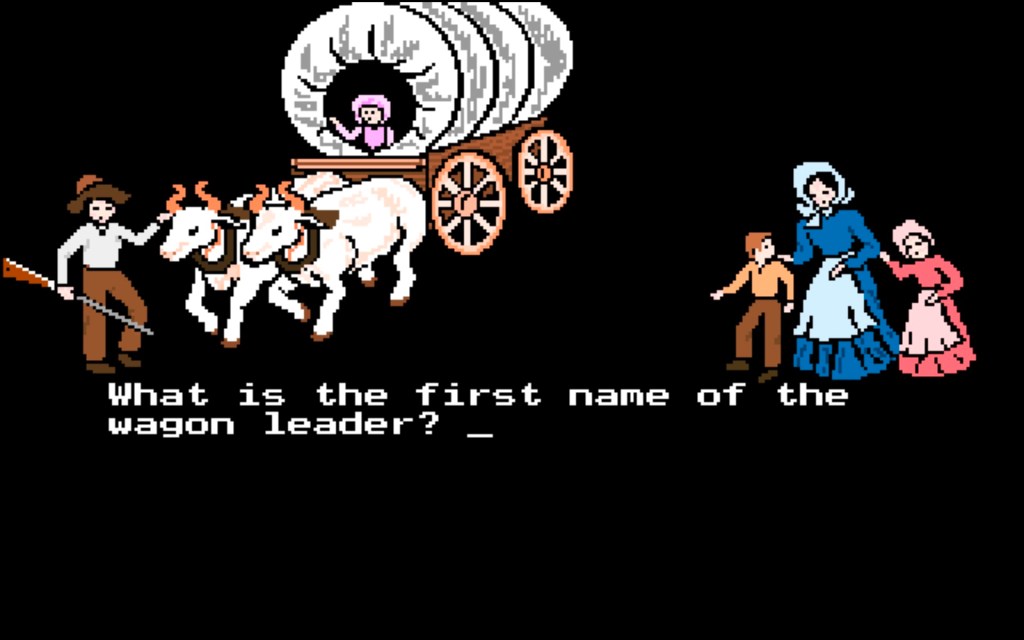
Xennials and other Gamers look to “Oregon Trail” or other games of their generation as an entertainment and representation of what life is today or was in the past.
Gabrielle Zevin writes an insightful introduction to her view of the Xennial generation’s view of 21st century American society. The author’s insight is limited to an estimated 10 percent of the Xennial population because her main characters have high intelligence quotients. Her characters have intellectual tools that get them into an Ivy League university. Zevin offers a vivid picture of high achievers in America.
Gaming is viewed by many Boomers as a waste of time and money but to those in the industry, it is a way to gain wealth and fame. Gaming is a sophisticated way to represent life in a virtual world.
Whether rich, poor, educated, or uneducated, gaming has an appeal to many who wish to escape the real world. Zevin tells a story of her generation and how a few become wealthy in the gaming industry. Her clever story shows how three teenagers from different racial, economic, and social backgrounds become successful entrepreneurial gamers. The only common denominator of her main characters is higher than average intelligence but despite that qualification, their life’ experiences have broad appeal to a listening audience.
“Tomorrow…” begins in a hospital with Sam and Sadie. Sam is in the hospital because of a crushed foot from a sports car’ accident that kills his mother.
Sadie is at the hospital because she is visiting her sister who has cancer. Sam and Sadie meet in a commons area of the hospital where Sam is playing a computer game. Both are high school age and are familiar with computer gaming. Sam responds to Sadie’s questions about the game he is playing. Reader/listeners find this is the first time Sam has talked to anyone for the weeks he has been in the hospital. When the nurses find that Sam is talking to Sadie, they ask her to visit regularly to aid Sam’s recovery. The two children become friends.
When Sam finds Sadie was visiting him because of the nurse’s ask, he is upset because it implies Sadie does not necessarily care for him as a friend.
As a young boy, Sam chooses to reject Sadie’s friendship. Some years after their breakup in the hospital, Sam sees Sadie catching a local train near Harvard, a university they are both attending. Sam calls out to Sadie, and they have a brief conversation. They become reacquainted and eventually renew their friendship. This renewal is a lesson about misunderstandings between people and false beliefs about each other because of poor communication. The story goes on to illustrate consequences of other relational misunderstandings.
Sadie takes a class on programing from a Harvard professor who becomes Sadie’s lover, another human relational mistake. The professor is married, and the relationship evolves into one of physical abuse.
The professor returns to his wife and Sadie decides to move to California with her friend Sam to start a company with the help of Marx, a friend and roommate of Sam’s at Harvard. The money for a gaming company start-up presumably comes from Sadie’s and Marx’s upper-class families. All three are Harvard graduates but Sam is a scholarship student that has little money. Their first invented game is a financial success. Start-up money is undoubtedly important, but it is the intelligence and education of the three characters that makes the company a success. Their company and their social relationships evolve. Their second game is a dud, but future games continue their business success.
There are stresses in the relationships between these three entrepreneurs.
Sadie is initially the more expert programmer of the two coders (Sam and Sadie). She is somewhat frustrated by Sam’s public face for the company because of his public identification with the gamer’ character created in their first successful game. She resents the public’s belief that Sam’s coding for the company and its success are more important than her technical contribution. Sam and Sadie come close to abandoning their friendship because of the public’s perception of the creators’ successful game release.
Sadie eventually marries Marx, the business manager, with Sam somewhat ambivalent about their relationship.
Despite Sadie’s discontent about Sam’s identification with their success, Sam grows jealous about her relationship with Marx. The three characters deeply love and respect each other but the dimension of intimacy between Marx and Sadie become a stressful dynamic for the trio. This is life, and all people of any age, education, or intelligence can see themselves in Zevin’s story.
Nearing the end of “Tomorrow…”, Marx is killed by a bullet from two gunman who storm the gaming business’ office because of Sam’s support of same-sex marriage in their latest successful game.
Sadie is pregnant and is grief stricken by Marx’s death. American gun violence and hate crime are shown by the author as a measure of modern times. The name of the gaming company that Sadie, Sam, and Marx form is “Unfair Games” which seems an ironic assessment America society.
Unlike a gamer’s reboot of virtual life, real life does not reboot. One wonders if gun violence in America is influenced by gaming, as well as Americans’ misrepresentation of the “…right to bear arms” in the Constitution of the United States.
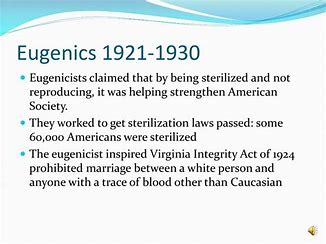
Eugenics and the fickle political nature of human beings outweighs the benefits of Harden’s idea of choosing what is best for society.
Books of Interest Website: chetyarbrough.blog
“The Genetic Lottery” Why DNA Matters for Social Equality
By: Kathryn Paige Harden
Narrated By: Katherine Fenton
Kathryn Paige Harden (Author, American psychologist and behavioral geneticist, Professor of Psychology at the University of Texas at Austin.)
“The Genetic Lottery” is an important book that may be easily misinterpreted. Hopefully, this review fairly summarizes its meaning. Fundamentally, Kathryn Paige Harden concludes all human beings are subject to a genetic lottery and the culture in which they mature. It is not suggesting all human beings are equal but that all can develop to their potential as long as he/she has an equal opportunity to become what their genetic inheritance, education, and life’s luck allow.
Harden explains racial identity is a false flag signifying little about human capability.
Every human being is born within a culture and from a mother and father who have contributed genetic DNA they inherited from previous generations. DNA carries genetic instructions for development, growth, and reproduction of living organisms. Those instructions are a blueprint for an organism’s growth. However, the genetic information passed on to future generations varies with each birth and is subject to a lottery of DNA instructions.
The lottery of genetics extends a multitude of characteristics ranging from intelligence to height to the color of one’s skin.
One may become an Einstein, or a slow-witted dolt. One may be born healthy or destined to die from an incurable disease. The growing understanding of genetics suggests the potential for human intervention to prevent disease, but also the possibility of creating a master race of human beings. That second possibility is a Hitlerian idea that lurks in the background of science and political power. It revolves around the theory of eugenics.
Harden suggests an ameliorating power of eugenics is its potential for offering equal opportunity for all to be the best version of themselves within whatever culture they live.
Putting aside the potential of human genetic theory’s risk, Harden explains every human is born within a culture that reflects the genetic inheritance of the continent on which they are born. The combination of the human genetic lottery and the culture in which humans live create ethnic identity and difference. Differences are the strengths and weaknesses of society. Strengths are in the diversity of culture that adds interest and dimension to life. The weakness of society is its tendency to look at someone who is different as a threat or obstacle to a native’s ambition or cultural identity.
Harden suggests every human being’s genetic code should be identified to aid human development by creating an environmental support system that capitalizes on genetic strengths and minimizes weaknesses.
This idealistic view of genetics is fraught with a risk to human freedom of thought and action. Science is generations away from understanding genetics and its relationship to the weaknesses and strengths of human thought and action. Understanding what gave Einstein a genetic inheritance that could see and understand E=MC squared is not known and may never be known. The luck of genetic inheritance and the lottery of life experiences are unlikely to ever be predictable. One interesting note in the forensic examination of Einsteins brain (recorded in another book) is that he had a higher-than-normal gilia cell ratio, non-normal folding patterns in his parietal lobe, and a missing furrow in the parietal lobe that may have allowed better connectivity between brain regions.
The threat of eugenic determinism and the fickle political nature of human beings outweighs the benefits of Harden’s idea of choosing what is best for society.
Social change for human equality is a long and arduous process. The election of 2025 will either be a step forward or backward.
Books of Interest Website: chetyarbrough.blog
“Unexampled Courage” The blinding of Sgt Isaac Woodard and the Awakening of President Harry S. Truman and Judge J. Waties Waring
By: Richard Gergel
Narrated By: Tom Zingarelli
Richard Gergel (Author, American lawyer, assumed office 2010 as US District Court Judge for the District of South Carolina, graduate of Duke University School of Law in 1979.)
The Emancipation Proclamation was issued on January 1, 1863, as an executive order by Abraham Lincoln. It purportedly ended slavery, but it was only the beginning of a generational fight that is still being waged. “Unexampled Courage” is a history of a twentieth century turning point in the fight for equal treatment of Black Americans. The blinding of a Black veteran of WWII, Sergeant Isaac Woodard, in 1946 signified another major turning point for equal treatment of former American slaves. On July 26, 1948, President Harry Truman signed Executive Order 9981 which banned racial discrimination in the military. The blinding of Woodard by a white Sheriff in South Carolina and Harry Truman’s executive action are connected by Gergel’s history of Woodard’s horrid and brutal experience.
In 1946, a South Carolina police chief beat Sergeant Isaac Woodard’s head and used the butt of a Blackjack handle to gouge Woodard’s eye sockets.
Sergeant Woodard was beaten and blinded by a Batesburg, South Carolina police chief for drinking (and alleged disorderly conduct) on a Greyhound bus. Several white and Black soldiers were drinking and talking among themselves while returning from the service after the end of World War II. Woodard asked for a bathroom break from the bus driver and was refused. At a Batesburg, South Carolina bus stop, the driver left the bus to report Woodard to the police chief. The police chief attacked Woodard and beat him around his head and eyes with a leather Blackjack similar to the one shown above. Gergel reports Woodard’s eyes were directly poked and grinded by the butt of the police chief’s Blackjack before being thrown unconscious in a jail cell. The next morning, a local physician examined Woodard and he was taken to a veteran’s hospital, but any care provided was ineffectual. The assault on Woodard’s eyes is later determined to have caused an incurable blindness.
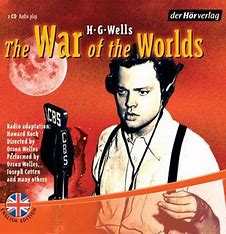
Orson Wells becomes aware of the horrid treatment of Woodard and chooses to broadcast the incident to American listeners. Orson had become famous for his 1938 “…War of the Worlds” radio broadcast.
When Wells broadcast the Woodard’ incident on public radio, he mistakenly identified the wrong South Carolina’ town in which the incident occurred. However, he continued investigating the incident and committed to correcting his error and identifying the police chief who battered Woodard to the point of blindness. The police chief and the town of Batesburg were correctly identified, and the wheels of justice slowly turned toward injustice, rather than justice.
Julius Waties Waring (1880-1968, U.S. District Court judge for the Eastern District of South Carolina.)
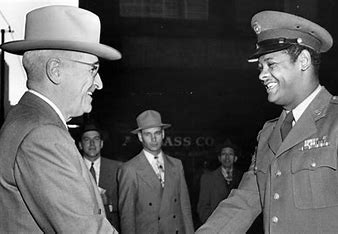
Though the police chief was tried for beating Woodard, he was acquitted by a South Carolina’ court. The story of Woodard’s blinding was prosecuted in the U.S. District court of Judge, J. Waites Waring. Waring was outraged by the inept prosecution by the federal prosecutors. After the acquittal, Waring began a movement in South Carolina for Black Americans’ equal rights. Waring’s outrage was supplemented by President Harry Truman who convened a commission on civil rights. After the report from the commission, Truman arranged a speech before the NAACP to reveal the findings of the commission and actions the Federal Government would take to address unequal treatment of Black Americans.
Harry S. Truman (1884-1972, 33rd President of the U.S.)
Truman is in the midst of a campaign to be re-elected as President of the United States in 1948. Gergel argues Truman decides to use his speech before the NAACP to announce his plan to fight for Negro equal rights, in part because of the blinded Woodard, but also because of many unjust southern murders and discriminatory actions against Black Americans.
Thomas E. Dewey (1902-1971, American lawyer and politician, 47th governor of New York 1943 to 1954.)
As most Americans know, President Truman was expected to lose to Thomas Dewey in his re-election campaign. A major reason for that belief was because of executive action to integrate the military and the opposition from southern voters who insisted on the inequality of Black Americans. From a coalition of labor, Blacks, Jews, mid-western farmers, and some number of southern states, Truman won re-election by a slim margin.
Gergel makes it clear that a fight for equal rights is not won and in fact was resisted by military leaders who tried to stop integration of the military after Truman’s executive action.
The military leaders fail to change Truman’s mind and military leaders finally took the required steps to integrate and assure a level of equality among white and Black Americans. Of course, equal treatment remains an issue in the military, as well as throughout America. Social change seems to conflict with genetic inheritance, compounded and multiplied by human ignorance.
Gergel shows social change for human equality is a long and arduous process.
The Civil War only dated the beginning of the American fight for equality. It has become a broader effort, including racial, gender, LGBTQ, marriage, civil, economic, natural, and political equality. One wonders if humans, let alone Americans, will ever get there. The election of 2025 will either be a step forward or backward.
Orange’s book shows how culture can kill. What citizens of the world need to do is understand how a broader culture can be built.
Books of Interest Website: chetyarbrough.blog
“There There: A Novel”
By: Tommy Orange
Narrated By: Darrell Dennis, Shaun Taylor-Corbett, Alma Ceurvo, Kyla Garcia
Tommy Orange (Author, received a Master of Fine Arts from the Institute of American Indian Arts, winner of the 2019 American Book Award for “There There…”)
Tommy Orange illustrates how culture is the god of creation and destruction. “There There…” offers a glimpse of what it is like to be poor and indigenous in Oakland, California. The name “Indians” for the indigenous of America is said to have been created by Christopher Columbus in the 1400s. Orange has the idea at a gathering of native Americans to have each write their stories, i.e., their memories of what life has been for them in Oakland, California in the 20th and 21st centuries. Their stories are the substance of Orange’s book. They reveal the crushing reality of being descendants of the indigenous in Oakland, and believably all of America. A grant from Oakland becomes the funding source for Orange’s idea. Fighting to making a living as an author is at the core of “There There…” Orange undoubtedly calls “There There…” a novel to protect the story tellers.
Orange shows recycling-poverty, addiction, and misogynistic abuse are big problems for “Indians” in Oakland. The stories reveal an underlying frustration, if not anger, of indigenous Americans who are being molded by government programs that ignore native traditions and emphasize integration into whatever American society has become. There is justification for anger among American minorities. However, there is a fundamental misunderstanding when suggesting government programs are meant to mold Americans. The goal of government is not to mold its citizens but to create cultural norms for a diverse culture. Government fails because ethnic norms of minorities protect American citizens who are treated unequally.
Names like “Two Shoes”, “Red Feather” and the “Indian symbol” that once tested color on televisions are interesting examples of the significance of native influence in American culture.
Though America has and continues to try to Americanize natives, cultural influence is a two-way street. The stories in “There There…” illustrate how everything from influence of addiction to spousal abuse to abortion to overeating to violence are revealed as problems in native American’ lives. This is a hard novel to listen to because it denigrates Indian heritage and justifiably blames American culture.
One is drawn to wonder what can be done to correct the truth of American culture’s blame. The answer is in the Constitution of the United States.
All men are created equal, and the job of government is to provide for the health, education, and welfare of its citizens. American government is struggling to find a way of doing what it is meant to do because of the nature of human beings. Neither capitalism, utopianism, socialism, or communism change human nature. Ironically, only culture has the potential for achieving the goal of equality and fraternity.
Orange’s stories illustrate how Indian poverty is destructive and ethnic cultural inheritance is destroying native Americans.
One presumes Orange would object to the category of American when referring to indigenous peoples. However, it is only with change in culture that all citizens become more socially cohesive than one ethnic identity. If America can institute policies that genuinely provide equality for health, education, and welfare of all, culture will heal itself. When that is achieved, one can be Black, white, Latino, indigenous, or whatever ethnic group one wishes–but within broader American culture.
Orange’s book shows how culture can kill. What citizens of the world need to do is understand how a broader culture can be built.
















































 REVIEWS AND VIEWS OF LIFE
