GENDER INEQUALITY

“Betraying Big Brother” is not wrong about gender inequality but the author’s anger and personal choices cloud the author’s message. Gender inequality is real everywhere in the world. Education is a beginning, but practice is the end.

Books of Interest
 Website: chetyarbrough.blog

Betraying Big Brother (The Feminist Awakening in China)

AuthorLeta Hong Fincher

Narrated By: Emily Woo Zeller

Leta Hong Fincher (Author, American journalist, feminist and writer, first American to receive a Ph.D from Tsinghua University’s Department of Sociology in Bejing., graduated from Harvard with a BA and a master’s degree in East Asian Studies from Stanford.)

The education and experience of Leta Hong Fincher is somewhat betrayed by her anger in “Betraying Big Brother”. Misogyny is an international reality that defies the truth of human equality. This reviewer’s prejudice, like the author’s biases are suspect because of their respective life experiences. This book reviewer was raised by a single parent mother who worked to keep two sons with a roof over their head and food on the table. How women survive inequality is made of the same stuff as that which plagues minorities around the world. The difference is that women are not a minority.

She writes of being a 15-year-old girl who is physically and emotionally abused by two boys who are friends of an older male friend that takes her to a get together of young acquaintances. That event burns a memory into Fincher’s mind that sets her on a journey thru life. One reading/listening to “Betraying Big Brother” recognizes the truth of what the author writes is reinforced by her life experiences. Of course, that is true of all human beings, but anger diminishes the impact of what Fincher says and writes.

Leadership?

Whether living in a democracy or autocracy, sexual inequality is present. Gender discrimination is universal. America and China talk the talk but fail to walk the walk. Fincher writes of Mao’s saying that “women hold up half the sky” implying he believed in gender equality. Mao spoke of marriage reform and labor participation but patriarchal norms were adhered to with women workers not being paid the same as men nor offered similar positions of power.

Xi speaks of gender equality, but no women are on the 24-member Politburo.

Xi also speaks of gender equality, but no women are on the 24-member Politburo while pay and promotions lag behind men. Fincher writes of Big Brother censorship, surveillance, and detention of women in China. (One presumes that is also true of everyone in China.) Like Trump, Xi promotes women’s roles in domestic stability, and their childbearing responsibilities. America has yet to elect a woman as President. Equal pay for equal work is improving in America, but a gap still exists with lower starting salaries, performance evaluation biases, and fewer high-profile assignments or promotions.

“Betraying Big Brother” is not wrong about gender inequality but the author’s anger and personal choices cloud the author’s message. Gender inequality is real everywhere in the world. Education is a beginning, but practice is the end.

HOUSING

Didion reminds one of Yeats Poem to warn society of civilization’s collapse. Yeats wrote “The Second Coming” after WWI and the Spanish Flu. Seems similar to today’s political war and the Covid pandemic.

Books of Interest
 Website: chetyarbrough.blog

Slouching Toward Bethlehem 

AuthorJoan Didion

Narrated By: Diane Keaton

Joan Didion (Author, American writer and journalist, published in The Saturday Evening Post, National Review, Life, Esquire, and The New Yorker. She also wrote screenplays for “The Panic in Needle Park”, “A Star is Born”, and “Upclose and Personal” as well as receiving a National Book Critics Circle Award and a Pulitzer. 1934-2021.)

Diane Keaton (Actor, Academy Award winner, BAFTA recipient, two-time Golden Globe, and Tony Award winner. 1946-2025.)

Diane Keaton died yesterday.

Several years ago, I purchased “Slouching Toward Bethlehem” without reading it until Keaton had done an audiobook’ narration of it. “Slouching Toward Bethlehem” illustrates Didion’s skill as an essayist and writer while Keaton’s many acclaimed movies show how accomplished both women have been in their lives.

“Slouching Toward Bethlehem” is interesting because it offers an interpretation of why homelessness is so much more obvious in America than other countries.

Having lived in different areas of the United States, the appearance of homelessness in the big cities of America is disgraceful. Visiting the Baltics, Norway, Finland, China, and Japan in the last few years illustrates how badly America is handling homelessness. With the exception of Norway, per capita incomes in the United States are more than twice the incomes of the aforementioned countries. Norway’s per capita income is $87,925 while America’s is $82,769. China’s per capita income is $13,122 but walking through major Chinese cities, there are no people sleeping on the streets. The Baltics per capita incomes range from $22,000 to a little more than $30,000. There is poverty in all these countries, but their leaders and societies have found a way to keep their citizens housed. This is not to argue their poor are not faced with hardship but to show how poorly American society is treating its homeless.

There seems a generational divide in Didion’s “Slouching Toward Bethlehem”.

The beat generation of the 1960s for which Timothy Leary coined the phrase “Turn on, tune in, drop out” alluded to in Didion’s essays may offer a partial explanation. Many of us experimented with drugs in the 60s but there has to be more than that to explain what has happened to big cities in America. Part of the answer is the change in income for the middle-class. In the 1960s middle-class incomes were strong and broadly shared. In the 21st century, middle class incomes have stagnated. CEO’s income in the ’60s made 20 times middle class earners but in the 21st century the ratio rose to 300-1. The rich got richer and the middleclass got poorer. Power shifted from a voting middle class to a richer upper-class that accelerated income gaps that changed election results with an income class bias.

Housing costs accelerated to new highs in the 21st century. The 1960s price-to-income ratios were 2:1 while today they are 5:1 or higher. The effort during the Obama administration to weaken standards for home buyer qualification exacerbated the greed of mortgage companies which led to a near economic collapse of the finance industry. Instead of bailing out homebuyers that could not pay their mortgages, the Obama administration bailed out mortgage companies and their owners while endorsing eviction of buyers who could not afford their mortgage payments.

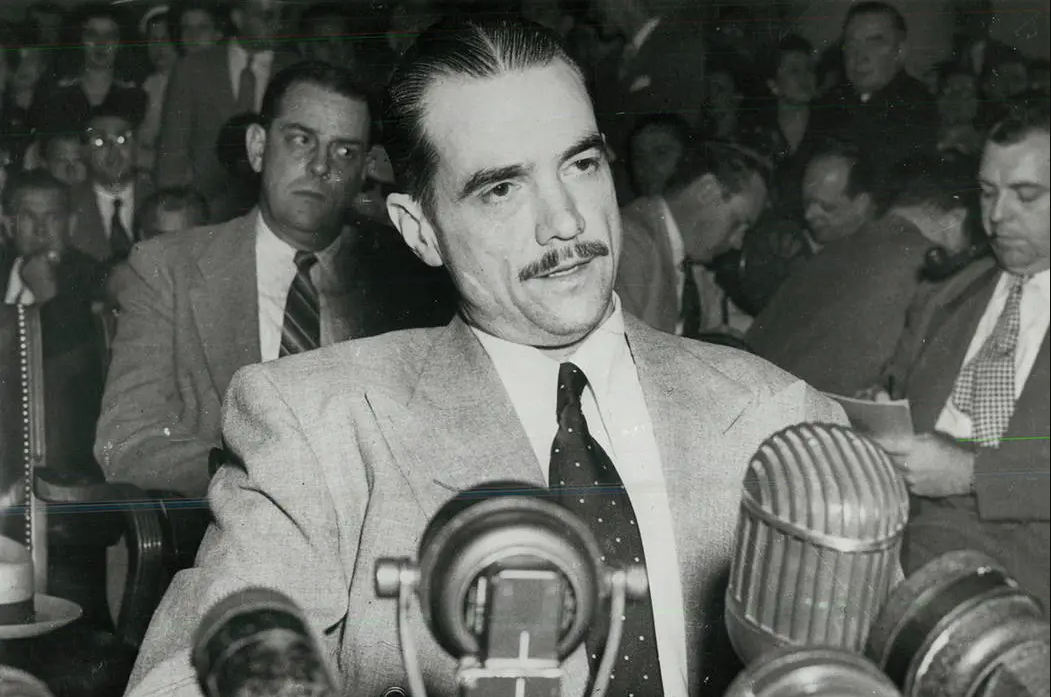
“Slouching Toward Bethlehem” writes of famous successful people like John Wayne, Howard Hughes, Joan Baez, and herself as symbols of the 1960s. She is effectively glorifying them and herself while showing how they mythologized success to a generation of young people who were turning on, tuning in, and dropping out. Image became more important than substance. Working to be great at acting, becoming wealthy by investing wisely, singing about peace, justice and non-violence to make money, and writing about societal dysfunction were money makers. Capitalizing on dysfunction of society did nothing to ameliorate it. John Wayne is only a symbol of justice in the movies and Howard Hughes inherited his wealth that allowed him to invest, sometimes unwisely and with poor personal management skills. He began investing in Las Vegas because management could be left to others. To be fair, Didion and Baez try to return something to society for their success but their efforts pale in comparison to America’s decline. Artists report facts of life but rarely offer solutions.

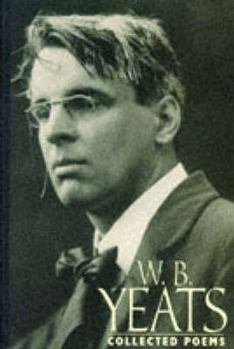
William Butler Yeats (1865-1939, Irish poet, dramatist, writer and literary critic.

W. B. Yeats Poem summarizes and exemplifies what Didion alludes to in her book.

Turning and turning in the widening gyre  
The falcon cannot hear the falconer;  
Things fall apart; the centre cannot hold;  
Mere anarchy is loosed upon the world,  
The blood-dimmed tide is loosed, and everywhere  
The ceremony of innocence is drowned;  
The best lack all conviction, while the worst  
Are full of passionate intensity.  

Surely some revelation is at hand;  
Surely the Second Coming is at hand.  
The Second Coming! Hardly are those words out  
When a vast image out of Spiritus Mundi  
Troubles my sight: somewhere in sands of the desert  
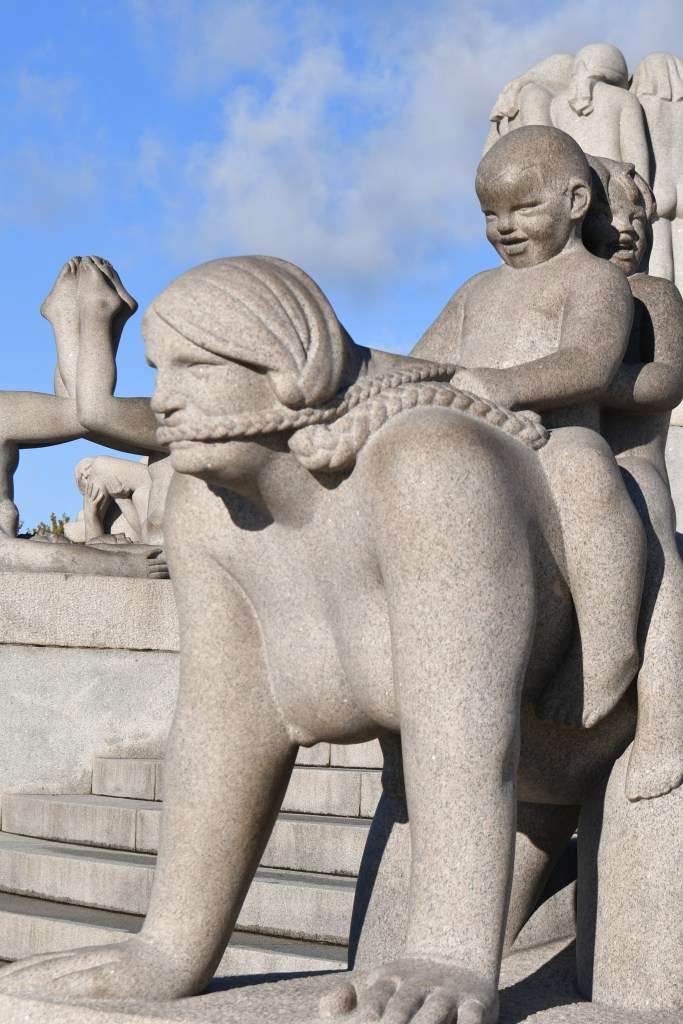
A shape with lion body and the head of a man,  
A gaze blank and pitiless as the sun,  
Is moving its slow thighs, while all about it  
Reel shadows of the indignant desert birds.  

The darkness drops again; but now I know  
That twenty centuries of stony sleep  
Were vexed to nightmare by a rocking cradle,  
And what rough beast, its hour come round at last,  
Slouches towards Bethlehem to be born?

Didion reminds one of Yeats Poem to warn society of civilization’s collapse. Yeats wrote “The Second Coming” after WWI and the Spanish Flu. Seems similar to today’s political war and the Covid pandemic.

FAME

As a son of a strong mother, one is impressed by Tina Knowles’ character in her enlightening memoir. She shows how women are the backbone of society despite their treatment in a patriarchal world.

Books of Interest
 Website: chetyarbrough.blog

Matriarch (A Memoir)

Author: Tina Knowles

Narrated By: Tina Knowles & 4 more

Celestine Ann Knowles aka Tina Knowles. (Author, American businesswoman, fashion designer, and mother of the famous performer, Beyoncé.)

This is an intelligent well-written memoir of the mother of two famous performers, Beyoncé and Solange Knowles. Celestine Ann Knowles is born in Galveston, Texas on January 4, 1954. Her two famous daughters are the singer Beyoncé and the composer, Solange Knowles.

The mother of these two famous women tells a story of what it is to live in the 1950s as a young, poor Black American. Tina (a diminutive of Celestine) Knowles becomes a successful businesswoman, fashion designer, philanthropist and mother of two highly successful women in the 21st century.

Galveston’s in the 1950s.

Living in Galveston, Texas in the 1950s as a person of color is starkly and clearly explained in Tina Knowles’ memoir. Tina’s father works as a longshoreman. His work is sporadic because of a mining accident that ruined one eye and made him hard of hearing which limited the work he could do as a longshoreman. With the aid of his wife, Tina’s mother as a seamstress, their meager income is enough for them to get bye. Tina’s mother is the foundation of the family. Tina grows up as a force of nature before reaching adulthood. She grows up in a family ruled by a “Matriarch” as the power in her family and neighborhood. Even in her pre-school years, as the youngest of seven children, Tina understands her mother is the person who holds the family together and eventually makes Tina the matriarch of her future family.

White American’ opposition to equality in the 50s.

Tina adventured where many young Black children timorously dealt with life in an unfair world. Despite its unfairness, Tina ventured forth.

Tina tells the story of her childhood companions who would not go into an ice cream store in Galveston when white children were being served. Tina ignores their timorousness, goes into the store and is told to get out by the store manager. She finds what her friends were saying is true, but she had to experience it herself. Tina goes to a Catholic school where she is treated harshly by the teachers but continues on to graduate despite their strict rules. Nearing graduation, she becomes ill and is treated by a white physician who presumes she is lying about never having premarital sex. The white physician and an aide strap her down and conduct a physical exam that leaves blood on the table because of her hymen being broken by the exam. Her mother calls the physicians to complain about the treatment of her daughter and takes her to another hospital to find her illness is unrelated to the doctor’s presumptive and unnecessary pelvic exam.

Tina is raised in the time when Black discrimination is finally beginning to change. Brown v. Board of Education is decided in 1954.

Tina graduates from high school, presumably in the early 1970s, and goes on to college. While in high school, she joins a local singing group that is inspired by The Supremes. They call themselves the Veltones. That experience leads her to work in fashion and entertainment. She becomes a designer, and entrepreneur, and eventually the “Matriarch” of her own family. In 1980, Tina marries Mathew Knowles. They were married for over 30 years but divorced in 2011.

In the Knowles’ marriage (1980-2011) they have two daughters, i.e., Beyoncé and Solange Knowles.

Tina Knowles explains how the birth of Beyoncé ignited her ascendence as the “Matriarch” of her generation. From taking care of Beyoncé to remodeling her house to creating her first business, Tina created her own world. Tina built the foundation for her life and raised one of the most famous singers in the world.

“Headliners”–Tina Knowles first business.

At 32 years of age, Tina decides to start a business. With financing from what is to become her former husband, she decides to open a salon. Tina is pregnant with her second child, Solange. Matthew involves himself in Tina’s business in financial ways that challenge its success. Tina starts “Headliners” in the early 1990s to offer make-up and beauty services in Houston, Texas. Beyoncé is now around nine years old while Solange is nearing four or five years of age.

Matthew and Tina Knowles file for bankruptcy.

Her husband, Matthew decides to quit his six-figure job to join Tina in her business. For unclear reasons, the family files for bankruptcy, sells their home, and rebuilds their lives while Tina focuses on her salon business. Tina explains she decides to divorce her husband because of his infidelity and mishandling of their dwindling wealth. She holds her life together by focusing on the burgeoning career of her girls and her salon business. Tina shows herself as the guiding force of her talented daughters. She has become the “Matriarch” that her mother had developed her to be.

Beyoncé’s 2025 concert in London.

Though most interest in Tina’s story may be because of her daughter, Beyoncé, her memoir suggests the “Matriarch” of the next generation of Knowles will be her daughter, Solange. She does not diminish the great success of Beyoncé as an incredible talent who runs her musical productions, but it seems Solange is the worker bee that is driven to become her generation’s “Matriarch”.

Agnéz Deréon (Tina Knowles’ mother, the “Matriarch” of the Knowles’ descendants.)

At the end of Tina’s book, she has reached the age of 70. She maintains a clear picture of the story of her life. Married and divorced twice, she is in charge of her life and appears to influence all who surround her. As a survivor of breast cancer and a firm grasp on life, she uses her strong belief in God and the love of her family to believe the best is yet to come. As a son of a strong mother, one is impressed by Tina Knowles’ character in her enlightening memoir. She shows how women are the backbone of society despite their treatment in a patriarchal world.

PERSONAL IDENTITY

Susan Faludi concludes one’s personal identity is not fixed but changes based on our parents’ influence and life experience.

Books of Interest
 Website: chetyarbrough.blog

In the Darkroom 

Author: Susan Faludi

Narrated By: Laurel Lefkow

Susan Charlotte Faludi (Author, American feminist, and journalist. Received the Kirkus Prise for “In the Darkroom” in 2016.)

“In the Darkroom” is an interesting exploration of Susan Faludi’s remembrance of her father. Every parent who has a child thinks about what their influence is or will be in their children’s life and memory. Faludi’s memoir shows parents have an immense influence on who our children become.

Steven Faludi, Susan’s father, passed away on May 14th, 2015.

Faludi shows her father as a chameleon who refuses to be identified as one thing or another.

Susan Faludi’s father was Steven Faludi, a Holocaust survivor who made his living as a professional photographer. “In the Darkroom” Susan Faludi explains her father chose to become a woman at the age of 76 by undergoing sex reassignment surgery in Thailand. Her father became Stefánie Faludi living in Hungary. As an author, Susan recalls her childhood and the volatile relationship her father had with her mother. Steven Faludi was a domineering husband and father who is eventually divorced by Susan’s mother. She recalls a violent incident after the divorce where Steven crashes through their front door to stab her mother’s presumed boyfriend. He is arrested but manages to turn the attack into a rescue of his ex-wife from an intruder to avoid criminal charges.

Despite Steven Faludi’s survival from the Holocaust, he aligned himself with right-wing nationalist politics when he returned to Hungary.

Hungary had a reputation for anti-Semitism and anti-LGBTQ beliefs. Surprisingly, he became xenophobic and anti-Semitic despite being Jewish. Faludi suggests her father may have rejected his Jewish identity as a way of distancing himself from what he had been through. Like his decision to become a woman, he recreated himself. His irrational fears may have made him dislike people from other countries, cultures, or ethnicities. Susan Faludi believes it is his way to defend his self-identity from the Holocaust’ trauma, shame, and loss of people he knew, loved, or cared about. It is impossible to comprehend what it must have been like to survive the Holocaust. Anyone who has visited Auschwitz or a concentration camp site understands how unbelievably horrible that experience must have been. On the other hand, Ms. Faludi interviews grade school friends of her father before the war and notes Steven Faludi was a difficult student with which to be friends.

Susan Faludi is considered among the top 20 influential modern feminist theorists.

Not surprisingly, Susan Faludi becomes a feminist with gender identity being an important experience in her family’s life. She uses her journalistic talent to look at her father’s past and her personal experience. Her memoir looks into the nature of personal identity, how our identity is made, and what we do with it. Not surprisingly, much of who we become is from genetic inheritance and interaction with our parents. Faludi is an investigative journalist which drives her to dig into the details of her family’s past to better understand herself. Faludi’s father is shown to be abusive, controlling, and emotionally distant husband and father, a characteristic not uncommon in this patriarchal world.

“In the Darkroom” is an ironic title to Faludi’s book because much of one’s family life takes place in the “…Darkroom” of one’s mind.

Does one’s identity come from what you choose or is it a consequence of your experience as a child born into a family that is either nurturing or neglectful? Her memoir offers no formulaic answer. She suggests close examination of our family childhood reveals we are witnesses to the strengths and weaknesses of our parents. However, as witnesses we live in a “…Darkroom” of the mind that obscures any truth that explains how children are influenced by parental relationship.

We are not puppets of our parents, but neither are we free.

We choose to become ourselves through acceptance or rejection of up and down experience with parents but that is not the only experience that influences our lives. As we grow, we meet others who impact and change our views of life. Faludi explains she initially rejected her father because of his violence, abuse, and distant behavior but as she learned of his gender confusion and transition, she recognized her father’s pain and reassessed her relationship with him. Our parents experience and growth to adulthood have the same ups and downs of life that every human being experiences. They had their influences and choices just as their children will have in their lives.

Unlike the development of an image in a dark room, one’s life is never fixed by the solution in which it is placed.

Susan Faludi concludes one’s personal identity is not fixed but changes based on our parents’ influence and life experience. Of course, this is a subjective process, and “truth” is hard to pin down. Ignorance or the influence of others often distorts “truth”. Faludi suggests life is shaped by memory, trauma, the stories we tell, and the life we live. The story of her father’s life is the example of one who reconstructed his/her life. Change does not erase the past, but her father’s reinvention of his identity changed Faludi’s feelings about him. Faludi’s memoir shows how life is contradictory and complex.

CRISIS

There is no religious, nationalist, or political justification for killing of innocents but the history of the world shows we are all killers.

Books of Interest
 Website: chetyarbrough.blog

Conquering Crises (Ten Lessons to Learn Before You Need Them)

By: Admiral William H. McRaven

Narrated By:  Willaim H. McRaven

William H. McRaven (Author, retired four-star admiral in the U.S. Navy, ninth commander of the U.S. Special Operations Command from 2011 to 2014, commanded special operations in Iraq and Afghanistan.)

Wisdom does not always come with experience or age. Though born in 1955, William McRaven spent 40 years as a special operations officer in the U.S. Navy. He retired from military service and became chancellor of the University of Texas System from 2015-2018. Now, as a writer, McRaven offers some insightful advice to those who manage others in response to crises. He offers his personal, corporate, and institutional experience as a crises’ manager.

Though McRaven’s experience comes from a military system of command, he offers a listen, learn, and plan approach to getting things done through others.

When faced with a reported crisis, he notes the first information one receives is usually inaccurate and misleading. He offers numerous examples like Pearl Harbor in 1941, Hurricane Katrina in 2005, and Covid-19 in the 21st century. The first reports of those crises were misleading and were found to be much more consequential and damaging than originally reported. The first step when faced with a crisis is to be sure of the facts. McRaven generally discounts first reports. He suggests one should confirm details from personal observation (if possible or practicable). If one cannot investigate facts of a crises personally, one must confirm details from other sources that are at, subject to, or near the crisis. The point is not to act on first reports but to seek more information.

McRaven receives a phone call in the middle of the night about a mistaken Taliban sympathizer carrying a weapon who is shot and killed by an American soldier during America’s intervention in Afghanistan.

It was found he was not a sympathizer but a cousin of the President of Afghanistan. McRaven calls General Petraeus in the middle of the night to report the incident. Petraeus thanks McRaven for contacting him immediately rather than waiting until the morning. Both recognize the urgency of the crises. They discuss details of what happened and plan a response. McRaven is ordered to contact the President of Afghanistan immediately to explain what happened and offer American support for the family of the murdered cousin. McRaven’s point is know the facts of a crises, create a plan to address what is known, react as quickly as the correct facts are known, plan a response agreed upon by those in authority, and act (as soon as possible) according to plan.

Taliban resurgence in Afghanistan.

A more complicated crisis noted by McRaven is also in Afghanistan. America’s ambassador to Afghanistan meets with McRaven to tell him the special forces reporting to him in Afghanistan are alienating local Afghan citizens with their military actions against the Taliban. The ambassador tells McRaven his operations are alienating Afghani citizens to the point of losing America’s war against the Taliban. The meeting becomes heated because McRaven believes his command is doing a great job of pacifying Taliban attacks on local citizens. Rather than acting like an ostrich with its head in the sand, McRaven calls for a meeting of colonels in the Afghanistan theater to investigate the Ambassador’s accusation. The team McRaven assembles finds the Ambassador’s concerns are justified. Though peaceful coexistence appeared to be improved with McRaven’s special forces’ actions, the alienation of Afghani’s was growing. As has been written by other authors, America’s special forces often acted based on one Afghani family’s personal anger at another family rather than for any concern about Taliban activity.

The group of colonels assembled by McRaven developed a plan to more judiciously act on alleged Taliban activity from Afghan informants.

Of course, America’s ignominious departure from Afghanistan, implies McRaven’s response was too little and too late. This is not to argue that McRaven’s response was wrong but only that the plan did not stop Taliban resurgence. The valid point McRaven is making is that one should systematically address a crisis, create a plan once the facts are known, and execute the plan. Obviously, not all crises are successfully resolved. In the case of America’s intervention in Afghanistan, McRaven’s plan may not have been right for the facts that were gathered, or the crises was just too culturally complex for a successfully executed response.

McRaven comes across as a highly competent leader and manager in a crises.

Where one may have reservations about any leader’s role in a crisis is whether they agree on the facts. McRaven believes it is right to assassinate a proven terrorist who has killed innocent people. That kind of decision goes beyond the principles of McRaven’s book about response to crises. “Judge not, lest ye be judged” is alleged to have been said by Jesus in his Sermon on the Mount.

McRaven believes assassination is justified.

In Ukraine and Gaza, innocents are being killed every day. There is no religious, nationalist, or political justification for killing of innocents but the history of the world shows we are all killers. In a crisis, you would want someone like McRaven to be the “beauty on duty”, but one must ask oneself if assassination is ever justified.

MUSK

Musk, like all human beings, is imperfect. His association with a President who feels money is more important than humanity only feeds Musk’s ineptitude as a manager of people.

Books of Interest
 Website: chetyarbrough.blog

Hubris Maximus  (The Shattering of Elon Musk)

By: Faiz Siddiqui

Narrated By:  André Santana

Faiz Siddiqui (Author, technology reporter for The Washington Post)

Faiz Siddiqui exposes the character of Elon Musk as a brilliant entrepreneur with an outsized pride in his ability that reflects an arrogance that diminishes his genius. Musk’s success with Tesla and SpaceX accomplishments are equal, and in some ways exceed, the business successes of John D. Rockefeller and Steve Jobs. In wealth, Musk exceeds Rockefeller and in inventiveness, he competes with Steve Jobs.

As brilliant as Musk shows himself to be, his fragile ego diminishes his genius.

Siddiqui reveals how petty Musk can be while balancing that pettiness with his contribution to creative ideas that will live far beyond his mortal life. Musk’s development of space travel and communication satellites for the world with a non-governmental, free enterprise operation is a tribute to the power of capitalism. His next immense contribution, though controversial and a work in progress, will be self-driving transportation.

Elon Musk’s Successful Return of Rockets Launched into Space.

Siddiqui’s picture of Musk’s flawed personality is somewhat balanced by the image of a person driven to succeed. However, that drive is not something that naturally translates to organizational performance. Musk is not a developer of people and should not be in charge of an organization’s management. Like Apple employees that kept some of their work undisclosed to Steve Jobs when the mobile phone was being considered, Musk needs to leave management of employees to others. People management is a skill set that Musk does not have as was made quite clear with his acquisition of Twitter and his work with DOGE. DOGE feeds Musk’s managerial weaknesses with President Trump’s mistaken belief that cost of government is more important than effectiveness. DOGE is a growing tragedy of American governance.

Musk is right about the value of self-driving vehicles, but he is trying to produce the wrong product to prove his belief.

Self-driving vehicles will reduce traffic accidents, injuries, and death but the product to achieve that goal is what Musk should be working on. The game of Go is estimated to have 10 to the 172nd power of possible positions. Self-driving cars probably have a similar astronomical number of possible causes of accidents.

Musk, or someone with his creative genius, needs to create a product that can be sold to all vehicle manufacturers.

This newly invented product would use AI to learn, reinforce understanding of vehicular movements, accidents, and incidents. That accumulated information would allow creative play in the same way GO became an unbeatable game for human beings playing against a programed computer. Musk is putting the cart before the horse by building cars and then making them safe, self-driving vehicles. The first step is to gather information from as many driven vehicles as possible, collate that information, and use computer power to creatively play with the information. That information, like learning the moves of GO would create self-driving algorithms that would reduce self-driving vehicle’ accidents, injuries, and deaths.

A sad reveal in “Hubris Maximus” is that an American treasure, Elon Musk, is being vilified for the wrong reasons.

Musk’s contribution to the reduction of air pollution has benefited the world. His vision of interstellar travel may be the next step in human expedition, exploration, and habitation of the universe. Earth’s interconnectedness is vitally enhanced by Musk’s satellite system. The universe is humanity’s next frontier.

Musk, like all human beings, is imperfect. His association with a President who feels money is more important than humanity only feeds Musk’s ineptitude as a manager of people.

PAST & PRESENT

Only with education and understanding of the past can society or the individual change their future.

Books of Interest
 Website: chetyarbrough.blog

Cowboy Apocalypse (Religion and the Myth of the Vigilante Messiah)

By: Rachel Wagner

Narrated by: Dina Pearlman

Rachel Wagner (Author, professor of religion and philosophy at Ithaca College in Ithaca New York.)

Rachel Wagner has written a highly personal book about American gun culture that will resonate with some and appall others. As an academic philosopher and professor of religion, Wagner analyzes gun violence and sexism and how belief in “might makes right” is deeply ingrained in American character.

There are so many stories of death and injury from gun violence in America that one becomes numbed by Wagner’s apocalyptic story.

We were living in Las Vegas when 59 people were killed, and 527 were injured by one gunman in a hotel room less than 3 miles from our home. When one looks at statistics of children murdered in school rooms since 2010, a solution for gun violence should be urgent, but it appears not.

Rise in school shootings between 2010 and 2o19.

Wagner argues gun violence in the U.S. is viewed by much of the public as a belief in the myth of the “good guy with a gun” that is embedded in the history of America and reinforced by fictional stories, books, television, and the movies. She argues detective fiction like “The Big Sleep”, TV series like “Have Gun Will Travel”, and movies like “Die Hard” have lone heroes who defeat dastardly villains.

Think Alan Ladd in “Shane” or John Wayne in any of his westerns, and one believes gun-toting man-gods keep the world safe.

Wagner shows how malleable society is and why the gun lobby is rewarded and sustained by the myth of the “good guy with a gun”. Wagner argues gun-toting Americans have become gods in their own mind. What they really are is examples to potential killers of school children and unsuspecting tourists.

Wagner believes American gun obsession has wheedled its way into a religious narrative based on Christian apocalypticism and romanticization of American history. She notes the myths of armed vigilantes who are seen as saviors who can reset society when it goes astray. This myth seeps into American cultural shibboleths of white supremacy and patriarchal dominance that pervade video games, movies, and novels.

Wagner argues sexual and racial inequality are exacerbated by America’s gun culture. Wagner notes an experience in her personal life and her education in religion show how “might makes right” has been, and still is, a danger to society.

Wagner argues America needs to look in the mirror and quit glorifying firearms and vigilante justice. She suggests the January 6th attack on the capitol shows how widespread belief in vigilante justice is in America.

January 6, 2021, insurrection when a mob of supporters of then-President Trump stormed the U.S. Capitol.

The philosophical and religious beliefs of the author are made clear in her final chapters. Only with education and understanding of the past can society or the individual change their future.

LIFE’S LOTTERY

The randomness of life and what we make of it is the most important theme of Weston’s insightful memoir about being “Alive”.

Books of Interest
 Website: chetyarbrough.blog

Alive (The Richness and Brevity of Existence)

By: Gabriel Weston

Narrated By: Gabriel Weston

Gabriel Weston (Author, English surgeon, television presenter.)

Gabriel Weston’s “Alive” is an intimate, blunt, and enlightening explanation of her experience as a woman, surgeon, mother, and member of the human race. For some, Weston’s story contains more information than one is prepared to take.

It begins with a self-effacing assessment of her early education in liberal arts where she achieved an MA in English. However, she decides to go to medical school in London where she qualifies as a physician in 2000. Her very personal memoir explains a great deal about being educated as a physician but more about being a woman.

Some reader/listeners will be put off by Weston’s blunt explanation of the human body. However, some will find much of what she writes as revelatory.

Weston explains what it means to be human and a woman who becomes a mother of twins at the age of forty, with two younger children.

It is hard to imagine a younger person who is uninterested in science, technology, engineering, or math, who receives an MA in English, would be interested in becoming a surgeon.

However, Weston chooses to become a doctor and graduates from a London medical school in 2000. She briefly explains her journey in “Alive” by reflecting on her classes in body dissection to explain the details of the human body and differences in sexual anatomy. Some will choose to leave her story, but others (if they stick with it) will be enlightened and surprised by her observations and opinions.

Weston notes the equivalent of the male penis is a woman’s clitoris. This is an interesting observation that most would be unlikely to publicly discuss or write about.

Presumably, Weston is making this point to show there is a great deal of similarity between men and women. However, she notes a significant difference. Menstruation is a sluffing process where the uterus sheds a layer of bedding material that exits the body through the vagina, i.e., something unique to women. The purpose of menstruation is to prepare the body for possible pregnancy by providing a thickening to the uterus that supports fertilization. That thickening is removed (sluffed off) approximately once per month. As is often noted, only women give birth, a singular difference between the sexes.

Weston goes on to explain her experience of birthing twins.

The two girls come late in her adult life. They are delivered in a caesarian operation. Children are born in amniotic sacs. This is likely a surprise to most men because birth of a baby is thought of as a delivery with a squirming body through the birth canal rather than a body within an amniotic sac. However, Weston notes the second twin is delivered within its amniotic sac which suggests she is a fraternal, rather than identical twin.

Syria’s use of nerve gas to murder their own citizens.

Weston’s story moderates in future chapters with notes about nerve gases used by governments to suffocate their own people as well as perceived foreign enemies. The point she makes is that oxygen deprivation in the 21st century and beyond is increasing with rising pollution on earth. She notes oxygen deprivation is the same suffocation caused when governments used lethal gases to kill their own citizens as perceived enemies. The obvious inference is today’s denial of earth’s environmental degradation risks the lives of all oxygen dependent lives.

Weston is an example of a working mother who succeeds in England despite the world’s history of misogyny.

Some women become a success despite the many obstacles they face. Weston symbolizes human grit and determination in the face of sexual inequality of opportunity but, as a human being, she is subject to the physical limitations of every life. She mentions during the course of her story a heart murmur that is caused by a defective heart valve. The last chapters of her book explain Weston is on a transplant list.

The randomness of life and what we make of it is the most important theme of Weston’s insightful memoir about being “Alive”.

FEARLESS AND FREE

Josephine Baker passed away in 1975 from a cerebral hemorrhage. Baker shows herself to have been an entertainment phenom, a war hero, a civil rights activist, and a believer in the equality of all human beings.

Books of Interest
 Website: chetyarbrough.blog

Fearless and Free: A Memoir

By: Josephine Baker

Translation by Anam Zafar with a Forword by Ljeoma Oluo

Narrated By: Anam Zafar, Sophie R. Lewis, Ljeoma Oluo, Jade Wheeler, Quentin Bruno.

Josephine Baker’s real name was Freda Josephine McDonald, born in St. Louis, Missouri in 1906. She died at the age of 68 in 1975.

“Fearless and Free” is a vignette of an incredibly brave and beautiful American woman who became a world-renowned performer, humanitarian, and spy for France during WWII. At the age of 19, Baker sailed to France on her own. She was looking for freedom and opportunities that were unavailable in racially segregated America. She was hired as a dancer for La Revue Negre at the Théâtre des Champs-Élysées in Paris. She became famous in France for her provocative dance movements and growth as a singer and versatile entertainer.

Baker became famous as a result of wearing a skirt made of artificial bananas in a dance that had elements of jazz and African-inspired movements.

Baker’s memoir shows what “force of nature” means when referring to a human being. Willingness to travel alone to another country for any person at age 19, with no understanding of the language and no job prospects, is an act of incredible fearlessness. Baker’s memoir is a lesson to every person who feels trapped and wishes to become more than what their current circumstance in life offers.

Baker was a French secret agent and entertainer during WWII. She smuggled information written in invisible ink on her sheet music.

Baker is alleged to have had affairs with both men and women. She was married four times and is alleged to have had affairs with two famous women, i.e., Frida Kahlo, a Mexican artist, and Sidonie-Gabrille Colette, a French novelist.

Baker’s life shows how adaptive humans can be in changing environments. Baker spoke no French when she left America but became fluent in her adopted countries language. When Paris is occupied by the Nazis, Baker is recruited by the French secret service because of her fame and travel around the world despite the war. She secreted messages to anti-Nazi agents in her travels and received the Croix de Guerre, the Rosette of the Resistance, and one of France’s highest distinctions, the Chevalier of the Legion of Honour.

Amazingly, Baker earned a pilot’s license in 1935, one of the few women to have a pilot’s license at that time. She is said to have transported supplies for the Red Cross during WWII.

Baker adopted 12 children from different racial and cultural backgrounds calling them her “Rainbow Tribe” to show the unity of all peoples of the world. She advocated for civil rights and refused to perform in segregated events. She supported the American civil rights movement and was the only woman to speak at the 1963 “March on Washington” alongside Martin Luther King in 1963.

Akio – From Japan.

Jarry – From Finland.

Luis – From Colombia.

Jean-Claude – From Canada.

Moïse – From Israel.

Brahim – From Algeria.

Marianne – From France.

Noël – From Belgium.

Koffi – From Côte d’Ivoire.

Mara – From Venezuela.

Stellina – From Morocco.

Janot – From Korea.

Baker, with her 4th husband Jo Bouillion (a musician and conductor), adopted the twelve when they were in their 40s. Stellina was the youngest at 11 years of age when Baker died. Baker marries Bouillion at the end of WWII. They are a French contingent in Germany that entertains the troops in 1945. The destruction of German cities is noted by Baker as horrendous. She reinforces the feelings of most Americans after the reveal of the Holocaust’ slaughter and the economic damage of war.

Baker was an advocate for unity of all peoples of the world.

Baker revisited America after the war. The last chapter of her book shows how little had changed in regard to Black and ethnic discrimination in America. She visited Harlem to find Jewish landlords and property owners who victimized Black Americans who were as badly discriminated against as they were in the south. She and her white husband were ejected from New York hotels because of the color of her skin. She visited her family in the south to find nothing had changed. Her fame and success in France made her more French than American. It is a truly despicable picture she paints of how little progress in equal rights had been made in America when many Black, Jewish, and white Americans had died for the right to be free of repression.

Josephine Baker passed away in 1975 from a cerebral hemorrhage. Jo Bouillion died in 1984. Baker shows herself to have been an entertainment phenom, a war hero, a civil rights activist, and a believer in the equality of all human beings.

SEXUAL INEQUALITY

Emily Witt illustrates how undesirable sexual inequality is for the future of American society. Witt explains events in her life that have led her to become a successful author. Witt’s life experiences are like the events in every human’s life but without the unfair burden of sexual inequality.

Books of Interest
 Website: chetyarbrough.blog

Health and Safety (A Breakdown)

By: Emily Witt

Narrated By: Emily Witt

Emily Witt (Author, investigative journalist based in Brooklyn, worked as a staff writer for The New Yorker.)

Emily Witt is born two generations after this reviewer’s youth. It is a refreshing look at the great changes and similarities between my generation and Ms. Witt’s. The big difference is Ms. Witt is an attractive woman, not a man. Her life, in many ways, is unlike women of past generations but similar to men of my generation. She writes of her life, of experimenting with drugs, being in and out of serious and not-so-serious sexual relationships and striving for success in today’s America.

Witt is representative of societal change in America.

On the one hand she shows the independence and growing equality of the sexes. Liberated from the stereotypes of women as bearers of children and keepers of home and hearth, Witt’s story is like what American men’s lives were two generations ago. Her life today reminds one of a man’s life in the 1960s. She shows an understanding of the difference between love and sex but seems neither consumed nor controlled by either sex or love’s existence. She chooses her own path in life. There is strength and weakness in her character just as there is in all human beings.

The other side of her story is the consequence of sexual equality and its impact on culture.

In women’s liberation something is gained and lost. The gain is in women’s opportunity. It is time for men to step up and take equal responsibility for family comity, stability, and growth. One who did not come from an Ozzie and Harriet family but from a single parent family sees the strength of liberation of women but wonders what is lost by children raised by single parents in America. Do children become more or less dependent on others as a result of being raised by a single parent? In some ways they become more independent but in others they become socially isolated and culturally inept. That social isolation and ineptness has future consequences for children of single parent homes. Women are rightfully liberated from being the sole responsible parent for children’s care, but fathers are failing to pick up the slack.

Though juvenile delinquency is shown to have decreased in America, the education and success of children begins at home. More responsibility must be taken by fathers for teaching societal values and behavior to children. By taking equal responsibility, fathers will reinvigorate American society. Without a reorientation of men’s lives in American families, i.e., acceptance of family responsibility and women’s equality, American democracy’s economic and social success will be diminished.

The current political environment in America is trying to return the economy and society to the twentieth century, a fool’s errand.

Witt illustrates how undesirable sexual inequality is for the future of American society. Witt explains events in her life that have led her to become a successful author. Witt’s life experiences are like the events in every human’s life but without the unfair burden of sexual inequality.

Addendum: The most troubling part of Witt’s story is the feeling that her generation is failing American society by withdrawing into themselves with drugs to avoid dealing with the problems of the 21st century. Experimenting with drugs is one thing but using them to escape America’s problems is a disappointment to this aged survivor of the baby boom generation.