BEING OPINIONATED

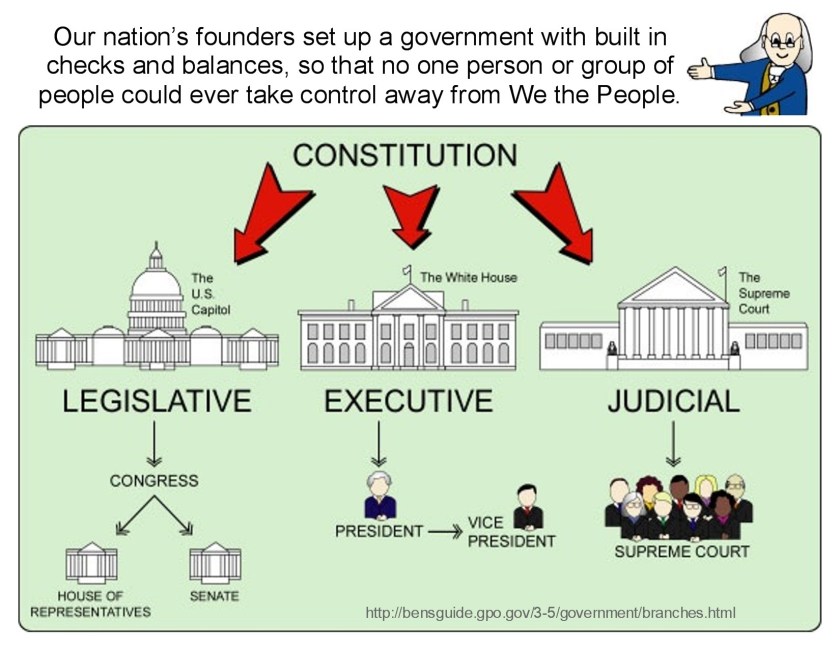
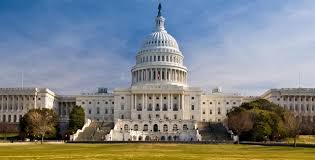
Trump is threatening government employees with being fired for doing their job and Congress for being the third branch of the American government.

Personal Commentary
 Website: chetyarbrough.blog

Political Grandstanding

By: Chet Yarbrough

Those who have read book reviews in this blog know some of my political beliefs. The more I read, listen to, and review books written by others, the more I know I do not know what is true and not true. We all get trapped in our own world of experience, belief, and understanding. With concern over that personal trap, this personal opinion is written.

America’s current President is a man of inherited wealth and privilege.

Trump’s popularity comes from attracting attention, impressing followers with strong public stances on issues of which he has little understanding or willingness to educate himself about. His focus is on self-aggrandizement with hyperbolic misrepresentations of facts that appeal to those wishing for definitive answers to multifaceted social issues.

Trump is not the only elected representative or President to oversimplify issues to appeal to voters. Johnson’s war on poverty was used to justify policies that ineffectively addressed needs of the poor. Nixon’s “Southern Strategy” used coded language and policies that indirectly targeted African Americans. Reagan’s “War on Drugs” disproportionately affected minority communities and contributed to mass incarceration. George W. Bush emphasized the threat of weapons of mass destruction (WMD’s) to justify invasion of Iraq. Obama’s red line rhetoric threatened commitment to military intervention, which never happened when lethal gas was used to kill Syrian citizens. Trump’s rhetoric on immigration inferred most immigrants were criminals and a threat to national security. In all of these examples the common denominator is, at worst a lie or at best, a misrepresentation of truth to gain public support.

So, what is the difference? Trump does not care about the impact of his lies.

Image result for LIAR

Trump focuses on self-aggrandizement to promote himself as powerful and important. He is a school-yard bully who scared banks and subcontractors with the fear of handing a financially bankrupt casino back to the bank, and who threatened subcontractors’ pay who worked for him.

Now, Trump is threatening government employees with being fired for doing their job and Congress for being the third branch of the American government. In the end, Trump is threatening the American people who either did or did not vote for him.

NO EASY SOLUTION

“Everyone Who Is Gone Is Here” is an indictment of American foreign policy. There are no easy solutions for immigration, deportation, or human rights in the world.

Books of Interest
 Website: chetyarbrough.blog

Everyone Who Is Gone Is Here (The United States, Central America, and the Making of a Crises)

By: Johnathan Blitzer

Narrated By: Jonathan Blitzer, Andre Santana

Johnathan Blitzer (Author, American journalist, staff writer for The New Yorker.)

“Everyone Who Is Gone Is Here” is an indictment of American foreign policy. There seems a loss of a moral center in America with its support of other governments based solely on government type, national security, or economic interest. That is not to suggest national security and economic interest are not critically important but Blitzer’s history of America’s support of Central American governments is appalling. El Salvado, Guatemala, Honduras, and Nicaragua are democracies in title but not in reality.

Blitzer tells the story of migrants from El Salvadore and Guatemala who are imprisoned, tortured, and sometimes raped or murdered by their government’s functionaries.

El Salvadoran and Guatemalan governments purport to be representative democratic republics. They are not. They have been dictatorial and punitive victimizers of their citizens. The picture drawn by Blitzer is that both are highly autocratic and riven with exploitation and arbitrary treatment of their Latino populations.

Some immigrants came to roil American communities with the only tools they were familiar with in their native countries.

Many immigrants came to America to escape arbitrary treatment by their governments. America has benefited from its immigrant labor, but some turned to street drugs and violence because of their poverty and the experience their families lived with in their native countries. Driven by self-interest, a survival instinct, and ignorance, America has deported many Latino immigrants who chose the gang life in the California suburbs. Gang life offered identity and income. Gangs like MS-13, the 18th Street Gang and other street name gangs terrorized L.A. and Southern California. The police reacted with violence by rounding up Latinos based on gathered photographs and lists of their families and friends. Some who had proven records of crime were imprisoned or deported to their families’ countries even though they may have been born in America.

America has financially and militarily supported Central America without regard to human rights.

There is a taint of McCarthyism in America’s communist categorization of Central American countries because false categorizations hides the truth. The truth is that democratic countries like El Salvadore and Guatemala have treated citizens as harshly as yesterday’s Stalin, today’s Ayatollah in Iran, and the two Assads in Syria. Reagan’s willingness to sell arms to Iran in the 1980s for money to send to Nicaragua because communism was allegedly opposed by those in power is an example of America’s political blindness. Nicaraguan, Salvadorian, and Guatemalan leadership was as corrupt as many communist countries that practiced violence, imprisonment, torture, and murder of their citizens. Whether one’s government is communist or democratic, the important issue is how its citizens are treated, not its form of government. Bad forms of government will eventually fall from the weight of their citizens’ unequal treatment, just as Syria fell in 2024. The sufferers are always the oppressed citizens and, as interestingly noted by the author, the government perpetrators who live with the guilt they feel when they retire from their military or government jobs.

What Blitzer infers in his history of Central America is that human rights of citizens should be the primary criteria for American financial and/or military support for foreign governments whether democratic, communist, socialist, or other.

National stability comes from citizens’ support of their government. Stability is compromised when human rights are denied. Blitzer implies–America should only financially or militarily support another country only if the nativist nation and culture is working toward equal human rights for its citizens. The immigrant crises in America and the world is caused by nations that do not work toward equal human rights for their citizens.

One is somewhat conflicted by Blitzers’ argument. The conflict is in an outsiders’ understanding of a foreign countries’ culture.

Human rights may be universal, but culture is made of beliefs, values, norms, customs, language, art, literature, food, fashion, social institutions, and unique symbols and artifacts of particular nation-states. This great host of characteristics is not easily quantifiable. No nation can justify rape, torture, or murder but they do exist in all cultures. Ignorance of culture is at the heart of why any country that invades, or militarily and financially supports another country, risks failure.

There are no easy solutions for immigration, deportation, or human rights in the world.

Truman

Truman’s presidential accomplishments were not done alone but he managed highly educated and experienced people who got things done. He had the respect of people who reported to him, and he was tough, pragmatic, and willing to make hard decisions when circumstances required leadership.

Books of Interest
 Website: chetyarbrough.blog

Truman

By: David McCullough

David McCullough (1933-2022, Author, historian, winner of a Pulitzer Prize, the National Book Award, and later given the Presidential Medal of Freedom in 2006.)

One of the great historians of the modern age, David McCullough received the National Book Award for “Truman” in 1982. As a biography of an American President, it is among the best ever written about a President whom few regard as being in the category of Washington, Lincoln, or FDR. Every chapter is a pleasure to read because it reminds one of why many consider America the best country in the world in which to live. This portrait of the 33rd President of the United States shows a man of modest means, without a college degree, who grows to become a great manager of others and leader of a post WWII world.

President Harry S. Truman (1884-1972, President from 1945-1953.)

Thrown into the Presidency after 82 days as Vice President of the United States, Truman became President. FDR died April 12, 1945. Germany was near defeat by the Allies. Within a month, on May 8th, the Allies celebrated what is known as V-E Day, Victory in Europe Day. Truman is faced with a decision on how best to end WWII by defeating Japan. Though when he rose to the Presidency, he had not been informed about the Manhattan Project. He was fully briefed on April 25, 1945, by Henry Stimson and General Leslie Groves, leaders of the Manhattan Project. In mid-July of 1945 the first atomic bomb was successfully tested and Truman described it as “the most terrible bomb in the history of the world”.

Captain Harry Truman November 1918.

As a former veteran and captain in WWI, Truman knew what continuing the war meant to the lives of American soldiers.

As a former veteran and captain in WWI, Truman knew what continuing the war meant to the lives of American soldiers if Japan were conventionally attacked by Allied forces. He ordered the use of two atom bombs, one on August 6, 1945, on Hiroshima and a second on Nagasaki on August 9, 1945. There was no official warning. Leaflets were dropped over some Japanese cities on August 6, but one suspects that was just a precedent to instill fear about further destruction if Japan refused to surrender.

TRUMAN’ CABINET IN 1945

President Harry S. Truman meets with Cabinet members in the White House. From left to right: Postmaster General Robert Hannegan; Secretary of War Henry Stimson; Secretary of State James Byrnes; the President; Secretary of the Treasury Fred Vinson; Attorney General Tom Clark; and Secretary of the Navy James Forrestal.

Truman took complete responsibility for the decision to drop the bombs.

As shown in the movie about Truman’s meeting with Oppenheimer after Hiroshima and Nagasaki, Truman was put-off by Oppenheimer’s concern over postwar use of nuclear weapons. Presumably, Truman’s feelings were that many lives were saved despite the loss of Japanese citizens from the use of atomic weapons. McCullough’s depiction of Truman is that he was tough, pragmatic, and willing to make hard decisions. He took personal responsibility for the use of atomic bombs to end the war.

Truman’s whistle-stop campaign in 1948.

McCullough goes on to explain Truman’s second term election effort that began when Dewey, his Republican opponent, looked like a sure winner. Truman campaigned across the country by train. Truman’s victory and what seemed an interminable train ride was a testament to the grit and determination of this 5-foot, 9-inch dynamo.

Truman’s character description is reinforced with McCullough’s history of Truman’s relationship with General McArthur. In the early days of the Korean war, McArthur took charge of American forces and made decisions that seemed to bode well for the end of the conflict. McArthur reversed the course of the war by insisting on a risky reinforcement of American forces. It was the right move and Truman admired McArthur’s grit in insisting on the reinforcement. However, McArthur overstepped his position when he insisted on bombing Chinese cities when China escalated the Korea war. McArthur publicly criticized Truman’s administrative opposition to escalation.

Truman relieved McArthur of his command in Korea and pursued a negotiated peace at the 38th parallel. This was another tough, pragmatic, and unpopular decision by Truman. In retrospect, one recognizes it was the right decision, but Truman was markedly criticized by the press and public for his decision.

In the early days of the Korean war, McArthur took charge of American forces and made decisions that seemed to bode well for the end of the conflict. McArthur reversed the course of the war by insisting on a risky reinforcement of American forces.

One can argue McCullough’s history places Truman in the pantheon of the greatest Presidents of the United States since Washington, Lincoln, and FDR. Truman ended WWII, agreed with and supported the Marshall plan that rebuilt Europe, created the Truman Doctrine to contain Soviet Expansion, desegregated the military, established the CIA, NSA, and NSC by signing the National Security Act of 1947, approved the Berlin airlift when the Soviets isolated West Berlin, and banned discrimination in the federal workforce. Truman managed some of the greatest minds of his 20th century administration to make America the preeminent leader of the western world.

Truman’s presidential accomplishments were not done alone but he managed highly educated and experienced people who got things done. He had the respect of people who reported to him, and he was tough, pragmatic, and willing to make hard decisions when circumstances required leadership in the face of public opposition.

IRELAND’S TROUBLES

“Say Nothing” is an attempt to give listener/readers an understanding of Ireland’s “Troubles”. Patrick Radden Keefe helps one understand but it remains a complicated and confusing history because of its mix of religion and national sovereignty.

Books of Interest
 Website: chetyarbrough.blog

Say Nothing (A True Story of Murder and Memory in Northern Ireland) 

By: Patrick Radden Keefe

Narrated By: Mathew Blaney

Patrick Radden Keefe (Author, American writer and investigative journalist.)

“Say Nothing” is an attempt to give listener/readers an understanding of Ireland’s “Troubles”. Patrick Radden Keefe helps one understand but it remains a complicated and confusing history because of its mix of religion and national sovereignty. From the 1960s to the late 1980s, there were violent clashes between unionist/loyalists, who were largely protestant and wanted to be part of Great Britain; while Unionist/loyalists, who were largely Catholic wanted independence as the Republic of Ireland.

Bombings, sniper attacks, and violent confrontations caused an estimated 3600 deaths and tens-of-thousands injuries during the “Troubles”.

Not until 1998, with the “Good Friday Agreement” did the deadly conflicts cease. However, Great Britain’s Brexit, periods of political deadlock with the Northern Ireland Assembly, and debates over details of the “…Agreement” have occurred. Keefe tells a story of the build-up to the “…Agreement” in “Say Nothing”.

The Irish Republican Army that wished for Irish independence murdered Jean McConville, a mother of ten, in 1972.

The murder is puzzling because McConville is Catholic which suggests her death was either a mistake or that some Catholics were union/loyalists. Some in the IRA suggested she acted as a spy for the UK. That is a mystery Keefe fails to unravel while giving listener/readers some historical perspective on Ireland’s Troubles. Some say Marian Price was the murderer, but Keefe demurs and argues there is no concrete evidence.

Northern Ireland is over 40% Catholic while the Republic of Ireland is over 60% Catholic.

Ireland’s troubles date back to the 16th and 17th centuries when English and Scottish Protestant settlers chose Ireland as their new home. The native population of Ireland was Catholic and religious differences and land acquisition by Protestants set the table for conflict. In 1921, Ireland was split in two with Northern Ireland remaining a part of the UK but with a 40% minority who remained Catholic. A Catholic movement for civil rights in Northern Ireland began in the 1960s. Violence and political conflict ensued with the formation of paramilitary groups like the IRA (Irish Republican Army) that began bombing and shooting Protestant followers. The IRA wished to end British rule, unify Ireland, accommodate religious difference, and create an independent nation.

Over the years, there were several leaders of the IRA. Michael Collins, Cathal Brugha, Liam Lynch, Sean Stiofain, Gerry Adams, and Martin McGuinness. Gerry Adams is the leader most often referred to in Keefe’s book.

The IRA never admitted to ordering the abduction and murder of Jean McConville. The author directly asks Adams if he ordered the murder, and his response is that he has no blood on his hands. Some suggest, her murder was a collective decision by leaders of the IRA.

Both Northern Ireland and the Republic of Ireland were ambivalent about Brexit and chose to neither entirely agree with separation from the EU nor entirely agree with the UK in its rejection of membership.

There remains a great deal of ambivalence about unification of Ireland as an independent nation but “The Good Friday Agreement” allows for a referendum on unification because of what appears to be a majority in both jurisdictions to create one nation.

It is interesting to note that the Catholic religion is the largest religious group in both Northern Ireland and the Republic of Ireland, but that Northern Ireland Catholics constitute 42.3% while the Republic of Ireland is 69.1% Catholic. Keefe’s story triggers an interest in understanding the history of Ireland, but it is too long in its telling to offer clarity.

REAGANOMICS

Homelessness, illegal immigration, and America’s budget deficit will not be cured by reducing taxes on the rich or by tariffs that artificially increase the cost of living, or by cutting the labor force of farmers through mass deportations, or by making it easier to do business in the U.S.

Books of Interest
 Website: chetyarbrough.blog

Reagan (His Life and Legend) 

By: Max Boot

Narrated By: Graham Winton

Max Boot (Russian-born naturalized American author, editorialist, lecturer, and military historian, writer and editor for The Christian Science Monitor.)

Not being a fan of Ronald Reagan’s presidency, there is some reluctance in reviewing Max Boot’s biography of the man. However, Boot’s writing and research offer an understanding that makes one separate Reagan’s political life from his experienced life. Boot explains Reagan’s life during the years before and after the depression.

Reagan’s father was an alcoholic which reminds one of how one’s childhood is rarely idyllic. Boot’s biography of Reagan shows one becomes who they are–despite the human faults of their parents. The way a child matures is only partly defined by parents’ influence. Reagan’s father’s alcoholism did not carry through to his son.

Boot’s biography shows Reagan to be an affable, well-adjusted, teenager and young adult who has a strong sense of what he believes is right and wrong.

Reagan is a football athlete in high school that grows to become a 6′ 1″ handsome young man from a relatively poor middle-class family. He aspires to college and works to have enough money to attend Eureka College in Illinois. He graduates in 1932 with a BA in Economics and Sociology. Reagan is remembered by classmates and teachers as a smart student and determined football player that gave him the grit and experience to become a movie star in the 1940s.

The first chapters of Boot’s biography of Reagan are about his break into the entertainment industry as a sports caster.

Reagan had a nearly photographic memory. He used that skill to recall a football game he played in college to impress a radio station manager with broadcast details of a game. He recalls a game he played in college and purposefully embellishes his role in the game. Reagan’s skill as a radio announcer led to a screen test with Warner Brothers in 1937 that launched his film career.

As WWII approaches, Reagan enlists as a lieutenant in the U.S. Army Air Force. (The Air Force in these early days were not a separate branch of the service.)

Reagan’s experience in the entertainment industry led to producing training and propaganda films for the Army Air Force. Boot explains Reagan had significant vision problems with nearsightedness in his youth and presbyopia (difficulty of focusing on close objects) as he got older. Reagan never served in a combat role. He eventually adopted contact lenses to correct his vision; partly to please film producers who disliked the “coke bottle” lenses he needed to see properly.

Four issues that are interesting and informative in the first chapters of Boot’s biography of Reagan are 1) how affable, and well liked Reagan was to people who met him, 2) that he was well-read, 3) very handsome with a respect for women that carried through to several relationships, and 4) that though he had a sense of right and wrong, his moral center seemed to waiver between concern and indifference.

During the depression, Reagan was a strong supporter of Franklin Roosevelt’s efforts to resurrect the American economy.

Reagan seemed more like a liberal Democrat than the conservative Republican he came to be as Governor of California and President of the United States. The remainder of the book shows how that change came about. Boot notes several factors that influenced Reagan to change from a Roosevelt to Goldwater supporter. The movie industry and the growing anti-communist era of the fifties influenced many former liberals. Reagan’s experience in Hollywood reinforced conservativism.

Reagan became rich from his relationship with Gerneral Electric. The corporate culture of GE in the 1950s and 60s was decidedly conservative. When Reagan became the host of “General Electric Theater” that culture seeped into his consciousness.

In 1962, Reagan switched from the Democratic party to the Republican party. He supported the election of Goldwater who ran against President Lyndon Johnson who was mired in the Vietnam war while promoting big government social welfare programs. The influence of Goldwater and the liberalism of the Johnson polices drove Reagan to believe big government was ruining the wealth and opportunity of Americans. He adopted conservative beliefs for economic deregulation, tax cuts that largely benefited the rich, and promoted anti-communist foreign policies. Reagan’s support for conservative policies is exemplified by his “A Time for Choosing” speech supporting Barry Goldwater’s campaign for President in 1964.

In the political climate of the 1960s, Reagan, with the support of GE, runs for Govenor of California. His position as president of the Screen Actors Guild, support of Goldwater, and the public’s perception of inefficiency of state government provided a platform for Reagan to run. The civil rights movement, Vietnam protests, the free speech movement, the Watts riots in LA, and the hippie movement in San Francisco created an environment ripe for conservative reaction. Reagan is elected Governor of California twice, to serve from 1967 to 1975.

Reagan as the Governor of California.

Reagan described his time with GE as a “postgraduate course in political science”.

Reagan’s experience as Governor of California, his Hollywood image, the support of big companies like GE, and the economic issues confronting Carter, give him a platform to run for President of the United States. Todays’ Republicans hold Reagan in high regard. Some view Reagan as one of the best recent presidents of the United States. Those who hold him in high regard cite his economic policies, strong national defense and leadership during the cold war. He believed in small government, lower taxes, and conservative values. Some suggest Trump is Reaganomics second coming.

Reagan runs for President of the United States in 1976. He wins and is re-elected in 1980.

What is not fully understood by some Americans, is the accomplishments of Reagan held some very negative consequences. Some argue he was the prime mover in nuclear weapons reduction. The biography of Gorbachev suggests the prime mover was Gorbachev and his support of glasnost with an opening of Russia to western ideals.

Some, like me, would argue Reagan accelerated economic inequality by giving tax cuts to the wealthy and deregulating the economy.

The federal deficit increased from $70 billion dollars to 152.6 billion dollars during the Reagan presidential years. In comparison to Carter’s administration, the deficit was less than half of Reagan’s at $74 billion dollars. Today’s deficit has grown to 1.83 trillion dollars. Four out of seven presidents (including Trump’s second term) since Reagan have been Republican. The deficit lays at the feet of both parties.

With the election of Trump, who emulates Reagan’s policies, one wonders–how much greater the deficit will be with reduced taxes for the rich and a renewal of economic deregulation.

Homelessness, illegal immigration, and America’s budget deficit will not be cured by reducing taxes on the rich or by tariffs that artificially increase the cost of living, or by cutting the labor force of farmers through mass deportations, or by making it easier to do business in the U.S.

FOR BETTER OR WORSE?

Trump’s purposefully uninformed knowledge of history will become a greater source of conflict in the world because he has a second term’ understanding of how the American government works and how it can be subverted with loyal followers.

Books of Interest
 Website: chetyarbrough.blog

Underground Empire (How America Weaponized the World Economy)

By: Henry Farrell, Abraham Newman

Narrated By: L. J. Ganser

“Underground Empire” is not a surprising revelation in today’s media-savvy era. Every person in the world is being surveilled by someone because of the power and influence of government. Whether a democracy that believes in freedom or an autocracy that believes in absolute control, Farrell and Newman explain how “Big Brother” is watching and acting in ways that affect your life.

The potential for ubiquitous surveillance was known and wished for by some government bureaucrats. Wide social surveillance was resisted by many in the American government until 9/11. After 9/11 that resistance weakened and surveillance of the world, more fully including American citizens, became indispensable. The creation of an “Underground Empire” has weaponized privacy and the fuel of money that can heat, cool, burn or freeze national economies.

The empire’s objective is to be in charge of the future. One may take issue with the word “…Empire”. The scale of an “Underground Empire” varies from nations like America, China, the UK, the EU, Russia, and others to a group of Al Qaeda’ terrorists, or a disparate group of Syrian freedom fighters. The common denominator is technological connection, i.e. the basis of “Underground…” organization for coordinated action that changes the world.
Ferrell and Newman’s primary focus becomes the use of surveillance to influence world policy.

Particularly, the surveillance of money, the source of power and prestige, is shown by the authors to be key to understanding what other countries and interests are planning and doing that affects society. They speculate that 9/11 could have been exposed before it happened with more surveillance of the money that was being accumulated by Al Qaeda and used by the terrorists who attacked the world trade center in New York. That might be true but there is a wider consequence of that level of surveillance. Surveillance has become a weapon in the hands of political leaders. Surveillance of the flow of money, the source of power and prestige, may make “America Great” as inferred by the pending second term President. The EU, NATO, and other international organizations are looked at differently by Trump than by former post-world war’ Presidents. Trump views the EU and NATO as users of American wealth without equivalent contribution to world defense.

On the one hand, Trump objects to NATO because of its disproportionate financial burden to the United States which pleases Putin and changes the perspective of America’s role in the world. On the other hand, the authors note Trump opposed Putin when it came to the Nord Stream 2 oil pipeline to the E.U. The difference has to do with the Trump’s transactional view of the world. Because of America’s vast gas supplies from fracking, Trump sided with Texas politicians who vociferously objected to the second Nord stream pipeline to Europe.

The “Underground Empire” is not exclusively focused on money, but the use of money is based on knowledge of what people are thinking, doing, and wanting. Accumulating information becomes actionable with money. The inference by the authors is that the government’s decision to track money, as well as private information, informs one of what will happen in the future. The problem with this narrow reasoning is that national interests of countries do not always line up with each other. The formation of the EU with its own currency becomes a competitor for America, not just a useful tool for exchange of goods between nations.

Today’s playing field is not limited to major powers. As the spread of technology is mastered by the public, anyone as small as an interest group or as large as an international alliance can influence and potentially change the world. Farrell and Newman offer important understanding of that invisible war. Obvious examples are 9/11, Ukraine’s invasion, and most recently, the overthrow and exile of Bashar al-Assad in Syria. But they also reveal another front for conflict between the U.S. and countries that have traditionally been allied with America.

Histories carriers of belief in information transparency are people like Edward Snowden, Daniel Ellsberg, Chelsea Manning, Mark Felt, and Reality Winner. Snowden, a former NSA contractor, leaked classified information about global surveillance, Ellsberg exposed the lies of Vietnam, Manning exposed the WikiLeaks, Felt exposed the Watergate scandal, and Winner exposed presidential election interference in 2016. Secrets frequently kill the truth.

Ferrell’s and Newman’s book will make many even more concerned about the Trump presidency. Trump’s purposefully uninformed knowledge of history will become a greater source of conflict in the world because he has a second term’ understanding of how the American government works and how it can be subverted with loyal followers.

To make the point clearer, Trump views the world transactionally. The measure of value is most easily understood as wealth and the influence of money. Appointing wealthy sycophants to the government ensure victimization of the poor.

FREEDOM’S COST & VALUE

Freedom, once it is experienced, is an unconquerable force. Conquest of Ukraine, the Baltics, or Taiwan would be a pyric victory at a cost far in excess of a conquerors’ perceived value.

Books of Interest
 Website: chetyarbrough.blog

The Return of Great Powers (Russia, China, and the Next World War)

By: Jim Sciutto

Narrated By: Jim Sciutto

Jim Sciutto (Former American news anchor for ABC, national security correspondent for CNN, Yale graduate majoring in Chinese history.)

Jim Sciutto has been seen by many on television. One suspects few know he served as the Chief of Staff and Senior Advisor to the U.S. Ambassador to China between 2011 and 2013. His book, “The Return of Great Powers” is interesting but not particularly revelatory. It was written before today’s news of the blows to Iran’s role in the Middle East with the removal of Syria’s brutal leader and Israel’s increased attacks on Hezbollah and Hamas. Tragically, there is always death of innocents in war. The question is whether war is ever worth its cost.

Sciutto certainly has a better grasp of China than most Americans based on his education and experience but his general analysis of the “…Great Powers” and their return is more topical than insightful.

The rise of Putin and Xi have certainly changed the world. Newspapers and television are full of stories about these leaders’ dance around the war in Ukraine. Xi offers moral and financial support to Putin, along with some important weapon components needed by the military, but China limits military equipment and direct munitions provisions for the war. China may benefit from Russia’s Ukraine invasion because of Xi’s expressed interest in acquiring Taiwan but China’s advances have not moved much from where they were before the invasion.

What seems clear today, particularly in Sciutto’s book, is that Putin has made too many mistakes in his invasion of Ukraine.

Putin’s apparent disregard for Russian soldiers’ deaths undoubtedly threatens his influence with many Russian citizens. Some of America’s media suggest Putin is becoming more conscious of his political and personal vulnerability. It is reported by Gleb Karakulov. a Russian engineer and defector who fled to Kazakhstan, that Putin has become paranoid and increasingly isolated.

Sciutto suggests Estonia is on a Putin invasion list once Ukraine has been conquered.

Having recently returned from the Baltics, occupation of Estonia would be a pyric victory for the same reasons as the Ukraine invasion. The hate for Russians one hears from Baltics’ residents (Lithuanian, Estonian, and Latavian) who were under the rule of Russia from 1940s to 1991 is palpable. The jail cells, torture, and murder of Baltic citizens by Russia is detailed by tour guides from each country. The prosperity of the Baltic countries since 1991 is a tribute to freedom that will not be given up easily by its people. At best, Russia may be able to occupy the Baltics, but citizen resistance would far outweigh any value occupation might offer.

Sciutto goes on to imply Taiwan will lose its independence to China.

The picture of death and destruction he outlines with China’s overwhelming military might mitigates against China’s success. Once freedom is experienced, it is like genies in a bottle–difficult to be re-imprisoned. Whether NATO or America will come to Taiwan’s aid is unknown, but like Russia’s invasion of Ukraine and Putin’s interest in the Baltics, the price to be paid is higher than the reward they can expect.

Freedom, once it is experienced, is an unconquerable force. Conquest of Ukraine, the Baltics, or Taiwan would be a pyric victory at a cost far in excess of a conquerors’ perceived value.

CULTURE WARS

The tragedy of cultural conflict fills the pages of Frazer’s history of the Mayflower adventure. Listeners are numbed by the many mistakes made by both Americanized English and indigenous natives in an interminable cultural war, a war that is still being played and paid for today.

Books of Interest
 Website: chetyarbrough.blog

Hollywood Park: The Mayflower 

By: Rebecca Fraser

Narrated By: Kate Reading

Rebecca Fraser (Author, British writer and broadcaster, former president of the Bronte Society.)

In the early years of the 17th century, Puritans fled to America to escape persecution by King James I of England and his mother, Mary Queen of Scots. Though King James was not as much of a doctrinarian as his mother, it was dangerous for non-Catholics to live in England or Scotland. Fraser explains many English Puritans sought refuge in Holland. “The Mayflower” is a history of the first years of the Kingdom of England’s and Scottland’s Puritan settlements in America. Three of the most famous Mayflower’ passengers were William Bradford, Myles Standish, and William Brewster. Both Bradford and Brewster sailed from the Netherlands to England to board the Mayflower. Bradford became the first governor of the Plymouth Colony in America. Myles Standish became the military leader of the settlers. William Brewster was the spiritual leader of Puritan followers.

Fraser explains how Standish became important in the Mayflower’s cramped quarters, rough seas, and limited food. Standish maintained a level of discipline while Brewster provided spiritual support to the Pilgrims and non-religious separatists. The author reveals how shoddy the accommodations were on the Mayflower and how poorly prepared the ship was for such a perilous voyage. Provisioning was inadequate and the ship became overloaded when their sister ship had to return to England because of its unseaworthiness. More passengers were added to the Mayflower when the sister ship headed back to England. There were no doctors on board. A baby was born with the help of a mid-wife. Fraser gives one a picture of a two-month voyage that was hellish. Five of 102 passengers died at sea.

Upon arrival, survivors were faced with November winter conditions.

Forty-five of the 102 passengers died from a lack of shelter, poor rationing, and cold temperatures. The Mayflower was used as a shelter for much of the winter. No Native Americans greeted the travelers when they landed. It was March before an English-speaking Native named Samoset from the Wampanoag tribe met and talked to the settlers. Samoset introduced another English-speaking Native named Tisquantum, aka Squanto. Squanto taught the newcomers how to grow corn, catch fish, and find edible plants. Without that help, one doubts even these 57 settlers would have survived.

Fraser reveals the complicated relationship between settlers and indigenous natives.

In some ways it reminds one of the difficulties America has had with interventions in modern foreign countries. Not living the life of other cultures, the threat of losing a native’s way of life, and innate suspicion of those who are not like you, creates misunderstandings and conflict. These are conflicts within America today; let alone relations with other nations in modern times.

As Fraser continues her history of America’s newcomers, differences in cultural beliefs, whether religious or secular, show why all nations in the world are challenged by difference.

Two indigenous natives, Samoset and Squanto, opened the door of communication between cultures. Squanto learned English because of his capture by John Smith’s men in 1614-15 with the intent of enslavement. Squanto escapes and returns to his native land. Because he could speak English, despite his kidnapping, he used what he learned to help settlers know how to plant corn, fish, and hunt beaver for survival.

Indigenous native cultures evolve with the influence of the Puritan settlers. They adopt a conception of Kings that rule over others.

Two Indian brothers rose to the level of kings in the Wampanoag tribe of New England. They were the sons of chief Massasoit who saved the pilgrims from starvation by helping them understand how to cultivate the land and fish for survival. As the pilgrims multiplied, human nature led to conflicts between indigenous natives and themselves. Though the initial source of value exchange began as wampum (shell bead), it evolved to printed currency which changed the nature of life, labor, and trade.

Human nature is freighted with the desire for money, power, and prestige.

Those desires lead to conflicts between native cultures and the Pilgrims. The desire for land began to infringe on the culture of native tribes. Soon, these conflicts escalated to war between English settlers and leaders of native tribes. Fraser details the rise of King Alexander and King Phillip of the Wampanoag tribe that began to organize against the settler’s encroachment on native lands. Alexander is killed but his brother becomes a great leader among many indigenous natives and begins what seems an interminable and savage war against the settlers. The savagery on both sides escalates with scalping, dismemberment, and pilloried heads on spikes.

The tragedy of cultural conflict fills the pages of Frazer’s history of the Mayflower adventure. Listeners are numbed by the many mistakes made by both Americanized English and indigenous natives in an interminable cultural war, a war that is still being played and paid for today.

AMBITION

It takes more than ambition to build a successful organization or company. Unless one is a genius who can continually innovate, it takes management structure that encourages others to innovate and work for a common organizational purpose.

Books of Interest
 Website: chetyarbrough.blog

Bad Blood (Secrets and Lies in a Silicon Valley Startup)

By: John Carreyrou

Narrated By: Will Damron

John Carreyrou (Author, French-American investigative reporter for the NY Times)

Ambition is the strong desire or drive to achieve something. The public story of Theranos is examined by investigative reporter, John Carreyrou. His subject is Elizabeth Holmes, a bright young woman who drops out of Yale to pursue an idea. Her idea is to create a blood testing system intended to diagnose medical conditions with potential for measuring effectiveness of drug treatment for existing disease. Her ability to sell an idea exceeded her ability to organize a company to create a product that accomplished that end.

Most companies or organizations will either fail or stagnate when led by only one innovator. There are exceptions but it requires an extraordinary leader, like a Steve Jobs, Ginni Rometty, Mary Barra, or Elon Musk. Their leadership skills may rub people the wrong way, but they have a superior perception of reality that is not singularly based on loyalty. They have the innate ability to offer enough innovation to grow their companies. (At the risk of offending supporters, loyalty is the threat of Trump’s management style. Trump principally bases his organizational decisions on loyalty.)

Elizabeth Holmes may have had a great idea, but her poor management skills are appallingly revealed in Carreyrou’s interviews with former employees of Theranos.

The only consistent management criteria practiced by Holmes is loyalty. If an employee appears disloyal to her vision of the company, they are fired. Any organization that principally relies on loyalty discourages innovation and becomes entirely dependent on orders of its leadership. Particularly in the tech industry, innovation is critical.

Elizabeth Holmes misled investors, patients, and doctors. She is convicted for fraud and conspiracy in 2022. She is serving an 11-year sentence in a Federal Prison Camp in Bryan, Texas.

Holmes’ ambition, in addition to her prison sentence, led to a $500,000 SEC’ fine and the return of 18.9 million shares of a company that no longer exists. Furthermore, the SEC ordered a ten-year ban on serving as an officer or director of a public company which, of course, becomes moot with her imprisonment. The irony of Carreyrou’s story is that Holme’s idea is presently being pursued by Babson Diagnostics, Stanford Researchers, and Becton Dickinson. Whether she will ever reap any reward from another company’s success seems remote, but it will presumably be based on patents filed, and licensing agreements based on former Theranos patents.

“Sunny” Balwani was also tried and convicted for Theranos’ misdeeds.

The 16th century phrase “birds of a feather flock together” comes to mind when Ramesh “Sunny” Balwani joins Theranos in 2009. He had loaned the company $13 million but he also knew Holmes from her days when she was learning Chinese in a Stanford summer program. At some point they became lovers despite a 19-year age difference. Carreyrou notes Balwani became a multi-millionaire with the sale of his tech company, Commerce One” in 2000. He was convicted of tax evasion for the sale but claimed the evasion was caused by his tax accountant which he sued for recovery for back taxes he had to pay. (There is a settlement amount between the tax accountant and Balwani, but it is not revealed.) Carreyrou explains Balwani was a martinet who brooked little disagreement when he became COO of Theranos in 2009. (Part of Holme’s defense was that Balwani was the principal behind Theranos misdeeds, but the court obviously disagreed.)

In 2022, Balwani was sentenced to 13 years in a federal prison for his involvement in what is characterized as Theranos fraudulent activities.

There are business management lessons in Carreyrou’s book about the misdeeds of Theranos. It takes more than ambition to build a successful organization or company. Unless one is a genius who can continually innovate, it takes management structure that encourages others to innovate and work for a common organizational purpose.

FOUR MORE YEARS

Andrew Leigh’s brief history of economics reminds listeners of a threat America faces in the next four years.

Books of Interest
 Website: chetyarbrough.blog

How Economics Explains the World (A Short History of Humanity)

By: Andrew Leigh

Narrated By: Stephen Graybill

Andrew Leigh (Author, Australian politician, lawyer, former professor of economics at the Australian National University, currently serving as Assistant Minister for Competition, Charities and Treasury and Assistant Minister for Employment in Australia.)

Andrew Leigh offers a bird’s eye view of the history of economics. He provocatively explains why the European continent, rather than Africa (the birthplace of the human race) came to dominate the world. He suggests it is because of economics and the dynamics of the agricultural revolution.

Because Africa offered a more conducive environment for natural food production, Leigh infers natives could live off the fruits and nuts of nature. He infers farming and agricultural innovations (like the plow) were of little interest to Africans.

One may be skeptical of that reasoning and suggest the primary cause is sparse arable land for early African inhabitants. Without arable land, there was little advantage from the agricultural revolution.

Nevertheless, Leigh’s history is a wonderful reminder of great economic theories that improved the lives of an estimated 8.2 billion people on this planet. He touches on the lives of Adam Smith, David Ricardo, John Maynard Keynes, and Milton Friedman. Each made great contributions to the history of western economics.

Adam Smith is considered the father of modern economics. (1723-1790)

Leigh notes Smith was a deep thinker who sometimes neglected the world he lived in by forgetting to properly dress himself or falling into a hole while thinking about economic theories. Some of his key theories were “Division of Labor”, the “Invisible Hand”, “Labour Theory of Value”, “Free Markets and Competition”, and “Capital Accumulation”; all of which remain relevant today. One that seems so important today is “Free Markets and Competition” and the disastrous idea of tariffs that are being promoted by the pending Trump administration.

Smith notes natural resources are not equally distributed in the world. Some countries have more raw material than others, more available labor at a lower cost, and can produce product at lower prices. With free trade, all citizens of the world are benefited by lower costs of goods. With tariffs, product costs are artificially increased when they could reflect actual costs of production. Of course, the producer can increase costs, but the market will find an alternative if the costs become too high.

David Ricardo (1772-1823)

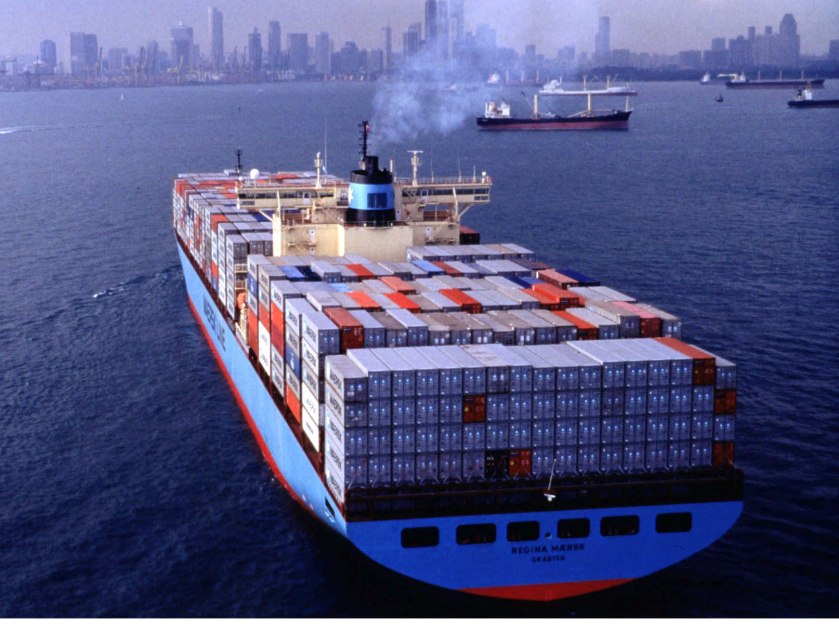
Ricardo’s theory of competitive advantage suggests some countries can produce product at less cost than others. This reinforces the critical importance of free trade. Free trade flies in the face of both the Biden’s passing administration and Trump’s future administration; both of which believe tariffs protect jobs in America. They don’t; because tariffs artificially increase product costs while protecting labor inefficiency that increases consumer prices. Tariffs are a lose-lose proposition. It may affect jobs in the short term but there are many jobs that can be created by government and private companies in human and public service industries. Those investments would offset inefficient product production and ensure future jobs.

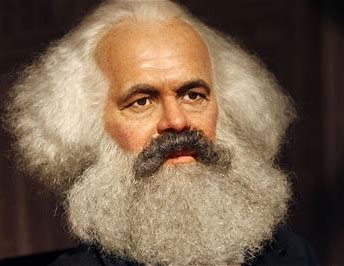
John Maynard Keynes (1883-1946)

Leigh notes that Keynes was bisexual and a pivotal figure in modern economics. He believed in the theory of Aggregate Demand meaning that “…spending in an economy is the primary driver of economic growth.” He advocated government intervention when demand was low, and that government should increase spending and cut taxes to increase demand when a recession or depression threatens the health and welfare of the public. Interestingly, Trump believes in reducing taxes but objects to government spending that improves employment. The effect of reducing taxes only increases income inequality and does little for employment because the rich are wary of investing in a weakening economy.

Milton Friedman (1912-2006)

Both Keynes and Friedman believe in government intervention, but Friedman exclusively believes in using only monetarism as a tool. Keynes agrees but had the added dimension of government spending that creates jobs. In contrast, Friedman argues there is a natural rate of unemployment and when government intervenes it creates inflation. He strongly agreed with free markets which suggests he would be against tariffs but at the expense of higher unemployment. The cloying part of that argument is it increases income inequality by making the rich richer, the unemployed and middle-class worker poorer.

Leigh’s book is a brief review of western economics. It glosses over much of the science, but it is highly entertaining and worth listening to more than once. Additionally, Andrew Leigh’s brief history of economics reminds listeners of a threat America faces in the next four years.