In the book “A Marriage at Sea”, one wonders how a husband or wife would respond in a crisis. Who would take command and who would follow? Is it a matter of nature or nurture?
Books of Interest Website: chetyarbrough.blog
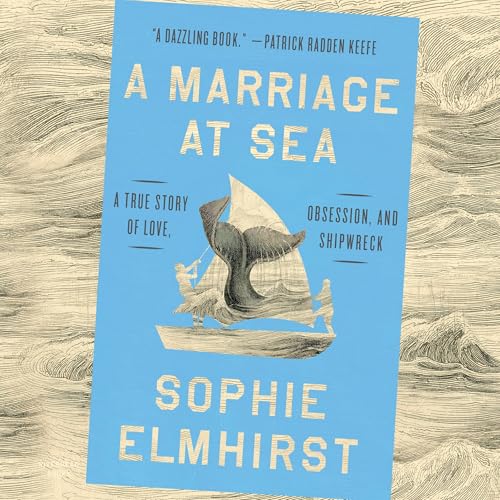
A Marriage at Sea (A True Story of Love, Obsession, and Shipwreck)
Author: Sophie Elmhirst
Narration by: Marisa Calin
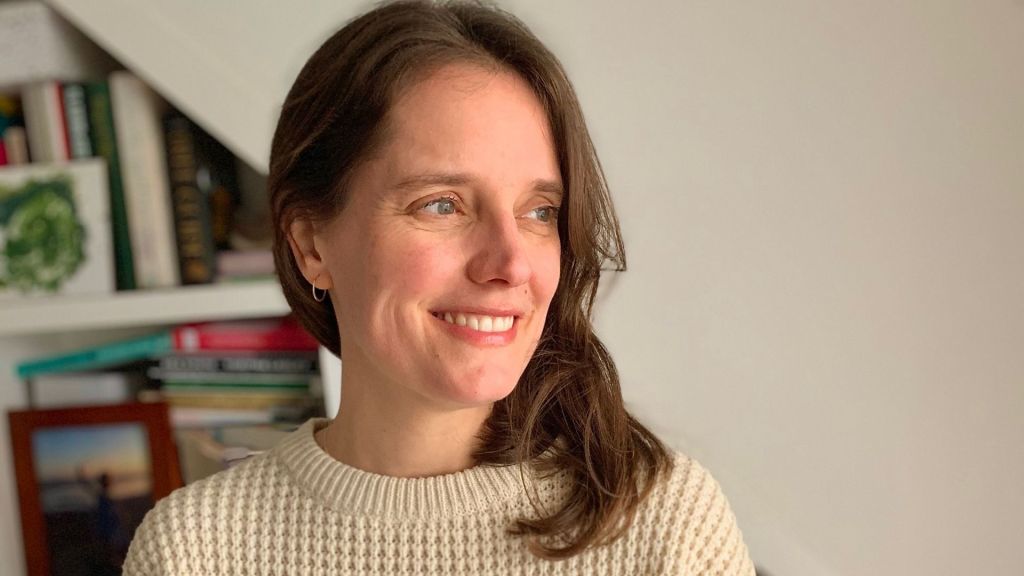
Sophie Elmhirst (Author, British journalist who wrote the story of Maurice and Maralyn Bailey who survived 118 days on a life raft in 1973.)
Surprisingly, Elmhirst writes about marriage in telling the story of a shipwreck that left Maurice and Maralyn Bailey on a life raft in the Pacific Ocean for 118 days. The Baileys had been married for 9 and a half years when their yacht was struck by what is presumed to be a dying whale.
The Baileys.
The Baileys were a middle-class British couple who fell in love with an idea to buy a small yacht and sale the sea to visit the Galapagos islands and beyond, a fantasy both adopt. Maurice’s strict childhood had prepared him to master the technical skills of a seafarer, but Maralyn seems to have the determination to make their dream real. They sold all their possessions, including their home, and contracted with a boatbuilder in Southampton who began the long process of building a yacht for their voyage at sea.
Maralyn Bailey using a sextant on their sailboat.
They set sale in June 1972 in a 31-foot yacht named Auralyn. They crossed the Atlantic and reached Panama in February 1973 and headed for the Galapagos islands in the Pacific, expecting it to take ten days. At dawn on March 4, 1973, their vessel was struck by a whale in the Pacific Ocean. They were 300 miles from the Galapagos islands when their vessel sank. Water filled the hold, and they abandoned ship on a raft with a small dinghy they used to store supplies they gathered from their sinking boat.
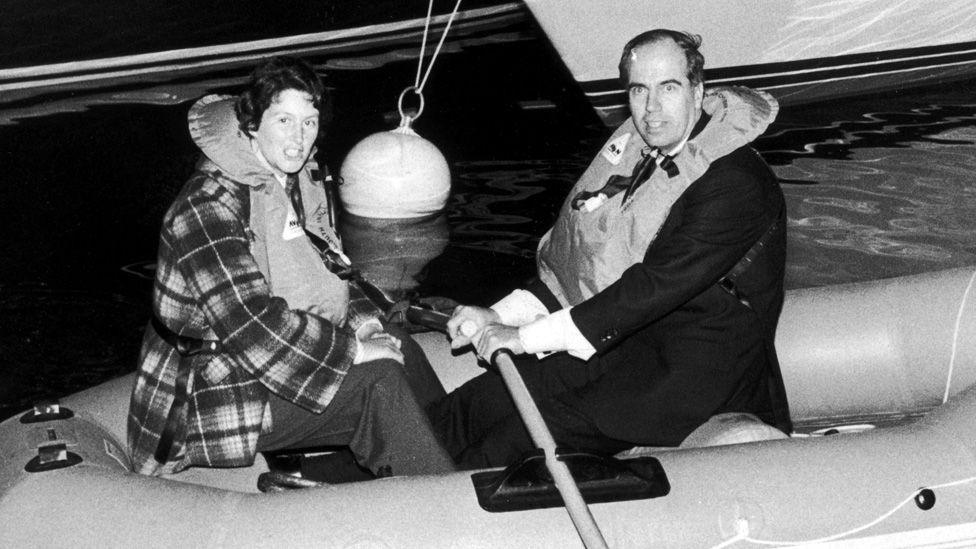
Maralyn and Maurice on a rubber raft before their sea adventure.
On the one hand, the knowledge of Maurice’s navigation skill aided their eventual rescue, but it seems Maralyn’s will and determination saves their lives. Their slim provisions would only last for a few days before dehydration and starvation. To last for their 118 days adrift, they improvised. They caught and ate raw turtles, fish, and seabirds while collecting rainwater for their sustenance. They had no fishing hooks and had to bend safety pins. They had to make fishing line for the hooks from thread, cord, twine, or maybe the yacht’s emergency kit. Whatever they caught had to be killed, cleaned, and eaten raw.
Seven ships passed the Baileys who were lost at sea.
Seven ships passed the Baileys but did not see their raft and dinghy. Even though they were in the “Sea Lane”, it is easy to understand why they were missed. They had flares that did not ignite which made their being seen unlikely, particularly with the immense size of sea transport vessels. Their hope for rescue rose and fell with each vessel sighting. Their boat, the size of the ships, and the distance from sea-going vessels must have been too far for anyone on board to see them.
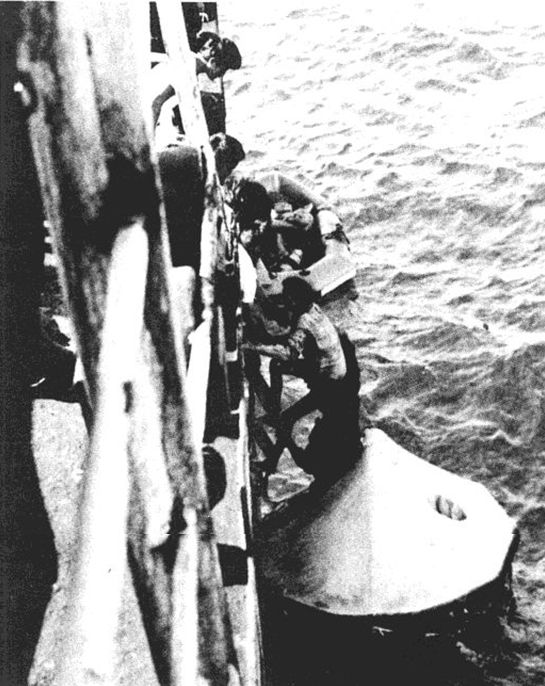
Vessel that found the Baileys.
It is a South Korean fishing boat that spots them. They had drifted over 1800 miles from the Galapagos Islands when they were rescued. Fortunately, the Bailey’s voyage is within the fishing routes of the Pacific. South Korean fishing boats would travel hundreds of miles from shore to catch tuna, billfish, mahi-mahi and other marketable fish. The South Korean boat was a deep-sea commercial fishing vessel. Its smaller size undoubtedly helped them see the Baileys.
The Bailey’s after their recovery from 117 days on the sea.
The Baileys were severely emaciated. Both had lost over 40 pounds. They could barely walk because of malnutrition and saltwater sores from skin irritation. It is hard to conceive of how exhausted they must have been. The Baileys were taken to Honolulu, Hawaii for medical care and recovery. Without doubt, the South Koreans saved the Baileys lives but it was a 1500-mile trip to Honolulu for the fishing vessel which would take 5 to 8 more days.
Sexual equality.
Elmhirst’s story suggests survival is largely because of Maralyn’s tough-mindedness and attention to her husband’s strengths and weaknesses.
In a marriage, one wonders how any husband and wife might respond in a crisis. Who would take command and who would follow in a crisis? Is it a matter of nature or nurture? In the case of the Bailey’s crisis, it appears Maralyn took command. The cost of that command is unknown, but parenthetically one notes Maralyn died at 61 while Maurice lived into his 80s.
Without a competent Chief of Staff, democracies are subject to authoritarian tyranny.
Books of Interest Website: chetyarbrough.blog
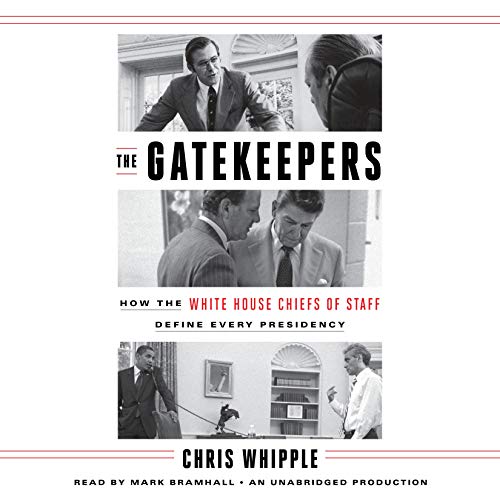
The Gatekeepers (How the White House Chiefs of Staff Define Every Presidency)
Author: Chris Whipple
Narration by: Mark Bramhall
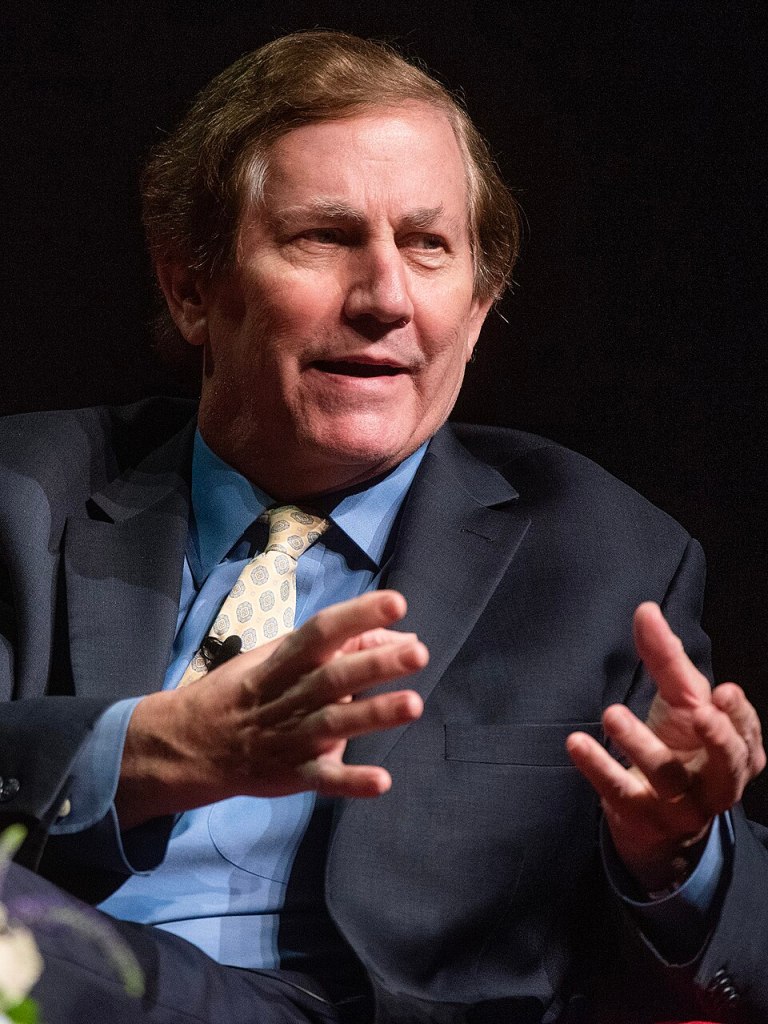
Chris Whipple (Author, political analyst, documentary film maker, journalist.)
Democratic government is complicated and messy, but decisions are made based on an understanding of the interests of many as opposed to the dictate and judgement of one.
“The Gatekeepers” may be viewed by most as an historical account of White House Chiefs of Staff based on many interviews of former government officials. However, one is inclined to see this history as a chronical of American government effectiveness. The facts and incidents reported give reader/listeners a view of America’s government function. Whipple details a series of relatively prudent and sometimes bad decisions made by late twentieth and twenty-first century presidents. Whipple’s history suggests the decision-maker for pursuit of government policy is America’s elected President. However, the road to policy approval or rejection is paved by White House’ Chiefs of Staff.
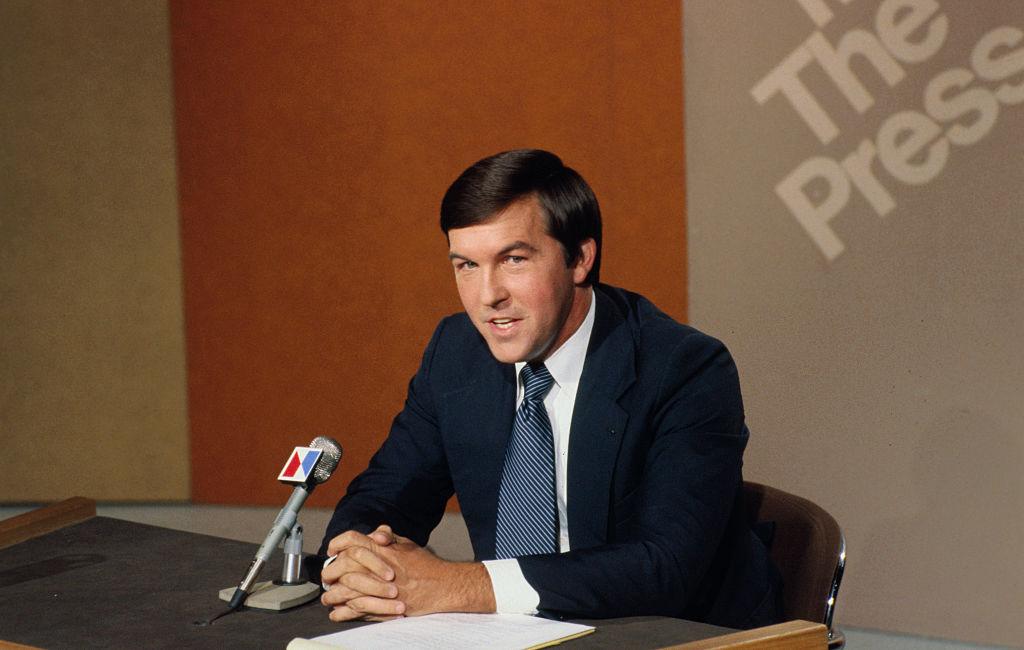
Whipple covers Nixon’s, Ford’s, Carter’s, Reagan’s, both Bush’s, Clinton’s, Obama’s, and Trump’s first administration. It does not address Biden’s Presidency or the Chief of Staff for Trump’s second term. The many interviews Whipple bases his history on offer a credible and enlightening history of American government. It is H. R. Haldeman, Cheney, Rumsfeld, Baker, Panetta, Card, and Rahm Emanuel that are the most prominent examples of effective and consequential Chiefs of Staff in Nixon’s, Ford’s, Reagan’s, Clinton’s, first and second Bush’s, and Obama’s administrations. The definition of effective is their ability to achieve a desired result whether good or bad for America. This is where one’s personal political beliefs come into question. It is always easy to see the errors of the past retrospectively. Whipple is careful to report facts and results without much judgement about their consequences.
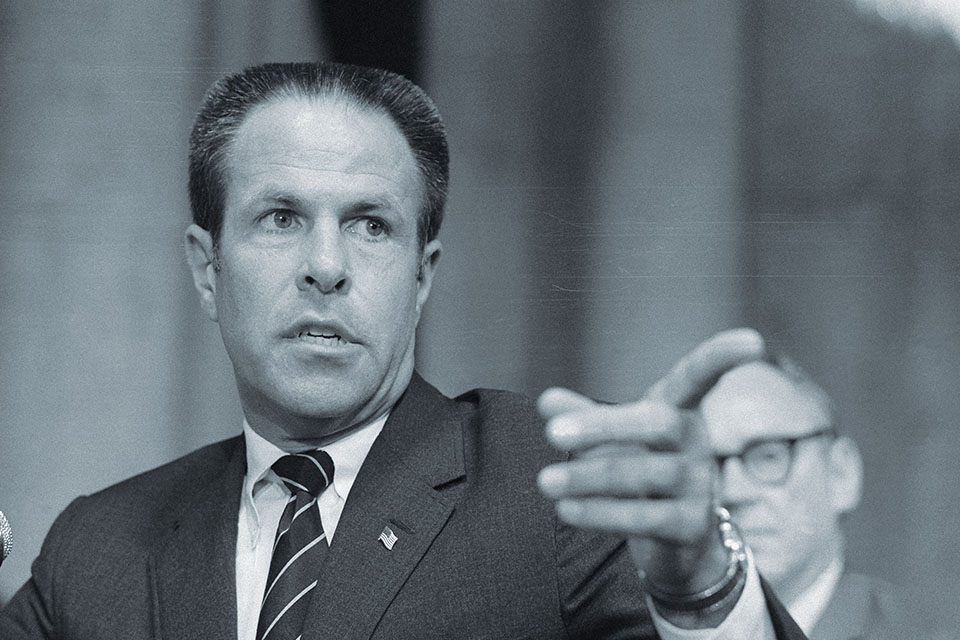
H.R. Halderman (1926-1993, former Chief of Staff for President Nixon.)
Haldeman was Nixon’s Chief of Staff. There is no evidence that he had anything to do with the planned or ordered Watergate break-in, but Whipple shows he participated in a Watergate cover-up. Though Haldeman’s actions after the Watergate scandal are reprehensible, the point made by Whipple is that Haldeman set the table for what an effective Chief of Staff should be for a President. Haldeman acts as a consummate gatekeeper. One can criticize Haldeman’s bad decision to try and coverup Watergate, but he defined the role of a President’s Chief of Staff. Whipple shows Haldeman manages access to the President, understands where the power of government lies, has a good understanding of staff members surrounding the President, protects the President’s time, and balances a President’s policies with the politics of his party.
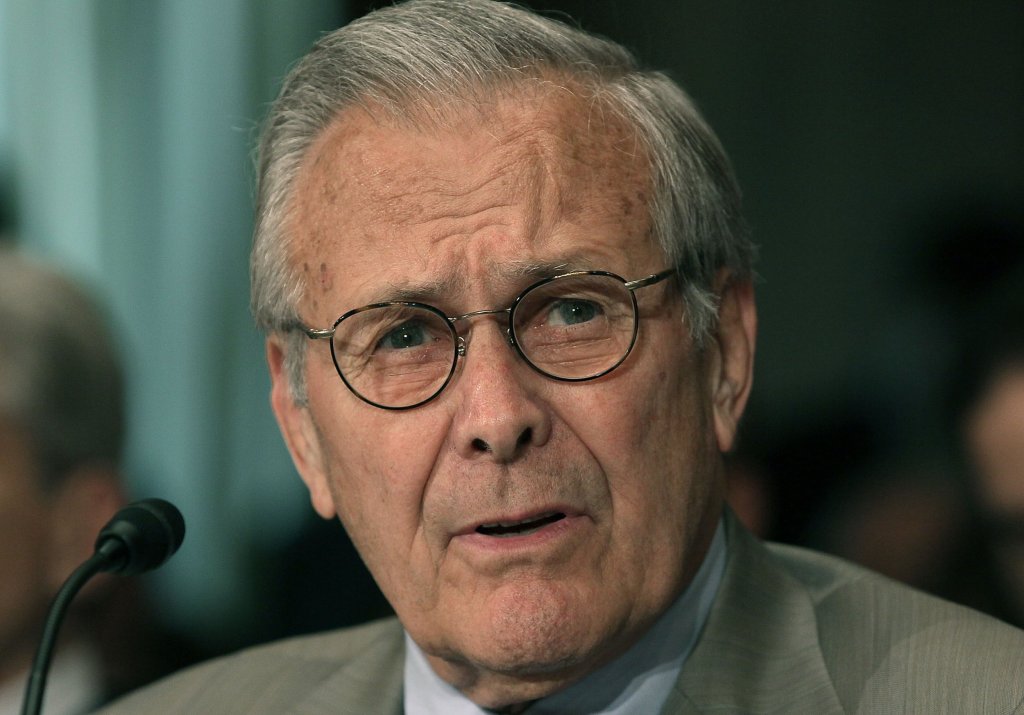
Donald Rumsfeld (1932-2021, Secretary of Defense and former Chief of Staff for President Ford.)
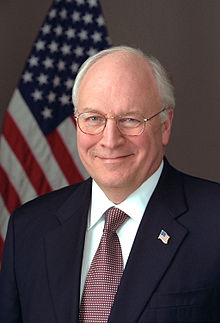
President Ford’s Chief of Staff is Donald Rumsfeld with Dick Cheney as Deputy Chief of Staff. Rumsfeld is characterized as a mentor to Cheney. They had a close relationship according to Whipple. Ford’s political decision to give a full pardon to Nixon and clemency for Vietnam draft dodgers were hot potato issues that were abetted (if not endorsed) by Rumsfeld and Cheney. Most significantly Ford ended America’s war in Vietnam. Ford endorses tax increases to reduce inflation while supporting tax cuts to stimulate the economy. Ford increases congress’s role in foreign policy.
Dick Cheney (1921-2025, second Chief of Staff for President Ford.)
In a cabinet reorganization Cheney becomes the Chief of Staff and Rumsfeld switches to Secretary of Defense. Rumsfeld and Cheney, in their roles as Chiefs of Staff, control access to President Ford, coordinate policy actions, shape internal decision-making, and advise Ford on strategy to influence people who accomplish these acts. The two Chiefs influenced Ford to replace Kissinger as National Security Advisor, promote George Bush as CIA Director, and prepare Ford for the next election which is ultimately lost to Jimmy Carter.
Hamilton Jordan (1944-2008, Chief of Staff of President Carter.)
When elected, President Carter felt he did not need a Chief of Staff. However, he relented in 1979, when he found the job was needed. Carter hired Hamilton Jordan who had been his campaign strategist when he ran for President. Whipple notes that appointment became a mistake because of Jordan’s lack of discipline. Though the Ford administration fought the idea of promoting Reagan for President, the public felt otherwise.
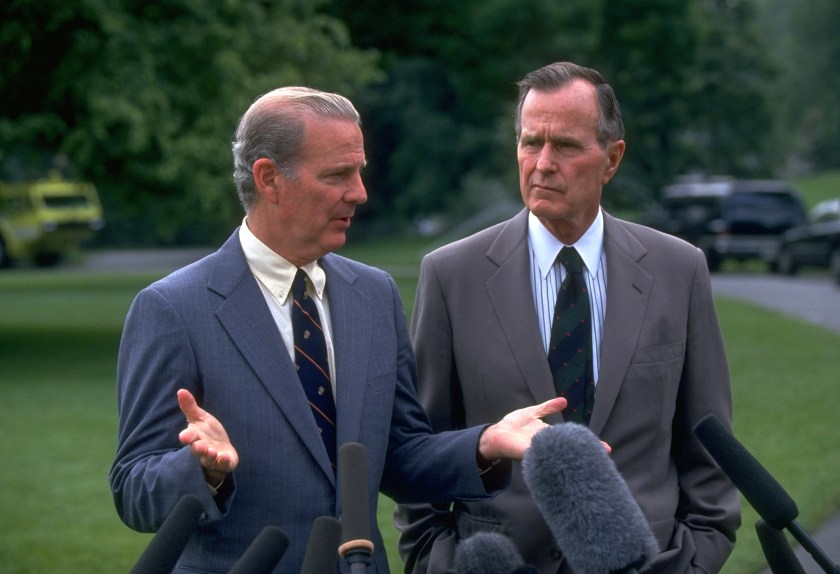
James Baker (1930-, Chief of Staff for President George H.W. Bush.)
After Carter, when Reagan is elected, he chooses James Baker as his Chief of Staff. Whipple suggests Baker is the quintessential model of a great Chief of Staff which all could be measured against. Baker is characterized by Whipple as an expert at managing the White House, the press, and Capitol Hill. Baker understood the process, the politics, communication, and presidential management requirements of the job. He never confused himself with the power of the President. He became manager of what is called the Reagan Revolution. The political and social movement revolves around ideas of smaller government, deregulation, cutting taxes, and endorsement of free enterprise. Whipple infers the success of the Reagan Revolution is largely due to the skill of James Baker.
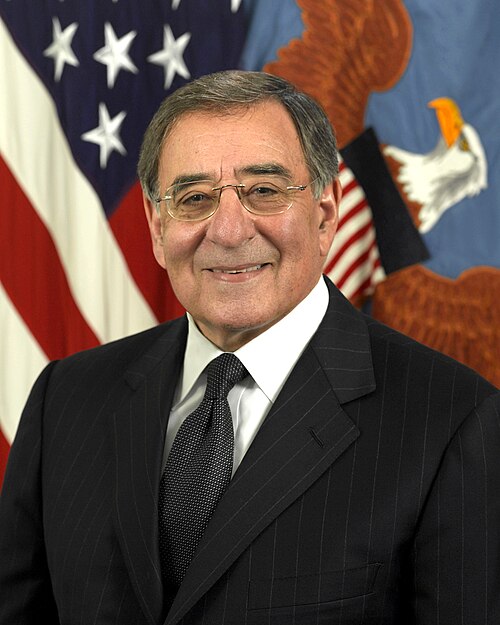
Leon Panetta (1938-, Chief of Staff for President Clinton.)
One may argue Reagan caused America’s 1990-91 recession. Unemployment had risen to 7.8%. This set the table for a Democratic President named Bill Clinton. The initial Chief of Staff for Clinton is John Podesta who served from 1998-2001 and is replaced by Leon Panetta who, in the author’s opinion, rivals James Baker as a great Chief of Staff. Whipple infers that, without Panetta, Clinton would not have been reelected after the Monica Lewinsky affair. Panetta brought discipline and structure to the Clinton White House. Panetta could say “no” to the President, at least, in private. Panetta gained a reputation for being an honest broker as a negotiator for the President.
Andrew Card on the left. Joshua Bolten on the right.
George W. Bush, the next President, is noted to have two Chief’s of Staff during his two terms as President. It appears both Andrew Card and Joshua Bolten were more soldiers than Chiefs of Staff for George W. Bush. The policy decider is certainly George W. Bush but the influence of Dick Cheney as Bush’s V.P. seem a major influence on George W.’s decisions. Bush’s two Chief’s of Staff may have been effective as screeners but not as Chiefs of Staff that could say no to a President influenced by his cabinet and personal opinions. The entry to the wars in Afghanistan and Iraq suggests Card and Bolten were unduly influenced by others in the administration.
No one seems inclined to say no to President Bush in private. In retrospect, President Bush seems let down by his Chief’s of Staff and the research and judgement of his Department Heads. Both Afghanistan’s and Iraq’s invasions by the American military are retrospectively shown by most (if not all) histories as American mistakes, if not tragedies.
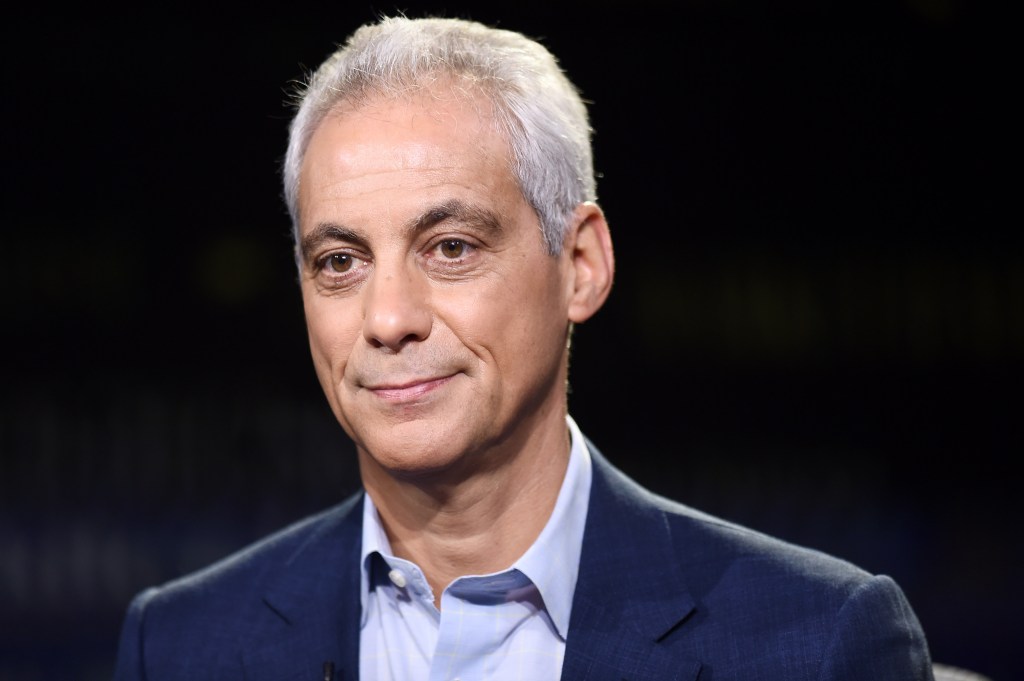
Rahm Emanuel (1959-, Chief of Staff for President Obama.)
The final chapters address Chief’s of Staff for Obama and Trump. Obama became President when the American economy is in an economic crisis that threatens the financial industry, the general economy, and the mortgage market for many American homeowners. He asks Rahm Emanuel to become his Chief of Staff. Emanuel is a tough Chicago politician who recognizes the pressure of the office and has some level of fear about the future of the American economy. He understood the gravity of the job he is being asked to take. However, his reputation as a tart tongued fighter for what he believed as right made him the best Chief of Staff that could be found. His role as gatekeeper gave Obama the support needed to pass the Obama Health Care plan and work through the economic crisis that nearly bankrupted America.
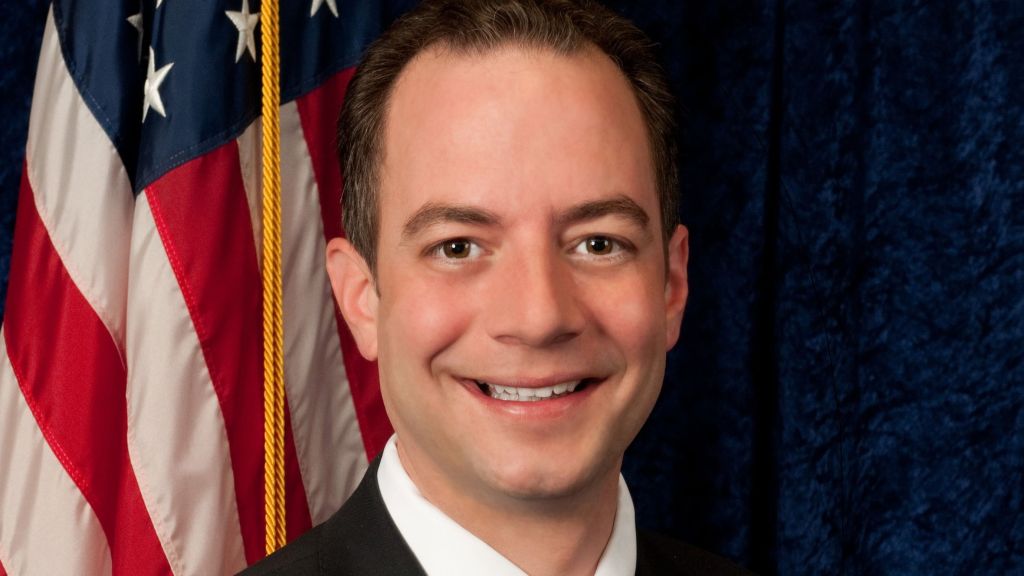
Reince Priebus (1972-, Chief of Staff for President Trump.)
Trump’s choice of Reince Priebus as his first Chief of Staff is short lived and lasts for less than 8 months. His short tenure is not evaluated, and history shows he is replaced three times in the remaining years of Trump’s first term. A pro-Trump person will have one opinion about those facts while an anti-Trump person will have another.
Whipple convinces reader/listeners that a competent Chief of Staff is critically important for any organization that approaches the complexity of a nation-state government. Without a competent Chief of Staff, democracies are subject to authoritarian tyranny.
In the pre-A.I. age, democratic socialism is unachievable, but A.I. may resurrect its potential. However, as Orwell noted, the risk is a “Brave New World” rather than a hoped-for democratic socialism.
GEORGE ORWELL (Author, 1903-1950)
In Norm Chomsky’ ‘s and Nathan Schneider’s book, “On Anarchy”, George Orwell’s book “Homage to Catalonia” is called one of Chomsky’s favorite books. “On Anarchy” infers Orwell believed in anarchy because of his role in the war (1936-1939) against the Franco government. Though Orwell’s risk of life in Spain’s war is inconceivable to me, it seems prudent to listen to his story and point to the significant difference between what Chomsky and Schneider infer about Orwell’s belief in “…Anarchism” and what Orwell really wrote and believed. Though Orwell takes anarchism seriously as a political working-class movement, he believes it is impractical and that democratic socialism (with “1984” reservations) is what he believes could be the best form of government. The idea of abolishing all forms of coercive authority and hierarchy with a government anarchy is impractical because of the nature of human beings.
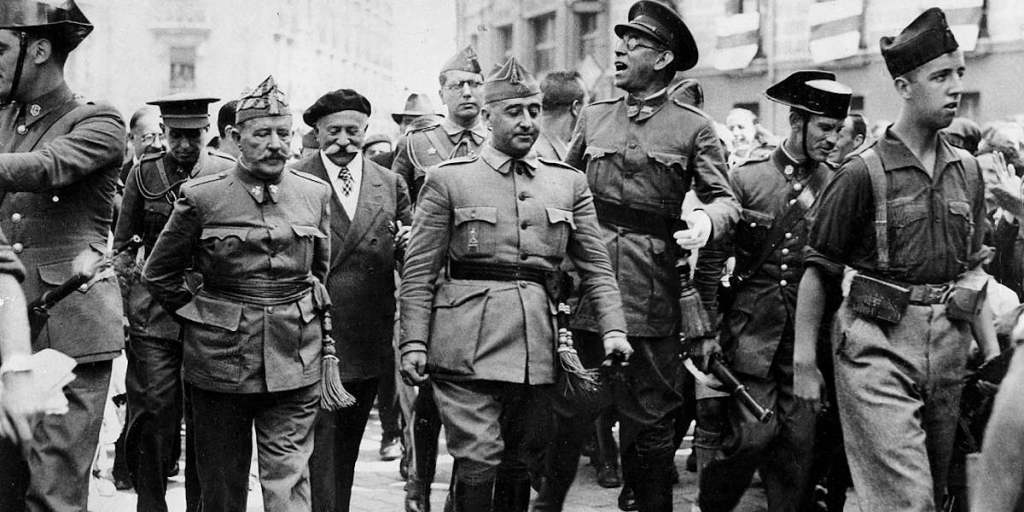
Francisco Franco with his soldiers in 1936.
Because of Orwell’s belief in democracy and equality he chooses to join the fight against Franco’s fascism. He joins the resistance at the age of 33 because of his belief in democratic socialism. He felt he needed to join the ideological struggle against Franco’s regime. It is a remarkable decision considering he is married, and relatively unknown. He is oddly driven by his moral belief in democracy and equality. Presumably, he entered the war to understand what it means to fight a war against a government he felt was immoral and totalitarian. Orwell served for approximately six months beginning in December 1936. He was shot in the throat and nearly died.
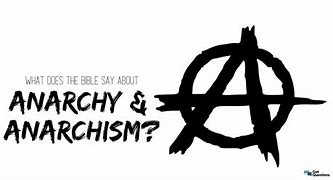
Anarchy and human nature.
It seems inconceivable that anarchism is a reasonable way of governing human nature. It is interesting to contrast what Orwell believes and what anarchists argue. This is particularly relevant in the 21st century because of the inevitable change in society that is occurring with artificial intelligence. A.I. has an immense potential for creating Huxley’s “Brave New World”. However, his writings reject the ideal of “Anarchy” espoused by Chomsky and Schneider because of its impracticality. Huxley shows that human nature contains both heroism and weakness tied to the material world. Even though human nature is basically decent, it is easily corrupted. That corruption makes humans hope and fear human decisions designed by consensus. It is not to say democratic socialism would be infallible, but it offers a structure for regulation of different governments at chosen intervals of time.
Human nature will not change. Human nature is a set of relatively stable psychological, biological, and social tendencies that are shared by all human beings. These tendencies shape how humans think, feel, and act even as culture and governance changes. Artificial intelligence will only intensify the strengths and weaknesses of human nature. The principles of anarchy in an A.I. world is frightening:
No centralized government, police, or standing armies.
Society organized through federations of communes, cooperatives, or councils.
Emphasis on direct democracy, mutual aid, and local autonomy.
Suspicion of any coercive authority — even democratic majorities.
Change often imagined as revolutionary, not incremental.
A more rational alternative to Anarchy is Democratic Socialism believed by Orwell and espoused by MLK.
The state remains, but becomes more egalitarian and accountable.
Markets may still exist, but are regulated or supplemented by public ownership.
Political parties and electoral competition are central.
Emphasis on universal programs: healthcare, education, housing, worker protections.
Change is gradual, through reforms, not revolution.
Differences of opinion.
There are obvious differences between Chomsky’s and Orwell’s beliefs. Both have social weaknesses. Human nature gets in the way of both forms of governance. Orwell seems to have recognized the weaknesses of his belief in democratic socialism in his writing of “Brave New World”. In contrast, Chomsky’s and Schneider’s pollyannish view of anarchy as “…a better form of government where power is decentralized and citizens can and should collectively manage their own affairs through direct democracy and cooperative organizations” is absurd. The difference is that Huxley foresees the dangers of his idea in “Brave New World” which anticipates something like A.I. that has the potential for society’s destruction. “On Anarchy” ignores the truth of human nature, “Brave New World” does not.
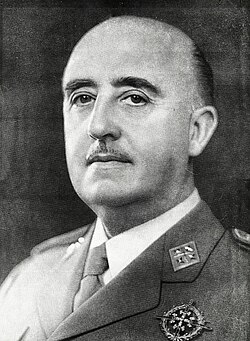
Franciso Franco (1936-1975, died in office.)
Orwell’s decision to join opposition to Franco’s dictatorship fails. Their right-wing beliefs in authoritarianism, anti-communism, and pro-Catholicism prevails. Spain’s 1930s opposition leaders (Manuel Azaña, Largo Caballero, and Juan Negrín) were pro-democracy with anti-fascist, socialists, communists, anarchists, trade unions, urban workers, and peasants who Orwell joined to support democratic socialism, not anarchy.
In the pre-A.I. age, democratic socialism is unachievable, but A.I. may resurrect its potential. However, it is the risk of a “Brave New World” or “1984” rather than a hoped-for democratic socialism.
Like America’s Civil War and the issues of slavery and independence, peace will only come to Israel with a political and territorial agreement based on human equality.
Books of Interest Website: chetyarbrough.blog
BEING JEWISH AFTER THE DESTRUCTION OF GAZA (A Reckoning)
Author: Peter Beinart
Narration by: Malcolm Gladwell
Peter Beinart (Author, journalist, political commentator, professor, former editor of the New Republic, born in Cambridge, Mass. to Jewish immigrants from S. Africa.)
This is a surprising Jewish author’s analysis of Israel’s response to the horror of Hamas’ murders/rapes of 1200 people and the taking of 251 Jewish hostages on October 7, 2023. Peter Beinart appears to be a devout Jew and journalist who criticizes Israel’s response to Hamas’s brutal attack and hostage taking. He believes, as current news reports confirm, Hamas will return to control and influence Gaza and West Bank Palestinians after Israel’s brutal response to the Hamas’ atrocity.
NYT’s Picture of Grief over the Hamas attack on October 7th, 2023.
Without reservation, Beinart condemns Hamas for their war crime on October 7th. However, his book equally condemns Netanyahu’s response. Beinart points to the Israeli government’s destruction, murder, and starvation of thousands of Palestinian men, women, and children who had nothing to do with the planning or execution of the Hamas horror of October 7th. The author argues Israel must focus on a political, non-military solution to Palestinian human rights. He believes Netanyahu’s actions only perpetuate a cycle of violence in Israel which will not achieve security for either the Israeli or Palestinian people.
One wonders how unpopular Beinart’s opinion may be among Israel’s Jewish population. As a blogger who received written comments from a devout Jewish person who supports Trump and Netanyahu’s actions in Israel, it is surprising to hear Beinart’s analysis of the Gaza war and his criticism of Israel’s actions. As the reviewer of this book who admittedly has little respect for religion and its history of atrocities, it is encouraging to hear from one who believes in their religion and condemns those who have no empathy for other religions. God is a universal concept with religions that worship His existence in different ways. Beinart makes one wonder why there is so little room for a “let it be” attitude toward different religious beliefs.
Empathy.
Beinart argues for Jewish empathy toward Palestinians while condemning Hamas’ actions in Israel. He believes long-term peace requires political compromise and a recognition of Palestinian rights. Military actions only guarantee rather than deter future violence and injustice. Beinart’s plan is to end Israeli’ occupation of Gaza and expand the rights of Palestinians to control Gaza and the West Bank. He argues it can be either a one-state or two-state solution. Beinart argues ground invasion by Israel in Gaza must stop. He recommends forthrightly engaging the humanitarian crises in Gaza by providing aid and rebuilding what has been destroyed.
Pursuit of peace is not easy.
None of this is easy because of the enmity that remains. The complications of political opposition, and security are ongoing concerns for Israelites and Palestinians, but Beinart believes the risks of a negotiated political, religious, and territorial settlement is worth it. Human equality is a work in progress for all nations in the world. Beinart persuasively argues a political and territorial agreement between Palestinians and Israelites is the only possible path to peace. Like America’s Civil War and the issues of slavery and independence, peace will only come to Israel with a political and territorial agreement based on human equality. Of course, the drive for equality remains a work in progress for America. That will be true in Israel for generations to come, but peace can be restored with pursuit of equality for Palestinians and Jews.
America’s next President needs to forcefully change the economic direction of America in the same way Timothy Egan shows Franklin Roosevelt and the Secretary of Agriculture, Henry Wallace, did during the Dust Bowl and Depression era.
Books of Interest Website: chetyarbrough.blog
THE WORST HARD TIME (The Untold Story of Those Who Survived the Great American Dust Bowl)
Author: Timothy Egan
Narration by: Jacob York
Timothy Egan (Author, American journalist, former op-ed columnist for The New York Times, won the National Book Award in 2006 for “The Worst Hard Time”.)
Timothy Egan wrote an interesting history of America during the dust bowl years that resulted in the Great Depression that lasted from 1929 to the early 40s. “The Worst Hard Time” has concerning parallels to today’s economy. Timothy Egan notes the Dust Bowl is caused by climate change, water scarcity, and energy transition, i.e. all conditions of the year 2025.
Contrary to Trump’s belief that global warming is a cycle of nature, most scientists argue the earth is warming because of the world’s burning of fossil fuels.
Clean potable water is a growing threat to a rising world population.
American Oil Refineries.
Transition from fossil to renewable energy sources is being delayed by the Trump administration.
Agricultural markets dramatically rose and fell in the 1920s and 30s. Wealth and greed created by wheat farming blinded farmers to the harm they were doing to the Nebraska, Oklahoma, and Texas panhandle plains of middle America. With the scarification of soil and seasonal planting and harvesting of wheat, millions of acres of grass land were left barren between crop seasons.
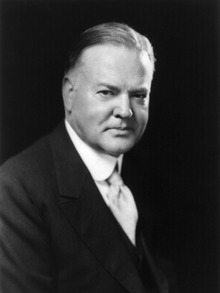
Trump is a sad reminder of the political blindness of Herbert Hoover.
Herbert Hoover (31st President of the United States.)
Tariffs and anti-immigration policies were instituted by the Hoover administration as a response to declining prosperity caused by excessive wheat farming cultivation. This is reminiscent of President Trump’s response today with tariffs, militant immigration policies, and his rejection of science that warns of the impact of global warming.
Trump’s modus vivendi.
Artificial Intelligence in today’s economy has increased investment of billions of dollars in today’s money like that spent to grow and harvest wheat in the 1920s. Investment in farmland skyrocketed in the 1920s with farming as a way to increase wealth with cultivation of land that was nearly free in Nebraska, Oklahoma, and the Texas panhandle. Today, massive investments in A.I. are being made by wealthy tech company owners. Without pragmatic and careful implementation of A.I. to America’s economy, tech company’ investments may have the same consequence to its investors as the farming collapse had to the wheat farmers.
A.I. will become the engine of American economic improvement just as Industrial Revolution changed agricultural production.
Today, A.I., rather than industrialized agriculture, has become the great economic engine of America. Today’s massive investments are in A.I. rather than wheat harvesting. The collapse of wheat prices because of oversupply disrupted the American economy because workers were not needed. A.I. will have a similar impact on all industries which may lead to the next world-wide depression.
1933 Depression bread lines.
Trump’s idea of Making America Great Again is a twentieth century idea that may lead to economic collapse rather than economic prosperity. His tariff policies set a table for damaging the world economy in the same way they did when Hoover became President. America needs to embrace the inevitable decline of human manufacturing and focus on transitioning America to a service economy. America needs more doctors, nurses, social workers, educators, house builders, scientists, and ecologically minded politicians rather than investors and manufacturers of disposable conveniences. At the same time, regressive tax policies that penalize the poor and enrich the wealthy need to be changed. Tax revenue needs to be focused on America’s economic transition from a disposable manufacturing economy to service and ecological preservation industries.
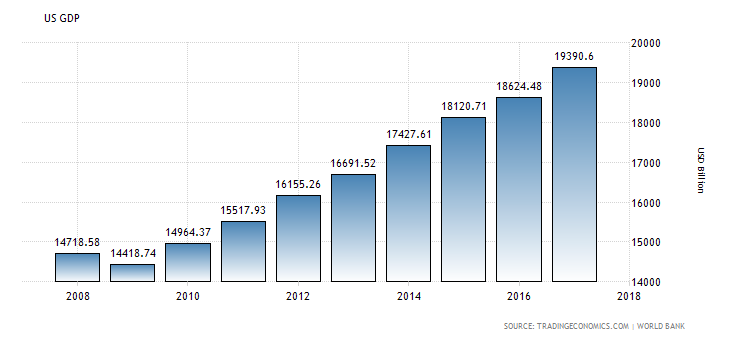
The hope for GDP growth in America’s future depends on a change in economic direction.
America’s next President needs to forcefully change the economic direction of America in the same way Timothy Egan shows Franklin Roosevelt and the Secretary of Agriculture, Henry Wallace, did during the Dust Bowl and Depression era. The reversal of Trump’s mistakes will take more than one four-year-term for correction, but the next election needs to set a different course for the American economy.
Harris’s tough mindedness and potential are well illustrated in “107 Days”. America is ready for a woman to be President, but Ms. Harris may have too much baggage to be a successful candidate for President in 2028.
Books of Interest Website: chetyarbrough.blog
107 DAYS
Author: Kamala Harris
Narration by: Kamala Harris
Kamala Harris (Author, former V.P. of the United States and former California attorney general.)
The obvious message of Kamala Harris’s book “107 Days” is that the Democratic Party lost the presidency because of the compressed time for Harris to mount her campaign. There are many reasons noted for Harris’s failure to get elected as President of the United States. She notes Biden’s weak candidacy, party disorganization, misinformation and disinformation, foreign policy controversies and protests, polarization and turnout problems, and cultural/generational messaging gaps. “107 Days” is a well written and narrated story of the difficulties that Harris had in her political race against Donald Trump. Her book is a compelling argument. However, it seems her most likely cause of defeat is time.
Donald Trump (President of the U.S., politician, media personality, born into a wealthy New York City family, has a B.A. in Economics from University of Pennsylvania.)
Retrospectively, Harris’s story makes many think she would have been a better President than Donald Trump. The story of her book reinforces that belief. However, that is misleading in the sense that Harris is faced with two burdens that are difficult, if not impossible, to overcome. One, America has never had a woman President and two, Harris is too closely associated with the administrations cover-up of Biden’s intellectual decline. There are many causes one can give to understand why Harris is defeated but time to know who she is seems the most crucial.
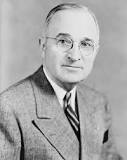
Vice President Harry Truman became President with the death of Franklin Roosevelt.
It seems most Vice Presidents of the United States are viewed as figure heads or pawns to increase votes for the person who is running for President. The duties of a Vice President today seem more like “gopher” jobs that give little visibility to the character of the person chosen to be Vice President. Only when that person becomes President, does the world find out who the Vice President is and what capabilities he (before Harris, they were all men) brings to the office. (For example, Trump’s successor, if it was his V.P., is unknown and unpredictable.) Harry Truman, retrospectively, is one of the great Presidents of the United States but no one thought a part owner and proprietor of a grocery store could be a competent President of the United States.
Five V.P.’s in history became Presidents of the United States.
Though there have been several Vice Presidents (John Adams, Thomas Jefferson, Martin Van Buren, Richard Nixon, and Biden) who have successfully become Presidents of the United States their election was determined by campaigning. Regardless of whether time was the determining factor in Harris’s loss of the Presidency, her book shows she has the intelligence and ability to be America’s President. What that means to her and the future of America is unknown. One presumes Harris will consider running for President, but one suspects the burden of her loss to Trump is likely to diminish her chance of getting enough political support for her candidacy.
Presidents of the United States.
Harris’s tough mindedness and potential are well illustrated in “107 Days”. America is ready for a woman to be President, but Ms. Harris may have too much baggage to be a successful candidate for President in 2028.
Like abolition, women’s suffrage, labor, civil rights, LGBTQ, and MeToo movements of the distant and near past, capitalism’s reform is due.
Books of Interest Website: chetyarbrough.blog
SAVING CAPITALISM (For the Many, Not the Few)
Author: Robert B. Reich
Narration by: Robert B. Reich
Robert Reich (Author, American professor, lawyer and political commentator that worked in the Geral Ford and Jimmy Carter administrations, and served as th secretary of labor in Bill Clinton’s administration.)
Robert Reich, as an advisor to Presidents of the United States is recognized by Time Magazine as one of the Ten Best Cabinet Members of the 21st Century and by the Wall Street Journal as one of the most influential business thinkers in 2008. In “Saving Capitalism” Reich criticizes corporate America for unethical and unfair capitalist practices that make a mockery of capitalist equality.
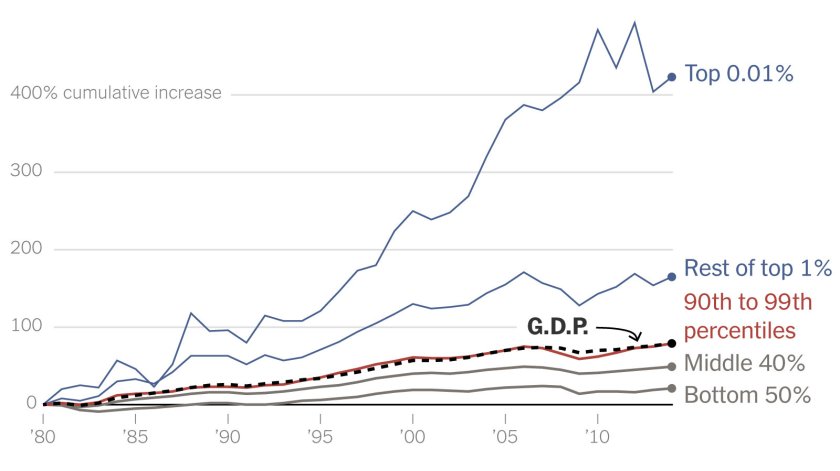
U.S. Rising Income Disparity.
Economic class warfare in America is a time worn argument by many economists in the 20th and 21st century. Reich’s topical analysis has some truth, but his analysis of wealth and markets oversimplifies the complexity of American capitalism. One cannot deny the harm that capitalist greed has done to increase wealth of the rich and decrease wealth of the poor in America. The political system is rigged by the influence of wealth over political policy and economic equality.
American capitalism’s rigging begins at birth, carries through public education, and ends in low-income opportunities for the poor.
The power of wealth feeds American capitalist Democracy’s circle of life. Money of the wealthy is spent to birth and educate their children with the best medical care and schools in America. The corporations and super rich of America hire and fund lobbyists who promote corporate agendas to support government representatives’ campaigns for office. The aspiring representatives are people who owe their allegiance to corporations and the rich who helped get them elected. That circle is biased toward making the rich richer.
Equality of opportunity is rigged in ever-larger corporations that reap super profits and pay CEO’s millions of dollars per year while low wage earners are left to fend for themselves. Mega corporations should be broken up like the oil industry dismantling in 1911. Like Standard Oil, today’s conglomerates have too much power over consumer purchasing, advertising, social media, medical industries, and (most importantly) the election process of America. The rigging begins with healthy birthing of children of the rich, extending to less qualified schooling for the poor, and ending with low-wage family’s children having unequal economic opportunity.
One cannot deny that Reich’s book and this biased review are an ideological belief that distorts and oversimplifies reality, but it carries an element of truth that cannot be denied. How can one person be worth a potential trillion-dollar net worth for service as CEO of one company that makes electric cars. Corporations like Amazon, Google, Facebook, UnitedHealth Group, and Cencora control markets through their size to capture disproportionate shares of advertising, social media, retail sales, and medication industries without competition to moderate their power, and influence. Add billionaires like Elon Musk, Larry Ellison, Mark Zukerberg, Larry Page, Steve Ballmer, Warren Buffett, and Michael Dell and others of great wealth–one is inclined to believe American capitalism is rigged.
As brilliant as Musk shows himself to be, his fragile ego diminishes his genius.
There is an unfairness in criticizing the wealthy for their success in America. They are not wealthy because of luck but because of their innate abilities, risk taking, and hard work but influence should not come from the power of their wealth to change government policies that focus on enriching themselves. Just as the robber barons had their influence curbed by antitrust legislation, the same should be done today. The influence of lobbyists and their support should be more publicly disclosed. The federal government should play more of a financial role in improving public education. Cries of inequality should be exposed, critiqued, and adjudicated fairly.
Capitalism remains the best economic system in the world, but it has its weaknesses. The best prescription for that weakness is equality of opportunity in the arena of employment competition. It begins with fair and equal access to medical care and access to a good education.
Like abolition, women’s suffrage, labor, civil rights, LGBTQ, and MeToo movements of the distant and near past, capitalism’s reform is due.
In listening to “Replaceable You, one’s thoughts go to Robert Kennedy’s belief that vaccines are a threat rather than aid to societal health.
Books of Interest Website: chetyarbrough.blog
REPLACEABLE YOU (Adventures in Human Anatomy)
Author: Mary Roach
Narration by: Mary Roach
Mary Roach (Author, writer who specializes in humor about popular science, has several NYT’s bestsellers.)
Mary Roach writes an irreverent history about human body parts that have been found to be replaceable with varying degrees of success. The range of her observations run from the humorous to macabre to the sadly tragic.
Humor is subject to the mind of the beholder, but Roach offers a history of nose replacements, dentures, penial replacements, ostomy bag mishaps, hair transplants, and experiments with different materials used to replace body parts. She experiences what it is like to live in a tube designed to aid breathing for one living with paralytic polio. She recounts the famous astronomer, Tycho Brahe who lost his nose in a duel, and had it replaced with a glued metal protuberance that periodically fell off. He became known as the man with the golden nose, though it may have been made of brass.
Dentures became known as “wigs of the mouth” as they came into the 19th century.
Roach alludes to George Washington’s dentures and how uncomfortable and prone they were to be falling out at times of passion (like kissing), chewing sticky or hard foods, or vociferously arguing with subordinates. Made of ivory, animal or human teeth, they were secured with gold wire, bone bases, and/or rubber fittings. Based on excavation in Egyptian times, human and animal teeth and bone were found to be teeth held together with gold wire. Either suction or straps held the dentures in place. Contrary to the myth of wooden teeth for George Washington, historians believe ivory was used in his dentures. They were fastened together by metal springs and bolts and secured to his remaining natural teeth which dwindled to one tooth as he aged.
Roach explains the history of penial transplants that is funny to some while interesting and important to others.
Fingers are sometimes amputated as the structure for penile replacement. She comically suggests an articulated finger allows the transplant to be knuckled under to mitigate appearance of a perpetual erection. Roach goes to great lengths (ahem) to explain how important an implant is to men. A man’s thoughts may wander in a different direction than the author’s view of a successful operation. In any case, Roach’s history shows how accessible and thought-provoking penial implants have become.
An ostomy is a surgically created opening to allow waste to be expelled from the body.
An ostomy can be more precisely identified as a colostomy, an ileostomy, or a urostomy. The first is an opening to the large intestine while the second is an opening to the small intestine. The third, a urostomy is a urinary opening that allows healing of the other two when surgically completed. The urostomy may also be required because of bladder cancer or infection and other maladies related to the urinary track. To keep Roaches story a little less gruesome she tells stories of inadvertent noises and sloshing that occurs with ostomy bags. Like dentures falling out of one’s mouth, ostomy bag use can make unexpected noise or inopportune leaks. They are like “portable embarrassment machines” that can either lead to mutual laughter or embarrassing incidents. Roach contrasts the seriousness of medical necessity with the absurdity of life.
Early ventilator’s first use.
The most heartbreaking issue of Roach’s stories is of polio survivors who are unable to breath without help. Severe loss of muscle function in polio victims required placement in long negative atmosphere tubes in which a patient is confined to stimulate muscle movements for one to breath. Today, a portable positive-pressure ventilator largely replaces the human iron lung. Roach briefly uses one of the iron lungs shown above, but the discomfort made her ask to be removed from the confining contraption within minutes of enclosure.
In listening to “Replaceable You, one’s thoughts go to Robert Kennedy’s belief that vaccines are a threat rather than aid to societal health.
Mary Roach implies Kennedy and America’s current President are fools. To me and presumably to Roach, downsizing the National Institute of Health that researches and tests medical treatments for presently incurable diseases and physical disabilities is a national disgrace.
Putin has been indicted by the International Criminal Court for war crimes, unlawful deportation and transfer of Ukrainian children but has not yet faced trial. One suspects President Putin faces the same “slap of the hand” as Pinochet and will die of natural causes without being convicted for his crimes.
Books of Interest Website: chetyarbrough.blog
38 LONDRES STREET (on Impunity, Pinochet in England, and a Nazi in Patagonia)
Author: Phillip Sands
Narration by: Phillip Sands
Peter Sands (Author, Executive Director of the Global Fund to Fight Aids, Tuberculosis and Malaria, former CEO of Standard Chartered, known as a British Banker.)
Peter Sands book is interesting and a compelling history that would have been clearer if, at the beginning of his book, he had more precisely identified Augusto José Ramón Pinochet Ugarte’s atrocities in Chile. Those atrocities are detailed after one is nearly halfway through the book.
“38 Londres Street” is the address at which torture, illegal detentions and assassinations took place under the leadership of Pinochet. Sands explains 40,000 people were detained or tortured under Pinochet’s regime. 3,000 people were killed or disappeared during Pinochet’s reign. He ruled Chile for 17 years before being arrested in London when a Spanish judge issued a warrant for his arrest for genocide and terrorism. This was the first time a former head of state was charged for a crime by a universal jurisdiction.
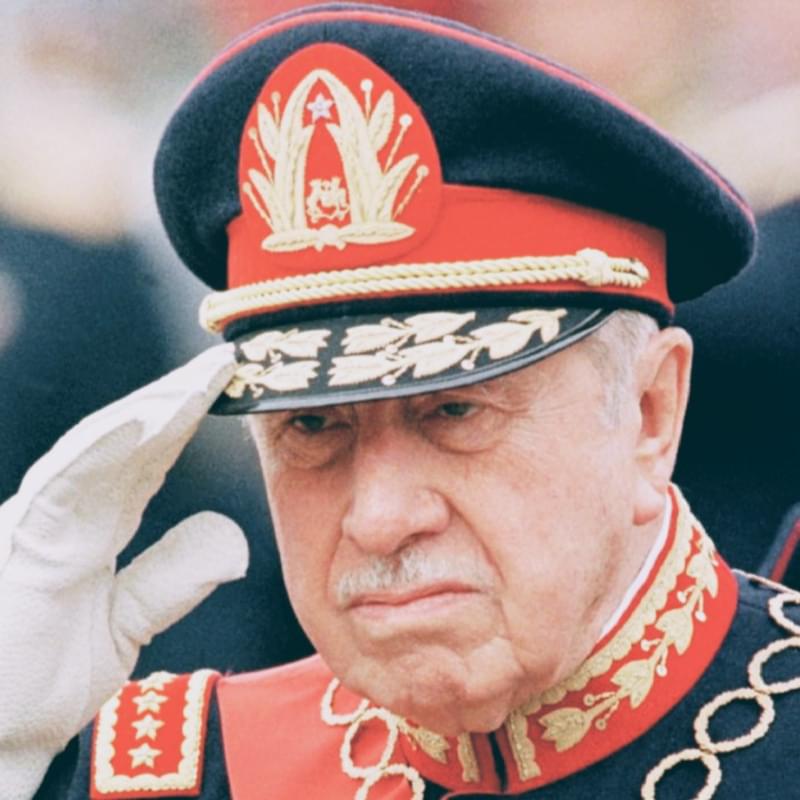
Augusto Pinochet (born in 1915-died in 2006. As a military officer and politician, he instituted a military coup to become dictator of Chile from 1978 to 1990.)
Pinochet became Dictator of Chile when he overthrew President Salvador Allende in 1973.
Because of mining and trade interests in Chile by American and British corporations, along with distrust of Allende’s Socialist Party and Marxist beliefs, Allende was considered an enemy of America’s and Great Britain’s leadership. Allende was often labeled as a Communist because of nationalizing Chile’s copper mines, redistributing land, and increasing wages for less wealthy Chileans.
In truth, Allende rejected the idea of a one-party communist state while believing Chile should gradually become a Democracy. Both America and Great Britain supported Pinochet’s revolution because of their economic interest in trade with Chile and their opposition to his socialist beliefs. Declassified records show the CIA funded opposition parties to destabilize Allende’s government. Because Britain was a close ally of America and had economic interests in Chile, both Nixon and Edward Heath, the Prime Minister of Great Britain, supported Pinochet’s military junta. When Margaret Thatcher became Prime Minister, she also supported Pinochet’s government. In the atmosphere of the cold war, Pinochet’s rebellion seemed in the best interest of America’s and England’s leadership.
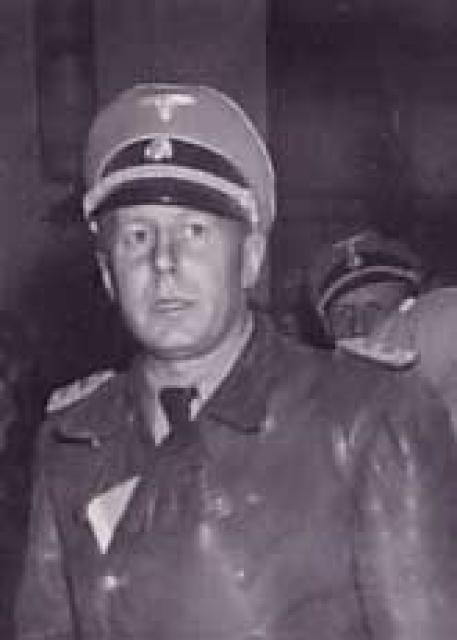
Walter Rauff was a Nazi commander during WWII who escaped justice for exterminating an estimated 100,000 people in gas vans. Rauff designed the vans for Hitler’s occupation of Poland, Russia, and Ukraine. The picture to the right is Rauff as he appeared in Chile as an employee of Pinochet’s government.
The reason for the Chilean coup is not what Phillip Sands is primarily interested in but, as an author and lawyer, he explains the significant change in jurisdictional law with Pinochet’s indictment. It set a precedent for a foreign country’s right to indict another country’s leadership that tortures, disappears, and kills its own citizens.
The most troubling part of his argument for the change in international law is that it seems ineffective when only viewed from the indictment of Pinochet. To find a leader chargeable for genocide is important, but Chile’s protection of death camp SS officers like Walther Rauff reminds one of Putin’s atrocities as President of Russia. Rauff was protected by Pinochet’ government despite his role in Nazi Germany. Sands notes that Rauff assisted Pinochet in Chile’s repressive activities at 38 Londres Street.
Rauff’s disguised ambulances used to gas Jewish citizens and others.
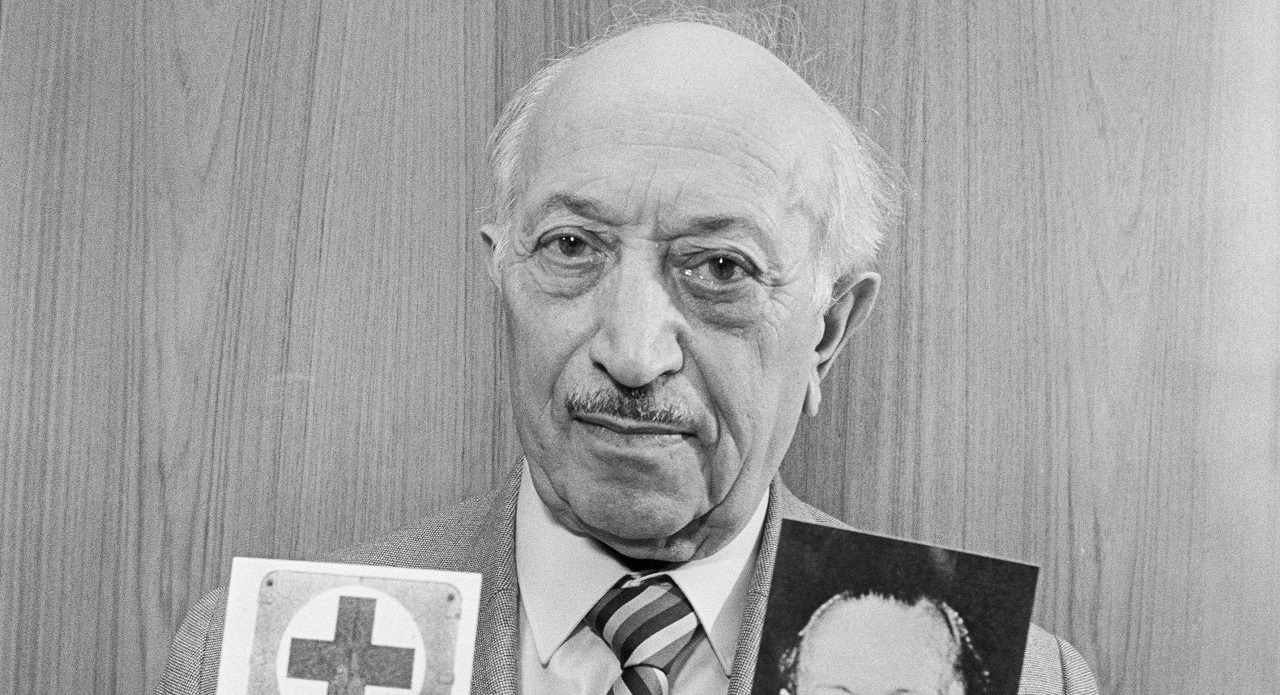
The last half of Sands’ book is about the extensive interviews and research he did on Rauff’s past life. Like Pinochet, Rauff escapes justice and dies of natural causes. However, Jewish Nazi hunters did track down Rauff with the intent of killing him. Sands explains they were unsuccessful despite having knocked on his door before being denied access by a woman who answered the knock.
Magistrate Baltasar Garzón (Former judge of Spain’s central criminal court that set the precedent for universal jurisdiction.)
The world owes Spain gratitude for embracing universal jurisdiction despite its failure to successfully hold Pinochet for his crimes against humanity. That precedent gives weight to the principle of international justice. Magistrate Baltasar Garzón used the Pinochet case to set the precedent that sovereignty does not shield perpetrators of torture and genocide to be free of indictment and its potential for punishment. Adolf Eichmann is brought to justice in 1961 and the survivors of the 2003 massacre in Bolivia were awarded $10 million in damages.
One’s thoughts go to Putin’s incarceration of Navalny, his ordered slaughter of Chechens and his aggressive war against Ukraine. Navalny exposed Putin’s corruption in state-owned companies owned by Kremlin elites, i.e. the same elites that support the war in Ukraine.
Will Putin escape the long arm of the law?
As a professor of international law, Sands gives listener/readers a view of the important precedent of universal jurisdiction with the successful arrest of Pinochet for crimes against humanity. The irony of Sands history of this precedent is that Pinochet is not convicted and returns to Chile in 2000. Pinochet dies in 2006 at age 91. Putin has been indicted by the International Criminal Court for war crimes, unlawful deportation and transfer of Ukrainian children but has not yet faced trial. One suspects President Putin faces the same “slap of the hand” as Pinochet and will die of natural causes without being convicted for his crimes.
A.I.s’ contribution to society is similar to the history of nuclear power, it will be constructively or destructively used by human beings. On balance, “Burn-In” concludes A.I. will mirror societies values. As has been noted in earlier book reviews, A.I. is a tool, not a controller of humanity.
Books of Interest Website: chetyarbrough.blog
BURN-IN (A Novel of the Real Robotic Revolution)
Author: P. W. Singer, August Cole
Narration by: Mia Barron
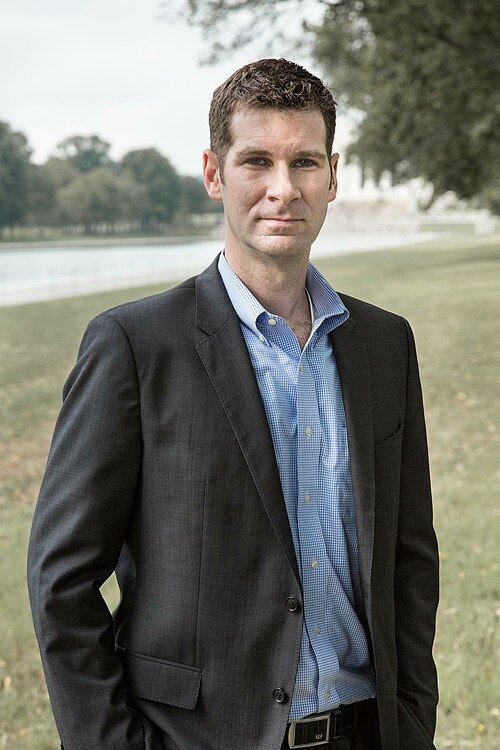
Peter Warren Singer (on the left) is an American political scientist who is described by the WSJ as “the premier futurist in the national security environment”. August Cole is a co-author who is also a futurist and regular speaker before US and allied government audiences.
As an interested person in Artificial Intelligence, I started, stopped, and started again to listen to “Burn-In”.
The subject of the book is about human adaptation to robotics and A.I. It shows how humans, institutions, and societies may be able to better serve society on the one hand and destroy it on the other. Some chapters were discouraging and boring to this listener because of tedious explanations of robot use in the future. The initial test is in the FBI, an interesting choice in view of the FBI’s history which has been rightfully criticized but also acclaimed by American society.
Starting, stopping, and restarting is a result of the author’s unnecessary diversion to a virtual reality game being played by inconsequential characters.
In an early chapter several gamers are engaged in VR that distracts listeners from the theme of the book. It is an unnecessary distraction from the subject of Artificial Intelligence. Later chapters suffer the same defect. However, there are some surprising revelations about A.I.’s future.
The danger in societies future remains in the power of knowledge. The authors note the truth is that A.I.’s lack of knowledge is what has really become power. Presumably, that means technology needs to be controlled by algorithms created by humans that limit knowledge of A.I.’ systems that may harm society.
That integration has massive implications for military, industrial, economic, and societal roles of human beings. The principles of human work, social relations, capitalist/socialist economies and their governance are changed by the advance of machine learning based on Artificial Intelligence. Machine learning may cross thresholds between safety and freedom to become systems of control with potential for human societies destruction. At one extreme is China’s surveillance state; on the other is western societies belief in relative privacy.
Robot evolution.
Questions of accountability become blurred when self-learning machines gain understanding beyond human capabilities. Do humans choose to trust their instincts or a machines’ more comprehensive understanding of facts? Who adapts to whom in the age of Artificial Intelligence? These are the questions raised by the authors’ story.
The main character of Singer’s and Cole’s story is Lara Keegan, a female FBI agent. She is a seasoned investigator with an assigned “state of the art” police robot. The relationship between human beings and A.I. robots is explored. What trust can a human have of a robotic partner? What control is exercised by a human partner of an A.I.’ robot? What autonomy does the robot have that is assigned to a human partner? Human and robot partnership in policing society are explored in “Burn-In”. The judgement of the author’s story is nuanced.
In “Burn-In” a flood threatens Washington D.C., the city in which Keegan and the robot work.
The Robot’s aid to Keegan saves the life of a woman threatened by the flood as water fills an underground subway. Keegan hears the woman calling for help and asks the robot to rescue the frightened woman. The robot submerges itself in the subway’ flood waters, saves the woman and returns to receive direction from Keegan to begin building a barrier to protect other citizens near the capitol. The Robot moves heavy sacks filled with sand and dirt, with surrounding citizens help in loading more sacks. The robot tirelessly builds the barrier with strength and efficiency that could not have been accomplished by the people alone. The obvious point being the cooperation of robot and human benefits society.
The other side of that positive assessment is that a robot cannot be held responsible for work that may inadvertently harm humans.
Whatever human is assigned an A.I robot loses their privacy because of robot’ programing that knows the controller’s background, analyzes his/her behavior, and understands its assigned controller from that behavior and background knowledge. Once an assignment is made, the robot is directed by a human that may or may not perfectly respond in the best interest of society. Action is exclusively directed by the robot’s human companion. A robot is unlikely to have intuition, empathy, or moral judgement in carrying out the direction of its assigned human partner. There is also the economic effect of lost human employment as a result of automation and the creation of robot’ partners and laborers.








































 REVIEWS AND VIEWS OF LIFE