CIVILIZATIONS’ FUTURE

“…Western Civilization” and its Christian and democratic foundation gives little comfort to those who are worried about societies’ future.

Books of Interest
 Website: chetyarbrough.blog

“The Foundations of Western Civilization” 

By: Great Books Series

Lecturer: Professor Thomas F.X. Noble
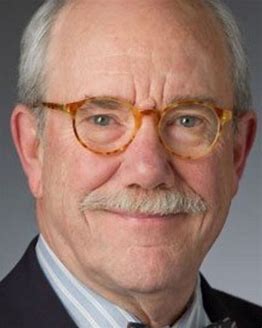
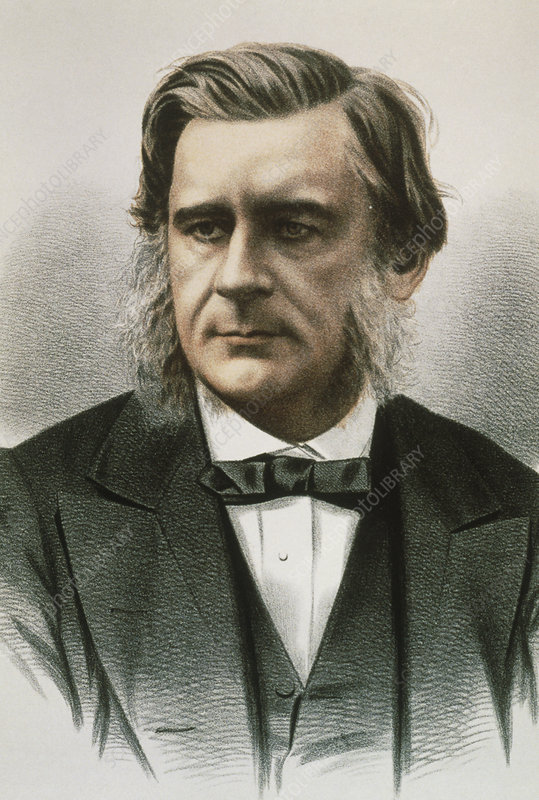
Thomas F. X. Noble (Professor at Notre Dame, Ph.D. from Michigan State University, President of the American Society of Church History, received the Charles Sheedy Prize for Excellence in Teaching in 2011.)

Noble offers a distinctive view of the foundation of Western Civilization in 48-lectures sponsored by the Great Books Series. There is little doubt about the importance of religion in the world. Noble explains how the Bible is a seminal work underpinning one of the two largest religions of the world, Christianity. Noble explains the Bible, just as the Quran in the east, provides a contract between a singular God and humanity. However, the dialectic of religion is that it binds people together as well as rips them apart. On the one hand, religious belief brings people together with belief in something greater than themselves. On the other, Christian and Islamic believers have maimed and murdered millions.

Noble explains Christianity began in the same area of the world as the Muslim religion, but several centuries earlier.

The spread of Christianity begins in the 1st century while Muslimism spread in the 7th. The ministry of Jesus Christ spread Christianity in 30-33 AD. Some would argue the New Testament Gospels of Matthew, Mark, Luke, and John are extensions of the Hebrew Bible. The Jewish Torah and Hebrew Bible emphasize the oneness of God, which is consistent with Christian belief, but the difference is that Jesus was not considered a Messiah by Jews. Jesus was, at most, only a messenger of God to Jews, like Muhammed is considered to Muslims.

Noble notes the spread of Christianity began in the Middle East, centuries before Muhammad’s spread of Muslimism in Mesopotamia.

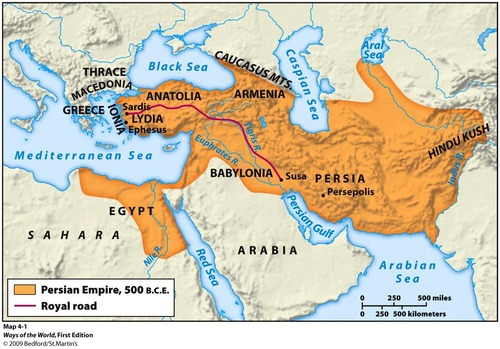
Noble suggests Christianity’s spread is associated with the advent of Zoroastrianism in Mesopotamia. The prophet Zoroaster believed in a monotheistic faith before the ministry of Jesus in Judea and before the record of Judaism in the Torah of 1400 BC, the later Holy Bible, New Testament, and Quran. The common factor in Judaism, Christianity, and Muslimism is belief in one Supreme Being. Of course, there are numerous differences in these religions after their “One God” similarity. The point is, they all originated in the Middle East according to Noble’s history.

The point Noble is making is that religion is an integral part of the foundation of civilization. Religion brought people together. At the same time, religion became a foundation for difference among people of similar and different cultures. Noble explains those differences helped and hindered the shape of western civilizations.

Religion is not the singular shaper of western civilization. Noble goes on to explain the early stages of democracy that began in Greece. Ironically, democracy was looked down upon by Greeks and much of their criticism holds true in modern times.

Greeks feared the tyranny of the majority and were concerned about the lack of expertise in governance and decision-making on the part of the general population. They saw the risk of demagogues. America and the western world have experienced all of these democratic risks. One could argue America is experiencing those risks in 2024.

As these risks play out in ancient Greece, they were mitigated by pragmatic Athenian leaders like Cleisthenes who respected special interests of his time in office. He introduced a lottery system that gave voice and some influence on policy to representatives of these special interests. The people being governed were recognized in public forums that allowed free expression. On the other hand, Cleisthenes instituted the principle of societal ostracism for aberrant behavior of people who advocated against what was perceived as the common good. Future leaders expanded political rights of Greek residents and created a council of special interests to have a direct role and influence in public policy. Public ostracism of Greek citizens for up to ten years was formalized to maintain government’ stability.

Rather than direct democracy, Rome established a representative system of democratic governance.

Noble moves on to the Roman Empire that adopted many of the principles that advanced Greek civil governance. However, rather than direct democracy, Rome established a representative system of democratic governance. Rome made wealth a more important criteria for serving as a representative of government. However, Rome did not use their citizen representatives to make law but only to give vent to their opinions about leadership’s decisions. Rome extended their empire by military conquest but when battles were won, they appointed governors of new territories that granted citizenship to the conquered. Military control is maintained by Rome for centuries, but a voice is given to the citizens of conquered territories. In a combination of military power, alliances with native rulers, and positive incentives, Rome assimilated foreign cultures into a vast empire.
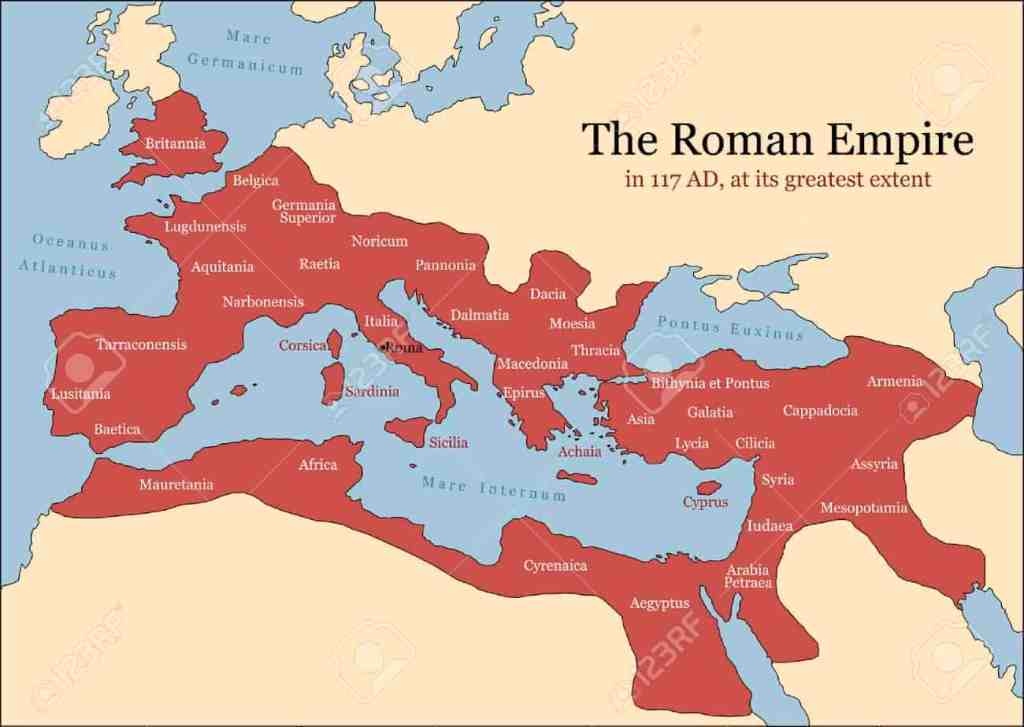
The power and influence of Rome diminished in the 3rd century. Rome’s diminishing power comes from multiple directions. Noble explains the rise of disparate tribal groups challenged Roman authority. The growing influence of religion and diminished gravitas of its citizens accelerated Romes’s loss of power and influence.

However, it is clear the lessons of Greece’s and Rome’s democratic history are guides to the future of “…Western Civilization”.

One is drawn to a conclusion that America cannot abandon its military investment and strength or its economic support of foreign countries if it wishes to remain a hegemonic power in the world.

China recognizes the importance of investment in their military and its economic investment in other countries (e.g., Road and Belt program) to advance its influence and role in the world.

The difference is that China relies on centralized government control while America relies on the principle of “power to the people”. Dictatorships are inherently limited by military prowess and singular, autocratic leadership. In contrast, the ideals of democracy are humanly limitless. Today’s unknown seems to be religion. In theory, America’s founding fathers recognized religions’ powerful influence by legislating separation of church and state. Religion remains a great force in the world, let alone American society.

Religion brought societies together while splitting human society in ways that maimed and murdered millions of people.

Noble circles back to a more detailed history of religion. As the Roman Empire begins to collapse, dynasties were formed through the 3rd century AD.

As these dynasties collapsed, Christianity spreads across former Roman controlled lands. The Byzantine Empire formed in 395 CE; Christianity grew through the 15th century to become the largest religion in the world. The Frankish dynasty established itself between 750 and 887 CE, with Charlemagne as its most renown leader. In 774 CE., Charlemagne created a papal state in central Italy. A Frankish dynasty was formed by the Carolingian family (756-887 CE) that managed to stabilize and spread Christian religion throughout Western Europe. The Carolingian family constructed churches and schools to teach Christianity. They created a Carolingian army to protect and expand belief in a Christian God. Noble’s lectures show religious belief in a Supreme Being roils the world. From reading/listening to other histories, governments founded on religious belief are destined to fail.

The remaining lectures summarize the history of the Rennaissance, the Reformation, and the split of the Christian church. Noble’s lectures reflect his erudition, multi-lingual expertise, and understanding of the people of those historical events. The underpinning notion is that religion and its permutations will continue to impact the future of the world, let alone “…Western Civilization”.

“…Western Civilization” and its Christian and democratic foundation gives little comfort to those who are worried about societies’ future.

RELIGIOUS DIFFERENCE

Is belief in God worth it? Cook’s history of Muslimism and knowledge of Christianity makes one wonder.

Books of Interest
 Website: chetyarbrough.blog

“A History of the Muslim World From its origins to the Dawn of Modernity” 

By: Michael Cook

Narrated By: Ric Jerrom

Michael A. Cook (British historian, scholar of Islamic History)

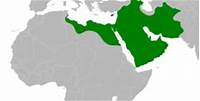
Professor Cook overwhelms one with a voluminous examination of the Muslim World. His history really begins before the birth of the Arab prophet, Muhammad (570-632). However, it is after Muhammed’s revelations and his departure from Mecca in 610 CE, when he and his followers settle in Medina (622) that a more documented history is revealed. Arabs are identified as a nomadic tribe who occupied the Arabian Peninsula, Syrian Desert, North, and Lower Mesopotamia in the mid-9th century BCE. However, notable territorial regions first appeared in the 14th century BCE with the Assyrian and Neo-Assyrian Empires. Cook suggests it is in the 7th century CE that Islam became a force in the Middle East. After the Prophet Muhammad’s death in 1632, the Rashidun Caliphate established itself (632-661 CE).

The Rashidun Caliphate boundaries.

The messenger of Allah is Muhammed. Muhammed was an Arab. Born in 540 CE in Mecca, Arabia (now Saudi Arabia), Muhammed is considered by Muslim’s the last messenger of Allah. Though Muhammed could neither read nor write, his counsel with scribes resulted in the equivalent of the Christian Bible, called the Quran, which is alleged to reflect the word of the Supreme creator of life, the world, and the hereafter. This is different than the scribes of the Christian Holy Bible. However, the Holy Bible’ and Quran’ texts offer the same confusion about their meaning because these holy books have first, second, third, and later-hand writings of scribes.

(REVIEWER’S NOTE: Scribes recreated fragmentary writings and legends of long-dead contemporaries of Christ in the case of the Holy Bible, just as the thoughts of the “last messenger of Allah” were recorded by scribes. Modern science experiments explain human minds do not precisely record or recall the past. The human mind recreates the past and fills any gaps that may arise to complete the mind’s imprecise memory. That is why scribes of biblical or unbiblical history are interpretations of facts of the past, and not necessarily accurate facts of the past.)

With the Ottoman Empire’s dissolution, Turkey, Greece, Serbia, Bulgaria, Romania, Albania, Montenegro, and Macedonia were formed. Three Arab nation-states came out of the Ottoman Empire’ dissolution. They were Syria, Iraq, and Transjordan (now Jordan).

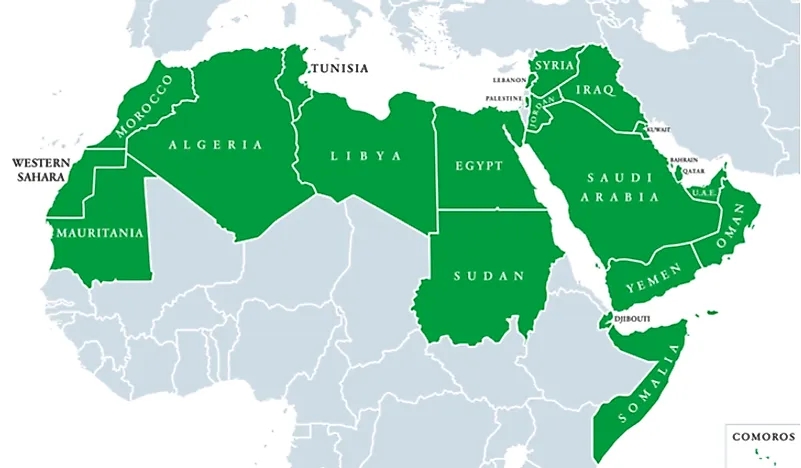
Interestingly, modern states with the highest number of Arab speaking residents are Egypt, Sudan, Algeria, Iraq, Morocco, Saudi Arabia, and Yemen. Only Egypt and Sudan have more than 10% of their population who use Arabic as their primary language. The point of this realization is that Professor Cook is writing a history of the Muslim religion, not Arab culture.

However, there seems little doubt that the 6 major Arab tribes of earlier centuries were the vessels of change for Muslim’ belief and practice. Arab tribes existed as far back as 6000 BCE. By 1200 BCE, they had established settlements and camps that formed into Kingdoms.

Arab tribal land extended from the Levant to Mesopotamia and Arabia.

Cook infers Arabs spread the Muslim religion to northern Africa and throughout the Asian continent while crossing the Mediterranean to influence, but not convert, southern Spain. Cook illustrates how Muslim’ belief shaped human history and culture. An estimated 55% of the world population identifies itself as Christian, or Muslim. Hinduism constitutes 15%, Buddhism 7%, with the remaining religions in lower single digits.

What Cook shows is how Muslim belief (24% of the world population) impacted the world.

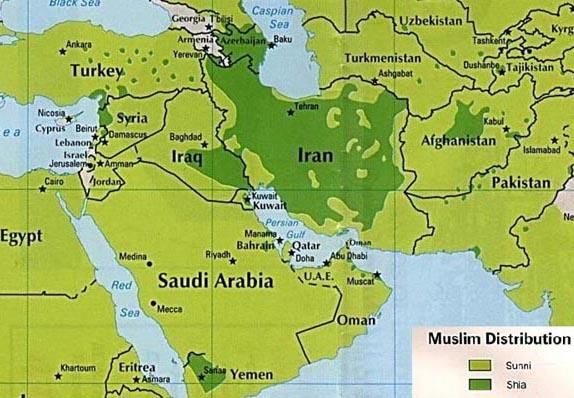
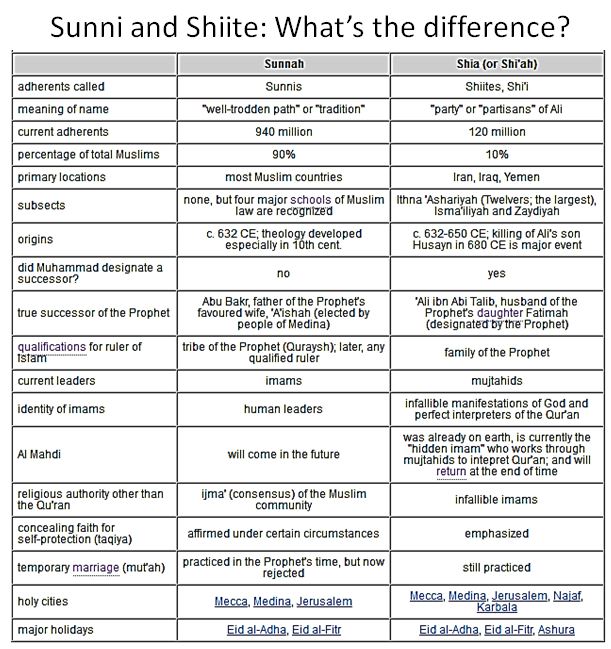
Cook begins to explain the split between Sunni and Shia religious belief. In the modern world, only Iran, Bahrain, Yemen, and Iraq have Shia-majority populations with a significant Shia community in Lebanon and Afghanistan. Sunni religious belief is practiced by a majority population in nearly 20 countries with a mixture in Egypt, Turkey, Pakistan, Saudi Arabia, Yemen, Eritrea, Syria, Afghanistan, Lebanon, Turkmenistan, and Azerbaijan.

A surprising observation by Cook is the impact of a language change in the Middle East. Persian (aka Farsi) became a bridge connecting the diverse communities and histories of the Middle East. This change largely took place between the 9th and 11th centuries. It significantly impacted Muslim cultural beliefs and Iranian culture in general.

Cook implies the colloquialization of translations by Farsi (the language of Persia) of Arab Caliphate’ triumphs and failures molded beliefs of Middle Eastern nation-states. Countries like Iran either adopted or rejected Farsi’ stories of accomplishments and failures by Arab Caliphates. Some failure is associated with moral turpitude, a falling away from Qur’anic teaching, translated into Farsi language.

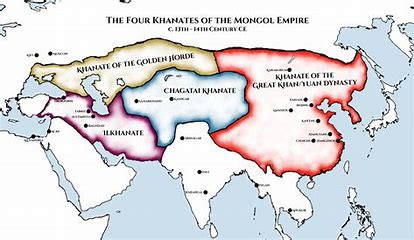
Cook’s next step in the history of Islam is to reveal the impact of Turkey and the Mongol empire’s spread of the Muslim religion. There is a confluence of tribal association and acceptance of the Islamic religion in the military campaigns of Genghis Kahn (1162-1227) followers, some of which were Turkish.

(Genghis Khan’s sons establish four kingdoms in the Middle East that lasted until 1368.)

Though none of the kingdoms practiced a particular religion, each influenced the course of religious acceptance. The environment they created allowed Christian religion to spread from Russian territory, while Turkish influence leaned toward Islam. Cook explains how young rebel leaders gained followers by successfully defeating and pillaging villages that had poor defenses. With each successful raid, more young people would join the raiders. This incremental growth led to the spread of Christian and Islamic religious influence, depending on the religious leaning of raiding parties.

Cook clearly illustrates how Arab culture lies at the heart of Islamic religion despite its nomadic existence. From the first madrasas (Islamic schools) in the Abbasid Caliphate in the 9th century, the teachings of the last messenger of Allah began with Arabs. Cook explains the religion is unlikely to have flourished without other cultures adoption. Without Persian, Turk, Uzbek, and Mongol societies adoption, the spread of Islam would have been minimized. Muslim belief evolved in a cauldron of conflict with Christianity, Judaism, and other indigenous religions but prevailed as a religion with two faces, i.e., the Suni and Shia Divide.

Like the schism between Catholics and Protestants, Sunni and Shia believe in one God but differ in ways that have roiled the world. In the case of Catholics and Protestants, there is the French wars of 1562-1598, the European thirty years war of 1618-1648, and the Troubles in Ireland in 1968-1998. In the case of Sunni and Shia, there was the battle of Karbala in 680 CE, the Safavid-Ottoman wars in the 16th-17th centuries, the Lebanese Civil War of 1975-1990, the Iraq War of 2003-2011, and the Syrian Civil War that began in 2011 and continues through today.

The forgoing were only human deaths within the two major religions of the world, while neglecting the atrocities incurred between Christianity and Islam. There were the Crusades between the 11th and 13th centuries, the Battle of Lepanto in 1571, The Siege of Vienna in 1683, and the Lebanese Civil War between 1975-1990.

Later chapters of Cook’s history reveal the conflicts between the Islamic religion and other major religions in the Middle East, besides Christianity. Many leaders are identified for historians who will be interested in knowing more, but the names become a blur to a dilatant of history.

Is belief in God worth it? Cook’s history of Muslimism and knowledge of Christianity makes one wonder.

ENTROPY, TIME, & LIFE

As one gets older, the principle of entropy takes on a personal meaning. Getting older may make one wiser but not smarter.

Books of Interest
 Website: chetyarbrough.blog

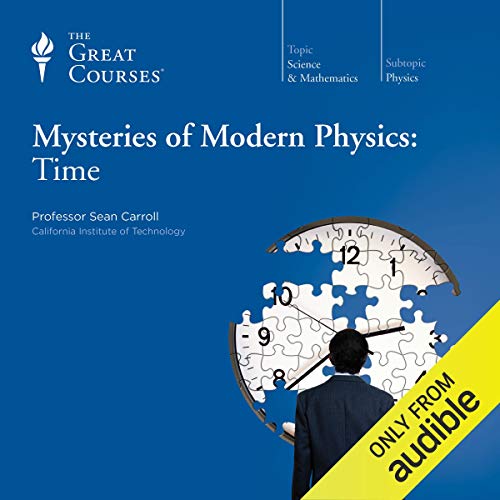
The Great Courses: “Mysteries of Modern Physics: Time” 

By: Sean Carroll

Lectures by: Sean Carroll

Sean Michael Carroll (American theoretical physicist and philosopher specializing in quantum mechanics, cosmology, and philosophy of science.)

Sean Carroll presents scientists’ views of time, entropy, and life. There are instances of his lectures that are too obscure for this reviewer, but for physicists the lectures are undoubtedly clearer and more concise than for this seeker of understanding.

Carroll explains there are four physical dimensions in the world. There is length, width, depth, and a fourth dimension called time. The first three are easy to understand because they are physical characteristics while time is not. Time cannot be seen, touched, or tasted.

Time is a fourth dimension measured by calendars and clocks that divide the past and present into days, hours, minutes, and seconds. Carroll notes knowledge of length, width, and depth are of the past and present while time points to an unknown future as well as the present and past. Einstein refined the definition of time by renaming it space time which combines physical dimensions with observers’ perception of events, i.e., where and when observations occur and where the observer is located. The significance of Einstein’s space time is that the location and traveling speed of the observer affects the perceived time of events. Carroll’s attention is about time as an arrow that only points forward. Carroll explains how events of the present and past can be defined while the future is unknown. An extended meaning of the arrow of time is that it seems unlikely (though not impossible according to Carroll and the current state of physics) that we can physically return to a past.

There is a significant distinction between entropy and loss of energy. Energy is always conserved but it may not be useable for work. Entropy is about increased disorder and randomness of energy states. Carroll defines entropy as a characteristic of matter in the world which is in a state of molecular disorder, randomness, and uncertainty. This definition is reinforced by the discovery of quantum mechanics which experimentally illustrates probabilities rather than certainty at atom-level interactions. (Einstein never accepted quantum mechanics as a truth of life but only a step of discovery in physics. Einstein believed there would be a discovery that incorporates quantum mechanics in an ultimately predictive physics world.) Carroll notes a theory that explains gravity along with the proof of quantum mechanics holds a key to whether Einstein is wrong when he suggested God does not play with dice.

An interesting note by Carroll is that transition from low to high entropy has an interesting effect in an experiment with two separate enclosures that are connected. One has gas molecules in it while the other does not. There is a hole between the enclosures through which molecules can enter. Over time the two boxes will have the same amount of gas through a process of equilibration. This reinforces the idea of conservation of energy while demonstrating energy transformation.

Transformation of energy is exhibited in animal life by its eventual death, but Caroll explains it equally applies to all matter in the universe. The idea of entropy is reinforced by the arrow of time that only points in one direction.

At an atomic level, all matter transforms over time.

Entropy does not mean loss of energy. Energy is always conserved but it may not have a useful work purpose. The second law of thermodynamics, postulated by Rudolf Clausius in the 1850s, explains that heat always flows from hotter to colder through the process of entropy. For example, a low-level heat energy may not serve a work purpose, but it still conserves energy balance. Raising the heat on a cube of ice transforms its molecules from a frozen state to water to steam which conserves energy that can generate working steam molecules to power an engine.

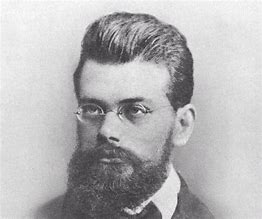
Much of Caroll’s lectures are an examination of Ludwig Boltzmann’s theory of statistical mechanics and kinetic theory. Much of Boltzmann’s contribution revolves around the concept of entropy and a detailed understanding of the behavior of particles in gases, liquids, and solids. He performed experiments that proved the conservation of energy and the equilibration of atoms and molecules as an observable phenomenon.

Boltzmann speculated that in the beginning of the universe, the chaotic activity of its beginning transformed into a lower state of entropy to create what we see in the world.

Ludwig Edward Boltzmann (1844-1906, Austrian physicist and philosopher.)

Boltzmann’s idea came before the theory of the Big Bang. The idea of the Big Bang actually presumes less entropy rather than more before the creation of the universe. Boltzmann’s idea is that the universe began in chaos (high entropy) to form what became known as a Boltzmann brain (low entropy), a thought experiment where a highly advanced brain formed in a void, from which the universe evolved. The Boltzmann brain is like the singularity of the Big Bang where cosmic dust condensed into a low entropy state and then exploded into our universe.

The origin of the universe may, in one sense, come from either a Boltzmann brain or a Big Bang. Both suggest the universe began in a low entropy state.

However, the Big Bang seems more reliably built on evidence by the measurement of an expanding universe with proven remnants (cosmic radiation) from a massive explosive event. Either theory implies the potential for a multiverse that began from a low entropy theory of our universe’s origin.

At this point in Carroll’s lectures, one’s head begins to hurt. He addresses the many ramifications of the origin of life. As one gets older, the principle of entropy takes on a personal meaning. Getting older may make one wiser but not smarter.

A.I.’S Future

The question is–will humans or A.I. decide whether artificial intelligence is a tool or controller and regulator of society.

Books of Interest
 Website: chetyarbrough.blog

“Co-Intelligence” 

By: Ethan Mollick

Narrated by: Ethan Mollick

Ethan Mollick (Author, Associate Professor–University of Pennsylvania who teaches innovation and entrepreneurship. Mollick received a PhD and MBA from MIT.)

“Co-Intelligence” is an eye-opening introduction to an understanding of artificial intelligence, i.e., its benefits and risks. Ethan Mollick offers an easily understandable introduction to what seems a discovery equivalent to the age of enlightenment. The ramification of A.I. on the future of society is immense. That may seem hyperbolic, but the world dramatically changed with the enlightenment and subsequent industrial revolution in ways that remind one of what A.I. is beginning today.

Mollick explains how A.I. uses what is called an LLM (Large Language Model) to consume every written text in the world and use that information to create ideas and responses to human questions about yesterday, today, and tomorrow. Unlike the limitation of human memory, A.I. has the potential of recalling everything that has been documented by human beings since the beginning of written language. A.I. uses that information to formulate responses to human inquiry. The point is that A.I. has no conscience about what is right or wrong, true or false, moral or immoral.

A.I. can as easily fabricate a lie as a truth because it draws on what others have written or spoken.

Additionally, Mollick notes that A.I. is capable of reproducing a person’s speech and appearance so that it is nearly impossible to note the differences between the real and artificial representation. It becomes possible for the leader of any country to be artificially created to order their subordinates or tell the world they are going to invade or decimate another country by any means necessary.

Mollick argues there are four possible futures for Artificial Intelligence.

Presuming A.I. does not evolve beyond its present capability, it could still supercharge human productivity. On the other hand, A.I. might become a more sophisticated “deep fake” tool that misleads humanity. A.I. may evolve to believe only in itself and act to disrupt or eliminate human society. A fourth possibility is that A.I. will become a tool of human beings to improve societal decisions that benefit humanity. It may offer practical solutions for global warming, species preservation, interstellar travel and habitation.

A.I. is not an oracle of truth. It has the memory of society at its beck and call. With that capability, humans have the opportunity to avoid mistakes of the past and pursue unknown opportunities for the future. On the other hand, humans may become complacent and allow A.I. to develop itself without human regulation. The question is–will humans or A.I. decide whether artificial intelligence is a tool or controller and regulator of society.

Who’s Right?

There are many ways of understanding Andrew Boryga’s book, “Victim”. It is an eye-opening examination of minority life in America.

Books of Interest
 Website: chetyarbrough.blog

“Victim” 

By: Andrew Boryga

Narrated by: Anthony Rey Perez

Andrew Boryga (Author, Bronx resident, Cornell graduate, freelance writer for the NYT, The New Yorker, and The Atlantic.)

There are many ways of understanding Andrew Boryga’s book, “Victim”. It is an eye-opening examination of minority life in America. Being poor, whether a minority or a white American, is a struggle for identity. A white person in America has immense advantage, but Boryga’s story shows how much greater the challenge is for a person of color.
The main characters of Boryga’s story are Latinos named Javier Perez, Gio and Lena. Some may argue only Javier and Gio are the most relevant but Lena, Javier’s romantic partner, is at the heart of a question of who is right in lives of inequality.

There are many reasons to appreciate Boryga’s insightful story. It gives credit to committed teachers who struggle to raise the sights of students who are challenged by poverty and hardship. Javier is a character with ambition to be more than a street hustler trying to get by in a low-income neighborhood in the Bronx. It is with the help of a single mother and a dedicated teacher that Javier pursues a better life. His father was a drug dealer, murdered in Puerto Rico. Being raised in New York by his mother, Javier visits his father when he is murdered. That experience, the strict upbringing of his mother, and a teacher at his school offer lessons of life and opportunity to Javier. With the help of his teacher, Javier becomes a college-educated’ writer who struggles to become a literary and financial success.

It seems the window of opportunity for Javier depends on his intelligence, the help of his teacher, and retrospectively, his friend, Gio.

At first reading of “Victim”, Gio appears to offer an alternative life like that which Javier’s father followed. Obviously, what happened to Javier’s father influences Javier’s choices in life. Javier tries to influence Gio to abandon the drug-mule’ road he is following. Javier fails Gio, himself, Lena, and the Latino students he teaches in his neighborhood.

Javier meets Lena in college.

Lena is Latino but comes from a more financially secure family in the Bronx with a strict father and loving mother. In contrast, Javier is being raised by his widowed mother who is barely making enough money to keep a roof over their head and food on the table. Lena is a social activist for Latino rights. Javier and Lena become lovers but from quite different economic and family backgrounds. They move in together, but their place of cohabitation is the old neighborhood in which Javier is a teacher and struggling writer.

Lena pursues her activist career with little pay and a difficult adjustment in an unsafe neighborhood in the Bronx.

She grows to feel isolated and unfulfilled in her pursuit of equal rights, both as a Latino and woman. Javier understands the neighborhood in which they live but to Lena it is too dangerous, and her job does not offer enough personal satisfaction and income for her and Javier to improve their lives. Javier ignores her concern because he understands life in the neighborhood and feels comfortable in dealing with its risks.

Javier and Lena are at a crossroads in their lives. Javier decides their crossroad has a meaning that is worthy of a story that could be published in the paper for which he works part time while teaching at the local school.

His story disingenuously describes the conflict between Lena and himself. Javier believes and writes that he would be abandoning the fight for Latino rights by leaving his neighborhood for a safer community that Lena desires. Javier does not take into consideration their common goals or the difference between a woman and a man when living in a tough neighborhood. The story he writes about their relationship and its breakup makes him famous. He is offered a higher paying job as a full-time writer. He quits teaching but the break-up is irreversible. The reason for its irreversibility is substance of the story. His story distorts the truth of why Lena leaves Javier and the neighborhood.

While Javier strives for success as a writer, Gio is arrested for drug dealing and sentenced to prison. Javier loses touch with Gio because of their different life decisions.

Earlier, Javier tries to rescue his friend Gio from the gang life of the neighborhood. Ironically, Gio saves Javier from a false understanding of what happened in his life. The mistake Javier makes with Gio is similar to the mistake he makes with Lena. Gio’s and Lena’s lives are only their own. Javier fails to appreciate their personal experiences and how they made them who they became. Gio’s life is changed by his gang and later prison experience. Lena’s life is formed by the influence of her parents and life as a middleclass woman who wishes to help her race succeed in a prejudiced world. Javier sacrifices his relationship with both Gio and Lena by not understanding their personal identities and reasons for being who they become.

Javier makes the mistake of using Lena and Gio as subjects of his stories that do not represent who they are from their personal life experiences.

However, Javier’s stories are so well written that he becomes a coveted writer by his newspaper and a book agent who wishes to represent him. The problem is that his stories are made of facts that are not truthful representations of either Lena’s or Gio’s evolved lives.

Javier is publicly exposed for his distorted stories about what it is like, and what it means to be a Latino American in a white-biased culture.

Javier’s wish to become a renowned writer is halted by a you-tube interview by an investigative reporter. He is fired by the paper who employs him. Gio tells Javier to quit feeling sorry for himself and tells him to get on with his life. Gio has overcome the trials of his imprisonment and is on the way to becoming a positive contribution to society even though it continues to be biased against his success. Javier begins to understand the importance of factual accuracy and understanding of others when writing a story purported to be the truth. One wonders if that is why the author chooses to identify “Victim” as a novel and not a report of his or anyone else’s life.

The story of “Victim” is that inequality is a fact of life but not an insurmountable obstacle to peace and prosperity for determined individuals.

WHAT’S TO BE DONE

America cannot pass essential legislation that fairly addresses the burden and potential benefit of immigration.

Books of Interest
 Website: chetyarbrough.blog

“A Map of Future Ruins” (On Borders and Belonging)

By: Lauren Markham

Narrated by: Gilli Messer

Lauren Markham (Author, reporter on issues about migration and human rights.)

Immigration is a hot subject around the world.

Lauren Markham writes a somewhat disjointed book about immigration to a Greek island between Turkey and Greece.

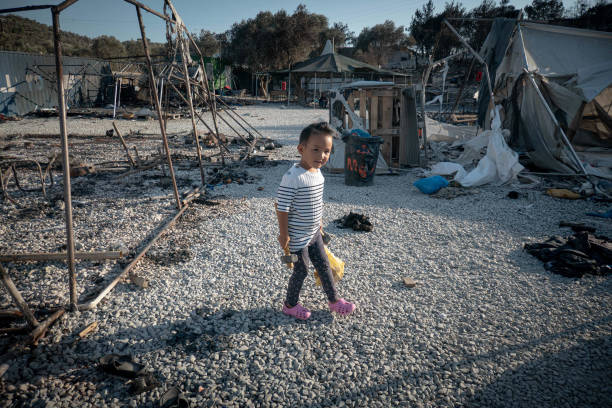
Lauren Markham offers a report of a fire in a Lesbos refugee camp in the small town of Moria on September 9, 2010. There were no deaths from the fire but the conditions of the encampment and the government’s response to the crises tell of unfair and inadequate treatment of refugees–reminiscent of other countries dealings with unwanted immigrants.

The camp was designed to hold 3,000 people but grew to nearly 13,000. Seventy percent of the migrants were from Afghanistan. A fire of unknown origin destroyed the immigrant’s shelter that gave notice to the world of the inadequate care offered refugees fleeing crime, poverty, and displacement in their home countries.

Turkey and Greece have a storied history of conflict that is reminiscent of the Afghanis flight from Afghanistan. Turkey’s most revered leader, Mustafa Kemal Ataturk, ordered Greeks to leave Turkey in a mass exodus during his reign. Ethnic and religious differences between the Ottoman Empire and Greece came to a boil in 1923. Those differences are reminiscent of the escape of Afghanis from the restrictive life of the Taliban in Afghanistan. Afghanis chose a route from Afghanistan through Iran to Turkey to the Greek Island of Lesbos to escape the Taliban.

Markham shows the initial response of the Greeks was to aid the Afghanis in their flight but as the number of refugees grew, the burden became too great. The conditions of the encampment deteriorated, and the anger of the Greek government escalated. A fire of unknown origin began in the camp. Six Afghanis, two of which were minors under 18 years of age, were arrested and found guilty of setting the fire. Markham shows the evidence for conviction had nothing to do with truth but was manufactured by the Greek Court to find a verdict of guilt.

“Dallas, Texas, United States – May 1, 2010 a large group of demonstrators carry banners and wave flags during a pro-immigration march on May Day.”

The inference from Markam’s report is that America’s border state conflicts will, and undoubtedly have, resulted in unjust treatment of emigrants. The irony is that America needs emigrants to meet the needs of its economic future. America seems to be doing as poor a job of addressing immigration as the story of the Afghanis in Moria. America cannot pass essential legislation that fairly addresses the burden and potential benefit of immigration.

THE COLOR LINE

Marie Arana clearly argues the color of one’s skin has given great advantage to white citizens of the world.

Books of Interest
 Website: chetyarbrough.blog

“LatinoLand” (A Portrait of America’s Largest and Least Understood Minority)

By: Marie Arana

Narrated by: Cynthia Farrell

Marie Arana (Author, graduate of Northwestern University of Hong Kong with a BA in Russian Language and Literature and an MA in Linguistics.)

“LatinoLand” begins shakily with what seems an exaggeration of international Latino cultural influence in the world. However, as Marie Arana continues her report a listener/reader appreciates her knowledge of American Latino history. Her argument is that Americans have little understanding of the largest and least understood minority in the continental United States. If one continues the book beyond the first chapters, her argument about Latino culture in America becomes clear and compelling.

Marie Arana was born in Peru.

Presuming from Arana’s education in Hong Kong, she speaks and understands several languages. From her book, it appears she was born into an upper-class Peruvian family who could afford a superior education for their children. Her father was a successful civil engineer who married an American from Kansas. She moved with her parents to Summit, New Jersey when she was nine years old. Arana earned two college degrees from the Northwestern University of Hong Kong.

In one sense, “LatinoLand” is about America’s greatest 21st century challenge, immigration.

More importantly, it is about human discrimination, ignorance, and inequality. Discrimination begins with perceived difference. The greatness visible marker of difference is the color of one’s skin. Arana argues discrimination begins with skin color. She explains how inequality grows from discrimination, and cultural ignorance. (Though not mentioned, human self-interest plays a role in the creation of inequality.) A mixture of ignorance and not caring for others creates fear and potential for violence.

Mosaic of children from around the world, including, Kayapo, Indian, Native American, Inuit, Balinese, Polynesian, Yanomamo, Cuban, Tsaatan, Moroccan, Mongolian, Karo, Malagasy, and Pakistani.

Arana notes how the color of one’s skin is one of the most prominent features of difference among humans. Skin color differences, lack of caring, self-interest, and ignorance breed economic inequality. Arana implies the American Constitution ameliorates some human failings but does not achieve its ideals. She suggests American democratic ideals have been used by some political leaders as a Trojan horse for authoritarianism. She particularly points to the difference between what Fidel Castro said about creating a Cuban democracy when he overthrew Batista, i.e., he claimed to want a democratic haven for its people. However, under Castro, Arana notes Cuba became an authoritarian dictatorship that victimized its citizens by taking their assets and using their value to create and maintain a government-controlled economy.

Arana recounts the history of Cuba, Haiti, and Puerto Rico as examples of countries that preached democratic ideals but became authoritarian dictatorships that eschewed freedom and impoverished its citizens.

Many Cubans, Haitians, and Puerto Ricans fled to the U.S. to escape authoritarian victimization. What many found was American discrimination made it difficult, if not impossible, to achieve the American ideal of freedom and independence. Immigrants could not escape poverty because of the color of their skin, their language difference, and a lack of caring by white Americans pursuing their own dreams.

She goes on to explain the first Latino becomes part of President Reagan’s cabinet as the Secretary of Education in 1988. Of course, Arana acknowledges many Latinos have succeeded in America. From sports stars to musicians to military heroes to Supreme Court justices, America has benefited from the Latino diaspora. But Arana suggests many more Latinos have not achieved the American dream because of the color of their skin.

Arana notes the Nixon Administration is the first President to recognize a separate and distinct ethnic group labeled Hispanic.

Arana suggests the labeling of ethnic groups is a chimera, a fabrication of the mind. People are a mixture of different ethnicities. She implies no one is a pure anything because of the nature of humankind. The inference is that all humans are just humans, and the only difference is in their respective cultures. Cultural differences are relevant but the color of one’s skin is the mark that bodes ill for societies’ future.

In her review of history, Arana notes how a Latino child was discriminated against by having to play in different playgrounds than white children. Only with the advance of Brown v. Board of Education in 1954 did that wrong get righted.

The proximate and initial cause of discrimination always seems to be the color of one’s skin. Interestingly, Arana notes that white skin makes a difference in many cultures, including her native culture in Peru where white skin was highly coveted and sought through marriages with white skinned relations.

Arana points to the great contributions that have been made and continue to be made by Latinos to American growth and prosperity.

Discrimination has always been a struggle because of inherent human self-interest, regardless of the ideals of the American Constitution. Arana notes the hurdles that immigrants face in getting to America, let alone becoming free and independent. Many Americans, from Presidents to Congressman to individual American citizens fight newcomers who are struggling to find a better life, employment, security, and peace.

Arana notes more Latinos are coming to America, but from other countries than Mexico. It is surprising to find more Mexican citizens are choosing to leave than come to America. This is not changing the struggle, but it clarifies Arana’s many reasons for writing her book. The ideals of the American Constitution and America’s economic wealth offer hope to immigrants.

In the 21st century, Arana notes that today more Mexicans are returning to Mexico than emigrating to the U.S.

Marie Arana clearly argues the color of one’s skin has given great advantage to white citizens of the world.

CYCLE OF ABUSE

“The Beauty in Breaking” is about life as an eternal recurrence that offers some peace of mind in a world troubled by its inhumanity.

Books of Interest
 Website: chetyarbrough.blog

“The Beauty in Breaking” (A Memoir)

By: Michele Harper

Narrated by: Nicole Lewis

Michele Harper (Physician, Author, Public Speaker.)

Leaves fall from the tree to expose the bark and bite of life. Michele Harper’s memoir shakes the tree of American life. Relying on the veracity of Harper’s story, she is raised in a family with a physically abusive father who divorces her mother, an art dealer.

Harper notes her paternal father was physically abusive.

After Harper’s paternal father leaves Harper’s mother, Harper notes he offers some financial assistance to Harper in college. Harper explains she passes some of that assistance on to her mother while attending Harvard. Harper earns a BA in psychology. She goes on to acquire a medical degree from a New York university to become an emergency room physician.

Harper’s story touches on the complexity of life as a Black American. She marries a white man while at Harvard, but they divorce at his choice. The failure of their marriage is shown to be hard for Harper, but she is driven to succeed and moves on to educate herself in her chosen field of work.

Harper’s experience of childhood abuse, her personal marriage break-up, and work as a physician in three different emergency room positions, are lessons for life and living.

Her focus is on overcoming her trials to be good at her job even though much is beyond her control. The notion of not knowing what crises you will face in a medical emergency room, let alone a doctor’s experience as a Black American, offers a unique perspective to Harper’s memoir.

Abuse comes in many forms.

There is child abuse that occurs in many homes throughout the world. There is being a minority in a culture controlled by a majority that discriminates against those who are different. There is inequality of opportunity that creates an underclass that is trapped in an eternal cycle of poverty. Harper is denied promotion to Administrator in her first hospital job because she is a woman. Her supervisor notes a woman, let alone a Black woman, has never had the Administrator’ job in that hospital. Misogyny triumphs once again.

Harper chooses to leave the hospital that denied her the promotion.

As an administrator in another hospital Harper sees the consequence of poverty. Poverty seeps into nearly every culture in the world with its accompanying violence, compounded by weak to non-existent gun control laws in the United States. Harper writes about her encounter with a young boy who has his sneakers stolen by a bully at school.

Harper interviews the young Black grade school child who is thinking about getting his shoes back with a gun.

Harper calls a child services employee to explain her concern about the child’s access to a gun at his home. The child service’s person explains she sees this in many children’s homes where poverty is one lost job away from a family being on the street. This young boy’s parents both work to keep the family housed and fed. The social services person explains gun accessibility and violence are common in poor black neighborhoods. Where poverty is a fact of life, child services can only go so far to change what is toxic in a child’s environment. Gun availability is beyond the control of Harper or child service’s employees. The extent of Harper’s intervention is limited to raising the issue with the young boy’s parents–with the hope that they will act to be sure no gun becomes available.

Harper finds a third job as a VA hospital administrator. She interviews a female patient seeking psychological help. In the interview, Harper is told by the patient she had been raped by her supervising sergeant and another soldier in Afghanistan.

She became pregnant and decided to have an abortion. That experience continues to traumatize her life. She seeks help to overcome its affects. Harper becomes the patient’s lifeline for the counseling she needs to overcome her abuse.

There seems no “…Beauty in Breaking” as one nears the end of Harper’s memoir but one begins to realize the “Beauty…” is “…in Breaking” the cycle of abuse.

The cycle can be broken with exposure, rehabilitation, caring, and acting to remove the causes of abuse. Harper’s memoir shows how it is done. Breaking the cycle of abuse is a long, laborious process that begins with people focusing on incidents of abuse and acting to mitigate its causes and consequences. “The Beauty in Breaking” is Harper’s way of exposing abuse and illustrating what can be done about it.

Harper’s ultimate theory for the resolution of human abuse is belief in Lifes’ recurrence. Her theory is that every life is eternal. When one dies, they will be reborn into another life. Harper comes to grips with her life as it is and makes it better through meditation. Her belief about life as an eternal recurrence offers her peace of mind about the people she saves or loses in a hospital emergency room.

CAPITALIST’ LESSONS

Capitalism is not a partisan issue but a social imperative for both Republicans and Democrats to work together to benefit all Americans.

Books of Interest
 Website: chetyarbrough.blog

“Capitalism in America” (A History)

By: Alan Greenspan, Adrian Wooldridge

Narrated by: Ray Porter

As one would expect, “Capitalism in America” begins with the British economist, Adam Smith, who defined capitalism in 1776 with “An inquiry into the Nature and Causes of the Wealth of Nations”.

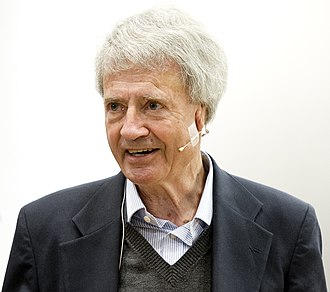
Alan Greenspan (on the left) is an American economist who was chairman of the Federal Reserve from 1987-2006. Adrin Wooldridge (on the right) is a British economist and journalist who wrote for “The Economist”. Wooldridge has a doctorate in philosophy and has co-written several books with Richard Micklethwait, the editor-and-chief of Bloomberg News. One might argue Greenspan has a conservative bias but Wooldridge’s experience as a British journalist gives one a sense of balance in this informative and well-written history of American capitalism.

Smith’s concept of capitalism advocated leaving economic decisions to market forces, tempered by individual economic decision makers. What Greenspan and Wooldridge infer is that decision-makers’ discretion and interference are what roils capitalism’s history.

“Capitalism in America” reveals tumultuous times for the American economy but with positive forward momentum. The public in all countries have experienced hard times from market forces. Some countries, like Israel, India, and the U.K. have experimented with socialism as an alternative to capitalism. Communist countries like Russia and China flirt with capitalism and one may argue–benefited from its market results. The author’s history shows capitalism as the primary reason for America’s economic growth and success. However, that’s getting ahead of their story.

The authors begin at beginning with the story of Jefferson’s desire to emphasize agriculture as the primary driver of economic growth in America. In contrast, Alexander Hamilton believes the industrial revolution demands a broader view of economic policy. The key to tapping into the industrial revolution required capital which Hamilton clearly recognizes. Hamilton recommends the creation of a national bank. Hamilton is inspired by Great Britain’s Bank of England. It offered private capital and paper credit to businesses and entrepreneurs.

Hamilton, as Secretary of the Treasury, presented a “Report on a National Bank” to President Washinton and the House of representatives in 1790. This report notes that Congress, with its authority to collect taxes, could fund the bank and lend money to the government to pay foreign creditors, public services, and private businesses to grow the economy. Jefferson opposed the idea, but Hamilton’s broad interpretation of the Constitution allowed his idea of a national bank to be created. In 1791 the First Bank of the United States is established in Philadelphia and remained chartered for 20 years. This became a giant step for America’s economic growth.

Several future Presidents opposed an American national bank. Of course, Jefferson was one because of his belief in an agrarian future for America. Jefferson’s friend and future President, Madison (the 4th President of the U.S.) opposed the idea of a national bank, and Andrew Jackson (the 7th President of the U.S.) used his power as President to oppose the “Second Bank of the United States” in 1833.

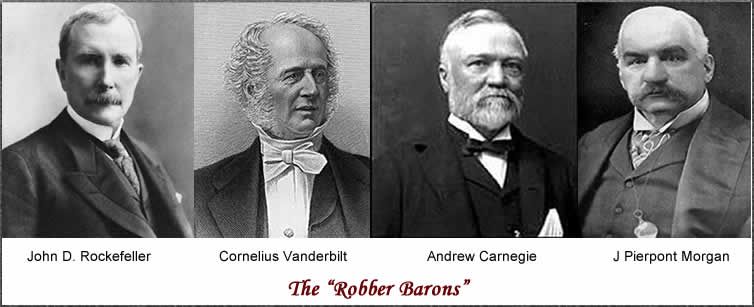
The authors note the successful industrialists of the 19th century capitalized on Hamiltonian creation of an American banking system. They became known as the robber barons of America. Rockefeller, Vanderbilt, Carnegie, and J.P. Morgan used capital to produce oil, expand rail transportation, make steel, and provide bank capital to grow the economy.

And then, WWI drew America into events that roil the course of its economic history.

An American economic boom occurs in the first two years of the war with America choosing neutrality. Exports surged from $2.4 billion to $6.2 billion in 1917. Everything from cotton, to wheat, to automobiles, to food, to machines were exported during those years. After joining the war, 3 million Americans were mobilized. When the war was over, the world and the American economy faltered. Recession (1918-1921) hit the world after the war, though America showed it had become a major world power.

As America recovered from WWI, their prowess as a producer of goods and services led to the roaring 20s and a runaway stock market that eventually crashed at the beginning of the Great Depression (1929-1939).

The authors note President Roosevelt is a great salesman who provides relief to many Americans with government employment programs during the depression. However, the authors note Roosevelt’s inept management delays America’s recovery by instituting price controls that distort market forces. Overt price control is a recurring mistake of national economies. The authors are not saying that price control is a singular cause of America’s continuing economic crisis, but it makes market recovery more difficult and longer to achieve.

The authors explain reparations for WWI’s winners helped set the table for WWII.

Germany’s inability to pay reparations, the growth of Antisemitism, and German inflation led to the rise of Hitler. Though not addressed by the authors, Japan felt threatened by American, Chinese, and Russian influence in Asia that led to Pearl Harbor and America’s entry into WWII.

The point is made that America’s depression before the war is not cured by Roosevelt’s economic intervention. The advent of war mobilized American industry.

The authors suggest market interference delayed recovery from the Great Depression. On the other hand, Roosevelt gave hope to the country with his speeches and employment programs. Citizens underlying faith in America’s ability to overcome hardship, and their response to Pearl Harbor reinvigorated the economy. Industries were retooled to meet the demands of war.

The authors argue mistakes in America’s capitalist history have been made by both Democratic and Republican Presidents who interfered with naturally occurring market forces. From Roosevelt to Nixon to Reagan to Obama to Trump, Presidents who institute price controls and/or tariffs interfere with free trade. America’s capitalist economy suffers from those actions. This is not to argue all legislation and federal action on the economy constitutes capitalist interference. Fundamental human rights that ensure freedom to vote, speak one’s mind, practice one’s own religion, work in industries one chooses, while seeking peaceful resolution of differences, are interferences that sustain capitalism.

When natural market forces are interfered with by business leaders and public legislators, capitalism suffers. An inference one may draw from the authors is that legislated programs that aid Americans who are unable or unwilling to participate in the capitalist economy are an interference with capitalism. That raises legislated issues of emigration, social security, health insurance, education, defense, transportation, veteran’s benefits, housing, environmental protection, occupational safety, and other public benefit programs. This is where there is continuing disagreement among Americans. These are not party issues because both Republican and Democratic leaders have both positive and negative arguments for and against these policies.

There is the law of unintended consequences that plague government policies. Some argue Reagan reinvigorated the American capitalist economy by reducing taxes, cutting government programs, reducing government employment, and busting union strikes. He did those things and government debt skyrocketed to a level greater than ever in the history of America. The gap between rich and poor was set on a path that beggared the poor and enriched business managers without comparable enrichment of labor. Like Roosevelt, Reagan sold ideas that had unintended consequences that were not in the long-term interest of Americans.

How can one measure the success of capitalism versus other economic systems? The author’s history of capitalism offers no answer but reveals what has benefitted and damaged American society since 1776. They illustrate failure of capitalism is in the hands of American leaders. Capitalism’s improvement is not a partisan issue but a social imperative for both Republicans and Democrats to work together to benefit all Americans.

GODLESS

Sartre seemed right when he wrote “hell is other people” in “No Exit”. Neither belief in humanism nor God seem to hold an answer for humanity’s future.

Books of Interest
 Website: chetyarbrough.blog

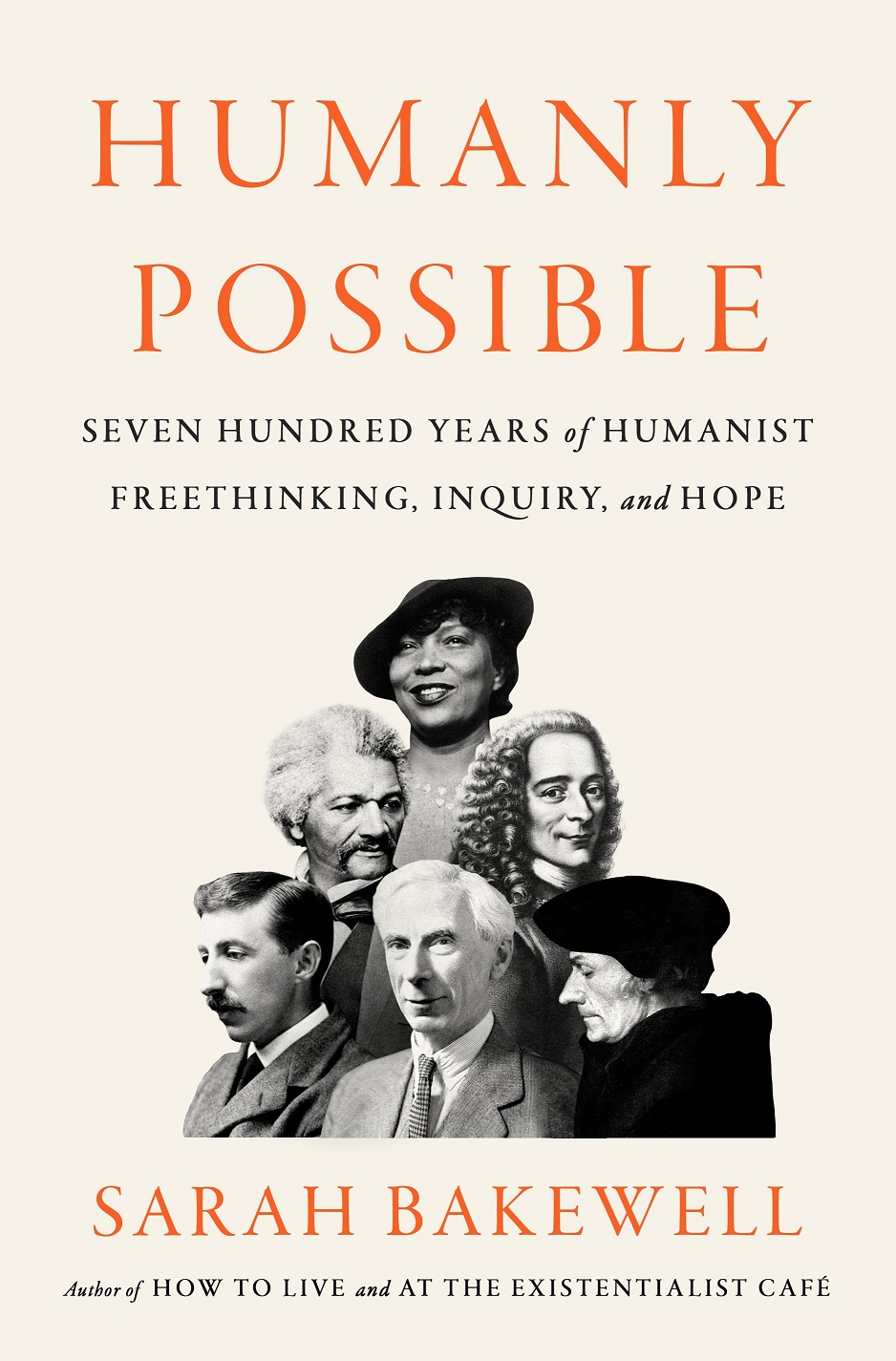
“Humanly Possible” (Seven Hundred Years of Humanist Freethinking, Inquiry, and Optimism)

By: Sarah Bakewell

Narrated by: Antonia Beamish

Sarah Bakewell (British author and professor, received the Windham-Campbell Literature Prize for non-fiction in 2018.

Sarah Bakewell provides a detailed history of humanism. To many, Bakewell’s story is a history of society falling away from God. Bakewell puts religion aside while explaining why and how humanists challenge religious belief and lean toward science as an explanation of life.

Bakewell notes humanism reaches back to the 5th century BCE with the Greek philosopher Protagoras. He was a teacher identified by Plato in a dialogue titled “Protagoras”. Through Plato’s dialogue, one finds Protagoras taught the importance of literature, and art that infers a set of moral principles to guide human behavior. Several centuries later, Diogenes Laertius writes “Lives of the Philosophers” that adds to history’s knowledge of Protagoras’s beliefs. Protagoras taught public speaking, poetry criticism, citizenship, and grammar.

Protagoras (490-420 BCE, Bakewell suggests Protagoras set the foundation for the humanist movement.)

Francesco Petrarch (1304-1374) takes up the humanist movement during the Italian Renaissance. Petrarch became internationally known as a humanist. He traveled extensively, looking for Classical manuscripts and ancient texts to recover the knowledge of Greek and Roman writers. He discovered letters that told of Cicero’s personal life–what it was like in the late Roman Republic (106-43 BCE). Cicero’s observations showed the importance of human character in the way one lives life.

Francesco Petracco (1304-1374, Italian scholar and poet and one of the earliest students and promoters of humanism.)

Collection of ancient manuscripts by Petrarch and Coluccio Salutati (1331-1406) of Florence expanded the humanist movement. Giovanni Boccaccio writes “The Decameron”, a collection of short stories that reinforces the principles of human worth and dignity, belief in reason and human ethics, and the value of critical thinking, i.e., humanist ideals.

The humanist mantle is picked up in England and the wider part of continental Europe after the early 15th century. Erasmus, Sir Thomas More, and William Shakespeare, reinforce the movement. Desiderius Erasmus is a Dutch humanist. He attacks the excessive powers of the papacy. He values human liberty more than orthodoxy. He inspires the Protestant Reformation and the Catholic Counter-Reformation. He emphasizes the study of classics over medieval tradition. Erasmus has great impact on the Renaissance and its religious and intellectual climate with an eye for life on earth, more than an afterlife. He wrote “The Praise of Folly”, satirizing religious practices based on superstition and impiety. Though he hoped for divine mercy, Erasmus emphasized faith and good deeds in life, humanist ideals.

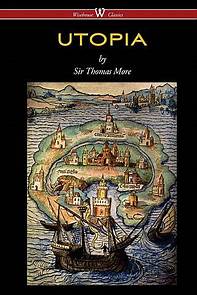
Bakewell notes Sir Thomas More writes “Utopia”, published in 1516, that describes an ideal society that addresses penology, state-controlled education, religious pluralism, divorce, euthanasia, and surprisingly, women’s rights.

Shakespeare’s plays introduce psychological realism and depth to human thought and action. Much of what he writes is secular rather than religious. Shakespeare implies life on earth is more than preparation for an afterlife.

Shakespeare suggests life on earth is more than preparation for an afterlife. Death is viewed as final, a humanist view of life and death.

Bakewell goes on to write of Denis Diderot, David Hume, Kant, Adam Smith, and Voltaire. They become leaders of humanism in the 17th and 18th centuries. Diderot emphasizes critical thinking, education, and secular values. Hume writes “A Treatise of Human Nature” to explain human morality. Adam Smith’s “Wealth of Nations” reflects on national economic growth and how the principle of “raising all boats” comes from free enterprise and free trade, humanity in action.

The idea of humanism is rocketed into American thought by Charles Darwin’s “Origin of Species”.

Natural selection became a science-based explanation for the origin of species, including human beings. Its impact is evident in the personal transition of Darwin (the son of a medical doctor and grandson of a botanist), who planned to join the clergy, but became a person who identifies himself as an agnostic. Thomas Henry Huxley publicly endorses Darwin’s theory and coins the term “agnosticism” in 1869. Many of the scientific community joined that endorsement during Darwin’s life.

As Bakewell advances her history into the twentieth century, Thomas Mann and Bertrand Rusell carry the torch of humanism. The interesting point made about humanism by Mann is that a humanist must guard against the tendency to reason too much. The rise of Nazism in Mann’s home country and the repressiveness of Stalin’s (and now Putin’s) communism are examples of what concerned Mann. On the one hand, Mann recognizes the “unbearable pity for the sufferings of mankind” but also the danger of accepting authoritarian leaders who preach nationalist socialism or communism while promoting nationalist hegemony, forced labor, racial discrimination, ethnic cleansing, and gender inequality. The rise of Nazism and Putin’s invasion of Ukraine show how authoritarian reasoning can magnify the sufferings of humanity.

Bertrand Russell, a British philosopher, mathematician, logician, historian, and humanist activist, warned against superstition and preached the importance of education. Both Mann and Russell advance the ideals of humanism. One still reserves judgement about humanist’ rejection of God when both religion and science have a mixed history for humanity.

Bakewell does not end with just a history of humanism. She speculates on where humanism may go from here.

She acknowledges her own beliefs as a humanist. She notes humanism has been noted in the past as a fragile vessel for transporting humanity into a future. The vessel’s fragility is in the nature of human beings.

Few can doubt we are self-interested animals that have to come to grips with what is ultimately in our self-interest.

Human self-interest must change from greed for money and/or power for humanism to work. If self-interest rests anywhere, it needs to be in the prestige that is earned by being engaged with the welfare of humanity. In light of history, human pursuit of societal welfare seems only to appear when annihilation is nigh. The war in Ukraine and human history are evidence of humanity’s failures. When perceived threats to peace and happiness disappear, humanity returns to the destructive self-interest of money and power.

Sartre seemed right when he wrote “hell is other people” in “No Exit”. Neither belief in humanism nor God seem to hold an answer for humanity’s future.