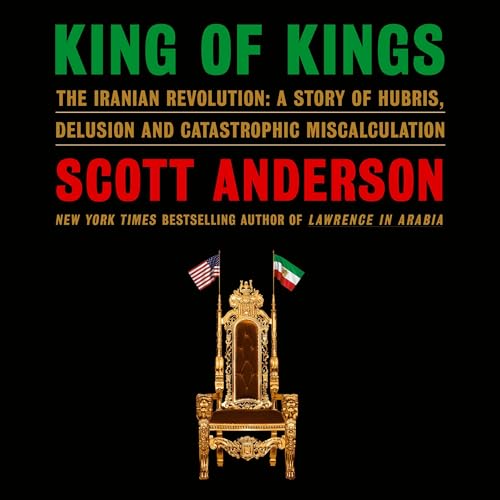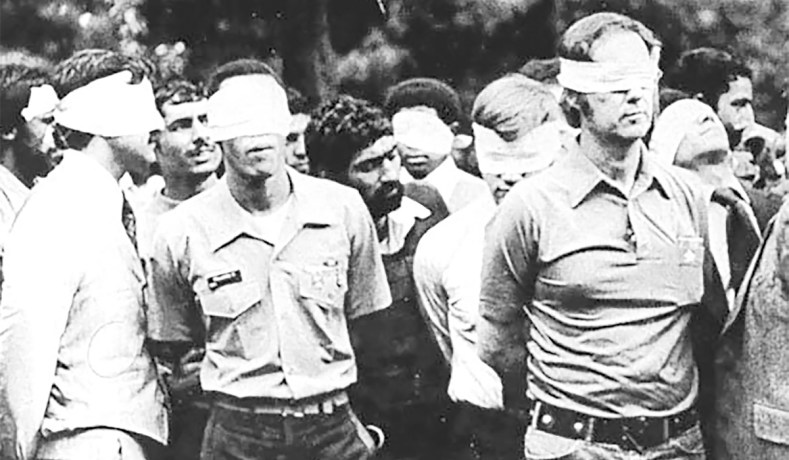
ECONOMIC CRISES

Sorkin’s “1929” makes one think about 20th and 21st century American Presidents who may have set a table for a second economic crisis. As the Turkish proverb says “…fish stinks first at the head.”
Books of Interest
 Website: chetyarbrough.blog

1929 (Inside the Greatest Crash in Wall Street History–and How It Shattered a Nation)

AuthorAndrew Ross Sorkin

Narration by: Andrew Ross Sorkin

Andrew Sorkin (American author, journalist, and columnist for The New York Times.)

“1929” is a history of the build-up to the stock market crash and the advent of the depression with opinions about how today’s economy compares and what should be done to keep it from happening again. Though Sorkin is not an economist, he has written an interesting history of the build-up to the 1929 depression.

Faltering economies.

There is a sense of danger being felt by some today when reading/listening to Sorkin’s history of the 1920s. Few seem to have a clear understanding of world market forces and whether we are heading for an economic catastrophe or a mere hiccup in the growth of the economy. Neither bankers, regulators, nor politicians in the 1920s (or for that matter now) seem to have a clue about the economy’s trouble and what can be done to ameliorate risks. Like 1929, today’s insiders, power brokers, and rich have more options to protect themselves than most of the world’s population.

Increasing homelessness in America.

In America, it seems those in power have no concern about the rising gap between rich and poor or the immense increase in homelessness. Without a plan by those in power, there seems little concern about reducing inequality, the common denominator for the wealth gap and homelessness. Sorkin’s book outlines the reality of 1929 that gives reader/listeners a feel of history that may repeat itself.

Sorkin’s history seems credible as he notes human nature does not change.

Today’s leaders are like yesterday’s leaders. Not because they are venal but, like most if not all human beings, leaders in power are concerned about themselves and what there is in life that serves their personal needs and wants. Of course, the difference is that leaders that are power brokers affect others that do not have the same influence or options to protect themselves. We all have blinders that keep us from seeing the world as it is because human nature is to ask what is in it for me, i.e., whatever “it” is. The 1920s had a merger bubble in manufacturing and communication that is fed by the industrial revolution. Today, we have a merger bubble with mega-corporations like Tesla, Apple, Amazon and others that are mega-corporations capitalizing on a new revolution coming with A.I., the equivalent of the Industrial Revolution. Some critics argue mega-corporations, like what happened with the oil industry could be broken up to increase competition which is the hallmark of improved production, cost reduction, and lower consumer prices.
Charles E. Mitchell (American banker, led the First Nation City Bank which became Citibank.)

What makes this history interesting is Sorkin’s identification of the most responsible power brokers who bore responsibility for the stock market crash. Charles Mitchell of Nation City Bank is identified as the central driver of the stock market bubble. Mitchell denied the reality of the financial systems fragility. His ambition and unfounded optimism magnified the systemic risk of the financial crises. He openly defied the Federal Reserve’s warning to curb margin lending that risked other people’s money and their financial stability. He continued to promote purchase of stocks on credit that were fueling the stock market bubble. Mitchell appears to have misled the public in order to increase his power and protect his personal wealth by creating the illusion of market stability and his bank’s profitability. Though Mitchell is not the sole villain, he became the most powerful banker in the nation while breaking the financial backs of many Americans. In general, it is the self-interest of those who listened to him that have responsibility for their financial collapse, but it is always hard to know who is lying to you. Part of the blame is the hesitation of the Federal Reserve Board to act because the people in charge could not agree but that was more a matter of omission than commission which Mitchell was charged with but not convicted. Of course, the political leaders of that time also failed but hindsight is a lot easier than foresight.

Artificial Intelligence is today’s equivalent of the Industrial Revolution of the twentieth century.

Similar to the corporate mergers and investment from growing industrialization of the 1920s, today’s mania is mega corporation’ investment in Artificial Intelligence. Sorkin notes the ease of trading stocks, expectations of crypto investments, and A.I. hype may well move the market beyond its value. He argues for stronger guardrails on speculative investments, more limits on margin lending, and transparency on high-risk investments. He cautions easier credit as seen this Christmas season with buying based on delayed payment incentives and increasing credit card availability, card balance increases, and more liberal repayment terms. In general, Sorkin wants to see more, and better government oversight and regulation of credit offers. He believes too many lenders are overly optimistic about the future with the gap between rich and poor widening and trending to get worse. That inequality threatens the success of capitalism as a driver for shared prosperity, and economic growth.

Herbert Hoover (President 1929-1933, though characterized as the primary villain for the depression, Sorkin identifies his role as one of omission rather than commission.)

The Presidents shown below carry some responsibility for where the American economy is today but that would be another book.

Clinton, the first Bush, the second Bush, Obama, Biden, Trump.

Sorkin’s “1929” makes one think about 20th and 21st century American Presidents who may have set a table for a second economic crisis. As the Turkish proverb says “…fish stinks first at the head.”

PEACE IN ISRAEL

Like America’s Civil War and the issues of slavery and independence, peace will only come to Israel with a political and territorial agreement based on human equality.

Books of Interest
 Website: chetyarbrough.blog

BEING JEWISH AFTER THE DESTRUCTION OF GAZA (A Reckoning)

AuthorPeter Beinart

Narration by: Malcolm Gladwell

Peter Beinart (Author, journalist, political commentator, professor, former editor of the New Republic, born in Cambridge, Mass. to Jewish immigrants from S. Africa.)

This is a surprising Jewish author’s analysis of Israel’s response to the horror of Hamas’ murders/rapes of 1200 people and the taking of 251 Jewish hostages on October 7, 2023. Peter Beinart appears to be a devout Jew and journalist who criticizes Israel’s response to Hamas’s brutal attack and hostage taking. He believes, as current news reports confirm, Hamas will return to control and influence Gaza and West Bank Palestinians after Israel’s brutal response to the Hamas’ atrocity.

NYT’s Picture of Grief over the Hamas attack on October 7th, 2023.

Without reservation, Beinart condemns Hamas for their war crime on October 7th. However, his book equally condemns Netanyahu’s response. Beinart points to the Israeli government’s destruction, murder, and starvation of thousands of Palestinian men, women, and children who had nothing to do with the planning or execution of the Hamas horror of October 7th. The author argues Israel must focus on a political, non-military solution to Palestinian human rights. He believes Netanyahu’s actions only perpetuate a cycle of violence in Israel which will not achieve security for either the Israeli or Palestinian people.

One wonders how unpopular Beinart’s opinion may be among Israel’s Jewish population. As a blogger who received written comments from a devout Jewish person who supports Trump and Netanyahu’s actions in Israel, it is surprising to hear Beinart’s analysis of the Gaza war and his criticism of Israel’s actions. As the reviewer of this book who admittedly has little respect for religion and its history of atrocities, it is encouraging to hear from one who believes in their religion and condemns those who have no empathy for other religions. God is a universal concept with religions that worship His existence in different ways. Beinart makes one wonder why there is so little room for a “let it be” attitude toward different religious beliefs.

Empathy.

Beinart argues for Jewish empathy toward Palestinians while condemning Hamas’ actions in Israel. He believes long-term peace requires political compromise and a recognition of Palestinian rights. Military actions only guarantee rather than deter future violence and injustice. Beinart’s plan is to end Israeli’ occupation of Gaza and expand the rights of Palestinians to control Gaza and the West Bank. He argues it can be either a one-state or two-state solution. Beinart argues ground invasion by Israel in Gaza must stop. He recommends forthrightly engaging the humanitarian crises in Gaza by providing aid and rebuilding what has been destroyed.

Pursuit of peace is not easy.

None of this is easy because of the enmity that remains. The complications of political opposition, and security are ongoing concerns for Israelites and Palestinians, but Beinart believes the risks of a negotiated political, religious, and territorial settlement is worth it. Human equality is a work in progress for all nations in the world. Beinart persuasively argues a political and territorial agreement between Palestinians and Israelites is the only possible path to peace. Like America’s Civil War and the issues of slavery and independence, peace will only come to Israel with a political and territorial agreement based on human equality. Of course, the drive for equality remains a work in progress for America. That will be true in Israel for generations to come, but peace can be restored with pursuit of equality for Palestinians and Jews.

SUICIDE

“We Are the Nerds” is a story about “Nerdom” and the tragic loss of Aaron Swartz to his loving family and the world of coding.

Books of Interest
 Website: chetyarbrough.blog

WE ARE THE NERDS (The Birth and Tumultuous Life of Reddit, the Internet’s Culture Laboratory)

Author: Christine Lagorio-Chafkin

Narration by: Chloe Cannon

Christine Lagorio-Chafkin (Author, reporter, podcaster based in New York.)

Relistening to “We are the Nerds” may be reviewed from a perspective of the future of newspapers but that diminishes the tragedy of Aaron Schwarz’s suicide.

The original founders of what became known as Reddit were Steve Huffman and Alexis Ohanian, graduates from the University of Virginia. A third partner, Aaron Swartz, is invited into the company because of his tech experience in creating a company called Infogami which merged with Reddit. With the addition of Infogami, the original founders of Reddit created a parent organization called “Not a Bug, Inc”. Schwartz insists on being called a co-founder because of his contribution to Reddit as a programmer. That insistence rankled Huffman and Ohanian which grew into a resentment that fills the pages of the author’s story.

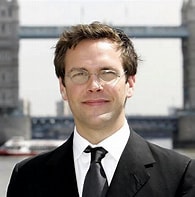
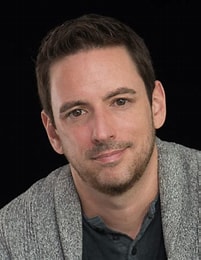
Steve Huffman on the left with Alexis Ohanian and his wife, Serena Williams, and their daughter on the right.

The author seems to minimize Schwartz’s contribution to Reddit despite the framework he created that made Reddit scale more quickly because of its open access and community-driven cultural impact. Swartz’s contributed code appears to have been an important step in the useability of Reddit by the public. However, in fairness to the original founders, the author infers that contribution pales in respect to the extensive coding and work done by Huffman. The point is that this conflict becomes an irritant that leads to the departure of Swartz from Reddit in 2007, after it was acquired by Condé Nast in 2006. That acquisition made all three original coders millionaires.

Swartz’s life and premature death is a tragic encomium to the story of Reddit’s success as a public forum.

By some measure, Swartz is a brilliant human being, but his intelligence is accompanied by what might be characterized as a self-destructive personality. His ability as a computer nerd is evident in his High School days in Highland Park, Illinois. He goes on to Stanford, but its educational regimen leads him to leave after his first year. He preferred independent learning. Schwartz’s remarkable ability led him to become a research fellow at Harvard University in 2010. He became a self-taught intellectual with an activist belief in academic freedom that eventually led him to rebel against authority. He was arrested in 2011 for allegedly breaking into MIT’s computer network without authorization. He was charged for computer fraud and faced 34 years in prison and a million-dollar fine. At the age of 26, Swartz hung himself and died on January 11th, 2013.

An American mass media company founded in 1909.

Huffman and Ohanian believed Swartz’s contributions to Reddit were less than theirs in creating the company they sold to Condé Nast that made them millionaires. Swartz’s idealism and independence conflicted with the original founders of Reddit who seemed more interested in building a public platform that could make them rich. Though Ohanian believed they sold too soon, all three agreed to Condé Nast’s final offer that made them millionaires.

In retrospect, Ohanian may have been right about the future value of Reddit. Condé Nast spun Reddit out to an independent subsidiary under Advance Publications where it became a 42-billion-dollar success by 2025. Today, Huffman’s net worth is estimated at $1.2 billion as a result of his Reddit shares. Though Ohanian may not have held on to his shares, his net worth is estimated at $150-$170 million. Not bad for two University of Virginia graduates. However, as Plato observed, “The greatest wealth is to live content with little”. Swartz’s life seems to have had little to do with desire for wealth.

“We Are the Nerds” is a story about “Nerdom” and the tragic loss of Aaron Swartz to his loving family and the world of coding.

HARD TIMES

America’s next President needs to forcefully change the economic direction of America in the same way Timothy Egan shows Franklin Roosevelt and the Secretary of Agriculture, Henry Wallace, did during the Dust Bowl and Depression era.

Books of Interest
 Website: chetyarbrough.blog

THE WORST HARD TIME (The Untold
Story of Those Who Survived the Great American Dust Bowl)

Author: Timothy Egan

Narration by: Jacob York

Timothy Egan (Author, American journalist, former op-ed columnist for The New York Times, won the National Book Award in 2006 for “The Worst Hard Time”.)

Timothy Egan wrote an interesting history of America during the dust bowl years that resulted in the Great Depression that lasted from 1929 to the early 40s. “The Worst Hard Time” has concerning parallels to today’s economy. Timothy Egan notes the Dust Bowl is caused by climate change, water scarcity, and energy transition, i.e. all conditions of the year 2025.

Contrary to Trump’s belief that global warming is a cycle of nature, most scientists argue the earth is warming because of the world’s burning of fossil fuels.

Clean potable water is a growing threat to a rising world population.

American Oil Refineries.

Transition from fossil to renewable energy sources is being delayed by the Trump administration.

Agricultural markets dramatically rose and fell in the 1920s and 30s. Wealth and greed created by wheat farming blinded farmers to the harm they were doing to the Nebraska, Oklahoma, and Texas panhandle plains of middle America. With the scarification of soil and seasonal planting and harvesting of wheat, millions of acres of grass land were left barren between crop seasons.

Trump is a sad reminder of the political blindness of Herbert Hoover.

Herbert Hoover (31st President of the United States.)

Tariffs and anti-immigration policies were instituted by the Hoover administration as a response to declining prosperity caused by excessive wheat farming cultivation. This is reminiscent of President Trump’s response today with tariffs, militant immigration policies, and his rejection of science that warns of the impact of global warming.

Trump’s modus vivendi.

Artificial Intelligence in today’s economy has increased investment of billions of dollars in today’s money like that spent to grow and harvest wheat in the 1920s. Investment in farmland skyrocketed in the 1920s with farming as a way to increase wealth with cultivation of land that was nearly free in Nebraska, Oklahoma, and the Texas panhandle. Today, massive investments in A.I. are being made by wealthy tech company owners. Without pragmatic and careful implementation of A.I. to America’s economy, tech company’ investments may have the same consequence to its investors as the farming collapse had to the wheat farmers.

A.I. will become the engine of American economic improvement just as Industrial Revolution changed agricultural production.

Today, A.I., rather than industrialized agriculture, has become the great economic engine of America. Today’s massive investments are in A.I. rather than wheat harvesting. The collapse of wheat prices because of oversupply disrupted the American economy because workers were not needed. A.I. will have a similar impact on all industries which may lead to the next world-wide depression.

1933 Depression bread lines.

Trump’s idea of Making America Great Again is a twentieth century idea that may lead to economic collapse rather than economic prosperity. His tariff policies set a table for damaging the world economy in the same way they did when Hoover became President. America needs to embrace the inevitable decline of human manufacturing and focus on transitioning America to a service economy. America needs more doctors, nurses, social workers, educators, house builders, scientists, and ecologically minded politicians rather than investors and manufacturers of disposable conveniences. At the same time, regressive tax policies that penalize the poor and enrich the wealthy need to be changed. Tax revenue needs to be focused on America’s economic transition from a disposable manufacturing economy to service and ecological preservation industries.

The hope for GDP growth in America’s future depends on a change in economic direction.

America’s next President needs to forcefully change the economic direction of America in the same way Timothy Egan shows Franklin Roosevelt and the Secretary of Agriculture, Henry Wallace, did during the Dust Bowl and Depression era. The reversal of Trump’s mistakes will take more than one four-year-term for correction, but the next election needs to set a different course for the American economy.

SOCIETY

The broad theme of Flournoy’s story implies being an identifiable minority means navigating social discrimination, gender difference, and physical violence in America.

Books of Interest
 Website: chetyarbrough.blog

THE WILDERNESS (A Novel)

Author: Angela Flournoy

Narration by: Angela Flournoy & 2 more

Angela Flournoy (Author, American writer won the First Novelist Award for “The Turner House” in 2015 and was shortlisted for the National Book Award for fiction.)

As a white person, “The Wilderness” offers a glimpse of what it is like to be a Black American woman in the prime of her life in today’s America. Flournoy creates a story of five adult Black women in their twenties in the years from 2000 though 2022. She reflects on their irreverent and tumultuous lives that show how friendships grow and fall apart between young Black Americans who are underestimated and face societal inequality. The friendships of these five women are a kind of bulwark against the experience of living in America as a racial minority.

American life.

Everyone faces challenges living in America, but friendship seems less important to white Americans because they are a majority of the population with assumed privilege that depends less on friendship than on economic opportunity. White American economic opportunity is taken for granted. A white listener/reader’s interest may make Flournoy’s story less interesting because it is singularly based on a minority. One might make the mistake of returning Flournoy’s story, rather than sticking with it, because it is different from its reader/listener’s life. Flournoy offers a view of life seen through the eyes of a person who lives as a minority in a white majority.

Friendship of women.

Desiree’s, Danielle’s, Monique’s, Nakia’s, and January’s stories are of 5 twenty something, well educated, Black American women and their lives through 20 years of friendship. Their friendship is a bulwark against the harshness of American life. Friendship is characterized as it is, i.e. not as smooth and unchanging but on again, off again, and renewable based on common experiences of being Black in America. Flournoy shows how these five friends balance their ambitions and relationships in a society that often gets in the way of their drive for economic success and/or happiness. When faced with discrimination, their friendships becomes an island of consolation. This island is not necessarily peaceful because of their different lives and personal circumstances, but it is a refuge from American discrimination.

Added to American police discrimination toward minorities is gender violence which is a problem for both white and Black American women.

Violence is endemic in America, but racism and inequality underlie greater vulnerability for Black Americans. Too many assumptions are made by police who racially profile Black Americans without justification. That profiling leads to unjustified police brutality based on the color of one’s skin. Sexual relationships may seem “ok” to an outside observer, but Flournoy shows it sometimes hides the reality of physical or psychological abuse between mated partners. January’s story is an example of coercion, instability, and harm that can occur in an intimate relationship.

The depth and horror of discrimination in American history.

The broad theme of Flournoy’s story implies being an identifiable minority means navigating social discrimination, gender difference, and physical violence in America. Flournoy’s opinion is that friendship is the bulwark upon which Black women protect themselves. The reality of Flournoy’s story is that social discrimination, gender difference, and violence exist in every country of the world. The way people deal with discrimination, gender difference, and violence ranges from adaptation, reluctant acceptance, or revolt. Her point is important, but her story is too long.

CAPITALISM’S REFORM

Like abolition, women’s suffrage, labor, civil rights, LGBTQ, and MeToo movements of the distant and near past, capitalism’s reform is due.

Books of Interest
 Website: chetyarbrough.blog

SAVING CAPITALISM (For the Many, Not the Few)

Author: Robert B. Reich

Narration by: Robert B. Reich

Robert Reich (Author, American professor, lawyer and political commentator that worked in the Geral Ford and Jimmy Carter administrations, and served as th secretary of labor in Bill Clinton’s administration.)

Robert Reich, as an advisor to Presidents of the United States is recognized by Time Magazine as one of the Ten Best Cabinet Members of the 21st Century and by the Wall Street Journal as one of the most influential business thinkers in 2008. In “Saving Capitalism” Reich criticizes corporate America for unethical and unfair capitalist practices that make a mockery of capitalist equality.

U.S. Rising Income Disparity.

Economic class warfare in America is a time worn argument by many economists in the 20th and 21st century. Reich’s topical analysis has some truth, but his analysis of wealth and markets oversimplifies the complexity of American capitalism. One cannot deny the harm that capitalist greed has done to increase wealth of the rich and decrease wealth of the poor in America. The political system is rigged by the influence of wealth over political policy and economic equality.

American capitalism’s rigging begins at birth, carries through public education, and ends in low-income opportunities for the poor.

The power of wealth feeds American capitalist Democracy’s circle of life. Money of the wealthy is spent to birth and educate their children with the best medical care and schools in America. The corporations and super rich of America hire and fund lobbyists who promote corporate agendas to support government representatives’ campaigns for office. The aspiring representatives are people who owe their allegiance to corporations and the rich who helped get them elected. That circle is biased toward making the rich richer.

Equality of opportunity is rigged in ever-larger corporations that reap super profits and pay CEO’s millions of dollars per year while low wage earners are left to fend for themselves. Mega corporations should be broken up like the oil industry dismantling in 1911. Like Standard Oil, today’s conglomerates have too much power over consumer purchasing, advertising, social media, medical industries, and (most importantly) the election process of America. The rigging begins with healthy birthing of children of the rich, extending to less qualified schooling for the poor, and ending with low-wage family’s children having unequal economic opportunity.

One cannot deny that Reich’s book and this biased review are an ideological belief that distorts and oversimplifies reality, but it carries an element of truth that cannot be denied. How can one person be worth a potential trillion-dollar net worth for service as CEO of one company that makes electric cars. Corporations like Amazon, Google, Facebook, UnitedHealth Group, and Cencora control markets through their size to capture disproportionate shares of advertising, social media, retail sales, and medication industries without competition to moderate their power, and influence. Add billionaires like Elon Musk, Larry Ellison, Mark Zukerberg, Larry Page, Steve Ballmer, Warren Buffett, and Michael Dell and others of great wealth–one is inclined to believe American capitalism is rigged.

As brilliant as Musk shows himself to be, his fragile ego diminishes his genius.

There is an unfairness in criticizing the wealthy for their success in America. They are not wealthy because of luck but because of their innate abilities, risk taking, and hard work but influence should not come from the power of their wealth to change government policies that focus on enriching themselves. Just as the robber barons had their influence curbed by antitrust legislation, the same should be done today. The influence of lobbyists and their support should be more publicly disclosed. The federal government should play more of a financial role in improving public education. Cries of inequality should be exposed, critiqued, and adjudicated fairly.

Capitalism remains the best economic system in the world, but it has its weaknesses. The best prescription for that weakness is equality of opportunity in the arena of employment competition. It begins with fair and equal access to medical care and access to a good education.

Like abolition, women’s suffrage, labor, civil rights, LGBTQ, and MeToo movements of the distant and near past, capitalism’s reform is due.

NIH DISMANTLING

In listening to “Replaceable You, one’s thoughts go to Robert Kennedy’s belief that vaccines are a threat rather than aid to societal health.

Books of Interest
 Website: chetyarbrough.blog

REPLACEABLE YOU (Adventures in Human Anatomy)

Author: Mary Roach

Narration by: Mary Roach

Mary Roach (Author, writer who specializes in humor about popular science, has several NYT’s bestsellers.)

Mary Roach writes an irreverent history about human body parts that have been found to be replaceable with varying degrees of success. The range of her observations run from the humorous to macabre to the sadly tragic.

Humor is subject to the mind of the beholder, but Roach offers a history of nose replacements, dentures, penial replacements, ostomy bag mishaps, hair transplants, and experiments with different materials used to replace body parts. She experiences what it is like to live in a tube designed to aid breathing for one living with paralytic polio. She recounts the famous astronomer, Tycho Brahe who lost his nose in a duel, and had it replaced with a glued metal protuberance that periodically fell off. He became known as the man with the golden nose, though it may have been made of brass.

Dentures became known as “wigs of the mouth” as they came into the 19th century.

Roach alludes to George Washington’s dentures and how uncomfortable and prone they were to be falling out at times of passion (like kissing), chewing sticky or hard foods, or vociferously arguing with subordinates. Made of ivory, animal or human teeth, they were secured with gold wire, bone bases, and/or rubber fittings. Based on excavation in Egyptian times, human and animal teeth and bone were found to be teeth held together with gold wire. Either suction or straps held the dentures in place. Contrary to the myth of wooden teeth for George Washington, historians believe ivory was used in his dentures. They were fastened together by metal springs and bolts and secured to his remaining natural teeth which dwindled to one tooth as he aged.

Roach explains the history of penial transplants that is funny to some while interesting and important to others.

Fingers are sometimes amputated as the structure for penile replacement. She comically suggests an articulated finger allows the transplant to be knuckled under to mitigate appearance of a perpetual erection. Roach goes to great lengths (ahem) to explain how important an implant is to men. A man’s thoughts may wander in a different direction than the author’s view of a successful operation. In any case, Roach’s history shows how accessible and thought-provoking penial implants have become.

An ostomy is a surgically created opening to allow waste to be expelled from the body.

An ostomy can be more precisely identified as a colostomy, an ileostomy, or a urostomy. The first is an opening to the large intestine while the second is an opening to the small intestine. The third, a urostomy is a urinary opening that allows healing of the other two when surgically completed. The urostomy may also be required because of bladder cancer or infection and other maladies related to the urinary track. To keep Roaches story a little less gruesome she tells stories of inadvertent noises and sloshing that occurs with ostomy bags. Like dentures falling out of one’s mouth, ostomy bag use can make unexpected noise or inopportune leaks. They are like “portable embarrassment machines” that can either lead to mutual laughter or embarrassing incidents. Roach contrasts the seriousness of medical necessity with the absurdity of life.

Early ventilator’s first use.

The most heartbreaking issue of Roach’s stories is of polio survivors who are unable to breath without help. Severe loss of muscle function in polio victims required placement in long negative atmosphere tubes in which a patient is confined to stimulate muscle movements for one to breath. Today, a portable positive-pressure ventilator largely replaces the human iron lung. Roach briefly uses one of the iron lungs shown above, but the discomfort made her ask to be removed from the confining contraption within minutes of enclosure.

In listening to “Replaceable You, one’s thoughts go to Robert Kennedy’s belief that vaccines are a threat rather than aid to societal health.

Mary Roach implies Kennedy and America’s current President are fools. To me and presumably to Roach, downsizing the National Institute of Health that researches and tests medical treatments for presently incurable diseases and physical disabilities is a national disgrace.

JUSTICE?

Putin has been indicted by the International Criminal Court for war crimes, unlawful deportation and transfer of Ukrainian children but has not yet faced trial. One suspects President Putin faces the same “slap of the hand” as Pinochet and will die of natural causes without being convicted for his crimes.

Books of Interest
 Website: chetyarbrough.blog

38 LONDRES STREET (on Impunity, Pinochet in England, and a Nazi in Patagonia)

Author: Phillip Sands

Narration by: Phillip Sands

Peter Sands (Author, Executive Director of the Global Fund to Fight Aids, Tuberculosis and Malaria, former CEO of Standard Chartered, known as a British Banker.)

Peter Sands book is interesting and a compelling history that would have been clearer if, at the beginning of his book, he had more precisely identified Augusto José Ramón Pinochet Ugarte’s atrocities in Chile. Those atrocities are detailed after one is nearly halfway through the book.

“38 Londres Street” is the address at which torture, illegal detentions and assassinations took place under the leadership of Pinochet. Sands explains 40,000 people were detained or tortured under Pinochet’s regime. 3,000 people were killed or disappeared during Pinochet’s reign. He ruled Chile for 17 years before being arrested in London when a Spanish judge issued a warrant for his arrest for genocide and terrorism. This was the first time a former head of state was charged for a crime by a universal jurisdiction.

Augusto Pinochet (born in 1915-died in 2006. As a military officer and politician, he instituted a military coup to become dictator of Chile from 1978 to 1990.)

Pinochet became Dictator of Chile when he overthrew President Salvador Allende in 1973.

Because of mining and trade interests in Chile by American and British corporations, along with distrust of Allende’s Socialist Party and Marxist beliefs, Allende was considered an enemy of America’s and Great Britain’s leadership. Allende was often labeled as a Communist because of nationalizing Chile’s copper mines, redistributing land, and increasing wages for less wealthy Chileans.

In truth, Allende rejected the idea of a one-party communist state while believing Chile should gradually become a Democracy. Both America and Great Britain supported Pinochet’s revolution because of their economic interest in trade with Chile and their opposition to his socialist beliefs. Declassified records show the CIA funded opposition parties to destabilize Allende’s government. Because Britain was a close ally of America and had economic interests in Chile, both Nixon and Edward Heath, the Prime Minister of Great Britain, supported Pinochet’s military junta. When Margaret Thatcher became Prime Minister, she also supported Pinochet’s government. In the atmosphere of the cold war, Pinochet’s rebellion seemed in the best interest of America’s and England’s leadership.

Walter Rauff was a Nazi commander during WWII who escaped justice for exterminating an estimated 100,000 people in gas vans. Rauff designed the vans for Hitler’s occupation of Poland, Russia, and Ukraine. The picture to the right is Rauff as he appeared in Chile as an employee of Pinochet’s government.

The reason for the Chilean coup is not what Phillip Sands is primarily interested in but, as an author and lawyer, he explains the significant change in jurisdictional law with Pinochet’s indictment. It set a precedent for a foreign country’s right to indict another country’s leadership that tortures, disappears, and kills its own citizens.

The most troubling part of his argument for the change in international law is that it seems ineffective when only viewed from the indictment of Pinochet. To find a leader chargeable for genocide is important, but Chile’s protection of death camp SS officers like Walther Rauff reminds one of Putin’s atrocities as President of Russia. Rauff was protected by Pinochet’ government despite his role in Nazi Germany. Sands notes that Rauff assisted Pinochet in Chile’s repressive activities at 38 Londres Street.

Rauff’s disguised ambulances used to gas Jewish citizens and others.

The last half of Sands’ book is about the extensive interviews and research he did on Rauff’s past life. Like Pinochet, Rauff escapes justice and dies of natural causes. However, Jewish Nazi hunters did track down Rauff with the intent of killing him. Sands explains they were unsuccessful despite having knocked on his door before being denied access by a woman who answered the knock.

Magistrate Baltasar Garzón (Former judge of Spain’s central criminal court that set the precedent for universal jurisdiction.)

The world owes Spain gratitude for embracing universal jurisdiction despite its failure to successfully hold Pinochet for his crimes against humanity. That precedent gives weight to the principle of international justice. Magistrate Baltasar Garzón used the Pinochet case to set the precedent that sovereignty does not shield perpetrators of torture and genocide to be free of indictment and its potential for punishment. Adolf Eichmann is brought to justice in 1961 and the survivors of the 2003 massacre in Bolivia were awarded $10 million in damages.

One’s thoughts go to Putin’s incarceration of Navalny, his ordered slaughter of Chechens and his aggressive war against Ukraine. Navalny exposed Putin’s corruption in state-owned companies owned by Kremlin elites, i.e. the same elites that support the war in Ukraine.

Will Putin escape the long arm of the law?

As a professor of international law, Sands gives listener/readers a view of the important precedent of universal jurisdiction with the successful arrest of Pinochet for crimes against humanity. The irony of Sands history of this precedent is that Pinochet is not convicted and returns to Chile in 2000. Pinochet dies in 2006 at age 91. Putin has been indicted by the International Criminal Court for war crimes, unlawful deportation and transfer of Ukrainian children but has not yet faced trial. One suspects President Putin faces the same “slap of the hand” as Pinochet and will die of natural causes without being convicted for his crimes.

EVIL’S PERSONIFICATION

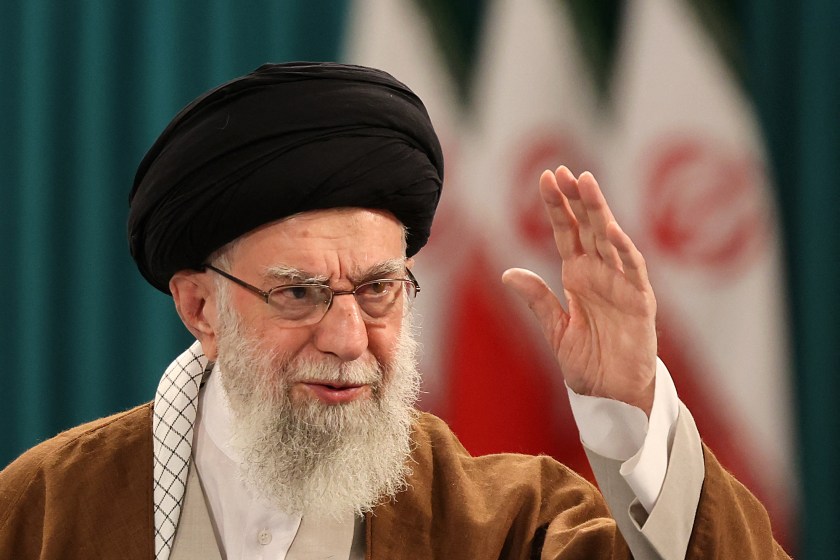
One asks oneself, what leaders in the world today have remorse for the incarcerations, torture, and killings for which they are responsible? What remorse is there in Putin’s, Ayatollah Ali Khamenei’s, Prime Minister Netanyahu’s, and even our American President’s thoughts?

Books of Interest
 Website: chetyarbrough.blog

CONFRONTING EVIL (Assessing the Worst of the Worst)

Author: Bill O’Reilly, Josh Hammer

Narrated By: Robert Petkoff

Bill O’Reilly, American conservative commentator, journalist, author, and television host. Josh Hammer, American conservative commentator, attorney, co-author, and columnist.

History taken out of the context of its time often distorts the reality of the past.

“Confronting Evil” is an interesting if not nuanced history of the most notorious leaders in the world. They were responsible for the torture, incarceration, and death of millions. As is true of most if not all histories of famous and infamous leaders, historians and pundits choose facts that reinforce their view of world’ history. Even the best historian is influenced by the time in which they write and their choice of facts.

Nathan Bedford Forest (1821-1877, General in the Confederate States of America during the Civil War.)

One is appalled by the truth of Nathan Bedford Forest’s view of slavery during America’s Civil War. Forest directed the slaughter of people based on the color of their skin. Forest condoned the murder of all who believed in equality of human beings. Forest is considered a hero to some but with the passage of time and a growing belief in human equality, Forest is recognized as a despicable human being by those who know the history of his life and profession. The evidence of science and human accomplishment show that the color of one’s skin is no measure of intelligence or capability. Forest’s mistreatment of slaves and the wealth he created from trading in slaves is reported in this history. By many measures, Forest is shown as an evil person by O’Reilly and Hammer.

The rule of Genghis Kahn is said to have caused the death of 40 million people, an estimated 11% of the global population at his time in history.

Presumed image of Genghis Kahn (1162-1227, Founder and first Khan of the Mongol Empire.)

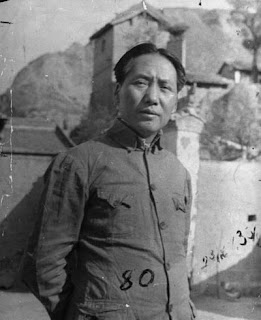
By some measures, Mao doubled that 40 million number with his “Great Leap Forward”, the “Cultural Revolution”, his labor camp creations, and political purges. Hitler is estimated to have caused the death of 17 million with his genocidal policies while casualties from WWII are estimated at 85 million. Hitler’s antisemitism is born of the same stupidity exhibited by Nathan Bedford Forest in America’s Civil War. The contribution of Jewish society to the world is incalculable.

Mao Zedong (1893-1976) Father of the Peoples Republic of China)

Mao’s great leap forward is estimated to have caused the death of 35 to 45 million citizens. The rule of Stalin is estimated to have caused the death of 20 to 60 million U.S.S.R.’ citizens. Stalin’s takeover of Poland, and the Baltics after WWII and his cruelty is remembered by survivors of his rule.

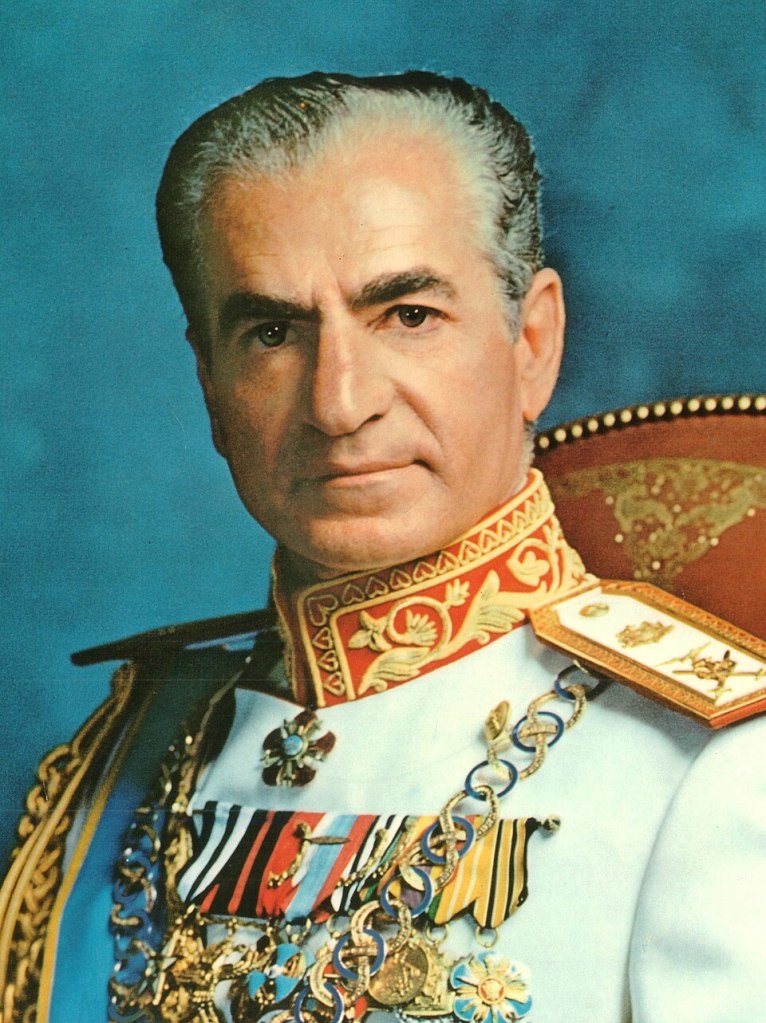
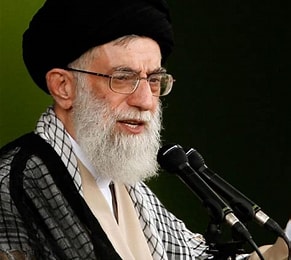
There are many other evil characters in “Confronting Evil”. In the mind of westerners, the current leaders of Iran and Russia are evil. The leader of Iran, Ruhollah Khomeini is estimated to have ordered deaths of Iranians that exceed 250,000 since his takeover in 1979. Though he has passed, the succession of Ayatollah Ali Khamenei has carried on with tens of thousands who have died in Iran’s involvement with Hamas in Palestine, Syria, Iraq, Yemen, and Lebanon. The predecessor of the religious leaders of Iran was Mohammad Reza Shah Pahlavi who reigned from 1941-1970. Pahlavi is estimated to have murdered 3,000 to 20,000 during his reign. These leaders ruled over an impoverished state but incomes per capita fell from $34,660 during the Shah’s reign to $3,150 under Khomeini’s rule. An irony is that income inequality hugely increased in Iran during Khomeini’s rule. Nuanced reality is that poverty and victimization of Iranians is more widely spread under Khomeini than under the former Shah. On an economic scale it appears Khomeini’s evil as a leader exceeds the Shah’s rule. Added to the economic difference is the religious zealotry of Khomeini which widened the gap of sexual inequality in Iran.

Ruhollah Khomeini (1st Supreme Leader of Iran, 1979-1989)

Ayatollah Ali Khamenei (Current leader of Iran.)

The authors address the illicit drug industry and the evil of Pablo Escobar in Columbia and “El Chapo” Guzmán in Mexico. Escobar was killed in 1993 when pursued by drug enforcement officers while Guzmán is serving a life sentence in the U.S. The drug industry continues to thrive despite the harm it is doing to America and the world. The leaders of the criminal drug industry care nothing for the consequence of their actions because of the wealth and power the illicit trade offers.

Pablo Escobar (now deceased) noted on the left with “El Chapo”(arrested and imprisoned in America) on the right.

The last two chapters of “Confronting Evil” offer a pithy definition of evil. Evil is defined as doing harm without remorse. One doubts any of the leaders noted by the authors have or had any remorse for the atrocities they have committed. Whether they rationalize their behavior for the good of their people, their religion, or their country—they are evil by O’Reilly and Hammer’s definition. One doubts any of the leaders noted in “Confronting Evil” are remorseful.

One asks oneself, what leaders in the world today have remorse for the incarcerations, torture, and killings for which they are responsible? What remorse is there in Putin’s, Ayatollah Ali Khamenei’s, Prime Minister Netanyahu’s, and even our American President’s thoughts?

EGOMANIA

“Ghosts of Hiroshima” reminds listener/readers of Putin’s nuclear bomb threat and President Trump’s announcement of renewed American nuclear weapons testing. Both Presidents are egomaniacally playing with the future of humanity. Their macho stupidity is appalling.

Books of Interest
 Website: chetyarbrough.blog

Ghosts of Hiroshima

AuthorCharles Pellegrino

Narrated By: Martin Sheen

Charles Pellegrino (Author of many non-fiction books including “The Last Train from Hiroshima” published in 2010.

“Ghosts of Hiroshima” does not have the impact of “The Last Train from Hiroshima” which the author wrote in the early 2000s.. However, “Ghosts of Hiroshima” reminds listener/readers of Putin’s nuclear bomb threat and President Trump’s announcement of renewed American nuclear weapons testing. Both Presidents are egomaniacally playing with the future of humanity. Their macho stupidity is appalling.

“Ghosts of Hiroshima” breaks little ground on the tragedy of Hiroshima. It outlines the mechanical complications of delivering the first atom bombs which has interest but rocket science makes that history moot. Having an 81-year-old survivor tell of her survival from the bomb is more than enough for this critic.