HARD TIMES

America’s next President needs to forcefully change the economic direction of America in the same way Timothy Egan shows Franklin Roosevelt and the Secretary of Agriculture, Henry Wallace, did during the Dust Bowl and Depression era.

Books of Interest
 Website: chetyarbrough.blog

THE WORST HARD TIME (The Untold
Story of Those Who Survived the Great American Dust Bowl)

Author: Timothy Egan

Narration by: Jacob York

Timothy Egan (Author, American journalist, former op-ed columnist for The New York Times, won the National Book Award in 2006 for “The Worst Hard Time”.)

Timothy Egan wrote an interesting history of America during the dust bowl years that resulted in the Great Depression that lasted from 1929 to the early 40s. “The Worst Hard Time” has concerning parallels to today’s economy. Timothy Egan notes the Dust Bowl is caused by climate change, water scarcity, and energy transition, i.e. all conditions of the year 2025.

Contrary to Trump’s belief that global warming is a cycle of nature, most scientists argue the earth is warming because of the world’s burning of fossil fuels.

Clean potable water is a growing threat to a rising world population.

American Oil Refineries.

Transition from fossil to renewable energy sources is being delayed by the Trump administration.

Agricultural markets dramatically rose and fell in the 1920s and 30s. Wealth and greed created by wheat farming blinded farmers to the harm they were doing to the Nebraska, Oklahoma, and Texas panhandle plains of middle America. With the scarification of soil and seasonal planting and harvesting of wheat, millions of acres of grass land were left barren between crop seasons.

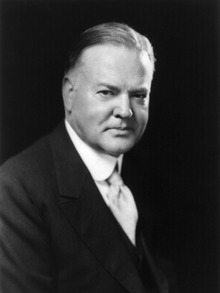
Trump is a sad reminder of the political blindness of Herbert Hoover.

Herbert Hoover (31st President of the United States.)

Tariffs and anti-immigration policies were instituted by the Hoover administration as a response to declining prosperity caused by excessive wheat farming cultivation. This is reminiscent of President Trump’s response today with tariffs, militant immigration policies, and his rejection of science that warns of the impact of global warming.

Trump’s modus vivendi.

Artificial Intelligence in today’s economy has increased investment of billions of dollars in today’s money like that spent to grow and harvest wheat in the 1920s. Investment in farmland skyrocketed in the 1920s with farming as a way to increase wealth with cultivation of land that was nearly free in Nebraska, Oklahoma, and the Texas panhandle. Today, massive investments in A.I. are being made by wealthy tech company owners. Without pragmatic and careful implementation of A.I. to America’s economy, tech company’ investments may have the same consequence to its investors as the farming collapse had to the wheat farmers.

A.I. will become the engine of American economic improvement just as Industrial Revolution changed agricultural production.

Today, A.I., rather than industrialized agriculture, has become the great economic engine of America. Today’s massive investments are in A.I. rather than wheat harvesting. The collapse of wheat prices because of oversupply disrupted the American economy because workers were not needed. A.I. will have a similar impact on all industries which may lead to the next world-wide depression.

1933 Depression bread lines.

Trump’s idea of Making America Great Again is a twentieth century idea that may lead to economic collapse rather than economic prosperity. His tariff policies set a table for damaging the world economy in the same way they did when Hoover became President. America needs to embrace the inevitable decline of human manufacturing and focus on transitioning America to a service economy. America needs more doctors, nurses, social workers, educators, house builders, scientists, and ecologically minded politicians rather than investors and manufacturers of disposable conveniences. At the same time, regressive tax policies that penalize the poor and enrich the wealthy need to be changed. Tax revenue needs to be focused on America’s economic transition from a disposable manufacturing economy to service and ecological preservation industries.

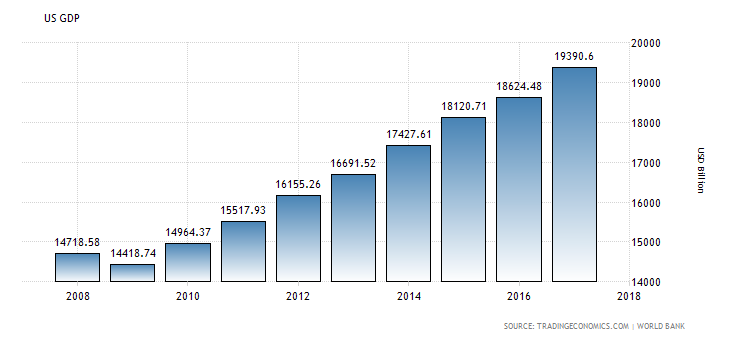
The hope for GDP growth in America’s future depends on a change in economic direction.

America’s next President needs to forcefully change the economic direction of America in the same way Timothy Egan shows Franklin Roosevelt and the Secretary of Agriculture, Henry Wallace, did during the Dust Bowl and Depression era. The reversal of Trump’s mistakes will take more than one four-year-term for correction, but the next election needs to set a different course for the American economy.

THE WIZARD

Good luck and safe travels, if you have the time and inclination to visit, go see Dorothy and her companions in Dolan’s immersive theatre.

Travel

Written by Chet Yarbrough

The Sphere in Las Vegas is a must see when visiting Las Vegas.

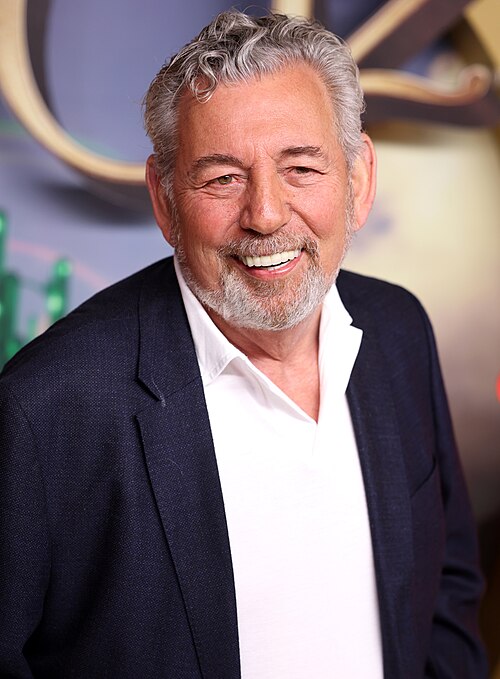
James Dolan, the executive chairman of Madison Square Garden Company, is credited with the idea of the Las Vegas Sphere.

James Lawrence Dolan (American businessman, supervisor of the New York Knicks, and New York Rangers, former CEO of cable vision, owns 70% of the voting power of the Sphere Entertainment Co., a publicly traded company.)

At the time of the Sphere’s construction in Las Vegas, there was concern about it ever being profitable. The cost of the Sphere exceeded expectations but Dolan’s vision and anyone who has visited the Sphere will be overwhelmed by its sensory impact and entertainment potential. In its first quarter of operation, a 98.4 million operating loss was reported. However, the reported revenue of the Sphere was $314.2 million in 2024 and its showed net inc9ome of $151.8 million in Q2 of 2025 after a previous year’s loss of an estimated $46.6 million.

The Wizard of Oz at the Sphere had mixed reviews when it first came out. We had visited the Sphere when it first opened with a World of life’ presentation. The Wizard was equally astonishing and entertaining.

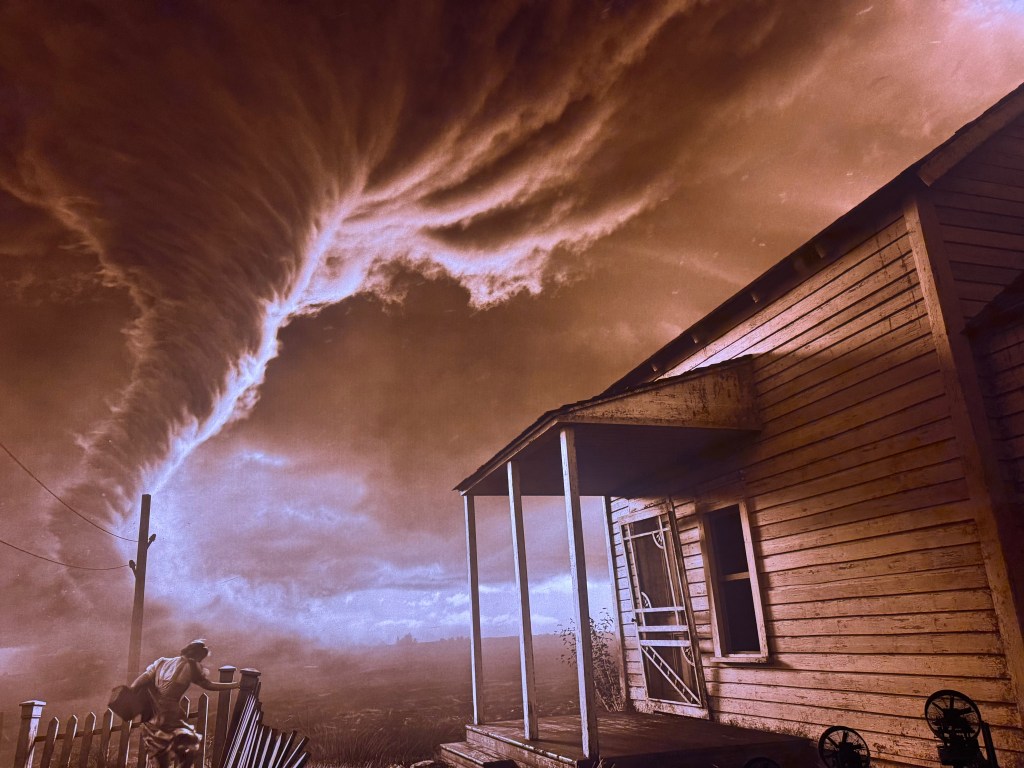
As the Sphere production introduces unforgettable characters like The Scarecrow, The Tin Man, and the Cowardly Lion, some fans will tear up with the joy of seeing them in the immersive qualities of the Sphere. Viewers will feel the wind of the storm as it sweeps across the Sphere’s dome.

The special effects are amazing. You feel the wind of the hurricane, catch a fake apple from a forest of talking trees that complain about travelers picking their apples, and feel the heat from a fire in the witch’s castle. This is a tour de force of the Sphere’s potential.

Good luck and safe travels, if you have the time and inclination to visit, go see Dorothy and her companions in Dolan’s immersive theatre.

GLOOM

There is more death to come in the last chapters of “Wild Dark Story”. The underlying gloom about the fate of earth and civilization may ware on some who may become bored with the author’s story.

Books of Interest
 Website: chetyarbrough.blog

Wild Dark Shore (A Novel)

Author: Charlotte McConaghy

Narrated By:  Cooper Mortlock & 3 more

Charlotte McConaghy (Author, writer born in Australia in 1988, Graduate Degree in Screenwriting and Masters in Screen Arts.)

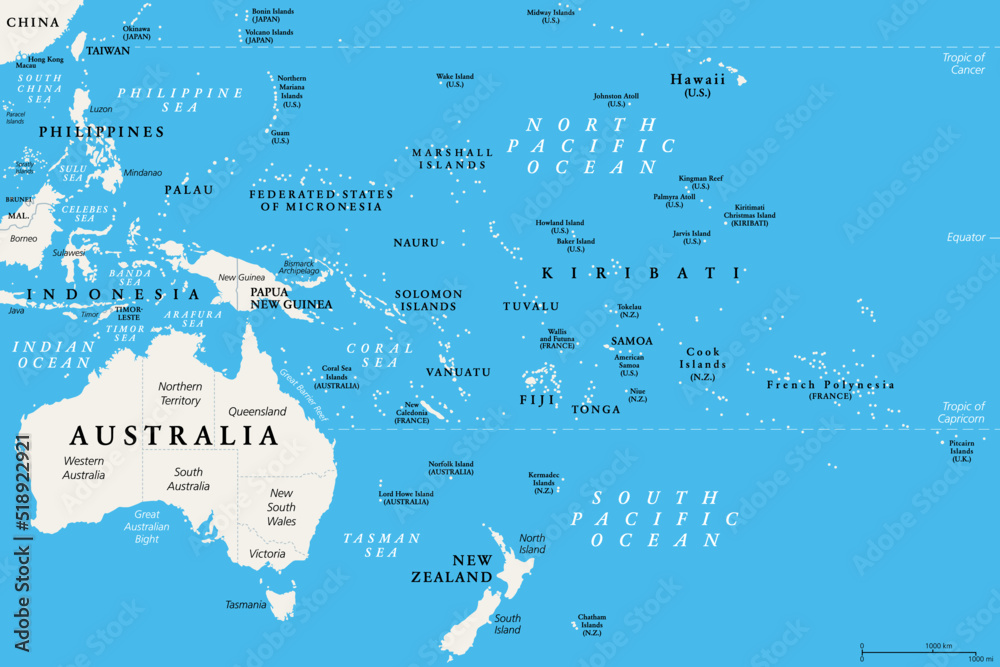
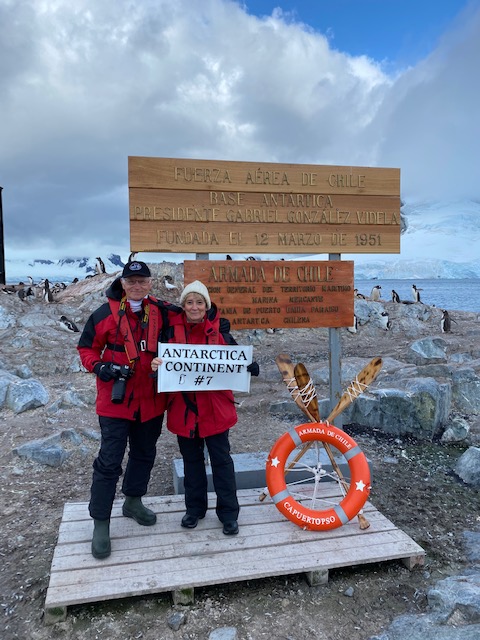
This is a novel for environmentalists with a survivalist mentality but it is also a tale of mystery and human relationships. McConaghy’s education makes “Wild Dark Shore” feel like a screenwriter’s idea for a movie. She paints a word-picture of a cold wilderness island sinking into oblivion because of climate change. It reminds one of visiting a weather station in Antartica. One is mesmerized by seabirds flying in a brutal wind, penguins flocking across an icy landscape, and sea lions sunning themselves on broken islands of ice. If you are lucky on your voyage, you will see a pod of whales. McConaghy paints a picture of a forbidding landscape once inhabited by natives that became a lighthouse for ships of the sea. At the time of the author’s story, it became an outpost for environmental observation and seed preservation.

Islands around Australia.

“Wild Dark Story” is a mystery about a lost husband and a tough-minded wife who wants to know what happened to him after receiving three letters expressing fear about his assignment and life at the station. The station is being closed down by a family working at the island station. There is a father, two sons, and a daughter. The father’s wife has died. The task of closing the station is perilous but this family has lived on the station for several years and is intimately aware of the dangers and what must be done to ready it for abandonment. Their evacuation plans are interrupted when a vessel crashes near the station. The vessel carries the wife of the person who received the three letters from her husband. She survives the vessel’s destruction with wounds from the rocky shoreline. The pilot of the vessel is dead. The woman is rescued by the family that is preparing for evacuation.

Environmental degradation.

“Wild Dark Story” has some appeal to environmentalists because it is a dramatic presentation of the fragility of civilization in the face of rising tides and a warming planet. The island is set up, presumably by either a government or corporation that wishes to preserve unique plants from seeds in a cavern designed for that purpose. Preservation is being shown as a form of resistance to environmental degradation.

Leaving an isolated land.

In conversations amongst the family preparing for evacuation, the loss of the woman’s husband may have had something to do with the family that is closing the station. The father is reluctant to tell what happened and suggests his children should not say anything about it to the woman.
The new arrival’s husband was a biologist responsible for seed preservation.

There was a fire that burned down their home on the mainland. It was built by the hands of the woman who is trying to find out what happened to her husband. They had separated because the fire and total loss of the home had fractured their relationship. Her husband’s fate is never fully confirmed, but the novel strongly implies he may have died by accident, suicide, or possibly through a cover-up related to the dismantling of the seed vault.

Her husband had bonded with the youngest of the three children. This is interesting because one of the last fights he had with his wife before he left was about her not wanting to have a child.

Rescue or not.

At this point, the novel becomes too long. The mystery of her husband’s death may have been because of psychological imbalance but no definitive answer is given. The theme of the book is that isolation warps truth and identity and that grief is a force that drives human beings to fall apart or renew their lives. There is more death to come in the last chapters of “Wild Dark Story”. The underlying gloom about the fate of earth and civilization may ware on some who may become bored with the author’s story.

GOTHIC TALE

The climax of “Modern Gothic” is where myth enters Moreno-Carcia’s story. The fundamental truths of colonization are revealed in her creative story while its denouement is an entertaining explosion of imagination.

Books of Interest
 Website: chetyarbrough.blog

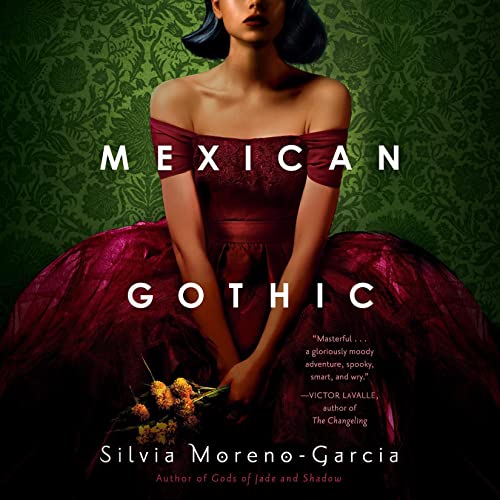
Mexican Gothic

Author: Silvia Moreno-Garcia

Narrated By: Frankie Corzo

Silvia Moreno-Garcia (Author, Mexican/Canadian novelist, editor and publisher.)

Moreno-Garcia’s “Mexican Gothic” is a chilling story of colonization, eugenics, ecological contamination, mystical beliefs, and control of society by men. The author chooses the name of Doyle as an English family that exploits the Mexico’ silver mining industry in earlier centuries. A dynasty is created by generations of Doyle’s. They created a colonial manor called “High Place” from which to rule a crumbling empire. As colonizers they capitalize on Mexico’s silver deposits by exploiting native Mexicans’ land and labor to grow their mining operation. The wealth of local citizens is lost to the English foreigners who keep wages low to increase the wealth of the Doyle family.

Over generations, the Doyle men married local women that were related to each other. A common practice of royalty before the twentieth century.

They wished to maintain the genetic purity of the Doyle bloodline by having future Doyles marry genetic descendants of Mexican women that had been their wives. This is not greatly different than the experience of royal marriages in European cultures. The consequence of that marriage tradition is that recessive genetic mutations become more prominent in offspring. Children were more susceptible to diseases like cystic fibrosis and had higher incidents of developmental and cognitive disorders. This is one of many threads of meaning in “Mexican Gothic” because one of these descendants becomes a murderer of Doyle family members and the current Doyle generation seems socially dysfunctional. Added to that dysfunction is the Doyle family’s diminishing wealth.

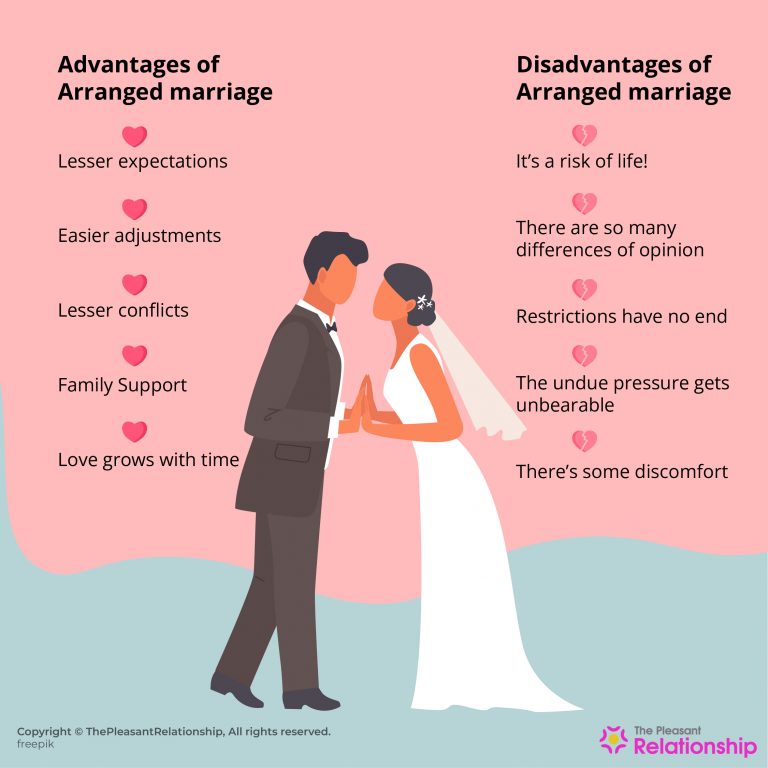
An arranged marriage is a lynch pin to the story.

The heroine, Noemi, is the daughter of a wealthy Mexican family. She is sent to investigate a letter that was received by her father from a young woman that marries a Doyle. She is a cousin of Noemi’s. The marriage is arranged in part because of her father, and he feels something is wrong and wants Noemi to visit the Doyle family to find what the mysterious letter means. Soon after Noemi arrives, she begins to have hallucinatory dreams. Listener/readers find the hallucinations are because of spores that are in the bedroom of the deteriorating Doyle house. A clever thread of meaning in Moreno-Garcia’s story is ecological contamination that comes from colonization. As one nation colonizes another, it inevitably brings different plants and animals that are not indigenous to the country they are colonizing. The author notes a fungus is growing in the Doyle household that may have come from the original colonizers.

The penultimate theme in “Modern Gothic” is the creation of myths that compound the horrific events that occur in the Doyle house.

From the history of murders in the Doyle household, to hallucinatory dreams, to incestuous relationships, to the gloom and doom of the story, to a myth about the age of the Doyle patriarch, Moreno-Garcia offers a climax to her story that vivifies reader/listener’s imagination. The climax of “Modern Gothic” is where myth enters Moreno-Carcia’s story. The fundamental truths of colonization are revealed in her creative story while its denouement is an entertaining explosion of imagination.

AI & HEALTH

Like Climate Change, AI seems an inevitable change that will collate, spindle, and mutilate life whether we want it to or not. The best humans can do is adopt and adapt to the change AI will make in human life. It is not a choice but an inevitability.

Books of Interest
 Website: chetyarbrough.blog

Deep Medicine (How Artificial Intelligence Can Make Healthcare Human Again)

Author: Eric Topol

Narrated By:  Graham Winton

Eric Topol (Author, American cardiologist, scientist, founder of Scripps Research Translational Institute.)

Eric Topol is what most patients want to see in a Doctor of Medicine. “Deep Medicine” should be required reading for students wishing to become physicians. One suspects Topol’s view of medicine is as empathetic as it is because of his personal chronic illness. His personal experience as a patient and physician give him an insightful understanding of medical diagnosis, patient care, and treatment.

Topol explains how increasingly valuable and important Artificial Intelligence is in the diagnosis and treatment of illness and health for human beings.

AI opens the door for improved diagnosis and treatment of patients. A monumental caveat to A.I.s potential is its exposure of personal history not only to physicians but to governments and businesses. Governments and businesses preternaturally have agendas that may be in conflict with one’s personal health and welfare.

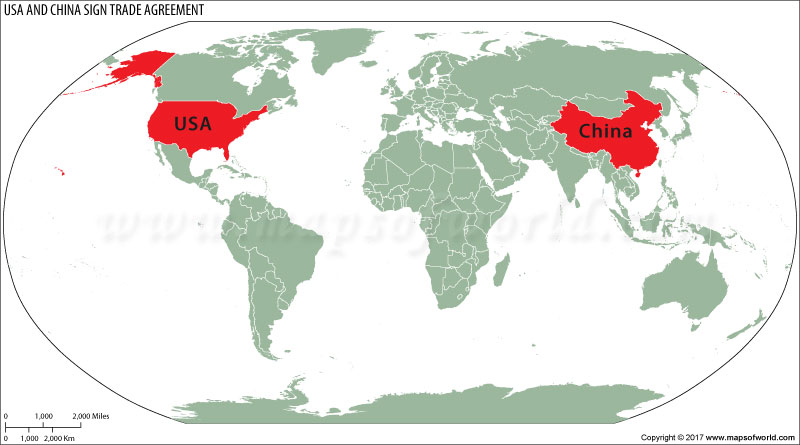
Topol notes China is ahead of America in cataloging citizens’ health because of their data collection and AI’s capabilities.

Theoretically, every visit to a doctor can be precisely documented with an AI system. The good of that system would improve continuity of medical diagnosis and treatment of patients. The risk of that system is that it can be exploited by governments and businesses wishing to control or influence a person’s life. One is left with a concern about being able to protect oneself from a government or business that may have access to citizen information. In the case of government, it is the power exercised over freedom. Both government and businesses can use AI information to influence human choice. With detailed information about what one wants, needs, or is undecided upon can be manipulated with personal knowledge accumulated by AI.

Putting loss of privacy and “Brave New World” negatives aside, Topol explains the potential of AI to immensely improve human health and wellness.

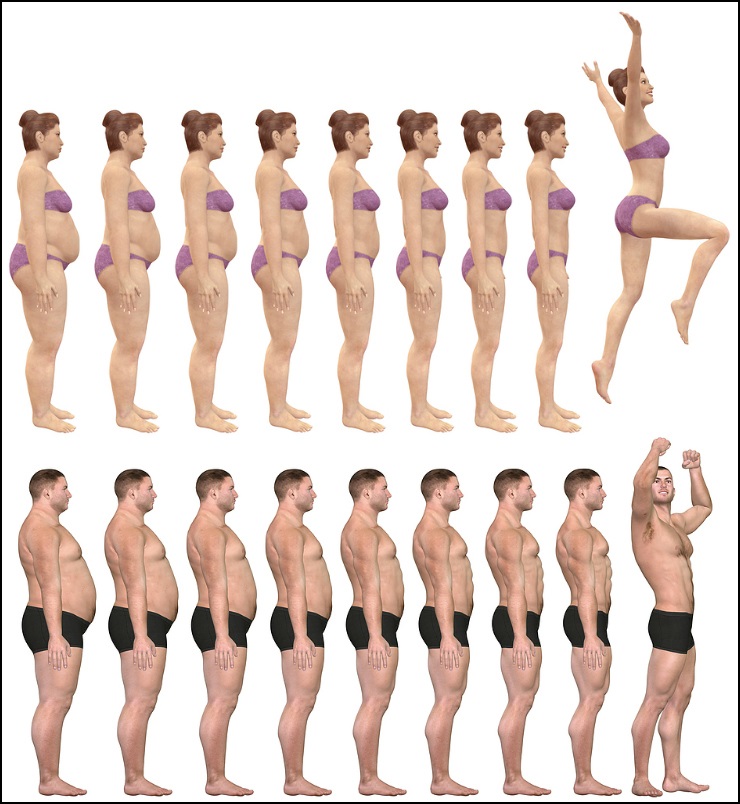
Cradle to grave information on human health would aid in research and treatment of illnesses and cures for present and future patients. Topol gives the example of collection of information on biometric health of human beings that can reveal secrets of perfect diets that would aid better health during one’s life. Topol explains how every person has a unique biometric system that processes food in different ways. Some foods may be harmful to some and not others because of the way their body metabolizes what they choose to eat. Topol explains, every person has their own biometric system that processes foods in different ways. It is possible to design diets to meet the specifications of one’s unique digestive system to improve health and avoid foods that are not healthily metabolized by one’s body. An AI could be devised to analyze individual biometrics and recommend more healthful diets and more effective medicines for users of an AI system.

In addition to improvements in medical imaging and diagnosis with AI, Topal explains how medicine and treatments can be personalized to patients based on biometric analysis that shows how medications can be optimized to treat specific patients in a customized way. Every patient is unique in the way they metabolize food and drugs. AI offers the potential for customization to maximize recovery from illness, infection, or disease.

Another growing AI metric is measurement of an individual’s physical well-being. Monitoring one’s vital signs is becoming common with Apple watches and information accumulation that can be monitored and controlled for healthful living. One can begin to improve one’s health and life with more information about a user’s pulse and blood pressure measurements. Instantaneous reports may warn people of risks with an accumulated record of healthful levels of exercise and an exerciser’s recovery times.

Marie Curie (Scientist, chemist, and physicist who played a crucial role in developing x-ray technology, received 2 Nobel Prizes, died at the age of 66.)

Topol offers a number of circumstances where AI has improved medical diagnosis and treatment. He notes how AI analysis of radiological imaging improves diagnosis of body’ abnormality because of its relentless process of reviewing past imaging that is beyond the knowledge or memory of experienced radiologists. Topol notes a number of studies that show AI reads radiological images better than experienced radiologists.

One wonders if AI is a Hobson’s choice or a societal revolution.

One wonders if AI is a Hobson’s choice or a societal revolution greater than the discovery of agriculture (10000 BCE), the rise of civilization (3000 BCE), the Scientific Revolution (16th to 17th century), the Industrial Revolution (18th to 19th century), the Digital Revolution (20th to 21st century), or Climate Change in the 21st century. Like Climate Change, AI seems an inevitable change that will collate, spindle, and mutilate life whether we want it to or not. The best humans can do is adopt and adapt to the change AI will make in human life. It is not a choice but an inevitability.

MUSK

Musk, like all human beings, is imperfect. His association with a President who feels money is more important than humanity only feeds Musk’s ineptitude as a manager of people.

Books of Interest
 Website: chetyarbrough.blog

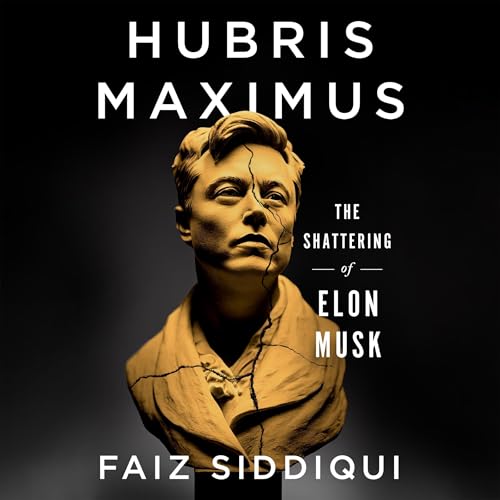
Hubris Maximus  (The Shattering of Elon Musk)

By: Faiz Siddiqui

Narrated By:  André Santana

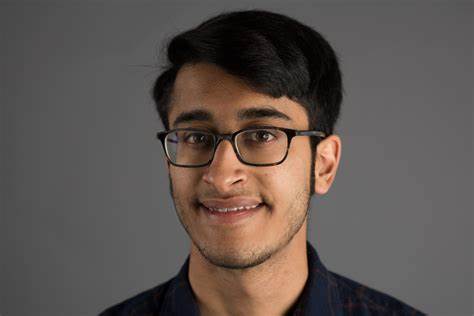
Faiz Siddiqui (Author, technology reporter for The Washington Post)

Faiz Siddiqui exposes the character of Elon Musk as a brilliant entrepreneur with an outsized pride in his ability that reflects an arrogance that diminishes his genius. Musk’s success with Tesla and SpaceX accomplishments are equal, and in some ways exceed, the business successes of John D. Rockefeller and Steve Jobs. In wealth, Musk exceeds Rockefeller and in inventiveness, he competes with Steve Jobs.

As brilliant as Musk shows himself to be, his fragile ego diminishes his genius.

Siddiqui reveals how petty Musk can be while balancing that pettiness with his contribution to creative ideas that will live far beyond his mortal life. Musk’s development of space travel and communication satellites for the world with a non-governmental, free enterprise operation is a tribute to the power of capitalism. His next immense contribution, though controversial and a work in progress, will be self-driving transportation.

Elon Musk’s Successful Return of Rockets Launched into Space.

Siddiqui’s picture of Musk’s flawed personality is somewhat balanced by the image of a person driven to succeed. However, that drive is not something that naturally translates to organizational performance. Musk is not a developer of people and should not be in charge of an organization’s management. Like Apple employees that kept some of their work undisclosed to Steve Jobs when the mobile phone was being considered, Musk needs to leave management of employees to others. People management is a skill set that Musk does not have as was made quite clear with his acquisition of Twitter and his work with DOGE. DOGE feeds Musk’s managerial weaknesses with President Trump’s mistaken belief that cost of government is more important than effectiveness. DOGE is a growing tragedy of American governance.

Musk is right about the value of self-driving vehicles, but he is trying to produce the wrong product to prove his belief.

Self-driving vehicles will reduce traffic accidents, injuries, and death but the product to achieve that goal is what Musk should be working on. The game of Go is estimated to have 10 to the 172nd power of possible positions. Self-driving cars probably have a similar astronomical number of possible causes of accidents.

Musk, or someone with his creative genius, needs to create a product that can be sold to all vehicle manufacturers.

This newly invented product would use AI to learn, reinforce understanding of vehicular movements, accidents, and incidents. That accumulated information would allow creative play in the same way GO became an unbeatable game for human beings playing against a programed computer. Musk is putting the cart before the horse by building cars and then making them safe, self-driving vehicles. The first step is to gather information from as many driven vehicles as possible, collate that information, and use computer power to creatively play with the information. That information, like learning the moves of GO would create self-driving algorithms that would reduce self-driving vehicle’ accidents, injuries, and deaths.

A sad reveal in “Hubris Maximus” is that an American treasure, Elon Musk, is being vilified for the wrong reasons.

Musk’s contribution to the reduction of air pollution has benefited the world. His vision of interstellar travel may be the next step in human expedition, exploration, and habitation of the universe. Earth’s interconnectedness is vitally enhanced by Musk’s satellite system. The universe is humanity’s next frontier.

Musk, like all human beings, is imperfect. His association with a President who feels money is more important than humanity only feeds Musk’s ineptitude as a manager of people.

FUTURE A.I.

Human nature will not change but A.I. will not destroy humanity but insure its survival and improvement.

Books of Interest
 Website: chetyarbrough.blog

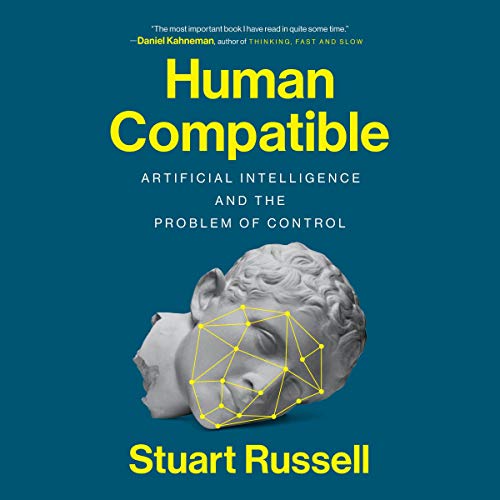
Human Compatible (Artificial Intelligence and the Problem of Control)

By: Stuart Russell

Narrated By: Raphael Corkhill

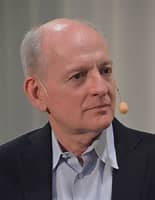
Stuart Johnathan Russell (British computer scientist, studied physics at Wadham College, Oxford, received first-class honors with a BA in 1982, moved to U.S. and received a PhD in computer science from Stanford.)

Stuart Russell has written an insightful book about A.I. as it currently exists with speculation about its future. Russell in one sense agrees with Marcus’s and Davis’s assessment of today’s A.I. He explains A.I. is presently not intelligent but argues it could be in the future. The only difference between the assessments in Marcus’s and Davis’s “Rebooting AI” and “Human Compatible” is that Russell believes there is a reasonable avenue for A.I. to have real and beneficial intelligence. Marcus and Davis are considerably more skeptical than Russell about A.I. ever having the equivalent of human intelligence.

Russell infers A.I. is at a point where gathered information changes human culture.

Russell argues A.I. information gathering is still too inefficient to give the world safe driverless cars but believes it will happen. There will be a point where fewer deaths on the highway will come from driverless cars than those that are under the control of their drivers. The point is that A.I. will reach a point of information accumulation that will reduce traffic deaths.

A.I. will reach a point of information accumulation that will reduce traffic deaths.

After listening to Russell’s observation, one conceives of something like a pair of glasses on the face of a person being used to gather information. That information could be automatically transferred by improvements in Wi-Fi to a computing device that would collate what a person sees to become a database for individual human thought and action. The glasses will become a window of recallable knowledge to its wearer. A.I. becomes a tool of the human mind which uses real world data to choose what a human brain comprehends from his/her experience in the world. This is not exactly what Russell envisions but the idea is born from a combination of what he argues is the potential of A.I. information accumulation. The human mind remains the seat of thought and action with the help of A.I., not the direction or control by A.I.

Russell’s ideas about A.I. address the concerns that Marcus and Davis have about intelligence remaining in the hands of human’s, not a machine that becomes sentient.

Russell agrees with Marcus, and Davis–that growth of A.I. does have risk. However, Russell goes beyond Marcus and Davis by suggesting the risk is manageable. Risk management is based on understanding human action is based on knowledge organized to achieve objectives. If one’s knowledge is more comprehensive, thought and action is better informed. Objectives can be more precisely and clearly formed. Of course, there remains the danger of bad actors with the advance of A.I., but that has always been the risk of one who has knowledge and power. The minds of a Mao, Hitler, Beria, Stalin, and other dictators and murderers of humankind will still be among us.

The competition and atrocities of humanity will not disappear with A.I. Sadly, A.I. will sharpen the dangers to humanity but with an equal resistance by others that are equally well informed. Humanity has managed to survive with less recallable knowledge so why would humanity be lost with more recallable knowledge? As has been noted many times in former book reviews, A.I. is, and always will be, a tool of human beings, not a controller.

The world will have driverless cars, robotically produced merchandise, and cultures based on A.I.’ service to others in the future.

Knowledge will increase the power and influence of world leaders to do both good and bad in the world. Human nature will not change but A.I. will not destroy humanity. Artificial Intelligence will insure human survival and improvement. History shows humanity has survived famine, pestilence, and war with most cultures better off than when human societies came into existence.

HUMAN

What is the value of high IQ? If everyone was smarter, would they be happier? It seems the only real value of genetics is in the prevention of known diseases, not in improvement of IQs or creation of a perfect human being (whatever that is).

Books of Interest
 Website: chetyarbrough.blog

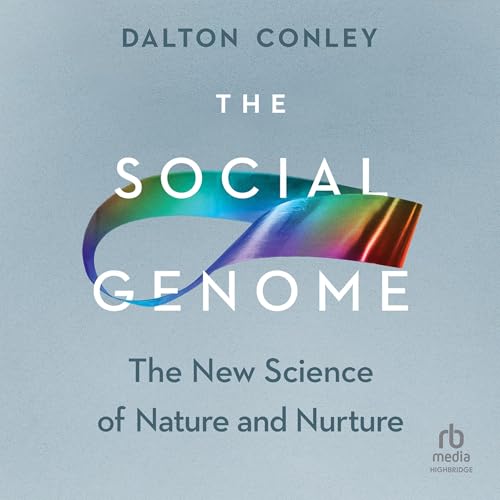
The Social Genome: The New Science of Nature and Nurture

By: Dalton Conley

Narrated By: Christopher Douyard

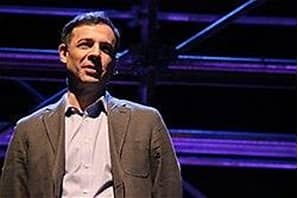
Dalton Clark Conley (Author, Princeton University professor, American sociologist.)

Dalton Conley offers a complex explanation of why one child intellectually and financially excels while others are left behind. The “Social Genome” is an attempt to explain the complexity and inadequacy of genetic research. Not too surprisingly, there seems a correlation between wealth and intellectual development, but its relationship includes familial and environmental nurturing in ways that are too complex for today’s science to measure.

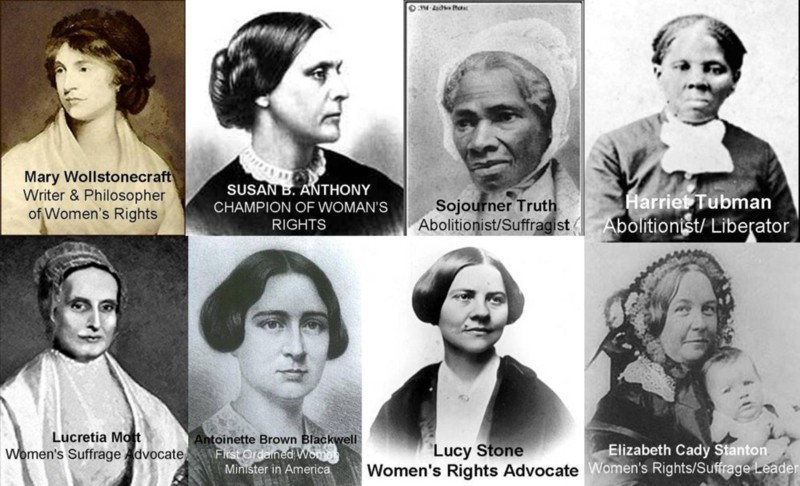
FAMOUS WOMEN IN HISTORY (Many women are as intellectually strong and mentally tough as men, e.g.  Cleopatra, Sojourner Truth, Indira Gandhi, Golda Meir, Benazir Bhutto, Malala Yousafzai, and others.)

Dalton argues both genetics and environment shape human intellect and economic success. However, science’s current knowledge of genetic and environmental impact is not clearly understood in a way to aid human development. The current limitations of science make it impossible to determine the precise genetic and environmental factors that shape human development. Dalton offers many examples of how genetics and environment are relevant to human development, but neither are precisely measurable nor manageable.

The idea of clearly understanding the genetic and environmental causes of who humans become is a bit frightening.

Even if it were possible to achieve precise measurement of genetic and environmental influences, should that knowledge be used to create designer human beings?

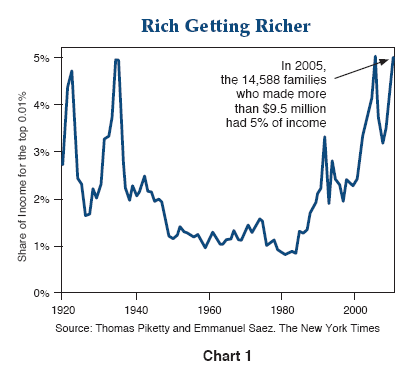
Piketty argues that the income gap widens after World War II.  He estimates 60% of 2010’s wealth is held by less than 1% of the population. 

Dalton does believe there is a correlation between economic well-being and IQ, but the correlation is affected by genetic inheritance. Dalton concludes economic well-being is a positive factor in IQ improvement. That raises questions about how one can improve the economic well-being of a society to improve IQ. Dalton infers there is no one size fits all solution for IQ improvement. Nurture and nature are too intimately intertwined to know how IQ of a society can be improved. A conclusion one may draw is that environmental and societal factors like human nutrition, general education and improved equal opportunity can mitigate IQ diminishment. Whether one should modify human genomes is a step too far.

In many ways, this is a frustrating book to listen to or read.

If all people looked more alike than different would there be less conflict in the world? No, but being of one race or another makes a difference in one’s opportunities in the world. What is the value of high IQ? If everyone was smarter, would they be happier? It seems the only real value of genetics is in the prevention of known diseases, not in improvement of IQs or creation of a perfect human being (whatever that is).

LIFE’S LOTTERY

The randomness of life and what we make of it is the most important theme of Weston’s insightful memoir about being “Alive”.

Books of Interest
 Website: chetyarbrough.blog

Alive (The Richness and Brevity of Existence)

By: Gabriel Weston

Narrated By: Gabriel Weston

Gabriel Weston (Author, English surgeon, television presenter.)

Gabriel Weston’s “Alive” is an intimate, blunt, and enlightening explanation of her experience as a woman, surgeon, mother, and member of the human race. For some, Weston’s story contains more information than one is prepared to take.

It begins with a self-effacing assessment of her early education in liberal arts where she achieved an MA in English. However, she decides to go to medical school in London where she qualifies as a physician in 2000. Her very personal memoir explains a great deal about being educated as a physician but more about being a woman.

Some reader/listeners will be put off by Weston’s blunt explanation of the human body. However, some will find much of what she writes as revelatory.

Weston explains what it means to be human and a woman who becomes a mother of twins at the age of forty, with two younger children.

It is hard to imagine a younger person who is uninterested in science, technology, engineering, or math, who receives an MA in English, would be interested in becoming a surgeon.
However, Weston chooses to become a doctor and graduates from a London medical school in 2000. She briefly explains her journey in “Alive” by reflecting on her classes in body dissection to explain the details of the human body and differences in sexual anatomy. Some will choose to leave her story, but others (if they stick with it) will be enlightened and surprised by her observations and opinions.

Weston notes the equivalent of the male penis is a woman’s clitoris. This is an interesting observation that most would be unlikely to publicly discuss or write about.

Presumably, Weston is making this point to show there is a great deal of similarity between men and women. However, she notes a significant difference. Menstruation is a sluffing process where the uterus sheds a layer of bedding material that exits the body through the vagina, i.e., something unique to women. The purpose of menstruation is to prepare the body for possible pregnancy by providing a thickening to the uterus that supports fertilization. That thickening is removed (sluffed off) approximately once per month. As is often noted, only women give birth, a singular difference between the sexes.

Weston goes on to explain her experience of birthing twins.

The two girls come late in her adult life. They are delivered in a caesarian operation. Children are born in amniotic sacs. This is likely a surprise to most men because birth of a baby is thought of as a delivery with a squirming body through the birth canal rather than a body within an amniotic sac. However, Weston notes the second twin is delivered within its amniotic sac which suggests she is a fraternal, rather than identical twin.

Syria’s use of nerve gas to murder their own citizens.

Weston’s story moderates in future chapters with notes about nerve gases used by governments to suffocate their own people as well as perceived foreign enemies. The point she makes is that oxygen deprivation in the 21st century and beyond is increasing with rising pollution on earth. She notes oxygen deprivation is the same suffocation caused when governments used lethal gases to kill their own citizens as perceived enemies. The obvious inference is today’s denial of earth’s environmental degradation risks the lives of all oxygen dependent lives.

Weston is an example of a working mother who succeeds in England despite the world’s history of misogyny.

Some women become a success despite the many obstacles they face. Weston symbolizes human grit and determination in the face of sexual inequality of opportunity but, as a human being, she is subject to the physical limitations of every life. She mentions during the course of her story a heart murmur that is caused by a defective heart valve. The last chapters of her book explain Weston is on a transplant list.

The randomness of life and what we make of it is the most important theme of Weston’s insightful memoir about being “Alive”.

HUMAN NATURE

Murakami is one of the great writers of modern times. In “after the quake”, Murakami reduces the great and horrid loss of the many to the feelings of the “one”

Books of Interest
 Website: chetyarbrough.blog

“after the quake”

By: Haruki Murakami

Narrated By: Rupert Degas, Teresa Gallagher, Adam Sims

The Kobe, Japan earthquake struck on January 17, 1995, at 5:46 AM. It killed 6,400 people and injured more than 40,000. Approximately 300,000 residents were displaced with over 240,000 homes, buildings, highways, and rail lines damaged with estimated repair cost of $200 billion in 1995. (The Kobe earthquake was actually less damaging than Japan’s 2011 Tōhoku earthquake and subsequent tsunami that killed over 18,000 people. Over 123,000 homes were destroyed. The estimated cost of that disaster was $220 billion dollars.)

Haruki Murakami offers a series of short stories in “after the quake” that remind one of the frailties of human beings. Humans lie, steal, cheat and war against each in ways that exceed natural disasters. Murakami’s short stories are funny, sad, and insightful views of humanity that show we often foment our own disasters.

Each short story revolves around the social implications of the Kobe’ earthquake. Murakami cleverly weaves his stories to reflect on events that change one’s direction in life. The events can be as great as an earthquake, a war, or a singular lost love. The first is nature’s way; the second and third are humans’ way.

Human relationships are as unpredictable and destructive as natural disasters. The human’ Lushan rebellion in 8th century China is estimated to have killed 13 million people, the Mongol invasion in the 13th and 14th century 20 to 60 million, the Taiping rebellion in mid-19th century China 20-30 million, and two world wars in the 20th century at 83-107 million. This is without noting China’s famine that killed millions because of Mao’s mistakes in the Great Leap Forward, Stalin’s repression in Russia, and today’s wars in Ukraine and Gaza. Natural disasters are horrendous events, but human nature has murdered more than earthquakes, floods, volcanoes, and other natural disasters.

The cataclysmic events of nature affect the many, but Murakami shows scale means nothing in respect to the effect it has on the “one”. He cleverly shows how singular events can overwhelm one relationship as portentously as natural or man-made disasters can overwhelm all relationships.

Murakami is one of the great writers of modern times. In “after the quake”, Murakami reduces the great and horrid loss of the many to the feelings of the “one”. His stories show that a personal loss of an imaginary friend or a real love is as catastrophic to the one as a natural disaster or war is to the many.