What is the value of high IQ? If everyone was smarter, would they be happier? It seems the only real value of genetics is in the prevention of known diseases, not in improvement of IQs or creation of a perfect human being (whatever that is).
Books of Interest Website: chetyarbrough.blog
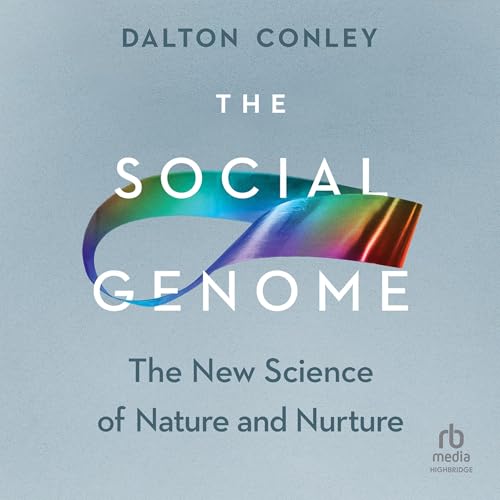
The Social Genome: The New Science of Nature and Nurture
By: Dalton Conley
Narrated By: Christopher Douyard
Dalton Clark Conley (Author, Princeton University professor, American sociologist.)
Dalton Conley offers a complex explanation of why one child intellectually and financially excels while others are left behind. The “Social Genome” is an attempt to explain the complexity and inadequacy of genetic research. Not too surprisingly, there seems a correlation between wealth and intellectual development, but its relationship includes familial and environmental nurturing in ways that are too complex for today’s science to measure.
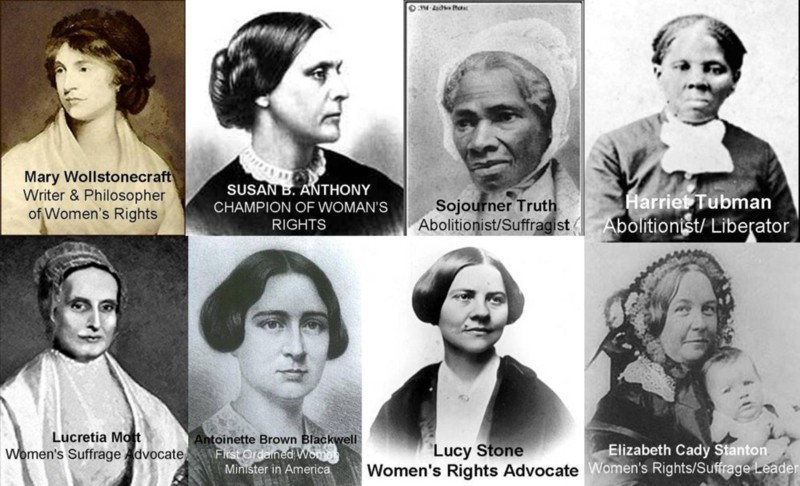
FAMOUS WOMEN IN HISTORY (Many women are as intellectually strong and mentally tough as men, e.g. Cleopatra, Sojourner Truth, Indira Gandhi, Golda Meir, Benazir Bhutto, Malala Yousafzai, and others.)
Dalton argues both genetics and environment shape human intellect and economic success. However, science’s current knowledge of genetic and environmental impact is not clearly understood in a way to aid human development. The current limitations of science make it impossible to determine the precise genetic and environmental factors that shape human development. Dalton offers many examples of how genetics and environment are relevant to human development, but neither are precisely measurable nor manageable.
The idea of clearly understanding the genetic and environmental causes of who humans become is a bit frightening.
Even if it were possible to achieve precise measurement of genetic and environmental influences, should that knowledge be used to create designer human beings?
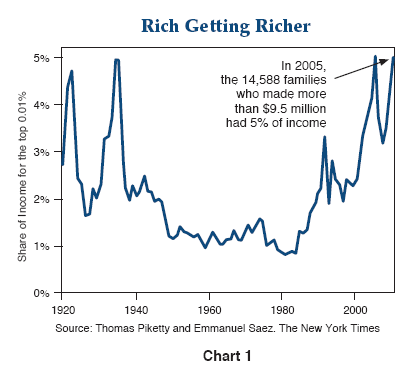
Piketty argues that the income gap widens after World War II. He estimates 60% of 2010’s wealth is held by less than 1% of the population.
Dalton does believe there is a correlation between economic well-being and IQ, but the correlation is affected by genetic inheritance. Dalton concludes economic well-being is a positive factor in IQ improvement. That raises questions about how one can improve the economic well-being of a society to improve IQ. Dalton infers there is no one size fits all solution for IQ improvement. Nurture and nature are too intimately intertwined to know how IQ of a society can be improved. A conclusion one may draw is that environmental and societal factors like human nutrition, general education and improved equal opportunity can mitigate IQ diminishment. Whether one should modify human genomes is a step too far.
In many ways, this is a frustrating book to listen to or read.
If all people looked more alike than different would there be less conflict in the world? No, but being of one race or another makes a difference in one’s opportunities in the world. What is the value of high IQ? If everyone was smarter, would they be happier? It seems the only real value of genetics is in the prevention of known diseases, not in improvement of IQs or creation of a perfect human being (whatever that is).
The imagination of Han Kang gives reader/listener’s an explanation of how a human being can become psychotic. Kang’s characters show how psychosis comes from many sources, a major one of which is family relationship.
Books of Interest Website: chetyarbrough.blog
The Vegetarian
By: Han Kang
Narrated by: Deborah Smith, Janet Song, Stephen Park
Han Kang (Author, South Korean writer, awarded the International Booker Prize for fiction in 2016 and the Nobel Prize in Literature in 2024.)
A listener/reader may be tempted to put this book aside with the thought that it is a titillating pornographic tale that is not worthy of one’s time. However, after an hour or two, one realizes this is a journey for something difficult to describe.
In Kang’s fictional story, two sisters are raised by the same parents. One is the older of the two and becomes a successful small business owner with a video artist husband; the other is a housewife who lives with a husband that seems to neither love nor respect her. Both marriages fail but for different but interlocking reasons.
The younger sister becomes a vegetarian later in her married life. She explains her vegetarianism is based on a dream she has about something that is not clearly defined. One gathers the dream has something to do with the source of meat that involves the killing of animals while vegetarian food comes from nature’s abundance. The husband reluctantly goes along with the change but becomes more and more unhappy in his life with the younger sister. The unhappiness grows to something greater when his wife begins to complain about how her meat-eating husband’ smells. The breaking point comes when the husband asks his wife’s mother, father, and sister-in-law to convince his wife to abandon vegetarianism and begin adding meat to her diet. At dinner in their house, the father forcefully demands his daughter to eat meat. She refuses and the conflict becomes violent. Her father pries her mouth open and shoves meat into her mouth. The daughter rebels and cuts her wrist with a knife in an act of defiance. Her brother-in-law grasps the younger daughter who is profusely bleeding and rushes her to the hospital.
The brother-in-law that rushed to save the vegetarian is a video artist.
The main characters of the story and the substance of their conflict is now made clear to the listener/reader. The next portentous development is the older sister’s husband (a video artist) begins to fantasize about the younger sister whom he had rushed to the hospital. His fantasy grows to the point of asking the younger daughter to pose nude for an art video he wishes to create. She agrees. A listener/reader begins to understand the younger sister is slipping into a psychosis. Her brother-in-law paints her nude body with flowers that make her feel that she is becoming part of nature, i.e., something growing like the vegetarian diet upon which she relies. The brother-in-law’s sexual desire becomes more aroused by the video and his relationship with the younger sister.
The deepening psychosis of the younger daughter grows when the brother-in-law hires a nude male model to be a part of a new video.
The male model resists but agrees to pose with her but refuses to go beyond allowing flowers being painted on his nude body and a video of the two without clothes but with painted bodies. The brother-in-law’s sexual fantasy grows from this experience but is disappointed in the male actor who refuses to have sex with the sister-in-law while the video is being filmed. The male actor did not want to be viewed as a porn star.
The brother-in-law’s fantasy leads to the sister-in-law’s agreement to have sex with him on film as long as he allows her to paint flowers on his body that are similar to what he had painted on her body. They become sexually entwined at the sister-in-law’s house. The older sister discovers them in their sexual rendezvous where the video is being produced.
The younger sister has crossed a barrier between sanity and insanity. It is not a matter of remorse for the sexual relationship but from a reinforcement of her obsessive need for being a vegetarian as an integral part of nature. She refuses her humanity. She has crossed the Rubicon between sanity and insanity. She refuses to eat anything and only wishes to drink water to feed her growth as a plant. Both her husband and the husband of the older sister-in-law essentially drop out of Kang’s story. The older sister’s husband does not forgive her husband for his sexual transgression and the younger sister’s husband never loved the vegetarian in the first place.
This amazing book, “The Vegetarian”, offers a vivid portrayal of a human beings’ descent into psychosis.
The imagination of Han Kang gives reader/listener’s an explanation of how a human being can become psychotic. Kang’s characters show how psychosis comes from many sources, a major one of which is family relationship.
From Fukuyama’s intellectual musing to our eyes and ears, one hopes he is correct about America’s future in the technological age.
Books of Interest Website: chetyarbrough.blog
The Great Disruption (Human Nature and the Reconstitution of Social Order)
By: Francis Fukuyama
Francis Fukuyama (Author, political scientist, political economist, international relations scholar.)
Francis Fukuyama argues America is at the threshold of a social reconstitution. Fukuyama believes we are at Gladwell’s “Tipping Point” that is changing social norms and rebuilding America’s social order. He argues the innovation of technology, like the industrial revolution, is deconstructing social relationships and economics while reconstructing capitalist democracy.
The immense power of big technology companies like Amazon, Google, and Facebook have outsized influence on American society. They change the tone of social interaction through their ability to disseminate both accurate and misleading information. They erode privacy and create algorithms tailored to disparate interest groups that polarize society. The media giant’s objective is to increase clicks on their platforms to attract more advertisers who pay for public exposure of their service, merchandise, and brand.
To reduce outsize influence of big tech companies, Fukuyama suggests more technology has an answer.
There should be more antitrust measures instituted by the government to break monopolistic practices and encourage competition with large technology companies. Algorithms created by oversight government organizations can ensure transparency and reduce harmful content to reduce big tech companies influence on society. (One doubts expansion of government agencies is a likely scenario in today’s government.)
On the one hand, technology has improved convenience, communication, and a wider distribution of information.
On the other, technology has flooded society with misinformation, invaded privacy, and polarized society. Technology has created new jobs while increasing loss of traditional industry jobs with automation. Trying to return to past labor-intensive manufacturing companies is a fool’s errand in the age of technology.
Luddites during the Industrial Revolution.
Like the industrial revolution, the tech revolution’s social impact is mixed with a potential for greater social isolation, and job displacement with the addition of wide distribution of misinformation. The positives of new technology are improvements in healthcare product and services, renewable energy, and climate understanding with potential for improved control.
Face-to-face interactions become less and less necessary. Children’s access to technology impacts parental supervision and relationship. Fukuyama suggests setting boundaries for technology use needs to be a priority in American families. Technology can open the door to better education, but it also becomes a source of misinformation that can come from the internet of things. Employers have the opportunity to help with work-life balance by encouraging flexible hours and remote work. (Oddly, that suggestion is being undermined by the current government administration and many American companies.)
Economic growth, access to information, and global connectivity have been positively impacted by technology. However, the concentration of power, misinformation, and surveillance of social media has diminished privacy and eroded individual freedom. There are concerns about technology and how it is good and bad for democratic capitalism.
The good lies in increased efficiency, innovation and creation of new markets, through globalization. However, today’s American government shows how tariffs are a destroyer of globalization. Fukuyama implies A.I. and automation is displacing workers and aggravating economic inequality because it is being misunderstood for its true potential and also being misused. Personal data is used to manipulate consumers in ways that challenge the balance between corporations and consumers.
Fukuyama argues private parties will grow in America to create software that will filter and customize online services.
With that effort control of the influence of big tech companies will be diminished. With decentralization of big tech power and influence, society will theoretically become less polarized and more consensus oriented. The capitalist opportunity for tech savvy startups that diminish influence of big tech companies will re-create diversification like that which the matured industrial revolution gave to new manufacturers. Like Standard Oil and other conglomerates of the industrial revolution, businesses like Amazon, Google, and Facebook will have competition that diminishes their power and influence.
American Government will grow to regulate the internet of things just as it has grown to regulate banks, industries, and social services.
Today, some look at the American government with concern. Are we at a tipping point in America?
Books of Interest Website: chetyarbrough.
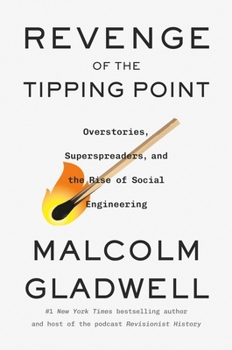
Revenge of the Tipping Point (Overstories, Superspreaders, and the Rise of Social Engineering)
By: Malcolm Gladwell
Narrated By: Malcolm Gladwell
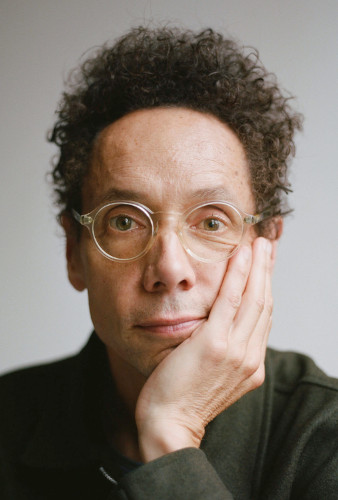
Malcolm Gladwell (Canadian Author, journalist, public speaker, staff writer for The New Yorker.)
Malcolm Gladwell returns to the subject of “…Tipping Point” that originally explored how small actions or events can trigger significant changes in society. “Revenge of the Tipping Point” provides several stories of tipping points that have had vengeful consequences for society.
One of the most consequential tipping point stories is about America’s attempt to engineer social equality.
America is struggling with social diversity. Gladwell infers social diversity is a great strength in American society. However, our government and domestic leaders have legislated discrimination, fought wars, murdered innocents, and promoted ethnic separation throughout its history as a nation. Despite our most famous statement of American value, i.e. “E pluribus unum” (Out of many, one), America has failed.
The value of social diversity is it allows Americans to achieve great things despite inequality that exists in America.
Gladwell tells the story of a community in Florida that prides itself on being an exemplar of American society because of its strong educational values, cultural pride, community support, and economic mobility. The people who live in this community focus on preserving and celebrating their ethnic heritage, traditions, and identity. They assemble an island of cultural sameness that overtly and covertly resists change. Those who are not of the right ethnic heritage or race who may have the same drive for high educational achievement, community participation, and relative wealth are not welcome. The tipping point revenge Gladwell notes is in the stress this community places on its children to excel academically and conform to expectation. Gladwell notes student suicides are disproportionately high because of the social pressure children feel to conform. The social pressure for conformity and educational expectation overwhelms some who live in the community. Some parents choose to send their children outside the community school system to allay the social pressure they feel.
Gladwell notes the 2023 Supreme Court rejection of college acceptance based on diversity. The Court denies the right of colleges to recruit students based on ethnicity or race.
On the face of it, that seems an unfair decision but Gladwell notes that the schools being challenged on their diversity policies refuse to explain how they determine who should be admitted based on a percentage figure of fair representation. Gladwell notes the primary criteria for college selection has little to do with a drive for diversity but are based on revenue producing university sports programs and donor money. Minority preference admissions are based on income potential for the university, not social diversity.
The Supreme Court ruling does not preclude consideration of an applicant’s personal life experience, but Gladwell notes it nevertheless has nothing to do with a drive for equality or diversity.
Unfortunately, the Supreme Court decision may cause a reevaluation of outreach to minorities who have been denied equal opportunity for personal success. Gladwell’s ironic point is that American diversity in the pre-Supreme Court decision was never based on creating diversity but on raising money for university foundations.
Gladwell explains the drug crises is more of an American problem than for most other nations of the world.
One asks oneself, what makes America the center of opioid addiction and death.
From the greed of drug dealers, medicine manufacturers and doctors who prescribe opioids, America has the highest opioid deaths in the world. Though Estonia has the highest opioid death’s per capita because of its smaller population, the manufacturers and doctor-prescribed synthetic opioids have greatly increased American’s deaths. Purdue Pharma aggressively marketed OxyContin with the owners, the Sackler family, reaching a multibillion-dollar settlement. Many doctors like Dr. Hsiu-Ying Tseng and Dr. Nelson Onaro have been prosecuted for overprescribing opioids or running “pill mills” that provided opioids to the public.
Gladwell suggests it is the superspreaders, worldwide legal and illegal manufacturers and sellers of opioids, and incompetent/greedy medical prescribers as tipping point causes of America’s addiction crises. However, he argues there are environmental and systemic societal factors that create a receptive user base in America. Economic stability is unattainable for many Americans because of economic, racial, and ethnic differences. He argues small actions and decisions lead to widespread consequences. Every human being has a tipping point based on their experience in the world. The ideals of America conflict with its reality. The pain of that realization leads some to relief through drugs, a step-by-step addiction that can lead to death.
Berlin Memorial to the Holocaust.
There are other tipping points Gladwell explains. One that resonates with my life experience is the ignorance many have of the history of the world. Some would argue, Americans became aware of the Holocaust after the end of the war in 1945. However, Gladwell argues most Americans remained ignorant of its reality until 1978 following the release of the NBC miniseries “Holocaust”. Until then, Gladwell argues there was little broad cultural understanding of its atrocity. Having graduated from high school in 1965, much of what Gladwell notes about ignorance of the Holocaust rings loudly and clearly.
I doubt that many were completely ignorant of the Holocaust, but its brutal reality was not taught in the high school I attended in the 60s. Having visited Auschwitz and viewed its gas chamber, piles of discarded shoes and clothes, and pictures of murdered human beings, the truth and guilt that one feels for being a part of humanity is overwhelming.
We have an FBI director that wants to have men and women of the agency coordinate training with the UFC (Ultimate Fighting Championship), headquartered in Las Vegas. We have a President who publicly chastises Ukraine’s President and suggests they caused Russia’s invasion of their country. We have a President that insists America is being taken advantage of by lower cost production of product of other countries and that tariffs are a way to balance the American budget. We have a Palestinian protester at Columbia University who is arrested for social disruption. The head of the Department of Health Services orders lie detector tests for employees to find any leaks about the current Administration’s actions.
Tariffs have historically been found to damage America’s economy. Is the FBI a military force that needs to be schooled in hand-to-hand combat? One need only read Adam Smith about free trade to understand the fallacy of Tariffs. Have we forgotten the invasions of Austria and Poland by Germany at the beginnings of WWII? Is free speech a crime because of tents that disrupt college life? Should we use lie detector tests to determine the loyalty of employees?
Are these incidents a tipping point for American Democracy to turn into something different and demonstrably less than the founding principles of American government?
In planning a trip to Japan this year, it seems prudent to learn more about the history of Japan.
Books of Interest Website: chetyarbrough.
Great Courses-Understanding Japan (A Cultural History)
By: Mark J. Ravina
Narrated By: Mark J. Ravina
Mark Ravina (Scholar of Japanese history at the University of Texas at Austin)
Professor Ravina’s lectures are a little too heavy on Japan’s ancient history but offers some interesting opinion about the rise of the Samurai, the evolution of women’s roles in Japan, Emperor Hirohito and his role in WWII, the democratization of Japan after WWII, and the cause of Japan’s current economic stagnation.
As is well known, the Samurai were a warrior class in Japan. Their role in Japanese history grows between 794 and 1185.
They began as private armies for noble families with estates in Japan. They became a force in Japanese politics and have had an enduring effect on Japanese society. They evolved after 1185 into a ruling military government called shogun that exhibited political influence through 1333, emphasizing Bushido or what is defined as a strict code of loyalty, honor, and discipline. That discipline extended to ritual suicide in defeat or disgrace to preserve one’s honor. Zen Buddhism entered into the Samuria culture, exhibiting a time of peace under the Tokugawa shogunate that lasted until 1868. After 1868, the Samurai era came to an end, but its cultural influence remains in a modernized military that adheres to qualities of discipline, honor, and resilience.
Traditional Japanese Woman.
The role of women in Japan has evolved from great influence and freedom for the well-to-do to a life of restricted domesticity.
During the Samurai era, the influence of women declined and became more restricted. The rise of Confucian ideals emphasized male dominance with women being relegated to domestic duty. Women turned to art, calligraphy, and religion as their societal influence decreased. In the Meiji Era (1868-1912) women’s education somewhat improved and they began to participate in political movements like voting and equal rights. Finally, after WWII, a new constitution granted women equal rights like the right to vote and enter the workforce. However, like America, traditional gender roles persisted. In today’s Japan, like most of the world, equal rights remain a battle for women.
Hirohito is the 124th Emperor of Japan.
He reigned from 1926 to 1989. Professor Ravina notes that a question is raised about whether the emperor was a follower or leader in Japan’s role in WWII. Ravina argues history showed Hirohito’s role was as a leader. In defeat, Hirohito renounced his divine status to become a constitutional monarch under U.S. occupation. Hirohito, as the crown prince of Japan, strengthened Japan’s diplomatic ties on the world stage. He was instrumental in scientific research in marine biology. He emphasized Japan’s drive to become an industrial nation and player in international trade. He militarized Japan in preparation for war and territorial expansion. He authorized invasion of Manchuria in 1931 to establish it as a puppet of Japan. Hirohito aids the American occupation, after WWII, to de-militarize and re-industrialize Japan.
With creation of a new constitution for Japan in 1947, Japan became a constitutional monarchy that made the emperor a symbolic figurehead, and guaranteed freedom of speech, religion, and assembly.
The constitution formally denounced war as a means of settling disputes. Land reform redistributed agricultural production to tenant farmers that reduced the power of wealthy landlords and promoted economic equality in rural Japan. Women’s rights were codified to allow voting and participation in politics. The constitution guaranteed equality but, like the rest of the world, culture trumped reality. Japan’s military was reorganized as a defensive force for national security. War crimes trials convicted Hideki Tojo, Iwane Matsui, Hei taro Kimura, Kenji Doihara, and Koki Hirota and sentenced them to death. In total 17 leaders were executed, and 16 others were imprisoned.
Free-market economy.
The democratization of Japan entailed economic reforms that broke up large industrial conglomerates to promote a free-market economy and reduce economic monopolies. However, the culture of Japan replaced the industrial conglomerates with networks of interlinked companies that operated cooperatively in ways that reduced competition in pursuit of financial stability. The education system was reformed to promote democratic values, and equal access to education for all citizens.
A free press was encouraged to foster transparency and accountability.
The results allowed Japan to rapidly improve their industrial productivity. That productivity was defined and improved by the teachings of W. Edwards Deming, a statistician and quality-control expert in the 1950s. His contributions led to the Deming Prize in 1951, an annual award recognizing excellence in quality management. (This is a reminder of Peter Drucker and his monumental contribution to business practices in the United States.)
In Ravina’s final lectures, he addresses the economic stagnation that has overtaken modern society in Japan.
It began in the 1990s. A sharp decline in asset prices wiped out wealth and triggered a banking crisis. Banks had made too many bad loans that became non-performing. Deflation ensued with falling prices that discouraged spending and slowed economic growth. Company profits declined. The demographics of Japan reduced the size of the work force because of an aging population and declining births. One suspects this demographic change is further burdened by ethnic identity that mitigates against immigration.
Japan’s consumption tax increases in 1997 impeded recovery.
The close ties between government, banks, and corporations resist reforms. And, as is true in America, global competition from other countries with lower cost labor eroded international trade.
Tara Westover’s trials are distressing for a listener/reader of her memoir, but all children are born into a struggle to find their own identity. “Educated” is evidence of Tara’s escape from prejudice and ignorance. It is an encouraging story of recovery with an education she acquires from a lived life.
Books of Interest Website: chetyarbrough.blog
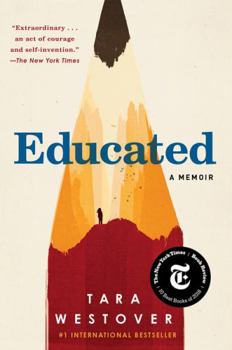
Educated (A Memoir)
By: Tara Westover
Narrated By: Julia Whelan
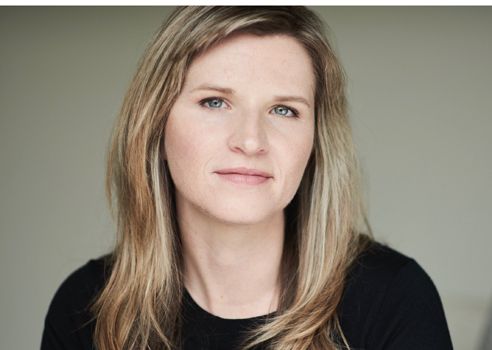
Tara Westover (Author, memoirist, essayist and historian.)
“Educated” is a memoir of Tara Westover’s childhood in America. Her story is personal but universal. Some children are born in caring and nurturing families, all are subject to parents’ strengths and weaknesses. Tara reflects on the life of her family with a father, mother, and siblings raised in a family with a survivalist father who has strong religious beliefs and antigovernment views of life. He raises his sons and a daughter with a wife who conforms to his wishes and a mother-in-law who believes he is wrong about public education and the value of extreme beliefs in independence.
Tara Westover reminds listener/readers that every culture in the world is blessed and cursed by diversity.
Westover’s father would be called an American “antigovernment extremist” and “survivalist”. He does not believe in institutions of government or public services and argues all forms of regulation outside the family distort the natural state of society. He believes it is necessary to hoard food, fuel, and human necessities to assure self-sufficiency in the event of natural disasters or government-imposed laws.
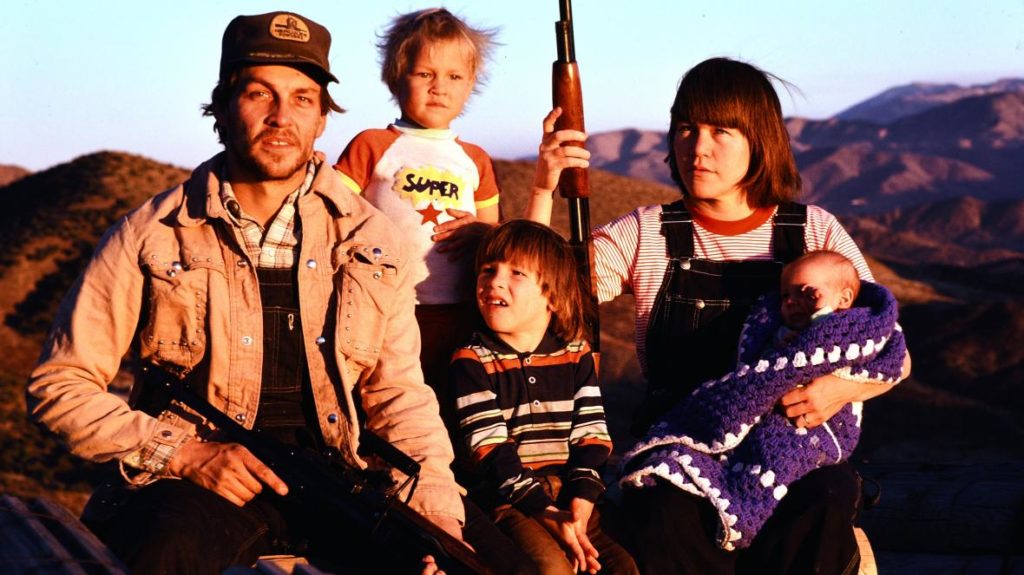
The Weaver Family Tragedy in August 1992 is an important symbol to Tara’s father.
Randy Weaver held antigovernment and white separatist views. His wife and son were killed by FBI agents on Ruby Ridge. A settlement of $3.1 million for wrongful deaths is awarded Weaver on August 15, 1995.
The Westover father grooms his children to support the family in a scrap metal business that evolves into a contracting company. As the children of the family mature, some leave while the father expands the family business with employment of outsiders. As Tara matures, she reluctantly becomes a worker in the family business to earn enough money to go to college. As Westover writes her story one wonders if her father will be the cause of the next Weaver Family Tragedy.
Westover shows how work and American life is not a fairy tale but for most a struggle for survival just as it is in every culture.
Desire has no limits. Freedom allows one to cope with life and, in some cases, exceed its limitations. Some cultures offer more freedom than others. Whether raised in America or somewhere else, one’s education comes from the culture in which they live. The circumstances of family are a part of a child’s education, but formal education varies within and between nations. Most nations have some form of public education, but education occurs whether publicly or privately pursued. The Westover family, in their children’s grade school and high school years rely on their mother’s home schooling.
The Westover’ family is neither a “Leave it to Beaver”, “My Three Sons”, or TV produced fantasy.
It is a reflection of a family dealing with the hardship of life in America that is sustained by a culture of independence and self-determination. Every child is impacted by the family in which they are raised. Whether government supported education or not, every child becomes an educated adult in different ways. Some like Tara Westover grow to adulthood with an education that comes from self-determination and grit despite her father’s influence and her sibling’s erratic behavior toward her.
Children do not choose their parents. Every child grows to adulthood in their own way.
There is always some level of care and nurturing in every family. The level of care they receive varies but ultimately it is how they deal with the circumstances in which they live that determines who they become. Two nearly fatal car accidents for Tara’s family and her near ejection from her family at age 16 seem to make her stronger. Her ability to write this memoir is a tribute to her determination to live a fulfilling life. The genetics of life have magnified and fortified the Westover children’s successes and failures in life.
Breaking free of prejudice and ignorance, whether one is formally educated or un-schooled, is difficult.
Prejudice is difficult because it is founded on emotional blindness shared by fellow travelers. Ignorance is founded on refusal of facts and knowledge of history. Two of the Westover sons and Tara seem to break the cycle. The first boy to leave the nest is on his way to Purdue after graduating from BYU. The second boy is believed by his father to be a genius and given license by his father to apply to BYU. One wonders whether the second boy will escape the curse of prejudice and ignorance of his remarkable family. Tara Westover’s trials are distressing for a listener/reader of her memoir, but all children are born into a struggle to find their own identity. “Educated” is evidence of Tara’s escape from prejudice and ignorance. It is an encouraging story of recovery with an education she acquires from a lived life.
Today is a time for Americans to look at their motivations to act in ways that diminish human flourishing and happiness. They need to decide whether they are choosing to be evil and act out of malice to do evil things.
Books of Interest Website: chetyarbrough.blog
Open Socrates (The Case for a Philosophical Life)
By: Agnes Callard
Narrated By: Agnes Callard
Agnes Callard (Author, American philosopher, associate professor of philosophy at the University of Chicago.)
“Open Socrates” is not an easy listen but offers insight to the philosophy of Socrates as perceived by a tenured Philosophy professor at the University of Chicago.One of Socrates famous sayings is “Οἶδα τι οὐδὲν οἶδα”, “I know something that I know nothing”. The daunting meaning of the phrase is explained by Callard as something that is found through conversational engagement with others. Socrates believed what truth there is in the world is revealed through public engagement which is difficult for introverts because we fear having our ignorance exposed.
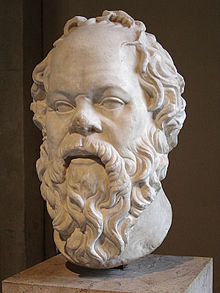
Callard notes that Socrates is an interrogator who elicits others to understand the meaning of human life.
There is a human desire to have meaning in our lives, but we don’t know where to begin or what questions to ask. Callard notes how Tolstoy is contemplating suicide despite his great fame and success as a writer because he does not believe there is any meaning to his life. Callard argues Socrates would say Tolstoy fails to ask questions in conversation with others that would offer the answer he seeks. As a listener/reader one might understand Tolstoy’s reluctance to ask others for their opinion because it exposes his vulnerability. Collard argues one must be willing to admit their errors to get to meaningful conversations with others about what they are discussing. However, few have the strength of character to expose themselves in a way that will continue further conversation.
Collard is preparing listeners for an understanding of the Socratic method, a cooperative dialogue, i.e. asking and answering questions to make one think about underlying assumptions and ideas to uncover inconsistencies to try to discover truth.
One wonders in this exercise, if Socrates is pursuing understanding or building a case to undermine human understanding. The result of a dialog with Socrates seems at best a pursuit of knowledge without finding a definitive answer. At times it seems the Socratic method only reveals the truth of human ignorance.
Collard notes that sophists as reflected in the Platonic and Aristotelian writings about Socrates were often incensed by the Socratic method because Socrates’ interrogations often made them look ignorant and uninformed. However, Socrates offers some definitions of important human characteristics like virtue and knowledge that are as relevant today as they were in ancient times.
Socrates defines virtue as a form of knowledge of right and wrong and those that use that knowledge will act virtuously.
Collard notes Alcibiades who lived in the time of Socrates. He was relentlessly interrogated by Socrates in an effort to elicit a better understanding of himself as Alcibiades, a politician and leader. Alcibiades made many political enemies because of shifting allegiances and political actions. He betrayed Athens in their fight with Sparta. After the fall of Athens, he is considered a threat to its new rulers.
Alcibiades (450BC-404BC, died at age 45 or 46, Athenian statesman and general.)
Alcibiades is known for his ambition, desire for power, and hedonistic lifestyle. He came into conflict with Socrates over belief in the values of wisdom and virtue. Though Alcibiades is noted in Plato’s “Symposium” to have admired and respected, Socrates, Collard notes he fundamentally disagreed with much of what Socrates reveals to him as his lack of wisdom and virtue. Alcibiades lacked self-discipline and moral integrity.
Socrates defines good as that which brings about human flourishing and happiness for one to live a fulfilling life.
Socrates argues evil is based on ignorance that compels human beings to act out of malice to do evil things.
Today is a time for Americans to look at their motivations to act in ways that diminish human flourishing and happiness. They need to decide whether they are choosing to be evil and act out of malice to do evil things.
It appears to this listener/reader, the rise of authoritarianism in the world today lays at the feet of Marx and, to a lesser extent, von Mises’ economic theories.
Books of Interest Website: chetyarbrough.blog
Human Action: A Treatise on Economics
By: Ludwig von Mises
Narrated By: Jeff Riggenbach
Ludwig von Mises (Austrian-American economist, logician, sociologist, and philosopher. 1881-1973, died at age 92.)
Economics is defined as a social science that studies how individuals, businesses, governments, and societies allocate resources to satisfy the needs and desires of a community of people. Historically, one of the greatest explainers of this social science is Ludwig von Mises. Maturing at a time of the communist revolution, the advance of capitalism and both world wars, von-Mises offers one of the greatest books about economics since Adam Smith. The only economist of greater significance is Adam Smith (1723-1790) because of his origination of the principles of economics. Close behind are Karl Marx (1818-1883), and John Maynard Keynes (1883-1946).
KARL MARX (BORN TRIER, GERMANY 1818-DIED LONDON, ENGLAND 1883)JOHN MAYNARD KEYNES (1883-1946)
Of course, all economists are beholding to Adam Smith with his original conception of the dismal science. Smith conceived of the “invisible hand” of economics that postulated self-interest as the primary contributor to the overall good of society. Von Mises seems to guardedly agree but suggests self-interest’ market pricing can artificially distort distribution of economic resources. Von Mises infers the “invisible hand” is inefficient at the least and may artificially distort prices in the hands of authoritarian governments and business monopolies. Karl Marx suggests the invisible hand would evolve into a production system that would be owned by the public to ensure equality of distribution in an evolutionary economy that passes from capitalism to socialism, and finally communism. Marx argues self-interest will evolve into a common interest for all. Marx’s idea of change in the nature of human beings beggars the imagination.
Smith supported limited government intervention to maintain justice, defense, and public works.
Both Smith and Marx believed in a “labor theory of value” which argues the value of a commodity is determined by the labor required to produce it. Where Smith and Marx depart is in government enforcement of a balance between labor and the cost of goods. Von Mises opposed most forms of governmental intervention in the economy. However, Keynes argues government intervention is necessary during economic downturns. After WWII, Keynes theory became an important part of the American government’s support of European reconstruction.
Von Mises believed in human individualism which carries the risk of authoritarian domination.
Von Mises believed in human individualism while Smith and Keynes support limited government intervention. Marx argues human nature could be shaped by a melding of government dictatorship with societal pressures to support communal goals.
At extremes, von Mises endorses individualism and Marx endorses dictatorship. The middle ground seems held by Adam Smith and John Maynard Keynes that endorse limited government intervention. It appears to this listener/reader, the rise of authoritarianism in the world today lays at the feet of Marx and, to a lesser extent, von Mises’ economic theories.
The length and value of von Mises’ book overwhelms a non-economist listener with his esoteric statistical and lengthy explanations of economic theory. However, comparison with a dilatant’s understanding of other renown economists is enlightening.
Trump is unlikely to help the middleclass and poor any more than some of America’s past Presidents, but he disrupts the status quo. That is Thomas Frank’s answer to why Trump was re-elected.
Books of Interest Website: chetyarbrough.blog
Listen Liberal (Or, What Ever Happened to the Party of the People?)
By: Thomas Frank
Narrated By: Thomas Frank
Thomas Carr Frank (Author, political analyst, historian, and journalist)
How could the American people elect a billionaire felon as President of the United States? Thomas Frank offers a compelling answer to that troubling question.
Since WWII, the American people have been misled by the words, policies, and deeds of both Democratic and Republican leaders. No post WWII leader escapes Frank’s frank explanation. Not since Franklin Roosevelt, and Harry Truman have any Presidents effectively reduced income inequality.
Frank embarrasses American voters for complicity in reducing the size of the middle class, ignoring the poor, and making the rich richer. He explains how Presidents of the last 70 years have made the middleclass smaller and the poor poorer. Frank particularly points to Bill Clinton and Barack Obama as examples of Ivy League’ wordsmiths that misled the public and instituted policies that moved America away from the working class and poor.
Clinton and Obama represented education as the primary measure of success in the 21st century. They largely ignored the working class that grew the American economy to be the most successful in the world. With that neglect the Democratic party became adjunct to the Republican party by diminishing the contribution and value of working Americans. Whichever party leads America no longer makes a difference to the middleclass’ and poor. Frank argues there is little difference between a Democratic or Republican President. The middleclass and poor realize those who are elected to lead make little difference in American worker’s lives.
Frank methodically dismantles Clinton and Obama administration’s policies to show how they diminished opportunity for the middleclass and poor. Clinton manages to balance the national governments debt on the backs of working America. Clinton’s welfare reform took many off of welfare by demanding employment as a requirement for any help by the welfare administration. That seems laudable but its impact on single parent households left children home alone and at the mercy of their neighborhoods. A child alone is left to the influence of neighborhoods festooned with gangs, drugs, guns and their societal consequences. In reducing the number of people on welfare, poverty increased.
Clinton’s programs for crime control massively increased prison building and prison populations that disproportionately affected African and Latino American communities.
Clinton repeals the Glass-Stegall Act and allows commercial banks to enter the derivative mortgage business that led to the near future financial collapse of America between 2007 and 2010.
Entry into the North American Free Trade Agreement (NAFTA) led to manufacturing job losses in America.
Frank admits Obama helped the middleclass and poor with Obama Care but argues he made the same mistakes as Clinton by supporting the rich at the expense of the middleclass and poor. Obama chose to follow the lead of George Bush’s plan to get America out of the economic ditch of the century by bailing out the financial industry while allowing the working class to fend for themselves. Many lost their homes as a result of banker’s lending greed and mortgage derivatives that came from Clinton’s decision to repeal Glass-Stegall. None of the banks were punished by bankruptcy because the federal government made a deal to keep them in business or subject to acquisition by bigger banks that became even larger. Poverty remained at the same level. Surprisingly homelessness was reduced by Obama’s “Opening Doors” initiative in 2010. However, the trend of aiding the rich at the expense of the working class is re-invigorated by emphasis on higher education and creativity rather than the nuts and bolts of economic prosperity that comes from job creation and a working public.
The trend of aiding the rich at the expense of the working class is re-invigorated by emphasis on higher education and creativity rather than the nuts and bolts of economic prosperity that comes from job creation.
The glaring irony of Frank’s observation led to the election of a billionaire who lauds wealth and power and cares little about the middleclass and poor. Donald Trump, Barack Obama, and Bill Clinton distorted the truth, partly by lying to themselves but also by purposely lying to the public with political policies and actions that did not make the lives of the middleclass and poor any better.
Trump directly distorts the truth but Obama and Clinton lie to themselves about the value of education as the singular path to improvement for the middleclass and poor. People are not only educated by school.
People are also educated by work and their experiences in life. Not every person in America or the world is interested in having a college degree. Shared economic productivity is the key to reducing income disparity. The brilliant oratorical skills of Obama and Clinton were refined by their intelligence and education but not everyone is blessed with the same skill. Trump is no Obama or Clinton, but he appeals to many who feel they have been left behind or can be benefited by his transactional view of the world.
One may agree that economic productivity comes from creativity, education, and work. However, it does not come from emphasis on one thing but on equality of opportunity for all to be employed.
Franks’ cynicism is overwhelming. By the end of his book, which is published before Hilliary Clinton’s political defeat by Trump, one is depressed by the truth of what he writes. The second election of Trump is proof of the failure of the Democratic party, and the Republican party, to live up to a belief in social equality and equal opportunity.
Creativity is an innate human quality. Education comes in many forms which are both formal and informal.
Being employed is a government, private enterprise, and personal responsibility. It is the job of governance to create public policies that support equality of opportunity for people to be creative, educated, and employed. Equality of opportunity ensures national economic growth and prosperity.
Trump is unlikely to help the middleclass and poor any more than some of America’s past Presidents, but he disrupts the status quo. That is Thomas Frank’s answer to why Trump was re-elected.
Schwartz’s book implies the NFL’s prevention and protocols for brain trauma are a cost of doing business. Sadly, this seems similar to the American public’s misinterpretation of the “right to bear arms” and its resistance to gun control.
Books of Interest Website: chetyarbrough.blog
Gray Matters (A Biography of Brain Surgery)
By: Theodore H. Schwartz
Narrated By: Sean Pratt
Theodore H. Schwartz (Author, American medical scientist, academic physician and neurosurgeon.)
“Gray Matters” feeds a curiosity for those interested in the human brain. Written by a brain surgeon, it offers a clearer understanding of brain function while offering insight to the causes and consequences of brain trauma. The author has treated many patients with brain infections and trauma and offers analysis of athletic, gun-related, and accident injuries of people who have died from or survived brain trauma.
Schwartz explains the arduous education for one to become a brain surgeon and how physicians surgically treat brain disease and trauma.
He explains how long hours as an intern are required after spending years to become an academically qualified physician, let alone surgeon. Not only are the hours long but acceptance into an internship is highly competitive and difficult to achieve. That seems counterintuitive in view of the public’s need for qualified medical help. One suspects the fundamental cause is the cost to the hiring hospital and the staffing required to teach new physicians.
The brain is protected by a skull, three layers of membrane, cerebral spinal fluid, a blood barrier, skin, and a scalp.
These structures, cells, and tissues protect the brain from physical damage and infections so the brain can provide organic function, thought, and action. Physical or infectious damage to the brain can affect any one of these natural human’ functions.
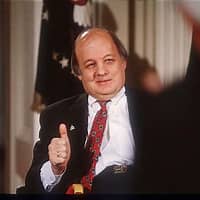
ABRAHAM LINCOLNJOHN F. KENNEDYROBERT F. KENNEDYJAMES BRADYGABIELLE GIFFORDS
Schwartz reviews incidents of gun-shot brain trauma of famous figures like Abraham Lincoln, John F. Kennedy, Robert Kennedy, James Brady, and Gabrielle Giffords. He notes the differences in the bullets used as well as the power of the weapons to explain the damage done. He argues John Kennedy had no chance of survival while suggesting Lincoln, because of a lower power weapon, might have survived with today’s advances in treatment. However, he suggests Lincoln would have lost much of his skill as an orator and political theorist because of damage to a particular part of his brain from Booth’s attack. Schwartz believes Robert Kennedy might have lived with more rapid and qualified treatment but would have been physically and mentally disabled. James Brady, Ronald Reagan’s press secretary, lost speech clarity and physical mobility because of his brain trauma. Similar consequences occurred with Gabriell Giffords’ injuries, but she relearned how to walk, talk, and perform basic tasks. Schwartz notes the only positive political accomplishment to come out of these violent acts was the Brady Handgun Violence Reform Act.
Schwartz goes on to explain non-traumatic brain injury from infection and stroke to traumatic brain injury from Shaken Baby Syndrome (SBS) to Chronic Traumatic Encephalopathy (CTE) with Second-Impact Syndrome often seen in athletes. Diagnosis of SBS from a shaken baby’s head has changed to include the shaking accompanied by impact with a hard surface.
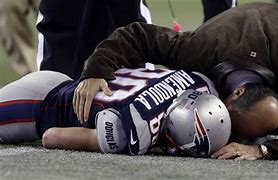
Diagnosis of CTE and Second-Impact Syndrome in sports are still being defined. The return of football players to the field of play is a judgement call by a sideline physician which raises questions about qualifications, let alone judgement.
The NFL initially objected to the brain trauma threat of their sport based on improved protective equipment.
However, Schwartz writes they have increased their protocol for injured players and have paid over a billion dollars to former athletes suffering from symptoms of brain trauma. Some big names in football like Junior Seau, Frank Gifford, Ken Stabler, and Tommy Nobis were autopsied after their death to show they suffered from CTE.
The lure of fame and money are unlikely to change elite athletes desire to compete despite the threat of brain injury. Schwartz’s book implies the NFL’s prevention and protocols for brain trauma are a cost of doing business. Sadly, this seems similar to the American public’s misinterpretation of the “right to bear arms” and its resistance to gun control.