Graduate Oregon State University and Northern Illinois University,
Former City Manager, Corporate Vice President, General Contractor, Non-Profit Project Manager, occasional free lance writer and photographer for the Las Vegas Review Journal.
Good and bad luck accompanies every life but what happens in the end comes from what we have done in the past.
Books of Interest Website: chetyarbrough.blog
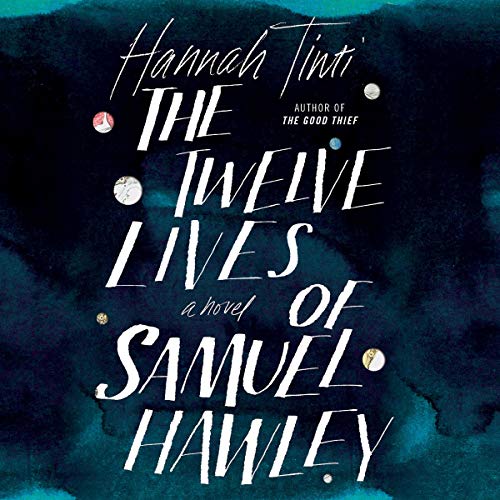
“The Twelve Lives of Samuel Hawley” (A Novel)
By: Hannah Tinti
Narrated by: Elizabeth Wiley
Hannah Tinti (American author, magazine editor, won the Alex Award for “The Good Thief”.)
Hannah Tinti writes a story about the life of a 21st century American outlaw, Samuel Hawley. He lives a peripatetic life as a robber, former convict, and part time collector for fellow criminals. When acting as a robber, he has few scruples about acting outside the boundaries of civil society. Hawley is a meticulous and practiced gun owner who wanders through America carrying the scars of bullets and a life of violence.
The woman he marries is alleged to have drowned in an accident but is believed by a grandmother to have been murdered by Hawley.
Hawley’s daughter, Loo, doubts the truth of her maternal grandmother’s claim but is faced with reports of her mother being an excellent swimmer, unlikely to be drowned as an accident.
Tinti leads the listener/reader to a conclusion about the drowning that on the one hand seems possible but on the other inconsistent with the complicated history of an American outlaw. Hawley’s moral center is at an extreme end of societal norms but within the boundary of truth and rightness. That truth and rightness suggests he could not have drowned his wife.
The dynamics of childhood are broken when either a father or mother are missing. Each parent contributes something to a child that is different when either are absent. Single parents become both bread winner and nurturer of a child when there is an absent parent. Hawley is a criminal who loves his daughter, idolizes his lost wife, and carries on with a life into which he was born. The peripatetic life of Hawley continues after the death of his wife. Now he is faced with raising a daughter on his own. They travel across the country, never truly becoming a part of one place or another.
The daughter becomes like her father in knowledge and love of guns and their use in America.
She emulates her father’s character by choosing to be in control of what she sees as a transactional world. It is the world her father has experienced and passes on to his daughter. Tinti shows Hawley deeply loves his daughter, grieves and idolizes his lost wife, but only views life as a societal transaction.
What we do in our lives have consequences. Good and bad luck accompanies every life but what happens in the end comes from what we have done in the past. Maybe life is just a transaction.
Gareth Brown envisions the power of books and those who read or listen to them. Brown infers books are the source of the world’s joys and troubles.
Books of Interest Website: chetyarbrough.blog
“The Book of Doors” (A Novel)
By: Gareth Brown
Narrated by: Miranda Raison
Gareth Brown (Scottish author, his first published novel.)
Gareth Brown envisions the power of books and those who read or listen to them. Brown infers books are the source of the world’s joys and troubles. The heroine of his story is Cassie Andrews. She is introduced as an employee of a bookstore. The book begins with a conversation between her and a customer. The customer is old but treated with curtesy and interest by Cassie. They talk about books they have read and enjoyed. Their last conversation is about “The Count of Monte Christo” and their mutual appreciation of its story.
The old man slumps and dies in the bookstore after his conversation with Cassie. He leaves a book on a table near him. It is titled “The Book of Doors”. After the police arrive and the body is removed from the store, Cassie sees the book and picks it up.
“The Book of Doors” is a metaphor for the power of books to transport one’s mind to the past, present, and future–particularly when it is well written.
A note in the book is to Cassie telling her it is a gift to her. Gareth Brown’s imaginative story begins. Brown creates a story about a book that gives the power of time travel to the one who possesses it. Nearly as significant, Brown reports there are a series of books like “The Book of Doors” that have the power to control all the good and bad things that happen in the world.
Brown takes a giant step beyond influence by suggesting books control human thought and action. He tells a story of a secret library with a series of books with titles like “The Book of Pain”, “The Book of Joy”, “The Book of Matter” and others that are the source of human experience. The owner of that library in Brown’s story is Drummond Fox, a Scottish aristocrat and librarian.
Cassie chooses to briefly escape the world because of what she thinks is the loss of her close friend. She travels to a “nowhere” place to think and do nothing.
The cleverly written adventures of Cassie in Brown’s story are the attraction of the book. However, there are unresolved puzzles in “The Book of Doors”, even though the adventures are thrilling. Cassie believes earlier travel to the “nowhere place” was the original source of the book’s creation. She thinks she may have been the source of their writing. As she decides to return to the world, she reasons she may have created the books in this “nowhere” reality.
Questions never answered are whether the books should be destroyed, how or why Cassie may have been the books’ creator, and whether Cassie is immortal or destined to die.
NATO is not an American Marshall Plan but a bulwark for nation-state self-determination.
Books of Interest Website: chetyarbrough.blog
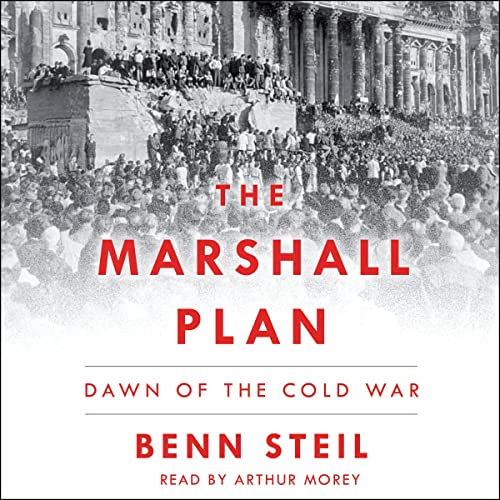
“The Marshall Plan” (Dawn of the Cold War)
By: Benn Steil
Narrated by: Arthur Morey
Benn Steil (Author, American economist, senior fellow and director of international economics at the Council on Foreign Relations.)
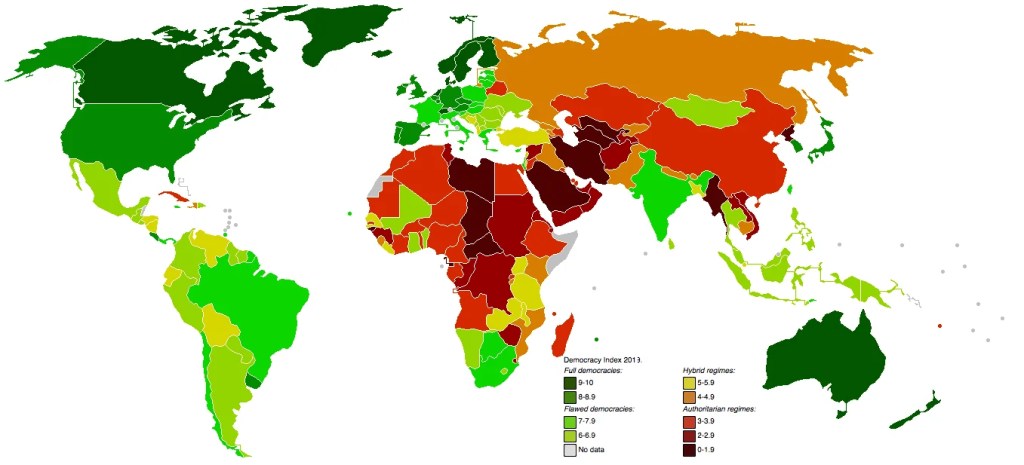
Along with an excellent history of America’s “…Marshall Plan”, there is an underlying message about two fundamental forms of government, i.e., one is democratic, and the other is authoritarian. By democratic, the point is not to suggest an idyllic understanding of American Democracy or Russian Authoritarianism. America and Russia have experienced government leadership that has been both authoritarian and democratic in the last 248 years.
One can justifiably argue America’s authoritarianism was experienced during the four years of the Trump administration (2017-2021).
In contrast Russia’s democratic experience was with Mikhail Gorbachev between 1985 and 1991. Before and after Gorbachev, democratic experience in Russia has been limited and largely authoritarian. What history of “The Marshall Plan” shows is the superior value of American democracy’s checks and balances that limit the power of authoritarian leadership by preserving deliberations of the many as opposed to the one. Trump is not the first U.S. President that was an authoritarian.
George Catlett Marshall Jr. (1880-1959, American army officer and statesman, became Secretary of State and Secretary of Defense during the Truman administration.)
History of “The Marshall Plan” shows the resilience of democratic versus authoritarian governance. Steil shows “The Marshall Plan” is created in a boiling cauldron of disagreement among branches of the American government. The conflicts between American political parties and departments of government hammered out a plan that improved the economies of both America and Europe after the war. America became the economic hegemon of the world as Russia’s economy collapsed in the early 60s.
MAO ZEDONG (1893-1976, FOUNDING FATHER OF PEOPLE’S REPUBLIC OF CHINA)Deng Xiaoping and Xi Jinping
One might argue the success of China came as a result of the more inclusive economic decision-making policies of Deng Xiaoping after Mao Zedong’s death. With Deng’s opening the economy to market-oriented reforms in 1978, worker efficiency and productivity created an economic boom in China. China’s danger today is the autocratic rule of Xi Jinping. His one-man rule nearly collapsed the economy during Covid 19. America certainly suffered from Covid, but Trump’s authoritarian character was mitigated by political resistance to unilateral Presidential decision-making.
Steil explains how Molotov delayed negotiations on “The Marshall Plan” with a clear understanding that only one person, Joseph Stalin, made decisions in Russia.
Steil notes “The Marshall Plan” is singularly disparaged and reviled by the Russian government. That disparagement is directed by one person, Joseph Stalin. There is no one to oppose the autocratic rule of Stalin’s leadership. Stalin’s opposition was either sent to the Gulag or murdered. A more balanced power structure in Russia could have taken advantage of “The Marshall Plan” but by singular fiat of one person (Stalin) implementation was impeded after WWII. The errors inherent in communism and authoritarian rule are being recreated by Putin in the 21st century.
What Steil shows is that many elected officials in America fought the principles of “The Marshall Plan”. However, the constant back and forth of government policy arguments in Congress aided European recovery after the war in a way that stabilized Europe and monumentally improved the economic growth of America.
Autocracies can certainly improve their economic growth at a pace that is superior to governments ruled by democratic ideals. However, autocracies have a much greater risk of following the wrong path because of their singular focus on one person’s decisions.
With an autocrat’s decision-making process, economic growth is either stultified or accelerated by one person’s decision. The give and take of democracies offer the benefit of different policy maker’s perspectives that may slow policy decisions but ultimately improve the odds of forward economic growth.
However, it is more than the availability of natural resources that made America economically successful. It is the give and take of a democratic process that protects America from the giant missteps that can come from autocratic rule. America has had some good to great rulers, but it has also had some ignorant, bigoted autocrats that offered minimal support for the ideals of freedom and equality. Checks and balances are the strength of American democracy. Presidents can make a difference, but they cannot destroy America’s future.
Ben Steil’s history of “The Marshall Plan” is not limited to an explanation of how important and difficult it is for America to pass important and consequential legislation.
The last chapters of Steil’s history of the Marshall Plan explains why Russia, China, and North Korea resent American encroachment on their spheres of influence. From the era of Stalin, Mao, and Kim Jong II, there has been a growing concern over the expansion of America’s sphere of influence. Steil explains how the Marshall Plan has morphed into a deepening concern about NATO expansion in Europe. As noted in an earlier, the Marshall Plan is created to aid recovery of countries that were impacted by WWII’s destruction. In reality it aided America to become the hegemon of the world. Because of the economic stimulus that revived the countries damaged by WWII, America created new markets for their industrial growth and international trade.
NATO is viewed as another vehicle for America’s economic growth and ideological threat to Putin, Xi, and Kim Jong Un’s control of their countries.
NATO is viewed as another invidious way for America to expand their influence and power. That seems an unfair evaluation of NATO. NATO is a military defense plan saying one country within NATO that is attacked by another country is an attack on all NATO countries. Every nation that has managed to become an independent country should be able to pursue there own interests.
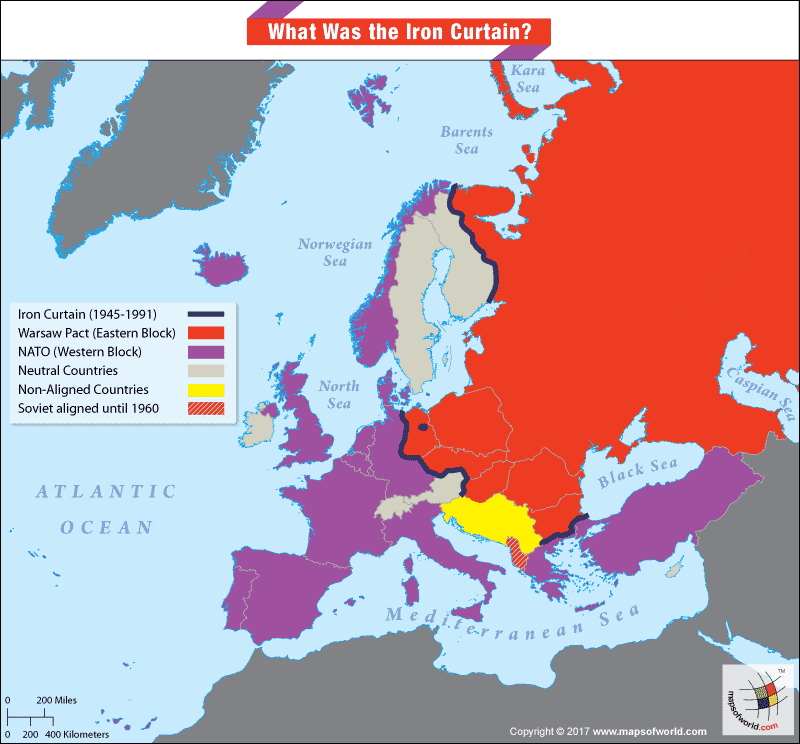
The iron curtain is rusting but its characteristic strength remains a barrier to international cooperation.
The rusting of the iron curtain comes from the tears of societies ruled by authoritarians. The authoritarians are leaders who believe their way of life is threatened. NATO is viewed as a trojan horse at the front gates of non-aligned countries.
One decries Putin’s slaughter of Ukrainians in an unjust war. Life of innocents have no value to today’s Russian leadership that believes their power and way of life is threatened.
The real-politic of authoritarian’s desire for stability and power outweigh the value of human life. The same is seen in the plight of Palestinians who are not part of the October 7th’ terrorists’ killings and kidnappings but are in the way of Israel’s retaliation against Hamas.
In my amateur opinion, China, Russia, North Korean, or other authoritarian governments have a right to rule their countries as they wish. Their citizens are the key to every leader’s longevity. NATO is an effort to offer freedom of choice to established independent countries but if the citizens of a country support their leaders, there is little NATO, or any alliance can do, except to support the sovereignty of all nations.
NATO is not an American Marshall Plan but a bulwark for nation-state self-determination.
Steil argues George Kennan is right in suggesting NATO expansion would be “the most fateful error of American policy in the entire post-Cold War era”. Kennan believed it would inflame nationalist beliefs and reinvigorate the Cold War. And so, it has–as evidenced by Russia’s invasion of Ukraine, China’s expressed intention and action toward Taiwan, and North Korea’s armaments support of Russia.
“The Beauty in Breaking” is about life as an eternal recurrence that offers some peace of mind in a world troubled by its inhumanity.
Books of Interest Website: chetyarbrough.blog
“The Beauty in Breaking” (A Memoir)
By: Michele Harper
Narrated by: Nicole Lewis
Michele Harper (Physician, Author, Public Speaker.)
Leaves fall from the tree to expose the bark and bite of life. Michele Harper’s memoir shakes the tree of American life. Relying on the veracity of Harper’s story, she is raised in a family with a physically abusive father who divorces her mother, an art dealer.
Harper notes her paternal father was physically abusive.
After Harper’s paternal father leaves Harper’s mother, Harper notes he offers some financial assistance to Harper in college. Harper explains she passes some of that assistance on to her mother while attending Harvard. Harper earns a BA in psychology. She goes on to acquire a medical degree from a New York university to become an emergency room physician.
Harper’s story touches on the complexity of life as a Black American. She marries a white man while at Harvard, but they divorce at his choice. The failure of their marriage is shown to be hard for Harper, but she is driven to succeed and moves on to educate herself in her chosen field of work.
Harper’s experience of childhood abuse, her personal marriage break-up, and work as a physician in three different emergency room positions, are lessons for life and living.
Her focus is on overcoming her trials to be good at her job even though much is beyond her control. The notion of not knowing what crises you will face in a medical emergency room, let alone a doctor’s experience as a Black American, offers a unique perspective to Harper’s memoir.
Abuse comes in many forms.
There is child abuse that occurs in many homes throughout the world. There is being a minority in a culture controlled by a majority that discriminates against those who are different. There is inequality of opportunity that creates an underclass that is trapped in an eternal cycle of poverty. Harper is denied promotion to Administrator in her first hospital job because she is a woman. Her supervisor notes a woman, let alone a Black woman, has never had the Administrator’ job in that hospital. Misogyny triumphs once again.
Harper chooses to leave the hospital that denied her the promotion.
As an administrator in another hospital Harper sees the consequence of poverty. Poverty seeps into nearly every culture in the world with its accompanying violence, compounded by weak to non-existent gun control laws in the United States. Harper writes about her encounter with a young boy who has his sneakers stolen by a bully at school.
Harper interviews the young Black grade school child who is thinking about getting his shoes back with a gun.
Harper calls a child services employee to explain her concern about the child’s access to a gun at his home. The child service’s person explains she sees this in many children’s homes where poverty is one lost job away from a family being on the street. This young boy’s parents both work to keep the family housed and fed. The social services person explains gun accessibility and violence are common in poor black neighborhoods. Where poverty is a fact of life, child services can only go so far to change what is toxic in a child’s environment. Gun availability is beyond the control of Harper or child service’s employees. The extent of Harper’s intervention is limited to raising the issue with the young boy’s parents–with the hope that they will act to be sure no gun becomes available.
Harper finds a third job as a VA hospital administrator. She interviews a female patient seeking psychological help. In the interview, Harper is told by the patient she had been raped by her supervising sergeant and another soldier in Afghanistan.
She became pregnant and decided to have an abortion. That experience continues to traumatize her life. She seeks help to overcome its affects. Harper becomes the patient’s lifeline for the counseling she needs to overcome her abuse.
There seems no “…Beauty in Breaking” as one nears the end of Harper’s memoir but one begins to realize the “Beauty…” is “…in Breaking” the cycle of abuse.
The cycle can be broken with exposure, rehabilitation, caring, and acting to remove the causes of abuse. Harper’s memoir shows how it is done. Breaking the cycle of abuse is a long, laborious process that begins with people focusing on incidents of abuse and acting to mitigate its causes and consequences. “The Beauty in Breaking” is Harper’s way of exposing abuse and illustrating what can be done about it.
Harper’s ultimate theory for the resolution of human abuse is belief in Lifes’ recurrence. Her theory is that every life is eternal. When one dies, they will be reborn into another life. Harper comes to grips with her life as it is and makes it better through meditation. Her belief about life as an eternal recurrence offers her peace of mind about the people she saves or loses in a hospital emergency room.
Kaplan’s last chapters make a powerful statement about what America should do to meet today’s and tomorrow’s challenges.
Books of Interest Website: chetyarbrough.blog
“Earning the Rockies” (How Geography Shapes America’s Role in the World)
By: Robert D. Kaplan
Narrated by: William Dufris
Robert Kaplan (American Author, freelance journalist and foreign correspondent.)
The first chapters of Robert Kaplan’s “Earning the Rockies” are a travel memoir about America’s growth from 13 colonies to 50 states, but the last two chapters are a considered view of America’s turbulent history and what its role should be in the world.
Kaplan explains he comes from a working-class family born in New York City.
Kaplan was raised on the East Coast. His father was a local truck driver. However, his son became a world traveler who served in the Israeli Army and worked as a freelance writer for major publications. His travels and professional reporting experience undoubtedly influence his opinions about America’s role in the world.
Kaplan’s book begins with memories of his beloved father who talked to him about many things, one of which is a belief that “Earning the Rockies” requires one to work to make a living before traveling across the country.
Kaplan writes an apocryphal story of traveling from the east to west coast of America. In reflecting on his journey, he recalls the history of America’s growth as a nation state. He writes of white settler’s displacement of Indian tribes, a journey to the northwest by leaders of the Mormon church, and America’s growth and assembly of 50 states.
In his travels, Kaplan recalls:
1) America’s territorial growth with the Louisiana purchase,
2) confrontation with Mexico to expand America’s southwestern border,
3) Civil War for union rather than separation, and
4) Mormon and other pioneer travels on the Oregon Trail to see and settle the Northwest.
America becomes an economic giant, protected from foreign interference by two oceans.
In the creation of this American geographic giant, many territorial, political, and economic conflicts were resolved. Kaplan’s suggests America’s economic growth is based on force and compromise, the keys to America’s future in the world.
Kaplan’s American heroes are George Washington, Abraham Lincoln, Theodore Roosevelt, and George H.W. Bush. He adds the extraordinary insight of Ambassador George Kennan in his analysis of Russia. Kaplan notes other great leaders, but these four Presidents and one diplomat are examples of how American leaders use force and compromise to enhance the power and prestige of democracy in the world.
Kaplan explains prudent use of force and compromise is how the west was won and how America became an economic hegemon, a power and influence in the world.
Union of America’s States was perpetuated with force, while compromise continues to ameliorate the wrongs done to Indians and Blacks in America. Those wrongs will never be removed but compromise inures to the benefit of future generations.
Kaplan argues there is an imperial elite in America, similar to what were the elite and influential intellectuals of ancient Greece.
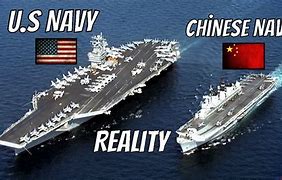
China is working toward a similar goal with its expansion of aircraft carrier and warship production.
Prudent use of power and compromise will expand the influence of every country that has hegemonic ambition. The operative word is “prudent”, i.e., navigating life with a thoughtful eye toward the future. Of course, there is a difference between China’s and America’s political prudence, but each is able to draw on resources that can change the course of history. The question becomes which has a system of government that can prudently use force and compromise to achieve peace and prosperity?
China’s and Russia’s education system leans toward communism which has not had the same level of success as capitalism.
America’s imperial elite is largely educated in American’ ivy league schools. Kaplan suggests, to the extent that these elitists grasp the importance of using force and compromise through democratic capitalism, the world has a chance for peace and prosperity.
Kaplan notes there is less geographic advantage for America today because of technological interconnectedness.
One suspects Musk is at a crossroad. He will either sell X at a loss or figure out how the forum can provide a service to the public for which it is willing to pay.
Books of Interest Website: chetyarbrough.blog
“Extremely Hardcore” (Inside Elon Musk’s Twitter)
By: Zoë Schiffer
Narrated by: Jame Lamchick
Zoë Schiffer (Author, senior reporter at “The Verge”, freelance journalist, experience as a tech content manager.)
Zoë Schiffer’s “Extremely Hardcore” is a send-up of Elon Musk’s takeover of Twitter. Elon Musk believes in freedom of speech with a commitment that results in the dismantling of Twitter. What Schiffer makes clear to some who listen to her book is that the failure of Twitter is not because of Musk but because of the ideal of free speech.
Musk made an error in trying to shift Twitters’ income source from advertising to users. Only with advertiser revenues could Twitter pursue the ideal of free speech.
Musk’s task should not have been to do what has not been possible because of the nature of human beings. Free speech is a laudable but unachievable goal because human beings are influenced by the way they are raised and the experience of living. Advertisers want to know that the media on which they advertise is not going to offend its customers. Musk is unquestionably a genius and a credit to human progress but creating a forum for free speech is an unachievable goal.
Jack Dorsey (American internet entrepreneur, philanthropist, and programmer.)
The co-founder of Twitter, Jack Dorsey, was no better at creating a free-speech forum than Elon Musk. Dorsey was liberated from the struggle to achieve the unachievable by Musk when Twitter was sold. The only chance for X’s survival is for Musk to offer a service that goes beyond the ideal of free speech to a forum that acknowledges some free speech is harmful and that X’s media forum can serve the public in some other way.
Twitter appeared to be a bloated organization that was organized to do the impossible. Monitoring and regulating free speech bureaucratized Twitter in ways that made profitability difficult, if not impossible. On the other hand, Twitter offered a free service to a public that craves attention and recognition. X cannot survive as a free speech forum because it cannot survive its debt service based on people who are only seeking attention and recognition.
Musk’s choice to change Twitter to an organization called X is only going to succeed if he manages to either return it to a monitored public forum or a service beyond the unachievable principle of free speech.
The history of Reddit and its successful public stock offer earlier this week shows that a monitored public forum can be successful. One wonders if Musk will take the hint and emulate Reddit’s success. His mistaken belief about freedom of speech suggests he will not invest in re-bureaucratization of what is now called X.
One suspects Musk is at a crossroad. He will either sell X at a loss or figure out how the forum can provide a service to the public for which it is willing to pay.
“Drucker” is an interesting book about an important 20th century professor and storied business consultant.
Books of Interest Website: chetyarbrough.blog
“Drucker” (The Man who Invented the Corporate Society)
By: John J. Tarrant
Published in 1980–No picture available of the author, John J. Tarrant.
Peter Drucker was a world-renowned business and government management consultant in the mid-twentieth century. John J. Tarrant’s personal memoir is about Peter Drucker’s business and government management beliefs. A lack of approval or acknowledgement of Tarrant’s book by Drucker reinforces one’s belief in Tarrant’s objectivity.
With my personal experience as a neophyte business manager in the 1970s, Peter Drucker was a business consultant we studied in management development classes.
There were several group meetings with other managers in the company for which I worked. In those meetings we discussed Drucker’s views on business management and practice. Drucker had a profound effect on me and how I managed my part of the business.
A fundamental point made by Drucker is that a business’ manager must focus on strengths, not weaknesses of people reporting to him or her.
The principle of that focus is that every manager is charged with setting goals while recognizing he/she needs to build around personal weaknesses with direct report’ employee’s strengths. The point is that a manager and/or employee in an organization is unlikely to know all there is to know to achieve a company’s goals. Drucker argues the purpose of business is to sustain itself by achieving determined objectives. It is not about profit but about sustaining a business’s future. That principle applies to government departments as long as they continue to serve the needs of the public. When businesses or government departments fail to preserve their future or purpose, they deserve dissolution.
What Tarrant notes in his memoir is that Drucker believes government departments do not have the same incentives as businesses and tend to become self-perpetuating when their original purpose is achieved. Businesses disappear or go bankrupt because they do not generate enough revenue to sustain their future. Drucker suggests government departments rarely disappear. They become self-perpetuating. They are protected by public taxes, not the principle of free market revenue. Tarrant infers Drucker believes government departments should be dissolved when their goals are achieved.
Tarrant categorizes Drucker as a conservative but not in a 21st century Republican sense but in a belief that government tends to waste public taxes because their goals tend to evolve from service to the public to employment-preservation. Government departments should not exist as an employment haven without public purpose.
Tarrant notes Drucker voted as a Democrat. As an Austrian born American, Tarrant notes, he only voted for a Republican President twice in his lifetime. Drucker is alleged to regret having voted Republican the two times he did. One was for Nixon and the second I can’t remember. This is not to suggest Drucker was partisan because his focus was on management, not politics. “Drucker” is an interesting book about an important 20th century professor and storied business consultant.
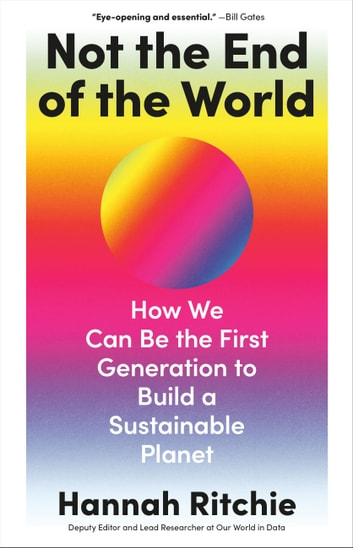
Hannah Ritchie advises that a Sixth Extinction event, unlike former extinction events, can be stopped because it is manmade.
Books of Interest Website: chetyarbrough.blog
“Not the End of the World” (How We Can Be the First Generation to Build a Sustainable Planet)
By: Hannah Ritchie
Narrated by: Hannah Ritchie
Hannah Ritchie (Author, Scottish data scientist, senior researcher at the University of Oxford, undergraduate degree in environmental geoscience and master’s in carbon management, working on a Ph D.)
Hannah Richie is vilified by some environmentalist who suggest she looks at global warming as a problem on its way to resolution. They argue Richie offers an unreasonably optimistic view of global warming. She obviously believes global warming is real, but argues history shows humanity is dealing with the crises and is working on what must be done to survive the future.
A little history: Since 1850, the National Oceanic and Atmospheric Administration estimated the world temperature would increase by 2 degrees Fahrenheit per decade. However, in 2023 NOAA shows the actual average has been 2.43 degrees Fahrenheit per decade since the 1850s. The 10 warmest years have been in the last decade.
Though the exact temperature increase is disputed by other scientific studies, there is no rational disagreement on evidence of warming. Global warming is having an effect on world’ biodiversity.
Richie notes loss of forest lands from farming and timber production adds to global warming because trees absorb carbon dioxide from the air.
Atmospheric carbon-load increases global warming. Counter intuitively, Richie argues the building of cities and concentration of populations improves the world’s environment by moving people into the city which aids biodiversity in the country. She argues population services in a city reduces inefficient travel, conserves energy, encourages mechanized farming, reduces the environmental load of human’ waste disposal, and promotes community-wide water conservation.
As noted by many historians, sources of energy that are polluting the atmosphere have changed over the centuries. With few exceptions, these energy sources required burning. The world has moved from wood burning to coal to oil to non-burning energy sources like nuclear and alternative energy sources that have reduced carbon in the atmosphere. Richie notes each stage of energy development has incrementally reduced pollution, but global warming continues because of population increase and the continued use of fossil fuels in industrial production.
Richie notes the rate of world population increase has incrementally decreased and continues to decline with fewer babies being born per family.
Richie believes earth’s human population will plateau at around 10 billion people. At the same time the machine age and technology will improve efficiency of fossil fuel use to reduce the rate of environmental pollution. Richie infers the hope of limiting earth’s warming to 1.5 degree centigrade in this century (3 degrees Fahrenheit) is unlikely to be achieved. Still, she remains optimistic based on human history’s technological improvements since the agricultural and industrial revolutions. Richie is a proponent of nuclear energy because of its efficiency and clean energy potential. She discounts nuclear accidents by noting even with the worst nuclear accident at Chernobyl, deaths were minimal. (Less than 40 people were killed in the disaster with some disagreement about the number of deaths from indirect exposure.)
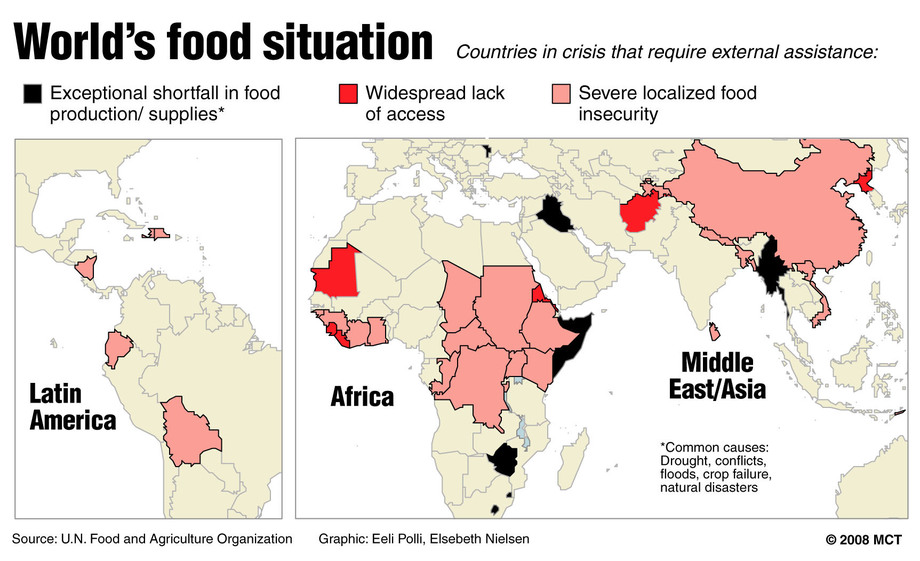
What is off-putting to many people is Richie’s argument for societal change. She argues the world population must become more vegan because of the negative environmental consequence of raising beef and sheep for food. Richie argues food shortages are the greater risk to human survival. To sustain the lives of ten billion people in the world, Richie believes there is not enough arable land to raise livestock and feed the hungry. She implies only with the advance of agricultural research and produce, including the creation of nutritious meat substitutes, can the world’s future population be sustained.
Nolan clearly illustrates how important political power is in balancing corporate owner/managers’ disproportionate incomes and privileges with labor.
Books of Interest Website: chetyarbrough.blog
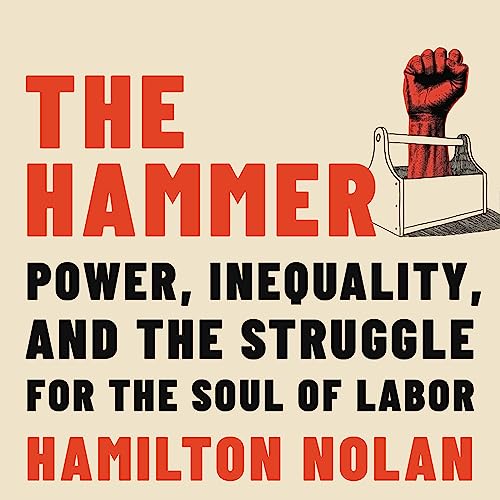
“The Hammer” (Power, Inequality, and the Struggle for the Soul of Labor)
By: Hamilton Nolan
Narrated by: Franklin Pierson
Hamilton Nolan (Author and free-lance Journalist)
“The Hammer” is a paean to unionization. Unions lost much of their political power in the early 1970s. Political power of labor was diminished by State governments, poor labor union management, and a diminishing number of labor union members. Nolan’s argument is workers have to reestablish political power to change their unfair and inequitable relationship with business.
The widening gap between rich and poor is traced to the era of President Reagan when the first deep cuts in corporate taxes occur.
Reagan fought unionization by firing air traffic controllers that sought better wages. Reagan’s supporters believed government social programs were out of control and their cost diminished the power of free enterprise. Much of the American public either agreed or were apathetic. However, as the gap between rich and poor accelerated, Americans began to complain about inequality. With extraordinary income increases for business owners and CEOs, and repressed wages for workers, the need for unionized political power became self-evident. Nolan introduces his book about unionization with a brief biography of Sara Nelson.
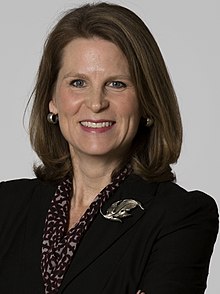
Sara Nelson (AFA president of the Association of Flight Attendants.)
Nolan writes about Sara Nelson who became a union member when she worked for United Airlines as a stewardess. Nelson was born and lived in Corvallis, Oregon. She applies for a job with United Airlines in St. Louis. She gets the job but her first paycheck is late. She couldn’t pay her rent. A check is given to her by a union employee to tide her over until her first check is delivered. From that day forward, according to Nolan, Nelson became a supporter of unions. Eventually Nelson becomes the president of the Association of Flight Attendants (AFA).
Liz Shuler (President of the AFL-CIO since 8/5/21.)
Ironically, the first woman President of the AFL-CIO is also from Oregon. Liz Shuler received a bachelor’s degree in journalism from U of O in Eugene, Oregon. She became a union activist after college and worked to organize clerical workers at Portland General Electric. She is elected as the President of the AFL-CIO in 2021 after serving as the first woman Secretary-Treasurer of the organization.
Nolan’s book addresses State conflicts with unionizers and family-income for low-income workers. The first states he addresses are South Carolina and California. Nolan notes South Carolina has become a haven for businesses wishing to avoid unions. South Carolina’ State laws discourage unionization which appeals to businesses wishing to relocate. Nolan notes South Carolina attracts businesses looking to improve profits by reducing labor costs. The consequence of business’s lower labor cost is to reduce South Carolina workers’ standard of living. South Carolina’s workers are among the lowest (19th out of 50 States) paid workers in the U.S. Nolan implies South Carolina’s income inequality is a consequence of the State’s policy of discouraging unionization.
California has the fourth largest income inequality in the U.S.
Nolan notes the cascading negative of unfair compensation for domestic labor. Though California now allows childcare servers to be unionized, their unionization efforts are discouraged by government regulation, as well as the fragmentation of its poorly compensated workers. The consequence of State government regulation keeps wages low and discourages entrepreneurs from starting childcare’ businesses. A compounding negative is created when users of childcare’ service, women in particular, are unable to work in regular work-day jobs. Workers are compelled to stay home to take care of their children, reducing family income and further impoverishing low-income childcare’ workers. It becomes a vicious cycle, hurting entrepreneurs trying to start a childcare service, employees wishing to increase family income, and employers needing more workers.
Nolan expands his argument by noting how service industries in Las Vegas, the State of Florida, New Orleans, and Mississippi are benefited by unionization.
Vacation and gambling meccas like Las Vegas, Florida, New Orleans and Mississippi need service industry employees. These vacation and gambling meccas depend on service quality for visiting tourists. Lack of representation for service employees diminishes employee’ standards of living which indirectly damages the reputation of the entertainment and vacation industry.
In Las Vegas, where Nolan lived for twenty years, the service industry is protected by the Culinary Union.
Nolan notes how strong the Culinary Union has become in Las Vegas and disparages casino owners like the Fertitta’s who have fought unionization. Numerous examples are given to show how union actions have improved the lives of Casino workers, many of which are immigrants from other countries.
Nolan’s argument for the value of unionization is compelling but his encomium for the union movement ignores America’s immigration crises.
The vast need for immigration reform is not being forcefully addressed by unions. Compensation inequity is a noble fight carried out by unionization, but it needs to broaden its role in immigration. Unions need to use their power and influence to change immigration policies to equitably treat a labor force that is sorely needed in America. Unions need to help educate and house legal immigrants, so they do not become a part of America’s growing homelessness. Additionally, unions could use their recruiting expertise to get Americans off the street by providing job training services and gainful employment.
Public perception of unions could be monumentally improved with a program to recruit and indoctrinate the homeless with training for jobs in the 21st century.
There is so much that unions could do to far exceed the minimalist goal noted in Liz Shuler’s plan to add a million union members over the next 10 years. Nolan pitches for Sara Nelson as a more dynamic leader for the union movement. Maybe Nelson would be better than Shuler, but growth, value, and public perception of union members could be monumentally improved with a program to recruit and indoctrinate the homeless with training and jobs for the 21st century.
Whomever the leaders of unionization may be in the future, Nolan clearly illustrates how important political power is in balancing corporate owner/managers’ disproportionate incomes and privileges with labor.
America and every nation must believe in themselves until, like all changes in society, the proof of an energy’s value becomes self-evident
Books of Interest Website: chetyarbrough.blog
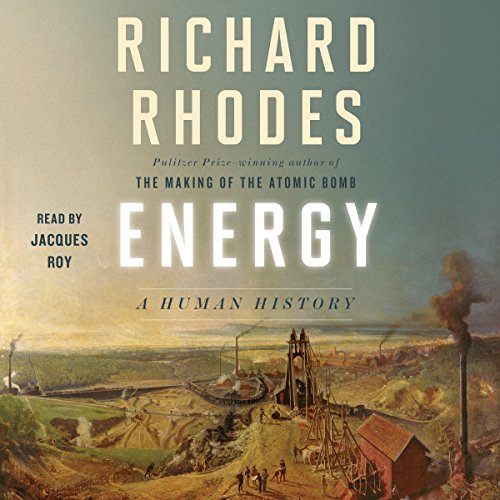
“Energy” (A Human History)
By: Richard Rhodes
Narrated by: Jacques Roy
Richard Rhodes (American journalist, historian, and author.)
Richard Rhodes explains the many forms of “Energy” that have changed the course of history. The one constant is human ingenuity. The source of energy evolves over centuries of civilization. The source of energy has changed from human hands to fuel burning machines to atomic fission to fusion to information. The back and forth of human thought and action have used sources of energy to remake the world. Rhodes’ history shows progress is not always forward. Change is often resisted until results outweigh failures.
Having just gone through the first chapters of Rhode’s excellent history of energy, this review was prematurely completed because of the TikTok controversy noted in the news.
It is important to complete Rhodes’ history to have some understanding of why information is the energy of modern times. Citizens of the world are facing many of the same obstacles Rhodes wrote about in his book. That energy is information may seem incongruous to some but, Rhodes’ history about wood, coal, oil, electricity, nuclear power, and the current state of renewables is like the energy crises of information today. Rhodes does not consider what some argue is tomorrow’s energy source. Tomorrow’s energy source is information. The many trials, the fits and starts, of the energy sources Rhodes explains are the same trials facing today’s world with information as the most current iteration of “Energy”.
Energy is fuel for doing work. Its early forms are those noted in Rhodes’ history. Earlier forms of energy are still relevant, but their utility is being challenged by the immense growth of information and how information drives the future.
There are lessons to be learned about the challenges of information as energy from the experiences noted in Rhodes’ history. This is a bumpy time that shares the trials and tribulations of wood, coal, oil, electricity, nuclear power, and renewable energy of the past. Each energy source has improved the lives of its users but not without trial and error. The world is in the midst of a transition from the industrial age just as the industrial age transitioned from the agricultural age. The world is entering the information age.
The energy change today is information, most recently multiplied by artificial intelligence.
The paranoia of today is that foreign governments will use information to disrupt the progress of nations that have their own forms of government. The controversy of TikTok is a case in point. On the one hand TikTok is being used by small entrepreneurs in America to conduct their businesses. On the other, TikTok’ popularity is spreading the equivalent of porn to the public, distorting the perception and education of children. There is the added threat of influencing the public to overthrow governments. The question is would TikTok be any less a threat if it were owned and restricted to one country or another? Facebook offers the same potential as TikTok. Facebook, Google, and Amazon are energy sources for distorting truth and influencing the public in the same way as TikTok. Domestic ownership does not cure the negative potential of information distortion or abhorrent political influence.
Is TikTok going to change democratic capitalism or is it going to change Chinese communism? One suspects, it will change both. The information highway cannot be blocked. Information energy, like water, will find its own way through cracks in its environment.
The fundamental point made in the last two chapters of Rhode’s excellent history is that the world, and America, need to increase the number of nuclear energy plants based on the need to curb environmental pollution. His argument is based on learning from the nuclear accidents that have occurred, and designing nuclear power plants to mitigate the consequence of failure. He notes no energy source in the world has succeeded without learning from producer’s mistakes. Our mistakes at Chernobyl, 3-Mile Island, and Fukushima are correctable. Environmental degradation is the crises of the 21st century that threatens human existence.
America and every nation must believe in themselves until, like all changes in society, the proof of an energy’s value becomes self-evident.




















































 REVIEWS AND VIEWS OF LIFE