CULTURAL CONFLICT

How could America expect to occupy Iraq for a mere 8 years and 8 months and resolve cultural differences? It could not and did not.

Books of Interest
 Website: chetyarbrough.blog

The Iraq War 

Author: John Keegan

Narrated By: Simon Vance

John Keegan (Author, 1934-2012, English historian, lecturer, and journalist died at age 78. A recognized authority on warfare.)

John Keegan reflects on the history of Iraq with an analysis of the rise and fall of Saddam Hussein. With the collapse of the Ottoman Empire in 1922, British control of Baghdad, Basra, and Mosul led to the formation of Iraq by the League of Nations under the supervision of the British. Great Britain offered nation-state independence to Iraq in 1932. Keegan explains early Iraqi leaders failed to centralize control of the newly formed country of Iraq. He argues that failure allowed an authoritarian, unscrupulous, and brutal leader named Saddam Hussein to take control of the country from Ahmed Hassan al-Baker in 1979. Saddam used fear, violence, and murder to eliminate rivals to create a cult of personality that made him look strong and defiant in the eyes of his countrymen and the world.

Saddam Hussein (1937-2006)

Keegan argues Saddam instinctively combined his brutality with the pragmatism of “might makes right” to take control of Iraq’s fragmented leadership. Not since Hitler, Keegan suggests, has a leader managed to combine tyranny with fear to take command of a nation. Saddam magnified regional instability and created international disorder with ruthless brutality, reinforced by a military that chose to follow him out of fear and reward that is gathered from rapine.
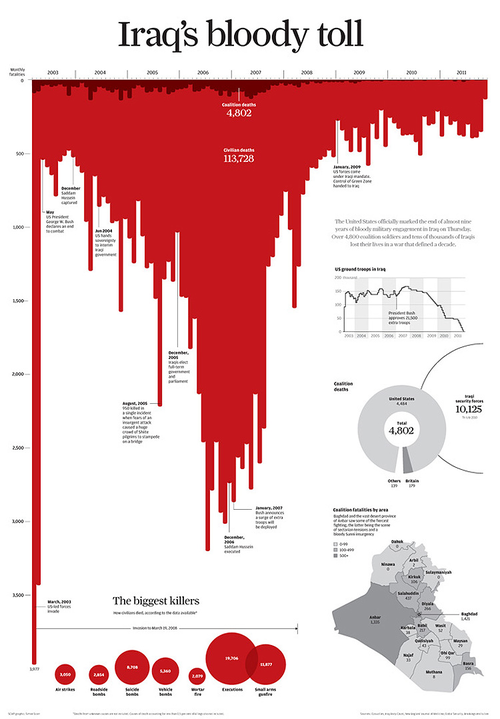
Iraq death statistics.

Keegan explains Saddam maintains his position through force but ultimately loses it because of his brutal rule, lies, and poor judgement. Saddam dramatically murders or tortures political rivals to create fear among Iraqi citizens and military henchmen who fear his rath. He initiates a war with Iran in 1980 with the intent of toppling the Shah because he viewed him as a threat to his regime. His plan was to install the Ayatollah Khomeini which seems counter intuitive in view of Khomeini’s religious zealotry; particular considering Saddam’s earlier offer to assassinate him while he lived as an exile in Iraq. Keegan implies Saddam’s decision to support Khomeini as Iran’s leader is similar to the lie Saddam creates about Kuwait slant-drilling into Iraqi oil fields to steal billions in oil. One doubts he ever intended to promote Khomeini to rule Iran. As history shows, the majority of the international community did not believe Saddam’s lie about oil theft and were opposed to Iraq’s invasion of Kuwait. A disastrous and unresolved eight-year war was fought with Iran and eventually Saddam lost any significant support for occupation of Kuwait.

Saddam rules Iraq for nearly 24 years. One wonders how he ruled as long as he did, just as many Americans wonder how Trump could be re-elected by a majority of American voters.

Considering Saddam’s poor judgement in regard to Khomeini’s power and his belief that Iraq could take over another country without international opposition shows how deluded a dictator can be. Keegan suggests Saddam made too many miscalculations. First among them is the weaknesses he created by presuming that fear of him among his own military force would maintain support of Iraq’s 400,000 soldiers. Saddam is essentially abandoned by his military leaders when Iraq is confronted by an international force to oppose Iraq’s invasion of Kuwait (73% were American soldiers but 34 other countries participated). Not surprisingly, bridges were not destroyed by Saddam’s military as they retreated, and Saddam’s military leaders abandoned their posts.

Keegan explains Saddam’s fall came from a collapse of the illusions, fears, and myths that surrounding his rise to power.

One wonders if the same may happen in Iran in the 21st century. It seems dependent on Iranian people deciding on whether the governance Khomeini insists upon is illusory and the fear Khomeini’s ordered murders, incarcerations, and beliefs have alienated enough Iranian citizens. Because Iran’s governance may be more about religious belief and integrity rather than arbitrary rule, one becomes skeptical. Iran may remain as it is but with a new religious ruler.

Keegan tries to explain America’s mistakes in Iraq without being too partisan.

Keegan offers a clear understanding of Saddam’s rule of Iraq. America made many mistakes because of not understanding the culture of Iraq and presumed their culture would accept Americanization. Tribalism scented with religion exists in Iraq. Without engaging that reality, America could not constructively influence change. The dismantling of Iraq’s military negatively impacted a critical infrastructure that understood the indigenous culture and may have aided American influence in Iraq. By ignoring the dignity of the Iraqi people and the importance of tribe loyalties and religious beliefs, America stubbled through years of destructive occupation. Other authors have noted how tribalism influenced how Iraqi informers had their own agendas for accusing Iraqi tribes of fomenting conflict. Iraq unraveled into insurgency and chaos from which it is still trying to recover.

It has taken nearly a quarter of a century for American government to begin healing the relationship between Indians and 1776 settlers of this country. The possibility of changing Iraqi society in a less than 10 years seems unlikely and, for that matter, inappropriate. Cultural difference is not a disease.

Change is difficult and nearly impossible when cultural differences are not clearly understood and taken into account when a foreign country occupies a native country’s territory. How could America expect to occupy Iraq for a mere 8 years and 8 months and resolve cultural differences? It could not and did not.
GENDER MATTERS

All gender differences beyond women’s birth of children seem more culturally than naturally determined. Gender does matter but not because of inherent qualities but because of cultural influences.

Books of Interest
 Website: chetyarbrough.blog

Why Gender Matters (What Parents and Teachers Need to Know About the Emerging Science of Sex Differences) 

Author: Leonard Sax MD PhD

Narrated By: Keith Sellon-Wright

Leonard Sax (Author, psychologist and family physician, graduate of MIT and the University of Pennsylvania.)

After listening to Sayaka Murata’s satire about gender differences and a future that minimizes the differences between males and females, one may wish to read/hear what a physician writes about gender and why difference matters. In listening/reading Doctor Sax’s book, this review is somewhat skeptical of his judgement about gender differences. Having been raised by a single parent, some of what he claims seems formulaic and based on weak evidence.

Gender differences.

Though Dr. Sax cites studies that support stereotypes of girls who are less inclined to pursue math and science, it seems impossible to separate acculturation from gender bias. One wonders if his opinion is not influenced by his own gender. As is true of all human judgements, we have a tendency to conflate correlation with causation.

Whether there is a direct relationship between two variables like gender and one’s potential in science or math may be culturally reinforced rather than intellectually adduced.

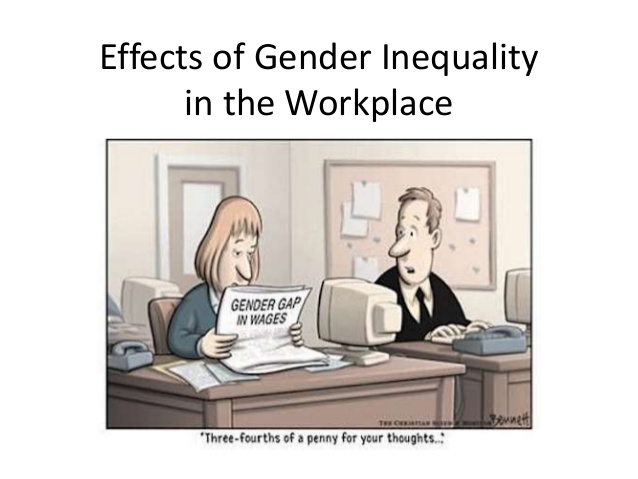
There may be some truth in gender difference based on women giving birth that naturally induces a more nurturing requirement for women than men. The fact that women bare children and traditionally take on the role of caregiving suggests a cultural as well as gender driven characteristic. Inequality of the sexes is well documented by numerous studies that show women are paid less for the same work done by men. Unequal pay has nothing to do with biology.

Gender difference.

It is economic and social circumstance that limits women’s potential. The question becomes whether a woman would run a business any differently than a man based on gender. One might believe women who have given birth may manage differently because of their experience as nurturers of early life. Why else, if education and intelligence are similar, would there be any difference between a woman or man who manages others?

Though most humans wish to be part of something greater than themselves, the shaming in this cell-phone age seems significantly more impactful on women than on men.

On the other hand, there are some observations about gender differences that seem true when one thinks about their own life experience. Though social acceptance is important to both sexes, it seems boys are less likely to be as stressed about not being part of the “in group” than girls. Though even that is challengeable in that males also have a desire to be a part of something greater than themselves.

On balance, this listener/readers’ opinion is that Doctor Sax’s explanation of innate gender difference is suspect with the caveat that women are different from men in that they give birth.

All gender differences beyond women’s birth of children seem more culturally than naturally determined. Gender does matter but not because of inherent qualities but because of cultural influences.

VANISHING WORLD

Murata’s satire infers obsession with sex for pleasure, child rearing collectivization, gender dysphoria, and pregnancy equalization are pathways to societal destruction.

Books of Interest
 Website: chetyarbrough.blog

Vanishing World (A Novel) 

Author: Sayaka Murata

Narrated By: Nancy Wu

Sayaka Murata (Author, Japanese novelist.)

Sayaka Murata’s subject is clearly revealed in its title, “Vanishing World”. “Vanishing World” is a provocative assessment of how sexual relationship and sex education has changed. Murata satirically reveals how human reproduction, objectification of life, motherhood, and technology may dehumanize society.

Murata’s fictional story is highly informative in regard to sexual difference and similarity between men and women.

In one sense, Murata’s fictional story is highly informative in regard to sexual difference and similarity between men and women. As a reader/listener, Murata offers a detailed description of the physical difference between the sexes. Many who think they know something about sexual difference will find the author’s candor enlightening. However, her depiction of social relationship is off-putting with a satirical exaggeration of socio/sexual objectification.

Murata writes about a single parent family with a young daughter who lives with her mother and is nearing the age of puberty.

(Though not mentioned in Murata’s story, single family homes in America have grown by nearly 30% in the 21st century.) The main character’s name is Amane and Murata’s story is about Amane’s sexual awakening and how she views social relationship. Amane is infatuated with an animated male character on television. She imagines being married to this character before puberty but holds this character in her mind throughout childhood and later life.

Murata suggests reproduction may evolve into a preferential desire for artificial insemination rather than sexual intercourse between a man and woman.

This idea feeds into a listener/reader’s mind as a diminishment of the need for emotional attachment to the opposite sex for procreation. Sex becomes detached from procreation, evolving into only “hooking up” for sexual stimulation and/or personal gratification. Murata infers desire is no longer needed for procreation but only to experience intercourse as an emotional and physical pleasure. Consequently, it seems perfectly natural to transfer sexual desire to a fictional character because it becomes unnecessary to have emotional attachment to humans when a figment of one’s imagination is available.

Murata creates a bizarre world.

The bizarro world that Murata creates is an extension of a belief that society is becoming less attached to their humanity. Marriage, human relationship, and motherhood are replaced by mindful personal’ inwardness and endless pursuit of physical stimulation without emotional entanglement. By extension, Murata suggests science will create wombs for men so that the difference in sexes equalizes childbirth and care of children. Caregiving becomes bureaucratic and collective because caregiving is no longer personalized.

Murata suggests that a new system of childcare will evolve into collective training camps for working parents who are too self-absorbed to raise their own children.

Collective childcare disconnects parents from the management and development of their children. The sterility of conception by artificial insemination, collective childcare, and social acceptance of multiple sex partners diminishes both familial relations and child development. Birthing and raising children becomes a clinical process, i.e., less personal with both men and women capable of experiencing pregnancy and delivery; all without responsibility or obligation for childcare.

In some sense, this satire illustrates the negative potential of socio/sexual equality.

Murata’s story ends with the birth of their first child from a man who is Amane’s husband. She is torn over not being able to take the baby home because the child is already being “cared for” in a ward meant to raise and nurture all newly born children. A final point is made in the story by a visit from Alane’s mother after the birth. She asks Amane where the child is, and Alane explains the child will not be raised by her and her husband. Alane’s mother is aghast. Her mother falls to the floor and dies without any apparent familial concern for her sudden collapse and presumably, death. The next thing to happen is a visit from one of the children born in this new world. Alane chooses to have sex with him and the story ends.

“Vanishing World” implies 21st century science, organizational bureaucracy, and social change threatens survival of humanity. Murata’s satire infers obsession with sex for pleasure, child rearing collectivization, gender dysphoria, and pregnancy equalization are pathways to society’s collapse.

CAPITALIST DEMOCRACY

America’s current government may not be the criminal enterprise of Drew Hayes’ “Forging Hephaestus”, but it reflects on the worst characteristics of capitalist democracies.

Books of Interest
 Website: chetyarbrough.blog

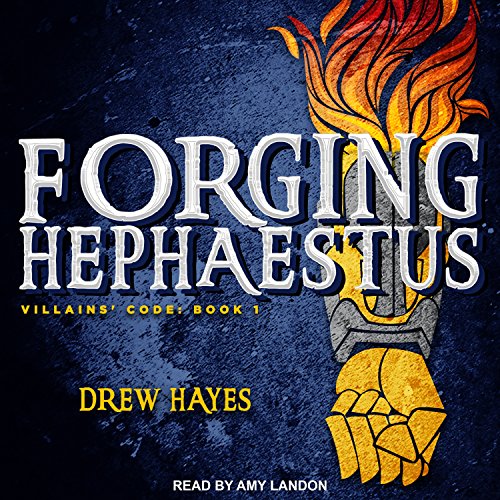
Forging Hephaestus: Villains’ Code Series, Book 1 

Author: Drew Hayes

Narrated By: Amy Landon

Drew Hayes (Author, humorist writer who earned a BA in English from Texas Tech University.)

“Forging Hephaestus” is the beginning of a series of books that this critic is unlikely to complete. The first book, “Forging Hephaestus” sets the table for some interesting points about systems of power, identity, and morality that reminds one of government control and influence. However, Hayes is creating a secret guild of criminals’ intent on ruling the world of crime.

Drew’s story begins with the creation of a young woman that embodies the force of fire.

She is like the mythological god of fire though not appearing as someone who is male or has, as the Greek myth goes, any physical imperfection. One presumes the author is challenging the patriarchal truth of history that shows power, aggression, and ambition are not only masculine. Additionally, the choice of Hephestus as a woman makes one think about a person who exemplifies both creation and destruction, i.e., the birth and death of humanity.

If one thinks of Hayes’ story as a cynical allegory of government, rather than a criminal enterprise, it becomes more interesting to this reviewer.

What Drew describes as a Villains’ Guild is like a government elected by people who believe they are voting for someone who represents their interests. In reality, voters are voting for self-interested people who may or may not govern in voter’s best interest. At best, governments try to serve the public but are not gods of infallible understanding that can legislate what is always in the best interest of its citizens. Generally, governments control through compliance, not morality. Order is prized over justice and equity. That desire for order changes elected officials’ loyalty to those who are elected as much as to people who voted for them.

The guild that Hayes creates audits and enforces their criminal objectives with state surveillance and internal security.

State surveillance and internal security are the same tools used by government which are even more effective today than in the past because of technology. (A past trip to China after Xi had taken power shows how internet searches are restricted when one is in a Bejing’ hotel.) The paradox of surveillance and internal security is that no one is truly free whether they are a part of those who govern or are the governed. Human nature exploits the weak, the ethnic, and ill-informed. Government representatives are no more virtuous or venal than the citizens who elected them. That is why citizens become skeptical about the legitimacy of their government’s concern about common good.

Trump’s world view.

Listening/reading “Forging Hephaestus” is an apocryphal story to some who feel President Trump is the quintessential example of one who is more interested in himself and his family’s wealth than the people who voted for him. America’s current government may not be the criminal enterprise of Drew Hayes’ “Forging Hephaestus”, but it reflects on the worst characteristics of capitalist democracies.

PERSONAL IDENTITY

Susan Faludi concludes one’s personal identity is not fixed but changes based on our parents’ influence and life experience.

Books of Interest
 Website: chetyarbrough.blog

In the Darkroom 

Author: Susan Faludi

Narrated By: Laurel Lefkow

Susan Charlotte Faludi (Author, American feminist, and journalist. Received the Kirkus Prise for “In the Darkroom” in 2016.)

“In the Darkroom” is an interesting exploration of Susan Faludi’s remembrance of her father. Every parent who has a child thinks about what their influence is or will be in their children’s life and memory. Faludi’s memoir shows parents have an immense influence on who our children become.

Steven Faludi, Susan’s father, passed away on May 14th, 2015.

Faludi shows her father as a chameleon who refuses to be identified as one thing or another.

Susan Faludi’s father was Steven Faludi, a Holocaust survivor who made his living as a professional photographer. “In the Darkroom” Susan Faludi explains her father chose to become a woman at the age of 76 by undergoing sex reassignment surgery in Thailand. Her father became Stefánie Faludi living in Hungary. As an author, Susan recalls her childhood and the volatile relationship her father had with her mother. Steven Faludi was a domineering husband and father who is eventually divorced by Susan’s mother. She recalls a violent incident after the divorce where Steven crashes through their front door to stab her mother’s presumed boyfriend. He is arrested but manages to turn the attack into a rescue of his ex-wife from an intruder to avoid criminal charges.

Despite Steven Faludi’s survival from the Holocaust, he aligned himself with right-wing nationalist politics when he returned to Hungary.

Hungary had a reputation for anti-Semitism and anti-LGBTQ beliefs. Surprisingly, he became xenophobic and anti-Semitic despite being Jewish. Faludi suggests her father may have rejected his Jewish identity as a way of distancing himself from what he had been through. Like his decision to become a woman, he recreated himself. His irrational fears may have made him dislike people from other countries, cultures, or ethnicities. Susan Faludi believes it is his way to defend his self-identity from the Holocaust’ trauma, shame, and loss of people he knew, loved, or cared about. It is impossible to comprehend what it must have been like to survive the Holocaust. Anyone who has visited Auschwitz or a concentration camp site understands how unbelievably horrible that experience must have been. On the other hand, Ms. Faludi interviews grade school friends of her father before the war and notes Steven Faludi was a difficult student with which to be friends.

Susan Faludi is considered among the top 20 influential modern feminist theorists.

Not surprisingly, Susan Faludi becomes a feminist with gender identity being an important experience in her family’s life. She uses her journalistic talent to look at her father’s past and her personal experience. Her memoir looks into the nature of personal identity, how our identity is made, and what we do with it. Not surprisingly, much of who we become is from genetic inheritance and interaction with our parents. Faludi is an investigative journalist which drives her to dig into the details of her family’s past to better understand herself. Faludi’s father is shown to be abusive, controlling, and emotionally distant husband and father, a characteristic not uncommon in this patriarchal world.

“In the Darkroom” is an ironic title to Faludi’s book because much of one’s family life takes place in the “…Darkroom” of one’s mind.

Does one’s identity come from what you choose or is it a consequence of your experience as a child born into a family that is either nurturing or neglectful? Her memoir offers no formulaic answer. She suggests close examination of our family childhood reveals we are witnesses to the strengths and weaknesses of our parents. However, as witnesses we live in a “…Darkroom” of the mind that obscures any truth that explains how children are influenced by parental relationship.

We are not puppets of our parents, but neither are we free.

We choose to become ourselves through acceptance or rejection of up and down experience with parents but that is not the only experience that influences our lives. As we grow, we meet others who impact and change our views of life. Faludi explains she initially rejected her father because of his violence, abuse, and distant behavior but as she learned of his gender confusion and transition, she recognized her father’s pain and reassessed her relationship with him. Our parents experience and growth to adulthood have the same ups and downs of life that every human being experiences. They had their influences and choices just as their children will have in their lives.

Unlike the development of an image in a dark room, one’s life is never fixed by the solution in which it is placed.

Susan Faludi concludes one’s personal identity is not fixed but changes based on our parents’ influence and life experience. Of course, this is a subjective process, and “truth” is hard to pin down. Ignorance or the influence of others often distorts “truth”. Faludi suggests life is shaped by memory, trauma, the stories we tell, and the life we live. The story of her father’s life is the example of one who reconstructed his/her life. Change does not erase the past, but her father’s reinvention of his identity changed Faludi’s feelings about him. Faludi’s memoir shows how life is contradictory and complex.

SUCCESS

Creating a different and better self is as Neal Armstong noted “…one small step for man, one giant leap for mankind.”

Books of Interest
 Website: chetyarbrough.blog

Atomic Habits (Tiny Changes, Remarkable Results, An Easy and Proven Way to Build Good Habits & Break Bad Ones.)

Author: James Clear

Narrated By: James Clear

James Clear (Author, earned a biomechanics degree from Denison University in 2008.)

James Clear begins his “self-help” book with a baseball accident. He overcomes a serious injury in his high school years caused by a baseball bat that flies out of a teammates’ practice swing that smashes him between the eyes. It crushes his nose and cracks his skull, causing a brain bleed that nearly ends his life. His recovery leads him to a career as a performance coach for athletes and executives.

Quality of life.

“Atomic Habits” is how he turned that accident into several surprisingly simple insights into how one can improve their life. He suggests it is not a self-help book that tells you what to do but to understand who you believe you are. If you think of yourself as an athlete. you choose your sport and develop the tools that make you that athlete. The author chose baseball as his athletic ambition despite his accident. Clear explains he recovered but failed to make the baseball team in his return to high school.

Clear explains his baseball failure in high school is not because of willpower but because he needed more practice to become what he wished to be.

He went to Denison University. It had a team that gave him the environment he needed to further develop the baseball skills he learned in high school. With further practice and this new baseball environment he became part of Denison University’s team. He became a baseball player; not just a baseball player but the team captain and starting pitcher for Denison University in 2005. Clear’s desire to be a baseball athlete, his practicing the tools needed, and being in a baseball environment were keys to his accomplishments.

Clear notes habits are not goals.

The point Clear makes are that habits are not goals, but habits make up a system for accomplishment of who one wishes to be. Accomplishment is a process, not an end. Practice is a process that has plateaus where, at times, it appears one is not making progress, but continued practice will have breakthroughs if one persists. Clear explains the breakthroughs change how one sees the world, who they are, and their place in it.

First, one must choose who they want to be.

Clear suggests one can change their life by choosing who they want to be. If an introvert wants to be an extrovert, then they need to identify themselves as one who connects with others. To connect with others, one can choose to be an extrovert and be curious about another person rather than think of themselves as bad at small talk. Design a system of connection that is natural and not forced. Building small, intentional interactions with others can be built upon to reinforce extroversion.

You are who you choose to be.

Much of what Clear argues is that one has to change their identity, develop appropriate habits to reinforce a chosen identity, use tools that are obvious and easy to use that reinforce who you have chosen to be and celebrating your successes in redefining your identity. Creating a different and better self is as Neal Armstong noted “…one small step for man, one giant leap for mankind.”

GOTHIC TALE

The climax of “Modern Gothic” is where myth enters Moreno-Carcia’s story. The fundamental truths of colonization are revealed in her creative story while its denouement is an entertaining explosion of imagination.

Books of Interest
 Website: chetyarbrough.blog

Mexican Gothic

Author: Silvia Moreno-Garcia

Narrated By: Frankie Corzo

Silvia Moreno-Garcia (Author, Mexican/Canadian novelist, editor and publisher.)

Moreno-Garcia’s “Mexican Gothic” is a chilling story of colonization, eugenics, ecological contamination, mystical beliefs, and control of society by men. The author chooses the name of Doyle as an English family that exploits the Mexico’ silver mining industry in earlier centuries. A dynasty is created by generations of Doyle’s. They created a colonial manor called “High Place” from which to rule a crumbling empire. As colonizers they capitalize on Mexico’s silver deposits by exploiting native Mexicans’ land and labor to grow their mining operation. The wealth of local citizens is lost to the English foreigners who keep wages low to increase the wealth of the Doyle family.

Over generations, the Doyle men married local women that were related to each other. A common practice of royalty before the twentieth century.

They wished to maintain the genetic purity of the Doyle bloodline by having future Doyles marry genetic descendants of Mexican women that had been their wives. This is not greatly different than the experience of royal marriages in European cultures. The consequence of that marriage tradition is that recessive genetic mutations become more prominent in offspring. Children were more susceptible to diseases like cystic fibrosis and had higher incidents of developmental and cognitive disorders. This is one of many threads of meaning in “Mexican Gothic” because one of these descendants becomes a murderer of Doyle family members and the current Doyle generation seems socially dysfunctional. Added to that dysfunction is the Doyle family’s diminishing wealth.

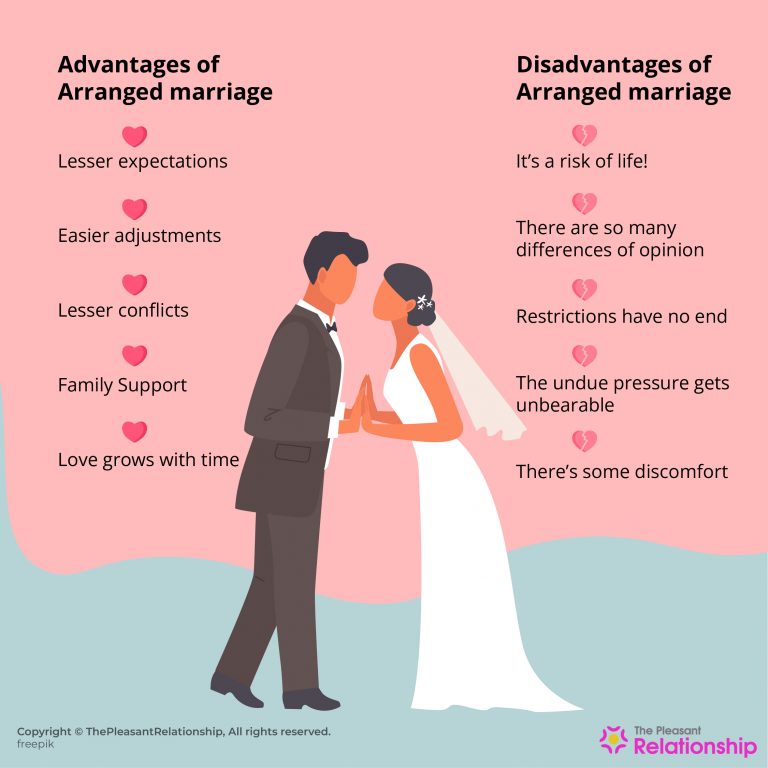
An arranged marriage is a lynch pin to the story.

The heroine, Noemi, is the daughter of a wealthy Mexican family. She is sent to investigate a letter that was received by her father from a young woman that marries a Doyle. She is a cousin of Noemi’s. The marriage is arranged in part because of her father, and he feels something is wrong and wants Noemi to visit the Doyle family to find what the mysterious letter means. Soon after Noemi arrives, she begins to have hallucinatory dreams. Listener/readers find the hallucinations are because of spores that are in the bedroom of the deteriorating Doyle house. A clever thread of meaning in Moreno-Garcia’s story is ecological contamination that comes from colonization. As one nation colonizes another, it inevitably brings different plants and animals that are not indigenous to the country they are colonizing. The author notes a fungus is growing in the Doyle household that may have come from the original colonizers.

The penultimate theme in “Modern Gothic” is the creation of myths that compound the horrific events that occur in the Doyle house.

From the history of murders in the Doyle household, to hallucinatory dreams, to incestuous relationships, to the gloom and doom of the story, to a myth about the age of the Doyle patriarch, Moreno-Garcia offers a climax to her story that vivifies reader/listener’s imagination. The climax of “Modern Gothic” is where myth enters Moreno-Carcia’s story. The fundamental truths of colonization are revealed in her creative story while its denouement is an entertaining explosion of imagination.

CARTOON

Nadel reports Robert Crumb’s life and antics without criticism which seems appropriate because he is simply recounting a human beings’ life. Nadel does not act as a judge but as a reporter of a lived life.

Books of Interest
 Website: chetyarbrough.blog

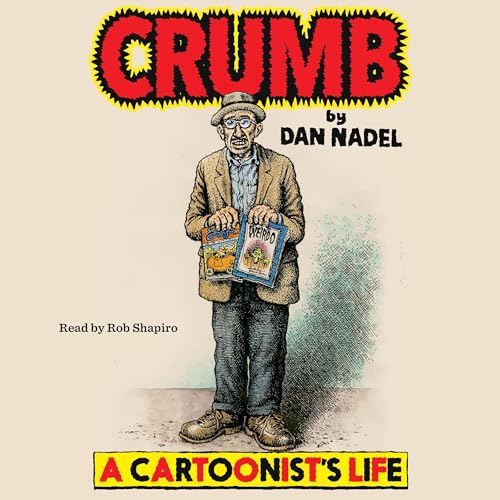
Crumb 

Author: Dan Nadel

Narrated By: Ron Shapiro

Dan Nadel (Author, curator-at-large for the Lucas Museum of Narrative Art in Los Angeles.)

“Crumb” is a well written biography of Robert Crumb, the cartoonist. The subject matter is of interest to me because of the remarkable talent of a disheveled young man with coke bottle glasses that has a gift of drawing. That gift provides him wealth and success despite coming from a troubled household that gives him an eye for the weirdness of life. He and his brother, Charles who was 1 year older, began a monthly hand-drawn comic book when he is 15 years old. They sold it door to door in the late 1950s. Charles wrote the stories and Robert illustrated them. Nadel shows how that early life experience sharpened Robert’s artistic skills and planted the seeds for his future success.

R. Crumb drawing of himself.

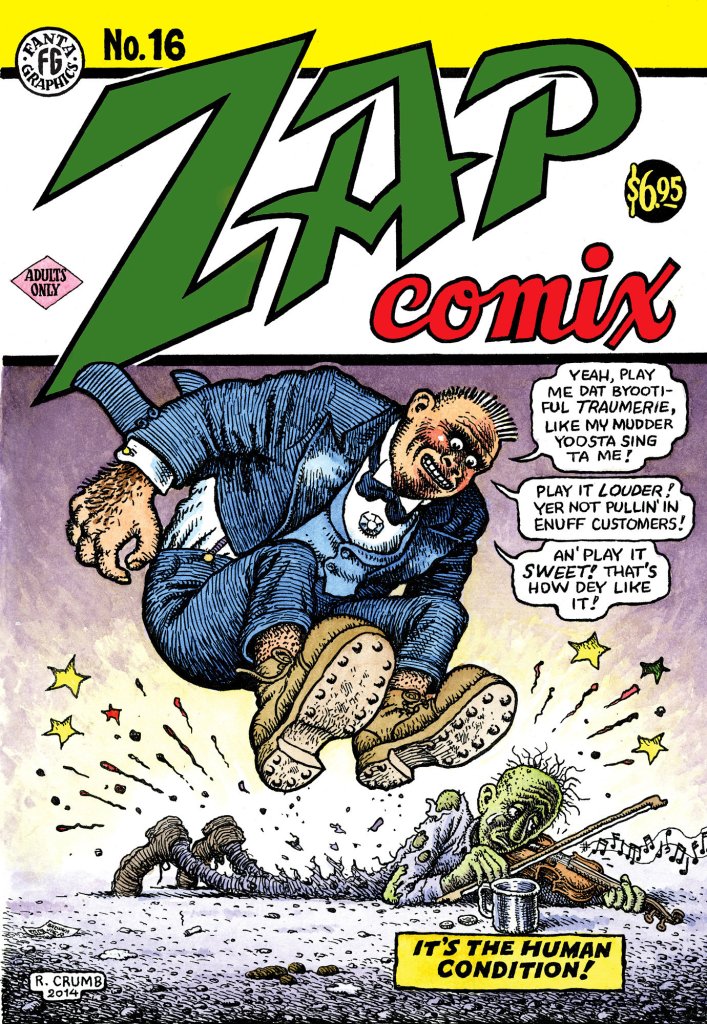
Nadel notes how Crumb’s drawings are deeply personal and sometimes disturbing because they capture the inner conflicts within Crumb’s life while tapping into the undercurrents of postwar America. Crumb’s work delves into the male id and its impulses exposing sexual obsession, neurosis, and human alienation. Crumb’s life story borders on a confessional and makes one confront their own obsessions. His comics delve into consumerism and conformity about race and gender with a biting satire that makes one realize the absurdity of American, if not all, human life. Nadel suggests Crumb’s work is an unfiltered chronical of the life he lived and lives.

Robert Crumb gained fame in the 1960s counterculture when Zap Comix was released in 1967.

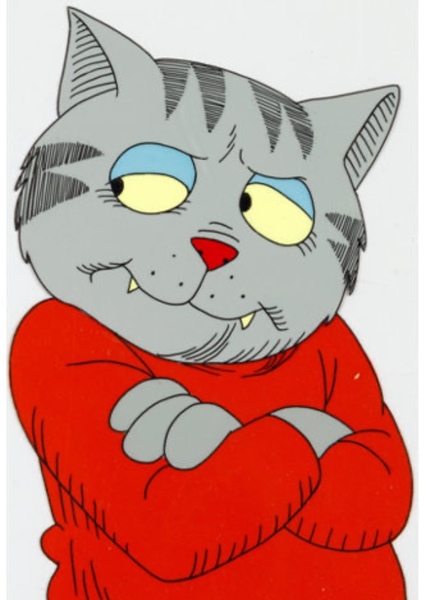
“Mr. Natural” and “Fritz the Cat” became cult icons illustrating the absurdity of life. Nadel suggests Crumb’s subjects are expressions of his working through his personal demons. Some of his images are racist and misogynistic which paints a picture of a troubled society. His subject matter ranges from popular music, counterculture, the history of comics, to graphic satire.

Nadel explains Crumb is married twice. His first marriage to Dana Morgan falls apart in part because of Crumb’s emotional volatility, but also because of the cultural upheaval of the 1960s. Nadel explains Morgan was the first woman Crumb had sex with which is complicated by Crumb’s confusion about sex. Crumb’s fame increases. He experiments with LSD. These dramatic changes in his life increase his discontent. There seems no single reason for the divorce. Crumb moves to San Franciso in 1967 to immerse himself in a counterculture and the comix scene.

Crumb meets Alaine Kominsky in 1972, and they marry in 1978. Their creative partnership blossoms with the creation of autobiographical comics that reveal the quirks, conflicts, and affections of their relationship. Their joint work is “Dirty Laundry Comics”. Ms. Kominsky dies in 2022.

Nadel notes that Crumb insisted on honesty when he agreed to have his biography written. Aline Kominsky is acknowledged as a stabilizing force in Crumb’s life. Crumb lived through America’s wars, the psychedelic age of the 60s and has now has reached the age of 81. Nadel explains much about Crumb’s turbulent life and how that turbulence shaped him and his art. Nadel offers a layered and empathetic portrait of R. Crumb, the ups and downs of his life, without excusing or condemning the beliefs, actions, or art of his long life.

Crumb’s behavior like jumping on the backs of women for piggyback rides and his racially charged imagery is uncritically reported.

Some of what Crumb illustrated in his art and what he did with his piggyback rides undoubtedly insults the public. In many ways, Crumb marginalizes society with his racist and misogynistic comics. Nadel reports Robert Crumb’s life and antics without criticism which seems appropriate because he is simply recounting a human beings’ life. Nadel does not act as a judge but as a reporter of a lived life.

Crumb’s parents were poor. He lived in poverty but overcame its limitations with the art of drawing that opened the world of commerce to him. From comics to greeting card drawings and back to comics, Crumb became a maven of the art of irreverent behavior.

DANGER WILL ROBINSON

Trump’s push to hugely increase government debt at the expense of the poor and middle class, along with a tariff war, look to some like paths toward an economic Armageddon.

Books of Interest
 Website: chetyarbrough.blog

On Tyranny (Twenty Lessons from the Twentieth Century)

Author: Timothy Snyder

Narrated By: Timothy Snyder

Timothy Snyder (Author, graduated from Brown University with a degree in history and political science, received a Doctor of Philosophy in modern history from the University of Oxford.)

“On Tyranny” makes one research Timothy Snyder’s education because of his allusion to the rise of Hitler and America’s rising authoritarianism in the 21st century. His short book “On Tyranny” is disconcerting. He infers Trump’s presidency is an early sign of American democracy’s deterioration. He recounts the rise of German complacency when Hitler came to power and Nazi’ support for victimization of Jews and invasion of Poland are the beginning of a plan to reorganize spheres of influence in Europe.

Snyder’s observation is undoubtedly to create a sense of moral urgency on the part of American listener/readers to do more than just observe what is happening in America. Not that it is about Jewish discrimination but about American government rounding up and deporting alleged illegal immigrants without due process and sending them to prisons in other countries. Snyder is a scholar who specialized in Eastern European totalitarianism which suggests he knows something about the precursors of authoritarianism.

It seems the comparison of Trump to Hitler is hyperbolic when one considers the dire financial condition of Germany in the late 1920s. However, Trump’s push to hugely increase government debt at the expense of the poor and middle class, along with a tariff war, look to some like paths toward an economic Armageddon. If the economy falters, would America fall into Germany’s past? One doubts that will happen, but with a President who believes his own lies and Americans who accept them gives listener/readers of “On Tyranny” a chill. The power of Snyder’s argument gains some credibility.

It seems with the history of the United States, federal government checks and balances, and the limited tenure of elected Presidents, a Nazification of America seems unlikely. However, the danger is there because Trump has strong support from his party and many Americans who voted for him who choose to ignore his lies.

WHO ARE YOU?

Greene explains self-awareness of introversion or extroversion is key to understanding one’s social limitations and blind spots in being a constructive part of society.

Books of Interest
 Website: chetyarbrough.blog

The Laws of Human Nature

Author: Robert Greene

Narrated By: Paul Michael & 1 more

Robert Greene (Author, with several NYT’s bestsellers addressing human nature, graduated with a degree in classical studies.)

“The Laws of Human Nature” is a tour deforce of what one learns in life about being a good manager. The difference between a technically excellent employee and a manager is that the first has skill in doing things while the second has skill in managing those who do things. Occasionally, one can be both, but as the complexity of life increases, the likelihood becomes rarer. Human nature revolves around behavior and one’s psychological characteristics. Greene argues there are fundamental laws of human nature that can enlighten listener/readers about themselves and others.

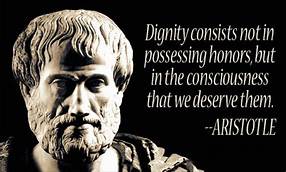
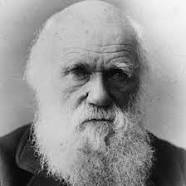
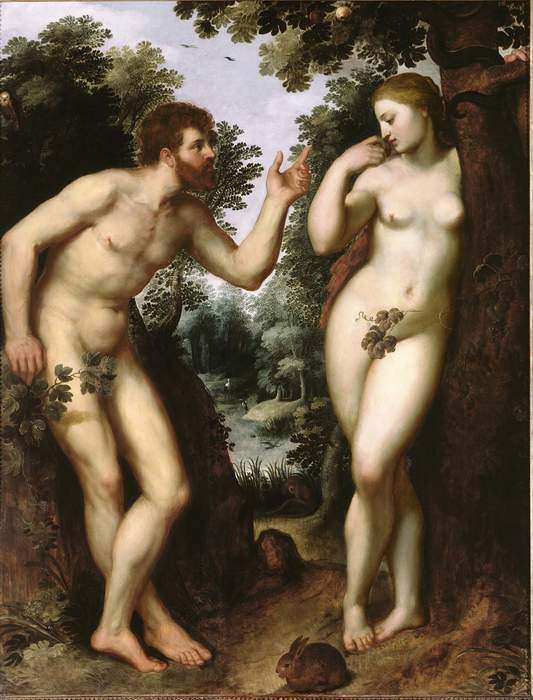
Aristotle’s, Hobbes’, Rousseau’s, and Darwin’s views of human nature have different perspectives. Aristotle believes human nature is teleological with a belief that we all have purpose that is revealed by reason and virtue. Hobbes believes humans are innately self-interested and capable of both good and bad behavior. Rousseau believes humans are inherently good but corrupted by society. Darwin believes humans evolve through natural selection and will do whatever is necessary to survive. Of the four perspectives, Aristotle seems the most idealistic while the other three account for human nature’s irrationality.

Greene suggests humans can be irrational, narcissistic, misleading, and sometimes repressive.

What one can draw from his book is how those characteristics exhibit and what one can do about it. The potential of irrationality exists in everyone. It can cause fear, envy, insecurity, and desire. Bias is at the heart of these emotions. He turns to ancient history to give the example of the war between Spartans and Greeks that may have been avoided if heightened emotions had not been aggravated by a plague in Greece and the death of Pericles who had a rational plan to avoid war. Greene suggests Augustus defeats Anthony to become ruler of Rome because of Anthony’s neglect of his duty as leader of Rome for the desire of the Egyptian Queen, Cleopatra. Greene notes irrationality is a universal characteristic of humanity. The anecdote is to calm one’s emotions, clearly understand what it is that you fear, and to mirror back that clear understanding to yourself and change your behavior.

One can see narcissism in themselves or others when one seeks admiration, overreacts to criticism, has no interest in others perspective, or manipulates others by ignoring or emotionally withdrawing attention.

Married people often do this with their significant other. Greene explains self-awareness, seeing others through their eyes, redirecting your energy to something more important, and being more disciplined can abate narcissism. He notes narcissism is not a flaw but a force that can be turned to good. The history of Oppenheimer, considered by some to be narcissistic, is noted as an example of someone who saw the big picture of life and the consequence of war. He came to understand something bigger than himself and successfully manages other scientists to create the first nuclear bomb. The contrary of a narcissist who could not see the big picture is the story of Howard Hughes who could not manage his father’s company or his entry into the film industry because he could not get things done through other people. He believed only he could handle the complexity of a film production and plane manufacturing company. No one could work under him because of his uncontrolled narcissism that interfered with others he hired to help him manage businesses bigger than one mind could control. His managers resigned because he would not allow them to do the job they were hired to do. Hughes failed as a movie producer and plane manufacturer because of his narcissism.

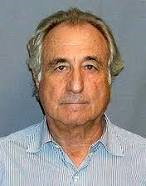
Bernie Madoff (Born 1938, died in Federal Medical Center in 2021)

History is festooned with misleading information by people who distort the truth in order to achieve their personal goals. Greene recalls the history of swindlers like Bernie Madoff that lied to his investors about investments that were Ponzi schemes that fed his investment company’s growth, not from honest investment in publicly traded stocks or business enterprises.

Stalin in Russia, is the penultimate example of a psychological characteristic of repression. One suspects the same is true of Putin. Even America’s President Trump could be characterized as a narcissist. He used federal power to investigate and punish political opponents. Trump politicized the civil service by conducting mass firings to replace employees that were loyal to his agenda. Justice Department’ independence has similarly been restructured. Trump suppresses dissent and free expression by cracking down on student protests, detained and deported not only illegal immigrants but U.S. citizens. He ended asylum protections and militarized crackdowns with the use of the National Guard and U.S. marines to aid ICE in deporting undocumented immigrants and quelling public opposition. All of these actions are examples of an increasingly repressive American President. There were similar arguments about Franklin Roosevelt in his early actions to rescue America from the pre-WWII’ depression.

Greene goes on to explore personality types that are a combination of extroversion and introversion characteristics.

He notes both characteristics have strengths and weaknesses. Extroverts generally have more social fluency, have a more charismatic presence and higher social visibility. They can also become subjects of envy or derision because of their high profile. Greene suggests they are more vulnerable to manipulation because their habits reveal too much about themselves. They become more susceptible to groupthink rather than individual judgement. On the other hand, introversion has equivalent but different strengths and weaknesses. Introverts have more control over themselves because they reveal less of themselves to others. They are naturally less likely to succumb to groupthink. On the other hand, they tend to misread socially valuable influences because of their isolated view of the world. They fail to offer their opinion because of fear of self-exposure and ridicule which diminishes their understanding of beneficial social norms.

Greene explains self-awareness of introversion or extroversion is key to understanding one’s social limitations and blind spots in being a constructive part of society. However, his analysis of “The Laws…” of human nature becomes tedious because it offers too many examples and views of biases and their anecdotes for most listener/readers to be patient enough to complete his book. Nevertheless, Greene’s first chapters are enlightening and worth one’s time.