MOST INTERESTING ESSAYS 12/4/25: THEORY & TRUTH, MEMORY & INTELLIGENCE, PSYCHIATRY, WRITING, EGYPT IN 2019, LIVE OR DIE, GARDEN OF EDEN, SOCIAL DYSFUNCTION, DEATH ROW, RIGHT & WRONG, FRANTZ FANON, TRUTHINESS, CONSPIRACY, LIBERALITY, LIFE IS LIQUID, BECOMING god-LIKE, TIPPING POINT, VANISHING WORLD
Murakami is one of the great writers of modern times. In “after the quake”, Murakami reduces the great and horrid loss of the many to the feelings of the “one”
Books of Interest Website: chetyarbrough.blog
“after the quake”
By: Haruki Murakami
Narrated By: Rupert Degas, Teresa Gallagher, Adam Sims
Haruki Murakami offers a series of short stories in “after the quake” that remind one of the frailties of human beings. Humans lie, steal, cheat and war against each in ways that exceed natural disasters. Murakami’s short stories are funny, sad, and insightful views of humanity that show we often foment our own disasters.
Each short story revolves around the social implications of the Kobe’ earthquake. Murakami cleverly weaves his stories to reflect on events that change one’s direction in life. The events can be as great as an earthquake, a war, or a singular lost love. The first is nature’s way; the second and third are humans’ way.
Human relationships are as unpredictable and destructive as natural disasters. The human’ Lushan rebellion in 8th century China is estimated to have killed 13 million people, the Mongol invasion in the 13th and 14th century 20 to 60 million, the Taiping rebellion in mid-19th century China 20-30 million, and two world wars in the 20th century at 83-107 million. This is without noting China’s famine that killed millions because of Mao’s mistakes in the Great Leap Forward, Stalin’s repression in Russia, and today’s wars in Ukraine and Gaza. Natural disasters are horrendous events, but human nature has murdered more than earthquakes, floods, volcanoes, and other natural disasters.
The cataclysmic events of nature affect the many, but Murakami shows scale means nothing in respect to the effect it has on the “one”. He cleverly shows how singular events can overwhelm one relationship as portentously as natural or man-made disasters can overwhelm all relationships.
Murakami is one of the great writers of modern times. In “after the quake”, Murakami reduces the great and horrid loss of the many to the feelings of the “one”. His stories show that a personal loss of an imaginary friend or a real love is as catastrophic to the one as a natural disaster or war is to the many.
Harmony and pragmatism undoubtedly remain important characteristics of Chinese society. Time will tell whether societal harmony can be maintained by an increasingly authoritarian leader.
Books of Interest Website: chetyarbrough.blog
The Chinese Looking Glass (The most illuminating book yet written on China and her enigmatic people.)
By: Dennis Bloodworth
Dennis Bloodworth (1919-2005) Author, journalist, British writer at The Observer, first British journalist allowed to visit China in 1955.
“The Chinese Looking Glass” is a whirlwind journey across the vast history of China by the first British writer allowed to visit China in 1955. It is a primer for a general understanding of China that was originally published in 1966 and updated in 1980. The author’s marriage to Liang Ching Ping adds credibility to his view of Chinese culture.
One reads Bloodworth’s book and is somewhat overwhelmed by its breadth. So many generations of Chinese culture are too much to cover in a 400+page book.
The author manages to give a broad understanding of a Chinese worldview that is shaped by Confucian and Taoist history, a collective identity that often conflicts with the Western culture of individualism. He notes Chinese traditions are based on filial piety (meaning duties, respect and devotion of children to their parents). Bloodworth notes, through many generations of Chinese culture, behavior and decision-making there is a focus on social harmony. Both Confucianism and Taoism play significant roles in shaping Chinese society.
Bloodworth notes Confucianism and Taoism shape Chinese society.
Piety, respect for hierarchy, education, and a focus on societal harmony were philosophical foundations of Chinese governance. Piety led governance toward strict rules and centralized authority. Historical figures like Confucius, Laozi, and Sun Tzu influenced Chinese culture and thought. The spiritual tradition of Buddhism reinforced the teaching of these cultural influencers. Buddhism emphasizes the suffering of life is caused by desire, and attachment. Buddhist teaching is that desire and attachment must be replaced by understanding and rejection of both through meditation and mindfulness.
Because democracy focuses on individual rights and freedoms, the ideals of collective harmony, hierarchical structure, and centralize authority make communism a better fit for Chinese culture.
Mao Zedong (1893-1976)
Mao unified China after decades of war and instability. Bloodworth suggests Mao Zedong had a nuanced impact on China.
However, Mao’s centralized power resulted in big economic mistakes like the famine of the Great Leap Forward that caused misleading food production reports meant to please the government when production was much less than what was needed to sustain life for Chinese citizens. With famine, the Cultural Revolution is unleashed, and China’s growth and stability were set back. Bloodworth had observed China’s governing always included pragmatism and adaptability to their drive for cultural harmony.
Though Bloodworth mentions Deng Xiaoping in the last chapters of his expanded edition of “The Chinese Looking Glass”, he does not foresee the opening of the Chinese economy and its rapid economic expansion.
The pragmatic realization that collectivization of farming led to misleading information about production compelled Deng to open agricultural production to a more market-driven incentive to preserve social stability. Deng was an authoritarian as is evidenced by his decision on the Tienanmen Square crises.
Though Bloodworth did not live to see the next iteration of China’s leadership, an element of recidivism enters with Xi’s control of the government.
Harmony and pragmatism undoubtedly remain important characteristics of Chinese society. Time will tell whether societal harmony can be maintained by an increasingly authoritarian leader.
One may question William’s characterization of Facebook’s “Careless People” as more like calculating self-interested managers than careless employees.
Books of Interest Website: chetyarbrough.blog
Careless People (A Cautionary of Power, Greed, and Lost Idealism)
By: Sarah Wynn-Williams
Narrated By: Sarah Wynn-Williams
Sarah Wynn-Williams (Author, Ex-Meta executive, presently barred from criticism of Meta, formally known as Facebook.)
As noted in the sub-title of “Careless People”, Meta (formerly known as Facebook) is criticized as an international influencer of society that has lost its sense of ethics, i.e. the ability to see the difference between right and wrong. Facebook originally intended to be a forum for the connection of people interested in sharing ideas, communicating with others, and building positive social connection. Instead, the author’s experience as a Facebook’ executive found that expansion, profit, and political influence became an unethical pursuit by the major shareholders (particularly Mark Zukerberg) and managers of the corporation. She argues leadership of Facebook recklessly pursued income, expansion, and political influence around the world with little ethical oversight.
New Zealand (The birthplace of Sarah Wynn-Williams)
Ms. Williams was born in New Zealand but went to work for Facebook and became a U.S. citizen. Her work at Facebook led to a promotion that made her the Director of Global Public Policy which provided opportunity to travel the world soliciting business for Facebook in other countries. Her experience informs listeners of what Meta’s corporate goal: “give people the power to build community and bring the world closer together” became something less as a result of careless management oversight.
Williams begins with a story of a harrowing trip to Myanmar, presumably after their revolution in 2021.
The military coup that ousted the democratically elected government appears to have just begun when Williams had an audience to pitch the Facebook platform to its military government. Just getting to the building where the meeting was to be held was a trial but her position as a representative of Facebook ended with her arrival at a headquarters building of the new regime. It is an interesting story because it shows the power of Facebook association in a country that just had a coup d’état that ended civilian rule. Millions of Myanmar citizens were displaced by widespread human rights abuses with civilian arrests and violence. One wonders what “giving people the power to build community” means in what became a military totalitarian state. (When visiting the Baltics last year, our guide expressed a love for Myanmar’s citizens and the country but was told by Myanmar friends it is unsafe to visit since the coup.)
Williams worked directly with Sheryl Sandberg, the COO of Facebook.
Later, Williams explains a meeting with a Japanese official where Sandberg and Williams go to promote interest in Facebook which had not been a part of the Japanese media environment. The involvement of Williams was primarily to support Sandberg’s pitch. Williams indicates Sandberg was quite complementary of Williams’ assistance after the meeting which gives context to their relationship. A subsequent description of Sandberg’s strong, sometimes harsh, personality and influence on Facebook employees is given by Williams. The Japan’ meeting was successful because Facebook entered the market in 2010. Its popularity is said to have declined with Instagram and LINE being the dominant platforms, but Facebook maintains a presence in the country.
Societies interconnectedness is a boon and bane for 21st century society.
The pandering of Zukerberg, Bezos, Musk, Cook, and Pichai to world governments is made suspect by William’s experience as an employee of Facebook. Media companies have become too big to fail and too ungovernable to manage. Even though the internet more intimately connects the world, the platforms of today’s giants of information create a forum for control and conflict rather than a place to encourage social comity.
Robert Kaplan (Author of “Waste Land”.)
As noted by Robert Kaplan in “Waste Land”, the growing decline of Russia’s, China’s and America’s governments has been increased with world interconnectedness. It appears from William’s experience at Facebook, there is some truth in Kaplan’s observation. Kaplan’s solution is to dismantle these giants and encourage competition to defray their principal stockholder’s influence.
As the Turkish saying goes, “a fish rots from the head down”. Williams frequent contact with Mark Zuckerberg gives weight to her view of Facebook culture. Mr. Zuckerberg seems to carelessly lead Meta into the arena of politics by promoting Facebook’s media clout to political parties because it raises revenues with political advertising and influences government policy on media’ regulation. Frighteningly, Williams notes Zuckerberg considers running for President with the power of Meta to support his candidacy. One may question William’s characterization of Facebook’s “Careless People” as more like calculating self-interested managers than careless employees.
Trump’s effort to make peace is important. Putin will gain a pyrrhic victory, and many Ukrainians will suffer the same consequence as the Baltic citizens who were victimized by Stalin. It is likely that the price of peace is going to be the lives of Ukrainians who come under Putin’s rule. The only solace is that Putin, like Stalin, is near the end of his rule.
Books of Interest Website: chetyarbrough.blog
The Rise and Fall of the Third Reich (A History of Nazi Germany)
By: William L. Shirer
Narrated By: Grover Gardener
In thinking about Putin’s invasion of Ukraine, it seems prudent to revisit William Shirer’s studied history of Nazi Germany and the beginnings of WWII.
DostoevskyTolstoyGoetheFRIEDRICH WILHELM NIETZSCHE (1844-1900 DIED AT AGE 55)
Reviewing the literature and history of Russia and Germany, one wonders if there are parallels between Hitler’s invasion of Poland and Putin’s invasion of Ukraine. Literature suggests few cultural parallels. Having read Dostoevsky and Tolstoy, one can hardly compare their themes of societal suffering and redemption to Kant and Nietzsche’s themes of individualism or Mein Kamph’s iteration of survival of the fittest. In the history of the Czars of Russia, society and class were of the greatest importance while in Germany, Goethe’s Faust and Hesse’s Siddhartha–the focus was on individualism–not the general condition of society.
It seems Putin is not like Hitler in his aim to acquire other countries. Putin is interested in expanding Russia’s territory to return to a Stalinist style of communism. Both Hitler and Putin are deluded but in different ways. William Shirer characterizes Hitler as ambitious, and fanatic but focused on gaining personal power through German conquest of other countries. Putin’s invasion of Ukraine is to return Russia to a Stalinist U.S.S.R., a nationalist power. Both are set on invading other countries, but Shirer shows Hitler’s desire is for personal power while Putin is more interested in nation-state power.
One must ask oneself, if there is a motivational difference, so what? The consequences to countries being invaded is the same.
Yes, the consequence to an invaded country is the same regardless of the motivation of the invader. Hearing the atrocity of Russian oppression is as though it happened yesterday when one visits the Baltic countries and talks to people who survived Stalin’s control of their countries. There is a palpable fear one hears from Baltic citizens when the invasion of Ukraine by Russia is discussed. The fear is in the possibility of the Baltics being next.
President Trump is attempting to quell the war between Russia and Ukraine, but the cost of peace looks like it will require appeasement at the expense of Ukrainian citizens.
The question is–will appeasement stop further encroachment by Russia on other former U.S.S.R. countries? Putin is 72 years old. Hitler was 45 years old when he became the Führer of Germany. It seems unlikely that the next leader of Russia will follow Putin’s lead in view of Russia’s atrocities in Ukraine and the history of former citizens, like those of the Baltics in Stalin’s U.S.S.R.
The invasion of Ukraine is not like Hitler’s invasion of Poland except in the tragedy of death of innocents.
There is little reason to believe Ukraine is a domino, as was the mistaken American belief in Vietnam by the Kennedy Administration. As all who have read this blog, I am not a fan of Donald Trump. However, in this realpolitik world, Trump’s effort to make peace is important. Putin will gain a pyrrhic victory, and many Ukrainians will suffer the same consequence as the Baltic citizens who were victimized by Stalin. It is likely that the price of peace is going to be the lives of Ukrainians who come under Putin’s rule. The only solace is that Putin, like Stalin, is near the end of his rule.
Listening to the examples of Professor Greenberg’s views on music make this audiobook an immense pleasure. It is a long audiobook but one who takes long walks will be highly entertained by the Professor’s insight to music of the world.
Books of Interest Website: chetyarbrough.
Great Courses-How to Listen to and Understand Great Music, 3rd Edition (A Cultural History)
By: Robert Greenberg
Narrated By: Professor Greenberg
Robert Greenberg (Great Courses Professor, historian, composer, pianist, speaker, and author.)
This is a history of Great Music by a remarkable professor who fully utilizes the value of audiobooks in his teaching. Though this is a long audiobook, every lecture is a pleasure for a listener who knows little about the history or styles of music. Professor Greenberg’s enthusiasm and pointed opinions about music and its evolution are informative, clearly explained, and fabulously entertaining, particularly for non-musicians.
The professor’s storytelling is highly entertaining. He reviews the history of music anecdotally, interspersed with musical examples (some of which are his own piano playing) and precise definitions of words used in music that offer clarity and entertainment to his audience.
The span of history which Greenberg covers is from ancient music traditions to the progressive development of Western music. He helps one understand what to listen for when attending musical presentations. He spans Renaissance, Baroque, Classical, Romantic, and 20th-century music. From Bach’s Baroque musical production to Shostakovich’s politically tinged symphonies, one learns how music is exemplified and amplified by history.
Greenberg begins with ancient Greek and Roman music.
He explains the role of music in Greek tragedies and offers examples of Gregorian chant and medieval polyphony (two or more independent melodies that are interconnected). He notes Bach’s fugues as polyphonic hallmarks of Western classical music that rose in the Renaissance and Baroque periods.
Johann Sebastian Bach (1685-1750, German composer and musician of the late Baroque period.)
Greenberg provides examples of a fugue and concerto. A fugue is a musical composition with a theme that is interwoven with overlapping voices. He offers the example of Bach’s music.
Antonio Vivaldi (1678-1741. Italian composer, virtuoso violinist of Baroque music.)
In contrast, concerto is a solo instrument (or a group of soloists) offering an orchestral presentation infused with dialogue. The Four Seasons by Vivaldi would be an example but the fascinating point is that the dialogue is in music, i.e. no words, but a clear representation of the seasons in an abstract way. You hear the sounds of spring, summer, fall, and winter.
Greenberg offers definitions of musical terms.
Greenberg also defines a number of musical concepts and terms:
Melody: A sequence of musical notes that are perceived as a single entity, often referred to as the “tune.”
Harmony: The combination of different musical notes played or sung simultaneously to produce a pleasing sound.
Polyphony: Multiple independent melodies played or sung simultaneously, creating a complex and interwoven texture.
Sonata Form: A musical structure commonly used in the first movements of symphonies and sonatas, typically consisting of an exposition, development, and recapitulation.
The Professor notes the fundamental difference between German and Italian classical music.
The Italians created opera to illustrate the emotions of life through operatic story telling. Germans highlight intellectual depth and structural complexity. Greenberg notes Italians celebrate the melodic beauty and operatic flair of music. This difference is exemplified by the Catholic church’s sale of indulgences.
Martin Luther (1483-1546)
Greenberg recounts the history of the Reformation. He notes the impact of Martin Luther (1483-1546), the key German figure in the Protestant Reformation who posted the 95 Thesis that criticizes the Catholic Church’s practice of selling indulgences for sinners to get into heaven. The 95 Thesis was a direct challenge to the authority of the Pope to use indulgences to raise money for the Catholic Chruch. Luther believed only faith, an emotionally grounded intellectual belief, could pave one’s way to heaven.
German OperaItalian Opera
Rather than an Italian Rossini or Puccini opera, German operas have complex narratives with composers like Wagner and Straus who are exploring ideas like destiny, heroism, and the human condition. Both German and Italian operas engage emotions, but German operas tend to explore philosophical, mythological, or psychological themes while Italians focus on heart-wrenching human emotions.
Listening to the examples of Professor Greenberg’s views on music make this audiobook an immense pleasure. It is a long audiobook but one who takes long walks will be highly entertained by the Professor’s insight to music of the world.
Today, some look at the American government with concern. Are we at a tipping point in America?
Books of Interest Website: chetyarbrough.
Revenge of the Tipping Point (Overstories, Superspreaders, and the Rise of Social Engineering)
By: Malcolm Gladwell
Narrated By: Malcolm Gladwell
Malcolm Gladwell (Canadian Author, journalist, public speaker, staff writer for The New Yorker.)
Malcolm Gladwell returns to the subject of “…Tipping Point” that originally explored how small actions or events can trigger significant changes in society. “Revenge of the Tipping Point” provides several stories of tipping points that have had vengeful consequences for society.
One of the most consequential tipping point stories is about America’s attempt to engineer social equality.
America is struggling with social diversity. Gladwell infers social diversity is a great strength in American society. However, our government and domestic leaders have legislated discrimination, fought wars, murdered innocents, and promoted ethnic separation throughout its history as a nation. Despite our most famous statement of American value, i.e. “E pluribus unum” (Out of many, one), America has failed.
The value of social diversity is it allows Americans to achieve great things despite inequality that exists in America.
Gladwell tells the story of a community in Florida that prides itself on being an exemplar of American society because of its strong educational values, cultural pride, community support, and economic mobility. The people who live in this community focus on preserving and celebrating their ethnic heritage, traditions, and identity. They assemble an island of cultural sameness that overtly and covertly resists change. Those who are not of the right ethnic heritage or race who may have the same drive for high educational achievement, community participation, and relative wealth are not welcome. The tipping point revenge Gladwell notes is in the stress this community places on its children to excel academically and conform to expectation. Gladwell notes student suicides are disproportionately high because of the social pressure children feel to conform. The social pressure for conformity and educational expectation overwhelms some who live in the community. Some parents choose to send their children outside the community school system to allay the social pressure they feel.
Gladwell notes the 2023 Supreme Court rejection of college acceptance based on diversity. The Court denies the right of colleges to recruit students based on ethnicity or race.
On the face of it, that seems an unfair decision but Gladwell notes that the schools being challenged on their diversity policies refuse to explain how they determine who should be admitted based on a percentage figure of fair representation. Gladwell notes the primary criteria for college selection has little to do with a drive for diversity but are based on revenue producing university sports programs and donor money. Minority preference admissions are based on income potential for the university, not social diversity.
The Supreme Court ruling does not preclude consideration of an applicant’s personal life experience, but Gladwell notes it nevertheless has nothing to do with a drive for equality or diversity.
Unfortunately, the Supreme Court decision may cause a reevaluation of outreach to minorities who have been denied equal opportunity for personal success. Gladwell’s ironic point is that American diversity in the pre-Supreme Court decision was never based on creating diversity but on raising money for university foundations.
Gladwell explains the drug crises is more of an American problem than for most other nations of the world.
One asks oneself, what makes America the center of opioid addiction and death.
From the greed of drug dealers, medicine manufacturers and doctors who prescribe opioids, America has the highest opioid deaths in the world. Though Estonia has the highest opioid death’s per capita because of its smaller population, the manufacturers and doctor-prescribed synthetic opioids have greatly increased American’s deaths. Purdue Pharma aggressively marketed OxyContin with the owners, the Sackler family, reaching a multibillion-dollar settlement. Many doctors like Dr. Hsiu-Ying Tseng and Dr. Nelson Onaro have been prosecuted for overprescribing opioids or running “pill mills” that provided opioids to the public.
Gladwell suggests it is the superspreaders, worldwide legal and illegal manufacturers and sellers of opioids, and incompetent/greedy medical prescribers as tipping point causes of America’s addiction crises. However, he argues there are environmental and systemic societal factors that create a receptive user base in America. Economic stability is unattainable for many Americans because of economic, racial, and ethnic differences. He argues small actions and decisions lead to widespread consequences. Every human being has a tipping point based on their experience in the world. The ideals of America conflict with its reality. The pain of that realization leads some to relief through drugs, a step-by-step addiction that can lead to death.
Berlin Memorial to the Holocaust.
There are other tipping points Gladwell explains. One that resonates with my life experience is the ignorance many have of the history of the world. Some would argue, Americans became aware of the Holocaust after the end of the war in 1945. However, Gladwell argues most Americans remained ignorant of its reality until 1978 following the release of the NBC miniseries “Holocaust”. Until then, Gladwell argues there was little broad cultural understanding of its atrocity. Having graduated from high school in 1965, much of what Gladwell notes about ignorance of the Holocaust rings loudly and clearly.
I doubt that many were completely ignorant of the Holocaust, but its brutal reality was not taught in the high school I attended in the 60s. Having visited Auschwitz and viewed its gas chamber, piles of discarded shoes and clothes, and pictures of murdered human beings, the truth and guilt that one feels for being a part of humanity is overwhelming.
We have an FBI director that wants to have men and women of the agency coordinate training with the UFC (Ultimate Fighting Championship), headquartered in Las Vegas. We have a President who publicly chastises Ukraine’s President and suggests they caused Russia’s invasion of their country. We have a President that insists America is being taken advantage of by lower cost production of product of other countries and that tariffs are a way to balance the American budget. We have a Palestinian protester at Columbia University who is arrested for social disruption. The head of the Department of Health Services orders lie detector tests for employees to find any leaks about the current Administration’s actions.

Tariffs have historically been found to damage America’s economy. Is the FBI a military force that needs to be schooled in hand-to-hand combat? One need only read Adam Smith about free trade to understand the fallacy of Tariffs. Have we forgotten the invasions of Austria and Poland by Germany at the beginnings of WWII? Is free speech a crime because of tents that disrupt college life? Should we use lie detector tests to determine the loyalty of employees?
Are these incidents a tipping point for American Democracy to turn into something different and demonstrably less than the founding principles of American government?
In planning a trip to Japan this year, it seems prudent to learn more about the history of Japan.
Books of Interest Website: chetyarbrough.
Great Courses-Understanding Japan (A Cultural History)
By: Mark J. Ravina
Narrated By: Mark J. Ravina
Mark Ravina (Scholar of Japanese history at the University of Texas at Austin)
Professor Ravina’s lectures are a little too heavy on Japan’s ancient history but offers some interesting opinion about the rise of the Samurai, the evolution of women’s roles in Japan, Emperor Hirohito and his role in WWII, the democratization of Japan after WWII, and the cause of Japan’s current economic stagnation.
As is well known, the Samurai were a warrior class in Japan. Their role in Japanese history grows between 794 and 1185.
They began as private armies for noble families with estates in Japan. They became a force in Japanese politics and have had an enduring effect on Japanese society. They evolved after 1185 into a ruling military government called shogun that exhibited political influence through 1333, emphasizing Bushido or what is defined as a strict code of loyalty, honor, and discipline. That discipline extended to ritual suicide in defeat or disgrace to preserve one’s honor. Zen Buddhism entered into the Samuria culture, exhibiting a time of peace under the Tokugawa shogunate that lasted until 1868. After 1868, the Samurai era came to an end, but its cultural influence remains in a modernized military that adheres to qualities of discipline, honor, and resilience.
Traditional Japanese Woman.
The role of women in Japan has evolved from great influence and freedom for the well-to-do to a life of restricted domesticity.
During the Samurai era, the influence of women declined and became more restricted. The rise of Confucian ideals emphasized male dominance with women being relegated to domestic duty. Women turned to art, calligraphy, and religion as their societal influence decreased. In the Meiji Era (1868-1912) women’s education somewhat improved and they began to participate in political movements like voting and equal rights. Finally, after WWII, a new constitution granted women equal rights like the right to vote and enter the workforce. However, like America, traditional gender roles persisted. In today’s Japan, like most of the world, equal rights remain a battle for women.
Hirohito is the 124th Emperor of Japan.
He reigned from 1926 to 1989. Professor Ravina notes that a question is raised about whether the emperor was a follower or leader in Japan’s role in WWII. Ravina argues history showed Hirohito’s role was as a leader. In defeat, Hirohito renounced his divine status to become a constitutional monarch under U.S. occupation. Hirohito, as the crown prince of Japan, strengthened Japan’s diplomatic ties on the world stage. He was instrumental in scientific research in marine biology. He emphasized Japan’s drive to become an industrial nation and player in international trade. He militarized Japan in preparation for war and territorial expansion. He authorized invasion of Manchuria in 1931 to establish it as a puppet of Japan. Hirohito aids the American occupation, after WWII, to de-militarize and re-industrialize Japan.
With creation of a new constitution for Japan in 1947, Japan became a constitutional monarchy that made the emperor a symbolic figurehead, and guaranteed freedom of speech, religion, and assembly.
The constitution formally denounced war as a means of settling disputes. Land reform redistributed agricultural production to tenant farmers that reduced the power of wealthy landlords and promoted economic equality in rural Japan. Women’s rights were codified to allow voting and participation in politics. The constitution guaranteed equality but, like the rest of the world, culture trumped reality. Japan’s military was reorganized as a defensive force for national security. War crimes trials convicted Hideki Tojo, Iwane Matsui, Hei taro Kimura, Kenji Doihara, and Koki Hirota and sentenced them to death. In total 17 leaders were executed, and 16 others were imprisoned.
Free-market economy.
The democratization of Japan entailed economic reforms that broke up large industrial conglomerates to promote a free-market economy and reduce economic monopolies. However, the culture of Japan replaced the industrial conglomerates with networks of interlinked companies that operated cooperatively in ways that reduced competition in pursuit of financial stability. The education system was reformed to promote democratic values, and equal access to education for all citizens.
A free press was encouraged to foster transparency and accountability.
The results allowed Japan to rapidly improve their industrial productivity. That productivity was defined and improved by the teachings of W. Edwards Deming, a statistician and quality-control expert in the 1950s. His contributions led to the Deming Prize in 1951, an annual award recognizing excellence in quality management. (This is a reminder of Peter Drucker and his monumental contribution to business practices in the United States.)
In Ravina’s final lectures, he addresses the economic stagnation that has overtaken modern society in Japan.
It began in the 1990s. A sharp decline in asset prices wiped out wealth and triggered a banking crisis. Banks had made too many bad loans that became non-performing. Deflation ensued with falling prices that discouraged spending and slowed economic growth. Company profits declined. The demographics of Japan reduced the size of the work force because of an aging population and declining births. One suspects this demographic change is further burdened by ethnic identity that mitigates against immigration.
Japan’s consumption tax increases in 1997 impeded recovery.
The close ties between government, banks, and corporations resist reforms. And, as is true in America, global competition from other countries with lower cost labor eroded international trade.
Today is a time for Americans to look at their motivations to act in ways that diminish human flourishing and happiness. They need to decide whether they are choosing to be evil and act out of malice to do evil things.
Books of Interest Website: chetyarbrough.blog
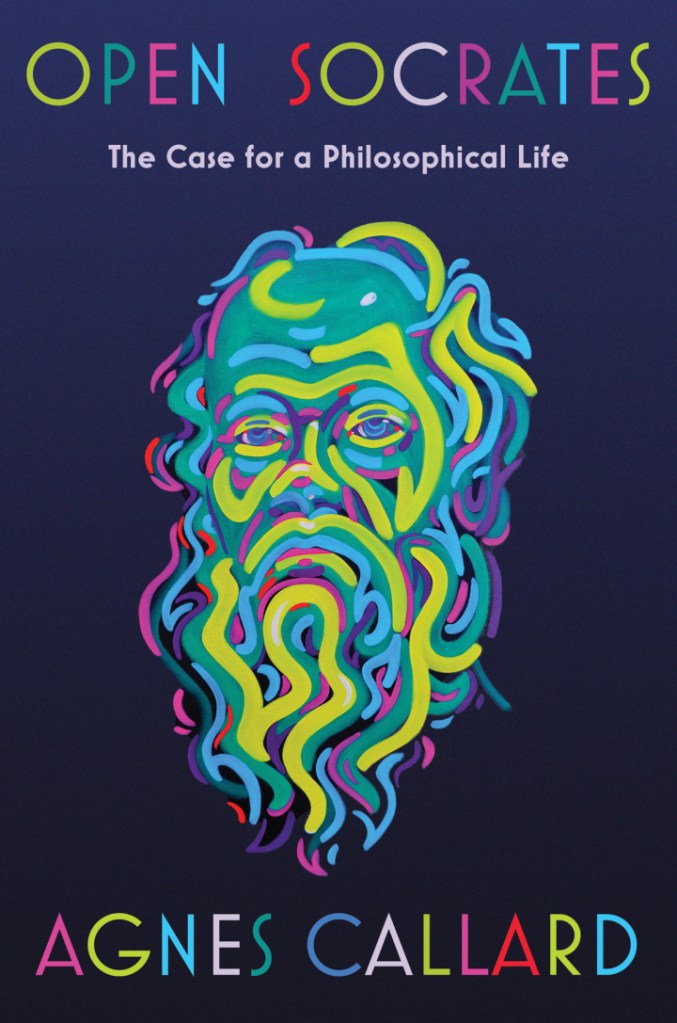
Open Socrates (The Case for a Philosophical Life)
By: Agnes Callard
Narrated By: Agnes Callard
Agnes Callard (Author, American philosopher, associate professor of philosophy at the University of Chicago.)
“Open Socrates” is not an easy listen but offers insight to the philosophy of Socrates as perceived by a tenured Philosophy professor at the University of Chicago.One of Socrates famous sayings is “Οἶδα τι οὐδὲν οἶδα”, “I know something that I know nothing”. The daunting meaning of the phrase is explained by Callard as something that is found through conversational engagement with others. Socrates believed what truth there is in the world is revealed through public engagement which is difficult for introverts because we fear having our ignorance exposed.
Callard notes that Socrates is an interrogator who elicits others to understand the meaning of human life.
There is a human desire to have meaning in our lives, but we don’t know where to begin or what questions to ask. Callard notes how Tolstoy is contemplating suicide despite his great fame and success as a writer because he does not believe there is any meaning to his life. Callard argues Socrates would say Tolstoy fails to ask questions in conversation with others that would offer the answer he seeks. As a listener/reader one might understand Tolstoy’s reluctance to ask others for their opinion because it exposes his vulnerability. Collard argues one must be willing to admit their errors to get to meaningful conversations with others about what they are discussing. However, few have the strength of character to expose themselves in a way that will continue further conversation.
Collard is preparing listeners for an understanding of the Socratic method, a cooperative dialogue, i.e. asking and answering questions to make one think about underlying assumptions and ideas to uncover inconsistencies to try to discover truth.
One wonders in this exercise, if Socrates is pursuing understanding or building a case to undermine human understanding. The result of a dialog with Socrates seems at best a pursuit of knowledge without finding a definitive answer. At times it seems the Socratic method only reveals the truth of human ignorance.
Collard notes that sophists as reflected in the Platonic and Aristotelian writings about Socrates were often incensed by the Socratic method because Socrates’ interrogations often made them look ignorant and uninformed. However, Socrates offers some definitions of important human characteristics like virtue and knowledge that are as relevant today as they were in ancient times.
Socrates defines virtue as a form of knowledge of right and wrong and those that use that knowledge will act virtuously.
Collard notes Alcibiades who lived in the time of Socrates. He was relentlessly interrogated by Socrates in an effort to elicit a better understanding of himself as Alcibiades, a politician and leader. Alcibiades made many political enemies because of shifting allegiances and political actions. He betrayed Athens in their fight with Sparta. After the fall of Athens, he is considered a threat to its new rulers.
Alcibiades (450BC-404BC, died at age 45 or 46, Athenian statesman and general.)
Alcibiades is known for his ambition, desire for power, and hedonistic lifestyle. He came into conflict with Socrates over belief in the values of wisdom and virtue. Though Alcibiades is noted in Plato’s “Symposium” to have admired and respected, Socrates, Collard notes he fundamentally disagreed with much of what Socrates reveals to him as his lack of wisdom and virtue. Alcibiades lacked self-discipline and moral integrity.
Socrates defines good as that which brings about human flourishing and happiness for one to live a fulfilling life.
Socrates argues evil is based on ignorance that compels human beings to act out of malice to do evil things.
Today is a time for Americans to look at their motivations to act in ways that diminish human flourishing and happiness. They need to decide whether they are choosing to be evil and act out of malice to do evil things.
Whether an idealist or humanist, the historical truth is that rising authoritarians believe power is all that matters. Today, the world seems at the threshold of authoritarianism.
Books of Interest Website: chetyarbrough.blog
Bronshtein in the Bronx
By: Robert Littell
Narrated By: Adam Grupper
Robert Littell (American author, former journalist in France.)
Robert Littell researches and imagines the 10 days of Leon Trotsky’s visit to New York City in 1917, just before the Russian revolution. His story offers humanizing and demeaning aspects of Trotsky’s personal and political life as a revolutionary.
Lev Davidovich Bronstein aka Leon Trotsky (1879-1940, Russian revolutionary, politician, political theorist, revolutionary military leader.)
Littell explains Trotsky travels with his two young sons and a female companion (the mother of their two boys) to New York. His first wife is exiled in Siberia for helping him spread leaflets about terrible factory conditions in Czarist Russia. Trotsky escaped to England while leaving his first wife and their two young girls in Siberia. (Trotsky divorces his first wife and marries the woman that Littel calls his airplane companion, either before or after the trip to New York. This is not made clear in Littell’s story.)
Littell explains Trotsky is a kind of celebrity in New York because of his association with socialist beliefs and his involvement in the failed 1905 Russian Revolution.
Trotsky is in his early twenties when he arrives in New York. Littell characterizes Trotsky as a libertine by introducing a female reporter in New York who becomes his lover. Littell reinforces that libertinism at the end of his story by suggesting Trotsky and Frida Kahlo had an affair while his second wife and he were exiled in Mexico.
Aside from Trotsky’s picadilloes, Littell shows how committed Trotsky was to his belief in Marxism and the plight of the working poor.
Trotsky gave several speeches that appealed to New York laborers and their families. An interesting sidelight is appended to Littell’s story when a Jewish industrialist meets with Trotsky after the 1917 revolution in Russia. Naturally, Trotsky is anxious to return to support Lenin and the Bolsheviks in the revolution. However, Trotsky is broke and doesn’t have the money to return to Russia. The industrialist offers an envelope with the money needed for the trip. Neither the industrialist nor Trotsky are believers in the Jewish faith but believe in the power of socialism and its benefit to society.
The political point being made by Littell is that the ideal of communism supersedes religious beliefs.
Trotsky is Jewish but not a believer in God. He is a political idealist. Littell notes Trotsky becomes a military leader in the communist movement. Littell infers Trotsky’s idealism gets in the way of humanism when he orders one in ten prisoners be shot for their opposition to the communist revolution. This is undoubtedly an apocryphal story but a way of explaining how a committed idealist can become a murderous tyrant.
Littell ends his story with a brief and somewhat inaccurate history of the Trotsky’ children. The two girls with his first wife died before they were 30. Zinada had mental health issues and died by suicide in 1933. Nina died at age 26 without any detailed information about her cause of death.
Rather than two boys noted in Littell’s story of the trip to New York, one was a girl named Zinaida. Zinaida, like her half-sister, died by suicide at age 32. Lev, born in 1906, is believed to have been poisoned by Stalinist agents in 1938. As some know, Trotsky was murdered by Stalin’s agents in Mexico City. In contrast to his children, Trotsky, the political idealist, is murdered as an exile at the age of 60. All-in-all, a tragic family history.
Whether an idealist or humanist, the historical truth is that rising authoritarians believe power is all that matters. Today, the world seems at the threshold of authoritarianism.
Trump is threatening government employees with being fired for doing their job and Congress for being the third branch of the American government.
Personal Commentary Website: chetyarbrough.blog
Political Grandstanding
By: Chet Yarbrough
Those who have read book reviews in this blog know some of my political beliefs. The more I read, listen to, and review books written by others, the more I know I do not know what is true and not true. We all get trapped in our own world of experience, belief, and understanding. With concern over that personal trap, this personal opinion is written.
America’s current President is a man of inherited wealth and privilege.
Trump’s popularity comes from attracting attention, impressing followers with strong public stances on issues of which he has little understanding or willingness to educate himself about. His focus is on self-aggrandizement with hyperbolic misrepresentations of facts that appeal to those wishing for definitive answers to multifaceted social issues.
LYNDON JOHNSON (36TH PRESIDENT OF THE UNITED STATES)RICHARD NIXON (37TH PRESIDENT OF THE UNITED STATES)RONALD REAGAN (40TH PRESIDENT OF THE UNITED STATES)RONALD REAGAN (40TH PRESIDENT OF THE UNITED STATES)GEORGE WALKER BUSH (43RD PRES. OF THE UNITED STATES)BARACK OBAMA (44TH PRES. OF THE UNITED STATES)
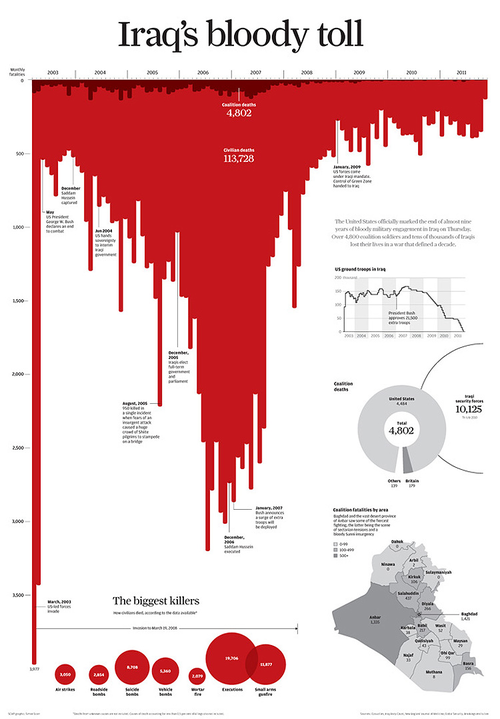
Trump is not the only elected representative or President to oversimplify issues to appeal to voters. Johnson’s war on poverty was used to justify policies that ineffectively addressed needs of the poor. Nixon’s “Southern Strategy” used coded language and policies that indirectly targeted African Americans. Reagan’s “War on Drugs” disproportionately affected minority communities and contributed to mass incarceration. George W. Bush emphasized the threat of weapons of mass destruction (WMD’s) to justify invasion of Iraq. Obama’s red line rhetoric threatened commitment to military intervention, which never happened when lethal gas was used to kill Syrian citizens. Trump’s rhetoric on immigration inferred most immigrants were criminals and a threat to national security. In all of these examples the common denominator is, at worst a lie or at best, a misrepresentation of truth to gain public support.
So, what is the difference? Trump does not care about the impact of his lies.
Trump focuses on self-aggrandizement to promote himself as powerful and important. He is a school-yard bully who scared banks and subcontractors with the fear of handing a financially bankrupt casino back to the bank, and who threatened subcontractors’ pay who worked for him.
Now, Trump is threatening government employees with being fired for doing their job and Congress for being the third branch of the American government. In the end, Trump is threatening the American people who either did or did not vote for him.