PERSONAL IDENTITY

Susan Faludi concludes one’s personal identity is not fixed but changes based on our parents’ influence and life experience.

Books of Interest
 Website: chetyarbrough.blog

In the Darkroom 

Author: Susan Faludi

Narrated By: Laurel Lefkow

Susan Charlotte Faludi (Author, American feminist, and journalist. Received the Kirkus Prise for “In the Darkroom” in 2016.)

“In the Darkroom” is an interesting exploration of Susan Faludi’s remembrance of her father. Every parent who has a child thinks about what their influence is or will be in their children’s life and memory. Faludi’s memoir shows parents have an immense influence on who our children become.

Steven Faludi, Susan’s father, passed away on May 14th, 2015.

Faludi shows her father as a chameleon who refuses to be identified as one thing or another.

Susan Faludi’s father was Steven Faludi, a Holocaust survivor who made his living as a professional photographer. “In the Darkroom” Susan Faludi explains her father chose to become a woman at the age of 76 by undergoing sex reassignment surgery in Thailand. Her father became Stefánie Faludi living in Hungary. As an author, Susan recalls her childhood and the volatile relationship her father had with her mother. Steven Faludi was a domineering husband and father who is eventually divorced by Susan’s mother. She recalls a violent incident after the divorce where Steven crashes through their front door to stab her mother’s presumed boyfriend. He is arrested but manages to turn the attack into a rescue of his ex-wife from an intruder to avoid criminal charges.

Despite Steven Faludi’s survival from the Holocaust, he aligned himself with right-wing nationalist politics when he returned to Hungary.

Hungary had a reputation for anti-Semitism and anti-LGBTQ beliefs. Surprisingly, he became xenophobic and anti-Semitic despite being Jewish. Faludi suggests her father may have rejected his Jewish identity as a way of distancing himself from what he had been through. Like his decision to become a woman, he recreated himself. His irrational fears may have made him dislike people from other countries, cultures, or ethnicities. Susan Faludi believes it is his way to defend his self-identity from the Holocaust’ trauma, shame, and loss of people he knew, loved, or cared about. It is impossible to comprehend what it must have been like to survive the Holocaust. Anyone who has visited Auschwitz or a concentration camp site understands how unbelievably horrible that experience must have been. On the other hand, Ms. Faludi interviews grade school friends of her father before the war and notes Steven Faludi was a difficult student with which to be friends.

Susan Faludi is considered among the top 20 influential modern feminist theorists.

Not surprisingly, Susan Faludi becomes a feminist with gender identity being an important experience in her family’s life. She uses her journalistic talent to look at her father’s past and her personal experience. Her memoir looks into the nature of personal identity, how our identity is made, and what we do with it. Not surprisingly, much of who we become is from genetic inheritance and interaction with our parents. Faludi is an investigative journalist which drives her to dig into the details of her family’s past to better understand herself. Faludi’s father is shown to be abusive, controlling, and emotionally distant husband and father, a characteristic not uncommon in this patriarchal world.

“In the Darkroom” is an ironic title to Faludi’s book because much of one’s family life takes place in the “…Darkroom” of one’s mind.

Does one’s identity come from what you choose or is it a consequence of your experience as a child born into a family that is either nurturing or neglectful? Her memoir offers no formulaic answer. She suggests close examination of our family childhood reveals we are witnesses to the strengths and weaknesses of our parents. However, as witnesses we live in a “…Darkroom” of the mind that obscures any truth that explains how children are influenced by parental relationship.

We are not puppets of our parents, but neither are we free.

We choose to become ourselves through acceptance or rejection of up and down experience with parents but that is not the only experience that influences our lives. As we grow, we meet others who impact and change our views of life. Faludi explains she initially rejected her father because of his violence, abuse, and distant behavior but as she learned of his gender confusion and transition, she recognized her father’s pain and reassessed her relationship with him. Our parents experience and growth to adulthood have the same ups and downs of life that every human being experiences. They had their influences and choices just as their children will have in their lives.

Unlike the development of an image in a dark room, one’s life is never fixed by the solution in which it is placed.

Susan Faludi concludes one’s personal identity is not fixed but changes based on our parents’ influence and life experience. Of course, this is a subjective process, and “truth” is hard to pin down. Ignorance or the influence of others often distorts “truth”. Faludi suggests life is shaped by memory, trauma, the stories we tell, and the life we live. The story of her father’s life is the example of one who reconstructed his/her life. Change does not erase the past, but her father’s reinvention of his identity changed Faludi’s feelings about him. Faludi’s memoir shows how life is contradictory and complex.

GOTHIC TALE

The climax of “Modern Gothic” is where myth enters Moreno-Carcia’s story. The fundamental truths of colonization are revealed in her creative story while its denouement is an entertaining explosion of imagination.

Books of Interest
 Website: chetyarbrough.blog

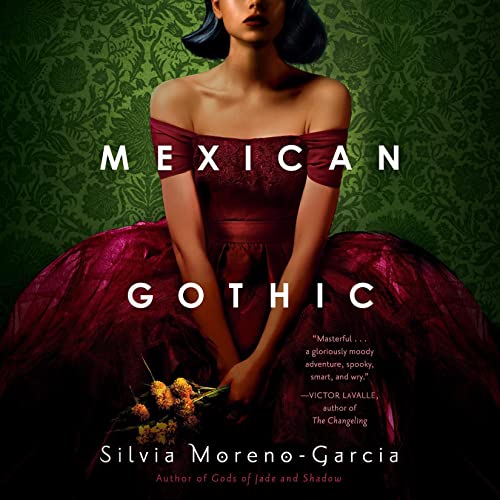
Mexican Gothic

Author: Silvia Moreno-Garcia

Narrated By: Frankie Corzo

Silvia Moreno-Garcia (Author, Mexican/Canadian novelist, editor and publisher.)

Moreno-Garcia’s “Mexican Gothic” is a chilling story of colonization, eugenics, ecological contamination, mystical beliefs, and control of society by men. The author chooses the name of Doyle as an English family that exploits the Mexico’ silver mining industry in earlier centuries. A dynasty is created by generations of Doyle’s. They created a colonial manor called “High Place” from which to rule a crumbling empire. As colonizers they capitalize on Mexico’s silver deposits by exploiting native Mexicans’ land and labor to grow their mining operation. The wealth of local citizens is lost to the English foreigners who keep wages low to increase the wealth of the Doyle family.

Over generations, the Doyle men married local women that were related to each other. A common practice of royalty before the twentieth century.

They wished to maintain the genetic purity of the Doyle bloodline by having future Doyles marry genetic descendants of Mexican women that had been their wives. This is not greatly different than the experience of royal marriages in European cultures. The consequence of that marriage tradition is that recessive genetic mutations become more prominent in offspring. Children were more susceptible to diseases like cystic fibrosis and had higher incidents of developmental and cognitive disorders. This is one of many threads of meaning in “Mexican Gothic” because one of these descendants becomes a murderer of Doyle family members and the current Doyle generation seems socially dysfunctional. Added to that dysfunction is the Doyle family’s diminishing wealth.

An arranged marriage is a lynch pin to the story.

The heroine, Noemi, is the daughter of a wealthy Mexican family. She is sent to investigate a letter that was received by her father from a young woman that marries a Doyle. She is a cousin of Noemi’s. The marriage is arranged in part because of her father, and he feels something is wrong and wants Noemi to visit the Doyle family to find what the mysterious letter means. Soon after Noemi arrives, she begins to have hallucinatory dreams. Listener/readers find the hallucinations are because of spores that are in the bedroom of the deteriorating Doyle house. A clever thread of meaning in Moreno-Garcia’s story is ecological contamination that comes from colonization. As one nation colonizes another, it inevitably brings different plants and animals that are not indigenous to the country they are colonizing. The author notes a fungus is growing in the Doyle household that may have come from the original colonizers.

The penultimate theme in “Modern Gothic” is the creation of myths that compound the horrific events that occur in the Doyle house.

From the history of murders in the Doyle household, to hallucinatory dreams, to incestuous relationships, to the gloom and doom of the story, to a myth about the age of the Doyle patriarch, Moreno-Garcia offers a climax to her story that vivifies reader/listener’s imagination. The climax of “Modern Gothic” is where myth enters Moreno-Carcia’s story. The fundamental truths of colonization are revealed in her creative story while its denouement is an entertaining explosion of imagination.

OLD SCHOOL INDIAN

“Old School Indian” is returned without being completed. It would have been interesting to know more about what it is like to be raised in America as a descendant of a Mohawk Indian Tribe but experimenting with gender identity are steps too far for this reader/listener.

Books of Interest
 Website: chetyarbrough.blog

Old School Indian (Novel)

Author: Aaron John Curtis

Narrated By:  Jason Grasi

Aaron John Curtis (Author, essayist, member of the Akwesasne Kanienkehaka, a Mohawk tribe.)

Curtis begins a rye, mordant, and witty novel that gives one an idea of how an Indian descendant might view themselves as a part of American society. Curtis’s main character is Abe Jacobs; raised in an Indian family deeply rooted in their Mohawk culture. He grows to attend college at Syracuse University in New York with an ambition to become a writer. He becomes concerned about skin sores that develop on his skin that itch, suppurate, appear, and disappear.

Abe is a handsome young man in Curtis’s story. He is troubled by skin sores and anxious to find out what causes them and how they can be treated and cured. He meets his future wife while going to college. She is a free spirited, attractive woman who is drawn to Abe because of his good looks which become more attractive when she finds he is a descendant of a Mohawk tribe. They become lovers on the day they meet. As their relationship grows, life goes on. They have times when they are apart, living life on their own terms but staying in touch by phone and recurrent rendezvouses.

The seriousness of Abe’s disease is finally diagnosed. The symptoms can cause artery inflammation leading to organ failure and dementia at an early age. This fictional disease (though there is a true similar disease) prepares readers for a story about what it is like to be in the prime of one’s life to face a disease that can disfigure your appearance and shorten your life. Aside from the point of having a potentially deadly disease, a listener/reader wonders what it is like to be a descendent of an Indian tribe in America.

As the book progresses, the story of Abe and his girlfriend are shown to have been raised in families struggling with poverty. Abe and his soon to be wife begin revealing the hardship of their lives. Poverty diminishes life in so many ways that the author’s clever beginning is not enough for this critic to complete his story. His hero tries to commit suicide at 12 years of age. Abe’s poverty is something many generations have experienced but being drawn to suicide and willingness to experiment with gender identity are steps too far for this critic.

“Old School Indian” is returned without being completed. It would have been interesting to know more about what it is like to be raised in America as a descendant of a Mohawk Indian Tribe but experimenting with gender identity are steps too far for this reader/listener.

RIGHT & WRONG

The story of “…Belle Lettres…” inelegantly reminds one of the effects of Trump on America’s reputation.

Books of Interest
 Website: chetyarbrough.blog

The Belles Lettres Papers (A Novel)

By: Charles Simmons

Narrated By:  Alex Hyde-White

Charles Paul Simmons (1924-2017, Author and former American editor for The New York Times Book Review, graduate of Columbia University in 1948.)

“The Belles Lettres Papers” is a fictional account about the destruction of an American book review company. Written by a person who worked as the editor for the NY Times Book Review gives credibility to its author. One wonders how the nationally famous paper felt about his book. Simmons writes a story of a magazine company that exclusively reviews new books that become literary successes, sometimes bestsellers, or dead or dying dust gatherers.

To this book critic, Simmons certainly seems to know what he is writing about but “The Belles Lettres Papers” falls into a dust gatherer category of books.

Book reading or listening is an educational, sometimes entertaining, experience. There are so many books written that it is impossible to know what to read or listen to without someone’s review of what has been newly or recently published. Of course, there are genres that a reader/listener will choose that influences their book choices. Even when one limits themselves to a genre, there are too many choices that require a way of limiting one’s choice.

Experience reveals “best seller” is not a consistently reliable way of choosing a book, but it is one of the most commonly used methods of selection.

What “…Belles Lettres…” reveals is the potential corruption that can inflate a books placement on a best seller list. Book review publications, like all business enterprises, have owners and employees that have various levels of honesty, capability, and ethical standards. What Simmons shows is how every business owner and employee is subject to the influence of money and power.

The potential weaknesses of humanity play out in every organization that provides service or material to the public.

Simmons shows how a fictional book review company has employees who are corrupted by the power of their positions and the money they make. The fictional company has a male business manager who thinks his female secretary wishes to have sex with him because of natural attraction. Ethically, no employee reporting to a manager they work for should have sexual relations with a direct report. This is particularly egregious in Simmon’s story because of sexual inequality that permeates society. As Lord Acton’s observation about power (power corrupts, absolute power corrupts absolutely), a person who has power over another is always at risk of self-delusion.

Simmons goes on to explain how undercompensating employees can corrupt an organization by incentivizing theft and other ways of undermining a company’s integrity.

Simmons addresses the incentive of owners or those in power of an organization to cut personnel employment to save money at the cost of product quality or service. America is experiencing that today with the actions of the Trump Administration in arbitrarily firing federal employees, regardless of what they do for American citizens.

In a last chapter, Simmons addresses the revisions that can occur in a company that decides on a wholesale turnover in employees.

The integrity of a company’s mission can be sorely challenged. In the case of “…Belle Lettres…” a decision for publication of salacious books replaces the company’s former studied reviews of good writers. The organization loses its reputation as a reviewer of high-quality publications.

Trump’s assessment of immigration.

The story of “…Belle Lettres…” inelegantly reminds one of the effects of Trump on America’s reputation as a supporter of western society by reducing foreign aid, undermining university independence, denying global warming, arbitrarily firing government employees, and expelling American immigrants.

SURVEILLANCE SOCIETY

The author makes a point in “The Dream Hotel”, but her book is a tedious repetition of the risk of human digitization that is a growing concern in this 21st century world.

Books of Interest
 Website: chetyarbrough.blog

The Dream Hotel (A Novel)

By: Laila Lalami

Narrated By:  Frankie Corzo, Barton Caplan

Laila Lalami (Moroccan-American novelist, essayist, and professor, earned a PhD in linguistics, finalist for the Pulitzer Prize for “The Moor’s Account”.)

Laila Lalami imagines a “Brave New World” in which algorithms predict probabilities of lethal criminal behavior. She creates a nation-state with a human behavior monitoring and detention system for every human that might commit a lethal crime. The growing collection of data about human thought and action suggests a level of truth and possibility.

Lalami creates a state that monitors, collates, and creates probability algorithms for human behavior.

To a degree, that state already exists. The difference is that the algorithms are to get people to buy things in capitalist countries and jail or murder people in authoritarian countries. One might argue America and most western countries are in the first category while Russia, and North Korea are in the second.

Lalami’s description of the detention system, like many bureaucratic organizations, is inefficient and bound by rules that defeat their ideal purpose.

A young mother named Hussein is coming back from a business trip. She is detained because of data collected on her about where she has been, what she did on her business trip, her foreign sounding name, and the kind of relationship she has with her husband and twin children. An algorithm has been created based on a profile of her life. It flags the young woman so that she has a number slightly over a probability threshold of someone who might kill their husband. Of course, this is ridiculous on its face. Whether she murders her husband or not is based on innate errors of behavioral prediction and bureaucratic confusion.

Every organization or bureaucracy staffed by human beings has a level of confusion and inefficiency that is compounded by information inaccuracy.

That does not make the organization bad or good, but it does mean, like today’s American government’s bad decisions on foreign aid or FDA bureaucracy throws the baby out with the bath water. Lalami’s point is that detention because of one’s name, family relationship, and presumed prediction for murder, based on a digitized life, is absurd. Algorithms cannot predict or explain human behavior. At best, an algorithm has a level of predictability, but life is too complex to be measured by a fictive number created by an algorithm.

The author makes a point in “The Dream Hotel”, but her book is a tedious repetition of the risk of human digitization that is a growing concern in this 21st century world.

PSYCHOSIS

The imagination of Han Kang gives reader/listener’s an explanation of how a human being can become psychotic. Kang’s characters show how psychosis comes from many sources, a major one of which is family relationship.

Books of Interest
 Website: chetyarbrough.blog

The Vegetarian 

By: Han Kang

Narrated by: Deborah Smith, Janet Song, Stephen Park

Han Kang (Author, South Korean writer, awarded the International Booker Prize for fiction in 2016 and the Nobel Prize in Literature in 2024.)

A listener/reader may be tempted to put this book aside with the thought that it is a titillating pornographic tale that is not worthy of one’s time. However, after an hour or two, one realizes this is a journey for something difficult to describe.

In Kang’s fictional story, two sisters are raised by the same parents. One is the older of the two and becomes a successful small business owner with a video artist husband; the other is a housewife who lives with a husband that seems to neither love nor respect her. Both marriages fail but for different but interlocking reasons.

The younger sister becomes a vegetarian later in her married life. She explains her vegetarianism is based on a dream she has about something that is not clearly defined. One gathers the dream has something to do with the source of meat that involves the killing of animals while vegetarian food comes from nature’s abundance. The husband reluctantly goes along with the change but becomes more and more unhappy in his life with the younger sister. The unhappiness grows to something greater when his wife begins to complain about how her meat-eating husband’ smells. The breaking point comes when the husband asks his wife’s mother, father, and sister-in-law to convince his wife to abandon vegetarianism and begin adding meat to her diet. At dinner in their house, the father forcefully demands his daughter to eat meat. She refuses and the conflict becomes violent. Her father pries her mouth open and shoves meat into her mouth. The daughter rebels and cuts her wrist with a knife in an act of defiance. Her brother-in-law grasps the younger daughter who is profusely bleeding and rushes her to the hospital.

The brother-in-law that rushed to save the vegetarian is a video artist.

The main characters of the story and the substance of their conflict is now made clear to the listener/reader. The next portentous development is the older sister’s husband (a video artist) begins to fantasize about the younger sister whom he had rushed to the hospital. His fantasy grows to the point of asking the younger daughter to pose nude for an art video he wishes to create. She agrees. A listener/reader begins to understand the younger sister is slipping into a psychosis. Her brother-in-law paints her nude body with flowers that make her feel that she is becoming part of nature, i.e., something growing like the vegetarian diet upon which she relies. The brother-in-law’s sexual desire becomes more aroused by the video and his relationship with the younger sister.

The deepening psychosis of the younger daughter grows when the brother-in-law hires a nude male model to be a part of a new video.

The male model resists but agrees to pose with her but refuses to go beyond allowing flowers being painted on his nude body and a video of the two without clothes but with painted bodies. The brother-in-law’s sexual fantasy grows from this experience but is disappointed in the male actor who refuses to have sex with the sister-in-law while the video is being filmed. The male actor did not want to be viewed as a porn star.

The brother-in-law’s fantasy leads to the sister-in-law’s agreement to have sex with him on film as long as he allows her to paint flowers on his body that are similar to what he had painted on her body. They become sexually entwined at the sister-in-law’s house. The older sister discovers them in their sexual rendezvous where the video is being produced.

The younger sister has crossed a barrier between sanity and insanity. It is not a matter of remorse for the sexual relationship but from a reinforcement of her obsessive need for being a vegetarian as an integral part of nature. She refuses her humanity. She has crossed the Rubicon between sanity and insanity. She refuses to eat anything and only wishes to drink water to feed her growth as a plant. Both her husband and the husband of the older sister-in-law essentially drop out of Kang’s story. The older sister’s husband does not forgive her husband for his sexual transgression and the younger sister’s husband never loved the vegetarian in the first place.

This amazing book, “The Vegetarian”, offers a vivid portrayal of a human beings’ descent into psychosis.

The imagination of Han Kang gives reader/listener’s an explanation of how a human being can become psychotic. Kang’s characters show how psychosis comes from many sources, a major one of which is family relationship.

PARENTING

Tara Westover’s trials are distressing for a listener/reader of her memoir, but all children are born into a struggle to find their own identity. “Educated” is evidence of Tara’s escape from prejudice and ignorance. It is an encouraging story of recovery with an education she acquires from a lived life.

Books of Interest
 Website: chetyarbrough.blog

Educated (A Memoir)

By: Tara Westover

Narrated By: Julia Whelan

Tara Westover (Author, memoirist, essayist and historian.)

“Educated” is a memoir of Tara Westover’s childhood in America. Her story is personal but universal. Some children are born in caring and nurturing families, all are subject to parents’ strengths and weaknesses. Tara reflects on the life of her family with a father, mother, and siblings raised in a family with a survivalist father who has strong religious beliefs and antigovernment views of life. He raises his sons and a daughter with a wife who conforms to his wishes and a mother-in-law who believes he is wrong about public education and the value of extreme beliefs in independence.

Tara Westover reminds listener/readers that every culture in the world is blessed and cursed by diversity.

Westover’s father would be called an American “antigovernment extremist” and “survivalist”. He does not believe in institutions of government or public services and argues all forms of regulation outside the family distort the natural state of society. He believes it is necessary to hoard food, fuel, and human necessities to assure self-sufficiency in the event of natural disasters or government-imposed laws.

The Weaver Family Tragedy in August 1992 is an important symbol to Tara’s father.

Randy Weaver held antigovernment and white separatist views. His wife and son were killed by FBI agents on Ruby Ridge. A settlement of $3.1 million for wrongful deaths is awarded Weaver on August 15, 1995.

The Westover father grooms his children to support the family in a scrap metal business that evolves into a contracting company. As the children of the family mature, some leave while the father expands the family business with employment of outsiders. As Tara matures, she reluctantly becomes a worker in the family business to earn enough money to go to college. As Westover writes her story one wonders if her father will be the cause of the next Weaver Family Tragedy.

Westover shows how work and American life is not a fairy tale but for most a struggle for survival just as it is in every culture.

Desire has no limits. Freedom allows one to cope with life and, in some cases, exceed its limitations. Some cultures offer more freedom than others. Whether raised in America or somewhere else, one’s education comes from the culture in which they live. The circumstances of family are a part of a child’s education, but formal education varies within and between nations. Most nations have some form of public education, but education occurs whether publicly or privately pursued. The Westover family, in their children’s grade school and high school years rely on their mother’s home schooling.

The Westover’ family is neither a “Leave it to Beaver”, “My Three Sons”, or TV produced fantasy.

It is a reflection of a family dealing with the hardship of life in America that is sustained by a culture of independence and self-determination. Every child is impacted by the family in which they are raised. Whether government supported education or not, every child becomes an educated adult in different ways. Some like Tara Westover grow to adulthood with an education that comes from self-determination and grit despite her father’s influence and her sibling’s erratic behavior toward her.

Children do not choose their parents. Every child grows to adulthood in their own way.

There is always some level of care and nurturing in every family. The level of care they receive varies but ultimately it is how they deal with the circumstances in which they live that determines who they become. Two nearly fatal car accidents for Tara’s family and her near ejection from her family at age 16 seem to make her stronger. Her ability to write this memoir is a tribute to her determination to live a fulfilling life. The genetics of life have magnified and fortified the Westover children’s successes and failures in life.

Breaking free of prejudice and ignorance, whether one is formally educated or un-schooled, is difficult.

Prejudice is difficult because it is founded on emotional blindness shared by fellow travelers. Ignorance is founded on refusal of facts and knowledge of history. Two of the Westover sons and Tara seem to break the cycle. The first boy to leave the nest is on his way to Purdue after graduating from BYU. The second boy is believed by his father to be a genius and given license by his father to apply to BYU. One wonders whether the second boy will escape the curse of prejudice and ignorance of his remarkable family. Tara Westover’s trials are distressing for a listener/reader of her memoir, but all children are born into a struggle to find their own identity. “Educated” is evidence of Tara’s escape from prejudice and ignorance. It is an encouraging story of recovery with an education she acquires from a lived life.

COLOMBIA

Márquez offers a vivid picture of Colombia’s twentieth century culture in “One Hundred Years of Solitude” but to this reviewer his failure to address Colombia’s lucrative cultural and world’ damaging drug industry is disappointing.

Books of Interest
 Website: chetyarbrough.blog

One Hundred Years of Solitude

By: Gabriel García Márquez 

Narrated By: John Lee

Gabriel García Márquez, (Author, Colombian writer and journalist.)

“One Hundred Years of Solitude” is a fictional representation of the early history and 20th century modernization of Colombia. Those who are not particularly interested in Colombia’s history will listen/read Gabriel García Márquez’s story because of the author’s skillful storytelling and the intimacies of Colombian culture, its political turmoil, violence during a civil war, and its consequent growth as a modern nation. In some ways it is like the story of America.

Márquez begins his book with the founding of Macondo, a fictional name for a village during the colonial period when the Spanish settled Colombia. Beginning as a small town, Macondo grows to become a city. Macondo represents the journey from isolation as a small town to a city that becomes a part of a vibrant South American country.

Macondo, a fictional village in Colombia.

The modernization of Colombia is addressed with the arrival of the railroad in Macondo that illustrates industrialization and the advance of Colombia’s economy. Macondo becomes a banana producing community that wrestles with the consequences of a civil war, unionization, and a growing economy. The brutality of industrialization is exemplified by the Colombian army’s killing of striking banana plantation workers in 1928. Of course, this is not unlike America’s 1932 Detroit’ Ford manufacturing plant killing of four workers by security guards and the Michigan police.

Colombia’s 50-year long civil war.

Colombia’s growth as a nation evolves with a mid-twentieth century civil war between liberals and conservatives. Márquez creates characters representing both sides of the civil war and their personal, as well as military lives. As is true of all wars, many innocents, as well as participant citizens, are indiscriminately and violently killed. Undoubtedly, a part of what makes the author’s story appealing to listener/readers is the sexuality of his characters. Sex in the novel ranges from close relatives’ intimacy to older women seductions of young men and young men’s seductions of both older and younger women, some of which are incestuous.

Colombian drug cartels are not addressed in Márquez’s story.

Márquez offers a vivid picture of Colombia’s twentieth century culture in “One Hundred Years of Solitude” but to this reviewer his failure to address Colombia’s lucrative cultural and world’ damaging drug industry is disappointing.

On the other hand, what author would want to take the risk of reporting on an industry noted for murdering those who expose its workings?

CULTURE

Paulette Giles offers a story of America’s unique racial, ethnic, religious and experiential culture.

Books of Interest
 Website: chetyarbrough.blog

News of the World (A Novel)

By: Paulette Jiles

Narrated By: Grover Gardner

Paulette Jiles (Author, poet, finalist for the National Book Award for “News of the World”)

“News of the World” is a story of a young German American girl abducted by Indians in the 1860s, near San Antonio, Texas. She is recovered by a 71-year-old veteran of the Civil War. The author’s contextual research is impressive. Having personally lived in Texas for several years and knowing there is a small Texas town north of San Antonio with a large German ancestral population,”News of the World” becomes immediately credible.

Jiles fictional story is about a young white girl who is 10 years old when she is recovered from an Indian tribe by a Civil War veteran.

The young girl was abducted when she was six. Her four years of captivity were in the formative years of life. She successfully adapts to her tribal environment but does not completely lose knowledge of her younger past. Jiles hero is a Texas oldster who travels the country making a living as a reader of newspapers to citizens interested in news of the world. Many American citizens did not have the money, or the education, to read news of the world. To have that news read to them became an entertainment for many willing to pay a penny, a dime, or as much as a quarter. The former veteran, as an officer in the Rebel army during the war is well educated with experience of combat during the Civil War. That combat experience becomes important in the return of the captive to her German immigrant family.

A bounty of $50 is offered for return of the abducted girl.

The veteran takes the job. Jiles writing is excellent, but the narration of Grover Gardner gives the story an extra level of interest. Experience of life is a trial by fire for most human beings. Imagine being abducted from your family at the age of six by a culture different than your own and how traumatic it would be but how life expanding it could become. This six-year-old represents the melting pot of America. Jiles creates a fictional representative of three cultures, i.e. German, Indian, and pioneer that influences the melding of American culture.

Though Giles may not have meant to illustrate the melding of cultures by her entertaining story, much of what American culture represents is an amalgam of older cultures.

America’s Civil War, the Indian wars, and living life makes American culture unique. Every nation is made up of different races, ethnicities, religions, and experiences that make them unique. Paulette Giles offers a story of America’s unique racial, ethnic, religious and experiential culture.

OCCUPATION

“The Nightengale” is a story that shows how occupation begins, how occupation fails, and why it’s tragic economic and human costs never end. Occupation is not an answer for Russia’s war on Ukraine or Israel’s war on Palestine. Occupation is only war by other means.

Books of Interest
 Website: chetyarbrough.blog

The Nightingale 

By: Kristin Hannah

Narrated By: Polly Stone

Kristin Hannah (Author)

History offers an opportunity to recognize mistakes of the past. Fiction offers tests for a future yet to be realized. The experience of history and written fiction offer behavioral change that can alter the future. However, the difficulty of future change is in understanding history and the limits of testing behavioral recommendations. “The Nightingale” is historical fiction.

Importantly, it offers relevance to today’s war in Ukraine and Israel’s actions in the Middle East.

Kristin Hannah creates a French family during Germany’s occupation of France during WWII. The story begins with an elderly woman nearing the end of her life who climbs the stairs into her attic to pull out an old chest filled with memories of her life in France. Isabelle Rossignol is a fictional character who joins the resistance. Isabelle’s experience is a lesson to the world about occupation of foreign countries by others, whether democratic or authoritarian.

“The Nightingale” is about the French reaction to Nazi Germany’s occupation of France during WWII. Germany’s occupation of France did not Nazify the French just as Putin will not Russianize Ukraine or Israel will Israelize Palestine. War is not an act of diplomacy and occupation never offers peace.

Isabelle, from a cultural perspective, is a patriot of France. She fervently believes in the sovereignty of her country just as most who have lived in any culture in which they grow to become adults. A country that tries to dominate another sovereign nation takes on a cultural and economic burden too hard to bear in perpetuity. The difficulty lies in cultural ignorance and the hardship of changing a native population that is culturally reinforced by generations of human life.

(In a recent trip to the Baltics, the dislike of Russians is palpable. Part of the tour is of the terrible Russian jails, the stories of Russian torture and murder of dissidents, and the fear that was felt by the now grown children of parents who lived during the long Russian occupation of their countries. Today the Baltics are among the most modern countries in Eastern Europe, but that accomplishment only began after their liberation from Russian occupation.)

Upon occupation of a French town in which Isabelle lives, German soldiers are billeted in local residences.

Isabelle lives in one of these residences as a teenage sister of Vianne whose French husband is alleged to be a POW in Germany. A German pilot is assigned to Vianne’s home. She has no realistic alternative to accepting the presence of a German officer in her home. He is a young man with a wife in Germany who politely explains he will be staying in their home while assigned to the Luftwaffe that occupies their town. Vianne objects but realizes she has little choice and takes the German officer into her house.

Wolfgang Beck, the German officer, speaks broken French but is able to communicate well enough to make the French family understand his demands. Isabelle, Vianne’s sister, is incensed by the intrusion and objects to his presence but realizes there is nothing she can do about it. As the story progresses, the Germans begin to exercise increasing control over the French population. The newly billeted officer at the Rossignol’ house seems respectful and apologetic as he moves into the family house.

An unspoken reason Vianne cooperates, though she has no choice, is she wishes to know the fate of her husband. A German officer might be able to find what happened to her husband.

The officer recognizes an opportunity to ingratiate himself to the family. He compiles a list of alleged POWs. Vianne finds her husband is at a particular POW camp, along with other captured combatants. The list Beck creates is an opportunity for wives, mothers, children, and girlfriends to send postcards to their loved ones. Vianne asks the German officer if he would send the postcards for wives wishing to communicate with their husbands and lovers who are now POWs. He agrees, and a strained level of cooperation is established.

As a local teacher, Vianne is asked by Officer Beck to provide a list of fellow teachers who are either Jewish or communist sympathizers.

At first, Vianne resists but eventually names names. The identified teachers mysteriously disappear from the school which is explained by known history of Nazi’ gas chambers and mass murders. Vianne belatedly realizes her error and is deeply remorseful for having given the names to the commander. She goes to a Catholic nun to explain her mistake and asks for advice. The nun treats her kindly and tells her to be careful about naming anyone that is requested by the Nazis. The nun offers advice about life being out of her control and that she should pray to God for guidance. This gives Vianne some comfort, but she recognizes her mistake while accepting the nun’s council. One thinks that was good for her but not for the missing Jews and communists. Vianne chooses to hide Jewish children from deportation as a way of compensating for her foolish mistake in listing Jewish teachers.

Charles de Gaulle (Leader of the Free French Forces during the Nazi occupation.)

Despite the outward appearing cooperation with German occupiers from some French citizens, there is a growing underground opposition. Isabelle becomes part of that opposition by distributing anti-German posters and aiding French resistance fighters who are wounded by German occupiers. The author offers many stories of the heroism of the French people and its underground during the war.

As the German army is nearing defeat, the brutality of the Germans in France escalates. The brutality of the story becomes numbing but gives one a clearer understanding of how humans endure under circumstances that can hardly be believed. Isabelle is caught, tortured and confesses to her identity as “The Nightingale”. She is sent to RAVENSBRüCK concentration camp. Her older sister is brutalized by her German guest who only becomes more brutal as the war nears its end. Both women survive the war in Hannah’s fictional story while reader/listeners are left to think about the brutality of war and occupation.

War and foreign countries occupation’ costs far exceed their value to either the victim’ countries or their victimizers.

So, what is the lesson of “The Nightengale”. Occupation may work for many years as it did in the Baltic countries. There are three reasons for occupation failures. One is failure to understand cultural difference, two is the rationale for one countries occupation of another, and three–the occupier’s failure to understand the real cost of occupation.

“The Nightengale” is a story that shows how occupation begins, how occupation fails, and why it’s tragic economic and human costs never end. Occupation is not an answer for Russia’s war on Ukraine or Israel’s war on Palestine. Occupation is only war by other means.