LIFE

The eradication of inequality is in the eyes of beholders. We are mere humans struggling to be better than we are.

Books of Interest
 Website: chetyarbrough.blog

The Female Persuasion (A Novel)

By: Meg Wolitzer

Narrated By: Rebecca Lowman

Meg Wolitzer (Author)

Many “sexual awakening” books of the past are about men and boys. Nabokov’s Lolita, Lawrence’s “Lady Chatterley’s Lover, Baldwins “Giovanni’s Room” to name three. “The Female Persuasion” gives listener/readers a glimpse of what “sexual awakening” is for girls. That is not to say “The Female Persuasion” is only about sexual awakening. Wolitzer’s story illustrates there is little difference between young men’s and women’s interest in sex and their ambition for success in an adult world.

“The Female Persuasion” gives voice to the equality of women despite historical misogyny.

Two women roommates at a fictional college talk about their lives and explain their frustration with unequal treatment in society. One has sexual relations with women, the other with men but each feel their opportunities in life are limited by being women in a Mans’ world. Greer Kadetsky complains to the University about a male student who sexually assaults her and is ignored by the administration. She is characterized as an intelligent woman who is eligible for admission to Yale but is rejected because of her parents’ mistakes on a financial disclosure form about scholarship assistance. Her unhappiness about not getting into Yale is compounded by the student assault she reports that is essentially ignored by the local college she attends.

Men and women are equal and should be afforded all the rights and opportunities available to men.

The heroine of the story has a boyfriend, Cory Pinto, whom she met in high school. They became lovers at some point in their relationship. She notes in a college dorm where her boyfriend undresses her and expresses admiration of her body. She appreciates her lover’s comment. The author’s perception of beauty reinforces the similarity between men and women and their sexuality. Beauty is in the eye of the beholder, whether male or female, but every person appreciates positive comment about their appearance.

Another element of interest in “The Female Persuasion” is a reinforcement of the saying “Birds of a feather flock together”. Cory and Greer come from lower middleclass families while showing higher than average intelligence in high school that leads them to a college education. After graduation, Cory and Greer move-in together with Cory finding a job while Greer volunteers at a non-profit while pursuing a writing career. Is it a surprise that a person with a college degree has a hard time finding a job after graduating? No, but it seems men are luckier, or one might conclude men are beneficiaries of a built-in gender bias.

Not to read too much into Wolitzer’s story, it seems most job opportunities are better for men than women.

Greer has a chance meeting with a feminist who speaks at the university she attends. In that serendipitous contact, Greer makes a positive impression on the speaker. After graduation, Greer is contacted by the famous feminist with a possible job interview. However, the potential employer dies, and the interview never happens. Meanwhile, Cory has found a job and is pursuing his career. Greer is living at home with her parents to cut down on expenses.

Greer is contacted by a New York feminist organization and is offered an interview that results in a job in New York.

Cory is working outside the country for his company, but the couple continues a long-range relationship. Greer is gaining some success and experience in her job. An interesting incident is noted that gives listener/readers insight to women’s competitiveness when Greer exhibits reluctance to show a letter to her employer for her former gay friend looking for a job. Greer chooses not to proffer the letter to her employer and lies to her friend about having given it. This seems a petty incident, but it is present in all human beings, i.e., the feeling that a person who has found their step on the ladder of success should care about others when they might be competing with them if they go to work for the same company. This seems a matter of personal ambition, not a gender or sexual orientation issue.
The end of the book offers an unsatisfying “bow tie”. The ending has a fairy tale quality that will appeal to some, but the real world is different. Life happens, jobs change, people’s relationships fall apart; some mend, others do not. The eradication of inequality is in the eyes of beholders. We are mere humans struggling to be better than we are.

CHILDREN

Klune’s fantasy offers no clear answer to “the best way” to raise children, but he crystalizes how important they are to the future of the world.

Books of Interest
 Website: chetyarbrough.blog

Somewhere Beyond the Sea (Cerulean Chronicles, Book 2) 

By: T.J. Klune

Narrated By: Daniel Henning

T.J. Klune (Author, winner of the 2021 Mythopoeic Awards)

“Somewhere Beyond the Sea” is a wild ride by an author with an extraordinary imagination. Some listener/readers will be inclined to reject Klune’s book because its flights of imagination obscure the author’s social criticism. This is a fantasy novel offering a message about mistakes parents and society make when raising children.

One might view “Somewhere Beyond the Sea” as a simple fantasy novel about extraordinary children cared for in orphanages.

However, every parent of a child will see themselves and the mistakes they may have made in raising their children. Though science explains much of who humans become is genetically determined, the influence of parents and acquaintances affect genetic predisposition. A child may mature to become a Jesus or Hitler without human understanding of why they became the best or worst of society.

Klune’s fantasy is about an orphanage populated with magical children that have powers beyond rational belief.

They are morphological creatures with powers capable of destroying or creating reality. Being free of parental guidance and raised in an orphanage, the maturity of these children is institutionally influenced. As is true in any orphanage, or any parental home, there are good and bad management practices. As either an orphanage manager or parent, one wonders if they are making the right decisions in the way they are influencing their children.

Klune obviously believes letting children become who they are, as long as they do no harm to themselves or others, is a life goal.

That seems a fine ideal, but parents and institutions are made of humans who are trapped by personal experiences of their own that influence how they raise their children. Some are disciplinaries, others are not. Some are physical punishers of bad behavior; others believe physical punishment only releases a parent’s anger and actually reinforces bad behavior. Despite bad parenting, some children grow to become great contributors to society, regardless of how they were raised, others become criminals of every type.

Does the way we raise our children make a difference in who they become?

There seems no disciplinary practice that guarantees the best outcome of a child raised by either institutions or parents. This is particularly concerning to parents of children who become unhappy and choose to pursue unhealthy relationships, become drug addicts, criminals, or suicide statistics. Parents become victims of guilt. They wonder how they might have been better managers of their children’s lives, thinking that could have made the difference.

Klune’s fantasy offers no clear answer to “the best way” to raise children, but he crystalizes how important they are to the future of the world.

POWER IN INTIMACY

Purnell’s biography implies the drive to succeed for women is based on intimacy rather than inherent human equality. Though that is not the intent of Purnell, intimacy has historically been the avenue women have had to take in society to open opportunity’s door.

Books of Interest
 Website: chetyarbrough.blog

Kingmaker (Pamela Harriman’s Astonishing Life of Power, Seduction, and Intrigue)

By: Sonia Purnell

Narrated By: Louise Brealey

Sonia Purnell (Author, British journalist, worked at the news magazine “The Economist”)

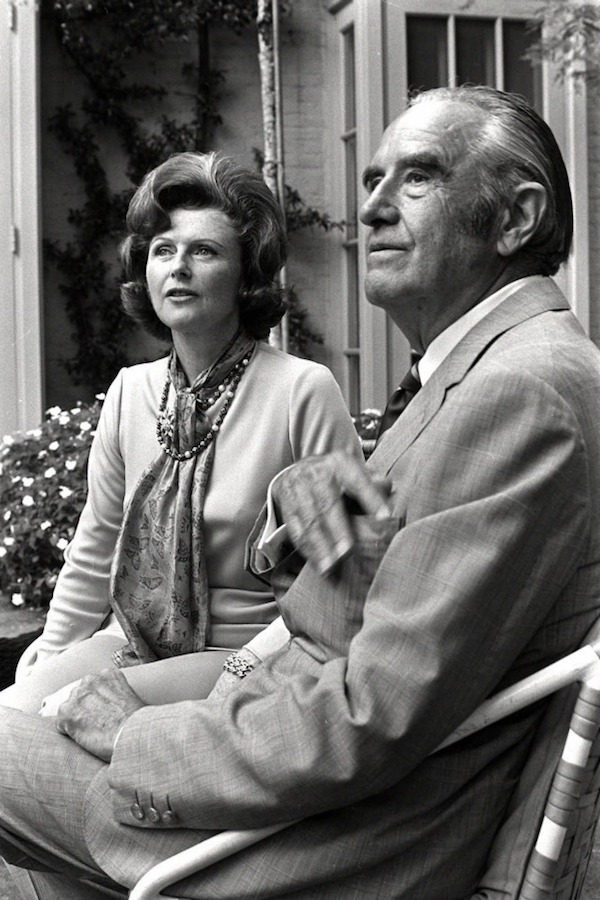
Every writer is influenced by the country in which they were born. Sonia Purnell writes an interesting biography of Pamela (Digby-Churchill) Harriman in “Kingmaker” but from the perspective of a British journalist. This is not to argue Purnell’s interesting perspective is wrong but that there is a spin that is nationalist, more than objective, about Pamela Harriman’s life.

During the beginning years of WWII, America avoided the war until Pearl Harbor when it became clear that a policy of isolationism would not work.

The reluctance of many American businessmen and industrialists like Joseph Kennedy and Henry Ford would not see Hitler for what he was, a fascist racist planning to dominate as much of Europe as Germany’s war machine would allow. Some in the American government, like Franklin Roosevelt, understood Hitler was a threat to all of Europe if not America. Roosevelt maneuvered the government to support England with a Lend/Lease program to defend themselves against German aggression, despite a political majority’s desire for isolationism.

Getting back to Purnell’s history of Pamela Harriman, Purnell explains the important role Pamela played, before Pearl Harbor, that mobilized America’s entry into the war. Pamela Harriman is unquestionably an English patriot. Her close relationship with Winston made her an ideal conduit and influencer in smoothing the relationship between America and the British government. The intimate relationship she developed with Harriman is a tribute to her contribution to the formation of an allied force to defeat Germany.

The massive Lend-Lease program is created in the late 1930s because of the Neutrality Acts that kept America out of direct engagement in the early days of WWII.

The program began in 1939 as a cash and carry program that evolved into a Lend-Lease program in 1941. American could lend or lease military equipment and supplies to any country that allies themselves with the U.S. if it were to enter into the war. The United Kingdom, Russia, and China were considered crucial to any alliance that might be created to defeat Germany. The complexity and logistics of Lend-Lease required astute management by American managers. Harry Hopkins was its first administrator, but Averill Harriman was needed to become a diplomatic political expediter for the process.

Purnell argues the political process in the American/United Kingdom relationship was smoothed and improved by Pamela Digby Harriman who was married to the son of Winston Churchill, Randolph Churchill.

Randolph has at best, a mixed reputation. He was a heavy drinker, reckless, and rude. He was married and divorced twice and had gambling problems that were a constant debt problem that disrupted Pamela’s life. She became closer to Winston Churchill than to her husband and became much more politically involved and astute than her husband in government affairs. That experience made her a perfect match for building a closer relationship with Avrill Harriman that became an affair between two married adults. Harriman was twenty-eight years older than Pamela but had a reputation as a suave ladies’ man.

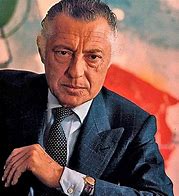
Purnell reflects on the many affairs of Pamela Churchill Harriman beginning with Averell Harriman, then Edward R. Murrow, and proceeding to John Hay Whitney, Prince Aly Khan, Gianni Agnelli, Alfonso de Portago, Baron Elie de Rothschild, Frederick L. Anderson, Sir Charles Portal, and William S. Paley. The story becomes stale.

There is a cloying sense of unfairness in “Kingmaker ” because Pamela’s skill seems trivialized by her sexuality.

Pamela simply wanted an equal opportunity to succeed in the pursuit of money, power, and prestige, i.e. all the secular objectives men take for granted. Purnell’s biography implies the drive to succeed for women is based on intimacy rather than inherent human equality. Though that is not the intent of Purnell, intimacy has historically been the avenue women have had to take in society to open opportunity’s door.

TO BE FREE

The neglect and brutal treatment of Lithuanian citizens by Russia during WWII is graphically depicted in “Between Shades of Gray”.

Books of Interest
 Website: chetyarbrough.blog

Between Shades of Gray 

By: Ruta Sepetys

Narrated By: Emily Klein

Ruta Sepetys (Author, Lithuanian American writer of fiction, daughter of a Lithuanian refugee.)

This is a novel that many Americans will choose not to read. It is so relentlessly brutal that one is inclined to stop listening to, or reading, the novel. Many Americans take freedom for granted. Sepetys’ story reveals how ignorant the generational free are about what it is like to exist in a nation ruled by an unrestricted authoritarian leader. Sepetys recreates a story from a young girl’s notes and drawings of a Lithuania family’s loss of freedom during Stalin’s authoritarian rule.

The weight of “…Shades of Gray” makes one’s heart go out to the many Ukrainians losing their freedom and lives at Vladimir Putin’s monomaniacal direction.

Sepetys makes one see and understand how fortunate Americans are to live in a democratic country. The broad outline of the story is about the rounding up of Lithuania citizens during WWII to be sent to work camps in Siberia under the control of the Russian NKVD, the precursor of today’s Russian SVR (Foreign Intelligence Service) and GRU (General Staff of the Armed Forces). At the beginning of WWII, Stalin orders the taking of the Baltic States into the U.S.S.R. by dismantling the in-place governments of the acquired countries. Any political opposition is to be arrested and deported to labor camps designed to serve the Russian economy.

Sepety’s novel is the story of one group of Lithuanians that are rounded up, sent to Siberia, and later moved to an even more hostile camp inside the Arctic Circle.

The essence of the story is based on a young girl’s notes and drawings about her experience. The neglect and brutal treatment of Lithuanian citizens by Russia during WWII is graphically depicted in “Between Shades of Gray”. The title alludes to the few Russian guards that surreptitiously aid the work camp prisoners. It is only gray because the help is often in return for cooperation or favor from the un-free.

HARSH ASSESSMENT

No one can kill an idea. Ideas come from human beings who believe, rightly or wrongly, they are being victimized.

Books of Interest
 Website: chetyarbrough.blog

Homeland (The War on Terror in American Life)

By: Richard Beck

Narrated By: Patrick Harrison

Richard Beck (Born in 1987, received a BA from Harvard in 2009, Masters Degree in music from the University of North Texas, and Doctorate in performance and pedagogy from University of Iowa.)

On September 11, 2001, Richard Beck was 14 years old, living in a suburb of Philadelphia. In remembering life before 9/11, Beck looks at that tragedy as a reminder of life and America’s struggle to become a free and independent nation. “Homeland” uses the tragedy of 9/11 as an introduction to what might be interpreted as American Cowboyism.

Beck suggests the myth of American cowboys exemplifies who and what American society has been and will always be.

His recollection of 9/11’s news coverage is a distortion of reality. The reaction of the fire department, rather than heroic, is characterized as a matter of clean-up and ducking from falling debris and bodies, not of climbing stairs or entering buildings engulphed in fire and nearing collapse. Beck suggests like the myth of cowboys ridding America of Indian savages, expanding, and conquering the West, that firemen and rescuers did little to save workers in the towers collapse.

Beck’s history smacks of not being there but watching tv, reading echo chamber books, and listening to and watching news of the 9/11 tragedy.

Heroism is being there when the planes hit the towers, when smoke and debris were choking firefighters and police trying to cordon the area from surrounding businesses and people. This is the same fault Beck has of writing of unreasonably lionized frontiersmen and later leaders of America and the mistakes made by America’s leaders in the Civil War, Korea, Vietnam, Cambodia, Iraq, Iran, and Afghanistan. Horrible things have happened in America’s history that have been caused by humans who are not gods but fallible, self-interested strivers for a better life. The meaning of life in America evolves just as it does in every country of the world. No society is proud of their failures, but failures are part of being human. Obviously, it is how we overcome failures that makes society.

Beck’s inference that Martin Luther King’s “…arc of the moral universe is long but bends towards justice” as a false observation breaks a listener’s heart.

Many would disagree because life for native Americans, women, non-white minorities, and the white majority have improved over the years since the founding of American democracy. This is not to say, there are not miles to go for America to realize equality-of-opportunity for all its citizens.

Beck uses the great tragedy of Gaza and Israel’s occupation and murder of innocents as a primary example of American Democracy’s failure.

There is little to argue that Israel is crossing a Rubicon of regret for their slaughter of Palestinians in Gaza. Palestine has as much right to exist as the nation of Israel.

America’s position has been to support Israel because they are a bastion against systems of government that have little to no interest in equality of opportunity for all. The author fails to appreciate America’s guilt for turning away Jewish immigrants fleeing Europe during WWII when six million Jewish people were slaughtered in concentration camps.

Beck’s history disregards and diminishes the history of Jewish ethnicity that has given so much to societies’ advance of science, literature, and political theory.

This is not to argue Israel is right in thinking that ridding Hamas or Hezbollah leaders can be accomplished with ethnic cleansing while murdering innocent bystanders. No one can kill an idea. Ideas come from human beings who believe, rightly or wrongly, they are being victimized. Israel is making the same mistake Nazi’s made when they began exterminating Jews in WWII.

AN IMMIGRANT LIFE

Immigrants treated equitably are more likely to bring positive additions to countries in which they choose to live.

Books of Interest
 Website: chetyarbrough.blog

The House of Broken Angels

By: Luis Alberto Urrea

Narrated By: Luis Alberto Urrea

Luis Alberto Urrea (Author, Mexican American poet, novelist, and essayist.)

“The House of Broken Angels” tells many Americans what they may not know about Latino Mexican culture. Luise Alberto Urrea explains what it is like to be Mexican American and/or raised in Mexico before emigrating. The Mexican American’ picture is harsh, but Urrea’s picture of being raised in Mexico is heart rending.

Not surprisingly, emigrating to America raises more social barriers for non-white immigrants than white immigrants.

The first barrier is skin color, but there is also language, education, and most importantly gainful employment. When a Mexican enters the country, all four barriers make their lives hard. If they were raised in Mexico, Urrea suggests they are poor and misogynistic but spiritually tough.

Poverty in Mexico and America comes from low wages and few jobs.

Misogyny lives in most countries of the world, but it is exacerbated by the strong patriarchal nature of families in Mexico. On the other hand, spiritual toughness comes from patriarchal parents (when they are present) because of influences like the Catholic Church in Mexican culture. Urrea explains how some Mexican fathers beat their male children to make them understand life is hard with belief that physical beatings will make them tough. He goes on to suggest Mexican’ girls are raised as bearers of children and companions or servers of men. Mexican fathers set the stage for their sons to be either tough or hopeless. Urrea infers Mexican mothers and fathers insist their children be raised to believe in God because the way people live make heaven or hell life’s only destination.

Urrea paints a picture of being poor and raised in Mexico.

He infers a table is set for many Mexican Americans who use their spiritual toughness and survival experience to get ahead. Women seem relegated to being wives, sex-objects, or mothers, rather than independent, potentially successful human beings. Spiritual toughness may lead to excelling in a job, or at school for men, and a minority of women, to become productive citizens of their new country. Urrea infers the spiritual and physical toughness can take different courses in an immigrant’s life, one is criminal, and the other is not.

Urrea’s story notes some Mexican immigrants choose to join gangs and use their toughness to fight for higher position, more money, and power within a gang.

Education and jobs are one of the ladders, but gang membership and crime become a less difficult path to follow in a foreign culture. Both ladders suffer from macho and misogynistic views of life, but Urrea argues Mexican immigrant life is tempered by the strength of paternalistic family hierarchies and religion.

The main character in “The House of Broken Angels” is Big Angel, the patriarch of a family with many sons, daughters, and grandchildren.

Big Angel is born in Mexico and is raised by a mother whose husband leaves his mother with nothing but a motorcycle which she is compelled to sell to feed her family. Big Angel chooses to leave home. He tries to make a living in Mexico but leaves under suspicious circumstances to join his father in America. Big Angel becomes a self-educated technology programmer through hard work and self-discipline. His offspring in Urrea’s story is about immigrant offspring and their lives in America.

America is shown to be less hospitable than one would hope considering how valuable immigrants have been to its economic growth.

Some like Big Angel choose to stay within the culture of their new homeland with the intent of becoming a positive contribution to society. They take the best lessons of their lives to adjust to a new culture despite unequal treatment. The generations that are related to Big Angel, like all humans, make their own choices in life. Their innate intelligence and life experiences are not the same as Big Angel’s, but they are influenced by his paternal care.

Some listener/readers will use Urrea’s story to argue immigration is bad for America because some choices made by descendants of immigrants have violently robbed, injured, or murdered others.

The fallacy of their argument is that bad actors come from all walks of life. Mexican culture, like all cultures that have survived history, have good and bad qualities. Immigrants treated equitably are more likely to bring positive additions to countries in which they choose to live. That is not Urrea’s story, but he explains how one Mexican immigrant overcame unfair treatment to become a contributor to his adopted country. Big Angel brought something valuable from Mexico to America. Big Angel’s story brought hard work, family, and caring for others as examples of what truly makes America Great.

SHAMING

Sexuality is the boon and bane of human society. The boon is human procreation. The bane is the shame visited upon human beings.

Books of Interest
 Website: chetyarbrough.blog

The Mothers

By: Brit Bennett

Narrated By: Adenrele Ojo

Brit Bennett (Author, New York Times Bestseller, graduate of Stanford University and University of Michigan.)

In one sense, “The Mothers” is about the serendipity of life. In another it is about human shaming. Brit Bennett’s book infers life’s happiness comes as much from chance as by effort. Of course, human life begins with “…Mothers” but as science explains, a part of who we are and who we become is from fathers. Bennett’s story is a view of life through the eyes of a daughter who loses her mother through suicide. The daughter’s genetic inheritance is intelligence and ambition. The daughter is born in a lower middleclass family. She lives through her high school years when her mother dies. She lives with her father and remembers her mother’s disappointment with life. Her mother’s wish for herself and daughter is to become more than what the circumstances of life seem to offer.

The main female characters of “The Mothers” are the daughter, Nadia Turner and her friend, Aubrey Evans.

The main male character is Luke Sheppard, a high school football athlete who is seriously injured in a sports accident. He is 21, living at home with his father who is a minister and his mother who manages the household and helps her husband with the ministry. Nadia is 17 and in high school. She is academically near the top of her class. Luke becomes Nadia’s boyfriend. Nadia becomes pregnant. Aubrey Evans becomes a close friend sometime after Nadia’s abortion. It is Nadia’s decision to have the abortion. Luke is ambivalent about Nadia’s decision but, with the help of Luke’s mother, $600 is given to Nadia for the abortion.

Luke leaves the decision to Nadia on the abortion but limits his involvement to giving her the required $600 fee.

Luke regrets his behavior as the father of an unborn child and his absence during and after the abortion. Nadia goes on to college at the University of Michigan after having become friends with Aubrey in high school. Nadia and Aubrey become close friends. While Nadia is going to college and seeing the world, Luke and Aubrey meet and become a couple. They eventually marry. Nadia never tells Aubrey of her relationship with Luke or the abortion.

Once listeners become acquainted with the three main characters, human shaming takes over the story.

Every major and minor character shames themselves and others by their acts or ignorance. Both mothers and fathers are guilty, but the author infers mothers are the most shaming. Mothers shame children rather than try to understand and guide their human nature.

Human sexuality dominates lives whether male or female, young, middle aged, or old.

The story is well written, but its theme misses the mark. Mothers and fathers (all humans) are equally blame-worthy when it comes to shaming. Sexuality is the boon and bane of human society. The boon is human procreation. The bane is the shame visited upon human beings. Bennett’s characters show there is plenty of shame to go around. Shaming is popular which explains why Bennett’s book became a bestseller.

TIME TRAVEL

The social implications of time travel are revealed in Bradley’s clever, adventurous, sometimes humorous, and apocryphal story.

Books of Interest
 Website: chetyarbrough.blog

“The Ministry of Time” 

By: Kaliane Bradley

Narrated By: George Weightman, Katie Leung

Kaliane Bradley (Author)

Kaliane Bradley imaginatively writes about the social complications that arise if time travel were found possible in the 21st century. The main characters are an unnamed narrator and a 19th century British Commander named Graham Gore. A key to understanding “The Ministry of Time” is that the narrator is unnamed.

At times, “The Ministry of Time” is difficult to understand because of a perspective that mystifies listener/readers who are not raised in a British culture. However, on balance, comedy, tragedy, romance, and history are universal experiences that pull one into Bradley’s imaginative story.

The story begins with the final interview of a person who is hired by “The Ministry of Time” to become a councilor to one of several characters drawn out of time into the 21st century.

This interviewee is a Cambodian born British citizen. The choice of the person’s birth country is clever for several reasons. One, the interviewee, her mother, and grandfather are born in a country that experienced the killing fields of Cambodia’s Pol Pot. Two, the interviewee is an attractive non-white woman who knows what it is like to work in a country largely controlled by white men. And three, she represents a libertine western world’ lifestyle.

The main character of the story, the interviewee, is to become one of several councilors to stay with individuals who are rescued from assured death in past centuries.

There is a limit to the number of people that can be rescued because of the design of the time-travel’ portal. That limit generates an interest in a time traveler who wishes to control who can use the portal. A surprise is to find who that time traveler is and why he/she is determined to control its use.

The social implications of time travel are revealed in Bradley’s clever, adventurous, sometimes humorous, and apocryphal story.

Along the way, reader/listeners are exposed to the complexity of human beings, the historic recurrence of discrimination, the consequence of despoilation of the world’s environment, and the power of attraction that leads to love, and sometimes tragedy.

Who’s Right?

There are many ways of understanding Andrew Boryga’s book, “Victim”. It is an eye-opening examination of minority life in America.

Books of Interest
 Website: chetyarbrough.blog

“Victim” 

By: Andrew Boryga

Narrated by: Anthony Rey Perez

Andrew Boryga (Author, Bronx resident, Cornell graduate, freelance writer for the NYT, The New Yorker, and The Atlantic.)

There are many ways of understanding Andrew Boryga’s book, “Victim”. It is an eye-opening examination of minority life in America. Being poor, whether a minority or a white American, is a struggle for identity. A white person in America has immense advantage, but Boryga’s story shows how much greater the challenge is for a person of color.

The main characters of Boryga’s story are Latinos named Javier Perez, Gio and Lena. Some may argue only Javier and Gio are the most relevant but Lena, Javier’s romantic partner, is at the heart of a question of who is right in lives of inequality.

There are many reasons to appreciate Boryga’s insightful story. It gives credit to committed teachers who struggle to raise the sights of students who are challenged by poverty and hardship. Javier is a character with ambition to be more than a street hustler trying to get by in a low-income neighborhood in the Bronx. It is with the help of a single mother and a dedicated teacher that Javier pursues a better life. His father was a drug dealer, murdered in Puerto Rico. Being raised in New York by his mother, Javier visits his father when he is murdered. That experience, the strict upbringing of his mother, and a teacher at his school offer lessons of life and opportunity to Javier. With the help of his teacher, Javier becomes a college-educated’ writer who struggles to become a literary and financial success.
It seems the window of opportunity for Javier depends on his intelligence, the help of his teacher, and retrospectively, his friend, Gio.

At first reading of “Victim”, Gio appears to offer an alternative life like that which Javier’s father followed. Obviously, what happened to Javier’s father influences Javier’s choices in life. Javier tries to influence Gio to abandon the drug-mule’ road he is following. Javier fails Gio, himself, Lena, and the Latino students he teaches in his neighborhood.

Javier meets Lena in college.

Lena is Latino but comes from a more financially secure family in the Bronx with a strict father and loving mother. In contrast, Javier is being raised by his widowed mother who is barely making enough money to keep a roof over their head and food on the table. Lena is a social activist for Latino rights. Javier and Lena become lovers but from quite different economic and family backgrounds. They move in together, but their place of cohabitation is the old neighborhood in which Javier is a teacher and struggling writer.

Lena pursues her activist career with little pay and a difficult adjustment in an unsafe neighborhood in the Bronx.

She grows to feel isolated and unfulfilled in her pursuit of equal rights, both as a Latino and woman. Javier understands the neighborhood in which they live but to Lena it is too dangerous, and her job does not offer enough personal satisfaction and income for her and Javier to improve their lives. Javier ignores her concern because he understands life in the neighborhood and feels comfortable in dealing with its risks.

Javier and Lena are at a crossroads in their lives. Javier decides their crossroad has a meaning that is worthy of a story that could be published in the paper for which he works part time while teaching at the local school.

His story disingenuously describes the conflict between Lena and himself. Javier believes and writes that he would be abandoning the fight for Latino rights by leaving his neighborhood for a safer community that Lena desires. Javier does not take into consideration their common goals or the difference between a woman and a man when living in a tough neighborhood. The story he writes about their relationship and its breakup makes him famous. He is offered a higher paying job as a full-time writer. He quits teaching but the break-up is irreversible. The reason for its irreversibility is substance of the story. His story distorts the truth of why Lena leaves Javier and the neighborhood.

While Javier strives for success as a writer, Gio is arrested for drug dealing and sentenced to prison. Javier loses touch with Gio because of their different life decisions.

Earlier, Javier tries to rescue his friend Gio from the gang life of the neighborhood. Ironically, Gio saves Javier from a false understanding of what happened in his life. The mistake Javier makes with Gio is similar to the mistake he makes with Lena. Gio’s and Lena’s lives are only their own. Javier fails to appreciate their personal experiences and how they made them who they became. Gio’s life is changed by his gang and later prison experience. Lena’s life is formed by the influence of her parents and life as a middleclass woman who wishes to help her race succeed in a prejudiced world. Javier sacrifices his relationship with both Gio and Lena by not understanding their personal identities and reasons for being who they become.

Javier makes the mistake of using Lena and Gio as subjects of his stories that do not represent who they are from their personal life experiences.

However, Javier’s stories are so well written that he becomes a coveted writer by his newspaper and a book agent who wishes to represent him. The problem is that his stories are made of facts that are not truthful representations of either Lena’s or Gio’s evolved lives.

Javier is publicly exposed for his distorted stories about what it is like, and what it means to be a Latino American in a white-biased culture.

Javier’s wish to become a renowned writer is halted by a you-tube interview by an investigative reporter. He is fired by the paper who employs him. Gio tells Javier to quit feeling sorry for himself and tells him to get on with his life. Gio has overcome the trials of his imprisonment and is on the way to becoming a positive contribution to society even though it continues to be biased against his success. Javier begins to understand the importance of factual accuracy and understanding of others when writing a story purported to be the truth. One wonders if that is why the author chooses to identify “Victim” as a novel and not a report of his or anyone else’s life.

The story of “Victim” is that inequality is a fact of life but not an insurmountable obstacle to peace and prosperity for determined individuals.

LIFE’S CONSEQUENCES

Good and bad luck accompanies every life but what happens in the end comes from what we have done in the past.

Books of Interest
 Website: chetyarbrough.blog

“The Twelve Lives of Samuel Hawley” (A Novel)

By: Hannah Tinti

Narrated by: Elizabeth Wiley

Hannah Tinti (American author, magazine editor, won the Alex Award for “The Good Thief”.)

Hannah Tinti writes a story about the life of a 21st century American outlaw, Samuel Hawley. He lives a peripatetic life as a robber, former convict, and part time collector for fellow criminals. When acting as a robber, he has few scruples about acting outside the boundaries of civil society. Hawley is a meticulous and practiced gun owner who wanders through America carrying the scars of bullets and a life of violence.

The woman he marries is alleged to have drowned in an accident but is believed by a grandmother to have been murdered by Hawley.

Hawley’s daughter, Loo, doubts the truth of her maternal grandmother’s claim but is faced with reports of her mother being an excellent swimmer, unlikely to be drowned as an accident.

Tinti leads the listener/reader to a conclusion about the drowning that on the one hand seems possible but on the other inconsistent with the complicated history of an American outlaw. Hawley’s moral center is at an extreme end of societal norms but within the boundary of truth and rightness. That truth and rightness suggests he could not have drowned his wife.

The dynamics of childhood are broken when either a father or mother are missing. Each parent contributes something to a child that is different when either are absent. Single parents become both bread winner and nurturer of a child when there is an absent parent. Hawley is a criminal who loves his daughter, idolizes his lost wife, and carries on with a life into which he was born. The peripatetic life of Hawley continues after the death of his wife. Now he is faced with raising a daughter on his own. They travel across the country, never truly becoming a part of one place or another.

The daughter becomes like her father in knowledge and love of guns and their use in America.

She emulates her father’s character by choosing to be in control of what she sees as a transactional world. It is the world her father has experienced and passes on to his daughter. Tinti shows Hawley deeply loves his daughter, grieves and idolizes his lost wife, but only views life as a societal transaction.

What we do in our lives have consequences. Good and bad luck accompanies every life but what happens in the end comes from what we have done in the past. Maybe life is just a transaction.