PATTERN ME

One may conclude from Hawkin’s research that human beings remain the smartest if not the wisest creatures on earth. The concern is whether our intelligence will be used for social and environmental improvement or self-destruction.

Books of Interest
 Website: chetyarbrough.blog

On Intelligence

By: Jeff Hawkins, Sandra Blakeslee

Narrated By: Jeff Hawkins, Stefan Rudnicki

Jeff Hawkins co-founder of Palm Computing and co-creator of PalmPilot, Treo, and Handspring.

Hawkins and Blakeslee have produced a fascinating book that flatly disagrees with the belief that computers can or will ever think.

Hawkins develops a compelling argument that A.I.’ computers will never be thinking organisms. Artificial Intelligence may mislead humanity but only as a tool of thinking human beings. This is not to say A.I. is not a threat to society but it is “human use” of A.I. that is the threat.

Hawkins explains A. I. in computers is a laborious process of one and zero switches that must be flipped for information to be revealed or action to happen.

In contrast to the mechanics of computers and A.I., human minds use pattern memory for action. Hawkins explains human memory comes from six layers of neuronal activity. Pattern memory provides responses that come from living and experiencing life while A.I. has a multitude of switches to flip for recall of information or a single physical action. In contrast, the human brain instantaneously records images of experience in six layers of neuronal brain tissue. A.I. has to meticulously and precisely flip individual switches to record information for which it must be programmed. A.I. does not think. It only processes information that it is programmed to recall and act upon. If it is not programmed for a specific action, it does not think, let alone act. A.I. acts only in the way it is programmed by the minds of human beings.

So, what keeps A.I. from being programmed to think in patterns like human beings? Hawkins explains human patterning is a natural process that cannot be duplicated in A.I. because of the multi-layered nature of a brain’s neuronal process. When a human action is taken based on patterning, it requires no programming, only the experience of living. For A.I., patterning responses are not possible because programming is too rigid based on ones and zeros, not imprecise pictures of reality.

What makes Jeff Hawkins so interesting is his broad experience as a computer scientist and neuroscientist. That experience gives credibility to the belief that A.I. is only a tool of humanity. Like any tool, whether it is an atom bomb or a programmed killing machine, human patterning is the determinate of world peace or destruction.

A brilliant example given by Hawkins of the difference between computers and the human brain is like having six business cards in one’s hand. Each card represents a complex amount of information about the person who is part of a business. With six cards, like six layers of neuronal receptors, a singular card represents a multitude of information about six entirely different things. No “one and zero” switches are needed in a brain because each neuronal layer automatically forms a model that represents what each card represents. Adding to that complexity, are an average of 100billion neurons in the human body conducting basic motor functions, complex thoughts, and emotions.

There are an estimated 100 trillion synaptic connections in the human body.

The largest computer in the world may have a quintillion yes and no answers programmed into its memory but that pales in relation to a brains ability to model existence and then think and act in response to the unknown.

This reminds one of the brilliant explanation of Sherlock Holmes’ mind palace by Sir Arther Conan Doyle. Holmes prodigious memory is based on recall of images recorded in rooms of his mind palace.

Hawkins explains computers do not “think” because human thought is based on modeling their experience of life in the world. A six layered system of image modeling is beyond foreseeable capabilities of computers. This is not to suggest A.I. is not a danger to the world but that it remains in the hands and minds of human beings.

What remains troubling about Hawkin’s view of how the brain works is the human brains tendency to add what is not there in their models of the world.

The many examples of eye-witness accounts of crime that have convicted innocent people is a weakness because people use models of experience to remember events. Human minds’ patterning of reality can manufacture inaccurate models of truth because we want our personal understanding to make sense which is not necessarily truth.

The complexity of the six layers of neuronal receptors is explained by Hawkins to send signals to different parts of the human body when experience’ models are formed.

That is why in some cases we have a fight or flight response to what we see, hear, or feel. It also explains why there are differences in recall for some whose neuronal layers operate better than others. It is like the difference between a Sherlock Holmes and a Dr. Watson in Doyle’s fiction. It is also the difference between the limited knowledge of this reviewer and Hawkins’ scientific insight. What one hopes science comes up with is a way to equalize the function of our neuronal layers to make us smarter, and hopefully, wiser.

One may conclude from Hawkin’s research that human beings remain the smartest if not the wisest creatures on earth. The concern is whether our intelligence will be used for social and environmental improvement or self-destruction.

LIBERAL DELUSION

Eubanks is wrong to think digitization ensures a future that will create a permanent underclass. The next four years may not show much progress in welfare, but American history has shown resilience in the face of adversity.

Books of Interest
 Website: chetyarbrough.blog

Automating Inequality (How Hich-tech Tools Profile, Police, and Punish the Poor

By: Virginia Eubanks

Narrated By: Teri Schnaubelt

Virginia Eubanks (Author, American political scientist, professor at the University at Albany, New York.)

At the risk of sounding like a “bleeding heart” liberal, Virginia Eubanks assesses the inefficient and harmful effects of technology on welfare, childcare services, and homelessness in America. Eubanks illustrates how technology largely reduced the cost of Indiana’s welfare. However, cost reduction came from removing rather than aiding Americans in need of help. She shows southern California is better organized in the 2000s than Indiana in their welfare reform movement in the 1990s. However, the fundamental needs of the poor and homeless are shown to be poorly served in both jurisdictions.

In the last chapters of the book, Eubanks looks at Pennsylvania’s childcare services (CCW). She argues her research shows digitization of personal information, societal prejudice, and inadequate financial investment as fundamental causes of America’s failure to help abused children. Eubanks implies the cause of that failure is the high-tech tools of the information age.

Eubanks offers a distressing evaluation of Indiana’s, California’s, and Pennsylvania’s effort to improve state welfare programs.

The diagnosis and cure for welfare are hard pills to swallow but Eubank’s research shows welfare’s faults without clarifying a cure. She clearly identifies symptoms of inequality and how it persists in America. Eubank infers America’s politicians cannot continue to ignore homelessness and inequality. America needs to reinforce its reputation as the land of opportunity and freedom. Eubank implies technology is the enemy of a more equal society by using collected information to influence Americans to be more than self-interested seekers of money, power, and prestige.

Eubank explains how Indiana welfare recipients were systematically enrolled in an information technology program meant to identify who receives welfare, why they are unemployed, and how they spend their money.

She argues this detailed information is not just used to categorize welfare recipients’ qualifications for being on welfare. The purported reason for gathering the information is to help those on welfare to get off welfare and become contributors to the American economy. What Eubank finds is the gathered information is used to justify taking citizens off of welfare, not improve its delivery. Poorly documented information became grounds for denying welfare payments. If someone failed to complete a form correctly, their welfare payments were stopped. The view from government policy makers was that welfare costs went down because of the State’s information gathering improvements. In reality welfare costs went down because recipients were rejected based on poorly understood rules of registration. Indiana did not have enough trained management personnel to educate or help applicants. Welfare applicants needed help to understand how forms were to be completed and what criteria qualified them for aid.

From Indiana State’s perspective, information technology reduced their cost of welfare. From the perspective of Americans who genuinely needed welfare, technology only made help harder to receive.

Eubank notes there are three points that had to be understood to correct Indiana’s welfare mistakes:

  1. information algorithms qualifying one for welfare must be truthful, fair, and accurate,
  2. the information must reflect reality, and
  3. training is required for welfare managers and receivers on the change in welfare policies.

Another point made by Eubank is the danger of computer algorithms that are consciously or subconsciously biased. A biased programmer can create an algorithm that unfairly discriminates against welfare applicants that clearly need help. This seems a legitimate concern, but Eubank misses the point of more clearly understanding the need of welfare for some because of the nature of American capitalism and the consequence of human self-interest. Contrary to Eubank’s argument, digitalization of information about the poor offers a road to its cure not a wreck to be avoided.

WELFARE CATEGORY ELIGIBILITY PERCENTAGES IN INDIANA

Eubank tells the story of a number of Indiana residents that had obvious medical problems making them unemployable but clearly eligible for welfare payments. They are taken off welfare because of mistakes made by government employees’ or welfare recipient’ misunderstandings of forms that had to be completed. From the government’s standpoint Indiana’ welfare costs went down, but many who needed and deserved help were denied welfare benefits. The rare but widely publicized welfare cheats became a cause celeb during the Reagan years that aggravated the truth of the need for welfare in America. The truth, contrary to Eubanks opinion, becomes evident with the digitization of information as a basis for legislative correction.

Eubank notes Skid Row in Los Angeles lost many of its welfare clients with gentrification of the neighborhood. The poor were moved out by rich Californians who rebuilt parts of Skid Row into expensive residences.

Eubank explains a different set of problems in the Los Angeles, California welfare system. The technological organization of the LA welfare system is better but still fails to fairly meet the needs of many citizens. The reasons are similar to Indiana’s in that algorithms that categorize information were often misleading. However, the data-gathering, management, and use of information is better. The more fundamental problem is in resources (money and housing) available to provide for the needs of those who qualify for welfare. It is not the digitization of the public that is causing the problem. Contrary to the author’s opinion, digitization of reality crystalizes welfare problems and offers an opportunity for correction.

Homelessness is complex because of its many causes. However, having affordable housing is a resource that is inadequately funded and often blocked by middle class neighborhoods in America. Even if the technological information is well organized and understood, the resources needed are not available. Here is where the social psychology of human beings comes into play. Those in the middle class make a living in some way. They ask why can’t everyone make a living like they have? Why is it different for any other healthy human being in America? Here is where the rubber meets the road and why homelessness remains an unsolved problem in America.

People are naturally self-interested. One person’s self-interest may be to get high on drugs, another to steal what they want, others to not care about how they smell, where they sleep, look, live, or die. Others have chosen to clean themselves up and get on with their life. Why should their taxes be used to help someone who chooses not to help themselves? Understanding the poor through digitization is the foundation from which a solution may be found.

Traveling around the world, one sees many things. In India, the extraordinary number of people contributes to homelessness. In France, it is reported that 300 of every 100,000 people are homeless. Even in Finland, though there are fewer homeless, they still exist.

It is a complex problem, but it seems solvable with the example of what Los Angles is trying to do. It begins with technology that works by offering a clear understanding of the circumstances of homelessness. A detailed profile is made of every person that is living on the street. They are graded on a scale of 1 to 17 based on the things they have done in their lives. That grade determines what help they may receive. Some may be disqualified because of a low number but the potential of others, higher on the scale, have an opportunity to break the cycle of poverty with help from welfare. It is the resources that are unavailable and social prejudice, not gathered personal digital information, that constrain solutions.

With informational understanding of a welfare applicant, it principally requires political will and economic commitment by welfare providers. There is no perfect solution but there are satisficing solutions that can significantly reduce the population of those who need a helping hand. American is among the richest countries in the world. Some of that wealth needs to be directed toward administrative management, housing, mental health, and gainful employment.

Like all countries of the world, as technological digitization improves, human services will grow to become a major employment industry in the world.

America, as an advanced technology leader, has the tools to create a service economy that is capable of melding industrial might with improved social services.

Eubanks travels to Pennsylvania to look at their child services program.

What Eubanks finds in Pennsylvania is similar to what she found in LA and, to a degree, Indiana. Children who are at risk of being abandoned, abused, or neglected are categorized in a data bank that informs “Child Services” of children who need help. The problem is bigger than what public services can handle but the structure of reporting offers hope to many children that are at risk. Like LA, it is a resource problem. But also, it is a problem that only cataloging information begins to address.

Parents abuse their children in ways that are often too complicated for a standardized report to reveal. Details are important and digitization of personal information helps define what is wrong and offers a basis for pragmatic response.

Computerized reports, even with A.I., are only a tip of the reality in which a child lives. This is not to argue child-services should be abandoned or that reports should not be made but society has an obligation to do the best it can to ensure equality of opportunity for all. Every society’s responsibility begins with childhood, extends through adulthood and old age–only ending with death. Understanding the problems of the poor is made clearer by digitization. Without digital visibility, nothing will be done.

Eubanks gives America a better understanding of where welfare is in America. She is wrong to think digitization ensures a future that will create a permanent underclass. The next four years may not show much progress in welfare, but American history has shown resilience in the face of adversity.

RE-ELECTION

We may be surprised by what Trump will do in four more years. The million or more voters who put him over the top deserve what good or bad comes from their choice.

Books of Interest
 Website: chetyarbrough.blog

A Higher Loyalty: Truth, Lies, and Leadership

By: James Comey

Narrated By: James Comey

James Comey (Author, director of the FBI from 2013 to 2017, fired by then President, Donald Trump.)

With the re-election of Donald Trump, it seems time for a review of James Comey’s book to better understand his perspective on the soon-to-be new/old leader of America. This review is admittedly biased. On the other hand, Comey’s and this book-reviewer’s mutual bias are reinforced by comments of other Americans who personally served in Trump’s first administration.

Mike Pence, Rex Tillerson, Jim Mattis, Mark Esper, William Barr, and John Kelly, were all former officials of President Trump’s first administration. As is widely known, all of these officials have guarded, if not negative, opinions about Trump’s position as the leader of the “free world”. What “freedom” is there when his former chief of staff categorizes Trump as a fascist?

John Kelly (Trump’s chief of staff from 2017-2019.)

Mike Pence refused to endorse Trump in his 2020 run for re-election. Rex Tillerson called Trump “pretty undisciplined” in 2018 and counseled Trump to not violate the laws of the land. The former Defense Secretary, Jim Mattis, warned Trump about “militarizing our response” to protests against the government. He is quoted to have said “Never did I dream that troops …would be ordered under any circumstance to violate the Constitutional rights…of fellow citizens.” Mark Esper, who succeeded Mattis, said January 6th’s run on the capitol “…threatens our democracy”. William Barr, Trump’s former Attorney General, said Donald Trump shouldn’t be near the Oval Office. John Kelly, Trump’s former chief of staff, notes Trump fits the definition of a fascist. We should remind ourselves–a fascist is a dictator who believes in centralized autocracy, militarism, suppression of opposition, nationalism, and economic control. “What freedom is there in an America led by a fascist”? America has chosen to re-elect Trump despite the aforementioned concerns by people who worked in his administration.

James Comey is fired by Trump for several reasons.

Comey is fired by Trump for several reasons. One, he mishandled the investigation of Hillary Clinton’s use of private email. He refused to admit the president was a part of the FBI’s investigation into Russia’s involvement in the 2016 presidential campaign. Additionally, Comey refuses, at the request of Trump, to drop the investigation into former National Security Advisor Michael Flynn. Trump dismisses Comey in 2017. (Ironically, Michael Flynn pled guilty in 2017 for making false statements to the FBI. President Trump pardoned him in 2020.) As a result, Trump’s Attorney General Jeff Sessions and Deputy Attorney General Rod Rosenstein recommended the firing of Comey.

The Attorney General Jeff Sessions and Deputy Attorney General Rod Rosenstein recommended the firing of Comey.

Comey’s biography is about his life from childhood to adulthood. The first chapters are about his parents and siblings. He recounts a burglary incident in his home when only he and a younger brother are in the house. The burglar enters the house with a gun and threatens both boys while looking for money and valuables. Though James grows to be six feet eight inches tall, he is not big when this incident occurs. He and his brother are naturally frightened. James tells the burglar where to look for money that he might find in the house. The boys are locked in a basement bathroom and the burglar leaves but sees the boys trying to escape through the bathroom window. The burglar returns. James runs to the neighbor’s house for help but the burglar escapes before the police arrive.

Comey notes he was bullied when in grade school.

The bullying eventually stops, and one wonders if it was because of his growth spurts or because of his ability to adjust to the social environment in which he lived. He had teachers and employers during his school years that became character models for him in life. He writes of incidents that he feels became examples that led him to become the person he became. From the perspective of this listener/reader, they were experiences that made Comey an ideal bureaucrat. This is not to demean bureaucratic positions but to suggest Comey matured to be a believer in systematic analysis of human behavior.

James Comey became an ideal bureaucrat for the Federal Government because he was a believer in systematic analysis before developing institutional policy or taking consequential action.

Comey starts his professional life as an attorney. His big break comes from the George W. Bush administration when he is offered the position of the U.S. Attorney for the Southern District of New York. Ironically, he went to work for Rudy Giuliani, an unprincipled but popular mayor of New York. Giuliani became President Trump’s personal lawyer and was later convicted for defamation. (Birds of a feather?) Bush asked Comey to serve as Deputy Attorney General for the U.S. government. He was confirmed by the Senate in 2003. In 2013, Barack Obama appointed James Comey as the Director of the Federal Bureau of Investigation.

A disturbing chapter in Comey’s book is his prosecution of Martha Stewart for insider trading.

Comey tries to negotiate a deal with Stewart to keep her out of jail if she would plead guilty. She refuses and Comey orders continuation of the prosecution. Stewart was convicted and sentenced to five months in a minimum-security prison. There is a “holier than thou” sense of Comey’s action but his side of the story is that fame and wealth are no excuse for illegal behavior. This is a feeling one may or may not agree with because fame and wealth should not be a license to violate the law. (The obvious irony is that President Trump will escape punishment for his law breaking because of re-election.) In Comey’s opinion, when Stewart would not plead guilty, she became the author of her own punishment.

Scooter Libby (American lawyer and former chief of staff to V.P. Dick Cheney.)

Scooter Libby’s prosecution brings up another incident that tests Comey’s character more than the effect of a person’s wealth and fame. Comey’s advance in the Federal Government came from the Republican Party led by Bush. Libby is indicted for lying to the FBI about divulging the name of a CIA officer (Valerie Plame). Libby is convicted because of Comey’s investigation despite his political appointment by the Bush administration. One might argue that Comey refuses to bias FBI’ investigations based on fame, wealth, or political affiliation with these investigations. That seems apparent, considering the title of his biography, i.e. “A Higher Loyalty”.

Comey’s biography offers insight to what Trump may or may not succeed in doing when he assumes office. Like the administration of George W. Bush, the bureaucracies of America’s government will have some influence on Trump’s agenda.

THE FOLLOWING IS TAKEN FROM THE AP INFO ABOUT TRUMP’S PLANS:

  • to empower the National Guard and domestic police forces to deport an estimated 11 million unauthorized immigrants,
  • leave abortion laws to the discretion of the American States with no federal mandate,
  • restructure the Food and Drug administration,
  • eliminate taxes on earned tips, eliminate taxes on social security income, and reduce taxes on corporations from 21% to 15%,
  • create tariffs of 10 to 20 percent on foreign goods,
  • reinstitute the 2020 executive order requiring the federal government buy “essential” medications only from U.S. companies,
  • block purchases of “any vital infrastructure” in the U.S. by Chinese buyers,
  • roll back societal emphasis on diversity and legal protection for LGBTQ citizens and Title IX civil rights protections for transgender students,
  • reduce the role of federal bureaucrats and regulations across the country,
  • target elimination of the federal Dept. of Education to promote privatization of schools, while increasing regulations on what can be taught in schools,
  • repeal and replace the Affordable Care Act,
  • deny the existence of global warming while discouraging fuel efficiency standards and incentives for fuel conservation,
  • make it harder for companies to unionize and discourage unionization dues payments,
  • withdraw from world affairs with a non-interventionist military policy while increasing defense spending for a missile defense shield.

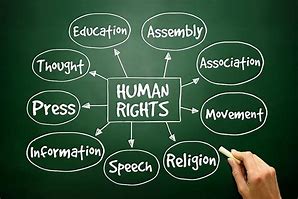
Comey explains how overreaction to 9/11’s attack led to growing suspension of human rights in America.

Abu Ghraib prisoner abuse.

Legislation drawn by the Bush administration condoned CIA’ torture of foreign nationals and anti-American demonstrators. That proposed legislation was opposed by the Attorney General’s office and did not get passed. However, the CIA and some military personnel got ahead of government policy decision in their actions at Abu Ghraib and Guantanamo Bay. The Bush administration did not give up on their desire to allow torture.

Undoubtedly, some actions will be taken before Congressional or bureaucratic approvals but there is hope for restraint based on what the Attorney General’s office (John Ashcroft) objected to when it became aware of the CIA’s actions. The threat of mass resignation by the Attorney General’s office made Bush reconsider what his staff proposed to Congress. One presumes, there will be similar bureaucratic resistance to Trump’s extreme policy recommendations.

Alberto Gonzales (80th U.S. Attorney General from 2005-2007.)

However, despite objections to the torture system practiced by the CIA, Bush’s administration chose a new Attorney General, Alberto Gonzales. In that Presidential choice, bureaucratic policy changed, and torture became an acceptable form of interrogation. Changing bureaucracy leadership is the modus vivendi for Donald Trump’s threat to American Democracy and what can happen in the next four years.

Comey seems a decent person. He is no hero. He is obviously intelligent with a conscience that one would expect from a moral, if not always effective, attorney. Trump is a threat to American democracy but there have been many threats to democracy in our history. We may be surprised by what Trump will do in four more years. The million or more voters who put him over the top deserve what good or bad comes from their choice.

JAMES BALDWIN

James Baldwin’s “The Fire Next Time” gives advice that resonates with the troubles of the world today.

Books of Interest
 Website: chetyarbrough.blog

The Fire Next Time

By: James Baldwin

Narrated By: Jessie Martin

James Baldwin (Author, 1924-1987, African American writer and civil rights activist.)

“The Fire Next Time” consists of two brief essays by James Baldwin that are seminal works on the equality of all human beings. Published in 1963, the first essay is “My Dungeon Shook” which is advice to a young black American. The second, “Down at the Cross…” is a criticism of Catholic and the Nation of Islam religions.

The first is a message to Baldwin’s nephew about white America’s prejudice toward black Americans.

He is telling his nephew to reject white America’s stereotypical view of black Americans. Baldwin tells his nephew to embrace who he is as a human being, neither better nor worse, and to pursue life and living with the truth of his being.

RELIONS OF THER WORLD

“Down at the Cross” is a criticism of religion, particularly the Christian and Nation of Islam faiths. Baldwin argues that both diminish the truth of God by feeding the flames of anti-spiritualism and social inequality.

Baldwin argues through love and understanding of differences among religions and races, the divisiveness of inequality can be erased.

The fundamental point of Baldwin’s writing is that NOI offers a part of what black America needs by instilling self-respect and identity. However, he criticizes NOI’s separatism as counterproductive and extreme. Baldwin advocates love and understanding among all human beings.

Elijah Muhammad (1897-1975, Religious Leader of NOI)

Elijah Muhammed’s advance of the Nation of Islam (NOI) is credited for advocating black empowerment, but Baldwin implies that empowerment mitigates against belief in the equality of all human beings.

Baldwin evolves to a more humanist view of life and declines to take a prominent role either in the Nation of Islam, or the Pentacostal religion he left twenty years earlier. James Baldwin’s “The Fire Next Time” gives advice that resonates with the troubles of the world today.

THE GUILTY

Is there a line that can be drawn that separates those who should be executed, incarcerated, or rehabilitated by the State?

Books of Interest
 Website: chetyarbrough.blog

Dark Tide (Growing Up with Ted Bundy)

By: Edna Cowell Martin, Megan Atkinson

Narrated By: Morgan Hallett

“Dark Tide” is a journey into the “Heart of Darkness”. Like Joseph Conrad’s story, Edna Cowell Martin, with the help of Megan Atkinson, tries to make sense of human madness, societal hollowness, alienation, and lies. Edna Cowell Martin is the cousin of the notorious Ted Bundy who admits to and is convicted of the murder, rape, and mutilation of 30 or more women in the 1970s. Ms. Martin is in her 70s when she finally chooses to tell the story of her cousin, Ted Bundy, who was like a brother in her family.

Ted Bundy (1946-1989, American serial killer.)

Bundy was an illegitimate child raised by a mother and stepfather. His mother refuses to reveal who his father was which is of little consequence except to Ted Bundy and the impact it might have had on who he became. Bundy is shown to be a bright student who graduated from the University of Washington, went to Yale to study Chinese, and became close to the Cowell family. The Cowells were an artistic family with a father who was a classical pianist who traveled the world and became a music teacher at “The College of Puget Sound” and professor emeritus and Chairman of Music at the University of Arkansas.

The author, Edna Cowell Martin, interviewed by Piers Morgan.

Despite Ms. Martin’s wide travel experience because of her father’s profession, she appears to have lived a middle-class life in the state of Washington. Many years after Ted Bundy’s execution, Martin finally writes and publishes “Dark Tide” about this American serial killer, kidnapper, and rapist. She explains the close relationship that the Cowell family had with Ted Bundy. Whether it offers any insight to the mind of such a terrible person remains a mystery.

Ted Bundy at trial for murder.

Bundy appears as a relatively handsome, intelligent young man with a girlfriend and potential for becoming a successful American lawyer, businessperson, or professional. He becomes close friends with the Cowell family. When he is arrested as a murder suspect, none of the Cowells believe he is guilty. They support his release and send letters to explain why he could not be guilty of the crimes for which he is accused. Bundy is released on bail and returns as a friend to the Cowell family.

Bundy as a youth and adult.

Edna Cowell and her friends meet with Bundy after his release and gather at a local restaurant.

Bundy appears to be happy and is glad to see everyone. However, his face is recognized by strangers in the restaurant, and they ask him if he is the “Ted Bundy” in the news. Bundy’s response is unexpected. He appears delighted by the recognition and creates a scene in which he extols his notoriety. This is the first time Edna becomes suspicious of Bundy’s innocence. She does not believe he is guilty but that his glorification of association with a murderer makes her uncomfortable. Why would anyone want to be associated with such a horrible crime? Is any kind of fame okay to Bundy? This is not the person she thought she knew.
Edna keeps turning this incident over in her mind. She begins to wonder if Bundy might actually be guilty, rather than just wanting to be the center of attention.

The terrifying aspect of Edna Cowell Martin’s memoir is what does one person really know about another person? Think of all the people you know and what has happened since you first met them that changed your mind about who they are, what they believe, or what they have become, i.e. at least in your mind.

What is somewhat off-putting is that Edna Cowell Martin argues the State should not have the right to take one’s life even if they are guilty of murdering an innocent person.

Bundy killed and raped an unknown number of women. Is there justification for the State to execute someone for a heinous act that is confessed to by a perpetrator? Is it less humane to incarcerate someone for life who has confessed to a heinous crime? Are human beings, regardless of their crime, capable of being rehabilitated? Every human being is guilty of some transgression in life. Is there a line that can be drawn that separates those who should be executed, incarcerated, or rehabilitated by the State? “Dark Tide” raises all these questions in one’s mind.

ROYALTY

Much may be learned in Adam Zamoyski’s biography of Napoleon Bonaparte but too much detail makes it a slog for non-historians.

Books of Interest
 Website: chetyarbrough.blog

Napoleon (A Life)

By: Adam Zamoyski

Narrated By: Leighton Pugh

Adam Zamoyski (Author, British historian, descendant of Polish nobility.)

Adam Zamoyski overwhelms reader/listeners with Napoleon’s military campaign details which tempt amateur history buffs to put his book aside. Yes, there was the French revolution but understanding the role of Napoleon’s many military campaigns is too complex for an amateur’s understanding of France’s history. Napoleon’s relationship with famous movers and shakers of his time are important, but Zamoyski’s military campaign details are too much. Napoleon’s break with Paoli and Corsica’s ambivalent relationship with France is interesting but Paoli is a largely unknown person to the general public. International relations between France, Great Britain, Poland, Germany, Prussia, and Russia are left to history buff’s inadequate knowledge of history.

In a number of ways, Zamoyski’s biography of Napoleon is disappointing. It is a definitive biography of a legend, but Zamoyski’s history of Napoleon’s life is too complex for a lay audience.

To a historian, Zamoyski’s book is undoubtedly important but to an amateur it is too detailed. For a dilatant of history, the best one gets from the author is that Napoleon was a tactical genius, a great leader who oddly eschews domestic or war-related violence, while becoming among the greatest conquerors of nations in history. After his many campaigns, he turns his genius into a micro-manager of household concerns, international relations, and France’s disorganized governance. Without a military campaign, his tactical brilliance is wasted on vendettas, extra-marital liaisons, and personal expenditures. On the other hand, Napoleon creates a French financial system that supports a massive miliary force with over 60% of its national budget while reorganizing its government’ inefficiencies.
Napoleon descends from a royal family that endeavors to confirm its paternal and landed interests in Corsica. Not clearly coming from royalty is an obsession that follows Napoleon throughout his life. Since, 1769, Corsica is recognized as a region of France, but it is geographically closer to Italy with a rich history of Italian influence.

There is much in Zamoyski’s biography that one learns about Napoleon Bonapart. The young Napoleon is noted as well-educated self-confident, shy-with-women’ person who has interest and understanding of mathematics and a genius for military tactical plans and maneuvers. Napoleon eventually overcomes his shyness with women but only after becoming a leader of men. His extramarital affairs are noted throughout Zamoyski’s book.

At the age of 9, Zamoyski notes Napoleon is sent to a military academy at Brienne-le-Chateau, and later to the Ecole Milita ire in Paris. In his younger years, Napoleon is characterized as a Corsican patriot who admired Paoli, a leader of Corsican independence from France. However, he chooses to follow France and eventually breaks with Paoli and the history of Corsica. Paoli never gives much attention or respect to Napoleon despite his effort to endear himself.

Pasquale Paoli (1725-1807, Corsican patriot, statesman, and military leader who flees to London after failing to rid Corsica of French rule.)

Bonaparte first develops a relationship with the Robespierre brothers (Maximilien and Augustin) in 1793. Great Britain and Spain were allied with French rebels in southern France and Bonaparte met the brothers in opposition to Royalist rebels. Bonaparte’s tactical brilliance routs southern France rebels and forces the Anglo-Spanish fleet to depart. This became the beginning of Napoleon’s rise to prominence in the French military. He is 24 years of age.

Maximilien Robespierre, a friend of Napoleon. (1758-1794, leader of the Jacobin republican movement in France, is condemned and beheaded on July 28, 1794,)

The Robespierre’ brothers, of which Maximilien is the best known, are associated with the Jacobins, an extreme egalitarian group that fomented a French revolution in 1793-94. Maximillian Robespierre instituted the Reign of Terror with mass executions for which he is eventually guillotined in 1794. With the seeds of rebellion planted by the Jacobins, the French Revolution occurs in 1789 through 1799. Napoleon distances himself from the brothers and the Jacobin movement in 1794. He became a “blue-blooded” Frenchman and abandoned his Corsican roots.

Charles Maurice Camille de Talleyrand-Périgord (1754-1938, French clergyman, statesman, and leading diplomat. Died at age 84.)

Another interesting relationship noted by the author is between Napoleon and Charle Maurice de Talleyrand-Perigord, more commonly known as Talleyrand. Talleyrand and Napoleon had a close relationship between 1799 and 1807. Talleyrand acts as France’s Foreign Minister negotiating many treaties that increased Napoleon’s power in both France and Europe. However, Talleyrand becomes critical of Napoleon’s aggressive expansionist policies. He is eventually removed from his ministerial position in 1807.
Czar Alexander I (1777-1825)

In 1805, Czar Alexander joins Russia with Austria in the battles of Austerlitz against Napoleon. However, he switches sides to join Napoleon after Napoleon’s success in Austerlitz. He switches sides again to defeat Napoleon with the British at Waterloo in 1815.

The author notes Talleyrand speaks to Czar Alexander about his concern over Napoleon’s ambition and is alleged to have said he would collude with the Czar to defeat Napoleon. Talleyrand by any measure is a traitor to Napoleon, if not his country. Not surprisingly, Talleyrand (though he remains in Napoleon’s government) had a role in the Bourbon restoration in France after Napoleon’s abdication in 1814.

The diminutive Napoleon next to Czar Alexander I.

One might argue Napoleon did not restore a traditional monarchy but created the First French Empire in 1804. However, this Empire led to the return of the Bourbon monarchy in 1814. Louis-Napoleon Bonaparte, Napoleon’s nephew, became Emperor Napoleon III in 1852, and remained so, until his defeat in the Prussian War of 1870. France did not truly become a Republic until 1870.

Considering the origin of the Bonaparte family, it comes as little surprise that Napoleon decides to return France to monarchy by another name by becoming an emperor.

Louis-Napoleon Bonaparte (1808-1873, initially became the first president of France in 1848 but became its second Emperor in 1852. He was deposed in 1870.)

Despite Napoleon’s predilection for royalty, Zamoyski notes numerous improvements made by Napoleon’s new role in the governance of France. He established the Napoleonic Code that provided a government framework designed to ensure equal treatment by law, protection of property rights, and individual freedom. He centralized government functions within departments to streamline governance. He instituted educational reforms by establishing secondary schools to train future government employees and military officers. He established a banking system to stabilize the economy. Though Napoleon detained the Pope for interfering with French governance, he liberalized control of church appointments by allowing the state some control.

One comes away from Zamoyski’s Napoleon biography with a deep appreciation of a legend in his time and for all time. As a tactical genius, Napoleon sometimes failed to look beyond an immediate problem, but when it came to understanding what is needed to manage a huge organization, Zamoyski shows Napoleon to be a visionary.

As is well known, Napoleon is defeated at the Battle of Waterloo in 1815. Zamoyski notes Napoleon is exiled to Elba where he escapes and is then interned on Saint Helena where he dies in exile from what is believed to be stomach cancer. He died at the age of 51. Napoleon’s confinement at Saint Helena is a sad end to an incredibly brilliant life.

Much knowledge is provided by Adam Zamoyski’s biography of Napoleon Bonaparte, but too much detail about specific battles makes the book much too long for non-historians.

VENGEFUL IDEALIST

The election results are in, and Trump is our President once again. This is a sad commentary on the will of the American people and the threat America is to world economic comity.

Books of Interest
 Website: chetyarbrough.blog

People, Power, and Profits (Progressive Capitalism for an Age of Discontent)

By: Joseph E. Stiglitz

Narrated By: Sean Runnette

Joseph Stiglitz (Author, American economist, public policy analyst, received a Nobel Memorial Prize in Economic Sciences in 2001.)

With reservation, Joseph Stiglitz’s book “People, Power, and Profits” is reviewed here. The reservation is because of the risk of succumbing to echo-chamber’ belief. That belief is that corporations and wealthy individuals should not be able to pour as much money as they want into the American election process, that bankers unjustly escaped punishment for the 2008 financial crises, and that Donald Trump should never again be elected President of the United States.

Stiglitz is considered a “New Keynesian” economist which puts him at odds with famous economists like Milton Friedman and Friedrich Hayek. Friedman believes the most effective fiscal policies comes from monetary policy control by the government. Hayek believed in a market economy with as little government intervention as possible. Stiglitz flatly disagrees with Hayek and only agrees with Friedman in that government has a responsibility to intervene in government economic policy. Stiglitz identity as a “New” Keynesian is because, unlike Keynes’ economic theory, there is no waiting for an economic crisis for government to intervene but to intervene now to make future economic crises less likely.

John Maynard Keynes (English, Eton and King’s College graduate, mathematician, economist, 1883-1946, died at age 62.)

Why I am concerned about listening to Stiglitz’s book about the economy is that I am listening to some things I already believe. I believe the gap between rich, and poor is the greatest threat to, not only American democracy, but all forms of government. Stiglitz may be my echo chamber.

Stiglitz believes in democratic government intervention to ameliorate the wide gap between rich and poor.

Stiglitz has an idealist platform to cure what he views as the solution to narrowing the gap between rich and poor in America. Stiglitz makes five policy recommendations to reduce the gap between rich and poor in America.

  1. Increase taxes on income from capital gains and inheritance.
  2. Use tax revenues to improve public education in ways that equalize costs between the rich and poor.
  3. Refine anti-trust laws to prevent monopolies and promote competition.
  4. Intervene in corporate governance to ensure fairer compensation between management and labor.
  5. Regulate banks to prevent exploitation of the public.

These are defensible polices but they have to survive the give and take political process of American democratic government.

However, that process is unfairly biased by allowing corporations and the wealthy to pour disproportionate amounts of money into the American election process. Contribution by corporations and the wealthy should be limited because candidates are beholding to big financial donors with little concern for the poor.

Small donors driving 2020 presidential race

In the 2020 and 2024 election cycle, big donors contributed from 75 to 78 percent of campaign donations.

The problem with Stiglitz’s book is not in his recommendations but in his vengeful angel’ rhetoric. America is founded on freedom, not revenge. It is the give and take of differences of opinion and “checks and balances” of the Constitution that have made America great. Many mistakes have been made and are still being made by our government but even a horrible President like Trump cannot change the fundamental direction of our democracy.

John F. Kennedy’s belief that a rising tide lifts all boats has not provided life vests to the poor in America.

The gap between rich and poor in America must be resolved. Neither Harris nor Stiglitz may be the answer, but Trump is only going to try to resurrect a past that has led our government in the wrong direction. The unconscionable cost of medical services and drugs, extraordinary compensation for executives, regressive taxes, election financing bias, and financial industry greed must be addressed through the American political process.

American democracy’s failures will not be cured, but they must be addressed and ameliorated to remain a beacon for freedom in the world. The election results are in, and Trump is our President once again. This is a sad commentary on the will of the American people and the threat America is to world economic comity.

AMERICAN SLAVERY

The truth Everett reveals in “James” is that men and women of color are neither the same nor different than other people of the world.

Books of Interest
 Website: chetyarbrough.blog

James (A Novel)

By: Percival Everett

Narrated By: Dominic Hoffman

Percival Everett (Author, Distinguished Professor of English at University of Southern California, winner of the Booker Prize in 2024 for “James”.)

The Booker Prize is a prestigious British literary award for “…the best sustained work of fiction written in English”. The award was first created in 1969. Percival Everett’s “James” is an imaginative work well-deserved of the award. Everett recalls a version of Samuel Clemen’s (Mark Twain’s) character Huckleberry Finn and makes him a white-boy companion of a self-educated slave in the American South. The slave’s name is “James”, called Jim in Everett’s story.

Jim and his family are about to be separated with his sale to a New Orleans slave owner.

Jim finds out that he is to be sold by his owner. Jim chooses to leave the family he loves to avoid separation from his wife and daughter in Hannibal, Missouri. His hope is to reunite with his family by somehow earning enough money to buy his family from their slave owner, i.e. an unrealistic prospect considering the owner’s loss of a slave’s sale. Jim escapes on a raft to an island on the Mississippi river and comes across Huck, a young boy who also escapes to the island. Jim is acquainted with Huck from a friendship he has with Tom Sawyer who plays tricks on people in the neighborhood.

Huck is characterized as Mark Twain described him, i.e., the son of a white father who abuses him. In Jim’s escape to the island, he finds Huck’s father’s body. Huck’s father is dead. Huck is unaware of his father’s death and Jim chooses not to tell him. Huck and Jim decide to leave together on a raft. Jim leaves for obvious reasons. Huck presumably leaves with him because of his troubled relationship with a father who beats him and a mother who has been dead for years.

What is cleverly explained by Percival Everett is how Jim is a teacher to black children in his Hannibal neighborhood.

The essence of Jim’s teaching is to hide the intelligence of black people by teaching children how to hide their intelligence. Jim explains they should talk in the patois of black slang while keeping their own council, appearing respectful to their white enslavers. Everett is symbolically illustrating how slaves were the equals of their slave holders by showing they hid their innate intelligence. Everett’s hero understands the truth of slavery’s iniquity with the story of Jim’s escape and eventual triumph.

What makes Everett’s book an award winner is its pacing and descriptive events that draw reader/listeners into the history of American slavery and the advent of the Civil War.

Everett clearly shows the horror of being a slave. Men and women are beaten, raped, and murdered at the discretion of white people who believe the color-of-one’s-skin marks human beings as property, qualifies them for enslavement, and proves their inequality.

There are a number of incredible surprises at the end of Everett’s story. The Civil War has begun and the fight between North and South are made clear in Jim’s apocryphal return to Hannible with Huck. Huck’s relationship with Jim grows into something Twain never suggests.

The truth Everett reveals in “James” is that men and women of color are neither the same nor different than other people of the world. They are simply human beings.

Everett shows how powerful social interests can grow to treat powerless cultures as property and make them think and feel inferior.

SERVICE TO HUMANITY

Harari explains why bureaucracy and A.I. can mislead as easily as inform. A.I. should never be considered a decision maker but a tool for human understanding of a complex world.

Books of Interest
 Website: chetyarbrough.blog

Nexus (A Brief History of Information Networks from the Stone Age to AI)

By: Yuval Noah Harari

Narrated By: Vidish Athavale

Yuval Noah Harari (Author, Israeli medievalist, historian, and public intellectual serving as a professor in the Department of History at Hebrew University of Jerusalem)

Yuval Noah Harari’s “Nexus” is a perspective on information networks and how they evolve from neanderthal grunts to the fundamental link of society. Harari dissects human history and information networks with an eye toward the existence and future of Artificial Intelligence. Harari’s point is that information networks create, control, and compel change. Civilization began with verbal, then written, then video, and finally digital information that brings human beings together into larger and larger groups.

Networked information creates interest groups. Harari explains these interest groups rise from the evolution of information networks.

With written documents and invention of the printing press, the influence of information spreads across the world. Reproduced documents like government Constitutions, the Bible, Quran, The Torah, The Vedas, The Tripitaka, The Guru Granth Shib, The Tao Te Ching, and The Bhagavad Gita create followers whose understanding of society is reenforced by bureaucratic organizations. Villages, towns, cities, and nations grow from religious organizations and government bureaucracies.

Harari notes how information network’s compel obeisance to group think.

Human conflicts may be based on the desire for money, power, and prestige, but Harari’s point is that the agency of change is the information network. Without cohesiveness of an information network, governments, rebellions, and invasions fail. Successful governments, whether formed from rebellions, or invasions succeed or fail based on bureaucracies that use information networks to influence and indoctrinate citizens of established or acquired territories. The power of information networks is exponentially increased by A.I.

The crux of Harari’s concern is the difference between autocracy and democracy and the harmful potential of a digital age that uses information networks to weaponize and control society with the addition of A.I.

The next great economic revolution, after the Agricultural and Industrial Revolutions is today’s Information Age. I would argue America nearly lost control of the great wealth it created by making the rich richer and the poor unchanged. American democracy’s inequality of opportunity remains a work in process.

America’s failure to provide income equality.

Providing equal economic opportunity is a complicated achievement because it begins with the birth of newborns, acceptance of legal immigration and an education system that fairly serves the needs of society. America is among the wealthiest nations in the world but unlike the Nordic countries and its northern neighbor, Canada, it ranks below the middle for income equality. America’s economic tide is not raising all boats. The Information Age provides an opportunity for America to get its economy right by using A.I. to create a more equal income opportunity for its citizens.

We are moving out of the industrial age.

We are entering the human services age. A.I. presents a second opportunity for America to address income inequality by educating young Americans, immigrants, and citizens to serve the needs of themselves and the people of society. America needs to smooth the transition from being just a product producer to both a producer of goods and services. As A.I. reduces employment for product production, workers should be reeducated to become workers in service to society.

Harari’s book is erudite, enlightening, and worth one’s time to read and understand. He advises of many things beyond what is mentioned in this brief review. Harari explains why bureaucracy is both a good and bad thing and that A.I. can mislead as easily as inform. A.I. should never be considered a decision maker but a tool for human understanding of a complex world.

HUMAN EQUALITY

Darznik’s novel is based on a woman who believed and acted on a conviction that men and women are created equal.

Books of Interest
 Website: chetyarbrough.blog

Song of a Captive Bird

By: Jasmin Darznik

Narrated By: Mozhan Marno

Jasmin Darznik (Iranian born American author with a BA from the University of California and a PhD in English literature from Princeton.)

“…Captive Bird” is classified as a novel. However, it is loosely based on the life of Iranian poet, Forugh Farrokhzad, who defied the traditions of mid-twentieth century Iranian culture. Today’s Iranian culture would undoubtedly be as anti-Farrokhzad as the 1950’s culture in which she lived.

Forugh Farrokhzad

Iranian poet and painter born in Tehran in 1934, died at age 32 from a car accident in 1967.

If even a small part of Darznik’s novel is based on true events, Forugh Farrokhzad was an extraordinary human being who symbolized the truth of sexual equality. In one of the most patriarchal countries in the world, Ms. Farrokhzad rebelled against a conservative and myopic view of women’s rights.

Jasmin Darznik characterizes Farrokhzad as a trailblazer who believed and lived a life of sexual equality.

The story Darznik tells is of a human being choosing to livelife in whatever way her mind and emotions led. Darznik’s heroine fought the restrictions of women’s inequality in a country riven with militant patriarchy. Farrokhzad’s history is one of rebellion against her father, a colonel in the Iranian army, and the societal taboos of Iran, many of which are resurrected in today’s Iranian government.

Darznik’s story is of a woman who acts like a free man, chooses her sexual partners, leaves her husband and only child, and seeks fame as a poet in a land renowned for poetry.

Like a man or any human being, Farrokhzad has sexual desires and ambitions to be something more than a footnote in history. Like husbands who leave their children through divorce or separation, Farrokhzad leaves her son. It is the same habit of many absent fathers who may love their children, but choose, like Farrokhzad, to pursue life beyond being a mother or father.

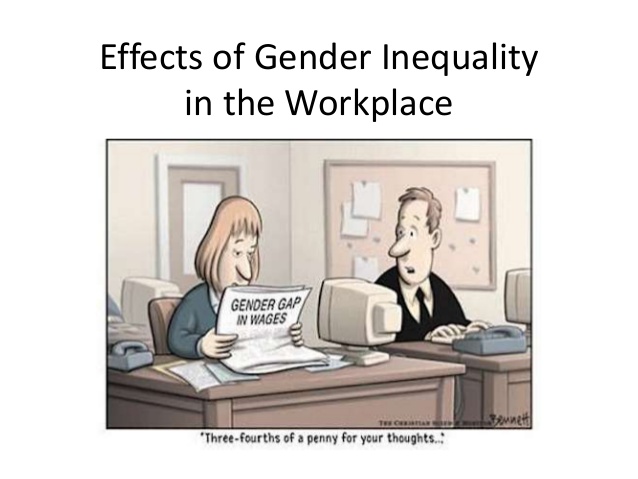
The world is beginning to understand women and men are 99.9 percent the same with fractional differences for conception, and strength.

The desire for sex, money, power and/or prestige are the same for all human beings. What is remarkable about Farrokhzad life is that she seems to have recognized that belief in one of the most patriarchal countries in the world. The way Farrokhzad lived her life, as reflected by the author, shows why men and women should be treated equally.

This is not a lesson many men or women are willing to learn because it challenges societies definitions of masculinity and femininity. The value of learning that lesson is in the liberation of humanity.

What is not mentioned in Darsnik’s novel is that Farrkhzad was also an artist.

This is a painting done by Farrokhzad despite her principal feminist reputation as a poet in the conservative culture of Iran in the 1950s.

The author’s story suggests Farrokhzad’s father commits her to an asylum after estrangement from her family and her rejection of female inequality. In the asylum, Farrokhzad is heavily sedated and subjected to shock treatments that make her catatonic. She is rescued with her father’s decision to allow her to leave the asylum in the care of a rich Iranian woman. This benefactress is a fellow traveler in Farrokhzad’s belief about women. Farrokhzad eventually recovers from her catatonia and continues her liberated life.

Though the dates Farrokhzad’s real life do not match historical events in Iran, Darznik captures the essence of a remarkable Iranian woman.

The shah of Iran, Mohammad Pahlavi is deposed in 1979. The author conflates the history of the oil industry’s unfair monopolization by Great Britain, the King’s departure and Farrokhzad’s storied life. She tragically dies in a car accident in 1967 at the age of 32. (Some suggest the car accident is suspicious.)

Darznik’s novel is a compelling argument for sexual equality. It is based on a woman who believed and acted on a conviction that men and women are created equal. The author’s story is particularly impactful because the woman she alludes to is born in a country that is among the most patriarchal in the world.