Creating a different and better self is as Neal Armstong noted “…one small step for man, one giant leap for mankind.”
Books of Interest Website: chetyarbrough.blog
Atomic Habits (Tiny Changes, Remarkable Results, An Easy and Proven Way to Build Good Habits & Break Bad Ones.)
Author: James Clear
NarratedBy: James Clear
James Clear (Author, earned a biomechanics degree from Denison University in 2008.)
James Clear begins his “self-help” book with a baseball accident. He overcomes a serious injury in his high school years caused by a baseball bat that flies out of a teammates’ practice swing that smashes him between the eyes. It crushes his nose and cracks his skull, causing a brain bleed that nearly ends his life. His recovery leads him to a career as a performance coach for athletes and executives.
Quality of life.
“Atomic Habits” is how he turned that accident into several surprisingly simple insights into how one can improve their life. He suggests it is not a self-help book that tells you what to do but to understand who you believe you are. If you think of yourself as an athlete. you choose your sport and develop the tools that make you that athlete. The author chose baseball as his athletic ambition despite his accident. Clear explains he recovered but failed to make the baseball team in his return to high school.
Clear explains his baseball failure in high school is not because of willpower but because he needed more practice to become what he wished to be.
He went to Denison University. It had a team that gave him the environment he needed to further develop the baseball skills he learned in high school. With further practice and this new baseball environment he became part of Denison University’s team. He became a baseball player; not just a baseball player but the team captain and starting pitcher for Denison University in 2005. Clear’s desire to be a baseball athlete, his practicing the tools needed, and being in a baseball environment were keys to his accomplishments.
Clear notes habits are not goals.
The point Clear makes are that habits are not goals, but habits make up a system for accomplishment of who one wishes to be. Accomplishment is a process, not an end. Practice is a process that has plateaus where, at times, it appears one is not making progress, but continued practice will have breakthroughs if one persists. Clear explains the breakthroughs change how one sees the world, who they are, and their place in it.
First, one must choose who they want to be.
Clear suggests one can change their life by choosing who they want to be. If an introvert wants to be an extrovert, then they need to identify themselves as one who connects with others. To connect with others, one can choose to be an extrovert and be curious about another person rather than think of themselves as bad at small talk. Design a system of connection that is natural and not forced. Building small, intentional interactions with others can be built upon to reinforce extroversion.
You are who you choose to be.
Much of what Clear argues is that one has to change their identity, develop appropriate habits to reinforce a chosen identity, use tools that are obvious and easy to use that reinforce who you have chosen to be and celebrating your successes in redefining your identity. Creating a different and better self is as Neal Armstong noted “…one small step for man, one giant leap for mankind.”
The climax of “Modern Gothic” is where myth enters Moreno-Carcia’s story. The fundamental truths of colonization are revealed in her creative story while its denouement is an entertaining explosion of imagination.
Books of Interest Website: chetyarbrough.blog
Mexican Gothic
Author: Silvia Moreno-Garcia
NarratedBy: Frankie Corzo
Silvia Moreno-Garcia (Author, Mexican/Canadian novelist, editor and publisher.)
Moreno-Garcia’s “Mexican Gothic” is a chilling story of colonization, eugenics, ecological contamination, mystical beliefs, and control of society by men. The author chooses the name of Doyle as an English family that exploits the Mexico’ silver mining industry in earlier centuries. A dynasty is created by generations of Doyle’s. They created a colonial manor called “High Place” from which to rule a crumbling empire. As colonizers they capitalize on Mexico’s silver deposits by exploiting native Mexicans’ land and labor to grow their mining operation. The wealth of local citizens is lost to the English foreigners who keep wages low to increase the wealth of the Doyle family.
Over generations, the Doyle men married local women that were related to each other. A common practice of royalty before the twentieth century.
They wished to maintain the genetic purity of the Doyle bloodline by having future Doyles marry genetic descendants of Mexican women that had been their wives. This is not greatly different than the experience of royal marriages in European cultures. The consequence of that marriage tradition is that recessive genetic mutations become more prominent in offspring. Children were more susceptible to diseases like cystic fibrosis and had higher incidents of developmental and cognitive disorders. This is one of many threads of meaning in “Mexican Gothic” because one of these descendants becomes a murderer of Doyle family members and the current Doyle generation seems socially dysfunctional. Added to that dysfunction is the Doyle family’s diminishing wealth.
An arranged marriage is a lynch pin to the story.
The heroine, Noemi, is the daughter of a wealthy Mexican family. She is sent to investigate a letter that was received by her father from a young woman that marries a Doyle. She is a cousin of Noemi’s. The marriage is arranged in part because of her father, and he feels something is wrong and wants Noemi to visit the Doyle family to find what the mysterious letter means. Soon after Noemi arrives, she begins to have hallucinatory dreams. Listener/readers find the hallucinations are because of spores that are in the bedroom of the deteriorating Doyle house. A clever thread of meaning in Moreno-Garcia’s story is ecological contamination that comes from colonization. As one nation colonizes another, it inevitably brings different plants and animals that are not indigenous to the country they are colonizing. The author notes a fungus is growing in the Doyle household that may have come from the original colonizers.
The penultimate theme in “Modern Gothic” is the creation of myths that compound the horrific events that occur in the Doyle house.
From the history of murders in the Doyle household, to hallucinatory dreams, to incestuous relationships, to the gloom and doom of the story, to a myth about the age of the Doyle patriarch, Moreno-Garcia offers a climax to her story that vivifies reader/listener’s imagination. The climax of “Modern Gothic” is where myth enters Moreno-Carcia’s story. The fundamental truths of colonization are revealed in her creative story while its denouement is an entertaining explosion of imagination.
Nadel reports Robert Crumb’s life and antics without criticism which seems appropriate because he is simply recounting a human beings’ life. Nadel does not act as a judge but as a reporter of a lived life.
Books of Interest Website: chetyarbrough.blog
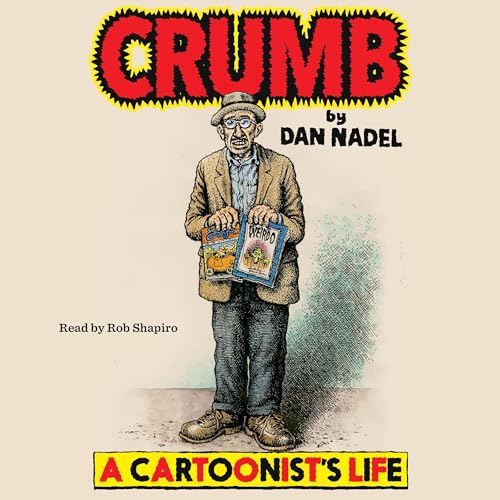
Crumb
Author: Dan Nadel
NarratedBy: Ron Shapiro
Dan Nadel (Author, curator-at-large for the Lucas Museum of Narrative Art in Los Angeles.)
“Crumb” is a well written biography of Robert Crumb, the cartoonist. The subject matter is of interest to me because of the remarkable talent of a disheveled young man with coke bottle glasses that has a gift of drawing. That gift provides him wealth and success despite coming from a troubled household that gives him an eye for the weirdness of life. He and his brother, Charles who was 1 year older, began a monthly hand-drawn comic book when he is 15 years old. They sold it door to door in the late 1950s. Charles wrote the stories and Robert illustrated them. Nadel shows how that early life experience sharpened Robert’s artistic skills and planted the seeds for his future success.
R. Crumb drawing of himself.
Nadel notes how Crumb’s drawings are deeply personal and sometimes disturbing because they capture the inner conflicts within Crumb’s life while tapping into the undercurrents of postwar America. Crumb’s work delves into the male id and its impulses exposing sexual obsession, neurosis, and human alienation. Crumb’s life story borders on a confessional and makes one confront their own obsessions. His comics delve into consumerism and conformity about race and gender with a biting satire that makes one realize the absurdity of American, if not all, human life. Nadel suggests Crumb’s work is an unfiltered chronical of the life he lived and lives.
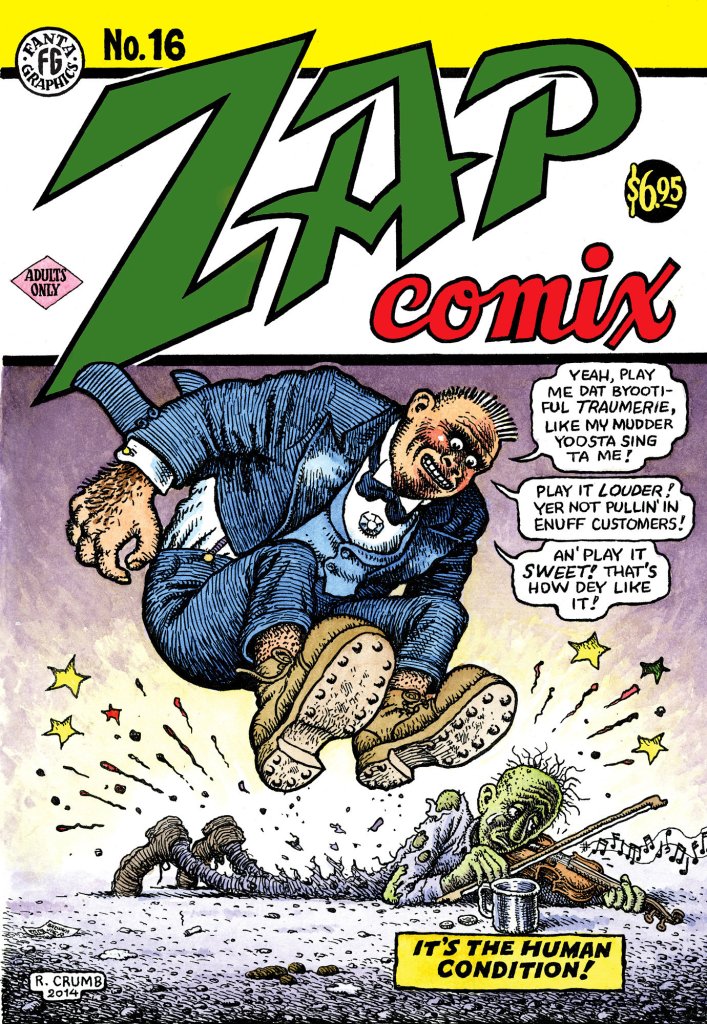
Robert Crumb gained fame in the 1960s counterculture when Zap Comix was released in 1967.
“Mr. Natural” and “Fritz the Cat” became cult icons illustrating the absurdity of life. Nadel suggests Crumb’s subjects are expressions of his working through his personal demons. Some of his images are racist and misogynistic which paints a picture of a troubled society. His subject matter ranges from popular music, counterculture, the history of comics, to graphic satire.
Fritz the Cat
Nadel explains Crumb is married twice. His first marriage to Dana Morgan falls apart in part because of Crumb’s emotional volatility, but also because of the cultural upheaval of the 1960s. Nadel explains Morgan was the first woman Crumb had sex with which is complicated by Crumb’s confusion about sex. Crumb’s fame increases. He experiments with LSD. These dramatic changes in his life increase his discontent. There seems no single reason for the divorce. Crumb moves to San Franciso in 1967 to immerse himself in a counterculture and the comix scene.
Crumb meets Alaine Kominsky in 1972, and they marry in 1978. Their creative partnership blossoms with the creation of autobiographical comics that reveal the quirks, conflicts, and affections of their relationship. Their joint work is “Dirty Laundry Comics”. Ms. Kominsky dies in 2022.
Nadel notes that Crumb insisted on honesty when he agreed to have his biography written. Aline Kominsky is acknowledged as a stabilizing force in Crumb’s life. Crumb lived through America’s wars, the psychedelic age of the 60s and has now has reached the age of 81. Nadel explains much about Crumb’s turbulent life and how that turbulence shaped him and his art. Nadel offers a layered and empathetic portrait of R. Crumb, the ups and downs of his life, without excusing or condemning the beliefs, actions, or art of his long life.
Crumb’s behavior like jumping on the backs of women for piggyback rides and his racially charged imagery is uncritically reported.
Some of what Crumb illustrated in his art and what he did with his piggyback rides undoubtedly insults the public. In many ways, Crumb marginalizes society with his racist and misogynistic comics. Nadel reports Robert Crumb’s life and antics without criticism which seems appropriate because he is simply recounting a human beings’ life. Nadel does not act as a judge but as a reporter of a lived life.
Crumb’s parents were poor. He lived in poverty but overcame its limitations with the art of drawing that opened the world of commerce to him. From comics to greeting card drawings and back to comics, Crumb became a maven of the art of irreverent behavior.
Trump’s push to hugely increase government debt at the expense of the poor and middle class, along with a tariff war, look to some like paths toward an economic Armageddon.
Books of Interest Website: chetyarbrough.blog
On Tyranny (Twenty Lessons from the Twentieth Century)
Author: Timothy Snyder
NarratedBy: Timothy Snyder
Timothy Snyder (Author, graduated from Brown University with a degree in history and political science, received a Doctor of Philosophy in modern history from the University of Oxford.)
“On Tyranny” makes one research Timothy Snyder’s education because of his allusion to the rise of Hitler and America’s rising authoritarianism in the 21st century. His short book “On Tyranny” is disconcerting. He infers Trump’s presidency is an early sign of American democracy’s deterioration. He recounts the rise of German complacency when Hitler came to power and Nazi’ support for victimization of Jews and invasion of Poland are the beginning of a plan to reorganize spheres of influence in Europe.
Snyder’s observation is undoubtedly to create a sense of moral urgency on the part of American listener/readers to do more than just observe what is happening in America. Not that it is about Jewish discrimination but about American government rounding up and deporting alleged illegal immigrants without due process and sending them to prisons in other countries. Snyder is a scholar who specialized in Eastern European totalitarianism which suggests he knows something about the precursors of authoritarianism.
Trump (Born in 1946).HITLER (1889-1945)
It seems the comparison of Trump to Hitler is hyperbolic when one considers the dire financial condition of Germany in the late 1920s. However, Trump’s push to hugely increase government debt at the expense of the poor and middle class, along with a tariff war, look to some like paths toward an economic Armageddon. If the economy falters, would America fall into Germany’s past? One doubts that will happen, but with a President who believes his own lies and Americans who accept them gives listener/readers of “On Tyranny” a chill. The power of Snyder’s argument gains some credibility.
It seems with the history of the United States, federal government checks and balances, and the limited tenure of elected Presidents, a Nazification of America seems unlikely. However, the danger is there because Trump has strong support from his party and many Americans who voted for him who choose to ignore his lies.
Greene explains self-awareness of introversion or extroversion is key to understanding one’s social limitations and blind spots in being a constructive part of society.
Books of Interest Website: chetyarbrough.blog
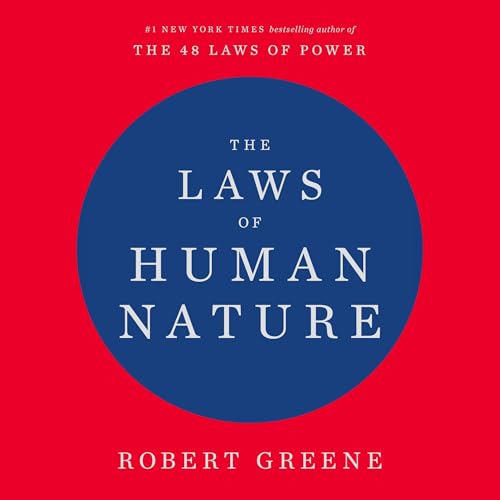
The Laws of Human Nature
Author: Robert Greene
NarratedBy: Paul Michael & 1 more
Robert Greene (Author, with several NYT’s bestsellers addressing human nature, graduated with a degree in classical studies.)
“The Laws of Human Nature” is a tour deforce of what one learns in life about being a good manager. The difference between a technically excellent employee and a manager is that the first has skill in doing things while the second has skill in managing those who do things. Occasionally, one can be both, but as the complexity of life increases, the likelihood becomes rarer. Human nature revolves around behavior and one’s psychological characteristics. Greene argues there are fundamental laws of human nature that can enlighten listener/readers about themselves and others.
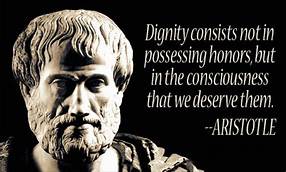
Aristotle (384-322 BC)THOMAS HOBBES (1588-1679)Rousseau (1712-1778)CHARLES DARWIN (1809-1882) FOUNDER OF THE THEORY OF THE ORIGIN OF SPECIES.
Aristotle’s, Hobbes’, Rousseau’s, and Darwin’s views of human nature have different perspectives. Aristotle believes human nature is teleological with a belief that we all have purpose that is revealed by reason and virtue. Hobbes believes humans are innately self-interested and capable of both good and bad behavior. Rousseau believes humans are inherently good but corrupted by society. Darwin believes humans evolve through natural selection and will do whatever is necessary to survive. Of the four perspectives, Aristotle seems the most idealistic while the other three account for human nature’s irrationality.
Greene suggests humans can be irrational, narcissistic, misleading, and sometimes repressive.
What one can draw from his book is how those characteristics exhibit and what one can do about it. The potential of irrationality exists in everyone. It can cause fear, envy, insecurity, and desire. Bias is at the heart of these emotions. He turns to ancient history to give the example of the war between Spartans and Greeks that may have been avoided if heightened emotions had not been aggravated by a plague in Greece and the death of Pericles who had a rational plan to avoid war. Greene suggests Augustus defeats Anthony to become ruler of Rome because of Anthony’s neglect of his duty as leader of Rome for the desire of the Egyptian Queen, Cleopatra. Greene notes irrationality is a universal characteristic of humanity. The anecdote is to calm one’s emotions, clearly understand what it is that you fear, and to mirror back that clear understanding to yourself and change your behavior.
One can see narcissism in themselves or others when one seeks admiration, overreacts to criticism, has no interest in others perspective, or manipulates others by ignoring or emotionally withdrawing attention.
Married people often do this with their significant other. Greene explains self-awareness, seeing others through their eyes, redirecting your energy to something more important, and being more disciplined can abate narcissism. He notes narcissism is not a flaw but a force that can be turned to good. The history of Oppenheimer, considered by some to be narcissistic, is noted as an example of someone who saw the big picture of life and the consequence of war. He came to understand something bigger than himself and successfully manages other scientists to create the first nuclear bomb. The contrary of a narcissist who could not see the big picture is the story of Howard Hughes who could not manage his father’s company or his entry into the film industry because he could not get things done through other people. He believed only he could handle the complexity of a film production and plane manufacturing company. No one could work under him because of his uncontrolled narcissism that interfered with others he hired to help him manage businesses bigger than one mind could control. His managers resigned because he would not allow them to do the job they were hired to do. Hughes failed as a movie producer and plane manufacturer because of his narcissism.
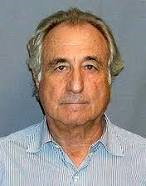
Bernie Madoff (Born 1938, died in Federal Medical Center in 2021)
History is festooned with misleading information by people who distort the truth in order to achieve their personal goals. Greene recalls the history of swindlers like Bernie Madoff that lied to his investors about investments that were Ponzi schemes that fed his investment company’s growth, not from honest investment in publicly traded stocks or business enterprises.
STALIN (1878-1953)
Stalin in Russia, is the penultimate example of a psychological characteristic of repression. One suspects the same is true of Putin. Even America’s President Trump could be characterized as a narcissist. He used federal power to investigate and punish political opponents. Trump politicized the civil service by conducting mass firings to replace employees that were loyal to his agenda. Justice Department’ independence has similarly been restructured. Trump suppresses dissent and free expression by cracking down on student protests, detained and deported not only illegal immigrants but U.S. citizens. He ended asylum protections and militarized crackdowns with the use of the National Guard and U.S. marines to aid ICE in deporting undocumented immigrants and quelling public opposition. All of these actions are examples of an increasingly repressive American President. There were similar arguments about Franklin Roosevelt in his early actions to rescue America from the pre-WWII’ depression.
Greene goes on to explore personality types that are a combination of extroversion and introversion characteristics.
He notes both characteristics have strengths and weaknesses. Extroverts generally have more social fluency, have a more charismatic presence and higher social visibility. They can also become subjects of envy or derision because of their high profile. Greene suggests they are more vulnerable to manipulation because their habits reveal too much about themselves. They become more susceptible to groupthink rather than individual judgement. On the other hand, introversion has equivalent but different strengths and weaknesses. Introverts have more control over themselves because they reveal less of themselves to others. They are naturally less likely to succumb to groupthink. On the other hand, they tend to misread socially valuable influences because of their isolated view of the world. They fail to offer their opinion because of fear of self-exposure and ridicule which diminishes their understanding of beneficial social norms.
Greene explains self-awareness of introversion or extroversion is key to understanding one’s social limitations and blind spots in being a constructive part of society. However, his analysis of “The Laws…” of human nature becomes tedious because it offers too many examples and views of biases and their anecdotes for most listener/readers to be patient enough to complete his book. Nevertheless, Greene’s first chapters are enlightening and worth one’s time.
In reading/listening to Chomsky some will conclude he is wrong about there ever being a nation-state that will be successfully governed as an Anarchy because of the nature of human beings.
Books of Interest Website: chetyarbrough.blog
On Anarchisn
Author: Noam Chomsky, Nathan Schneider
NarratedBy: Eric Jason Martin
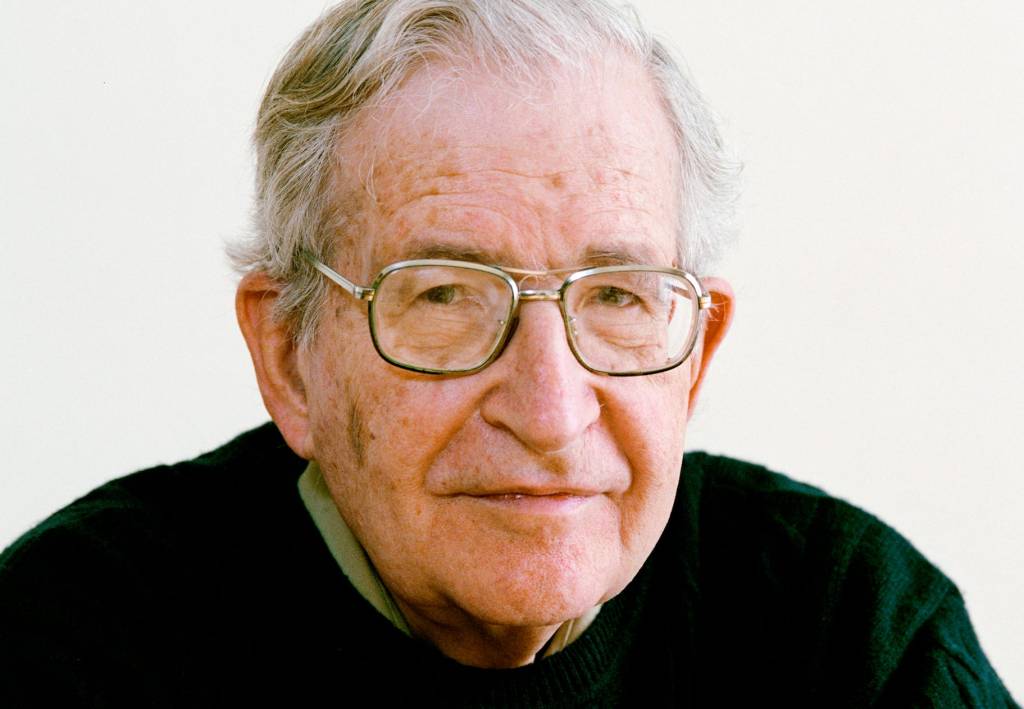
Norm ChomskyNathan Schneider
When one thinks of a political system called Anarchism, the first thing that comes to mind is a vision of rampant disorganization where there is no sense of direction or social cohesion.
Noam Chomsky is a polarizing figure who is admired as an anti-capitalist and anti-imperialist who fiercely criticizes U.S. and Israeli foreign policy. He views Israel as a client state of the U.S. that relies on authoritarianism to manage their countries roles in the world. He notes America’s interventions in Vietnam, Central America, Iraq, and Afghanistan as evidence of America’s failure as a democracy. He views Israeli foreign policy in regard to Gaza as infected with hypocrisy and violence with a narrow view of territorial expansion. He feels both America and Israel are driven by strategic and economic interests, not by the idealism of democracy.
Chomsky is a fierce critic of capitalism and imperialism because both marginalize citizens’ freedom of thought and action.
Chomsky’s view is that anarcho-syndicalism is a better form of government where power is decentralized and citizens can and should collectively manage their own affairs through direct democracy and cooperative organizations. He argues for participatory democracy by voluntary associations that are freely formed into cooperative communities. There should be no centralized authority with all workplaces and production controlled by the workers themselves. He believes in libertarian socialism because he sees it as the most humane and rational extension of Enlightenment ideals in society. Any authority exercised by a government entity in a libertarian socialist country, in Chomsky’s opinion, is the most humane and rational extension of the ideals of the Enlightenment.
The Age of Enlightenment or sometimes called the Age of Reason was a movement in the late 17th century that extended into the 19th century.
It emphasized the power of reason, science, and individual liberty as the tools for the reform of society. The tools of reason, science, and liberty were believed to be the natural rights of humanity, and the possibility of improving society through education and reform based on science.
Francisco Franco (Spain’s dictator 1939-1975.)
Chomsky argues those tools were engaged by Spanish revolutionaries during Franco’s dictatorship in Spain. Chomsky notes workers took control of factories and farms in Catalonia and Aragon that were run collectively and democratically by workers. He believes voluntary cooperation thrived. He believes the anarchist movement grew through three generations based on education and considered organization of Spanish interest groups. However, Franco’s forces with the help of England, Germany, and Italy defeated the movement.
Republican factions fought against Franco’s government in the 1930s.
Chomsky believes revolutionaries against Franco were practical visionaries that showed how anarchy could be a legitimate and superior way of governing a nation.
Surprisingly, there are several examples besides Spain’s revolution that were collectivist organizations that could be classified as anarchies. From 1918-1921, the free territory of Ukraine was led by Nestor Makhno during Russia’s Civil War. It was ended by Russian communism after its ascension in 1917. Modern communes were set up in Mexico’s Zapatista territories with autonomous zones that had collective farming and indigenous self-rule. Of course, in ancient times there were hunter-gatherer societies that shared norms, and governance through consensus decision-making and resource sharing. However, there is a history of atrocity, failure, and disruption by governing bodies that have tried Anarchy. Spain’s effort fell apart in 1939. Freetown Christiania in Denmark, in a neighborhood in Copenhagen has struggled with Anarchy since 1971. A number of legal battles have been fought over commercial ownership and control. By some measures, the kibbutz movement in Israel has been successful. However, even Chomsky notes friction comes within kibbutz communities over disagreement with elected leaders. Research shows that some kibbutzim are privatizing and paying differential wages for communal services. Collectivism is becoming harder to maintain.
Chomsky is considered by some to be the most important intellectual alive today. He is highly respected for theories on the understanding of language based on modern cognitive science.
Chomsky has shaped how we think of human capabilities. He is famous for his dissents which are naturally about government control and media manipulation. He was against the Vietnam war and opposed Israeli occupation because of his libertarian socialism, a form of anarchy or a collective that is purely democratically determined. He is reported to be an excellent lecturer and capable of going toe to toe with experts in linguistics, philosophy, political science, and education. His opinions have global reach with translations in many languages.
In reading/listening to Chomsky some will conclude he is wrong about there ever being a nation-state that will be successfully governed as an Anarchy because of the nature of human beings. Whether one believes in Hobbes’ view of selfish humans, Rousseau’s belief in people being corrupted by society, Kant’s belief in rationality, or Sartre’s belief in human choices and actions, there will always be dominant personalities who will victimize those whom they commune. Human nature as defined by Hobbes, Rousseau, Kant, Sartre, and other brilliant philosophers infer there will always be miscreate leaders that will destroy egalitarianism, the foundational principle of anarchy. Human nature, as it exists today, is unlikely to change.
Dody wrote this book to suggest every American who thinks they have achieved success in life is often mistaken. In today’s world, the President of the United States could learn something from James Dody’s story. On the other hand, is anyone in their 70s likely to change?
Books of Interest Website: chetyarbrough.blog
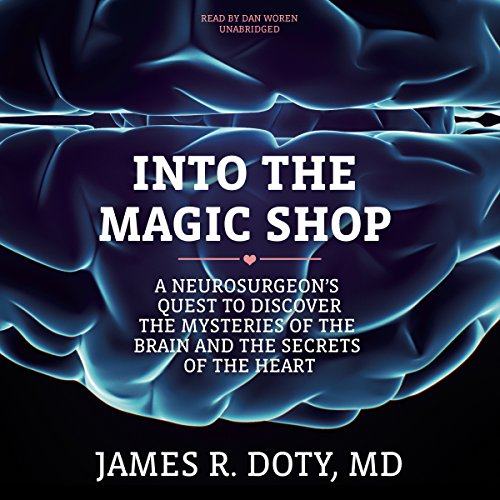
Into the Magic Shop (A Neurosurgeon’s Quest to Discover the Mysteries of the Brain and the Secrets of the Heart.)
Author: James R. Doty MD
NarratedBy: Dan Woren
James Doty (Author, MD, clinical professor of neurosurgery at Stanford University, director of the Center for Compassion and Altruism Research and Education.)
“Into the Magic Shop” is a nearly unbelievable life story of James Doty written from his recollections of growing up in Lancaster, California. It will change opinions about a number of misconceptions one may have of American opportunity, brain surgery physicians, and the influence a mentor may have on a person’s life.
Doty is obviously blessed with intelligence, a gift to persuade, and a drive to exceed the expectations of lower economic class Americans.
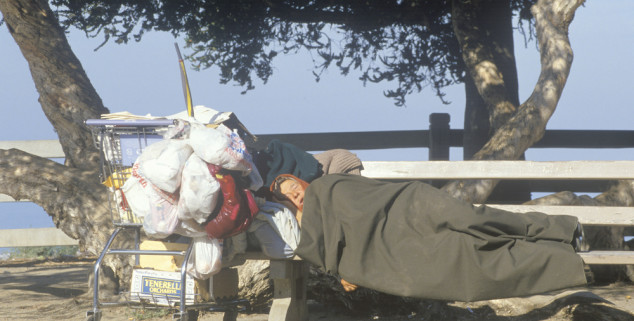
Doty is born into a poor family with a father who is characterized as an alcoholic and a mother with suicidal tendencies. Despite these humble and troubled family circumstances, Doty achieves the remarkable goal of becoming a brain surgeon who is now a professor of neurosurgery at one of America’s leading ivy league universities.
“Into the Magic Shop” shows how important a mentor can be to a person nearing the age of puberty (between 9 and 14).
Doty explains he had an early interest in magic and chooses to visit a magic shop in which there is a woman with a grown son who manages the shop. She is visiting her son and takes a liking to this young boy who stops by the shop to buy a false finger he uses for a magic trick. They strike up a conversation and the mother of the store manager makes a deal with Doty to come by the magic shop to see her for the several weeks she plans to be there before leaving.
Doty tells of a confrontation he has with two bullies that are abusing a smaller student when Doty is on his way to the magic shop.
One infers from Doty’s story that he is tall for his age. Doty tells of a confrontation he has with these two bullies that are abusing a smaller student when Doty is on his way to the magic shop. Because of Doty’s earlier mentor’ discussions with the mother of the magic shop manager, he approaches the bullies while using a breath control exercise to calm himself in a confrontation. Instead of escalating confrontation with the bullies, Doty maintains his composure while talking to the bullies about their poor behavior. Doty is able to walk away unharmed after interrupting the abuse of the smaller boy.
There are a number of life lessons Doty learns from the store manager’s mother.
Dody learns how to relax his body and tame his mind when faced with adversity. She explains how visualizing good things like success from personal effort can shape one’s future. Believing in oneself and focusing on what you want to achieve offers purpose and achievement in life. She explains how understanding one’s emotions and being compassionate allows one to let go of fear and shame which helps him realize his parents are dealing with life in the best way they can. Importantly, these weekly meetings help Doty understand how daily practice with the magic of meditation offers peace and understanding with one’s thoughts about compassion and personal accomplishment. Fully understanding compassion comes later in Dody’s life, but personal accomplishment begins from the first days of his mentor’s teaching. Most importantly, his mentor explains how he can develop a balance between physical well-being, love, and respect for others.
Doty’s family is on the verge of eviction for non-payment of rent.
In following his mentor’s suggestion, he visualizes a better outcome than the embarrassment of an eviction. Serendipitously, a person who owed his father money appeared at the doorway with a repayment that allowed the family to avoid eviction. Doty surmises positive visualization and meditation have the power to change one’s future. He plans to graduate from high school and visualizes going to college to become a doctor. Though he does not have the money for tuition, he applies to a California university and is accepted as a beginning student with financial aid for his education.
“Into the Magic Shop” revises one’s opinion of surgeons in the sense that there are some who see their patients as whole human beings rather than victims of neurological dysfunction.
Secondarily, one realizes where one comes from is not where one is destined to remain. Doty’s young academic career is festooned with family emergencies and lack of funds that challenge his road to education as a surgeon. His father dies before he can reach him, but he has a dream of his father just before his death that praises him for his accomplishments.
Doty’s early life experience with his magic shop mentor taught him mindfulness, visualization, and the power of intention.
In earlier years of his success, he discounts his mentor’s advice about compassion. Mindfulness, visualization and power of intention result in his success in becoming a neurosurgeon. The criteria of academic performance created admission roadblocks that were overcome by this vision and persuasive ability to clearly show his skill as a human being and future physician. He often voiced disagreement with administrative bureaucracies that challenged his authority. He faces many challenges but clear vision of his role as a caring physician overcame much of his supervisors ill will toward him. He gained experience at Walter Reed Army Medical Center while serving 9 years in the U.S. Army. He became chief of pediatric neurosurgery at Children’s Hospital in Orange Country, California that led him to complex spine surgery at Stanford.
“Into the Magic Shop” is partly about becoming a surgeon.
But its primary message is that every human being can change the course of their lives by committing to one’s goal in life by clearly focusing on an objective and using innate abilities to achieve it. Those lessons came easily to Doty until he is nearly bankrupted by investments when the dot-com financial crash in the early 2000s wipes out his and many others’ wealth.
Dody’s financial collapse led him back to studying the notes he took from his long past counseling with his mentor.
In reading those notes, Dody realizes the lesson he had forgotten was to practice compassion for others in his life. He had become a wealthy American and thought he had lost it all. What he had not lost was the magic explained to him by his mentor. He was a surgeon now and what money he lost was just a measure of wealth, not his ability to be a successful physician.
Compassion.
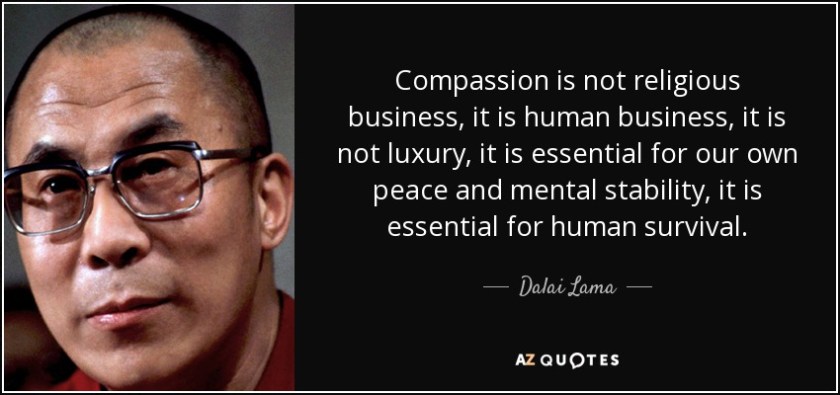
Dody rebuilds his life but now understands how important compassion is to success in life because its reward is not based on wealth but on the contribution one can make to others. He becomes acquainted with the Dali Llama and the magic he had forgotten from his mentor, namely compassion, returns as Dody’s guide to life.
Dody wrote this book to suggest every American who thinks they have achieved success in life is often mistaken. In today’s world, the President of the United States could learn something from James Dody’s story. On the other hand, is anyone in their 70s likely to change?
Modern marriage expectation has become a way to provide security and freedom with stability and novelty. In Perel’s opinion, these paradoxical expectations were of less concern in the past but of central concern today.
Esther Perel has written a difficult book to listen to. It is about human relationship, focusing on love, desire, and sexual behavior. Perel begins with a history of the evolution of marriage in prosperous western nations. Though equality of women is far from accomplished, their entry into the postindustrial world is dramatically changing sexual relationships. The days of men treating women as objects is not over but gradually moving toward sexual equality.
Sexual inequality.
Normal human beings (whatever that means) experience some form of love or desire that elicits sexual behavior. Perel’s book is difficult because she holds a mirror up to every human being that exposes their inner failings as adults and maturing children. The difficulty comes from reviewing one’s own life when listening to her clinical analysis of infidelity, affairs, a victim-villain analysis, and sexual desire that permeates most human lives.
Traditional moral beliefs are zero-sum judgements of sexual desire and experience.
Perel tries to remove judgement by not saying infidelity is not a sin but a psychological and relational failing of human beings. She suggests infidelity is caused by unmet emotional needs, personal identity struggles, and/or a search for eternal vitality. This, in many ways, is no less devastating to one’s relationship even if it is characterized as a sin. Infidelity is a personal failure whether one is judged by a religious person or a psychotherapist who may not believe in divine judgement.
Perel believes humans are constantly seeking meaning in their lives.
We don’t just want to survive. Our cultures and histories have shaped us. We are erotic human beings, searching for security, vitality, imagination, and joy. Perel recognizes people can love their partners and still have a sexual desire for others. Recognizing the lure of sexual desire, Perel notes fidelity becomes a choice that offers an anchor and depth of understanding in a committed relationship. She notes betrayal has consequences while fidelity is a powerful container for sexual pleasure, if not love, and another kind of relationship growth.
Fundamentally, Perel is saying fidelity is important despite a marriage partner’s sexual desire for others.
She gives examples of therapeutic sessions of couples who have extramarital affairs that violate their presumptive marriage covenants. A betrayal can be by either partner, but the loss of trust is often irreparable. Because marriage has become less about economics and social stability, though both are still present, Perel infers married partners are emotionally more devastated by betrayal.
In modern times, Perel argues people marry for love, intimacy and personal growth more than economic security.
She suggests communal structures have weakened and community support is lost when a marriage falls apart. That rings true based on the mobility of people in the modern age. It has become much more common for people to leave the areas in which they were raised. Modern marriage expectation has become a way to provide security and freedom with stability and novelty. In Perel’s opinion, these paradoxical expectations were of less concern in the past but of central concern today.
This listener is inclined to have reservations about Perel’s assessment of present-day marriage and infidelity because of women’s inequality of opportunity, i.e., the same reality that exists for many in America.
Wittgenstein’s philosophical belief is that words matter. To Wittenstein, words are not just sounds and symbols–they are the scaffolding of humanity’s shared reality and continuing search for truth.
Books of Interest Website: chetyarbrough.blog
Wittgenstein
Author: Hans Sluga
NarratedBy: Ken Maxon
Hans Sluga (Author, Professor Emeritus of Philosophy at U of C.)
Ludwig Wittgenstein (1889-1951, considered by some as one of the greatest philosophers of the twentieth century)
This is a difficult introduction to the philosophy of Ludwig Wittgenstein. One is unsure of whether it is difficult because of the author’s explanation or the abstruse nature of Wittgenstein’s writing. Sluga notes there is an early Wittgenstein philosophy and a later Wittgenstein philosophy. There is the 1921 “Tractatus Logico-Philosophicus” published in 1921 and a later “Philosophical Investigations” published in 1953.
In both publications, Wittgenstein’s philosophy is about language and its use to explain reality. The 1921 publication argues what can be said clearly can be said by all and when it cannot be said clearly the speaker should be silent. In 1953, Wittgenstein argues reality only has meaning as language is used to describe it.
The difficulty of grasping Wittgenstein’s later philosophy is knowing whether what one says about reality is true or false.
Wittgenstein notes problems arise when language is pushed beyond its utility for understanding. Wittgenstein implies there are realities that cannot be meaningfully described by language. He is redefining philosophy as a matter of understanding how language works rather than understanding some objectively understood reality.
If language is the source of reality, how can one know what is true or false based on how one’s language explains it?
The argument is that Wittgenstein is saying there is no reality except that which one can identify through language. Reality and truth exist but it is defined by public, practical, and embedded use of one’s common language. Truth is based on precise language broadly accepted by those who use language to explain reality. The difficulty of that idea is in fundamental science that changes because of newly discovered knowledge.
This later philosophical belief of Wittgenstein’s means truth is no longer absolute but contextual based on words used to describe it through science, law, and ethics of the time in which it is explained.
Wittgenstein’s philosophy is troubling. What is to keep humans from one country creating language that suggests they are a superior species and can destroy cultures other than their own? Wittgenstein’s answer is that languages are not hierarchical so words of another culture or nation have equal weight. His meaning is that reality is based on all public languages, not a private nationalist language. He writes “Philosophy is a battle against the bewitchment of our intelligence by means of language”. Further, he notes a singular culture cannot weaponize words because words are a universal medium for understanding reality.
Wittgenstein’s philosophical belief is that words matter. To Wittenstein, words are not just sounds and symbols–they are the scaffolding of humanity’s shared reality and continuing search for truth.
Governmental and educational institutions are the foundations of Democracy. They must stand and support the right to free speech without committing, allowing, or condoning violence in the exercise of that right. (Of course, this is easy to say but difficult to follow because of the loss of emotional control by protectors of the public and/or protesters.)
Books of Interest Website: chetyarbrough.blog
The Coddling of the American Mind (How Good Intentions and Bad Ideas are Setting Up a Generation for Failure)
Author: Jonathan Haidt, Greg Lukianoff
NarratedBy: Jonathan Haidt
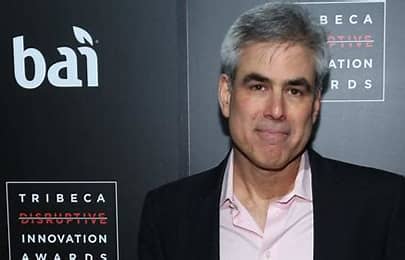
Jonathan Haidt (Social Psychologist)Greg Lukianoff (Lawyer & free speech advocate.)
This is an interesting book written by a social psychologist and a free speech advocate. The authors suggest the focus for parents of Generation Z have, in some ways, become overly protective of their children. They argue– Gen Z’ parents are not addressing the mental health issues caused by this technological age. Jonathan Haidt and Greg Lukianoff argue society has become more attuned to children’s protection than the reality of living in a world of diversity.
With the societal change that has accompanied the birth and maturation of Generation Z, immersive tech like AR and VR, along with AI and smart devices, is having profound effects on society.
Haidt and Lukianoff suggest parents focus too much on keeping their children safe to the point of stifling their intellectual growth. The example they give is of the mother who is publicly ridiculed for allowing her 8-year-old son to find his way back home from a city market by mass transit. She prepares him for the excursion with a transit schedule, pocket money, a cell phone, and general information he needs to find his way home. The boy successfully finds his way home and allegedly expresses happiness about what he views as an adventure and accomplishment.
Undoubtedly, there is some truth to the authors’ suggestion that parents are too protective of their children. Thinking of a single mother who has to work but has children at home. Many single parents cannot afford a babysitter, so leaving their children during the day is not uncommon. Single parent families do the best they can but if children are old enough to fill a cereal bowl for breakfast, they are expected to take care of themselves.
John Walsh (Became a child protection advocate, producer, and actor after the murder of his son.)
On the other hand, the writers note the horrible tragedy of John Walsh who’s six-year-old son is kidnapped in 1981. The six-year-old is found two weeks later with a severed head. Though child kidnappings rarely end in such a horrific way, one can understand why many parents became highly protective of their children after the 1980s. Haidt and Lukianoff acknowledge the horrific murder of Walsh’s son, but history shows unsupervised children that are harmed is much less than 1 percent of the dependent children population. What the authors suggest is that some of the overprotection of children since the Walsh tragedy in 1981 has been counterproductive.
Allergy immunity.
As an example of over protection, the authors suggest peanut butter allergies have risen because of inordinate fear by the public. They suggest that early life exposure to peanuts would have provided immunity and fear of exposure is the proximate cause for today’s rise in allergic reactions. Putting aside the theory of a human body’s creation of developing an allergy immunity, the frustration one has with monitoring a child’s life experience is in knowing where to draw the line between reasonable supervision and overprotectiveness.
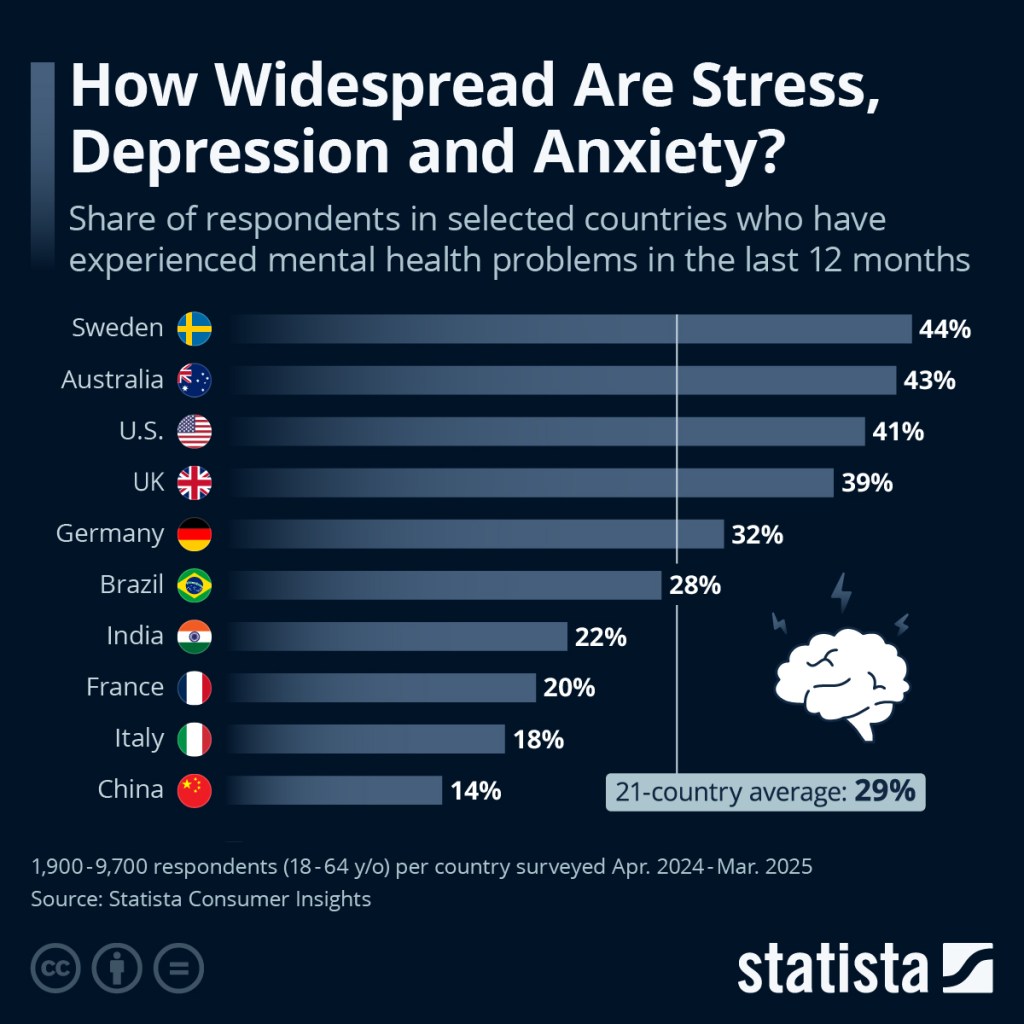
The authors infer the widespread rise in stress, anxiety, and depression in America is partly due to overprotectiveness.
Undoubtedly suppression of free inquiry and play diminishes the potential of a child’s development. Haidt and Lukianoff argue overprotection has contributed to a rising anxiety and depression in Generation Z and society in general. The authors cite national surveys that show increased rates of anxiety, depression, and self-harm. They note hospitalization and suicide rates are increasing based on self-inflicted injuries among teens with sharper rises among females. They note colleges and universities are reporting higher demand for mental health services.
Whether stress, anxiety, and depression are because of over protection remains a question in this listener’s mind. One suspects that children are cared for in too many different ways for research to conclude that stress, anxiety, and depression increases due to overprotection. It is more likely due to parental inattention because of work that takes them away from home and personal fulfillment in their own lives which are only partly satisfied by being parents.
Rather than parental overprotection, it seems intensified social media and smartphone use accelerates stress, anxiety, and depression in children and society in general.
Constant connectivity, online comparison, and cyberbullying are having outsized effects on emotional stability. The authors suggest overprotective parenting compounds the negative consequence of connectivity by depriving children of experience that can build their resistance to anxiety and depression. That may be partly true but not the whole story. Smart phone screen addiction takes one away from day-to-day real-life experience. The idea being that experiencing life’s failures and successes builds resistance to anxiety and depression whereas smart screens are pictures of life not lived by the person who is looking at them. Smart phones open the Pandora’s box of judgement which can either inflate or deflate one’s sense of themselves.
A large part of Haidt’s and Lukianoff’s book addresses the public confrontations occurring on campuses and the streets of America that are becoming violent demonstrations rather than expressions of opinion.
They suggest street demonstrations can be used constructively if participants would commit themselves to open dialogue and diverse viewpoints. Participants need to be taught cognitive behavioral techniques that can mitigate emotional reactions while building on psychological resilience. Rather than reacting emotionally to what one disagrees with, participants should focus on diverse viewpoints that allow for disagreement but do not become physical conflicts. We are all an “us”, i.e. not an “us and them’. Confrontation can be the difference between a white supremacist plowing into a crowd in Charleston, South Carolina and non-violent protest by leaders like Martin Luther King Jr. or Václav Havel. People like President Trump see the world as “us vs them” rather than one “blue marble” hoping to find another that can support human civilization.
Peaceful protests are an opportunity to understand human diversity without losing one’s humanity. Race, creed, and ethnicity are who we are and what we believe. Protesters should not be used as an excuse for violence but for understanding. Of course, this is a big ask which is too often unachievable.
The authors believe humanity can do better by allowing children to learn from their experiences while accepting diversity or difference of opinion without violence. Children and adults can be taught by experience and guidance to manage stress. Free play, risk-taking and real-world problem-solving come at every age and they can make a difference in human life. This listener only partially agrees with the author’s belief that “helicopter parenting” is interfering with free play and reasonable levels of risk taking. Democratic cultures need to reaffirm free speech as a mandate; with violence being unacceptable on every side of the aisle.
Anti-Trump demonstration.
Governmental and educational institutions are the foundations of Democracy. They must stand and support the right to free speech without committing, allowing, or condoning violence in the exercise of that right. (Of course, this is easy to say but difficult to follow because of the loss of emotional control by protectors of the public and/or protesters.)




















































 REVIEWS AND VIEWS OF LIFE