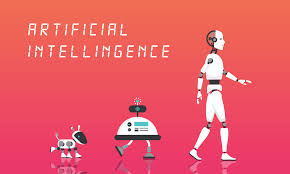
“IF ANYONE BUILDS IT, EVERYONE DIES” is an alarmist, and unnecessarily pessimistic view of the underlying value of Artificial Intelligence. This is not to suggest there are no risks in A.I. but its potential outweighs its risks.
Books of Interest Website: chetyarbrough.blog
IF ANYONE BUILDS IT, EVERYONE DIES
Author: Eliezer Yudkowsky, and Nate Soares
NarratedBy: Rae Beckley
Eliezer Yudkowsky Nate Soares
Eliezer Yudkowsky is a self-taught A.I. researcher without a formal education. As an A.I. researcher, Yudkowsky founded the Machine Intelligence Research Institute (MIRI). Nate Soares received an undergraduate degree from George Washington University and became President of MIRI. Soares had worked as an engineer for Google and Microsoft. Soares also worked for the National Institute of Standards and Technology and the U.S. Dept. of Defense.
“IF ANYONE BUILDS IT, EVERYONE DIES” is difficult to follow because it’s convoluted examples and arguments are unclear. The fundamental concern the writers have is that A.I. will self-improve to the point of being a threat to humanity. They argue that A.I. will grow to be more interested in self-preservation than an aid to human thought and existence. The irony of their position is that humanity is already a threat to itself from environmental degradation, let alone nuclear annihilation. The truth is humanity needs the potential of A.I. to better understand life and what can be done to preserve it.
To this listener/reader environmental degradation is a greater risk than the author’s purported threats of A.I.
Pessimism is justified in the same way one can criticize capitalism.
The authors have a point of view that is too pessimistic about A.I. and its negative potential without recognizing how poorly society is structured for war and killing itself without Artificial Intelligence. The advance of A.I. unquestionably has risks just as today’s threat of mutual nuclear annihilation but A.I.s’ potential for changing the course of civilization for the better exceeds the agricultural and industrial revolutions of the past.
The nature and intelligence of human beings is underestimated by Yudkowsky and Soares.
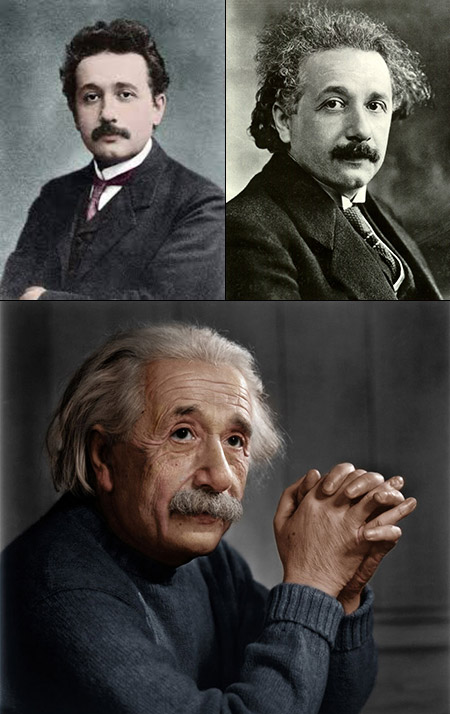
There have been a number of amazing human discoveries that have accelerated since the beginning of civilization in Mesopotamia. Humans like Einstein and their insight to the universe will be aided, not controlled, by the potential of A.I. Artificial Intelligence is no more a danger to humanity than the loss of craftsman during the industrial revolution. Civilization will either adapt to revelations coming from A.I. or environmental degradation or human stupidity will overtake humanity.
“IF ANYONE BUILDS IT, EVERYONE DIES” is an alarmist, and unnecessarily pessimistic view of the underlying value of Artificial Intelligence. This is not to suggest there are no risks in A.I. but its potential outweighs its risks.
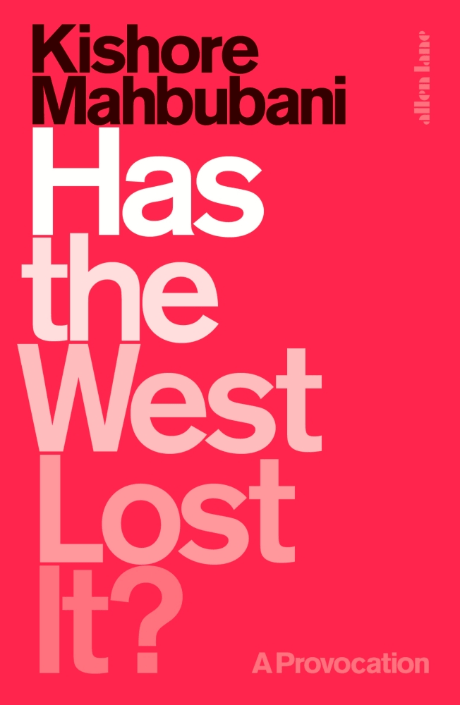
Though Mahbubani’s book is quite provocative, it is short and interesting. “How the West Lost It” is certainly worth reading/listening to, but few Presidents of the United States have reversed the admittedly slow improvement of “equality of opportunity” in America.
Books of Interest Website: chetyarbrough.blog
How the West Lost It (A Provocation)
Author: Kishore Mahbubani
NarratedBy: Jonathan Keeble
Kishore Mahbubani (Author, Singaporean diplomat and geopolitical consultant, former Fellow at Harvard University’s Center for International Relations, formally served as the United Nations Security Council President.)
Mr. Mahbubani’s short book suggests the highly provocative belief that the West’s dominance of the world is giving way to Asia, particularly China and India. To mitigate the West’s decline, Mahbubani argues–the West needs to develop a more “coherent and competitive global strategy”. Paul Kennedy of Yale University praises Mahbubani’s assessment. The public commentator Fareed Zakaria endorses Mahbubani’s belief, and Hilton Root of “The Independent Review” acknowledges Mahbubani’s inference that “the West’s overperformance was a historical aberration and the East’s rise reflects a rebalancing of history”. Despite Root’s measured support of Mahbubani’s book, his analysis is nuanced. Root argues the decline of the West is oversimplified and that Mahbubani underestimates the resilience of Western economies.
Mahbubani argues Great Britain’s Brexit and Trump’s re-election are reactions to the West’s economic decline.
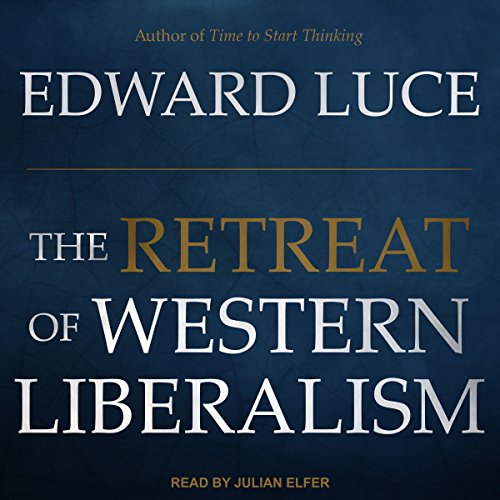
Edwad Luce argues Western liberalism needs to be reinvented by investment in a technological revolution for all Americans, not just those who have benefited from the industrial revolution. However, China seems to have read the future better than the West by building up their reserves of rare metals needed for advanced computer chips. In contrast, President Trump chooses to antagonize allies as well as competitors with a foolish trade war.
Root believes the innovative capacity and adaptability of the West will make adjustments to remain competitive, if not the dominant economic power of the world. Trump’s trade war suggests otherwise. Trump’s attitude is to ignore the years of built-up trust with Western allies and attack the world with destructive economic tariffs meant to right wrongs that are figments of real-politic’ imagination. However, some believe Mahbubani discounts political freedom and the drive of both the West and East to improve citizens’ living standards. That seems somewhat plausible, but Trump is attacking Americas most highly regarded universities with specious concerns with what he considers overactive recruitment of immigrants and minorities. The truth is American education for immigrants aids the strength and influence of Democracy in the world.
Yale University (American education for immigrants aids the strength and influence of Democracy in the world.)
The long cultural, educational, and technological influence of the West may be diminished by some of today’s political leaders but the trend over the last 200 years is unlikely to be reversed by Trump’s misguided authoritarianism. Trump’s significant risks are partially mitigated by publicly ingrained western democratic values. Though democracy is messy, it has demonstrated long-term stability and innovation that equals or exceeds the worst of what Trump’s authoritarianism is doing to the American economy and its institutions. Three more years of Trump’s presidency will not erase America’s legacy or destroy its future.
Though Mahbubani’s book is quite provocative, it is short, impactful, and interesting. “How the West Lost It” is certainly worth reading/listening to, but few Presidents of the United States have reversed the admittedly slow improvement of “equality of opportunity” in America. Mahbubani argues for a more diplomatic American policy with rising nations in the East because he believes China will ultimately replace America as the leading economy in the world.
The interpretation of the Constitution has changed over the last 200 years, but it stands for continuity for America’s present and future.
The direction of American society remains true to the fundamental beliefs of liberty, equality, sovereignty, rule of law, separation of powers, federalism, checks and balances, and individual rights. Trump is challenging some of those rights, but balance of power and term limits will ultimately rescue America from his misbegotten domestic and international blunders. These rights have been challenged at different times in America’s history but never permanently reversed.
Science is unquestionably dependent on precise measurement while art or literature may have little to do with it.
Books of Interest Website: chetyarbrough.blog
The Perfectionists
Author: Simon Winchester (How Precision Engineers Created the Modern World)
NarratedBy: Simon Winchester
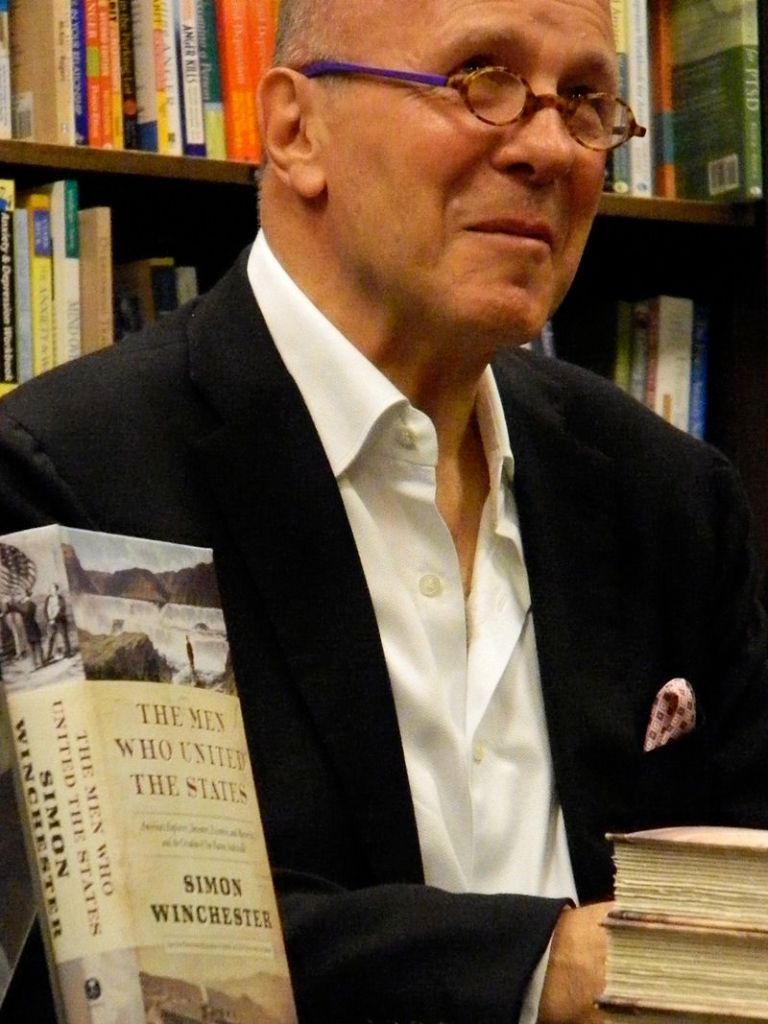
Simon Winchester (British-American author and journalist)
The beginning of “The Perfectionist” has an interesting vignette about Simon Winchester’s father that sets the table for his book. Simon’s father is characterized as an engineer that was asked to investigate why ammunition being used during WWII was misfiring. Bernard Winchester went to the production’ plant and precisely measured the ammunition that was being manufactured. Its quality was found to be well within specifications required to fire properly when used. Simon’s father followed a shipload of the ammunition to its destination to re-measure the specifications after delivery. The on-board jostling of cargo boxes caused miniscule damage to ammunition resulting in misfires in the field. Simon’s father’s discovery led to better packaging of the ammunition. Simon notes his father is highly praised by the military for his diligent investigation which made corrections in the way ammunition was packaged for transport to the front.
Simon’s father followed a shipload of ammunition to its destination to re-measure the specifications after delivery.
Simon Winchester’s story of his father is the subject of “The Perfectionist”. There are many ways of categorizing the advance of civilization. Manufacturing precision is Simon Winchester’s category of choice. Simon explains how improvements in precision, reaching as far back as the 18th century, led to technological advancement in the modern world. To Winchester, much of that advancement came from the needs of the military.
Winchester notes that John Wilkinson standardized and precisely measured cannon barrel rifling in the 1770s to improve accuracy.
The inaccuracy of weapons like cannons, mass production of reliable weaponry, and strategic advantage for military commands were founded on improvements in precision. Winchester notes that John Wilkinson standardized and precisely measured cannon borings in the 1770s to improve accuracy and reliability in battle. In the 1800s, the French began standardizing gun parts to allow interchangeability when field weapons were damaged or just quit working. In visiting France, Thomas Jefferson recognized the value of that interchangeability during America’s civil war when weapons often broke down and could only be repaired by craftsman who understood how a uniquely designed gun could be repaired.
Eli Whitney chose to hoodwink the American government during the War of Independence when he falsely claims to have a manufacturing plant that could produce standard gun parts.
Around 1801, Whitney contracts with the government and is paid but never produces any standardized parts. Whitney puts on a false show of interchangeability with parts that were manufactured by craftsman rather than a standardized process of production. (Whitney is neither penalized or required to repay the government.) The consequence of mass production of precise gun parts and ammunition is to kill more people in war which started an arms race that continues through to today. Progress in weapon design and manufacture is a harbinger of good and ill. Moving away from weapon production to the rise of industrialization, precise measurement remains a critical component of societies’ modernization.
Though there are precursors to the steam engine that reach back before the 18th century, James Watt (pictured here) revolutionizes its design with the help of Matthew Boulton.
Winchester explains how refinement of the steam engine enables the Industrial Revolution. Watt is obsessed with refining the containment of steam from an operating engine. Watt knows leakage of steam is correlated with loss of steam engine power and potential. The key to achieving better efficiency comes from John Wilkinson who develops a machine that could bore a precise hole through solid iron. With that level of precision, Watt recognized he could produce an engine with perfectly cylindrical, leak-proof chambers that could more efficiently power pistons to produce energy. Watt, Boulton, and Wilkinson open the world to the industrial revolution. Winchester suggests precision is the pursuit of perfection, i.e., a preeminent turning point in history. One may take issue with that conclusion because invention and innovation seem more important than precision, which is a tool rather than a cause for modernity.
The remarkable story of the jet engine is told by Winchester.
It is surprising that the jet engine became a reality as early as the beginning of WWII. Like nuclear bomb invention, Germany’s Hitler initially fails to grasp the importance of jet engine propulsion. However, Germany becoming the first to create a jet plane, the Heinkel He 178, to fly with jet propulsion. Hitler is more focused on refinement of the V-2 rocket as a revenge weapon against England than on jet propulsion for airplanes.
Frank Whittle (1907-1996, English aviation engineer and pilot who invented the jet engine.)
The original idea for the jet engine came from Frank Whittle, a British engineer in the early 1930s. Whittle realized Newton’s laws of energy could propel an airplane without propellers. Newton’s third law says for every action in one direction there is an equal but opposite energy reaction. Whittle acquired a patent on the idea of a jet engine but because of the five-pound cost of patent renewal and lack of any financial support for his brilliant idea, his patent expired. As a result, no single entity holds a patent on jet propulsion. It is not until May of 1941, that Frank Whittle’s turbojet engine first flies a plane.
1945 Gloster Meteor British jet.
There are many issues to be resolved for the idea of a jet engine to propel an airplane. There is the extreme pressure and heat generated by fuel being ignited within a turbine that must be designed with precise measurements, i.e., measurements within millionths of an inch. Winchester notes that the slightest deviation in blade shape, alignment, or material composition could cause vibration, inefficiency, or worse–engine failure and pilot death. The jet engine components had to endure extreme temperature changes and withstand metal fatigue while operating with high-speed rotating parts. Thousands of parts had to be precisely designed and integrated to provide the propulsion necessary for flight.
Whittle’s ultimate success leads him to be Knighted in 1948.
Whittle is recruited in 1937 by British Thomson-Houston, an engineering firm, to build a prototype of a jet engine. With money to create a prototype, Whittle turned his design idea into reality. With the help of two retired RAF officers, Whittle formed a company called Power Jets Ltd. In 1944, Britan nationalized Power Jets Ltd and Whittle was compelled to resign from the board in 1946. However, Whittle was ultimately recognized and knighted in 1948 for his contribution to Jet engine development.
The next big area of change addressed by Winchester is computer chip manufacture.
Transistors like these in the early years of computers are used in computer chip manufacture.
Winchester’s primary subject is Moore’s law postulated in 1965 by Gordon Moore, the co-founder of Intel. Moore predicts microchip computing power and efficiency would double every year and then every two years with continued miniaturization of chip transistors. His prediction, as of today, holds true. The size of computer chip transistors is measured in millimeters in the early 1960s. Today, measurement is at an atomic level, trending toward the use of quantum theory to continue Moore’s law prediction.
The last chapter of “The Perfectionist” is about measurement as a tool. Ironically, understanding measurement evolves through history. It may be a standard of change, but it is also a subject of change. The idea of distance measurement has evolved from an organic explanation that only imperfectly describes the visual world. That imperfectness leads to an obsession with exactness that boggles the mind.
As a caution, Winchester suggests the pursuit of precision may blind us to other values. The aesthetic beauty of a musical composition, architecture, a great novel, or mere thoughts of human beings may have little to do with precise measurement but can change the world. What one sees or feels is what we discount or respond to with emotion and/or appreciation, regardless of measurement analytics. Science is unquestionably dependent on precise measurement while art or literature may have little to do with it.
Murata’s satire infers obsession with sex for pleasure, child rearing collectivization, gender dysphoria, and pregnancy equalization are pathways to societal destruction.
Books of Interest Website: chetyarbrough.blog
Vanishing World (A Novel)
Author: Sayaka Murata
NarratedBy: Nancy Wu
Sayaka Murata (Author, Japanese novelist.)
Sayaka Murata’s subject is clearly revealed in its title, “Vanishing World”. “Vanishing World” is a provocative assessment of how sexual relationship and sex education has changed. Murata satirically reveals how human reproduction, objectification of life, motherhood, and technology may dehumanize society.
Murata’s fictional story is highly informative in regard to sexual difference and similarity between men and women.
In one sense, Murata’s fictional story is highly informative in regard to sexual difference and similarity between men and women. As a reader/listener, Murata offers a detailed description of the physical difference between the sexes. Many who think they know something about sexual difference will find the author’s candor enlightening. However, her depiction of social relationship is off-putting with a satirical exaggeration of socio/sexual objectification.
Murata writes about a single parent family with a young daughter who lives with her mother and is nearing the age of puberty.
(Though not mentioned in Murata’s story, single family homes in America have grown by nearly 30% in the 21st century.) The main character’s name is Amane and Murata’s story is about Amane’s sexual awakening and how she views social relationship. Amane is infatuated with an animated male character on television. She imagines being married to this character before puberty but holds this character in her mind throughout childhood and later life.
Murata suggests reproduction may evolve into a preferential desire for artificial insemination rather than sexual intercourse between a man and woman.
This idea feeds into a listener/reader’s mind as a diminishment of the need for emotional attachment to the opposite sex for procreation. Sex becomes detached from procreation, evolving into only “hooking up” for sexual stimulation and/or personal gratification. Murata infers desire is no longer needed for procreation but only to experience intercourse as an emotional and physical pleasure. Consequently, it seems perfectly natural to transfer sexual desire to a fictional character because it becomes unnecessary to have emotional attachment to humans when a figment of one’s imagination is available.
Murata creates a bizarre world.
The bizarro world that Murata creates is an extension of a belief that society is becoming less attached to their humanity. Marriage, human relationship, and motherhood are replaced by mindful personal’ inwardness and endless pursuit of physical stimulation without emotional entanglement. By extension, Murata suggests science will create wombs for men so that the difference in sexes equalizes childbirth and care of children. Caregiving becomes bureaucratic and collective because caregiving is no longer personalized.
Murata suggests that a new system of childcare will evolve into collective training camps for working parents who are too self-absorbed to raise their own children.
Collective childcare disconnects parents from the management and development of their children. The sterility of conception by artificial insemination, collective childcare, and social acceptance of multiple sex partners diminishes both familial relations and child development. Birthing and raising children becomes a clinical process, i.e., less personal with both men and women capable of experiencing pregnancy and delivery; all without responsibility or obligation for childcare.
In some sense, this satire illustrates the negative potential of socio/sexual equality.
Murata’s story ends with the birth of their first child from a man who is Amane’s husband. She is torn over not being able to take the baby home because the child is already being “cared for” in a ward meant to raise and nurture all newly born children. A final point is made in the story by a visit from Alane’s mother after the birth. She asks Amane where the child is, and Alane explains the child will not be raised by her and her husband. Alane’s mother is aghast. Her mother falls to the floor and dies without any apparent familial concern for her sudden collapse and presumably, death. The next thing to happen is a visit from one of the children born in this new world. Alane chooses to have sex with him and the story ends.
“Vanishing World” implies 21st century science, organizational bureaucracy, and social change threatens survival of humanity. Murata’s satire infers obsession with sex for pleasure, child rearing collectivization, gender dysphoria, and pregnancy equalization are pathways to society’s collapse.
Discrimination is certainly based on the color of one’s skin but also on gender, ethnicity, and income inequality. Those nations that embrace equality of opportunity for all will be the leaders of the future in the age of technology
Books of Interest Website: chetyarbrough.blog
Caste (The Origins of Our Discontent)
Author: Isabel Wilkerson
NarratedBy: Robin Miles
Isabel Wilkerson (Author, American journalist, winner of the Pulitzer Prize in journalism in 1994 while serving as the Chicago Bureau Chief for the NYTimes.)
Isabel Wilkerson has written a provocative book about what she characterizes as a rigid social hierarchy in America that undermines the ideals of democracy. Wilkerson weaves her personal life and the history of black experience with the sociological failings in America’s treatment of race. She notes the past and present truth of white America’s unequal treatment of its citizens based on race. However, her characterization of America’s discrimination as a caste system and its comparison to India’s and Nazi Germany’s governments is hyperbolic. Nevertheless, it creates a sense of urgency for those who believe in the ideal of human equality. It is difficult, if not impossible, to compare other nation’s inequality with America’s effort and present-day failure to fulfill the ideals of democracy.
The timeliness of Wilkerson’s book seems appropriate in relation to the backward steps being taken by Donald Trump.
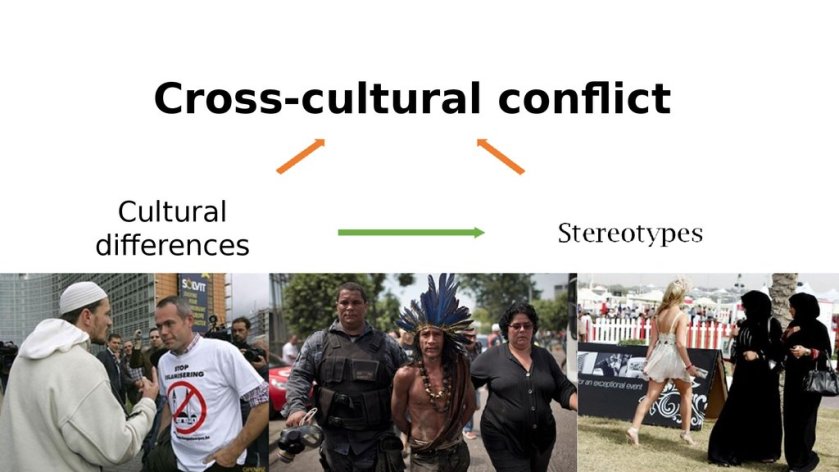
Some Americans feel threatened by demographic change that will make white citizens less than 50% of America’s population by 2045. In theory, no one should care if all people are treated equally. What history shows is that the ideals of equality have never been achieved in America or in any other country with a dominant race and/or ethnicity.
Trump’s effort to return America to its past is interpreted by some as a return to industrial production.
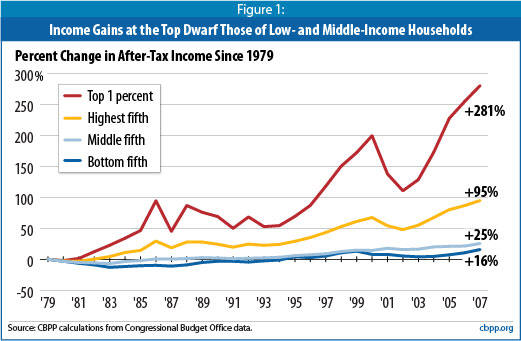
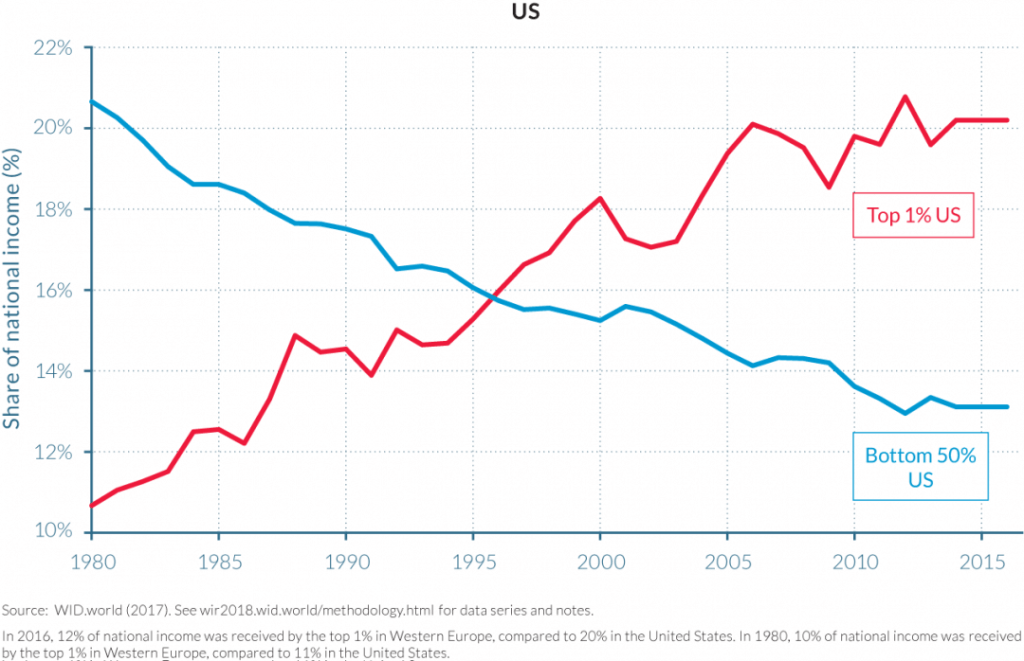
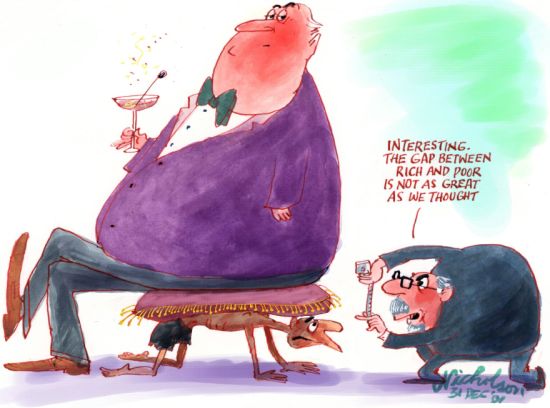
America’s return to industrialization is a false flag that will not make America Great. Reindustrialization and keeping America white is a fool’s errand based on demography and the age of technology. Trump’s desire for power, adulation, and loyalty have little to do with prejudice but everything to do with appealing to the worst fears of middle-class America. Trump is willing to use whatever dog whistle is required to satisfy his desire for power and prestige. He understands the fears of the middle class and where American power lays. Power and money are the driving forces of capitalism. Middle class American’s buying power has stagnated or fallen since the 1970s despite the increasing wealth of the top 10% of American citizens. The middle class of America is something Trump appealed to in his re-election for a second term because of their disproportionate loss of income and the rising wealth of America’s business leaders. The irony is that Trump is one of the beneficiaries of that income gap between the very rich and the working-class.
Income growth in America.
Income disparity trend in the U.S.through 2015.
Wilkerson is right in the sense that America’s real objective should be to ensure equality of all. She is arguing we should have a greater sense of urgency in achieving equality. Equal treatment for all is a formula that can maintain America’s position as an economic, military, and political hegemon. American industrial hegemony is yesterday’s goal. Technological advancement is today’s goal. To achieve today’s goals, equal treatment of all becomes essential in technology because intelligence, innovation, and persistence does not lie in any one race, sex, or creed.
America is class conscious but not in the same way as either India’s or Nazi Germany’s histories.
Wilkerson notes a caste system can be built around ethnicity, religion, language, or gender but race discrimination is what she has personally experienced and underlays much of her comparisons of American history with India and Nazi Germany. Equality of opportunity is key to continued growth of human beings and national economies in the age of technology. In the short term, one may see an autocratic country like China become an economic and military hegemon, but maintenance of that success is dependent on equality of opportunity for all, not just those in power.
One can sympathize with the author’s view of discrimination but her comparison of America to India and Nazi Germany misses too much of what unequal treatment in America is based upon.
Discrimination is certainly based on the color of one’s skin but also on gender, ethnicity, and income inequality. Those nations that embrace equality of opportunity for all will be the leaders of the future in the age of technology.
Spinney makes some interesting points that may or may not be the principal origin and evolution of language difference. Her ideas seem plausible, just as Newton’s physics seemed entirely correct until Einstein proved otherwise.
Books of Interest Website: chetyarbrough.blog
Proto (How One Language Went Global)
Author: Laura Spinney
NarratedBy: Emma Spurgin-Hussey
Laura Spinney (British science journalist, novelist, and non-fiction writer.)
Laura Spinney has written a challenging book for non-linguistic learners. Her book, “Proto”, focuses on a single ancient language she calls Proto-Indo European (PIE) that is said to have spread across the world to form half of the world’s spoken languages. She is not suggesting a new origin theory but argues languages around the world are synthesized by language structure and use. She suggests genetics, human cooperative effort, and recurring mythological beliefs are the basis of adopted languages.
A contrast between the way Spinney’s theory of the spread of a language and others is that it is based on wide use of peoples’ words in daily activity rather than a dictation by leaders who exercise control over a gathered group of people.
Spinney’s historical view for language development is in a people’s events of the day, repeated word use, and changing mythological stories that cultivate and spread a language. The language grows, changes, and spreads based on wider adoption by those who are communicating daily experiences to others. As inventions like horseback riding and wheeled transport show their value to an individual, its descriptions spread new words to one person that grows to many in that culture who communicate its value to others.
As one reads/listens to Spinney’s story, the reasons for differences in language appear based on the timing of ancient cultures growth when one area of the world is populated longer than another.
Every populated area creates their own mythologies. Mythologies are different because they are created by local events, burial rituals, and the desire to explain the “not understood” to others. Additionally, people live in environmentally different areas of the world. A native American has no reason to precisely or creatively describe snow whereas an Eskimo who deals with snow on a daily basis uses more precise and creative words to describe snow’s characteristics and its effect on their lives.
Whether true or not, this is an interesting hypothesis on the growth of language.
PIE, of course, is only one family of languages but her idea of its spread seems applicable to other equally important languages. As in all stories of ancient cultures, there is misrepresentation or misunderstanding because of not being there as languages are formed. Spinney acknowledges the fragmentary evidence of her theory which makes her conclusions tentative, if not suspect. Human nature is to relate facts that make sense of one’s own beliefs and may not accurately recall or report actual experience because of research bias. Power of leaders is diminished or discounted by Spinney’s theory of the spread of language.
Spinney believes PIE originated among the Yamnaya people, north of the Black Sea in what is now eastern Ukraine and southern Russia.
From there it spread westward into Europe, southward into Antolia, eastward into Central and South Asia, and into the Tarim Basin in western China. She believes PIE expansion is primarily because of technological innovations like the wheel and domestication of horses. This is interesting because it suggests the spread of language did not come from conflicts among warring regions but the utility of new technological discoveries.
Will today’s technology bring nations together or reinforce the silos of our differences?
Spinney makes some interesting points that may or may not be the principal origin and evolution of language difference. Her ideas seem plausible, just as Newton’s physics seemed entirely correct until Einstein proved otherwise.
Steven Johnson notes how innovations and societal change does not come from a singular genius. Innovation and social change come from a confluence of geniuses, managers, and consumers.
Books of Interest Website: chetyarbrough.blog
How We Got to Now (Six Innovations That Made the Modern World)
Author: Steven Johnson
NarratedBy: George Newbern
Steven Johnson (Author, journalist)
Steven Johnson has written a moderately interesting book about innovation. He writes of six discoveries that came from the experience of everyday life. Glass, temperature, sound, health, time, and light are taken for granted in the 21st century. What Johnson explains is how these six elements were the basis of extraordinary human innovation and change in society.
Barovier Art Deco Murano glass pendant.
Glass has been around for centuries with the earliest found in Ancient Egypt. The heat of desert sands created glass in the form of beads that became jewelry in pre-Christian times. As the world industrialized, glass gathered new uses. Glass became mirrors to reflect human images, lenses for glasses, windows, and structural components of buildings. From the art of 15th-century to Leeuwenhoek’s creation of microscopes to Galileo’s telescopes to strengthening and lightening of high-rise construction materials to invention of fiber-optic cables, glass changed society.
Willis Carrier (1876-1950, designed the first modern air conditioning system in 1902.)
The benefit of cold temperatures helped preserve food and led to wider exploration of the world to avoid the cold. In warmer climates, experience of food preservation and human shelter from heat incentivized society to invent refrigeration for food and air conditioning for buildings. Public health and food safety improved with refrigeration. The cold preserved blood for future medical use and food for later consumption. The value of extreme cold led to cryogenics that aided fertility treatments by freezing sperm, eggs, and embryos for long term biological storage.
Heddy Lamarr (1914-2000, Hollywood star who patented a radio signal device that could change frequencies for secret messages during WWII.)
Johnson explains how sound innovation led to everything from the phonograph to sonar to coded messages during the war years. During WWII, secret communications between military strategists were critical. The often-recalled code breaking story of Alan Turing and the Enigma machine was a breakthrough for Allies to read German secrets. Interestingly, the famous actress, Heddy Lamarr patented a radio signal device for Allied powers’ secret communications.
As cities formed and people congregated in closer proximity, innovations in sanitation, water, and air purification grew to improve public health.
Johnson notes how light innovation grew from candles to light bulbs to lasers that changed the way humans can communicate and live after dark. Thomas Edison and the invention of the light bulb required the management skill of many to spread light around the world.
Thomas Edison (1847-1931)
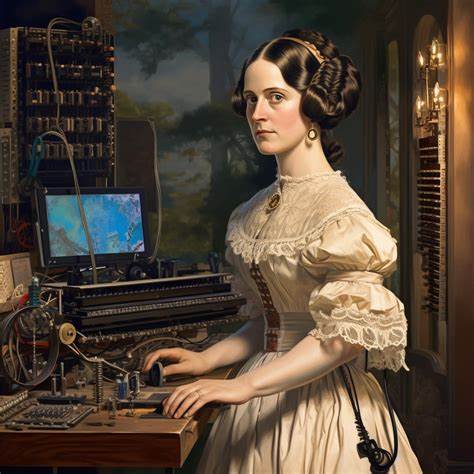
An innovator’s timing makes a difference because the lack of a consumer can delay change like it did with Charles Babbage and Ada Lovelace in their 1837 concept of a general-purpose computer.
Charles Baggage 1791-1871Ada Lovelace 1815-1852
Ada Lovelace, the daughter of Lord Bryon, becomes the first computer software programmer in history. This was nearly 100 years before computer programing became important.
To improve human productivity, time became important. Precise timekeeping improved productivity, navigation, industrialization, and global coordination.
Johnson notes how innovations and societal change does not come from a singular genius. Innovation and social change come from a confluence of geniuses, managers, and consumers. He suggests Barovier, Leeuwenhoek, Galilei, Tudor, Carrier, and Lamarr were geniuses in their innovative ideas about glass, cold, and sound but it is a confluence of ideas, accidents, collaborations, and market desire that made them successful. The same may be said of Edison with light, Jobs with computers, and Musk with electric vehicles.
Like Climate Change, AI seems an inevitable change that will collate, spindle, and mutilate life whether we want it to or not. The best humans can do is adopt and adapt to the change AI will make in human life. It is not a choice but an inevitability.
Books of Interest Website: chetyarbrough.blog
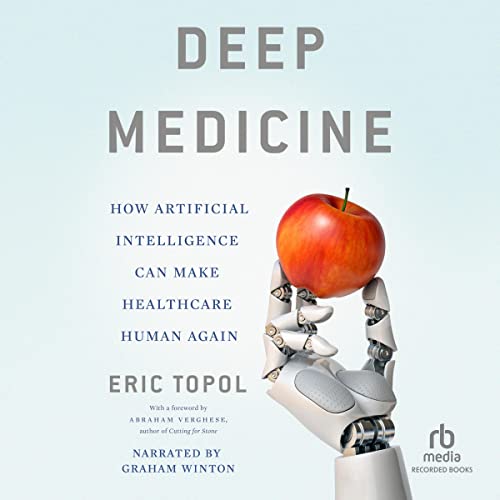
Deep Medicine (How Artificial Intelligence Can Make Healthcare Human Again)
Author: Eric Topol
Narrated By: Graham Winton
Eric Topol (Author, American cardiologist, scientist, founder of Scripps Research Translational Institute.)
Eric Topol is what most patients want to see in a Doctor of Medicine. “Deep Medicine” should be required reading for students wishing to become physicians. One suspects Topol’s view of medicine is as empathetic as it is because of his personal chronic illness. His personal experience as a patient and physician give him an insightful understanding of medical diagnosis, patient care, and treatment.
Topol explains how increasingly valuable and important Artificial Intelligence is in the diagnosis and treatment of illness and health for human beings.
AI opens the door for improved diagnosis and treatment of patients. A monumental caveat to A.I.s potential is its exposure of personal history not only to physicians but to governments and businesses. Governments and businesses preternaturally have agendas that may be in conflict with one’s personal health and welfare.
Topol notes China is ahead of America in cataloging citizens’ health because of their data collection and AI’s capabilities.
Theoretically, every visit to a doctor can be precisely documented with an AI system. The good of that system would improve continuity of medical diagnosis and treatment of patients. The risk of that system is that it can be exploited by governments and businesses wishing to control or influence a person’s life. One is left with a concern about being able to protect oneself from a government or business that may have access to citizen information. In the case of government, it is the power exercised over freedom. Both government and businesses can use AI information to influence human choice. With detailed information about what one wants, needs, or is undecided upon can be manipulated with personal knowledge accumulated by AI.
Putting loss of privacy and “Brave New World” negatives aside, Topol explains the potential of AI to immensely improve human health and wellness.
Cradle to grave information on human health would aid in research and treatment of illnesses and cures for present and future patients. Topol gives the example of collection of information on biometric health of human beings that can reveal secrets of perfect diets that would aid better health during one’s life. Topol explains how every person has a unique biometric system that processes food in different ways. Some foods may be harmful to some and not others because of the way their body metabolizes what they choose to eat. Topol explains, every person has their own biometric system that processes foods in different ways. It is possible to design diets to meet the specifications of one’s unique digestive system to improve health and avoid foods that are not healthily metabolized by one’s body. An AI could be devised to analyze individual biometrics and recommend more healthful diets and more effective medicines for users of an AI system.
In addition to improvements in medical imaging and diagnosis with AI, Topal explains how medicine and treatments can be personalized to patients based on biometric analysis that shows how medications can be optimized to treat specific patients in a customized way. Every patient is unique in the way they metabolize food and drugs. AI offers the potential for customization to maximize recovery from illness, infection, or disease.
Another growing AI metric is measurement of an individual’s physical well-being. Monitoring one’s vital signs is becoming common with Apple watches and information accumulation that can be monitored and controlled for healthful living. One can begin to improve one’s health and life with more information about a user’s pulse and blood pressure measurements. Instantaneous reports may warn people of risks with an accumulated record of healthful levels of exercise and an exerciser’s recovery times.
Marie Curie (Scientist, chemist, and physicist who played a crucial role in developing x-ray technology, received 2 Nobel Prizes, died at the age of 66.)
Topol offers a number of circumstances where AI has improved medical diagnosis and treatment. He notes how AI analysis of radiological imaging improves diagnosis of body’ abnormality because of its relentless process of reviewing past imaging that is beyond the knowledge or memory of experienced radiologists. Topol notes a number of studies that show AI reads radiological images better than experienced radiologists.
One wonders if AI is a Hobson’s choice or a societal revolution.
One wonders if AI is a Hobson’s choice or a societal revolution greater than the discovery of agriculture (10000 BCE), the rise of civilization (3000 BCE), the Scientific Revolution (16th to 17th century), the Industrial Revolution (18th to 19th century), the Digital Revolution (20th to 21st century), or Climate Change in the 21st century. Like Climate Change, AI seems an inevitable change that will collate, spindle, and mutilate life whether we want it to or not. The best humans can do is adopt and adapt to the change AI will make in human life. It is not a choice but an inevitability.
“Apple in China” is a message to the entire world about the risks of technological relocation solely based on reducing costs of labor in a politically and culturally divided world. This is a book every employer should listen to or read.
Books of Interest Website: chetyarbrough.blog
Apple in China (The Capture of the World’s Greatest Company)
Author: Patrick McGees
Narrated By: Fred Sanders
Patrick McGee (Author, technology/business journalist, San Francisco Correspondent for “Financial Times”.)
Patrick McGee has written an important book about world trade. He reveals a shocking story about Apple and the risk of basing a corporation’s economic future on a singular aspect of its success, i.e. cost of manufacturing. This is a story of two companies and the world’s labor market. Foxconn and Apple look to China, Taiwan, South Korea, Ireland, and Asian countries that vie for the role of the cheapest and best labor markets in the world. Foxconn’s and much of Apple’s search and success as a tech company is based on finding the cheapest labor in the world for the manufacture of product. However, McGee explains how that view makes Apple and other international corporations vulnerable to the politics of nation-states that have a mix of economic and political agendas. McGee explains how politics can be a greater cost than benefit to a business enterprise because of nation-state’ politics.
The power of political leadership in business enterprise is on display in America today with Donald Trump and his doomed effort to return America to a 20th century manufacturing behemoth.
McGee’s story is about the impact of China’s government on Apple and Foxconn led by Tim Cook and Terry Gou. Tim Cook is the wunderkind hired by Steve Jobs before his death, and Terry Gou is the Taiwanese billionaire who founded Foxconn which is now headed by Young Liu who was educated in Taiwan and the United States.
Tim Cook (CEO of Apple Inc.)
McGee explains why and how Tim Cook became the CEO of Apple. Jobs who was known as a poor manager of people, needed a manager who emulated Jobs’ drive but understood how to manager an organization to become bigger while remaining profitable. Cook is characterized as someone who has a near photographic memory. His analysis of reports from subordinates could be used to advance company goals or change a subordinate’s understanding of anything they propose that is not practicable or goal focused. What McGee argues is that Tim Cook’s focus on the cost of manufacturing became an Achilles heel when he hires Foxconn to organize Apple’s iPhone manufacturing to be done mostly in one country, China.
To accomplish iPhone manufacture in China, Cook had to transfer thousands of American engineers to train laborers in the assembly of Apple products.
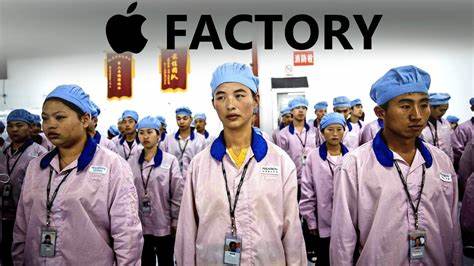
Cook needed a go-between which became Foxconn, a Taiwanese company that is the largest electronics labor contractor in the world. Foxconn is also China’s largest private-sector employer with over 800k employees. Foxconn employees assemble iPhones, semiconductors, and electronics for some of the largest American technology companies in the world, e.g. Apple, Microsoft, and Dell. Foxconn’s relationship with China is further complicated by the international relationship between Taiwan and China. Foxconn has built a lucrative business in the tech industry because of its labor intensity and the desire of tech companies to minimize overhead to improve their profits.
World trade has made Foxconn the leading international labor subcontractor in the world. They employ an estimated 800,000 employees in China alone.
The desire to bring Taiwan under the control of communist China is a background conflict between Xi and Terry Gou. It may be unlikely that Gou would ever be elected President of Taiwan, but his candidacy is a cloud of suspicion to knowledgeable Chinese, Taiwanese, and American leaders. McGee notes Foxconn’s tax audits and land-use investigations by Chinese authorities that some believe are politically motivated. Foxconn has been criticized for poor working conditions because of incidents of worker protests, suicides, and labor strikes. China’s posture on those working conditions is ambiguous and most American businesses are ignorant or uncaring. A China crackdown on labor conditions would have wide effects on the global tech industry.
For Apple to lower costs of iPhone assembly, Foxconn contracted China’s people at low wages, to support what would be unfair labor practices in America, to assemble iPhones.
This benefited Apple in the first years of their association with Foxconn in China. However, later in the transition President Xi spread false reports of poor and unfair warranty practices being offered Chinese consumers of Apple products. Contrary to Xi’s claims, McGee explains that Apple warranties were the same in China as they were throughout the world.
McGee infers politics were behind Xi’s false claims about iPhone warranties.
China’s economy benefited from Apple’s move for cheaper manufacturing costs. China gained an immense technology boost from the retraining of Chinese citizens by Apple’s experienced engineers. With iPhone manufacturing in China, Apple’s revenues rose from $24 billion in 2007 to $201 billion in 2022. Apple invested an estimated $275 billion in China’s economy over 5 years. However, with Xi’s lies and vilification of Apple’s warranty, Chinese smartphone giants like Huawei, Xiaomi, Oppo, and Vivo increased sales. One presumes, Tesla followed a similar cost and benefit reward with its labor and technology transfer to China’s electric vehicle manufacturers.
McGee notes the bad publicity for Apple in the Chinese market threatens Apple’s future in three ways.
One, its loss of sales in China, two, a significant change in low-cost manufacturing advantages with rising Chinese labor cost, and three, Apple’ technology transfer to Chinese companies. Add to those lost advantages is Apple’s relocation costs to another country for iPhone manufacture.
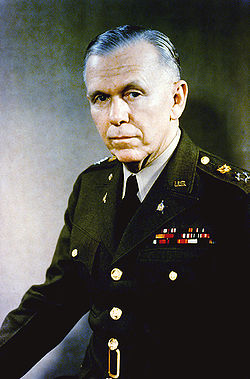
GENERAL GEORGE C. MARSHALL (1880-1959)
An interesting comparison McGee makes between Apple’s $275 billion investment in China for iPhone assembly is that it is more than double the amount used in the Marshall Plan to rebuild Europe after WWII.
McGee notes Apple has a supply chain vulnerability from the Chinese government’s relationship with key suppliers of iPhone components wherever they are assembled. “Apple in China” is a message to the entire world about the risks of technological relocation solely based on reducing costs of labor in a politically and culturally divided world. This is a book every employer should listen to or read.
Musk, like all human beings, is imperfect. His association with a President who feels money is more important than humanity only feeds Musk’s ineptitude as a manager of people.
Books of Interest Website: chetyarbrough.blog
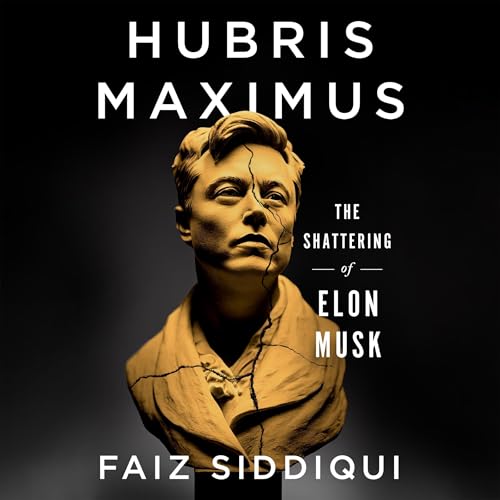
Hubris Maximus (The Shattering of Elon Musk)
By: Faiz Siddiqui
Narrated By: André Santana
Faiz Siddiqui (Author, technology reporter for The Washington Post)
Faiz Siddiqui exposes the character of Elon Musk as a brilliant entrepreneur with an outsized pride in his ability that reflects an arrogance that diminishes his genius. Musk’s success with Tesla and SpaceX accomplishments are equal, and in some ways exceed, the business successes of John D. Rockefeller and Steve Jobs. In wealth, Musk exceeds Rockefeller and in inventiveness, he competes with Steve Jobs.
As brilliant as Musk shows himself to be, his fragile ego diminishes his genius.
Siddiqui reveals how petty Musk can be while balancing that pettiness with his contribution to creative ideas that will live far beyond his mortal life. Musk’s development of space travel and communication satellites for the world with a non-governmental, free enterprise operation is a tribute to the power of capitalism. His next immense contribution, though controversial and a work in progress, will be self-driving transportation.
Elon Musk’s Successful Return of Rockets Launched into Space.
Siddiqui’s picture of Musk’s flawed personality is somewhat balanced by the image of a person driven to succeed. However, that drive is not something that naturally translates to organizational performance. Musk is not a developer of people and should not be in charge of an organization’s management. Like Apple employees that kept some of their work undisclosed to Steve Jobs when the mobile phone was being considered, Musk needs to leave management of employees to others. People management is a skill set that Musk does not have as was made quite clear with his acquisition of Twitter and his work with DOGE. DOGE feeds Musk’s managerial weaknesses with President Trump’s mistaken belief that cost of government is more important than effectiveness. DOGE is a growing tragedy of American governance.
Musk is right about the value of self-driving vehicles, but he is trying to produce the wrong product to prove his belief.
Self-driving vehicles will reduce traffic accidents, injuries, and death but the product to achieve that goal is what Musk should be working on. The game of Go is estimated to have 10 to the 172nd power of possible positions. Self-driving cars probably have a similar astronomical number of possible causes of accidents.
Musk, or someone with his creative genius, needs to create a product that can be sold to all vehicle manufacturers.
This newly invented product would use AI to learn, reinforce understanding of vehicular movements, accidents, and incidents. That accumulated information would allow creative play in the same way GO became an unbeatable game for human beings playing against a programed computer. Musk is putting the cart before the horse by building cars and then making them safe, self-driving vehicles. The first step is to gather information from as many driven vehicles as possible, collate that information, and use computer power to creatively play with the information. That information, like learning the moves of GO would create self-driving algorithms that would reduce self-driving vehicle’ accidents, injuries, and deaths.
A sad reveal in “Hubris Maximus” is that an American treasure, Elon Musk, is being vilified for the wrong reasons.
Musk’s contribution to the reduction of air pollution has benefited the world. His vision of interstellar travel may be the next step in human expedition, exploration, and habitation of the universe. Earth’s interconnectedness is vitally enhanced by Musk’s satellite system. The universe is humanity’s next frontier.
Musk, like all human beings, is imperfect. His association with a President who feels money is more important than humanity only feeds Musk’s ineptitude as a manager of people.
















































 REVIEWS AND VIEWS OF LIFE