MICROCOSM

Islands are a microcosm of the world environment and a perfect example of what is wrong with the ecology and economics of the world.

Books of Interest
 Website: chetyarbrough.blog

Dark Laboratory

By: Tao Leigh Goffe 

Narrated By: Tao Leigh Goffe

Tao Leigh Goffe (Author, PhD from Yale, award-winning writer, theorist, and interdisciplinary artist, raised between the UK and New York City with a UK citizenship.)

Goffe has written a book about the complexity of discrimination and global warming with the risks they entail for humanity. She offers a sociological and environmental perspective.

Goffe’s book is an introduction to what she envisions as “The Dark Laboratory” to address inequality and global warming.

Puerto Rico

Stories of mongooses and marijuana confuse the clarity of Goffe’s subject. She addresses immersive technologies like virtual reality (VR) and augmented reality (AR) to help people understand the impacts of climate change and inequality. The hope is that books like hers and education of the public will change human behavior. She writes of a mongoose introduction to Puerto Rico which becomes an invasive species. She also writes of colonial exploitation of island natives who plant, harvest, sell, and distribute legalized marijuana.

The analogies she chooses are marginally relevant, but they are a distraction. The fundamental points of unintended consequences of an invasive species on the environment and colonial enslavement can be more impactfully explained with concrete evidence of ecological damage and employment inequality in native lives.

The introduction of the author’s book is disappointingly vague, but Goffe’s life experience, her advanced education and perspective are shaming and anxiety producing. The shaming and anxiety come from knowing that being white gives one advantage in life. That advantage has admittedly been squandered by human inequality and pursuit of wealth and power at the expense of the environment.

Listener/readers are introduced to slang for minorities by Goffe that are not widely known.

Commonly known and despicable derogatory names are wetback, chink, gook, redskin, and the “N-word” for people who do not appear white. However, Goffe notes names like maroon and eleven-o’clock minorities are less known. A maroon is a member of a community of runaway enslaved Africans in Jamaica. An Eleven-O’clock minority is someone who is considered an incomplete person because he/she is 1 hour short of 12.

The earth’s environment is in crises while many foolishly diminish human equality while ignorantly pursuing self-interests. The irony and incongruity of environmental destruction and inequality is that we are all in the same boat, living on spaceship earth. Goffe’s point is that society chooses to despoil earth for ephemeral profit while causing global warming and discriminating against minorities only because people are different. The “Dark Laboratory” is about the world climate crises and race relations.

Puerto Rico is a petri dish of Goffe’s “Dark Laboratory”. It shows how earth’s environment is being destroyed and how neglect of human equality has impoverished native island cultures.

Goffe argues (and hopes) with the help of storytelling (education) about human equality, technological innovation, and ecological care, the world can become a sustainable haven for humanity. However, Goffe takes two digressions that confuse, if not diminish, the importance of environmental degradation and human inequality.

Goff shows how islands are a microcosm of the world environment and a perfect example of what is wrong with the ecology and economics of the world.

BELIEF

Extending Harari’s idea of biophysics research and algo-rhythmic programming suggests a potential for immense changes in society. A singularity that melds A.I. with human brain function and algo-rhythmic programming may be tomorrow’s world revolution. Of course, that capability cuts both ways, i.e., for the good and bad of society.

Books of Interest
 Website: chetyarbrough.blog

Homo Deus (A Brief History of Tomorrow)

By: Uval Noah Harari

Narrated By: Derek Perkins

Yuval Noah Harari (Author, Israeli medievalist, military historian, science writer.)

By any measure, Yuval Noah Harari is a well-educated and insightful person who will offend some and enlighten others with his opinion about religion, spirituality, the nature of human beings, and the future. He implies the Bible is a book of fiction that is historically proven to have been written by different authors with contradictions that only interpreters can reconcile as God’s work.

“Homo Deus” is a spiritual book suggesting humanity is on its own and has a chance to survive the future but only through the ability of human understanding and effort.

To Harari, the greatest threats to society are national leaders who believe in God, heaven and eternal life who discount human existence and use of science to improve human life on earth. The irony of Harari’s belief is that humanist leaders are the only hope for human life’ survival.

Harari argues science, free enterprise, and the growth of knowledge offer the best hope for the future of human life.

Neither capitalism nor communism are a guarantee of survival because of the increasing potential for error as human beings become more God-like. Advances in engineering, artificial intelligence, and biotechnology may replace the happenstance of human birth. The value of free enterprise is evident in the agricultural, industrial, and technological revolutions of history. However, as science improves the understanding of the mind and body of human beings, the technology of biogenetics offers hope for the future while running the risk of biological error with unforeseen consequences.

Harari’s book is the brave new world written about by Shakespeare in the 17th century and reimagined by Aldous Huxley in his 1932 dystopian novel “Brave New World”.

On the one hand, Shakespeare offers a positive spin as his character, Miranda, sees people from outside her experience and says “How beauteous mankind is! O Brave! That has such people in’t”. While Huxley notes a future society that becomes conformist and lacks individuality and human emotion. Which way society will turn is unknown.

The conformist demands of collective ownership of property and means of production by communism impede creativity. Capitalism is more creative and dynamic. However, capitalist incentive raises the specter of human nature that only sees financial gain without any concern for environmental or human cost. On balance, capitalism appears more likely to accelerate technology because communism more often follows than changes scientific direction.

The growth of knowledge comes from science and exploration of the unknown, but its use can be destructive as well as constructive.

Some think A.I. will lead the world to greater knowledge and prosperity while others believe it will destroy human life. A sceptic might suggest both views are wrong because A.I. is only a tool for recalling knowledge of the past to help humans make better decisions for the future. The real risk, as it has always been, is human leadership.

Harari believes, like Nietzsche, that God is dead because belief in God is losing its power and significance in the modern world.

Though many still believe in God, it seems more people are viewing God as a myth. The Pew Research Center reports a median of 45% of people across 34 countries still believe in God. However, the variation is wide with Brazil saying 70% believe while in Japan the percentage is only 20%. Harari implies belief in God is in decline.

Harari explains biophysics illustrates that human thought is algorithmic. He argues our thoughts, decisions, and behaviors can be understood to be a result of patterns created in human brains that are pre-determined. There is no “free-will” in Harari’s opinion. This is not to suggest aberrant behavior does not exist, but that human thought and action is determined by our experientially defined brain in the same way a computer is programmed. Experience from birth to adulthood is just part of a mind’s programming.

Harari implies understanding of brain function will change the world as massively as the Agricultural, Industrial, and technological revolutions.

Harari goes on to suggest humans have never been singular beings, but a multitude of beings split into two brains that mix and match their biogenetic and biochemical programming to think and act in pre-determined ways. Experiments have shown that the way the left half of a human brain sees and compels action is different than how the right brain sees and compels action. Each half thinks and acts independently while negotiating a concerted action when both halves are functioning normally. That negotiation between the two brain halves results in an algorithm for action based on the biochemical nature of the brain. The way two halves of the brain interact multiply the person we are or will become.

Extending Harari’s idea of biophysics research and algo-rhythmic programming suggests a potential for immense changes in society. A singularity that melds A.I. with human brain function and algo-rhythmic programming may be tomorrow’s world revolution. Of course, that capability cuts both ways, i.e., for the good and bad of society. Interestingly, Harari paints a grim picture of the future based on an A.I. revolution.

WORKER ABANDONMENT

Trump is unlikely to help the middleclass and poor any more than some of America’s past Presidents, but he disrupts the status quo. That is Thomas Frank’s answer to why Trump was re-elected.

Books of Interest
 Website: chetyarbrough.blog

Listen Liberal (Or, What Ever Happened to the Party of the People?)

By: Thomas Frank

Narrated By: Thomas Frank

Thomas Carr Frank (Author, political analyst, historian, and journalist)

How could the American people elect a billionaire felon as President of the United States? Thomas Frank offers a compelling answer to that troubling question.

Since WWII, the American people have been misled by the words, policies, and deeds of both Democratic and Republican leaders. No post WWII leader escapes Frank’s frank explanation. Not since Franklin Roosevelt, and Harry Truman have any Presidents effectively reduced income inequality.

Frank embarrasses American voters for complicity in reducing the size of the middle class, ignoring the poor, and making the rich richer. He explains how Presidents of the last 70 years have made the middleclass smaller and the poor poorer. Frank particularly points to Bill Clinton and Barack Obama as examples of Ivy League’ wordsmiths that misled the public and instituted policies that moved America away from the working class and poor.

Clinton and Obama represented education as the primary measure of success in the 21st century. They largely ignored the working class that grew the American economy to be the most successful in the world. With that neglect the Democratic party became adjunct to the Republican party by diminishing the contribution and value of working Americans. Whichever party leads America no longer makes a difference to the middleclass’ and poor. Frank argues there is little difference between a Democratic or Republican President. The middleclass and poor realize those who are elected to lead make little difference in American worker’s lives.

Frank methodically dismantles Clinton and Obama administration’s policies to show how they diminished opportunity for the middleclass and poor. Clinton manages to balance the national governments debt on the backs of working America. Clinton’s welfare reform took many off of welfare by demanding employment as a requirement for any help by the welfare administration. That seems laudable but its impact on single parent households left children home alone and at the mercy of their neighborhoods. A child alone is left to the influence of neighborhoods festooned with gangs, drugs, guns and their societal consequences. In reducing the number of people on welfare, poverty increased.

Clinton’s programs for crime control massively increased prison building and prison populations that disproportionately affected African and Latino American communities.

Clinton repeals the Glass-Stegall Act and allows commercial banks to enter the derivative mortgage business that led to the near future financial collapse of America between 2007 and 2010.

Entry into the North American Free Trade Agreement (NAFTA) led to manufacturing job losses in America.

Frank admits Obama helped the middleclass and poor with Obama Care but argues he made the same mistakes as Clinton by supporting the rich at the expense of the middleclass and poor. Obama chose to follow the lead of George Bush’s plan to get America out of the economic ditch of the century by bailing out the financial industry while allowing the working class to fend for themselves. Many lost their homes as a result of banker’s lending greed and mortgage derivatives that came from Clinton’s decision to repeal Glass-Stegall. None of the banks were punished by bankruptcy because the federal government made a deal to keep them in business or subject to acquisition by bigger banks that became even larger. Poverty remained at the same level. Surprisingly homelessness was reduced by Obama’s “Opening Doors” initiative in 2010. However, the trend of aiding the rich at the expense of the working class is re-invigorated by emphasis on higher education and creativity rather than the nuts and bolts of economic prosperity that comes from job creation and a working public.

The trend of aiding the rich at the expense of the working class is re-invigorated by emphasis on higher education and creativity rather than the nuts and bolts of economic prosperity that comes from job creation.

The glaring irony of Frank’s observation led to the election of a billionaire who lauds wealth and power and cares little about the middleclass and poor. Donald Trump, Barack Obama, and Bill Clinton distorted the truth, partly by lying to themselves but also by purposely lying to the public with political policies and actions that did not make the lives of the middleclass and poor any better.

Trump directly distorts the truth but Obama and Clinton lie to themselves about the value of education as the singular path to improvement for the middleclass and poor. People are not only educated by school.

People are also educated by work and their experiences in life. Not every person in America or the world is interested in having a college degree. Shared economic productivity is the key to reducing income disparity. The brilliant oratorical skills of Obama and Clinton were refined by their intelligence and education but not everyone is blessed with the same skill. Trump is no Obama or Clinton, but he appeals to many who feel they have been left behind or can be benefited by his transactional view of the world.
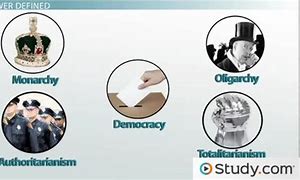
One may agree that economic productivity comes from creativity, education, and work. However, it does not come from emphasis on one thing but on equality of opportunity for all to be employed.

Franks’ cynicism is overwhelming. By the end of his book, which is published before Hilliary Clinton’s political defeat by Trump, one is depressed by the truth of what he writes. The second election of Trump is proof of the failure of the Democratic party, and the Republican party, to live up to a belief in social equality and equal opportunity.

Creativity is an innate human quality. Education comes in many forms which are both formal and informal.

Being employed is a government, private enterprise, and personal responsibility. It is the job of governance to create public policies that support equality of opportunity for people to be creative, educated, and employed. Equality of opportunity ensures national economic growth and prosperity.

Trump is unlikely to help the middleclass and poor any more than some of America’s past Presidents, but he disrupts the status quo. That is Thomas Frank’s answer to why Trump was re-elected.

NO EASY SOLUTION

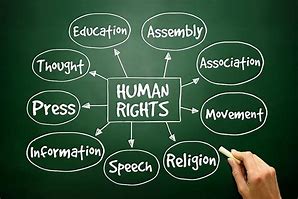
“Everyone Who Is Gone Is Here” is an indictment of American foreign policy. There are no easy solutions for immigration, deportation, or human rights in the world.

Books of Interest
 Website: chetyarbrough.blog

Everyone Who Is Gone Is Here (The United States, Central America, and the Making of a Crises)

By: Johnathan Blitzer

Narrated By: Jonathan Blitzer, Andre Santana

Johnathan Blitzer (Author, American journalist, staff writer for The New Yorker.)

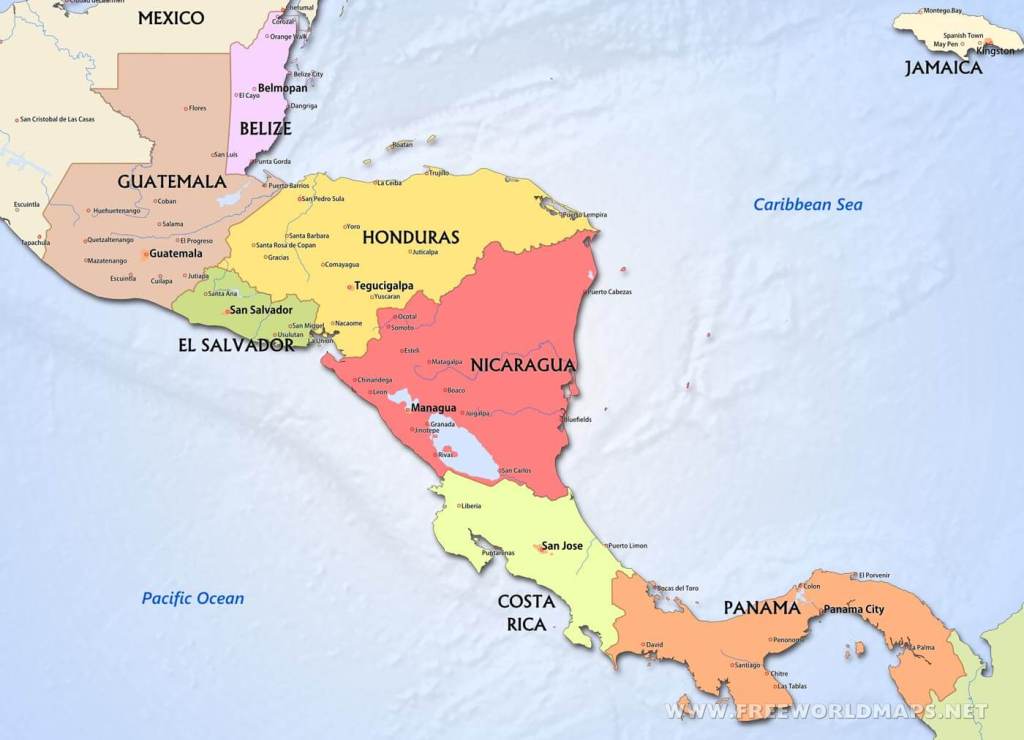
“Everyone Who Is Gone Is Here” is an indictment of American foreign policy. There seems a loss of a moral center in America with its support of other governments based solely on government type, national security, or economic interest. That is not to suggest national security and economic interest are not critically important but Blitzer’s history of America’s support of Central American governments is appalling. El Salvado, Guatemala, Honduras, and Nicaragua are democracies in title but not in reality.

Blitzer tells the story of migrants from El Salvadore and Guatemala who are imprisoned, tortured, and sometimes raped or murdered by their government’s functionaries.

El Salvadoran and Guatemalan governments purport to be representative democratic republics. They are not. They have been dictatorial and punitive victimizers of their citizens. The picture drawn by Blitzer is that both are highly autocratic and riven with exploitation and arbitrary treatment of their Latino populations.

Some immigrants came to roil American communities with the only tools they were familiar with in their native countries.

Many immigrants came to America to escape arbitrary treatment by their governments. America has benefited from its immigrant labor, but some turned to street drugs and violence because of their poverty and the experience their families lived with in their native countries. Driven by self-interest, a survival instinct, and ignorance, America has deported many Latino immigrants who chose the gang life in the California suburbs. Gang life offered identity and income. Gangs like MS-13, the 18th Street Gang and other street name gangs terrorized L.A. and Southern California. The police reacted with violence by rounding up Latinos based on gathered photographs and lists of their families and friends. Some who had proven records of crime were imprisoned or deported to their families’ countries even though they may have been born in America.

America has financially and militarily supported Central America without regard to human rights.

There is a taint of McCarthyism in America’s communist categorization of Central American countries because false categorizations hides the truth. The truth is that democratic countries like El Salvadore and Guatemala have treated citizens as harshly as yesterday’s Stalin, today’s Ayatollah in Iran, and the two Assads in Syria. Reagan’s willingness to sell arms to Iran in the 1980s for money to send to Nicaragua because communism was allegedly opposed by those in power is an example of America’s political blindness. Nicaraguan, Salvadorian, and Guatemalan leadership was as corrupt as many communist countries that practiced violence, imprisonment, torture, and murder of their citizens. Whether one’s government is communist or democratic, the important issue is how its citizens are treated, not its form of government. Bad forms of government will eventually fall from the weight of their citizens’ unequal treatment, just as Syria fell in 2024. The sufferers are always the oppressed citizens and, as interestingly noted by the author, the government perpetrators who live with the guilt they feel when they retire from their military or government jobs.

What Blitzer infers in his history of Central America is that human rights of citizens should be the primary criteria for American financial and/or military support for foreign governments whether democratic, communist, socialist, or other.

National stability comes from citizens’ support of their government. Stability is compromised when human rights are denied. Blitzer implies–America should only financially or militarily support another country only if the nativist nation and culture is working toward equal human rights for its citizens. The immigrant crises in America and the world is caused by nations that do not work toward equal human rights for their citizens.

One is somewhat conflicted by Blitzers’ argument. The conflict is in an outsiders’ understanding of a foreign countries’ culture.

Human rights may be universal, but culture is made of beliefs, values, norms, customs, language, art, literature, food, fashion, social institutions, and unique symbols and artifacts of particular nation-states. This great host of characteristics is not easily quantifiable. No nation can justify rape, torture, or murder but they do exist in all cultures. Ignorance of culture is at the heart of why any country that invades, or militarily and financially supports another country, risks failure.

There are no easy solutions for immigration, deportation, or human rights in the world.

Energy

Wysession explains coal and gasoline production costs will continue to rise making them too costly for most consumers. He believes energy production of wind, solar, hydro, and nuclear power will become more viable and less costly as science advances. From his lectures to our ears, listeners hope he is right.

Books of Interest
 Website: chetyarbrough.blog

The Science of Energy (Resources and Power Explained

By: The Great Courses

Narrated By: Michael E. Wysession

Michael E. Wysession (Brown University and Northwestern University PhD graduate in 1991, chair of the National Science Foundation (NSF).

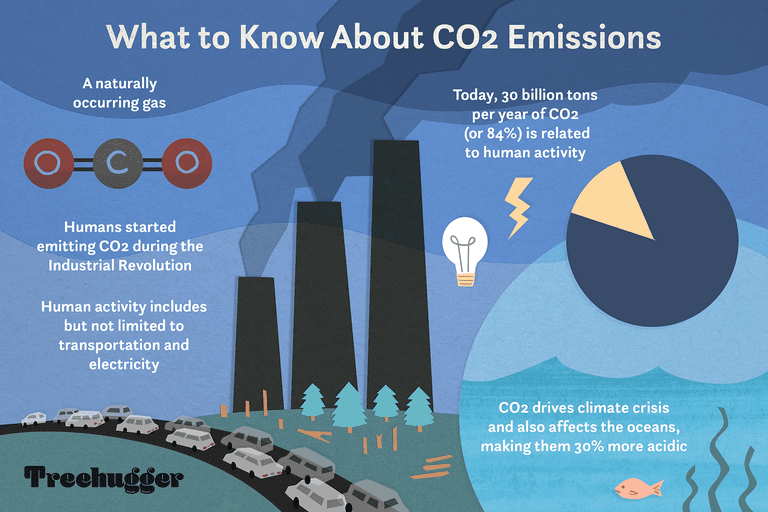
Professor Wysession offers an overview of the world’s energy crises with a detailed history of “The Science of Energy”. It is a daunting series of lectures about the chemical nature and origin of energy with its evolving role in world economies. From a chemical perspective, energy is the capacity to do work or produce change. Wysession identifies the many forms of energy ranging from coal to oil to thermal to biological sources of fossil fuels. He reinforces the belief that global warming is largely the result of growth in carbon dioxide in the atmosphere exacerbated by the continued use of fossil fuels.

Wysession explains energy can be stored, transferred, and transformed by chemical reactions and processes. It is the bonding and breaking of atoms in molecules that create energy. He explains there are exothermic and endothermic reactions with combustion that create energy to move machinery and photosynthesis for plant growth.

To some, it is a surprise to hear of Wysession’s optimism about the future. He argues the world’s effort to sequester carbon dioxide and reduce dependency on fossil fuels will abate global warming, maintain, and sustain human life.

His optimism is based on a clear-eyed and educated understanding of how carbon dioxide increasingly damages the environment while fossil fuel use continues to pollute the air we breathe.

Wysession explains carbon dioxide is a greenhouse gas that traps heat in the Earth’s atmosphere.

That trapped heat is melting the ice caps, raising sea levels, and causing severe weather events like hurricanes, floods, and ironically, droughts. Higher carbon dioxide levels exacerbate respiratory and cardiovascular disease because of increased particulate matter in the air that causes heart attacks and strokes. Rising carbon dioxide levels increase ocean acidification that reduce biodiversity and threaten coral reefs and shellfish. Extreme weather events destroy farm crops and affect the food and water security of millions of people. Wysession notes the world economy suffers because of damaged infrastructure, increased health care costs, and loss of productivity from fossil fuel accidents and health consequences.

Greenhouse gases released by fossil fuels trap heat that causes the earth’s temperatures to rise.

The direct impacts of fossil fuel use and extraction are well known. Fossil fuels create air and water pollution that causes habitat destruction, and ocean acidification. Wysession notes both extraction and use of fossil fuels causes environmental damage from pollution’ accidents and methods of extraction from the earth.

Wysession notes some progress by world leaders in reducing the use of fossil fuels.

Wysession notes advances in renewable energy technology with solar, wind, and battery storage. He comments on the international cooperation in reducing greenhouse gas emissions and public awareness of the consequence of failure to address fossil fuel pollution. There are also economic benefits from the jobs created with solar, wind, and carbon capture manufacture. (One hopes but doubts our new President understands and acts on those job creation opportunities.)

Wysession believes it is important to keep in mind the potential of nuclear energy in the world’s future.

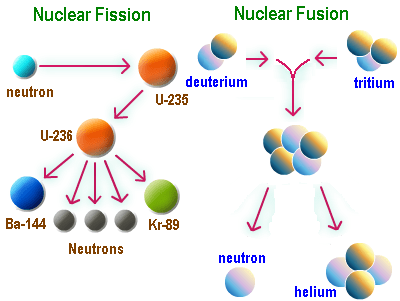
He revies the history of nuclear fission and fusion. As is widely known, our sun provides energy to the world with fusion that feeds photosynthesis which fuels plant growth by converting carbon dioxide and water into glucose and oxygen, both of which are critical needs for life on earth.

Fusion is a process where two nuclei combine to form a heavier nucleus which releases energy. The energy comes from the kinetic interaction of the nuclei. Though science has not successfully achieved the high temperatures of a sun-like process to make fusion a viable source of energy on earth, it has been done on a small scale. It has not achieved a sustained and economically viable form of energy but its potential as a clean energy source is limitless. In the meantime, fission has worked to destroy people and things while showing it can be harnessed to provide energy to the world. As of May 2024, there are 440 nuclear reactors in operation, with the U.S. having the most at 94.

Wysession acknowledges rising population demands more and more energy but he argues the average energy use of people in the United States has fallen to 10 KW per person and believes it will continue to drop in the future.

Wysession’s drop in energy use per person (whatever that means) may be correct, but the reality is that American population increases show energy use has risen in the 21st century to 94 quadrillion Btu. (Whatever a quadrillion Btu means.)

In the late 20th century, our consumption was 75-80 quadrillion Btus annually. American consumption has risen by 14 quadrillion Btu, i.e., a 17.5 percent increase in 23 years. Though the numbers are incomprehensible, energy consumption in America is rising, not falling.

He notes there are over 70 percent more people on earth than when he was born. The rising cost of gasoline will compel more transition to electric automobiles. He believes coal and gasoline use will continue to decrease for both environmental reasons and consumer costs. Wysession explains coal and gasoline production costs will continue to rise making them too costly for most consumers. He believes energy production of wind, solar, hydro, and nuclear power will become more viable and less costly as science advances. From his lectures to our ears, listeners hope he is right.

LEARNING

There are many brain discoveries and therapies to be discovered that will extend the ability of human beings beyond today’s capabilities. Those discoveries are like the discovery of fission. The science of brain plasticity has potential for either programing destruction or liberating the mind.

Books of Interest
 Website: chetyarbrough.blog

The Brain That Changes Itself: Personal Triumphs from the Frontiers of Brain Science

By: Norman Doidge, M.D.

Narrated By: Jim Bond

Norman Doidge (Author, Canadian psychiatrist, psychoanalyst, studied literary classics and philosophy at the University of Toronto.)

To an older person, there is a sense of disappointment and optimism from what Norman Doidge writes in “The Brain That Changes Itself”. The disappointment is the feeling of lost opportunity for some because of their ignorance of how the brain works. The optimism is that the past is passed while Doidge explains brain improvement is not completely lost with either age or injury. For older people, improving brain function is more difficult but not impossible. For the injured or medically challenged brain improvement is a dire necessity. For the young, improving brain function is at its best unless there are medical complications.

Doidge explains as one grows older or suffers from brain injury; the brain can be rewired to improve learning or restore bodily function.

.

Age slows the synaptic process of learning, but the brain is still receptive to synaptic improvement. Older brains simply have to work harder to compel new neuronal synaptic connections. With brain injury or disease, new connections must be made by different parts of the brain to restore the relationship between thought and action. A youthful brain is likely to improve faster than an older brain, but experimental studies show improvement is possible for both. Doidge explores brain plasticity in “The Brain That Changes Itself”.

Doidge explains medical or physical deterioration of brain function can be improved with repetitive effort.

What brain disfunction has in common is the ability to adapt to the circumstances of people’s lives. With the appropriate help of teacher, clinician, and self exercise, people can rewire their brain.

The difficulty is in societies willingness to invest in the professional needs of those who are affected by brain dysfunction. Treatment of the aged requires commitment to repetitive learning and relearning which can be done with personal commitment. It is not the same for those who lose motor control of their body from injury or medical conditions. The requirement Doidge and others have found for medical or physical brain injury is the training and availability of clinicians and physicians to provide the therapeutic treatment that will aid recovery. How many medical clinicians have been trained to aid brain-dysfunction’ patients to re-wire their brains to think, see, hear, or walk? How many patients can afford the treatment?

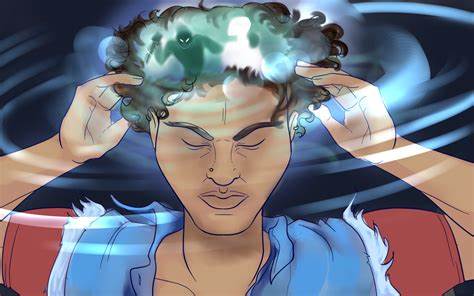
The potential of rewiring the brain extends to returning old brains to their childlike state of openness with drugs. It is a new frontier that illustrates how human brains are superior to A.I.

“The Brain That Changes Itself” reveals a lot about the science of re-wiring the brain. Re-wiring the brain for older people is possible with minimal assistance but it requires repetitive work. For the brain damaged, the need for neurologists, clinicians and other professionals are essential for treatment success. The difficulty is in balancing need with cost and the public’s ability to pay.

Brain plasticity can either aid or destroy society.

Doidge notes how North Korean children are taught from grade school through high school to see their leader as a god, not a fallible human being. The less formed minds of the young are more easily programed than adults. He shows brain plasticity is a new frontier in medicine that can be abused.

There are many brain discoveries and therapies to be discovered that will extend the ability of human beings beyond today’s capabilities. Those discoveries are like the discovery of fission. The science of brain plasticity has potential for either programing destruction or liberating the mind.

CHILDREN

Klune’s fantasy offers no clear answer to “the best way” to raise children, but he crystalizes how important they are to the future of the world.

Books of Interest
 Website: chetyarbrough.blog

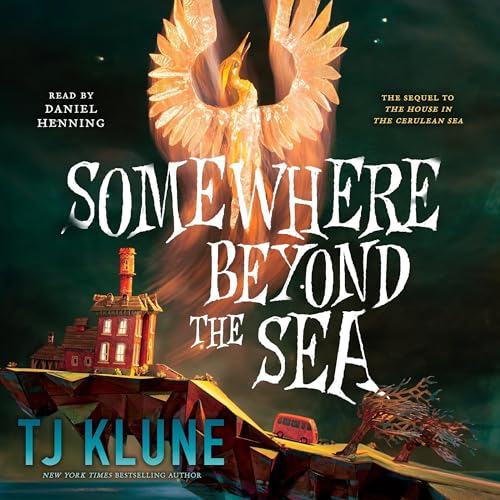
Somewhere Beyond the Sea (Cerulean Chronicles, Book 2) 

By: T.J. Klune

Narrated By: Daniel Henning

T.J. Klune (Author, winner of the 2021 Mythopoeic Awards)

“Somewhere Beyond the Sea” is a wild ride by an author with an extraordinary imagination. Some listener/readers will be inclined to reject Klune’s book because its flights of imagination obscure the author’s social criticism. This is a fantasy novel offering a message about mistakes parents and society make when raising children.

One might view “Somewhere Beyond the Sea” as a simple fantasy novel about extraordinary children cared for in orphanages.

However, every parent of a child will see themselves and the mistakes they may have made in raising their children. Though science explains much of who humans become is genetically determined, the influence of parents and acquaintances affect genetic predisposition. A child may mature to become a Jesus or Hitler without human understanding of why they became the best or worst of society.

Klune’s fantasy is about an orphanage populated with magical children that have powers beyond rational belief.

They are morphological creatures with powers capable of destroying or creating reality. Being free of parental guidance and raised in an orphanage, the maturity of these children is institutionally influenced. As is true in any orphanage, or any parental home, there are good and bad management practices. As either an orphanage manager or parent, one wonders if they are making the right decisions in the way they are influencing their children.

Klune obviously believes letting children become who they are, as long as they do no harm to themselves or others, is a life goal.

That seems a fine ideal, but parents and institutions are made of humans who are trapped by personal experiences of their own that influence how they raise their children. Some are disciplinaries, others are not. Some are physical punishers of bad behavior; others believe physical punishment only releases a parent’s anger and actually reinforces bad behavior. Despite bad parenting, some children grow to become great contributors to society, regardless of how they were raised, others become criminals of every type.

Does the way we raise our children make a difference in who they become?

There seems no disciplinary practice that guarantees the best outcome of a child raised by either institutions or parents. This is particularly concerning to parents of children who become unhappy and choose to pursue unhealthy relationships, become drug addicts, criminals, or suicide statistics. Parents become victims of guilt. They wonder how they might have been better managers of their children’s lives, thinking that could have made the difference.

Klune’s fantasy offers no clear answer to “the best way” to raise children, but he crystalizes how important they are to the future of the world.

SOCIAL BLINDNESS

Criminal imprisonment, gun control, and drug addiction solutions are elusive, just as America’s eradication of discrimination is, at best, only a work in progress.

Books of Interest
 Website: chetyarbrough.blog

Locking Up Our Own (Crime and Punishment in Black America) 

By: James Forman Jr.

Narrated By: Kevin R. Free

James Forman Jr. (Author, professor of law and education at Yale Law School)

James Forman Jr. argues Washington D.C. is a multi-ethnic democratic example of what is wrong with the American penal system, gun control, and an addiction crisis. Forman offers an eye-opening recognition of America’s social blindness. The 2019 estimated population of Black residents in D.C. is approximately 44%. Forman suggests D.C. constitutes a representative sample of what has happened and is happening to Black Americans in “Locking Up Our Own”.

Forman addresses three social issues with Washington D.C.s’ effort to legislate against the consequences of crime associated with a Black population’s gun possession, and drug addiction. America’s history of Black discrimination is well documented. The issues of gun control and drug addiction are top-of-mind issues in all American communities. What makes Forman’s book interesting is his analysis of what he argues is a nascent conservative movement in Black American society.

Forman’s argument is based on statistics and the history of Black discrimination. The American incarceration rates for Black citizens are six times higher than for white citizens. Today’s statistics show 33% percent of the prison population is Black when it is only 12% of the U.S. adult population. White prisoners account for 30% of America’s prisoners but amount to 64% of the adult population.

The fundamental issue of Forman’s book is that more Black Americans are being imprisoned for crimes of addiction and theft than those committed by white Americans.

Forman uses Washington D.C. as evidence for a Black conservative movement because of its high percentage of Black residents. He notes D.C.’s effort to legislate gun control and regulate drug addiction are arguably more restrictive than other parts of the country. Firearms must be registered with the police department. A permit is required to purchase a firearm. Concealed weapons require a license. Assault weapons are banned. Magazine capacities are limited. Safe storage requirements are mandated. In the case of addiction, the “Office of National Drug Control Policy”, ONDCP is established in D.C. The program is instituted to provide funding to support communities heavily impacted by drug trafficking. A “Drug-Free Communities Program” offers grants to community coalitions to prevent youth substance abuse. The city expands Naloxone access to citizens to reverse opioid overdose.

Forman explains these policies are supported by D.C. residents in the face of national opposition to gun control. Forman notes the proactive drug control programs of D.C.

The obvious irony of D.C.’s policies is that they do not reflect what white America promotes but suggests Black America is likely more victimized by lax gun controls and drug regulation. White America needs to get on board.

Several chapters of Forman’s book explain the difficulties of integrating minorities into local police forces.

Police department managers opened their hiring practices to Blacks based on growing Black neighborhoods and belief that police services would be improved with officers who would be more racially and culturally suited to understand policing in minority neighborhoods. Forman recounts 1940s through the 1960s police force integration. He notes police department integration is fraught with discriminatory treatment of Black recruits.

Of course, the idea of crime in a Black neighborhood being better understood by Black officers is just another form of discrimination.

Crime is crime, whether in a minority neighborhood or not. Relegating Black police to Black neighborhoods only reinforces racial discrimination. Integrating the police only became another example of racial discrimination in America. Paring white and Black policemen on petrol became difficult. Getting white and Black policemen to work together becomes even more problematic when promotions are denied qualified Black officers. As with all organizations, police promotions were based on experience and standardized testing. What police departments would typically do is promote white officers over Black officers whether their experience rating or test scores were better or not.

The irony of white resistance to gun control and ineffective drug addiction policies has had an adverse impact on Black-on-Black crime.

The culture created in formally white police departments adversely condones harsh treatment of minorities. Black officers buy into a police department’s culture and begin discriminating against Black residents in the same way as white policemen.

The 2003 brutal beating and killing of Tyre Nichols by 5 Black Police Officers.

Drug addiction is the scourge of our time. Its causes range from the greed of drug company executives to poor policy decisions by the government to escapist and addictive desires of the public. Addictive drugs are the boon and bane of society. On the one hand, they reduce uncontrollable pain and anxiety; on the other they are often addictive, causing incapacity or death.

Discrimination can only be ameliorated with education, understanding, and governmental regulations that are consistent with the rights written in the American Constitution.

Criminal imprisonment, gun control, and drug addiction solutions are elusive, just as America’s eradication of discrimination is, at best, only a work in progress. Guns in the hands of American citizens are not guaranteed except as noted in the Constitution which infers “A well-regulated Militia…” is the only reason for “…people to keep and bear Arms…” How many more school children have to be killed by guns before the lie of American gun rights is dispelled.

The last chapters of Forman’s book address his experience as a public defender in Washington D.C. This is the weakest part of his story, but it points to the theme of an incarceration system in America that is broken. Prisons are not meant to reform criminals. They are overcrowded, violent, understaffed and, most damagingly, lack rehabilitative programs for re-education and vocational training that could reduce recidivism and return former prisoners to a socially productive society.

BEST & WORST OF US

Trump’s mass deportation idea is draconian and inhumane. A system of deportation should be organized to repatriate some undocumented immigrants but not to expel them without fair consideration of their circumstances and the needs of the American economy.

Books of Interest
 Website: chetyarbrough.blog

Real Americans

By: Rachel Khong

Narrated By: Louisa Zhu, Eric Yang, Eunice Wong

Rachel Khong (Author, American editor in San Francisco. Born in Malaysia to a Malaysian Chinese family.)

In a 1931 book, “Epic of America”, James Adams described America as a land where life should be better and richer for everyone, with opportunities for each according to their ability or achievement. This was written in the depths of the depression that began with the stock market crash of 1929. Of course, illegal immigration was nearly impossible in the 1930s, but still–there were 500,000 American immigrant arrivals in the U.S. during that decade. That amounted to 11.6 percent of the U.S. population at that time. Rachel Khong’s vision in “Real Americans” tests the next four years of Trump’s administration.

Khong writes a fictional story of a romantic relationship between an undocumented young Puerto Rican woman who is about to be deported and an equally young South Korean American who is falling in love with her.

Both are well educated by the American education system. The boy is interviewing for entrance to Yale while the girl is meeting an immigration lawyer to see what can be done to avoid deportation. The girl lives with a feckless “Wanna-Be actor” father and driven mother who is struggling to make a living in America. The daughter is shown to be quite intelligent with the ambition to become a data analyst.

Mass deportation without fair consideration of immigrant circumstance and their societal contribution is inhumane and foolish.

The developing affection between these two characters is beautifully created by the author. They are an example of why resident status needs to be treated fairly when immigrants are found to violate the immigration laws of the United States.

The idea that immigrants take jobs away from native American workers is a false flag.

The agricultural industry will be seriously impacted by mass deportation of undocumented labor.

The need for workers in America will continue to grow in the foreseeable future of the largest economy in the world. The demographics of an aging American population (that is not replacing itself) requires immigrants to grow and maintain the economy. The two characters of Khong’s story may not be every immigrant but they show how some are the future of American prosperity. Mass deportation of illegal immigrants will harm the American economy.
Immigrants have played a critical role in what America has become.

Khong is just telling a fictional story about American immigration, but it clearly illustrates how political rhetoric devolved into political lies and misinformation about the value of all human beings. America does have a history of Indian and Black murder and enslavement, but it also has a history that ameliorates discrimination and past misdeeds. One hopes the blunt force of immigrant deportation is not a policy that repeats America’s societal mistakes. American needs a carefully adjudicated immigration policy for the betterment of society.

Today, the total percentage, including 11,000,000 undocumented immigrants, is estimated at 14.3%. In the 1930s, 11.6% of the American population was immigrant. The question is whether the undocumented should be deported, regardless of the contribution they make to American productivity.

An aging population in America is not being replaced by native born Americans. Worker loss of undocumented immigrants may be harmful to American productivity.

Trump and his deportation Czar, Tom Homan.

Trump’s mass deportation idea is draconian and inhumane. A system of deportation should be organized to repatriate some undocumented immigrants but not to expel them without fair consideration of their circumstances and the needs of the American economy.

Khong’s story is entertaining fiction, but Trump’s deportation plan is a threatening work in progress.

BRAIN TRAUMA

Schwartz’s book implies the NFL’s prevention and protocols for brain trauma are a cost of doing business. Sadly, this seems similar to the American public’s misinterpretation of the “right to bear arms” and its resistance to gun control.

Books of Interest
 Website: chetyarbrough.blog

Gray Matters (A Biography of Brain Surgery)

By: Theodore H. Schwartz

Narrated By: Sean Pratt

Theodore H. Schwartz (Author, American medical scientist, academic physician and neurosurgeon.)

“Gray Matters” feeds a curiosity for those interested in the human brain. Written by a brain surgeon, it offers a clearer understanding of brain function while offering insight to the causes and consequences of brain trauma. The author has treated many patients with brain infections and trauma and offers analysis of athletic, gun-related, and accident injuries of people who have died from or survived brain trauma.

Schwartz explains the arduous education for one to become a brain surgeon and how physicians surgically treat brain disease and trauma.

He explains how long hours as an intern are required after spending years to become an academically qualified physician, let alone surgeon. Not only are the hours long but acceptance into an internship is highly competitive and difficult to achieve. That seems counterintuitive in view of the public’s need for qualified medical help. One suspects the fundamental cause is the cost to the hiring hospital and the staffing required to teach new physicians.

The brain is protected by a skull, three layers of membrane, cerebral spinal fluid, a blood barrier, skin, and a scalp.

These structures, cells, and tissues protect the brain from physical damage and infections so the brain can provide organic function, thought, and action. Physical or infectious damage to the brain can affect any one of these natural human’ functions.

Schwartz reviews incidents of gun-shot brain trauma of famous figures like Abraham Lincoln, John F. Kennedy, Robert Kennedy, James Brady, and Gabrielle Giffords. He notes the differences in the bullets used as well as the power of the weapons to explain the damage done. He argues John Kennedy had no chance of survival while suggesting Lincoln, because of a lower power weapon, might have survived with today’s advances in treatment. However, he suggests Lincoln would have lost much of his skill as an orator and political theorist because of damage to a particular part of his brain from Booth’s attack. Schwartz believes Robert Kennedy might have lived with more rapid and qualified treatment but would have been physically and mentally disabled. James Brady, Ronald Reagan’s press secretary, lost speech clarity and physical mobility because of his brain trauma. Similar consequences occurred with Gabriell Giffords’ injuries, but she relearned how to walk, talk, and perform basic tasks. Schwartz notes the only positive political accomplishment to come out of these violent acts was the Brady Handgun Violence Reform Act.

Schwartz goes on to explain non-traumatic brain injury from infection and stroke to traumatic brain injury from Shaken Baby Syndrome (SBS) to Chronic Traumatic Encephalopathy (CTE) with Second-Impact Syndrome often seen in athletes. Diagnosis of SBS from a shaken baby’s head has changed to include the shaking accompanied by impact with a hard surface.

Diagnosis of CTE and Second-Impact Syndrome in sports are still being defined. The return of football players to the field of play is a judgement call by a sideline physician which raises questions about qualifications, let alone judgement.

The NFL initially objected to the brain trauma threat of their sport based on improved protective equipment.

However, Schwartz writes they have increased their protocol for injured players and have paid over a billion dollars to former athletes suffering from symptoms of brain trauma. Some big names in football like Junior Seau, Frank Gifford, Ken Stabler, and Tommy Nobis were autopsied after their death to show they suffered from CTE.

The lure of fame and money are unlikely to change elite athletes desire to compete despite the threat of brain injury. Schwartz’s book implies the NFL’s prevention and protocols for brain trauma are a cost of doing business. Sadly, this seems similar to the American public’s misinterpretation of the “right to bear arms” and its resistance to gun control.