Energy

Wysession explains coal and gasoline production costs will continue to rise making them too costly for most consumers. He believes energy production of wind, solar, hydro, and nuclear power will become more viable and less costly as science advances. From his lectures to our ears, listeners hope he is right.

Books of Interest
 Website: chetyarbrough.blog

The Science of Energy (Resources and Power Explained

By: The Great Courses

Narrated By: Michael E. Wysession

Michael E. Wysession (Brown University and Northwestern University PhD graduate in 1991, chair of the National Science Foundation (NSF).

Professor Wysession offers an overview of the world’s energy crises with a detailed history of “The Science of Energy”. It is a daunting series of lectures about the chemical nature and origin of energy with its evolving role in world economies. From a chemical perspective, energy is the capacity to do work or produce change. Wysession identifies the many forms of energy ranging from coal to oil to thermal to biological sources of fossil fuels. He reinforces the belief that global warming is largely the result of growth in carbon dioxide in the atmosphere exacerbated by the continued use of fossil fuels.

Wysession explains energy can be stored, transferred, and transformed by chemical reactions and processes. It is the bonding and breaking of atoms in molecules that create energy. He explains there are exothermic and endothermic reactions with combustion that create energy to move machinery and photosynthesis for plant growth.

To some, it is a surprise to hear of Wysession’s optimism about the future. He argues the world’s effort to sequester carbon dioxide and reduce dependency on fossil fuels will abate global warming, maintain, and sustain human life.

His optimism is based on a clear-eyed and educated understanding of how carbon dioxide increasingly damages the environment while fossil fuel use continues to pollute the air we breathe.

Wysession explains carbon dioxide is a greenhouse gas that traps heat in the Earth’s atmosphere.

That trapped heat is melting the ice caps, raising sea levels, and causing severe weather events like hurricanes, floods, and ironically, droughts. Higher carbon dioxide levels exacerbate respiratory and cardiovascular disease because of increased particulate matter in the air that causes heart attacks and strokes. Rising carbon dioxide levels increase ocean acidification that reduce biodiversity and threaten coral reefs and shellfish. Extreme weather events destroy farm crops and affect the food and water security of millions of people. Wysession notes the world economy suffers because of damaged infrastructure, increased health care costs, and loss of productivity from fossil fuel accidents and health consequences.

Greenhouse gases released by fossil fuels trap heat that causes the earth’s temperatures to rise.

The direct impacts of fossil fuel use and extraction are well known. Fossil fuels create air and water pollution that causes habitat destruction, and ocean acidification. Wysession notes both extraction and use of fossil fuels causes environmental damage from pollution’ accidents and methods of extraction from the earth.

Wysession notes some progress by world leaders in reducing the use of fossil fuels.

Wysession notes advances in renewable energy technology with solar, wind, and battery storage. He comments on the international cooperation in reducing greenhouse gas emissions and public awareness of the consequence of failure to address fossil fuel pollution. There are also economic benefits from the jobs created with solar, wind, and carbon capture manufacture. (One hopes but doubts our new President understands and acts on those job creation opportunities.)

Wysession believes it is important to keep in mind the potential of nuclear energy in the world’s future.

He revies the history of nuclear fission and fusion. As is widely known, our sun provides energy to the world with fusion that feeds photosynthesis which fuels plant growth by converting carbon dioxide and water into glucose and oxygen, both of which are critical needs for life on earth.

Fusion is a process where two nuclei combine to form a heavier nucleus which releases energy. The energy comes from the kinetic interaction of the nuclei. Though science has not successfully achieved the high temperatures of a sun-like process to make fusion a viable source of energy on earth, it has been done on a small scale. It has not achieved a sustained and economically viable form of energy but its potential as a clean energy source is limitless. In the meantime, fission has worked to destroy people and things while showing it can be harnessed to provide energy to the world. As of May 2024, there are 440 nuclear reactors in operation, with the U.S. having the most at 94.

Wysession acknowledges rising population demands more and more energy but he argues the average energy use of people in the United States has fallen to 10 KW per person and believes it will continue to drop in the future.

Wysession’s drop in energy use per person (whatever that means) may be correct, but the reality is that American population increases show energy use has risen in the 21st century to 94 quadrillion Btu. (Whatever a quadrillion Btu means.)

In the late 20th century, our consumption was 75-80 quadrillion Btus annually. American consumption has risen by 14 quadrillion Btu, i.e., a 17.5 percent increase in 23 years. Though the numbers are incomprehensible, energy consumption in America is rising, not falling.

He notes there are over 70 percent more people on earth than when he was born. The rising cost of gasoline will compel more transition to electric automobiles. He believes coal and gasoline use will continue to decrease for both environmental reasons and consumer costs. Wysession explains coal and gasoline production costs will continue to rise making them too costly for most consumers. He believes energy production of wind, solar, hydro, and nuclear power will become more viable and less costly as science advances. From his lectures to our ears, listeners hope he is right.

PROGRESS IN SCIENCE

The point of “The Structure of Science Revolution” is that a paradigm begins science exploration, new paradigms challenge old paradigms, old paradigms persist, new paradigms demonstrate improved knowledge over old paradigms, old paradigms are overturned, and a new paradigm begins further search for knowledge

Books of Interest
 Website: chetyarbrough.blog

The Structure of Scientific Revolutions

By: Thomas S. Kuhn

Narrated By: Dennis Holland

Thomas Kuhn (Author, 1922-1996 died at age 73, American historian and philosopher of science at Harvard and the University of California, Berkeley.)

This is a tough ten-hour listen. It does offer an overview of the evolution of science and how new discoveries have changed human understanding of the physical universe in a revolutionary way. Kuhn suggests every revolution in science begins with a paradigm, a model or framework that offers a clearer understanding of the physical universe.

Kuhn suggests every revolution in science begins with a paradigm.

The momentous discoveries of Newton, Einstein, Darwin, and Galileo are a few of the revolutionary leaders that Kuhn offers as examples. Newton developed a paradigm of earth’s laws of motion and universal gravitation that revolutionized understanding of forces and momentum on earth. Einstein developed a paradigm of the universe by introducing theories of special and general relativity that revolutionized our understanding of space, time, and gravity. Darwin developed a paradigm of animal evolution and natural selection that revolutionized biology and life’s diversity. Galileo developed a paradigm of our universe that revolved around the sun that revolutionized our view of the cosmos and humans place in it.

All of these geniuses created new, often more comprehensive, paradigms than predecessors like Aristotle, Ptolemy, and Democritus. New paradigms about air, the planets, and atoms improved predictability of results from new paradigms of thought, and experimentation that became more comprehensive and accurate than thoughts and experiments on older paradigms. Kuhn argues new paradigms foment science revolutions.

Kuhn explains how a new paradigm is challenged because of generally predictable results from older science discoveries.

The argument is made that the older discovery is better because it did have predictable results and the only reason there is an aberration is because of an undiscovered anomaly that will be discovered and explained by further thought, observation, and experimentation. However, as evidence from experiment grows to show older science discoveries are not as comprehensively predictable of results as the new paradigm, the new paradigm replaces the old one and a revolution ensues.

This is an insightful story but one gets bogged down by the number of examples that repeat similar revolutions.

The objections from old paradigm believers, failed old paradigm predictions, and ultimate revolution by new paradigms are repeated too many times.

The point of “The Structure of Science Revolution” is that a paradigm begins science exploration, new paradigms challenge old paradigms, old paradigms persist, new paradigms demonstrate improved knowledge over old paradigms, old paradigms are overturned, and a new paradigm begins further search for knowledge.

Truman

Truman’s presidential accomplishments were not done alone but he managed highly educated and experienced people who got things done. He had the respect of people who reported to him, and he was tough, pragmatic, and willing to make hard decisions when circumstances required leadership.

Books of Interest
 Website: chetyarbrough.blog

Truman

By: David McCullough

David McCullough (1933-2022, Author, historian, winner of a Pulitzer Prize, the National Book Award, and later given the Presidential Medal of Freedom in 2006.)

One of the great historians of the modern age, David McCullough received the National Book Award for “Truman” in 1982. As a biography of an American President, it is among the best ever written about a President whom few regard as being in the category of Washington, Lincoln, or FDR. Every chapter is a pleasure to read because it reminds one of why many consider America the best country in the world in which to live. This portrait of the 33rd President of the United States shows a man of modest means, without a college degree, who grows to become a great manager of others and leader of a post WWII world.

President Harry S. Truman (1884-1972, President from 1945-1953.)

Thrown into the Presidency after 82 days as Vice President of the United States, Truman became President. FDR died April 12, 1945. Germany was near defeat by the Allies. Within a month, on May 8th, the Allies celebrated what is known as V-E Day, Victory in Europe Day. Truman is faced with a decision on how best to end WWII by defeating Japan. Though when he rose to the Presidency, he had not been informed about the Manhattan Project. He was fully briefed on April 25, 1945, by Henry Stimson and General Leslie Groves, leaders of the Manhattan Project. In mid-July of 1945 the first atomic bomb was successfully tested and Truman described it as “the most terrible bomb in the history of the world”.

Captain Harry Truman November 1918.

As a former veteran and captain in WWI, Truman knew what continuing the war meant to the lives of American soldiers.

As a former veteran and captain in WWI, Truman knew what continuing the war meant to the lives of American soldiers if Japan were conventionally attacked by Allied forces. He ordered the use of two atom bombs, one on August 6, 1945, on Hiroshima and a second on Nagasaki on August 9, 1945. There was no official warning. Leaflets were dropped over some Japanese cities on August 6, but one suspects that was just a precedent to instill fear about further destruction if Japan refused to surrender.

TRUMAN’ CABINET IN 1945

President Harry S. Truman meets with Cabinet members in the White House. From left to right: Postmaster General Robert Hannegan; Secretary of War Henry Stimson; Secretary of State James Byrnes; the President; Secretary of the Treasury Fred Vinson; Attorney General Tom Clark; and Secretary of the Navy James Forrestal.

Truman took complete responsibility for the decision to drop the bombs.

As shown in the movie about Truman’s meeting with Oppenheimer after Hiroshima and Nagasaki, Truman was put-off by Oppenheimer’s concern over postwar use of nuclear weapons. Presumably, Truman’s feelings were that many lives were saved despite the loss of Japanese citizens from the use of atomic weapons. McCullough’s depiction of Truman is that he was tough, pragmatic, and willing to make hard decisions. He took personal responsibility for the use of atomic bombs to end the war.

Truman’s whistle-stop campaign in 1948.

McCullough goes on to explain Truman’s second term election effort that began when Dewey, his Republican opponent, looked like a sure winner. Truman campaigned across the country by train. Truman’s victory and what seemed an interminable train ride was a testament to the grit and determination of this 5-foot, 9-inch dynamo.

Truman’s character description is reinforced with McCullough’s history of Truman’s relationship with General McArthur. In the early days of the Korean war, McArthur took charge of American forces and made decisions that seemed to bode well for the end of the conflict. McArthur reversed the course of the war by insisting on a risky reinforcement of American forces. It was the right move and Truman admired McArthur’s grit in insisting on the reinforcement. However, McArthur overstepped his position when he insisted on bombing Chinese cities when China escalated the Korea war. McArthur publicly criticized Truman’s administrative opposition to escalation.

Truman relieved McArthur of his command in Korea and pursued a negotiated peace at the 38th parallel. This was another tough, pragmatic, and unpopular decision by Truman. In retrospect, one recognizes it was the right decision, but Truman was markedly criticized by the press and public for his decision.

In the early days of the Korean war, McArthur took charge of American forces and made decisions that seemed to bode well for the end of the conflict. McArthur reversed the course of the war by insisting on a risky reinforcement of American forces.

One can argue McCullough’s history places Truman in the pantheon of the greatest Presidents of the United States since Washington, Lincoln, and FDR. Truman ended WWII, agreed with and supported the Marshall plan that rebuilt Europe, created the Truman Doctrine to contain Soviet Expansion, desegregated the military, established the CIA, NSA, and NSC by signing the National Security Act of 1947, approved the Berlin airlift when the Soviets isolated West Berlin, and banned discrimination in the federal workforce. Truman managed some of the greatest minds of his 20th century administration to make America the preeminent leader of the western world.

Truman’s presidential accomplishments were not done alone but he managed highly educated and experienced people who got things done. He had the respect of people who reported to him, and he was tough, pragmatic, and willing to make hard decisions when circumstances required leadership in the face of public opposition.

OCCUPATION

“The Nightengale” is a story that shows how occupation begins, how occupation fails, and why it’s tragic economic and human costs never end. Occupation is not an answer for Russia’s war on Ukraine or Israel’s war on Palestine. Occupation is only war by other means.

Books of Interest
 Website: chetyarbrough.blog

The Nightingale 

By: Kristin Hannah

Narrated By: Polly Stone

Kristin Hannah (Author)

History offers an opportunity to recognize mistakes of the past. Fiction offers tests for a future yet to be realized. The experience of history and written fiction offer behavioral change that can alter the future. However, the difficulty of future change is in understanding history and the limits of testing behavioral recommendations. “The Nightingale” is historical fiction.

Importantly, it offers relevance to today’s war in Ukraine and Israel’s actions in the Middle East.

Kristin Hannah creates a French family during Germany’s occupation of France during WWII. The story begins with an elderly woman nearing the end of her life who climbs the stairs into her attic to pull out an old chest filled with memories of her life in France. Isabelle Rossignol is a fictional character who joins the resistance. Isabelle’s experience is a lesson to the world about occupation of foreign countries by others, whether democratic or authoritarian.

“The Nightingale” is about the French reaction to Nazi Germany’s occupation of France during WWII. Germany’s occupation of France did not Nazify the French just as Putin will not Russianize Ukraine or Israel will Israelize Palestine. War is not an act of diplomacy and occupation never offers peace.

Isabelle, from a cultural perspective, is a patriot of France. She fervently believes in the sovereignty of her country just as most who have lived in any culture in which they grow to become adults. A country that tries to dominate another sovereign nation takes on a cultural and economic burden too hard to bear in perpetuity. The difficulty lies in cultural ignorance and the hardship of changing a native population that is culturally reinforced by generations of human life.

(In a recent trip to the Baltics, the dislike of Russians is palpable. Part of the tour is of the terrible Russian jails, the stories of Russian torture and murder of dissidents, and the fear that was felt by the now grown children of parents who lived during the long Russian occupation of their countries. Today the Baltics are among the most modern countries in Eastern Europe, but that accomplishment only began after their liberation from Russian occupation.)

Upon occupation of a French town in which Isabelle lives, German soldiers are billeted in local residences.

Isabelle lives in one of these residences as a teenage sister of Vianne whose French husband is alleged to be a POW in Germany. A German pilot is assigned to Vianne’s home. She has no realistic alternative to accepting the presence of a German officer in her home. He is a young man with a wife in Germany who politely explains he will be staying in their home while assigned to the Luftwaffe that occupies their town. Vianne objects but realizes she has little choice and takes the German officer into her house.

Wolfgang Beck, the German officer, speaks broken French but is able to communicate well enough to make the French family understand his demands. Isabelle, Vianne’s sister, is incensed by the intrusion and objects to his presence but realizes there is nothing she can do about it. As the story progresses, the Germans begin to exercise increasing control over the French population. The newly billeted officer at the Rossignol’ house seems respectful and apologetic as he moves into the family house.

An unspoken reason Vianne cooperates, though she has no choice, is she wishes to know the fate of her husband. A German officer might be able to find what happened to her husband.

The officer recognizes an opportunity to ingratiate himself to the family. He compiles a list of alleged POWs. Vianne finds her husband is at a particular POW camp, along with other captured combatants. The list Beck creates is an opportunity for wives, mothers, children, and girlfriends to send postcards to their loved ones. Vianne asks the German officer if he would send the postcards for wives wishing to communicate with their husbands and lovers who are now POWs. He agrees, and a strained level of cooperation is established.

As a local teacher, Vianne is asked by Officer Beck to provide a list of fellow teachers who are either Jewish or communist sympathizers.

At first, Vianne resists but eventually names names. The identified teachers mysteriously disappear from the school which is explained by known history of Nazi’ gas chambers and mass murders. Vianne belatedly realizes her error and is deeply remorseful for having given the names to the commander. She goes to a Catholic nun to explain her mistake and asks for advice. The nun treats her kindly and tells her to be careful about naming anyone that is requested by the Nazis. The nun offers advice about life being out of her control and that she should pray to God for guidance. This gives Vianne some comfort, but she recognizes her mistake while accepting the nun’s council. One thinks that was good for her but not for the missing Jews and communists. Vianne chooses to hide Jewish children from deportation as a way of compensating for her foolish mistake in listing Jewish teachers.

Charles de Gaulle (Leader of the Free French Forces during the Nazi occupation.)

Despite the outward appearing cooperation with German occupiers from some French citizens, there is a growing underground opposition. Isabelle becomes part of that opposition by distributing anti-German posters and aiding French resistance fighters who are wounded by German occupiers. The author offers many stories of the heroism of the French people and its underground during the war.

As the German army is nearing defeat, the brutality of the Germans in France escalates. The brutality of the story becomes numbing but gives one a clearer understanding of how humans endure under circumstances that can hardly be believed. Isabelle is caught, tortured and confesses to her identity as “The Nightingale”. She is sent to RAVENSBRüCK concentration camp. Her older sister is brutalized by her German guest who only becomes more brutal as the war nears its end. Both women survive the war in Hannah’s fictional story while reader/listeners are left to think about the brutality of war and occupation.

War and foreign countries occupation’ costs far exceed their value to either the victim’ countries or their victimizers.

So, what is the lesson of “The Nightengale”. Occupation may work for many years as it did in the Baltic countries. There are three reasons for occupation failures. One is failure to understand cultural difference, two is the rationale for one countries occupation of another, and three–the occupier’s failure to understand the real cost of occupation.

“The Nightengale” is a story that shows how occupation begins, how occupation fails, and why it’s tragic economic and human costs never end. Occupation is not an answer for Russia’s war on Ukraine or Israel’s war on Palestine. Occupation is only war by other means.

WORRY OR NOT

Artificial intelligence is an amazing tool for understanding the past but its utility for the future is totally dependent on its use by human beings. A.I. may be a tool for planting the seeds of agriculture or operating the tools of industry but it does not think like a human being.

Books of Interest
 Website: chetyarbrough.blog

Genesis (Artificial Intelligence, Hope, and the Human Spirit) 

By: Henry A. Kissinger, Eric Schmidt, Craig Mundie

Narrated By: Niall Ferguson, Byron Wagner

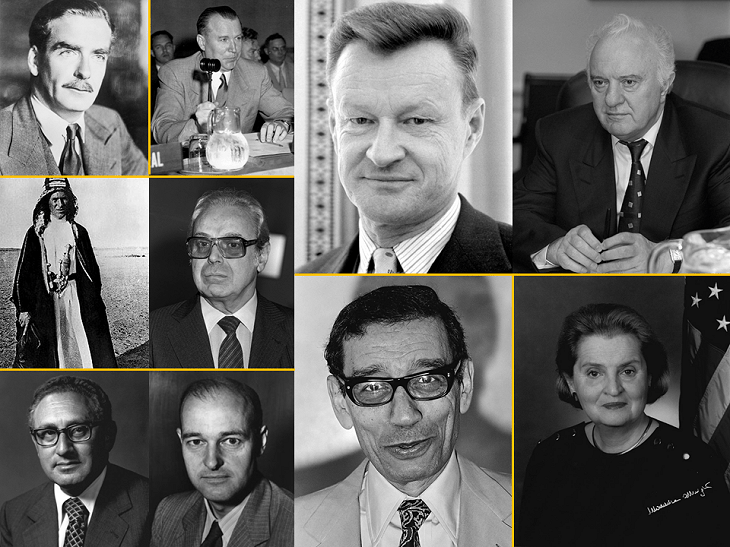
NOTED BELOW: Henry Kissinger (former Secretary of State who died in 2023), Eric Schmidt (former CEO of Google), and Craig Mundie (a Senior Advisor to the CEO of Microsoft).

“Genesis” is these three authors view of the threat and benefits of artificial intelligence. Though Kissinger is near the end of his life when his contribution is made to the book, his co-authors acknowledge his prescient understanding of the A.I. revolution and what it means to world peace and prosperity.

On the one hand, A.I. threatens civilization; on the other it offers a lifeline that may rescue civilization from global warming, nuclear annihilation, and an uncertain future. To this book reviewer, A.I. is a tool in the hands of human beings that can turn human decisions for the good of humanity or to its opposite.

A.I. gathers all the information in the known world, answers questions, and offers predictions based on human information recorded in the world’s past. It is not thinking but simply recalling the past with clarity beyond human capability. A.I. compiles everything originally noted by human beings and collates that information to offer a basis for future decision. Information comprehensiveness is not an infallible guide to the future. The future is and always will be determined by humans, limited only by human judgement, decision, and action.

The danger of A.I. remains in the thinking and decisions of humans that have often been right, but sometimes horribly wrong. One does not have to look far to see our mistakes with war, discrimination, and inequality. In theory, A.I. will improve human decision making but good and bad decisions will always be made by humans, not by machines driven by Artificial Intelligence. A.I.’s threat lies in its use by humans, not by A.I.’s infallible recall and probabilistic analysis of the past. Our worry about A.I. is justified but only because it is a tool of fallible human beings.

Artificial intelligence is an amazing tool for understanding the past but its utility for the future is totally dependent on its use by human beings. A.I. may be a tool for planting the seeds of agriculture or operating the tools of industry but it does not think like a human being. The limits of A.I. are the limits of human thought and action.

The authors conclude the Genie cannot be put back in the bottle. A.I. is a danger but it is a humanly manageable danger that is a part of human life.

The risk is in who the decision maker is when A.I. correlates historical information with proposed action. The authors infer the risk is in human fallibility, not artificial intelligence.

BOOK LOVERS

In the end, “…History of the Book…”is brought together by Smyth’s review of book circulation. From early written manuscripts, small accumulations by the few grew into massive libraries for the general public.

Books of Interest
 Website: chetyarbrough.blog

The Book-Makers (A History of the Book in Eighteen Lives) 

By: Adam Smith

Narrated By: Adam Smith

Adam Smyth (Author, Professor of English Literature and the History of the Book at Oxford University.)

The Gutenberg press is invented in the mid-15th century in Germany. Not surprisingly, the most widely printed book is the Christian Bible that began with the Guttenberg Bible, a 42-line Bible also called the Mazarin Bible, printed in 1455. Adam Smyth notes the first non-religious, widely popular book is printed in 1494, titled “Das Narrenschiff” or “Ship of Fools”.

“The Ship of Fools” is written by Sebastian Brant in 1494. It is a collection of satirical poems and illustrations depicting the foolish behavior of humans and the corruption of the church.

Printed originally in German in Basel, Switzerland, “The Ship of Fools” was lavishly illustrated and became a best seller in Europe. Its popularity came from its satirical content, wide translation, and visual appeal. Smyth explains the book critiques human folly and vice with 112 chapters, each of which is accompanied by a woodcut illustration.

Smyth explains how bookbinding and printing grew as an art.

Contributions to the art were made by both men and women. Elizabeth Collett and Sarah Benlowes were instrumental in improving the quality and continuity of noted books in the 17th century. They pioneered a “cut and paste” technique that made famous books more consistent, unique, and artistic without changing their author’s meaning.

John Baskerville (1706-1775) created and, with the management of his wife, distributed the Baskerville typeface. Not surprisingly, no picture is available on the internet of his wife Sarah Eaves.

John Baskerville and his future wife, Sarah Eaves, made significant contributions to the quality of the printed page. Baskerville created Baskerville typeface in 1757. The new typeface set a new standard for typography with sharp serifs, high contrast thick and thin strokes, and overall clarity. His future wife managed their print business and helped implement Baskerville’s innovations. Together, they improved ink color and sharpness to provide higher quality printing for books.

No story of the “History of the Book…” could be complete without addressing Benjamin Franklin (1706-1790).

Smyth reveals the contributions Franklin makes while using Caslon typeface created by Baskerville for the publication of newspapers, advertising, and the most successful non-religious book of the 18th century, “Poor Richard’s Almanac”. Franklin is the quintessential American by exemplifying the strengths and weakness of capitalism.

Money is important to Franklin in different ways.

Franklin used his newspaper to support and print paper money for the U.S. government. Franklin’s industriousness is well documented by historians, but Smyth notes a glaring flaw in Franklin’s character. Of course, this flaw is taken out of historical context and Franklin eventually changes his view, but he supported and brokered the slave trade between the 1750s and 60s. He is seduced by amorality, presumably because of the human desire for money, power, and/or prestige. Of course, this is being human; like all citizens of any economy or government.

Franklin’s views on slavery changed in the 1780s when he became a vocal abolitionist, but he certainly enriched himself in slavery’s earlier years.

Smyth flashes back to the invention of paper. The early beginning of paper is traced back to China in the 2nd century CE. Ts’al Lun (Cai Lun), a court official, is credited for developing papermaking techniques. Paper production spreads to the Islamic world in the 7th century with the printing of the Koran. It extends to Europe in the 12th century. The truly big jump in paper production came in the early 19th century with Louis-Nicolas Robert in France. The Fourdrinier machine could produce huge rolls of paper, but Louis-Nicolas Robert is unable to capitalize on the process because patenting was not available in France. Paper production process improves with John Gamble and Bryan Donkin in England. Paper production became faster, more efficient, and cost-effective.

The truly big jump in paper production came in the early 19th century with Louis-Nicolas Robert in France.

In the end, “…History of the Book…”is brought together by Smyth’s review of book circulation. From early written manuscripts, small accumulations by the few grew into massive libraries for the general public. Access to great and inane writings of genius and pulp producers reached wider and wider audiences. The final chapters address some of the great writers of modern times, particularly poets of which this reviewer is minimally interested and sadly ignorant.

One of the largest libraries in the world is in France, The Bibliothèque Nationale de France.

REAGANOMICS

Homelessness, illegal immigration, and America’s budget deficit will not be cured by reducing taxes on the rich or by tariffs that artificially increase the cost of living, or by cutting the labor force of farmers through mass deportations, or by making it easier to do business in the U.S.

Books of Interest
 Website: chetyarbrough.blog

Reagan (His Life and Legend) 

By: Max Boot

Narrated By: Graham Winton

Max Boot (Russian-born naturalized American author, editorialist, lecturer, and military historian, writer and editor for The Christian Science Monitor.)

Not being a fan of Ronald Reagan’s presidency, there is some reluctance in reviewing Max Boot’s biography of the man. However, Boot’s writing and research offer an understanding that makes one separate Reagan’s political life from his experienced life. Boot explains Reagan’s life during the years before and after the depression.

Reagan’s father was an alcoholic which reminds one of how one’s childhood is rarely idyllic. Boot’s biography of Reagan shows one becomes who they are–despite the human faults of their parents. The way a child matures is only partly defined by parents’ influence. Reagan’s father’s alcoholism did not carry through to his son.

Boot’s biography shows Reagan to be an affable, well-adjusted, teenager and young adult who has a strong sense of what he believes is right and wrong.

Reagan is a football athlete in high school that grows to become a 6′ 1″ handsome young man from a relatively poor middle-class family. He aspires to college and works to have enough money to attend Eureka College in Illinois. He graduates in 1932 with a BA in Economics and Sociology. Reagan is remembered by classmates and teachers as a smart student and determined football player that gave him the grit and experience to become a movie star in the 1940s.

The first chapters of Boot’s biography of Reagan are about his break into the entertainment industry as a sports caster.

Reagan had a nearly photographic memory. He used that skill to recall a football game he played in college to impress a radio station manager with broadcast details of a game. He recalls a game he played in college and purposefully embellishes his role in the game. Reagan’s skill as a radio announcer led to a screen test with Warner Brothers in 1937 that launched his film career.

As WWII approaches, Reagan enlists as a lieutenant in the U.S. Army Air Force. (The Air Force in these early days were not a separate branch of the service.)

Reagan’s experience in the entertainment industry led to producing training and propaganda films for the Army Air Force. Boot explains Reagan had significant vision problems with nearsightedness in his youth and presbyopia (difficulty of focusing on close objects) as he got older. Reagan never served in a combat role. He eventually adopted contact lenses to correct his vision; partly to please film producers who disliked the “coke bottle” lenses he needed to see properly.

Four issues that are interesting and informative in the first chapters of Boot’s biography of Reagan are 1) how affable, and well liked Reagan was to people who met him, 2) that he was well-read, 3) very handsome with a respect for women that carried through to several relationships, and 4) that though he had a sense of right and wrong, his moral center seemed to waiver between concern and indifference.

During the depression, Reagan was a strong supporter of Franklin Roosevelt’s efforts to resurrect the American economy.

Reagan seemed more like a liberal Democrat than the conservative Republican he came to be as Governor of California and President of the United States. The remainder of the book shows how that change came about. Boot notes several factors that influenced Reagan to change from a Roosevelt to Goldwater supporter. The movie industry and the growing anti-communist era of the fifties influenced many former liberals. Reagan’s experience in Hollywood reinforced conservativism.

Reagan became rich from his relationship with Gerneral Electric. The corporate culture of GE in the 1950s and 60s was decidedly conservative. When Reagan became the host of “General Electric Theater” that culture seeped into his consciousness.

In 1962, Reagan switched from the Democratic party to the Republican party. He supported the election of Goldwater who ran against President Lyndon Johnson who was mired in the Vietnam war while promoting big government social welfare programs. The influence of Goldwater and the liberalism of the Johnson polices drove Reagan to believe big government was ruining the wealth and opportunity of Americans. He adopted conservative beliefs for economic deregulation, tax cuts that largely benefited the rich, and promoted anti-communist foreign policies. Reagan’s support for conservative policies is exemplified by his “A Time for Choosing” speech supporting Barry Goldwater’s campaign for President in 1964.

In the political climate of the 1960s, Reagan, with the support of GE, runs for Govenor of California. His position as president of the Screen Actors Guild, support of Goldwater, and the public’s perception of inefficiency of state government provided a platform for Reagan to run. The civil rights movement, Vietnam protests, the free speech movement, the Watts riots in LA, and the hippie movement in San Francisco created an environment ripe for conservative reaction. Reagan is elected Governor of California twice, to serve from 1967 to 1975.

Reagan as the Governor of California.

Reagan described his time with GE as a “postgraduate course in political science”.

Reagan’s experience as Governor of California, his Hollywood image, the support of big companies like GE, and the economic issues confronting Carter, give him a platform to run for President of the United States. Todays’ Republicans hold Reagan in high regard. Some view Reagan as one of the best recent presidents of the United States. Those who hold him in high regard cite his economic policies, strong national defense and leadership during the cold war. He believed in small government, lower taxes, and conservative values. Some suggest Trump is Reaganomics second coming.

Reagan runs for President of the United States in 1976. He wins and is re-elected in 1980.

What is not fully understood by some Americans, is the accomplishments of Reagan held some very negative consequences. Some argue he was the prime mover in nuclear weapons reduction. The biography of Gorbachev suggests the prime mover was Gorbachev and his support of glasnost with an opening of Russia to western ideals.

Some, like me, would argue Reagan accelerated economic inequality by giving tax cuts to the wealthy and deregulating the economy.

The federal deficit increased from $70 billion dollars to 152.6 billion dollars during the Reagan presidential years. In comparison to Carter’s administration, the deficit was less than half of Reagan’s at $74 billion dollars. Today’s deficit has grown to 1.83 trillion dollars. Four out of seven presidents (including Trump’s second term) since Reagan have been Republican. The deficit lays at the feet of both parties.

With the election of Trump, who emulates Reagan’s policies, one wonders–how much greater the deficit will be with reduced taxes for the rich and a renewal of economic deregulation.

Homelessness, illegal immigration, and America’s budget deficit will not be cured by reducing taxes on the rich or by tariffs that artificially increase the cost of living, or by cutting the labor force of farmers through mass deportations, or by making it easier to do business in the U.S.

FREEDOM’S COST & VALUE

Freedom, once it is experienced, is an unconquerable force. Conquest of Ukraine, the Baltics, or Taiwan would be a pyric victory at a cost far in excess of a conquerors’ perceived value.

Books of Interest
 Website: chetyarbrough.blog

The Return of Great Powers (Russia, China, and the Next World War)

By: Jim Sciutto

Narrated By: Jim Sciutto

Jim Sciutto (Former American news anchor for ABC, national security correspondent for CNN, Yale graduate majoring in Chinese history.)

Jim Sciutto has been seen by many on television. One suspects few know he served as the Chief of Staff and Senior Advisor to the U.S. Ambassador to China between 2011 and 2013. His book, “The Return of Great Powers” is interesting but not particularly revelatory. It was written before today’s news of the blows to Iran’s role in the Middle East with the removal of Syria’s brutal leader and Israel’s increased attacks on Hezbollah and Hamas. Tragically, there is always death of innocents in war. The question is whether war is ever worth its cost.

Sciutto certainly has a better grasp of China than most Americans based on his education and experience but his general analysis of the “…Great Powers” and their return is more topical than insightful.

The rise of Putin and Xi have certainly changed the world. Newspapers and television are full of stories about these leaders’ dance around the war in Ukraine. Xi offers moral and financial support to Putin, along with some important weapon components needed by the military, but China limits military equipment and direct munitions provisions for the war. China may benefit from Russia’s Ukraine invasion because of Xi’s expressed interest in acquiring Taiwan but China’s advances have not moved much from where they were before the invasion.

What seems clear today, particularly in Sciutto’s book, is that Putin has made too many mistakes in his invasion of Ukraine.

Putin’s apparent disregard for Russian soldiers’ deaths undoubtedly threatens his influence with many Russian citizens. Some of America’s media suggest Putin is becoming more conscious of his political and personal vulnerability. It is reported by Gleb Karakulov. a Russian engineer and defector who fled to Kazakhstan, that Putin has become paranoid and increasingly isolated.

Sciutto suggests Estonia is on a Putin invasion list once Ukraine has been conquered.

Having recently returned from the Baltics, occupation of Estonia would be a pyric victory for the same reasons as the Ukraine invasion. The hate for Russians one hears from Baltics’ residents (Lithuanian, Estonian, and Latavian) who were under the rule of Russia from 1940s to 1991 is palpable. The jail cells, torture, and murder of Baltic citizens by Russia is detailed by tour guides from each country. The prosperity of the Baltic countries since 1991 is a tribute to freedom that will not be given up easily by its people. At best, Russia may be able to occupy the Baltics, but citizen resistance would far outweigh any value occupation might offer.

Sciutto goes on to imply Taiwan will lose its independence to China.

The picture of death and destruction he outlines with China’s overwhelming military might mitigates against China’s success. Once freedom is experienced, it is like genies in a bottle–difficult to be re-imprisoned. Whether NATO or America will come to Taiwan’s aid is unknown, but like Russia’s invasion of Ukraine and Putin’s interest in the Baltics, the price to be paid is higher than the reward they can expect.

Freedom, once it is experienced, is an unconquerable force. Conquest of Ukraine, the Baltics, or Taiwan would be a pyric victory at a cost far in excess of a conquerors’ perceived value.

CULTURE WARS

The tragedy of cultural conflict fills the pages of Frazer’s history of the Mayflower adventure. Listeners are numbed by the many mistakes made by both Americanized English and indigenous natives in an interminable cultural war, a war that is still being played and paid for today.

Books of Interest
 Website: chetyarbrough.blog

Hollywood Park: The Mayflower 

By: Rebecca Fraser

Narrated By: Kate Reading

Rebecca Fraser (Author, British writer and broadcaster, former president of the Bronte Society.)

In the early years of the 17th century, Puritans fled to America to escape persecution by King James I of England and his mother, Mary Queen of Scots. Though King James was not as much of a doctrinarian as his mother, it was dangerous for non-Catholics to live in England or Scotland. Fraser explains many English Puritans sought refuge in Holland. “The Mayflower” is a history of the first years of the Kingdom of England’s and Scottland’s Puritan settlements in America. Three of the most famous Mayflower’ passengers were William Bradford, Myles Standish, and William Brewster. Both Bradford and Brewster sailed from the Netherlands to England to board the Mayflower. Bradford became the first governor of the Plymouth Colony in America. Myles Standish became the military leader of the settlers. William Brewster was the spiritual leader of Puritan followers.

Fraser explains how Standish became important in the Mayflower’s cramped quarters, rough seas, and limited food. Standish maintained a level of discipline while Brewster provided spiritual support to the Pilgrims and non-religious separatists. The author reveals how shoddy the accommodations were on the Mayflower and how poorly prepared the ship was for such a perilous voyage. Provisioning was inadequate and the ship became overloaded when their sister ship had to return to England because of its unseaworthiness. More passengers were added to the Mayflower when the sister ship headed back to England. There were no doctors on board. A baby was born with the help of a mid-wife. Fraser gives one a picture of a two-month voyage that was hellish. Five of 102 passengers died at sea.

Upon arrival, survivors were faced with November winter conditions.

Forty-five of the 102 passengers died from a lack of shelter, poor rationing, and cold temperatures. The Mayflower was used as a shelter for much of the winter. No Native Americans greeted the travelers when they landed. It was March before an English-speaking Native named Samoset from the Wampanoag tribe met and talked to the settlers. Samoset introduced another English-speaking Native named Tisquantum, aka Squanto. Squanto taught the newcomers how to grow corn, catch fish, and find edible plants. Without that help, one doubts even these 57 settlers would have survived.

Fraser reveals the complicated relationship between settlers and indigenous natives.

In some ways it reminds one of the difficulties America has had with interventions in modern foreign countries. Not living the life of other cultures, the threat of losing a native’s way of life, and innate suspicion of those who are not like you, creates misunderstandings and conflict. These are conflicts within America today; let alone relations with other nations in modern times.

As Fraser continues her history of America’s newcomers, differences in cultural beliefs, whether religious or secular, show why all nations in the world are challenged by difference.

Two indigenous natives, Samoset and Squanto, opened the door of communication between cultures. Squanto learned English because of his capture by John Smith’s men in 1614-15 with the intent of enslavement. Squanto escapes and returns to his native land. Because he could speak English, despite his kidnapping, he used what he learned to help settlers know how to plant corn, fish, and hunt beaver for survival.

Indigenous native cultures evolve with the influence of the Puritan settlers. They adopt a conception of Kings that rule over others.

Two Indian brothers rose to the level of kings in the Wampanoag tribe of New England. They were the sons of chief Massasoit who saved the pilgrims from starvation by helping them understand how to cultivate the land and fish for survival. As the pilgrims multiplied, human nature led to conflicts between indigenous natives and themselves. Though the initial source of value exchange began as wampum (shell bead), it evolved to printed currency which changed the nature of life, labor, and trade.

Human nature is freighted with the desire for money, power, and prestige.

Those desires lead to conflicts between native cultures and the Pilgrims. The desire for land began to infringe on the culture of native tribes. Soon, these conflicts escalated to war between English settlers and leaders of native tribes. Fraser details the rise of King Alexander and King Phillip of the Wampanoag tribe that began to organize against the settler’s encroachment on native lands. Alexander is killed but his brother becomes a great leader among many indigenous natives and begins what seems an interminable and savage war against the settlers. The savagery on both sides escalates with scalping, dismemberment, and pilloried heads on spikes.

The tragedy of cultural conflict fills the pages of Frazer’s history of the Mayflower adventure. Listeners are numbed by the many mistakes made by both Americanized English and indigenous natives in an interminable cultural war, a war that is still being played and paid for today.

CATACLYSMIC EVENTS

The elephant in this room is damage to the Fukushima Daiichi nuclear plant that is considered among the worst nuclear disasters in history, i.e. right alongside Chernobyl.

Books of Interest
 Website: chetyarbrough.blog

Ghosts of the Tsunami: Death and Life in Japan’s Disaster Zone

By: Richard Lloyd Parry

Narrated By: Simon Vance

Richard Lloyd Parry (Author, British foreign correspondent, Asia Editor of “The Times of London”.)

In 2011 the 9.0 Tōhoku earthquake and its subsequent tsunami killed over 18,000 people with injuries to an estimated 6,000 more. Over 123,000 homes were destroyed. The estimated cost of the disaster is the equivalent of $220 billion American dollars. Richard Parry explains Japan’s Prime Minister lost his job because of the disaster and influenced the loss of a second Prime Minister’s position. The highest disaster cost in America was Hurricane Katrina at an estimated $125 billion in 2005. No natural disaster in America has caused as many deaths as Japan’s earthquake and tsunami.

Richard Parry offers a primer on what a person should expect when a natural disaster disrupts their lives. Every continent is subject to either natural or manmade cataclysmic events. In terms of the cost of human life and reconstruction, only war exceeds the loss of life that occurred in Japan’s 2011 earthquake and tsunami. Like recent wars in Ukraine and Gaza, the most heartbreaking consequence is the death and crippling of children. Parry explains what happened in a Miyagi Prefecture grade school that exemplifies the social and personal consequence of a natural event that rivals the bombing of Hiroshima and Nagasaki.

Though there are no wandering ant or alligator people from a nuclear bomb blast, there are thousands of Japanese who undoubtedly still suffer from the loss of their children, family, and friends from the 2011 tsunami. It is most clearly evident in Parry’s detailed story of the Okawa elementary school. Many survivors are shown to blame school administrators, and the government for their failure to protect their children. The truth is that every disaster is responded to by imperfect human beings. Blaming someone for the death of innocents is a natural human response to things beyond one’s control. It is simple to look back on a disastrous event and find the mistakes made by those who are the adults in charge. There is a human catharsis in being able to blame someone for the death of a loved one.

Humans will always make mistakes in dealing with disasters because they are human.

The decision by school administrators to not abandon the school for higher ground seems taken out of context. There is snow on the ground, it is cold outside, and the school’s location is approximately 2.5 miles from the sea. To the administrators, it appears protection of the building seemed more important than moving to higher ground, in the cold and snow, a mistake that caused the death of 74 children.

Perry interviews many who survive the disaster. Their stories are heartbreaking. Some parents have never found their children.

An estimated 132 bodies remain unidentified with at least 2 children’s remains are unfound.

The vision of survivors sifting through mud and debris to find layers of children’s bodies stays in one’s mind as they listen to Perry’s book.

The families of 23 children who died at the school were awarded compensation of $12.8 million equivalent U.S. dollars with a judgement saying the school failed to evacuate students to higher ground when the tsunami became knowingly imminent. The decision was based on a loud-speaker government warning for the school to be evacuated. Perry notes there were evacuation plans at the school, but they were inappropriate for a tsunami that requires high ground. The adult teachers were given enough time after the loud speaker noticeto evacuate the children to a nearby hill. They could have survived.

The court’s decision is based on the truck-delivered speaker’ warning that is ignored by the school’s adult supervisors.

Some argue the significance of that ruling in Japan is the mandated creation of disaster-preparedness’ plans for school evacuations in a crisis. This school had a written plan, but it did not properly prepare for the consequence of a tsunami. The final warning is the basis for the three-judge panel’s decision, but the truth is any plan still depends on the judgement of adult school’ supervisors.

The elephant in this room is damage to the Fukushima Daiichi nuclear plant that is considered among the worst nuclear disasters in history, i.e. right alongside Chernobyl.