THE ARTIST

Fredrick Backman’s story shows how the best and worst adults come from the admixture of life. “My Friends” is a funny and barely believable story, written by a highly entertaining and accomplished writer.

Books of Interest
 Website: chetyarbrough.blog

My Friends (A Novel)

AuthorFredrik Backman

Narrated By: Marin Ireland

Fredrik Backman (Author, Swedish blogger and columnist, also wrote “A Man Called Ove”.

Fredrik Backman’s “My Friends” is an immensely entertaining story that fulfills the meaning of the word “wry”. A definition of wry is “ironically or grimly humorous”. What “My Friends” shows is that the life of a child is as much luck as innate ability and choice.

The main character of “My Friends” is Louisa, a 17-year-old foster child living on the street. She has a preternatural ability to draw and appreciate a work of art.

Backman’s story infers human beings are born with a genetic inheritance reinforced or discouraged by life experiences. Louisa never knows her father and is raised by a mother who drinks herself to death. Louisa is shunted to a neighbor’s care who abandons her to child services. She escapes into the streets of a city where reader/listeners find her meeting a disheveled and apparently ill person outside an art auction house. Louisa is drawing small red fish on a building wall when she is joined by this stranger who begins drawing skulls on the same wall. This chance meeting changes the course of Louisa’s life.

As luck and circumstance would have it, the artist (Kimkim aka C. Jat) is a painter whose work Louisa has admired over her short years of life. She has carried a post card (which she cherishes) that shows the artist’s famous work that is being auctioned. She does not realize the person she is talking to is the artist.

Monet’s “Water Lillies” as an example of a famous work that has been auctioned several times with the last auction amounting to $65.5 million.

Some days later the artist dies in a hospital with his lifelong friend, Ted, at his side. Ted has purchased the world-renowned painting done by the artist. Ted had bid the highest amount for the work because Kimkim wished to give the work to the young girl he had met painting red fish on the wall on which he was painting skulls. Because of his fame, the painting takes all Kimkim had saved over the years of his life.

A skull painter named Jean-Michel Basquiat is referred to as an artist emulated by Kimkim.

The author has set the table for his story. Kimkim dies and asks his life partner, Ted, to give the painting to the homeless girl. There is a fairy tale quality to the story, but it opens one’s mind to the serendipitous nature of life. Children live lives in a world of other’s making. Formative years of every child range from horrendous to beatific. Louisa is just one example of the happenstance of life for a young girl. It makes one think of the horrendous circumstances of children who are raised in war torn countries or on the streets of the homeless in America or other countries that fail to care for the indigent. Louisa’s story is “every child’s” story that is far from ideal but as real as life in the anywhere world.

There is a fairy tale quality to the story, but it opens one’s mind to the serendipitous nature of life.

The twists and turns of Backman’s story have Ted reluctantly taking Louisa under his wing while she maneuvers to escape and leave the valuable painting to Ted. She returns to the street as an 18-year-old young woman on her own. Louisa leaves Ted asleep on a train car with the boxed painting by his side because she does not believe the valuable painting should be hers. A reader/listener is only half-way through this imaginative story. It is not a book one will put down before learning how it ends.

Backman’s story shows how the best and worst adults come from the admixture of life. “My Friends” is a funny and barely believable story, written by a highly entertaining and accomplished writer.

LIFE’S JOURNEY

Gaige’s writing is crisp, insightful, entertaining, and highly relatable. It gets to the heart of life’s struggles without being judgmental or accusatory.

Books of Interest
 Website: chetyarbrough.blog

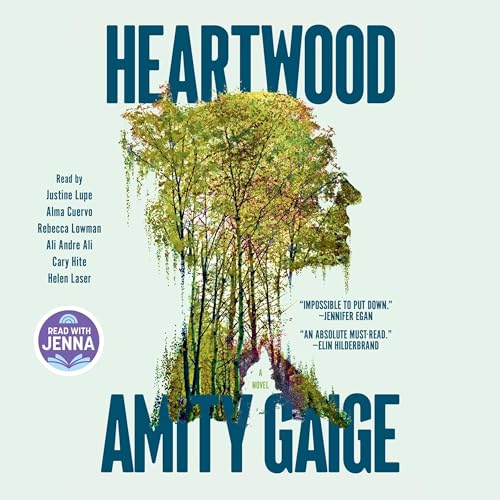
Heartwood 

AuthorAmity Gaige

Narrated By:  Justine Lupe & 5 more

Amity Gaige (Author, lecturer in English at Yale University, 2017 Guggenheim Fellow in Fiction.)

“Heartwood” is a well written, creative, and insightful novel about human fragility. It begins with a lost hiker on the Appalachian Trail. One may recall newspaper articles about this trail where many famous and infamous people have been known to travel. What is less well known is the trail is 2,197-miles long and crosses 14 states. Amity Gaige writes a story of one lost hiker, but it is much more. Of course, it is about search and rescue that reveals how complicated it is to find someone who is lost in a wilderness. In a public hiking trail, at least in the pre-Trump era, national government employees were available to conduct search and rescue services in national parks. There are many local volunteers who aide in these searches, but it is managed by experienced park rangers. Gaige reveals the inner fears and reality of one who is lost in life as well as in a wilderness. The creativity of the author is in her reveal of human nature. All people struggle to live lives that mean something but exhibit physical and mental flaws that get in the way.

The lost hikers name is Valerie Gillis. The primary searcher is Bev Miller, a lieutenant in charge of search and rescue teams when someone is lost on the Appalachian Trail. Those who are rescued, and those who rescue, live lives of equal unpredictability. (Bev Miller’s mother is in a health care facility for the elderly who are troubled by dementia.) The hiker is seeking solace from her personal life by taking a hike on the Trail with a friend who is a substitute for her recently divorced husband. Her and her friend become separated, and she wanders off the Trail. She becomes disoriented and cannot find her way back to the well-traveled path but, as a trained nurse, she copes with her isolation better than most who might make the same mistake. She keeps her wits about her, but an unexpected event changes the course of her life.

Military training.

The area in which Gillis becomes lost is near a security encampment used to train soldiers for wilderness’ survival. The training is harsh and some of the inductees choose to go AWOL, absent without leave. An AWOL’ escapee who is having a nervous breakdown comes across Gillis. His psychological imbalance influences him to imprison Gillis making her unable to find her way back to the Trail. Eventually, her antagonist leaves but Gillis’s physical deterioration advances to the point of near starvation.

The author is exploring the idiosyncrasies of life. Many incidents that lead to the rescue of Gillis show how every human being deals with events in life that are beyond their control. One elderly woman who exhibits symptoms of dementia becomes a clue to the location of Gillis. This elderly woman’s life shows one of many circumstances in life that are beyond one’s control. This dementia burdened woman recovers some of her lost faculties to report having talked to a young man who is being treated for psychological imbalance. He tells of meeting a lost hiker in the wilderness. Until that clue is revealed. no one knew the correct area in which to search for Gillis.

There are many human relationship strengths and weaknesses revealed in Amity Gaige’s “Heartwood”. Gaige’s writing is crisp, insightful, entertaining, and highly relatable. It gets to the heart of life’s struggles without being judgmental or accusatory.

GLOOM

There is more death to come in the last chapters of “Wild Dark Story”. The underlying gloom about the fate of earth and civilization may ware on some who may become bored with the author’s story.

Books of Interest
 Website: chetyarbrough.blog

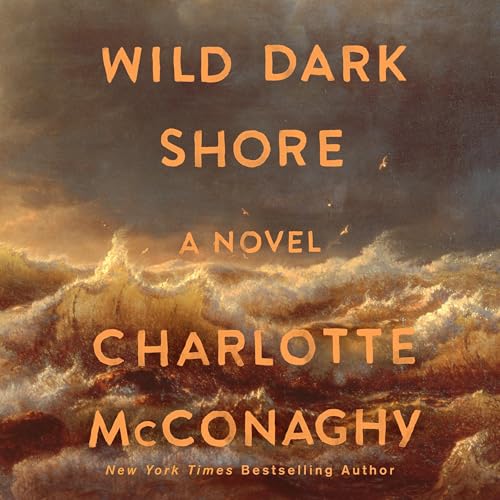
Wild Dark Shore (A Novel)

Author: Charlotte McConaghy

Narrated By:  Cooper Mortlock & 3 more

Charlotte McConaghy (Author, writer born in Australia in 1988, Graduate Degree in Screenwriting and Masters in Screen Arts.)

This is a novel for environmentalists with a survivalist mentality but it is also a tale of mystery and human relationships. McConaghy’s education makes “Wild Dark Shore” feel like a screenwriter’s idea for a movie. She paints a word-picture of a cold wilderness island sinking into oblivion because of climate change. It reminds one of visiting a weather station in Antartica. One is mesmerized by seabirds flying in a brutal wind, penguins flocking across an icy landscape, and sea lions sunning themselves on broken islands of ice. If you are lucky on your voyage, you will see a pod of whales. McConaghy paints a picture of a forbidding landscape once inhabited by natives that became a lighthouse for ships of the sea. At the time of the author’s story, it became an outpost for environmental observation and seed preservation.

Islands around Australia.

“Wild Dark Story” is a mystery about a lost husband and a tough-minded wife who wants to know what happened to him after receiving three letters expressing fear about his assignment and life at the station. The station is being closed down by a family working at the island station. There is a father, two sons, and a daughter. The father’s wife has died. The task of closing the station is perilous but this family has lived on the station for several years and is intimately aware of the dangers and what must be done to ready it for abandonment. Their evacuation plans are interrupted when a vessel crashes near the station. The vessel carries the wife of the person who received the three letters from her husband. She survives the vessel’s destruction with wounds from the rocky shoreline. The pilot of the vessel is dead. The woman is rescued by the family that is preparing for evacuation.

Environmental degradation.

“Wild Dark Story” has some appeal to environmentalists because it is a dramatic presentation of the fragility of civilization in the face of rising tides and a warming planet. The island is set up, presumably by either a government or corporation that wishes to preserve unique plants from seeds in a cavern designed for that purpose. Preservation is being shown as a form of resistance to environmental degradation.

Leaving an isolated land.

In conversations amongst the family preparing for evacuation, the loss of the woman’s husband may have had something to do with the family that is closing the station. The father is reluctant to tell what happened and suggests his children should not say anything about it to the woman.

The new arrival’s husband was a biologist responsible for seed preservation.

There was a fire that burned down their home on the mainland. It was built by the hands of the woman who is trying to find out what happened to her husband. They had separated because the fire and total loss of the home had fractured their relationship. Her husband’s fate is never fully confirmed, but the novel strongly implies he may have died by accident, suicide, or possibly through a cover-up related to the dismantling of the seed vault.

Her husband had bonded with the youngest of the three children. This is interesting because one of the last fights he had with his wife before he left was about her not wanting to have a child.

Rescue or not.

At this point, the novel becomes too long. The mystery of her husband’s death may have been because of psychological imbalance but no definitive answer is given. The theme of the book is that isolation warps truth and identity and that grief is a force that drives human beings to fall apart or renew their lives. There is more death to come in the last chapters of “Wild Dark Story”. The underlying gloom about the fate of earth and civilization may ware on some who may become bored with the author’s story.

AMERICAN LIFE

The relentless harshness of Demon’s life wares on a listener/reader. One has to be invested in Demon’s life adventure to fully appreciate the creative talent of the author.

Books of Interest
 Website: chetyarbrough.blog

Demon Copperhead (A Novel)

Author: Barbara Kingsolver

Narrated By: Charlie Thurston

Barbara Kingsolver (Author, American Pulitzer Prize-winning novelist, born in 1955.)

Several years ago, I began Barbara Kingsolver’s “The Poisonwood Bible” for which she won a Pulitzer Prize. This revisit to her writing is to see what her view is of a young boy in a broken American family. “The Poisonwood Bible” like “Demon Copperhead” are well written novels but “…Poisonwood…” is about missionary work whereas “…Copperhead…” is about life in America for children who are challenged by poor family circumstances. Both novels are too long though …Poisonwood… is highly acclaimed and rewarded by a Pulitzer Prize. Demon Copperhead is the story of a young boy caught in a welfare system meant to aid mothers who are incapable of caring for themselves, let alone their children.

Kingsolver’s point of view can be understood from different perspectives.

The hardship of raising a child is compounded by circumstances of an unmarried woman with a substance abuse problem. The story of Demon Copperhead explains how incredibly harsh it can be to live in America. Despite America’s reputation in the western world as a land of opportunity, it is viewed by many as a land of excess and inequality. Sweden, Canada, and Germany consider America more critically than other western nations. Kingsolver explores some examples of why America is viewed so differently.

Demon’s parent is a recovering drug addict with poor job prospects whose husband has died and decides to marry a man with anger management problems.

Demon’s mother obviously has personal problems. With a school-age child to raise, and a second marriage created out of her self-inflicted problems, her life is a mess. Addiction returns, and her new husband physically abuses her son. She overdoses, and her son calls 911 to have her rescued. She does not recover, and Demon becomes a ward of the State. Demon is farmed out to a rehabilitation ranch called a foster home when in fact it is more like a slave retreat serving the needs of a hard scrabble farm. Demon’s mother dies from her earlier overdose. Demon is 11 years old with nowhere to go than a neighbor’s family to be watched over while he fulfills his obligations to the rehabilitation ranch. He is essentially a slave to the care of cattle and the harvesting of tobacco when he is not in school.

Harshness of life is generally an uncommon circumstance of life in America, but it shows how harsh life can be whether one lives in America or anywhere in the world.

Demon is characterized as a tough-minded boy who adapts to his circumstances with little choice because of his age and family circumstance. One dim opportunity is the grace of his dead mother’s neighbors that reluctantly allow him to temporarily stay with them after his mother’s death. Demon chooses to search for his birth father’s grave and finds his grandmother in Nashville, Tennessee. It comes as a surprise that Demon’s father comes from a matriarchal family that is a haven for lost human beings.

The relentless harshness of Demon’s life wares on a listener/reader. One has to be invested in Demon’s life adventure to fully appreciate the creative talent of the author. Some will choose to finish Kingsolver’s story to find out how Demon’s life is either resurrected or lost. Others will move on to another book, not out of disappointment with Kingsolver’s creativity but out of fatigue from a story that is too long.

LIBERALITY

The conclusion one may draw from “Eleanor Oliphant is Completely Fine” is that government liberality is better than authoritarianism

Books of Interest
 Website: chetyarbrough.blog

Eleanor Oliphant is Completely Fine

Author: Gail Honeyman

Narrated By: Cathleen McCarron

Gail Honeyman (Author, Scottish writer and novelist, won the 2017 Costa First Novel Award for “Eleanor Oliphant”.)

“Eleanor Oliphant Is Completely Fine” is a commentary on life’s loneliness which seems a self-imposed choice. There is a comic and mysterious quality to Honeyman’s story. Genetics and life experience inherent in every life is what the story of Oliphant is about. As an observer of life, one may believe experiences of life only reinforce genetic predisposition. If one accepts that belief, little of who we become is under our control. Honeyman’s story infers that is only partly true.

Waxing hair removal.

Life is a struggle for Eleanor. It is not that Eleanor does not make choices about life but that her choices appear other directed rather than inner directed. Life may be just a matter of chances and circumstances rather than inner directed motivation. Her story begins with a visit to a salon for an intimate waxing of her labia majora. (Hot or cold wax is applied to her intimate parts that pulls the roots of pubic hair off.) Eleanor is shocked by the experience. One presumes she is shocked because of the pain but surprisingly Eleanor explains it is because of the appearance it leaves of her naked woo-hoo. She thinks she now looks like an infant rather than a fully mature woman. This is a somewhat comic beginning to the author’s story. On the other hand, it shows Eleanor’s life seems more determined by society than inner direction.

Eleanor is a bookkeeper in a small business.

There is a mystery in this story that is slowly revealed by the details of Eleanor’s life. She lives alone in what is a subsidized apartment paid by social services. She is visited by a case worker and there appears some mysterious reason for her receiving help from the State. The mysterious reason is implied by the interview of Eleanor by a social case worker who pauses as she looks at the last part of a file as she interviews Eleanor. The case worker’s pause is about something written about Eleanor’s past. That past is made more mysterious as one finds Eleanor’s mother is institutionalized for some reason not disclosed.

Cultural differences.

The striking point made by this case worker’s visit to an American reader is the difference between Great Britain’s philosophical and cultural differences in regard to social policy. America rejects socialism while Great Britain endorses it. Great Britain practices democratic welfare capitalism while American democratic welfare is more limited. Healthcare is publicly funded in Great Britain while it is mostly private in America. These differences do not change the truth of Eleanor’s life story but it contextualizes Honeyman’s view of a life in a democratic socialist system rather than a democratic capitalist country.

The waxing incident is a comic beginning to Honeyman’s story, but it reflects on urban life as emotionally isolating despite being surrounded by other people.

Eleanor drinks half or more of a bottle of vodka alone in her apartment at the end of a work day. Her life is depressingly humdrum with hints of a trauma earlier in life. Whatever that trauma may have been urges one to keep listening or reading the author’s story. One’s interest is heightened by a young man that seems interested in Eleanor as a future companion. The young man is Raymond, a co-worker. Raymond is a loved son which is quite different from the family in which Eleanor appears to have been raised

Nearly half way through the book, one finds Eleanor has a scar on her face.

Like stepping into a darkened room, Honeyman shines a light on humanity. We become who we are from genetics and life experience. Honeyman gives many hints in her story that suggest there is a connection between Eleanor’s appearance, her reclusive and withdrawn behavior, her alcohol consumption, her mother’s confinement, and the aid she receives from Great Britain’s welfare system.

The perspective one gains from this story ranges from the horror of human selfishness to the value of caring for others.

One may compare American Capitalism with British Socialism thinking of their strengths and weaknesses or view the story of Oliphant as something that can occur in any social system of government.

Oliphant is rescued from a horrible family environment by Great Britain’s social welfare system to become an independent and productive British/Scottish citizen. One wonders if the same could happen in America with a less liberal system of welfare that relies on self-interest to change people’s lives. Of course, that is an unanswerable question because Oliphant could have been rescued in either country. On the other hand, would more citizens be saved by a more socialist system of democratic capitalism?

The details of Oliphant’s life are horrific. The cruelty of family life is real in every culture, whether authoritarian or democratic. The conclusion one may draw from “Eleanor Oliphant is Completely Fine” is that government liberality is better than authoritarianism.

DAMNED & FORGOTTEN

Allen Esken’s story is too tedious and drawn out to be a great work of fiction. However, it reminds one of the injustices of life for those who get away with murder.

Books of Interest
 Website: chetyarbrough.blog

The Quiet Librarian (A Novel)

Author: Allen Eskens

Narrated By: Livana Muratovic

Allen Eskens (Author, former defense attorney who lives in Minnesota.)

Allen Eskens has written a story of revenge and war without giving it context which diminishes its value. Having visited the former Yugoslavia which is split into 6 ethnic territories, the war that occurred between Bosnian and Serbian people can still be seen in pock marked buildings that were evidence of the war. Our guide for the trip reflects on America and NATO’s failure to aid a peaceful resolution while the conflict killed many people that may have been saved by international intervention. Eskens makes a passing comment about that feeling in his book, but the truth of that conflict is as real today as the people who lived through it.

Josip Broz Tito (Yugoslavian ruler 1953-1980, died in May of 1980.)

When Tito died in 1980, Slobodan Milošević, a nationalist Serbian leader promoted the idea of a “Greater Serbia” without accommodation to ethnic differences of the former Yugoslavian people. Milošević capitalized on the historic conflict between Serb’ and Bosnian’ ethnic and religious beliefs to acquire and hold power. Serbian Christian beliefs were used as a tool to incite support of Milošević’s rule of Bosnians who are generally Muslim believers. Many Bosnians and Serbians die as a result of Milošević. Slobodan Milošević retained power for 13 years but is removed in October of 2000 when Vojislav Koštunica won the presidency. Though Milošević supporters try to protest the election results, they fail.

Slobodan Milošević (President of Serbia 1989-1997, died in 2006 of a heart attack.)

Milošević is arrested in 2001, extradited to The Hague, and tried for war crimes, genocide, and crimes against humanity. He is the first former head of state to be tried by the Hague court. The trial lasted for four years. Milošević is found dead in his prison cell. He was 64. Autopsy shows it to be a heart attack. No verdict is reached, leaving no closure to the victims of his perfidy.

The division of Yugoslavia after Tito’s death.

This history does not change Eskens’ story, but it offers context that helps one understand why a Bosnian emigree to America pursued a former Serbian nationalist who brutally raped her mother and murdered her family in front of her during the Bosnian/Serbian war. It is credible fiction of the consequence of war whether in Bosnia or anywhere in the world where the guilty go unpunished. The question becomes, is intent to murder a criminal by one who has firsthand knowledge of another’s heinous act equally guilty of murder? The question is not asked or answered by Esken’s story; probably because it is unanswerable.

The heroine of Eskens story is Hana Babić who emigrates to Minnesota to earn a living as a librarian.

She has adopted the grandson of a close friend who is murdered in the Bosnian/Serbian war. That adoption and her personal experience drives her to find and murder the man who destroyed her life in Bosnia. She has to choose between committing murder in America or letting a murderer go free when she finds her nemesis. However, protecting her adopted boy by letting a guilty person escape vigilante justice is what drives the author’s story. If one sticks with the story, they find her answer.

One wonders about lives of Ukrainians if a tentative settlement proposed by Putin in August 2025 is accepted by Ukraine. Territories under siege in Ukraine would be given to Russia in return for ending the war.

How many Ukrainians will leave their homeland to seek a new life? How many will stay, and secretly fight on? How many will reluctantly accept their homeland’s loss? These were decisions made by Bosnians in former Yugoslavia.

Allen Esken’s story is too tedious and drawn out to be a great work of fiction. However, it reminds one of the injustices of life for those who get away with murder.

EMIGREE

“The Sun is Also a Star” is a nicely written book that will keep reader/listeners interested in knowing what happens to two young lovers. One is left in suspense until its last chapters.

Books of Interest
 Website: chetyarbrough.blog

The Sun is Also a Star 

Author: Nicola Yoon

Narrated By: Bahni Turpin & 2 more

Nicola Yoon (Author, Jamaican American, NYT’s bestselling author, National Book Award finalist, electrical engineering undergraduate at Cornell, graduated from Emerson College with a Master of Creative Writing.)

Nicolo Yoon, the author, worked as a programmer in investment management for 20 years before publishing her first book, “Everything Everything”. It became a best seller. “The Sun is Also a Star” is her second published book which also became a best seller. Interestingly, the Jamaican born writer’s husband is a Korean American graphic designer. One presumes her book partly reveals her life experience in America. The credibility of her love story lies in the truth of the saying that “birds of a feather flock together”, an apocryphal Biblical saying that reaches back to the “Book of Ecclesiasticus” in the first century. Her hero and heroine are highly intelligent teenagers of immigrant parents who are influenced by their parent’s native cultures. Being children of immigrants, highly intelligent, high performers in academics, and living in America are why one thinks of the “birds of a feather…” analogy.

JAMAICA, SOUTH OF CUBA, OFF OF THE FLORIDA COAST.

“The Sun is Also a Star” is about a Jamaican girl, a South Korean boy, and the girl’s parents who are being deported because of their illegal immigration status. The heroine’s father comes to America illegally to pursue a career. His wife and daughter follow later in presumably the same illegal way. The girl’s father struggles as an unsuccessful aspiring actor. He and the girl’s mother work at menial jobs for the families’ survival. They are within a day of being deported by the American government. Their daughter loves her mother and is ambivalent about her father. She is a bright high school student nearing graduation. The daughter is seeking help from an immigration attorney to delay and hopefully stop their deportation. On her way to an immigration lawyer’s office, she meets a handsome South Korean boy near her age who is interviewing with an Ivy League school in the same building in which the lawyer practices his profession. They serendipitously meet and their lives become intertwined.

Over 200,000 immigrant arrests in America have been made as of August of 2025.

This is a fairy tale story that offers a truth about the iniquity of arbitrary enforcement and forced ejection of purported illegal immigrants in America. The second term of the Trump’ presidency shows how wrong it is to deport alleged illegal immigrants without judicial review. Obviously, if a legal review shows an immigrant is a criminal there is justification for immediate deportation. If the legal review shows an immigrant has always been a productive and law-abiding citizen of America, some may reasonably argue they should be directed to a program that allows them to eventually become legal residents of the United States.

Without legal review, a valuable source of American productivity is unnecessarily lost. To argue that loss is justified by jobs that will be filled by citizens of the United States is weak because many of the jobs taken are not taken by American citizens because the wages are too low, the physical demands too high, and the hospitality needs of much of America are unmet. It is true that many in America are unemployed because they have chosen to not get a good education and choose to remain unemployed by being unwilling to work for low wages. Their unemployment is not because of illegal immigrants but because of the choices they have made in their lives. Construction, agriculture, hospitality, retail, healthcare, and small businesses have been negatively impacted by the deportation of immigrant labor. In some industries, up to 40% of the workforce has been impacted by deportation.

Yoon’s story is a fairy tale of young love between an illegal and legal immigrant living in America.

Nicolo Yoon explains how love between two people occurs when they have similar life experiences and relate to those experiences with shared intelligence. The young girl and boy have similar life experiences in America. Both choose to educate themselves. The two young teenagers have parents that love them who have their own prejudices and life experiences in ways that influence their children to be ambivalent about the love they have for each parent.

Most parent’s, regardless of their culture, want a better life for their children.

Yoon illustrates the motivations and consequences of people who decide to emigrate. Whether emigrating legally or illegally, emigrees are faced with the difficulty of adjusting to a different culture that conflicts in good and bad ways with the culture they have left. Emigree’ parents wish well for their children but many fail to grasp the freedom offered by American culture to choose their own path in life. Even though life choices are influenced by one’s intellect, emotions, and (in America) a white majorities’ discrimination, most young people are able to choose their own path in life.

“The Sun is Also a Star” is a nicely written book that will keep reader/listeners interested in knowing what happens to two young lovers. One is left in suspense until its last chapters.

POWER DISTRIBUTION

Unequal opportunity and inequality of race, ethnicity, and the sexes are societies’ problem. This foolish story is a waste of reader/listener’s time because it fails to address the reality of social inequality with a solution that can make a difference.

Books of Interest
 Website: chetyarbrough.blog

The Power (A Novel)

Author: Naomi Alderman

Narrated By: Adjoa Andoh

Naomi Alderman (Author, British writer, novelist, producer for TV and movies.)

This is a marginally interesting novel about gender inequality. Naomi Alderman begins her story with two male thugs who murder the heroine’s mother and leave a daughter for dead. The young daughter defends her mother with a deadly electrical power that has laid dormant in her life but becomes energized by a force of will. The daughter attacks the overpowering thugs but is unable to save her mother. Alderman’s idea is to reverse the traditional roles of men and women by giving women a power greater than the physical strength advantages of men. This latent power is alleged to have been repressed and is miraculously discovered and cultivated in this young girl by her mother.

The reason I find Alderman’s story tiresome is because she creates the same problem for women that exists in this largely patriarchal world. Great men like great women that wield inordinate power over others are almost always bad because as Lord Acton noted “power tends to corrupt, and absolute power corrupts absolutely”.

The influence of raw power is diminished by social change, not by leaders’ gender, or the risk of superior weapons of mass destruction.

Raw power is not a gender problem. WMD as a raw power in the hands of a male or female leader are a societal problem. Unequal opportunity and inequality of race, ethnicity, and the sexes are societies’ problems. This foolish story is a waste of reader/listener’s time because it fails to address the reality of social inequality with a solution that can make a difference.

GRUSOME MYSTERY

“Fox” is a mystery that some may be interested in completing but the subject is too horrifying for this reader/listener. Oates is obviously a successful author, but it is returned to the library without completion.

Books of Interest
 Website: chetyarbrough.blog

Fox (A Novel)

Author: Joyce Carol Oates

Narrated By: Max Meyers & 9 more

Joyce Carol Oates (Author, American novelist, essayist, 1969 winner of a National Book Award.)

Not as a revelation but a truth of life, children come from families that are raised by married, divorced, unmarried and sometimes neglectful, self-absorbed parents. Children grow up to be something like their parents but uniquely themselves. Oates writes “Fox” to reflect on the variety of childhood experiences and development with a look at a teacher named Fox whom the author insinuates is a pedophile. Mr. Fox is found at the bottom of a ravine in his crashed car. His body is decomposing with vultures circling his remains. The decomposing body is seen by a young boy, with an older brother, who had come to the site because he had seen the circling vultures.

Oates’ mystery unfolds as a plain clothes policeman contacts the school administration to ask about Mr. Fox which implies his death is not an accident. “Fox” is a mystery that some may be interested in completing but the subject is too horrifying for this reader/listener. Oates is obviously a successful author, but it is returned to the library without completion.

LIFE’S JOURNEY

Millman’s Socratic story is about human patience and knowledge. He addresses knowledge as something of the greatest value that can keep one from resorting to violence. This is a message that resonates with those who are appalled by today’s international and domestic conflicts.

Books of Interest
 Website: chetyarbrough.blog

The Journeys of Socrates

Author: Dan Millman

Narrated By: Sam Tsoutsouvas

Dan Millman (Author, world champion athlete, martial arts instructor, and college professor.)

Dan Millman’s reasons for the title of his book “The Journeys of Socrates” is difficult to understand. The known facts of Socrates life do not seem remotely related to the life of a Jewish immigrant who lived in 19th century Russia. The story is almost too horrific to believe because of the tragic life of its hero Sergei Ivanov, a Jew in Tsarist Russia being raised in a camp of Cossack warriors. The only parallels one may make is that Socrates is characterized in ancient writings as a man who sought virtue and wisdom in his journey through life.

Socrates was known as a warrior in the Peloponnesian War between Athens and Sparta (431-404 BCE). He is better known as a teacher and student of the philosophy of life.

Socrates had gained a reputation for bravery, endurance, and moral fortitude in war, while a mentor of young men like Alcibiades who wanders through life with little self-understanding. (It is the ancient writings of Plato, Xenophon, and Aristophanes that reveal some of what is told of Socrates life.) This seems a slender thread of association with the title of Millman’s book. The story of Sergei Ivanov is of a man who introspectively examines the meaning of life after experiencing horrific violence. This is a Socratic interrogation of a Jew’s life in pre-1917, revolutionary Russia and Ukraine.

Hiding one’s identity as a Jew has been told many times by many authors. Ethnicity and religious belief, like the color of one’s skin, marks one as different.

Ethnicity is a marker of human beings as the “other”, i.e., someone different than themselves. Unlike the color of one’s skin, ethnicity is easier to hide. Sergei Ivanov becomes known as a Jew in a Cossack training camp. He decides to escape that life but is followed by a fellow trainee who catches him. They fight and Sergi’s antagonist is knocked unconscious and appears dead. Sergi escapes and plans to find what he believes is a treasure buried by his grandfather that will give him enough money to get passage to America from his grandfather’s Ukranian homeland.

Buried treasure.

Sergi finds the treasure that had been buried by his grandfather, but it was only a clock and five gold pieces, not enough for passage to America. However, there is an address on the clock that leads him to his grandfather’s house. What he finds is an aunt that he thought was dead. She has a daughter for whom he falls in love and asks for her hand in marriage. They are married and Sergi’s plan is to take his now pregnant wife to America when he has earned enough money for passage. However, fate intervenes.

The man Sergi thought he had killed when he escaped the training camp was alive and had become a leader of a Cossack gang that terrorized the country with a special hatred for Jews.

The gang comes across Sergi and his pregnant wife when they are out for a walk before their planned trip to America. His former enemy and his followers murder Sergi’s wife, rip the baby out of her womb and leave her husband unconscious on the ground after trying to defend his pregnant wife. The gang leader chooses to leave Sergi alive to remember the grief he would have for his wife and baby’s loss of life because he could not save them. Sergi recovers and prepares himself for revenge on his former training camp antagonist.

Deaths inevitability.

At this point, one presumes this is to remind listeners of Socrates reported bravery, endurance, and moral belief despite hardship in life and one’s inevitable death. However, this is only a small part of the author’s intent. What one draws from the story is how ethnic or racial discrimination exists in every nation in the world. Human nature is often brutish and violent despite a rational person’s search for truth and peaceful coexistence. One asks oneself why humans wage war, why we murder innocents, and why does revenge only begat more death.

Sergi recovers from his injuries and is counseled and educated by a believer of a different faith.

As one finishes Millman’s story, listener/readers realize Sergi’s teacher is educating him about human patience, ethnic understanding, and knowledge that can break the repeating cycle of discrimination and violence caused by racial, gender, and ethnic difference. It requires patience, preparation, and knowledge. Sergi spends many years with his teacher and gains great strength to prepare him for what is to happen next in his life. Knowledge of what happened when he was struck down after his wife was murdered is not clear to him. As the story develops, one finds his wife had two children in her womb and only one died in the confrontation. What happens when Sergi meets his wife’s murderer is the denouement and fundamental meaning of Millman’s story.

Millman’s Socratic story is about human patience and knowledge. He addresses knowledge as something of the greatest value that can keep one from resorting to violence. This is a message that resonates with those who are appalled by today’s international and domestic conflicts.