FEARLESS AND FREE

Josephine Baker passed away in 1975 from a cerebral hemorrhage. Baker shows herself to have been an entertainment phenom, a war hero, a civil rights activist, and a believer in the equality of all human beings.

Books of Interest
 Website: chetyarbrough.blog

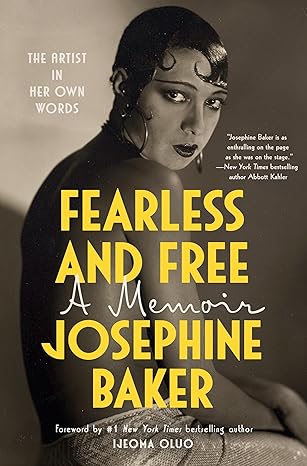
Fearless and Free: A Memoir

By: Josephine Baker

Translation by Anam Zafar with a Forword by Ljeoma Oluo

Narrated By: Anam Zafar, Sophie R. Lewis, Ljeoma Oluo, Jade Wheeler, Quentin Bruno.

Josephine Baker’s real name was Freda Josephine McDonald, born in St. Louis, Missouri in 1906. She died at the age of 68 in 1975.

“Fearless and Free” is a vignette of an incredibly brave and beautiful American woman who became a world-renowned performer, humanitarian, and spy for France during WWII. At the age of 19, Baker sailed to France on her own. She was looking for freedom and opportunities that were unavailable in racially segregated America. She was hired as a dancer for La Revue Negre at the Théâtre des Champs-Élysées in Paris. She became famous in France for her provocative dance movements and growth as a singer and versatile entertainer.

Baker became famous as a result of wearing a skirt made of artificial bananas in a dance that had elements of jazz and African-inspired movements.
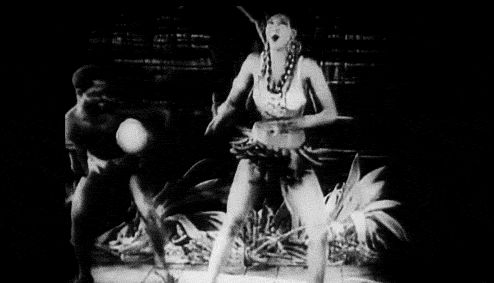
Baker’s memoir shows what “force of nature” means when referring to a human being. Willingness to travel alone to another country for any person at age 19, with no understanding of the language and no job prospects, is an act of incredible fearlessness. Baker’s memoir is a lesson to every person who feels trapped and wishes to become more than what their current circumstance in life offers.

Baker was a French secret agent and entertainer during WWII. She smuggled information written in invisible ink on her sheet music.

Baker is alleged to have had affairs with both men and women. She was married four times and is alleged to have had affairs with two famous women, i.e., Frida Kahlo, a Mexican artist, and Sidonie-Gabrille Colette, a French novelist.

Baker’s life shows how adaptive humans can be in changing environments. Baker spoke no French when she left America but became fluent in her adopted countries language. When Paris is occupied by the Nazis, Baker is recruited by the French secret service because of her fame and travel around the world despite the war. She secreted messages to anti-Nazi agents in her travels and received the Croix de Guerre, the Rosette of the Resistance, and one of France’s highest distinctions, the Chevalier of the Legion of Honour.

Amazingly, Baker earned a pilot’s license in 1935, one of the few women to have a pilot’s license at that time. She is said to have transported supplies for the Red Cross during WWII.

Baker adopted 12 children from different racial and cultural backgrounds calling them her “Rainbow Tribe” to show the unity of all peoples of the world. She advocated for civil rights and refused to perform in segregated events. She supported the American civil rights movement and was the only woman to speak at the 1963 “March on Washington” alongside Martin Luther King in 1963.

Akio – From Japan.

Jarry – From Finland.

Luis – From Colombia.

Jean-Claude – From Canada.

Moïse – From Israel.

Brahim – From Algeria.

Marianne – From France.

Noël – From Belgium.

Koffi – From Côte d’Ivoire.

Mara – From Venezuela.

Stellina – From Morocco.

Janot – From Korea.
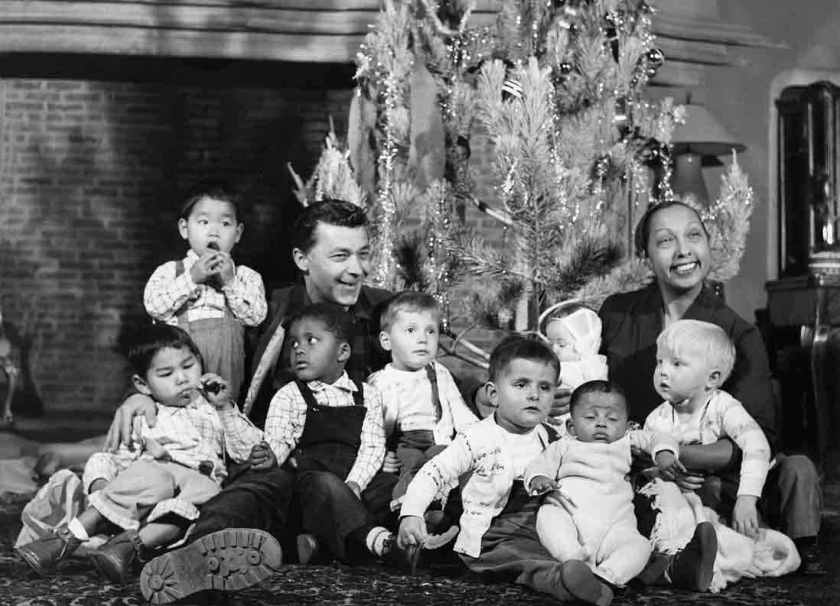
Baker, with her 4th husband Jo Bouillion (a musician and conductor), adopted the twelve when they were in their 40s. Stellina was the youngest at 11 years of age when Baker died. Baker marries Bouillion at the end of WWII. They are a French contingent in Germany that entertains the troops in 1945. The destruction of German cities is noted by Baker as horrendous. She reinforces the feelings of most Americans after the reveal of the Holocaust’ slaughter and the economic damage of war.

Baker was an advocate for unity of all peoples of the world.

Baker revisited America after the war. The last chapter of her book shows how little had changed in regard to Black and ethnic discrimination in America. She visited Harlem to find Jewish landlords and property owners who victimized Black Americans who were as badly discriminated against as they were in the south. She and her white husband were ejected from New York hotels because of the color of her skin. She visited her family in the south to find nothing had changed. Her fame and success in France made her more French than American. It is a truly despicable picture she paints of how little progress in equal rights had been made in America when many Black, Jewish, and white Americans had died for the right to be free of repression.

Josephine Baker passed away in 1975 from a cerebral hemorrhage. Jo Bouillion died in 1984. Baker shows herself to have been an entertainment phenom, a war hero, a civil rights activist, and a believer in the equality of all human beings.

JAPAN

In planning a trip to Japan this year, it seems prudent to learn more about the history of Japan.

Books of Interest
 Website: chetyarbrough.

Great Courses-Understanding Japan (A Cultural History)

By: Mark J. Ravina

Narrated By: Mark J. Ravina

Mark Ravina (Scholar of Japanese history at the University of Texas at Austin)

Professor Ravina’s lectures are a little too heavy on Japan’s ancient history but offers some interesting opinion about the rise of the Samurai, the evolution of women’s roles in Japan, Emperor Hirohito and his role in WWII, the democratization of Japan after WWII, and the cause of Japan’s current economic stagnation.

As is well known, the Samurai were a warrior class in Japan. Their role in Japanese history grows between 794 and 1185.

They began as private armies for noble families with estates in Japan. They became a force in Japanese politics and have had an enduring effect on Japanese society. They evolved after 1185 into a ruling military government called shogun that exhibited political influence through 1333, emphasizing Bushido or what is defined as a strict code of loyalty, honor, and discipline. That discipline extended to ritual suicide in defeat or disgrace to preserve one’s honor. Zen Buddhism entered into the Samuria culture, exhibiting a time of peace under the Tokugawa shogunate that lasted until 1868. After 1868, the Samurai era came to an end, but its cultural influence remains in a modernized military that adheres to qualities of discipline, honor, and resilience.

Traditional Japanese Woman.

The role of women in Japan has evolved from great influence and freedom for the well-to-do to a life of restricted domesticity.

During the Samurai era, the influence of women declined and became more restricted. The rise of Confucian ideals emphasized male dominance with women being relegated to domestic duty. Women turned to art, calligraphy, and religion as their societal influence decreased. In the Meiji Era (1868-1912) women’s education somewhat improved and they began to participate in political movements like voting and equal rights. Finally, after WWII, a new constitution granted women equal rights like the right to vote and enter the workforce. However, like America, traditional gender roles persisted. In today’s Japan, like most of the world, equal rights remain a battle for women.

Hirohito is the 124th Emperor of Japan.

He reigned from 1926 to 1989. Professor Ravina notes that a question is raised about whether the emperor was a follower or leader in Japan’s role in WWII. Ravina argues history showed Hirohito’s role was as a leader. In defeat, Hirohito renounced his divine status to become a constitutional monarch under U.S. occupation. Hirohito, as the crown prince of Japan, strengthened Japan’s diplomatic ties on the world stage. He was instrumental in scientific research in marine biology. He emphasized Japan’s drive to become an industrial nation and player in international trade. He militarized Japan in preparation for war and territorial expansion. He authorized invasion of Manchuria in 1931 to establish it as a puppet of Japan. Hirohito aids the American occupation, after WWII, to de-militarize and re-industrialize Japan.

With creation of a new constitution for Japan in 1947, Japan became a constitutional monarchy that made the emperor a symbolic figurehead, and guaranteed freedom of speech, religion, and assembly.

The constitution formally denounced war as a means of settling disputes. Land reform redistributed agricultural production to tenant farmers that reduced the power of wealthy landlords and promoted economic equality in rural Japan. Women’s rights were codified to allow voting and participation in politics. The constitution guaranteed equality but, like the rest of the world, culture trumped reality. Japan’s military was reorganized as a defensive force for national security. War crimes trials convicted Hideki Tojo, Iwane Matsui, Hei taro Kimura, Kenji Doihara, and Koki Hirota and sentenced them to death. In total 17 leaders were executed, and 16 others were imprisoned.

Free-market economy.

The democratization of Japan entailed economic reforms that broke up large industrial conglomerates to promote a free-market economy and reduce economic monopolies. However, the culture of Japan replaced the industrial conglomerates with networks of interlinked companies that operated cooperatively in ways that reduced competition in pursuit of financial stability. The education system was reformed to promote democratic values, and equal access to education for all citizens.

A free press was encouraged to foster transparency and accountability.

The results allowed Japan to rapidly improve their industrial productivity. That productivity was defined and improved by the teachings of W. Edwards Deming, a statistician and quality-control expert in the 1950s. His contributions led to the Deming Prize in 1951, an annual award recognizing excellence in quality management. (This is a reminder of Peter Drucker and his monumental contribution to business practices in the United States.)

In Ravina’s final lectures, he addresses the economic stagnation that has overtaken modern society in Japan.

It began in the 1990s. A sharp decline in asset prices wiped out wealth and triggered a banking crisis. Banks had made too many bad loans that became non-performing. Deflation ensued with falling prices that discouraged spending and slowed economic growth. Company profits declined. The demographics of Japan reduced the size of the work force because of an aging population and declining births. One suspects this demographic change is further burdened by ethnic identity that mitigates against immigration.

Japan’s consumption tax increases in 1997 impeded recovery.

The close ties between government, banks, and corporations resist reforms. And, as is true in America, global competition from other countries with lower cost labor eroded international trade.

MICHELANGELO

The story of Michelangelo ends with the return of the Medicis to power. It is for Michelangelo–a journey of “…Agony and Ecstasy”–of love for his work, the daughter of a Medici, and the tumult of his time.

Books of Interest
 Website: chetyarbrough.

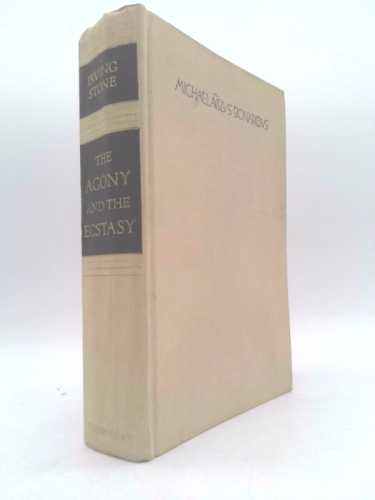
The Agony and the Ecstasy  (The Biographical Novel of Michelangelo)

By: Irving Stone

Irving Stone (1903-1989, died at the age of 86, American writer of biographical novels about artists, politicians and intellectuals.)

Irving Stone’s novel is an entertaining book and an historically supported story of the famous artist, Michelangelo. Michelangelo was a Florentine born in Florence, an influential city at the heart of the Italian Renaissance. The Medici family was in control of Florence’s political and cultural life in Michelangelo’s youth.

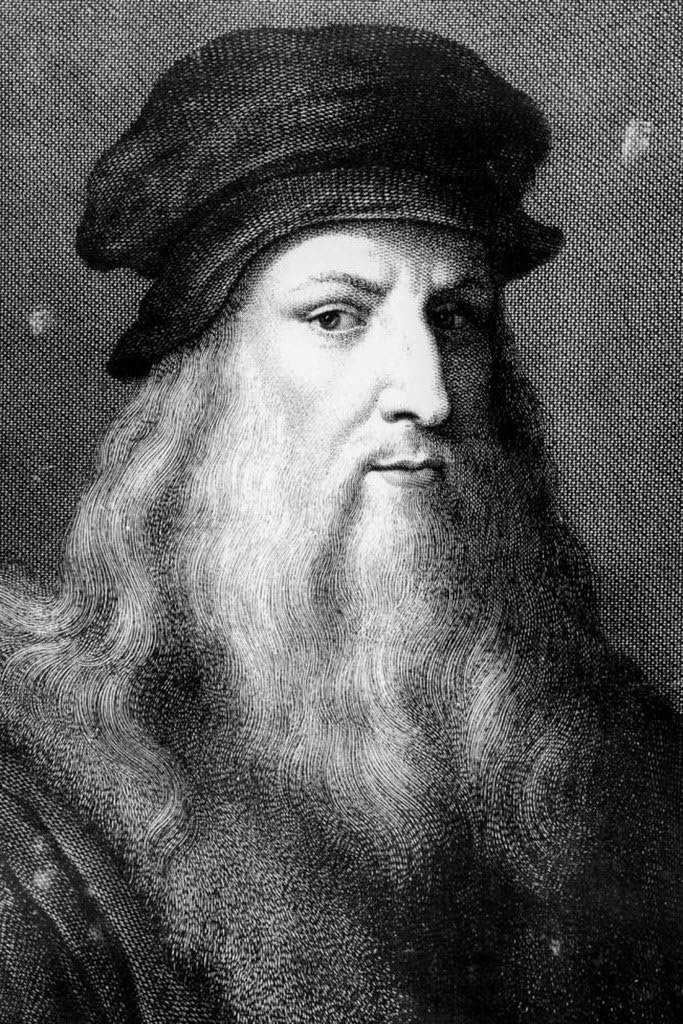
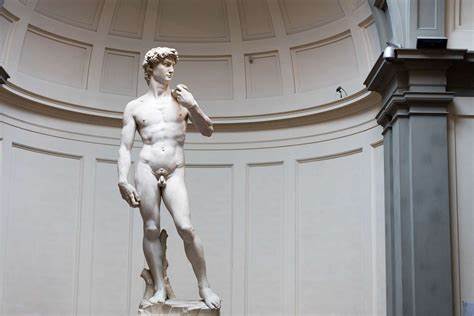
Two of the most famous artists of all time, Leonardo Da Vinci and Michelangelo Buonarroti created two of the most famous art works of the world in Florence, i.e. da Vinci’s “Adoration of the Magi” and Michelangelo’s “David”. However, their personal relationship began roughly in their brief contact in Florence. In 1504. Leonardo da Vinci was 52 years old. Michelangelo was 29.

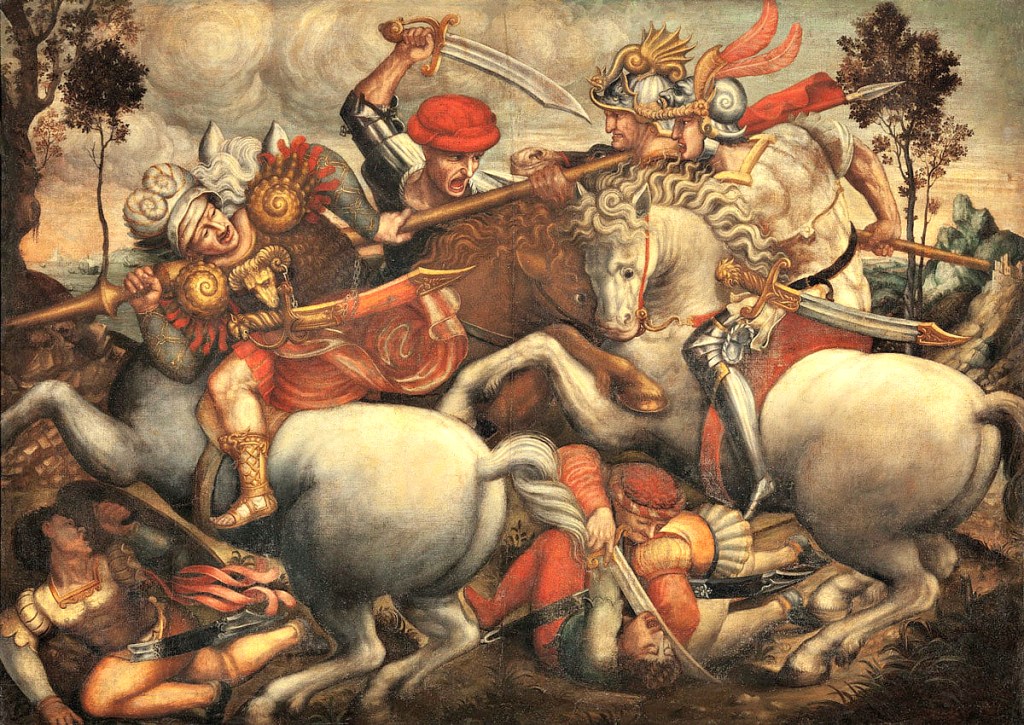
They had both been contacted to paint murals in the Hall of Five Hundred in the Palazzo Vecchio. Leonardo had already made his reputation as a master painter, polymath, and diverse genius. Michelangelo was considered a sculptor more than a painter. However, in a casual conversation da Vinci alludes to sculpture as a less prestigious form of art. The younger Michelangelo is offended and is alleged to have said harsh words to da Vinci with a challenge to paint a competing fresco in the Palazzo Vecchio. Neither completed their planned paintings but their preparatory works were preserved and considered important developments of the High Renaissance. Irving Stone suggests they meet later in life and Leonardo apologizes for what he felt was a misinterpretation of his words about the art of sculpture.

Stone suggests Michelangelo is more of an ascetic than da Vinci. Leonardo as noted by other authors, had many interests beyond art. Michelangelo prefers sculpture to any other form of art and when he is contracted for his artistic genius, he grudgingly takes commissions for his skill as a painter. “The Agony and the Ecstasy” is a title that captures Michelangelo’s artistic conflict.

Stone shows Michelangelo pursues human dissection, just as Leonardo is said to have, to more fully understand the construction of the human body for an artist to make painting or sculpture appear more real. Human dissection is not legal in Michelangelo’s time in Florence, so he secretly works at night when no one is around to see what he is doing.

Stone addresses the political turmoil of the time and how Michelangelo is hired by the Medici family when he is a young man. This is before the Borgias replace the Medici family in Italy. Michelangelo remains close to the Medicis even in their exile but is attracted to Rome in 1496 by Cardinal Raffaele Riario, a relative of Pope Sixtus IV. In Rome, Michelangelo creates “Bacchus”, the god of Wine.

Michelangelo’s Bacchus, the Roman god of agriculture, wine, and fertility.

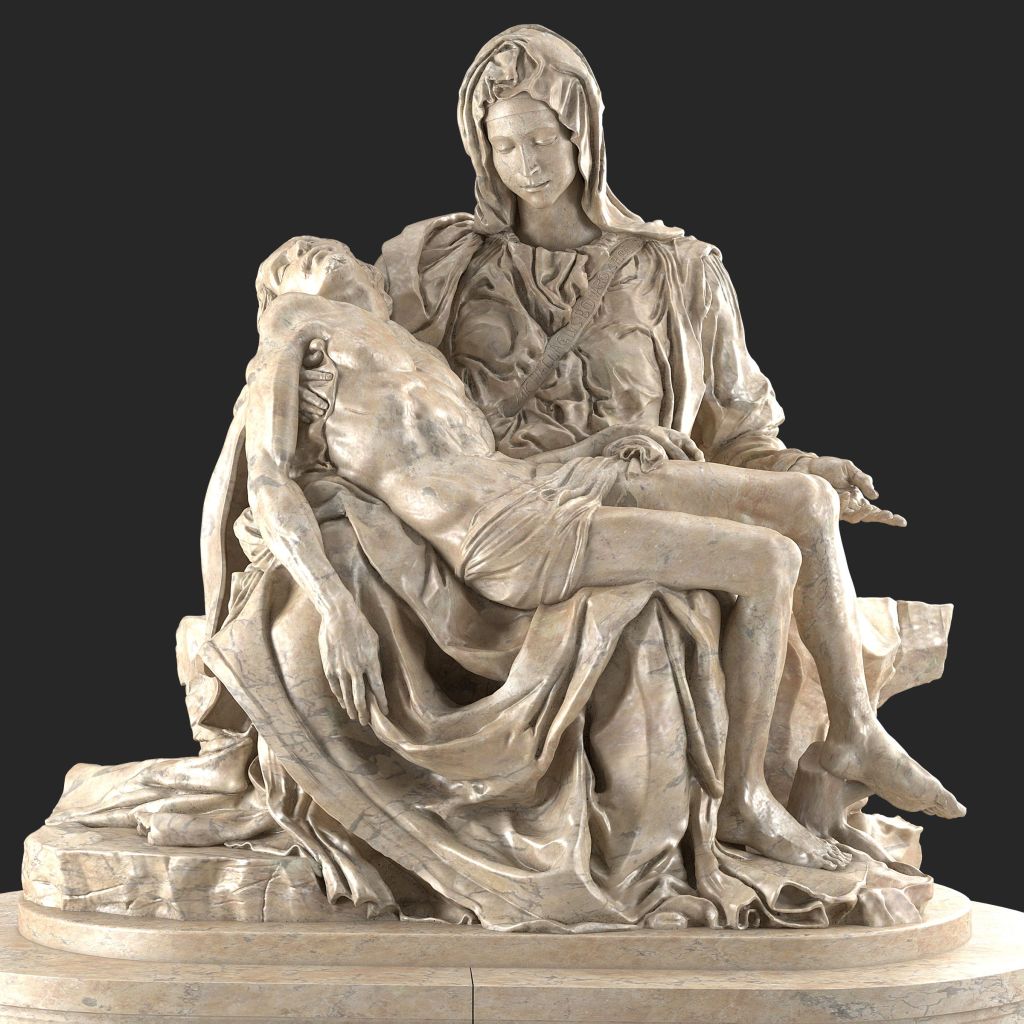
After creating “Bacchus, a French cardinal commissions the “Pieta” for St. Peters Basilica. Michelangelo gains the reputation of being a master sculptor.

Michelangelo’s Pieta depicting Mary holding the body of Christ.

Stone suggests the Pope asks why Mary appears so young and Michelangelo explains it is because she is the mother of a divine.

After the Pieta, Michelangelo is commissioned by overseers of the Office of Works of the Cathedral of Florence. This is not clear in “The Agony and the Ecstasy” but it reinforces Irving Stone’s recognition of Michelangelo’s deep connection to Florence. He returns to Rome, but his heart is in Florence. Much of Michelangelo’s time in Rome is uncomfortable and does not calm down for him until the Medicis return to power.

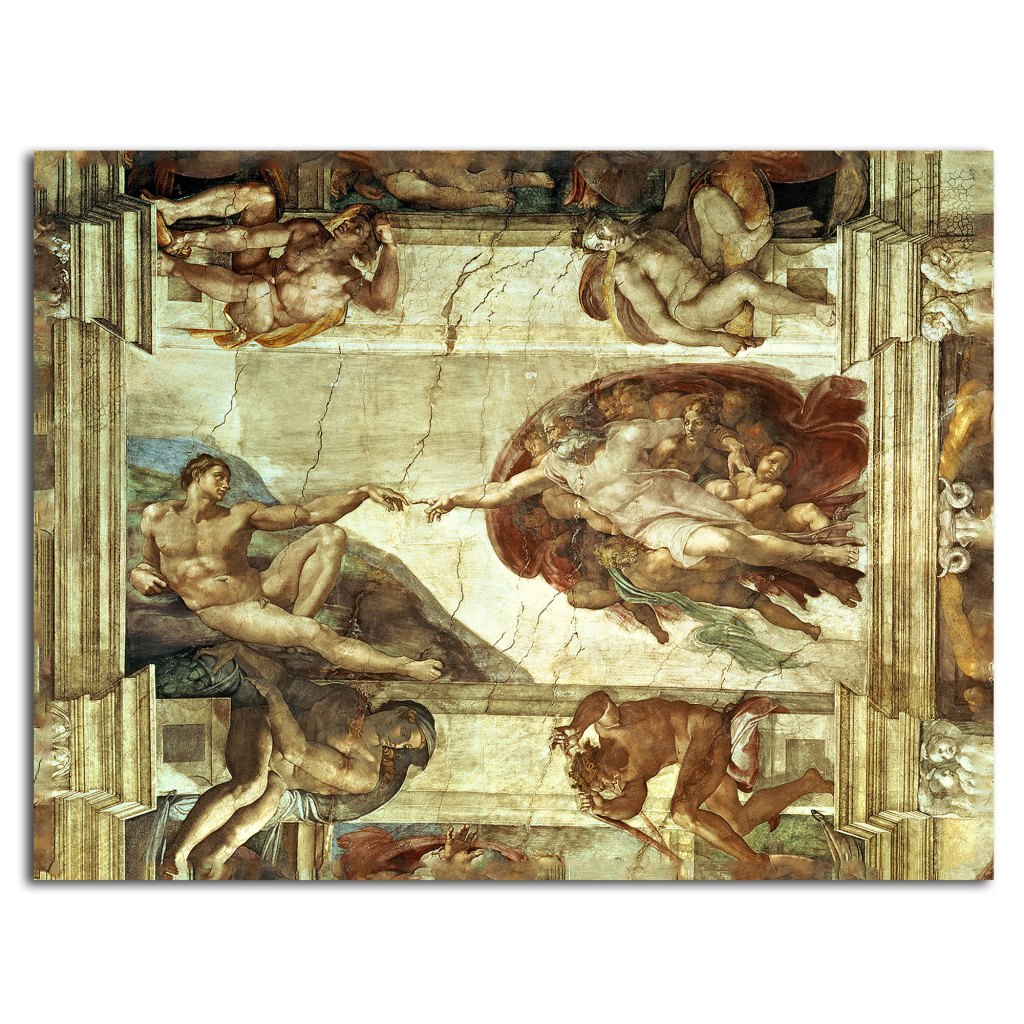
The warrior Pope, Pope Julius II heads the church from 1503-1513. Irving Stone explains; this Pope demands Michelangelo paint the ceiling of the Sistine Chapel at the Vatican in Rome. Of course, Michelangelo resists because he wishes to be remembered for sculpture, not painting, because it is an art that gives him joy. The forceful Pope insists, and Michelangelo makes a false start that changes into a history of the birth of the world on the ceiling of the Chapel. He works on the ceiling of the Chapel from 1508 to 1512.

Sistine Chapel painting by Michelangelo between 1508 and 1512.

The story of Michelangelo ends with the return of the Medicis to power. It is for Michelangelo–a journey of “…Agony and Ecstasy”–of love for his work, the daughter of a Medici, and the tumult of his time. Michelangelo never marries and dies at the age of 88 in 1564.

PROGRAMMED

Every human being has their own story. Are we free if we choose to be free or are we all just programmed?

Books of Interest
 Website: chetyarbrough.blog

Washinton Black (A Novel) 

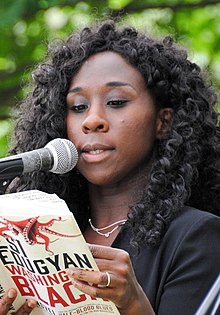
By: Esi Edugyan

Narrated By: Dion Graham

Esi Edugyan (Canadian novelist, two-time winner of the Giller Prize for “Half-Blood Blues” and “Washington Black”, the Giller Prize is a Canadian literary award of $100,000 for the winner.)

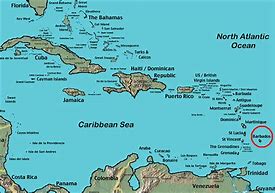
“Washington Black” is about a young slave growing to adulthood in the 19th century. It begins on a Barbados sugar plantation and ends in England and Morrocco after a journey that stretches one’s imagination to its limits.

“Washington Black” is an imaginative journey but it steps a bit too far when the author writes of a steerable airship carrying its two passengers into an Atlantic Ocean storm that luckily lands on a slave trader’s vessel instead of plunging into the ocean.

Despite Edugyan’s implausible rescue of Washington Black and his white English protector, there is enough interest in the main characters to keep listeners listening and readers reading. At five years of age, Washington Black who is called Wash, is rescued by a tall black slave named “Big Kit”. None of the slaves on the Barbados sugar plantation mess with Big Kit. Only the “big boss”, the manager of the plantation is powerful enough to bloody her nose without being intimidated. Big Kit becomes Wash’s protector. Wash has no idea who His real mother is, but Big Kit becomes his early guide through life.

When Wash reaches the age of 10 or 11, the plantation is visited by Christopher “Titch” Wilde who is the brother of Erasmus Wilde, both of which are the sons of John Wilde, a famous explorer-scientist who travels the world. “Titch is somewhat of a scientist himself. He meets with Wash and decides it would be good to have Wash as his aide while he pursues his scientific research.

Erasmus Wilde has responsibility for running the plantation which he dislikes but is ordered to because it supports the Wilde wealth for their father’s research. Erasmus and Titch have an older brother named Phillip that comes to the plantation to see his brothers. Phillip kills himself in front of Wash, presumably so Wash can show the brothers where his body can be found. Wash is devastated by the suicide and brings “Titch” to the site where it occurred. “Titch” realizes Wash will be accused of murdering the brother. “Titch” has found Wash to be a natural artist and can produce documentation for some of his science research. He does not want Erasmus to take Wash away and makes plans to escape. The escape is in the dirigible mentioned earlier.

The adventures of Wash accelerate from here.

As “Titch” had expected, Erasmus accuses Wash of murdering their older brother.

Both Wash and “Titch” become fugitives. The suicide of Phillip is a “red flag” that suggests the Wilde family is, at the very least, psychologically troubled. Those troubles revisit the Wilde family with events of the father, mother, Erasmus and “Titch”.

Titch’s father is declared dead because of a mistaken belief that a storm in Alaska killed him. He was not dead but chose to stay in Alaska despite the public reports of his death.

The father makes no effort to correct the mistake of his reported death. “Titch” finds that out and travels with Wash to find his father. His father is glad to see his son but is not inclined to return to civilization because of a comfort he feels in his new environment. “Titch” is pushed over the edge by his father’s lack of concern about others, including “Titch”, his mother, and remaining brother. “Titch” abandons Wash just like his father abandoned everyone in the family. “Titch” disappears in a storm and presumably dies. The father actually dies while Wash is there. Wash chooses to return to civilization and becomes a free man or at least a man who is free of slavery.

More surprises come toward the end of Edugyan’s story as Wash grows to manhood, but the author stretches one’s imagination a little too far for those who will be entertained by her creativity but disappointed by its implausibility.

Edugyan makes one wonder if anyone is truly free. Are we only programed by genetics and our experiences in life?

Every human being has their own story. Are we free if we choose to be free or are we simply programmed?

IRELAND’S TROUBLES

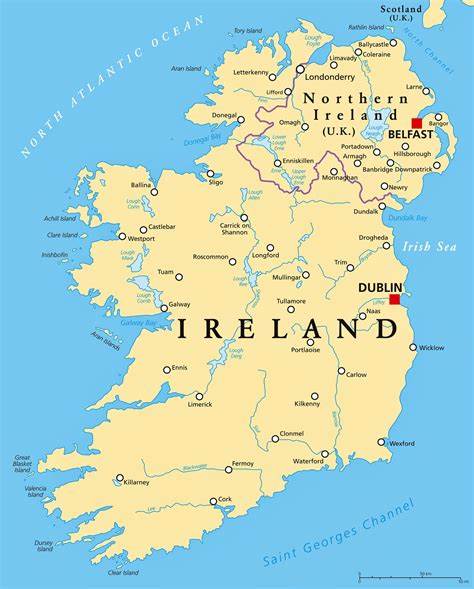
“Say Nothing” is an attempt to give listener/readers an understanding of Ireland’s “Troubles”. Patrick Radden Keefe helps one understand but it remains a complicated and confusing history because of its mix of religion and national sovereignty.

Books of Interest
 Website: chetyarbrough.blog

Say Nothing (A True Story of Murder and Memory in Northern Ireland) 

By: Patrick Radden Keefe

Narrated By: Mathew Blaney

Patrick Radden Keefe (Author, American writer and investigative journalist.)

“Say Nothing” is an attempt to give listener/readers an understanding of Ireland’s “Troubles”. Patrick Radden Keefe helps one understand but it remains a complicated and confusing history because of its mix of religion and national sovereignty. From the 1960s to the late 1980s, there were violent clashes between unionist/loyalists, who were largely protestant and wanted to be part of Great Britain; while Unionist/loyalists, who were largely Catholic wanted independence as the Republic of Ireland.

Bombings, sniper attacks, and violent confrontations caused an estimated 3600 deaths and tens-of-thousands injuries during the “Troubles”.

Not until 1998, with the “Good Friday Agreement” did the deadly conflicts cease. However, Great Britain’s Brexit, periods of political deadlock with the Northern Ireland Assembly, and debates over details of the “…Agreement” have occurred. Keefe tells a story of the build-up to the “…Agreement” in “Say Nothing”.

The Irish Republican Army that wished for Irish independence murdered Jean McConville, a mother of ten, in 1972.

The murder is puzzling because McConville is Catholic which suggests her death was either a mistake or that some Catholics were union/loyalists. Some in the IRA suggested she acted as a spy for the UK. That is a mystery Keefe fails to unravel while giving listener/readers some historical perspective on Ireland’s Troubles. Some say Marian Price was the murderer, but Keefe demurs and argues there is no concrete evidence.

Northern Ireland is over 40% Catholic while the Republic of Ireland is over 60% Catholic.

Ireland’s troubles date back to the 16th and 17th centuries when English and Scottish Protestant settlers chose Ireland as their new home. The native population of Ireland was Catholic and religious differences and land acquisition by Protestants set the table for conflict. In 1921, Ireland was split in two with Northern Ireland remaining a part of the UK but with a 40% minority who remained Catholic. A Catholic movement for civil rights in Northern Ireland began in the 1960s. Violence and political conflict ensued with the formation of paramilitary groups like the IRA (Irish Republican Army) that began bombing and shooting Protestant followers. The IRA wished to end British rule, unify Ireland, accommodate religious difference, and create an independent nation.

Over the years, there were several leaders of the IRA. Michael Collins, Cathal Brugha, Liam Lynch, Sean Stiofain, Gerry Adams, and Martin McGuinness. Gerry Adams is the leader most often referred to in Keefe’s book.

The IRA never admitted to ordering the abduction and murder of Jean McConville. The author directly asks Adams if he ordered the murder, and his response is that he has no blood on his hands. Some suggest, her murder was a collective decision by leaders of the IRA.

Both Northern Ireland and the Republic of Ireland were ambivalent about Brexit and chose to neither entirely agree with separation from the EU nor entirely agree with the UK in its rejection of membership.

There remains a great deal of ambivalence about unification of Ireland as an independent nation but “The Good Friday Agreement” allows for a referendum on unification because of what appears to be a majority in both jurisdictions to create one nation.

It is interesting to note that the Catholic religion is the largest religious group in both Northern Ireland and the Republic of Ireland, but that Northern Ireland Catholics constitute 42.3% while the Republic of Ireland is 69.1% Catholic. Keefe’s story triggers an interest in understanding the history of Ireland, but it is too long in its telling to offer clarity.

TRAGEDY’S LESSON

The sharpened point of Slade’s story is that, like the sinking of the Edmund Fitzgerald and El Faro, it takes great tragedy before change takes place.

Books of Interest
 Website: chetyarbrough.blog

“Into the Raging Sea” Thirty-Three Mariners, One Megastorm, and the Sinking of the El Faro

By: Rachel Slade

Narrated By: Erin Bennett

Rachel Slade (Author, winner of the Maine Literary Award for non-fiction.)

Rachel Slade begins her book with the last words of a mariner calling for help from a sinking ship in the grip of a Hurricane. The ship is the El Faro. The author writes her story based on the El Faro’s written log during a severe storm somewhere between Florida and Puerto Rico. The storm was Hurricane Joaquin, a category 4 Hurricane that had recorded wave heights of 10 meters (over 32 feet). Winds ranged from 130 to 156 mph with rough seas, roiled by rogue waves. Rogue waves are twice the size of surrounding waves and appear unexpectedly.

Slade methodically sets a table for the El Faro on a “…Raging Sea”.

Slade writes about a mariner’s desperate call for help. In its beginning, the story lags but the author offers cultural insight to the life of merchant marines, the equipment they operate, and the business of international trade. Her story explains how important and dangerous the life of a merchant marine can be, why it is important, and how mariners are dependent on equipment they use, their shipmates’ qualifications, and business owners’ drive for success.

Every person makes decisions about what they are going to do to make their way in life.

Becoming a merchant marine, like every decision in life, is based on personal circumstances, ambitions, and choices. Slade describes the El Faro mariners as adventurous and interested in seeing the world and being paid for what they do. Some are educated, others not, but all learn what they need to do to be part of a mariners’ crew.

There are schools for mariners at all levels of education but like any job, one can start at the bottom as a laborer that learns by doing. What the story of the El Faro shows is that like in any chosen job in life, some become expert at what they do, others try and fail, try again or move on. What Slade infers is that the El Faro sinks because of its crew but also because of others, both on and off the sea. As John Donne wrote in 1624, “no man (or woman) is an island”–emphasizing the interconnectedness of society.

The crew of the El Faro wanted to be paid but to some it was adventure and/or escape from a humdrum of life. Undoubtedly, mariners were motivated for different reasons. Some wished to see the world, be recognized for good work, wished to crew on bigger and better vessels, or be promoted to higher position. Motivation and ambition are different for everyone. What is lost to history are details. Slade tries to reveal some of the details about the El Faro’ crew, its owners, the ship, and the business of international trade. Why did the El Faro sink? Who and what was lost? What is it like to be in a hurricane at sea? Is somewhat at fault?

Slade’s story gains momentum as sinking of the El Faro seems imminent.

The aftermath is a careful and detailed explanation of rescues at sea, why the El Faro sank, what rescue efforts were made, how families of the lost were affected, and what changes were demanded in the industry. The loss of 33 mariners, the entire crew of the El Faro, is a horrible tragedy for the families who lost their loved ones. The causes of the tragedy range from crew mistakes to ship design to corporate malfeasance. The common thread is human nature.

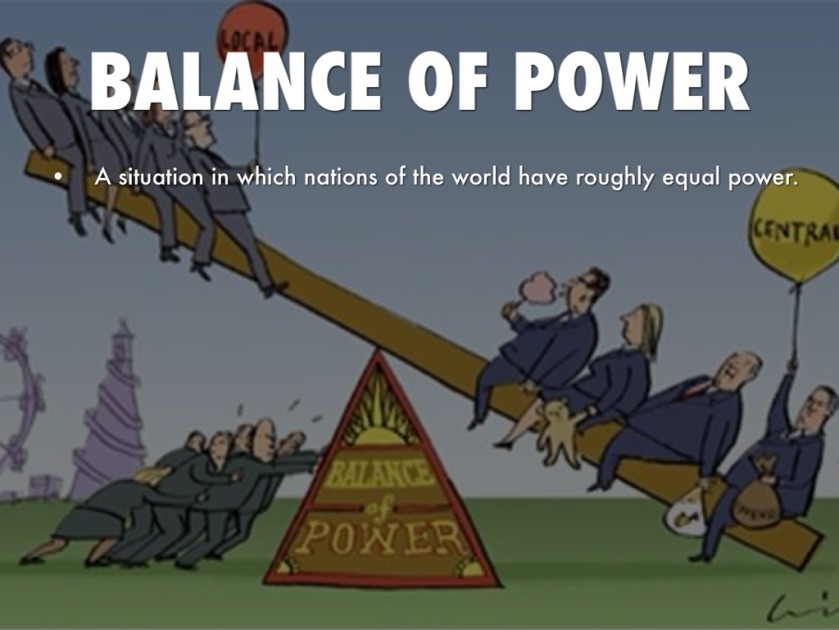
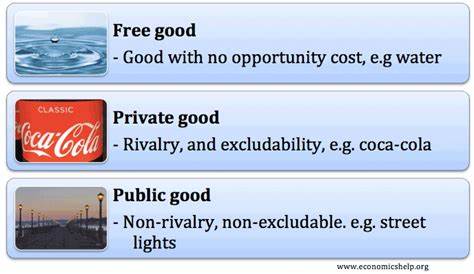
What this review suggests is that the fundamental issue in every form of government and society is balance between public and private good.

One will draw their own conclusions from Slade’s history of the loss of the El Faro. In a capitalist society, balance is dependent on prudent regulation. Prudence is meant to mean the use of human reason to balance the needs of the public with private interests. That balance is complicated by human nature that drives private interests to focus on money, power, and prestige rather than public need.

Slade shows regulation of international trade often conflicts with private interests that object to regulation and improvements in ship design.

Conflict between public good and private interest is not a new discovery. Neither is the sinking of the El Faro. The sinking of the Edmund Fitzgerald in 1975 led to changes in international shipping. Business owners were required to provide survival suits for mariners in their employ, depth finders, positioning systems, improved ship design, and inspections by the Coast Guard became mandatory. These were regulations that increased costs of shipping that rippled through the economy and initially penalized private interests. The public benefits because mariners are safer, and families are less threatened by loss. The public also suffers because transported goods become more expensive. Balance eventually occurs as private interests are compelled to pay more for labor which is part of the public.

Capitalism works because it is a process that balances public need with private interests. Capitalism’s weakness is that the process takes time to balance public needs with private interests.

The sharpened point of Slade’s story is that, like the sinking of the Edmund Fitzgerald and El Faro, it takes great tragedy before change takes place.

TRAVELING

Steve Hely’s travels give one a sense of adventure and camaraderie.

Books of Interest
 Website: chetyarbrough.blog

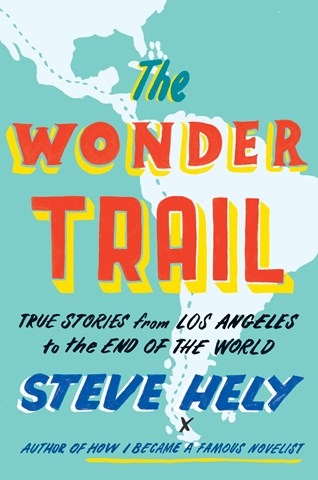
“The Wonder Trail”

By: Steve Hely

Narrated by: Steve Hely

Steve Hely (Author, screen writer, co-executive producer for the Veep tv series, also appeared as an actor on tv sitcoms like “The Office” and “30 Rock”.)

“The Wonder Trail” is an entertaining tale by a sitcom television writer who chooses to take a trip south. He travels through Mexico, the Panama Canal, and South America. He travels on the cheap to give the young an idea of what to do on a summer vacation. Hely’s writing profession is on display as he offers a “being there” experience and a laugh.

Traveling away from the U.S. should be in every young or old American’s experience. Those who visit other countries give perspective to life and how people are more alike than different.

“The Wonder Trail” shows human nature is the same, though the color of life is hued by the cultures in which we live. The desires of life or death are closely related, if not the same. As Hely travels, he recalls books he has read to give perspective and depth to the experiences of his journey. From Mexico, down through Chile and the southern tip of the Western Hemisphere, Hely tells of fellow travelers, the sites he visits, and the native citizens he meets. Every nation visited is accompanied by vignettes about its history. From the Mexican city of Oaxaca to Mayan ruins in Central America, to Patagonia, listeners are introduced to many of America’s southern border countries.

Hernan Cortes (1485-1547, died at the age of 61 or 62.)

Hely notes Hernan Cortes’s ruthless reputation for destroying temples of what was the Aztec capitol. Cortes became a ruthless symbol of conquest and European colonization.

Mexico City came from a city-state called Tenochtitlan which was a spec of land in the middle of a lake in 1325. Cortes, an infamous Spanish conquistador, razed Tenochtitlan to the ground in 1521 and created a Spanish colonial capital he named Mexico City.

Hely reflects on the lost language of the Aztecs and the many ruins buried beneath Mexico City’s thriving metropolis. Translators have deciphered some of the texts of the Aztecs that reveal the sophisticated pagan culture that was lost when Cortes colonized the country. Hely notes the Aztecs practiced human sacrifices to their gods.

Hely’s travels give one a sense of adventure and camaraderie. He notes how his favorite experiences are with other people, particularly Australian groups and some adventurous unattached women who choose to travel alone. Having traveled with an Aussie guide in Australia, I would agree with Hely’s suggestion that Aussies are among the best travelling companions.

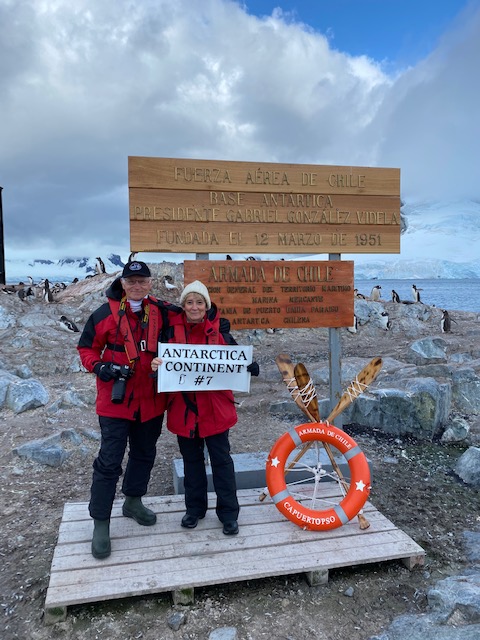
Hely’s journey ends in Patagonia, a territory under the control of Argentina and Chile. Having personally traveled to Antarctica, the point of debarkation is Ushuaia, the capital of Tiera del Fuego in Patagonia. Ushuaia is not mentioned in Hely’s book, but it is a beautiful village/city on the southernmost port of the world. The Drake Passage to Antarctica is not for the faint of heart because of the rolling sea. It’s worth the voyage because of the grandeur of ice flows, whale watching, and penguin excursions.